Rivera Flap Shows NY High Court Picks Can Expect Scrutiny
By Pete Brush
Law360, New York (February 11, 2013, 8:02 PM ET) — The New York State Senate confirmed law professor Jenny Rivera to the state’s highest court Monday on a voice vote, but a bitter debate over her resume signals to Gov. Andrew Cuomo that upcoming judicial nominees can expect heightened scrutiny, especially if they don’t have bench experience.
Rivera, a law professor at the City University of New York, becomes the first judge ever in the Empire State to leap straight to the New York Court of Appeals from academia.
An expert in Hispanic and women’s civil rights issues, Rivera replaces the court’s first and only Hispanic judge, Carmen Beauchamp Ciparick, who was forced to retire at the end of 2012 after reaching the age of 70.
“Professor Rivera has dedicated her career to public service,” Cuomo said after the vote. “Her extensive experience in civil rights law and her passion for making our state a fairer and more just place will greatly benefit New York.”
That Rivera’s Senate confirmation came on a voice vote suggested Republican opposition wasn’t uniform, experts said. But that didn’t stop several influential Republicans, including Middletown, N.Y., Republican John J. Bonacic from taking to the Senate floor in opposition.
“To put someone who has such narrow legal experience on the highest court of this state for 14 years … and pass over other highly qualified nominees is not something that I can support,” said Bonacic, whose judiciary panel advanced Rivera’s nomination without recommendation after a testy Feb. 4 hearing that was carried over until the next day.
Bonacic was referring to a list of seven candidates, sent to Cuomo by the State of New York’s Commission on Judicial Nomination on Dec. 1, that included three state appellate division judges and two practicing attorneys.
“The nominee has a very limited law practice experience,” said Bonacic, adding that he had “concerns that she will be prone to judicial activism.”
Even though they didn’t have the votes to mount a serious challenge, Republicans are making it clear they will do what they can to make sure Cuomo doesn’t steamroll them at every turn, according to Pace University law professor Randolph M. McLaughlin, who also works as of counsel on civil rights matters at Newman Ferrara LLP.
“The Republicans were trying to send Cuomo a message, that they’re not a rubber stamp,” he said. “My gut instinct tells me, given the range of folks he has in the wings, that Cuomo will pick a sitting judge next.”
Cuomo won’t have to wait long before his next pick. After Rivera is sworn in, she will become the only the sixth sitting member on a court that is supposed to have seven judges.
The court had been operating with a relative skeleton crew of five judges after Ciparick’s retirement and the Nov. 6 death of Judge Theodore T. Jones. A slate of nominees to replace Jones is due to hit Cuomo’s desk in early March.
“If Cuomo doesn’t want to go through this brouhaha again, he’ll pick someone who is a judge,” McLaughlin said.
Cuomo also may find himself under heavy pressure to replace the deceased Jones, the court’s lone black judge, with another African-American, according to Albany Law School professor Vincent M. Bonventre.
“I will be shocked if the next list doesn’t have two or three African-Americans on it,” Bonventre said.
While Republicans attacked Rivera for a lack of experience, McLaughlin noted they also took issue with her academic writings, in which she espouses progressive views on civil rights, racial justice and women’s issues.
“They were trying to knock her down, embarrass her, or get her to say something stupid,” McLaughlin said. “It was pretty embarrassing to see her raked over the coals.”
The charge that Rivera lacks experience is not necessarily fair, according to experts, including Wollmuth Maher & Deutsch LLP<http://www.law360.com/firm/wollmuth-maher> partner Vince Chang, who heads the New York County Lawyers Association’s federal courts committee chair.
“A lot of people say the criticism of her experience was just a pretext,” Chang said, noting that state bar associations went over her record carefully and universally recommended her qualifications. “Many very fine judges were professors.”
Opposition to Rivera’s nomination didn’t come exclusively from Republicans on Monday. One of the state Senate’s mavericks, Bronx Democrat Ruben Diaz, said Cuomo, in nominating Rivera, seemed keen on pitting Hispanics against the state’s Republicans.
Diaz, an outspoken and often bombastic critic of Cuomo, added that past Hispanic nominees for other high offices in the U.S. didn’t receive the same support from New York’s Latino population when they were nominated by Republicans, including former President George W. Bush.
“Where were you when George Bush nominated Alberto Gonzales and Miguel Estrada?” Diaz asked his Latino counterparts from the Senate floor.
Overall the proceedings were a departure from the state Senate’s typical Court of Appeals approval process, which over the decades has been staid, with one or two minor exceptions, Bonventre said.
A fierce critic of state Senate inaction on high court nominees, Bonventre applauded the Legislature for subjecting Rivera to tough questions.
“They’ve made it clear to the governor that he can’t just nominate anybody and expect them to roll over,” Bonventre said. “They’re obviously going to start taking their constitutional responsibility more seriously than they have in the past. In the past, they have been complete rubber stamps.”
—Editing by John Quinn and Richard McVay.
All Content (c) 2003-2013, Portfolio Media, Inc.
Rivera Flap Shows NY High Court Picks Can Expect Scrutiny
By Pete Brush
Law360, New York (February 11, 2013, 8:02 PM ET) — The New York State Senate confirmed law professor Jenny Rivera to the state’s highest court Monday on a voice vote, but a bitter debate over her resume signals to Gov. Andrew Cuomo that upcoming judicial nominees can expect heightened scrutiny, especially if they don’t have bench experience.
Rivera, a law professor at the City University of New York, becomes the first judge ever in the Empire State to leap straight to the New York Court of Appeals from academia.
An expert in Hispanic and women’s civil rights issues, Rivera replaces the court’s first and only Hispanic judge, Carmen Beauchamp Ciparick, who was forced to retire at the end of 2012 after reaching the age of 70.
“Professor Rivera has dedicated her career to public service,” Cuomo said after the vote. “Her extensive experience in civil rights law and her passion for making our state a fairer and more just place will greatly benefit New York.”
That Rivera’s Senate confirmation came on a voice vote suggested Republican opposition wasn’t uniform, experts said. But that didn’t stop several influential Republicans, including Middletown, N.Y., Republican John J. Bonacic from taking to the Senate floor in opposition.
“To put someone who has such narrow legal experience on the highest court of this state for 14 years … and pass over other highly qualified nominees is not something that I can support,” said Bonacic, whose judiciary panel advanced Rivera’s nomination without recommendation after a testy Feb. 4 hearing that was carried over until the next day.
Bonacic was referring to a list of seven candidates, sent to Cuomo by the State of New York’s Commission on Judicial Nomination on Dec. 1, that included three state appellate division judges and two practicing attorneys.
“The nominee has a very limited law practice experience,” said Bonacic, adding that he had “concerns that she will be prone to judicial activism.”
Even though they didn’t have the votes to mount a serious challenge, Republicans are making it clear they will do what they can to make sure Cuomo doesn’t steamroll them at every turn, according to Pace University law professor Randolph M. McLaughlin, who also works as of counsel on civil rights matters at Newman Ferrara LLP.
“The Republicans were trying to send Cuomo a message, that they’re not a rubber stamp,” he said. “My gut instinct tells me, given the range of folks he has in the wings, that Cuomo will pick a sitting judge next.”
Cuomo won’t have to wait long before his next pick. After Rivera is sworn in, she will become the only the sixth sitting member on a court that is supposed to have seven judges.
The court had been operating with a relative skeleton crew of five judges after Ciparick’s retirement and the Nov. 6 death of Judge Theodore T. Jones. A slate of nominees to replace Jones is due to hit Cuomo’s desk in early March.
“If Cuomo doesn’t want to go through this brouhaha again, he’ll pick someone who is a judge,” McLaughlin said.
Cuomo also may find himself under heavy pressure to replace the deceased Jones, the court’s lone black judge, with another African-American, according to Albany Law School professor Vincent M. Bonventre.
“I will be shocked if the next list doesn’t have two or three African-Americans on it,” Bonventre said.
While Republicans attacked Rivera for a lack of experience, McLaughlin noted they also took issue with her academic writings, in which she espouses progressive views on civil rights, racial justice and women’s issues.
“They were trying to knock her down, embarrass her, or get her to say something stupid,” McLaughlin said. “It was pretty embarrassing to see her raked over the coals.”
The charge that Rivera lacks experience is not necessarily fair, according to experts, including Wollmuth Maher & Deutsch LLP<http://www.law360.com/firm/wollmuth-maher> partner Vince Chang, who heads the New York County Lawyers Association’s federal courts committee chair.
“A lot of people say the criticism of her experience was just a pretext,” Chang said, noting that state bar associations went over her record carefully and universally recommended her qualifications. “Many very fine judges were professors.”
Opposition to Rivera’s nomination didn’t come exclusively from Republicans on Monday. One of the state Senate’s mavericks, Bronx Democrat Ruben Diaz, said Cuomo, in nominating Rivera, seemed keen on pitting Hispanics against the state’s Republicans.
Diaz, an outspoken and often bombastic critic of Cuomo, added that past Hispanic nominees for other high offices in the U.S. didn’t receive the same support from New York’s Latino population when they were nominated by Republicans, including former President George W. Bush.
“Where were you when George Bush nominated Alberto Gonzales and Miguel Estrada?” Diaz asked his Latino counterparts from the Senate floor.
Overall the proceedings were a departure from the state Senate’s typical Court of Appeals approval process, which over the decades has been staid, with one or two minor exceptions, Bonventre said.
A fierce critic of state Senate inaction on high court nominees, Bonventre applauded the Legislature for subjecting Rivera to tough questions.
“They’ve made it clear to the governor that he can’t just nominate anybody and expect them to roll over,” Bonventre said. “They’re obviously going to start taking their constitutional responsibility more seriously than they have in the past. In the past, they have been complete rubber stamps.”
—Editing by John Quinn and Richard McVay.
All Content (c) 2003-2013, Portfolio Media, Inc.
We received word today from James Francis, Board Chair of the Council of Urban Professionals, that Vincent Chang, past AABANY president and current co-chair of the Judiciary Committee, has been named one of CUP’s 15 Catalysts for Change in Law. This is the first time that CUP is awarding this recognition and we are pleased and proud that Vince has made the list along with 14 other highly distinguished and accomplished members of the New York legal community. Please join us in congratulating Vince. You can post your congratulations to Vince (and any of the other change catalysts) in the Comment section.
The formal recognition of all the Catalysts for Change in Law will take place at the Third Annual CUP Lawyers Forum on October 25, at which Don Liu will be a keynote speaker.
Below is the text of the announcement:
The Council of Urban Professionals (CUP), announces and congratulates our inaugural list of 15 CUP Catalysts: Change Agents 2012 | Law — wave-making, tree-shaking executives and entrepreneurs who are transforming the legal sector, driving economic growth, and giving back to their communities through board service, mentorship and philanthropy:
Debo AdegbileActing President and Director-CounselLegal Defense FundBeatrice Hamza BasseyPartnerHughes Hubbard & Reed LLP
Fernando BohorquezPartnerBaker & Hostetler LLPVincent ChangPartner, Litigation and Dispute ResolutionWollmuth Maher & Deutsch LLP
Eunu ChunPartnerKirkland & Ellis LLP
Anne CooneyManaging Director, General CounselMorgan Stanley Wealth Management
Dean GarfieldPresident and CEOInformation Technology Industry CouncilTracy Richelle HighPartnerSullivan & Cromwell LLP
Hakeem JeffriesCongressman ElectNew York’s 8th Congressional District
Jaime MercadoCorporate PartnerSimpson Thacher & Bartlett LLP
John PageVice President, General Counsel and SecretaryGolden State FoodsLuis R. PenalverPartnerCahill Gordon & Reindel LLC
Wanji WalcottManaging CounselAmerican ExpressJoseph WestPresident and CEOMinority Corporate Counsel Association
Adrienne WheatleyPartnerLatham and Watkins LLP
Please join us in recognizing this list of CUP Catalysts: Change Agents 2012 | Law at our 3rd Annual Lawyers Forum, taking place next Thursday, October 25th!
You also do not want to miss the dynamic fireside dinner chat between our Keynote Speaker Don H. Liu, Senior Vice President, General Counsel & Secretary at the Xerox Corporation, and our Moderator, Werten F.W. Bellamy, Jr., President of Stakeholders, Inc.
Click Here to RSVP

Karen Kim, co-chair of the Litigation Committee, reports on that Committee’s recent CLE program on deposition basics:
On July 11, 2012, the Litigation Committee presented a “Depositions Bootcamp + Ethics Minefield” CLE with the following panel of senior litigators: Vincent T. Chang (Partner at Wollmuth Maher & Deutsch), James P. Chou (Senior Counsel at Akin Gump Hauer Strauss & Feld LLP), Tristan C. Loanzon (Principal at Loanzon Sheikh LLC), Concepcion A. Montoya (Partner at Hinshaw & Culbertson LLP), James S. Yu (Partner at Seyfarth Shaw LLP) and Yang Chen (Executive Director of AABANY). The panel was moderated by AABANY Litigation Committee co-chair William Wang (Partner at Lee Anav Chung LLP). Winston & Strawn LLP did an exceptional job hosting the event, with the assistance of Louis A. Russo, an associate at Winston & Strawn LLP and the staff, taking the event to the next level.
The CLE was well attended and a great success, thanks to the wonderful panelists who explained the basics of depositions, how to prep a witness for deposition, and the nuances of ethics while also doing a demonstration of what not to do in a deposition. CLE materials were provided, which included resources attendees can reference for guidance, articles, PowerPoint slides and caselaw on important developments and aspects of depositions. Overall, the attendees found the CLE informative and comprehensive and “one of the best CLEs” with a “very knowledgeable panel.” With the help of Francis Chin from the Professional Development Committee, attendees left with certificates for 3 CLE credits, including one hour in Ethics credit.
Stay tuned to the LC because in October, the committee is planning a depositions workshop where attendees will actually get to take mock depositions and receive critique from this (tentatively scheduled to appear) panel of distinguished litigators.
Vincent Chang sat on a New York County Lawyers Association (NYCLA) panel at a public hearing on Friday, December 2 that addressed the impact of present and future budget cuts on the Southern and Eastern Districts of New York. Chief Judge Loretta Preska of the SDNY and Chief Judge Carol Amon of the EDNY testified at the hearing, which discussed, among other things, the effect that budget cuts would have on public safety, including courthouse security, as well as pretrial and probation supervisory services. The hearing also addressed issues relating to cutbacks in services provided to lawyers and to the public, such as cuts in clerk’s office support staff, docketing, interpreters, court reporting, audio visual, IT, and other areas, which could result in increased delays and other challenges to the administration of justice.
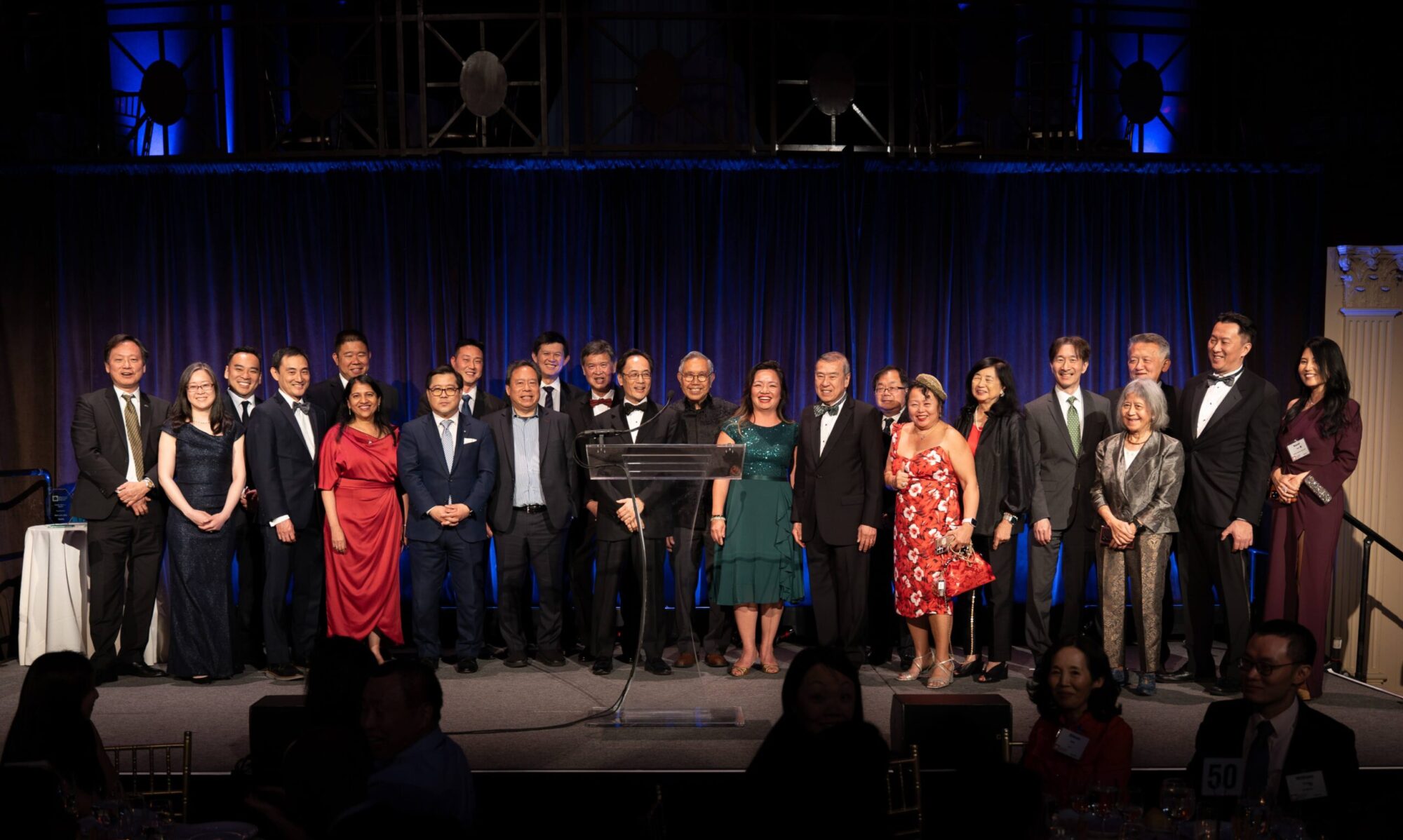
We would like to recognize several AABANY leaders who will be speaking at various bar association programs this month.
Please join us in congratulating these AABANY leaders on their participation as speakers in events organized by other bar associations.
On October 12, the New York City Bar Committee on Minorities in the Profession will present a seminar entitled: “Minority Attorneys: You’re An Up and Coming Talent - Be More, Do More and Discover More By Reaching For The Leader Within You.” AABANY is a co-sponsor of this free event, and past AABANY President and 2011 City Bar Diversity Champion Award recipient Vincent Chang is among the panelists. For more details and to register, click on the link in the title.

Vince Chang, past AABANY President, wrote a profile about Judge Chin that appeared in the August 2011 issue of Federal Lawyer, a publication of the Federal Bar Association. Click on the link in the title to read the profile.