

NAPABA Supports the Language Access for All Act of 2026

For Immediate Release: January 23, 2026
Contact: Rahat N. Babar, Deputy Executive Director

WASHINGTON – The National Asian Pacific American Bar Association (NAPABA) applauds the introduction of the Language Access for All Act of 2026 in Congress. The bill, if enacted, would ensure that all individuals have meaningful access to critical Federal services, regardless of English proficiency.

In March 2025, President Donald Trump revoked Executive Order 13166 and designated English as the official language of the United States. For nearly 25 years, EO 13166 required that every federal agency meet the needs of individuals with limited English proficiency when it delivers critical services. EO 13166 brought the full import of Title VI of the Civil Rights Act of 1964, which prohibits entities that receive federal funding from discriminating based on national origin, to life. NAPABA objected to the revocation of EO 13166 at the time and called on Congress to act in response. Following our advocacy efforts, NAPABA welcomes the introduction of the Language Access for All Act of 2026, which would restore the key guarantees of EO 13166.

Language access is particularly important for the Asian American, Native Hawaiian, and Pacific Islander (AANHPI) community. The majority of the Asian American community are immigrants. Nearly 32% of the community is limited English proficient. The Asian American population is comprised of over 50 different ethnicities and speak over 100 different languages. NAPABA has long championed linguistic access for AANHPI communities in the legal system, including through our groundbreaking report, which highlighted and provided recommendations on the state of language access in federal and state courts and agencies. Every individual deserves access to critical, federally funded services.

NAPABA is grateful to Rep. Grace Meng, the Chair of the Congressional Asian Pacific American Caucus, along with Rep. Judy Chu, Rep. Juan Vargas, Rep. Daniel Goldman, for their leadership and introducing the Language Access for All Act of 2026. This action coincides with the anniversary of the U.S. Supreme Court’s historic decision in Lau v. Nichols, 414 U.S. 563 (1974), which recognized the right of English learners to participate meaningfully in public school education and served as a catalyst for language access throughout the Nation. We call on Congress to advance this legislation swiftly.
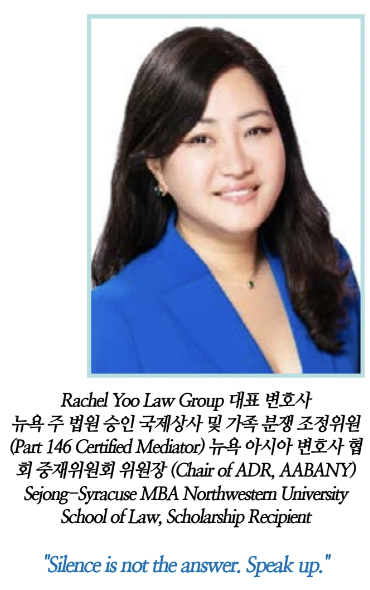
In the News: Rachel Yoo Speaks on Alternative Dispute Resolution (ADR) in the Korean American Community

In a recent feature in The M Magazine (November/December 2025 issue), an East Coast Korean-American community publication, Rachel Yoo of Rachel Yoo Law Group was profiled for her work in conflict resolution and family law within the Korean-American community. The article, titled “법정의 승리보다 저녁 식탁의 평화를 택했습니다” (Choosing Peace Around the Dinner Table Over Victory in Court), explores Yoo’s mission to empower those who have been silenced in family conflicts and educate the community about peaceful alternatives to traditional litigation.

Rachel Yoo, a Part 146 Certified Mediator and Co-Chair of the ADR Committee at the Asian American Bar Association of New York, challenges the cultural tendency among Korean Americans to suppress family conflicts out of fear of community judgment. She warns that this silence often backfires, allowing small issues to escalate into major legal battles. In close-knit communities where relationships are deeply intertwined, Yoo advocates for professional mediation rather than attempting to resolve disputes privately, where emotions can override rational thinking.

As a certified mediator, Yoo creates safe spaces for guided dialogue, helping families express their concerns constructively without public exposure or personal attacks. Her philosophy—”Silence is not the answer. Speak up.”—is transforming how Korean Americans approach family conflict, replacing avoidance with structured communication that preserves both dignity and relationships while preventing escalation.

To read the full article (in Korean), click here.

NAPABA Applauds the Appointment of Justice Sanjay T. Tailor to the Illinois Supreme Court

For Immediate Release: January 21, 2026
Contact: Rahat N. Babar, Deputy Executive Director

WASHINGTON – The National Asian Pacific American Bar Association (NAPABA) congratulates Justice Sanjay T. Tailor on his groundbreaking appointment to serve as a justice on the Illinois Supreme Court.

“Justice Tailor’s appointment marks a historic milestone in NAPABA’s mission for its members, the Asian American, Native Hawaiian, and Pacific Islander (AANHPI) lawyers, and their broader communities,” said Joseph Yao, President of NAPABA.  “In 2022, NAPABA’s Portrait Project 2.0 found that only nine Asian American jurists served on state high courts, a number that remained constant until now. As the first Asian American to serve on the Illinois Supreme Court, Justice Tailor has broken barriers and serves as a beacon of achievement for our legal community and for anyone aspiring to such heights.”

Justice Tailor brings more than two decades of judicial experience to the Illinois Supreme Court. He has served for 23 years on Illinois’s trial and appellate courts, including as an Associate Judge and Circuit Judge and, most recently, as a Presiding Justice of the First District Appellate Court. Prior to joining the bench, he served as an Assistant State’s Attorney in Cook County and practiced law in the private sector. Justice Tailor taught as an adjunct professor at Loyola University of Chicago School of Law. He earned his B.A. from the University of Delaware and his J.D., with honors, from Loyola University of Chicago School of Law.

“Through his many leadership roles, including as the president of the Asian American Judges Association of Illinois, and through his engagement with NAPABA affiliates like the Asian American Bar Association of Greater Chicago (AABA Chicago) and the South Asian Bar Association of Chicago (SABA Chicago), Justice Tailor has demonstrated a deep commitment to public service and the community throughout his career,” said Priya Purandare, Executive Director of NAPABA. “His groundbreaking appointment highlights the importance of continued efforts to ensure that those in the AANHPI legal community are recognized, supported, and elevated to positions of leadership across the country.”

“We are proud and thrilled to see Illinois become one of a small number of states that have a judge on its highest court who is Asian American,” said Stephen Lee, President of AABA Chicago.  “AABA formed decades ago in part to help Asian American attorneys become judges and to help our judiciary better reflect the people whom it serves, and this is a huge milestone not just for Justice Tailor and Asian American attorneys but for everyone.”

“The South Asian Bar Association of Chicago proudly congratulates Justice Tailor on this historic appointment as the first Asian and South Asian Justice to serve on the Illinois Supreme Court,” said Saman Haque, President of SABA Chicago. “This milestone reflects the strength of our justice system and the importance of representation. As a founding member of SABA Chicago, Justice Tailor has remained steadfast in his commitment to inclusion and equity, and to mentoring and encouraging attorneys to hone their craft. We celebrate this achievement and look forward to the lasting impact of Justice Tailor’s leadership and service.”

NAPABA extends its sincere congratulations to Justice Sanjay Tailor and wishes him continued success in his service on the Illinois Supreme Court.

MNAPABA and NAPABA Statement in Support of AANHPI and Immigrant Communities

For Immediate Release: January 19, 2026Contact: Rahat N. Babar, Deputy Executive Director

MINNEAPOLIS / WASHINGTON – The Minnesota Asian Pacific American Bar Association (MNAPABA) and the National Asian Pacific American Bar Association (NAPABA) stand firmly in support of the Asian Pacific American and the broader immigrant communities in Minnesota. 

On Wednesday, January 7, a federal immigration enforcement agent in Minneapolis shot and killed Renee Good. We send our heartfelt condolences to her family and loved ones. Press reports indicate that a federal investigation of the tragedy is underway.

The horrific shooting has exacerbated the existing fear and apprehension within immigrant communities across the state, especially as the national discourse recently turned to disparaging comments against immigrants and refugees in Minnesota and elsewhere across the country. 

On Friday, January 16, Kaohly Her – the mayor of Saint Paul, Minnesota, and the first woman and first Asian American in the role – stated that her office “received reports of federal law enforcement officers going door-to-door asking people where the Asian people live right now in our very own city.”

The allegations in these reports are immensely disturbing. While the residents of Minnesota have the right to engage in First Amendment activities, and as the federal government increases its presence in the region, MNAPABA and NAPABA unequivocally oppose any instances of racial profiling by government enforcement agents, actions that are incompatible with the rule of law. Instead, such actions endanger the public and diminish trust in law enforcement. 

The Minneapolis–Saint Paul region has a vibrant Asian Pacific American community, including one of the largest Hmong populations in the nation. The diverse communities of immigrants and refugees add to the strength and rich tapestry of Minnesota.  Their dignity and constitutional rights must be respected.

For additional information, please see MNAPABA’s supplementary statement, which can be found here.

###

The National Asian Pacific American Bar Association (NAPABA) represents the interests of more than 80,000 Asian Pacific American (APA) attorneys, judges, law professors, and law students, as well as over 90 national, state, and local APA bar associations. Founded in 1988, NAPABA promotes justice, equity, and opportunity for APA legal professionals and Asian American, Native Hawaiian, and Pacific Islander communities. We foster professional development, advocacy, and community involvement.

NAPABA Applauds the Confirmation of Judge John Truong to the Superior Court of the District of Columbia

For Immediate Release: January 15, 2026
Contact: Rahat N. Babar, Deputy Executive Director

WASHINGTON – The National Asian Pacific American Bar Association (NAPABA) congratulates Judge John Truong on his confirmation to serve as an Associate Judge on the Superior Court of the District of Columbia.

“Judge John Truong is a talented and experienced litigator who has deep ties to the D.C. legal community,” said Joseph Yao, President of NAPABA. “With a long career in public service, coupled with his leadership in the community – including as a former president of the Asian Pacific American Bar Association of the Greater Washington, D.C. Area (APABA-DC) and a recipient of the NAPABA Best Under 40 Award in 2009 – Judge Truong will be an exceptional addition to the court that serves the Nation’s capital city.”

Prior to his confirmation, Judge Truong was Deputy Chief in the Civil Division of the U.S. Attorney’s Office for the District of Columbia, where he prosecuted fraud and misconduct cases. He has previously represented federal officials and agencies in civil litigation, prosecuted criminal offenses, and practiced at Morgan, Lewis & Bockius LLP. Judge Truong also taught as an Adjunct Professor at George Washington University Law School. He clerked for Judge Ricardo M. Urbina of the U.S. District Court for D.C. and holds a B.A. from the University of Southern California, an M.A. from American University, and a J.D. from American University’s Washington College of Law.

“Judge Truong is a role model for our legal community. His professional achievements reflect the values that NAPABA works to advance every day,” said Priya Purandare, Executive Director of NAPABA. “We are confident that Judge Truong will continue to serve the community with distinction in this important role.”

NAPABA thanks President Trump for the nomination and the U.S. Senate for its confirmation of Judge Truong.

Request for Public Comment from NY Courts on Proposed Rule Changes Regarding Professional Conduct

The Administrative Board of the Courts is soliciting public comments on the following two proposed amendments to court rules:

  • Attorney advertising:  Proposal to amend Rule 1.0 and Rules 7.1 to 7.4 of the Rules of Professional Conduct relating to attorney advertising and solicitation
  • Attorney risk assessments:  Proposal to amend Rule 1.16 of the Rules of Professional Conduct to impose a duty of inquiry and risk assessment on lawyers when accepting, declining or terminating an engagement, in order to avoid involvement in illegal conduct by clients

Copies of both requests are available on the UCS website here.

Any comments on these proposed rule changes should be sent by email to rulecomments@nycourts.gov by February 20, 2026

Please feel free to reach out to David Nocenti at dnocenti@nycourts.gov if you have any questions. 

Request for Comments – Annual E-Filing (NYSCEF) Report

Christopher Gibson, Director, Division of E-Filing, NYS Office of Court Administration, shared the following request for comments:

In preparation of the Office of Court Administration’s annual report on e-filing, to be submitted to the Chief Judge, the Governor, and the Legislature, we seek comments from the public addressing users’ experience with NYSCEF. Observations/recommendations are welcome from attorneys, litigants, and other interested parties. 

To allow sufficient time for report preparation, please submit any comments by February 13, 2026.


Full details here:
Notice – Annual Report on Electronic Filing – Request for Comments on E-Filing (2026 Report)

Thank You to Our Volunteers at the Brooklyn Pro Bono Clinic in January

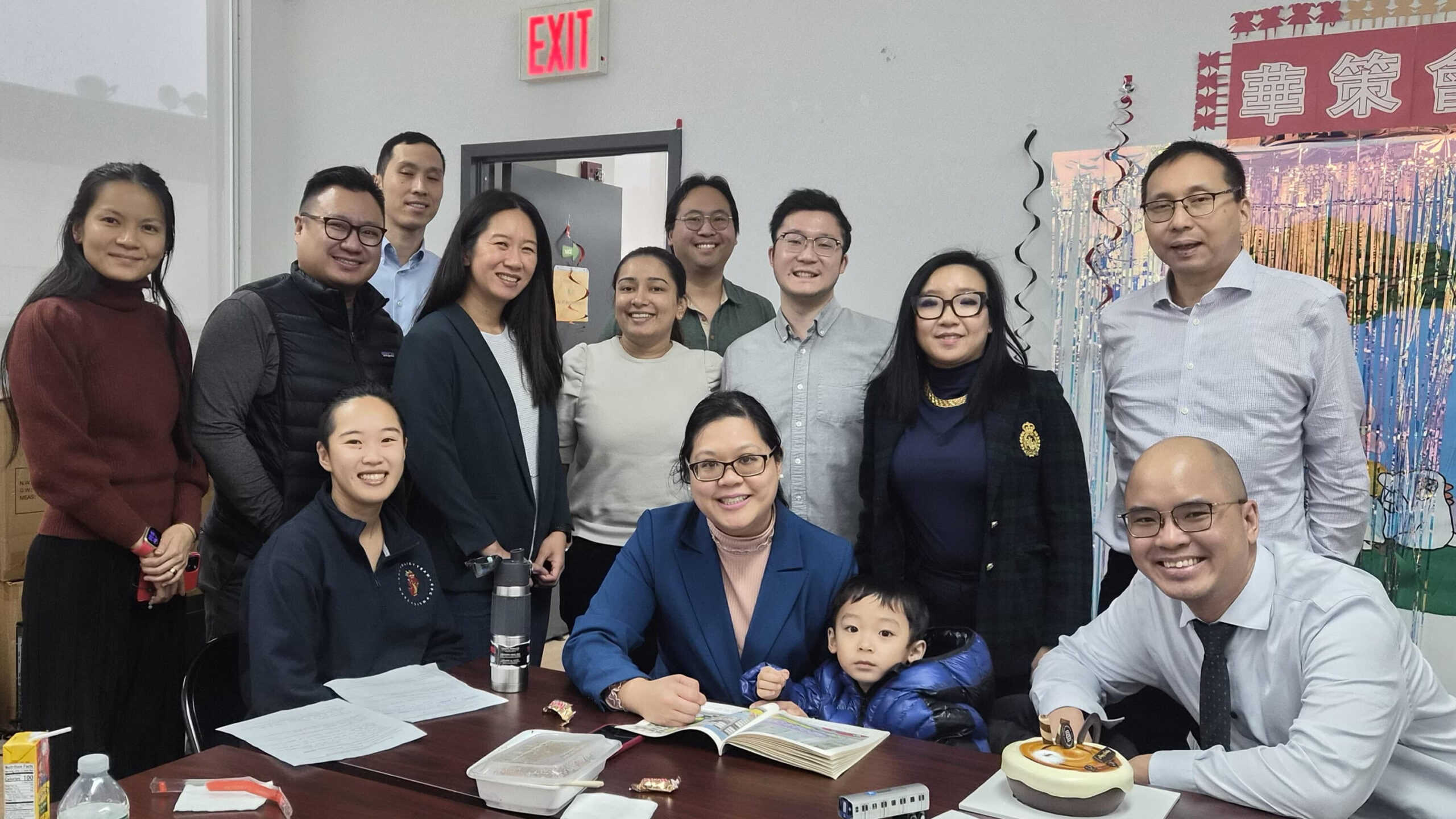
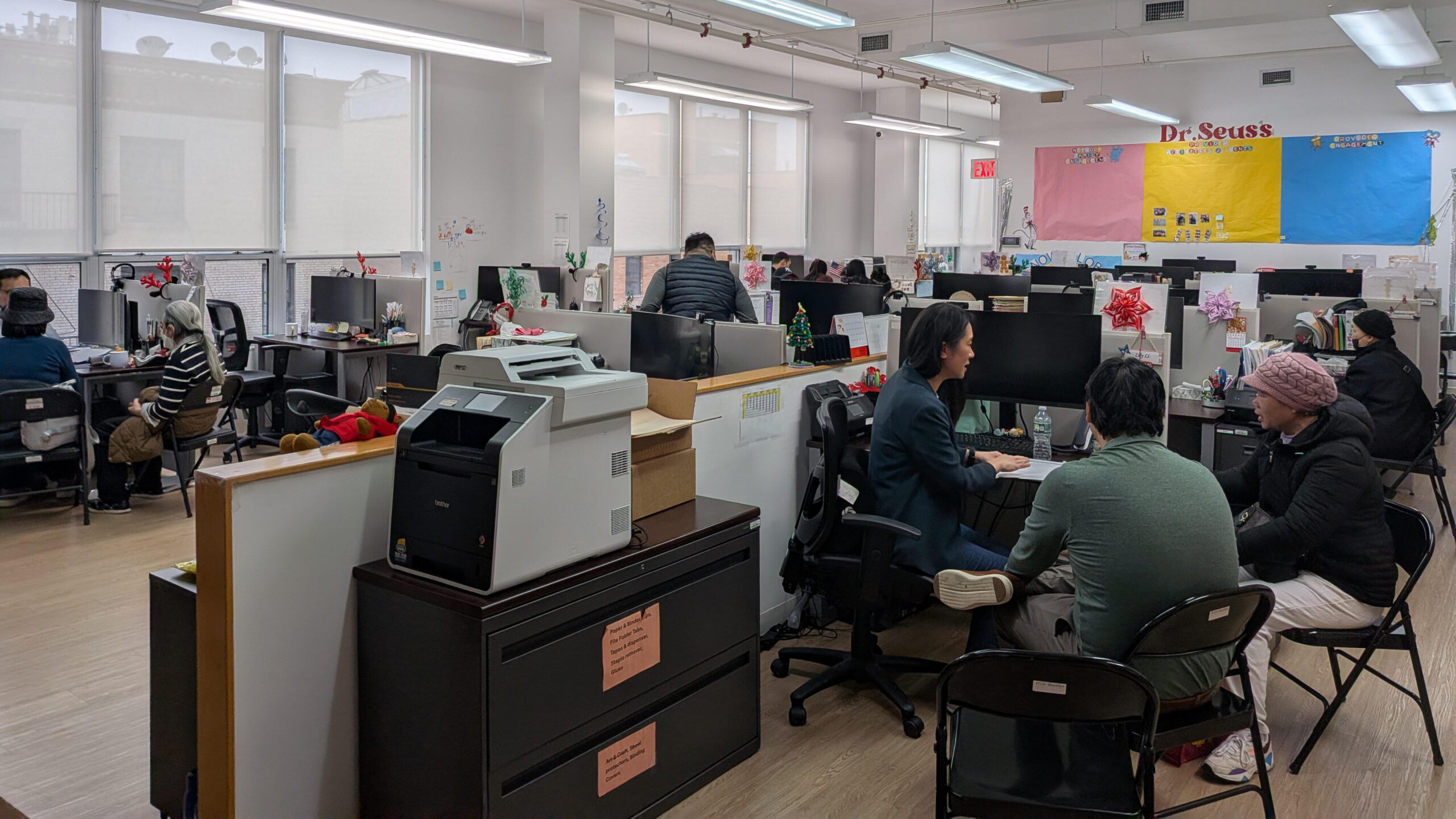
Thank you to the Asian American Law Fund of New York (AALFNY,) AABANY’s Pro Bono & Community Service (PBCS) Committee , the Chinese-American Planning Council, our incredible volunteers, and our community partners for your support at the pro bono legal clinic in Brooklyn on January 10th. Our volunteers met with 24 clients to address legal matters involving housing, wills and trusts, public benefits, immigration,  and workers compensation.

We would like to extend a special thank you to Vishal Chander for providing remote immigration assistance, and to everyone who stayed past 2:30 p.m. to ensure all clients were seen. We are especially grateful to Beatrice Leong, who traveled from Queens in a foot brace and stayed past 3:30 p.m. to assist our final client. Your dedication, including staying later than necessary to ensure no client was turned away, is truly admirable!

In addition to answering legal questions, these clinics aim to train law students and young attorneys on how to communicate complex legal concepts in layman’s terms. We appreciate you taking the time to listen to our clients’ stories and providing them with a space to be heard.

Here’s one of the clients’ comments –”Gary is the best lawyer…. Thanks very much.”

Volunteer attorneys:

  • Vishal Chander
  • Victoria Cheng
  • Francis Chin
  • Jack (Zixu) Hsia
  • Kwok Kei Ng
  • Beatrice Leong
  • Arthur Lin
  • May Wong
  • Jameson Xu
  • Gary Yeung

Interpreters/shadowers:

  • Sam Chen
  • Philip Han
  • Nikita Kohli
  • Tianyuan Shu
  • Albert Tong

Please join us at our upcoming clinics:

January 21st [Manhattan link here] from 6:30-8:30pm, AAFE Community Center, 111 Norfolk Street, NY, NY 10002

February 4th [Queens link here], from 6:30 – 8:30pm, AAFE One Flushing Community Center, 133-29 41st Ave, 2nd Floor, Flushing, NY 11355


March 14th [Brooklyn link here], from 12:30 – 3:30pm, CPC Brooklyn Community Services, 4101 8th Avenue, Brooklyn, NY 11232

To learn more about the Pro Bono & Community Service Committee, visit probono.aabany.org.

Thank you for making a significant difference in our community!

IP Committee Celebrates 2025 Year-End Dinner at Muna with Secret Snowflake Gift Exchange

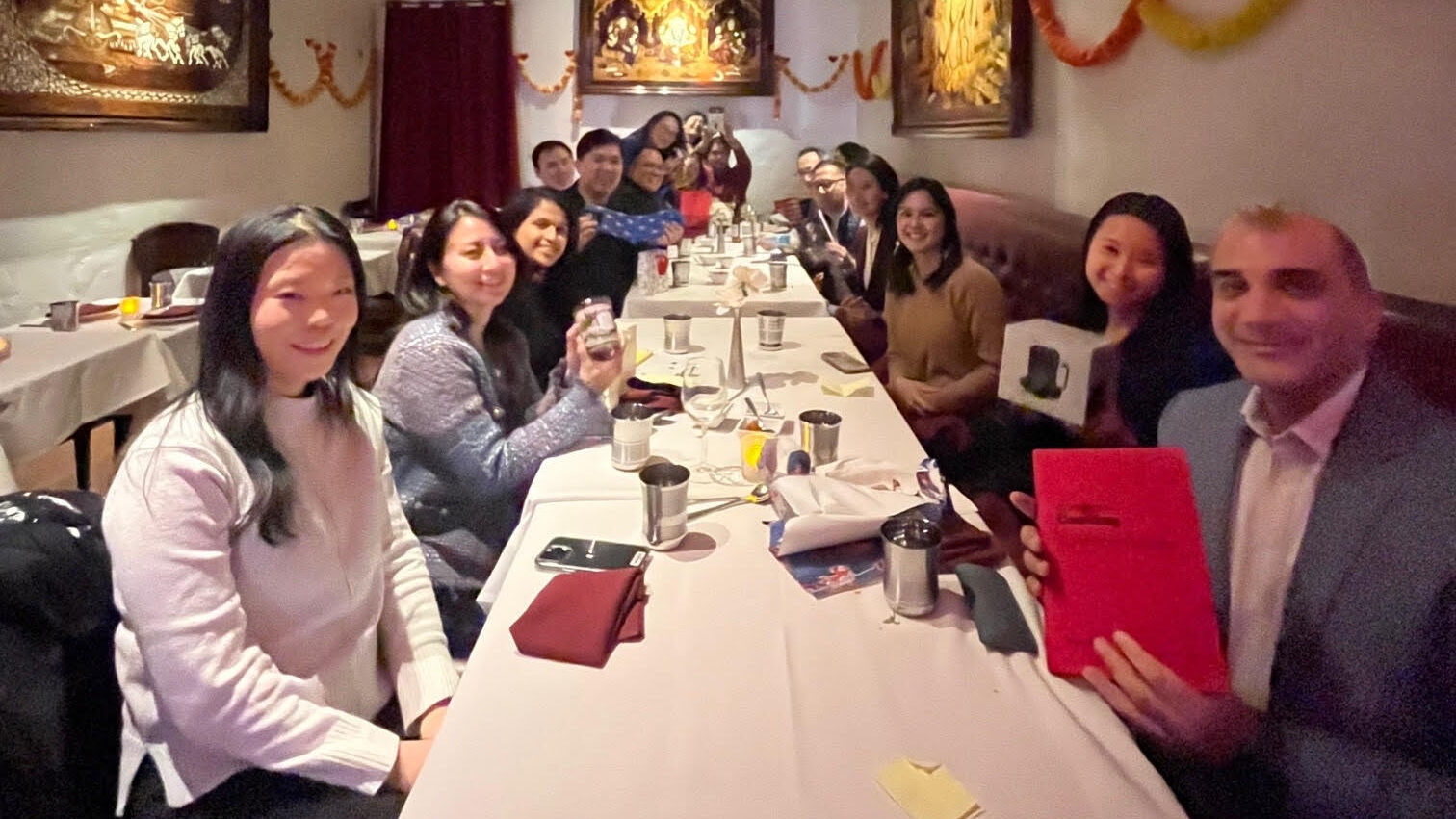
On December 22, 2025, members of AABANY’s Intellectual Property (IP) Committee gathered for a festive close to 2025 at Muna restaurant.

The evening kicked off with a warm welcome as attendees enjoyed a relaxed sit-down dinner where old friends and new faces got to meet and mingle. This gathering has become a favorite way for IP practitioners within the AABANY community to reflect on the year’s accomplishments, share highlights from 2025, and look ahead to what’s to come in 2026.

Adding to the festive spirit, the Optional Secret Snowflake—a light-hearted holiday gift exchange—brought laughs and surprises. Participants drew numbers and exchanged small tokens of appreciation, making the evening feel even more personal and connected.

A heartfelt thank you to everyone who joined us for this special evening. We look forward to many more meals, meaningful conversations, and moments of connection in 2026.

If you’re interested in future dinners, keep an eye on the AABANY calendar for upcoming events.  To learn more about the IP Committee, visit their subpage on the AABANY website.

Request for Survey Participation: Understanding Homelessness and Housing Instability Among AANHPI Population

The Urban Institute, a nonprofit, nonpartisan social and economic policy research organization based in Washington, DC is conducting a study to understand the range of experiences related to precarious housing situations for Asian American, Native Hawaiian, and Pacific Islanders (AANHPIs). Building on Urban Institute’s ongoing research, Unlocking Wealth: Homeownership and Upward Mobility for AANHPIs, this study is funded by the Asian Real Estate Association of America (AREAA) and focuses on AANHPI individuals and families facing homelessness or housing instability.

If you are part of an organization that serves AANHPIs who experience housing instability or homelessness, please consider participating in this survey. This survey aims to document unmet needs, identify gaps in services and data systems, and provide insights to strengthen policies and practices that better support AANHPI communities experiencing housing challenges.

Ideally, the respondent should be someone who can speak to observed experiences of housing instability or homelessness within AANHPI communities. Participation is entirely voluntary. The survey takes approximately 15 minutes and includes questions focused on housing instability, culturally responsive service delivery, and gaps in existing support systems. Feel free to forward the survey link to anyone at your organization you think can speak on these topics. This survey closes on Friday, January 23rd.

You can learn more about the study and access the Voxco survey through the following link.

SURVEY LINK

If you have any questions about this study, please contact the principal investigator, Pear Moraras at nmoraras@urban.org