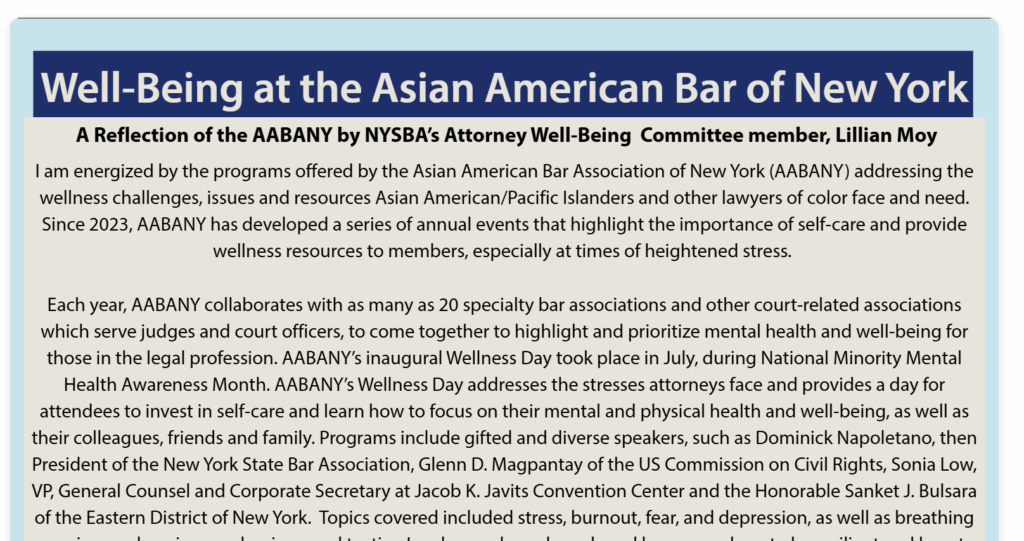
The Asian American Bar Association of New York was recently featured in the New York State Bar Association’s Attorney Well-Being newsletter, The Balance, March/April 2026 issue, highlighting AABANY’s growing commitment to wellness and well-being in the legal profession.
Published by NYSBA’s Attorney Well-Being Program and Lawyer Assistance Program, The Balance spotlights wellness initiatives and resources available to members of the legal community. In its latest edition, NYSBA featured AABANY’s wellness efforts as part of its broader mission to foster collaboration across bar associations and legal organizations throughout New York.
The feature, written by AABANY Member Lillian Moy, recognizes AABANY’s continued investment in building a healthier and more supportive legal community through wellness-centered programming and initiatives. These efforts include AABANY’s annual Wellness Day programming and the recent launch of its Wellness Committee, led by former AABANY President Karen Kim, which aims to help members prioritize mental health and well-being while reducing stigma around these important conversations. As discussions around attorney well-being continue to grow in importance across the profession, AABANY remains committed to creating spaces for connection and support for its members and the broader legal community.
To read the full newsletter, click here. The article appears on page 4.
In recognition of AAPI Heritage and Mental Health Awareness Month, we invite you to attend our upcoming Wellness Retreat on May 16, 2206 at the Blue Cliff Monastery in upstate New York. Tailored for the AABANY community, this retreat offers a dedicated space to foster emotional and mental health while addressing the unique pressures of legal practice. Registration is open until May 14th or when capacity is reached. Additionally, please save the date for our 4th annual Wellness Day on June 13, 2026 at Brooklyn Law School. As a vital component of AABANY’s mission, this event continues to strengthen our supportive network and promote a culture of well-being within the legal profession. Registration for Wellness Day is now open until June 11, 2026. Both events are free and open to AABANY members.
The panel featured two sitting Federal Magistrate Judges: Hon. Ona T. Wang of the Southern District of New York (SDNY) and Hon. James Cho of the Eastern District of New York (EDNY). Both judges shared candid reflections on their paths to the bench and practical advice for prospective applicants looking to apply.
Judge Wang, the first Asian Magistrate Judge in the history of the SDNY, opened by describing how Magistrate Judges work within the federal judiciary. Magistrate Judges are Article I judges who serve eight-year renewable terms and their authority is derived primarily from 28 U.S.C. § 636 and Rule 72 of the Federal Rules of Civil Procedure. On the civil side, they can exercise the full authority of a District Judge when all parties consent to their jurisdiction. On the criminal side, they handle initial appearances, bail and detention hearings, and search warrant applications, though they are not authorized to preside over Federal felony jury trials.
Judge Wang described criminal duty in the SDNY as being “on call in the ER” because for approximately one week once a quarter, a Magistrate Judge handles every Federal arrest, presentment, and search warrant application arising out of Manhattan. This can include complex multi-jurisdictional investigations reaching across the globe. At the same time, she manages a civil docket of approximately 200 to 300 cases, handling scheduling, discovery disputes, settlement conferences, and reports and recommendations on dispositive motions.
Judge Cho, who has served in Brooklyn since 2021, highlighted several important distinctions between the two districts. In the EDNY, Magistrate Judges are assigned to nearly every civil case filed and handle all pretrial supervision from the outset and with a direct consent track that allows parties to proceed without a District Judge entirely. In the SDNY, by contrast, Magistrate Judges only begin to work on a civil case once a District Judge issues a referral order. The scope of that referral may be for general pretrial matters, settlement only, or specific motions, and fundamentally shapes the Magistrate Judge’s involvement.
Judge Cho also noted that EDNY Magistrate Judges conduct jury selection for other judges and take guilty pleas which are tasks generally not performed by SDNY Magistrate Judges. Meanwhile, SDNY Magistrate Judges handle a higher volume of Social Security and habeas corpus cases.
Judge Cho and Judge Wang provided a detailed roadmap of the selection process. The written application includes a 11-page fillable form on the SDNY website and asks candidates to identify significant cases from the past five years, along with adversaries who may be contacted as references. Both Judge Wang and Judge Cho advised candidates to be selective in listing cases and to choose matters that were meaningful and that demonstrate the breadth of their experience. They also recommended giving adversaries a professional heads-up that they may receive a call because the committee is also evaluating professional conduct.
The selection process unfolds in two rounds. First, a Merit Selection Panel of practicing lawyers reviews applications and conducts interviews lasting typically 20 to 30 minutes in length. This Selection Panel then recommends five finalists per vacancy to the Board of Judges. In the SDNY, these interviews are conducted strictly in person. Second, the five finalists interview with the full Board of Judges. Both rounds move quickly and are tightly scheduled.
Judge Cho emphasized that the interview can be decisive, even for candidates who may not appear to be frontrunners on paper. He advised candidates to use the first question, invariably some version of “Why do you want to be a Magistrate Judge?” as an opportunity to tell their authentic story and to weave together themes of their relevant experience to public service and personal motivation. His own opening, for example, drew on his background as the son of immigrants, his experience teaching legal writing, and his years as a Federal civil litigator and Assistant United States Attorney.
Judge Wang offered a note of calibration for SDNY interviews specifically. Given that the Panel moves on time, a lengthy opening is not feasible. She recommended a focused, one-to-two-minute answer that signals a clear theme and invites follow-up questions. Her own theme was being a “helper,” a thread she drew through her clerkship and her extensive settlement and mediation experience.
Both Judges stressed that no candidate is a perfect fit on paper. In fact, Judge Wang had not conducted a trial before joining the bench and Judge Cho had no criminal experience. The Board of Judges is not administering a knowledge test. They are evaluating the candidates’ temperament and genuine motivation for public service. Candidates should acknowledge any gaps in their backgrounds honestly and then redirect toward their strengths.
Judge Cho and Judge Wang were also candid about the value of professional networks at key stages in the process. Once a candidate gains traction after securing a first-round interview, they encourage applicants to reach out to well-connected mentors and colleagues who might be willing to speak on their behalf to members of the Selection Panel or the Board of Judges. Judge Wang shared a memorable lesson from her own process when a close personal contact who was a sitting District Judge learned of her application through a reference call for another candidate and independently volunteered a strong endorsement. She advised candidates not to leave that kind of advocacy to chance.
For those who may feel their background does not fit a traditional mold or who did not succeed in a prior application cycle, both judges offered genuine encouragement. Judge Wang noted that it is not unusual for candidates to apply more than once and that a changed political environment may make the current cycle particularly competitive. Yet, this should not deter anyone from applying. The advice is to focus on each stage as its own challenge, prepare thoroughly for interviews with mock sessions – Judge Wang mentioned AABANY as a great source that can help candidates coordinate these – lean into your network, and to approach the process with the utmost authenticity and confidence.
To learn more about the AABANY Judiciary Committee, gohere.
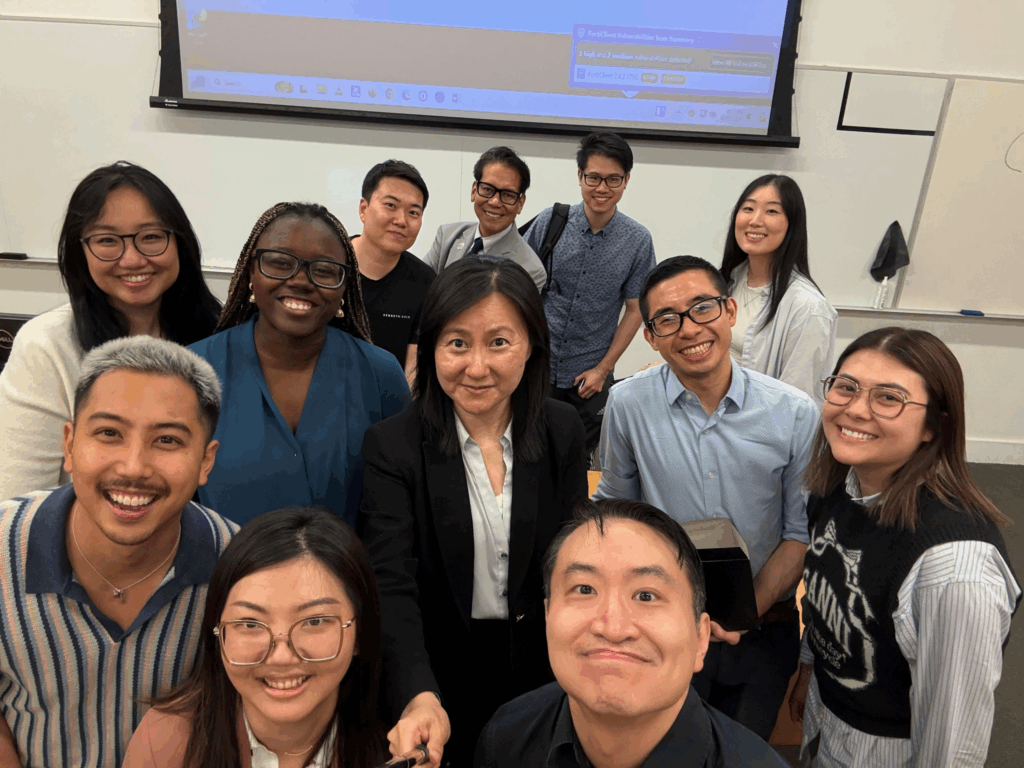
On April 15, 2026, the Asian American Bar Association of New York (AABANY)’s LGBTQ Committee, in collaboration with the Solo and Small Firm Practice Committee, hosted a dynamic and insightful panel at Fordham Law School titled “Table Talk: Careers Beyond Big Law.” Generously co-sponsored by Fordham APALSA and Fordham OUTLaws, with support from AABANY’s Student Outreach Committee, the event brought together an accomplished group of legal professionals and an engaged audience of students and early-career professionals eager to explore alternative pathways within the legal profession.
Mina Yi, a Fordham Law student representing Fordham APALSA, served as moderator and kicked off the discussion by asking the panelists to introduce themselves, their practice areas, and their current roles. Then, she asked them to share their advice on how students can pursue non-traditional or non-Big Law career paths.
The panel featured a diverse lineup of speakers, including Gregory Hom (Nixon Peabody), Kayla Lucia (Mintz), Yen-Yi Anderson (Anderson & Associates), Thomas Wu (New York State Housing Finance Agency), Daobo Wang (New York State Unified Court System), and Glenn Magpantay (U.S. Commission on Civil Rights). Almost all the speakers were AABANY leaders: Gregory is the current Co-Chair of the LGBTQ Committee. Kayla was Co Chair during the last fiscal year, and Daobo is Co-Chair this fiscal year. Yen-Yi is Co-Chair of the Solo and Small Firm Practice Committee. Glenn is a Director on AABANY’s Board.
The speakers’ careers spanned public finance, employment litigation, immigration, small law firm practice, government service, judicial clerkships, and civil rights policy. Their varied trajectories illustrated a central theme of the evening: legal careers are rarely linear. The panelists conveyed that professional fulfillment often emerges from adaptability in one’s circumstances, persistence, and meaningful relationships.
From the outset, panelists demystified the notion of a singular “Big Law path.” Gregory Hom offered a nuanced perspective on large-firm practice, noting that not all firms operate under the same high-turnover model often associated with the industry. He mentioned that instead, firms like Nixon Peabody prioritize sustained interest in specialized practice areas, such as his own work in public finance, and rely heavily on faculty recommendations and personal connections in hiring. In his daily practice, he acts as a “watchdog” for state agencies and investment banks, meticulously reviewing documents to ensure securities law disclosures are consistent and avoid SEC investigations. Gregory shared that he secured his role after heavily leaning on a professor for guidance, and he recommended that students not shy away from doing the same.
Kayla Lucia echoed this sentiment, reflecting on her own nontraditional journey, starting in Legal Aid, then moving to “Midlaw,” and eventually to a major firm specializing in employment law. She noted that she transitioned into private practice to find a more sustainable professional life and to avoid the burnout she felt in the public interest sector. Kayla encouraged students to think critically about the kind of professional and personal life they hope to build, and to consider factors like team size and environmental competitiveness, rather than defaulting to prestige-driven choices. Her current work involves bridging the gap between poorly written statutes and the concise answers employers need, while also assessing the factual viability of litigation claims.
Yen-Yi Anderson provided a compelling account of forging an independent path to starting her own small firm practice. She recounted that her career did not follow a direct route after law school, spending years in nonprofit and media work before returning to the legal field and building her own practice through relationships she had developed with foreign entrepreneurs. In a small-firm setting, she emphasized that attorneys must “wear many hats,” balancing legal work with responsibilities such as managing hiring, payroll, office management, and client development. At the same time, she noted that her practice areas in immigration and commercial litigation require constant attention to evolving laws and policies, which makes adaptability essential. Despite the challenges, Yen-Yi relished the autonomy that comes with running her own firm. She is able to choose her clients, shape her workload, and maintain flexibility in her schedule to allow her to prioritize family alongside her career.
The discussion was further enriched by perspectives from the public sector, illustrating how legal work can directly shape public policy and address community needs. Thomas Wu detailed his role at the New York State Housing Finance Agency, where legal practice operates at the intersection of law and urban development. In this capacity, attorneys work alongside policymakers and financial institutions to structure deals that support affordable housing initiatives across the state. He described the work as both technical and mission-driven as it requires attorneys to translate legal frameworks into practical tools that enable large-scale development projects. Thomas also emphasized the importance of fellowship programs, such as the Excelsior Fellows Program, as accessible and structured entry points into government service for recent graduates seeking substantive experience and long-term pathways into public sector careers.
Similarly, Glenn Magpantay offered a broader, long-term perspective shaped by decades of experience across civil rights enforcement, nonprofit leadership, AABANY, and his current role as a Commissioner on the United States Commission on Civil Rights. Glenn encouraged students to view their careers as evolving journeys that may have uncertainty and deviation from previous expectations. Glenn advised, “Don’t worry too much about getting it right the first time—your career will evolve, and you’ll get where you want to go,” reinforcing the idea that resilience and adaptability with the legal community are often more determinative of long-term success.
The discussion also highlighted the critical role of networking and mentorship. Speakers consistently emphasized that relationships, such as those cultivated through bar associations like AABANY and broader community engagement, are often instrumental in securing opportunities. Glenn noted that in a competitive field where many candidates appear equally qualified on paper, it is frequently personal connections and trusted recommendations that set applicants apart.
During the Q&A portion, one student asked how the law is actually applied in day-to-day practice as opposed to the case-based learning emphasized in law school. Speakers responded by illustrating their actual responsibilities in vivid detail. Whether it was Gregory ensuring regulatory compliance in complex financial disclosures, Kayla interpreting ambiguous statutes to advise clients, or Daobo drafting judicial opinions grounded in meticulous legal research, each speaker illustrated how legal reasoning operates in real-world contexts. These insights helped bridge the gap between classroom learning and professional application where students were able to gather a clearer understanding of what legal work truly entails.
The evening concluded with an interactive session in which attendees also introduced themselves and shared their aspirations, followed by informal networking over pizza. Thank you to AABANY’s LGBTQ Committee and Solo and Small Firm Practice Committee for organizing and hosting this thoughtful and engaging program, as well as to Fordham APALSA and Fordham OUTLaws for their generous co-sponsorships and collaboration. Special appreciation also goes to the Student Outreach Committee for their continued support in creating meaningful opportunities for students to engage with practitioners across diverse areas of the legal profession.
WASHINGTON – On the evening of Saturday, April 25, an armed individual attempted to attack a dinner event hosted by the White House Correspondents’ Association in Washington, DC. The National Asian Pacific American Bar Association (NAPABA) unequivocally condemns this act of violence. We are grateful for the bravery, professionalism, and swift action of law enforcement, including the officer who was shot, and that the President and all those who attended the event are safe.
An investigation of the shooting remains pending. The U.S. Attorney announced that the perpetrator will face federal criminal charges, and the Acting U.S. Attorney General—at this preliminary stage—advised that the perpetrator likely targeted members of the administration, including the President.
The event was intended to celebrate the First Amendment. Though an investigation behind the motivations of this shooting is ongoing, our constitutional democracy and the rule of law depend on the peaceful resolution of our differences, whether through robust and vigorous debate, our institutions like the judiciary, or the ballot box. Violence, whether motivated by political animus, hate, or otherwise, is antithetical to our core values as a community and as a Nation.
###
The National Asian Pacific American Bar Association (NAPABA) represents the interests of more than 80,000 Asian Pacific American (APA) attorneys, judges, law professors, and law students, as well as over 90 national, state, and local APA bar associations. Founded in 1988, NAPABA promotes justice, equity, and opportunity for APA legal professionals and Asian American, Native Hawaiian, and Pacific Islander communities. They foster professional development, advocacy, and community involvement.
NAPABA is proud to share a collection of multilingual immigration law resources designed to support the Asian American and Pacific Islander community (AAPI). The resources, which are available here, address “What to Know at Home” and “What to Know at the Airport” in the event of interactions with immigration enforcement authorities.
Originally produced by experts at the American Immigration Lawyers Association (AILA), the resources are now available in Chinese, English, Hindi, Hmong, Korean, Tagalog, and Vietnamese—expanding access to critical educational information in the languages our communities speak and understand.
These complimentary materials are available to our members, our over 90 affiliate and national bar organizations, and to the public.
NAPABA is grateful to our national partners at the National Conference of Vietnamese American Attorneys (NCVAA), the National Korean American Bar Association (NKABA), the National Filipino American Lawyers Association (NFALA), and the Hmong American Bar Association for their generous time and efforts in ensuring quality and accuracy in the translations.
NAPABA and our partners are committed to providing timely educational resources for our members, affiliates, and the many vibrant AANHPI communities we all serve.
Questions? Please contact NAPABA’s Advocacy and Policy Team at [email protected].
Disclaimer: The information provided and in any associated attachments is for informational and educational purposes only and does not constitute legal or other professional advice. It is not intended to create, and receipt of it does not establish, an attorney-client relationship. This information should not be relied upon as a substitute for legal or other professional advice tailored to your specific circumstances and may not be used to avoid penalties under law.
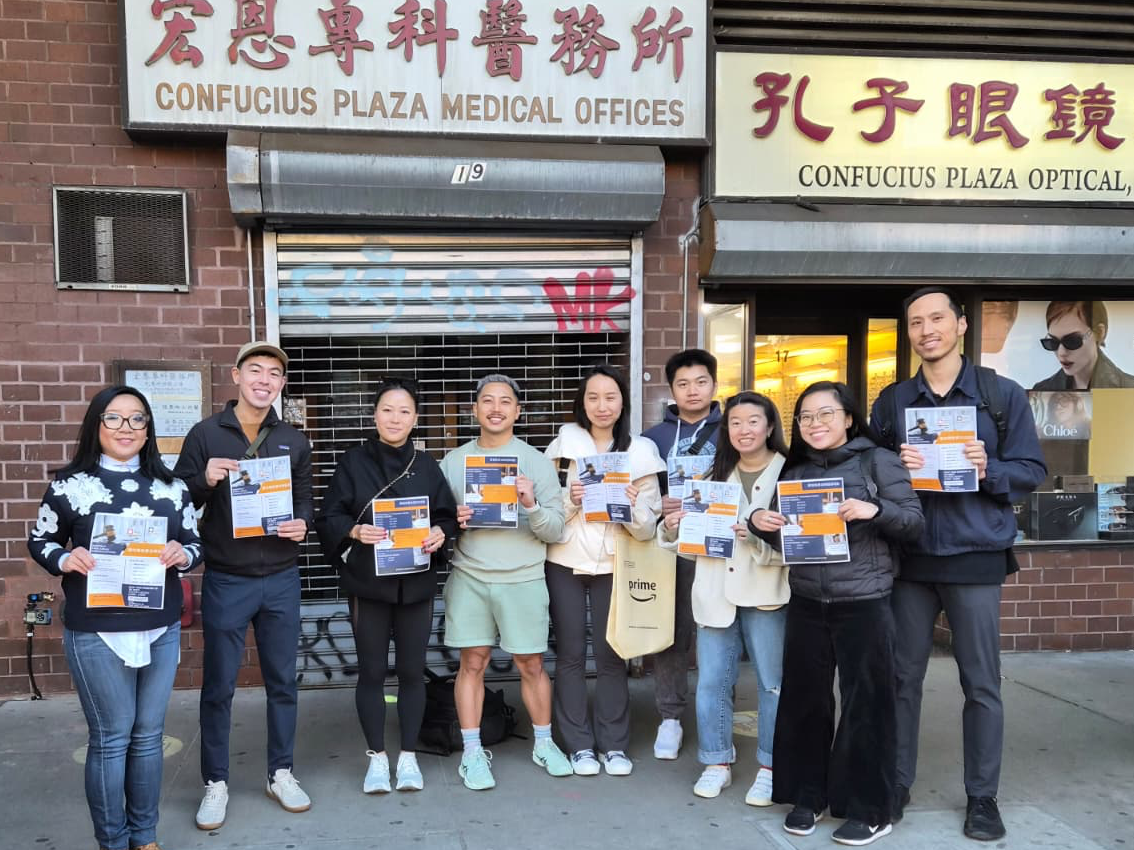
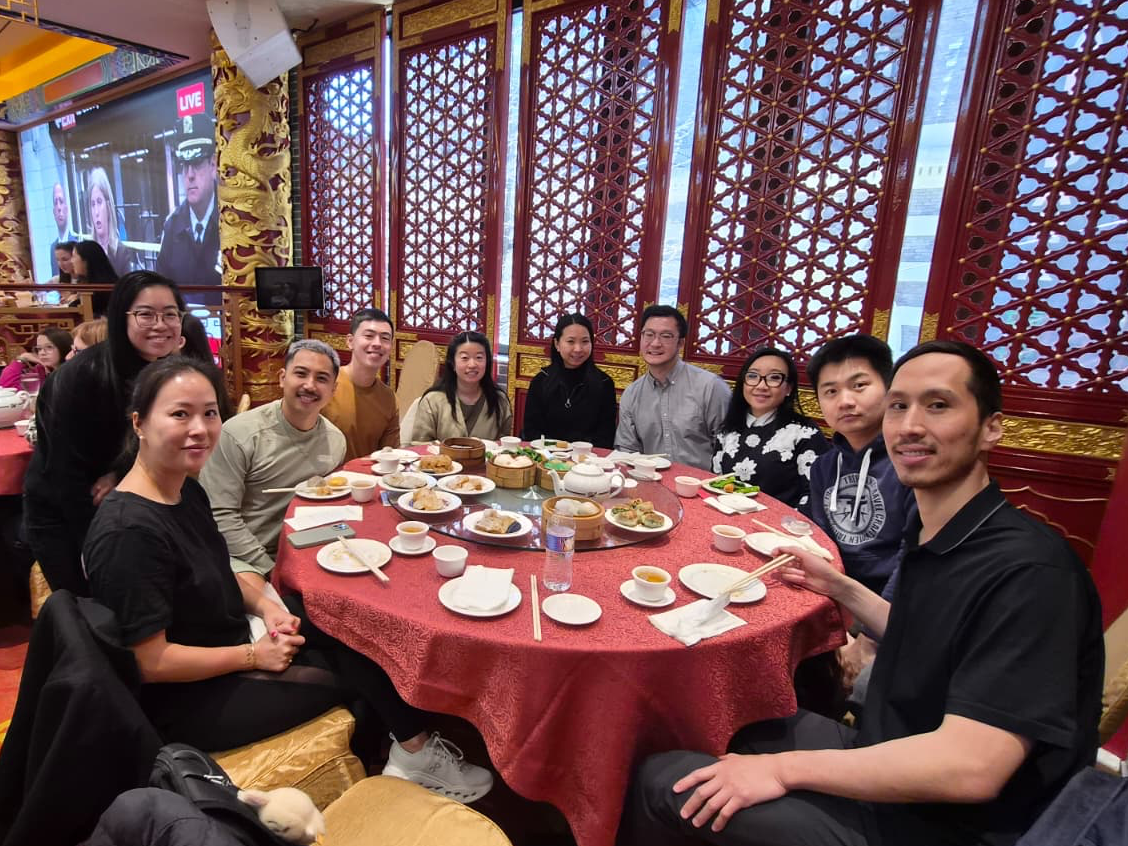
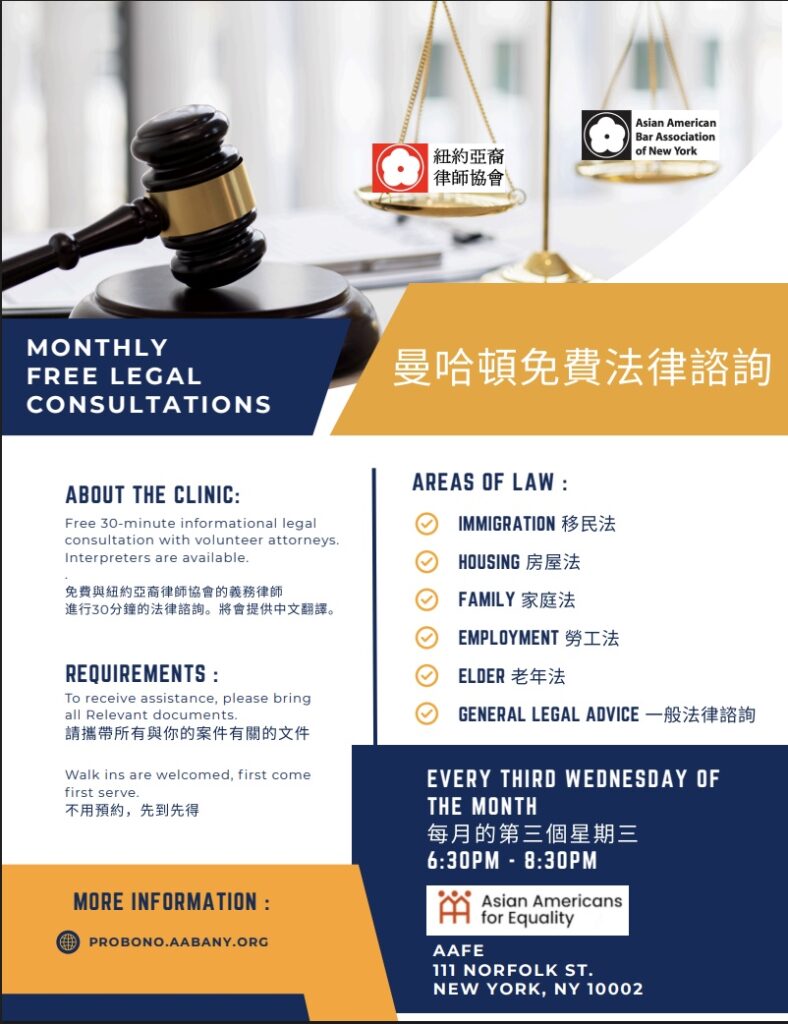
On Saturday, April 11, armed with stacks of flyers and information, volunteers fanned out across Chinatown in pairs to distribute flyers for AABANY’s upcoming Pro Bono Clinics in Manhattan. The Clinics provide brief in-person legal consultations in Mandarin and Cantonese, ensuring that language barriers or lack of internet access don’t stand in the way of justice.
Legal issues can be daunting, but a friendly face and a flyer in your native language can make all the difference. By walking the blocks of the “heart of Chinatown,” volunteers were able to engage directly with small business owners and residents, answer immediate questions about clinic schedules, and bridge the gap between the legal profession and the communities AABANY serves.
After volunteers distributed the flyers, they enjoyed delicious dim sum at the world famous Golden Unicorn.
Thank you to our volunteers:
Philip Han Arthur Lin Alexandra Ly Zhibiao Patrick Peng Mark Garner Wendy Zeng Helen Ding Xinyue Zhu Carmen Huang
and PBCS Co Chairs Gary Yeung Beatrice Leong
To learn more about the Pro Bono and Community Service (PBCS) Committee click here.
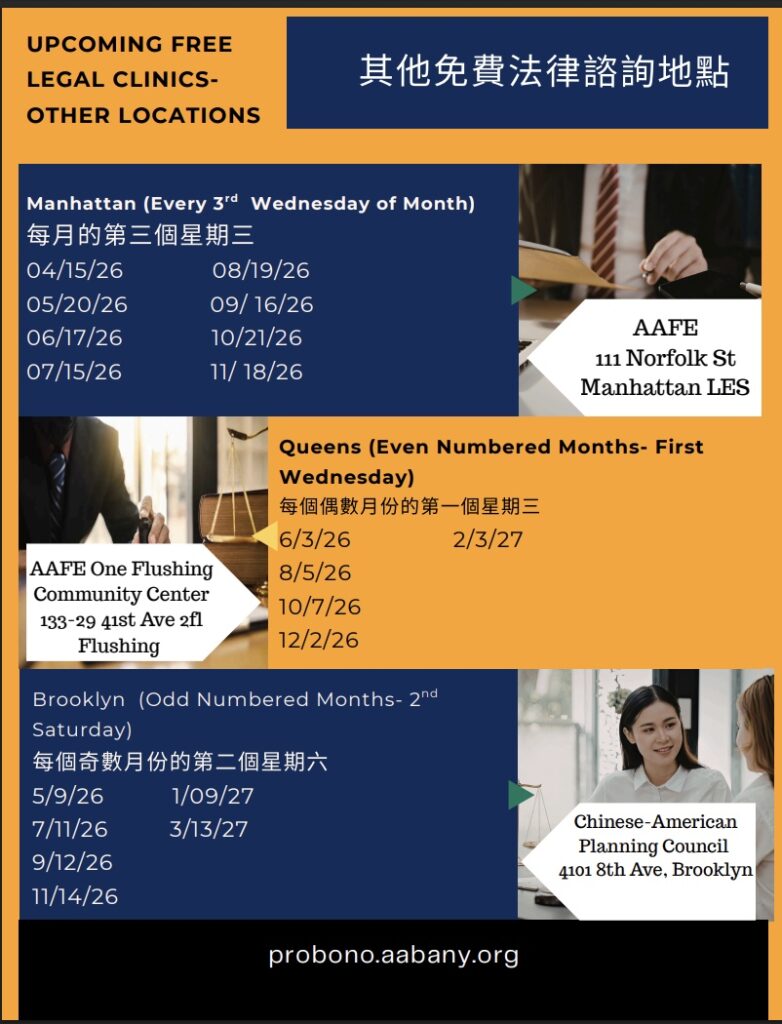
Below are some of the upcoming Pro Bono Clinics expected to take place across the Manhattan, Queens, and Brooklyn boroughs. We encourage volunteer attorneys and students to attend, support and help expand access to justice in our communities.
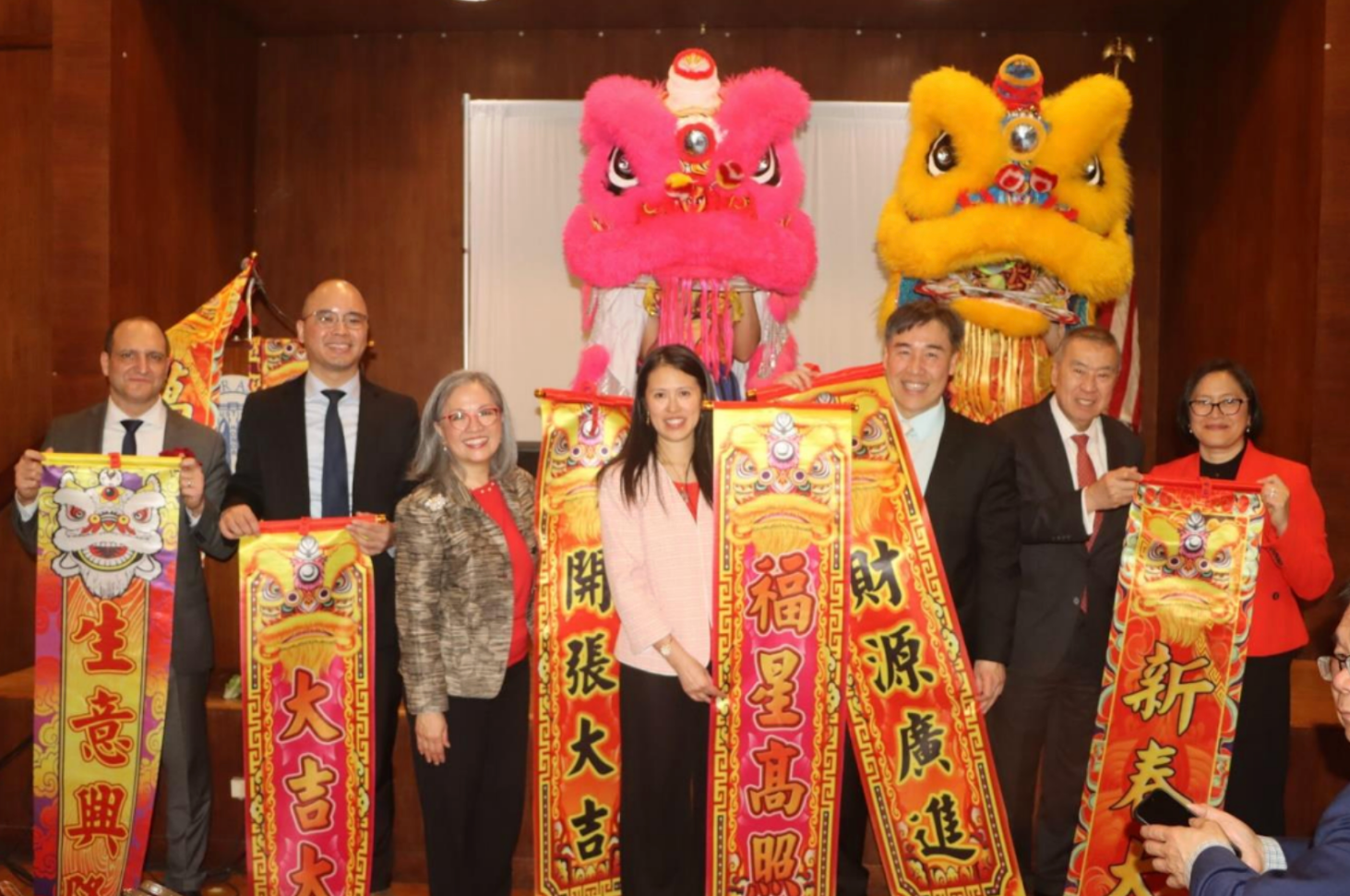
On April 2, 2026, the Brooklyn Daily Eagle published an article covering the Brooklyn Bar Association (BBA)’s inaugural Lunar New Year Celebration, which the Asian American Bar Association of New York (AABANY) participated in as a co-sponsor.
The event, which drew more than 200 members of Brooklyn’s legal community, honored two distinguished AAPI legal professionals: Hon. Peggy Kuo, U.S. Magistrate Judge for the Eastern District of New York, and Kin Ng, Esq., Bureau Chief of Trial Bureau II at the Kings County District Attorney’s Office. Both honorees are also AABANY members. Kin co-founded AABANY’s Prosecutors Committee. The honorees were recognized for their decades of exemplary service and their contributions to the Asian American community.
The article highlights remarks from both honorees. Judge Kuo reflected on the personal significance of being honored in Brooklyn, alluding to A Tree Grows in Brooklyn, a book she loved to read as a child. The article also touches on Judge Kuo’s candid reflection on the challenges she faced in forging her own path in public service. Judge Kuo noted that she had to “find her own way” without a “playbook or a script.”
Kin Ng spoke to the transformative growth of AAPI representation in the Kings County DA’s office over the past three decades. He recalled that in 1991 there were only six Asian ADAs with no seniors or managers out of a staff of 600. Today, there are more than 50. He emphasized that “diversity matters” and is a “source of strength.”
For the complete coverage on the evening and extraordinary careers of the honorees, read the full article in the Brooklyn Daily Eaglehere.
The Administrative Board of the Courts is soliciting public comment on six proposed amendments to New York court rules. The six proposed rule changes are outlined below and open for public comment:
Request for Public Comment on a proposal to add a new 22 NYCRR § 202.16-d relating to the filing of papers in matrimonial actions[Comments due May 8].
A new rule (22 NYCRR § 202.16-d) would require the Supreme Court to promptly deliver all papers in matrimonial actions including judgments of divorce, ancillary orders, and post-disposition documents directly to the county clerk instead of entrusting original papers to attorneys or litigants to file. The proposal addresses a documented problem in some courts outside New York City where unfiled or late-filed papers have made it difficult for parties to enforce divorce judgments on matters like child support, custody, and equitable distribution. To read more click here.
Request for Public Comment on a proposal to amend 22 NYCRR §§ 206.3 and 206.26 to authorize the Presiding Judge of the Court of Claims to refer matters to a judicial hearing officer in certain circumstances [Comments due May 8].
The proposal would amend 22 NYCRR §§ 206.3 and 206.26 to authorize the Presiding Judge of the Court of Claims to refer matters to a judicial hearing officer (JHO) upon the consent of the parties, on a judge’s recommendation, or on the Presiding Judge’s own initiative. The change is driven by the surge of cases filed under the Adult Survivors Act which includes approximately 1,700 civil claims against state agencies, more than 1,500 of them against the Department of Corrections and Community Supervision. Many of these cases are now approaching trial readiness, and retired Court of Claims judges serving as JHOs would help manage the resulting backlog. To read more click here.
Request for Public Comment on a proposal to add two new rules to authorize e-filing in the City Courts outside New York City and the District Courts [Comments due May 8].
Two new rules (22 NYCRR §§ 210.4-a and 212.4-a) would extend mandatory e-filing via NYSCEF to the City Courts outside New York City and the District Courts. This follows last year’s expansion of mandatory e-filing to the Supreme Court (Civil Term), NYC Civil Court, and the Court of Claims. The proposed rules mirror the framework adopted for NYC Civil Court and preserve exemptions for self-represented litigants and attorneys without e-filing capability. Immediate plans call for rolling out NYSCEF to the 11 City Courts in the 9th Judicial District. To read more click here.
Request for Public Comment on a proposal to ensure that summary housing proceedings involving the Red Hook Houses will continue to be adjudicated at the Red Hook Community Justice Center [Comments due May 8].
Amendments to 22 NYCRR §§ 208.42 and 208.43 would remove the requirement that NYCHA be a party to a proceeding in order for housing cases involving the Red Hook Houses to be heard at the Red Hook Community Justice Center. The change is prompted by the Red Hook West Houses’ ongoing conversion under the federal RAD/PACT program, which will transfer day-to-day management to a private LLC. Without the amendment, those cases would shift to Brooklyn Housing Court — a result that local judges and advocates say would deprive residents of the community court’s integrated social services, which have eliminated evictions among participating residents since 2022. To read more click here.
Request for Public Comment on a proposal to amend 22 NYCRR Part 137 relating to the Attorney-Client Fee Dispute Resolution Program, to increase certain threshold monetary amounts [Comments due May 15].
Proposed amendments to 22 NYCRR Part 137 would raise two monetary thresholds in New York’s Fee Dispute Resolution Program: the maximum amount in dispute (absent party consent) would increase from $50,000 to $75,000, and the threshold triggering a three-arbitrator panel would rise from $10,000 to $20,000. The $50,000 cap has been in place since 2002; adjusted for inflation it would be roughly $91,500 today. Program caseloads have dropped 38% over the past decade even as average disputed amounts have grown, a trend the Board of Governors attributes in part to the eroding value of the cap. To read more click here.
Request for Public Comment on a proposal to amend Commercial Division Rule 14 regarding good faith consultations on discovery disputes [Comments due May 22].
The Commercial Division Advisory Council proposes revising Rule 14 of the Commercial Division Rules (22 NYCRR § 202.70) to strengthen and modernize its good-faith consultation requirements for discovery disputes. Key changes would require counsel to make a “thorough, good-faith” effort to resolve or narrow disputes before contacting the court; submit a formal certification (rather than a mere representation) detailing the date, manner, participants, results, and whether cost-shifting or proportionality alternatives were discussed; and allow courts to deny discovery motions filed without satisfying the rule. The revisions align Rule 14 with Uniform Civil Rule 202.20-f and draw on the recently adopted Texas Business Court rules. To read more click here.
How to comment: Written comments may be submitted by email to [email protected] or by mail to David Nocenti, Esq., Counsel, Office of Court Administration, 25 Beaver Street, 10th Floor, New York, NY 10004. Comments are public records subject to disclosure under the Freedom of Information Law.
All six proposals, along with supporting memoranda and proposed rule text, are available on the UCS public comment page. Submission of a proposal for comment does not constitute an endorsement by the Unified Court System or the Office of Court Administration.
Justice Karen Lin, a longtime member of AABANY and former Co-Chair of the Pro Bono and Community Service Committee (PBCS), has been appointed to the Appellate Term for the Second Department of the New York State Supreme Court. This appointment marks a historic milestone as Justice Lin is the first Asian American woman to serve in this role. As a lifelong public servant and sitting Second Department Justice, she brings decades of experience and a deep commitment to justice to one of the most impactful appellate tribunals for everyday New Yorkers.
Breaking Barriers: The Significance of “the First” Justice Lin’s appointment to the Appellate Term for the Second Department carries historic significance. Yet, for Justice Lin, the meaning of this milestone is inseparable from the community that shaped her.
Born and raised in Queens by her immigrant parents, Justice Lin’s story is rooted in the borough she now serves. At a time when Asian Americans were significantly underrepresented in both civic and professional spaces within Queens County, her early experiences acutely instilled in her a heightened awareness of the importance of being seen and heard. As a child, she recalls helping interpret for her parents who spoke limited English. She also recalls attending school events where she was one of the few Asian American faces in the room. These moments made her realize the significance of representation, or the lack thereof. Coupled with her parents’ tireless work ethic and emphasis on community, these experiences profoundly shaped her sense of justice and responsibility to her community.
Despite Asian Americans comprising more than 27 percent of the population in Queens, they have historically remained underrepresented on the bench. While precise figures vary by dataset, estimates by the Brooklyn Daily Eagle suggest that fewer than 10 percent of judges in Queens County identify as Asian. This number is even lower statewide as according to the New York State Unified Court System’s 2024 Judicial Demographics Report, only about 5 percent of judges statewide identify as Asian. These figures highlight the persistent gap between the Asian American community and their representation within the judiciary.
For Justice Lin, the awareness of this disparity came into sharper focus back in 2022, when she grappled with these demographic realities during her campaign for Queens Civil Court. She recognized both the urgency and the responsibility to step forward.
Now, in 2026, as Justice Lin assumes her role on the Appellate Term, she reflects on both the progress made and the work that remains. While her appointment marks a historic milestone, Justice Lin is candid about what the broader implications of her distinction as “the first” means.
“We shouldn’t still be talking about ‘firsts’ in 2026,” she notes. “It matters to break that ceiling—but it matters even more that we are not the only ones.” Justice Lin maintains that her appointment is part of a larger trajectory which she hopes will continue to open doors for others who will follow and ultimately surpass her.
“I may be the first,” she reflects, “but I certainly do not want to be the last. And I won’t.”
Diversity and Perspective at the Appellate Term In her run for the Queens Civil Court in 2022, Justice Lin noted, “The air in the room changes depending on who is in it.” Now, as Justice Lin assumes her seat at the Appellate Term for the Second Department, she brings her philosophy into a new and vastly different judicial environment.
The nature of judging at the appellate level is necessarily collaborative. Rather than presiding over a single courtroom, justices at the Appellate Term engage in a rigorous discussion of the law. The presence or absence of diverse perspectives can play a significant role in the nature of judicial decision-making.
“The lens through which we interpret the law is shaped by our lived experiences,” Justice Lin explains. “It matters who is in that room.”
The Appellate Term occupies a uniquely consequential position within New York’s judicial system. For many New Yorkers navigating housing disputes, consumer debt matters, and low-level criminal cases arising from the Civil Court and Criminal Court, the Appellate Term often represents the primary avenue for reviewing decisions made in those courts. As such, this court plays a critical role in ensuring public confidence in the fairness and legitimacy of the judicial process and of everyday challenges faced by many families and individuals. Justice Lin approaches this responsibility with a deep awareness of the communities served by the court. As a lifelong Queens native and an experienced legal professional, Justice Lin brings a grounded perspective to the bench and seeks to ensure that the appellate review is conducted with both rigor and awareness.
A Jurist Grounded in Care From civil rights attorney to legislative counsel, from Housing Court Judge to Court Attorney-Referee in Surrogate’s Court, Justice Lin has been guided by a single constant: care.
Justice Lin’s decade as a court attorney referee in Surrogate’s Court, where she handled sensitive guardianship matters, reinforced the centrality of due process, particularly for vulnerable individuals. In those proceedings, she understood the risks of presuming incapacity based solely on diagnosis or circumstance. Instead, she stresses that every individual is entitled to a meaningful hearing where their voice is heard.
This philosophy carried directly into Justice Lin’s work on the trial bench, where she implemented practices designed to make the courtroom more accessible. For example, she required in-person appearances in certain matters involving self-represented litigants, recognizing that virtual proceedings—while efficient—can inadvertently exclude individuals who lack access to technology or familiarity with digital platforms. In-person appearances allowed her to better assess credibility, clarify the relief being sought, provide language support, offer flexible scheduling, promote accessibility for litigants with disabilities, and ensure that litigants could express themselves in their own words. Similarly, her practice of inviting court users to indicate their preferred pronouns reinforces the principle that every individual who enters the courtroom is entitled to be treated with respect.
To illustrate, Justice Lin described a family conflict case she dealt with where a father passed away, leaving his home to only two of his children and excluding the others. Justice Lin guided the family through structured discussion by helping each member articulate concerns and expectations by meeting with them individually. This ultimately fostered a mediated resolution that balanced the legal framework with the opportunity for members of the family to retain some control over their outcome. In the end, the siblings reached an agreement to divide the home equally among all of the children.
“The court cannot advocate,” she notes, “but it can ensure fairness, dignity, and that due process is fully respected.”
A Career Defined by Purpose Long before she entered the legal field, Justice Lin was already cultivating an ethos of advocacy at the University at Buffalo. As an undergraduate, she noticed that Asian American history and experiences were largely absent from the curriculum. Determined to address this gap, she petitioned the history department to introduce a course on Asian American history which had never previously been offered. Simultaneously, she co-founded the University’s Asian American student organization, the Asian American Students Association (AASA) and served as its first president where she organized cultural programming and panel discussions to highlight the contributions of Asian Americans on campus. These initiatives included guest lectures, heritage month celebrations, and workshops that engaged the broader student body in conversations about diversity and inclusion. Reflecting on these formative years of her life, Justice Lin noted, “I wanted students like me to see themselves in the stories being told and to have a community where our voices mattered.”
A couple years later, Justice Lin championed these same values through her leadership with AABANY’s Pro Bono and Community Service Committee (PBCS), where she served as Co-Chair. During the COVID-19 pandemic, when the need for legal services increased significantly, she played an instrumental role in promoting access to legal services by expanding Pro Bono Clinics to underserved communities in Queens. Building on this work, Justice Lin highlights that meaningful legal assistance requires the ability to communicate effectively, especially with individuals who struggle to find services in a language they understand. She speaks of her time with PBCS, describing it as the “best committee ever” and her service as both a “great joy and privilege.” Additionally, she praises AABANY’s Pro Bono Clinics as an invaluable resource for individuals with limited English proficiency.
Ultimately, in each stage of her professional journey, Justice Lin has consistently asked herself: “Where can I be helpful?”
Lifting the Next Generation As a mentor and active participant in programs such as the The Sonia & Celina Sotomayor Judicial Internship Program, Justice Lin is deeply committed to cultivating the leaders of tomorrow. She suggests that a successful legal career rests on a foundation of competence and character. She encourages students and young professionals to strive for mastery in their chosen field. “Be as good at it as you can be,” she advises, because when opportunities arise, “you better be ready to hit the ground running.” Competence, she notes, is central to reputation as it ensures that professionals are prepared to perform effectively in any high-stakes environment.
Justice Lin also stresses that technical skill alone is not enough. Equally important is how one treats others. “Your competence shapes your reputation,” she explains, “but so does how you treat people.” She believes in a universal standard of decency and she encourages individuals from all paths of life to treat everyone—from the janitor to the judge—the way they would want themselves or a loved one treated. She reminds us that “people may forget what you did but they will remember how you made them feel.”
Throughout her career, Justice Lin has also rejected narrow stereotypes of what a lawyer must be. Justice Lin has challenged the notion that success requires aggression. Many assumed she was “too nice” to be an effective lawyer or justice, but she believes there are many ways to practice law successfully without abandoning one’s nature. She encourages young professionals, especially those from underrepresented backgrounds, to embrace their individuality. “What makes us different is really what makes us strong,” she says. Avoiding the temptation to contort oneself to fit an expected mold, she emphasizes that professional growth is most meaningful when it is shared: “It is purposeless to rise alone; we rise together.”
Through her guidance and example, Justice Lin seeks to create spaces where future generations can thrive with confidence and authenticity. Now at the Appellate Term, her role amplifies this impact as she continues to shape the culture of the judiciary itself. Please join AABANY in congratulating Justice Karen Lin on this historic milestone. We look forward to seeing more noteworthy contributions from her public service.
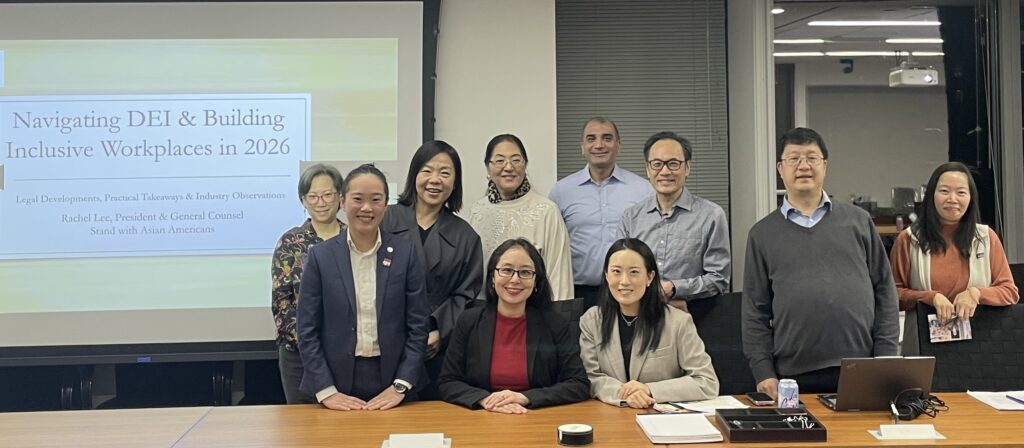
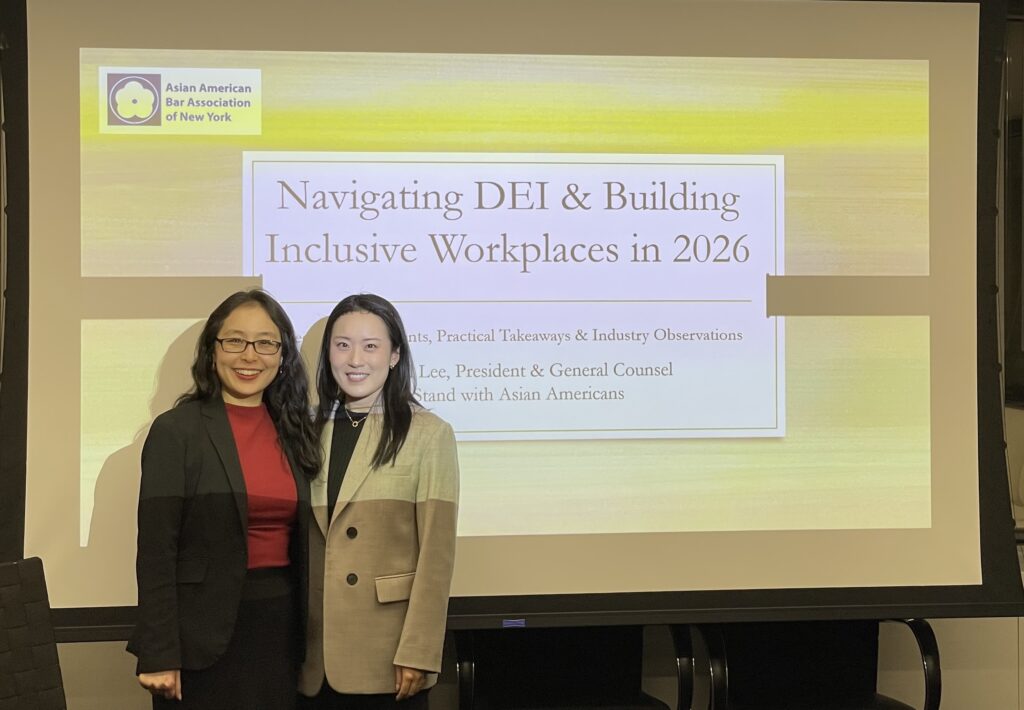
On March 25, 2026, AABANY’s Labor & Employment Law Committee, with co-sponsorship from the Issues Committee, hosted a timely and thought‑provoking CLE program, Navigating DEI Into 2026: Practical Takeaways & Industry Observations, at Littler Mendelson P.C. in New York City.
The program featured Rachel Lee, President and General Counsel of Stand With Asian Americans and Co‑Chair of AABANY’s Issues Committee, who shared insights on the evolving legal and cultural landscape surrounding diversity, equity, and inclusion efforts. Rachel drew from her work with organizations seeking to build and sustain inclusive workplaces amid shifting regulatory and societal expectations. She also offered practical, compliant strategies for fostering inclusive work environments in the years ahead.
The discussion was moderated by Jennifer Kim of Littler Mendelson, Chair of AABANY’s Labor & Employment Law Committee, who guided the conversation and facilitated audience engagement on the real‑world challenges employers and practitioners face when navigating DEI initiatives.
Attendees earned 1.0 NY CLE credit in Diversity, Inclusion, and Elimination of Bias and benefited from an engaging exchange of ideas that balanced legal guidance with practical application. The Committees thank Rachel Lee, the Professional Development Committee, and all attendees for making this program a success.