
In the News: Kwok Kei Ng, Co-Chair of AABANY’s Pro Bono and Community Service Committee, Honored at the Hon. Randall T. Eng Award Program at Appellate Division, Second Department

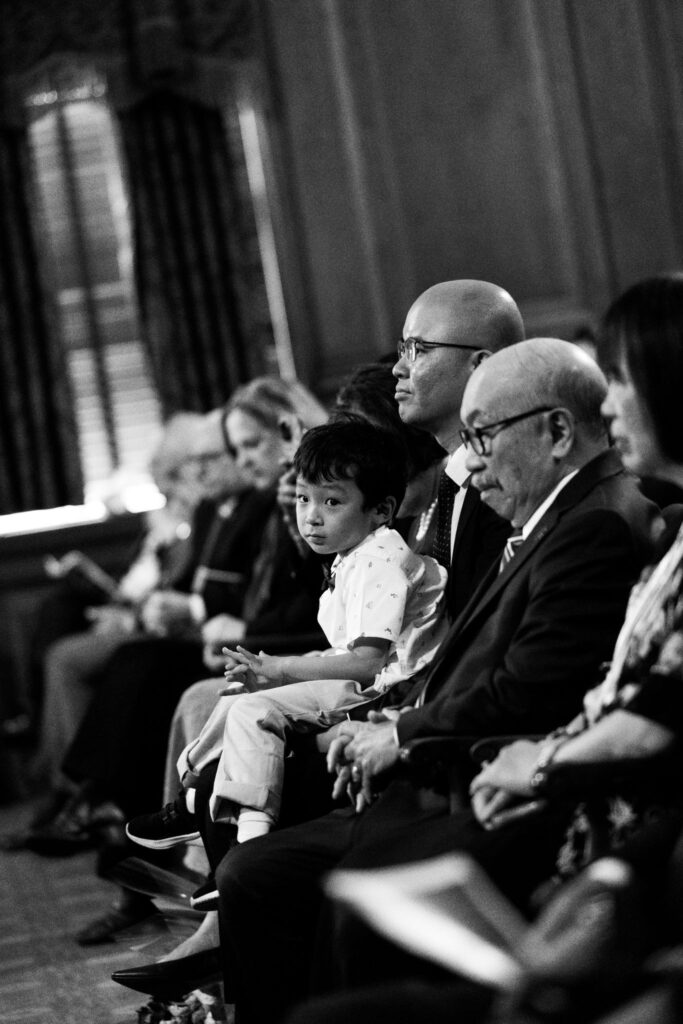
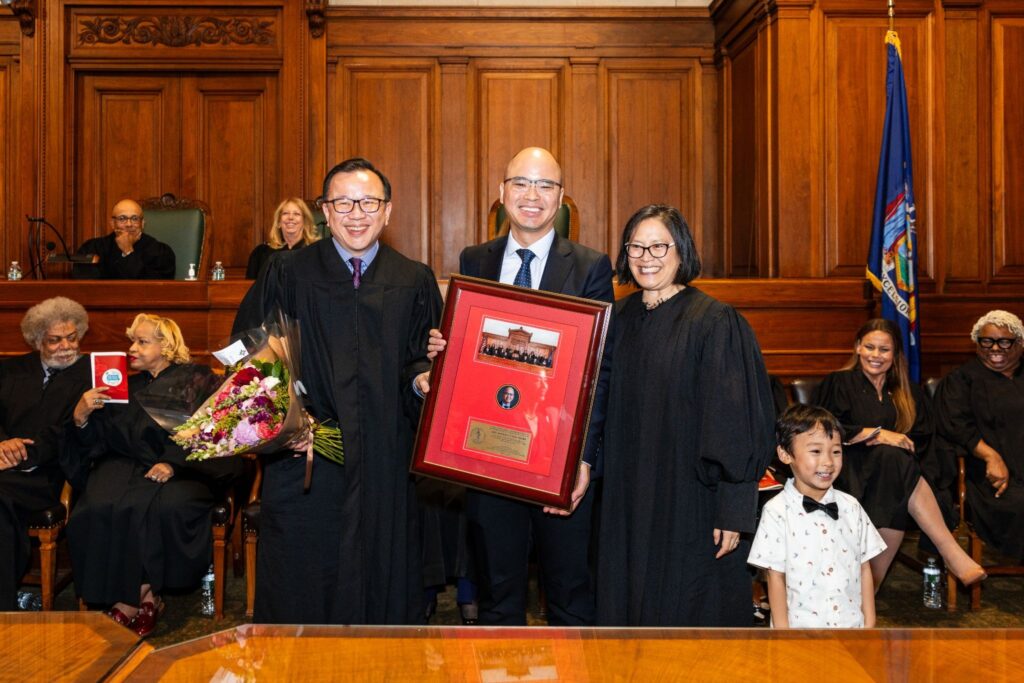
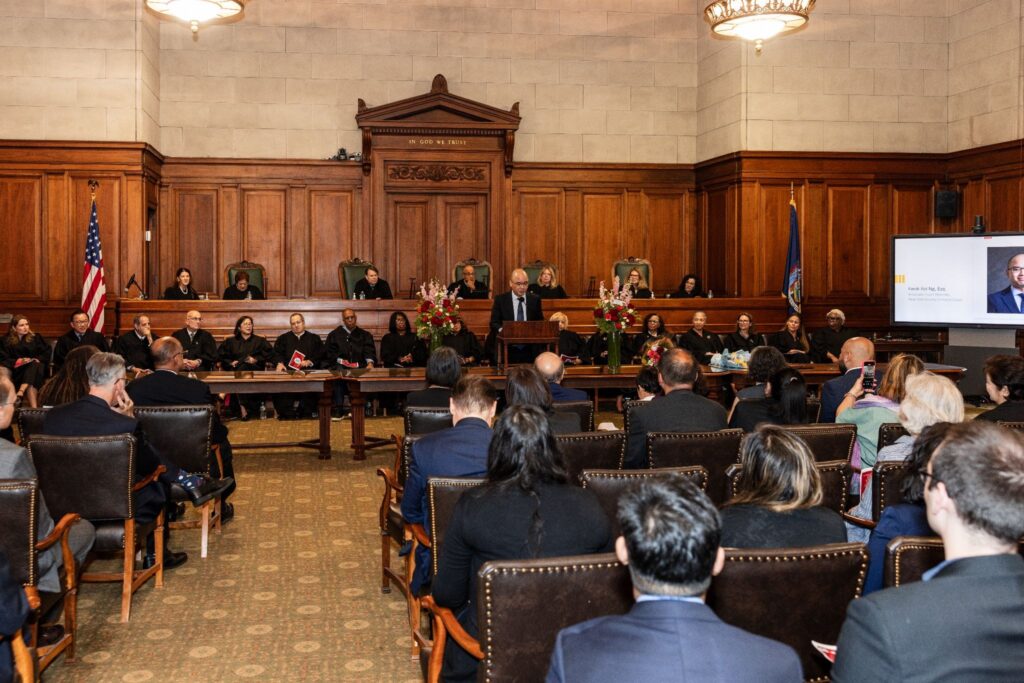
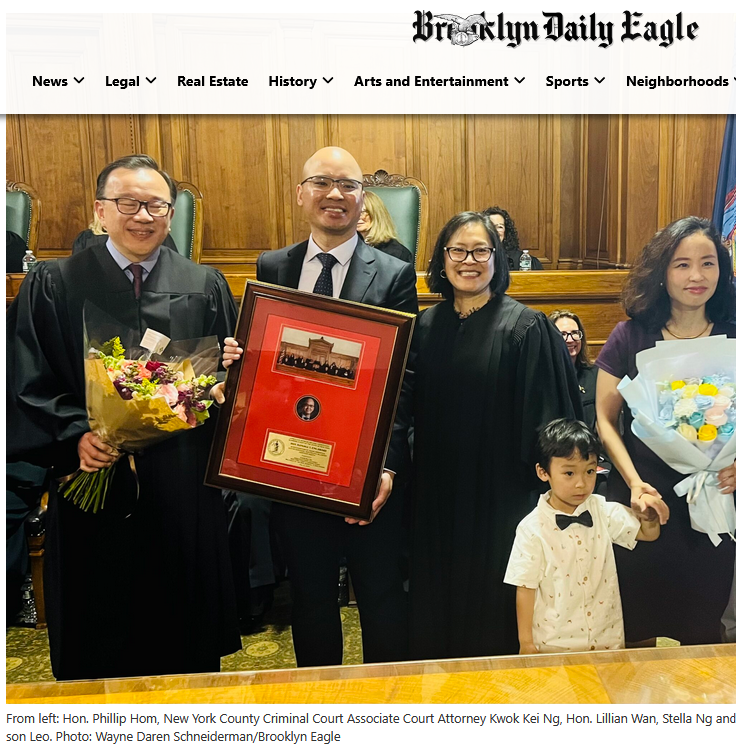
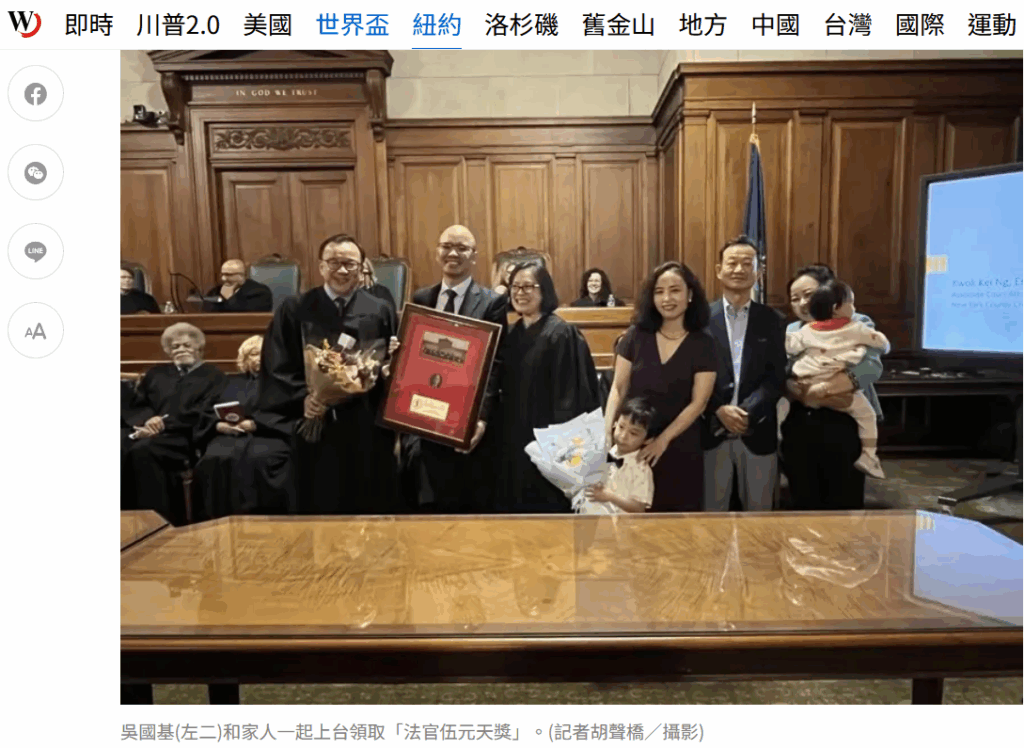
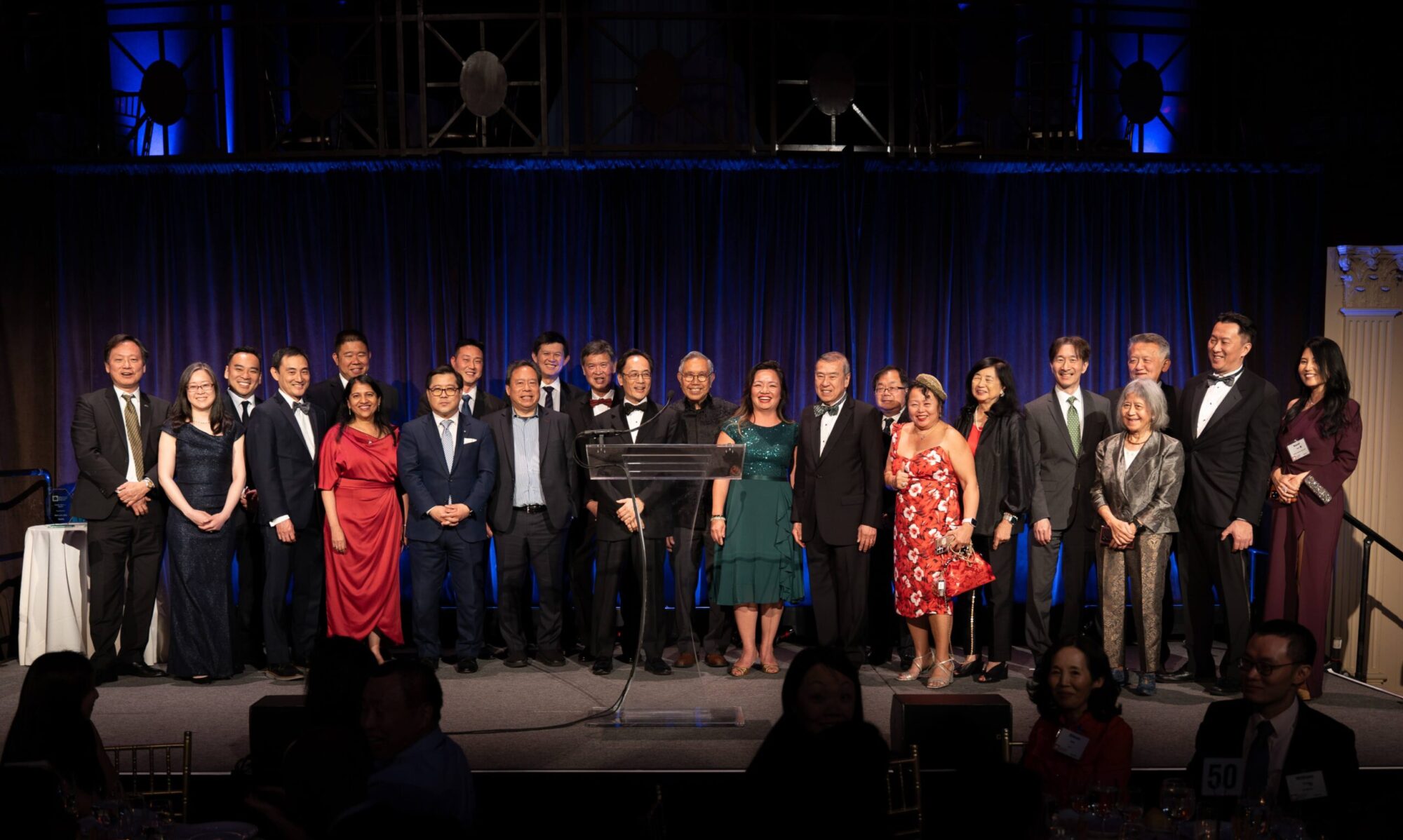
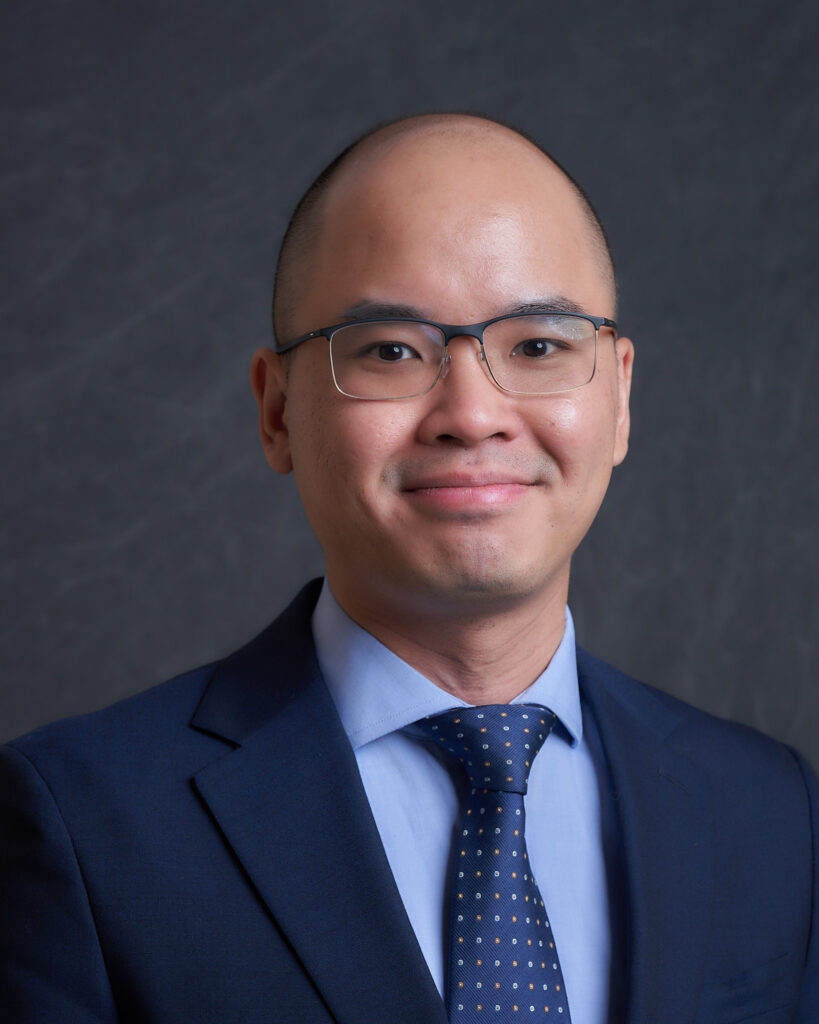
On May 27, 2026, the Appellate Division, Second Judicial Department of the New York State Supreme Court held its fourth annual Hon. Randall T. Eng Award Program in celebration of AANHPI Heritage Month at 45 Monroe Place in Brooklyn Heights. This event was covered by the Brooklyn Daily Eagle and by the World Journal. This year, the Hon. Randall T. Eng Award was presented to Assembly Member Steven Raga (Assembly District 30), Associate Court Attorney Kwok Kei Ng of the New York County Criminal Courts, and Jo-Ann Yoo, Deputy Executive Director of Asian Americans for Equality. Of note, honoree Kwok Kei Ng serves as the Co-Chair of AABANY’s Pro Bono and Community Service Committee and runs AABANY’s Brooklyn Pro Bono Clinics.

The World Journal traced Ng’s path through the court system, beginning his career as a court interpreter, translating for Cantonese and Mandarin speakers in Brooklyn Family Court. Ng then served in the borough’s Supreme and Civil Courts and, today, as a court attorney in New York County Criminal Court. He received the award in recognition of his efforts in partnering with the New York State Unified Court System and the Brooklyn Bar Association to develop CLE programming that enhances language access in the courts.

The Brooklyn Daily Eagle story recounted Ng’s acceptance speech, in which he spoke of standing on the shoulders of giants. “And many of these giants are here in this room,” he said. “Some of you paved the way for me before I arrived; some of you invited me in; and some of you encouraged me, and for that I am grateful.” His family joined him on stage to accept the award. The Brooklyn Daily Eagle also reported on AABANY President Varuna Bhattacharyya making closing remarks at the Award Program. She described the honorees as “exceptional individuals who exemplify all that the Randall T. Eng Award is intended to recognize and represent.” She added that they “have helped redefine what leadership looks like,” and closed with a call to action: “As we leave here tonight, let us continue building a legal community that reflects not just the diversity of our society, but its full promise.”

To read the World Journal article (written in Chinese), click here.

To read the Brooklyn Daily Eagle article, click here.

AABANY Presents “Born American: United States v. Wong Kim Ark” at Cadwalader, Wickersham & Taft LLP

As Asian American, Native Hawaiian, and Pacific Islander Heritage (AANHPI) Month wound down, attendees gathered on May 27, 2026 in downtown Manhattan to watch the latest historical trial reenactment produced by the Asian American Bar Association of New York (AABANY) entitled Born American: United States v. Wong Kim Ark.

United States v. Wong Kim Ark, which established birthright citizenship as a Constitutional right in 1898, is AABANY’s 17th trial reenactment. This project brings to life notable cases involving Asian Americans, Native Hawaiians and Pacific Islanders, to spotlight significant ways that AANHPI individuals contributed to the legal, social, and political history of the United States. Reenactments are first performed at the National Asian Pacific American Bar Association (NAPABA) Convention in November, then again in May during AANHPI Heritage Month in New York. 

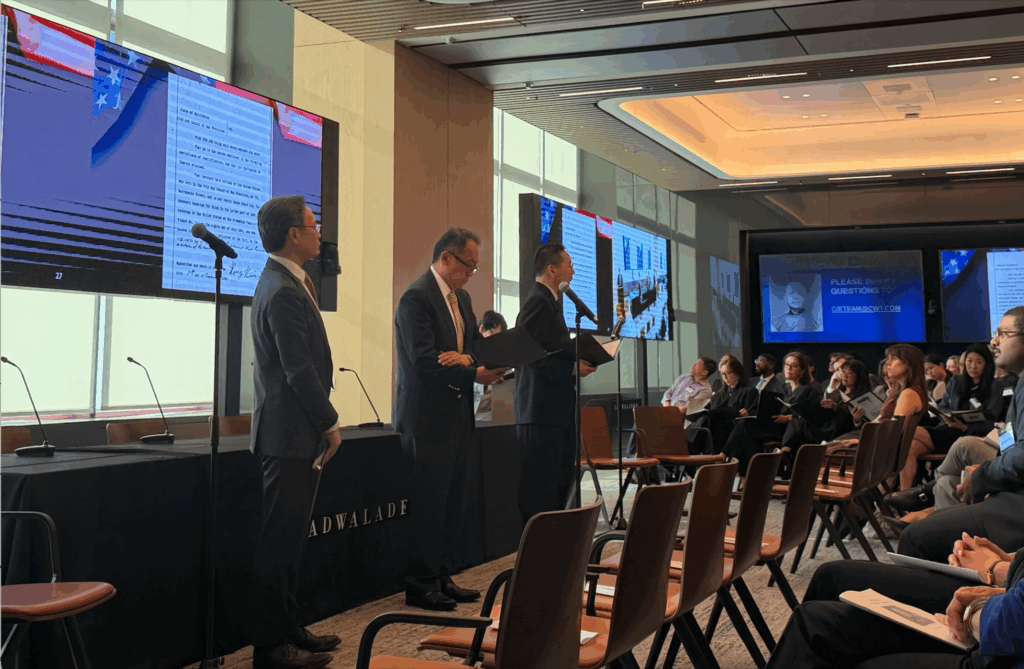
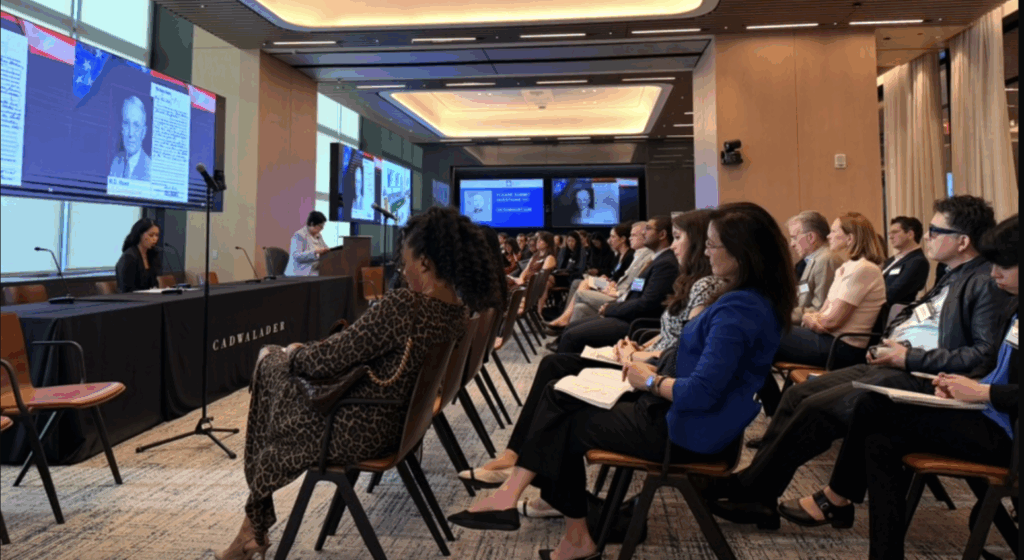
AABANY’s latest trial reenactment made its New York debut at Cadwalader, Wickersham & Taft LLP. Attendees settled in to watch a cast of 37 characters played by some 17 lawyers, including many AABANY members.

The reenactment had two narrators, who are also the writers, producers, and leaders of the AABANY Trial Reenactment team: Hon. Denny Chin, Senior United States Circuit Judge for the U.S. Court of Appeals for the Second Circuit, and Kathy Hirata Chin, a retired Partner of Crowell & Moring LLP and previously a retired Cadwalader Partner.

Other cast members included:

Anna Mercado Clark, Phillips Lytle LLP, Partner and Chief Information Security Officer (past NAPABA President, former AABANY Board Officer)

Vincent T. Chang, Law Clerk for Hon. James d’Auguste, Supreme Court, New York County, Commercial Division (former AABANY President)

Andrew T. Hahn, Hawkins, Delafield & Wood LLP, General Counsel (former AABANY, KALAGNY, and NAPABA President)

Yasuhiro Saito, Saito Law Group PLLC, Managing Partner

Francis H. Chin, Opensity Solutions, Senior Systems Engineer (AABANY Membership Director)

Yang Chen, Asian American Bar Association of New York, Executive Director (former AABANY President)

Pamela K. Chen, United States District Judge, Eastern District of New York

Concepcion A. Montoya, Hinshaw & Culbertson, Partner

Lauren U.Y. Lee, Korean American Family Service Center, Board of Directors; Cadwalader, Wickersham & Taft LLP, former Special Counsel

Kiyo A. Matsumoto, Senior United States District Judge, Eastern District of New York

Rose Cuison Villazor, Rutgers Law School, Professor of Law and Chancellor’s Social Justice Scholar

Jacob Chen, DGW Kramer LLP, Litigation Partner

Jane Kim, Wigdor LLP, Partner; former clerk for Hon. Denny Chin

Janicelynn Asamoto Park, Proskauer Rose LLP, Partner; former clerk for Hon. Denny Chin

Jessica C. Wong, Cadwalader, Wickersham & Taft LLP, Special Counsel

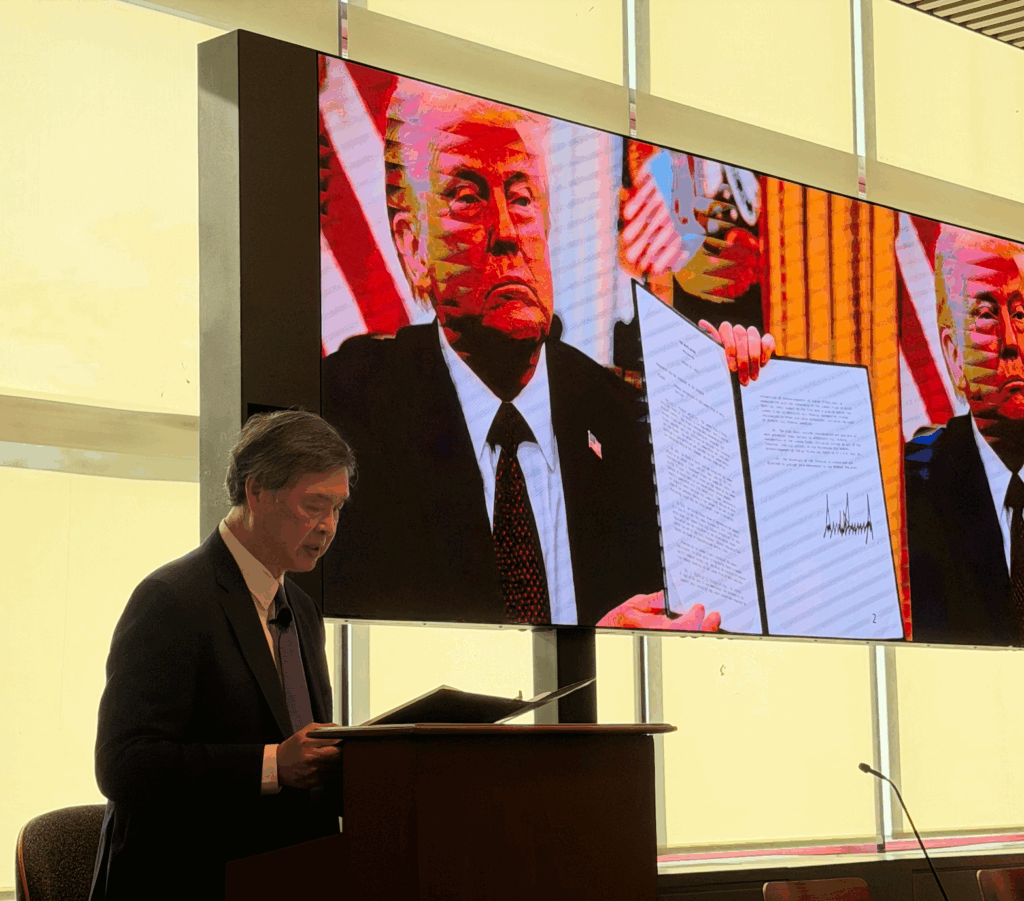
This reenactment was bookended by the case’s connection to current events. The narrators described President Donald Trump’s January 2025 Executive Order 14160, “Protecting the Meaning and Value of American Citizenship,” which sought to remove birthright citizenship from US-born children of parents who are undocumented or in the country temporarily. 

This case follows the story and life of Wong Kim Ark, who was born in San Francisco to Chinese immigrant parents in 1870, one of only 518 ethnic Chinese born in the United States that year. Wong took multiple trips back to China, before returning to America in 1894, at which point he was denied entry on the grounds of not being a citizen. 

That denial was appealed all the way to the United States Supreme Court. The question before the Court was whether Wong should follow the citizenship of his parents or of where he was born. The reenactment reconstructed the Supreme Court argument, for which no transcript exists, using the briefs, the resulting court opinions, news reports, and other historical documents. Arguments revolved around whether children born in the U.S. are “subject to the jurisdiction thereof,” under its plain meaning as stated in the Fourteenth Amendment. The original intent of Congress with regard to children born to foreign-born parents, as well as the implications of barring Wong Kim Ark’s birthright citizenship upon existing immigrant communities—European immigrants—and children of other nationalities, were also explored in the reenactment.

United States v. Wong Kim Ark affirmed Wong’s citizenship in a 6-2 decision in 1898, setting a legal precedent for more than a century. The majority ruling held that the 14th Amendment’s “ancient and fundamental rule of citizenship by birth within the territory” and its “peremptory and explicit language” all made Wong an American citizen.

However, Wong’s immigration troubles did not stop there, for either himself or his children. He lived in a time when anti-Chinese sentiment was rampant. Even within the decision itself, Justice John Marshall Harlan, for the dissent, wrote that “There is a race so different from ours that we do not permit those belonging to it to become citizens of the United States.” This captures the discrimination that society had at the time towards Chinese immigrants in America.

The reenactment further explored Wong’s life, as well as his family’s, after the Supreme Court’s ruling. Wong was later arrested in 1901 upon crossing the US-Mexico border, though the case was eventually dismissed—because of United States v. Wong Kim Ark. His four sons, born in China, faced intense scrutiny when they sought to come to the United States seeking citizenship as sons of a U.S. citizen. They faced heightened suspicion and interrogation that stretched over weeks or months of detention and aimed to determine their familial relationship to Wong, a form of scrutiny common to Chinese immigrants in the early 20th century. 

The end of the reenactment returned to Trump’s executive order. The many lawsuits and preliminary injunctions that responded to Trump’s January order make frequent reference to United States v. Wong Kim Ark as well-settled precedent for birthright citizenship. The reenactment shares the responses to Trump’s Executive Order, including one from Judge Deborah Boardman in Maryland, who said that the executive order “conflicts with the plain language of the 14th Amendment [and] contradicts 125-year old binding Supreme Court precedent.”

In this context, it becomes vitally important to revisit Wong Kim Ark’s life and times. Amid the prevalence of anti-immigrant rhetoric during the 1890s, United States v. Wong Kim Ark set precedent for generations of immigrants, including Asian Americans, and was reaffirmed throughout a series of 20th century Supreme Court cases, including INS v. Errico, 385 U.S. 214 (1966) and Plyler v. Doe, 457 U.S. 202 (1982).

A discussion panel and Q&A session followed the reenactment, where questions of relevance to current times were at the forefront. Attendees questioned and discussed how America would change if birthright citizenship gets overturned. Mere months ago, the Supreme Court heard oral arguments for Barbara v. Donald J. Trump, the class action against President Trump’s executive order banning birthright citizenship. It was especially enlightening to hear Judge Chin talk about how putting together this reenactment made him understand his own family’s immigration history better and shined a light on often unspoken parts of the Chinese immigrant experience.

The reenactment highlighted the reaction from Wong Kim Ark’s great-grandson Norman Wong. Norman said in an interview for a documentary, “We thought [birthright citizenship] was a dead issue. These were rights we did not have to fight for anymore. It wasn’t something that anybody would have to worry about. … Now I’m glad [my great-grandfather] stood up.” 

Following the reenactment, guests and participants enjoyed a networking and dinner reception, which included hors d’oeuvres, a dinner buffet, and a delicious handroll bar. Attendees mingled as they ate, reflecting on the reenactment and congratulating the actors for a job well done.

AABANY’s reenactment of United States v. Wong Kim Ark will be made available on AABANY’s trial reenactment website, where the script and materials can be shared upon request. AABANY’s past trial reenactment scripts are also available upon request. In fact, our most popular reenactment, “The Murder of Vincent Chin,” has been performed over 30 times globally. 

We are grateful to all of the participants in the reenactment for dedicating their time to this project. To learn more about the other trial reenactments AABANY has organized, please visit our reenactments website.

Team AABANY Runs the 2026 AAPI 5K

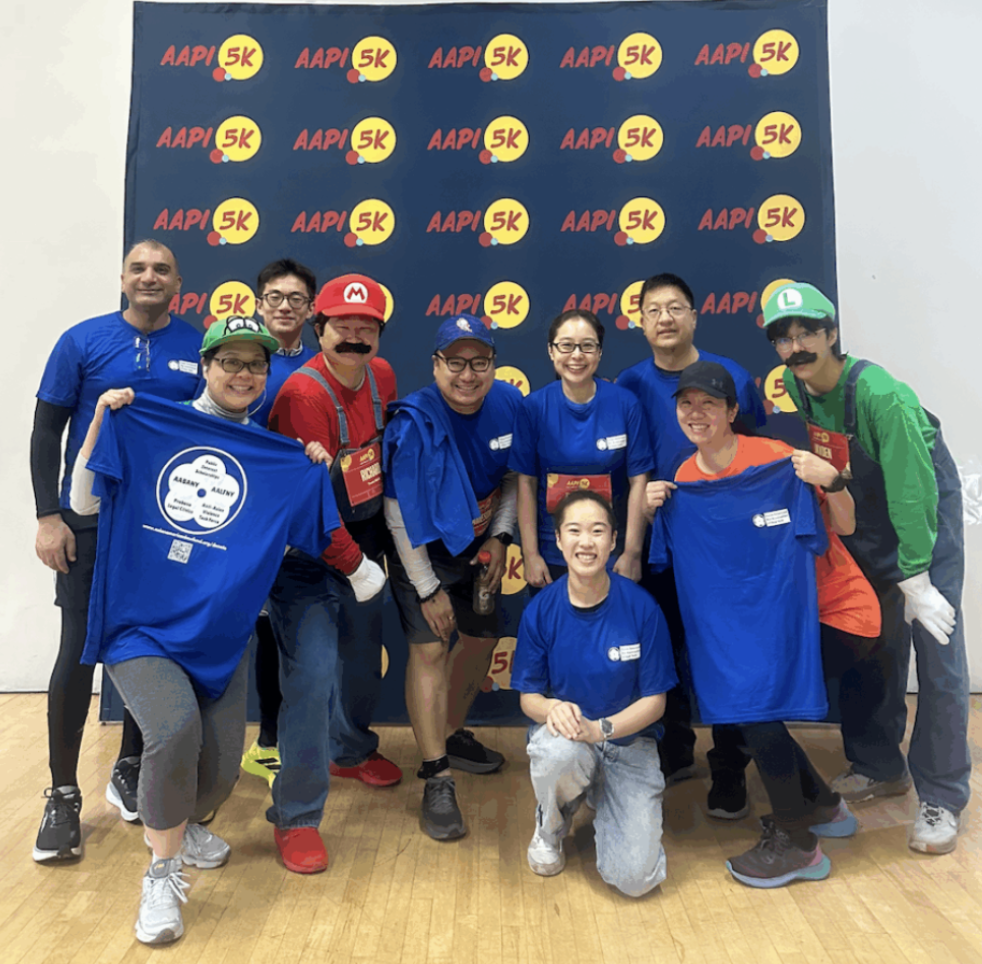
On May 23, 2026, the 2026 AAPI 5K took place on the Lower East Side, with around 400 participants running or walking in chilly morning weather in support of good causes. Teams from various companies and non-profit organizations, such as the United Federation of Teachers (UFT), the New York City Fire Department, and Microsoft, ran to raise money for institutions such as the Asian American / Asian Research Institute (AAARI), other non-profit organizations, and Asian American, Native Hawaiian, and Pacific Islander (AANHPI) small businesses.

The Asian American Bar Association of New York’s (AABANY) Issues Committee and Young Lawyers Committee led the effort in organizing AABANY’s participation in this race. Runners and supporters celebrated AANHPI Heritage Month while raising awareness for the work of various AANHPI nonprofits and small businesses. Team AABANY sought to raise funds for the Asian American Law Fund of New York (AALFNY), which funds Public Interest Scholarships for law students interning with public interest organizations that benefit the AANHPI community as well as helping to fund AABANY’s Pro Bono Clinics and Anti-Asian Violence Task Force. 

In the lead-up to the event, AABANY hosted six Sunday Run Days throughout April and May. The weekly runs followed the race course, crossing over the Williamsburg Bridge between Chinatown and Brooklyn.

Though the race took place on a cold and wet morning, Team AABANY persevered. We are proud to share that AABANY member Tiancheng Lyu, an Associate at Cravath, Swaine & Moore LLP, took second place overall with a time of 20:36, a 6:38 pace. 

Congratulations to all 17 runners in Team AABANY, and thank you for your participation!

Vishal Chander

Victoria Cheng

Melissa Chi

Sherry Huang

Miles Kim

Alexandra Lao

Evelyn Lee

Justin Lee

Rachel Lee

Tiancheng Lyu

May Wong

Robert Wong

Jameson Xu

Kelly Yao

Jaehee Yoo

Jenny Zheng

Meilin Zheng

We are grateful as well to Kevin Hsi and Jack Hsia, Vice Chairs of the Issues Committee, who cheered on Team AABANY throughout the race. 

To learn more about the Issues Committee, go here. To learn more about the Young Lawyers Committee, go here.

AABANY Members Advocate for Civil Rights, Immigrants’ Rights, and Rule of Law at NAPABA Lobby Day 2026

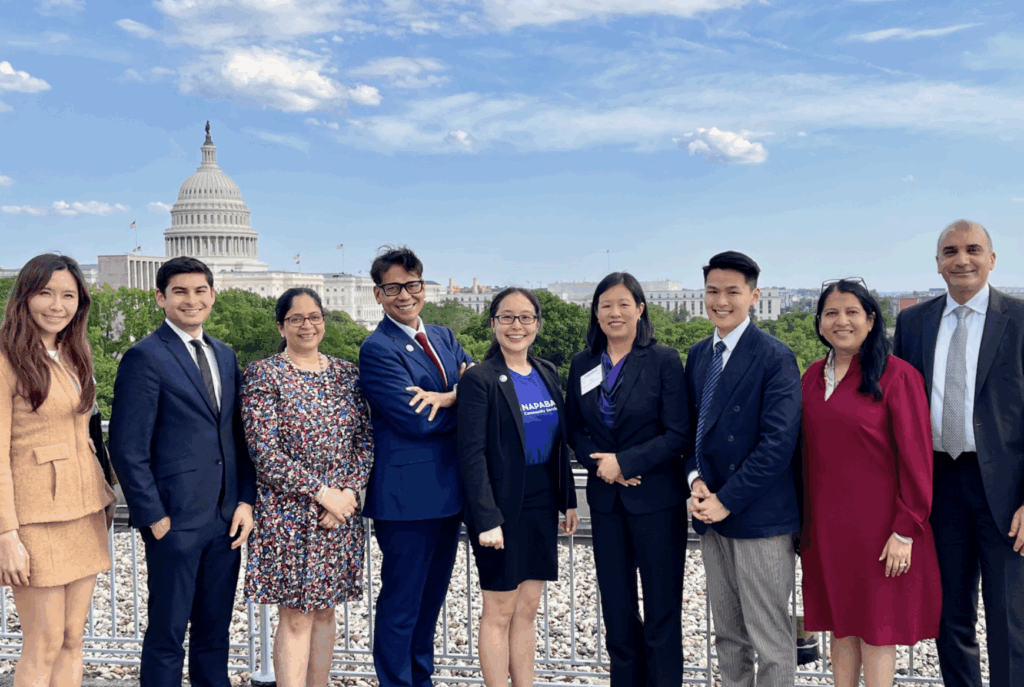
The National Asian Pacific American Bar Association (NAPABA) hosted its annual Lobby Day on May 19-20, 2026, bringing together many affiliate members, including those from the Asian American Bar Association of New York (AABANY) who traveled to Washington, D.C. to participate in this year’s NAPABA Lobby Day. AABANY members joined attorneys, judges, law students, and community leaders from across the country in advocating for policies that advance civil rights, protect due process, and strengthen the rule of law.

Representing AABANY were members of the our Issues Committee, including Co-Chairs Vishal Chander and Rachel Lee, along with other members of the New York delegation: Anushree Bagrodia, Charles Drucker, Linny Ng, Tiffany Ngeo, and Alex Pan. We also thank Glenn Magpantay, Northeast Alternate Regional Governor for NAPABA and AABANY Board Director, and Sapna Palla, NAPABA Board Member and former AABANY President, who joined the New York delegation. 

Lobby Day began with a policy training session at Jones Day, where participants received briefings on NAPABA’s legislative priorities and advocacy strategies before meeting with congressional offices on Capitol Hill. The event also included the annual AANHPI Heritage Month Congressional Reception, which brought together NAPABA members, members of Congress, congressional staff, and community leaders from across the nation.

NAPABA’s 2026 Lobby Day focused on three core legislative priorities: 

  1. Advancing civil rights through language access protections
  2. Promoting a fair immigration system through access to counsel
  3. Defending the rule of law by supporting judicial security measures

Advancing Civil Rights Through Language Access

The New York delegation urged congressional offices to support passage of the Language Access for All Act of 2026 (H.R. 7223), a bill designed to ensure that individuals with limited English proficiency have meaningful access to federally funded services through translation and interpretation assistance. NAPABA emphasized that language access is particularly important for the AANHPI community. Nearly one-third of Asian Americans are considered limited English proficient, making language access a critical civil rights issue.

This legislation would codify protections that were previously provided through Executive Order 13166—“Improving Access to Services for Persons With Limited English Proficiency”—and establish comprehensive language access requirements for federal agencies.

Promoting a Fair Immigration System

The New York delegation also educated Congress on the proposed Access to Counsel Act (H.R. 944/S. 391), which seeks to ensure that individuals with lawful status who are detained for prolonged inspections at ports of entry have meaningful access to legal counsel and family members.

NAPABA highlighted the importance of due process protections, particularly as immigration enforcement actions continue to affect immigrant communities across the country. The delegation stressed that individuals navigating the immigration system should be able to understand the process and access legal representation when their rights are at stake.

The delegation also discussed AABANY’s ongoing efforts to support immigrant communities through legal clinics, educational programming, and pro bono initiatives. (For more information about that, read the blog post about AABANY’s participation in the 2026 AAPI Summit hosted by Senator Gillibrand at the end of April by clicking here.)

Defending the Rule of Law and Judicial Independence

The New York delegation also advocated for passage of the Countering Threats and Attacks on Our Judges Act (H.R. 4602/S. 2379), bipartisan legislation aimed at addressing the increasing threats and acts of violence directed toward members of the judiciary. The bill would establish a State Judicial Threat Intelligence and Resource Center and provide resources to improve judicial security nationwide.

As attorneys, AABANY members emphasized that an independent judiciary is essential to maintaining public confidence in the legal system and preserving the rule of law. NAPABA noted that threats against judges undermine judicial impartiality and threaten the integrity of the courts.

Meetings with Congressional Offices

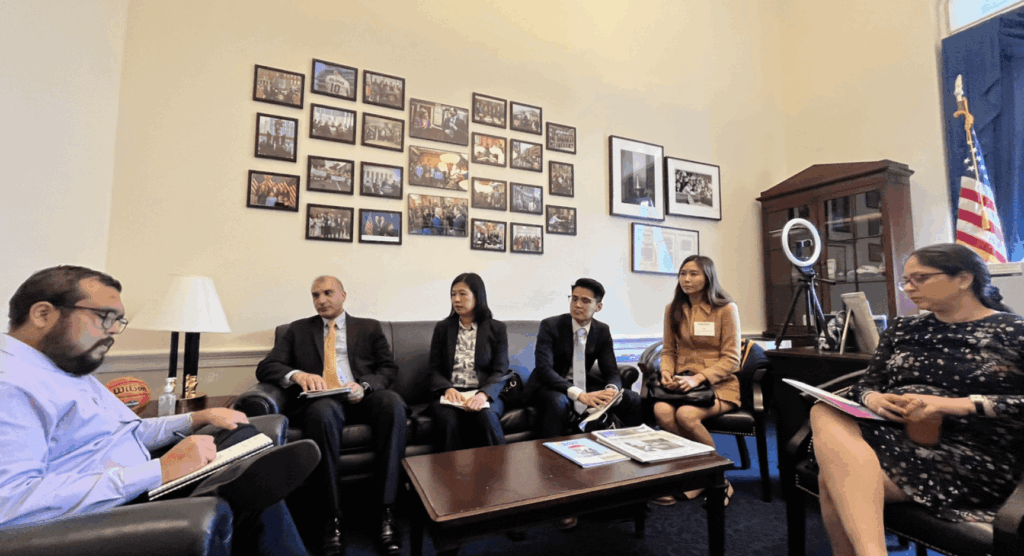
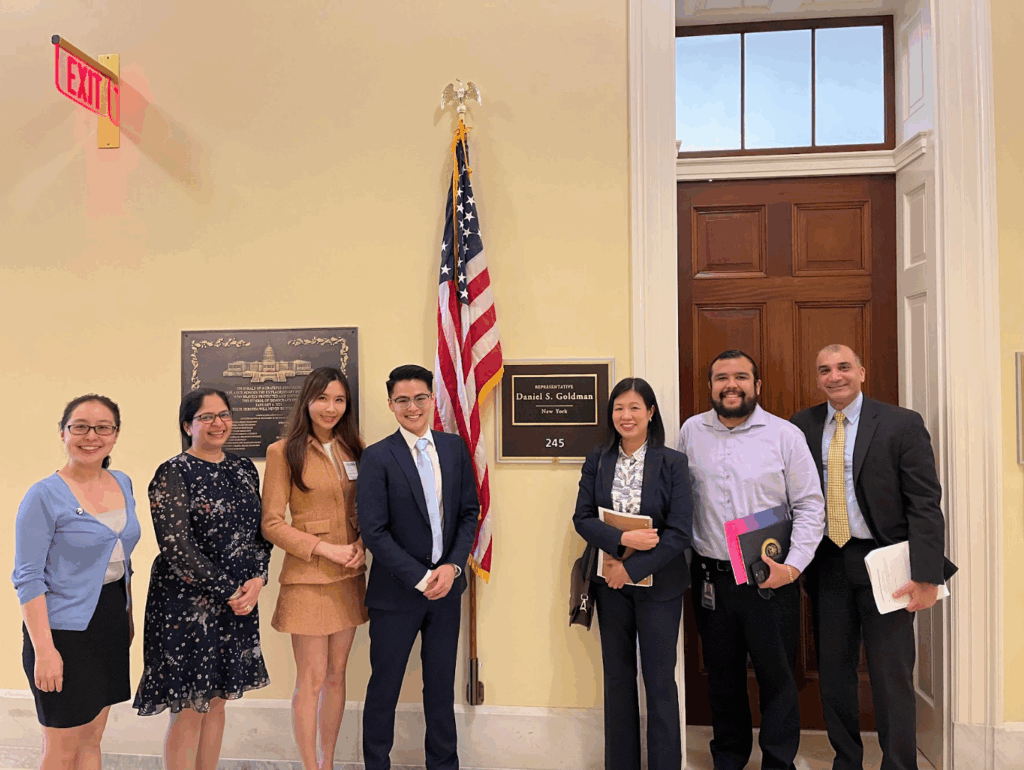
The New York delegation met with staff from several congressional offices, including New York Representatives Jerry Nadler (NY-12), Nydia Velázquez (NY-07), and Dan Goldman (NY-10). Discussions focused on NAPABA’s legislative priorities, including language access, immigration due process, and judicial security.

The delegation also highlighted the work of AABANY and NAPABA in supporting immigrant communities, educating lawful permanent residents about their rights, and providing pro bono legal services and training opportunities for attorneys. Follow-up conversations included discussions regarding immigration policy developments, legal aid initiatives, and opportunities for future collaboration between congressional offices and the AANHPI legal community.

Continuing the Work

Lobby Day provided an important opportunity for AABANY to bring the perspectives of New York’s AANHPI legal community directly to policymakers. Through these conversations, AABANY reinforced the role of attorneys not only as advocates in the courtroom but also as advocates for policies that promote justice, equity, and opportunity.

AABANY thanks NAPABA for organizing another successful Lobby Day and looks forward to continuing its partnership in advancing the interests of the AANHPI community and the legal profession nationwide.

For more information about NAPABA’s legislative priorities, click here.

To learn more about AABANY’s Issues Committee and how you can get involved, go here.

– Written by Vishal Chander, Board Member and Co-Chair of AABANY’s Issues Committee

NAPABA Annual Lobby Day and Congressional Reception on May 19-20 in Washington, D.C.

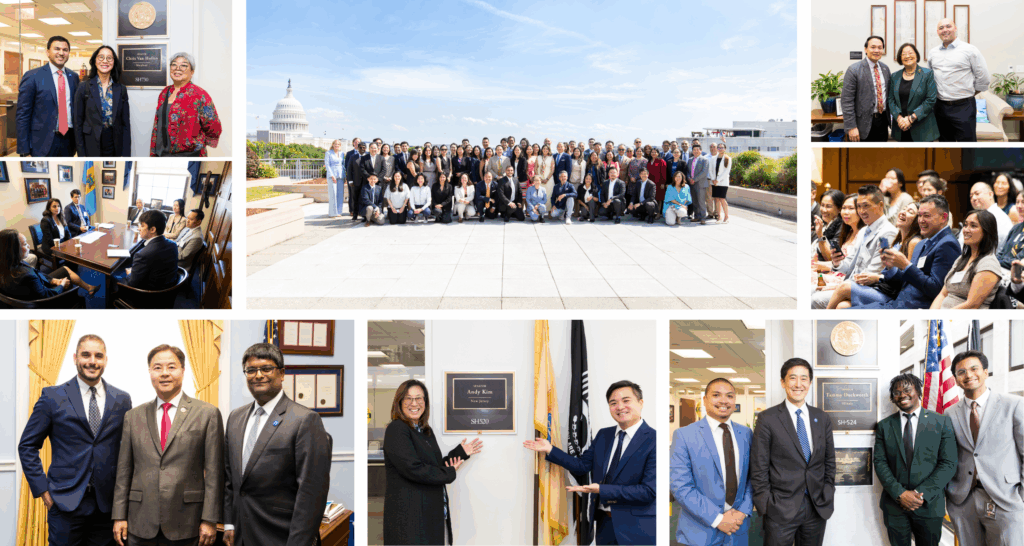
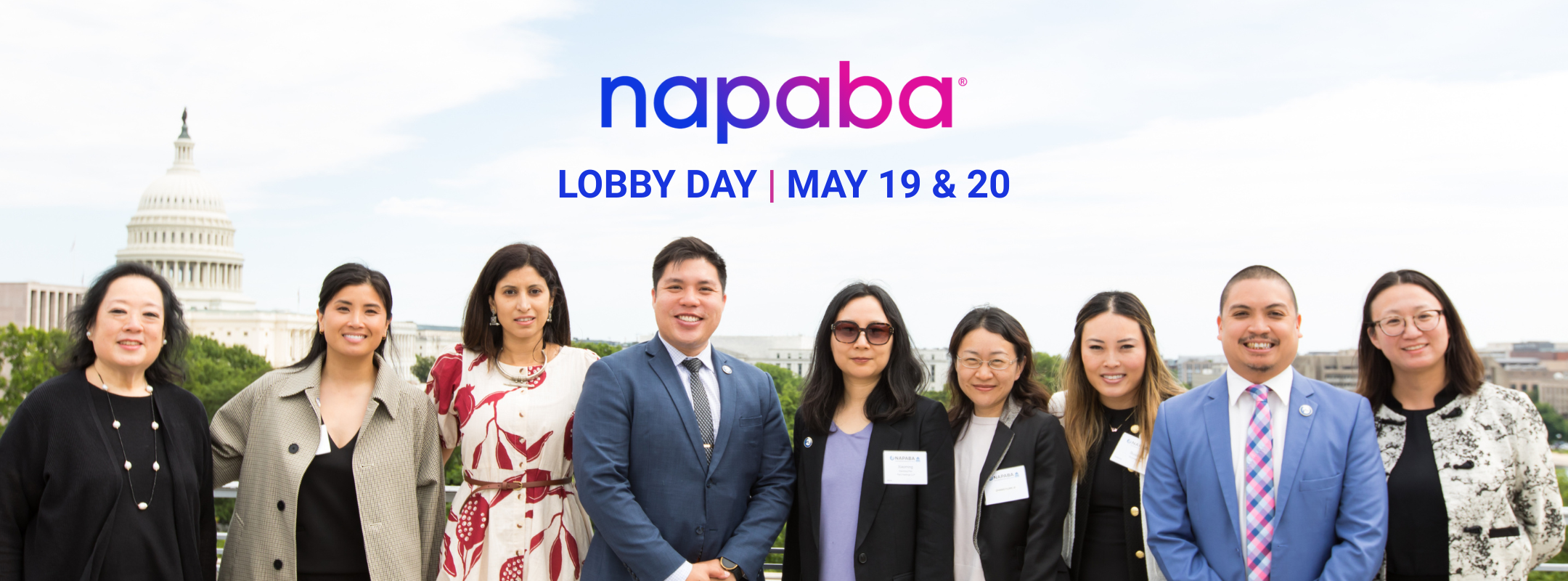
NAPABA hosted its annual Lobby Day on May 19-20, 2026, bringing together members of their community from across the country to Washington, DC in a celebration and demonstration of the power of their bar during AANHPI Heritage Month. In meetings with congressional representatives and their staffers, attorneys, law students, and leaders from the NAPABA community advocated for advancing the civil rights of the AANHPI community, a fair immigration system, and defending the rule of law.

Highlights of Lobby Day Include:

Robust Representation

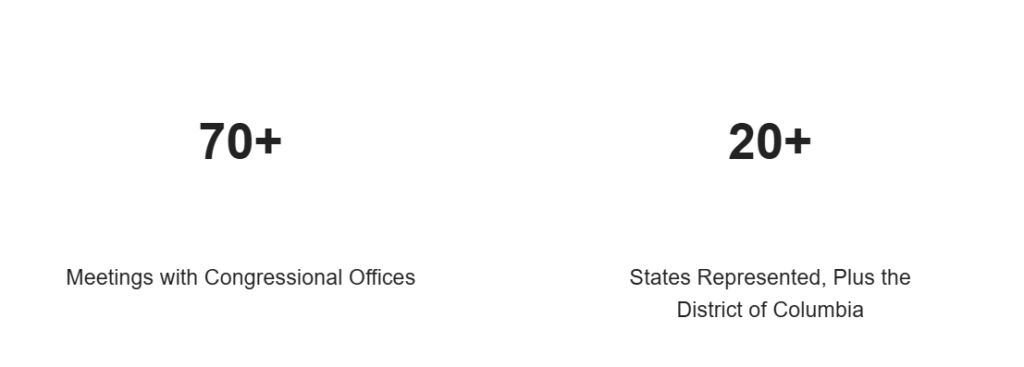
With participants hailing from over 20 states, and the District of Columbia, taking part in over 70 meetings with congressional offices on both sides of the aisle, NAPABA demonstrated its strength and its commitment to amplifying AANHPI voices in the halls of power.

Advocacy Training
Prior to the meetings, NAPABA held a training session featuring congressional staffers from both sides of the aisle who spoke with both expertise and passion about the bills their members have introduced or sponsored.  Attendees also heard from advocacy veterans on strategies and techniques to more effectively communicate NAPABA’s priorities and the needs of AANHPI communities and the legal profession.

Policy Priorities
Throughout multiple meetings, participants advocated for issues of importance to AANHPI communities and the legal profession. They focused on codifying longstanding language access protections for the millions of limited English proficient persons in the United States, including the significant portions of the Asian American immigrant populations, as documented by the U.S. Commission on Civil Rights. NAPABA stood up for access to counsel at various stages of the immigration and entry processes to the United States, and for judicial security in order to better support the rule of law.

Meaningful Engagements
Attendees met with numerous lawmakers and their staff, fostering meaningful dialogues, and building relationships that will be instrumental in advancing policy objectives. NAPABA Lobby Day participants skillfully articulated their positions, presented compelling arguments, and shared personal stories to humanize the issues that they face. On the evening before their training at their Congressional Reception on Capitol Hill, participants heard from leaders in their community directly, including NAPABA Trailblazers Sen. Mazie Hirono (HI) and S.E.C. Commissioner Mark T. Uyeda.

In a time of great uncertainty and a rapidly shifting policy landscape, NAPABA demonstrated the power of its members during a Lobby Day built around a unifying agenda of language access, a sensible and fair immigration system and support for the rule of law. Member-constituents braved the heat to visit engage with key Congressional offices across the Capitol complex and called on their elected representatives to support policies that advance their communities.  Lobby Day is another great reminder that NAPABA is the national voice of the AANHPI legal community, and that we can stand together for the betterment of our communities, for the rule of law we have dedicated our livelihoods to, and for the nation we cherish.

Visit NAPABA’s Advocacy Page here.

View NAPABA’s Organizational Statements here.

NAPABA Annual Lobby Day and Congressional Reception on May 19-20 in Washington, D.C.

In observance of Asian American, Native Hawaiian, and Pacific Islander Heritage Month (AANHPIHM), please join NAPABA on May 19-20, 2026 in Washington, DC for NAPABA’s annual Lobby Day.

At Lobby Day, the NAPABA community travels from across the United States to the Nation’s capital to demonstrate not only the strength of our community, but also to advance the critical issues facing the Asian American, Native Hawaiian, and Pacific Islander (AANHPI) community with leaders on Capitol Hill. Let’s bring our collective voice to the halls of Congress.

Lobby Day activities and events include:

  • Training
  • Hill Visits
  • Debrief Reception
  • Asian American, Native Hawaiian, and Pacific Islander Heritage Month Congressional Reception.

Congressional Reception

NAPABA members and community leaders from across the country will gather from 6:00 PM to 8:00 PM ET for a Congressional Reception recognizing Asian American, Native Hawaiian, and Pacific Islander Heritage Month. The event will bring together Lobby Day participants, members of Congress and their staff, as well as leaders from the AANHPI community.

For the full Lobby Day schedule, click on this link: Schedule

NAPABA Lobby Day Eligibility

Please note that only active NAPABA members or active members of NAPABA affiliates are eligible to participate in Lobby Day. To become a NAPABA member, click here.

Questions? Email lobbyday@napaba.org.

What NAPABA Will Be Advocating for at Lobby Day

May 20-21, 2025 | Washington, DC

Are you joining us for NAPABA’s largest advocacy day on Capitol Hill? NAPABA Lobby Day is your opportunity to meet with policymakers and champion the pressing issues affecting our communities. Now is the time to come together, take action, and make our voices heard to drive meaningful change.

  • NAPABA Supports the AANHPI Community
    • Ensuring Language Access
    • Protecting the Legacy of Fred Korematsu
    • Recognizing the Rich History and Vibrancy of the AANHPI Community
  • NAPABA Calls for Fair and Humane Immigration System
    • Advancing the Right to Counsel
    • Supporting Asylum Seekers
    • Protecting Immigrants from National Origin Discrimination
  • NAPABA Defends Rule of Law & the Legal Profession
    • Protecting Judges from Threats
    • Supporting Funding for Legal Services Corporation
    • Strengthening the Public Service Loan Forgiveness Program
  • NAPABA Advances Democracy and Civil Rights
    • Ensuring Equal Rights for the LGBTQ+ Community
    • Advancing Critical Voting Rights
    • Preventing Anti-Asian Alien Land Laws

Will you make sure your voice is represented?


Asian American, Native Hawaiian, and Pacific Islander (AANHPI) Heritage Month Congressional Reception

Tuesday, May 20, 2025 | 6-8 PM ET

Join NAPABA members and community leaders from across the country as we celebrate AANHPI Heritage Month with members of Congress. The reception will bring together Lobby Day participants, members of Congress and their staff, and leaders in the AANHPI community.


For any questions about Lobby Day, please email the NAPABA Lobby Day Team at lobbyday@napaba.org.

Congressional Reception in Celebration of Asian American, Native Hawaiian, and Pacific Islander (AANHPI) Heritage Month

Tuesday, May 20, 2025 | 6:00 – 8:00 PM ET

Join NAPABA members and community leaders from across the country in celebrating AANHPI Heritage Month with members of Congress at the Russell Senate Office Building in Washington, DC. The reception will unite Lobby Day participants, Congressional members and their staff, as well as influential leaders from the AANHPI community.

This is a unique opportunity to engage with our political leaders and hear their insights. In 2024, participants heard from influential figures such as Senator Mazie Hirono and Representative Judy Chu, Chair Emerita of the Congressional Asian Pacific American Caucus.

This is a widely attended event. An RSVP is required to secure your spot.


Registration for Lobby Day is not required to attend the Congressional Reception, but we invite you to participate in Lobby Day, which consists of training and meetings with Congressional offices. Please note that only NAPABA members or members of NAPABA affiliates are eligible to participate in Lobby Day.


For any questions about Lobby Day, please email the NAPABA Lobby Day Team at lobbyday@napaba.org.

AABANY Members Visit Capitol Hill for NAPABA Lobby Day

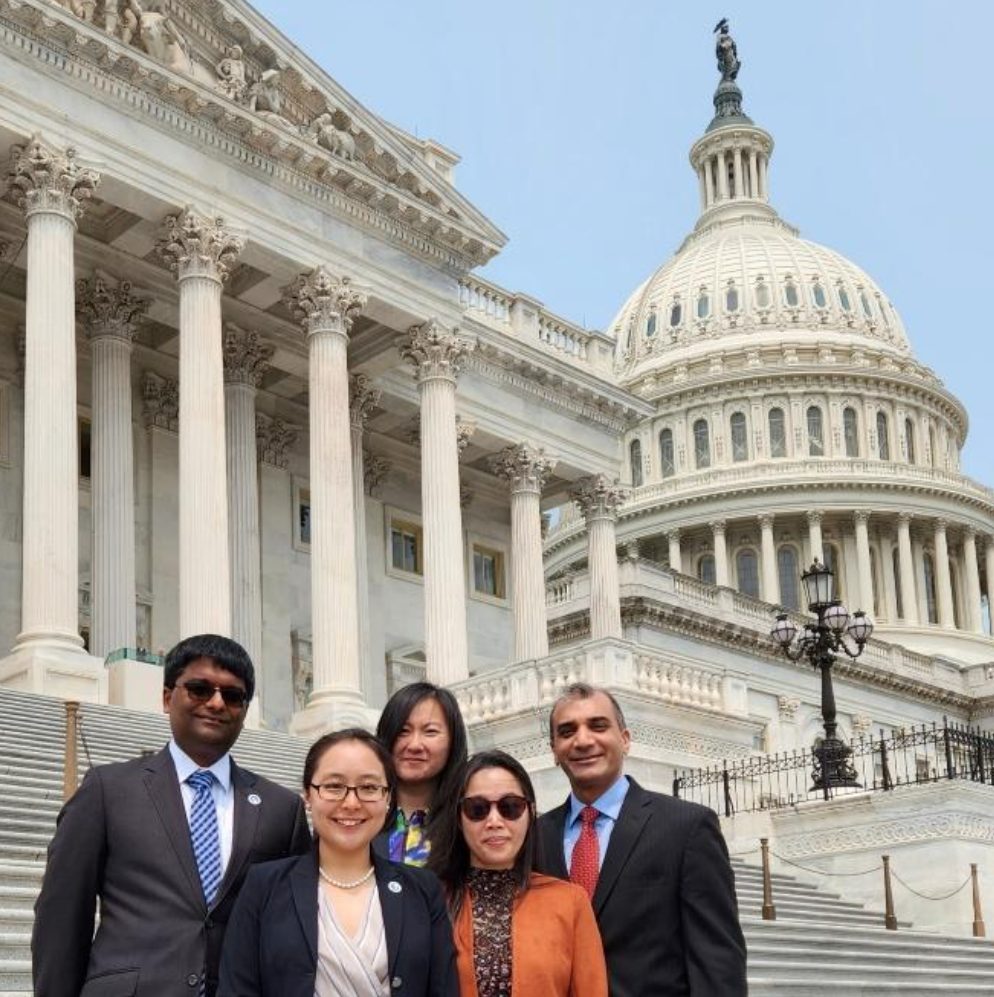
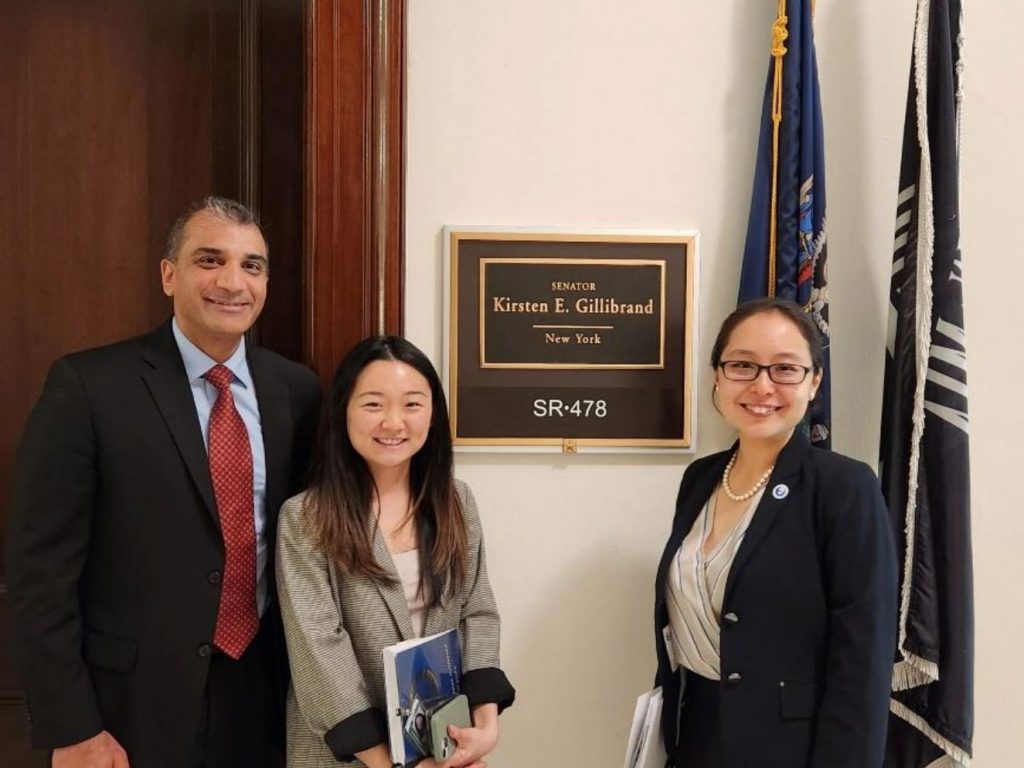
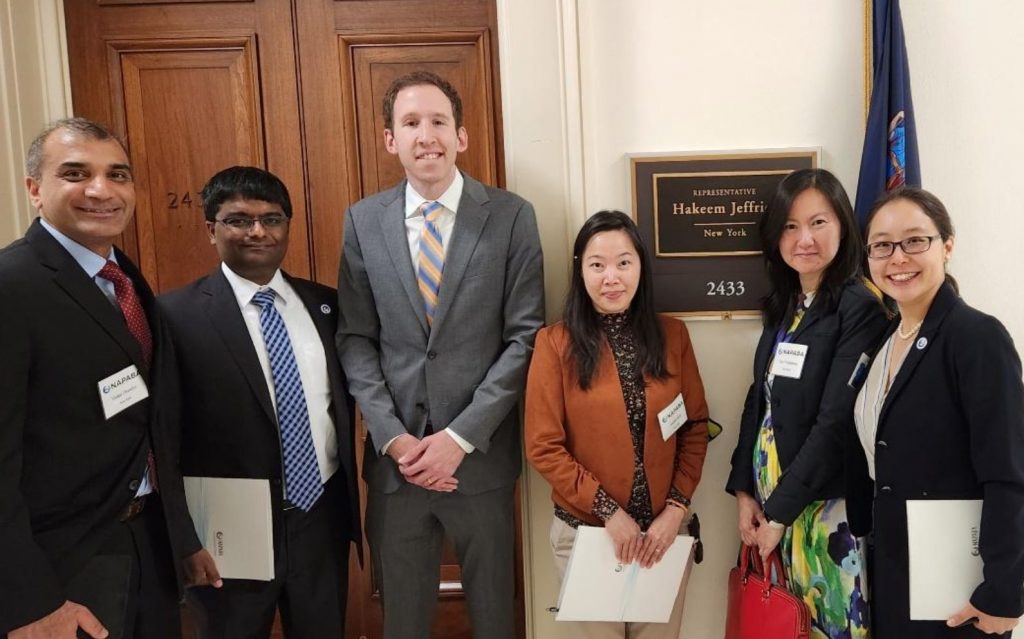
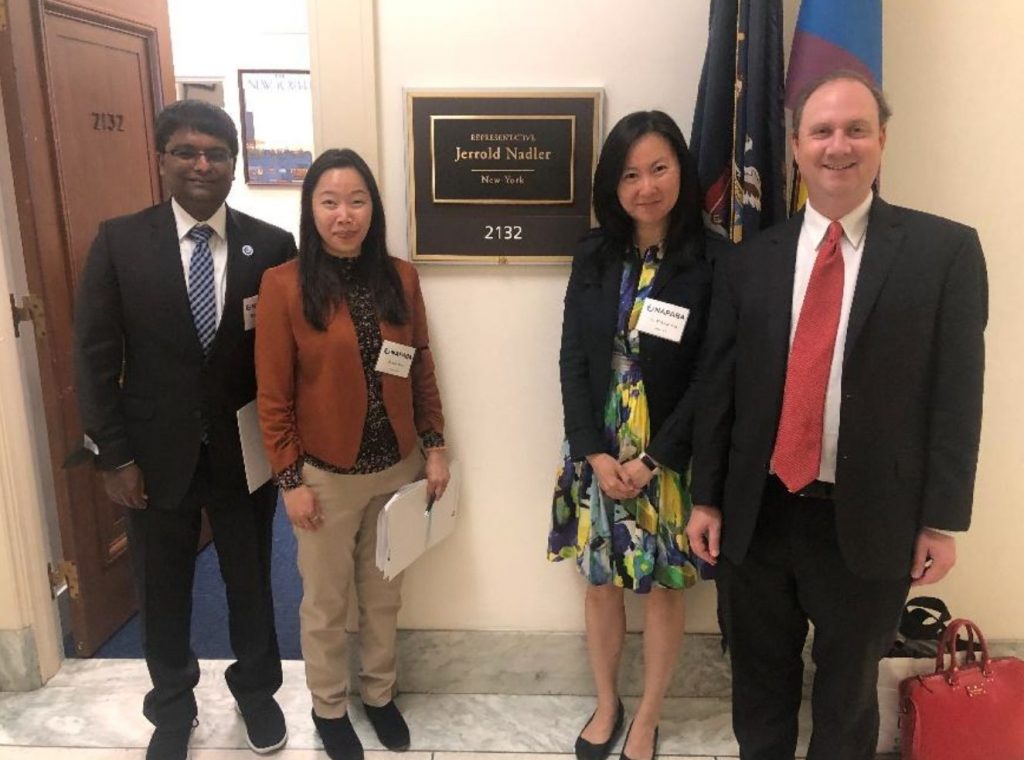
On May 22 and 23, 2023, AABANY members Yen-Yi Anderson, Vishal Chander, Chris Kwok, Rachel Lee, and Nandar Win Kerr converged on Washington D.C. for National Asian Pacific American Bar Association (NAPABA) Lobby Day. Each year, NAPABA organizes the event to educate members of Congress on issues of importance to the Asian American, Native Hawaiian, and Pacific Islander (AANHPI) community. NAPABA Lobby Day is scheduled to coincide with AANHPI Heritage Month in May of each year.

AABANY members met with the legislative staff of House Minority Leader Hakeem Jefferies, Congressman Jerrold Nadler, and Senator Kirsten Gillibrand. They discussed issues such as support for the LGBTQ+ community, protection of the right to counsel in immigration, mental health support for AANHPI and other diverse communities, profiling persons of Chinese ancestry, state passage of alien land laws, and AANHPI judicial and executive nominees.

Rachel Lee, an associate at Allen & Overy LLP, shared, “I am happy to have participated in NAPABA Lobby Day this year. It was an educational and eye-opening experience to learn about different issues impacting the AANHPI community and be able to advocate for our community on Capitol Hill at various congressional offices with fellow NAPABA members. I highly recommend the program and would participate again in the future.”

NAPABA is the nation’s largest Asian Pacific American membership organization representing the interest of 60,000 attorneys, judges, law professors, and law students. NAPABA Lobby Day activities include a 3-Part Training Event, Congressional office visits, and an AANHPI Heritage Month Congressional Reception.

Written By: Vishal Chander, active AABANY member and Co-Chair, Solo & Small Firm Practice Committee