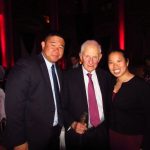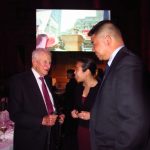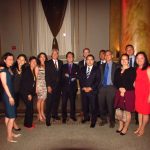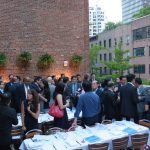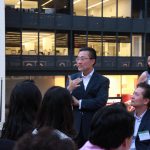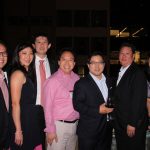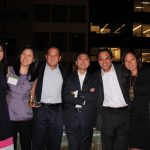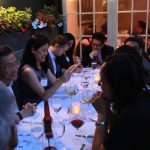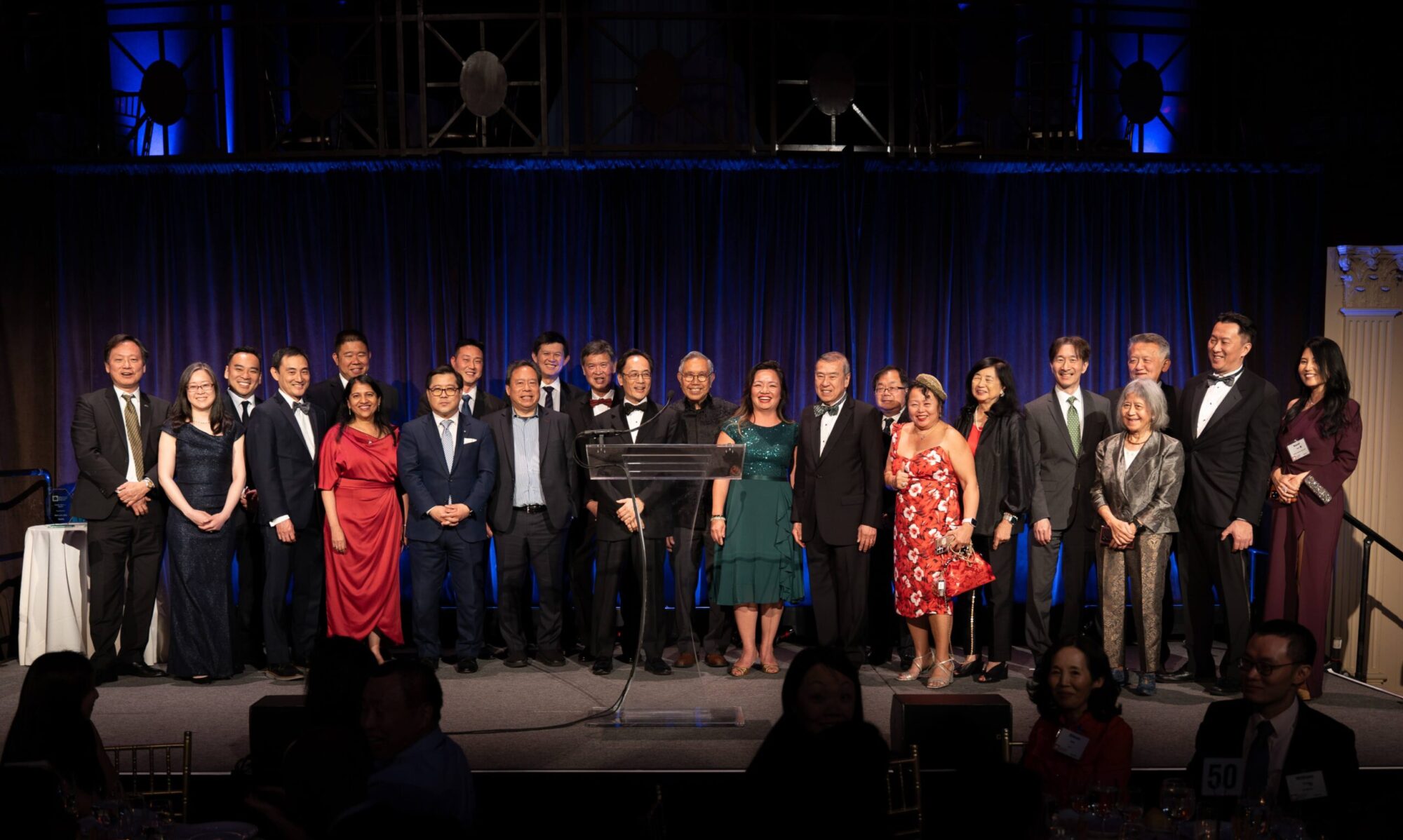

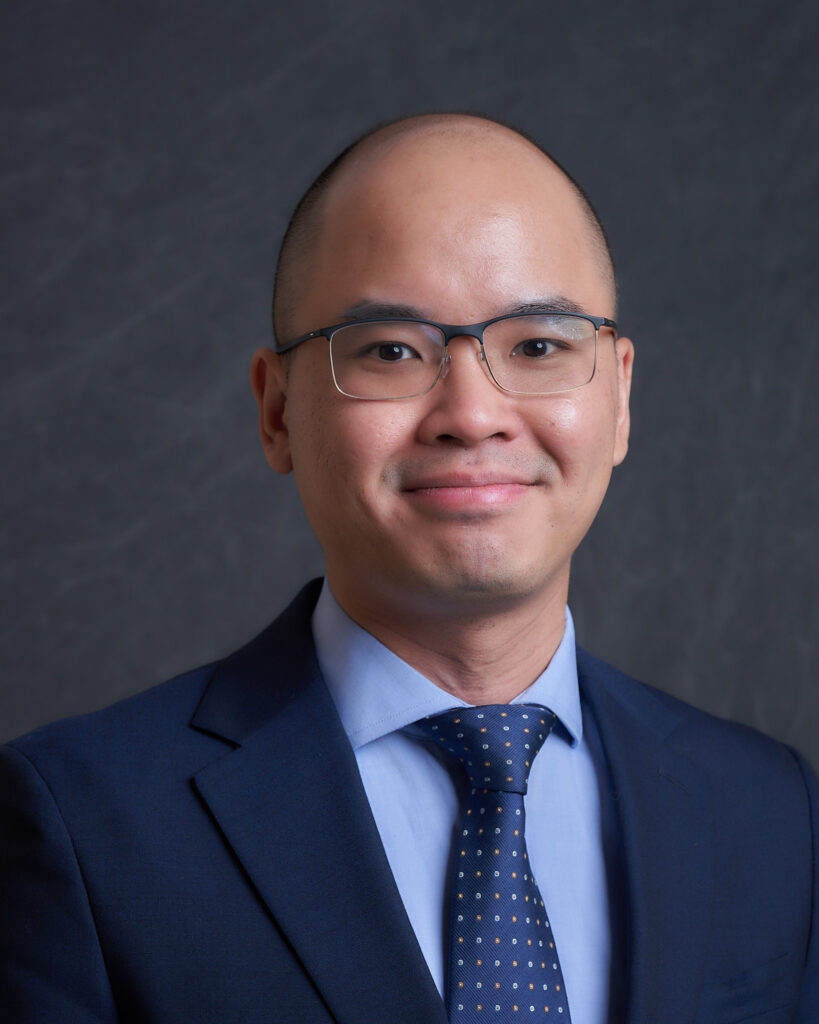
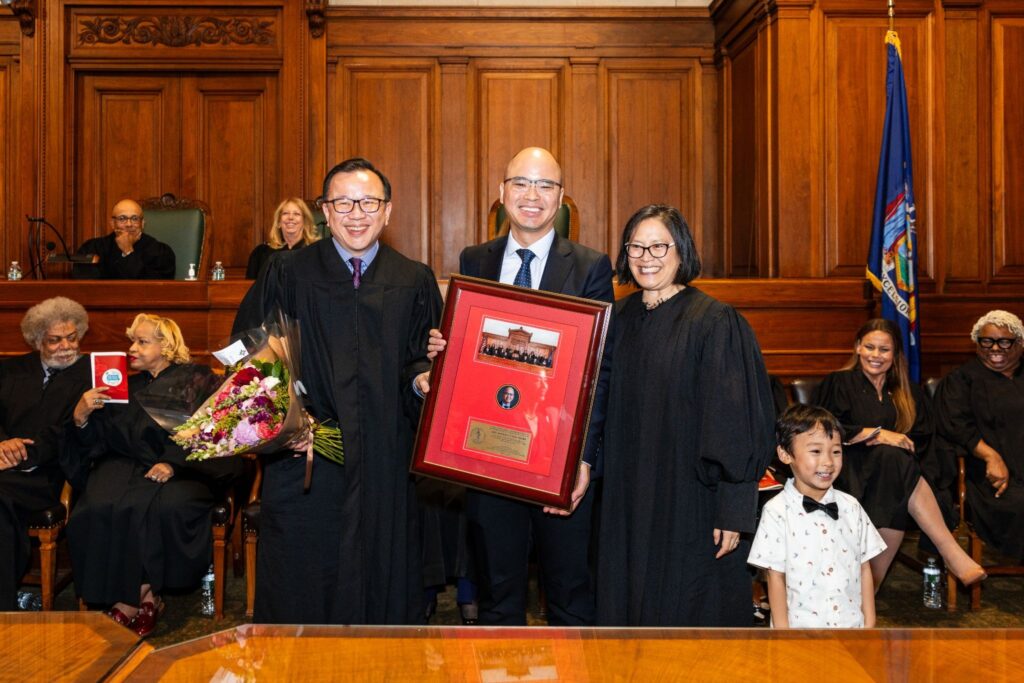
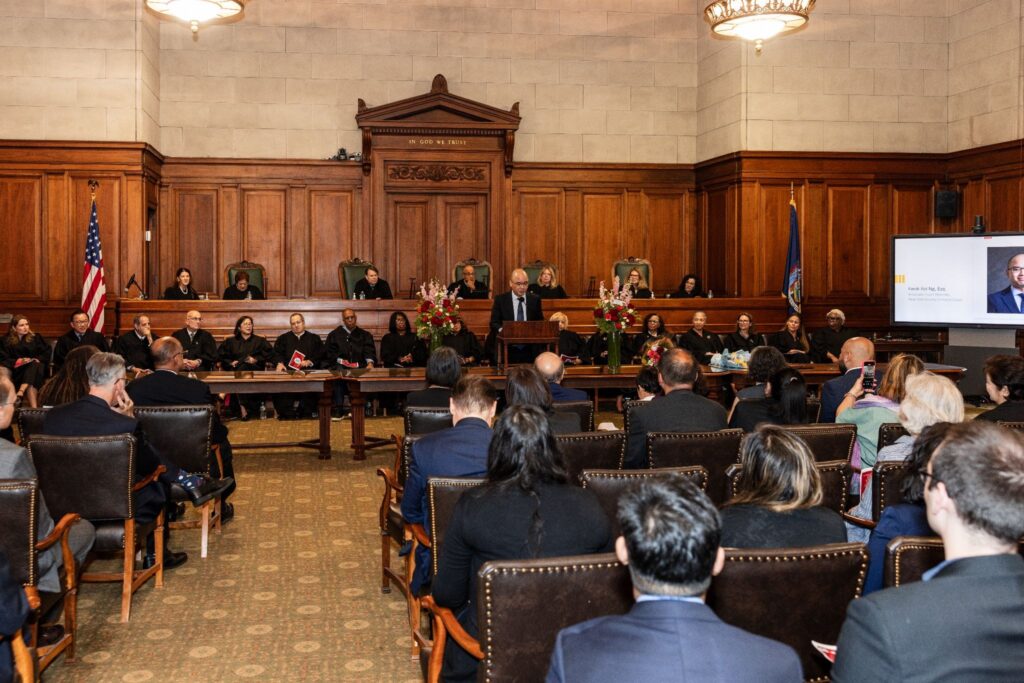
During Asian American, Native Hawaiian, and Pacific Islander (AANHPI) Heritage Month this May, Kwok Kei Ng, Co-Chair of AABANY’s Pro Bono and Community Service Committee, was honored with two awards for his contributions to the AANHPI community. Kwok received the Hon. Randall T. Eng Award at the Fourth Annual Hon. Randall T. Eng Award Program as well as the Power in Unity: Strengthening Communities Together Award at the Second Judicial District Equal Justice Committee’s celebration of AAPI Heritage Month: “Power in Unity: Strengthening Communities Together.”
Emblematic of these two awards, Kwok has built his career and service around strengthening the AANHPI identity and community. After growing up in Hong Kong, Kwok moved to America for schooling. He first joined AABANY almost 10 years ago in 2017 as a law student. Now, Kwok is an accomplished Associate Court Attorney at the New York County Criminal Courts. He continues to be a leader in the AABANY community, overseeing the Brooklyn branch of AABANY’s Pro Bono Clinic, an award-winning legal clinic that has served predominantly monolingual Asian communities in New York for over a decade.
Access to justice, particularly through language, has always been a pressing concern for Kwok. He initially entered the court system as a Brooklyn Family Court Interpreter for Cantonese and Mandarin Chinese speakers, and so his AANHPI identity has long-shaped his career. The experience of interpreting, Kwok says, “is the foundation of everything for me …. Standing in the courtroom, translating for parents who couldn’t understand what was being said about their children, I felt the full weight of what was at stake—especially now that I’m a parent myself.”
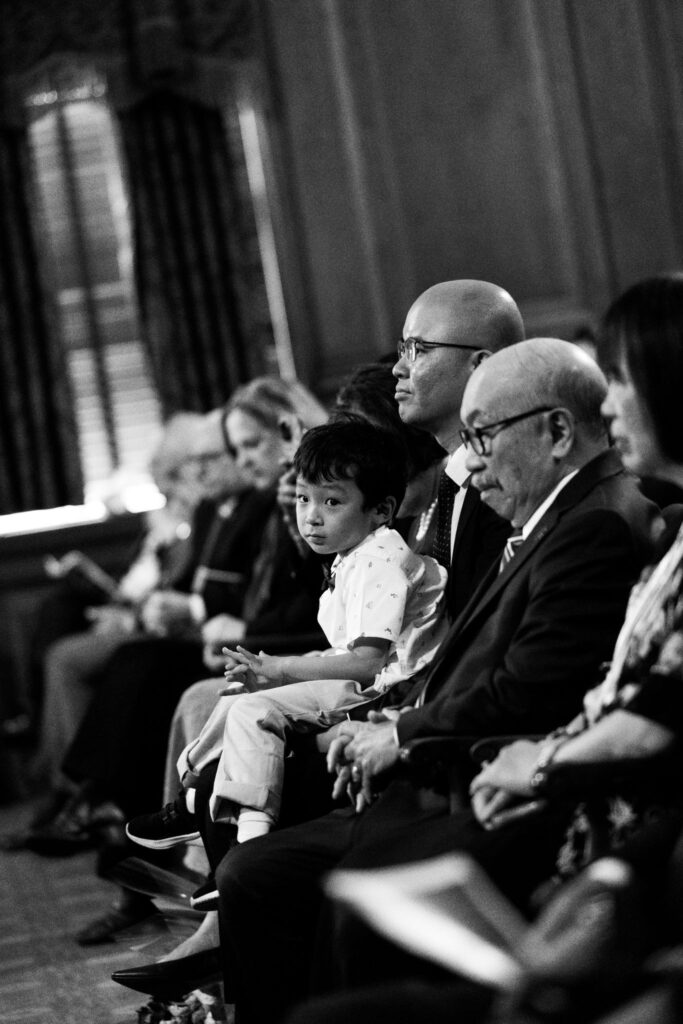
Kwok further noted, “My AAPI identity essentially defined my role because I was the one bridging the gap between the court users who had a language barrier and everyone else in the room.”
Meaningful representation has to occur at multiple levels, according to Kwok. “We talk about the underrepresentation of AAPI judges and the idea that the court should reflect the community it serves,” he stated, “but that should extend to court officers, court clerks, and court attorneys too.” Reflecting on his own identity, he added, “For a time, I was the only AAPI court attorney in Brooklyn. I’m glad it’s not the case now.”
Not straying far from these roots, Kwok has sought to expand access to legal services, as well as representation within legal careers, throughout his professional life. His passion for language access in the courts, stemming from his experiences as a court interpreter, led to his appointment to the Advisory Committee on Language Access for the New York State Unified Court System by Chief Administrative Judge Hon. Lawrence Marks.
Kwok considers AABANY his “home bar association,” but he is also a member of the Brooklyn Bar Association, where he serves as the Vice-Chair of the Diversity Committee. He is also a Board Member of the Asian American Law Fund of New York (AALFNY). Additionally, Kwok serves as Deputy Vice President of the High School Division of the Sonia and Celina Sotomayor Judicial Internship Program (SCSJIP). The program, which he himself participated in as a law student, places students in judicial internships. Kwok found SCSJIP through his involvement in AABANY, while still in law school. At a time when the legal field “felt especially opaque” and a path felt difficult to find “for someone like me,” it’s another experience that has shaped him: “That internship set the path and defined my career.”
My work with the Sotomayor program is simply my way of giving back,” Kwok declared. “When I help place a high school student in a judicial internship, I know it can genuinely change a trajectory, because it changed mine.”
Through AABANY’s Pro Bono Clinics, Kwok has helped strengthen New York City’s communities, making sure that people with limited English proficiency and without financial access to a lawyer can meet with a volunteer attorney or law student. He reminisces on how AABANY—and his involvement with AABANY—has grown over the past decade: “From the beginning, I was most active with the Pro Bono and Community Service Committee, volunteering at the clinic to help with interpretation. At the time [almost 10 years ago], there was only one clinic, at AAFE on 111 Division Street,” Kwok recalled. “Over the years, we’ve moved, grown, and expanded to locations in Manhattan, Brooklyn, and Queens—Confucius Plaza, CCBA, CCCNY, Homecrest, CPC, UCA Brooklyn, and AAFE Queens—collaborating with community-based organizations, hosting know-your-rights workshops, and serving thousands of New Yorkers.”
His work is never done, however: “Looking ahead, I hope we keep serving AAPI community members who face language barriers and can’t afford legal help—and that we also expand to other communities facing the same challenges.” Kwok added that he’s currently working on expanding outreach in Brooklyn to other groups, such as Latino communities.
Summing up his many contributions to the legal community and AANHPI community, Kwok offered a guiding principle he follows: “I genuinely believe that the most meaningful change happens when people get to know each other, learn from each other, and work together across cultural boundaries. We need to know each other better, but it’s just as important to make ourselves known to each other.”
As parting words, Kwok also offered some advice to law students or young lawyers: “Go out and meet people – but don’t do it just to network. Find the space where people are doing the work, and then stay in it. Don’t just try to be seen, try to be useful.”
Kwok drew from his own experience, where his primary goal was not to build up the connections themselves, but rather improve the community as a whole through working together. “The relationships that have meant the most to me didn’t come from working a room at a cocktail reception,” Kwok recalled. “They came from working alongside people on something that mattered. When you show up consistently, carry your share, and are genuinely trying to serve, people notice. More importantly, you become someone who is actually useful to your community.”
“Don’t let the parts of your identity that feel complicated become things you hide,” Kwok added. “For example, the fact that I came here as an immigrant with no roadmap, or that I started out as a court interpreter—that didn’t make me less qualified than anyone else in the room. In my case, it made me more capable of understanding the people who walk into the courtrooms every day.”
AABANY congratulates Kwok and is privileged to have a compassionate and driven community-builder like him in the AABANY community. For more information on AABANY’s Pro Bono Clinics and how to get involved, click here. The next few upcoming clinics are:
- August 5th [Queens link here], from 6:30 – 8:30pm, AAFE One Flushing Community Center, 133-29 41st Ave, 2nd Floor, Flushing, NY 11355
- August 19th [Manhattan link here] from 6:30-8:30pm, AAFE Community Center, 111 Norfolk Street, NY, NY 10002
- September 12th [Brooklyn link here– from 12:30 – 2:30pm, CPC Brooklyn Community Services, 4101 8th Avenue, Brooklyn, NY 11232
Thank you to Vincent Carvalho for the above photos from the Fourth Annual Hon. Randall T. Eng Award Program.