WASHINGTON – The National Asian Pacific American Bar Association (NAPABA) condemns the U.S. Department of Homeland Security’s use of certain irresponsible and potentially dangerous promotions for a new tipline for reporting suspected commercial driver’s license fraud. The federal government has chosen to advance this initiative by, among other things, calling on the public to “report illegal aliens on American roads” and using racist imagery that targets the Sikh community and those of Asian descent. These actions invite turning a government tipline into a vehicle for racial profiling.
NAPABA has long and unequivocally opposed racial profiling and actions that cast suspicion on entire communities because of their race, ethnicity, religion, or national origin. The federal government should be working to prevent such discrimination, not creating conditions that invite it. The South Asian and broader Asian American, Native Hawaiian, and Pacific Islander communities should not have to fear being reported to federal authorities, investigated, or harassed simply because of who they are, how they look, or where someone assumes they are from. The government ought to immediately cease this stigmatizing campaign and ensure that its actions do not amount to impermissible racial and national origin profiling.
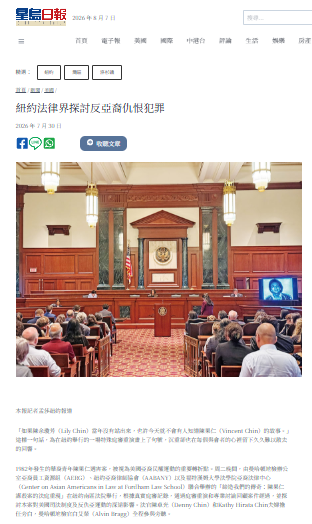
On Tuesday, July 28, 2026, the Asian Employee Resource Group of the Manhattan District Attorney’s Office, in partnership with AABANY and the Center on Asian Americans and the Law at Fordham Law School, hosted the trial reenactment, Building Our Legacy: The Murder of Vincent Chin, at the U.S. District Court for the Southern District of New York at 500 Pearl Street in Manhattan. The 1982 homicide of Vincent Chin, a young Chinese American, is considered a pivotal moment in the Asian American civil rights movement. This reenactment was covered by 星島日報 (Sing Tao Daily).
The article, published on July 30, 2026, covers the specifics of this case, including how racial tensions played an instrumental role in it. According to Sing Tao Daily, at the time of Vincent Chin’s murder, anti-Japanese sentiment was high due to intense economic anxiety from inflation and nationwide unemployment in industrial fields. This sentiment was especially acute in Detroit because of the city’s heavy reliance on the auto industry. The court testimony revealed that two white auto workers, Ronald Ebens and his stepson Michael Nitz, continuously verbally abused Chin, saying, “We lost our jobs because of you motherfuckers.” This verbal abuse ultimately ended in the chase and murder of Vincent Chin with a baseball bat.
The article described the post-reenactment discussion, which featured Hon. Denny Chin, United States Circuit Judge for the Second Circuit, and Kathy Hirata Chin, who both spoke about AABANY’s trial reenactments project. AABANY Executive Director Yang Chen spoke about the work of AABANY’s Anti-Asian Violence Task Force.
A relative of Vincent Chin, Annie Tan, also participated in the post-reenactment discussion. She was quoted by Sing Tao Daily, stating, “We cannot remain silent; instead, we must continue to tell Vincent Chin’s story and speak out bravely,” expressing the hope that—just as Lily Chin wished during her lifetime—no other mother would ever have to endure such suffering.
WASHINGTON, D.C. – Today, the Supreme Court of the United States upheld the fundamental constitutional guarantee of birthright citizenship. In Trump v. Barbara, the Court found that Executive Order 14160, which sought to limit the scope of birthright citizenship, did not comply with the Citizenship Clause of the Fourteenth Amendment.
The National Asian Pacific American Bar Association (NAPABA) applauds the Court’s decision. It upheld what NAPABA has emphasized throughout the litigation: a constitutional right that the Asian American, Native Hawaiian, and Pacific Islander (AANHPI) community has understood and relied upon for nearly 130 years—ever since a young Chinese American fought for his birthright citizenship in United States v. Wong Kim Ark, 169 U.S. 649 (1898). The Fourteenth Amendment promises every person equal treatment under the law and includes an equal claim of citizenship for persons born in the United States, regardless of the circumstances of their parents. EO 14160 attempted to upend that promise, and we are grateful that the Court invalidated it.
In three federal courts of appeals and in the Supreme Court, NAPABA led a nationwide coalition of its affiliates and national associates to defend birthright citizenship in this litigation. We underscored the significance of Wong Kim Ark, the crucial role of Asian Americans in shaping our nation’s immigration and civil rights jurisprudence, and the disproportionate impacts that EO 14160 would have on AANHPI communities. NAPABA highlighted how the congressional debates over the Fourteenth Amendment contemplated that the children of Chinese migrants, despite being heavily despised and vilified, would receive birthright citizenship. Lastly, we maintained that the federal government distorted the holding of Wong Kim Ark and created a faulty legal and historical analogy that Chinese migrants in the late 19th century were akin to today’s lawful permanent residents (i.e., green card holders).
NAPABA is thankful to its legal team for their exemplary work: Rahat N. Babar, who serves as NAPABA’s Deputy Executive Director and General Counsel, Edgar Chen, who serves as NAPABA’s Special Policy Advisor, Chris M. Kwok, who formerly served as co-chair of NAPABA’s Dispute Resolution Committee, and Seyfarth Shaw LLP (Wendy M. Feng, Owen Wolfe, and Lori Chen).
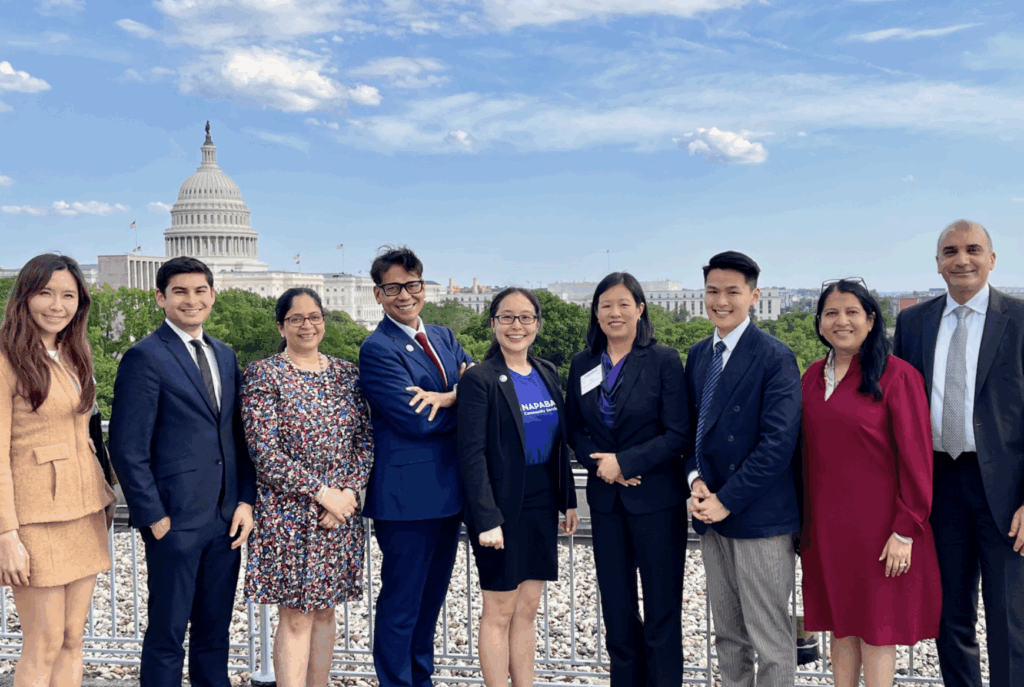
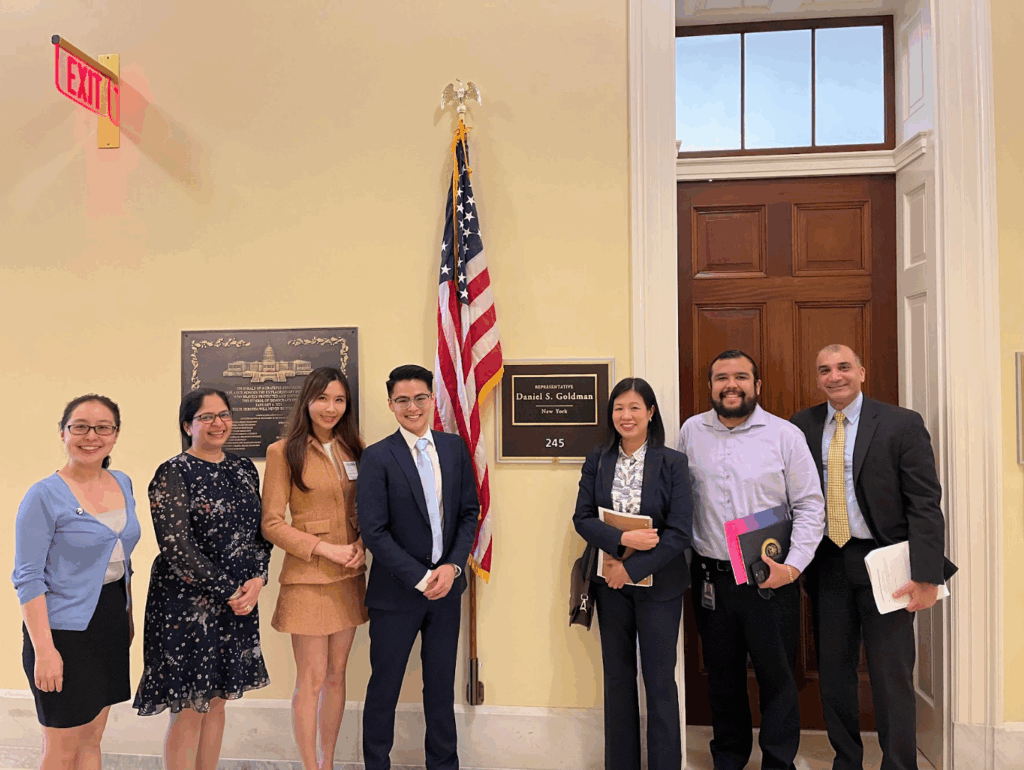
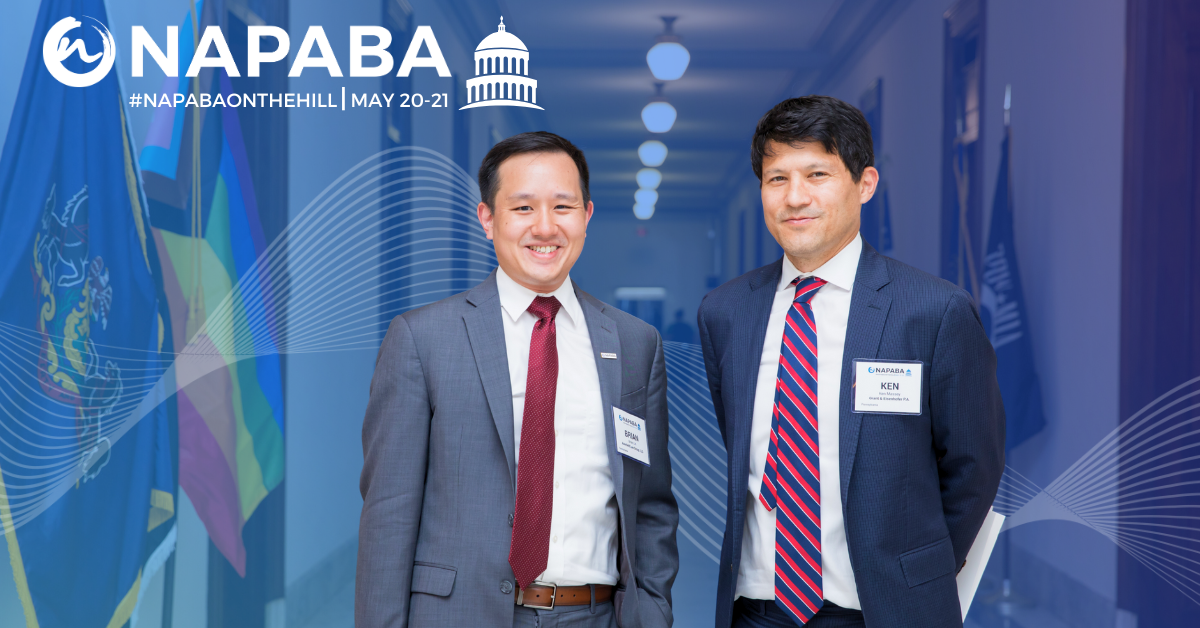
The National Asian Pacific American Bar Association (NAPABA) hosted its annual Lobby Day on May 19-20, 2026, bringing together many affiliate members, including those from the Asian American Bar Association of New York (AABANY) who traveled to Washington, D.C. to participate in this year’s NAPABA Lobby Day. AABANY members joined attorneys, judges, law students, and community leaders from across the country in advocating for policies that advance civil rights, protect due process, and strengthen the rule of law.
Representing AABANY were members of the our Issues Committee, including Co-Chairs Vishal Chander and Rachel Lee, along with other members of the New York delegation: Anushree Bagrodia, Charles Drucker, Linny Ng, Tiffany Ngeo, and Alex Pan. We also thank Glenn Magpantay, Northeast Alternate Regional Governor for NAPABA and AABANY Board Director, and Sapna Palla, NAPABA Board Member and former AABANY President, who joined the New York delegation.
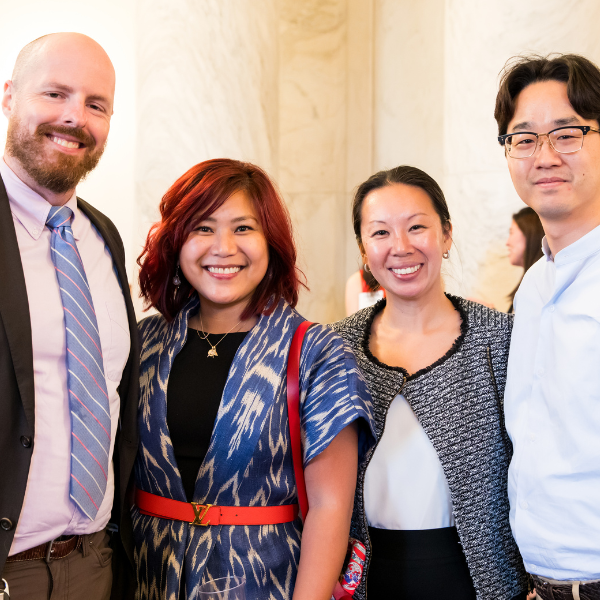
Lobby Day began with a policy training session at Jones Day, where participants received briefings on NAPABA’s legislative priorities and advocacy strategies before meeting with congressional offices on Capitol Hill. The event also included the annual AANHPI Heritage Month Congressional Reception, which brought together NAPABA members, members of Congress, congressional staff, and community leaders from across the nation.
NAPABA’s 2026 Lobby Day focused on three core legislative priorities:
Advancing civil rights through language access protections
Promoting a fair immigration system through access to counsel
Defending the rule of law by supporting judicial security measures
Advancing Civil Rights Through Language Access
The New York delegation urged congressional offices to support passage of theLanguage Access for All Act of 2026 (H.R. 7223), a bill designed to ensure that individuals with limited English proficiency have meaningful access to federally funded services through translation and interpretation assistance. NAPABA emphasized that language access is particularly important for the AANHPI community. Nearly one-third of Asian Americans are considered limited English proficient, making language access a critical civil rights issue.
This legislation would codify protections that were previously provided through Executive Order 13166—“Improving Access to Services for Persons With Limited English Proficiency”—and establish comprehensive language access requirements for federal agencies.
Promoting a Fair Immigration System
The New York delegation also educated Congress on the proposed Access to Counsel Act (H.R. 944/S. 391), which seeks to ensure that individuals with lawful status who are detained for prolonged inspections at ports of entry have meaningful access to legal counsel and family members.
NAPABA highlighted the importance of due process protections, particularly as immigration enforcement actions continue to affect immigrant communities across the country. The delegation stressed that individuals navigating the immigration system should be able to understand the process and access legal representation when their rights are at stake.
The delegation also discussed AABANY’s ongoing efforts to support immigrant communities through legal clinics, educational programming, and pro bono initiatives. (For more information about that, read the blog post about AABANY’s participation in the 2026 AAPI Summit hosted by Senator Gillibrand at the end of April by clicking here.)
Defending the Rule of Law and Judicial Independence
The New York delegation also advocated for passage of the Countering Threats and Attacks on Our Judges Act (H.R. 4602/S. 2379), bipartisan legislation aimed at addressing the increasing threats and acts of violence directed toward members of the judiciary. The bill would establish a State Judicial Threat Intelligence and Resource Center and provide resources to improve judicial security nationwide.
As attorneys, AABANY members emphasized that an independent judiciary is essential to maintaining public confidence in the legal system and preserving the rule of law. NAPABA noted that threats against judges undermine judicial impartiality and threaten the integrity of the courts.
Meetings with Congressional Offices
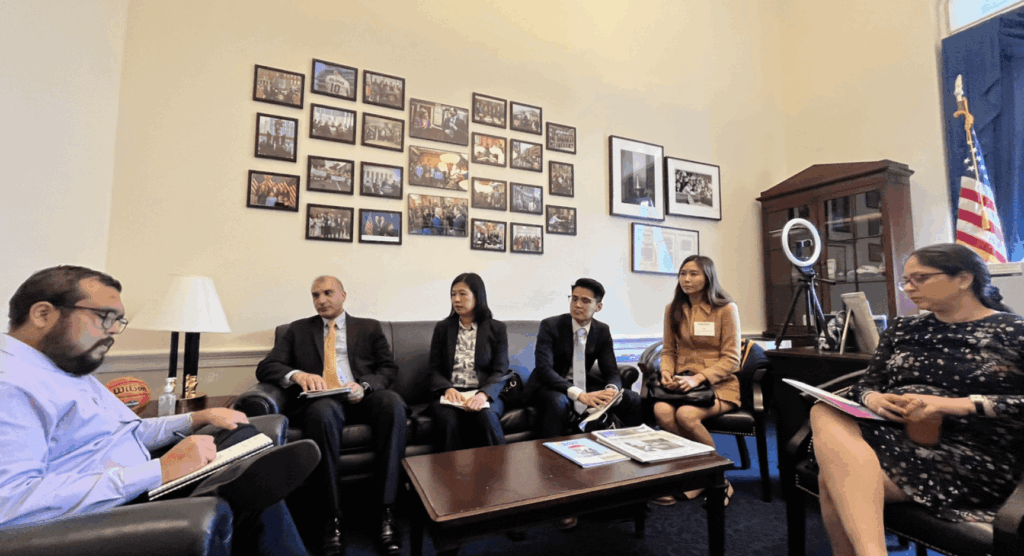
The New York delegation met with staff from several congressional offices, including New York Representatives Jerry Nadler (NY-12), Nydia Velázquez (NY-07), and Dan Goldman (NY-10). Discussions focused on NAPABA’s legislative priorities, including language access, immigration due process, and judicial security.
The delegation also highlighted the work of AABANY and NAPABA in supporting immigrant communities, educating lawful permanent residents about their rights, and providing pro bono legal services and training opportunities for attorneys. Follow-up conversations included discussions regarding immigration policy developments, legal aid initiatives, and opportunities for future collaboration between congressional offices and the AANHPI legal community.
Continuing the Work
Lobby Day provided an important opportunity for AABANY to bring the perspectives of New York’s AANHPI legal community directly to policymakers. Through these conversations, AABANY reinforced the role of attorneys not only as advocates in the courtroom but also as advocates for policies that promote justice, equity, and opportunity.
AABANY thanks NAPABA for organizing another successful Lobby Day and looks forward to continuing its partnership in advancing the interests of the AANHPI community and the legal profession nationwide.
For more information about NAPABA’s legislative priorities, click here.
To learn more about AABANY’s Issues Committee and how you can get involved, go here.
– Written by Vishal Chander, Board Member and Co-Chair of AABANY’s Issues Committee
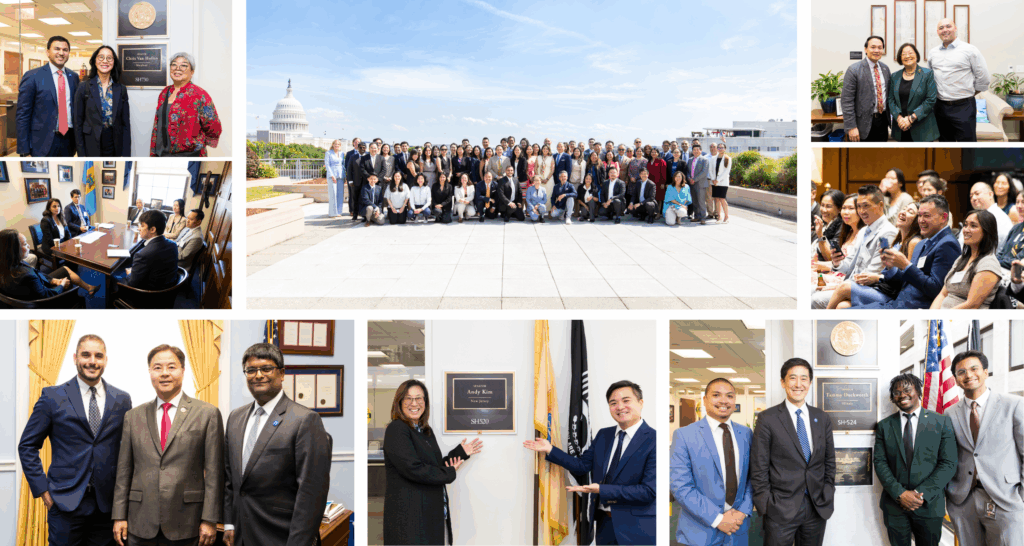
NAPABA hosted its annual Lobby Day on May 19-20, 2026, bringing together members of their community from across the country to Washington, DC in a celebration and demonstration of the power of their bar during AANHPI Heritage Month. In meetings with congressional representatives and their staffers, attorneys, law students, and leaders from the NAPABA community advocated for advancing the civil rights of the AANHPI community, a fair immigration system, and defending the rule of law.
Highlights of Lobby Day Include:
Robust Representation
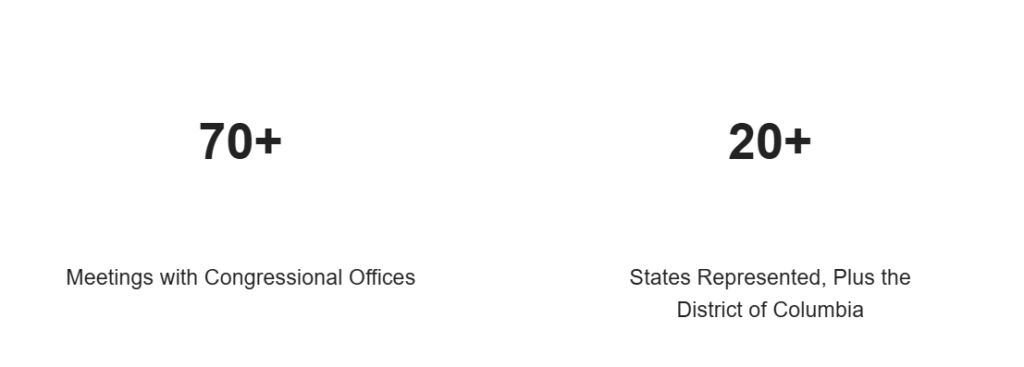
With participants hailing from over 20 states, and the District of Columbia, taking part in over 70 meetings with congressional offices on both sides of the aisle, NAPABA demonstrated its strength and its commitment to amplifying AANHPI voices in the halls of power.
Advocacy Training Prior to the meetings, NAPABA held a training session featuring congressional staffers from both sides of the aisle who spoke with both expertise and passion about the bills their members have introduced or sponsored. Attendees also heard from advocacy veterans on strategies and techniques to more effectively communicate NAPABA’s priorities and the needs of AANHPI communities and the legal profession.
Policy Priorities Throughout multiple meetings, participants advocated for issues of importance to AANHPI communities and the legal profession. They focused on codifying longstanding language access protections for the millions of limited English proficient persons in the United States, including the significant portions of the Asian American immigrant populations, as documented by the U.S. Commission on Civil Rights. NAPABA stood up for access to counsel at various stages of the immigration and entry processes to the United States, and for judicial security in order to better support the rule of law.
Meaningful Engagements Attendees met with numerous lawmakers and their staff, fostering meaningful dialogues, and building relationships that will be instrumental in advancing policy objectives. NAPABA Lobby Day participants skillfully articulated their positions, presented compelling arguments, and shared personal stories to humanize the issues that they face. On the evening before their training at their Congressional Reception on Capitol Hill, participants heard from leaders in their community directly, including NAPABA Trailblazers Sen. Mazie Hirono (HI) and S.E.C. Commissioner Mark T. Uyeda.
In a time of great uncertainty and a rapidly shifting policy landscape, NAPABA demonstrated the power of its members during a Lobby Day built around a unifying agenda of language access, a sensible and fair immigration system and support for the rule of law. Member-constituents braved the heat to visit engage with key Congressional offices across the Capitol complex and called on their elected representatives to support policies that advance their communities. Lobby Day is another great reminder that NAPABA is the national voice of the AANHPI legal community, and that we can stand together for the betterment of our communities, for the rule of law we have dedicated our livelihoods to, and for the nation we cherish.
For nearly 25 years, Executive Order 13166 served as a cornerstone of the federal government’s commitment to civil rights. It required that every federal agency meet the needs of limited English proficient (LEP) individuals when it delivers critical services. It similarly required those that received federal funding, such as non-profit organizations as well as state and local governments, to guarantee that LEP individuals had meaningful access to their services.
On July 14, 2025, the U.S. Department of Justice released guidance to implement the revocation of Executive Order 13166. It has rescinded all prior guidance to recipients of federal funding pertaining to the protections of Title VI of the Civil Rights Act of 1964 and suspended all existing LEP guidance. It emphasizes English-only operations without accounting for the need for LEP individuals to access critical, life-sustaining services.
The new guidance further deepens the harm caused by the revocation of Executive Order 13166. It undermines decades of progress to make government and federally funded programs more accessible. Rather than a core requirement for non-discriminatory compliance, the new guidance weakens the legal framework to combat national origin discrimination, which is prohibited by Title VI, and treats language access as merely discretionary.
We continue to call on Congress to engage in appropriate oversight over the Administration’s unwarranted actions and pursue legislative actions to strengthen and expand the protections of Title VI.
###
The National Asian Pacific American Bar Association (NAPABA) represents the interests of over 80,000 Asian Pacific American (APA) legal professionals and over 90 national, state, and local APA bar associations. NAPABA is a leader in addressing civil rights issues confronting Asian American, Native Hawaiian, and Pacific Islander communities. Through its national network, NAPABA provides a strong voice for increased diversity of the federal and state judiciaries, advocates for equal opportunity in the workplace, works to eliminate hate crimes and anti-immigrant sentiment, and promotes the professional development of people of all backgrounds in the legal profession.
WASHINGTON – Today, in the cases involving challenges to the executive order that limits birthright citizenship, the U.S. Supreme Court narrowed the scope of the preliminary injunctions that can be available to pause the executive order before a final judgment can be rendered. This discrete, preliminary issue will now return to the district courts for them to craft an injunction that, in the Court’s view, is no “broader than necessary to provide complete relief to each plaintiff with standing to sue.” The Court did not address the constitutionality of the executive order.
In the meantime, as the parties litigate over the scope of the injunctions, and as three federal courts of appeals evaluate the substantive challenges to the executive order, the National Asian Pacific American Bar Association (NAPABA) reaffirms the principles that underlie our amicus briefing to the courts that Executive Order 14160 must be set aside.
First, EO 14160 upends the Fourteenth Amendment’s promise of an equal claim of citizenship to all persons born in the United States. Under the plain text of the Fourteenth Amendment and longstanding historical precedent, EO 14160 is patently unconstitutional.
Second, EO 14160 distorts the holding of United States v. Wong Kim Ark, 169 U.S. 649 (1898). As we explained in our amicus brief, the Court upheld the conferral of citizenship to children born in the U.S. to non-citizen parents under the Fourteenth Amendment’s Citizenship Clause. The brief underscored the historical significance of this precedent and the role of Asian Americans in shaping our nation’s foundational immigration and civil rights precedents.
Lastly, if EO 14160 is implemented, disproportionate harms would result for Asian American communities. In the United States, 65% of Asian American adults are immigrants. Asian immigrants account for a substantial percentage of the overall immigrant population, with 17% of all undocumented immigrants having Asian ancestry and more than 88% of individuals holding H-1B visas. Under EO 14160, children of these categories of immigrants would be excluded from citizenship, despite being born, raised, and educated in the United States and despite knowing no other country of allegiance.
The question of a child’s citizenship in the United States ought not to be dependent on the stature or circumstances of their parents. Nor should it turn on whether a child is born in one state versus another. For the guarantees of the Fourteenth Amendment to be vindicated, birthright citizenship must apply to all children across the United States.
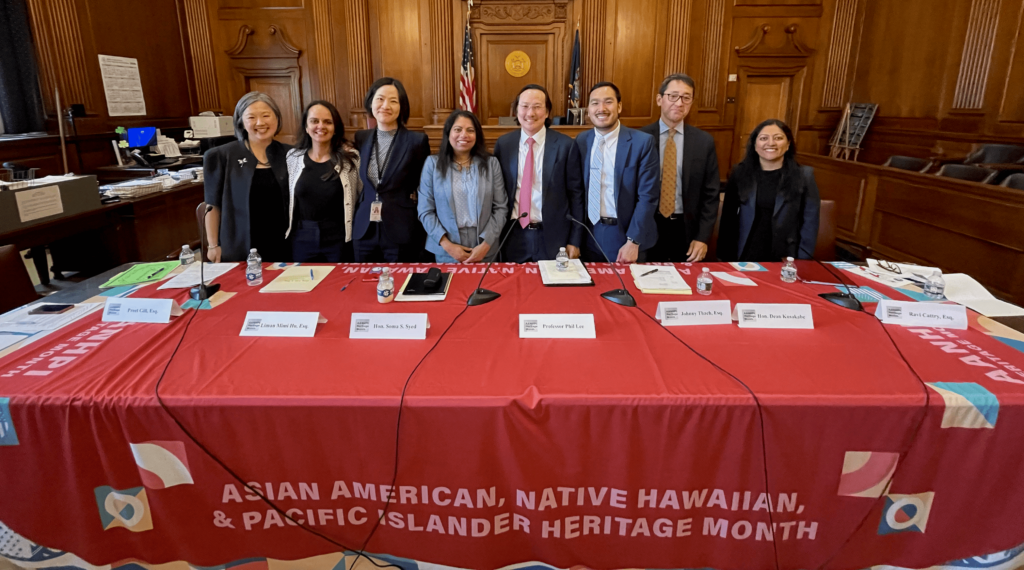
On May 20, 2025, the GSPI and Judiciary Committees co-sponsored “A Legacy of Leadership and Resilience: Then and Now in the Context of Korematsu and Thind” in conjunction with the Queens County Women’s Bar Association (QCWBA) and the Equal Justice in the Courts Committee (QSC-EJIC). The event featured Queens Supreme Court Justice Karen Lin, QCWBA President Preet Gill, Court Attorney Liman Mimi Hu, Queens Civil Court Judge Soma Syed, St. John’s University School of Law Professor Philip Lee, and Associate Law Clerk Johnny Thach. Welcome remarks also included Queens Supreme Court Justice Frederick D.R. Sampson and Judge Shahabuddeen A. Ally, Administrative Judge of the Civil Court of the City of New York.
In celebration of AANHPI Heritage Month in May, the event highlighted three landmark cases in American history on race, civil rights, and belonging: United States v. Thind, Gong Lum v. Rice, and Korematsu v. United States. Thind was a 1923 case which held that Thind, an Indian man who served for the U.S. in World War I, was not Caucasian and therefore ineligible for naturalized citizenship. Lum was a 1927 case that upheld racial segregation and denied admission to a Chinese American nine-year-old student to an all-white school district. Korematsu was a 1944 case that upheld the conviction of a Japanese American man for violating an exclusion order mandating people of Japanese ancestry, including Japanese Americans, to be incarcerated in internment camps under suspicions, with no factual basis, of being enemy aliens involved in espionage and sabotage.
The featured speakers, divided in teams, examined each case through multiple lenses: the historical background around each case, the remarkable individuals who stood for justice and challenged exclusionary and racist policies and laws at the time, the holding of each case, and what transpired after. Professor Lee emphasized the theme of Asian Americans as “perpetual foreigners” and the construction of race in the context of racial triangulation.
The event was well-attended with over 100 people. Momos from Bajeko Sekuwa and bubble tea from YAAAS Tea were provided as food and refreshments. Thank you to the speakers, organizers, co-sponsors, and attendees. Click here to learn more and join the GSPI Committee and here to learn more and join the Judiciary Committee.
Over 40 national, state, and local bar associations join NAPABA to oppose Executive Order 14160.
NAPABA corrects the federal government’s misreading of U.S. v. Wong Kim Ark.
NAPABA highlights the detrimental impact on the Asian American community if EO 14160 is upheld.
WASHINGTON – The National Asian Pacific American Bar Association (NAPABA) and 43 of its affiliates and national associates from across the country joined forces to defend the fundamental constitutional guarantee of citizenship. Led by NAPABA, the coalition filed an amicus brief, which can be found here, with the U.S. Court of Appeals for the Ninth Circuit in State of Washington v. Donald J. Trump.
The Fourteenth Amendment of the U.S. Constitution promises every person equal treatment under the law. It also includes an equal claim of citizenship to all persons born in the United States, regardless of the stature or circumstances of their parents.
Executive Order 14160 upends that promise. It refuses to recognize the birthright citizenship of any child born in the United States to a mother who is lawfully present on a temporary basis, like those on work or student visas, and a father who is neither a U.S. citizen nor a lawful permanent resident.
In our amicus brief, NAPABA and the coalition highlight the core principles established in United States v. Wong Kim Ark, 169 U.S. 649 (1898). The Court upheld the conferral of citizenship to children born in the U.S. to non-citizen parents under the Fourteenth Amendment’s Citizenship Clause. The brief underscores the historical significance of this precedent, the role of Asian Americans in shaping our nation’s foundational immigration and civil rights precedents, and the disproportionate harms that EO 14160, if upheld, would visit upon Asian American communities.
EO 14160 distorts the holding of Wong Kim Ark. The federal government misreads the Court’s 1898 description of Wong’s parents as having a permanent residence in the U.S. Our brief explains this oversimplification by recounting the historical discrimination Chinese migrants faced in the late 19th century. Under this backdrop, their presence in the country was a far cry from the lawful permanency afforded to today’s green card holders. At that time, the Chinese immigrants were excluded from full participation in civic life and systematically denied the ability to integrate into American society. They faced mass violence and a cascading series of exclusionary laws designed to expel them. By drawing this parallel, NAPABA underscores how EO 14160 would disproportionately harm Asian American communities, echoing the same past exclusionary motives.
We extend our heartfelt gratitude to our exemplary legal team for their tireless work behind the brief, including Rahat N. Babar, who serves as NAPABA’s Deputy Executive Director and General Counsel, Edgar Chen, who serves as NAPABA’s Special Policy Advisor, and Chris M. Kwok, who serves as co-chair of NAPABA’s Dispute Resolution Committee.
Are you joining us for NAPABA’s largest advocacy day on Capitol Hill? NAPABA Lobby Day is your opportunity to meet with policymakers and champion the pressing issues affecting our communities. Now is the time to come together, take action, and make our voices heard to drive meaningful change.
NAPABA Supports the AANHPI Community
Ensuring Language Access
Protecting the Legacy of Fred Korematsu
Recognizing the Rich History and Vibrancy of the AANHPI Community
NAPABA Calls for Fair and Humane Immigration System
Advancing the Right to Counsel
Supporting Asylum Seekers
Protecting Immigrants from National Origin Discrimination
NAPABA Defends Rule of Law & the Legal Profession
Protecting Judges from Threats
Supporting Funding for Legal Services Corporation
Strengthening the Public Service Loan Forgiveness Program
Asian American, Native Hawaiian, and Pacific Islander (AANHPI) Heritage Month Congressional Reception
Tuesday, May 20, 2025 | 6-8 PM ET
Join NAPABA members and community leaders from across the country as we celebrate AANHPI Heritage Month with members of Congress. The reception will bring together Lobby Day participants, members of Congress and their staff, and leaders in the AANHPI community.