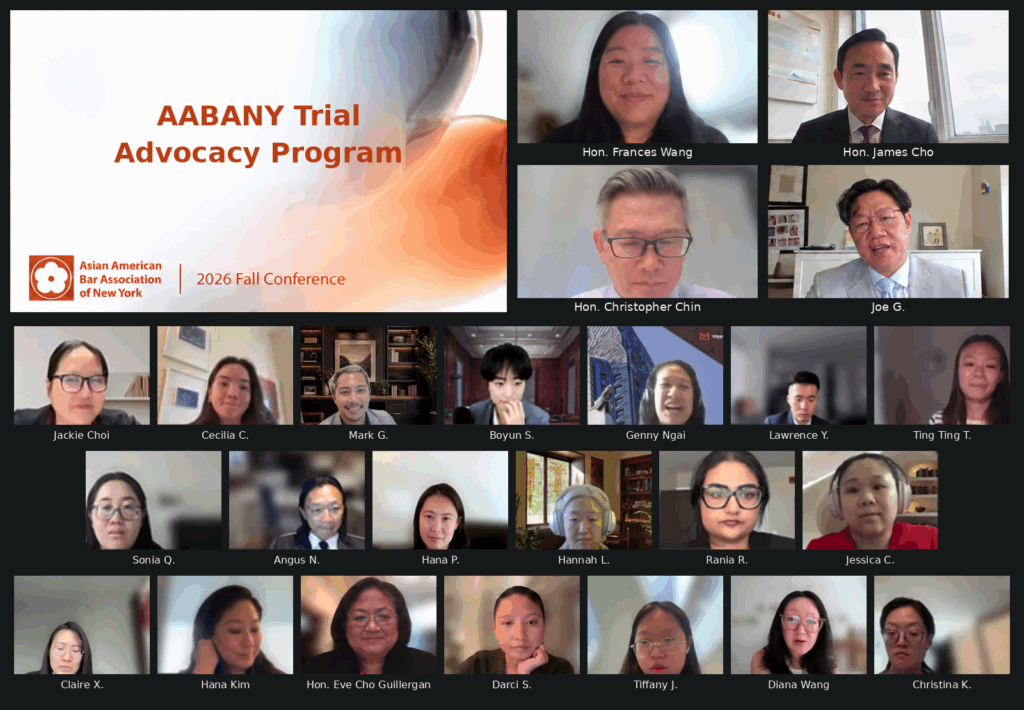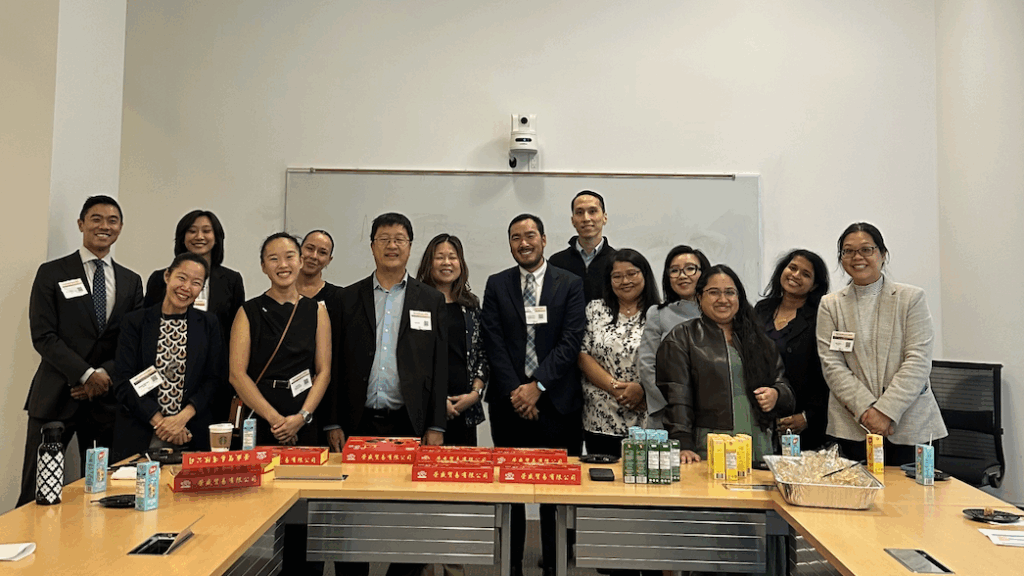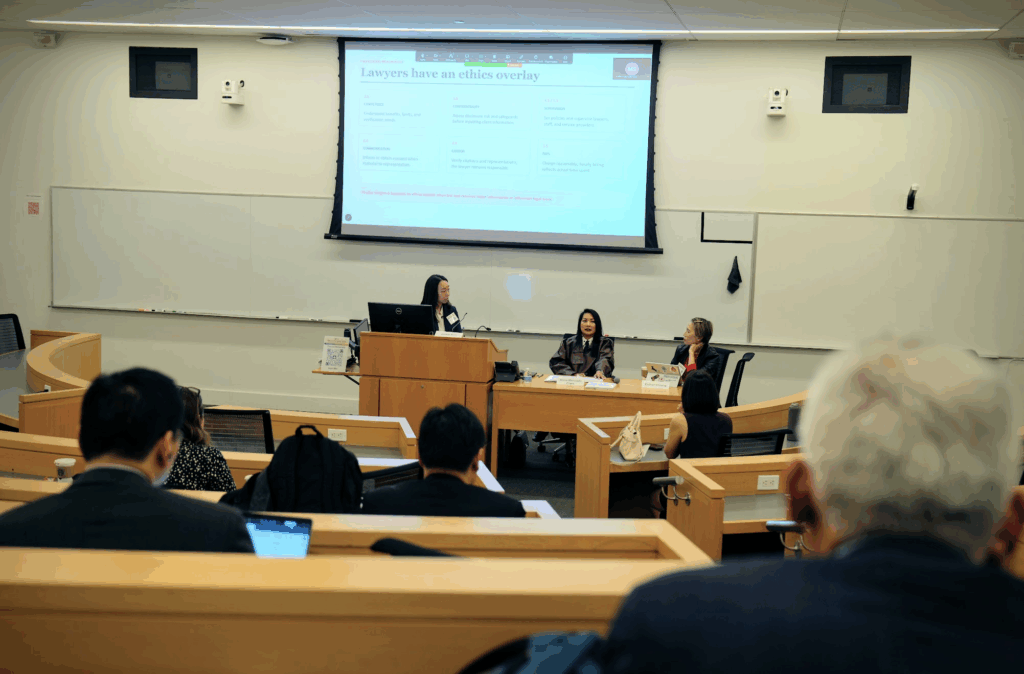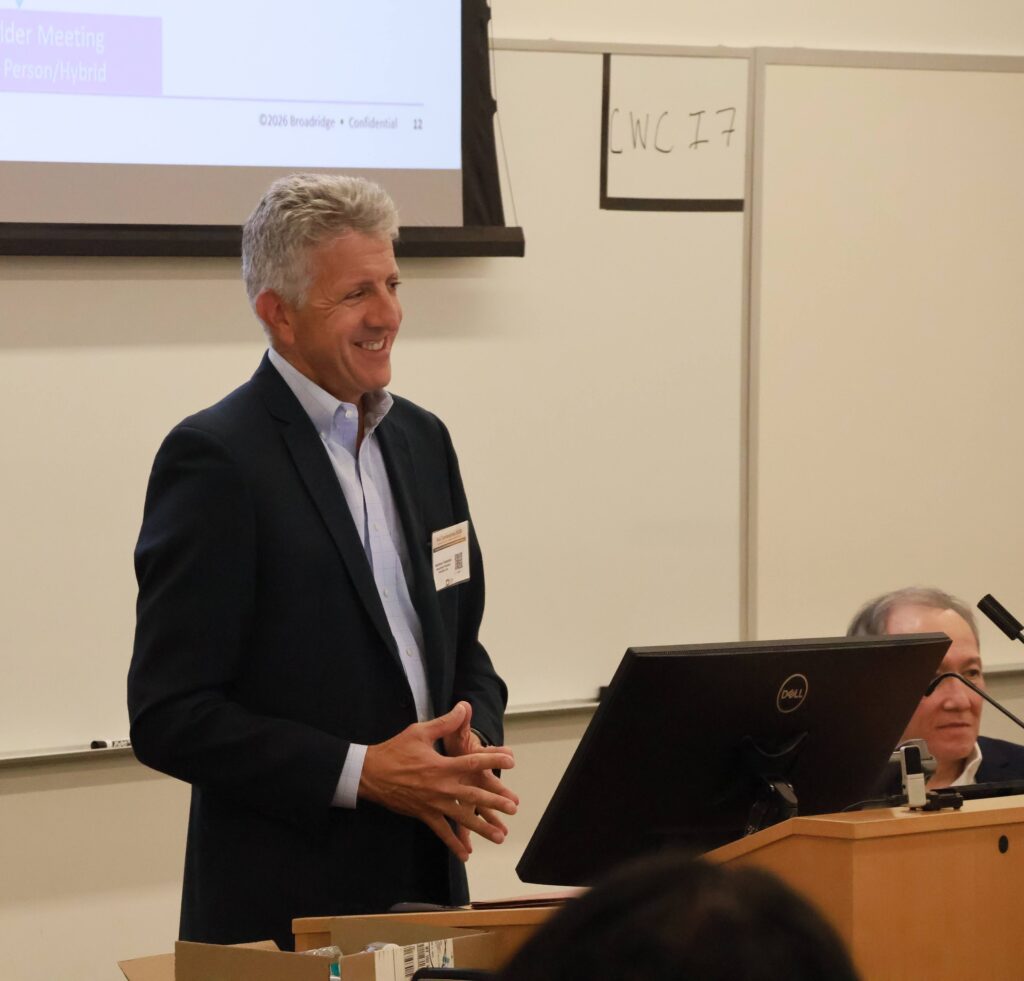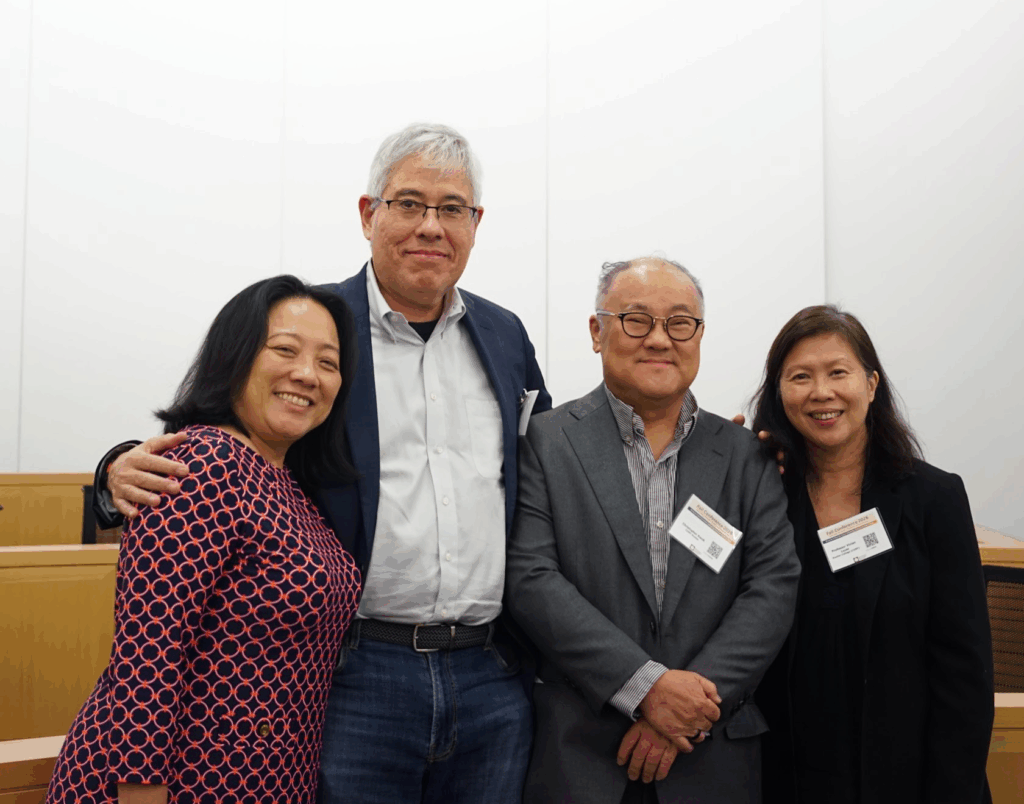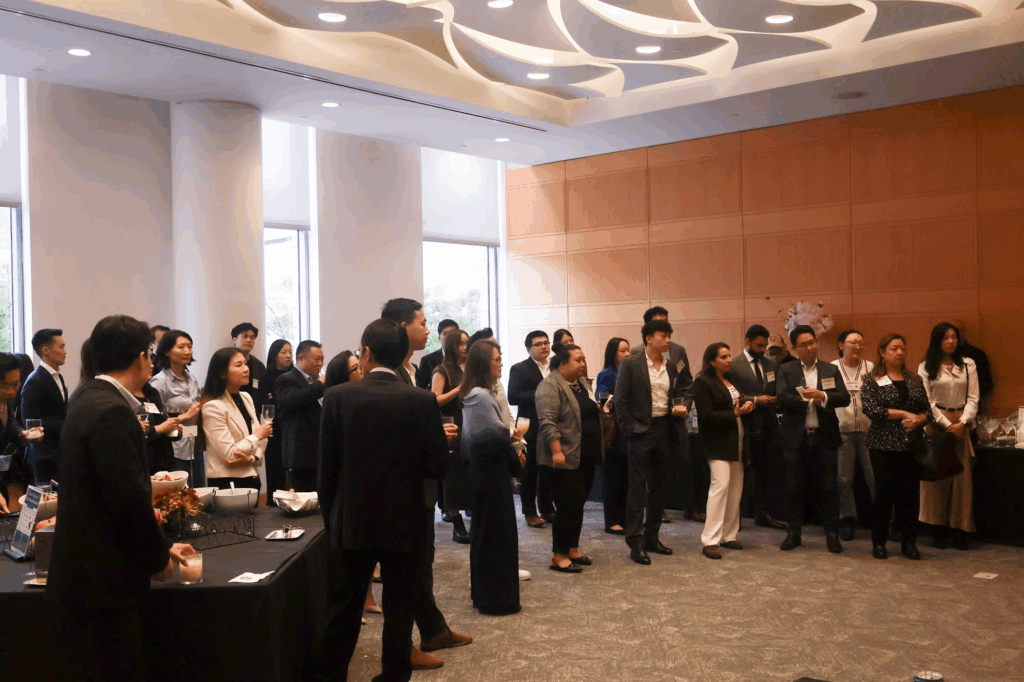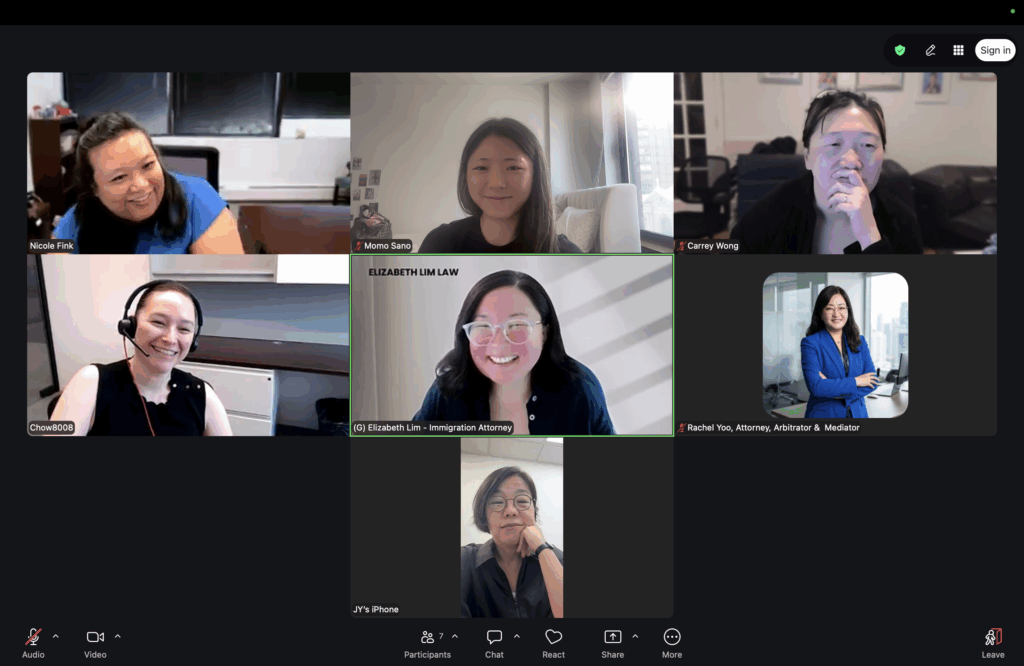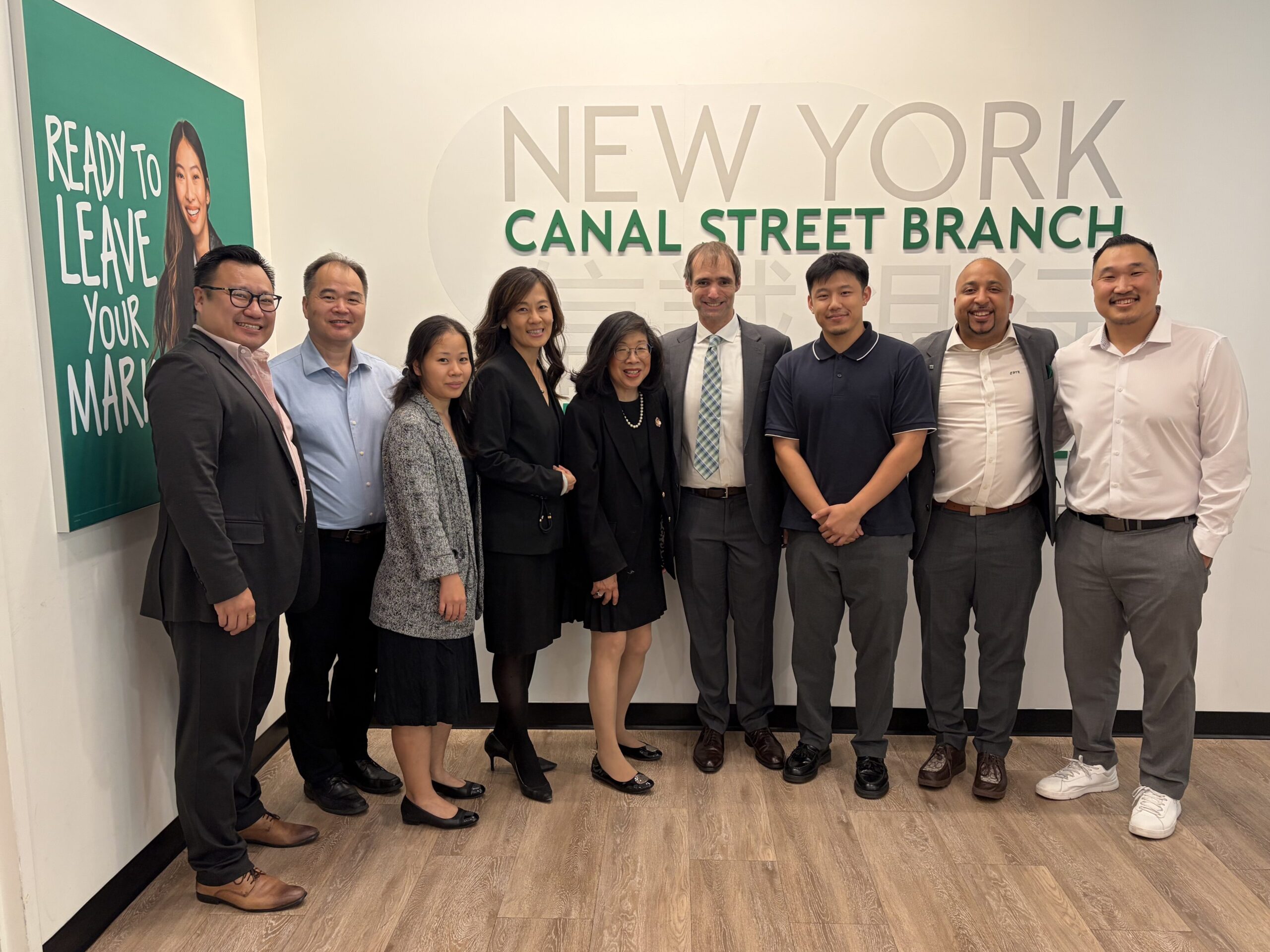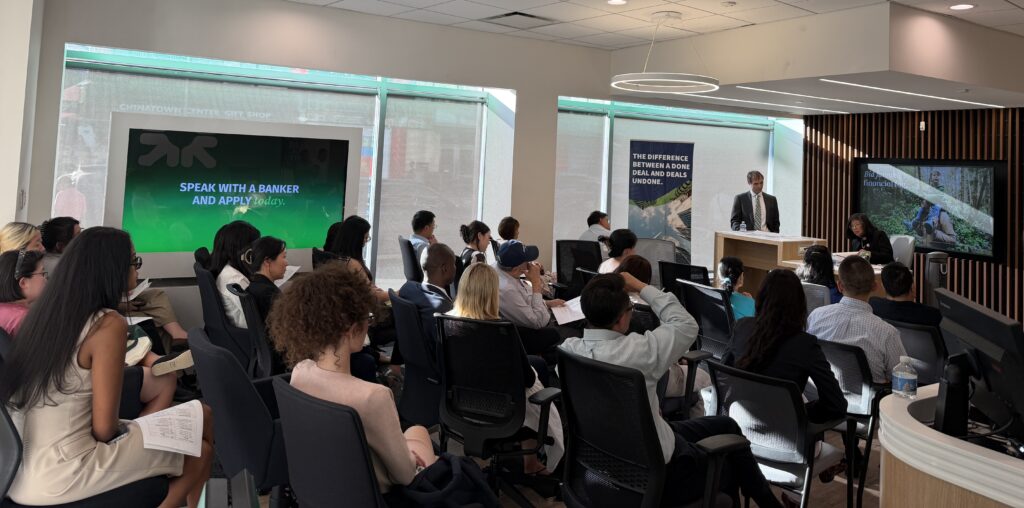

On June 16th, 2026, the Immigration Law Committee of the Asian American Bar Association of New York (AABANY) held its first meeting of the year on Zoom. Nicole Fink, Chair of the Immigration Law Committee, used this occasion as an opportunity to reconnect with fellow immigration attorneys and to gauge interest in potential events later this year.
At the start of the meeting, Yang Chen, the Executive Director of AABANY, sought applications for AABANY’s Legal Referral and Information Services (LRIS) program. Currently, the LRIS program is looking for experienced lawyers to join its panel due to high demand for qualified immigration lawyers.
Next, the meeting focused on plans for the Immigration Law Committee’s growth and potential topics of interest for the near future. Nicole Fink made a request for more participation in AABANY’s Pro Bono Clinics, especially from immigration lawyers. The Pro Bono Clinics take place in community settings, to create a more welcoming environment for those seeking legal advice. Lawyers serving in the Clinic provide limited scope representation and would only give brief advice and refer clients to legal resources, and are thus not committed to representing any client after the consultation at the Clinic ends. As an incentive, Fink offered to buy a free meal for any lawyers on the call who volunteered at the Clinic.
The meeting also covered continued legal education (CLE) programs. After AABANY’s well received training on habeas corpus on June 4th, meeting attendees expressed interest in more CLE opportunities on immigration-related issues and other topics, such as AI usage in the legal field. The discussion also focused on overlapping areas such as matrimonial law and legal issues affecting juveniles. The group talked about the need to connect lawyers with different areas of expertise, and who may be able, for example, to aid conditional residence cases or special immigrant juvenile status cases.
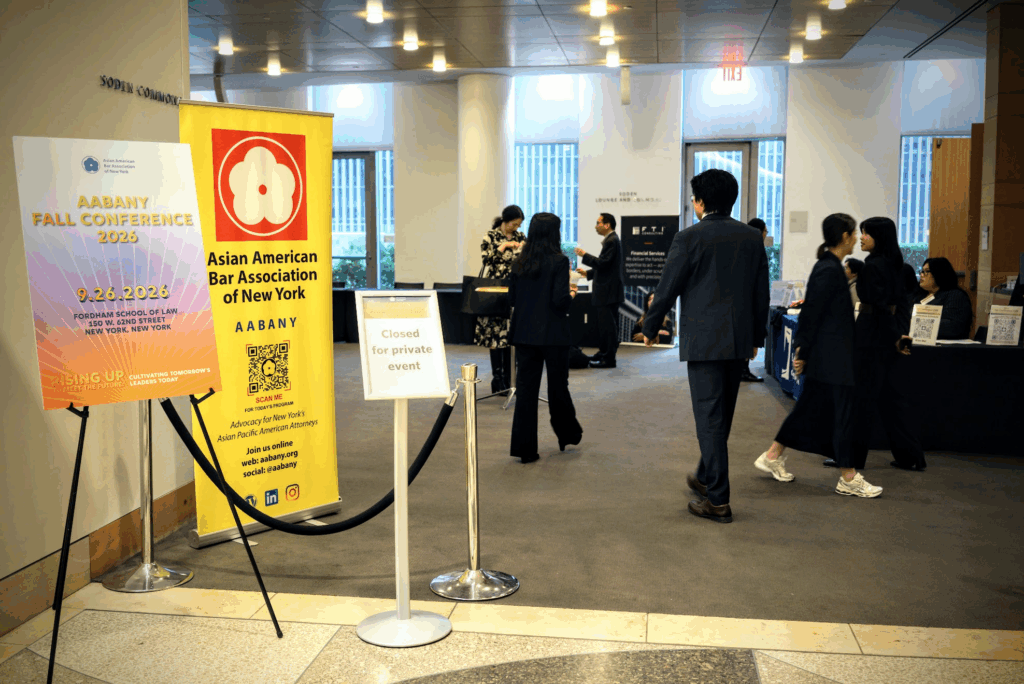
The meeting concluded with a reminder about the 2026 Fall Conference on Saturday, September 26th, in which the Immigration Law Committee is presenting a panel on AI and data analytics in the immigration field, “Beyond Forms & Filings: How Tomorrow’s Immigration Attorneys Build Power Through Tech, Data, and Storytelling.” The meeting attendees also brainstormed on possible wellness opportunities for immigration lawyers, to combat the tough legal environment they operate in by offering more relaxing options to connect and refresh. Committee members were encouraged to reach out in the weeks ahead with additional ideas or interest in getting involved with Pro Bono Clinics, wellness opportunities, or networking across practice areas.
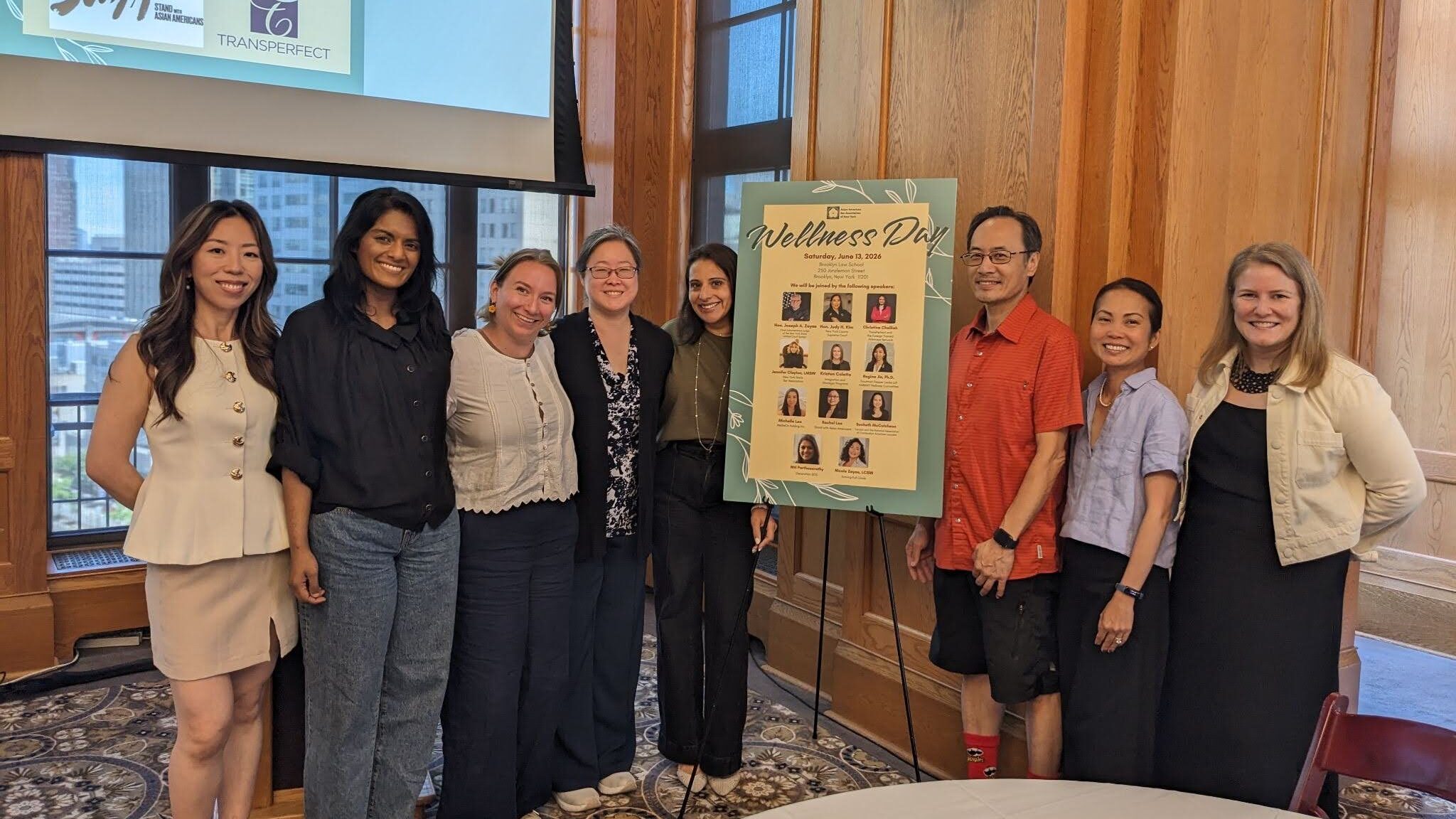
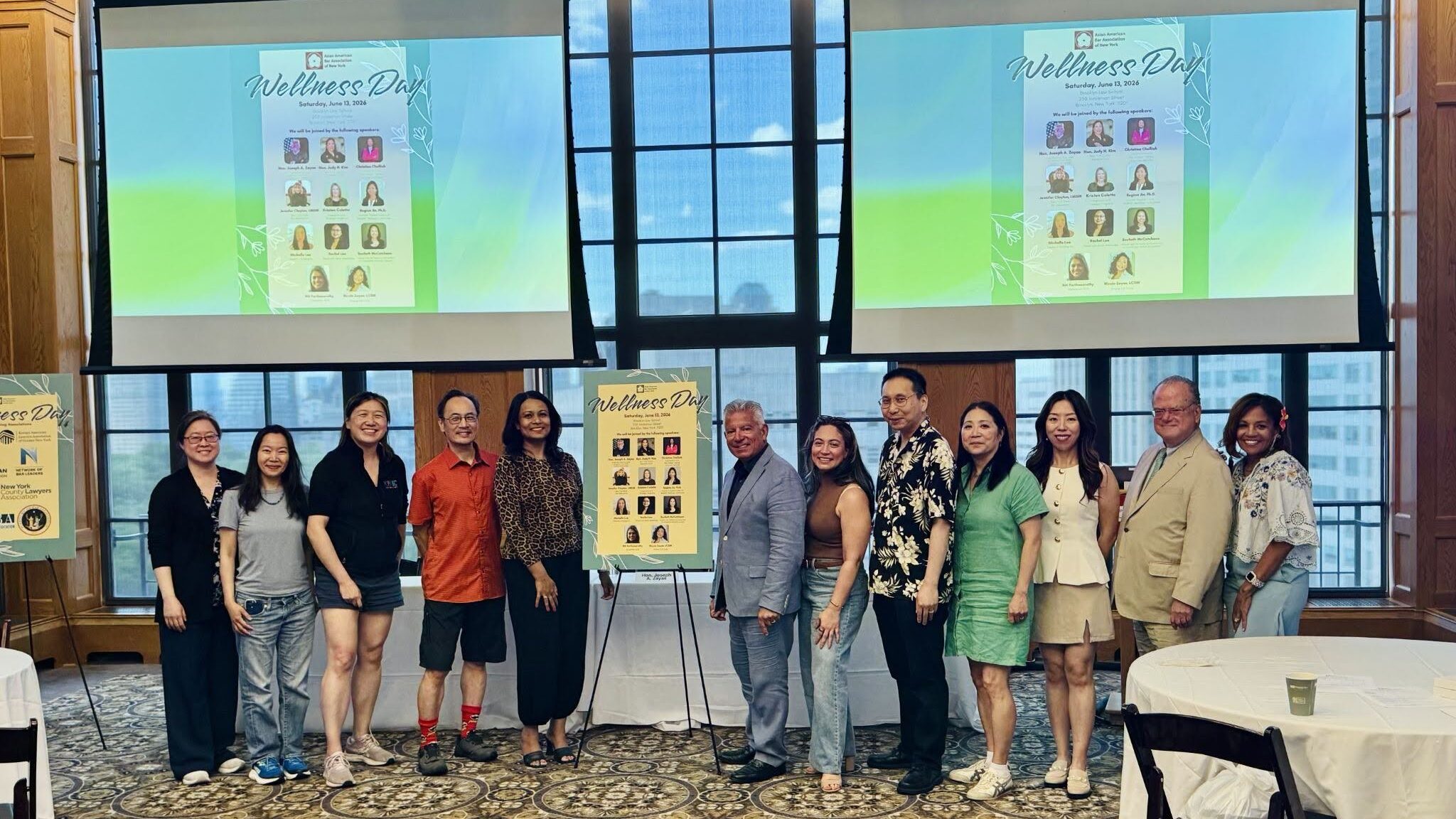
On June 13, 2026, AABANY hosted its Fourth Annual Wellness Day at Brooklyn Law School. This successful event was made possible through the generous support of AABANY’s engaging speakers and generous sponsors, enabling participants to learn about crucial issues related to mental and physical well-being among members of the legal profession.
AABANY held its inaugural Wellness Day during former AABANY President Karen Kim’s 2023-2024 term, which focused on highlighting mental health and well-being in the legal profession. Since then, Wellness Day has continued as an annual event. Mental health and well-being are often overlooked and under-discussed. With programs like Wellness Day, AABANY aims to break down barriers and recognize mental health issues within the legal profession, creating a safe and supportive space for people to share their stories. At Wellness Day this year, participants learned about topics such as managing stress, the importance of resilience, and keeping physically fit.
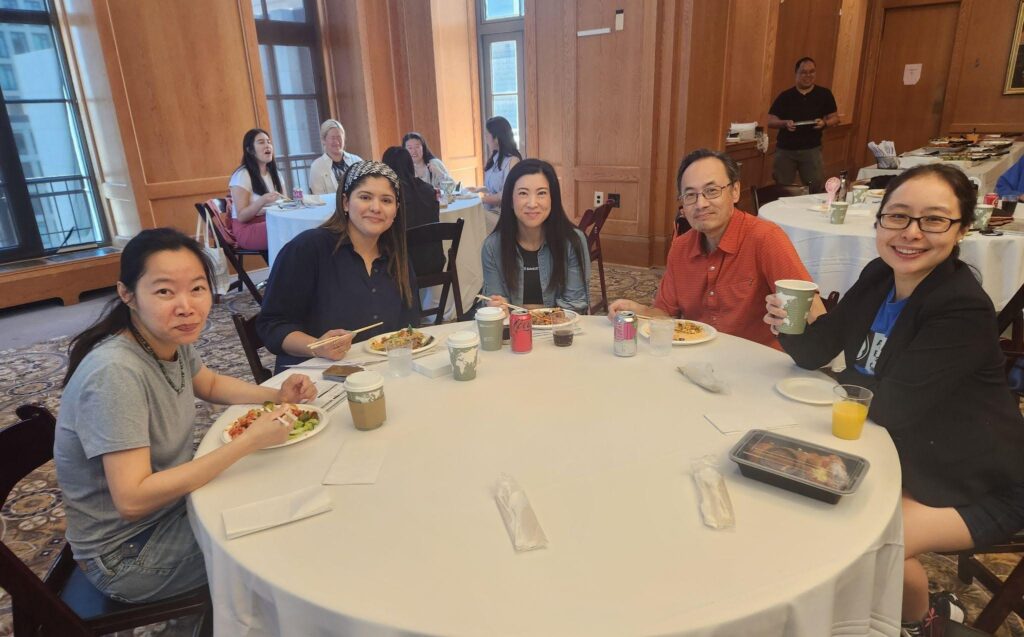
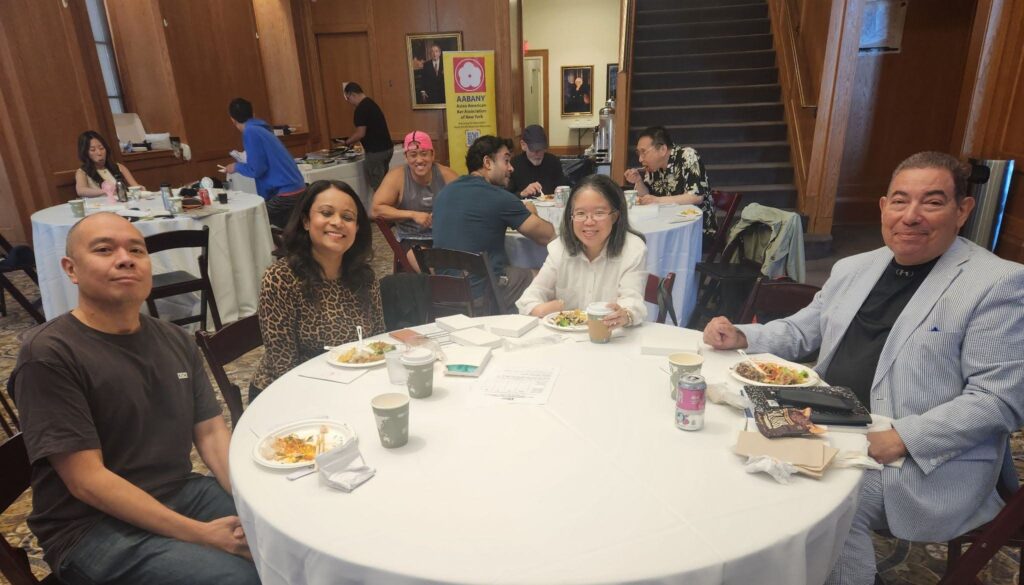
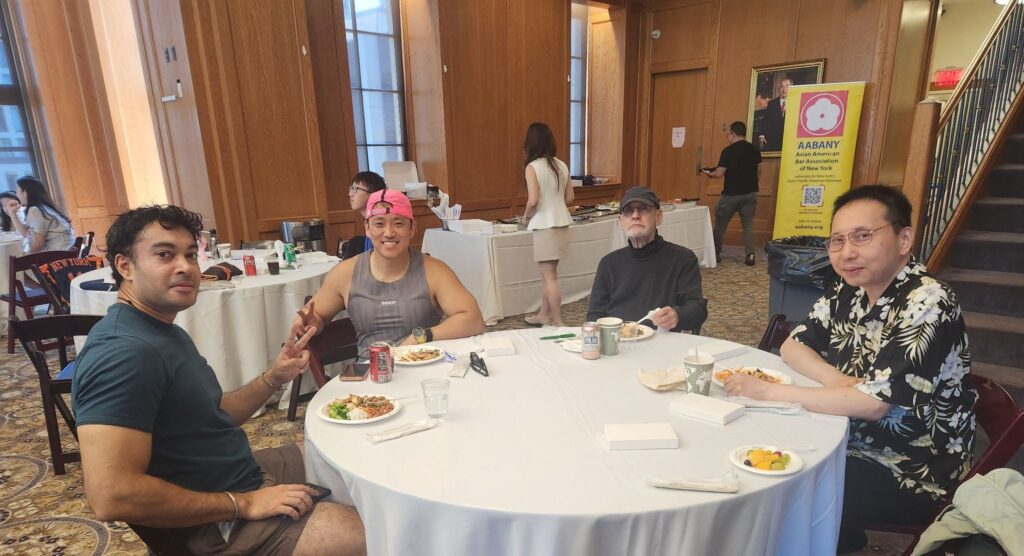
Doors for Wellness Day opened at 9:30 am. The event started with a Meet and Greet Breakfast, where attendees connected with one another as well as with former and current Wellness Day speakers and sponsors, and eased into the morning with pastries from Paris Baguette. Attendees who checked in early were also eligible to enter a raffle to win prizes designed to support wellness and well-being. The prizes included a complimentary intake session with Anise Health; a Time-Management Intensive Session with Dr. Michelle Thompson, CEO of Resistant Vision; 1:1 Coaching Session with Celina Lee, an executive and career coach, and founder of the Live Your Dream Club; Laser Focus Power Pitch Session with the Perfect Pitch Group; and Rainmaking 101 from Day 1, a book by Precious L. Williams.
AABANY President Varuna Bhattacharyya officially kicked off the programming with welcoming remarks, thanking AABANY’s sponsors, speakers, and attendees who made the event possible.
8 Pillars of Attorney Well-Being
The first morning session featured Jennifer Clayton from the New York State Bar Association and Niti Parthasarathy from Generation SOS. Ms. Clayton highlighted the problems in the legal profession surrounding stress and how it builds. She introduced the “8 Pillars of Attorney Well-Being” as a strategic way to deal with stress in the workplace, which are: Emotional, Spiritual, Intellectual, Physical, Occupational, Financial, Environmental, and Social. Ms. Parthasarathy shared her story as a burned out attorney at her law firm. What helped Ms. Parthasarathy was realizing that everything would be fine if you let go and that self care is not selfish. She emphasized the importance of being kind to yourself. To amplify the point, Ms. Clayton shared an example of being kind to yourself by recounting a story about a biker and a bike chain, where the biker thought that she was slow because she was unathletic, when the real problem turned out to be the bike chain that was broken, showing how some things happen for external reasons. Ms. Parthasarathy shared how doing things like going outside, trying new things, and taking just a little time to meditate improved her overall quality of life, giving her free time and actual hobbies beyond just working. In sharing these lessons, Ms. Clayton and Ms. Parthasarathy helped the audience learn the importance of being kind to yourself and taking time for yourself when needed.
Next, Socheth McCutcheon, Associate General Counsel at Verizon and Founder of the National Association of Cambodian American Lawyers, together with Kristin Coletto, Vice President of Integration and Strategic Programs, engaged in a fireside chat to share the importance of listening to your body. Ms. McCutcheon talked about serious health problems she developed as a hardworking lawyer and parent. She noted how work took a toll on her physically, and how she didn’t want to take time off, even through severe weight loss. Ms. McCutcheon recounted how she eventually took time off through the encouragement of her friend, and afterwards, she discovered that she needed a blood transfusion. Even though she was able to get help, Ms. McCutcheon reflected on how long it took her to admit that she needed help. In their discussion, Ms. McCutcheon and Ms. Coletto highlighted the need to listen to your body and the need to ask for help rather than pushing through despite pain and discomfort. The fireside chat closed with an engaging Q&A session where attendees shared personal experiences further emphasizing how important health should be prioritized before serious health issues arise.
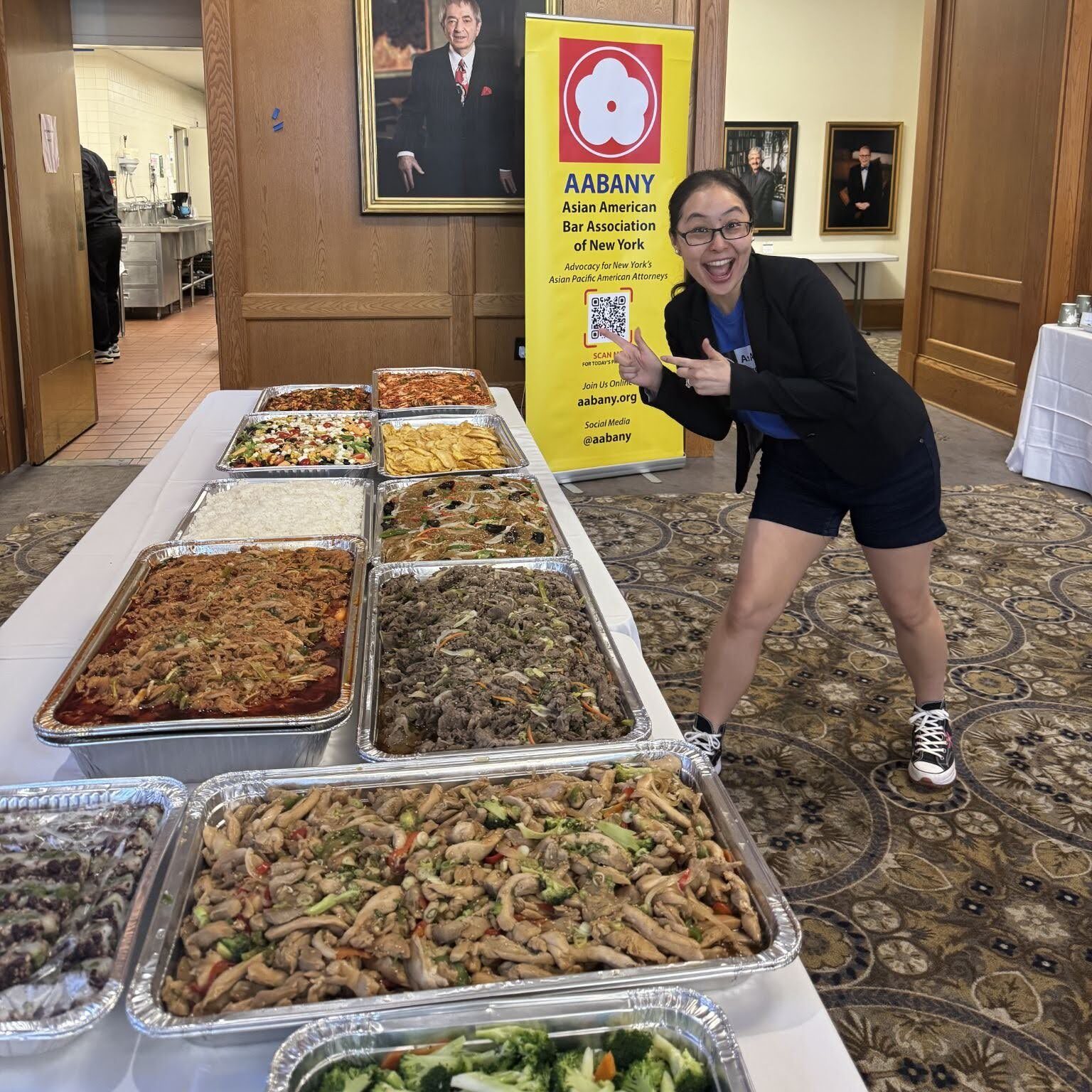
After the morning sessions, attendees enjoyed a delicious and healthy lunch featuring a variety of Korean dishes. Raffle winners were selected and announced through a random wheel spin. All speakers and attendees received handheld fans to beat the summer heat as a Wellness Day giveaway. Throughout the day, attendees also enjoyed healthy snacks to help stay focused and energized. Attendees made new connections and re-connected with prior Wellness Day attendees during the break, before diving back into the afternoon session.
Pivot with Purpose: Navigating Career Transitions with Resilience
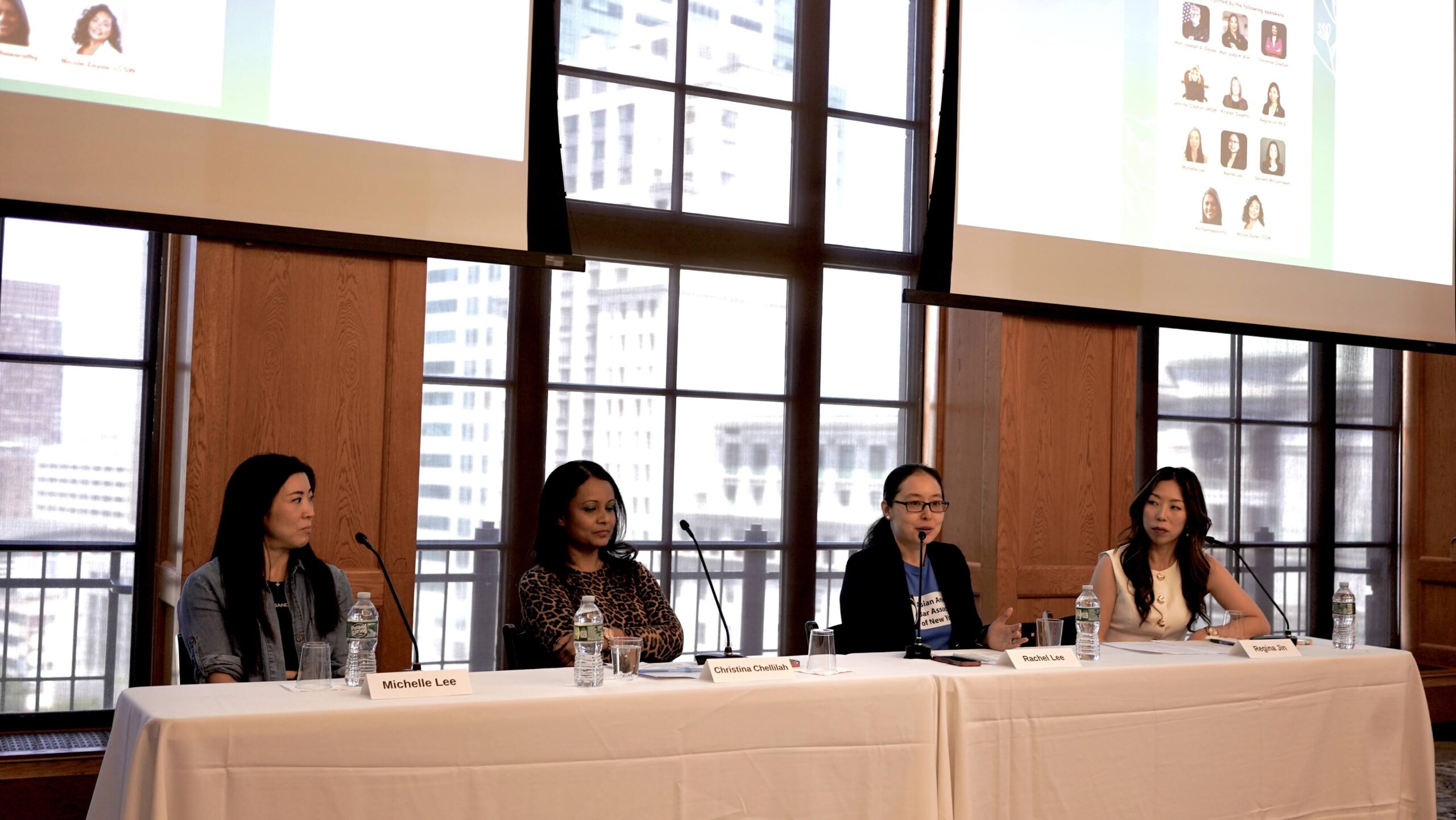
The afternoon kicked off with a panel on career transitions with Michelle Lee, General Counsel and Corporate Secretary at MediaCo; Christina Chelliah, Corporate Counsel for TransPerfect and founder of the Foreign Trained Attorneys Network; and Rachel Lee, President and General Counsel for Stand with Asian Americans. The panel was moderated by Regina Jin, Associate at Troutman Pepper Locke, and Co-Chair of AABANY’s Wellness Committee. Each member of the panel shared their unique experiences with career change and offered advice to other lawyers considering a career change.
Michelle Lee opened up about how she filed a discrimination lawsuit against her former company, in order to uphold her rights, even if it meant losing her job in the process. Ms. Lee shared how she used the time she had after losing her job to begin exercising to focus on her physical health. She recommended everyone to take time to work out, especially in the context of the legal profession where lawyers do not have much time to focus on their physical fitness. She also advised lawyers to think twice about quitting before trying to switch careers, noting that interviewing while unemployed is challenging.
Christina Chelliah shared her story about being a successful, practicing attorney in Malaysia before moving to the United States. Although her family and peers were surprised by her decision to leave Malaysia in the midst of a successful career, Ms. Chelliah ultimately decided to move to the United States in the pursuit of greater career achievement. As a foreign-trained attorney, she experienced struggles in proving her skills to law firms in the United States. Ms. Chelliah also discussed the sense of duty many Asian American women experience, noting a tendency to prioritize the well-being of others over their own. Consequently, her choice to pursue a new career path represented a significant departure from deeply rooted cultural norms. She urged those in attendance to prioritize their own aspirations rather than focusing solely on the expectations of those around them.
Rachel Lee talked about working at big law firms and then transitioning to a non-profit organization. She spoke about how she disagreed with her firm’s withdrawal from supporting DEI, causing her to ultimately decide to leave the firm. Ms. Lee noted that the transition to non-profit was a financial sacrifice, but it was the right thing to do. She encouraged attendees to have the courage to acknowledge when things aren’t always perfect or right and to stay connected to their passion.
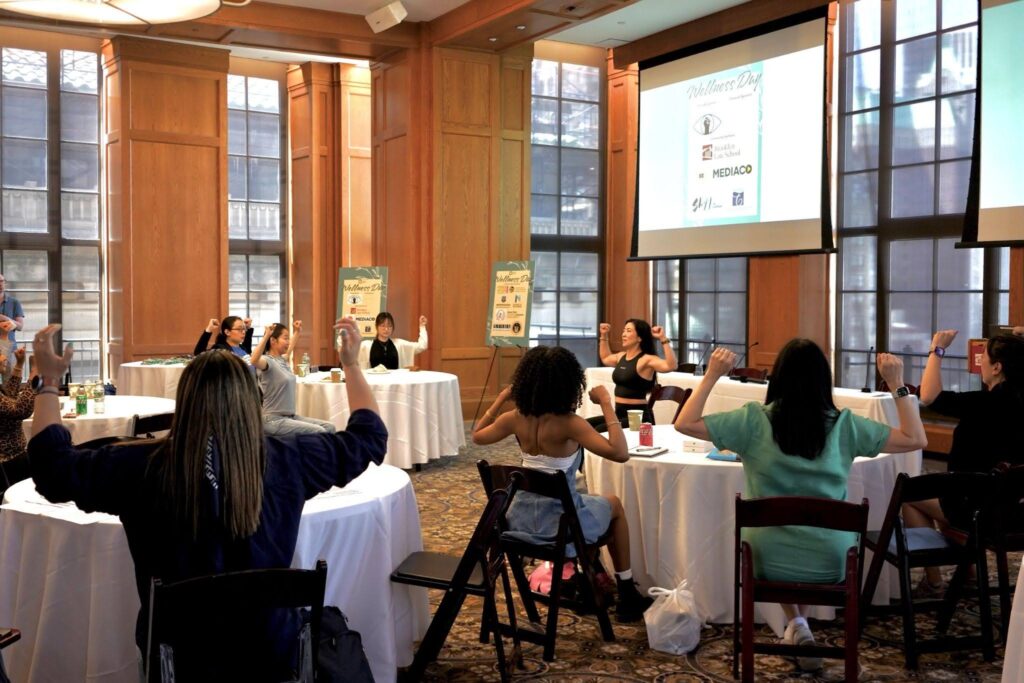
After the first afternoon session, the audience took a quick stretch break led by Michelle Lee. Ms. Lee guided participants through several convenient exercises to do any time during the day from their seats. The stretch break was greatly appreciated after a long day of sitting.
Demystifying the Bench
From the stretch break, we moved to a panel on demystifying the bench, with Judge Judy Kim, Justice of the New York County Supreme Court, and Judge Joseph Zayas, Chief Administrative Judge of the New York State Unified Court System, moderated by Nicole Zayas, LCSW, CEO, Arriving Full Circle (and daughter of Judge Zayas).
Judge Kim talked about being the first Korean American justice elected to the New York County Supreme Court. Reflecting on her journey as an immigrant to the United States, Judge Kim discussed her judicial responsibility to support the community and ensure the court system remains accessible and user-friendly. She talked about her choice to go into the legal profession instead of going to medical school, choosing a profession that actually impacted the real world. Judge Kim reflected on the moment when she decided she didn’t want to be a private sector lawyer and instead transitioned to public service to serve a greater purpose. In response to what advice she would have given her younger self, she highlighted the importance of having self confidence.
Judge Zayas recounted his story as a young boy who would skip class and who almost failed gym. He reflected that he had no idea that one day he would end up in such an important role. Even as a Justice of the New York State Supreme Court, Judge Zayas admitted that he didn’t always feel absolutely confident. He recalled a time when he went to an event and admitted that he felt a little scared in his role, but he was later told by others that he shouldn’t admit his vulnerability and should appear as completely confident. Judge Zayas disagreed, telling the audience that it was important to be true to yourself, including admitting when things are hard. Judge Zayas offered some key pieces of advice, such as working hard, treating everyone with kindness, and being resilient. Judge Zayas emphasized persistence, noting that anyone, even an almost-failing student like himself, could work hard and contribute to society in a meaningful way. He also gave the audience advice on being in touch with your emotions – even if sometimes obstacles get you upset, you need to learn how to calm down and go back later to reflect on why something made you mad in the first place.
To read a blog post about this panel from Judge Kim’s intern, Devashani Sharma, go here.
Reclaiming Your Life Without Burning It Down: The Journey Back to Yourself
The day ended with a session from Nicole Zayas, LCSW, CEO of Arriving Full Circle. She began by involving everyone in a mindfulness exercise that included a Hershey’s Kiss, where participants felt, heard, smelled, and even tasted the Kiss before finally eating it. The exercise slowed down the attendees and focused them on being present in the moment.
Ms. Zayas began her presentation by telling her story of being a young woman who did “everything right,” going to school, working hard, and finding a job. Then, she suddenly became a mother from two unexpected pregnancies, feeling overwhelmed and disconnected. She managed to find her way back to herself through therapy, breathing exercises, and yoga. Ms. Zayas then proposed that “broken” people aren’t really broken; rather, they are in survival mode, trying to just survive (instead of thriving), and reacting (instead of responding). Ms. Zayas gave three steps to getting back in the driver’s seat:
Believing it is possible
Investing in yourself
Finding your purpose
These three steps shaped what Ms. Zayas called the “Power Pass,” a step-by-step program to get people back in the driver’s seat of their lives. She gave the analogy of a surfer, where the person is the surfer and the waves are their thoughts. The person can either ride the waves or let the waves ride them. Ms. Zayas ended the session by promoting her Power Pass series in August, inviting anyone interested to sign up for a wait list to join the sessions.
Closing Remarks
AABANY Executive Director Yang Chen delivered closing remarks, thanking all of the speakers, sponsors, and participants who made the day possible. Attendees then enjoyed the remaining time to connect with each other before leaving the event, bringing AABANY’s Fourth Annual Wellness Day to a close.
We would like to thank the following sponsors for generously supporting this year’s Wellness Day:
To learn more about the Wellness Committee, go here. To join the e-mail list of the Wellness Committee, email main@aabany.org. For more information about this year’s Wellness Day speakers, go to the website: https://wellness2026.aabany.org/, where you can also find a drop down for previous Wellness Day webpages and blog posts. AABANY’s list compiling Wellness Resources can be found here.
–Written by Samuel Yu, incoming 9th grade student of Livingston Public Schools, New Jersey
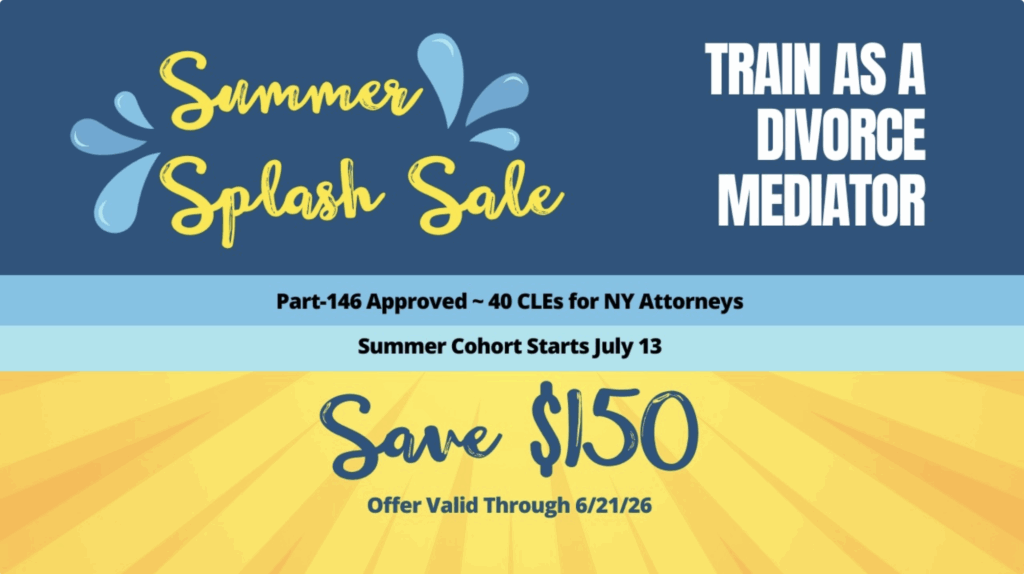
The New York State Council on Divorce Mediation (NYSCDM) is offering a sale with a $150 discount through June 21, 2026 on their NYSCDM 60-Hour Divorce Mediation Training.
The training program includes the following:
Live Classes for the Summer Cohort Starting on July 13, 2026
Part-146 Approved for 40 Hours
40 CLEs Provided to Attorneys
Free One-Year Membership in NYSCDM
Free One-Year Participation in a Special Peer Group for NYSCDM Program Graduates
Free Participation in the Pathway Partners Program
To learn more, click this link. The program consists of:
Part 1 (20+ hours) go-at-your-own-pace, online training on essential legal, mental health, and financial subjects featuring various experts.
Part 2 (40 Hours) Live Divorce Mediation Skills Training online with Expert Trainer and Experienced Coaches.
The trainer for the Summer Cohort is Lara Traum, Esq.:
An experienced family and divorce mediator, author, trainer and Past President of NYSCDM.
A partner at Roytberg Traum Law and Mediation, P.C. and works with NY, interstate, and international families.
Frequent mediation and ADR trainer mediation for professional organizations, bar associations, and educational institutions.
Co-author of the ABA book: Effectively Representing Clients in Family Mediation (coauthored with Forrest S. Mosten and Hon. Elizabeth Potter Scully) and her second book, coauthored with Forrest S. Mosten, is Family Lawyer as Peacemaker.
NYSCDM’s Summer 2026 Live Mediation Skills Training (Part 2), via Zoom, will be:
After completion of the program, you will receive:
Free One-Year Membership in NYSCDM — You will have full access to numerous member-only benefits including: a 24/7 online directory promoting your services, repository of templates, agreements and forms, a members-only Google Group, educational peer groups throughout New York, free and low-cost educational trainings, and more!
Free participation in a Special Peer Group for program graduates, led by expert mediators.
Free participation in the Pathway Partners Program, which connects trainees with experienced mediators/guides.
Support from the NYSCDM Mediation Family, via other peer groups, educational programming, networking and more!
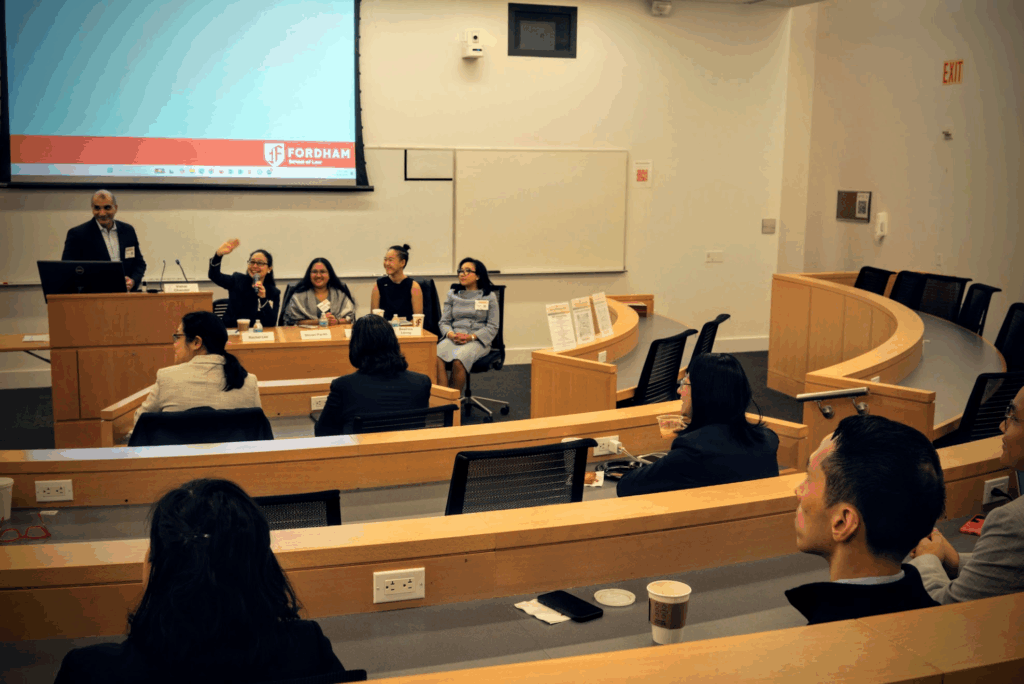
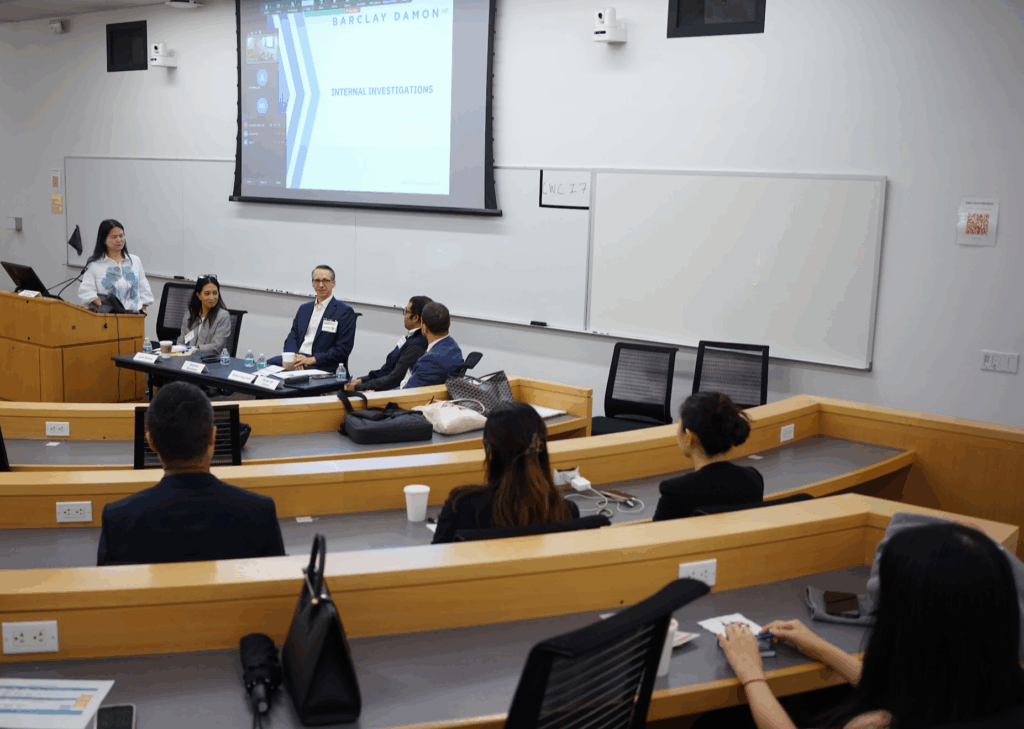
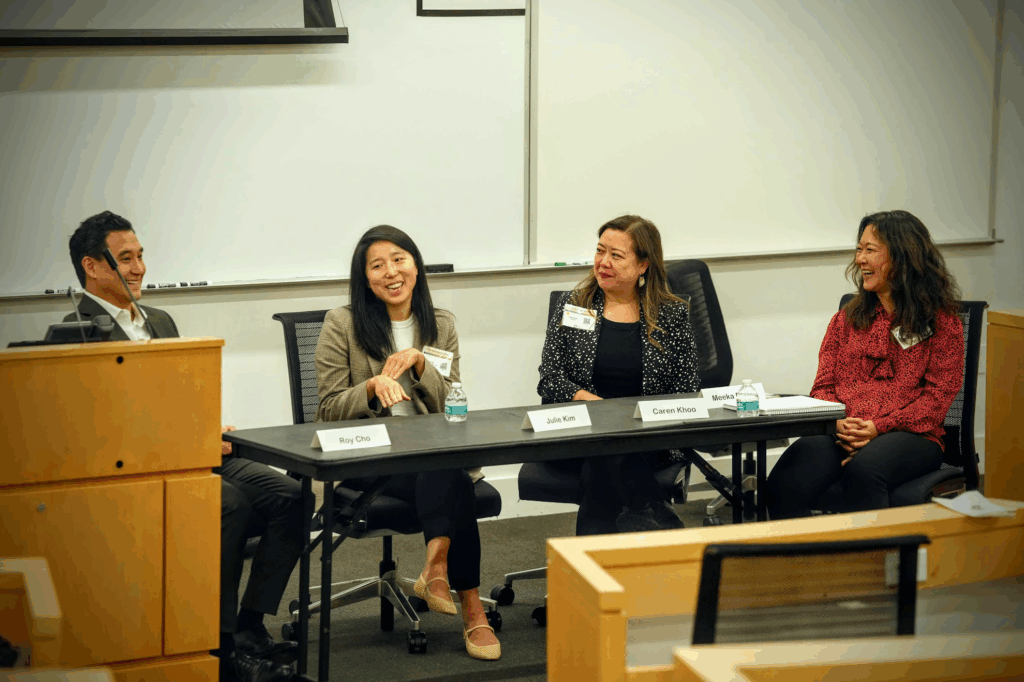
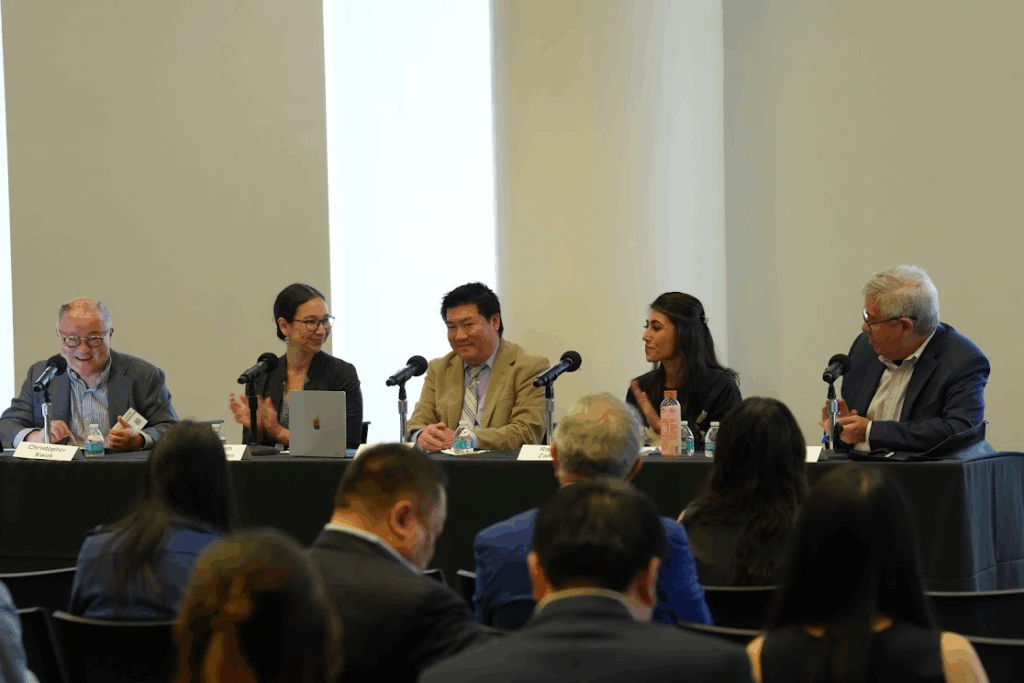
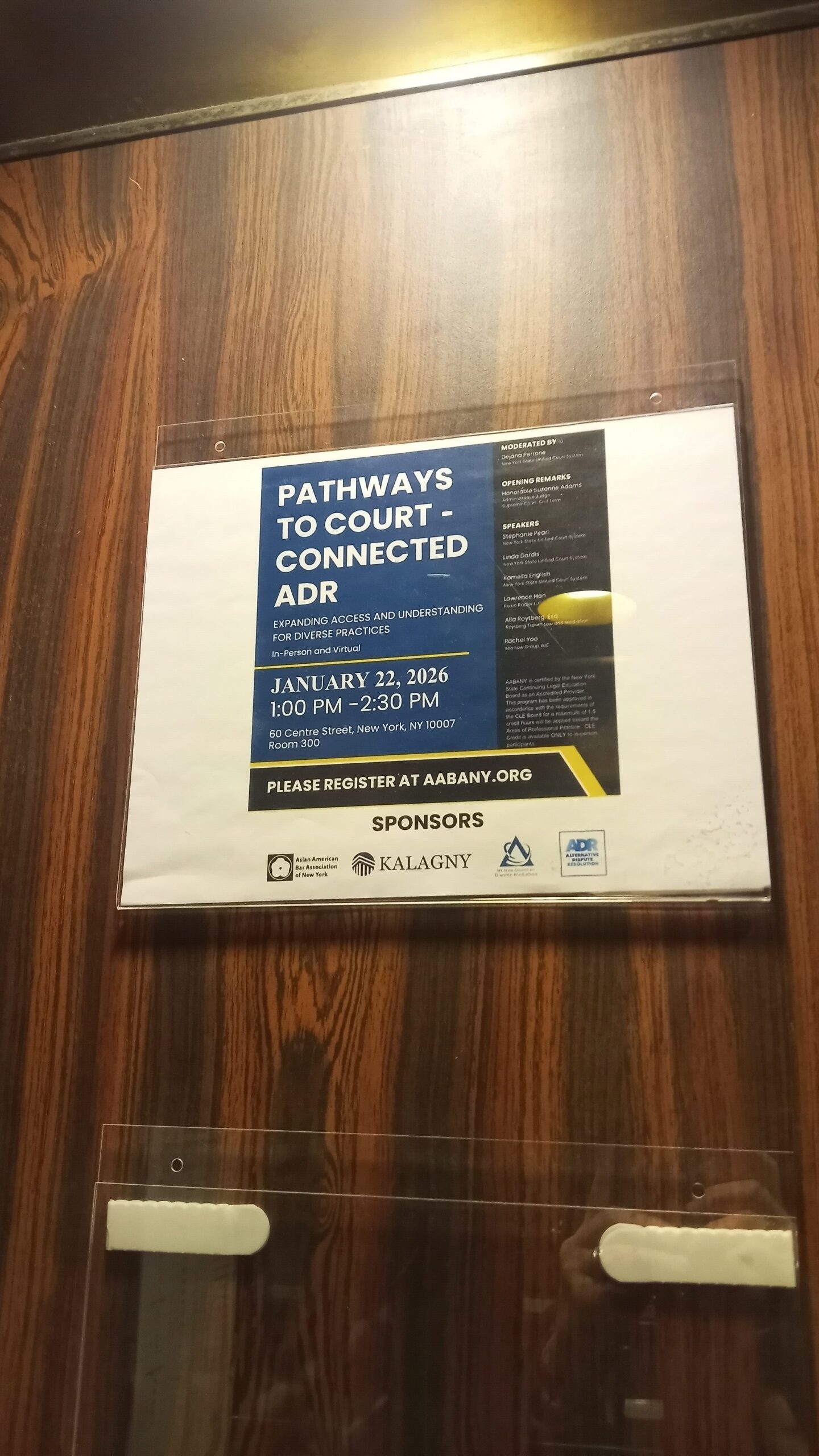
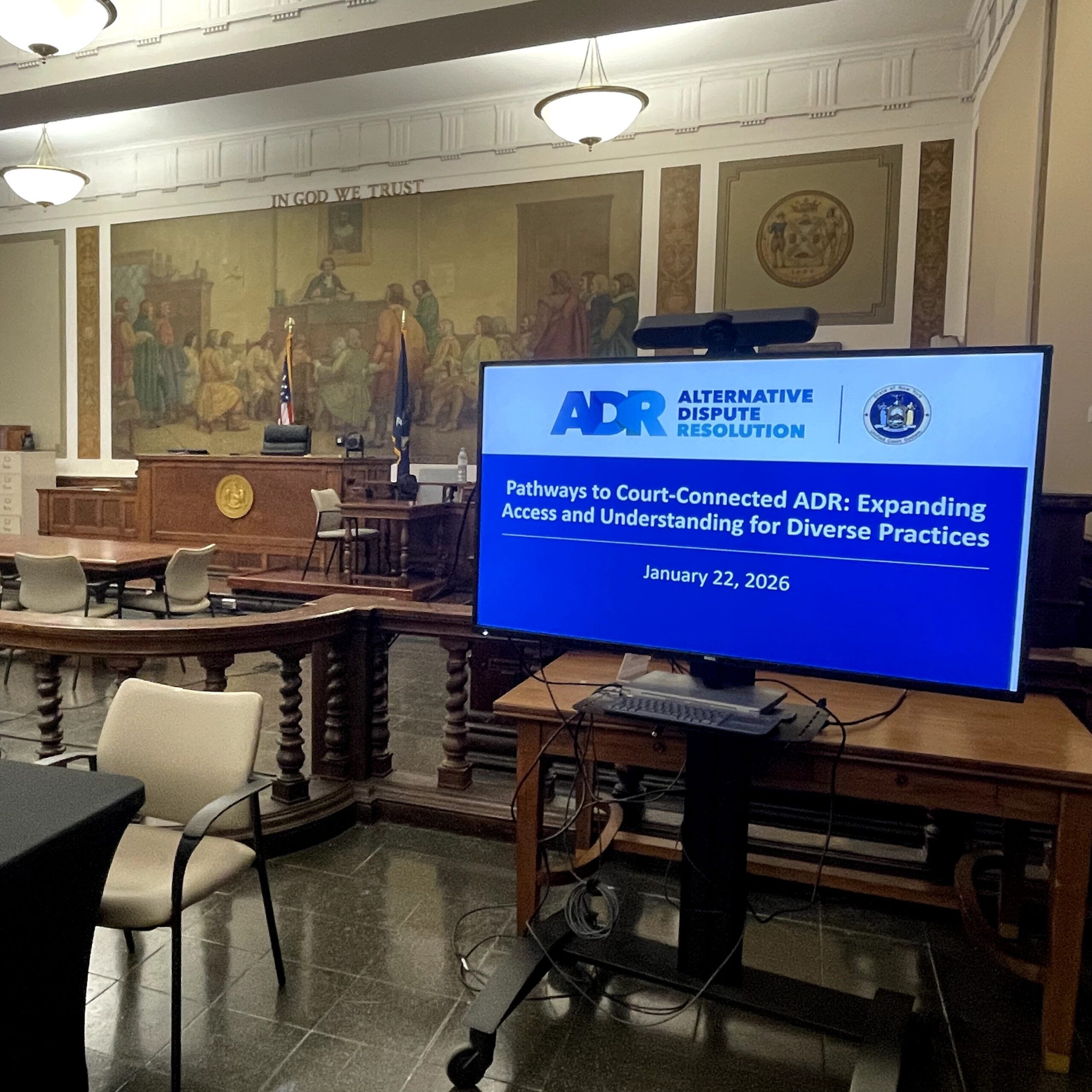
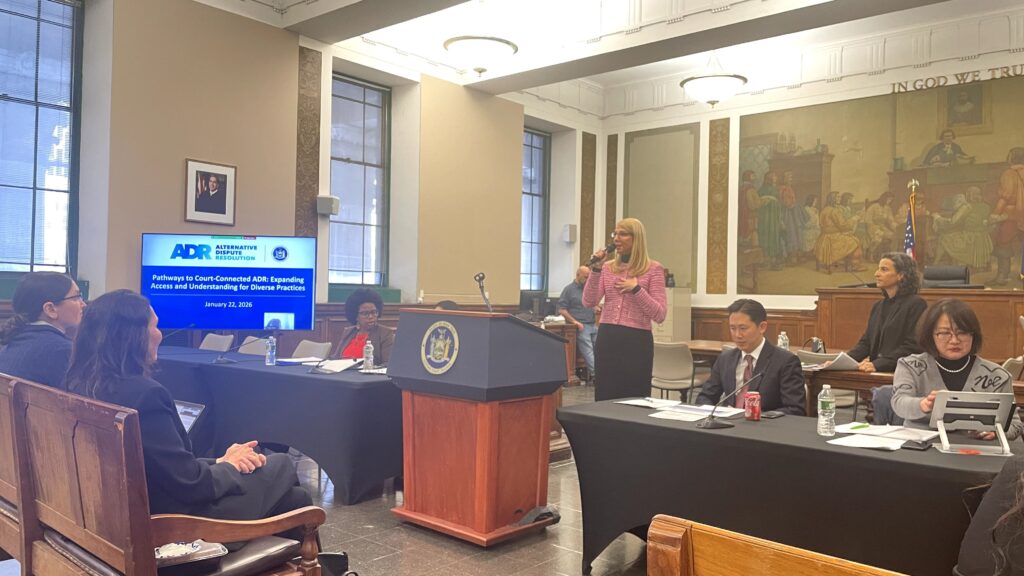
On Thursday, January 22, AABANY welcomed nearly 40 attorneys, mediators, and law students to 60 Centre Street for “Pathways to Court‐Connected ADR,” a 90‐minute CLE program designed to expand understanding of New York’s court‐sponsored mediation programs. Co‐sponsored by KALAGNY, NYSCDM, and the New York County Supreme Court Civil Branch ADR Team, the program offered both in‐person and virtual attendance, drawing a diverse and engaged audience eager to learn more about the growing landscape of court‐connected dispute resolution.
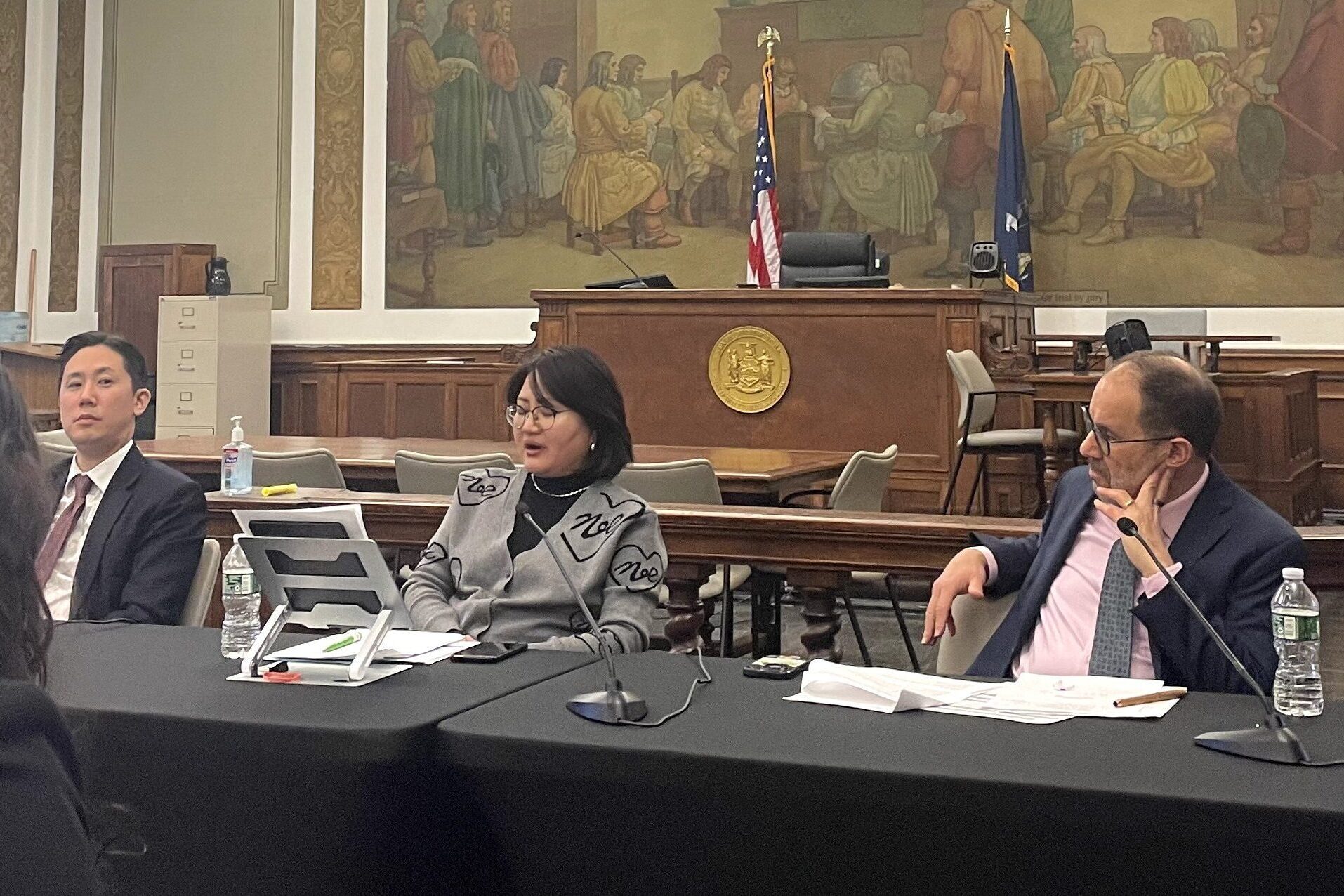
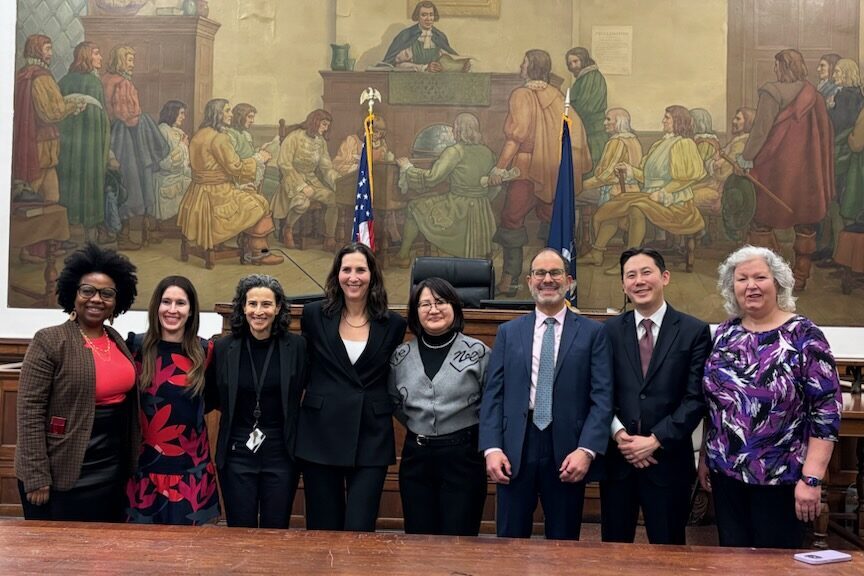
The session featured a robust lineup of panelists — Stephanie Pearl, Kamella English, Lawrence Han, Michael Henry, and Rachel Yoo — with Dejana Perrone moderating the discussion. Together, they delivered a candid, practical, and often inspiring look at how ADR functions inside the courts and how practitioners can meaningfully participate.
A Deep Dive into Court-Sponsored ADR
The program opened with an overview of court‐sponsored ADR, including the purpose of Part 160, the types of cases eligible for mediation, and the benefits of early intervention. Speakers provided helpful context on how ADR has evolved across districts and why mediation continues to play a critical role in improving access to justice.
From there, attendees heard directly from ADR Coordinators Kamella English and Stephanie Pearl, who walked through the day‐to‐day responsibilities of their roles and offered guidance on how practitioners can connect with coordinators when seeking case information or exploring volunteer opportunities.
Practical Guidance for Advocates and Mediators
The conversation then shifted to the role of advocates and mediators in the mediation process. Panelists Lawrence Han, Rachel Yoo, and Michael Henry shared insights on how mediation compares to litigation, how to prepare clients for the process, and how to navigate the court’s roster of neutrals. Their reflections highlighted the importance of preparation, empathy, and clear communication — qualities that shape both client experience and case outcomes.
The panel also addressed when a case is “ready” for mediation, including timing considerations under Part 160 and practical perspectives from mediators handling professional liability and other complex matters.
Pathways to Joining a Roster
In the second half of the CLE, panelists outlined the steps to join a court roster, the qualities that define an effective neutral, and the ongoing efforts to expand and diversify ADR panels across New York. Speakers emphasized the need for mediators who bring cultural competence, multilingual abilities, and varied professional backgrounds — all essential to serving New York’s diverse communities.
The panel closed with success stories from ADR programs, illustrating how early mediation, skilled neutrals, and thoughtful program design can lead to meaningful resolutions for litigants. These stories underscored the human impact of ADR and the value of continued investment in court‐connected mediation.
Thank You from AABANY
AABANY extends its sincere thanks to all panelists and to the New York County Supreme Court Civil Branch ADR Team for their partnership and generosity. We are grateful to KALAGNY and NYSCDM for co‐sponsoring the program, and to every attendee who joined us for an afternoon of learning, connection, and community building.
The enthusiasm in the room — and online — reflected a shared commitment to expanding access to justice through thoughtful, culturally responsive ADR practices. It was a vibrant and memorable event, and we look forward to continuing the conversation in future programs.
To learn more about the ADR Committee, click here.
– Written by: Rachel Ji-Young Yoo, Co-Chair of AABANY’s ADR Committee
AABANY gathered 20 other associations for the 3rd Annual Pre-Holiday Multi-Association Gathering, on Tuesday, November 11, 2025, at 6:00 p.m., at the New York City Bar Association. The evening featured a potluck dinner, and a CLE Program on Wellness Resources, which included a Fireside Chat focused on veterans in the legal profession since this year’s event fell on Veterans Day.
As the evening began, guests gathered around a vibrant potluck table featuring an array of dishes representing the diverse cultures of the co-sponsoring bar associations.
The spread included scallion pancakes, lo mein, samosas, roasted pork, dumplings, pigs-in-a-blanket, fried rice, Caribbean-spiced chicken, and homemade baked goods, among other offerings.
Holidays can be emotionally and mentally challenging for many, especially those navigating identity transitions, loss, or professional pressures. This year’s CLE focused on veteran experiences, resilience, mental health, and navigating civilian legal careers after military service. Because this topic has often been neglected, it was especially meaningful to conduct this dialogue on Veterans Day.
The Fireside Chat featured a conversation between Amos Kim, Co-Chair of AABANY’s Military & Veteran Affairs Committee, litigation associate at Baker Hostetler, and Austin Cheng, U.S. Army veteran, attorney, and CEO of Gramercy Surgery Center. It was moderated by Benjamin Hsing, President of AABANY and Senior Counsel at Bayes PLLC. Meredith S. Heller, Attorney from the Law Office of Meredith S. Heller PLLC, also spoke to share wellness resources from the New York City Bar Association.
Austin described the often invisible challenges of transitioning from military life to a legal career. Reflecting on his return from service, he shared: “In the military, I knew exactly what I was responsible for. Every day had structure. There was clarity, purpose, and a team. When I returned to civilian life, I suddenly had too many choices — too much freedom. And that can be overwhelming.” Without that structure, veterans are suddenly faced with what many of us take for granted — choice. But for those used to clear orders, set routines, and defined missions, choice can feel less like freedom and more like instability.
Austin also shared that when he returned from service, the emotional weight of reintegration was immense. He reflected, “I just remember getting back on a Sunday. I was happy to get back home to my family after four years. I can see my mother, she was very different from when I saw her last.” Returning home is often imagined as a moment of relief, closure, or celebration. Yet for many veterans, the process can also be challenging and even painful. They need to rebuild identity, redefine purpose, and adjust to a life no longer shaped by military structure, urgency, or routine. Austin shared that he was suddenly faced with family responsibilities, including taking over his mother’s business, while grappling with these changes. It was during this time that he decided to pursue a J.D.
The difference in adjustment, Austin noted, is not merely about finding a new job and life, but about perspectives. While civilians may show respect and appreciation for service, understanding the mindset of military service requires more. And this goes both ways – veterans also may need to understand the perspective of the civilians, understanding that they are limited in their perspectives. As Austin stated: “I don’t think civilians ever played the role of a military person. I think what was more important at that time when I was transitioning out was me being able to understand the mindset of a civilian.” This highlights a key shift: successful reintegration does not mean expecting others to fully understand the military experience, it means understanding others’ perspectives.
Furthermore, cultural change can be difficult to get used to. Rather than operating within a single shared purpose, veterans entering the legal profession must now find purpose, build teams, and cultivate trust in a system where perspectives differ, and where collaboration is shaped not by command, but by conversation. Amos stated, “In the military we’re made to have like-minds, whereas here, in the team-building process, we have similar minds.” In the military, unity comes from sameness: same mission, same standards, same purpose. In the legal profession, unity must be built through difference: through debate, collaboration, and shared understanding.
However, they also benefited much from their time in service. Reflecting on how military training shaped his sense of purpose and discipline, Austin said: “I think being in the military gave me a certain level of resilience and perspective…. It’s war, so you have to kind of do certain things under very stressful conditions.” That sense of resilience, formed through years of training, responsibility, and operating under high-stress conditions, would anchor him in both law and leadership.
Amos added similar reflections, noting that even after transitioning into the legal field, many habits shaped by military life remain deeply ingrained. Attention to detail, strategic thinking, and discipline continue to guide his work. He shared that he still wakes up at 4:00 a.m. every day because his body and mind remain conditioned to that rhythm. The expectations in the military: precision, accountability, and intention, become part of who you are.
Amos also described the intensity of expectation, precision, and discipline expected in the military: “Operating in the military is more along the lines of what you’re doing to the right every time. There’s no room for error, and there’s no room for any other ideas on how to do it better. It’s the best way to do it, and that’s all.”
Austin’s and Amos’s experiences as service members not only shaped how they approached their mission, but how they later perceived work, purpose, and responsibility in civilian life and the legal profession.
After dinner and the Fireside Chat, attorneys, law students, judges, and professionals connected and exchanged stories during the networking time. The conversations were not just about their work, but about their families, cultural backgrounds, and personal journeys. Several attendees shared that it was refreshing to step away from case files and deadlines to connect as people, not just as professionals. The connections built between attendees of different backgrounds were personal, heartfelt, and deeply meaningful.
We thank all co-sponsoring associations for their continued support and generosity in sharing the diverse food for this event:
Events like these demonstrate AABANY’s ongoing commitment to wellness, community, inclusion, and shared storytelling within the legal profession. On this Veterans Day, we were proud to honor not only those who served, but also those who continue to serve through law, leadership, and empathy.
In addition to the associations and the speakers, we would like to thank Jonathan Nguyen, Gloria Tsui-Yip (AABANY Membership Committee Co-Chair) and Kwang Woo Andy Kim (law student from Rutgers Law School – Newark) for volunteering at this event.
“Purpose doesn’t end when service does. It simply takes a new form.” -Jade Simmons, transformational speaker, author and former concert pianist, from her book Purpose the Remix
On Saturday, September 27, 2025, AABANY hosted its 16th Annual Fall Conference, themed “Together We Thrive: The Power of Us!” at New York Law School. We extend our heartfelt gratitude to the school for hosting and supporting this gathering of the AAPI legal community. The day began with a buffet-style breakfast, during which attendees enjoyed coffee, pastries, bagels, and light bites, reconnecting with familiar faces and forming new connections.
Morning Sessions
From 9:00 AM to 10:30 AM, participants attended one of three CLE panels:
At 12:30 PM, AABANY President Ben Hsing gave welcoming remarks to a packed Plenary Lunch Session, setting the stage for a live reenactment of the landmark cases Ozawa v. United States (1922) and United States v. Bhagat Singh Thind (1923). The reenactment dramatized two pivotal cases from the early 20th century in which the U.S. Supreme Court denied naturalization to two Asian immigrants—Takao Ozawa, a Japanese immigrant who argued that his light skin and cultural assimilation qualified him as “white,” and Bhagat Singh Thind, an Indian Sikh man who claimed to be Caucasian, citing Aryan ancestry, to assert eligibility for citizenship under the “free white person” requirement.
The emotional resonance of the performance was heightened by the fact that the judges in the reenactment were sitting Asian American and Pacific Islander (AAPI) women judges from state and federal courts. In the original cases, the highest court in the land had defined Ozawa and Thind as racially “other,” excluding entire communities from the privilege of citizenship. A century later, to see a full panel of AAPI women judges presiding from the bench—occupying the very institutional role that had once excluded people like Ozawa and Thind—was profoundly moving. The visual and symbolic contrast between the historical rulings and the present-day makeup of the judiciary underscored how legal institutions can be both instruments of exclusion and, over time, sites of transformation.
The reenactment was followed by a fireside chat with Professor Rose Cuison-Villazor moderated by Albert Tong, Student Outreach Committee Chair, which unpacked the historical and contemporary significance of these rulings in shaping concepts of citizenship, race, and identity. For many attendees, the moment crystallized both how far the community has come and how history continues to shape present realities.
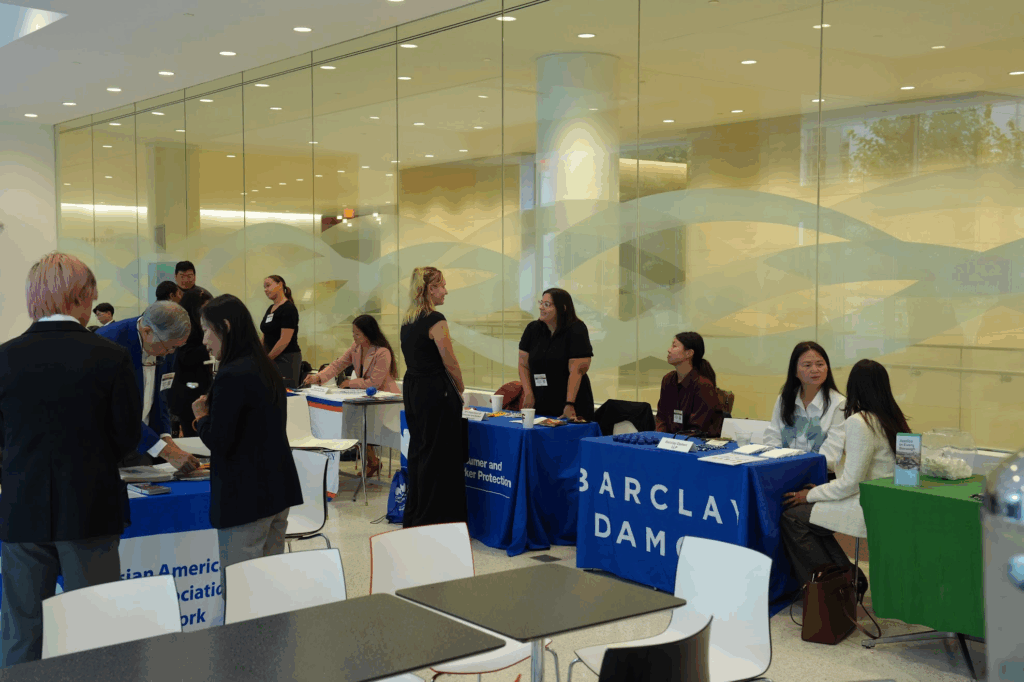
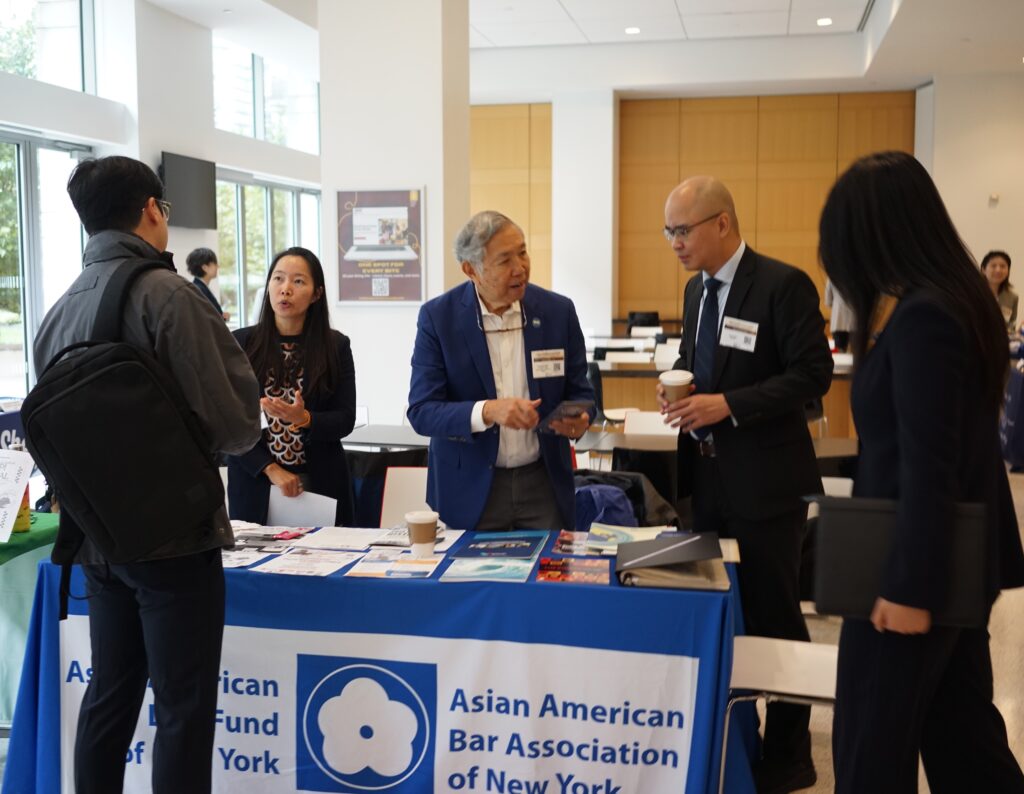
Diversity Career Fair (DCF): Building Bridges Between Talent & Opportunity Hosted by the Career Advancement Committee, the Diversity Career Fair (DCF) ran from 10:30 AM to 4:30 PM. Employers from public, corporate, nonprofit, and legal services sectors hosted informational tables and, in some cases, first-round on-site interviews. Attendees engaged in meet-and-greets, exchanged resumes, and connected with recruiters and legal professionals. The DCF served as a vital platform for career exploration and networking within the AAPI legal community, allowing attendees ample opportunities to explore career openings by visiting employer tables and meeting with representatives from approximately 20 public and private sector organizations and companies. On-site interviews took place with 5 of the participating employers, and resumes were collected from around 11 of the participating employers.
The Trial Advocacy Program (TAP): Hands-On Training and Mentorship from Eminent Trial Lawyers
Returning to the Fall Conference this year, TAP (Trial Advocacy Program) gave junior attorneys structured, mentored experience in key trial advocacy skills, with lectures, demonstrations, and exercises in opening and closing statements, as well as direct and cross-examinations. Participants prepared ahead of time, based on a mock trial problem, to present opening statements and conduct direct and cross-examinations before a faculty of experienced trial lawyers in breakout rooms, and received individual feedback and coaching. The program concluded with powerhouse closing argument demonstrations by two distinguished trial lawyers, Hugh Mo and William Campos, that captivated the audience. For video of Hugh Mo’s closing statement for the defense, courtesy of Mo Law Firm, see here.
Afternoon Sessions: Community & Innovation in Practice
From 2:30 PM to 4:00 PM, attendees had their selection of:
These sessions continued the balance between community impact and emerging legal trends.
Link-Up Reception: Cultivating Professional Connections
One of the highlights of the day was the Link-Up Reception designed to foster meaningful engagement between law firm attorneys and senior in-house counsel seeking external legal services. Open only to invited in-house counsel, Gold-level sponsors and above, and representatives from 2025 Annual Dinner and Winter Soiree sponsors, the Link-Up Reception was a benefit offered to higher-tier sponsors, giving them increased exposure and direct access to in-house decision-makers.
By offering a direct and selective networking opportunity in a concentrated timeframe, the Link-Up Reception helped to enhance business development possibilities and strategic connections for participating in-house and outside counsel.
Cocktail Receptionand Trailblazer Award Presentation
Following the Link-up reception, a general Cocktail Reception was held. The Cocktail Reception created a more open, celebratory atmosphere where attendees – including attorneys, law students, and pre-law students – could meet and mingle, after a full day of CLE and other programs. Attendees socialized, reflected, and strengthened connections over hors d’oeuvres and beverages. For many, the Cocktail Reception presented an excellent chance to connect with judges, seasoned practitioners, and peers in an informal setting — a space where mentorships may begin, collaborations were seeded, and the day’s theme of community and collective growth came to life in real time.
During the Reception, following remarks by AABANY President-Elect Varuna Bhattacharyya, Hon. Justice Jeffrey K. Oing, former Associate Justice, Appellate Division, First Department, introduced Justice Kim.
AABANY’s Executive Director Yang Chen then presented the Norman Lau Kee Trailblazer Award, honoring leadership, innovation, mentorship, and sustained community impact, to Hon. Judy H. Kim, Acting Justice of the Supreme Court, New York County. In her acceptance speech, Justice Kim highlighted the importance of mentorship and community. She recounted a particularly memorable time when an intern wrote to her, “You have shown me into a world that I thought I would never be able to be part of, and the gift that you have given me is priceless.” These words left a deep impact on everyone, reminding us of the importance of mentorship in this competitive world. This celebration closed the conference on a note of recognition, gratitude, and community.
We extend deep thanks to:
More than 50 student volunteers from area law schools and colleges for providing wide-ranging support, including assisting with registration, logistics, and CLE sign-in and sign-out
Albert Tong, Chair of the Student Outreach Committee, for coordinating the volunteers before and during the Conference
Our sponsors, whose support made the Fall Conference and its educational, professional development, and networking opportunities possible
All moderators, panelists, program chairs, and above all, attendees, whose participation embodied the theme – “Together We Thrive: The Power of Us!”
For more photos of the event, please visit the links below:
Thanks to our photographers, Jessie Zhou (AABANY legal intern), Tohir Hodjakulov, and Shiyun Zhang (student volunteers).
We hope the 2025 Fall Conference enriched your professional journey and strengthened the bonds within our AAPI legal community. Thank you for being part of this signature AABANY event — we look forward to seeing you at future programs!
We understand how hectic schedules can be and you may not have had a chance to submit your proposal for the 2025 NAPABA Convention. That’s why we’ve extended the deadline to March 24 at 8:00 pm ET. This is your opportunity to fine tune and perfect your proposal.
Here’s a reminder for what we’re looking for:
GENERAL CLE PROGRAMMING
At NAPABA, we are committed to offering inclusive and innovative CLE programming that reflects the diverse experiences, perspectives, and backgrounds of our membership. Our general CLE programming aims to appeal to the broadest audience by covering a wide range of legal topics. We encourage proposals that bring fresh, relevant discussions to the forefront.
SPECIALTY PROGRAMMING
Our Specialty Programming takes you deeper into topics that will help you excel in your practice and career. With immersive and interactive learning opportunities, you’ll get to lead the conversation and provide members a session that goes beyond what may be possible during a general CLE session. Share your expertise in one of these tracks:
International Law Symposium – Explore global legal topics with diplomats, judges, and business leaders.
Young Lawyers Workshop – Tackle real-world career challenges and professional growth.
Solo & Small Firm Boot Camp – Get practical strategies for business development and firm expansion.
Law Student Workshop – Equip law students with essential skills for a successful legal career.
Getting ahead of Women’s History Month in March, AABANY’s Labor & Employment (“L&E”) Law Committee and Women’s Committee co-hosted a CLE event on Thursday, February 20, 2025, on the recent federal and New York state laws related to pregnant workers and new mothers at the workplace. The CLE panel consisted of Samantha Hunt, Equal Justice Works Fellow from A Better Balance; Rachel Lee, Associate from A&O Shearman; and Vilda Vera Mayuga, Commissioner of the NYC Department of Consumer and Worker Protection. Jennifer Kim from Littler & Mendelson, P.C. moderated the event, which was held at the beautiful office of Robins Kaplan LLP in midtown.
The panelists provided an overview of the Pregnant Workers Fairness Act (“PWFA”), the Providing Urgent Maternal Protection for Nursing Mothers (“PUMP”) Act, New York’s lactation break law, and New York’s prenatal leave law. Samantha Hunt started the discussion with a summary of PWFA and the types of claims she has handled related to these laws. Rachel Lee provided best practices for employers when complying with the PWFA and the lactation break law. Commissioner Vilda Vera Mayuga discussed the New York sick leave and the prenatal leave requirements along with an explanation of the type of enforcement her department handles. The attendees walked away with a strong understanding of the rights afforded under these new laws and tips for employers on how to best comply with these changing laws.
Thank you to the panelists for sharing their expertise. Thank you to the Professional Development Committee for assisting with the accreditation of the CLE as well as the L&E Law and Women’s Committees for co-hosting this insightful event.
On January 30th, 2025, AABANY, together with the South Asian Bar Association of New York (SABANY), co-sponsored a CLE program entitled “Diversity, Equity and Inclusion 2.0, Featuring Jenny Yang.” The event, offering 1.0 credit hours towards the Diversity, Inclusion, and Elimination of Bias requirement, discussed the current situation and potential future of DEI programs in the wake of the current administration’s Executive Orders.
Jenny Yang, former Chair of the U.S. Equal Employment Opportunity Commission and previous White House Deputy Assistant to the President for Racial Justice and Equity, shared her informed perspective on the issue.
The event was hosted by Fragomen, Del Rey, Bernsen & Loewy, LLP at their midtown New York office. Attendees streamed in starting as early as 5:30 pm. Then, the program began with some opening remarks by SABANY President Ashish Bhatt, AABANY Executive Director Yang Chen, and an introduction of the keynote speaker by Glenn D. Magpantay, Co-Chair of the AABANY LGBTQ Committee and Commissioner for the US Commission on Civil Rights.
Jenny first shed some light on current developments with the new administration and some of the Executive Orders that have been issued. She described how they do not alter the laws currently in place surrounding DEI, and how, for employers engaging in fully lawful DEI programs, these Executive Orders have no effect. She went on to talk about the current perception held within the country that DEI programs in essence are a form of affirmative action but noted that view to be incorrect because they do not “save spots” for specific marginalized groups and instead analyze already existing workforce data to identify disparities in the workforce and then address them. Additionally, she mentioned the wording in many of these Executive Orders referring to “illegal DEI programs” and how companies and industries are scared into retreating and reducing their DEI initiatives as a result.
Ultimately, Jenny asserted how important it was to recognize that the vast majority of DEI programs are legal under Federal laws such as Title VII and that companies, especially law firms, should not back down in the face of these Executive Orders.
She closed the presentation by noting that the future of DEI programs in the United States is largely uncertain, expressing the hope that they can persist and strive to be more inclusive. A vibrant question-and-answer session followed, during which attendees asked about various topics, from the validity of specific Executive Orders already in place to the potential actions of the administration to undermine previous protections granted by federal legislation, such as Title VII.
Thank you to AABANY’s Issues and Memberships Committees for co-sponsoring this event, as well as to Fragomen, Del Rey, Bernsen & Loewy, LLP for hosting. To learn more about the Issues Committee, click here. To learn more about the Membership Committee, click here.
On January 22, 2025, the AABANY Alternative Dispute Resolution (ADR) Committee held a CLE event at the Yoo Law Group’s NY office. The session was moderated by Rachel J. Yoo, Co-Chair of the ADR Committee.
The event featured four highly respected professionals, including matrimonial lawyers, mediators, and psychologists, who are experienced in the intersection of mental health and family disputes.
Speakers:
Jihee Cho, Ph.D., Co-Founder of Mind in Motion Psychological Services
Beatrice Leong, Esq, Partner, Law Office of Beatrice Leong
Megan Rha, Esq, Partner, Rha Kim Grossman & McIlwain, LLP
Historically, mental health factors have often been overlooked in family and matrimonial disputes. This CLE program, offering 1.0 credits in the Areas of Professional Practice category, explored how recognizing and addressing these issues can foster more effective, compassionate, and lasting resolutions.
One of the speakers, Dr. Jihee Cho, co-founder of Mind in Motion Psychological Services, shared her expertise on the impact of emotional-regulating disorders in decision-making during disputes. She also provided insights into strategies for helping parties move forward in such challenging situations.
Thanks to the panelists for a timely and insightful presentation, and thanks to all the attendees. To learn more about the ADR Committee, click here.