
NAPABA to Host Webinar Previewing Supreme Court Case on Birthright Citizenship

The National Asian Pacific American Bar Association (NAPABA) will host a webinar titled “SCOTUS Oral Argument Preview: Who is Allowed to be a U.S. Citizen? Defending Birthright Citizenship and the Role of Asian American History” on Thursday, March 26 at 3:00 p.m. ET.

The program will preview the upcoming U.S. Supreme Court oral arguments in Trump v. Barbara, a case addressing the scope of birthright citizenship under the Fourteenth Amendment. On April 1, 2026, the Court is scheduled to hear arguments concerning Executive Order 14160, which declared that only children born to U.S. citizens or lawful permanent residents would automatically receive citizenship at birth. The executive order immediately faced legal challenges across the country.

NAPABA joined a broad coalition of bar associations in filing amicus briefs opposing the order. The March 26 webinar will discuss NAPABA’s role in defending birthright citizenship in the lower federal courts and before the Supreme Court, as well as the broader legal and historical context surrounding the issue.

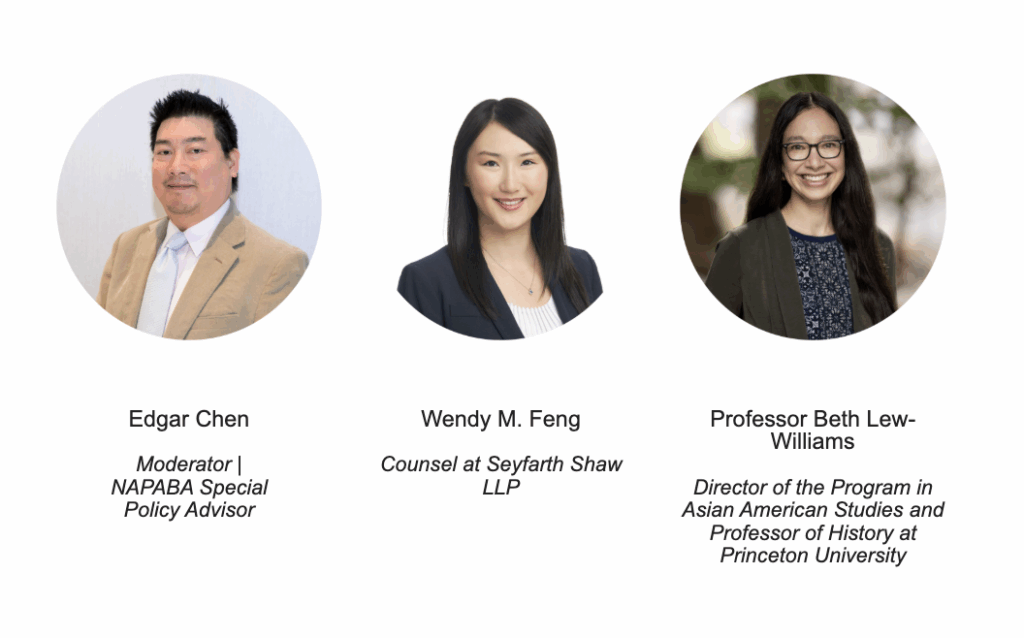
The panel will feature Professor Beth Lew-Williams, Director of the Program in Asian American Studies and Professor of History at Princeton University. Professor Lew-Williams is the author of The Chinese Must Go: Violence, Exclusion, and the Making of the Alien in America (Harvard University Press, 2018), a widely acclaimed work examining the history of anti-Chinese violence and exclusion in the United States.

Also joining the discussion is Wendy M. Feng, Counsel at Seyfarth Shaw LLP and lead outside counsel for the legal team representing NAPABA in the litigation. The program will be moderated by Edgar Chen, NAPABA Special Policy Advisor.

Together, the panelists will examine the legal arguments in Trump v. Barbara, the historical foundations of birthright citizenship, and the role Asian American legal history plays in shaping contemporary constitutional debates.

Registration for the webinar is free and open to the public. Click here to learn more and register for the event.

Allen & Overy Presents AABANY Trial Reenactment: Oyama v. State of California

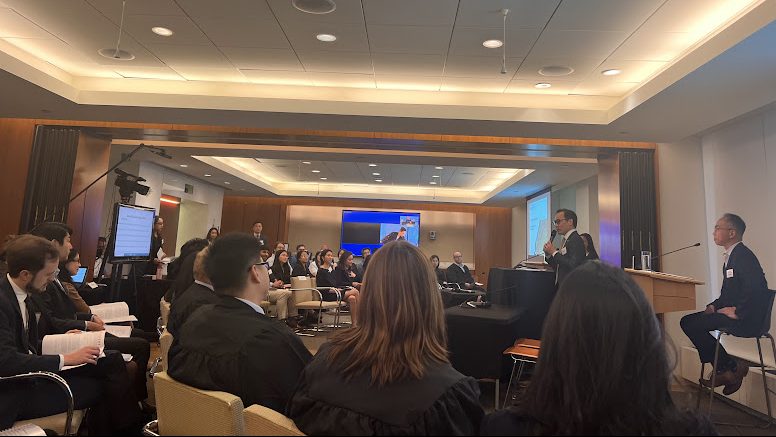
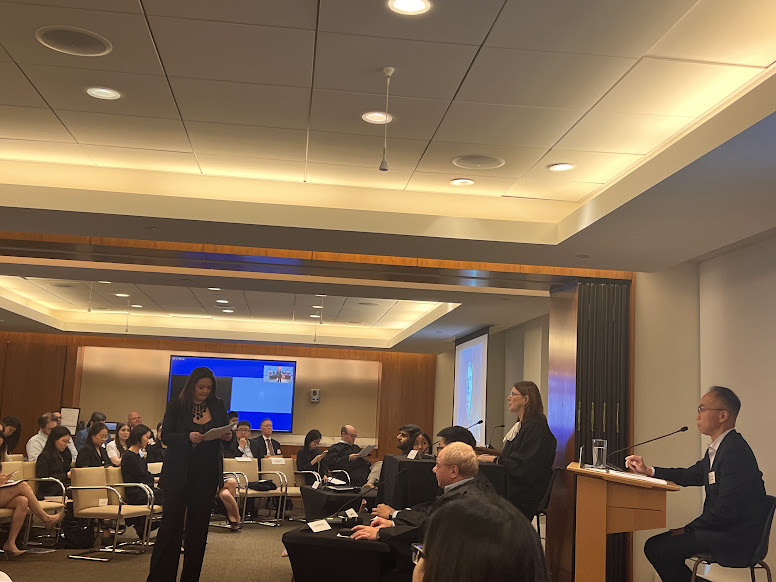
On May 24, AABANY and Allen & Overy (A&O) presented a reenactment of the historic case Oyama v. State of California, in commemoration of Asian American and Pacific Islander (AAPI) Heritage Month. This landmark case was reenacted by attorneys and law students to tell a captivating story involving AAPI litigants on an important constitutional case known to very few but which has resonance to the present day.

As described on the AABANY Trial Reenactments website:

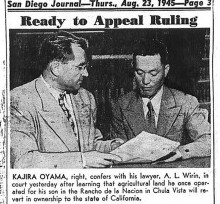
Inspired by Prof. Rose Cuison Villazor’s law review article, “Rediscovering Oyama v. California: At the Intersection of Property, Race, and Citizenship,” 87 Wash. U. L. Rev. 979 (2010), the reenactment dealt with the California Alien Land Law which prevented “aliens ineligible from citizenship” – i.e., Japanese – from owning land. The case explored the ways in which denial of property rights also served to promote racial discrimination against the Japanese in California. In the case, Kajiro Oyama, a Japanese immigrant who was ineligible for United States citizenship at the time, bought a parcel of farmland which he deeded to his minor son Fred, who was born in the United States and was thus a citizen. Under the Alien Land Laws, this transaction was deemed a fraud and the State of California brought suit against Fred Oyama to escheat the property. The case went all the way up to the United States Supreme Court, where the statute’s constitutionality was placed before the Court for its review.

The in-person reenactment was followed by a lively panel discussion co-sponsored by A&O’s U.S. Asian Affinity Network. The discussion was led by A&O Partner John Hwang and Associate Rachel Lee and featuring guest speakers Professor Rose Cuison-Villazor and Shenyang Wu. As the Interim Co-Dean at Rutgers Law School, Professor Cuison-Villazor shared details of her personal discussion with the Oyama family in 2010 for her paper. Shenyang, a partner at Alpha Law NY PLLC and a co-founder of the Chinese American Legal Defense Alliance (CALDA), reinforced that sentiments from legislation like the Alien Land Act of 1913 are still alive by noting Texas lawmakers’ recent decision to restrict Chinese foreign nationals’ land ownership.

A particularly poignant moment during the panel occurred when Rachel Lee conducted an informal survey of the number of lawyers who had heard of the Oyama v. California case prior to the reenactment. In a room of more than 50 attorneys and law students, less than 5 people raised their hands. This demonstrates how much more work needs to be done for AAPI and the law in legal education and highlights the importance of reenactments like this. The significance of the case for the AAPI community extends beyond issues of immigration, residency, and land ownership. It symbolizes the power of every voice that deserves to be heard and every story that needs to be told.

We thank Allen & Overy and all of the participants in the reenactment for giving their time to raise awareness of the Oyama family’s legacy. For more information about AABANY’s trial reenactment project, visit https://reenactments.aabany.org/.  

Vince Chang Quoted in NYLJ on NYCLA Report about Judicial Budget Cuts

Vince Chang Quoted in NYLJ on NYCLA Report about Judicial Budget Cuts