2025 NAPABA President’s Award Recipient: Susman Godfrey LLP
WASHINGTON — The 2025 National Asian Pacific American Bar Association (NAPABA) President’s Award will be presented to Susman Godfrey LLP. The award recognizes the firm’s steadfast commitment to uplift the legal profession and the rule of law in the United States.
The NAPABA President’s Award is given annually to individuals or entities who demonstrate an exceptional commitment to NAPABA and the broader legal community.
“I am proud to confer the President’s Award to Susman Godfrey LLP,” said NAPABA President Thy Bui. “As both a legal professional and civil rights organization with a core commitment to diversity and upholding the rule of law, NAPABA knows the vital importance of standing up against the wave of attacks against the legal community and upholding our values. Susman Godfrey LLP not only shares our commitment but also lives it. I am thrilled to commend the firm for its unwavering focus to defend the legal profession and the rule of law when it mattered the most.”
Susman Godfrey LLP challenged the executive order, and in June 2025, the firm succeeded when the District Court permanently enjoined the executive order. The court found that the executive order amounted to “unlawful retaliation…for activities that are protected by the First Amendment, including [the firm’s] representation of certain clients…and its expression of its beliefs regarding diversity.” An independent judiciary, as the court recognized, presumes an “informed, independent bar,” which is a “necessity for the rule of law.”
We agree. The firm, in advancing those principles, currently represents the American Bar Association in a lawsuit against the current Administration that challenges the unwarranted attacks against lawyers and law firms.
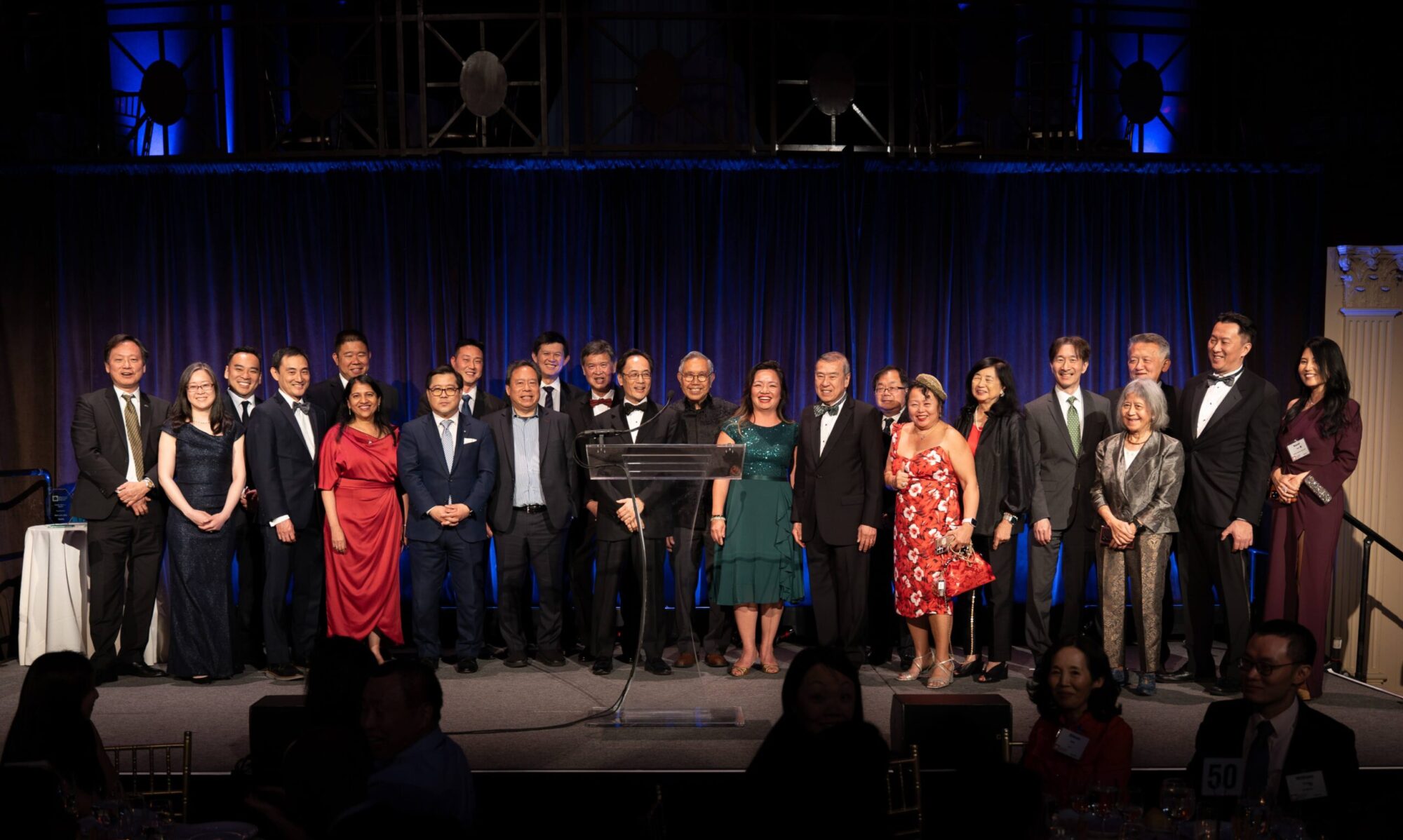
NAPABA congratulates Susman Godfrey LLP as this year’s recipient of the NAPABA President’s Award, which will be bestowed on Friday, November 7, 2025, during the President’s and Trailblazer Awards Reception at the 2025 NAPABA Convention in Denver, Colorado.
###
The National Asian Pacific American Bar Association (NAPABA) represents the interests of over 80,000 Asian Pacific American (APA) legal professionals and over 90 national, state, and local APA bar associations. NAPABA is a leader in addressing civil rights issues confronting Asian American, Native Hawaiian, and Pacific Islander communities. Through its national network, NAPABA provides a strong voice for increased diversity of the federal and state judiciaries, advocates for equal opportunity in the workplace, works to eliminate hate crimes and anti-immigrant sentiment, and promotes the professional development of people of all backgrounds in the legal profession.
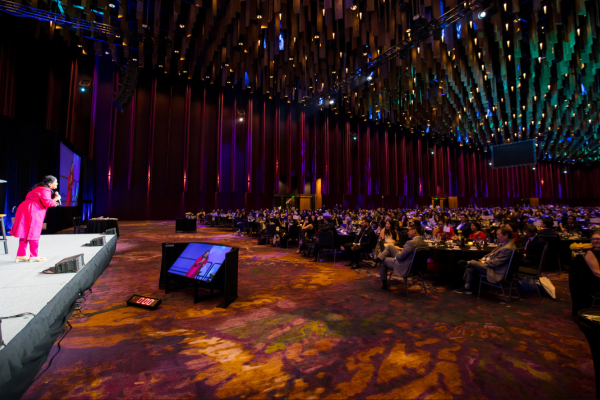
More than a conference, the Convention is where legal professionals from every stage of their career connect, collaborate, and cultivate lasting professional relationships. From committee meetings and receptions to informal meetups, you’ll find countless opportunities to exchange ideas, share best practices, and engage with peers who understand your work and your passion.
These peer-led groups—often organized around specific practice areas, career stages, or shared interests—are a direct line to knowledge-sharing networks and communities that can help you grow your practice, expand your client base, and stay ahead of emerging legal trends. Whether you’re seeking mentorship, partnership, or simply a supportive circle of colleagues, the NAPABA Convention is where those connections begin.
Early Bird Registration Ends Soon
You only have until 11:59 pm ET on Tuesday, August 26, to lock in the Early Bird rate. That’s only one week away! Registering now means you’ll save $150 and secure your spot at an event you can’t miss.
Calling all authors! Have you written a book that inspires, empowers, or tells a great story? We are thrilled to share that we are bringing back the NAPABA Nook at the 2025 NAPABA Convention!
What is NAPABA Nook?
It’s a cozy, pop-up library space at the Convention where we spotlight NAPABA’s talented authors and writers. Selected books will be beautifully displayed along with instructions on how attendees can purchase them online.
Who Can Apply:
If you are an author or a writer, we invite you to submit your book for consideration for the NAPABA Nook. Whether your book dives into law, career tips, personal growth, storytelling, or any genre that reflects your voice, we want to feature YOU!
Criteria:
Books must be published between 2024 and 2025
Only one book per author may be featured
Selected authors must provide a courtesy copy to be displayed in the Nook
Only new books will be considered for 2025. Books that were featured in previous years may not be eligible for inclusion again.
To submit a book for consideration, please complete this formno later than 8:00 pm ET on Tuesday, September 23.
The 2025 NAPABA Convention is just 100 days away! Don’t miss this powerful opportunity to advance your legal career through dynamic programs, inspiring speakers, and unparalleled networking with fellow AANHPI legal professionals.
We know that cost can be a barrier, which is why NAPABA offers scholarships to help make attending more accessible. Scholarships—including a general scholarship and a dedicated law student scholarship—can be used to help cover registration, travel, and lodging expenses.
Apply by August 5th. As a current NAPABA member, now is the time to take advantage of this opportunity. Please note: the Law Student Scholarship application closes September 16 at 8 pm ET.
Join us in Denver this November and apply for a Convention scholarship today!
Just over a month ago, NAPABA held its annual Lobby Day in Washington, DC. We convened our members in the Nation’s capital to support the Asian American, Native Hawaiian, and Pacific Islander (AANHPI) community, advance a fair and humane immigration system, defend the rule of law and the legal profession, and advance democracy and civil rights. With over 60 congressional meetings and over 20 states represented, NAPABA demonstrated its commitment to change the status quo for our community.
Since then, and since NAPABA’s last update to you, we have been tracking developments that impact our organization, our mission, our legal community, and the broader AANHPI community. Please find some of these updates below
I. NAPABA-Led Coalition Continues to Defend Birthright Citizenship
After our filing in the U.S. Court of Appeals for the Ninth Circuit in April 2025, NAPABA continued to lead a coalition of nearly 50 of its affiliates and national associates from across the country to defend birthright citizenship. Besides our amicus brief in the Ninth Circuit, which is available here, NAPABA filed substantially similar amicus briefs defending birthright citizenship in matters pending in the First Circuit and the Fourth Circuit. Those briefs can be viewed here and here.
Our brief explains the critical historical context behind United States v. Wong Kim Ark, 169 U.S. 649 (1898). The case was decided during an era of intense anti-Chinese sentiment, immigration restrictions, widespread violence, and mass expulsions. In Wong Kim Ark, the U.S. Supreme Court declared that birthright citizenship is automatically conferred to children born on American soil, even to those whose parents were from the most disfavored migrant group in the country at the time. NAPABA’s amicus brief underscores the importance of understanding Asian American legal history as a critical part of American history. Wong Kim Ark and other cases involving Asian American litigants in the late 19th century are foundational precedents for today’s immigration and civil rights law.
On Friday, June 27, 2025, the U.S. Supreme Court narrowed the scope of the preliminary injunctions that can be available to pause the executive order limiting birthright citizenship. The Court did not address the constitutionality of the executive order. Thus, litigation will continue as does NAPABA’s advocacy. The question of a child’s citizenship in the United States ought not to be dependent on the stature or circumstances of their parents. Nor should it turn on whether a child is born in one state versus another. For the guarantees of the Fourteenth Amendment to be vindicated, birthright citizenship must apply to all children across the United States.
II. NAPABA Condemns Political Violence and Hate
In recent weeks, we have witnessed incidents of hate and political violence that are antithetical to the values of our community and our country. In the early morning hours of June 14, 2025, an armed perpetrator shot two Minnesota state legislators and their respective spouses in the suburbs outside of Minneapolis in an “act of targeted political violence,” according to the Governor of Minnesota. State Representative Melissa Hortman and her husband, Mark, died. State Senator John A. Hoffman and his wife, Yvette, survived and sustained injuries from the attack.
Weeks earlier, on May 21, 2025, a deadly shooting in Washington, DC, targeted Israeli Embassy diplomats. And on June 1, 2025, eight people in Boulder, Colorado, were injured when a perpetrator threw incendiary devices into a crowd during a demonstration intended to remember hostages in the Middle East. One of those injured died from her wounds.
On top of these horrific acts, some elected leaders have sought divisiveness rather than inclusion. In a social media post, a member of Congress expressed that it was “deeply troubling” that a Sikh faith leader, Giani Surinder Singh, led a prayer on the floor of the U.S. House of Representatives. The member, who had misidentified Giani Surinder Singh as Muslim, declared that Singh “should never have been allowed” to lead a prayer in Congress.
In the race for New York City’s mayor, some members of Congress have lodged Islamophobic comments against Zohran Mamdani, the winner of the primary election. One member of Congress posted an offensive cartoon of Mamdani, referred to Mamdani with a slur, and called on the Attorney General to institute denaturalization proceedings and remove him from the United States. Another member of Congress posted a photo on social media of Mamdani wearing a kurta and greeting others for an Eid service with the caption, “After 9/11, we said, ‘Never Forget.’ I think we sadly have forgotten.”
Further, the U.S. Department of Justice, Bureau of Justice Statistics, revised the National Crime Victimization Survey and removed questions about gender identity and about hate crimes against transgender people. Previously, the questions on sexual orientation and gender identity allowed researchers, policymakers, and advocates to quantify the disproportionate victimization of the LGBTQ+ community. Comprehensive data collection surrounding hate crimes and hate incidents is critical in order to better combat such conduct and to take legislative action. NAPABA joined 90+ organizations opposing the decision. Following our advocacy, the Bureau of Justice Statistics reinstated the question pertaining to hate crimes involving gender identity.
The Justice Department’s action preceded a recent decision of the U.S. Supreme Court to uphold a Tennessee law that banned hormone therapies for transgender minors.
Hate, regardless of the form, political violence, and the marginalization of vulnerable communities must be rejected. NAPABA will continue to oppose hate, support the diverse AANHPI community, and work to strengthen the rule of law and democracy.
III. NAPABA Calls for a Fair and Humane Immigration System
Fundamental to a fair and humane immigration system is one that is subject to constitutional limits, non-discriminatory, and ensures meaningful due process. Recent developments, however, brush against these values.
On May 28, 2025, the federal government announced that it would work to “aggressively revoke visas for Chinese students.” This policy declaration has not only caused needless anxiety throughout our community, but it is also wholly misguided. While policymakers have the prerogative to address the legitimate national security concerns confronting the United States, they may not enact discriminatory policies like blanket visa revocations based only on national origin and alien land laws. Instead of measures that are tailored to an evidence-based, national security nexus, these recent policies foster an atmosphere of distrust that targets Asian Americans generally, not just the Chinese American community.
NAPABA is also concerned about the federal government’s invocation of the Alien Enemies Act. On June 2, 2025, NAPABA joined 60 other AANHPI organizations, led by the Japanese American Citizens League (JACL), in filing an amicus brief that urged the court to fulfill its role in preserving the right to due process and ensuring meaningful judicial review of executive orders. The last invocation of the Alien Enemies Act justified the incarceration of over 120,000 Japanese Americans during World War II. The amicus brief shared the stories of these Americans and their families. We urged the court to uphold the right of meaningful due process and judicial review of executive actions.
Lastly, starting on June 6, 2025, protests erupted in Los Angeles in response to federal immigration enforcement actions in the city. On June 7, 2025, for the first time in 33 years, the President deployed National Guard and military service members in Los Angeles to protect federal law enforcement and federal property. The protests continued until around June 15.
NAPABA recognizes the widespread anxiety throughout the AANHPI community and the broader immigrant community. Whether involving the changes in immigration enforcement policy or the announcement of new immigration policies generally, the shifting landscape of immigration law has created much uncertainty. This includes a recent policy change from U.S. Immigration and Customs Enforcement pertaining to the removability of certain Vietnamese immigrants who arrived in the United States prior to 1995. Please visit the Asian Law Caucus’s website for more information.
In the coming days, NAPABA will promote educational programming to cover many of these changes and more. Please stay tuned.
We have a lot of work ahead of us, and the NAPABA Policy Team will do its part. But we need your partnership, too. Engage in our committees and networks and register for the NAPABA Convention in Denver, which will be held on November 6-8, 2025. We look forward to seeing you.
Get ready—NAPABA is heading to the Mile High City! Registration is now open for the 2025 NAPABA Convention, our signature event and one of the largest annual gatherings of attorneys, judges, law professors, and students. NAPABA is committed to fostering a welcoming, inclusive community open to all—where everyone is empowered to engage, contribute, and lead. We hope you and your colleagues join us.
This year’s Convention in Denver promises thought-provoking programs, dynamic networking, and countless opportunities to connect with peers and leaders who are shaping the future of the legal profession. Whether you’re looking to advance your career, grow your community, or simply be inspired—there’s something here for you.
Early Bird pricing only lasts for a limited time. As a current NAPABA member, you’ll get the best deal for the Convention if you register now!
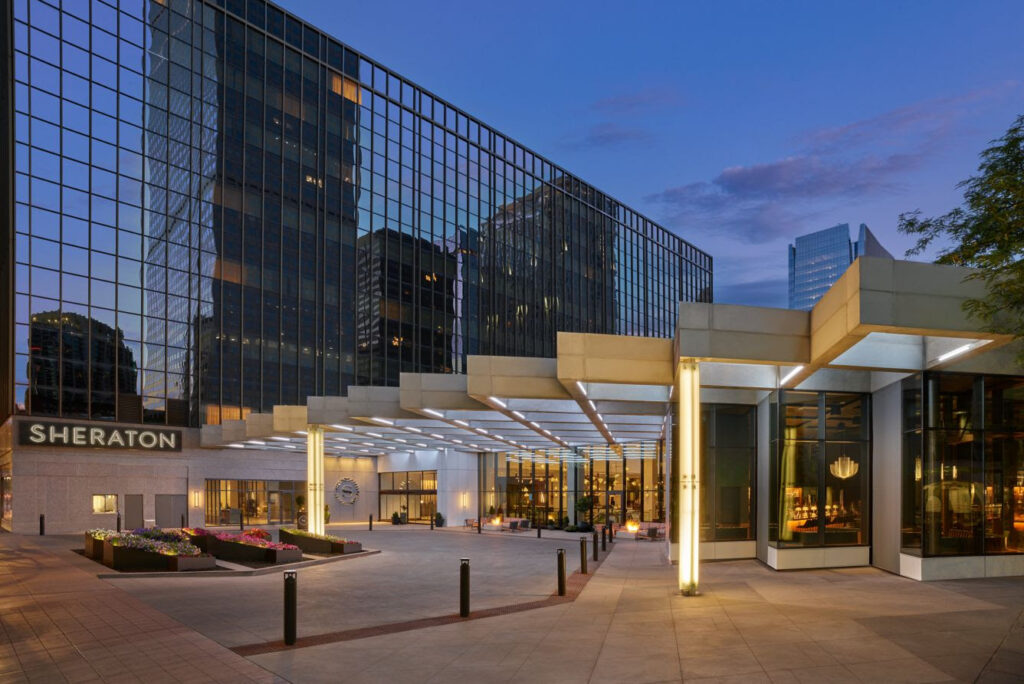
When you register early, you’ll be first in line for our special hotel rates, a la carte plenaries, and gala tickets! This year, a room block has been secured at the Sheraton Denver Downtown Hotel, the Convention host hotel. We’ve also secured overflow hotels at the Hilton Denver City Center and the Sonesta Denver Downtown, both within walking distance to the Sheraton Denver Downtown Hotel. The unique booking link will be provided AFTER you register for the 2025 NAPABA Convention.
To enhance your Convention experience and put you in control of your schedule, the Friday and Saturday Plenary Luncheons and the 37th Anniversary Gala will be available for purchase a la carte. To attend these ticketed events, you must add them to your registration for an additional fee.
SCHOLARSHIPS
NAPABA strives to keep the Convention affordable for our members and offers one of the best values among legal education conferences. Scholarships may be used towards Convention registration, airfare, lodging, and/or ground transportation.
General Convention Scholarship Application | Deadline: August 5 at 8 pm ET
Law Student Scholarship Program Application | Deadline: September 16 at 8 pm ET
We’re excited to announce that the in-house counsel application is now open for NAPABA Connects, our premier program designed exclusively for in-house counsel NAPABA members who register for Convention and to Solo and Small Firm, Gold, or higher-level sponsors.
Through NAPABA Connects, in-house counsel will be matched with law firm attorneys for one-on-one meetings, giving you the opportunity to expand and diversify your preferred provider network. In addition to the opportunity to meet with new outside counsel, NAPABA will be offering in-house counsel the opportunity to meet with existing preferred provider firms. These curated meetings are designed to foster connection and long-term collaboration. By participating, both in-house counsel and law firm attorneys can strategically grow their networks and support each other’s professional advancement.
Don’t wait to submit your application—this is a program you don’t want to miss!
Please note that participants must be registered for the 2025 NAPABA Convention (November 6–8, Denver, CO). As part of this program, NAPABA will offer participating in-house counsel a partial Convention registration reimbursement depending on the number of meetings you volunteer to participate in. The maximum reimbursement amount is $750.
NAPABA Condemns Executive Orders Undermining the Legal Profession
WASHINGTON – The legal profession is of constitutional significance. The right to counsel is fundamental, and the judiciary as a coequal branch of government is charged with peacefully resolving disputes that inevitably arise in a vast and complex nation. Undermining the legal profession undermines democracy.
Over the past few weeks, the Administration issued executive actions against three law firms: Covington Burling LLP, Perkins Coie LLP, and Paul, Weiss, Rifkind, Wharton & Garrison LLP. These actions included the suspension of security clearances and a review and termination of government contracts. For two of the firms, the Administration limited their access to federal government buildings and interactions between the firms and government officials.
One executive order accused global law firms of having a role “in the destruction of bedrock American principles.” Another executive order described one of the law firm’s activities as “dishonest and dangerous.” The executive actions plainly expressed a displeasure with the firms’ representation of certain clients that the Administration disfavors. Some of the executive actions are now subject to litigation.
The National Asian Pacific American Bar Association (NAPABA) condemns these attacks. From the founding of this Nation, lawyers have represented clients regardless of their stature in society. NAPABA is the national voice of the Asian Pacific American legal profession. We promote justice and equality. Members throughout our community zealously represent their clients each and every day, including those at the three law firms. When attorneys are unable to represent their clients free from intimidation and threats, our profession and justice system are jeopardized.
NAPABA also rejects the calls for the impeachment of judges simply because of their rulings. As Chief Justice John Roberts shared recently, “impeachment is not an appropriate response to disagreement concerning a judicial decision. The normal appellate review process exists for that purpose.” We agree.
### The National Asian Pacific American Bar Association (NAPABA) represents the interests of over 80,000 Asian Pacific American (APA) legal professionals and nearly 90 national, state, and local APA bar associations. NAPABA is a leader in addressing civil rights issues confronting Asian American, Native Hawaiian, and Pacific Islander communities. Through its national network, NAPABA provides a strong voice for increased diversity of the federal and state judiciaries, advocates for equal opportunity in the workplace, works to eliminate hate crimes and anti-immigrant sentiment, and promotes the professional development of people of all backgrounds in the legal profession.
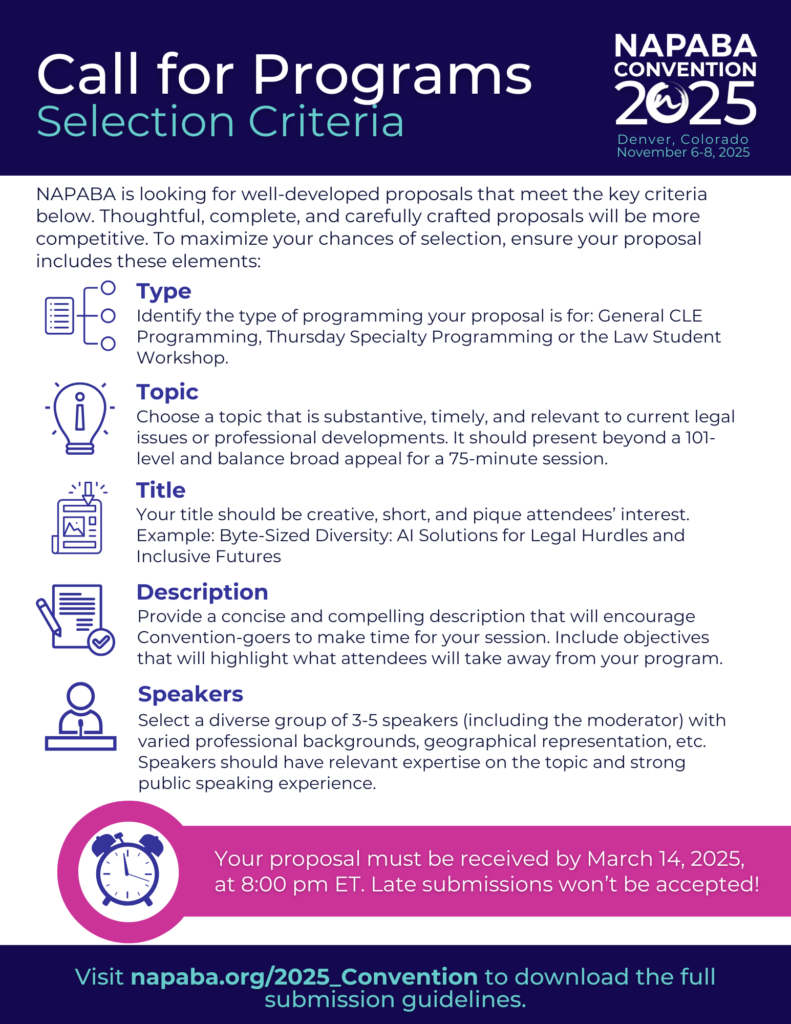
Beyond our outstanding CLE sessions, the NAPABA Convention offers specialty programming designed to provide hands-on, in-depth learning from top experts. These immersive workshops go beyond the basics, equipping participants with practical skills and actionable insights to advance their careers.
We’re seeking proposals for these dynamic specialty tracks:
International Law Symposium – Dive into global legal topics like IP, national security, and dispute resolution with diplomats, judges, and business leaders. Presented by the International Law Committee on Thursday.
Young Lawyers Workshop – Designed for early to mid-career attorneys, tackling real-world challenges like work-life balance and career growth. Presented by the Young Lawyers Network on Thursday.
Solo & Small Firm Boot Camp – Tailored for solo and small firm practitioners, covering business development, firm expansion, and legal strategy. Presented by the Solo & Small Firm Committee on Thursday.
Law Student Workshop – A two-day boot camp helping law students develop essential career skills through interactive sessions and expert-led discussions.
Before the start of this new year, I wrote to you and shared not only my gratitude for an incredible 2024, but also our commitment to advance NAPABA’s mission heading into 2025. Though we are merely two months into the new year, we have already witnessed several developments that impact NAPABA’s work and the broader Asian American, Native Hawaiian, and Pacific Islander (AANHPI) community.
On his first day in office on January 20, 2025, President Donald J. Trump issued executive orders that jeopardized the constitutional guarantee of citizenship for all persons born in the United States, the right to seek asylum, the refugee resettlement system, and the LGBTQ+ community, among others. NAPABA swiftly condemned these actions, which ran counter to our values. Since then, the federal government has enacted a slew of policies, which have already drawn significant concern for the rule of law, in addition to attacks on lawful diversity, equity, and inclusion initiatives both within the federal government and the private sector.
When it comes to our values, our words of disagreement are not enough. NAPABA is charged to promote justice and equity for the AANHPI community. My team is closely monitoring developments from the federal government, and we are working with stakeholders, coalition partners, policymakers, and others to respond appropriately.
NAPABA is prepared to act. I have outlined below, in broad strokes, our intended course of action and how you can get involved. In the coming weeks and months, and with your partnership, we plan to meaningfully support our community and actively counter policies that detrimentally affect the AANHPI community.
I. Direct Support for NAPABA Affiliates and National Associates
NAPABA stands ready to deliver financial support to our affiliates and national associates for their work in the community. As leaders in their respective regions, affiliates and national associates can act as trusted messengers delivering pivotal information and services to their members and broader AANHPI communities. We will prioritize projects that speak to the challenges today: for example, educational seminars on the state of immigration, pro bono initiatives to support heightened immigration needs of the Asian American population, funding language translations for educational materials and resources, and local and state advocacy efforts that align with NAPABA values and positions. To apply for funding, please visit our website.
Building on the work of the NAPABA Diversity, Equity, and Inclusion Task Force, we plan to create toolkits for our affiliates and national associates. They will include resources to advance the work of diversity, equity, and inclusion, and immigration resources such as hosting naturalization clinics and the creation of attorney directories that address priority areas like immigration law.
II. NAPABA Engagement with Policymakers
The NAPABA Policy Team leads our engagement with stakeholders and policymakers at the federal and state levels. We advance our policy priorities, whether it be in our opposition to anti-Asian hate and discriminatory alien land law policies to our support for voting rights. Now, as our engagement will necessarily go deeper, we are investing in an expansion of our Policy Team.
Plus, the planning is well underway for our upcoming Lobby Day, which is scheduled for May 20-21, 2025, in Washington, DC. As the largest AANHPI advocacy effort on Capitol Hill, NAPABA Lobby Day will bring our members from across the Nation to the halls of Congress to demonstrate not only the strength of our community, but also to advance the critical issues facing the AANHPI community. Our members will meet with Congressional offices on both sides of the aisle to highlight the causes important to us and our communities. Your voice is pivotal. For more information on Lobby Day and to register, please visit our website.
III. Narrative Change and Education In the coming weeks and months, NAPABA will highlight how recent actions from the federal government not only impact our communities, but also the critical role that the AANHPI communities played in the development of the rights that we cherish today. Whether it be on birthright citizenship, the right to asylum and the refugee resettlement program, or the barriers that our community faces in the legal profession, NAPABA will uplift those stories and our history, which are intertwined with the fabric of American life today. Please be on the lookout through our social media channels, our website, and email for additional educational resources and programming. These efforts will be on top of the multitude of informative programs during the Nation’s largest convening of legal professionals: the NAPABA Convention in Denver, Colorado, on November 6-8, 2025.
NAPABA has an exceptionally talented and enthusiastic full-time staff, but we cannot carry out our work without you. The strength of NAPABA is comprised of passionate and energetic volunteers like you. As I mentioned above, here are some ways where you can get involved: