
ADR Committee Co-Sponsors “Pathways to Court‐Connected ADR” CLE at NY County Courthouse in January

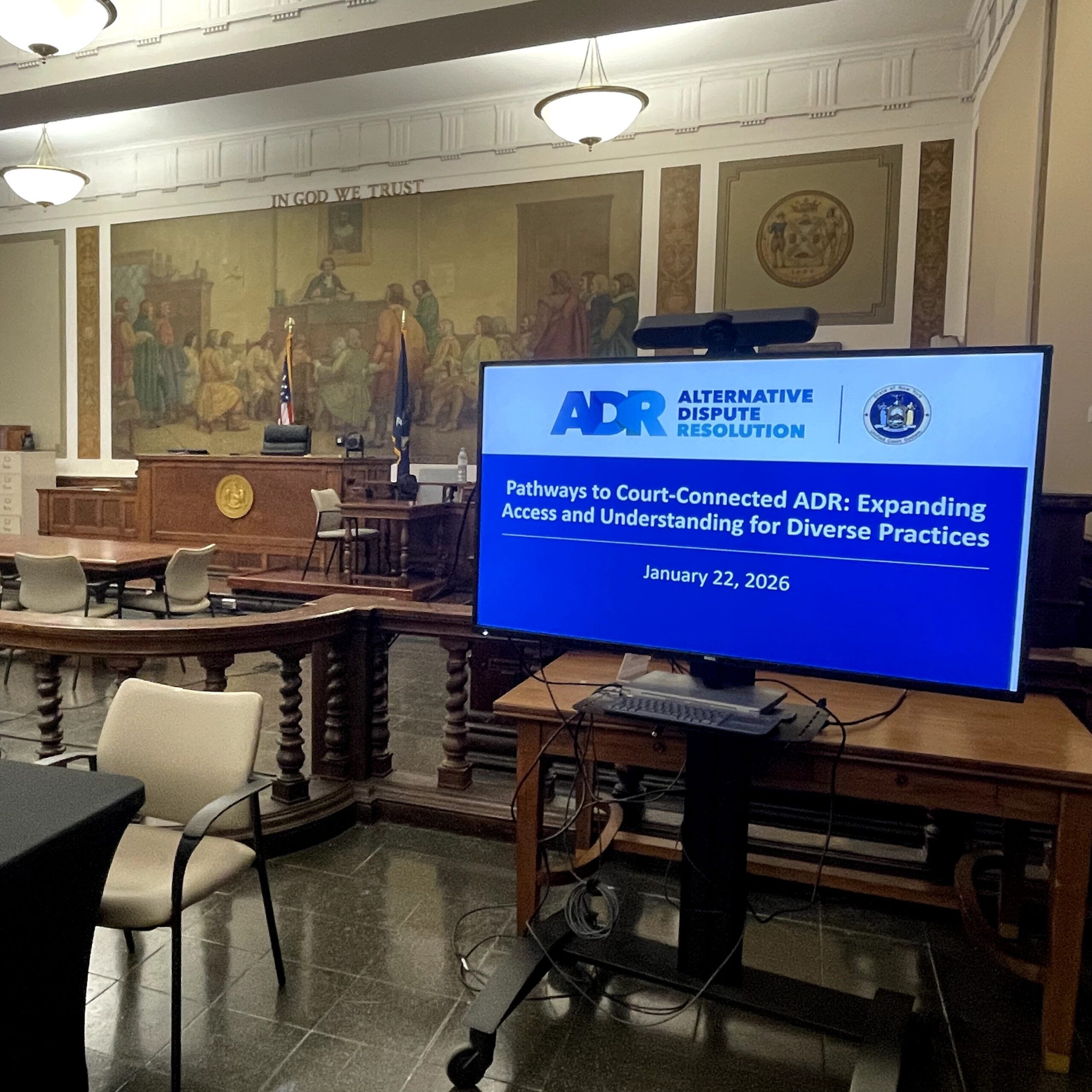
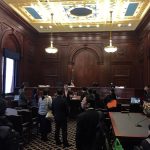
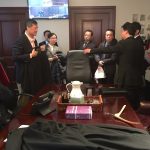
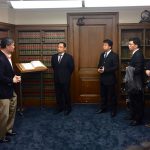
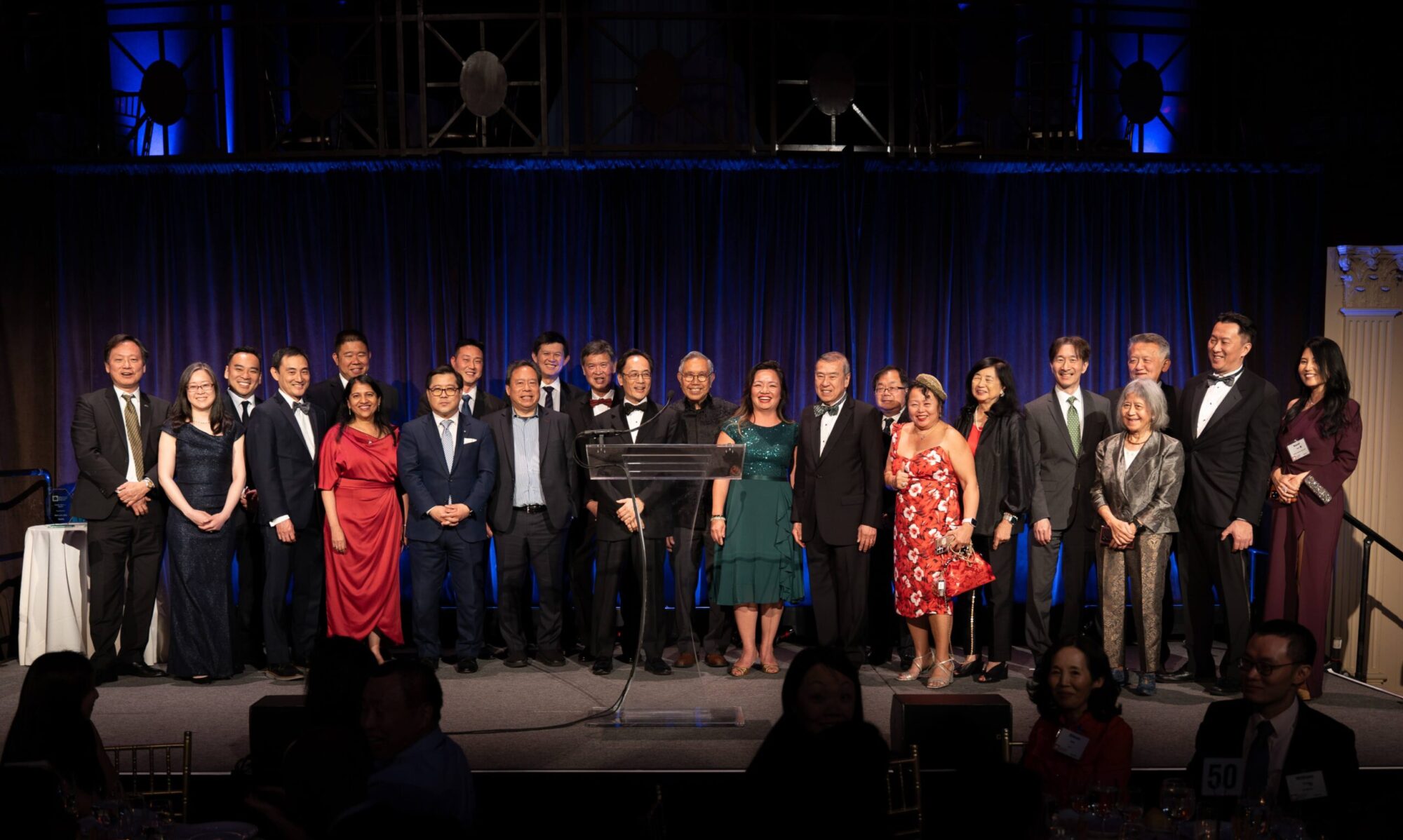
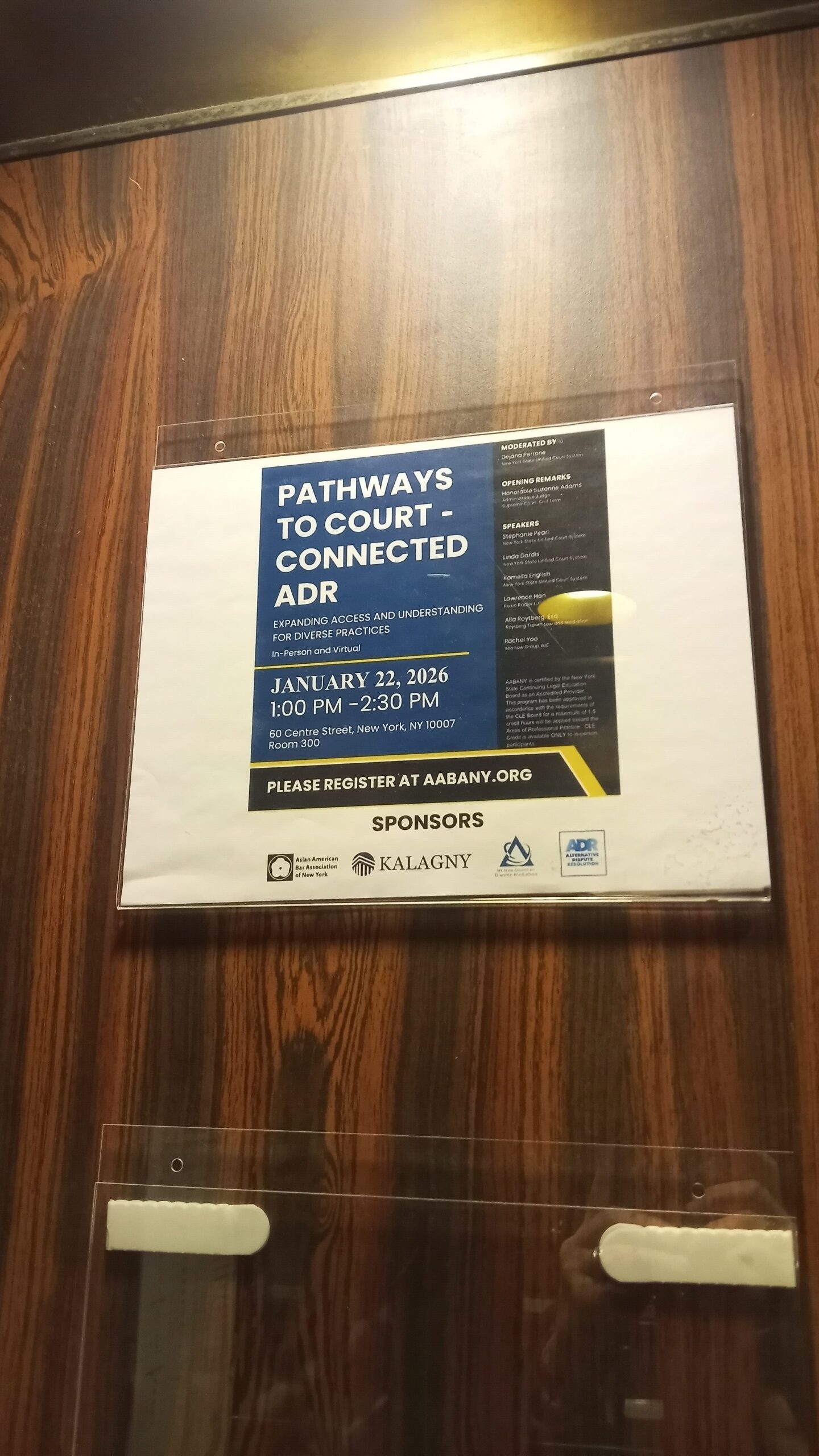
On Thursday, January 22, AABANY welcomed nearly 40 attorneys, mediators, and law students to 60 Centre Street for “Pathways to Court‐Connected ADR,” a 90‐minute CLE program designed to expand understanding of New York’s court‐sponsored mediation programs. Co‐sponsored by KALAGNY, NYSCDM, and the New York County Supreme Court Civil Branch ADR Team, the program offered both in‐person and virtual attendance, drawing a diverse and engaged audience eager to learn more about the growing landscape of court‐connected dispute resolution.
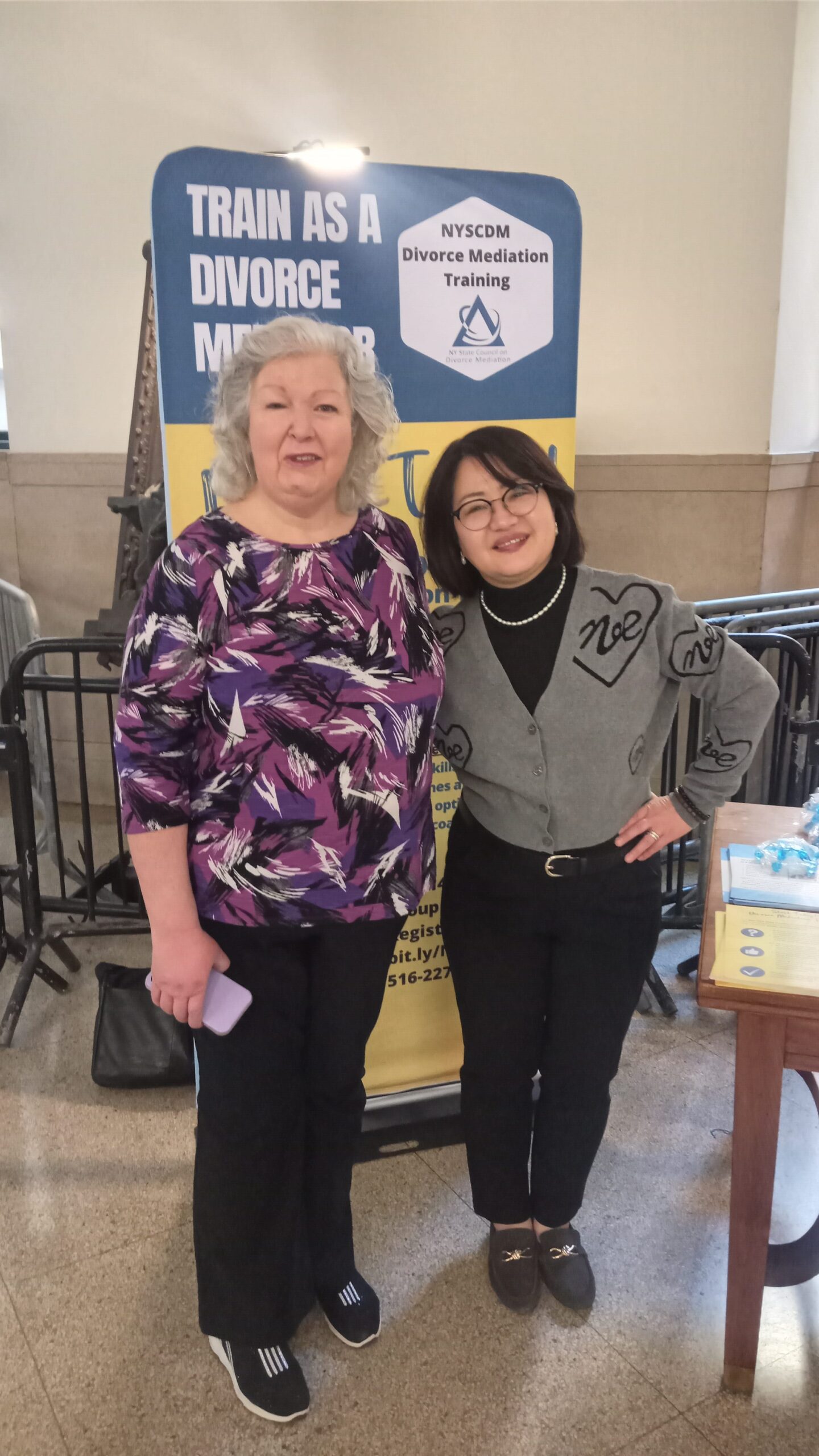
The session featured a robust lineup of panelists — Stephanie Pearl, Kamella English, Lawrence Han, Michael Henry, and Rachel Yoo — with Dejana Perrone moderating the discussion. Together, they delivered a candid, practical, and often inspiring look at how ADR functions inside the courts and how practitioners can meaningfully participate.
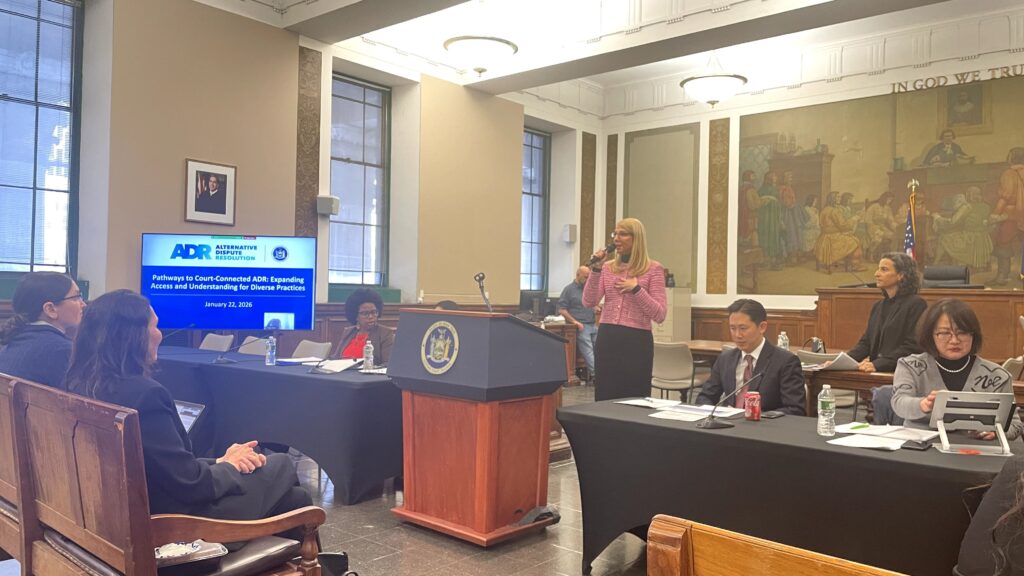
A Deep Dive into Court-Sponsored ADR

The program opened with an overview of court‐sponsored ADR, including the purpose of Part 160, the types of cases eligible for mediation, and the benefits of early intervention. Speakers provided helpful context on how ADR has evolved across districts and why mediation continues to play a critical role in improving access to justice.

From there, attendees heard directly from ADR Coordinators Kamella English and Stephanie Pearl, who walked through the day‐to‐day responsibilities of their roles and offered guidance on how practitioners can connect with coordinators when seeking case information or exploring volunteer opportunities.

Practical Guidance for Advocates and Mediators

The conversation then shifted to the role of advocates and mediators in the mediation process. Panelists Lawrence Han, Rachel Yoo, and Michael Henry shared insights on how mediation compares to litigation, how to prepare clients for the process, and how to navigate the court’s roster of neutrals. Their reflections highlighted the importance of preparation, empathy, and clear communication — qualities that shape both client experience and case outcomes.

The panel also addressed when a case is “ready” for mediation, including timing considerations under Part 160 and practical perspectives from mediators handling professional liability and other complex matters.
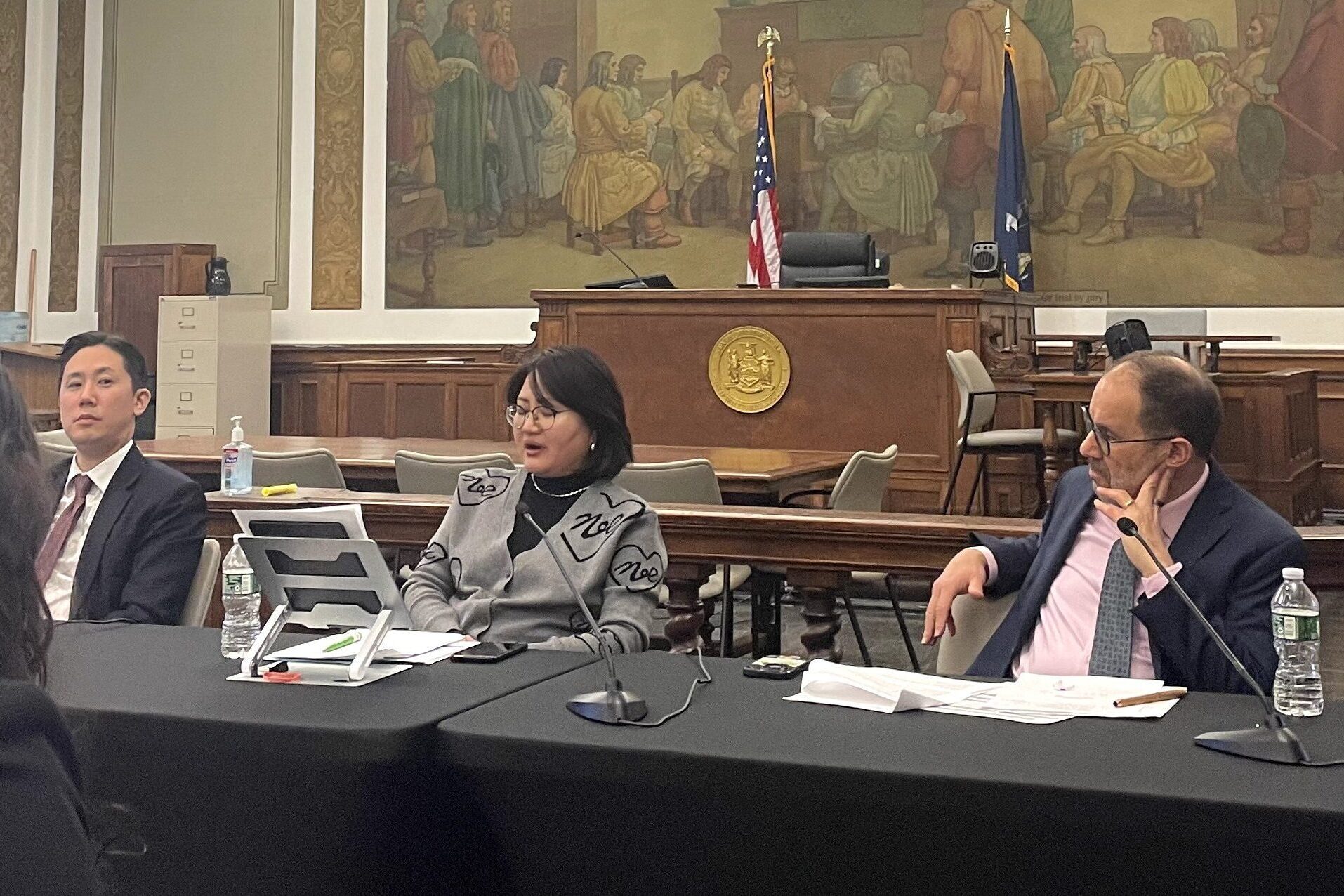
Pathways to Joining a Roster

In the second half of the CLE, panelists outlined the steps to join a court roster, the qualities that define an effective neutral, and the ongoing efforts to expand and diversify ADR panels across New York. Speakers emphasized the need for mediators who bring cultural competence, multilingual abilities, and varied professional backgrounds — all essential to serving New York’s diverse communities.

The panel closed with success stories from ADR programs, illustrating how early mediation, skilled neutrals, and thoughtful program design can lead to meaningful resolutions for litigants. These stories underscored the human impact of ADR and the value of continued investment in court‐connected mediation.

Thank You from AABANY

AABANY extends its sincere thanks to all panelists and to the New York County Supreme Court Civil Branch ADR Team for their partnership and generosity. We are grateful to KALAGNY and NYSCDM for co‐sponsoring the program, and to every attendee who joined us for an afternoon of learning, connection, and community building.

The enthusiasm in the room — and online — reflected a shared commitment to expanding access to justice through thoughtful, culturally responsive ADR practices. It was a vibrant and memorable event, and we look forward to continuing the conversation in future programs.

To learn more about the ADR Committee, click here.
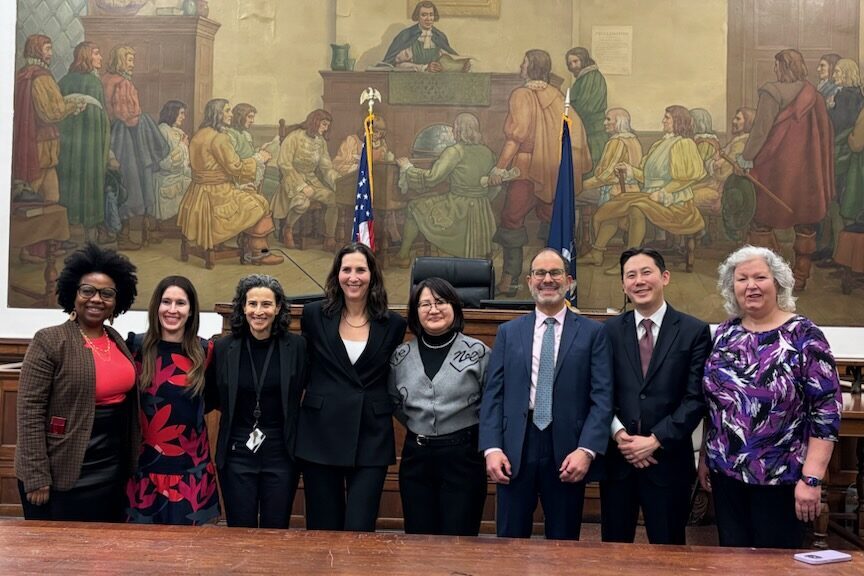
Written by: Rachel Ji-Young Yoo, Co-Chair of AABANY’s ADR Committee
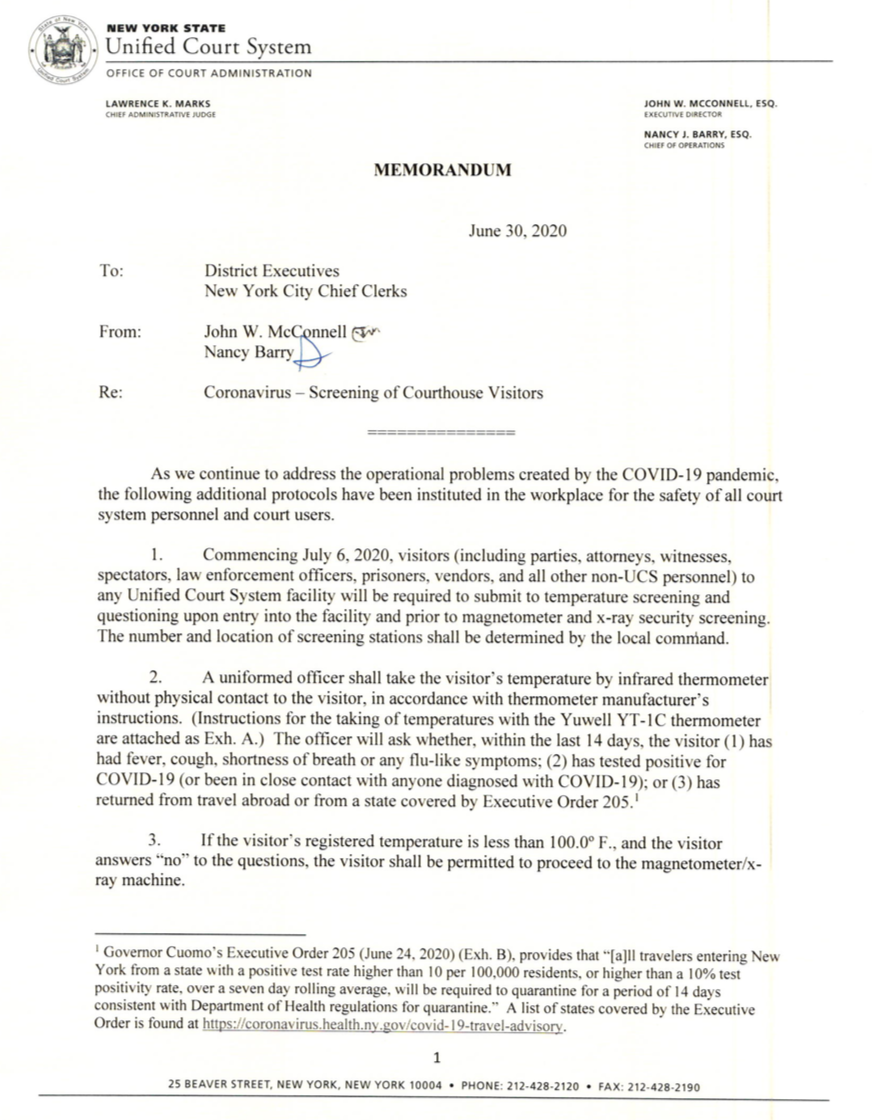
Court System Mandates Screening of Courthouse Visitors due to COVID-19

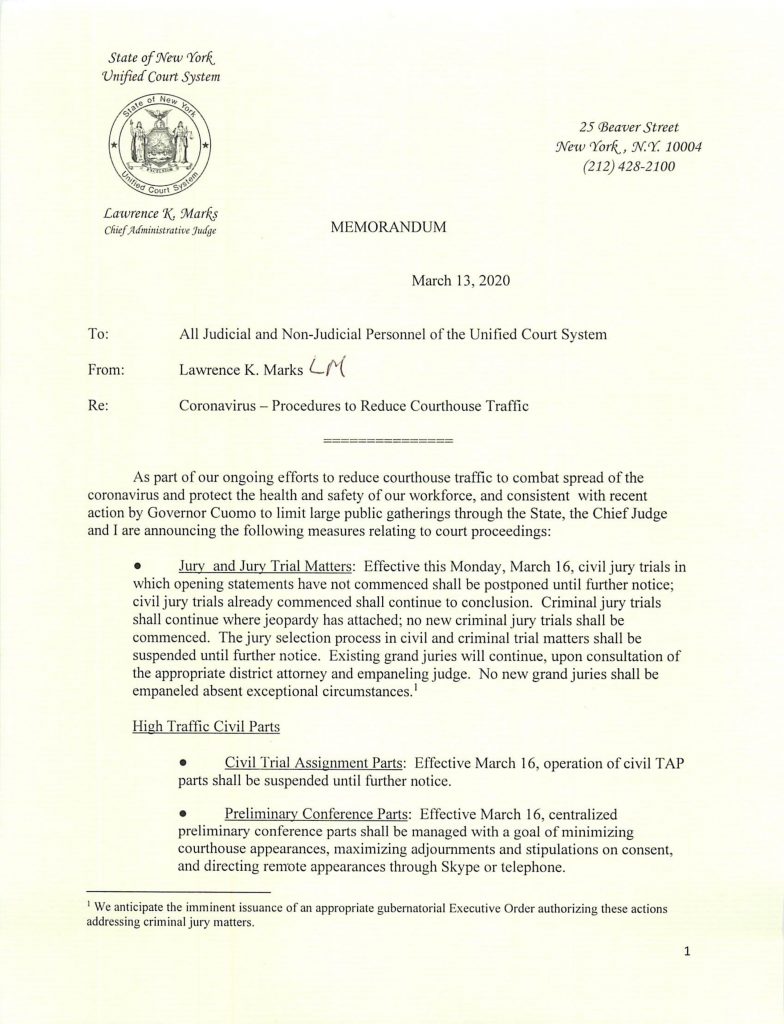
Beginning July 6, 2020, the Unified Court System will require all courthouse visitors to participate in questioning and a temperature screening. The changes come as New York begins to re-open and adjust following the COVID-19 pandemic.

A uniformed official will take the temperature of all visitors, including attorneys, witnesses, spectators, prisoners, law enforcement officials, and others, with an infrared thermometer, which requires no physical contact.

Visitors will be asked if in the last 14 days, the visitor has (1) experienced fever, cough, shortness of breath or any other flu-like symptoms; (2) tested positive for COVID-19 or been in close contact with anyone who has tested positive; (3) returned from travel internationally or from states covered by Executive Order 205.1.

If the visitor registers a temperature of 100º or below and answers ‘NO’ to the aforementioned questions, they will be permitted into the courthouse. If a higher temperature is recorded or visitors answer ‘YES’ to any of the questions, the courthouse will request additional information for the visitor and will not be let inside.

For more information or tread the complete memo, please click the image above.

From the Chief Administrative Judge: Procedures to Reduce Courthouse Traffic

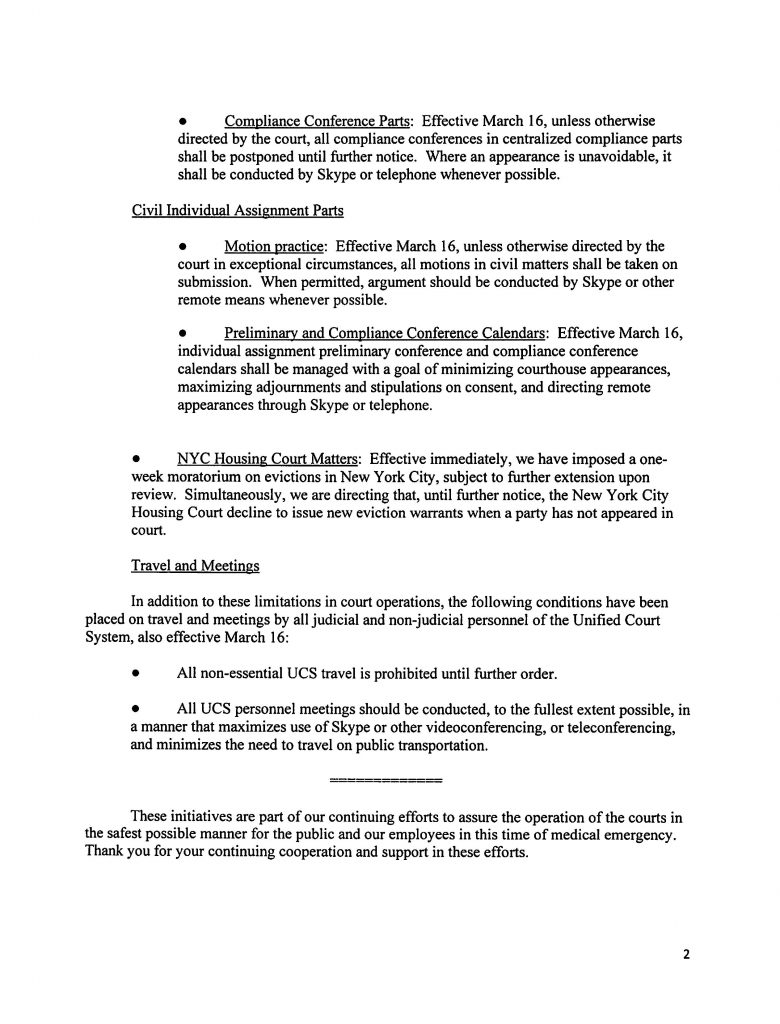
On March 13, Chief Administrative Judge Lawrence Marks issued a memorandum about procedures necessitated by the current coronavirus pandemic. The memorandum announced changes to civil court proceedings to reduce courthouse traffic, in line with recent actions from Governor Cuomo restricting large gatherings as a way to combat the spread of coronavirus. Effective this Monday, March 16, civil jury trials in which opening statements have not yet been made will be postponed until further notice, and civil jury trials that have already commenced will continue to conclusion.

The Unified Court System is constructing policy around prioritizing the health and safety of both their employees but also the general public, with a “goal of minimizing courthouse appearances, maximizing adjournments and stipulations on consent, and directing remote appearances through Skype or telephone.”

Other important matters that are highlighted in the Memorandum state that the New York City Housing Court will decline to issue eviction warrants if the parties do not appear in court and that all non-essential UCS travel is prohibited until further notice.

SDNY BOARD OF JUDGES REVISES ITS ELECTRONIC DEVICES POLICY

NOTICE TO THE BAR
CONTACT: Edward Friedland, 212-805-0500

SDNY BOARD OF JUDGES REVISES ITS ELECTRONIC DEVICES POLICY

        The Board of Judges of the United States District Court for the Southern District of New York has revised its policy regarding the use of personal electronic devices and general purpose computing devices. A copy of the new policy is attached to this notice.

        The new policy allows members of the bar of any court, with the advance written permission from the judge presiding and subject to security screening, to bring one or more personal electronic devices or general purpose computing devices into the courthouses for that trial.

        Attorneys who are admitted in the Southern District of New York and have a valid New York State Office of Court Administration Secure Pass should still apply for an SDNY Secure Pass, which permits the holder to bring a personal electronic device into the courthouse. For more information on how to obtain a SDNY Service Pass, visit the court’s website at http://nysd.uscourts.gov/file/forms/attorney-service-pass-application.

SDNY NOTICE: SDNY Accepting Applications for Magistrate Judge

The United States District Court for the Southern District of New York has announced a vacancy for a full-time U.S. Magistrate Judge position in the White Plains courthouse.  The SDNY’s public notice, which contains additional information about the position and the application, is available on the court’s website at www.nysd.uscourts.gov.  AABANY encourages all qualified attorneys with an interest in serving in the federal judiciary to submit an application, which is due no later than September 30, 2013.  If you have any questions about the position or would like assistance in connection with your application, please contact any of the Co-chairs of AABANY’s Judiciary Committee: 

CHIEF JUDGE LORETTA A. PRESKA AND CONGRESSMAN JOSÉ E. SERRANO ANNOUNCE FUNDING FOR NEW SECURITY PAVILION AT UNITED STATES DISTRICT COURT

       image

image

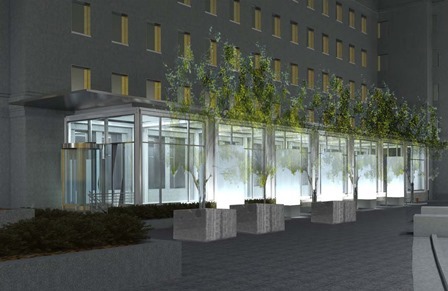
Loretta A. Preska, Chief Judge of the United States District Court for the Southern District of New York (SDNY), and Congressman José E. Serrano (NY–15) announced today that the court received $10.44 million to build a security pavilion outside the Daniel Patrick Moynihan United States Courthouse, located at 500 Pearl Street in Lower Manhattan.
        “We gather here today to celebrate a success of bipartisan government action to improve the security of our courthouse and of the people who come here every day to do business,” said Chief Judge Preska. “We have been pursuing the means to construct this pavilion since September 11, and today’s triumph is long overdue.”
        The pavilion will enhance security at and speed entry to the busy federal courthouse, home of many high-profile proceedings. The project was conceived after 9/11, but funding for the pavilion was not found until recently.
        Congressman Serrano, who was instrumental in appropriating funds for the project, said: “I was happy to be able to intercede on the Moynihan Courthouse’s behalf from my seat on the Appropriations Committee. We know that keeping our federal buildings secure is of the utmost importance, especially one with high sensitivity trials involving national security like Moynihan. Waiting years after 9/11 was unacceptable.” No new appropriation was made to fund the pavilion; funds were reprogrammed from completed or cancelled projects.
        Other key representatives who helped secure funding for the project were also on hand for today’s announcement:
“This new security pavilion is an essential modernization of the Moynihan Courthouse that will ensure that Manhattan’s federal court is a safe space for all who use it,“ said Congressman Jerrold Nadler (NY-10). “For the wheels of justice to operate smoothly, it is vital that our courthouses be secure. This is especially true in my district in Lower Manhattan, where we are still very much living in the shadow of 9/11.”
        Representative Peter King (NY–2), said: “As the leading terrorist target, New York’s security is essential. I am proud to have played a part in ensuring funds for the Moynihan Federal Courthouse’s new security pavilion. It is imperative that all those who work for justice can do so in a secure environment.”
        The U.S. General Services Administration will oversee construction, which is slated to begin in October and completed in April 2015. The 4,500 square foot glass and steel structure will be situated on the west side of the courthouse.