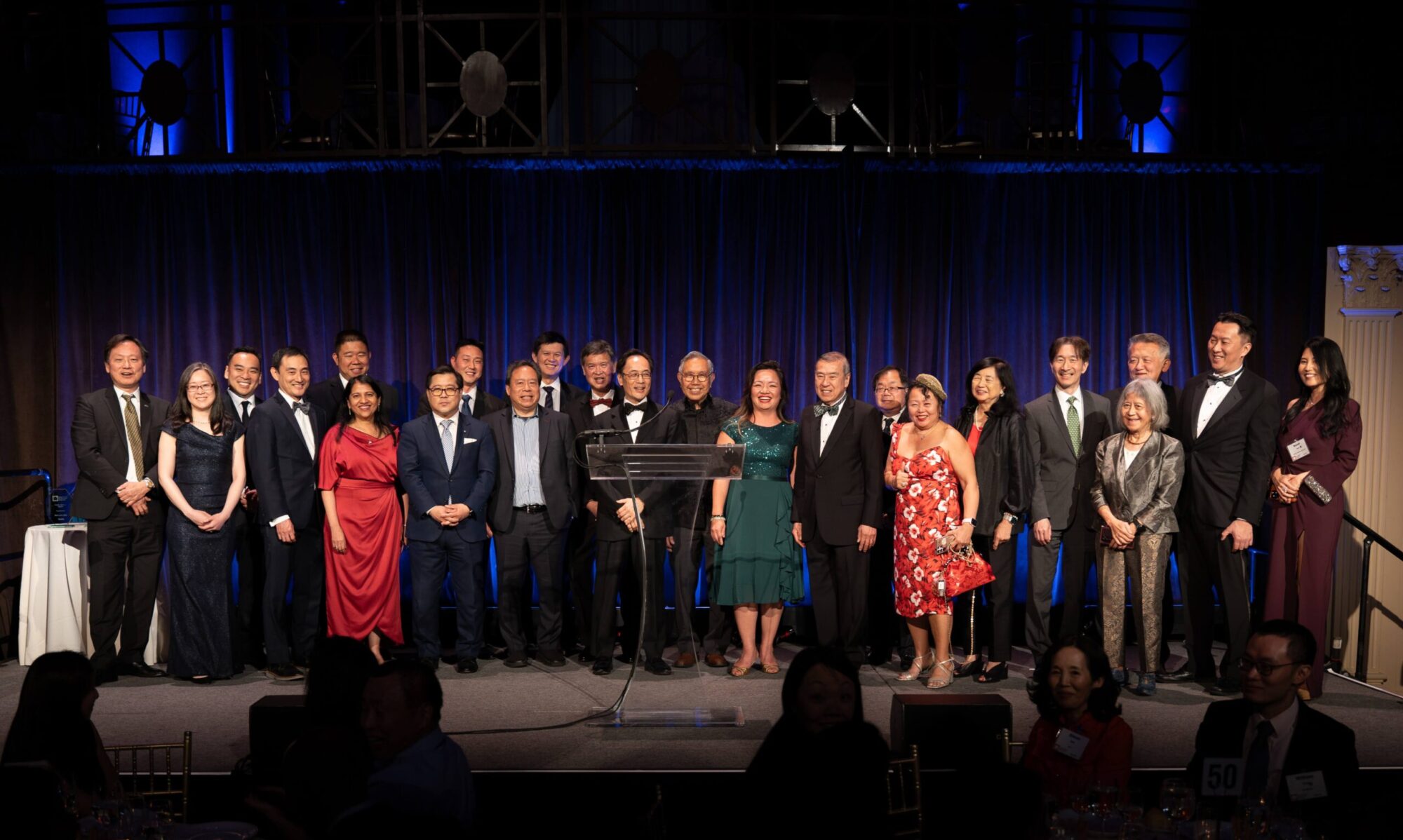

AABANY Student Outreach Committee and Government Service and Public Interest Committee Co-Host Panel on Public Defense and Public Interest Sector Careers

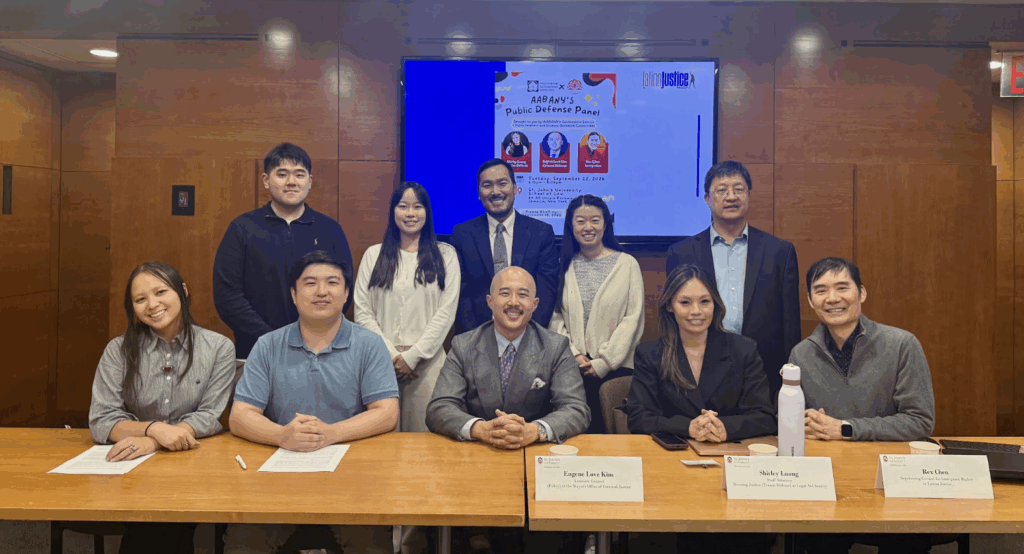
On September 22, 2026, AABANY’s Student Outreach Committee and Government Service and Public Interest Committee co-hosted a panel discussion at St. John’s University School of Law on public defense and public interest careers, bringing together law students, attorneys, and community members. Three lawyers –  Eugene Kim, Criminal Defense; Shirley Luong, Tenants’ Rights; and Rex Chen, Immigration – provided insight on their day-to-day, the work that keeps them going, and how their practices confront systemic struggles while serving and representing the Asian American Pacific Islander (AAPI) community. 
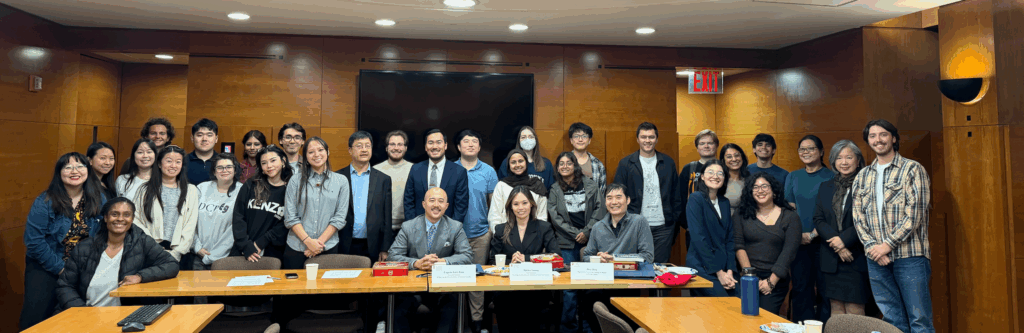
Criminal Defense: Eugene Kim

After graduating from Northeastern University School of Law, Eugene began his career at the Legal Aid Society, where he spent many years representing approximately 3,000 clients. He went on to  work in the Mayor’s Office, but during the panel, Eugene reflected on his time at the Legal Aid Society. He has also served previously as Vice Chair and Co-Chair of AABANY’s Pro Bono & Community Service Committee. 

When asked to describe what his typical day at work looked like, he talked about time spent staffing the courtroom, moving between court appearances, legal research, and visits to Rikers Islands to take on new cases. 

Eugene described both the challenges and rewards of his practice. The biggest challenge, he said,  was that there are “no moral victories in court,” especially in criminal defense. For Eugene, the most rewarding aspect is “winning for a client when their family is in the room,” which he said is what kept him going. 

On the issue of racism in his profession, Eugene was direct: In the criminal justice system, racism is unfortunately a “feature” of it. As a public defender, his goal was to provide “the best defense that money can’t buy.” Turning to the AAPI community, Eugene expressed his belief that AAPI residents are underrepresented because there are fewer  attorneys who share their backgrounds and can understand them, and he called for greater advocacy towards proper representation. His advice for attorneys entering the profession: leadership cannot be forced. “Figure out who you are and stay true to it, because people will notice if you don’t.” 
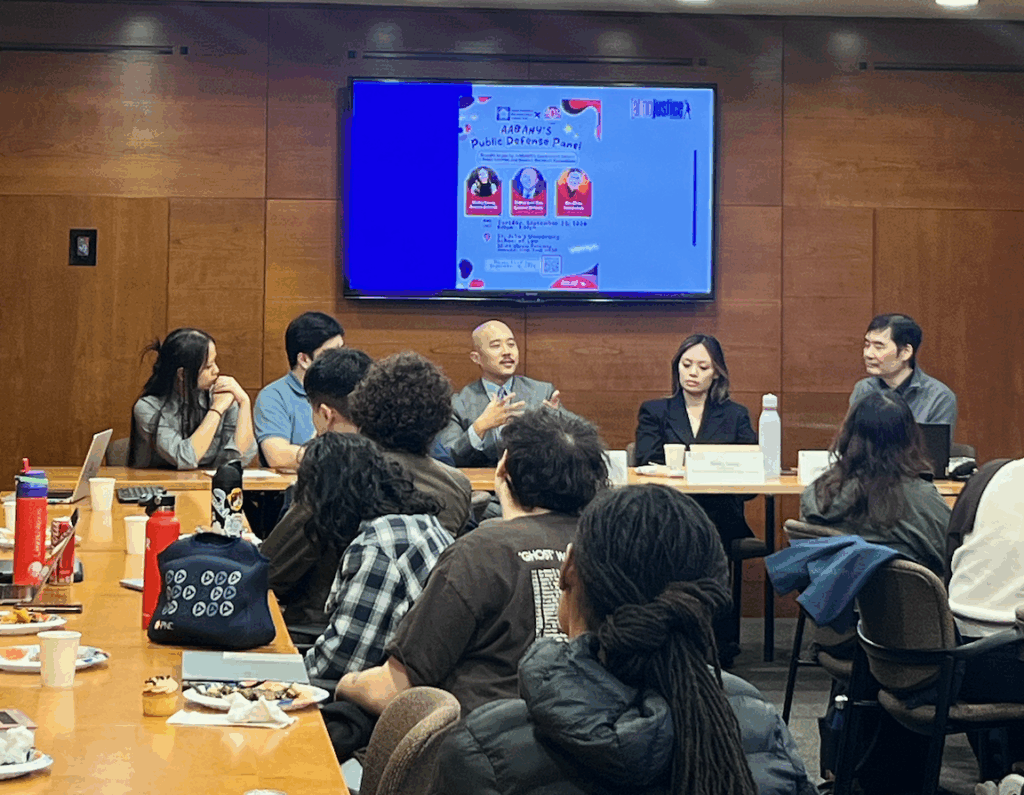
Tenants’ Rights: Shirley Luong 

A lifelong New Yorker born and raised in Flushing, Shirley attended Brooklyn Law School. From 2024-25, she served as Vice Chair of AABANY’s Pro Bono & Community Service Committee and is currently Vice Chair of AABANY’s Government Service & Public Interest Committee. She is a Staff Attorney in housing justice and tenant defense at the Legal Aid Society, where she has worked for the past decade. Shirley is passionate about pursuing justice for her clients’ housing circumstances. For example, just before the pandemic struck, she compelled a landlord to build a wheelchair-accessible ramp so that her client could safely and conveniently access his own home. 

For Shirley, secondary trauma is the greatest challenge of her direct service work. As a client’s first line of defense, she found it difficult to balance sympathy with maintaining the emotional distance needed for her profession. The reward is the flip side: the impact on people’s lives is immediate and tangible. 

When asked about racism in her area of practice and how her work addresses it, she describes it as systemic and deeply rooted – a theme all the panelists shared. Housing policies like redlining, she explained, historically excluded communities of color from homeownership and, with it, generational wealth. This turns into exclusion from employment opportunities, education, and other benefits, rights, and privileges. Though such practices are now illegal, they have lasting effects, and minority communities continue to be targeted in housing court today. To Shirley, tenants’ rights form an essential aspect of  racial justice work. For AAPI clients specifically, language access remains a barrier, as housing law is difficult to understand, even for attorneys, and interpretation often can’t accurately communicate legal terminology. 
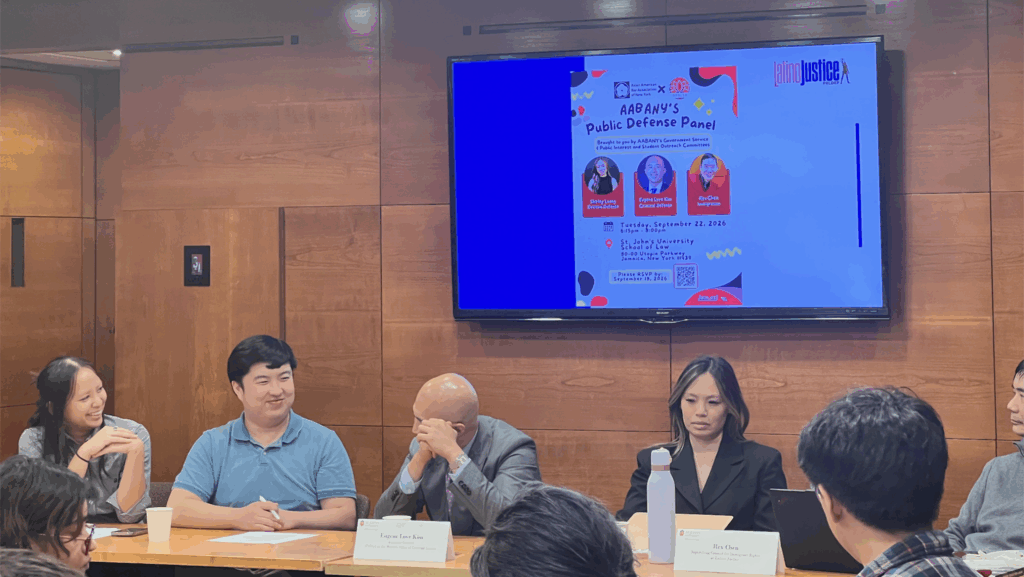
Immigration Law: Rex Chen 

Rex Chen has over 20 years of immigration law experience. After graduating from New York University School of Law, he worked at the Legal Aid Society and the Safe Passage Project, later served as Director of Immigration at Legal Services NYC, and now serves as Supervising Attorney for Immigrant Rights at LatinoJustice PRLDEF, where his work includes impact litigation meant to benefit whole groups of people. His days mix client consultations, tracking constant shifts in immigration law, and mentoring pro bono attorneys on their own cases.

For Rex,  keeping a moral compass when everything is changing has presented his biggest challenge. His reward is knowing that he and his work are on what he deems “the right side of history.” Rex spoke candidly about the systemic racism rooted in immigration law and how his team responds: commenting on proposed rules, prioritizing antiracist projects, and educating communities. On AAPI communities specifically, he pointed to how criminal convictions can lead to deportation, including Southeast Asian community members for offenses committed when they were young, and increasingly racist policies aimed at South Asians and Muslims. Stereotypes, he noted, affect AAPI attorneys and inevitably enter public interest spaces – something that continued community engagement and advocacy will help address. 
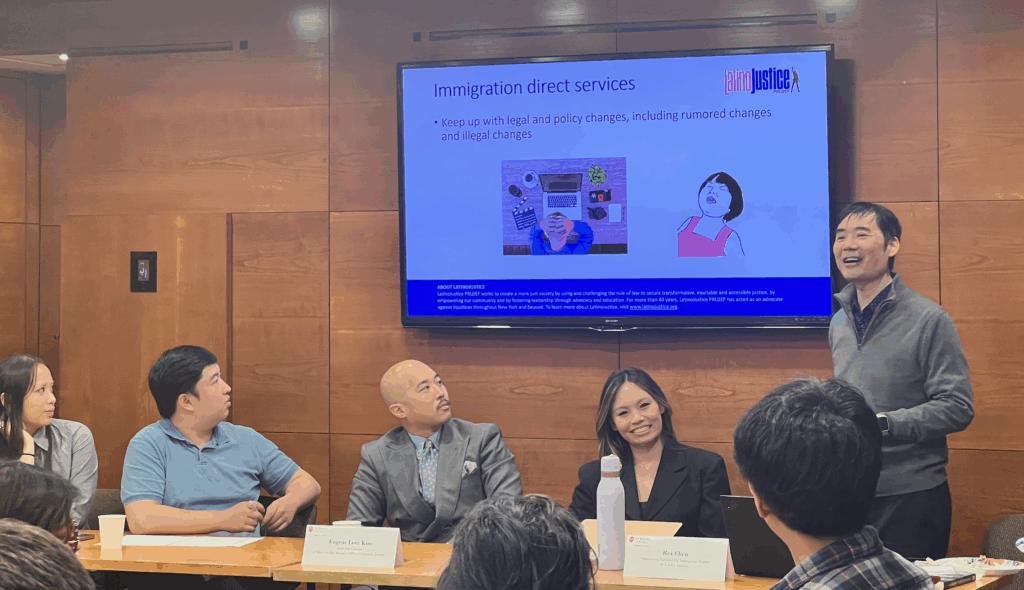
Together, the three panelists offered an introspective and candid look at what it takes to sustain a career in public defense and public interest law: the emotional weight of the work, the systemic issues it addresses, and the communities it serves. 

AABANY thanks Eugene, Shirley, and Rex for sharing their perspectives and for the work they do, and Victoria Elise and Nathan Cao of St. John’s University School of Law for moderating. AABANY also thanks St. John’s University School of Law for hosting this event and gratefully acknowledges Student Outreach Committee Co-Chairs, Helen Ding and Joseph D. Eng Jr., and the Government Service & Public Interest Committee Co-Chairs, Kevin Hsi and Johnny Thach, for organizing this event. To learn more about the Student Outreach Committee and how you can get involved, go here. To learn more about the Government Service and Public Interest Committee go here.
Applications Now Open for Federal Public Defender, District of Connecticut

Federal Public Defender Vacancy – The United States Court of Appeals for the Second Circuit invites applications from qualified candidates for the position of Federal Public Defender for the District of Connecticut. The term of office is four years, with potential for appointment to successive terms. For announcement, please click here. For application, please click here. The current authorized annual salary is $195,200.

The Federal Public Defender, functioning under the authority of 18 U.S.C. § 3006A(g)(2)(A) and the Criminal Justice Act Plan for the District of Connecticut, provides criminal defense services to individuals unable to afford counsel. The Office of the Federal Public Defender for the District of Connecticut has offices in Hartford and New Haven. The Federal Public
Defender supervises a staff of assistant federal defenders, research and writing attorneys, investigators, paralegals, mitigation specialists, and support personnel.

The website for the office is: Office of the Public Defender District of Connecticut. Applicants must satisfy the following conditions:
(1) be a member in good standing in the bar of the state in which the candidate is admitted to practice;

(2) have a minimum of five years criminal practice experience, preferably with significant federal criminal trial experience, which demonstrates an ability to provide zealous representation of consistently high quality to criminal defendants;

(3) possess the ability to effectively administer the office, including the following management areas:

  • Budget, procurement, and travel
  • Human resources
  • Space, facilities, and property;

(4) have a reputation for integrity; and

(5) demonstrate a commitment to the representation of those unable to afford counsel.

As the chief executive of the Office of the Federal Public Defender, the Federal Public Defender holds ultimate responsibility for the administration of the Office. The Office serves as a resource center for all practicing federal defense attorneys in the District, providing regularly scheduled training programs as well as advice and counsel when needed. The Federal Public Defender works nationally with other federal defenders on evolving issues in federal criminal law and other areas of shared concern.

The Second Circuit uses an open and competitive selection process. A Merit Selection Committee will review all applications and interview the most qualified candidates. With consideration of the District Court’s recommendation, the Committee will refer the best qualified candidate to the Court of Appeals for selection and appointment. Applicants will be considered without regard to race, color, religion, sex, national origin, age, sexual orientation, or disability. The selected nominee will be required to complete a background investigation prior to appointment. The Federal Public Defender may not engage in the private practice of law.

Application forms are posted on the Court’s website at http://www.ca2.uscourts.gov. Completed application packages must be in the format required by the Second Circuit and received no later than December 1, 2025.

AABANY and AALFNY Celebrate Recipients of the 2024 Public Interest Scholarship at FTI Consulting

On Monday, June 24,  the Asian American Law Fund of New York (AALFNY) gathered with members of the Asian American Bar Association of New York (AABANY) to celebrate the recipients of AALFNY’s 2024 Public Interest Scholarships at the AALFNY-AABANY Summer Reception at FTI Consulting, held at their offices at 1166 Avenue of the Americas.

Upon arrival, attendees chatted with one another, enjoying a grazing table, pizza, and drinks. The program began with the sound of clinking bottles, drawing everyone’s attention to Sylvia Chin, President of AALFNY. Sylvia presented introductory remarks about AALFNY and thanked Jason Sabot, Senior Managing Director at FTI Consulting, for generously providing the venue for the gathering. Yang Chen, Executive Director of AABANY, also spoke, touching on the origins of AALFNY and its prior incarnation as the AABANY Foundation, the charitable arm of AABANY. He reminded the lawyers present of their shared ethical and moral obligations to perform pro bono legal services and emphasized the importance of good works done by AABANY’s Pro Bono Clinics, highlighting the significance of giving back to the community. 

Sylvia then presented the 2024 Public Interest Scholarship award to Ranjana Venkatesh. Ranjana attends CUNY School of Law, and shared that this summer she will be interning at The Bronx Defenders’ Criminal Defense Practice under the Adolescent Defense Project. Ranjana noted that the Bronx is a historically under-represented  borough, but with The Bronx Defenders, she hopes to represent low-income residents through a holistic approach.

Jessica Chan, the other recipient of the scholarship, unfortunately could not attend the reception. Jessica, an AABANY member, attends New York Law School and will be interning with the Legal Aid Society in its Criminal Defense Practice. She is looking forward to using her experience in criminal defense work to build bridges between communities of color.

Thank you to all who attended the Summer Reception at FTI Consulting to not only celebrate the recipients of the 2024 Public Interest Scholarship, but also the value and importance of public interest work. To learn more about AALFNY, please click here.

Apply for the Court’s Criminal Justice Act Panel by April 11, 2022

The Criminal Justice Act Committee of the United States Court of Appeals for the  Second Circuit is accepting applications for service on the Court’s Criminal Justice Act  Panel. CJA Panel Members represent indigent criminal defendants and petitioners for habeas corpus. 

Admission to practice before this Court is a necessary qualification for membership on the Panel. The Court seeks attorneys of superior experience and proven competence in federal appellate criminal defense work. The qualifications of attorneys applying for service on the Panel will be examined by the CJA Committee’s Attorney Advisory Group,  which will make recommendations for membership on the Panel. Membership on the  Panel will be for a term of one to three years, at the discretion of the Court. Attorneys currently serving on the panel need not reapply until the expiration of their present term. 

Application forms for membership on the Criminal Justice Act Panel are available at the Court’s website at www.ca2.uscourts.gov, or by calling 212-857-8702. 

A signed original application, one copy of each of your appellate briefs, and three paper copies of the completed application and your resumé, along with a CD containing both your completed applications and resumé, must be received by the Clerk of Court by  5:00 p.m. on Monday, April 11, 2022. Please check the Court’s website (www.ca2.uscourts.gov) periodically for CJA .

For further information or questions, please contact [email protected].

Vinoo Varghese in NYLJ: Lawyer Claims D.A. Subpoena Could Impact Defense Counsel

Vinoo Varghese in NYLJ: Lawyer Claims D.A. Subpoena Could Impact Defense Counsel

NACDL Strike Force Represents Vinoo Varghese

The National Association of Criminal Defense Lawyers (NACDL) is now representing Vinoo Varghese pro bono in supporting his opposition to the Manhattan DA’s attempt to subpoena him to testify against his client’s interests.

The NACDL has a “Lawyers Assistance Strike Force [which] has a clear mission of representing and counseling criminal defense lawyers who are members of NACDL when they are imperiled with the risks of contempt, disqualification or subpoena for privileged information.”  http://nacdl.org/lasf/

Here is the link to NYLJ article of 11/12/13 and here is a link to NYLJ article of 11/4/13.