

AABANY Presents CLE Program on Major Changes to Public Charge Rules

On September 17, 2026, the Asian American Bar Association of New York (“AABANY”) presented “Public Charge – What We Need to Know About Upcoming Changes,” a hybrid CLE program, at the Chinese-American Planning Council (“CPC”) Manhattan Community Center. The program addressed significant changes to the public charge ground of inadmissibility scheduled to take effect on September 18, 2026.

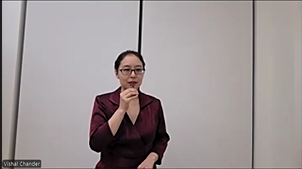
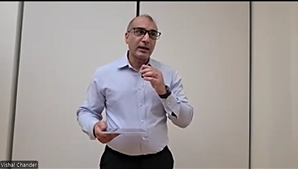
Rachel S. Lee, AABANY Board Director and Issues Committee Co-Chair and President & General Counsel of Stand with Asian Americans, moderated the program. Vishal Chander, AABANY Board Director and Issues Committee Co-Chair and Managing Attorney of The Chander Law Firm, P.C., served as the presenter. The program provided one hour of New York CLE credit in the Areas of Professional Practice category, with 24 people attending both online and in person. (Only those who attended in person received the CLE credit.)

A central focus of the presentation was the 2026 Final Rule and revised USCIS guidance, which removed much of the 2022 regulatory framework and shifted operational standards to the USCIS Policy Manual. Vishal explained that public charge determinations remain individualized, totality-of-the-circumstances inquiries, with officers considering factors such as finances, employment, education, health, household composition, and benefit use. He also discussed the broader treatment of means-tested public benefits, the continuing but non-dispositive role of Form I-864, the renewed use of public charge bonds, and the differing roles of USCIS, the Department of State, and CBP. The presentation concluded with an overview of pending litigation challenging the new framework and the legal questions surrounding DHS’s authority and use of subregulatory guidance.

Jack Hsia, Senior Attorney at CPC and a Vice Chair of the AABANY Issues Committee, joined  after Vishal’s presentation to share information about CPC’s programs and resources for the community. Jack thanked the speakers and attendees for being part of an informative discussion. AABANY thanks CPC for co-hosting the program and everyone who attended in person and online. To learn more about the Issues Committee and how you can get involved, go here.

Written by Rachel Lee, AABANY Board Director and Issues Committee Co-Chair

NAPABA Opposes Plan to Redefine “Public Charge” and Limit Legal Immigration

The National Asian Pacific American Bar Association (NAPABA) opposes the proposed changes to “public charge” published Wednesday by the Department of Homeland Security (DHS). We urge our members and affiliated bar associations to join NAPABA in submitting public comments opposing the proposed policy.

Public charge policy has roots in long-time efforts to limit the admission of ‘undesirable immigrants,’ such as Chinese in the 19th century. The proposed rule would re-define a public charge as an immigrant who would be likely to receive government benefits from an expanded list of programs, including nutrition and housing assistance programs for children. The proposed rule will make it easier to designate an applicant as a public charge, and deny their admission to the United States or reject their permanent resident application. DHS also proposes stricter guidance for weighing certain factors when reviewing visa applications, such as age, income, health, English proficiency, and employability. NAPABA is greatly concerned with how these changes will negatively impact Asian and Pacific Islander immigrants, working families, and children’s health.

The proposal has already had a chilling effect on Asian Pacific American communities. Due to reports of these proposed changes, some immigrant families—including those with eligible U.S. citizen members—have unenrolled from important public services for which they qualify. If implemented, the new public charge rules would undermine the safety, health, and security of immigrant families by denying them the support historically provided to new Americans. Asian Pacific American communities will be particularly hard hit, as over 31% of new green card recipients are from Asian and Pacific Island nations and as there is significant variation in average income amongst Asian ethnic groups.

Take charge by submitting a comment on the proposed rule before the DHS proceeds with its final rulemaking by the deadline, December 10, 2018. NAPABA will be submitting comments as an organization, but individuals are encouraged to submit unique comments here. To see available resources, please click here. For more information, contact Oriene Shin, NAPABA Policy Counsel, at 202-775-9555 or [email protected].