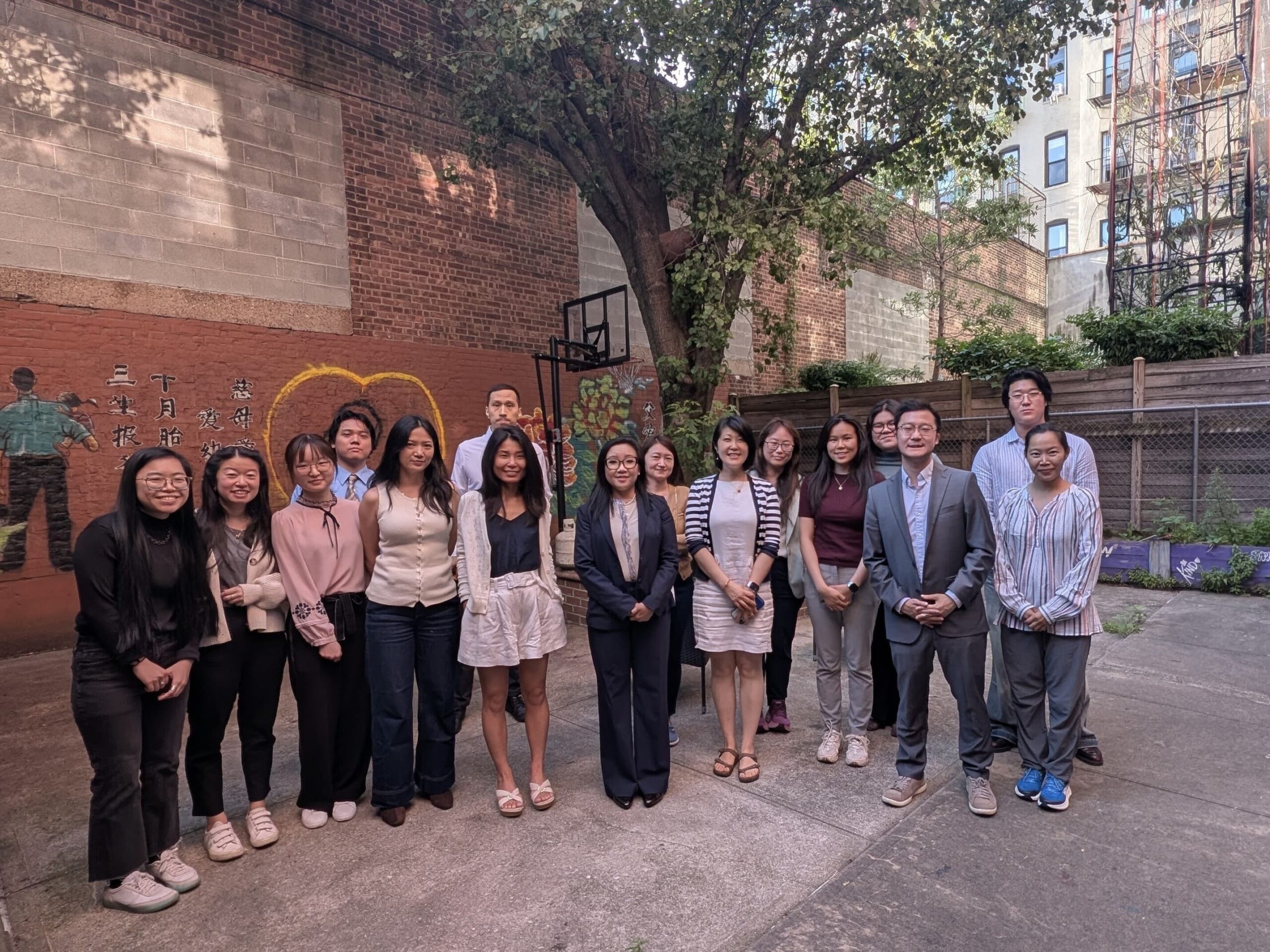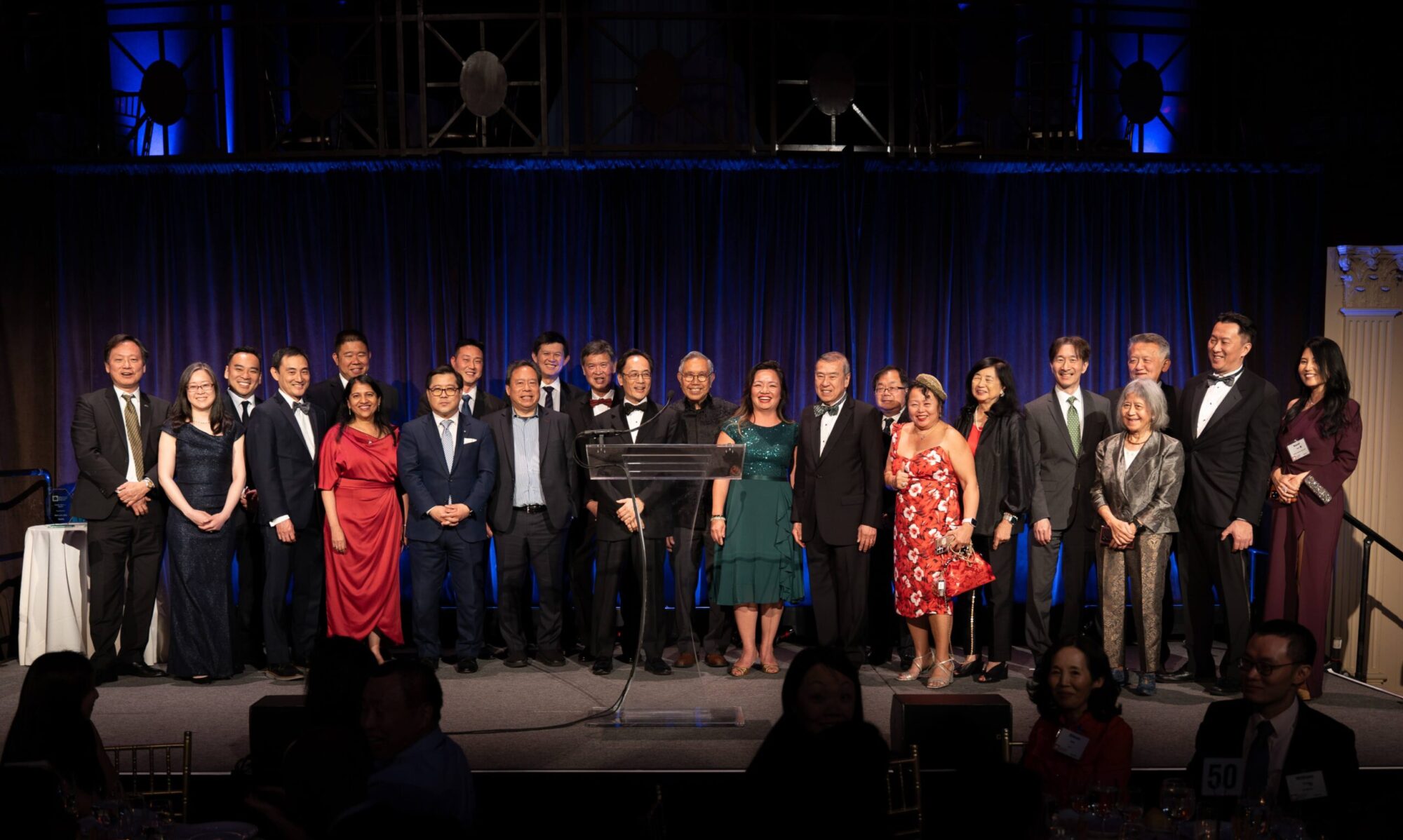

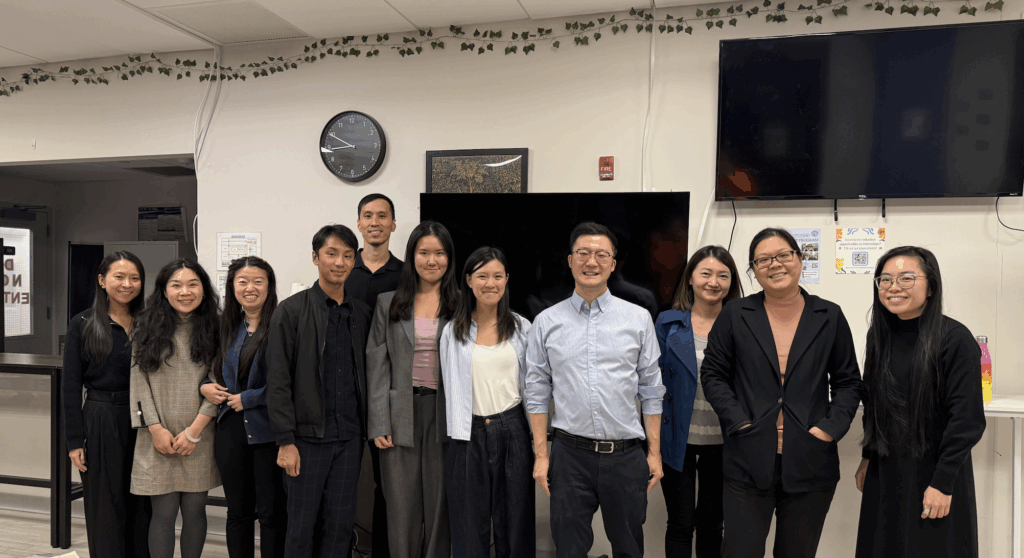
Thank You to the Volunteers at the June Manhattan Pro Bono Clinic

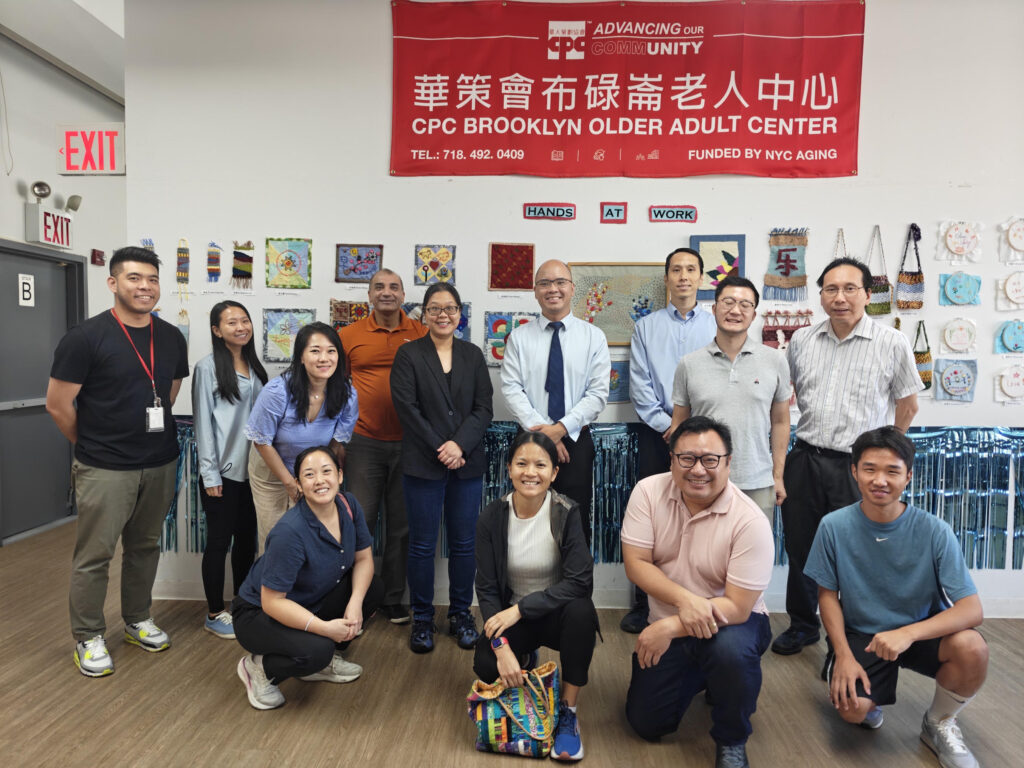
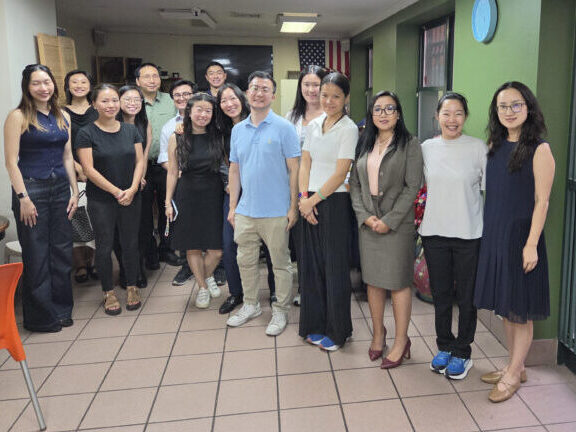
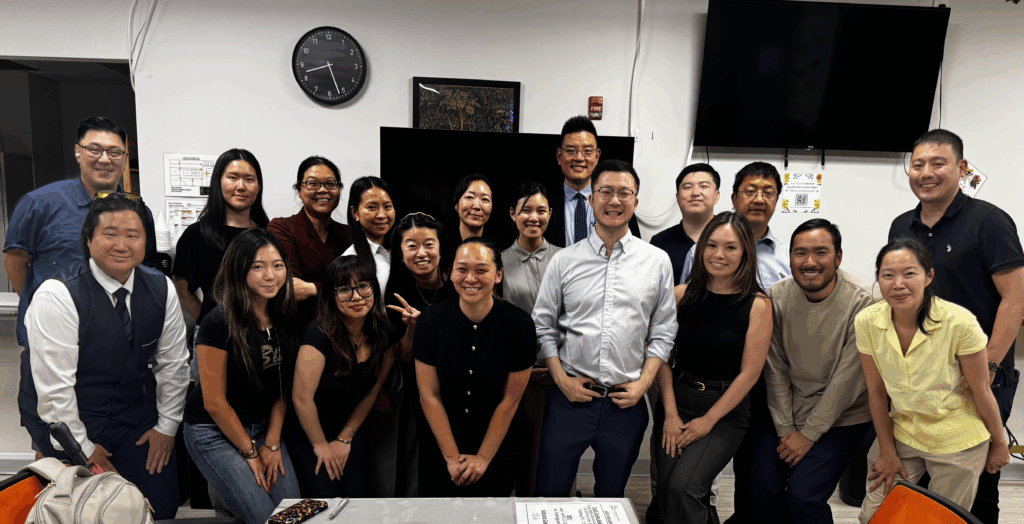
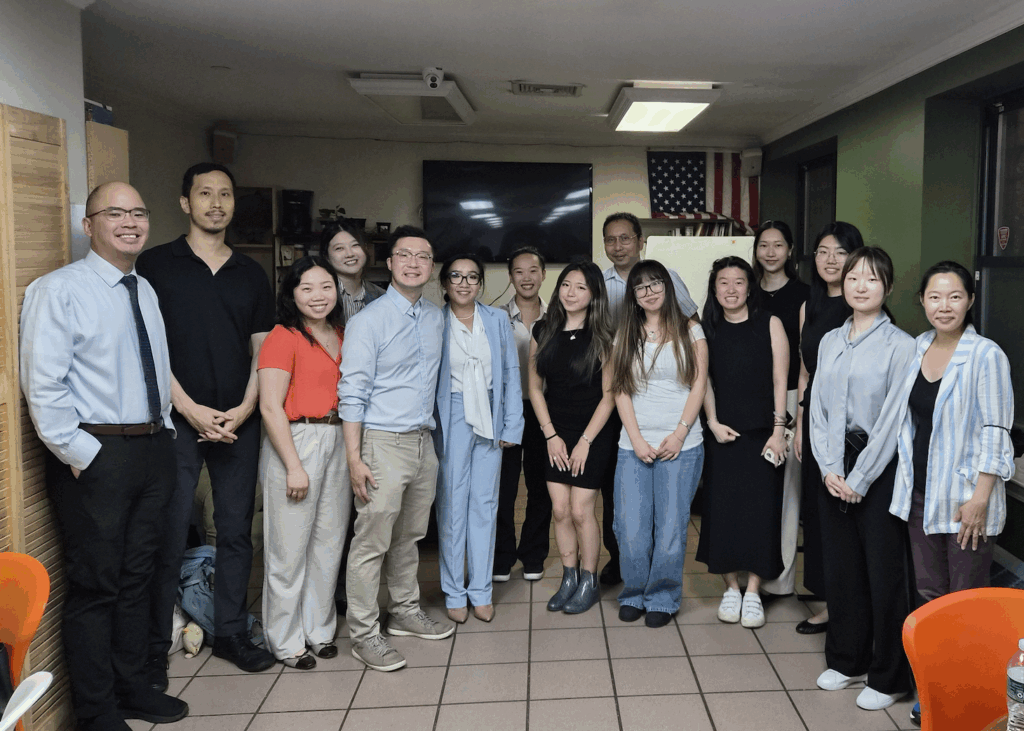
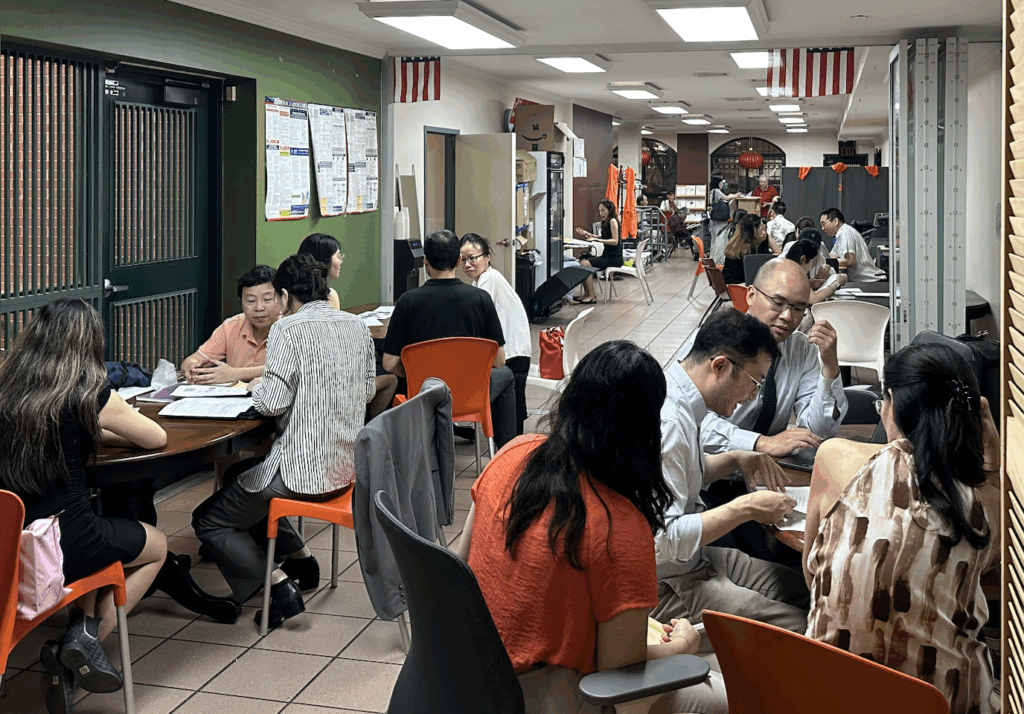
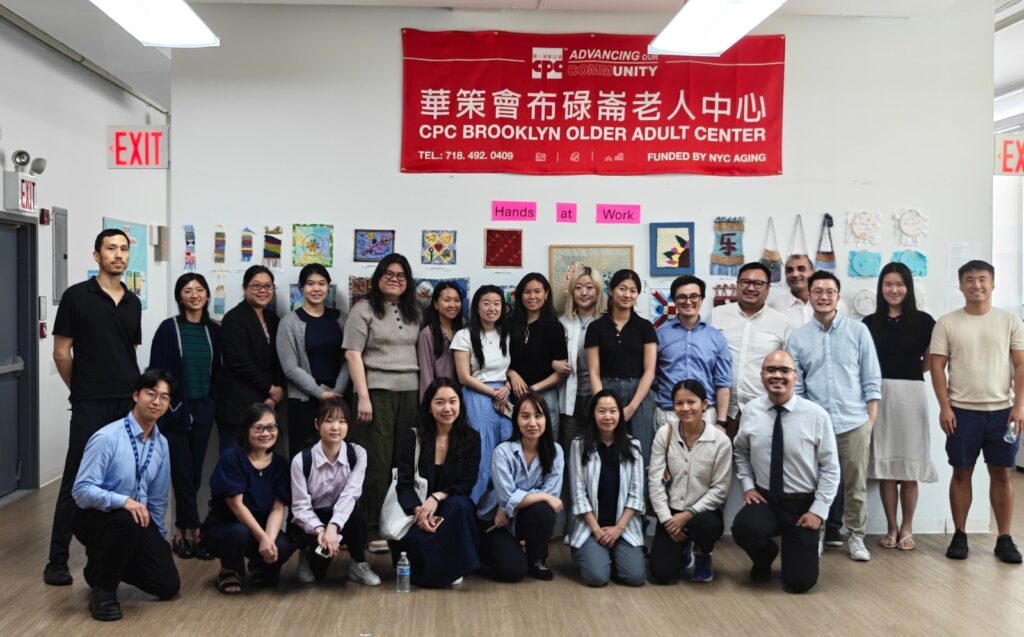
Thank you to the Asian American Law Fund of New York (AALFNY), Asian Americans for Equality (AAFE), AABANY’s Pro Bono & Community Service (PBCS) Committee, and our dedicated volunteers and law students for another successful Pro Bono Clinic on June 17, 2026 at AAFE’s Norfolk Street Community Center in Manhattan.

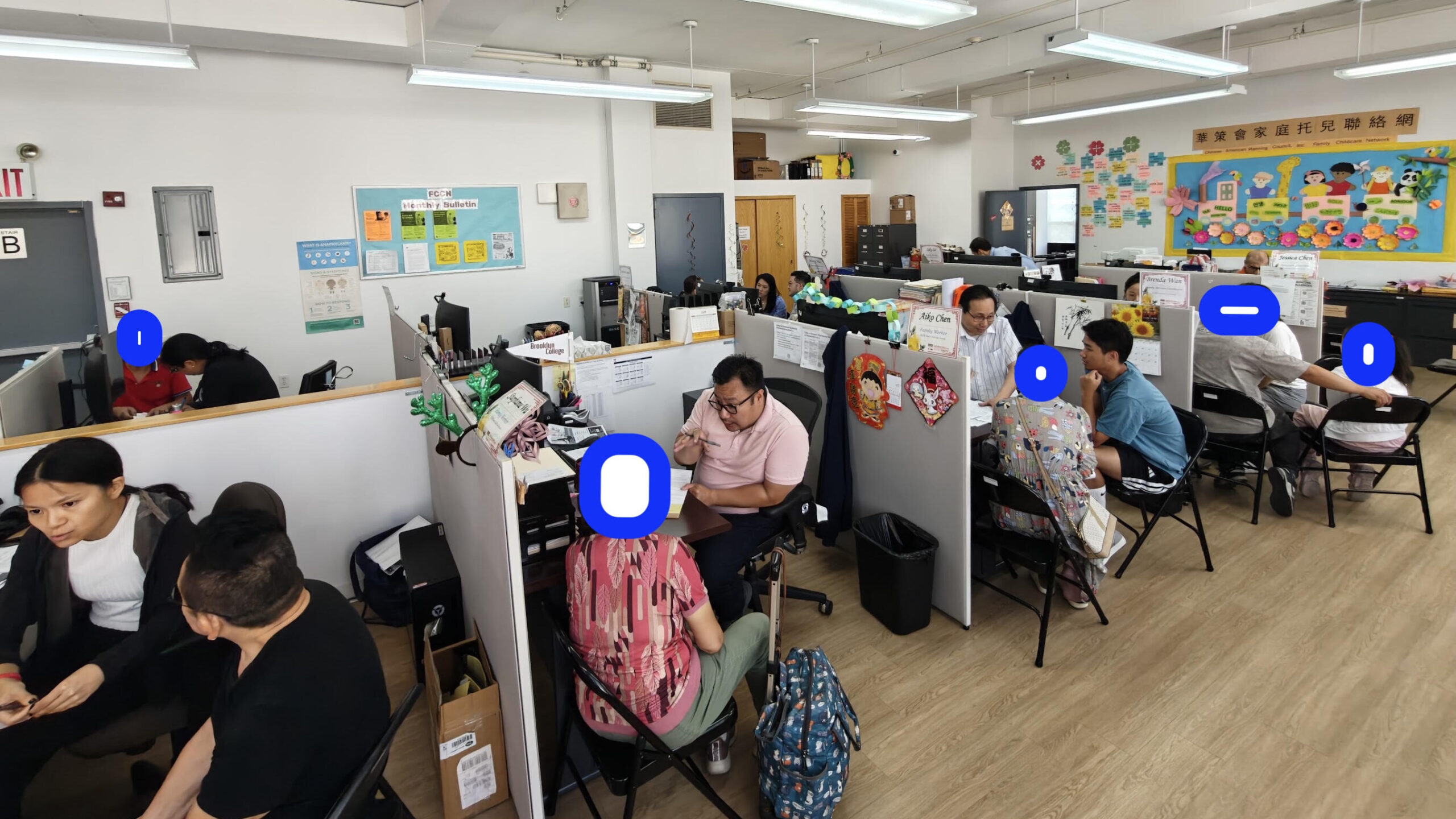
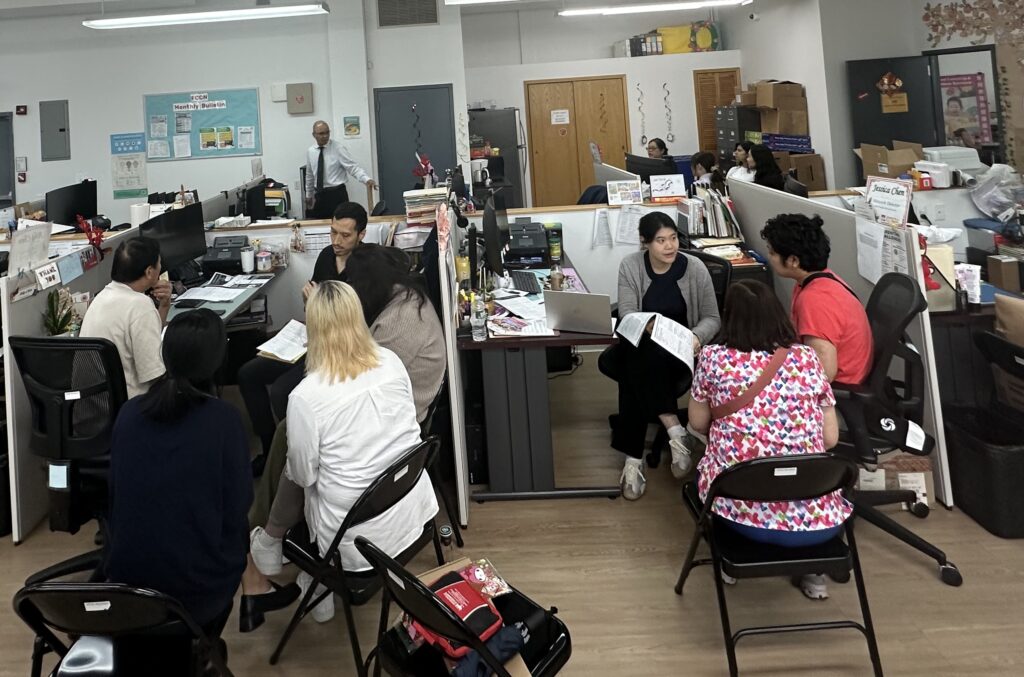
Our Pro Bono Clinic helped nine clients this month, with varying issues ranging from housing, divorce, immigration, and a noise complaint. Due to the number of volunteers who showed up, the June Manhattan Pro Bono Clinic offered consultations that extended beyond the standard 30 minute time frame for each client, ensuring that our volunteers could provide the best possible guidance for clients with thorny legal issues. For some cases, volunteers directed clients to AABANY’s legal referral and information service (LRIS), a resource that connects clients with qualified attorneys to represent them.

Thank you to all of our volunteers for attending the Pro Bono Clinic. We look forward to your participation in future clinics!

Volunteer Attorneys

Wendy Cheng

Keey Diep

Carmen Huang

Justin Lee

Beatrice Leong

Arthur Lin

Meng Ru

Gary Yeung

Anna Bao

Suzie Yu

Law Students and Other Volunteers

Wenwen Cao

Jason Chen

Clive Chong

Nandar Win Kerr

Wendy Zeng

Zhiyi Zhang

Livy Li

We invite you to continue supporting our community by joining us at our upcoming Pro Bono Clinics:

July 11 [Brooklyn link here], from 12:30-3:00pm, CPC Brooklyn Community Services, 4101 8th Ave, Brooklyn, NY 11232

July 15 (Manhattan link here], from 6:30-8:30pm, AAFE Community Center, 111 Norfolk Street, NY, NY 10002

August 5 (Queens link here], from 6:30-8:30pm, AAFE One Flushing Community Center, 133-29 41st Ave, 2nd Floor, Flushing, NY 11355

If you are interested in supporting the work of the Clinic, we encourage you to make a donation to AALFNY. AALFNY supports the Pro Bono & Community Service Committee (PBCS), provides scholarships and internship opportunities for law students, and works with the AABANY Anti-Asian Violence Task Force. Donations can be made here.

To learn more about the Pro Bono & Community Service Committee, visit probono.aabany.org.

NAPABA Applauds SCOTUS Birthright Citizenship Decision in Trump v. Barbara

For Immediate Release:
June 30, 2026
Contact:
press@napaba.org

WASHINGTON, D.C. – Today, the Supreme Court of the United States upheld the fundamental constitutional guarantee of birthright citizenship. In Trump v. Barbara, the Court found that Executive Order 14160, which sought to limit the scope of birthright citizenship, did not comply with the Citizenship Clause of the Fourteenth Amendment.

The National Asian Pacific American Bar Association (NAPABA) applauds the Court’s decision. It upheld what NAPABA has emphasized throughout the litigation: a constitutional right that the Asian American, Native Hawaiian, and Pacific Islander (AANHPI) community has understood and relied upon for nearly 130 years—ever since a young Chinese American fought for his birthright citizenship in United States v. Wong Kim Ark, 169 U.S. 649 (1898). The Fourteenth Amendment promises every person equal treatment under the law and includes an equal claim of citizenship for persons born in the United States, regardless of the circumstances of their parents. EO 14160 attempted to upend that promise, and we are grateful that the Court invalidated it.

In three federal courts of appeals and in the Supreme Court, NAPABA led a nationwide coalition of its affiliates and national associates to defend birthright citizenship in this litigation. We underscored the significance of Wong Kim Ark, the crucial role of Asian Americans in shaping our nation’s immigration and civil rights jurisprudence, and the disproportionate impacts that EO 14160 would have on AANHPI communities.  NAPABA highlighted how the congressional debates over the Fourteenth Amendment contemplated that the children of Chinese migrants, despite being heavily despised and vilified, would receive birthright citizenship.  Lastly, we maintained that the federal government distorted the holding of Wong Kim Ark and created a faulty legal and historical analogy that Chinese migrants in the late 19th century were akin to today’s lawful permanent residents (i.e., green card holders).

NAPABA is thankful to its legal team for their exemplary work: Rahat N. Babar, who serves as NAPABA’s Deputy Executive Director and General Counsel, Edgar Chen, who serves as NAPABA’s Special Policy Advisor, Chris M. Kwok, who formerly served as co-chair of NAPABA’s Dispute Resolution Committee, and Seyfarth Shaw LLP (Wendy M. Feng, Owen Wolfe, and Lori Chen).

Rachel Ji-Young Yoo Serves as Advisor to South Korean Government’s “Study on Policy Improvements to Enhance International Mobility for Artists” 

Rachel Ji-Young Yoo of Yoo Law Group recently served as a U.S. immigration adviser to the South Korean government in their national study of artist-visa systems. Her resulting contributions were published in A Study on Policy Improvements to Enhance International Mobility for Artists in late 2025. Congratulations to Rachel on her achievement!

Rachel is the founding partner of Yoo Law Group, LLC, which specializes in immigration law, family mediation, and international dispute arbitration. In addition to her guidance in cross-border and mediation matters, she serves as the Co-Chair of the Asian American Bar Association of New York’s (AABANY) Alternative Dispute Resolution Committee. Rachel is also General Counsel of the Asian & American Art Foundation, and Mediator with the New York County Supreme Court.

On this project, Rachel was invited to serve as a U.S. immigration adviser to the Ministry of Culture, Sports and Tourism of the Republic of Korea. Her involvement grew out of her immigration practice and prior work advising Korean artists and cultural organizations, including the Korean Cultural Center New York, on U.S. visa issues. 

As an official contributor on matters related to U.S. immigration law, Rachel aided in examining how Korea’s institutional framework can be improved to better support the international mobility of artists. 

Drawing on interviews and comparative policy analysis, the project uses insights from both Korea and major countries, surveying artists, agencies, and legal/administrative experts with direct experience navigating the visa process to evaluate Korea’s artist‑visa systems. By identifying key issues, strengths, and weaknesses across countries, the report proposes recommendations to strengthen Korea’s artist‑visa policies and promote smoother global artistic exchange.

For Rachel, the experience was particularly meaningful as it represented a continuation of her work in “bridging two legal systems and two cultural frameworks” and “broadened [her] perspective on how national‑level policy decisions shape the practical realities artists face,” something that strengthens her commitment  to aiding her individual clients through U.S. immigration pathways.

Rachel’s work on this project is a testament to the impact that dedicated legal expertise can have beyond the courtroom in shaping policy, building bridges between nations, and advocating for the communities she serves. We are proud to have her as a valued member of AABANY, and please join AABANY in congratulating Rachel on this important achievement.

AABANY Presents “Born American: United States v. Wong Kim Ark” at Cadwalader, Wickersham & Taft LLP

As Asian American, Native Hawaiian, and Pacific Islander Heritage (AANHPI) Month wound down, attendees gathered on May 27, 2026 in downtown Manhattan to watch the latest historical trial reenactment produced by the Asian American Bar Association of New York (AABANY) entitled Born American: United States v. Wong Kim Ark.

United States v. Wong Kim Ark, which established birthright citizenship as a Constitutional right in 1898, is AABANY’s 17th trial reenactment. This project brings to life notable cases involving Asian Americans, Native Hawaiians and Pacific Islanders, to spotlight significant ways that AANHPI individuals contributed to the legal, social, and political history of the United States. Reenactments are first performed at the National Asian Pacific American Bar Association (NAPABA) Convention in November, then again in May during AANHPI Heritage Month in New York. 

AABANY’s latest trial reenactment made its New York debut at Cadwalader, Wickersham & Taft LLP. Attendees settled in to watch a cast of 37 characters played by some 17 lawyers, including many AABANY members.

The reenactment had two narrators, who are also the writers, producers, and leaders of the AABANY Trial Reenactment team: Hon. Denny Chin, Senior United States Circuit Judge for the U.S. Court of Appeals for the Second Circuit, and Kathy Hirata Chin, a retired Partner of Crowell & Moring LLP and previously a retired Cadwalader Partner.

Other cast members included:

Anna Mercado Clark, Phillips Lytle LLP, Partner and Chief Information Security Officer (past NAPABA President, former AABANY Board Officer)

Vincent T. Chang, Law Clerk for Hon. James d’Auguste, Supreme Court, New York County, Commercial Division (former AABANY President)

Andrew T. Hahn, Hawkins, Delafield & Wood LLP, General Counsel (former AABANY, KALAGNY, and NAPABA President)

Yasuhiro Saito, Saito Law Group PLLC, Managing Partner

Francis H. Chin, Opensity Solutions, Senior Systems Engineer (AABANY Membership Director)

Yang Chen, Asian American Bar Association of New York, Executive Director (former AABANY President)

Pamela K. Chen, United States District Judge, Eastern District of New York

Concepcion A. Montoya, Hinshaw & Culbertson, Partner

Lauren U.Y. Lee, Korean American Family Service Center, Board of Directors; Cadwalader, Wickersham & Taft LLP, former Special Counsel

Kiyo A. Matsumoto, Senior United States District Judge, Eastern District of New York

Rose Cuison Villazor, Rutgers Law School, Professor of Law and Chancellor’s Social Justice Scholar

Jacob Chen, DGW Kramer LLP, Litigation Partner

Jane Kim, Wigdor LLP, Partner; former clerk for Hon. Denny Chin

Janicelynn Asamoto Park, Proskauer Rose LLP, Partner; former clerk for Hon. Denny Chin

Jessica C. Wong, Cadwalader, Wickersham & Taft LLP, Special Counsel

This reenactment was bookended by the case’s connection to current events. The narrators described President Donald Trump’s January 2025 Executive Order 14160, “Protecting the Meaning and Value of American Citizenship,” which sought to remove birthright citizenship from US-born children of parents who are undocumented or in the country temporarily. 

This case follows the story and life of Wong Kim Ark, who was born in San Francisco to Chinese immigrant parents in 1870, one of only 518 ethnic Chinese born in the United States that year. Wong took multiple trips back to China, before returning to America in 1894, at which point he was denied entry on the grounds of not being a citizen. 

That denial was appealed all the way to the United States Supreme Court. The question before the Court was whether Wong should follow the citizenship of his parents or of where he was born. The reenactment reconstructed the Supreme Court argument, for which no transcript exists, using the briefs, the resulting court opinions, news reports, and other historical documents. Arguments revolved around whether children born in the U.S. are “subject to the jurisdiction thereof,” under its plain meaning as stated in the Fourteenth Amendment. The original intent of Congress with regard to children born to foreign-born parents, as well as the implications of barring Wong Kim Ark’s birthright citizenship upon existing immigrant communities—European immigrants—and children of other nationalities, were also explored in the reenactment.

United States v. Wong Kim Ark affirmed Wong’s citizenship in a 6-2 decision in 1898, setting a legal precedent for more than a century. The majority ruling held that the 14th Amendment’s “ancient and fundamental rule of citizenship by birth within the territory” and its “peremptory and explicit language” all made Wong an American citizen.

However, Wong’s immigration troubles did not stop there, for either himself or his children. He lived in a time when anti-Chinese sentiment was rampant. Even within the decision itself, Justice John Marshall Harlan, for the dissent, wrote that “There is a race so different from ours that we do not permit those belonging to it to become citizens of the United States.” This captures the discrimination that society had at the time towards Chinese immigrants in America.

The reenactment further explored Wong’s life, as well as his family’s, after the Supreme Court’s ruling. Wong was later arrested in 1901 upon crossing the US-Mexico border, though the case was eventually dismissed—because of United States v. Wong Kim Ark. His four sons, born in China, faced intense scrutiny when they sought to come to the United States seeking citizenship as sons of a U.S. citizen. They faced heightened suspicion and interrogation that stretched over weeks or months of detention and aimed to determine their familial relationship to Wong, a form of scrutiny common to Chinese immigrants in the early 20th century. 

The end of the reenactment returned to Trump’s executive order. The many lawsuits and preliminary injunctions that responded to Trump’s January order make frequent reference to United States v. Wong Kim Ark as well-settled precedent for birthright citizenship. The reenactment shares the responses to Trump’s Executive Order, including one from Judge Deborah Boardman in Maryland, who said that the executive order “conflicts with the plain language of the 14th Amendment [and] contradicts 125-year old binding Supreme Court precedent.”

In this context, it becomes vitally important to revisit Wong Kim Ark’s life and times. Amid the prevalence of anti-immigrant rhetoric during the 1890s, United States v. Wong Kim Ark set precedent for generations of immigrants, including Asian Americans, and was reaffirmed throughout a series of 20th century Supreme Court cases, including INS v. Errico, 385 U.S. 214 (1966) and Plyler v. Doe, 457 U.S. 202 (1982).

A discussion panel and Q&A session followed the reenactment, where questions of relevance to current times were at the forefront. Attendees questioned and discussed how America would change if birthright citizenship gets overturned. Mere months ago, the Supreme Court heard oral arguments for Barbara v. Donald J. Trump, the class action against President Trump’s executive order banning birthright citizenship. It was especially enlightening to hear Judge Chin talk about how putting together this reenactment made him understand his own family’s immigration history better and shined a light on often unspoken parts of the Chinese immigrant experience.

The reenactment highlighted the reaction from Wong Kim Ark’s great-grandson Norman Wong. Norman said in an interview for a documentary, “We thought [birthright citizenship] was a dead issue. These were rights we did not have to fight for anymore. It wasn’t something that anybody would have to worry about. … Now I’m glad [my great-grandfather] stood up.” 

Following the reenactment, guests and participants enjoyed a networking and dinner reception, which included hors d’oeuvres, a dinner buffet, and a delicious handroll bar. Attendees mingled as they ate, reflecting on the reenactment and congratulating the actors for a job well done.

AABANY’s reenactment of United States v. Wong Kim Ark will be made available on AABANY’s trial reenactment website, where the script and materials can be shared upon request. AABANY’s past trial reenactment scripts are also available upon request. In fact, our most popular reenactment, “The Murder of Vincent Chin,” has been performed over 30 times globally. 

We are grateful to all of the participants in the reenactment for dedicating their time to this project. To learn more about the other trial reenactments AABANY has organized, please visit our reenactments website.

Thank You to the Volunteers at the Queens Pro Bono Clinic in June

Thanks to the Asian American Law Fund of New York (AALFNY), Asian Americans for Equality (AAFE), Pro Bono & Community Service (PBCS) Committee and our dedicated volunteers for your collaboration and contribution to the success of our pro bono legal clinic on June 3, 2026.

At the clinic, our volunteers met with 12 clients and provided guidance on a range of legal issues, including housing, immigration, medical fraud, real estate, and labor and employment matters. The collective efforts of our volunteers ensured that each client received personalized support and answers to their pressing legal questions. We are deeply grateful for everyone’s presence and contributions, and look forward to continuing this important work together!

Volunteer attorneys:
Wendy (Wen-Hsien) Cheng
Helen Ding
Richard In
Grace Ouyang
Shirley Luong
Johnny Thach
May Wong
Gary Yeung

Interpreters/shadowers:
Nathan Cao
Haotian (Victor) Chen
Tiffany Jin
Nandar Win Kerr
Victoria Elise Sogueco
Wendy Zeng

We invite you to continue supporting our community by joining us at our upcoming Pro Bono Clinics:

  • June 17 [Manhattan link here] from 6:30-8:30pm, AAFE Community Center, 111 Norfolk Street, NY, NY 10002
  • July 11 [Brooklyn link here], from 12:30 – 3:30pm, CPC Brooklyn Community Services, 4101 8th Avenue, Brooklyn, NY 11232
  • August 5 [Queens link here], from 6:30 – 8:30pm, AAFE One Flushing Community Center, 133-29 41st Ave, 2nd Floor, Flushing, NY 11355

Thanks to all our volunteers for attending the Pro Bono Clinic.

We look forward to your participation in our future clinics!

To learn more about the Pro Bono & Community Service Committee, visit probono.aabany.org.
AABANY Presents Program on Habeas Corpus Practice in Immigration Detention

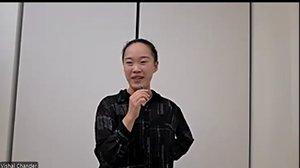
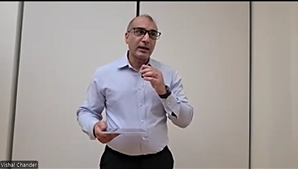
On June 4, 2026, the Asian American Bar Association of New York (AABANY) presented “Habeas Corpus Practice in Immigration Detention – A Training for Lawyers, a program addressing habeas litigation as a tool for challenging unlawful immigration detention. The program featured speakers Karen Lucas of Immigrant Advocate Response Collaborative (I-ARC), Kyle Barron of the New York University School of Law, and Shira Wisotsky from Legal Services of New Jersey (LSNJ). The event was organized by the AABANY Issues Committee and Immigration Law Committee and was cosponsored by the South Asian and Indo-Caribbean Bar Association of Queens.

The presentation discussed the importance of habeas corpus as the federal government expands immigration detention. The program provided an overview of the statutory framework governing civil immigration detention and discussed the constitutional limits on civil detention, underscoring that immigration detention remains subject to procedural and substantive due process.

The program also reviewed common habeas claims in both pre-order and post-order detention contexts. These included statutory misclassification, unlawful revocation of release, due process challenges to prolonged mandatory detention, claims arising from statutory protections such as the Violence Against Women Act (VAWA), and post-order detention challenges where removal is not reasonably foreseeable. Attendees received practical guidance on drafting a habeas petition. 

Attendees had opportunities to participate in case studies throughout the program and ask questions, showing their passion, curiosity, and dedication.

The program concluded with an invitation for attorneys and volunteers to provide pro bono habeas representation by volunteering for I-ARC and the NYU Law Immigrant Rights Clinic’s NY Habeas Project and LSNJ’s Detention and Deportation Defense Initiative. AABANY thanks the speakers and organizers for providing this important training.

To learn more about the Issues Committee, go here. To learn more about the Immigration Law Committee, go here.

– Written by Vishal Chander, Board Member and Co-Chair of AABANY’s Issues Committee

Thank You to Our Volunteers at the April Pro Bono Clinic in Queens

Thanks to the Asian American Law Fund of New York (AALFNY), Asian Americans for Equality (AAFE), and AABANY’s Pro Bono & Community Service (PBCS) Committee, as well as our dedicated volunteers for your collaboration and contribution to the success of our Pro Bono Clinic on April 2, 2026. 

At the Clinic, our volunteers met with 14 clients and provided guidance on a range of legal issues, including housing, immigration, and civil litigation. Your collective efforts ensured that each client received personalized support and answers to their pressing legal questions.

We are deeply grateful for everyone’s presence and contributions, and look forward to continuing this important work together!

Special thanks to Megan Rha and D. Jenny Kim, partners from the Rha Kim Grossman & McIlwain, LLP, who came to support our Clinic and to provide valuable time and advice to the community. Also, special shoutout to Betty (Xinyue) Zhu who lives in New Jersey and came all the way out to Queens to help us out! 

At this Clinic,  we had so many intakes that we ran out of spaces and had to use the community playroom’s space. We are grateful for AAFE allowing us to expand to this area to do our work.  At this playspace, some of our volunteers enjoyed a game of mahjong in between meetings with clients.  While we would love to play more mahjong, we love helping out the community even more!

Volunteer attorneys:

Hung Yi Chien

Ting-Yu Chien

Helen Ding

Richard In

D. Jenny Kim

Emeline Kong

Grace Ouyang

Megan Rha

Sinbay Tan

Wendell Y. Tong

Anthony Wong

May Wong

Interpreters/shadowers:  

Yining Pan

Ellie Wang

Jingjing Wang

Wendy Zeng

Betty (Xinyue) Zhu

We invite you to continue supporting our community by joining us at our upcoming Pro Bono Clinics:

– May 20 [Manhattan link here] from 6:30-8:30pm, AAFE Community Center, 111 Norfolk Street, NY, NY 10002

– June 3rd [Queens link here], from 6:30 – 8:30pm, AAFE One Flushing Community Center, 133-29 41st Ave, 2nd Floor, Flushing, NY 11355

– July 11th [Brooklyn link here], from 12:30 – 3:30pm, CPC Brooklyn Community Services, 4101 8th Avenue, Brooklyn, NY 11232

Thanks again to all our volunteers for attending the Pro Bono Clinic.

We look forward to your participation in our future clinics! To learn more about the Pro Bono & Community Service Committee, visit probono.aabany.org.
Thank You to the Volunteers at the Manhattan Pro Bono Clinic in April

Thank you to the Asian American Law Fund of New York (AALFNY), Asian Americans for Equality (AAFE), the Pro Bono & Community Service Committee (PBCS), and all the dedicated volunteers who contributed their time and expertise at the April 15th Pro Bono Clinic in Manhattan. 

At the Clinic, our volunteers met with 12 clients, providing guidance on various legal issues, including housing, immigration, public benefits, and civil litigation. Their collective efforts ensured that each client received personalized support and essential legal assistance.

In addition to providing vital legal guidance to community members, our Pro Bono Clinics serve as a training ground for law students and young attorneys to practice communicating complex legal concepts in layman’s terms. We appreciate our volunteers for taking the time to listen to clients’ stories and giving them a space to be heard. The dedication of our volunteers continues to bridge the justice gap in our community.

Volunteer attorneys:

  • Beatrice Leong 
  • Francis Chin
  • Jieman Tan
  • Helen Ding
  • Meng Ru
  • Anna Chuen
  • Carmen Huang
  • Anthony Wong
  • Xiaodan Song
  • Arthur Lin
  • Cecilia Yang
  • Alexandra Ly

Interpreters/Shadowers:

  • Rachel Kim
  • Eva Lee
  • Elaine Pan
  • Shang Zhai

We invite you to continue supporting our community by joining us at our upcoming Pro Bono Clinics next month:

  • May 9th [Brooklyn link here], from 12:30 – 2:30pm, CPC Brooklyn Community Services, 4101 8th Avenue, Brooklyn, NY 11232
  • May 20th [Manhattan link here], from 6:30 – 8:30pm, AAFE Community Center, 111 Norfolk Street, NY, NY 10002

Thank you for making a significant difference in our community. We are deeply grateful for everyone’s contributions and look forward to continuing this important work together! We hope to see you at our May clinics!

Written by Eva Lee and Rachel Kim, AABANY Interns

AABANY Committees and NYU APALSA Host Fireside Chat with Hasan Shafiqullah on Current Immigration Enforcement Trends and Ethics

On March 3, the AABANY Issues Committee, Immigration Committee, Government Service and Public Interest Committee, Pro Bono and Community Service Committee, Intellectual Property Committee, Student Outreach Committee, and Young Lawyers Committee, in partnership with NYU Law’s Asian Pacific American Law Students Association (APALSA), hosted a fireside chat with Hasan Shafiqullah of the Legal Aid Society’s Immigration Law Unit at NYU School of Law. The event brought together attorneys, law students, and members of the legal community to discuss current immigration enforcement trends, detention practices, and the ethical challenges facing immigration practitioners.

The conversation highlighted the rapid pace of immigration policy changes during the Trump administration and their continuing impact on immigration practice. Shafiqullah noted that more than 1,000 immigration policy changes were implemented through executive action during Trump’s first term, and that similar patterns appear to be emerging again, alongside proposals such as the Laken Riley Act, which would significantly expand mandatory detention.

Despite these developments, Shafiqullah emphasized that federal courts remain an important avenue for relief. Through habeas corpus petitions, federal District Courts can review unlawful detention and order new bond hearings or release when appropriate. He noted that “District Court judges are understanding that due process won’t permit arbitrary action.”

The program concluded with a discussion about the emotional toll of immigration practice. Because many asylum clients have experienced severe trauma, attorneys often face vicarious trauma as well. The Legal Aid Society supports its staff by providing trainings on handling burnout, secondary trauma, and sustainable public interest practice.

AABANY thanks Hasan Shafiqullah and the Legal Aid Society for sharing their insights, and thanks APALSA and the co-sponsoring committees for organizing this timely and informative program.