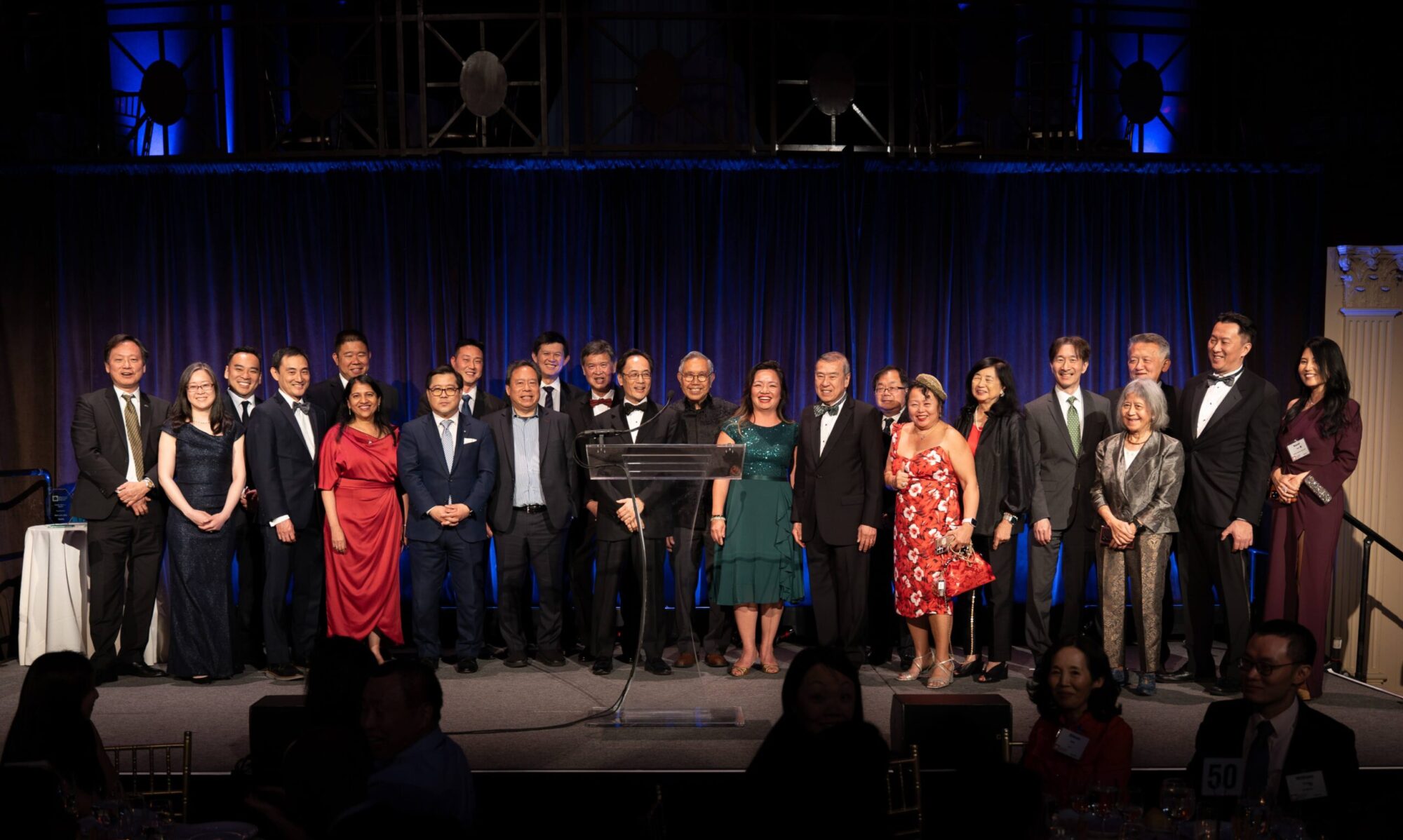
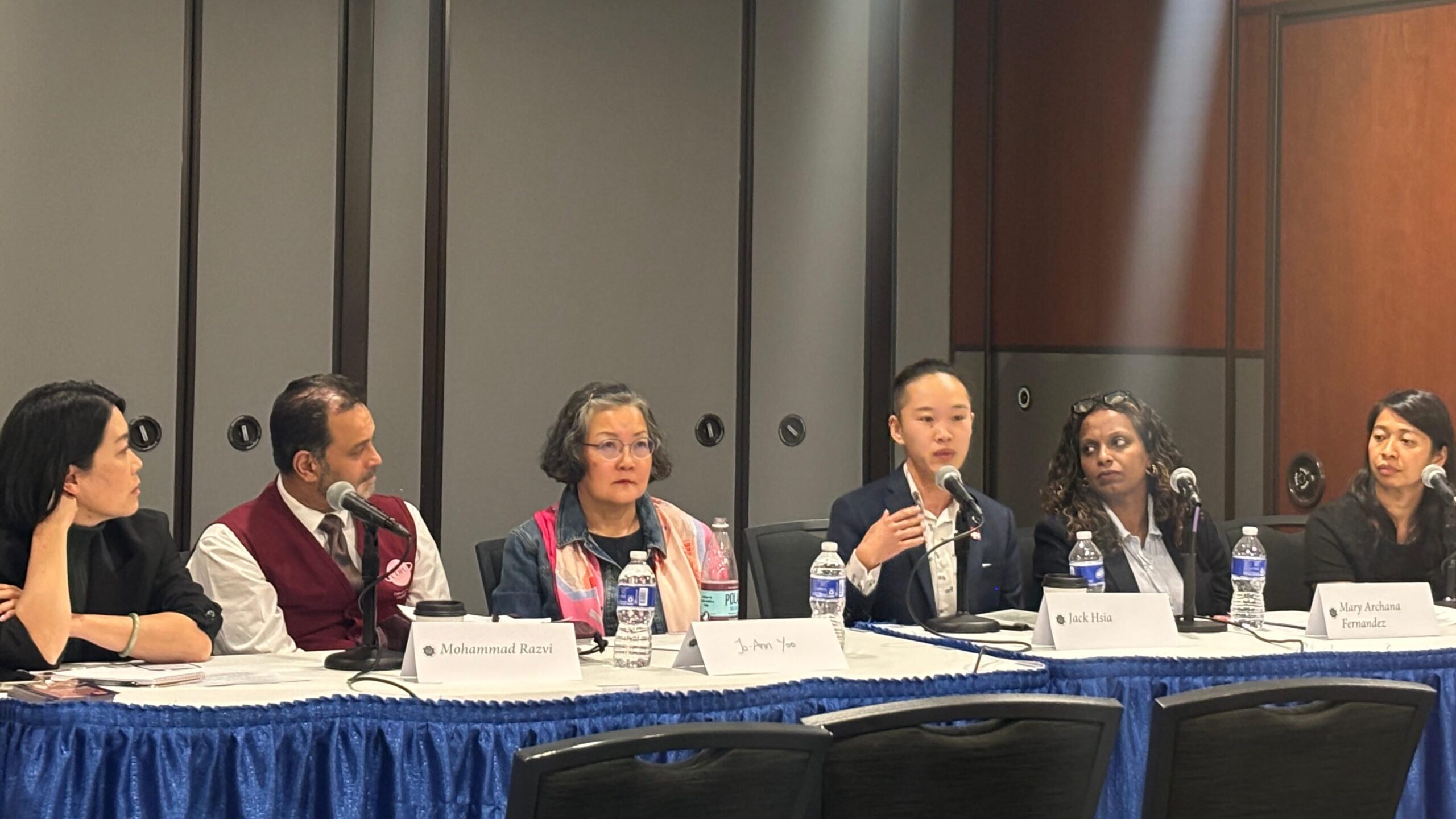
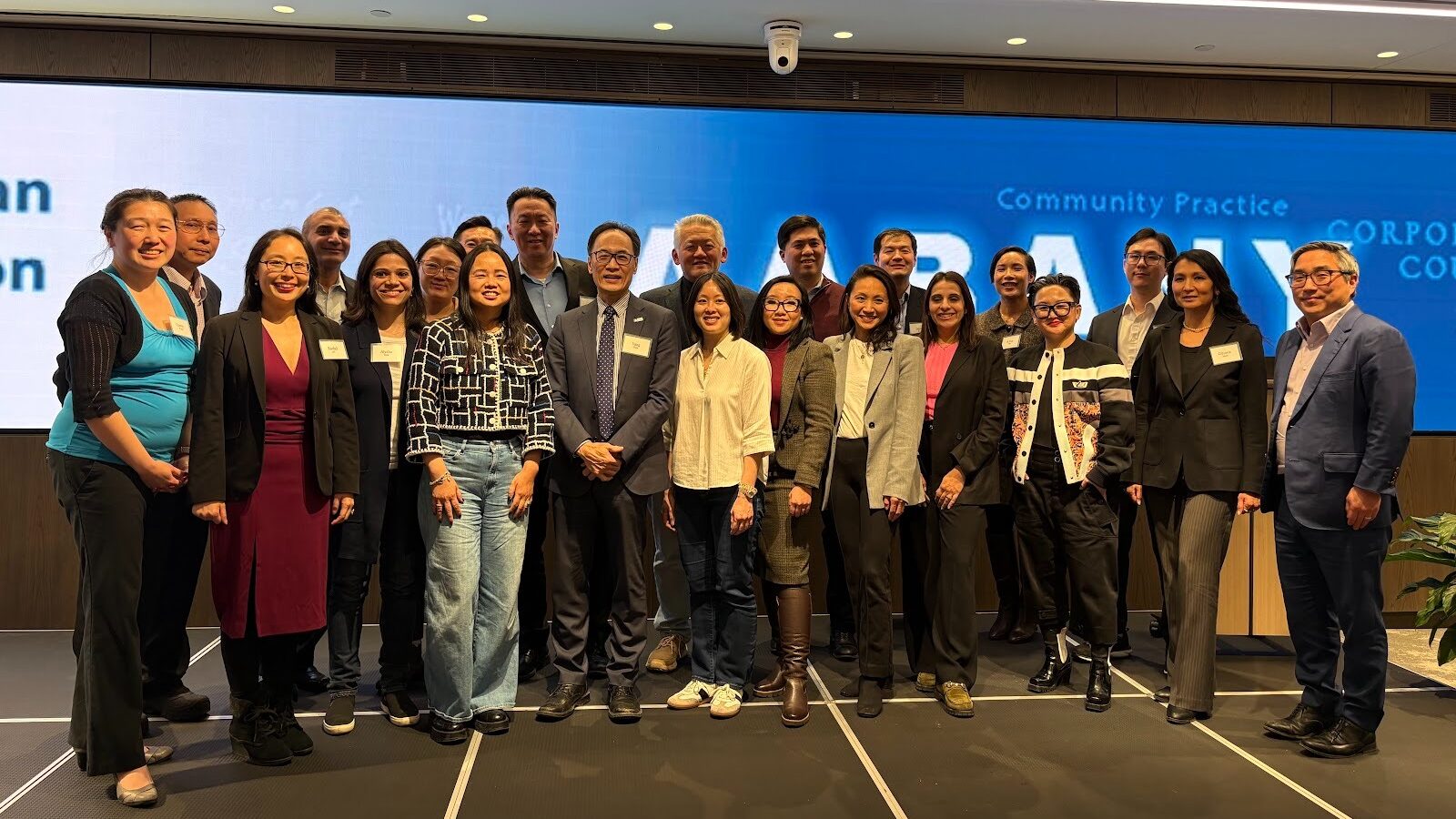
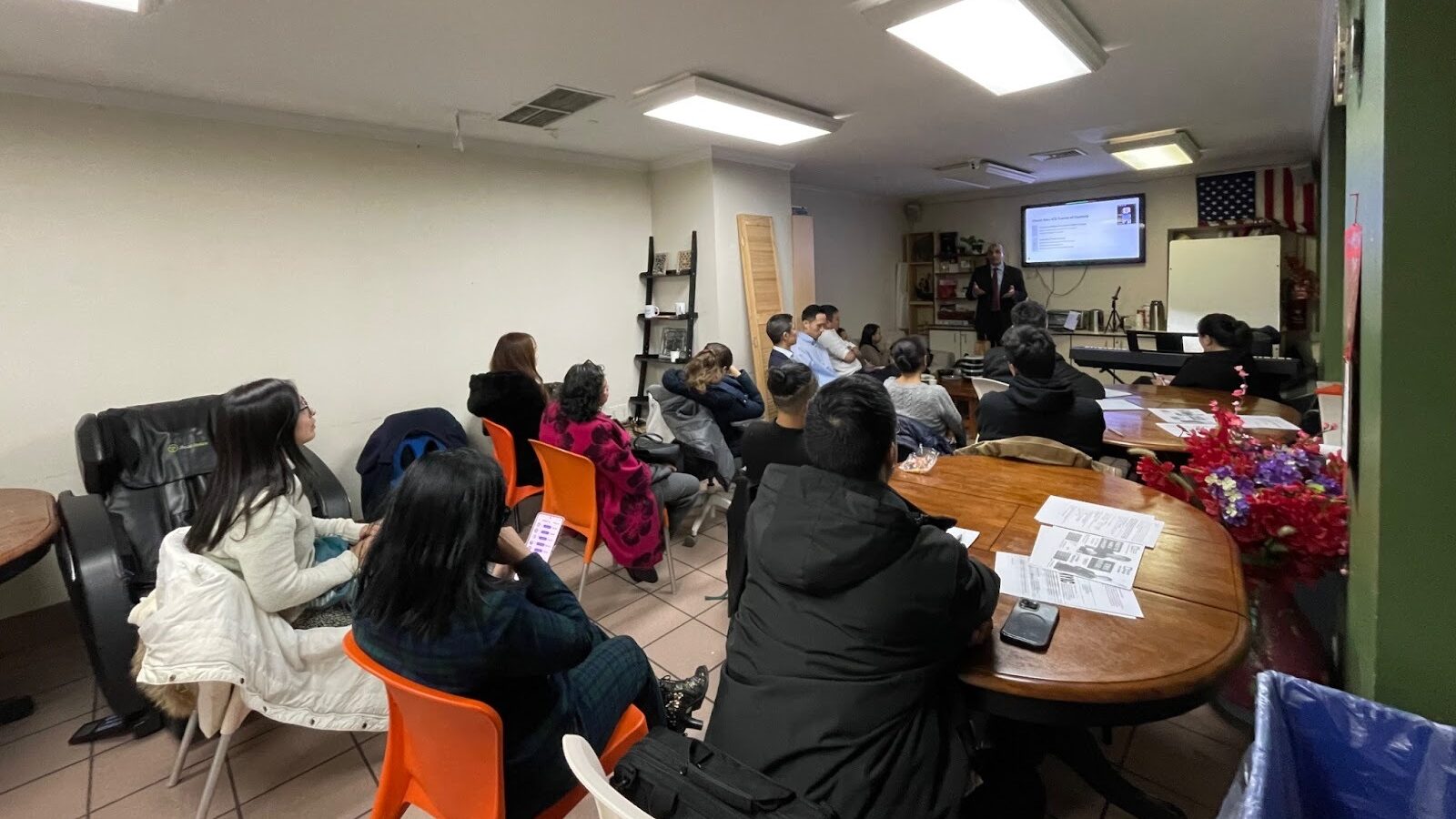
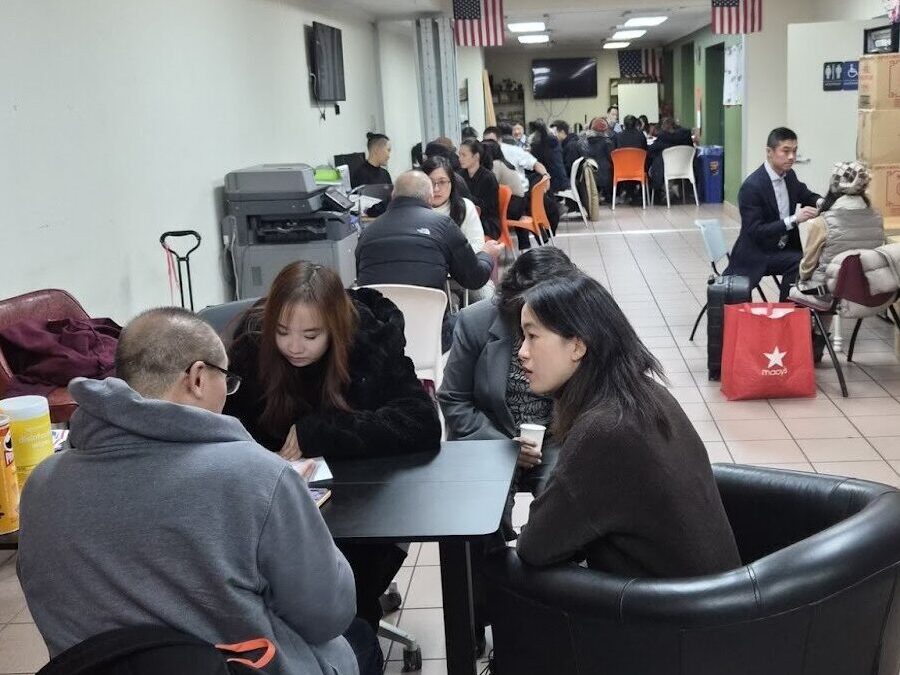
On May 7-8, Jack Hsia, Vice Chair of AABANY’s Issues Committee, attended the New York State Asian American Pacific Islander (AAPI) Conference, including the New York State AAPI Commission’s Community Dialogue and the NYS Legislature’s AAPI Summit in Albany. Over two days, the two events brought together advocates, community leaders, policymakers, and nonprofit organizations to discuss issues impacting New York’s AAPI communities.
On the afternoon of May 7, at the New York State AAPI Commission’s Community Dialogue, speakers and attendees explored challenges and opportunities facing AAPI communities across the state. The discussions emphasized the importance of language access, sustained investment in community organizations, youth engagement, and coalition building. These panels underscored the importance of ensuring that diverse AAPI voices are represented in policymaking and community leadership.
Drawing from their work at CPC, Jack discussed the increasing number of community members relying on AI for immigration information and document translation. While AI can improve access to information, they emphasized that inaccurate legal guidance and unreliable translations can have serious consequences. Jack highlighted the continued need for trusted legal professionals, culturally competent services, and community-based organizations to provide accurate guidance. The discussion also addressed digital privacy, language access, and practical strategies for protecting sensitive information in an increasingly data-driven environment, and how the immigration landscape has rapidly changed over the past few years.
The conference reinforced the importance of collaboration among legal advocates, community organizations, and government partners to address the evolving challenges facing AAPI communities. Jack was honored to represent both AABANY and CPC and appreciated the opportunity to contribute to these important conversations while learning from likeminded advocates committed to advancing equity, inclusion, and justice across New York.
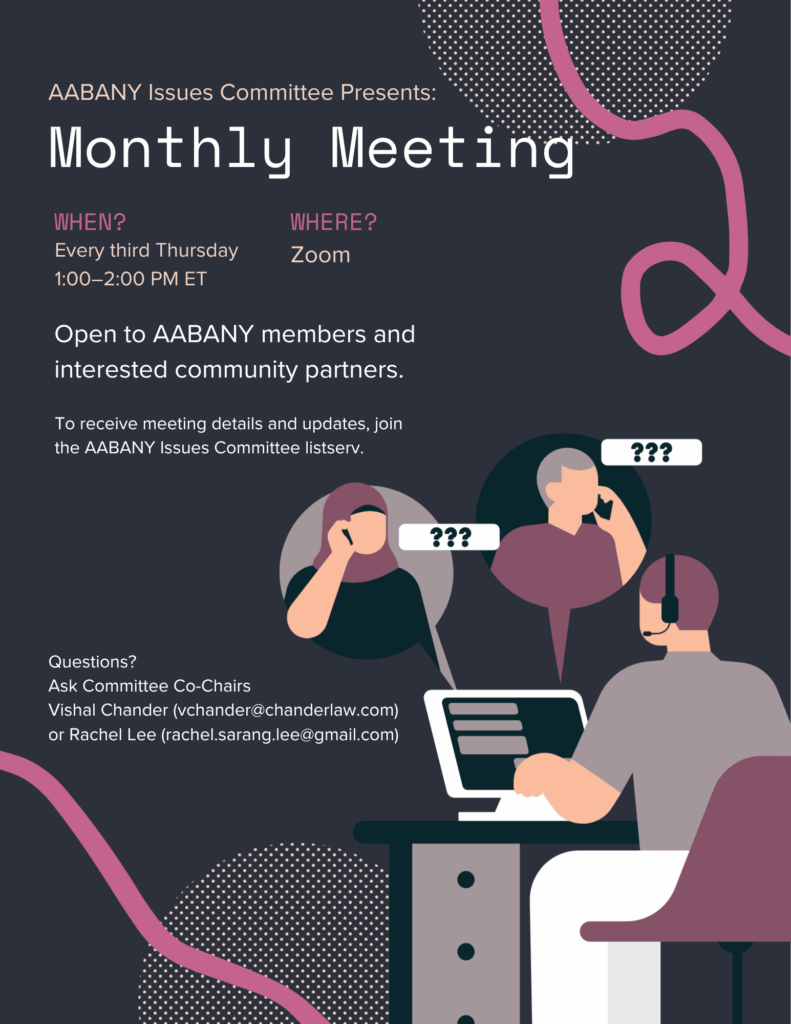
To learn more about AABANY’s Issues Committee, click here.
Written by Jack Hsia, Vice Chair of AABANY’s Issues Committee, Senior Attorney for Community Legal Services at the Chinese-American Planning Council (CPC).
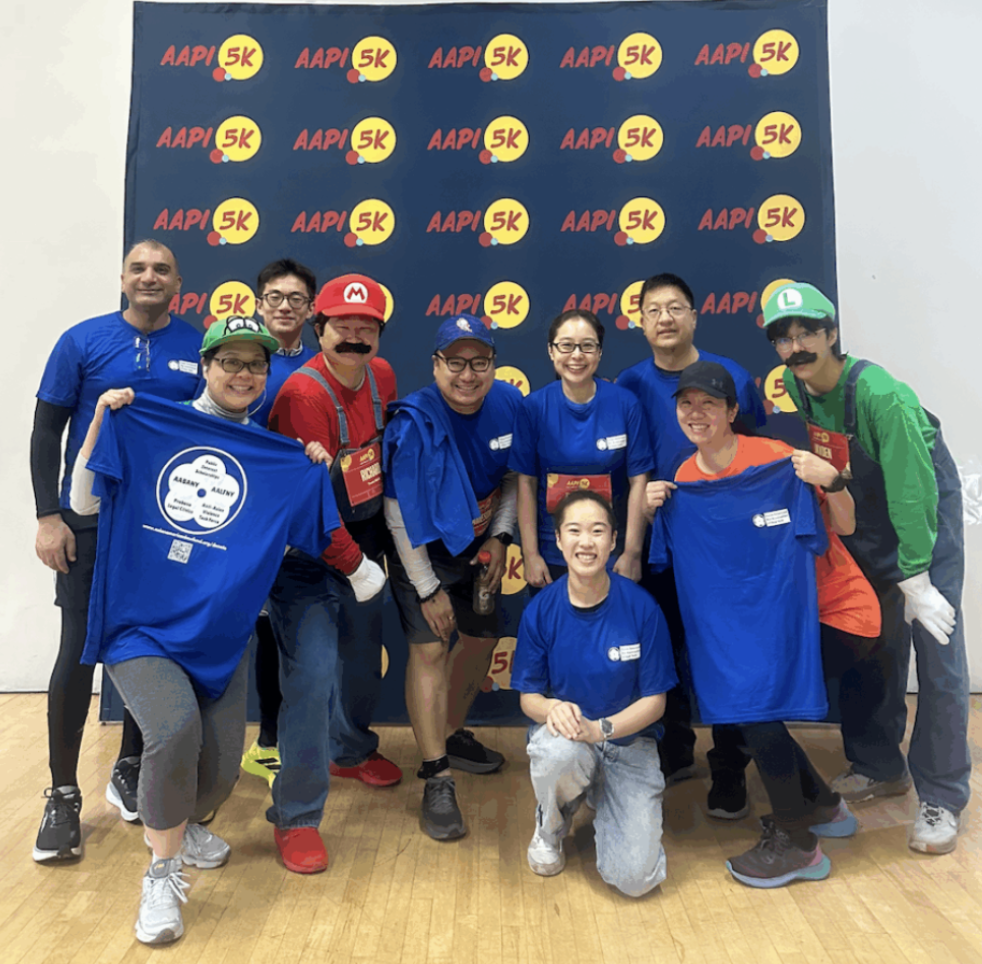
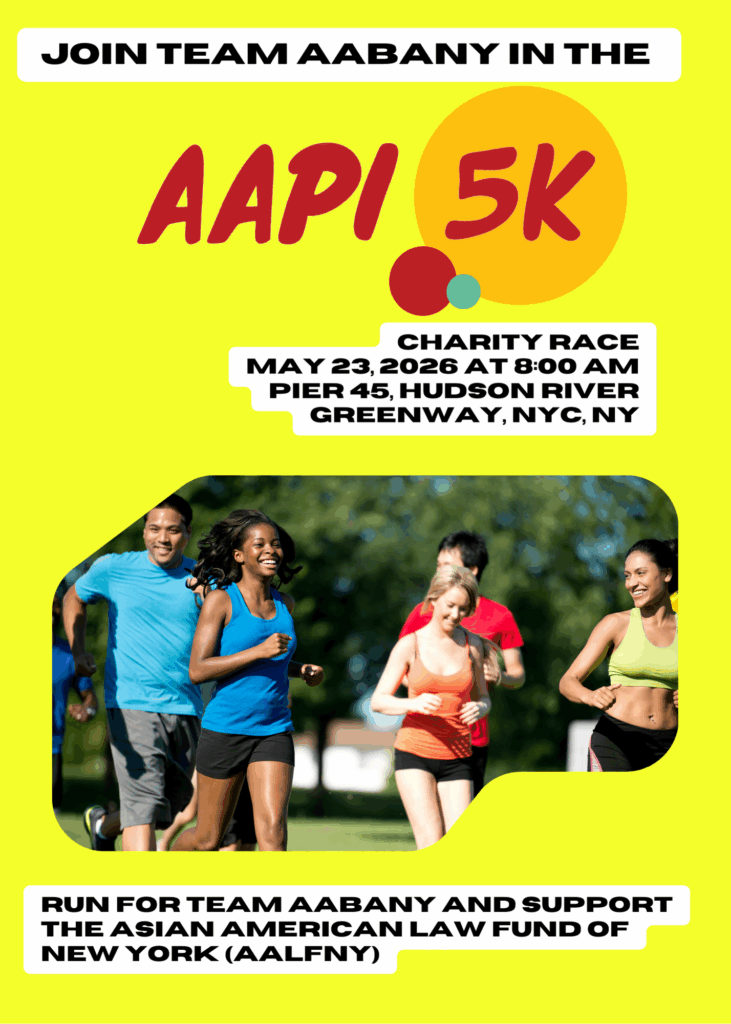
On May 23, 2026, the 2026 AAPI 5K took place on the Lower East Side, with around 400 participants running or walking in chilly morning weather in support of good causes. Teams from various companies and non-profit organizations, such as the United Federation of Teachers (UFT), the New York City Fire Department, and Microsoft, ran to raise money for institutions such as the Asian American / Asian Research Institute (AAARI), other non-profit organizations, and Asian American, Native Hawaiian, and Pacific Islander (AANHPI) small businesses.
The Asian American Bar Association of New York’s (AABANY) Issues Committee and Young Lawyers Committee led the effort in organizing AABANY’s participation in this race. Runners and supporters celebrated AANHPI Heritage Month while raising awareness for the work of various AANHPI nonprofits and small businesses. Team AABANY sought to raise funds for the Asian American Law Fund of New York (AALFNY), which funds Public Interest Scholarships for law students interning with public interest organizations that benefit the AANHPI community as well as helping to fund AABANY’s Pro Bono Clinics and Anti-Asian Violence Task Force.
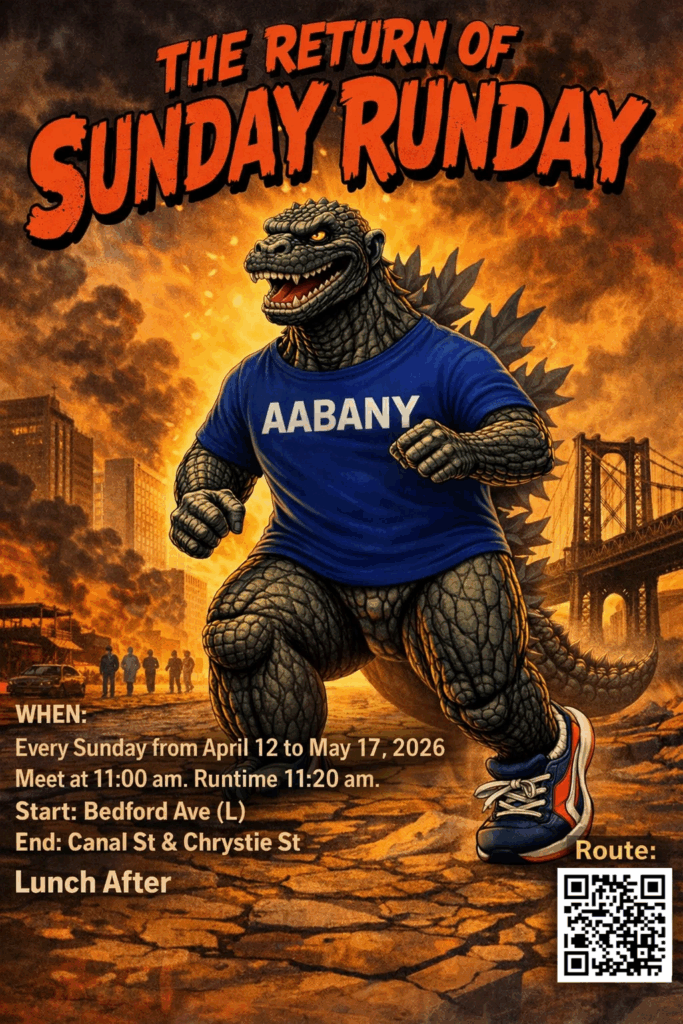
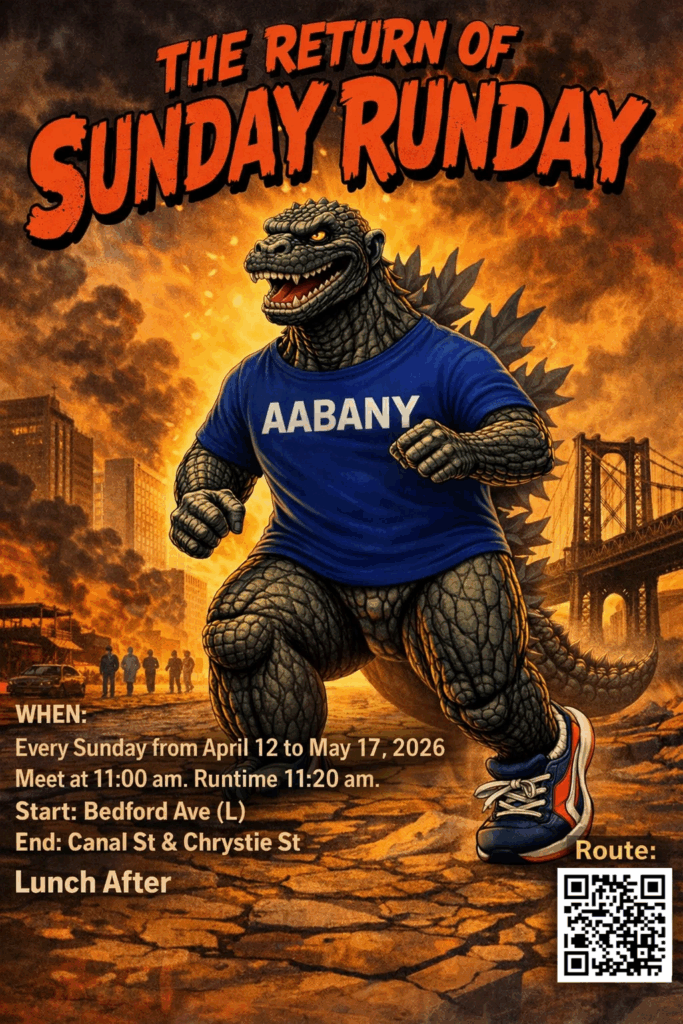
In the lead-up to the event, AABANY hosted six Sunday Run Days throughout April and May. The weekly runs followed the race course, crossing over the Williamsburg Bridge between Chinatown and Brooklyn.
Though the race took place on a cold and wet morning, Team AABANY persevered. We are proud to share that AABANY member Tiancheng Lyu, an Associate at Cravath, Swaine & Moore LLP, took second place overall with a time of 20:36, a 6:38 pace.
Congratulations to all 17 runners in Team AABANY, and thank you for your participation!
Vishal Chander
Victoria Cheng
Melissa Chi
Sherry Huang
Miles Kim
Alexandra Lao
Evelyn Lee
Justin Lee
Rachel Lee
Tiancheng Lyu
May Wong
Robert Wong
Jameson Xu
Kelly Yao
Jaehee Yoo
Jenny Zheng
Meilin Zheng
We are grateful as well to Kevin Hsi and Jack Hsia, Vice Chairs of the Issues Committee, who cheered on Team AABANY throughout the race.
To learn more about the Issues Committee, go here. To learn more about the Young Lawyers Committee, go here.
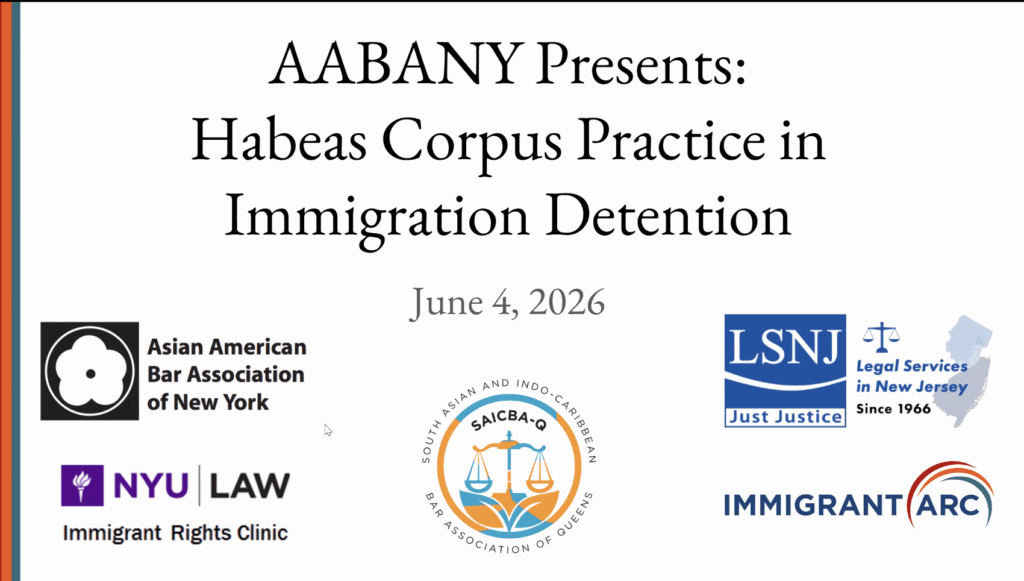
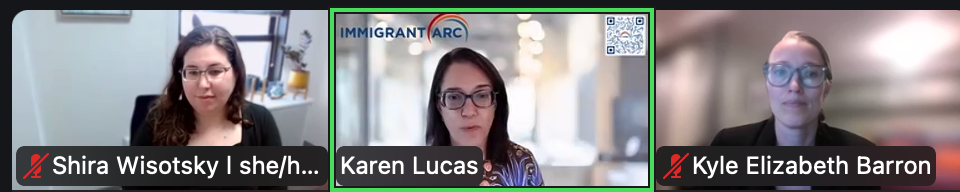
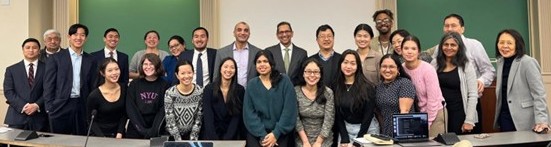
The presentation discussed the importance of habeas corpus as the federal government expands immigration detention. The program provided an overview of the statutory framework governing civil immigration detention and discussed the constitutional limits on civil detention, underscoring that immigration detention remains subject to procedural and substantive due process.
The program also reviewed common habeas claims in both pre-order and post-order detention contexts. These included statutory misclassification, unlawful revocation of release, due process challenges to prolonged mandatory detention, claims arising from statutory protections such as the Violence Against Women Act (VAWA), and post-order detention challenges where removal is not reasonably foreseeable. Attendees received practical guidance on drafting a habeas petition.
Attendees had opportunities to participate in case studies throughout the program and ask questions, showing their passion, curiosity, and dedication.
The program concluded with an invitation for attorneys and volunteers to provide pro bono habeas representation by volunteering for I-ARC and the NYU Law Immigrant Rights Clinic’s NY Habeas Project and LSNJ’s Detention and Deportation Defense Initiative. AABANY thanks the speakers and organizers for providing this important training.
To learn more about the Issues Committee, go here. To learn more about the Immigration Law Committee, go here.
– Written by Vishal Chander, Board Member and Co-Chair of AABANY’s Issues Committee
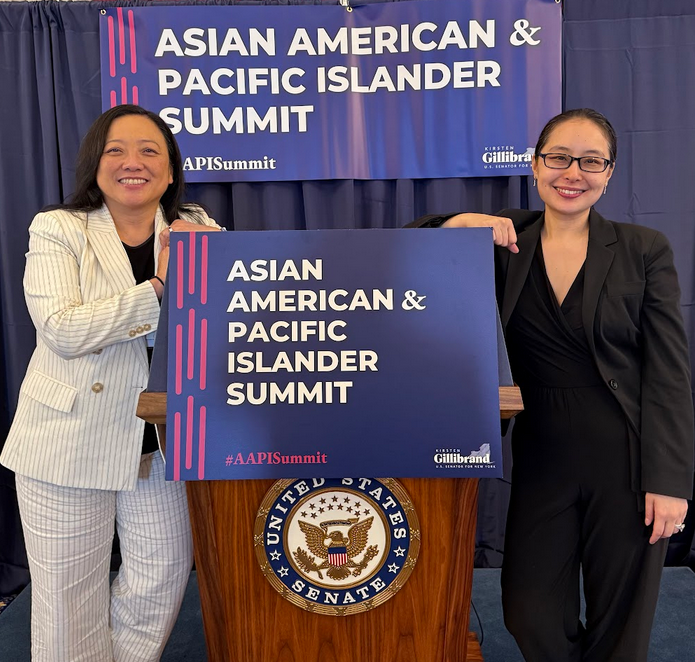
On April 30, 2026, AABANY had the privilege of participating in the second Asian American & Pacific Islander Summit. The event was hosted in the U.S. Capitol by Senator Kirsten Gillibrand, and brought together AAPI organizations, advocates, and community leaders from across New York for three panels covering immigration enforcement and community response, civic engagement and the Voting Rights Act, as well as grants and resources for small business owners.
AABANY was represented by Rachel Lee, Board Director and Co-Chair of the Issues Committee, and Prof. Elaine Chiu, past Chair and current member of the AABANY Anti-Asian Violence Task Force. They were joined by a roster of elected officials that included Congresswoman Grace Meng and Senators Kirsten Gillibrand, Tammy Duckworth, Charles E. Schumer, Andy Kim, and Mazie Hirono.
Rachel Lee served as a panelist on the immigration enforcement panel. Drawing on AABANY’s experience collaborating with community members and organizations, Rachel stated, “Representing AABANY on the immigration panel was a valuable reminder of how critical community-facing work is. When audience members raised practical questions about daily best practices, my on-the-ground training and outreach experiences helped me address their needs. This reinforces the importance of know-your-rights education that is ongoing, audience-specific, and grounded in the realities of our communities, as well as the unique role that bar associations like AABANY have in connecting legal resources to the communities we serve.”
While the Summit’s primary focus this year was not on hate crimes, Senator Gillibrand highlighted her ongoing legislative efforts to combat anti-Asian hate and violence. In 2023, Senator Gillibrand introduced the Hate Crimes Commission Act (S.2030 / H.R.4172). This Act established an independent, 12-member federal commission tasked with examining the recent rise in hate-based incidents and developing comprehensive strategies to combat them. Senator Gillibrand has also co-sponsored the Disarm Hate Act (S.2776 / H.R.6258)which prohibits individuals convicted of misdemeanor hate crimes from purchasing or possessing firearms.
At the Summit, political strategist Trip Yang encouraged AAPI organizations to create their own content (such as polls, fact sheets, community newsletters) to better mobilize and represent AAPI voters, who are increasingly identifying as politically independent.
The AAPI Summit continues to be a valuable opportunity for AABANY to connect with advocates, elected officials, and community members working toward the same goals. Prof. Elaine Chiu noted, “This summit is a valuable opportunity to showcase AABANY and its unique ways of supporting our communities and to hear from other organizations how we can help.” Rachel and Elaine reported back that two other possible action items AABANY can consider are expanding Know Your Rights Workshops to reach a wider range of audiences and playing a bigger role in pro bono options to address the skyrocketing cost of immigration legal services. As the issues facing our community grow more urgent, events like this remind us of the immediate actions that we need to take to tackle the issues at hand.
AABANY thanks Senator Gillibrand for organizing the AAPI Summit and for including AABANY. Thanks also to Prof. Chiu and Rachel for representing AABANY at this important convening of leaders from across New York and the United States.
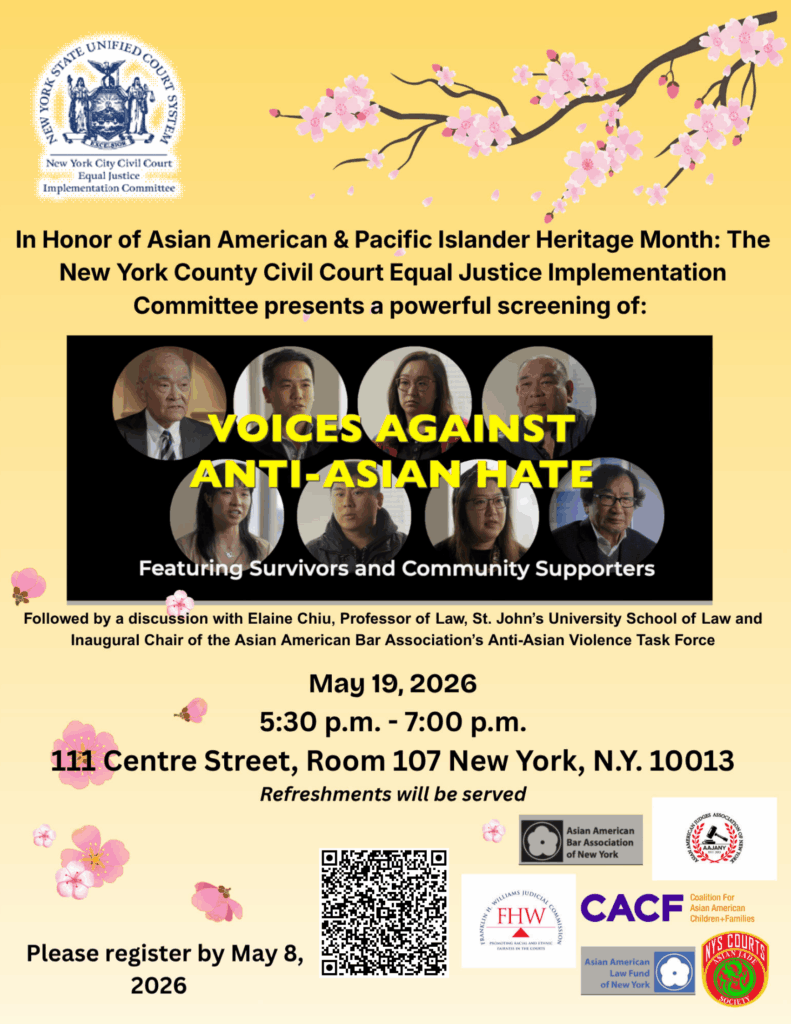
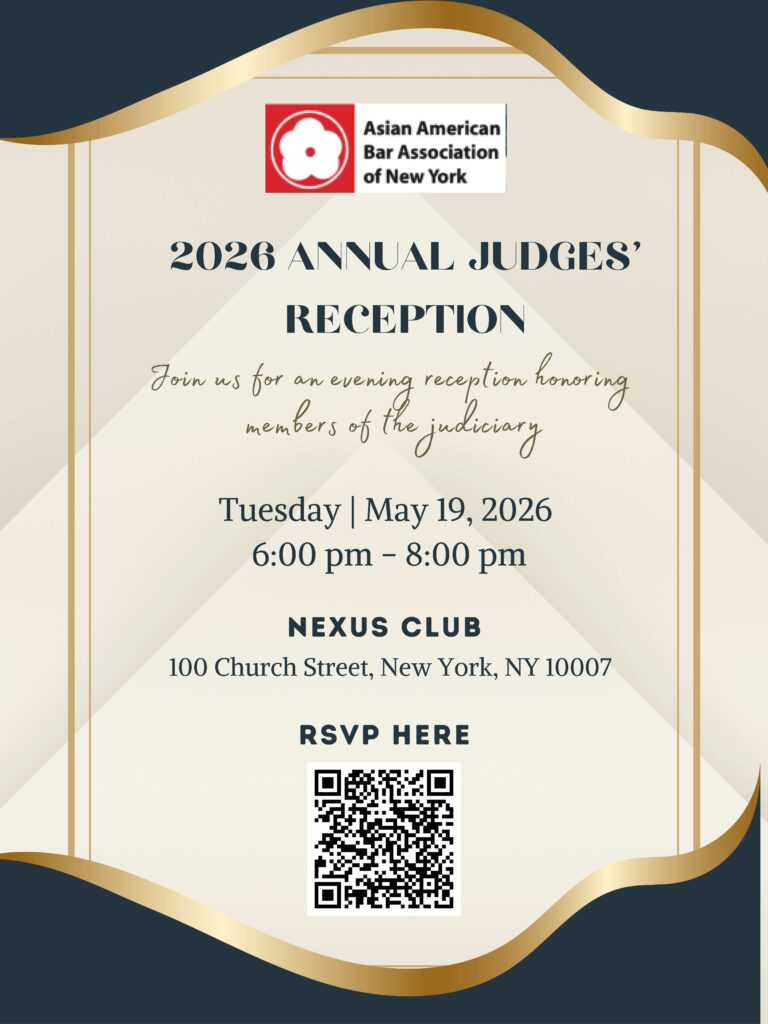
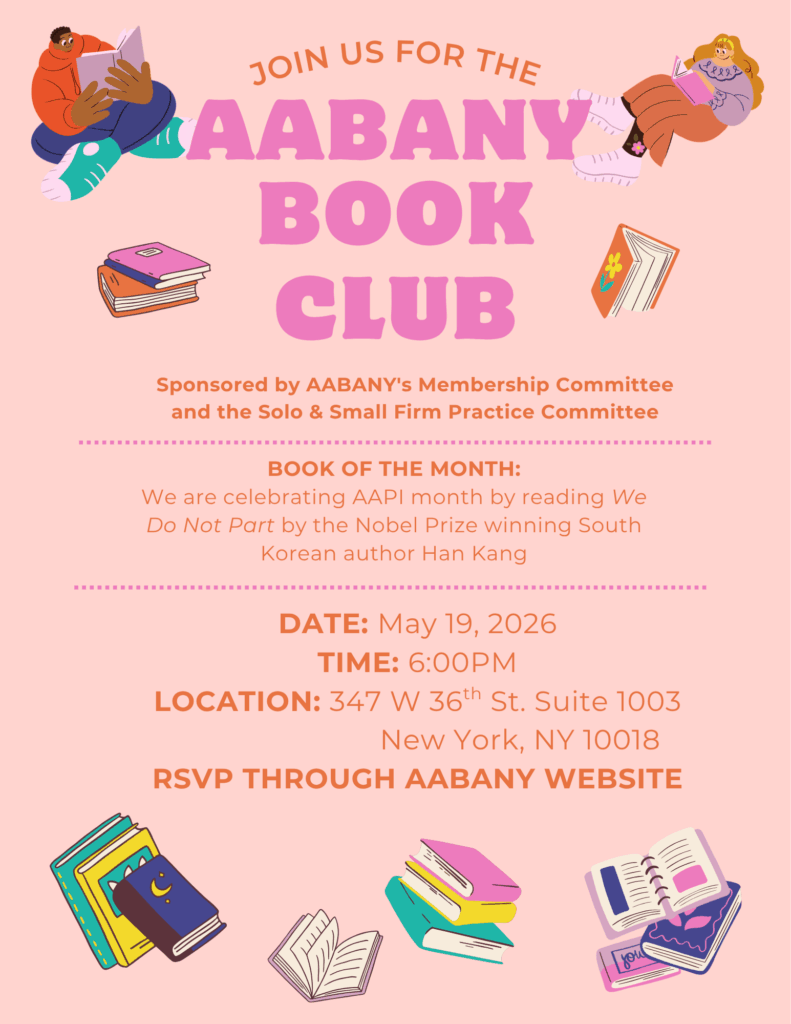
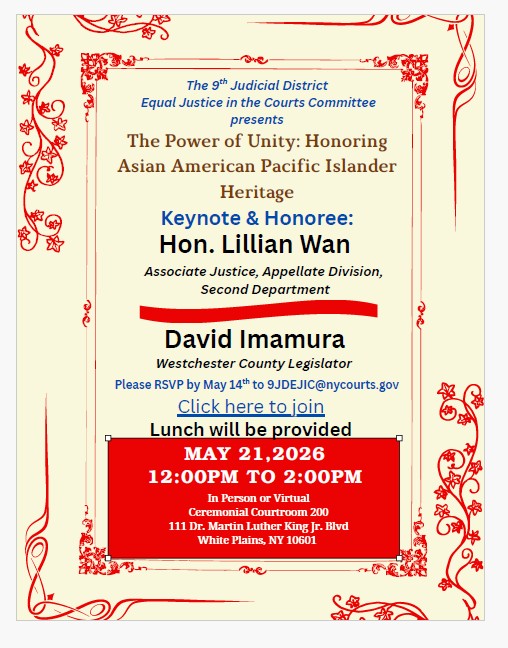
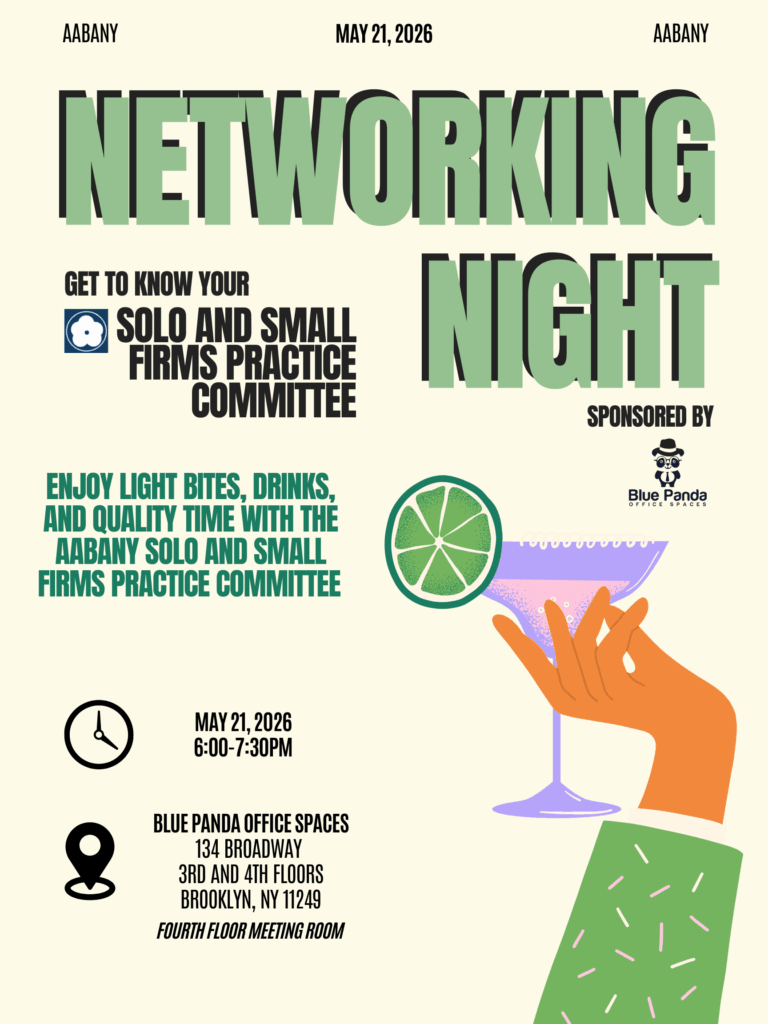
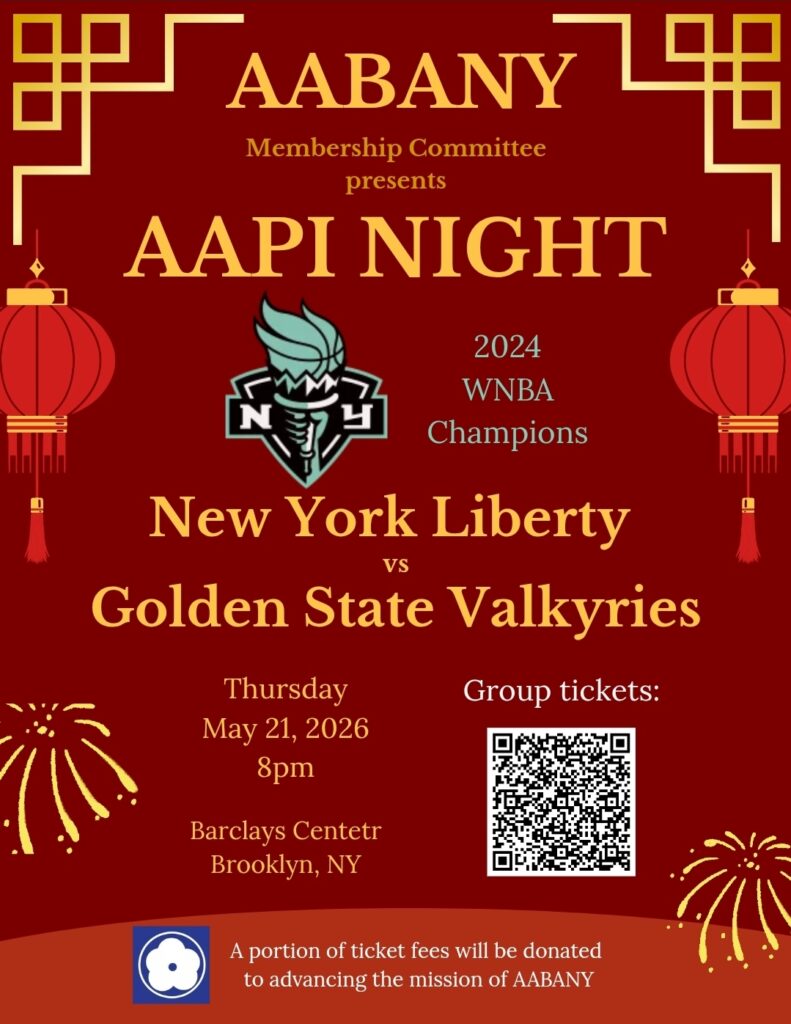
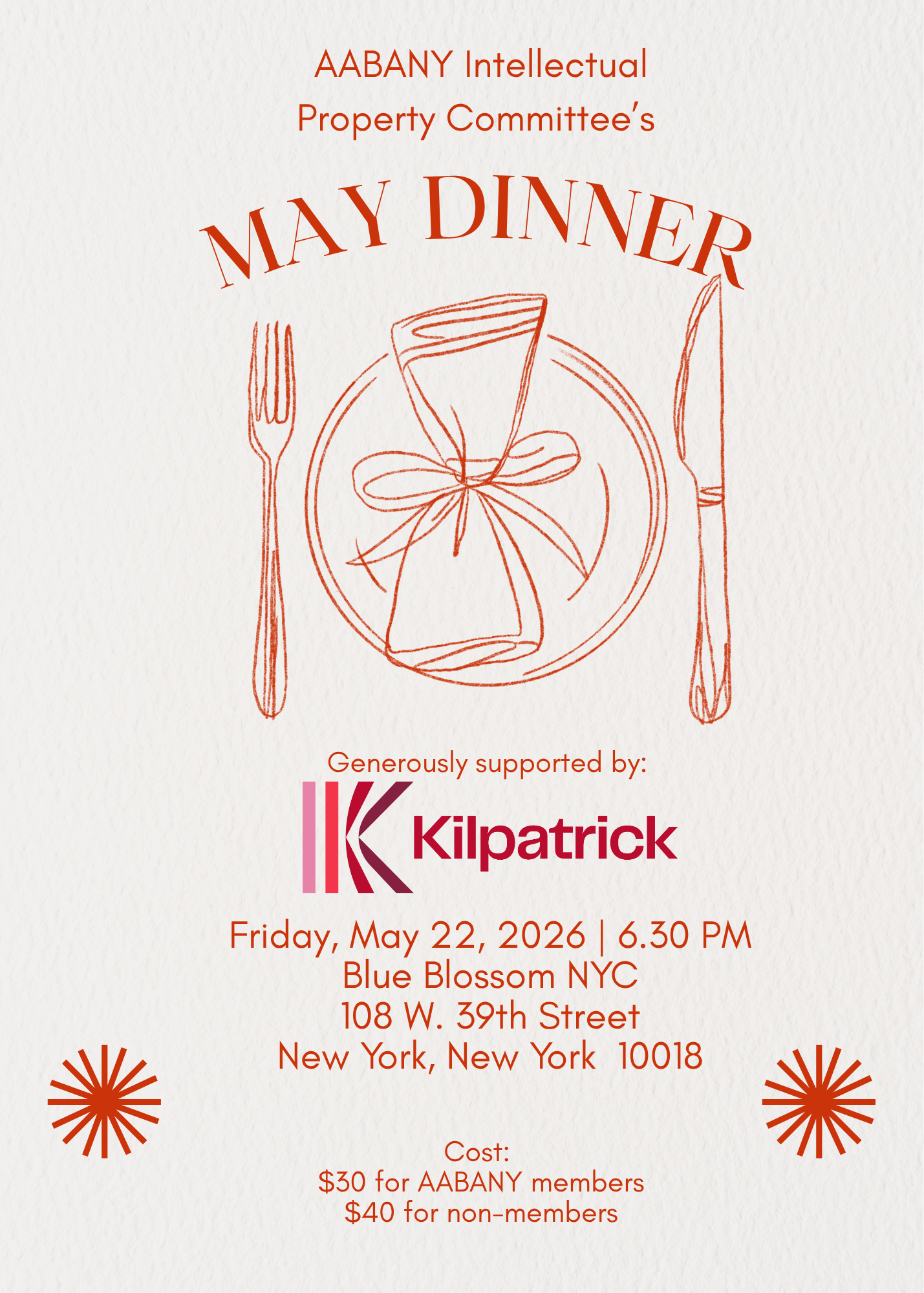
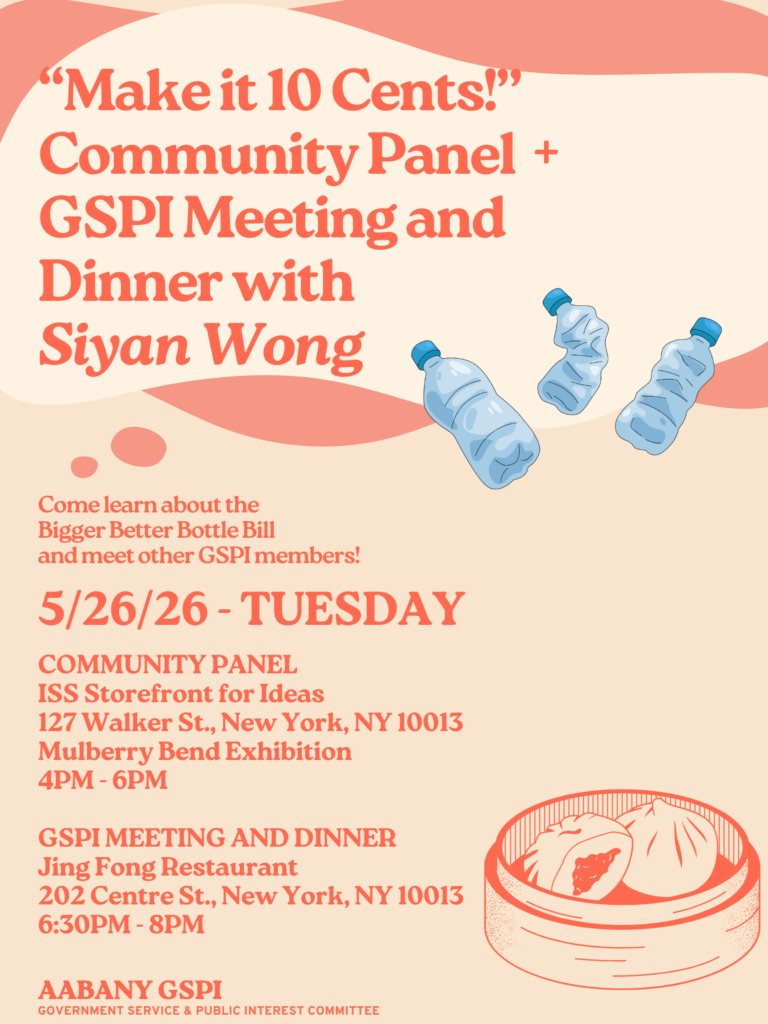
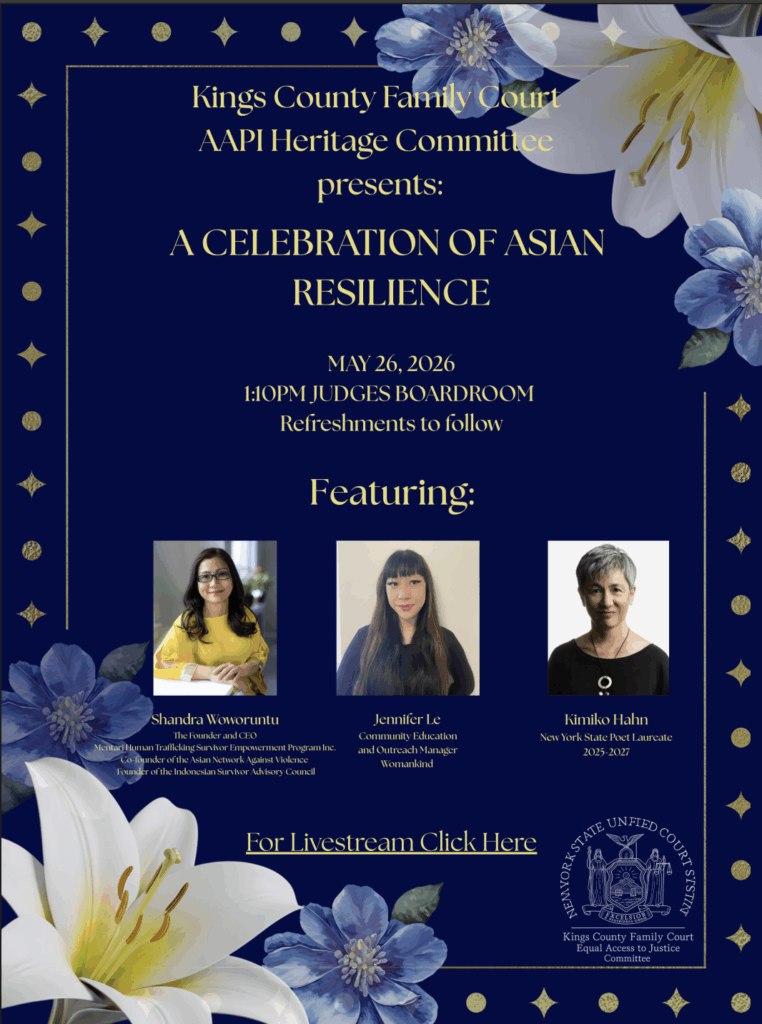
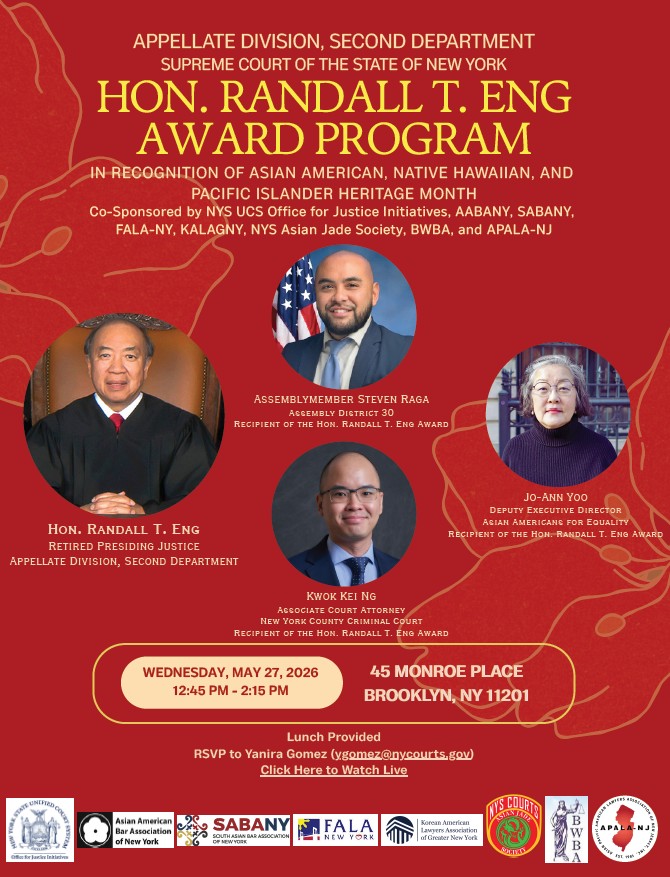
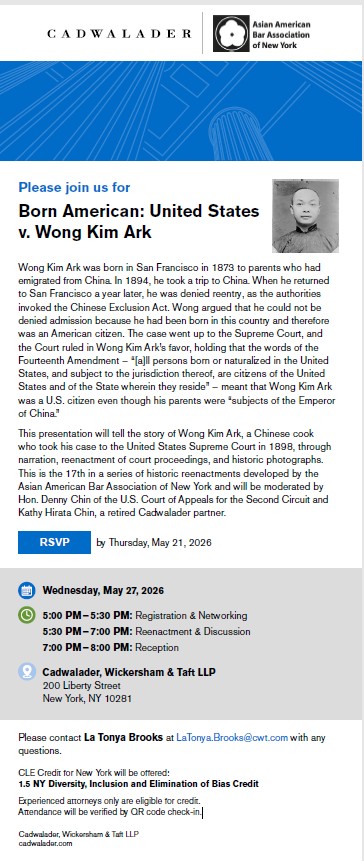
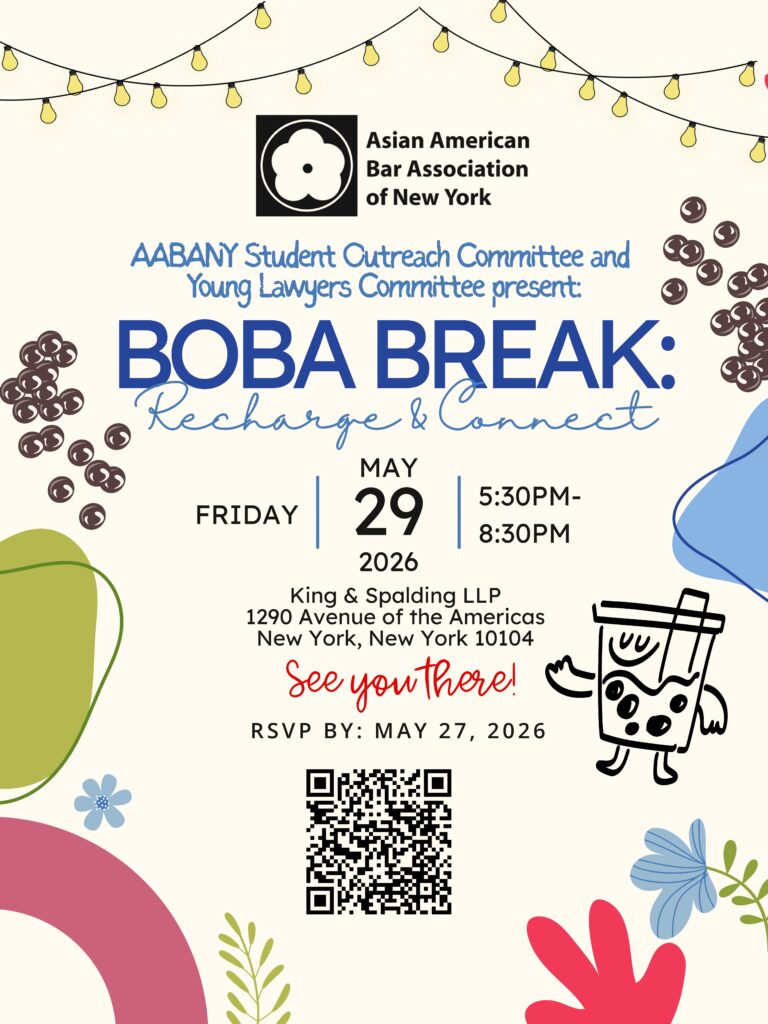
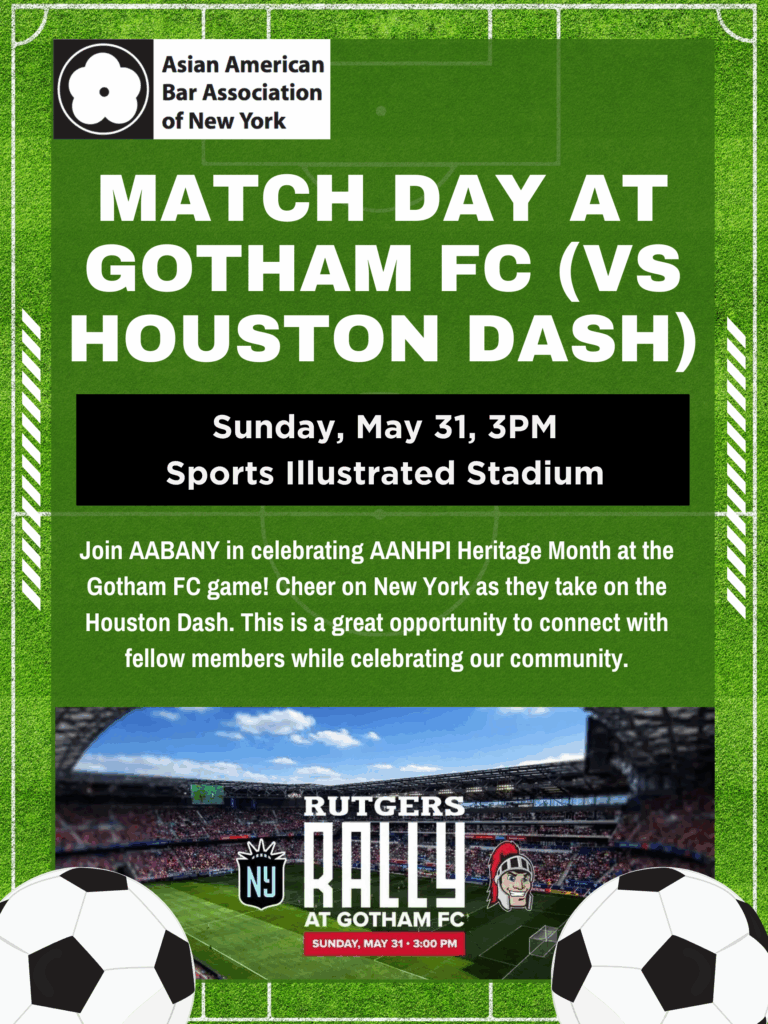
In celebration of AAPI Heritage Month this year, AABANY is presenting or co-sponsoring several events this month. We hope to see you all there! Follow the links for more details, and please note the registration deadlines. This blog post will be updated throughout the month, as new events get added on, so check back for any updates.
May 2, 2026
AABANY Co-Sponsors: Korean Hat Day at Yankee Stadium
1:35pm – Yankees Stadium, 1 E. 161 E. 161st Street
This event has already occurred.
May 3, 2026
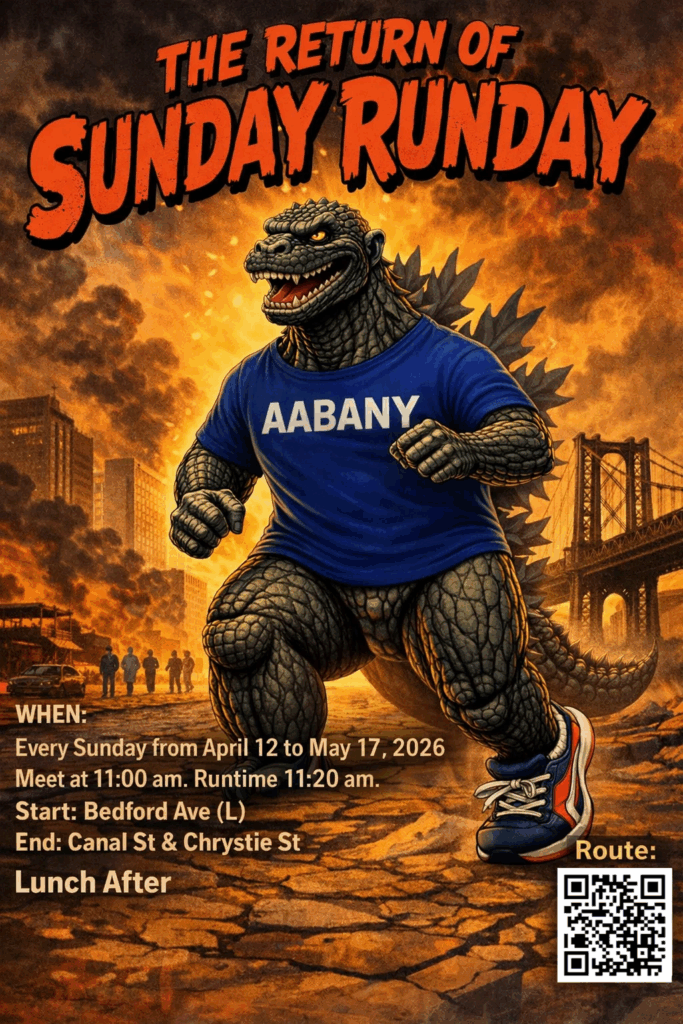
AABANY Sunday Run Day
11:00 am – Start at Bedford Ave (L); End at Canal St. & Chrystie St. This event is preparation for the May 23 AAPI 5k run.
This event has already occurred.
May 5-7, 2026
Asian Comedy Fest 2026: AABANY Discount Available
7pm and 9pm – Sugar Mouse NYC, 47 3rd Avenue, Lower Level, New York, NY 10003
This event has already occurred.
May 6, 2026
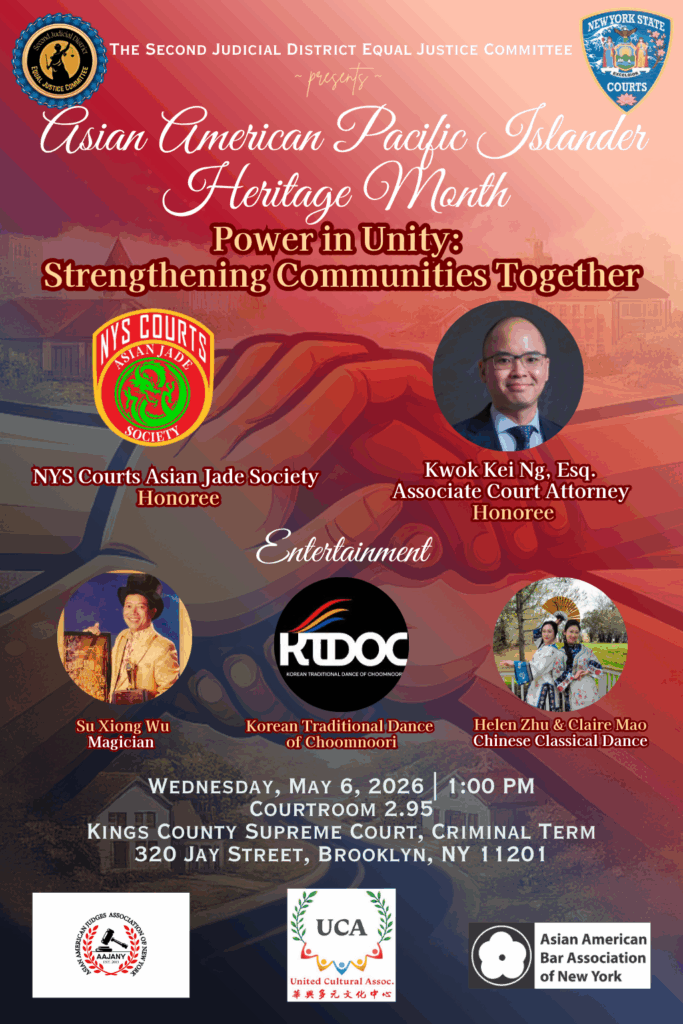
AABANY Co-Sponsors: Power in Unity: Strengthening Communities Together
1:00 pm – Kings County Supreme Court, Criminal Term, Courtroom 2.95, 320 Jay Street, Brooklyn, New York 11201
This event has already occurred.
May 6, 2026
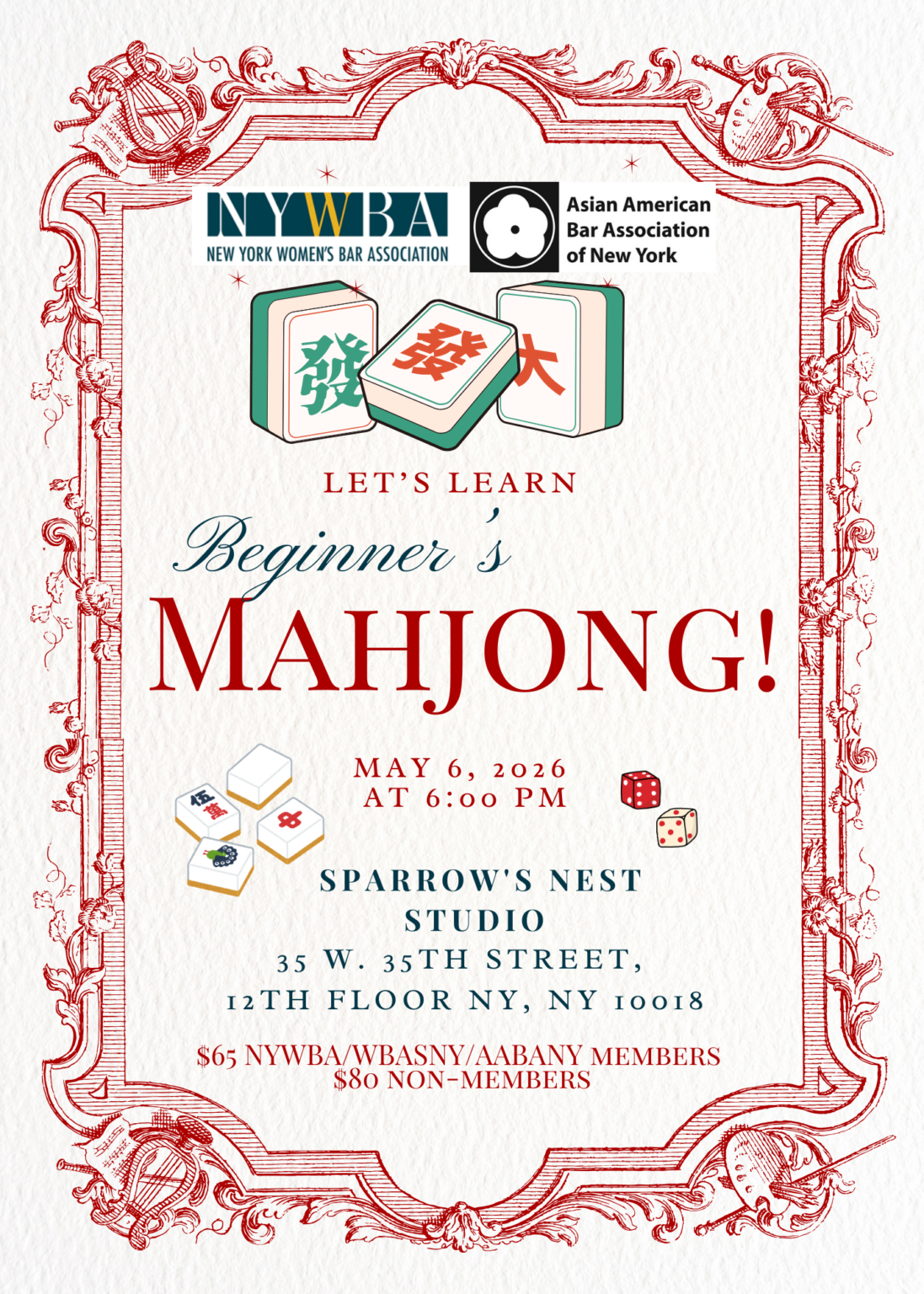
AABANY Co-Sponsors: Beginner’s Mahjong
6:00pm – Sparrow’s Nest Studio, 35 W. 35th Street, 12th Floor, New York, NY 10018
This event has already occurred.
May 6, 2026
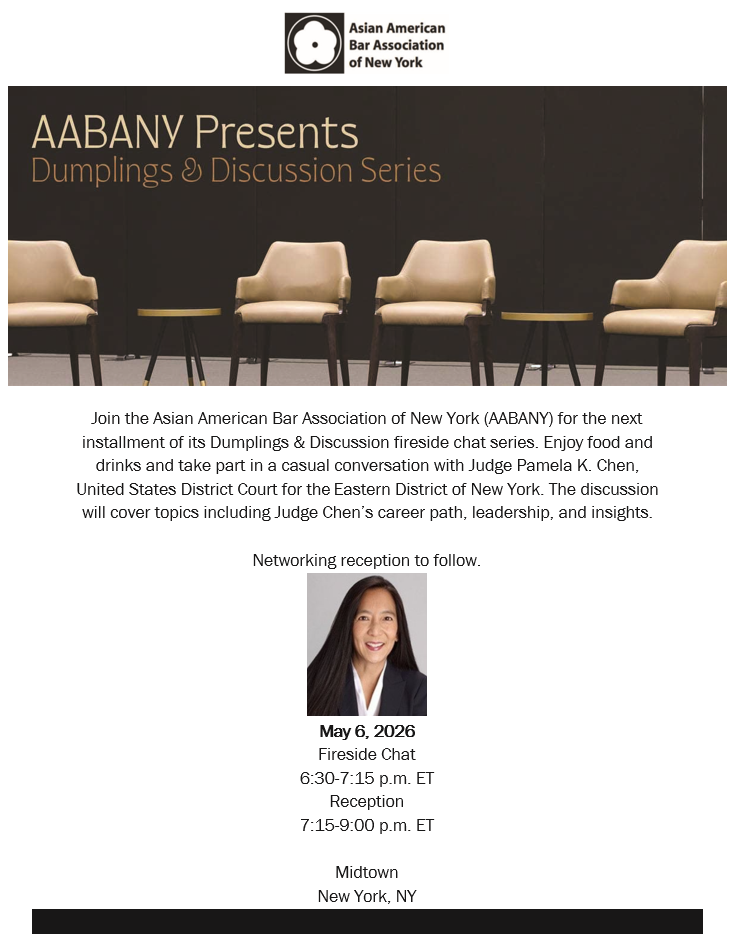
AABANY Presents: Dumplings & Discussion Series Featuring Judge Pamela K. Chen
6:00pm -Midtown location – to be emailed to registrants.
This event has already occurred.
May 9, 2026
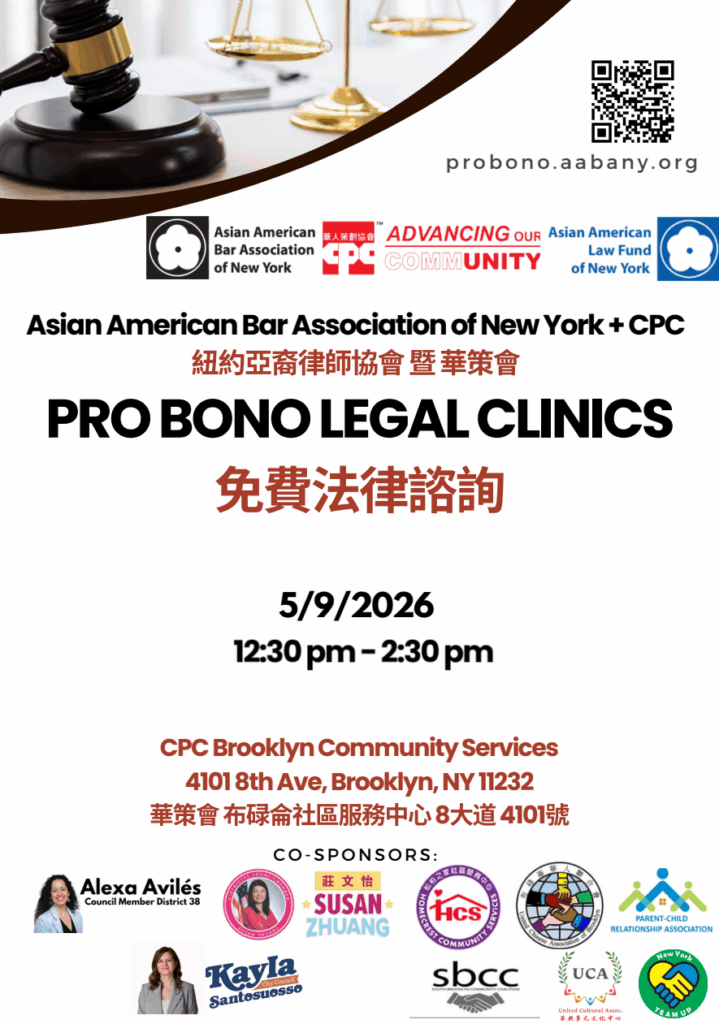
AABANY Bi-Monthly Brooklyn Pro Bono Legal Clinic
12:30 pm – 2:30 pm – CPC Brooklyn Community Services, 4101 8th Ave, Brooklyn, New York 11232
This event has already occurred.
May 10, 2026
AABANY Sunday Run Day
11:00 am – Start at Bedford Ave (L); End at Canal St. & Chrystie St. This event is preparation for the May 23 AAPI 5k run.
This event has already occurred.
May 12, 2026
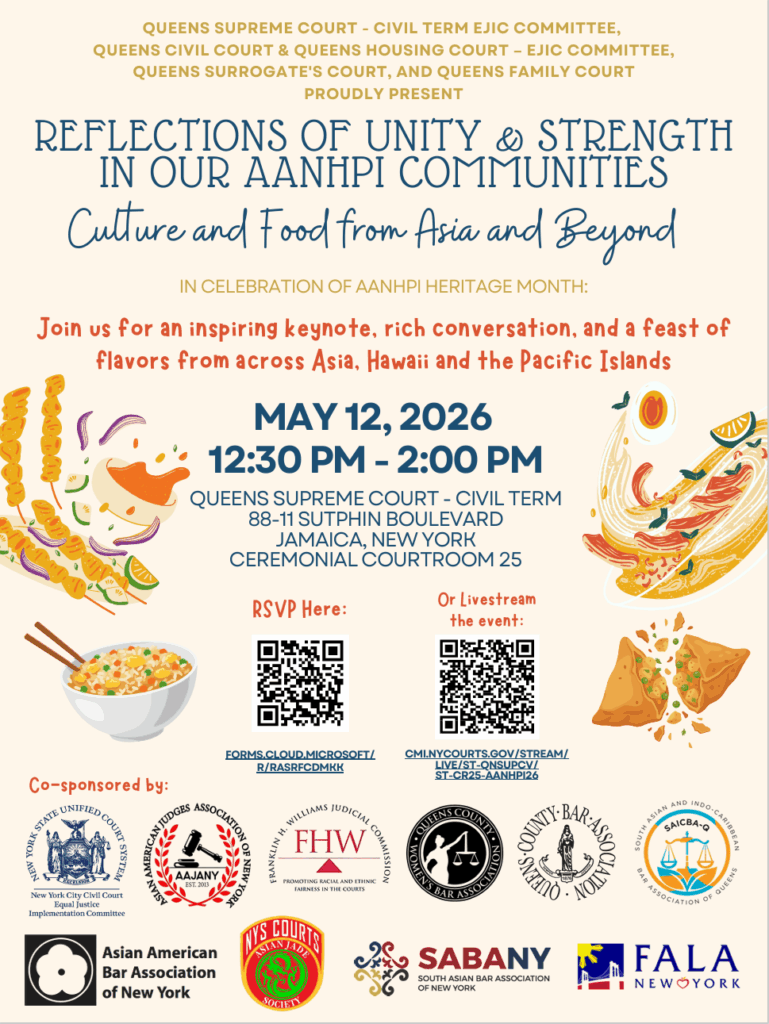
AABANY Co-Sponsors: Reflections of Unity and Strength in our AANHPI Communities
12:30pm – Queens Supreme Court – Civil Term, 88-11 Sutphin Boulevard, Ceremonial Courtroom 25, Jamaica, New York 11435
This event has already occurred.
May 16, 2026
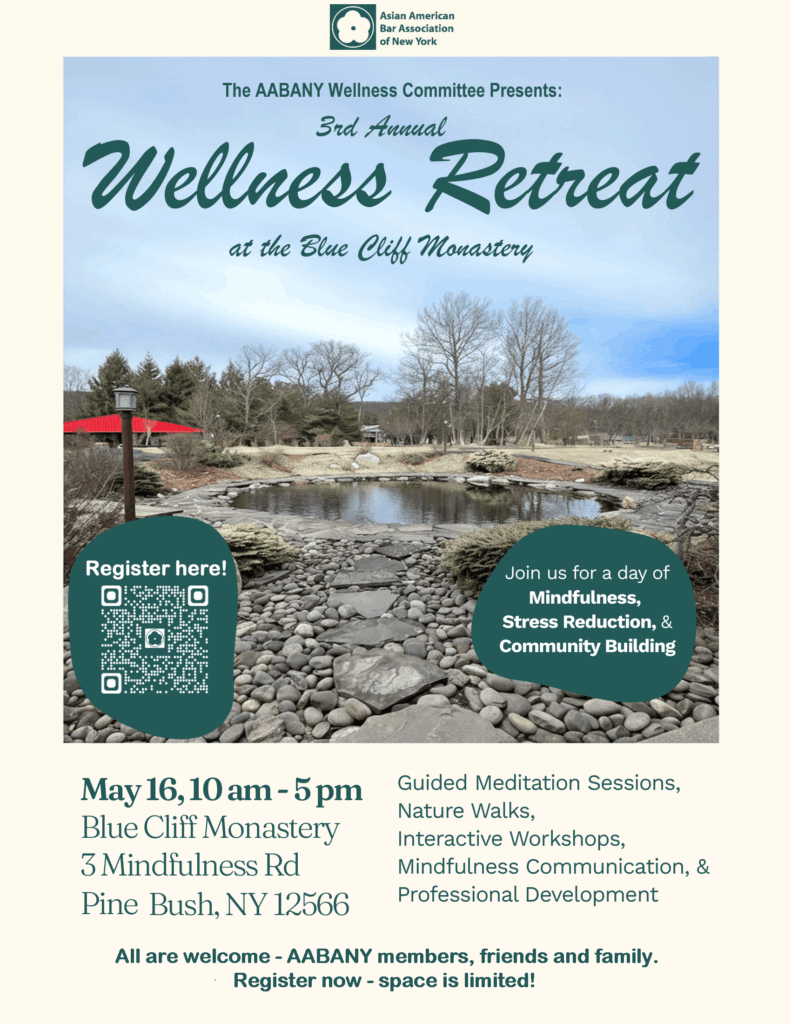
AABANY Presents: 3rd Annual Wellness Retreat
10:00 am – 5:00 pm – Blue Cliff Monastery, 3 Mindfulness Rd, Pine Bush, New York 12566
This event has already occurred.
May 16, 2026
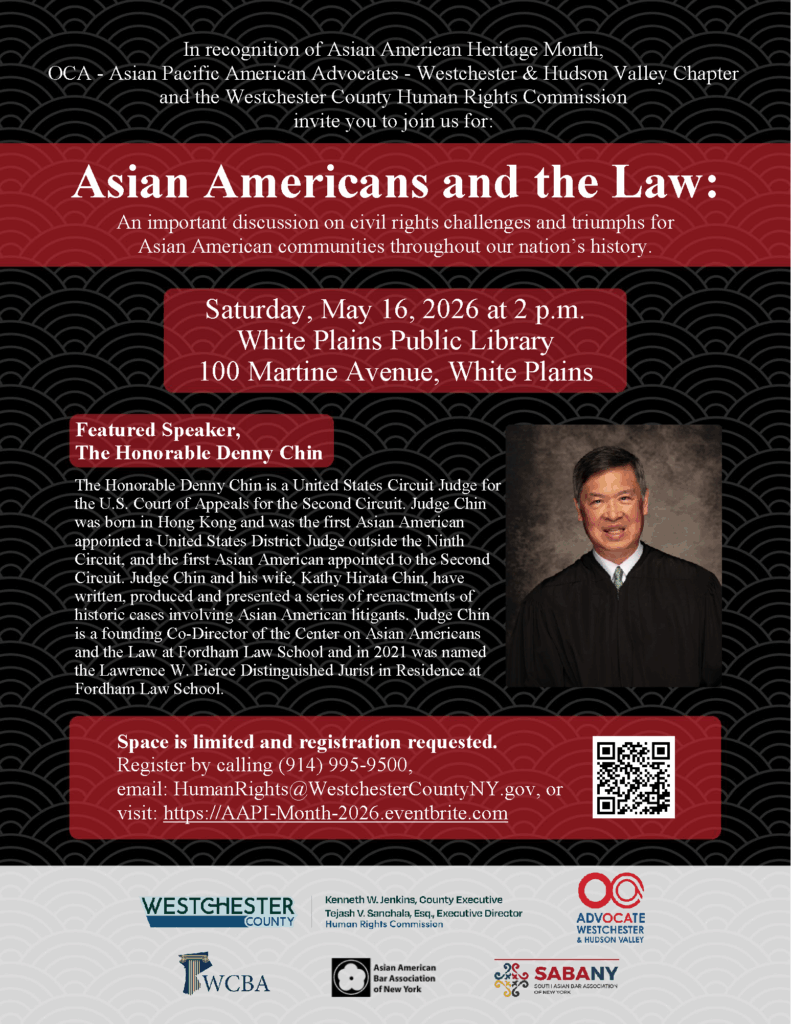
AABANY Co-Sponsors: Asian Americans and the Law, Featuring Hon. Denny Chin
2pm – White Plains Public Library, 100 Martine Avenue, White Plains, New York 10601
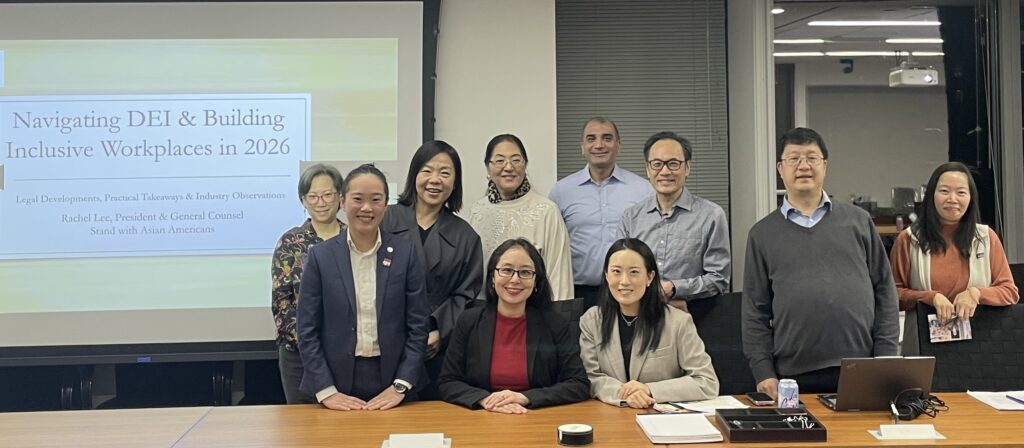
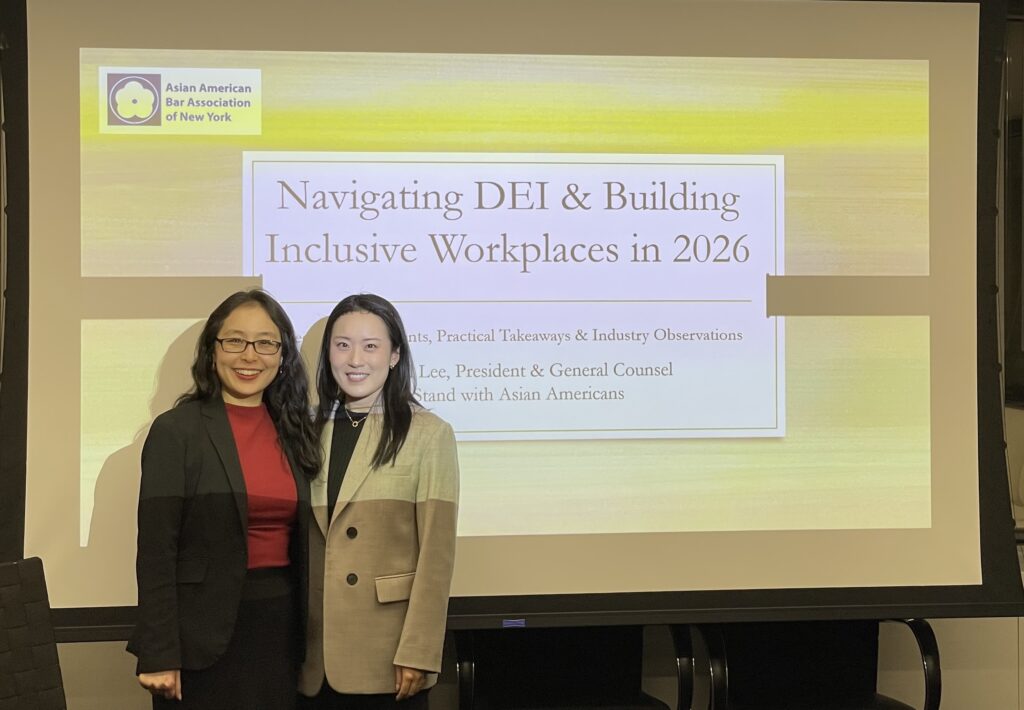
On March 25, 2026, AABANY’s Labor & Employment Law Committee, with co-sponsorship from the Issues Committee, hosted a timely and thought‑provoking CLE program, Navigating DEI Into 2026: Practical Takeaways & Industry Observations, at Littler Mendelson P.C. in New York City.
The program featured Rachel Lee, President and General Counsel of Stand With Asian Americans and Co‑Chair of AABANY’s Issues Committee, who shared insights on the evolving legal and cultural landscape surrounding diversity, equity, and inclusion efforts. Rachel drew from her work with organizations seeking to build and sustain inclusive workplaces amid shifting regulatory and societal expectations. She also offered practical, compliant strategies for fostering inclusive work environments in the years ahead.
The discussion was moderated by Jennifer Kim of Littler Mendelson, Chair of AABANY’s Labor & Employment Law Committee, who guided the conversation and facilitated audience engagement on the real‑world challenges employers and practitioners face when navigating DEI initiatives.
Attendees earned 1.0 NY CLE credit in Diversity, Inclusion, and Elimination of Bias and benefited from an engaging exchange of ideas that balanced legal guidance with practical application. The Committees thank Rachel Lee, the Professional Development Committee, and all attendees for making this program a success.
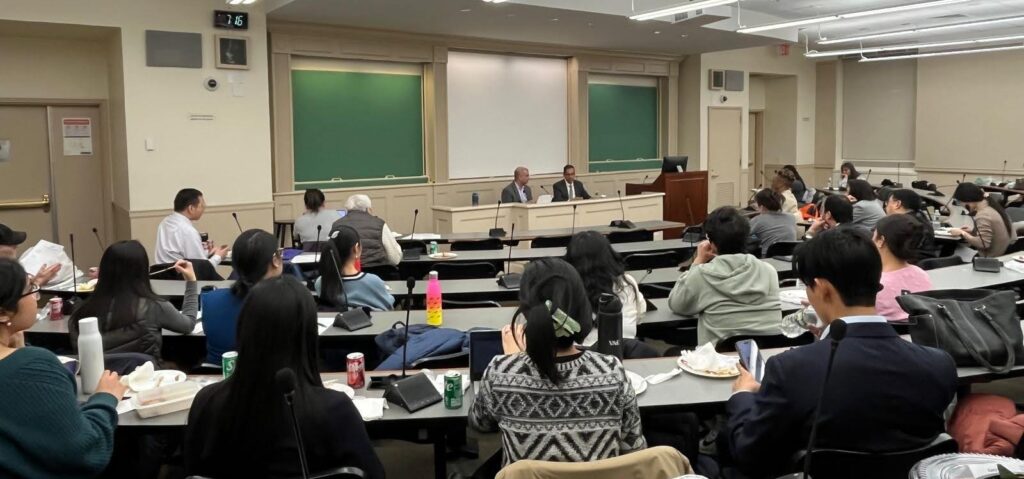
The conversation highlighted the rapid pace of immigration policy changes during the Trump administration and their continuing impact on immigration practice. Shafiqullah noted that more than 1,000 immigration policy changes were implemented through executive action during Trump’s first term, and that similar patterns appear to be emerging again, alongside proposals such as the Laken Riley Act, which would significantly expand mandatory detention.
Despite these developments, Shafiqullah emphasized that federal courts remain an important avenue for relief. Through habeas corpus petitions, federal District Courts can review unlawful detention and order new bond hearings or release when appropriate. He noted that “District Court judges are understanding that due process won’t permit arbitrary action.”
The program concluded with a discussion about the emotional toll of immigration practice. Because many asylum clients have experienced severe trauma, attorneys often face vicarious trauma as well. The Legal Aid Society supports its staff by providing trainings on handling burnout, secondary trauma, and sustainable public interest practice.
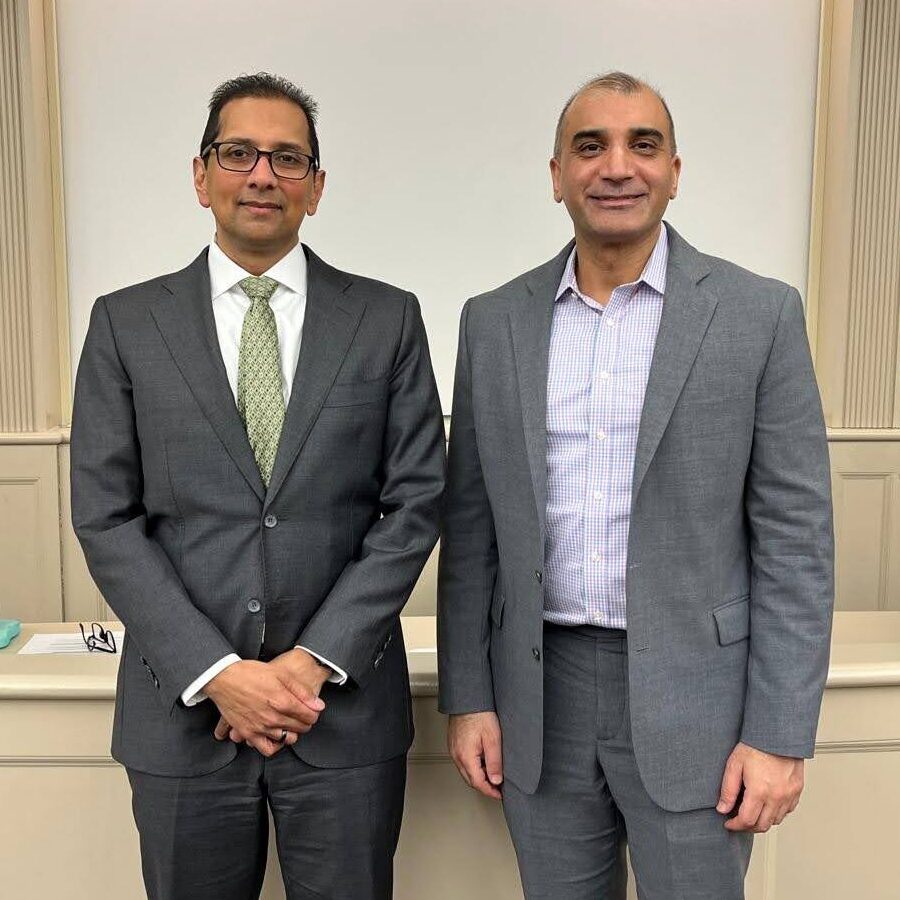
AABANY thanks Hasan Shafiqullah and the Legal Aid Society for sharing their insights, and thanks APALSA and the co-sponsoring committees for organizing this timely and informative program.
On Wednesday, February 11th, 2026, AABANY held its Annual Meeting of Members at King & Spalding. The evening reflected on the accomplishments of the past year and looked forward to electing leadership for the new fiscal year ahead. We extend our heartfelt gratitude to King & Spalding for generously hosting us in their stunning new space, which was modern and spacious.
AABANY President Benjamin Hsing called the meeting to order shortly after 7 pm and established a quorum. Ben explained the voting procedures and encouraged everyone present to cast a vote, even if they had voted online before the meeting.
Once all ballots were filled out and collected, Ben called up Board Director Katherine Loanzon and President-Elect Varuna Bhattacharyya to serve as the Tellers to tally up the votes. They departed to a separate room to perform that task, counting up the votes cast in person at the Annual Meeting and via electronic voting beforehand. While the votes were being tallied, Ben invited the Membership Director, Alysha Naik, to present the Membership Director’s report. He then invited Assistant Treasurer H. Anthony Park to give the Treasurer’s Report, sharing information about AABANY’s financial performance during the past fiscal year.
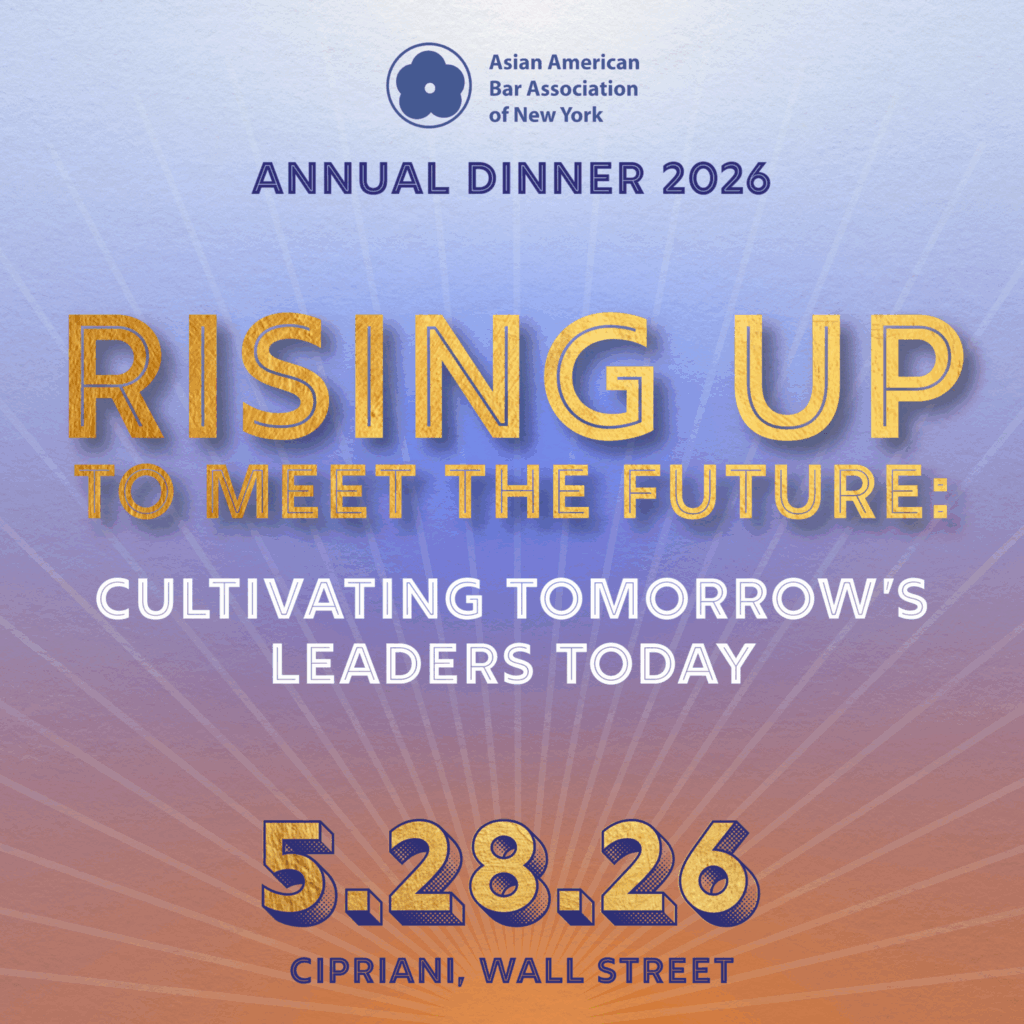
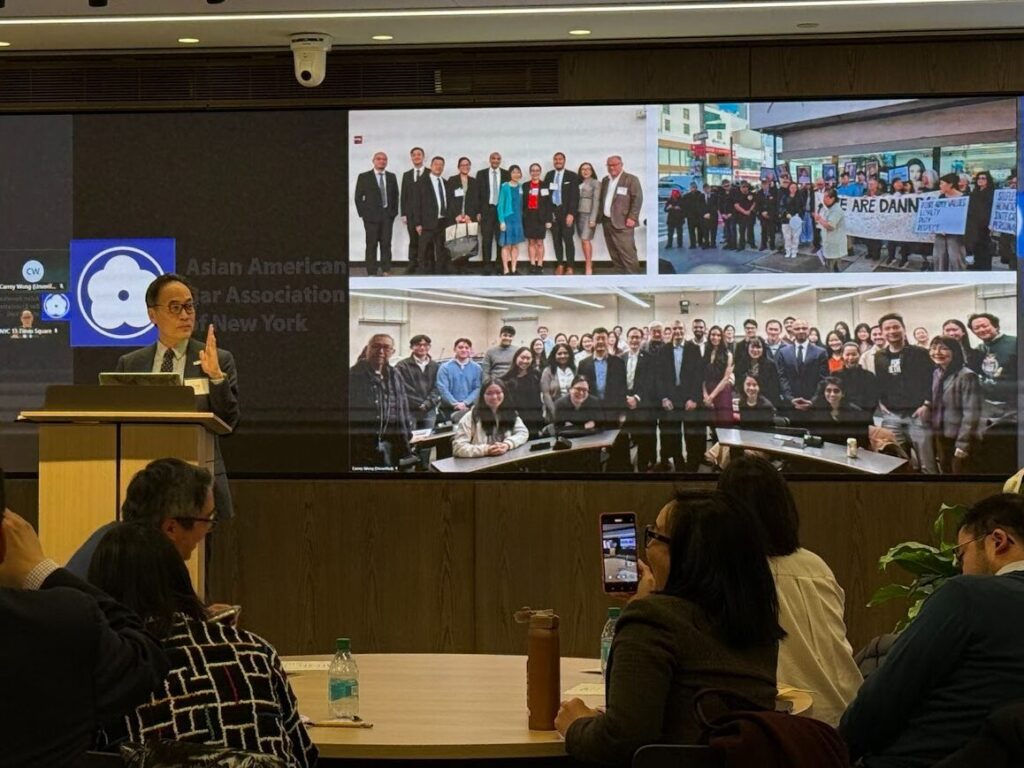
Next, during the Annual Report of the Board, Ben presented a look back at major events in 2025, reflecting on AABANY’s remarkable year, guided by the theme “Together We Thrive: The Power of Us.” He highlighted the year’s signature events, including the Winter Soiree, AAPI Heritage Month celebrations, and the Annual Dinner at Cipriani Wall Street, which drew over 750 attendees. He also noted the 16th Annual Fall Conference, which featured CLE programming, a Career Fair, a Trial Advocacy Program, and the presentation of the Norman Lau Kee Trailblazer Award to Hon. Judy Kim, the first Korean-American judge elected to the New York State Supreme Court. He celebrated AABANY’s first-ever Diwali Dinner as a milestone that reflected the community’s diversity.
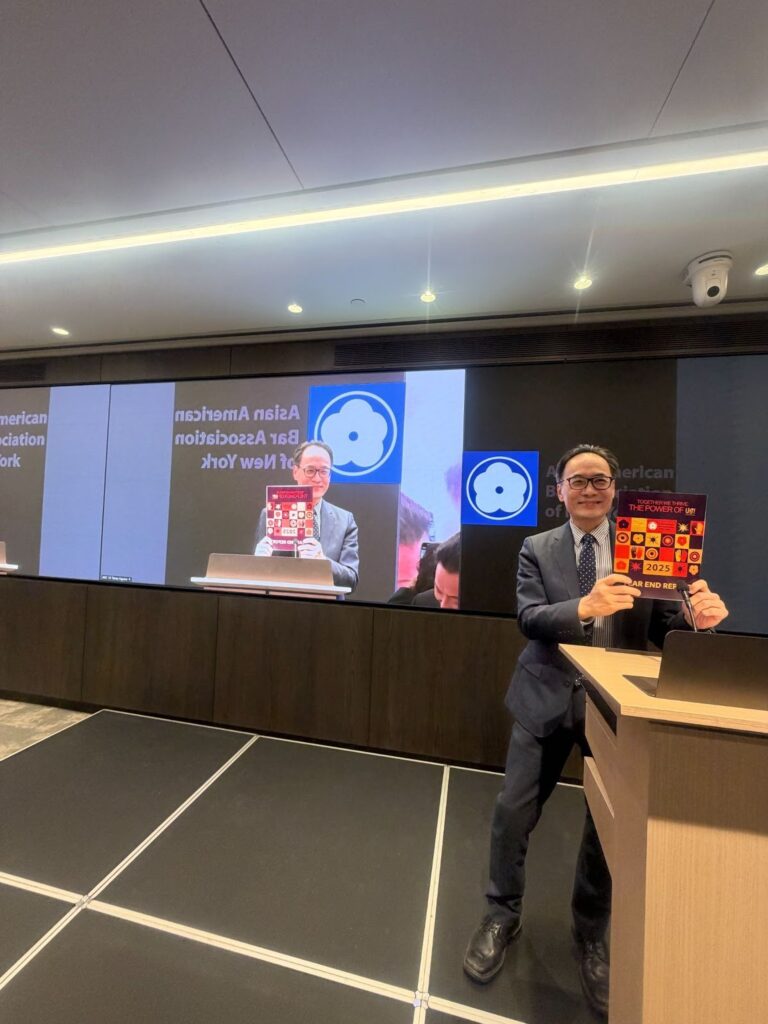
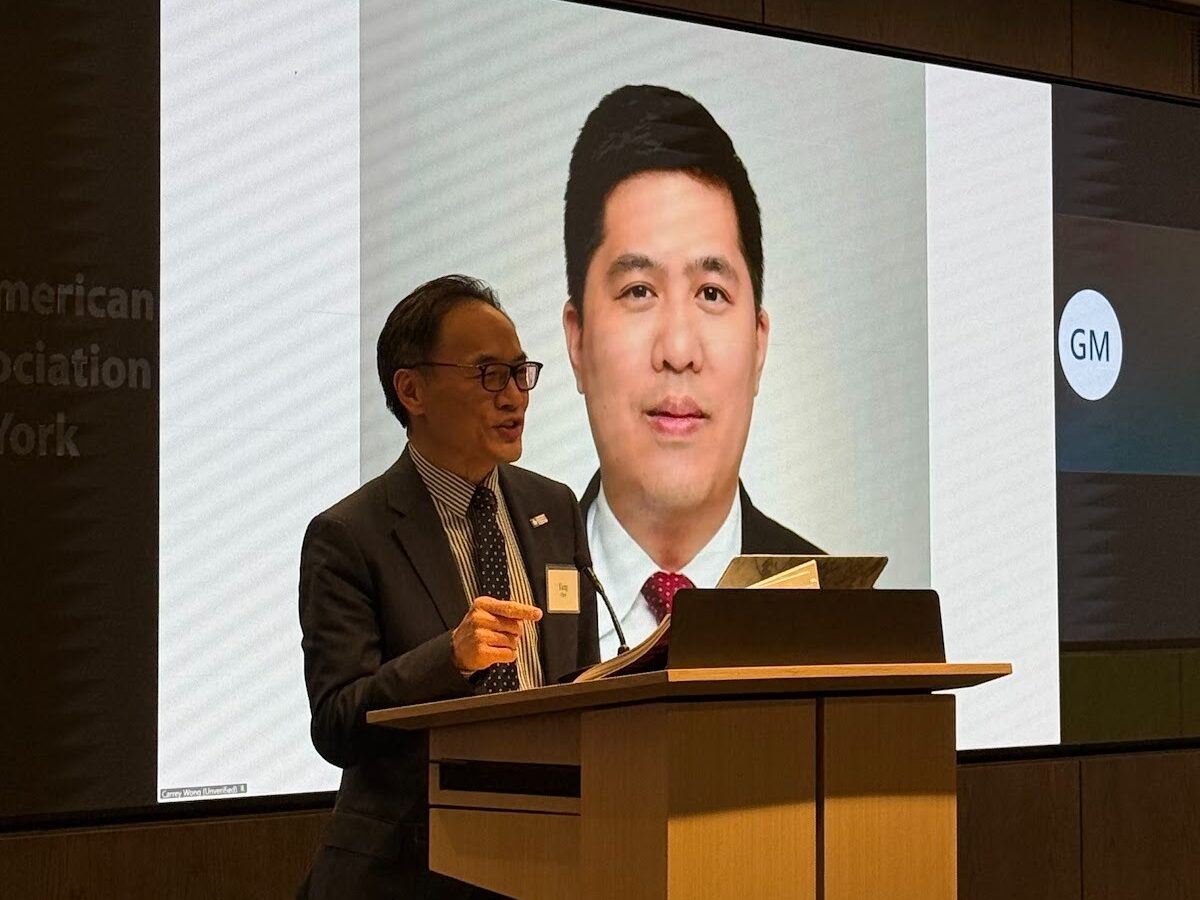
Executive Director Yang Chen then gave the Annual Report of the Committees. He introduced AABANY’s 2025 Year End Report, noting that this was the first time it had been published since the COVID-19 pandemic. He expressed his sincere gratitude to Deputy Executive Director Carrey Wong, emphasizing that the Year End Report would not have been possible without her diligence and many hours of work behind the scenes. He further explained that the hiatus was not due to any slowdown in AABANY’s activities. In fact, quite to the contrary, AABANY’s membership and programming have continued to grow at an impressive pace, reflecting the organization’s strength and momentum over the past few years.
Yang also presented highlights from the 26 Committees, expressing his gratitude to the Vice Presidents of Programs and Operations, Pei Pei Cheng de Castro and Tai Chien, as well as all the Committee Chairs, for their dedication and hard work throughout the year. He shared key accomplishments and standout events from various Committees, then concluded with the presentation of the Committee of the Year, Program of the Year, and Member of the Year awards.
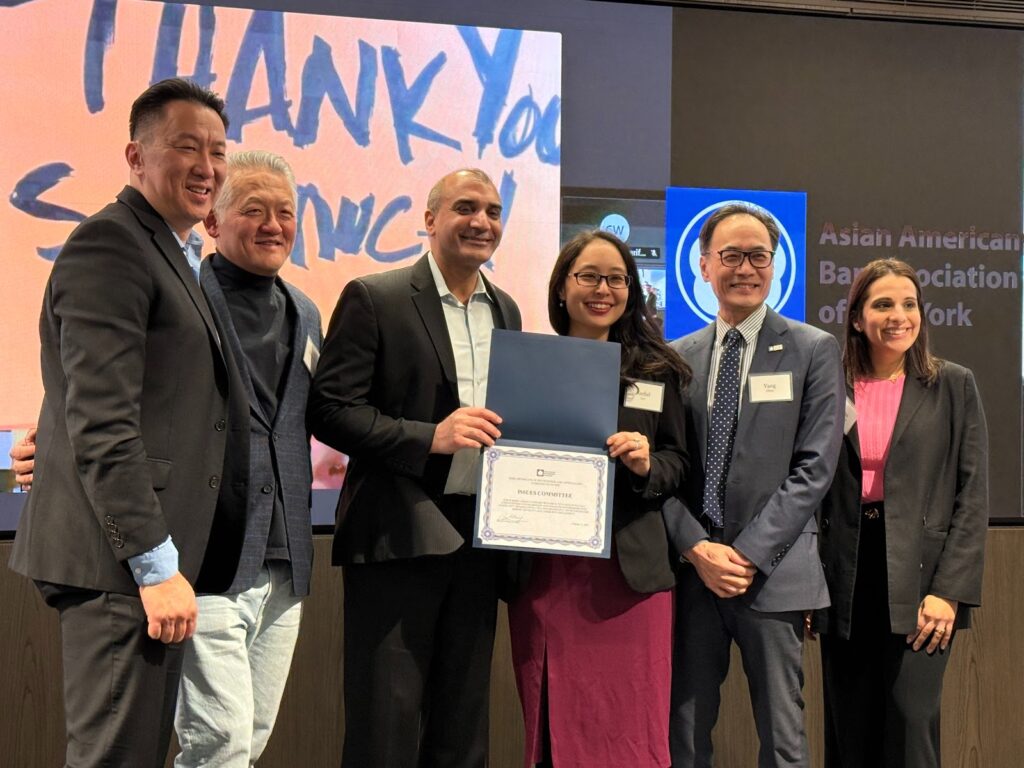
Committee of the Year: Issues Committee
The Committee of the Year Award was presented to the Issues Committee in recognition of its outstanding contributions and impact over the past year. When asked for his reflections on receiving the honor, Co-Chair Vishal Chander shared that he and Co-Chair Rachel Lee view the Committee’s mission as deeply significant and timely. He noted that they felt a strong responsibility to meet the moment and lead with purpose, striving to uphold the Committee’s important work with utmost dedication and integrity.
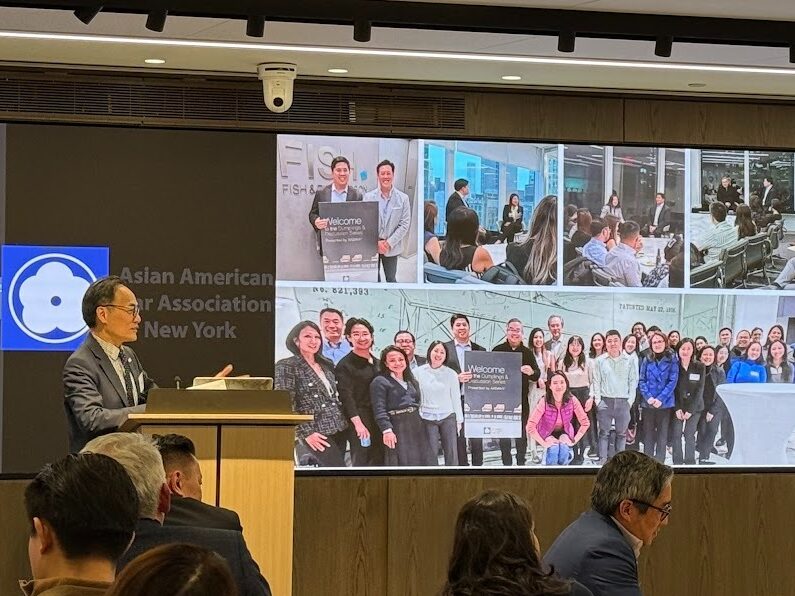
Program of the Year: Dumplings and Discussion Series
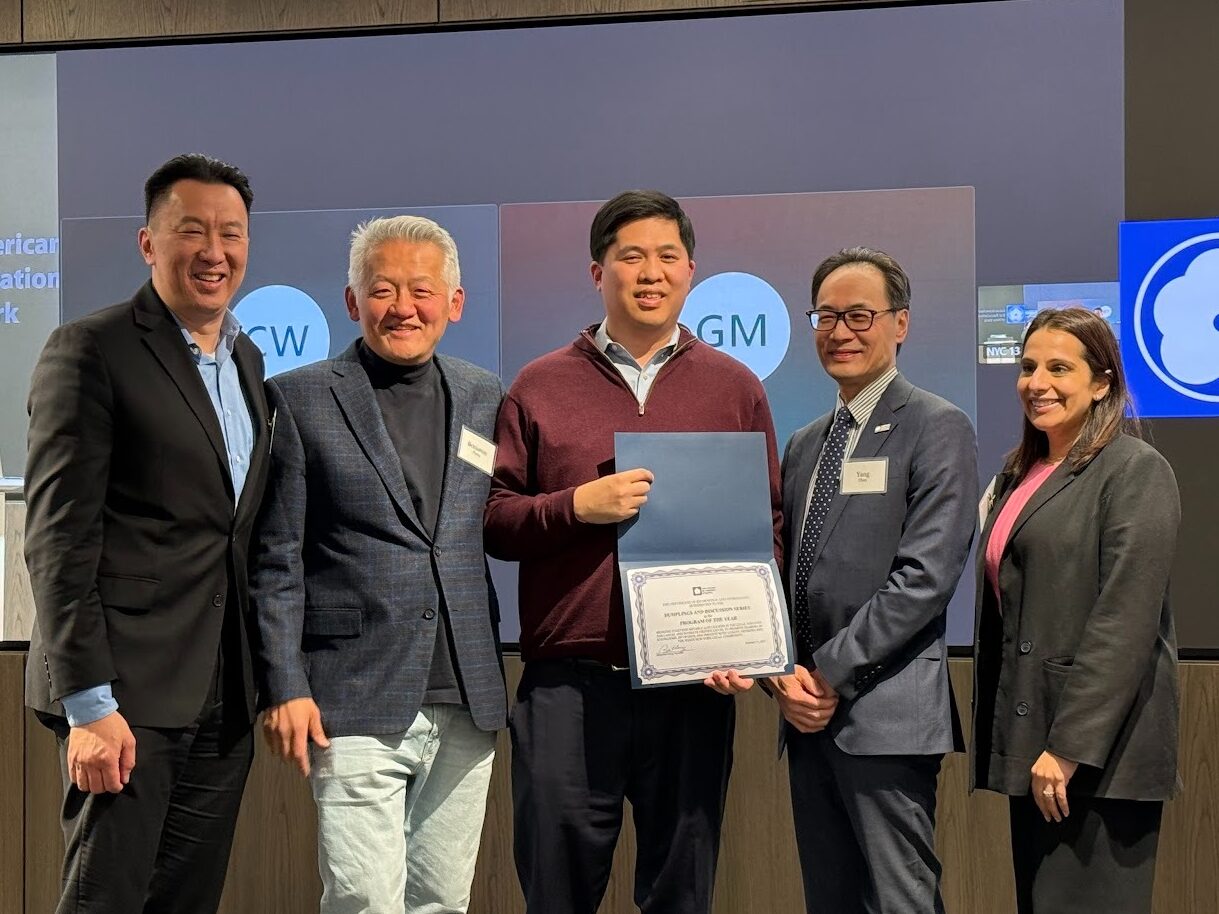
The Program of the Year Award was presented to the Dumplings and Discussion Series hosted by Jeffrey Mok. The Dumplings & Discussion series has been a welcoming forum for prominent, industry-leading attorneys to share their stories and have a candid dialogue over delicious dumplings. Speakers in 2025 included Alan Chang of the New York Yankees, Michelle Lee of MediaCo, Christopher Chan of JLL Technologies, Sonia Low of the Javits Center, Liz Nie of Acorns, Stephen Mar of Odeko, and Osamu Watanabe of Moelis.
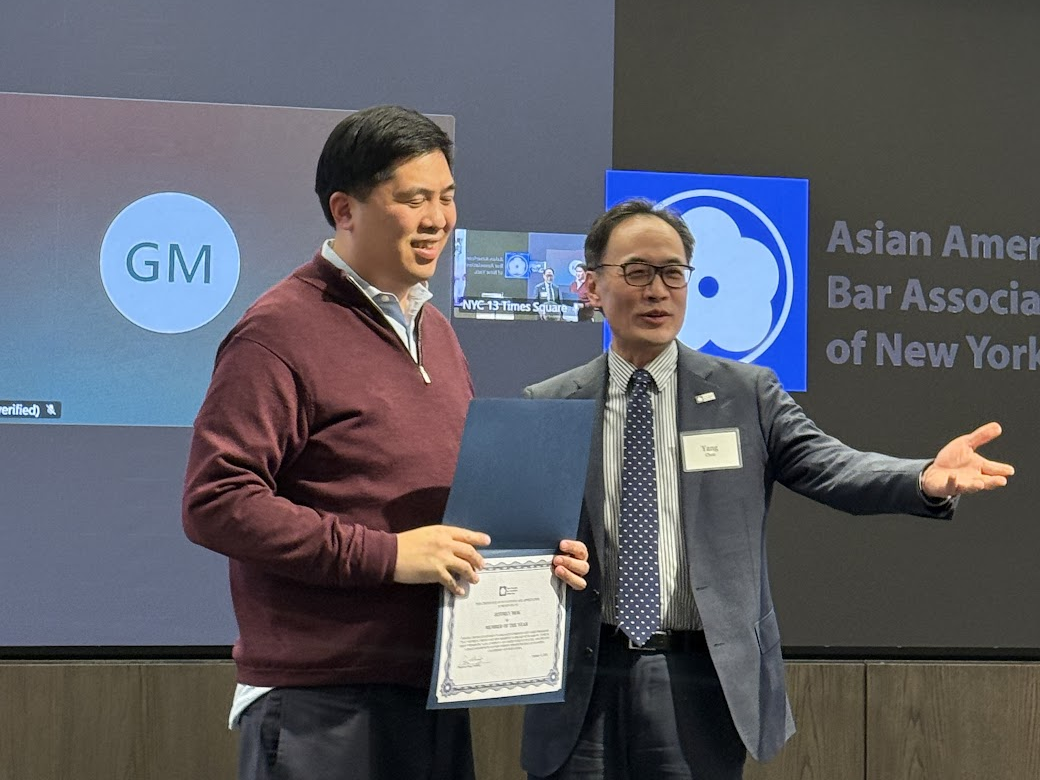
Member of the Year: Jeffrey Mok
The Member of the Year Award was presented to Jeffrey Mok for his exceptional dedication and contributions to AABANY over the past year, including his outstanding work as the Co-Chair of the IP Committee and organizing many popular and worthwhile events, such as Board Games Nights and the Dumplings & Discussion series.
When asked about receiving both the Program of the Year and the Member of the Year awards, Jeffrey reflected that the past year had been truly inspiring and energizing in deepening his involvement with AABANY. Praising AABANY’s work with the Pro Bono Clinics and the Issues Committee, he shared that being part of such a passionate and dynamic community made all the effort worthwhile. He expressed gratitude for the opportunity to contribute, even in a small way, and said he looks forward to continuing the work and participating in more impactful events in the year ahead.
After presenting the awards, President-Elect Varuna Bhattacharyya announced the election results. The following officers were elected to serve a one-year term for the fiscal year beginning April 1, 2026, and ending March 31, 2027 (the “2027 Fiscal Year”):
Officers
John Hwang President-Elect
Pei Pei Cheng de Castro Vice President, Programs and Operations
Taiyee Chien Vice President, Programs and Operations
H. Anthony Park Treasurer
S. Yan Sin Secretary
Francis Chin Membership Director
Gilyana Jones Development Director
The following candidates were elected as Directors to serve two-year terms beginning on April 1, the first day of the 2027 Fiscal Year:
Directors
Henry C. Chan Vishal Chander Joseph Eng Kelly Koyama-Garcia Rachel Lee Beatrice Leong Alysha Naik Diana Wang Jennifer Wu Kevin Yam Dwight S. Yoo
Looking ahead, President-Elect Varuna Bhattacharyya shared her vision for the coming year. When asked about her plans for her term, she spoke about the importance of rising to meet the challenges of the future while intentionally cultivating the next generation of leaders. With mentorship as a central focus, she is committed to strengthening the pipeline of Asian American attorneys and ensuring that AABANY continues to empower and uplift tomorrow’s leaders today.
Special thanks go to AABANY Immediate Past President Joseph Eng, Partner at King & Spalding, and the wonderful staff at King & Spalding for hosting AABANY’s 2026 Annual Meeting.
We thank everyone who attended the Annual Meeting and everyone who voted, whether by proxy or in person. Congratulations to all the award recipients and the newly elected Officers and Directors.
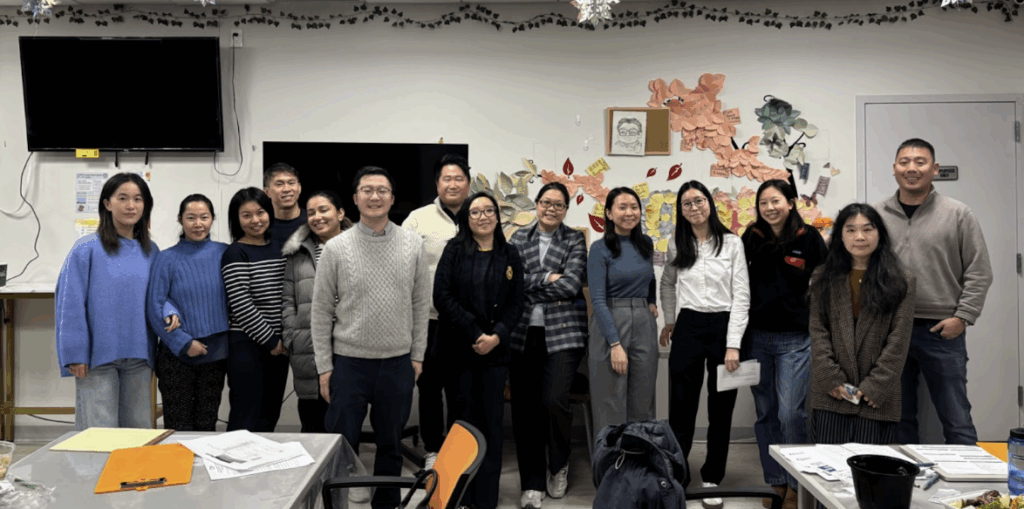
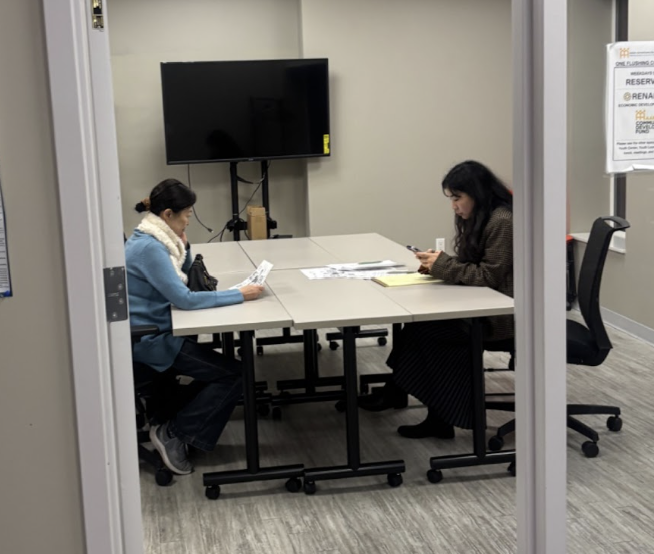
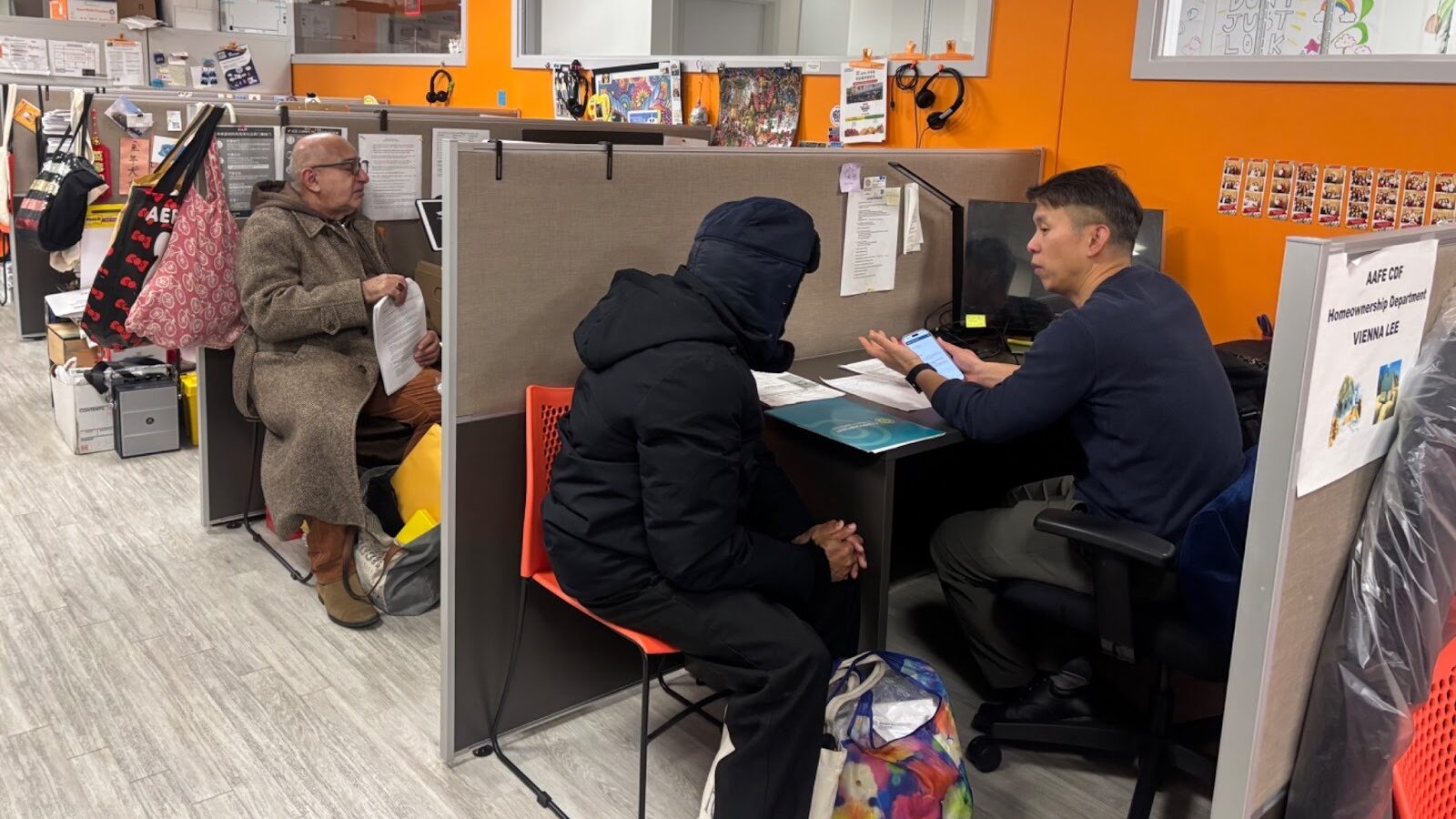
At the clinic, our volunteers met with 16 clients and provided guidance on a range of legal issues, including housing, immigration, employment and sexual discrimination, and civil litigation matters. Your collective efforts ensured that each client received personalized support and answers to their pressing legal questions.
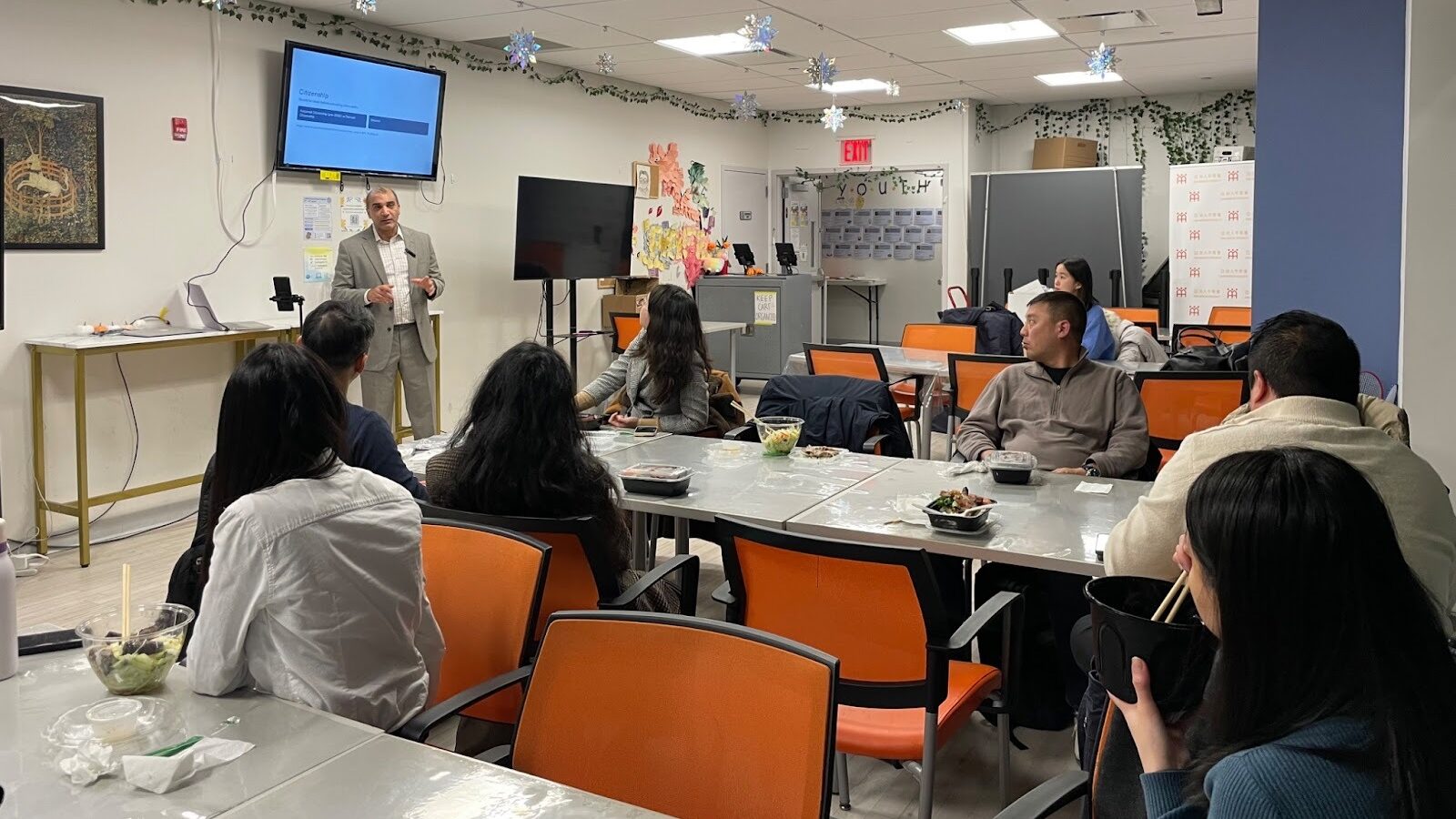
A big thank you to our guest speaker, Vishal Chander, for successfully presenting the second and final part of the two-part series training, “Immigration Basics for Pro Bono Clinic Lawyers.” This training was extremely valuable, giving attendees the key practice information they need, such as what to expect in an immigration proceeding and the different types of relief available in Immigration Court. Vishal’s presentation was insightful and useful, and we especially appreciate that he stuck around to answer the more complex questions, offering extra help to our community members and clients.
AABANY’s Fall 2025 Legal Intern, Jessie Zhou, volunteered at this Clinic and offered this reflection: “At the Queens Pro Bono Clinic, I witnessed two housing cases that revealed both the urgency of our work and the deep structural barriers that so many community members face. One involved an elderly couple who had fallen behind on rent but were terrified of the prospect of entering shelters or leaving Flushing, the only neighborhood where they felt linguistically and culturally safe. The other was a woman hoping to sue her former landlord for chronic noise disturbances that had caused significant distress and health issues, even though the events had taken place over a year ago. Both clients spoke little to no English, and despite the genuine hardship underlying each situation, the legal options available to them were severely limited. The attorneys walked them through their choices carefully and compassionately, yet the clients remained frustrated, continuing to voice anger and disappointment. It was hard not to feel the weight of their helplessness.”
“Moments like these remind me that many people come to Pro Bono Clinics not only for legal remedies, but for acknowledgment,” Jessie added. “Many people just want to feel heard, someone to listen, to affirm that what they endured matters. Their frustration is understandable; they are navigating a system that is complex, unforgiving, and shaped by structural inequities. In a society built on capitalist priorities, where the most vulnerable often fall through the cracks, our mission seems ever more important, and the Pro Bono Clinics become one of the few accessible spaces where marginalized individuals can be heard. Even when the law offers little recourse, showing up with patience, empathy, and respect remains an indispensable form of advocacy. The AABANY volunteers at the Queens Pro Bono Clinic strive to make others feel heard even when they can be misunderstood by their clients.”
We are deeply grateful for everyone’s presence and contributions, and look forward to continuing this important work together!
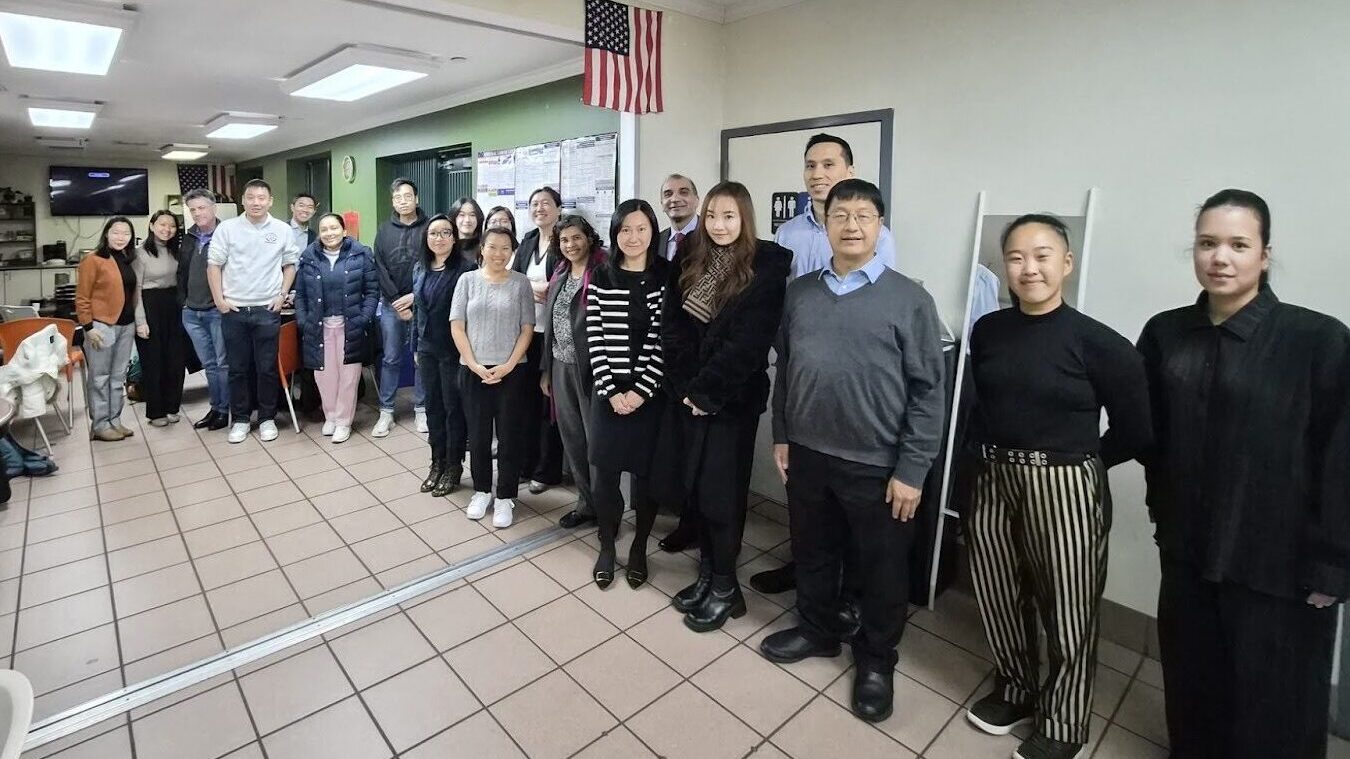
Volunteer attorneys:
Vishal Chander
Ivy (Ting-Yu) Chien
Richard In
Beatrice Leong
Jie Shi
Lord Chester So
Anthony Wong
May Wong
Gary Yeung
Meng Zhang
Interpreters/shadowers:
Nandar Win Kerr
Nikita Kohli
Grace Ouyang
Wendy Zeng
Jessie Zhou
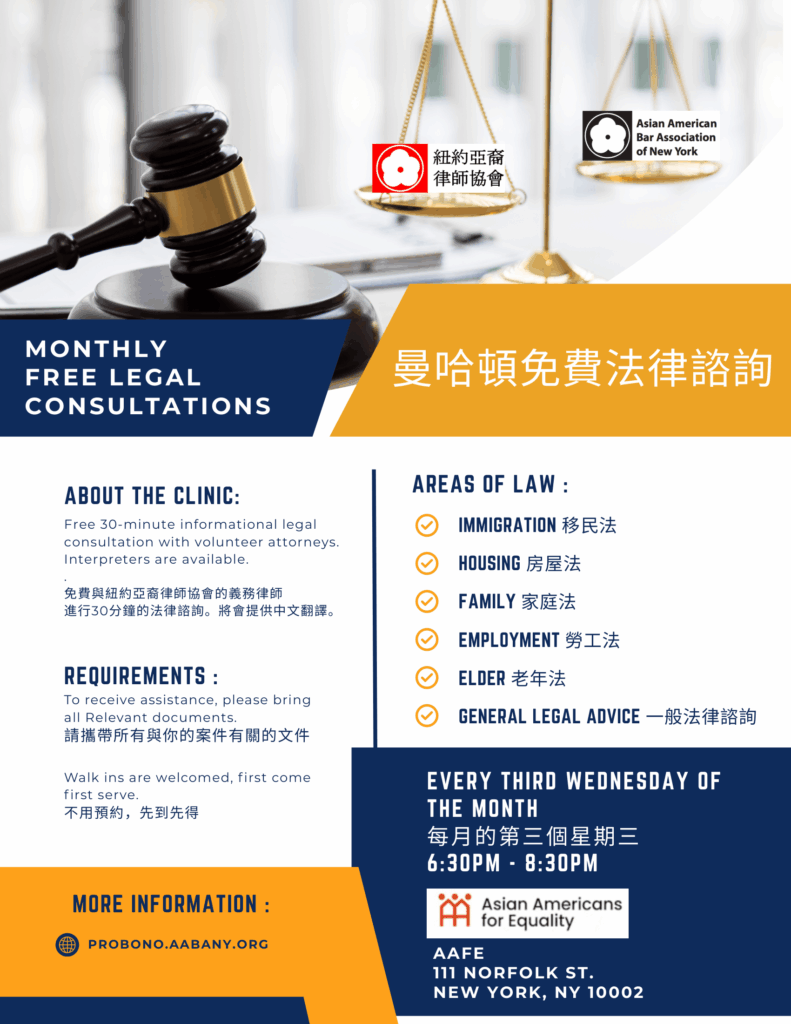
We invite you to continue supporting our community by joining us at our upcoming Pro Bono Clinics:
December 17th [Manhattan linkhere] from 6:30-8:30pm, AAFE Community Center, 111 Norfolk Street, NY, NY 10002
January 10th [Brooklyn linkhere], from 12:30 – 3:30pm, CPC Brooklyn Community Services, 4101 8th Avenue, Brooklyn, NY 11232
February 4th [Queens linkhere], from 6:30 – 8:30pm, AAFE One Flushing Community Center, 133-29 41st Ave, 2nd Floor, Flushing, NY 11355
Thanks to all our volunteers for attending the Pro Bono Clinic. We look forward to your participation in our future clinics! To learn more about the Pro Bono & Community Service Committee, visit probono.aabany.org.
Prior to the Clinic, Vishal Chander (AABANY Board Member and Issues Committee Co-Chair), presented “Immigration Basics for Pro Bono Clinic Lawyers” (Part 1, NTA, Detention & Bond). This valuable training equipped attendees with important practice tips, such as how to assist a pro bono client who receives a Notice to Appear, how to locate a detained individual through immigration enforcement authorities, and how to obtain or request an immigration bond hearing. Vishal’s expertise was further demonstrated as he remained available to help address complex questions related to immigration issues, offering additional support to our community members.
In the training session, Vishal offered an engaging and informative introduction to the complexities of U.S. immigration proceedings, all while reminding us that knowledge can make a powerful difference for vulnerable communities. While he noted that removal defense is not his primary area of practice, his commitment to sharing essential tools spoke to a deeper truth of pro bono work: sometimes, the most meaningful contributions come not from being an expert, but from being willing to show up, learn, and guide others. He emphasized that even being able to recognize a Notice to Appear (NTA) and understanding what it means is often the first step in helping clients regain a sense of control, dignity, and direction in a system that can feel overwhelmingly confusing and intimidating.
His session also brought forward the human side of the law. When he spoke about frantic family members trying to locate loved ones across detention facilities, or clients unknowingly waiving important rights by signing English-only forms under pressure, it became clear that pro bono assistance is not just about legal procedure; it is also about compassion, advocacy, and being present for people at their most vulnerable. Volunteers do not need to solve every legal question to have an impact; even helping a client understand their A-number, guiding them to check the EOIR system, or knowing when to challenge errors in an NTA can prevent irreversible consequences. These small interventions protect not only legal rights, but also hope and humanity.
Vishal reminded us that pro bono work is about restoring access to information, to justice, and to basic fairness. The training reaffirmed that volunteers play a vital role in bridging the gap between complex legal systems and civilians, who are often confused, scared, and navigating language, cultural, and legal barriers all at once. Even a minimal understanding can open the door to critical support, and that is sometimes all it takes to change the course of someone’s life.
After Vishal’s presentation, the regular Pro Bono Clinic took place. At the clinic, our volunteers met with 15 clients and provided guidance on a range of legal issues, including housing questions, fraud concerns, and civil litigation matters. The collective efforts of our volunteers ensured that each client received personalized support and answers to their pressing legal questions. As one seasoned volunteer shared with AABANY staff, “sometimes it’s not solely about the legal issues, but about being here to listen.”
Here are some of the clients’ comments:
“Very satisfied (with the service), hope to have more of these (events/services) for me! Thanks!”
“Hope to be able to receive help again.”
“Mr. Justin was excellent.”
We are deeply grateful for everyone’s contributions and look forward to continuing this important work together!
Please join us at Part 2 of Immigration Basics for Pro Bono Clinic Lawyers: Navigating Immigration Court & Relief and future Pro Bono Clinics on December 3rd. The training will be from 6-6:30pm, followed by the Pro Bono Clinic. It will take place in Queens, at AAFE One Flushing Community Center. This training will continue the series that will prepare lawyers and law students on the fundamentals of advising Pro Bono Clinic clients who are or have family in removal (deportation) proceedings. Part 2 will focus on 1) What to expect in an immigration proceeding and 2) what kinds of relief are available in immigration court. Note: NY CLE Credit Available. Attorneys seeking CLE credits must attend both sessions to earn 1 CLE credit hour. No partial credit is available.
Upcoming Pro Bono Clinics:
December 3rd [Queens link here], from 6:30 – 8:30pm, AAFE One Flushing Community Center, 133-29 41st Ave, 2nd Floor, Flushing, NY 11355
December 17th [Manhattan link here] from 6:30-8:30pm, AAFE Community Center, 111 Norfolk Street, NY, NY 10002
January 10th [Brooklyn link here], from 12:30 – 3:30pm, CPC Brooklyn Community Services, 4101 8th Avenue, Brooklyn, NY 11232