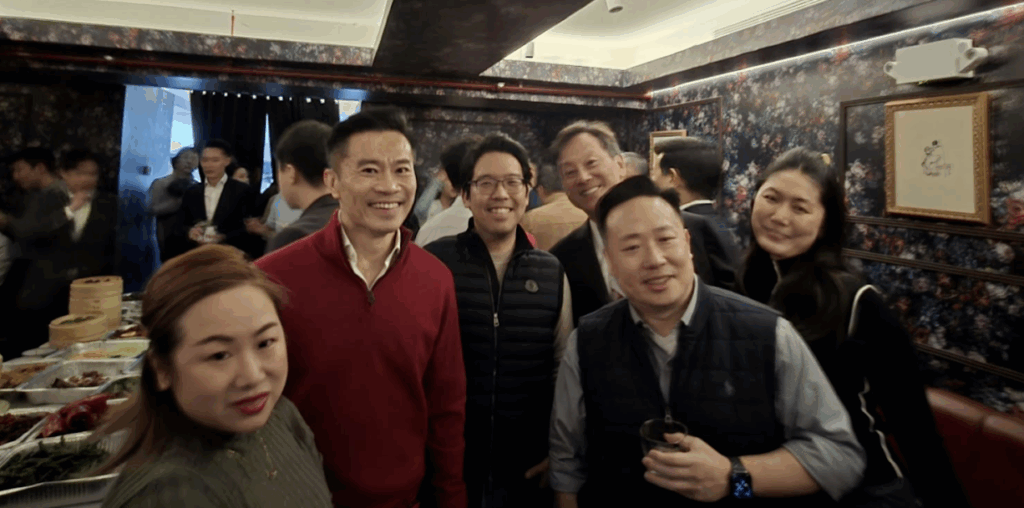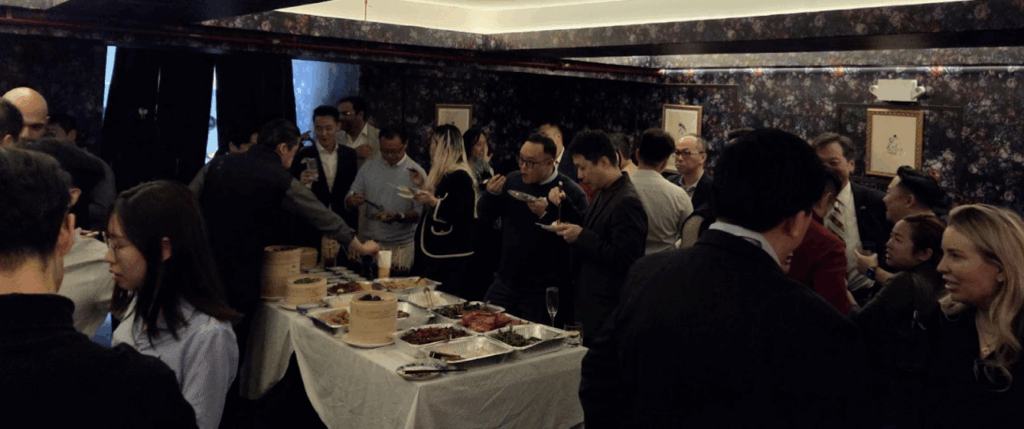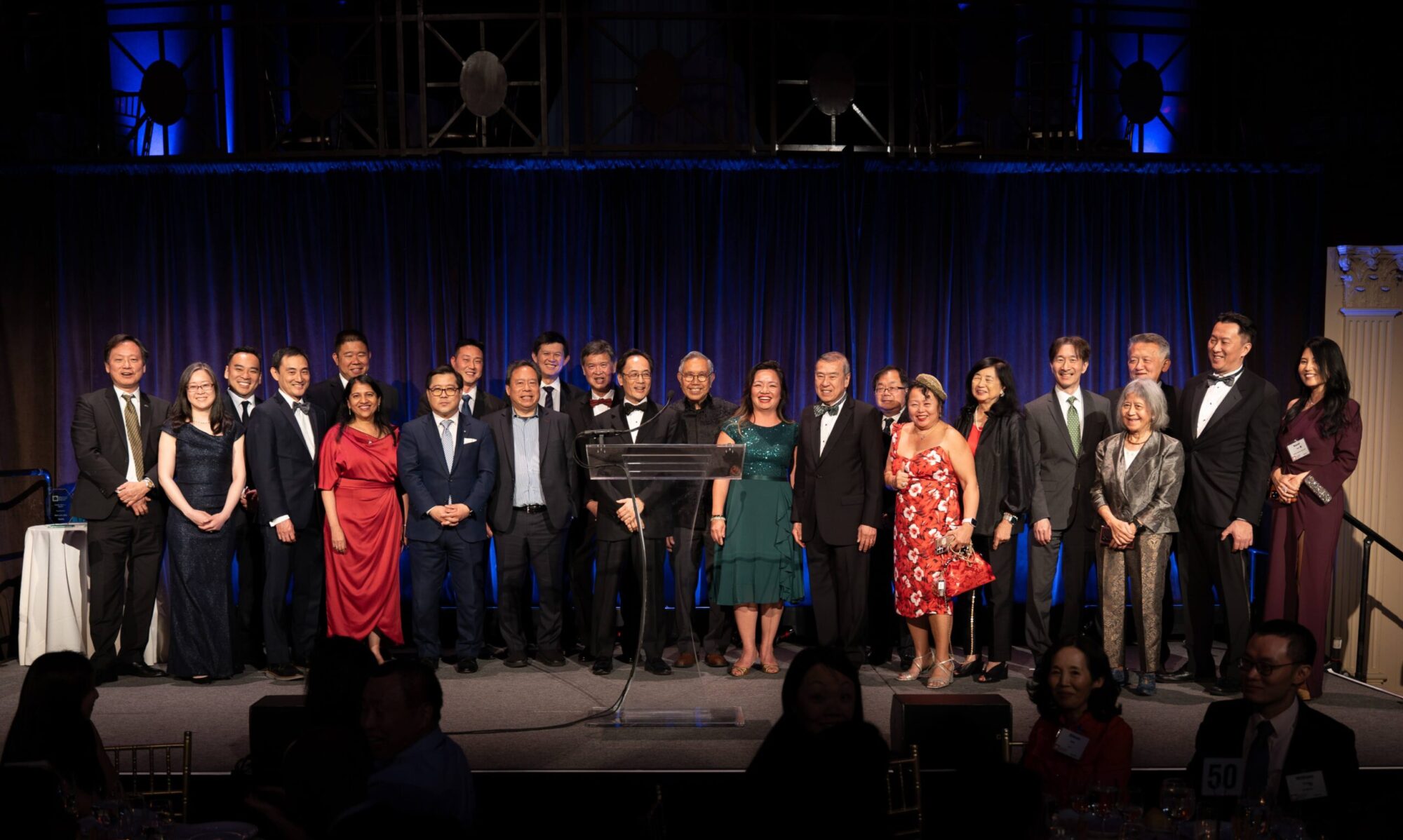

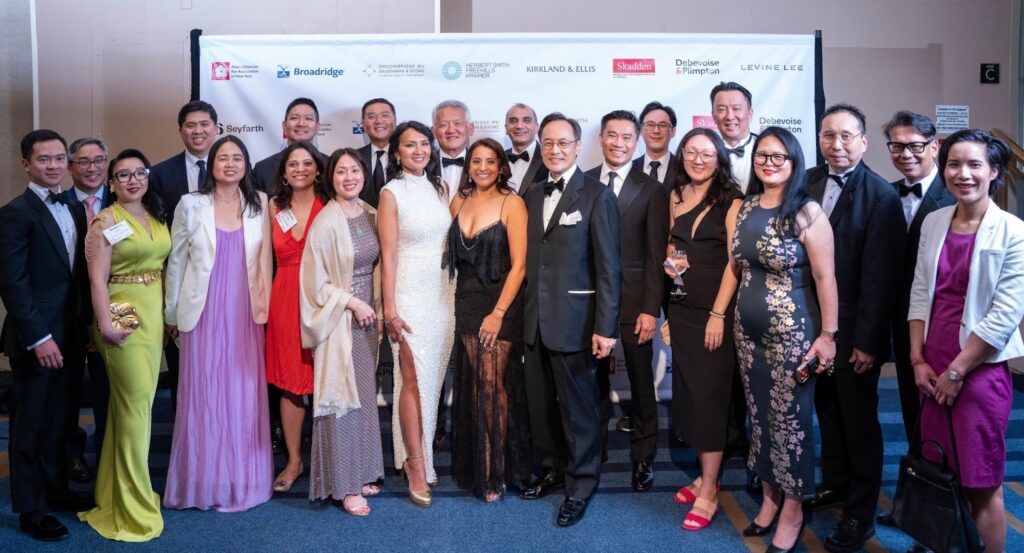
On May 28, 2026, the Asian American Bar Association of New York (AABANY) hosted its Annual Dinner under the theme: “Rising up to Meet the Future: Cultivating Tomorrow’s Leaders Today.” Held once again during Asian American, Native Hawaiian, and Pacific Islander (AANHPI) Heritage Month and at Cipriani Wall Street, the event welcomed more than 800 guests, including attorneys, judges, prosecutors, in-house counsel, government officials, and community leaders.
The evening began with an invitation-only General Counsel Reception in the Mezzanine. Shattering the records of prior years, around 70 General Counsels accepted AABANY’s invitation this year, along with many distinguished guests. We extend our deepest thanks to the General Counsel Reception sponsor, Groombridge, Wu, Baughman & Stone LLP, for helping us launch the evening on a high note. We also thank Michael Wu, former General Counsel of Bath & Body Works, for helping us with reaching out to General Counsels to join the event.
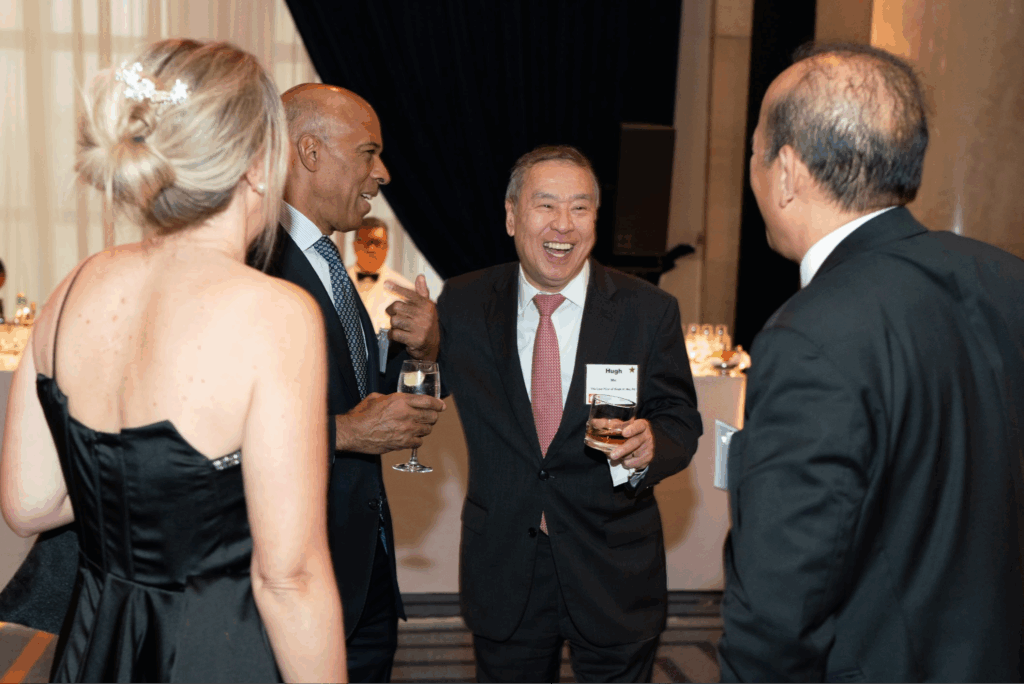
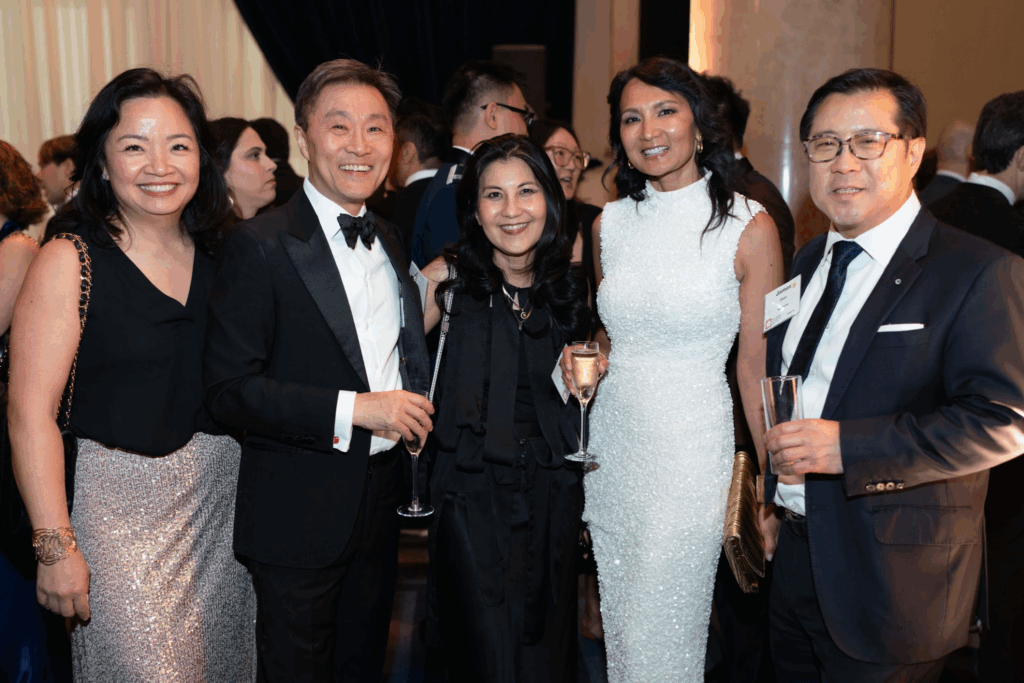
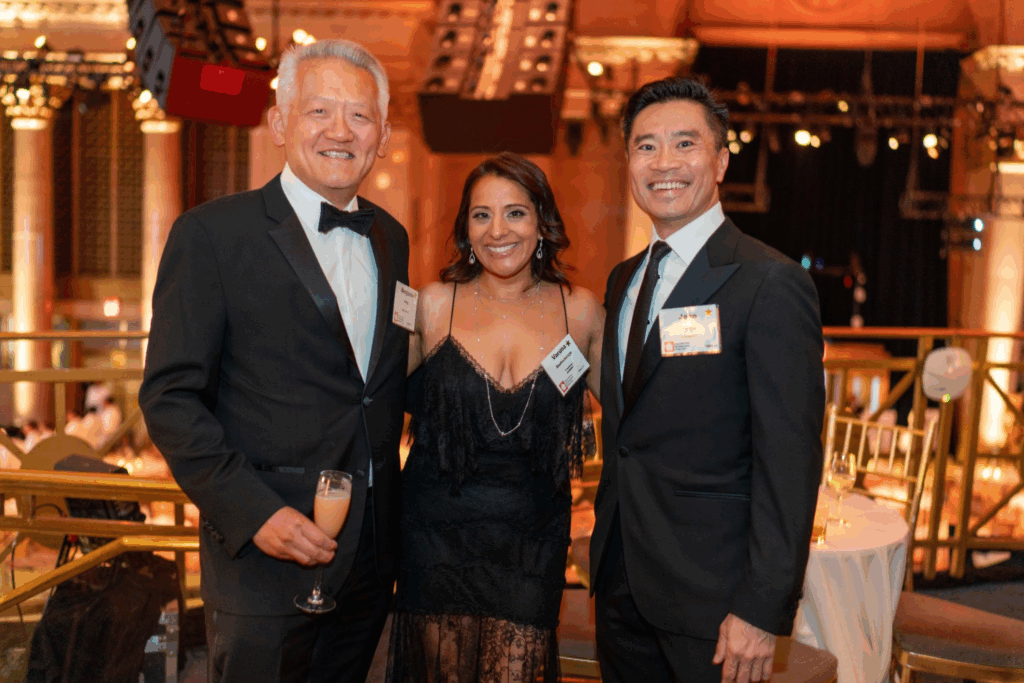
Attendees who were not attending the General Counsel Reception gathered in the West Ballroom for the Cocktail Reception, where they reconnected and made new connections over hors d’oeuvres and drinks, including Cipriani’s signature bellini.
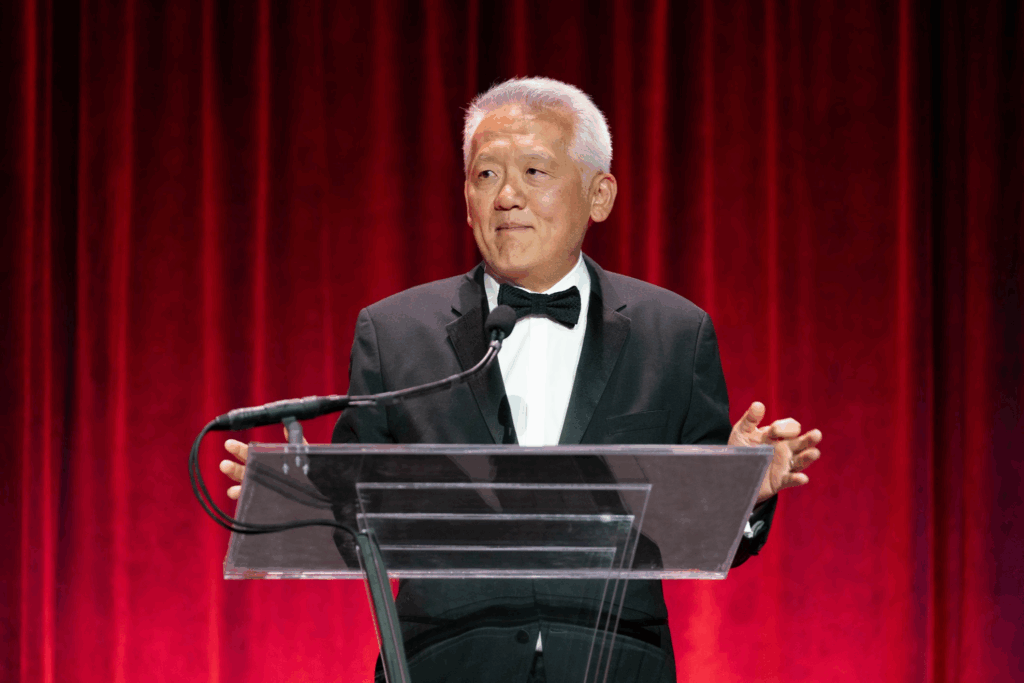
Our Master of Ceremonies Richard Lui, anchor at MS NOW and filmmaker, kicked off the program by highlighting AABANY’s myriad initiatives in the past year. Richard then invited Immediate Past President Benjamin C. Hsing, Senior Counsel at Bayes PLLC, to the stage for the Immediate Past President’s remarks. Ben welcomed everyone to the dinner and officially opened the dinner on a high note, reflecting on the prior fiscal year’s successes and achievements.
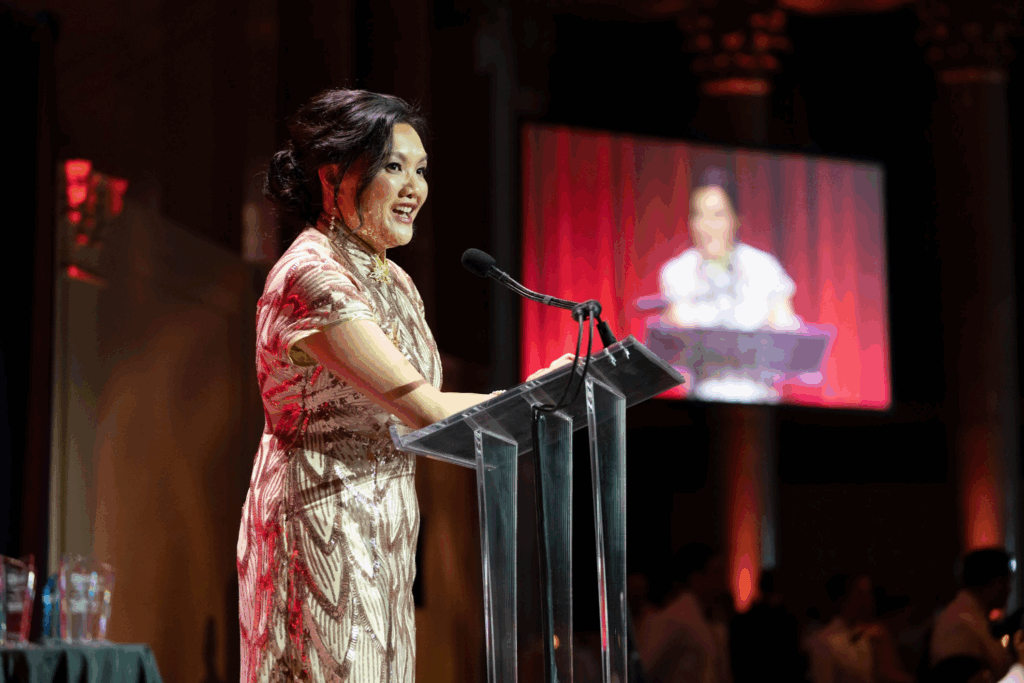
Industry Leadership Award
Following Ben’s remarks, AABANY proudly presented the 2026 Industry Leadership Award to Alvina Lo, Head of Advice, Planning, and Fiduciary Services at BNY Wealth. A tribute video introduced her as a thoughtful, pragmatic, and enthusiastic mentor and community builder. One colleague highlighted her innate “ability to connect with people” as vital to her many contributions in the trusts and estates legal field.
In her speech, Alvina began with a historical fact about Alexander Hamilton: he founded Bank of New York (BNY) in 1784, entrusting it with his family’s future assets and also making it the oldest continuously operating bank in America. As the leader of BNY Wealth’s strategic direction, Alvina continues that legacy by upholding the importance of trusts and estates law to the American Dream. She spoke of inheriting both “opportunity” and “responsibility” and the importance of building wealth in communities, because “[n]o one builds their wealth on their own.” Fittingly, she closed her remarks with another quote from the musical Hamilton: “What is a legacy? It’s planting seeds in a garden you never get to see.”
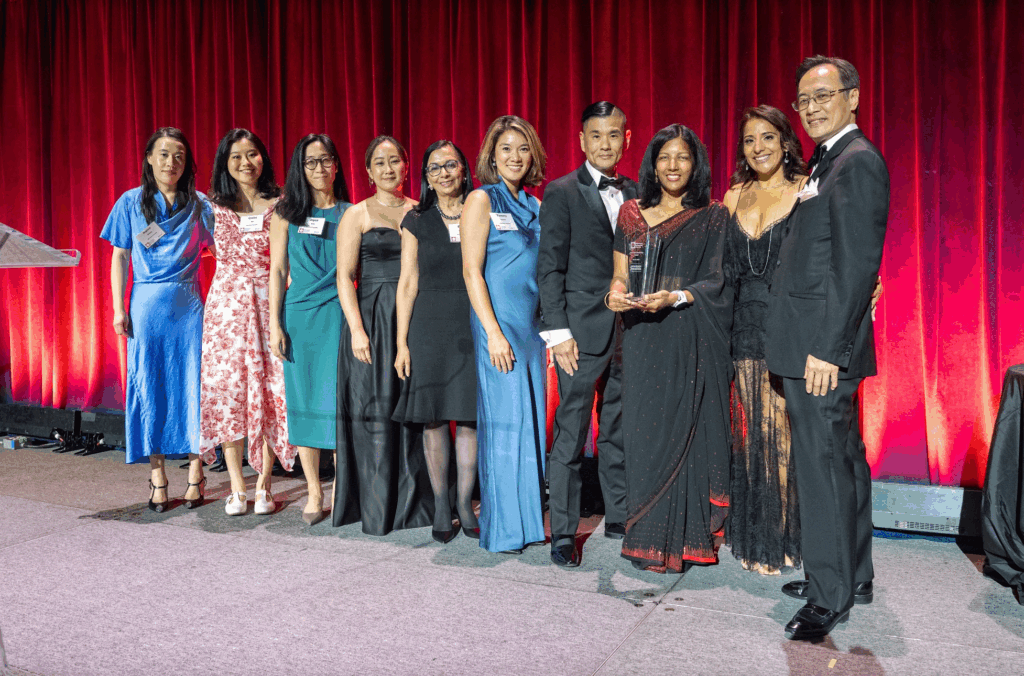
The Law Firm Leadership Award
Then, the AABANY Law Firm Leadership Award was presented to Morrison Foerster (MoFo), honoring their intentional and sustained efforts to mentor and sponsor attorneys, create meaningful leadership pathways, and support a culture of equal opportunity and professional development. MoFo is a global firm known for its work across litigation, transactions, and regulatory matters, with a longstanding commitment to diversity and inclusion. The firm’s holistic approach to talent development begins with its Keith Wetmore Fellowship for Excellence, Diversity, and Inclusion, and continues through the Wetmore Bridge Program, a two-year apprenticeship-style initiative.
Haima Marlier, a partner in MoFo’s Investigations + White Collar Defense Group, accepted the award alongside a group of MoFo attorneys. Haima described her pride in working at a “firm where everyone can belong.”
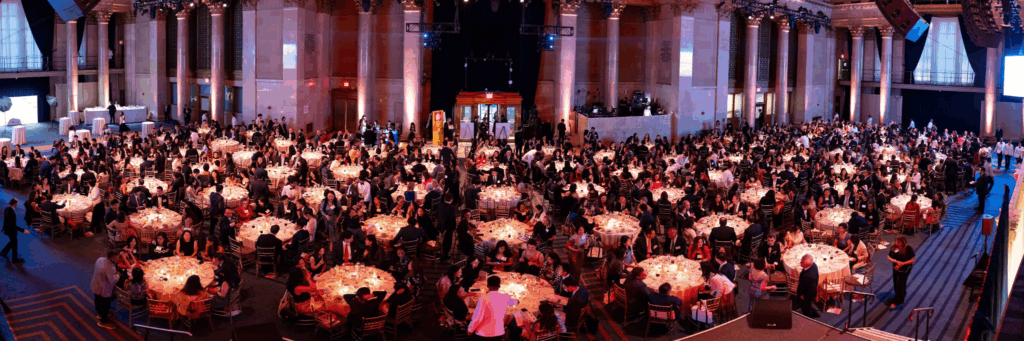
Celebration and Recognition
As guests enjoyed a delicious dinner of lamb, salmon, or vegetable peperonata, they took the opportunity to network and connect with fellow attendees. Yang Chen, Executive Director of AABANY, returned to the stage to recognize the many judges and dignitaries in attendance.
The event then took a moment to publicize the AABANY Leadership Development Program, a 6-month long interactive training course designed for AABANY members who are senior attorneys navigating the promotion process within their law firms and companies. A video presentation introduced the program and highlighted it as a candid, confidential, and community-building environment.
Public Service Award
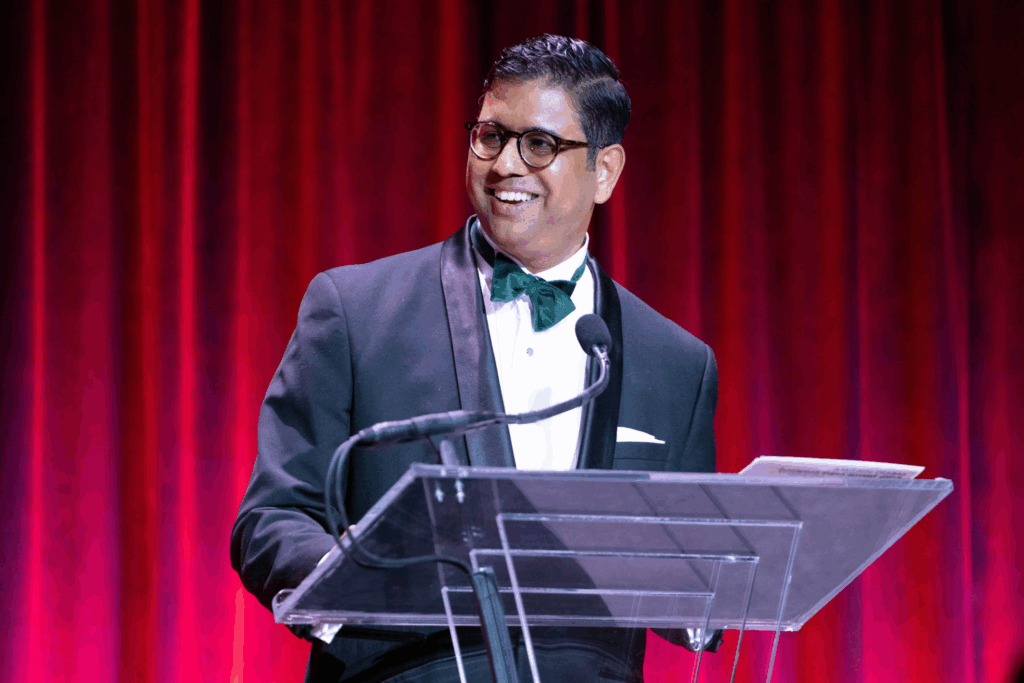
Next, AABANY proudly presented the 2026 Public Service Award to Hon. L. Austin D’Souza, recognizing his role as a lifelong public servant. Justice D’Souza is Supervising Judge of New York County Civil Court and an Acting Justice of the New York Supreme Court, Civil Term. A moving tribute video emphasized his devotion to his work, community, and family, and highlighted his ability to expand people’s views.
In his speech, Justice D’Souza honored his mother as his first mentor, who told him at a young age to “Never stop helping.” Another role model told him early in his career that “You must be a judge,” a milestone he has achieved in the New York County Civil Court and as an appointee to multiple statewide judicial commissions addressing racial equity and anti-Asian hate. He emphasized the importance of mentorship, and how “interconnectedness is reflected in our personal lives,” because, importantly, “[w]e rise together.”
Corporate Leadership Award
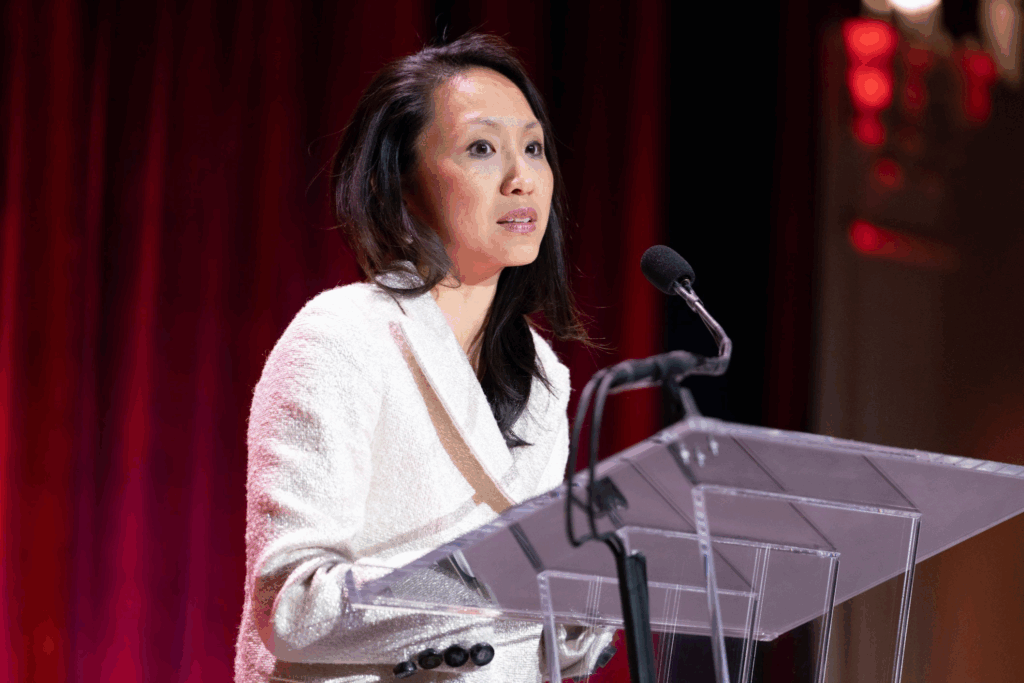
The evening’s final honoree, Grace Fu, received the 2026 AABANY Corporate Leadership Award. Grace is currently a Chief Legal & Administrative Officer at Nanit, an AI-powered technology company based in New York City. The video tribute highlighted Grace as extremely capable, curious, kind, thoughtful, and as someone who “projects calmness and confidence” with a “genuine warmth.”
Meaningful participation in community was a recurring theme in Grace’s speech, in which she described joining AABANY 10 years ago. Drawing upon experiencing anti-Asian hate as a child, she emphasized the importance of “meaningful participation” at every level of work and community, including AABANY’s Pro Bono Clinics and the AABANY Leadership Program. As a former member of AABANY’s Board of Directors, concluding her term at the end of fiscal year 2026, and Co-Chair of AABANY’s In-House Counsel Committee between 2016 and 2023, she closed with an impactful comment about her “renewed commitment to keep leading with integrity.”
Don H. Liu Scholars
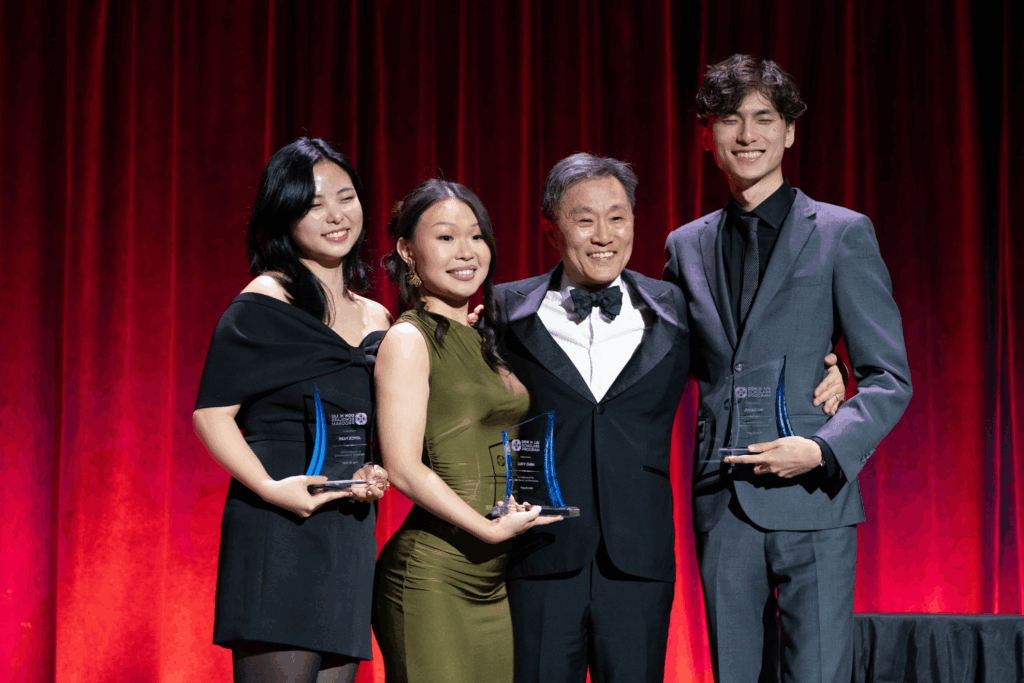
After Grace was honored, the 2026-27 Don H. Liu Scholars—Junao Lin, Lucy Chen, and Joyce Park—were recognized for their academic excellence and leadership potential. Don Liu introduced each scholar and described their personal stories and journey into the legal field. The audience was moved by the resilience and determination woven through each of their paths, which included navigating first-generation experiences, finding belonging across two worlds, and transforming the challenges of the AANHPI immigrant life into purpose. In choosing law, each scholar spoke to something larger than a career—a commitment to advocacy, representation, and opening doors for the communities that shaped them.
President’s Remarks
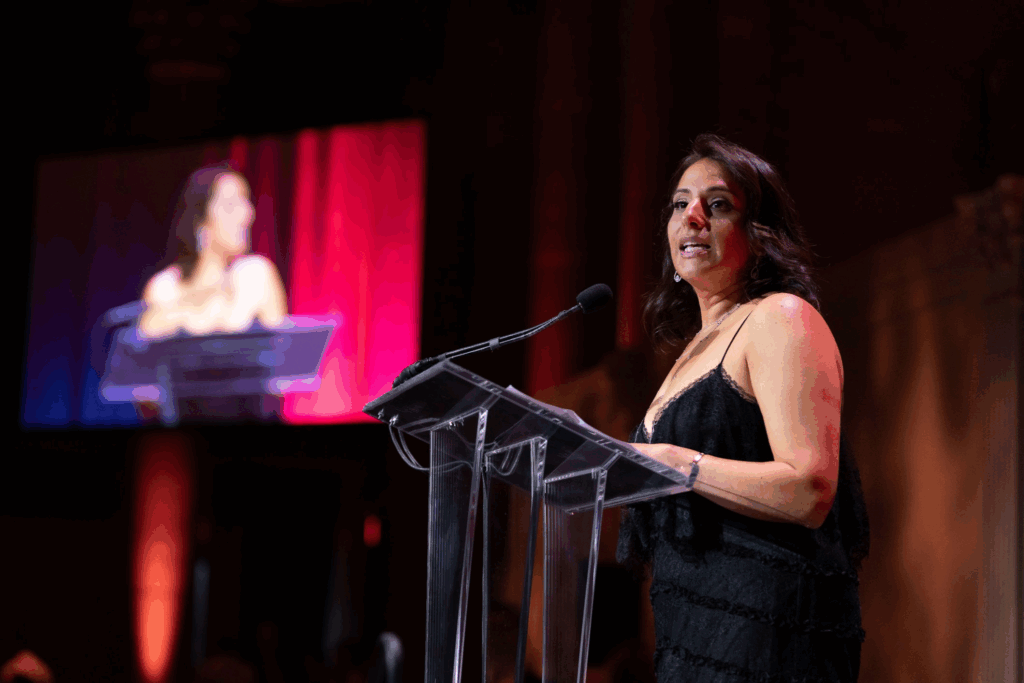
To bring the program to a close, AABANY President Varuna Bhattacharyya, Partner at Seyfarth Shaw LLP, delivered her speech, reflecting on a memorable evening, thanking the sponsors, presenters, and honorees who made the night possible, and celebrating the collective strength of the AABANY community. She explained that the theme for AABANY’s upcoming year, “Rising Up to Meet the Future: Cultivating Tomorrow’s Leaders Today,” originated from Oscar-winning animated movie K-Pop Demon Hunters. The movie’s viral song, “Golden,” has the lyrics “We’re going up, up, up,” which inspired AABANY’s theme this year. Looking to the coming year, Varuna spoke of embracing what’s to come: the “future is not abstract. It is here.” She noted that, “living in a time when the American Dream is being tested,” it becomes more important to “lift as we climb.”
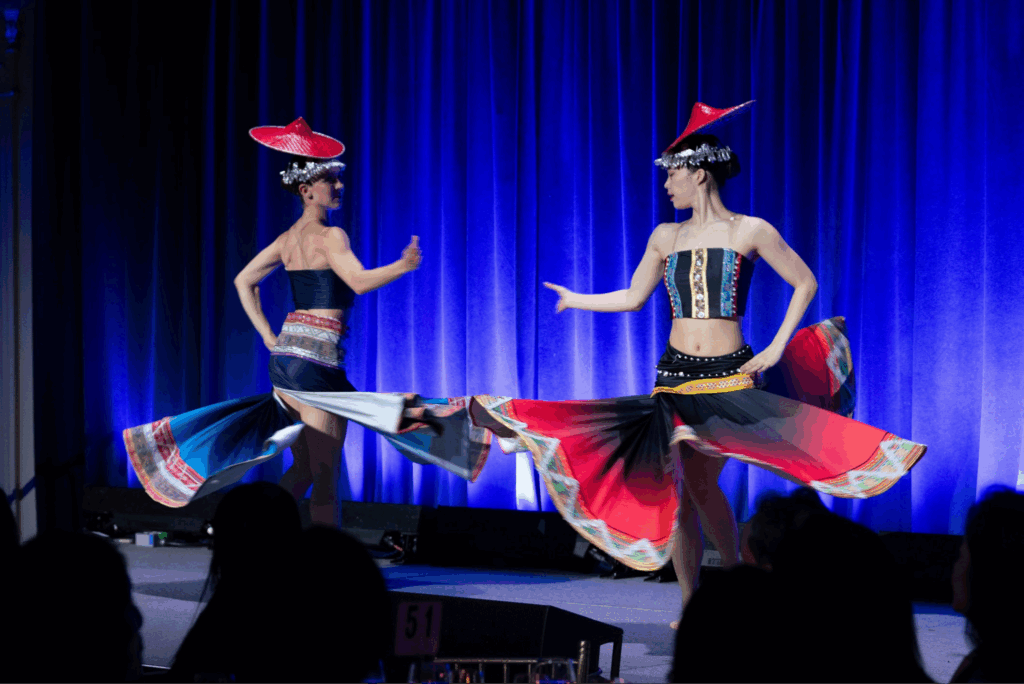
Performance by Nai-Ni Chen Dance Company
At the end of the evening, the Nai-Ni Chen Dance Company took the stage, mesmerizing the audience with their blend of traditional and innovative contemporary dance. A leading AAPI professional dance company, they are known for bridging the grace of Asian elegance and American dynamism, fusing contemporary dance with martial arts, folk rhythms, Tai Chi, and Qigong.
Closing Remarks and Acknowledgements
Following the performance, AABANY President-elect John Hwang, Partner at Linklaters, took the stage to thank the many sponsors, officers, Board members, and Committee Chairs who made the night possible, expressing his excitement for the year to come.
The celebration continued with an afterparty in the Mezzanine, where guests mingled into the night.
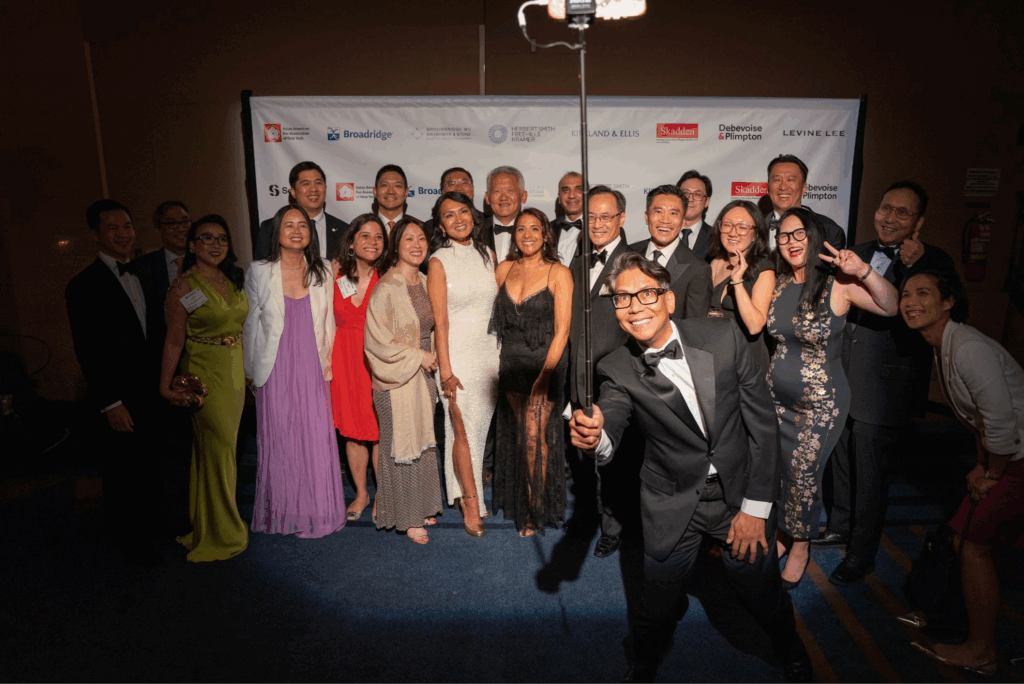
We thank the 2026 Annual Dinner Planning Committee, chaired by AABANY President Varuna Bhattacharyya, as well as our staff and volunteers for their tireless work in making the evening a success.
We are especially grateful to our generous sponsors, whose support enables AABANY to continue its vital work on behalf of the AANHPI legal community and the broader community we serve. Special thank-yous and acknowledgement to our Diamond, GC Reception, Platinum, and Gold Sponsors:
Diamond: Broadridge
General Counsel Reception: Groombridge, Wu, Baughman & Stone
Platinum:
Herbert Smith Freehills Kramer
Gold:
Lastly, we thank everyone who attended the 2026 Annual Dinner for making it so special and memorable. Please find the event program here. Photo albums from the 2026 Annual Dinner can be found here (on stage) and here (off stage). Thanks to J. McClinton Photography for the wonderful photos. Watch the videos from the Annual Dinner here. Thank you to Peter Chin for the wonderful videography.