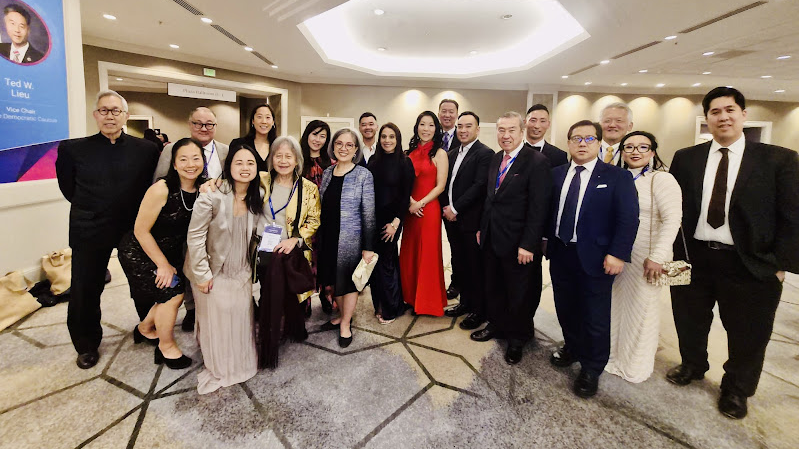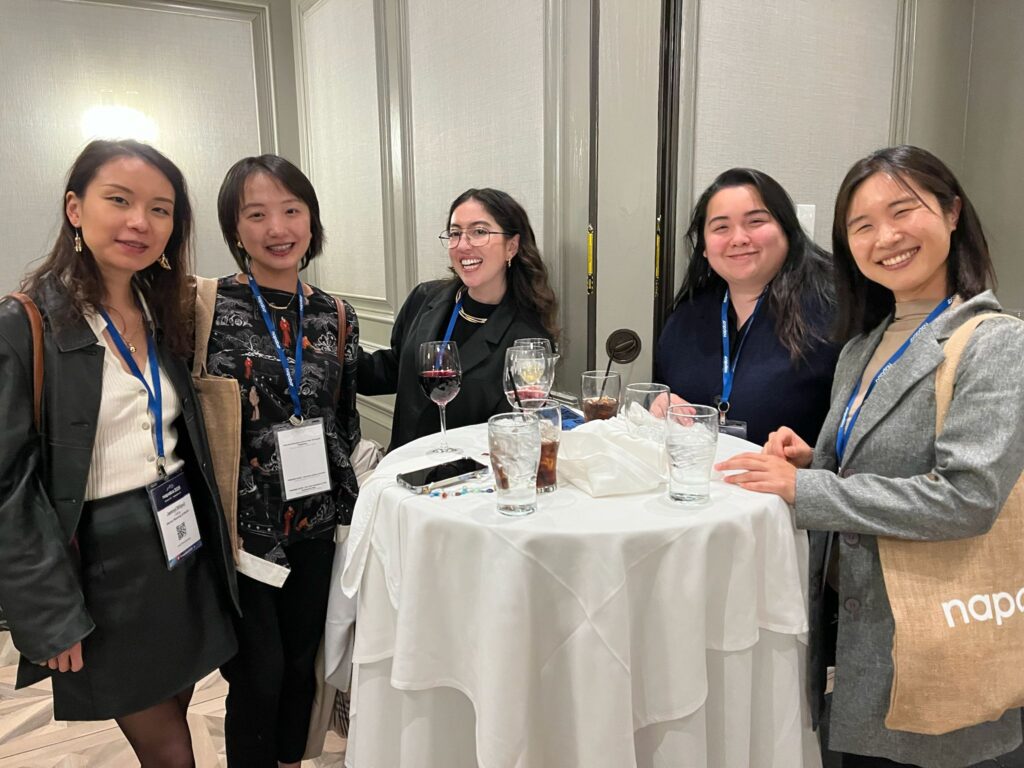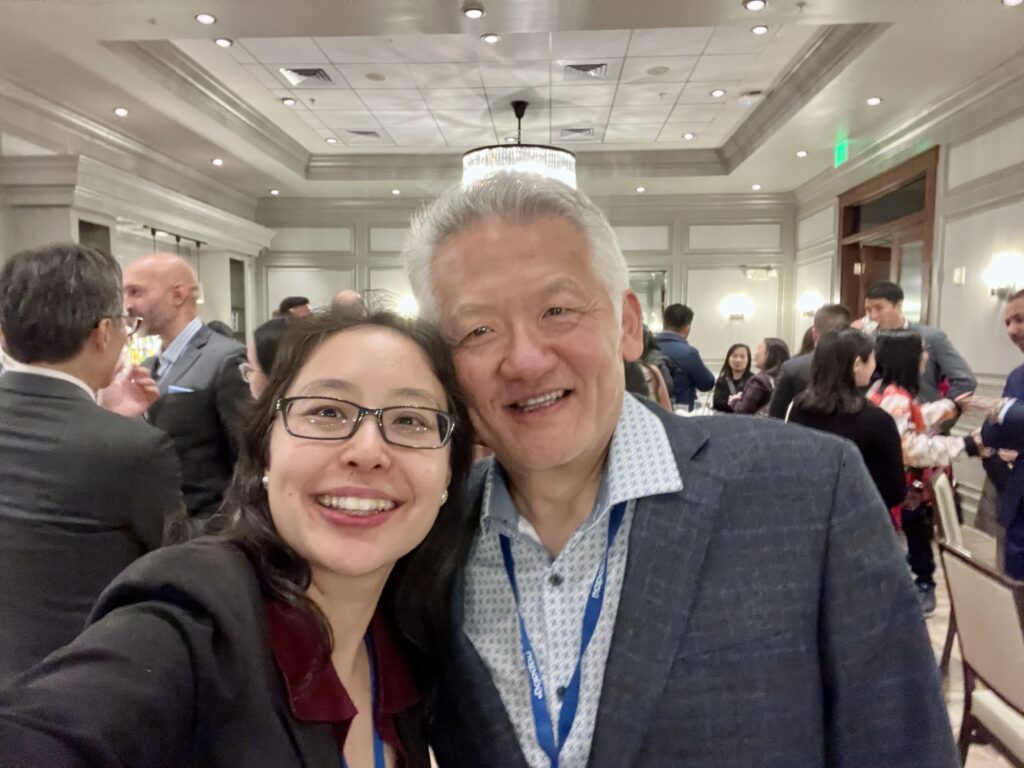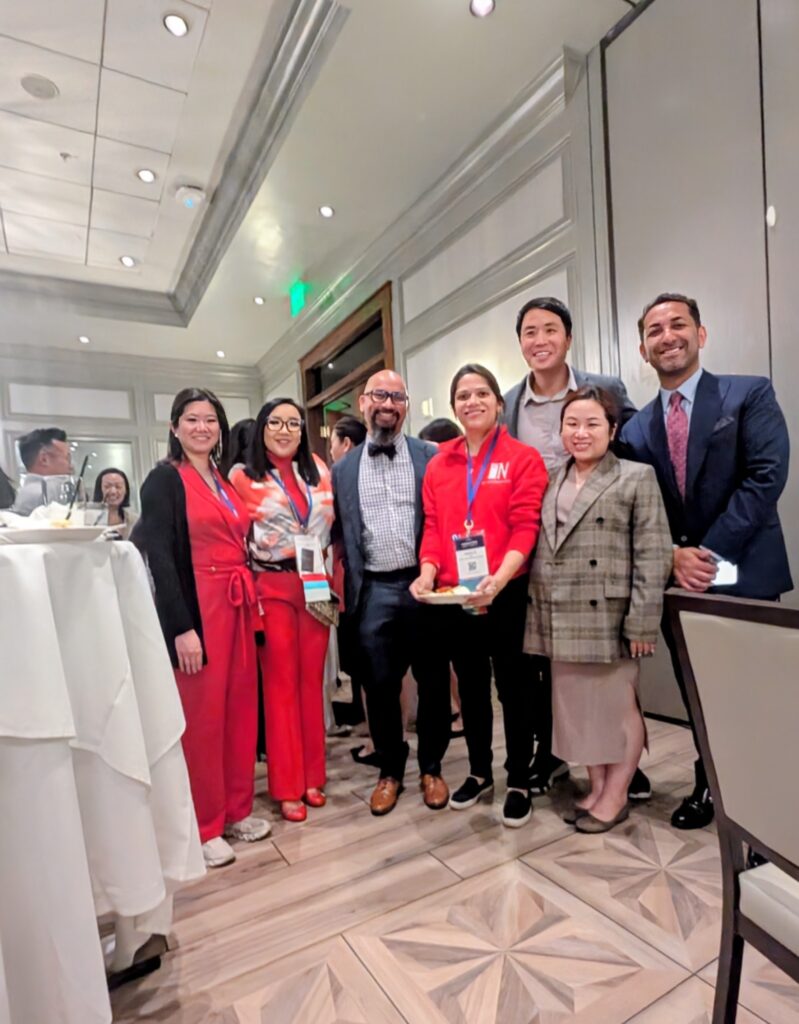

Thank You for Joining AABANY at Our 2026 Fall Conference: “Rising Up to Meet the Future: Cultivating Tomorrow’s Leaders Today”

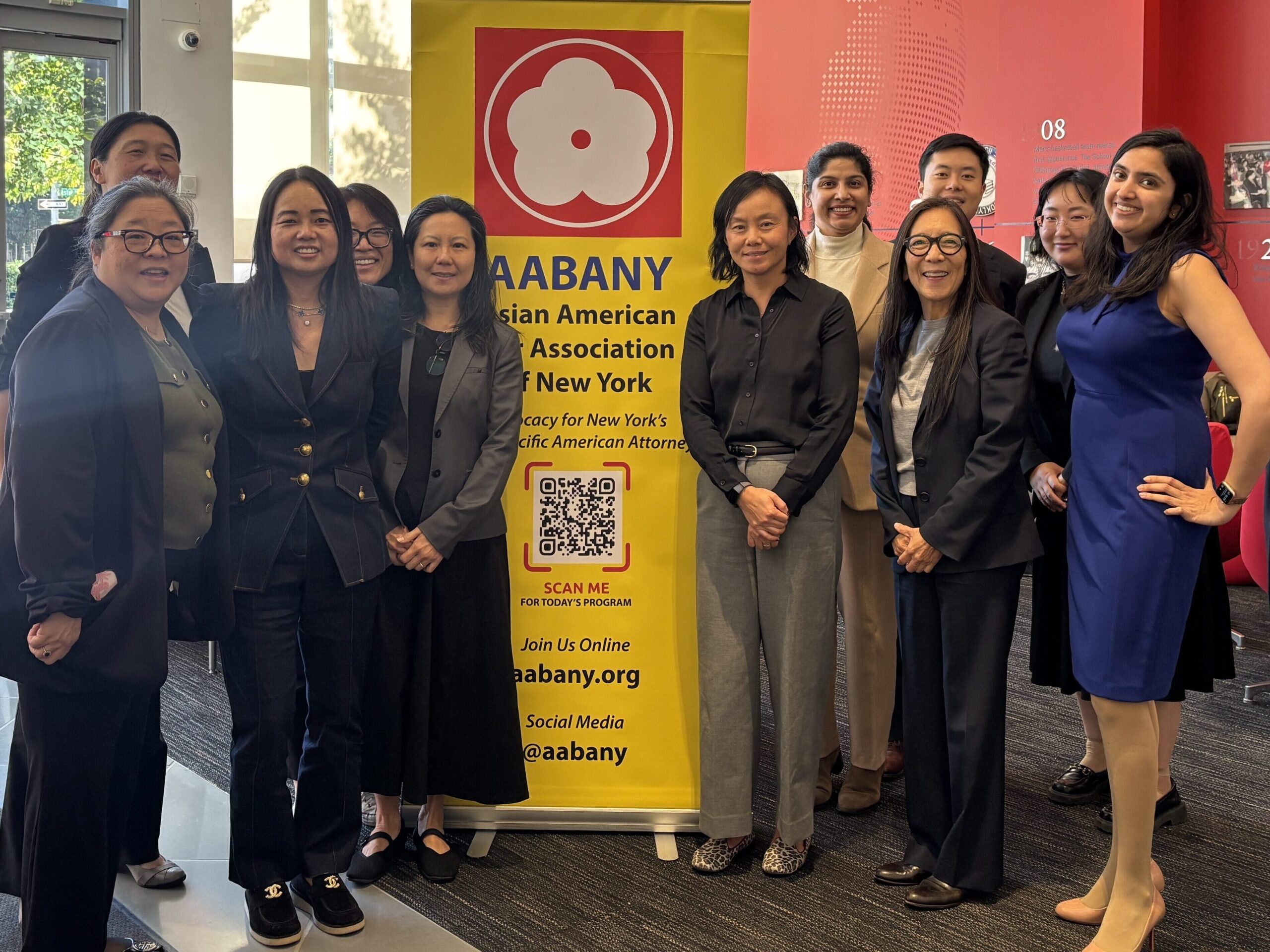
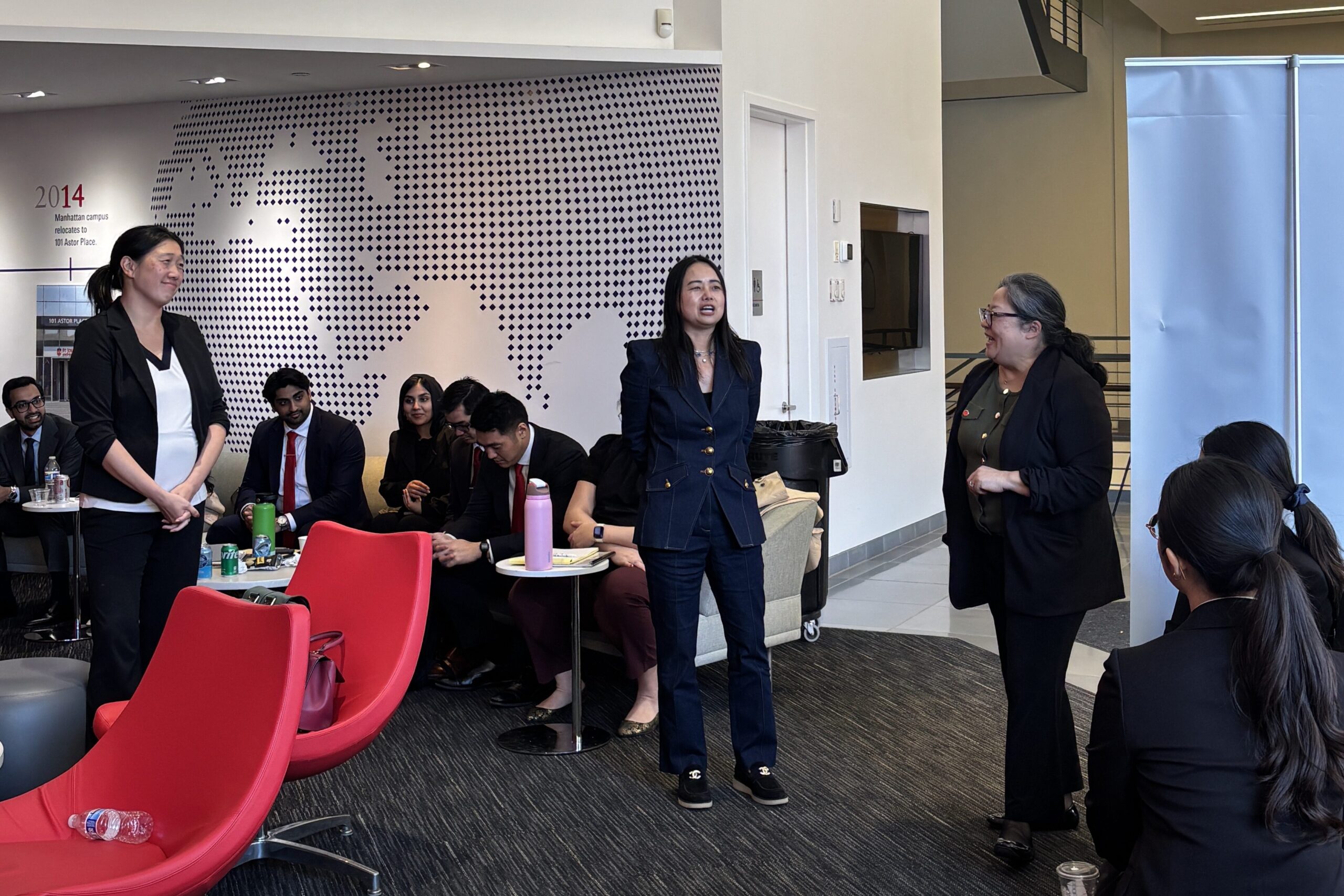
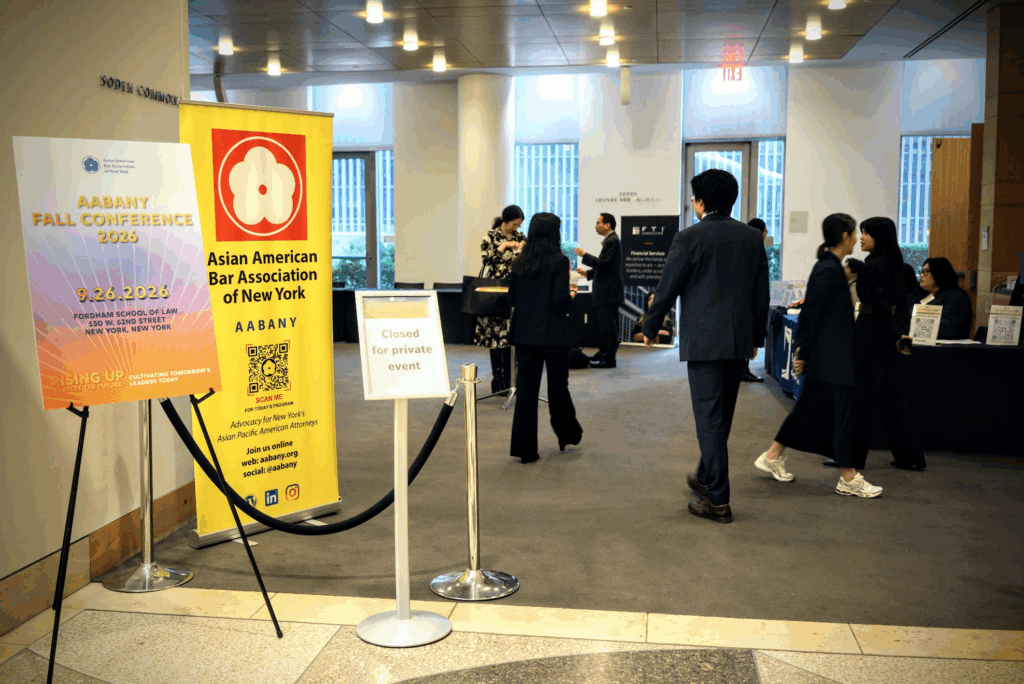
On Saturday, September 26, at Fordham Law School, AABANY hosted its 2026 Fall Conference, with the theme “Rising Up to Meet the Future: Cultivating Tomorrow’s Leaders Today.” Thanks to Fordham Law School for hosting this day-long event. The full-day event offered multi-track CLE programming throughout the morning and afternoon, a plenary lunch session, and different opportunities for professional development, networking, and community-building. In addition to CLE sessions, the Conference also featured the Trial Advocacy Program, Diversity Career Fair, Link-Up Reception, and meetings and gatherings throughout the day hosted by various AABANY Committees. 

The day began with an ample breakfast buffet that was most welcome on a wet and stormy morning. Despite the nor’easter brewing outside, the warmth of the food and energy in the room created a welcoming start to the day, bringing together friends and colleagues, old and new, into the AABANY community. 

Morning Sessions 

From 9:00 to 10:30 AM, participants could choose from the following four CLE panels: 

Rising Up to Serve: Leveraging Bar Associations for Community-Centered Lawyering – exploring how attorneys can use bar associations and community organizations to respond to the legal needs of AANHPI and immigrant communities, expand access to legal services, all the while engaging in community-centered advocacy. 
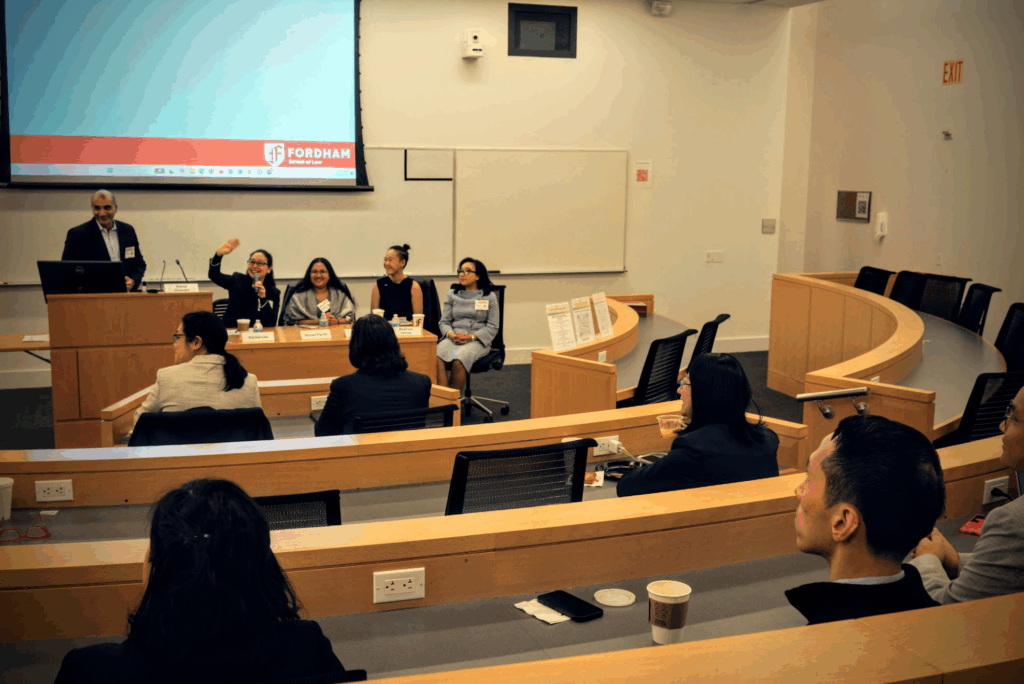
AI, Voice, Likeness and Persona: How Tomorrow’s Lawyers Will Define Ownership, Consent, and Control – examining the rapidly changing legal questions surrounding AI-generated replicas of voices, faces, likeness, and other personal attributes, covering issues of ownership, consent, control, monetization, and misuse. 

Bridging the Gap! Transitioning from MPRE to Real-World Ethics – focusing on moving beyond the principles tested on the MPRE to consider how ethical obligations arise in the everyday practice of law and how new attorneys can apply those principles in professional and practical settings. 

Conducting Effective Internal Investigations – examining the implications involved in managing internal investigations, from establishing protocols and determining scope to working with stakeholders and protecting privilege. 
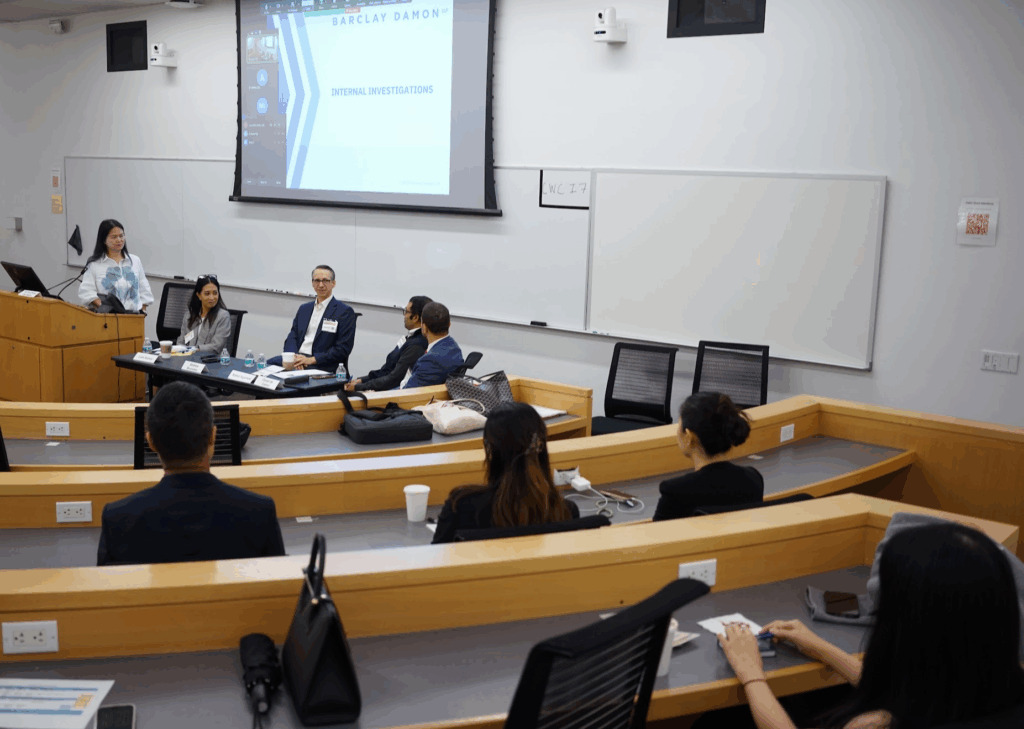
The next block, from 10:45 to 12:15 PM, offered: 

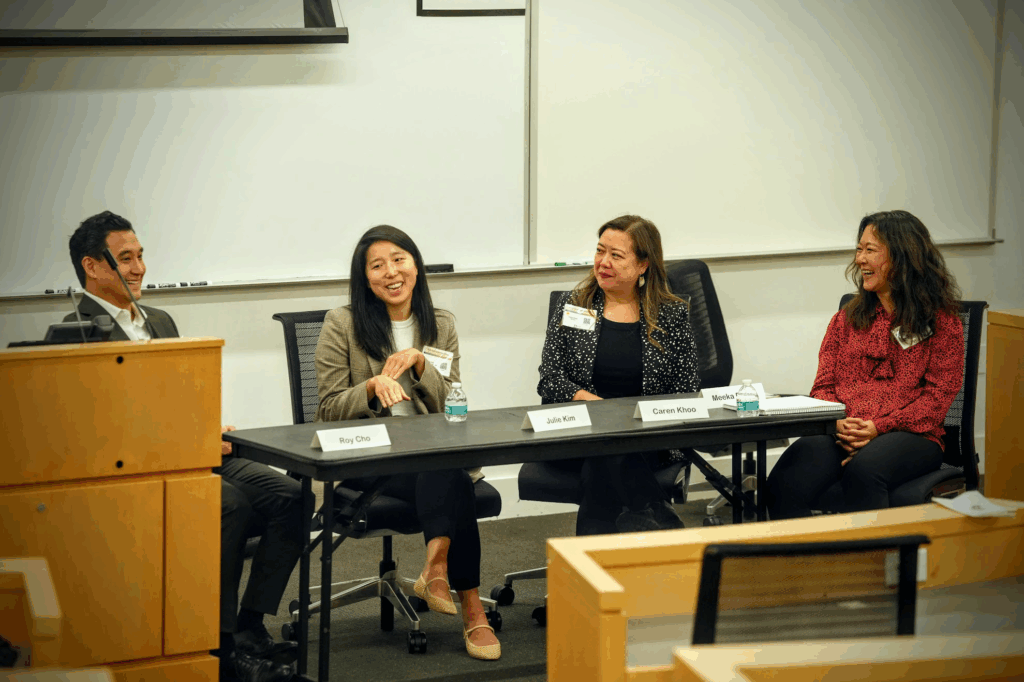
How to Lateral: Building a Transferable, and Marketable Skill Set – providing insight into the skills, qualifications, and experiences employers look for in candidates, and how to build transferable skills.

Beyond Forms & Filings: How Tomorrow’s Immigration Attorneys Build Power Through Tech, Data, and Storytelling – examining how immigration attorneys can combine technology, data, and storytelling to strengthen advocacy, address systemic disparities, and better serve AANHPI communities in a rapidly changing policy environment. 

The Modern Advocate: Mastering Courtroom Skills in a Changing Legal Landscape – preparing current and aspiring litigators for courtrooms shaped by AI, covering professionalism, oral advocacy, and working with pro se litigants from diverse communities while also discussing the ethical implications of using AI tools in preparing for court. 

At the Table: Turning Today’s Great Lawyers into Tomorrow’s Trusted Client Advisors – exploring the judgement, steadiness, and strategic communication skills that enable attorneys to grow from technically excellent lawyers into trusted client advisors. 
Plenary Lunch Session: Moving Forward After Trump v. Barbara – Constitutional Principles, Immigration Policy, and the American Process 

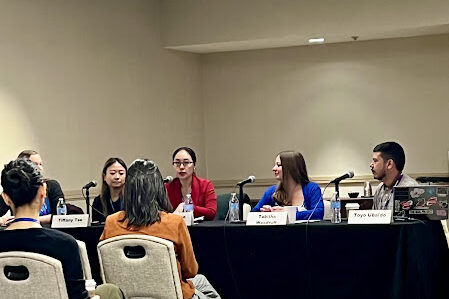
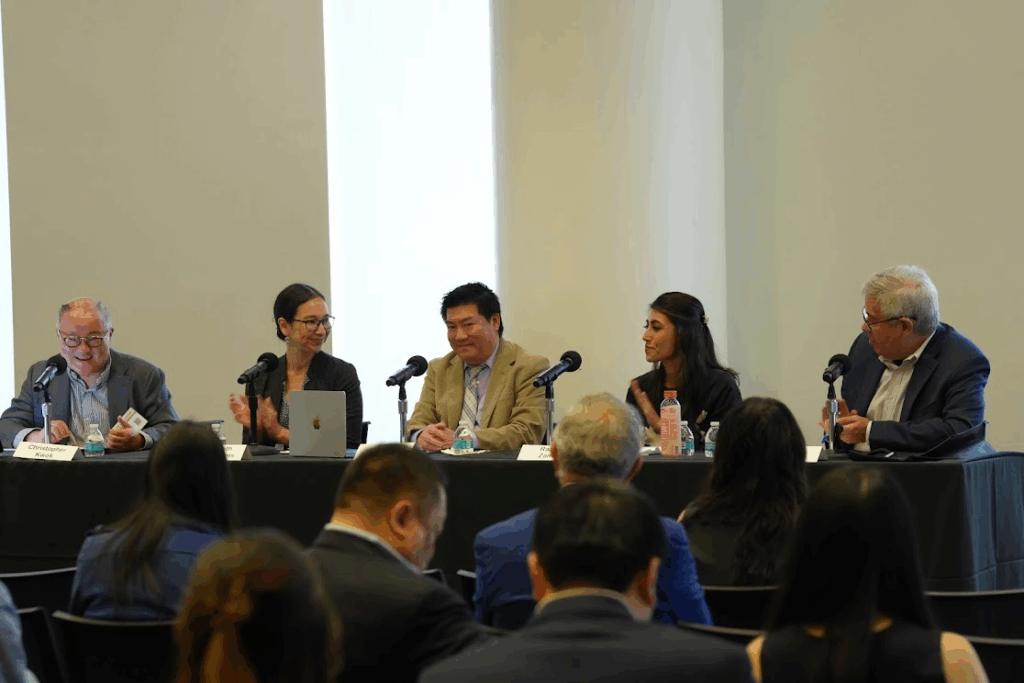
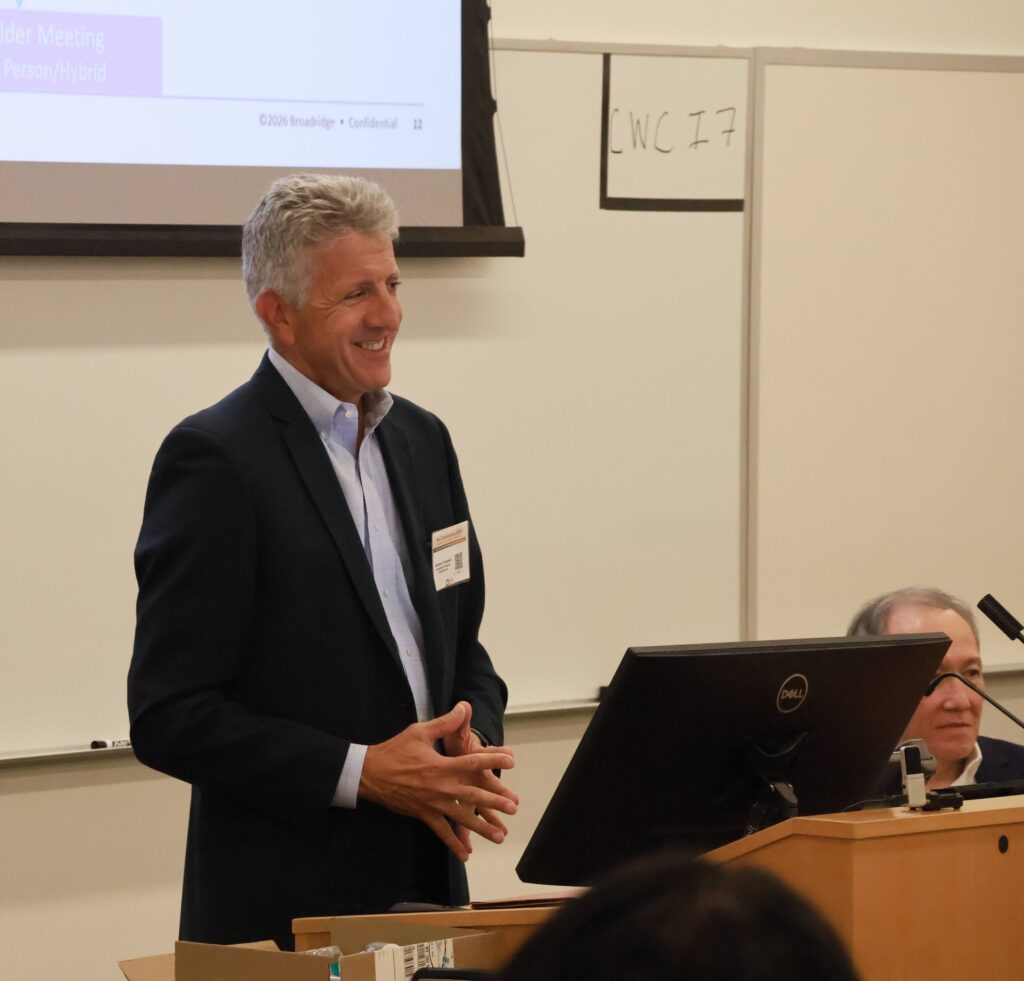
At 12:30 PM, AABANY President Varuna Bhattacharyya gave opening remarks to a filled room for the Plenary Lunch Session: Moving Forward After Trump v. Barbara – Constitutional Principles, Immigration Policy, and the American Process. The lunch session brought together professors, lawyers, and advocates to examine the recent Supreme Court’s decision in Trump v. Barbara and its implications for birthright citizenship, executive authority, and the Fourteenth Amendment. What stood out, however, was not simply the legal analysis of the decision but also the way the panel connected these constitutional questions surrounding birthright citizenship and the Fourteenth Amendment to the people and stories behind them. 

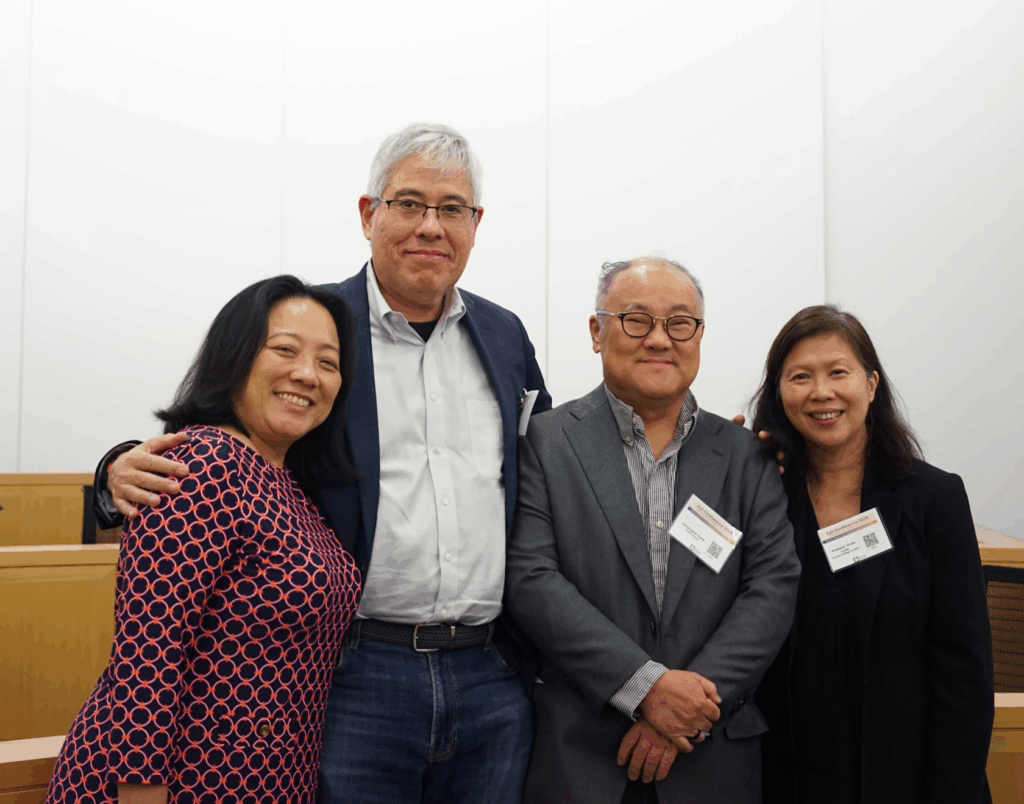
The panel featured Beth Lew-Williams, Professor of History and Director of the Program in Asian American Studies at Princeton University; Edgar Chen, Special Policy Advisor at the National Asian Pacific American Bar Association (NAPABA); Razeen Zaman, Immigrants’ Rights Director at the Asian American Legal Defense and Education Fund (AALDEF); and Gabriel “Jack” Chin, Professor at UC Davis School of Law. The discussion was moderated by Chris M. Kwok, Adjunct Professor at CUNY Hunter College, mediator and arbitrator at JAMS, and Co-Chair of AABANY’s Alternative Dispute Resolution Committee. 
The plenary session deepened the appreciation and understanding for how intertwined constitutional law is to individuals’ everyday lives. Hearing Wong Kim Ark’s story alongside Trump v. Barbara made the Fourteenth Amendment feel less like an abstract piece of legal text and more like something tangible that shapes who is recognized as belonging to this country. That’s what made the lunch session so compelling: exploring how someone’s ordinary choices can become a part of a landmark legal history and examining how, over a century later, the country is still grappling with the questions surrounding the idea of belonging. 

AABANY’s Career Advancement Committee Presents: Diversity Career Fair
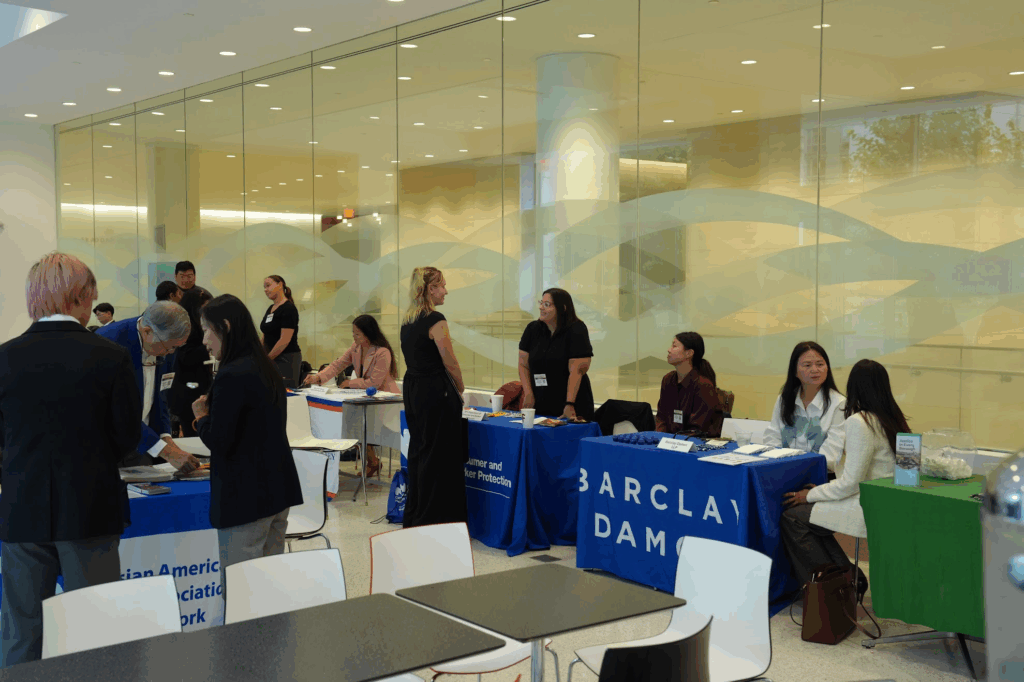
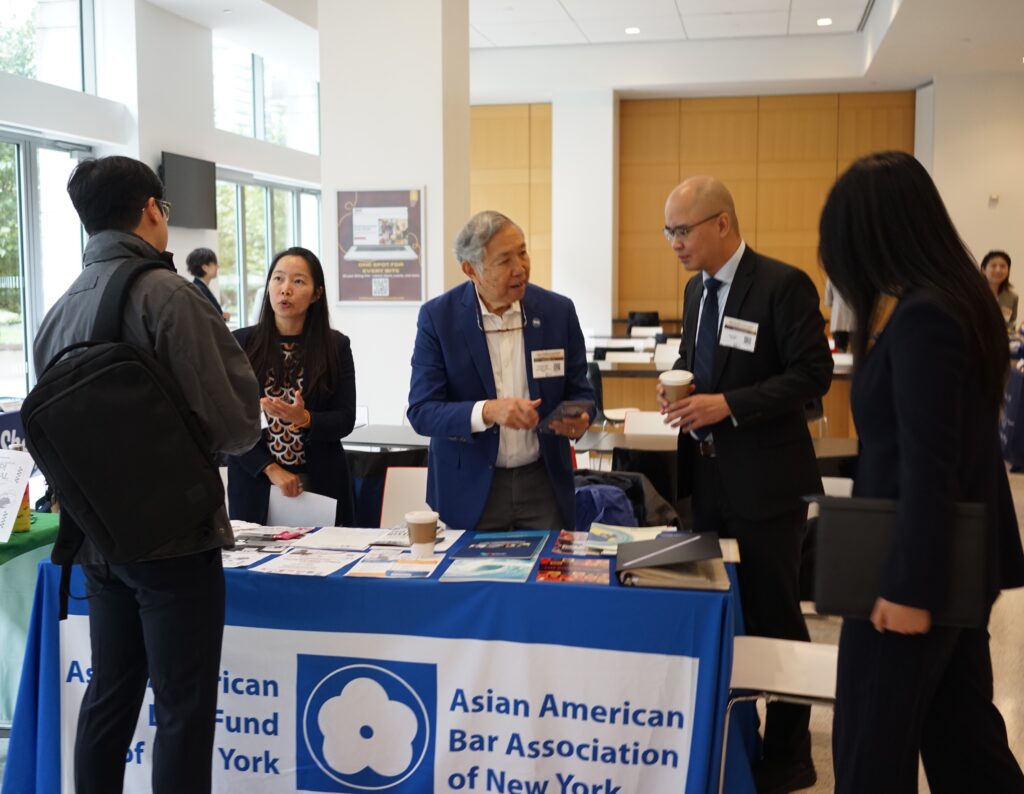
AABANY’s Career Advancement Committee hosted its annual Diversity Career Fair (DCF) at the 2026 Fall Conference, bringing together various public and private sector employers and interested applicants from 10:30 AM to 4:30 PM. Employers hosted informational tables, met with candidates, collected resumes, and conducted first-round on-site interviews. Throughout the day. The room was constantly filled with individuals looking to learn more about available opportunities and meet active members of AABANY in their professional settings. 

While some employers were unable to attend due to the weather, the DCF still offered a wide range of career opportunities. Law students and lawyers moved between tables, asked questions, exchanged resumes, and connected directly with employers. At public interest tables, attendees gathered to learn about internships, externships, and volunteer opportunities, including opportunities with The Legal Aid Society. Government and public-sector employers, including the New York City Law Department and District Attorney’s Offices, similarly offered attendees the chance to learn directly from practitioners and representatives about these respective career paths. 

In the private sector, employers such as Barclay Damon LLP provided opportunities for one-on-one conversations with one of the partners, allowing attendees to learn about what the firm was looking for while also establishing meaningful professional relationships. 

Attendees also had the opportunity to meet members of AABANY’s Career Advancement Committee, receive career advice, and learn about additional career opportunities. The Committee collected resumes and distributed them to all employers after the event.

AABANY’s Litigation Committee Presents: The Trial Advocacy Program (TAP) 

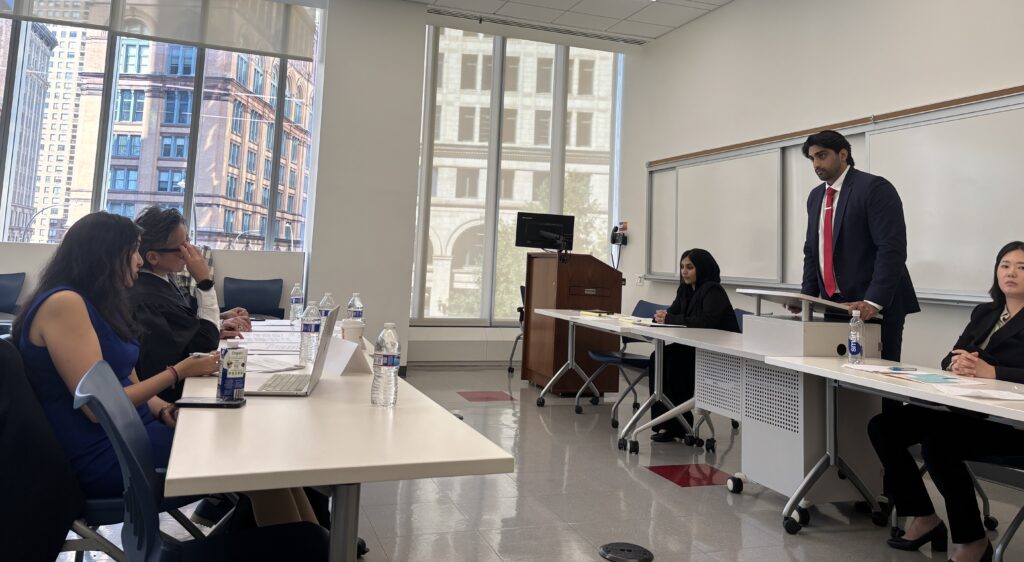
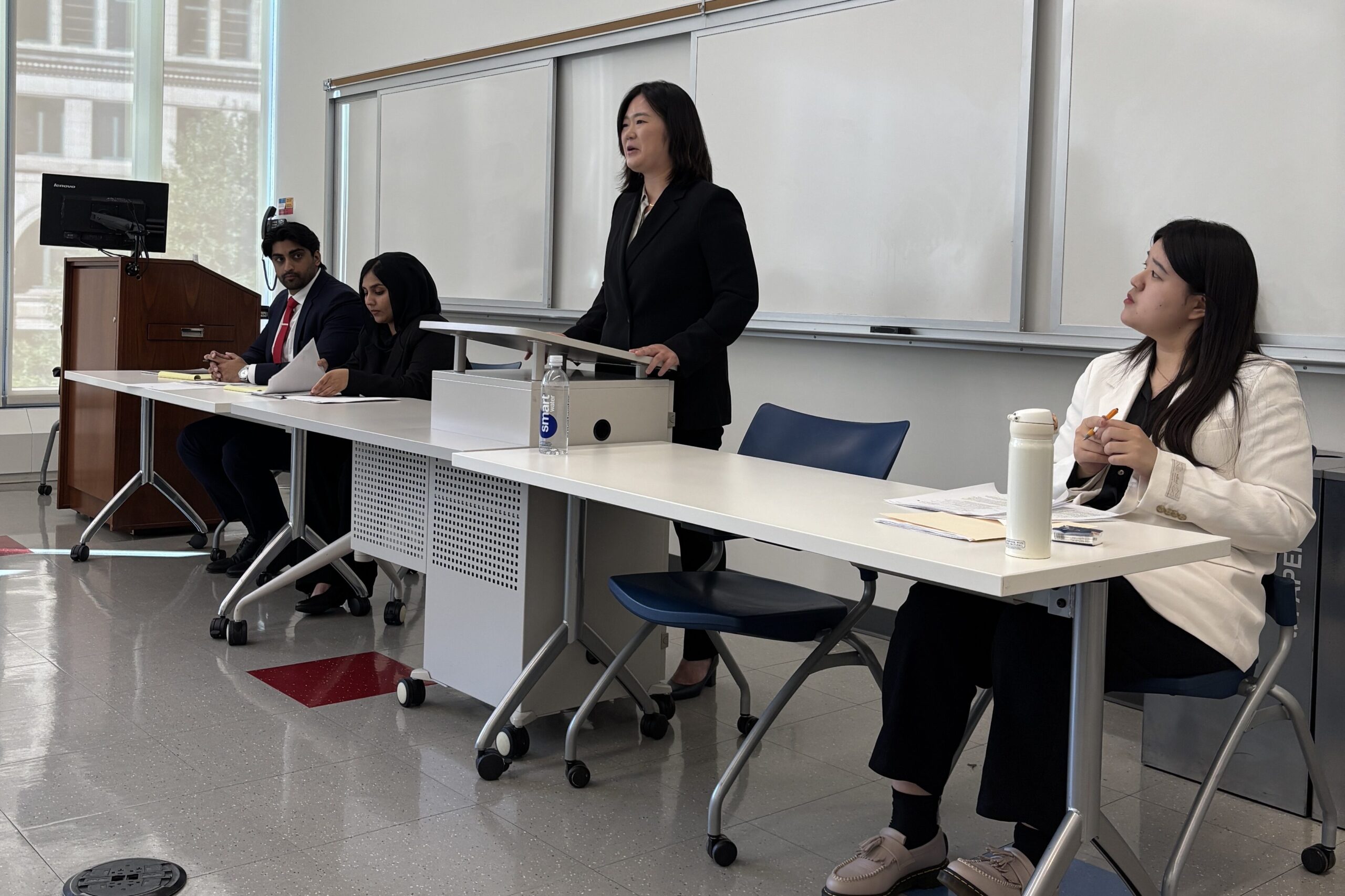
From 9:00 AM to 4:15 PM, AABANY’s Litigation Committee presented the 2026 Trial Advocacy Program (TAP) at the Fall Conference, giving junior lawyers an opportunity to strengthen their trial skills under the guidance of experienced judges and trial attorneys. The program focused on essentials of trial skills: opening statements, direct and cross-examinations, and closing statements. 

Although TAP is usually held in person, this year’s program was moved to virtual format at the last minute due to the weather. Even with such short notice, the program drew a strong group of participants and maintained the interactive nature of the program. Participants worked through a mock trial scenario and prepared portions of their openings, examinations, and summations with a partner. Through the combination of lectures, practical exercises, and small-group mock trial sessions, participants were able to recreate the experience of an in-person trial as closely as possible. Judges and trial attorneys provided feedback throughout the exercise, allowing participants to strengthen their courtroom skills, receive constructive criticism, and learn strategies they can carry into actual practice. Even in the virtual format, the program fostered productive small break-out group conversations and hands-on participation, showing us how meaningful trial advocacy training could take place both beyond the courtroom and in-person. 
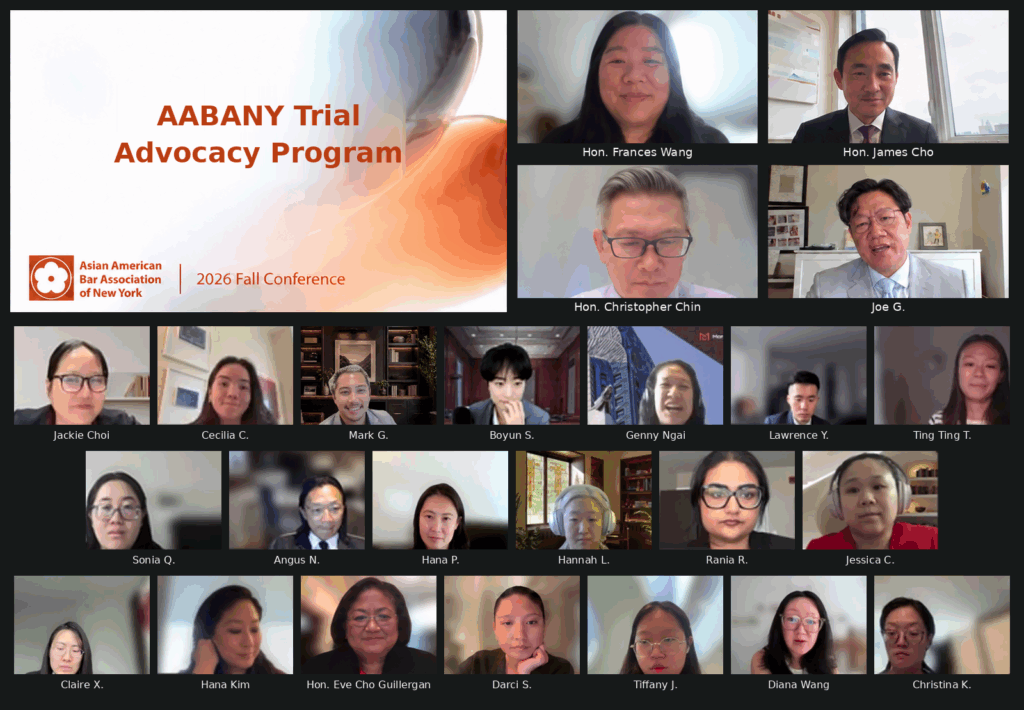
The quality of the faculty was truly impressive. Participants learned from bench and bar alike, including the Hon. James R. Cho of the U.S. District Court of the Eastern District of New York; Hon. Frances Wang of Queens Supreme Court; and the Hon. Christopher Chin of the New York Supreme Court. Prosecutorial experience was well represented by Joe Gim, Chief of Criminal Court at the Kings County District Attorney’s Office; Sara Khan, a Homicide ADA at the Manhattan District Attorney’s Office; and Hana C. Kim, Bureau Chief of the Financial Frauds Bureau at the Queens County District Attorney’s Office. Participants were also able to hear from leaders in the private sector and in-house counsel, including Genny Ngai, Partner at Morrison Cohen; Diana Wang, Counsel at Clark Smith Villazor LLP; Hugh Mo, Principal of The Law Firm of Hugh H. Mo, P.C.; and Jacqueline Choi, In-House Litigation Counsel at Red Apple Group, Inc. Together, they offered participants a well-rounded view of effective trial advocacy from every side of the courtroom, and their generosity in sharing both their time and their depth of experience made the program all the more valuable. AABANY thanks each of them for their commitment to imparting trial advocacy skills to the next generation of lawyers. 

Committee Meetings and Gatherings
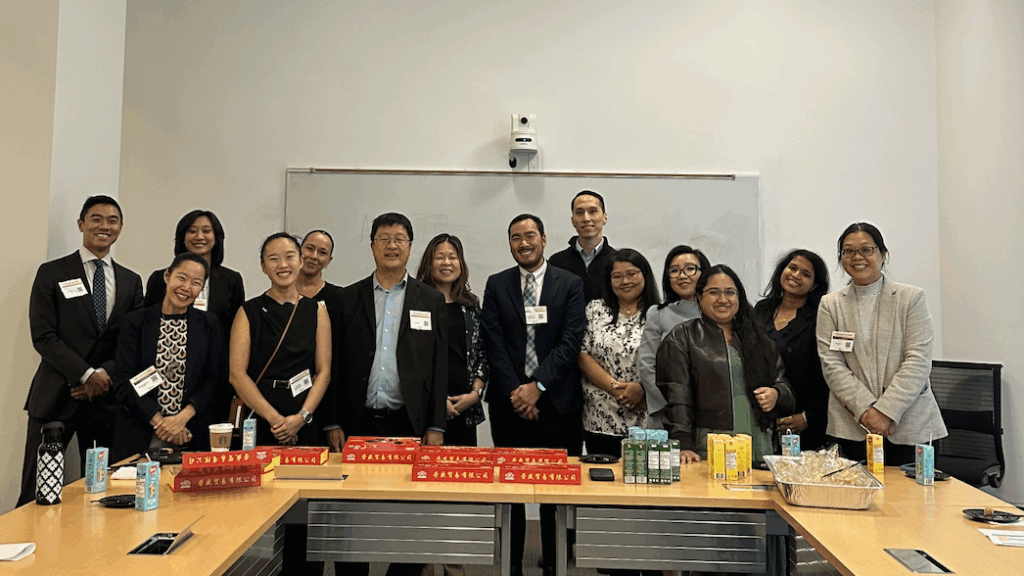
Beyond the main programming, the third floor had its own energy. AABANY opened up rooms for Committees that wanted a space to network and gather, and a few Committees took full advantage, reserving rooms at different points throughout the day. AABANY’s CIRC Program, which is part of the Membership Committee, got things started in the morning, inviting participants to stop by to chat about their program updates, share feedback, and grab some delicious Asian snacks along the way. They brought so many treats that they continued their gathering in the Soden Lounge on the second floor, where Asian sweets and savory favorites disappeared within minutes. The Government Service & Public Interest (GSPI) Committee’s mooncake social stood out, giving members a chance to meet the Co-Chairs, hear about upcoming events, and enjoy a delicious mooncake alongside refreshments in celebration of the Mid-Autumn Festival. The Solo & Small Firm Practice (SSFP) Committee followed in the same room with an assortment of Levain cookies, a relaxed change of pace after a full day of programming where folks got to meet newer members and have a chance to catch up with other colleagues and longtime members. The Pro Bono & Community Service Committee, together with AALFNY, set up a table at the Diversity Career Fair to promote the Pro Bono Clinics and recruit volunteers.
Afternoon Sessions: 

From 2:30 PM to 4:00 PM, attendees chose from the following programs: 

Rising to the Challenge: A Balancing Act of Caregiving Leaders of the Sandwich Generation – informing potential and future caregivers about basic estate planning tools, long-term care planning, and special needs planning, along with providing them with resources available to help them balance these responsibilities and prepare for any potential crisis. 

Clause and Effect: AI Contracting and Vendor Management – focusing on equipping lawyers to lead clients through AI governance by covering the privacy and cybersecurity risks of AI tools and examining the best practices for negotiating vendor agreements on data use, training, security, audit rights, and liability. 
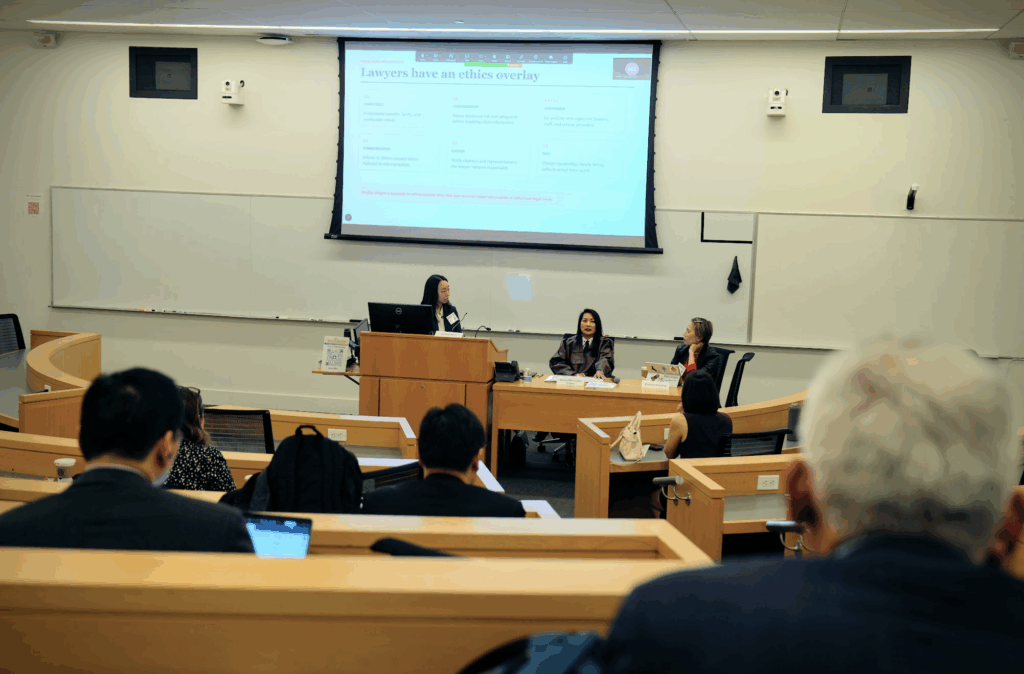
The Gentle and the Assertive: What New Motherhood Teaches About Advocacy – two mom litigators sharing how the dual roles of mother and advocate are strengthening their advocacy and leadership skills, offering AAPI attorneys a framework to leading authentically while making full use of  their lived experiences. 

The Mechanics of Public Company Stock Ownership and Voting – introducing proxy plumbing, the infrastructure and process behind shareholder voting, and how Broadridge keeps this process efficient, transparent, and compliant so that shareholders’ voices are heard in corporate governance. 
From 4:15 PM to 5:45 PM, attendees could choose from the following programs: 

Race and Space: How Laws Create and Impact Asian Spaces – exploring how, despite the promise of Reconstruction, many AANHPI New Yorkers still live and work in racially concentrated spaces, discussing how law and policy created them and what that means for the future of Asian communities. 
IP and AI Slop: Why is Pikachu Fighting Darth Vader on My Instagram Feed? – examining the rise of unauthorized generative AI videos, the legal issues and options for IP owners, and what it all means for the future of content. 

Building & Using the Diversity Pipeline in Arbitration & Mediation: Why it Matters and How to Participate – focusing on why diversity among arbitrators and mediators matters to the credibility of Alternative Dispute Resolution (ADR) and how lawyers, clients, and institutions can strengthen the pipeline of diverse neutrals, to include AANHPI attorneys interested in becoming neutrals. 

No One Teaches This: How Attorneys Actually Build Clients and Become Rainmakers – exploring how attorneys can build credibility and lasting professional relationships that can grow into client development and leadership opportunities. 

Link-Up Reception 
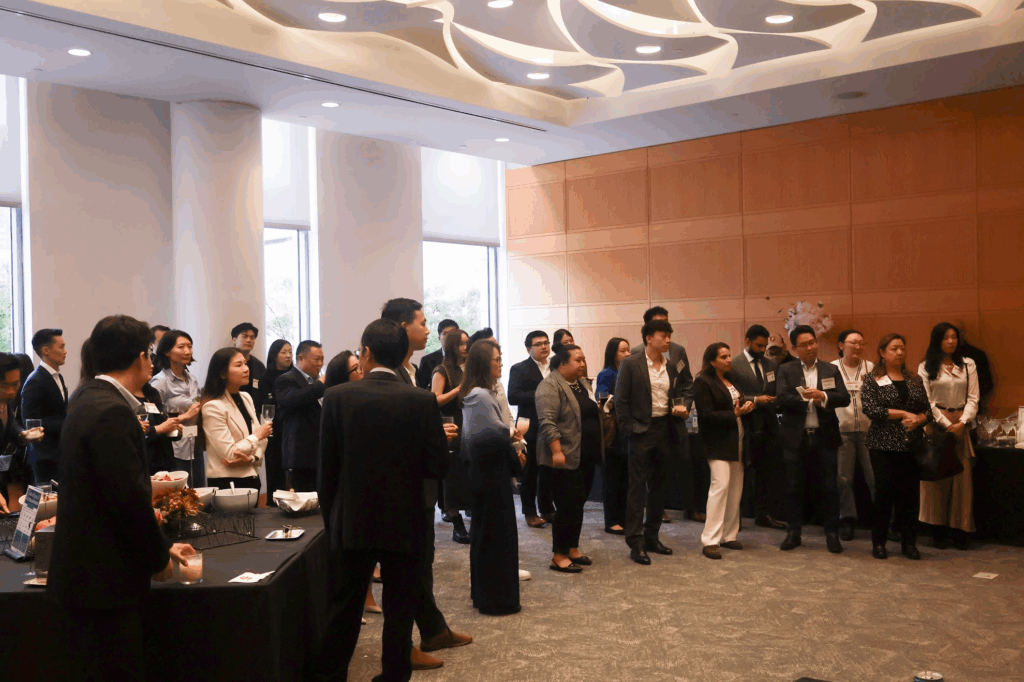
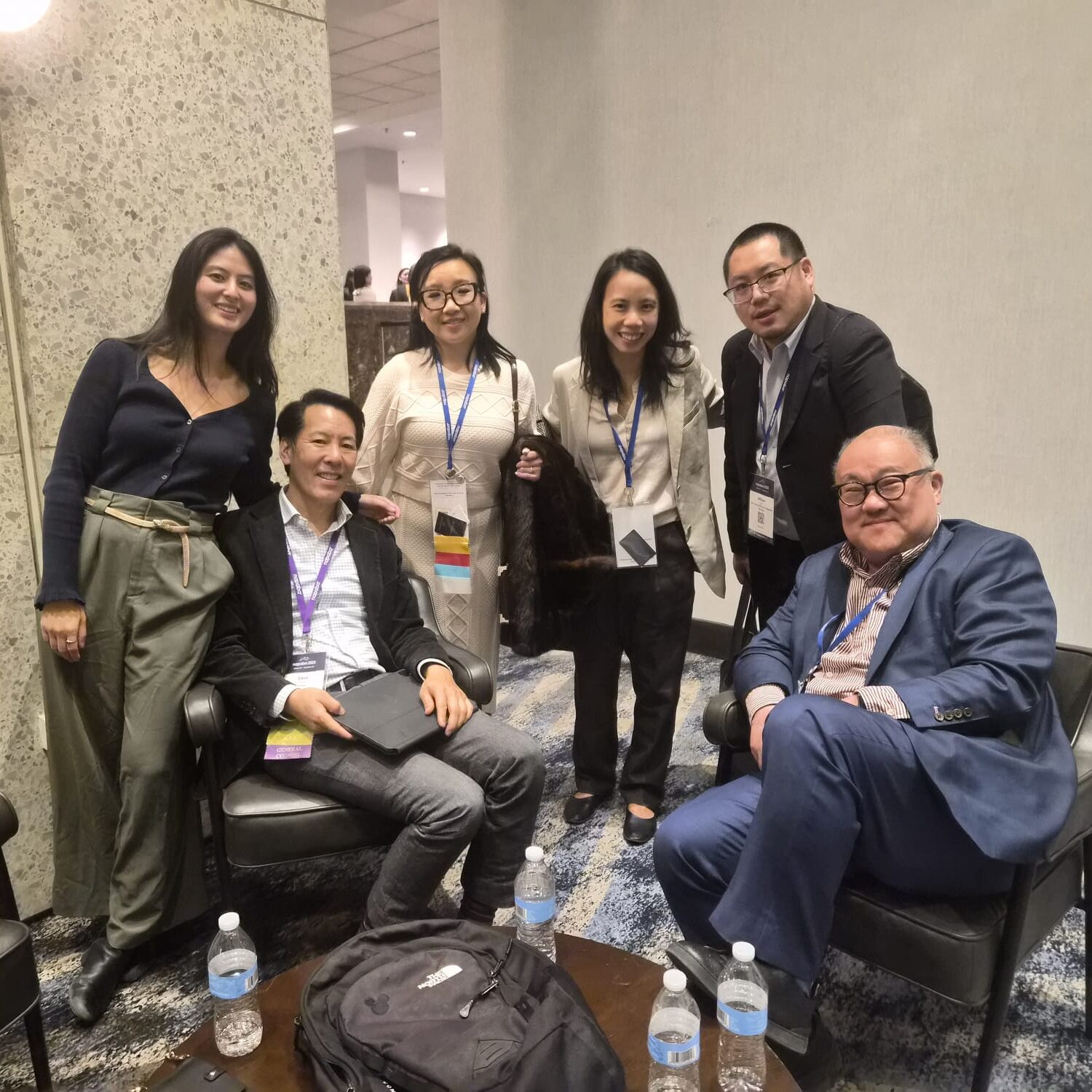
An exciting way to wind down the day was the Link-Up Reception, which provided an opportunity for law firm attorneys and senior in-house counsel to connect and explore potential external legal services. Now in its second year, the invitation-only event was open to select in-house counsel and Gold-level sponsors and above, creating a more intimate setting for sponsors to engage directly with in-house decision-makers and establish professional connections. 

With an almost one-to-one ratio of in-house counsel to law firm attendees, the reception felt intentionally intimate and direct. Rather than having brief introductions before moving onto the next conversation, attendees seemed to have the time and space to really listen to one another. Conversations about professional experiences and careers grew deeper as they continued to talk over hors d’oeuvres, creating opportunities for connections that felt more genuine and lasting. 

The sense of possibility in the room was palpable. People were exchanging ideas, learning about one another’s work, and finding ways to build relationships that could grow beyond this gathering. It was a great way to bring together the professional connections and collaboration that had been growing throughout the day, and it set an energetic tone for the rest of the evening. 

Cocktail Reception and Trailblazer Award Presentation

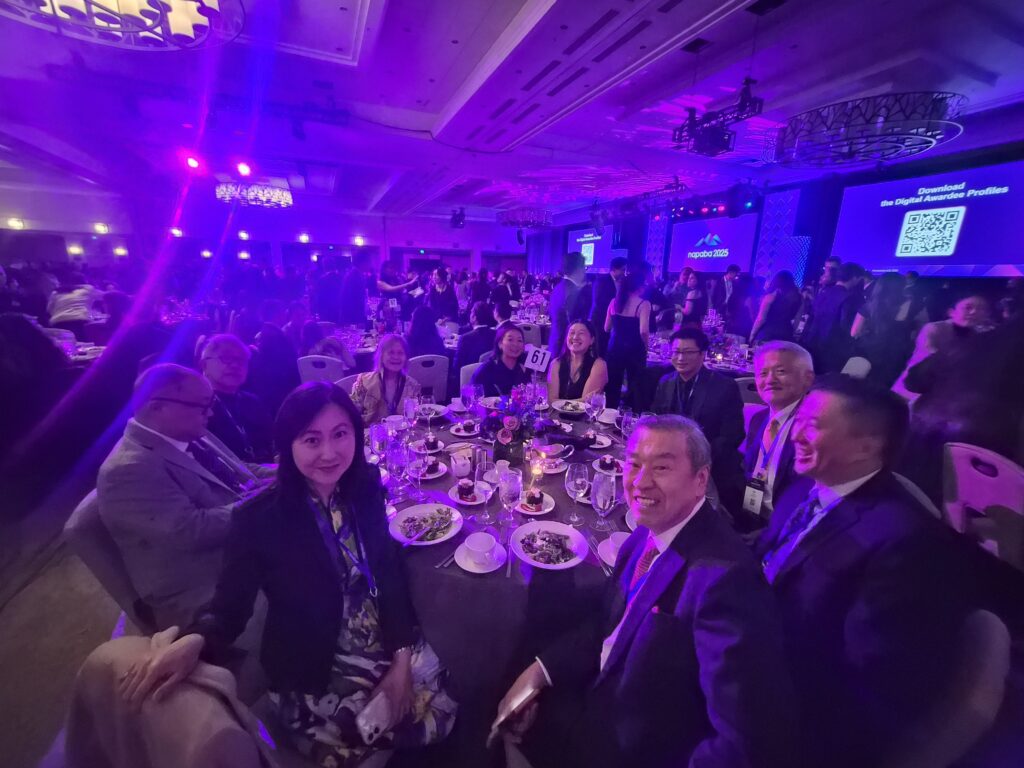
After the conclusion of the day’s programs, at 6:00 pm, all attendees were invited to the general Cocktail Reception, which provided a relaxed and celebratory setting to connect and unwind. The room was filled with food of every kind, from pigs in a blanket to crab cakes with a variety of  dipping sauces, plus a vegetable and fruit platter that stretched across the center of the room, as well as  both warm and cold options for any preference. Over appetizers and drinks, attorneys, law students, and other members of the AABANY community reconnected with colleagues and formed new professional relationships, with the buzz of conversation filling the air. The reception brought the conference to a close by creating an exciting space for networking and continued community-building. 

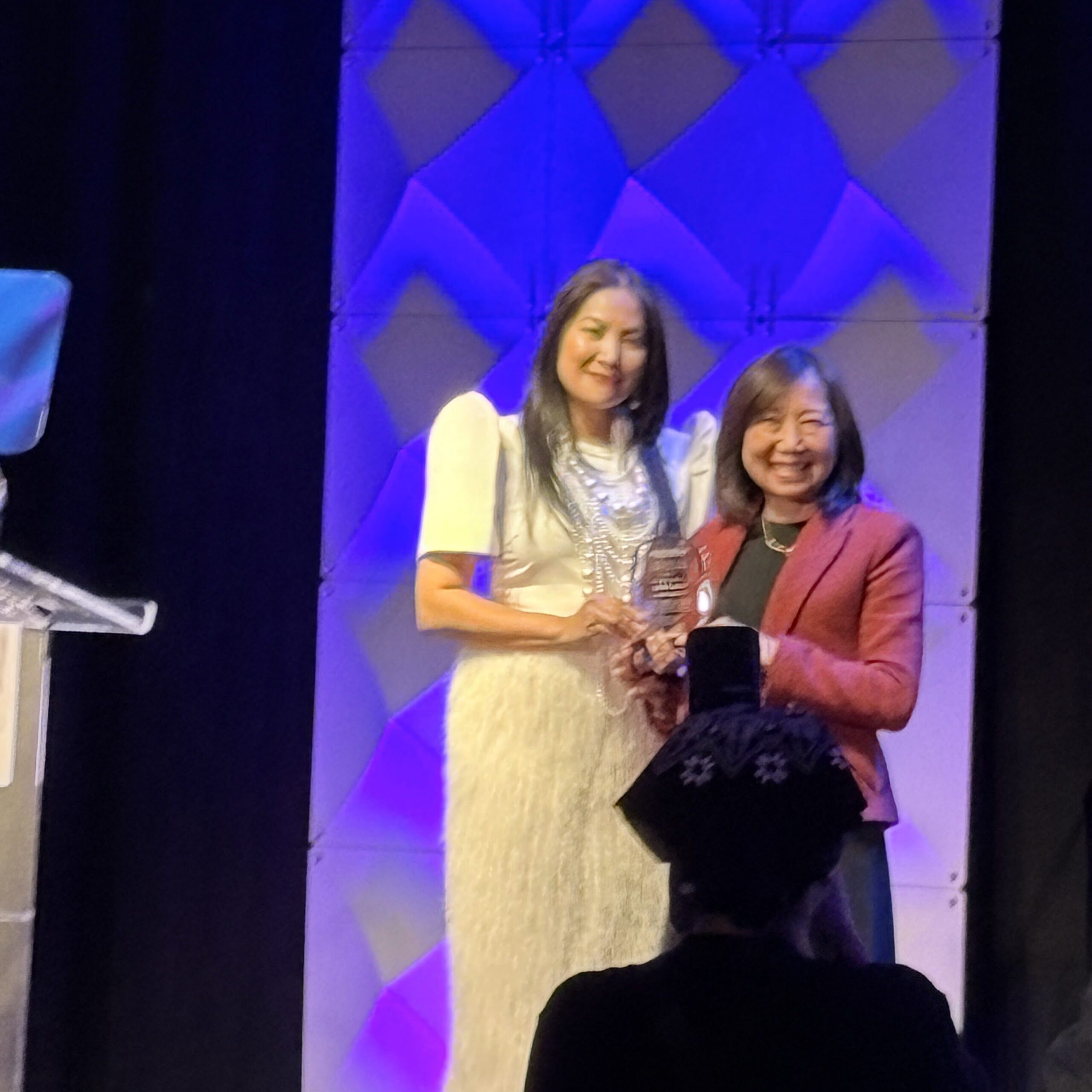
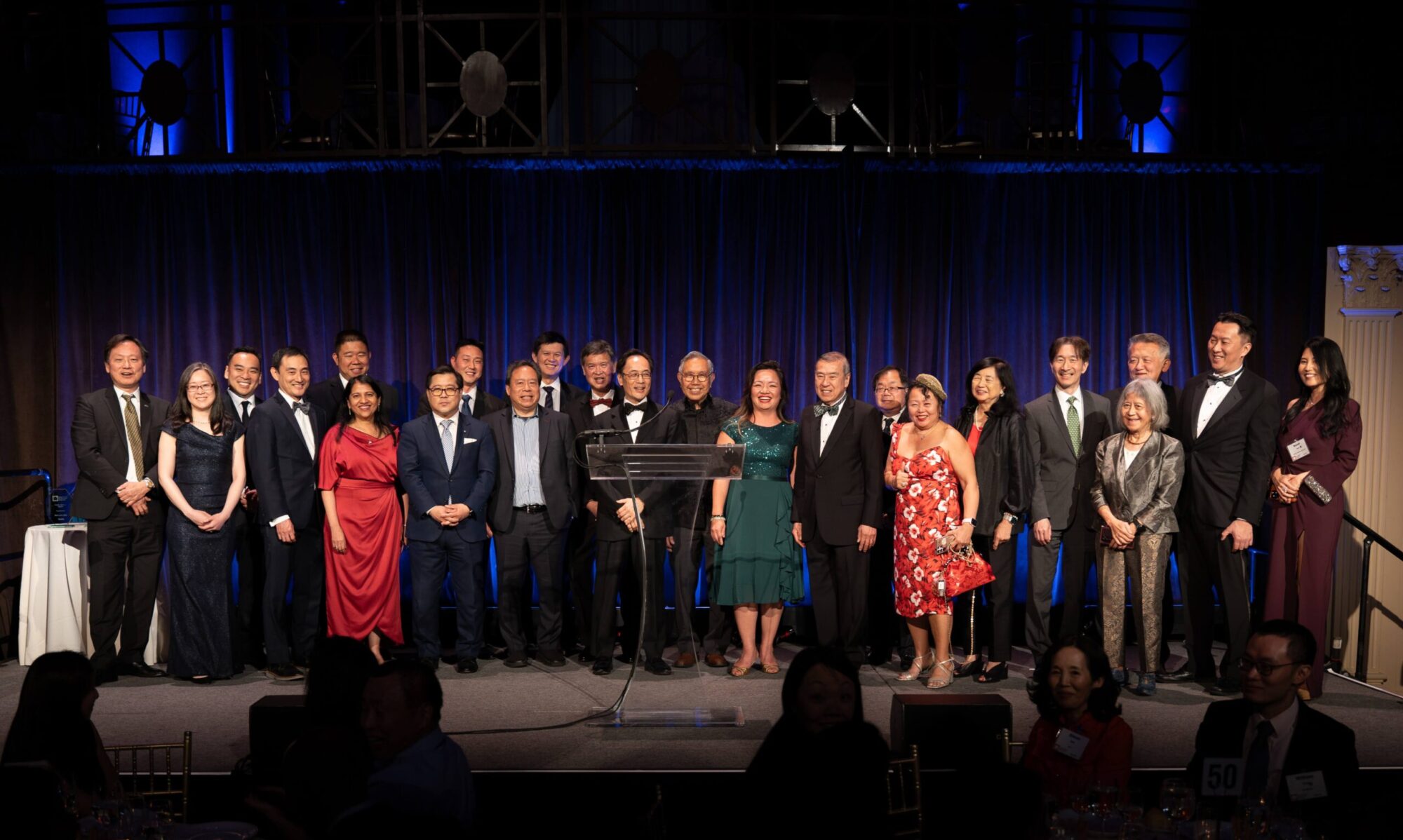
The highlight of the evening was AABANY’s Executive Director Yang Chen presenting the Norman Lau Kee Trailblazer Award to Vincent Chang, former President of AABANY. Named for a legal and community pillar of Chinatown, the award honors a leader and role model in the AANHPI legal community, and Vincent Chang’s career exemplifies the award. Not only has he served as former AABANY President, but he was also the first Asian American to have served as President of NYCLA. He has held important leadership positions with the American Bar Association and the New York State Bar Association, where he currently serves on the Executive Committee. 
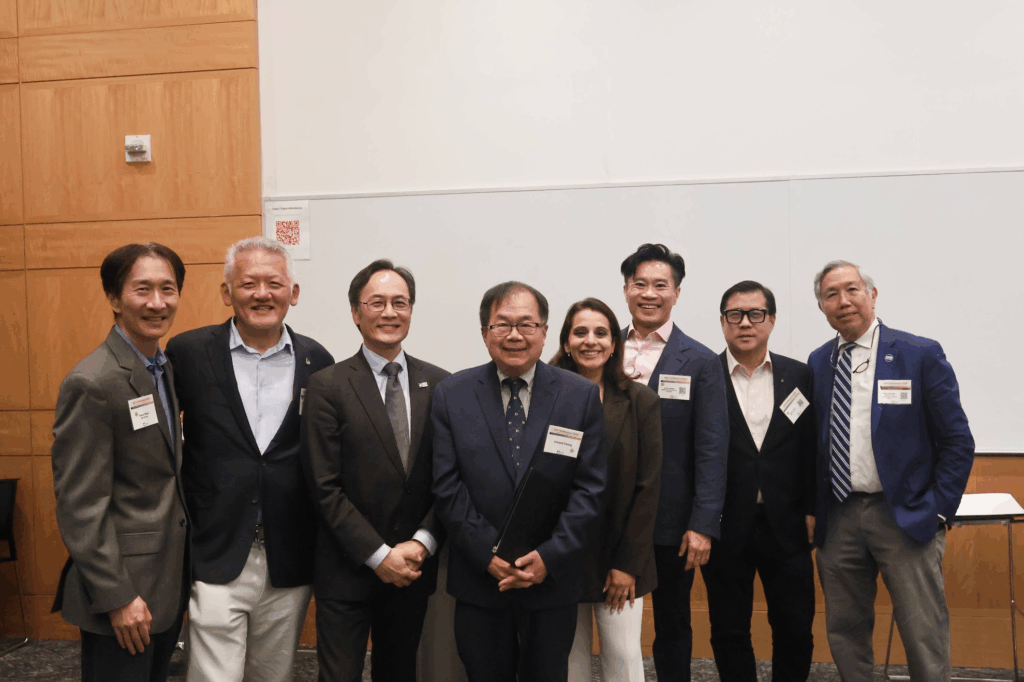
In his acceptance remarks, Vince reflected on his involvement in the AANHPI legal community and the relationships and experiences that have shaped his career both in the private and public sphere. Vince expressed his appreciation for the community that has supported him throughout his career and acknowledged the strides made by AABANY and its leaders over the years. It was especially meaningful to see Vince celebrated alongside so many AABANY members, from past, present, and future Presidents to longtime and newer members, making for an inspiring and fitting way to conclude the 2026 Fall Conference. 

Thank You!

We extend our deep thanks to all the volunteers from law schools and colleges for providing support with conference logistics, programming, and registration, and to all the moderators, panelists, Program Chairs, and attendees, whose participation and engagement made the Conference so successful and memorable. 

We are also grateful to our sponsors, whose support made the Fall Conference possible: 

For more photos of the event, please visit the links below: 

Thanks to our volunteer photographers Alvin, Haoyu, and Zhiqian.

Thank you for joining us at the 2026 AABANY Fall Conference! We hope you found the day inspiring, engaging, and meaningful, and that you left with new connections and a stronger sense of community. We are grateful to have shared this special event with you and look forward to strengthening our engagement at future events. 
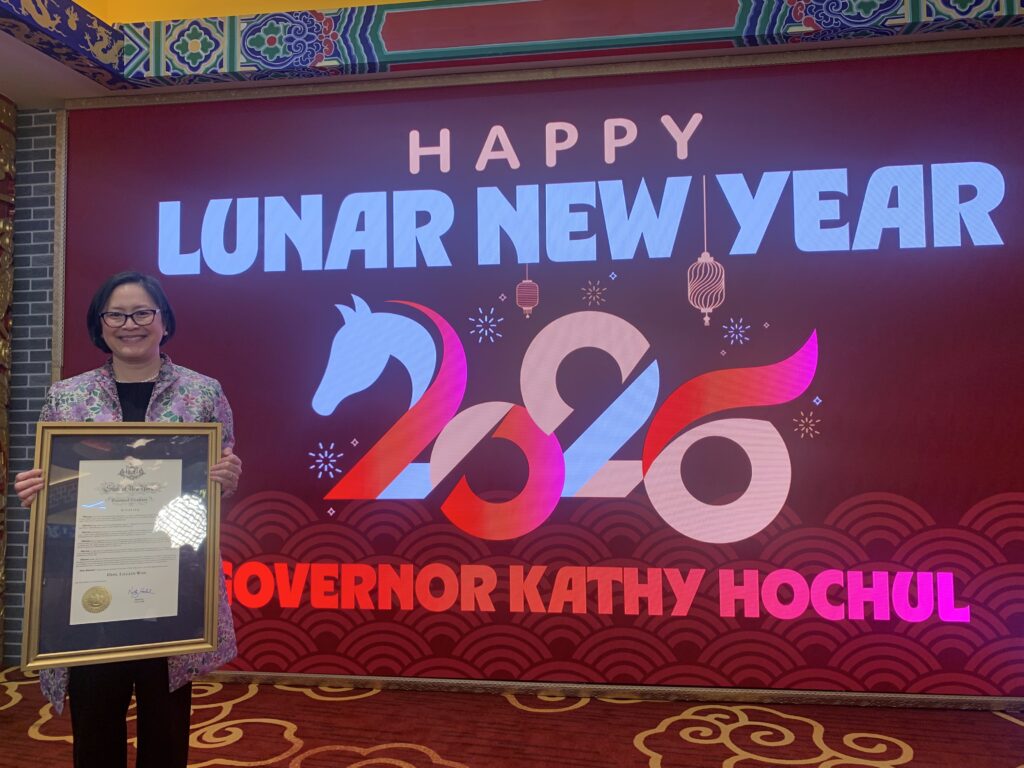
Hon. Lillian Wan Receives Special Recognition from Governor Kathy Hochul

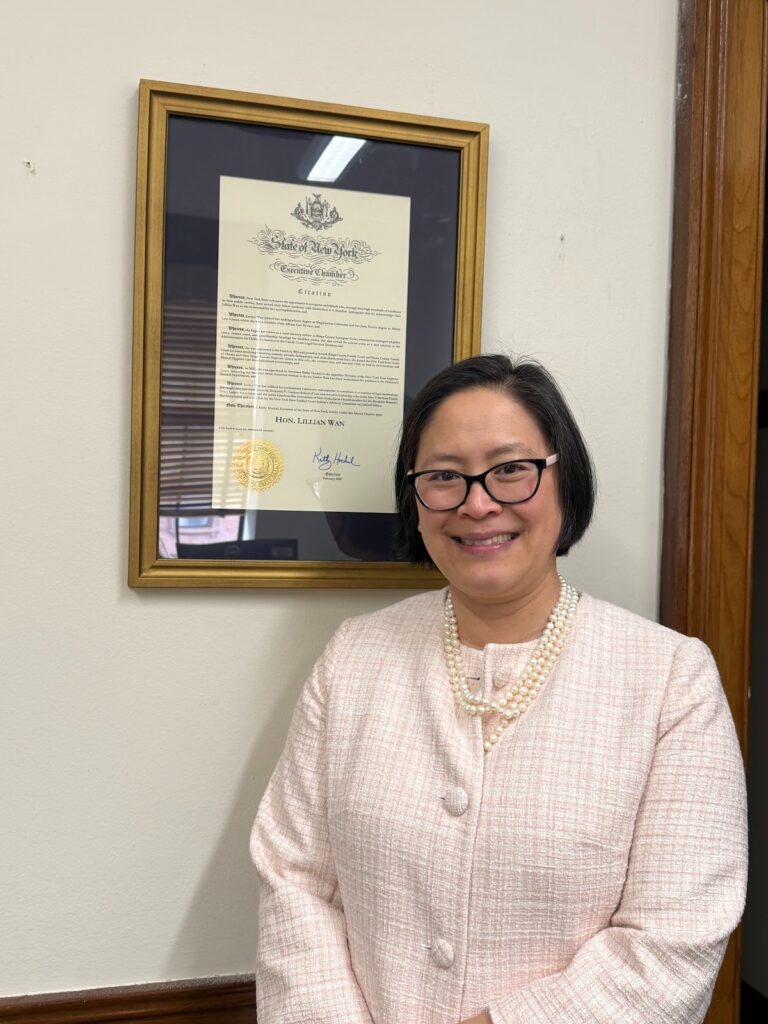
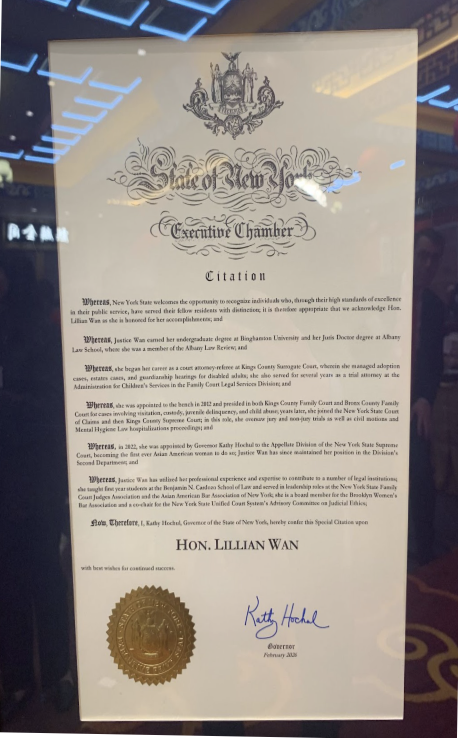
On February 18, 2026, at the Governor’s Lunar New Year celebration in Manhattan Chinatown, Justice Lillian Wan received a Special Citation from Governor Kathy Hochul. This recognition commemorates Justice Wan’s work in serving fellow New Yorkers with distinction and upholding the highest standards of excellence in public service. Justice Wan expressed deep gratitude for receiving the Special Citation from Governor Hochul, made all the more meaningful by being honored alongside Asian American Federation (AAF) CEO Catherine Chen and Coalition for Asian American Children and Families (CACF) Co-Executive Director Vanessa Leung, two leaders whose contributions to the Asian-American community have been noteworthy and impactful.

In 2022, Governor Hochul appointed Justice Wan to the Appellate Division, Second Department, making her the first Asian American woman to sit in the Appellate Division in New York State. Despite achieving this milestone in the New York State courts, Justice Wan’s path to the bench was not one she originally envisioned for herself. As a practicing attorney, she never appeared before a judge who looked like her, so she never considered it a possibility. That changed when she began working closely with Surrogate Judge Margarita López Torres, the first Latina Surrogate Judge in New York State. Judge López Torres became her mentor and encouraged her to apply for a mayoral appointment to the family court bench, where her experience was strongest, and that the City of New York would benefit from having her as a judge. “She saw something in me that I didn’t see in myself,” Justice Wan reflected. 

Since being appointed to the bench in 2012, Justice Wan has witnessed a remarkable shift in representation. When she started, Asian American judges across New York State made up under 2% of the judiciary. Today, that number has grown to about 5% of the approximately 1,300 sitting New York state judges.

Governor Hochul, who awarded Justice Wan the special recognition, has played a meaningful role in that progress. Since taking office in August 2021, the Governor has appointed nine Asian American judges, six of whom have been appointed to the New York State Court of Claims, a higher number than any Governor in the State’s history. She has also appointed three Asian American judges to the Appellate Division, the mid-level appellate court in New York State. Justice Wan was appointed to the Appellate Division, Second Department in May 2022. Justice Philip Hom was appointed in 2024. Most recently, Justice Margaret Chan was appointed to the Appellate Division, First Department. Justice Wan, Justice Hom, and Justice Chan are all members of the Asian American Bar Association of New York. 

Justice Wan’s own path was shaped not only by Judge López Torres but also by the Honorable Randall T. Eng, former Presiding Justice of the Appellate Division, Second Department, and now practicing attorney who holds a truly historic distinction: he was the first Asian American judge in the entire state of New York, appointed to the Criminal Court by Mayor Ed Koch in 1983. Justice Eng mentored Justice Wan early in her career and instilled in her a philosophy she carries to this day: visibility matters. Your job is essential, but you need to do more. Asian American attorneys and judges must be active in bar associations, judicial organizations, their law schools, their universities, and their communities. They should embrace leadership roles and ensure people know who they are.

Justice Wan has made it her personal mission to be for others what Judge López Torres and Justice Eng were for her. She remains accessible, attends various events to stay visible, and holds leadership positions in organizations that uplift the Asian-American legal community. As a mentor, Justice Wan sees talented attorneys routinely talking themselves out of applying for judicial positions, convinced that others are more qualified, that they haven’t been around long enough, or that it simply isn’t their turn. Her advice to students and legal professionals who want to follow her footsteps is direct: apply anyway. Often, the only difference between the person who gets the position and the person who doesn’t is that the latter didn’t second-guess themselves. 

Besides individual efforts, Justice Wan points to the power of community organizations in building a stronger pipeline. The Asian American Bar Association of New York runs a robust Judiciary Committee that vets judicial candidates, provides letters of endorsement, conducts mock interviews, and hosts educational programs about the path to becoming a judge. The Asian American Judges Association of New York, of which Justice Wan is a past president and current board member, works to support judges and grow their numbers. The organization is open to everyone, not just Asian American judges, and its mission is rooted in the belief that a bench that reflects the full population it serves is stronger and more just.

The Special Citation from Governor Hochul captures both the breadth of Justice Wan’s career and the philosophy that has defined it, recognizing her historic appointment to the Appellate Division, Second Department, alongside her leadership in the organizations that uplift Asian American attorneys, women in law, and the broader legal community. It is a recognition that spans decades of work, from her earliest years on the bench to the mentorship and visibility efforts she continues today. Justice Wan has spent her career being the judge she did not see when she was a young attorney, and in doing so, has made sure that fewer people will have to wonder whether someone like them belongs on the bench.

Please join AABANY in congratulating Justice Wan on receiving this recognition from Governor Hochul.

In the News: New York Law Journal Publishes Front-Page Article on Historic Appointment of Justice Karen Lin to Second Department, Appellate Term

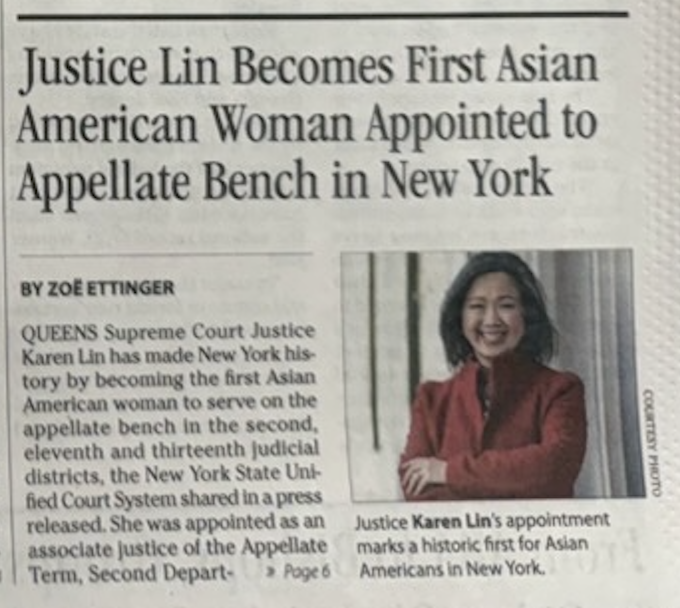
On March 3, 2026, in a front-page article, the New York Law Journal reported on the historic appointment of the Honorable Karen Lin as an Associate Justice of the Appellate Term of the Supreme Court, Second Department. Justice Lin is the first Asian American woman to serve on this appellate bench in the Second, Eleventh, and Thirteenth Judicial Districts, marking an important milestone for New York’s judiciary.

Her appointment represents an important milestone for Asian American representation in New York’s judiciary, where AAPI judges remain underrepresented relative to the communities they serve. 

“Justice Lin is a trailblazer and an inspiring role model for Asian Americans,” said Benjamin Hsing, President of the Asian American Bar Association of New York. “It is critical that Asian Americans are properly represented in the New York State judiciary to strengthen public confidence in our courts and to help ensure justice and fairness for Asian American communities across the city and state.”

Justice Lin’s appointment marks an important moment for representation in New York’s courts and reflects her longstanding commitment to public service. Click to view the full article here (subscription required).

NAPABA Applauds the Appointment of Justice Sanjay T. Tailor to the Illinois Supreme Court

For Immediate Release: January 21, 2026
Contact: Rahat N. Babar, Deputy Executive Director

WASHINGTON – The National Asian Pacific American Bar Association (NAPABA) congratulates Justice Sanjay T. Tailor on his groundbreaking appointment to serve as a justice on the Illinois Supreme Court.

“Justice Tailor’s appointment marks a historic milestone in NAPABA’s mission for its members, the Asian American, Native Hawaiian, and Pacific Islander (AANHPI) lawyers, and their broader communities,” said Joseph Yao, President of NAPABA.  “In 2022, NAPABA’s Portrait Project 2.0 found that only nine Asian American jurists served on state high courts, a number that remained constant until now. As the first Asian American to serve on the Illinois Supreme Court, Justice Tailor has broken barriers and serves as a beacon of achievement for our legal community and for anyone aspiring to such heights.”

Justice Tailor brings more than two decades of judicial experience to the Illinois Supreme Court. He has served for 23 years on Illinois’s trial and appellate courts, including as an Associate Judge and Circuit Judge and, most recently, as a Presiding Justice of the First District Appellate Court. Prior to joining the bench, he served as an Assistant State’s Attorney in Cook County and practiced law in the private sector. Justice Tailor taught as an adjunct professor at Loyola University of Chicago School of Law. He earned his B.A. from the University of Delaware and his J.D., with honors, from Loyola University of Chicago School of Law.

“Through his many leadership roles, including as the president of the Asian American Judges Association of Illinois, and through his engagement with NAPABA affiliates like the Asian American Bar Association of Greater Chicago (AABA Chicago) and the South Asian Bar Association of Chicago (SABA Chicago), Justice Tailor has demonstrated a deep commitment to public service and the community throughout his career,” said Priya Purandare, Executive Director of NAPABA. “His groundbreaking appointment highlights the importance of continued efforts to ensure that those in the AANHPI legal community are recognized, supported, and elevated to positions of leadership across the country.”

“We are proud and thrilled to see Illinois become one of a small number of states that have a judge on its highest court who is Asian American,” said Stephen Lee, President of AABA Chicago.  “AABA formed decades ago in part to help Asian American attorneys become judges and to help our judiciary better reflect the people whom it serves, and this is a huge milestone not just for Justice Tailor and Asian American attorneys but for everyone.”

“The South Asian Bar Association of Chicago proudly congratulates Justice Tailor on this historic appointment as the first Asian and South Asian Justice to serve on the Illinois Supreme Court,” said Saman Haque, President of SABA Chicago. “This milestone reflects the strength of our justice system and the importance of representation. As a founding member of SABA Chicago, Justice Tailor has remained steadfast in his commitment to inclusion and equity, and to mentoring and encouraging attorneys to hone their craft. We celebrate this achievement and look forward to the lasting impact of Justice Tailor’s leadership and service.”

NAPABA extends its sincere congratulations to Justice Sanjay Tailor and wishes him continued success in his service on the Illinois Supreme Court.

NAPABA Applauds the Confirmation of Judge John Truong to the Superior Court of the District of Columbia

For Immediate Release: January 15, 2026
Contact: Rahat N. Babar, Deputy Executive Director

WASHINGTON – The National Asian Pacific American Bar Association (NAPABA) congratulates Judge John Truong on his confirmation to serve as an Associate Judge on the Superior Court of the District of Columbia.

“Judge John Truong is a talented and experienced litigator who has deep ties to the D.C. legal community,” said Joseph Yao, President of NAPABA. “With a long career in public service, coupled with his leadership in the community – including as a former president of the Asian Pacific American Bar Association of the Greater Washington, D.C. Area (APABA-DC) and a recipient of the NAPABA Best Under 40 Award in 2009 – Judge Truong will be an exceptional addition to the court that serves the Nation’s capital city.”

Prior to his confirmation, Judge Truong was Deputy Chief in the Civil Division of the U.S. Attorney’s Office for the District of Columbia, where he prosecuted fraud and misconduct cases. He has previously represented federal officials and agencies in civil litigation, prosecuted criminal offenses, and practiced at Morgan, Lewis & Bockius LLP. Judge Truong also taught as an Adjunct Professor at George Washington University Law School. He clerked for Judge Ricardo M. Urbina of the U.S. District Court for D.C. and holds a B.A. from the University of Southern California, an M.A. from American University, and a J.D. from American University’s Washington College of Law.

“Judge Truong is a role model for our legal community. His professional achievements reflect the values that NAPABA works to advance every day,” said Priya Purandare, Executive Director of NAPABA. “We are confident that Judge Truong will continue to serve the community with distinction in this important role.”

NAPABA thanks President Trump for the nomination and the U.S. Senate for its confirmation of Judge Truong.

AABANY and SAICBA-Q Celebrate First-Ever Diwali Dinner

AABANY celebrated its first-ever Diwali Celebration on October 28, 2025, at Bengal Tiger in Manhattan, a sold-out success co-sponsored by the South Asian and Indo-Caribbean Bar Association of Queens (SAICBA-Q).

The event brought together dozens of members from both organizations to celebrate the Festival of Lights—a holiday often observed by Hindus, Jains, and Sikhs. Diwali symbolizes the triumph of light over darkness, good over evil, and knowledge over ignorance, and is celebrated with traditions like lighting oil lamps, decorating homes, setting off fireworks, and exchanging gifts and sweets.

Attendees of all backgrounds—from students to associates, partners, judges, and non-lawyer allies—enjoyed the festive occasion. Many wore celebratory attire, adding to the atmosphere. The gathering featured a variety of appetizers, chaats, entrees, desserts, and mango lassis.

Looking ahead, AABANY plans to make this an annual event with increased capacity to meet member interest. Both AABANY and SAICBA-Q are also excited to co-host future events, including a potential Holi celebration in the spring of 2026.

2025 NAPABA Convention | Relive #NAPABA2025 with NAPABA’s Photo Gallery

The 2025 NAPABA Convention was an unforgettable three days of inspiration, connection, and community, and now you can relive it all. We’re thrilled to share the official 2025 NAPABA Convention Photo Gallery, capturing the energy, excitement, and impact of our time together in Denver.

This year’s Convention was nothing short of extraordinary. Nearly 2,900 attorneys, judges, law professors, and law students helped make it the second-largest gathering in NAPABA history. We welcomed more than 800 first-timers, reached our highest sponsorship record ever, and filled every room with the unmistakable spirit of our community.

From forward-looking conversations on the Portrait Project to a dynamic Gala Keynote featuring Rich Ting and Katie Phang, the Convention showcased the trailblazers, innovators, and rising leaders shaping the future of our profession. But the moments that mattered most were the ones powered by you—your expertise, your engagement, and your commitment to lifting our bar to new heights.

Now you can revisit those moments, and if you haven’t had a chance yet, be sure to read and share our full 2025 Convention recap, a look back at the people, programs, and conversations that made this year’s gathering exceptional.

Pathways to Public Service: AABANY Prosecutors and Student Outreach Committees Co-Sponsor “Careers in Government & Justice” at the Kings County DA’s Office

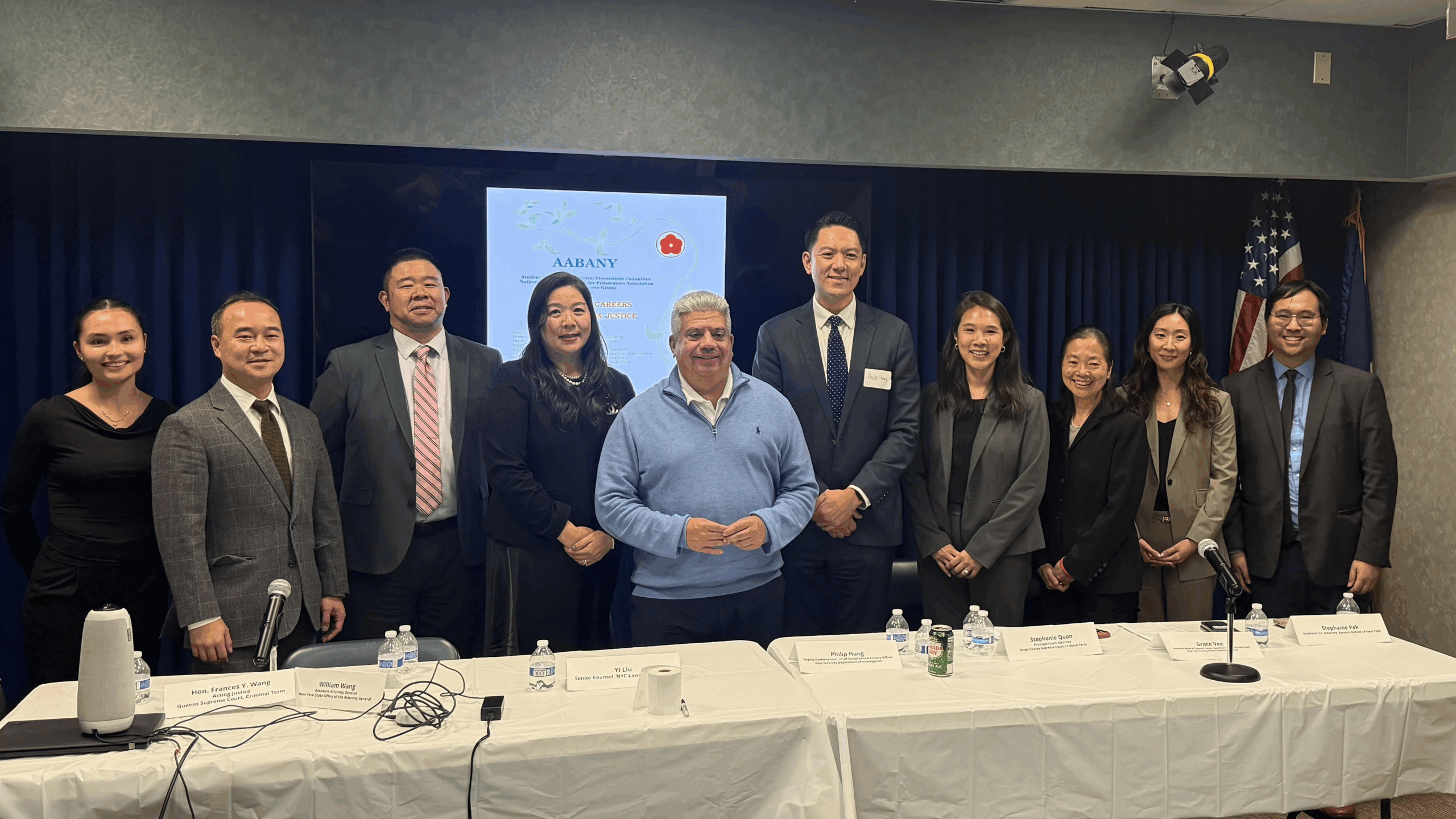
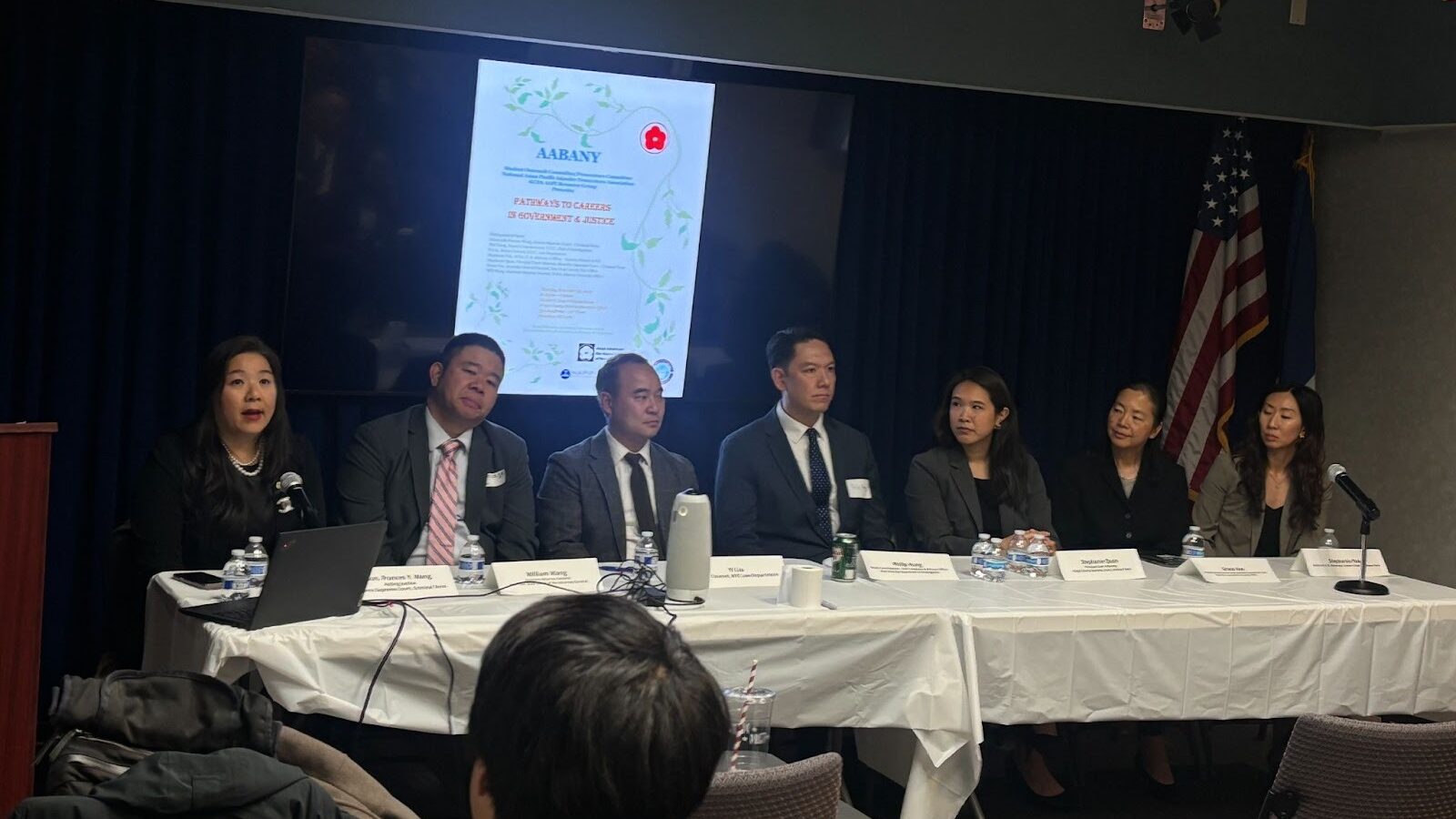
On November 25, 2025, AABANY’s Prosecutors and Student Outreach Committees joined the National Asian Pacific Islander Prosecutors Association (NAPIPA) to host an event called “Pathways to Careers in Government & Justice” at the Kings County District Attorney’s Office. The hybrid program, available in person and via Zoom, brought together law students, early-career professionals, and seasoned public servants for a wide-ranging discussion about what it means to build a career — and answer a calling — within the criminal justice system.

The event opened with a warm welcome and participants enjoyed a delicious spread of food, featuring dumplings, fried rice, chicken wings, and noodles. The event then quickly moved into a dynamic panel conversation featuring prosecutors, judges, court attorneys, and representatives from major government agencies. Each speaker traced their path into public service, revealing how mentorship, curiosity, and unexpected opportunities shaped their careers. The following judges were also in the audience: Hon. Phyllis Chu, Hon. Danny Chun, Hon. Marilyn Go (Ret.), and Hon. Don Leo.

Panelist Hon. Frances Wang (Queens Supreme Court, Criminal Term) described a childhood spent moving across Taiwan, Singapore, Iran, Saudi Arabia, and finally the United States. Adjusting to new cultures, learning English, and navigating unfamiliar schools, she found herself in a third-grade classroom where a teacher told her, “You ask a lot of questions. I think you’d make a good lawyer.” She had never heard the word lawyer before, but the encouragement stayed with her. Years later, that early spark grew into internships, mock trial competitions, prosecutorial work, and eventually a judgeship.

Her story echoed a theme that ran throughout the night: the profound and often quiet influence of mentors (teachers, supervisors, judges) who saw potential long before the speaker did. Many panelists noted that their career trajectories were not linear. They relied on mentors to clarify possibilities they did not know existed, whether in appellate litigation, regulatory enforcement, oversight and investigation, or judicial work.

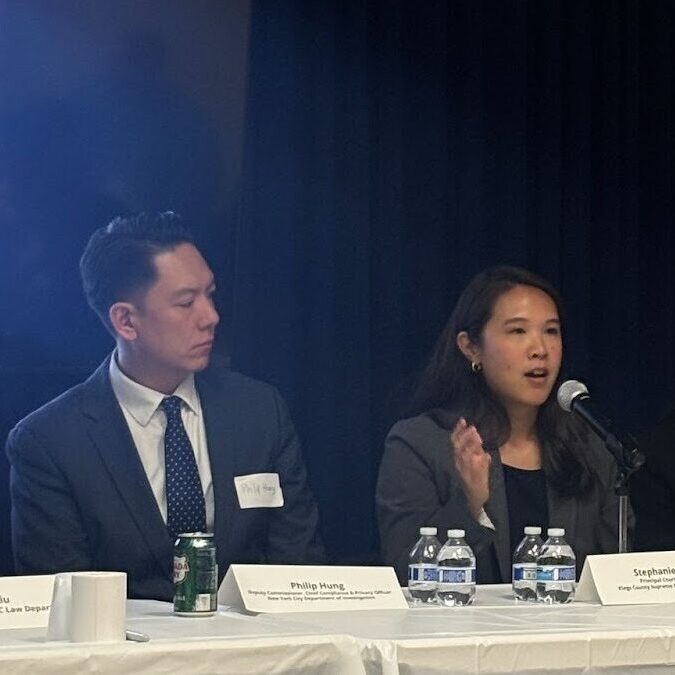
William Wang (Assistant Attorney General, New York Attorney General’s Office) and Stephanie Pak (Assistant United States Attorney, U.S. Attorney’s Office, Eastern District of New York) and Yi Liu (Senior Counsel, New York City Law Department) offered clear, accessible explanations of their bureaus and divisions, from affirmative litigation to labor and employment matters, and gave students a rare inside look at where public-sector lawyers can make a difference. Phil Hung (Deputy Commissioner, Department of Investigation) described DOI as “the city’s watchdog,” explaining how the agency investigates fraud, waste, abuse, and corruption across virtually every city entity. For many students, it was the first time seeing how interconnected the city’s justice and accountability systems truly are.

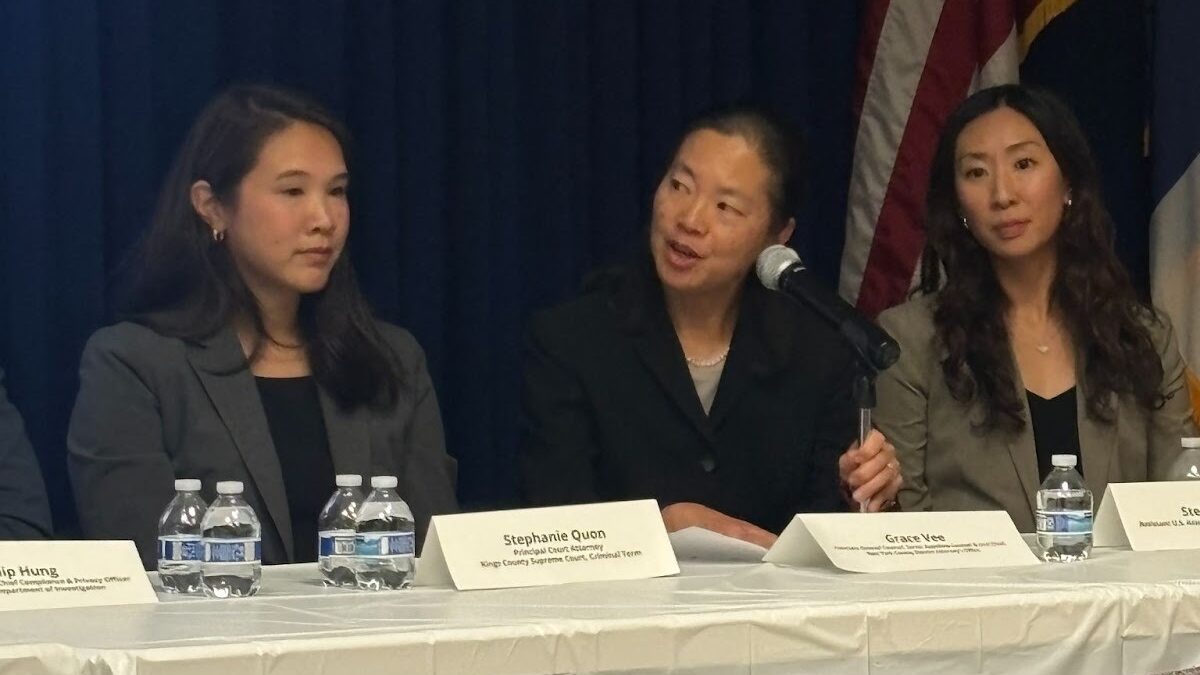
Stephanie Quon (Principle Court Attorney, Brooklyn Supreme Court – Criminal Term) described roles that receive less public visibility but are essential to making the courts and prosecutors’ offices function. She explained the intellectual rigor and responsibility that come with drafting decisions, researching complex legal issues, and supporting judges in high-stakes cases ranging from violent felonies to gang conspiracy, fraud, and bias-motivated crimes.

Grace Vee (Assistant District Attorney, Manhattan District Attorney’s Office) shared her journey to becoming an Assistant District Attorney, which started from a brief externship at the Manhattan District Attorney’s Office while she was still in college. What began as a two-week externship quickly became a defining experience. She spoke about how impressed she was by the dedication of the prosecutors, the sense of mission in the office, and the profound public service component of the work.

That early exposure stayed with her. She went on to law school, determined to return to the Manhattan DA’s Office, and she did. Grace became an Assistant District Attorney and remained in the role for 30 years (just recently celebrating her 30th anniversary at the Manhattan DA’s Office), building a long, distinguished career grounded in community protection, ethical prosecution, and public trust. Her story demonstrated that the spark of public service can begin early, but its longevity is sustained by commitment, discipline, and a deep belief in the work. During Grace’s description of her journey, she thanked Judge Marilyn Go, also in attendance in the audience, as her mentor and role model. This moment was especially moving, showing how mentorship has passed on and created a lasting legacy of service within the legal community.

Grace’s narrative resonated particularly strongly with students, showing how a single moment — an externship, a mentor’s encouragement, a first exposure to courtroom advocacy — can set the foundation for a meaningful career.

Across all these narratives, one message stood out: there is no single path into public service, but every path requires integrity, courage, and a willingness to step forward.

As the conversation deepened, several speakers reflected on the unique role of Asian American and Pacific Islander (AAPI) attorneys in public-sector positions. They underscored that representation matters not only for visibility, but for trust. Many communities remain fearful or skeptical of government institutions; seeing people with shared histories and cultural understanding in these roles can make the legal system feel more accessible. Public-sector lawyers often become bridges between communities and the courts, between fear and understanding, between wrongdoing and accountability.

The panelists’ honesty about the pressures of the work, whether in sentencing decisions, overseeing investigations, or handling trauma-heavy prosecutions, imbued the discussion with  realism and deep humanity. Their candor also reaffirmed that commitment to public service, despite its difficulty, remains a powerful way to shape the world with purpose.

A Visit from Brooklyn DA Eric Gonzalez: A Call to Serve

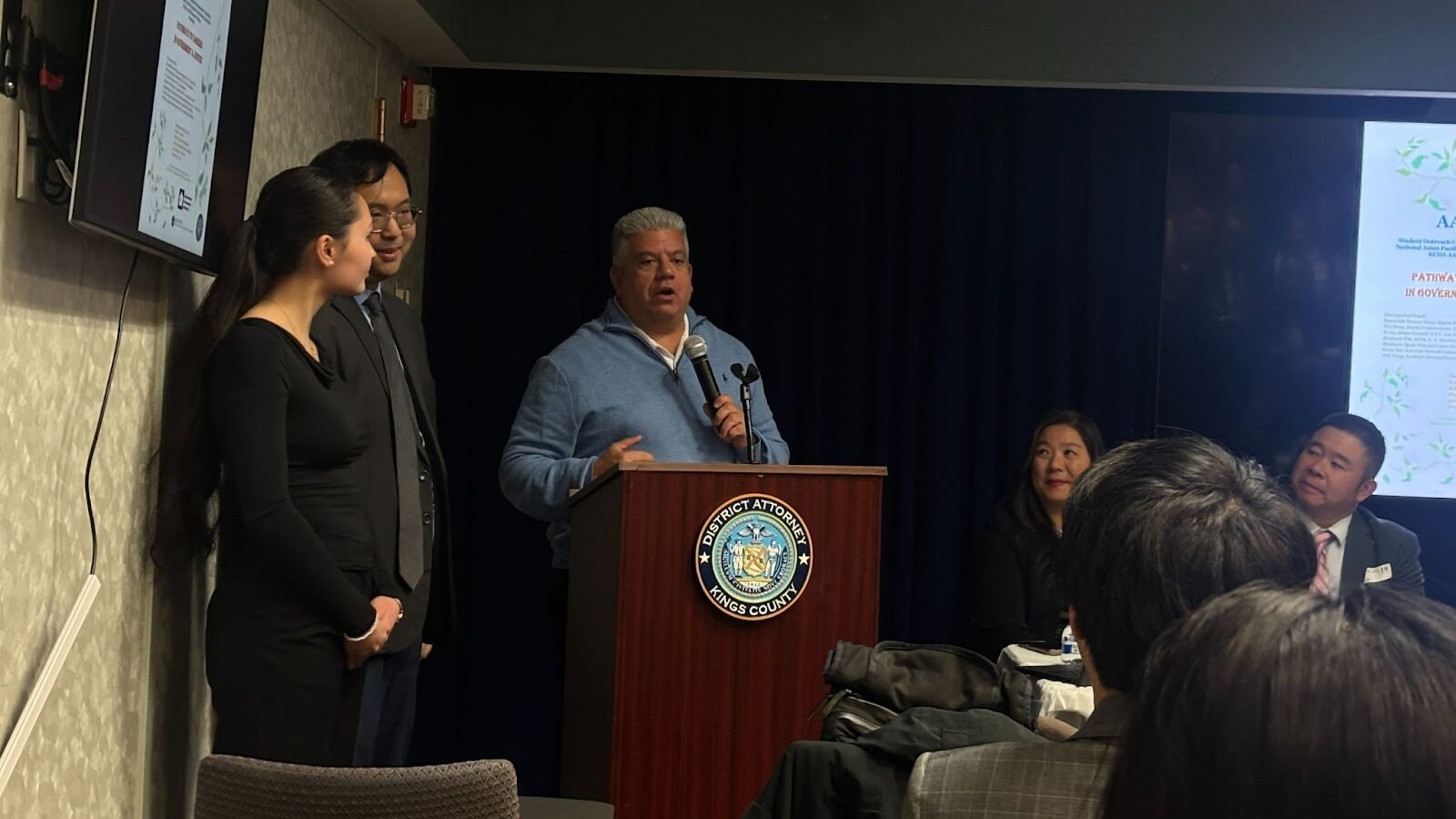
Midway through the evening, Brooklyn District Attorney Eric Gonzalez stopped by to offer words that many attendees described as especially moving. He spoke frankly about the critical need for representation in public service, drawing on his own background as a Latino community member and prosecutor.

He emphasized that the justice system needs attorneys who reflect the diverse communities of New York, especially in moments of heightened distrust. “People are really afraid of government,” he said, noting that this fear is prevalent across Asian, Latino, Caribbean, and Black communities. DA Gonzalez emphasized that increased representation and participation of more minority community members would help address this issue. 

DA Gonzalez stressed that losing talented young lawyers to the private sector would have consequences far beyond the walls of a single office. The public, he reminded everyone, depends on committed public servants who can build trust and foster accountability. His message was both caution and encouragement: stay, serve, and know that your presence matters.

Thank You to the Prosecutors Committee, Student Outreach Committee, Panelists, and the Kings County District Attorney’s Office. 

What distinguished this event was the sincerity running through every story, every piece of advice, and every reflection. The speakers did not simply outline career paths; they opened windows into the human experience of being a public servant. They spoke about challenges and doubts, but also about the moments that reaffirmed why they chose this work.

Hearing about the speakers’ individual stories made students and attendees realize that they could do it too, and witnessing their dedication, passion, and commitment to their jobs firsthand was definitely impactful.  During the networking hour that followed, attendees lingered to ask questions, seek mentorship, and connect with speakers. It was clear that the event created not only opportunities, but possibilities.

AABANY extends its deepest gratitude to the Kings County District Attorney’s Office, NAPIPA, DA Eric Gonzalez, the moderators, panelists, and all attendees. Pathways to Careers in Government & Justice illuminated the rich landscape of public-sector careers and reminded aspiring attorneys why representation, integrity, and service matter.

We look forward to continuing programs that uplift emerging leaders and strengthen the pipeline of dedicated AAPI public servants across New York.  

To learn more about the Prosecutors Committee at AABANY, click here.

To learn more about the Student Outreach Committee at AABANY, click here.

AABANY Shows Up in Force at the 2025 NAPABA Convention in Denver

The Asian American Bar Association of New York (AABANY) was a prominent presence at the 37th National Asian Pacific American Bar Association (NAPABA) Convention, held at the Sheraton in downtown Denver, CO, from November 6 to 8, 2025. This year’s Convention boasted the second-largest convening in NAPABA history, with nearly 2,900 AANHPI attorneys, judges, law professionals and law students in attendance, including over 800 first-time attendees.

AABANY members presented and led various Continuing Legal Education (CLE) programs and were recognized during luncheons and social events throughout the three-day convention.  Over 175 people connected with each other on the AABANY@NAPABA WhatsApp group before, during and after the conference.

AABANY Get-Together at Maggiano’s

AABANY’s well-attended gathering at Maggiano’s Little Italy on Thursday evening was a big hit on one of the first nights of the Convention. The location was conveniently steps away from the Sheraton, drawing over 120 attendees, including friends old and new, many from outside of New York. Guests enjoyed a buffet of heavy hors d’oeuvres, such as domestic and imported cheeses, crostini, ravioli, wagyu meatballs, fried calamari, fried zucchini, and crab cakes, along with drink tickets good for one drink. It proved to be a festive start to the Convention’s social calendar, filled with the spirit of camaraderie that defined the Convention.

Awardees and Recognition for AABANY Members

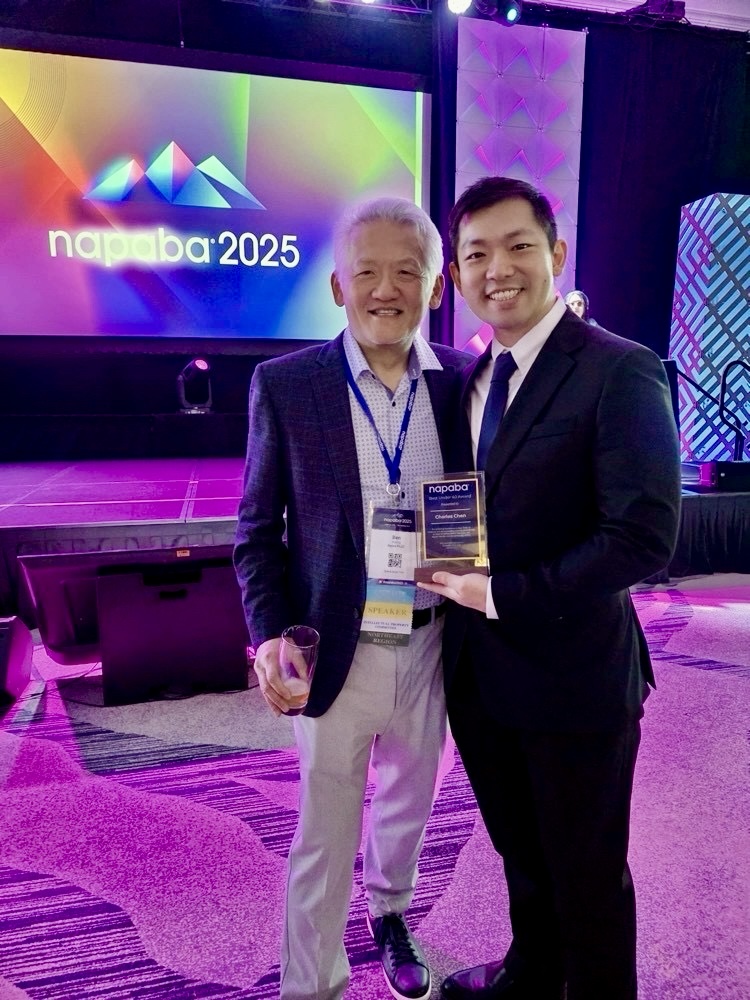
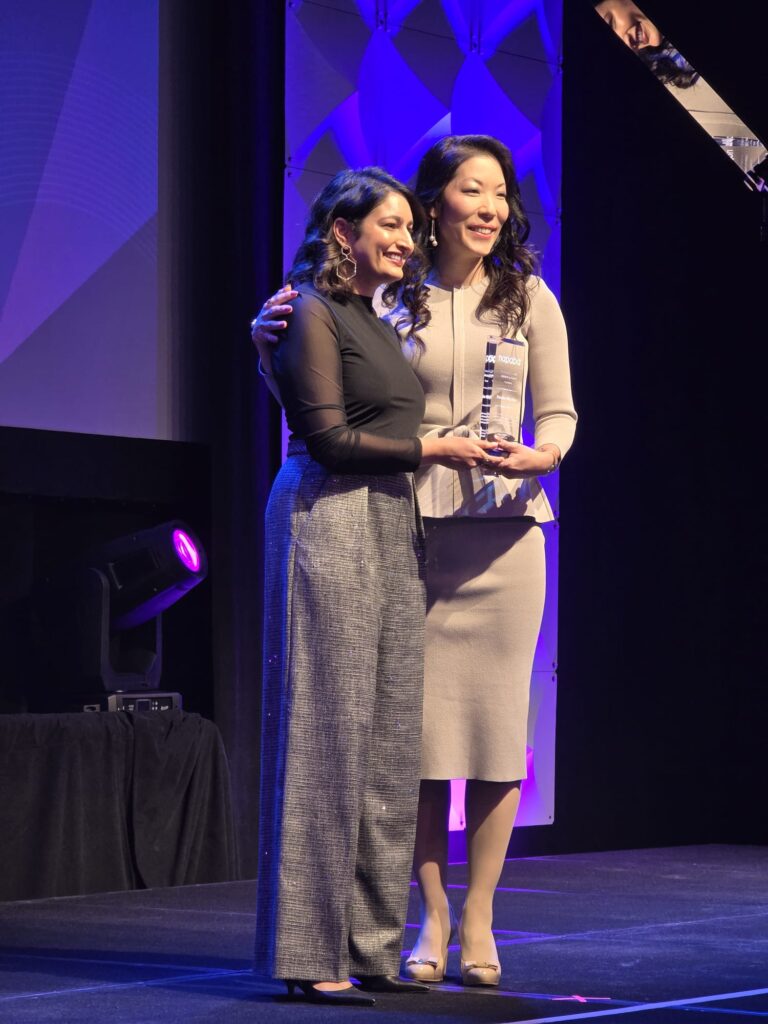
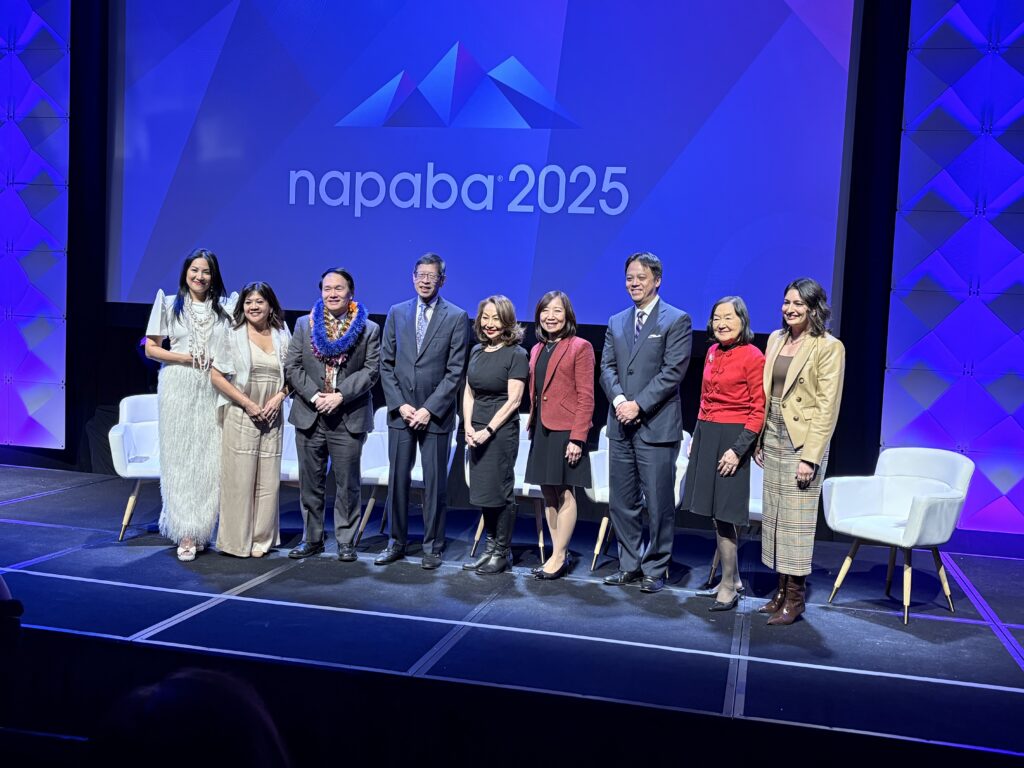
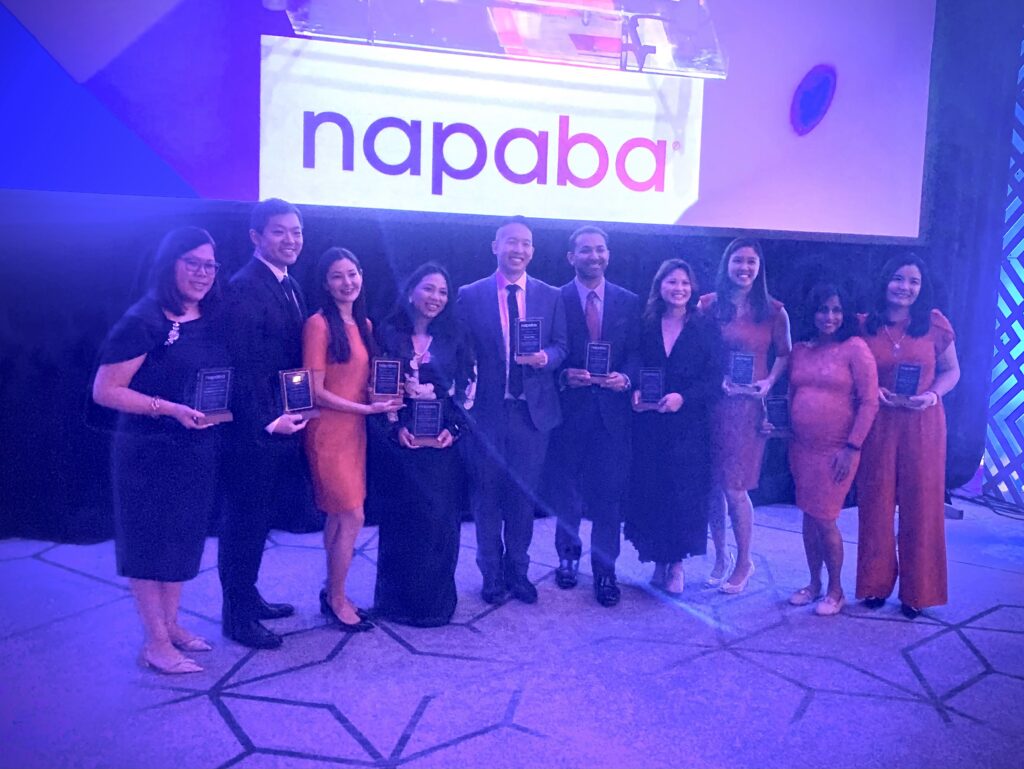
NAPABA Awards presented across various events, including the NAPABA Best Under 40 Awards Reception (Thursday), Welcome Reception (Thursday), President’s and Trailblazer Award Reception (Friday), and luncheon plenaries (Friday and Saturday).

AABANY members and AABANY past annual dinner honorees were honored this year at the Convention: (click the link to read more about each award and the 2025 awardees):

The 17th Annual Trial Reenactment: “Born American: United States v. Wong Kim Ark”

The AABANY Trial Reenactment Team presented its 17th production on Friday afternoon, November 7, to a capacity audience. The program, titled “Born American: United States v. Wong Kim Ark,” examined the landmark Supreme Court case. The case focused on Wong Kim Ark, born in San Francisco in 1873 to Chinese immigrants, who was denied reentry to the U.S. in 1895 under the Chinese Exclusion Act. Wong successfully argued that the Fourteenth Amendment’s guarantee of birthright citizenship applied to him. The program’s exploration of birthright citizenship was especially relevant, coming shortly after President Trump signed an Executive Order on January 20, 2025, seeking to restrict this established constitutional precedent.

Some of the photos taken from the Trial Reenactments by AABANY can be seen at this link here.

The cast included: Hon. Denny Chin, Kathy Hirata Chin, Jacob Chen, Francis Chin, Anna Mercado Clark, Hon. Peggy Kuo, Clara Ohr, Yasuhiro Saito, Professor Rose Cuison-Villazor, Andy Hahn, Yang Chen, Linda Lin, and Vince Chang. To learn more about AABANY’s Trial Reenactments, go to reenactments.aabany.org. AABANY encourages anyone interested in performing one of our reenactments to make a request through that website. The current script will be made available in 2026.

AABANY Members as Panel Experts

AABANY members showcased their expertise by serving as presenters and panelists across a variety of CLE programs throughout the Convention. Some of the programs featuring current and former AABANY members included, but were not limited to:

Thursday’s Programming:

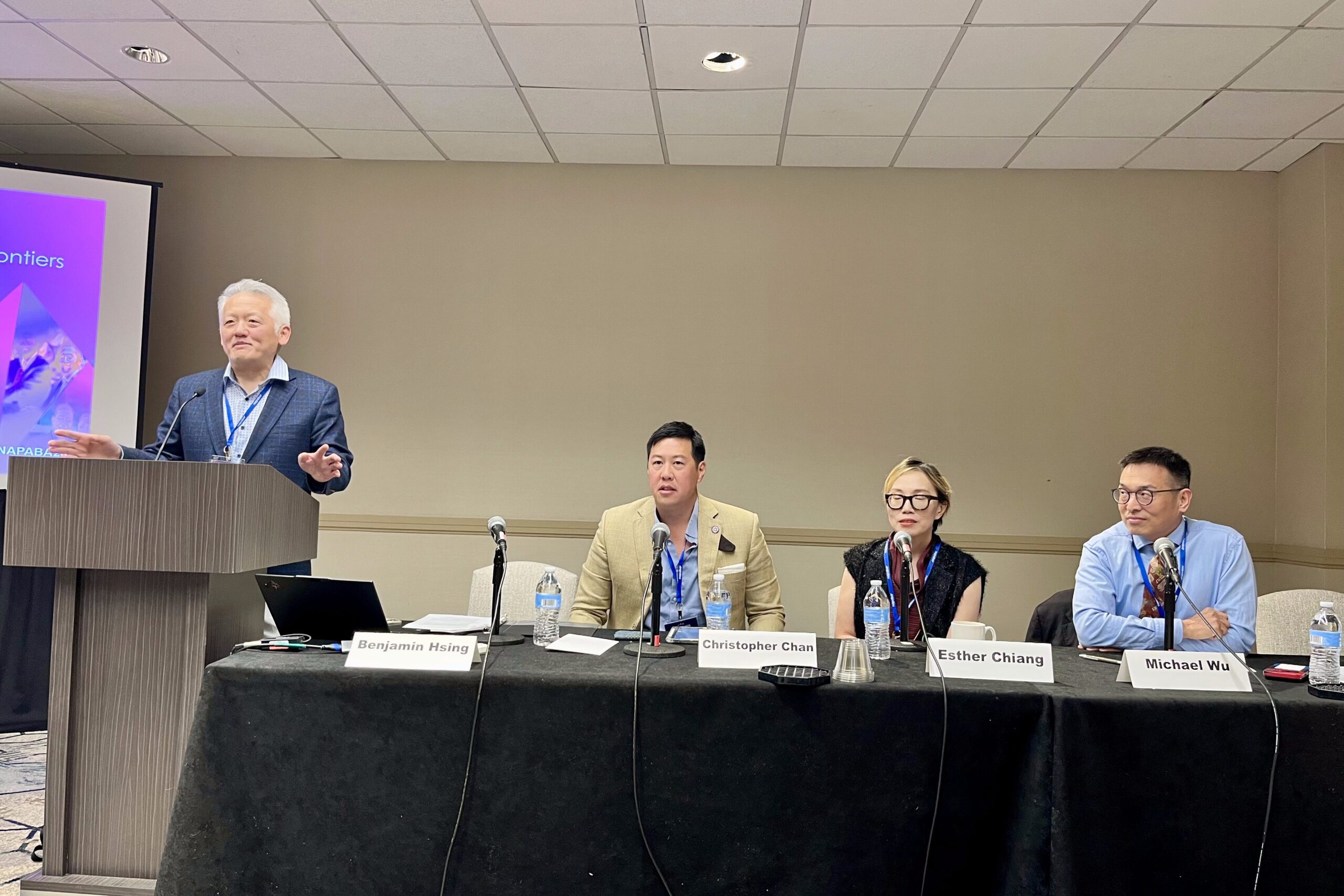
  • Agentic AI: Legal and Policy Frontiers in the U.S. and China (Benjamin Hsing, AABANY President; Christopher Chan)
  • International Law Committee & Women’s Leadership Network Joint Luncheon (Jennifer Choe-Groves)
  • Navigating First Decade of Legal Career (Dan Brody)
  • Navigating Uncertainty with Confidence (Blossom Kan)

Friday’s Programming:

  • Shark Tank Part III: Live Pitch Coaching (Steve Chung; Hannah Kim; Austin So; Susan Shin, former AABANY President)
  • Navigating AI Integration in Legal Practice (Eric Lin)
  • Trump & Tariffs: Protectionism and Economic Impact (Rudy Figueroa)
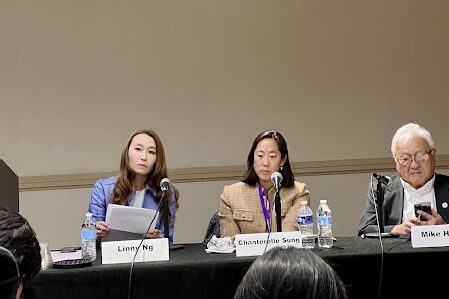
  • Sexual Violence Against Women: From the Code of Ur-Nammu to WWII ‘Comfort Women’ and Beyond (Linny Ng) 
  • Practicing with Bots: Training Lawyers in the AI Age (John Lee)
  • Advising Startups on Patent Strategy (Charles Chen) 
  • United States v. Wen Ho Lee – 25 Years Later (Stephen Chahn Lee)
  • AI, Ethics & Minority Rights (Shruti Chopra)
  • High-Stakes Investigations & Trials (Joon Kim)
  • General Counsel Roundtable (Linda Lin, former AABANY President)
  • What We’ve Got Here Is a Failure to Communicate: Pitfalls and Best Practices for Handling Asian Language Witnesses and Evidence (Elizabeth L. Mo)
  • Representing Clients in the Highest Stakes Investigations and Trials (Jennifer Wu, AABANY Board Member)
  • Disagreeing Better: What ADR Principles Can Teach Us on How to Bridge Divides in Polarized Times (Chris M. Kwok, AABANY ADR Committee Co-Chair)
  • Ask an Associate: Navigating Starting Your Career at a Law Firm (Brittany Clark)

Saturday Programming:

  • Originalism’s Impacts & AANHPI Communities (Chihiro Isozaki)
  • Workplace Discrimination and Arbitration (Rachel Lee, AABANY Issues Committee Co-Chair)
  • Birthright Citizenship Under Siege: The Fight for Asian American and Pacific Islander Belonging (Professor Rose Cuison-Villazor)
  • The Places You’ll Go! Careers in Specialized Fields (Ada Wang, AABANY Intellectual Property Co-Chair; Stacy Wu)
  • Birthright and Belonging: Who gets to be American in the 21st Century and Beyond? (Bethany Li)
  • Case Study: Creating a National Legal Organization (NAPABA) (Sandra Yamate)
  • Legal Career Paths: Partnership, In-House & Public Service (Christopher Arcitio)
  • There at the Beginning: Case Study on Creating a National Organization (Diane Yu, retired Chief of Staff and Deputy to the President of NYU, 2011 AABANY Annual Dinner Honoree)

Plenary Session Focus on the Portrait Project

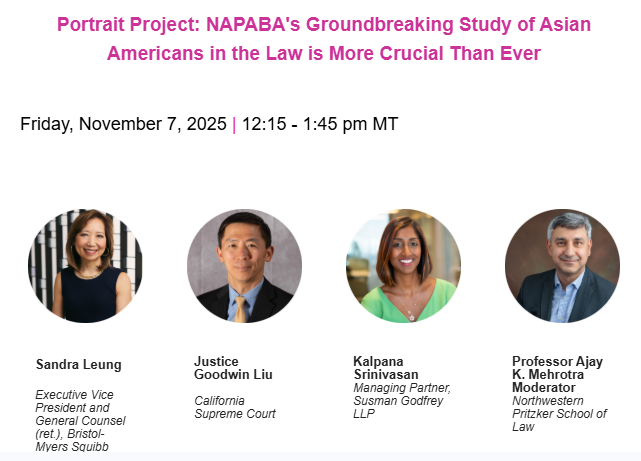
During the Friday Plenary Lunch, discussion centered on the Portrait Project, NAPABA’s groundbreaking study of Asian Americans in the Law, supported by the American Bar Foundation and NAPABA. This research provides critical statistics demonstrating the persistent barriers to advancement and underrepresentation of the Asian American legal community in the profession’s top ranks, especially as diversity and inclusion programs face increasing national pressure. AABANY has been a financial donor to the Portrait Project.

AABANY 2010 Annual Dinner Honoree Sandra Leung, former General Counsel of Bristol Myers Squibb Company, was among the speakers, offering an in-house perspective on the representation of AANHPI attorneys. She spoke about the importance of AANHPI attorneys to be in leadership roles, stating “if you aren’t at the table, you’re on the menu.” That resonated with many attorneys who have felt not involved in the decision-making at one point or another in their careers.

Key findings highlighted by the Portrait Project indicated that while there has been progress in federal judicial appointments and General Counsel roles, underrepresentation at the highest levels persists. The research suggests Asian American attorneys would benefit from greater institutional support to counteract stereotypes, facilitate soft skills development and relationship-building, and increase leadership opportunities. Justice Goodwin Liu reinforced this theme, quoting a participant who stated, “Instead of another cooking class, talk to me about retention.”

AABANY Members Sworn into NAPABA Board

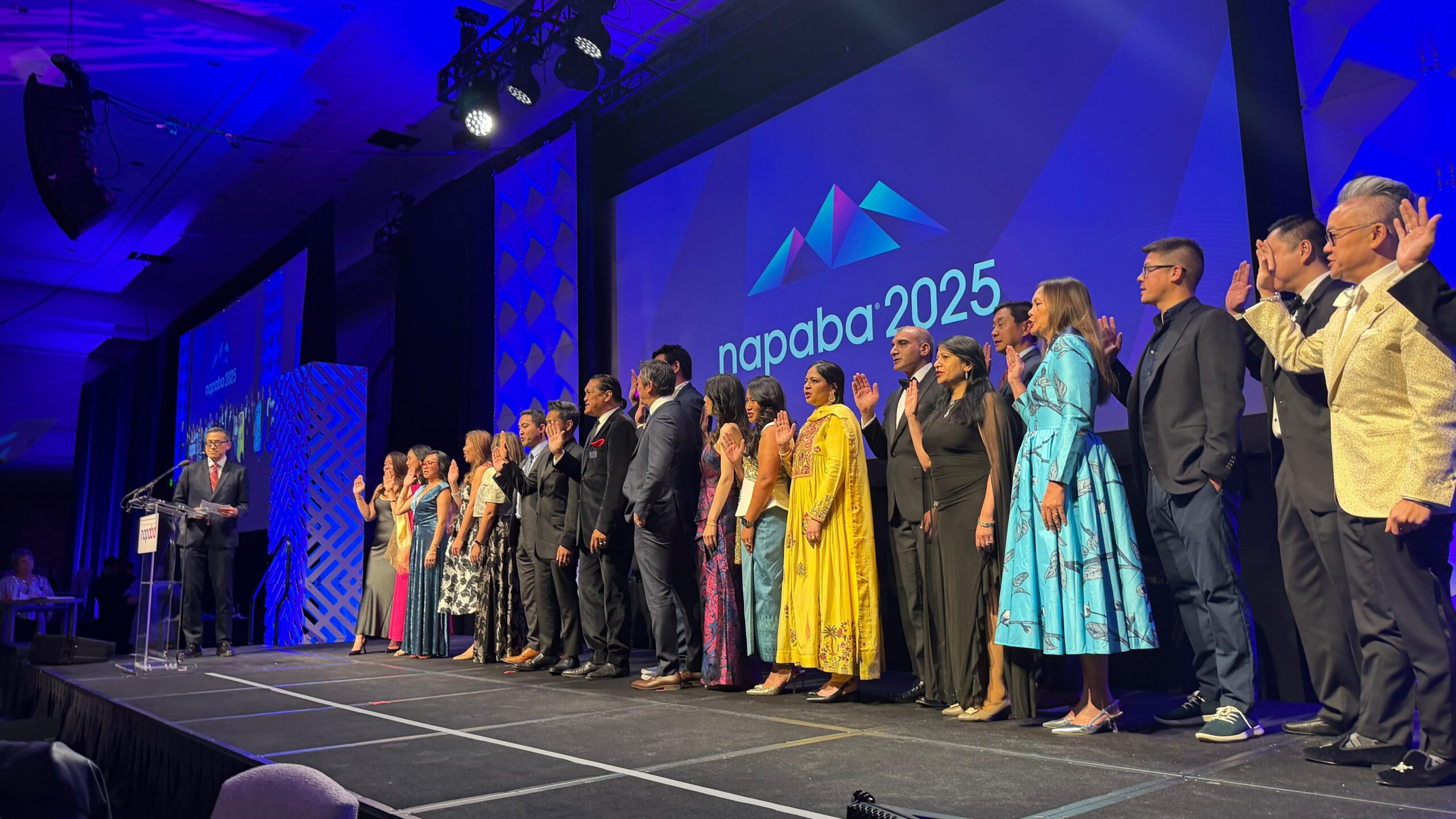
During the Premier Event, the 37th Anniversary Gala on Saturday evening, AABANY members Anushree Bagrodia (Vice President & Senior Managing Counsel, Mastercard), Sapna Palla (Past President; Trial Lawyer and Partner, White & Case LLP), and Vishal Chander (Board Member and Issues Committee Co-Chair; Managing Attorney, The Chander Law Firm, P.C.) were all officially sworn in as At-Large Members of the NAPABA Board.  

AABANY congratulates and thanks Anushree, Sapna and Vishal for their service on the NAPABA Board, along with  Glenn D. Magpantay (AABANY Board Member; Commissioner at the U.S. Commission on Civil Rights) for being appointed as a Northeast Alternate Regional Governor for NAPABA.

Gala Keynote

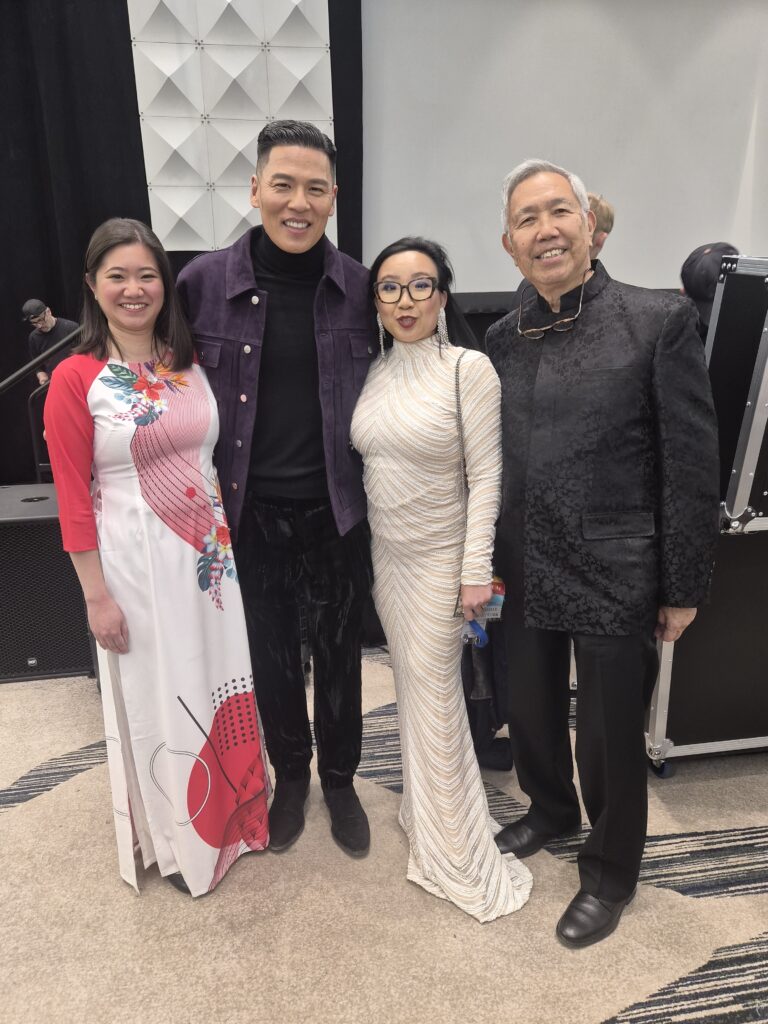
The Gala featured a fireside chat with keynote speakers Katie Phang and Rich Ting. Their conversation spanned Rich Ting’s career transition from attorney to acclaimed actor, and explored the evolving landscape of Asian American representation in Hollywood during polarizing times. Fun fact: Rich Ting has a law degree and was about to start his legal career at a prominent law firm until Hollywood called … and now he no longer has to worry about keeping up his CLE credits.

Social Activities

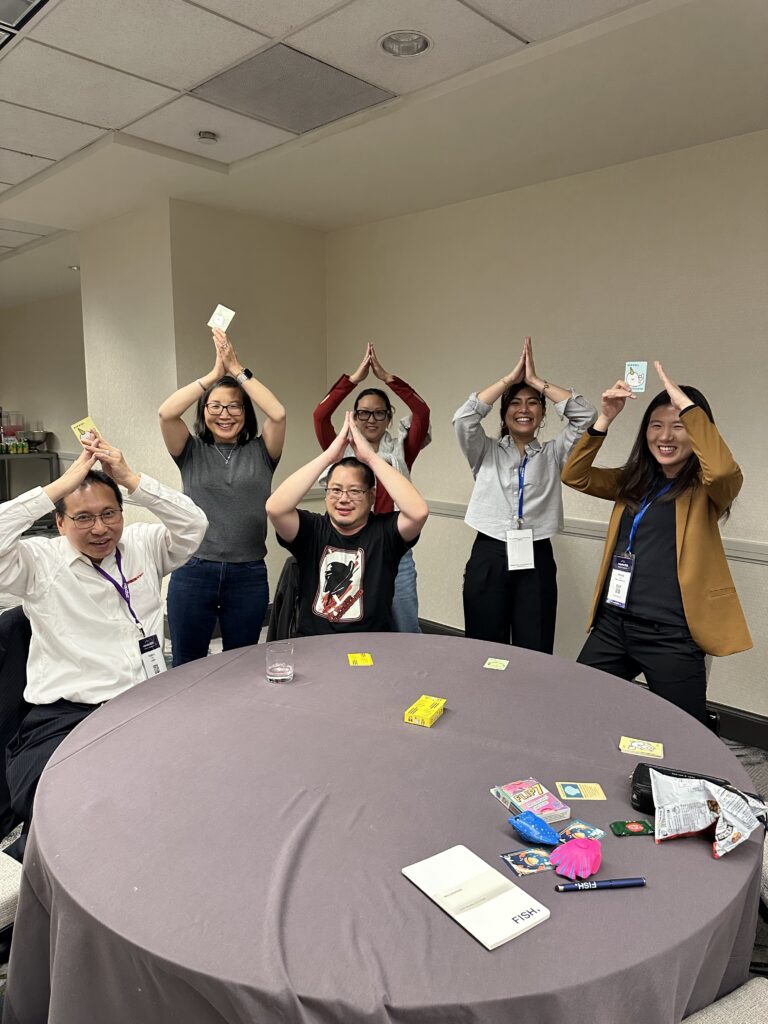
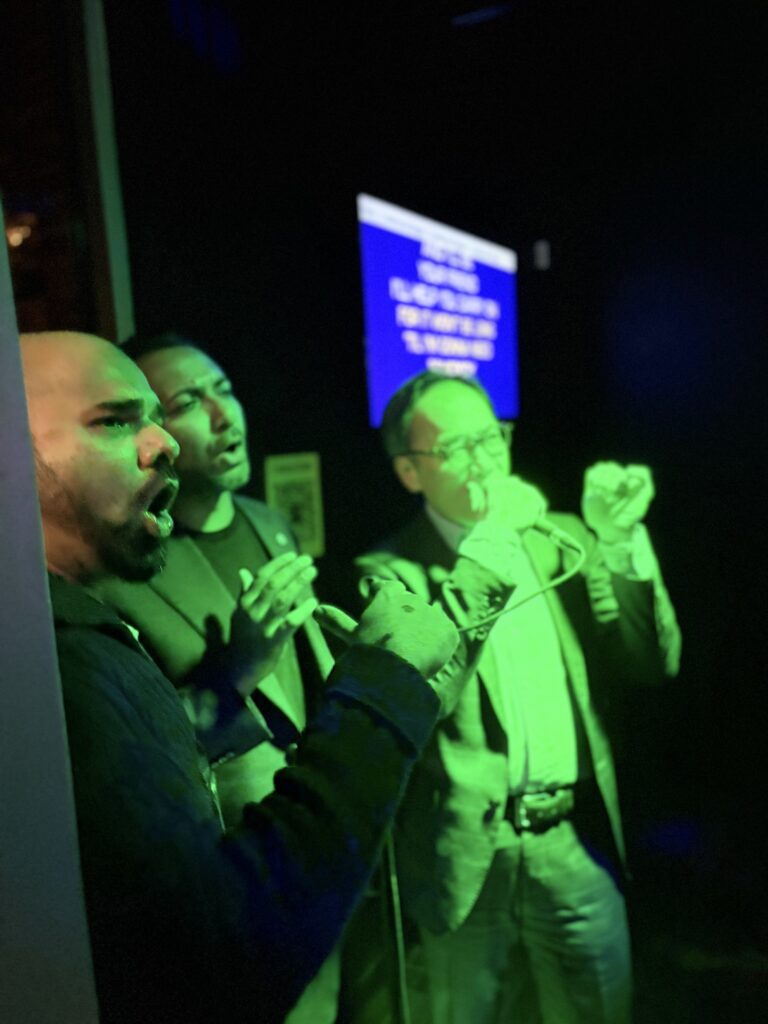
Beyond the formal events, AABANY members gathered for a variety of social activities, including morning yoga sessions, board game night (organized by our own Jeffrey Mok, Board Director, Issues Committee Co-Chair, and Principal at Fish & Richardson), and karaoke (separate events sponsored by Groombridge Wu and Littler, both long-time sponsors of AABANY), as well as exploring the areas around Denver!

Thomas Tang Moot Court Competition

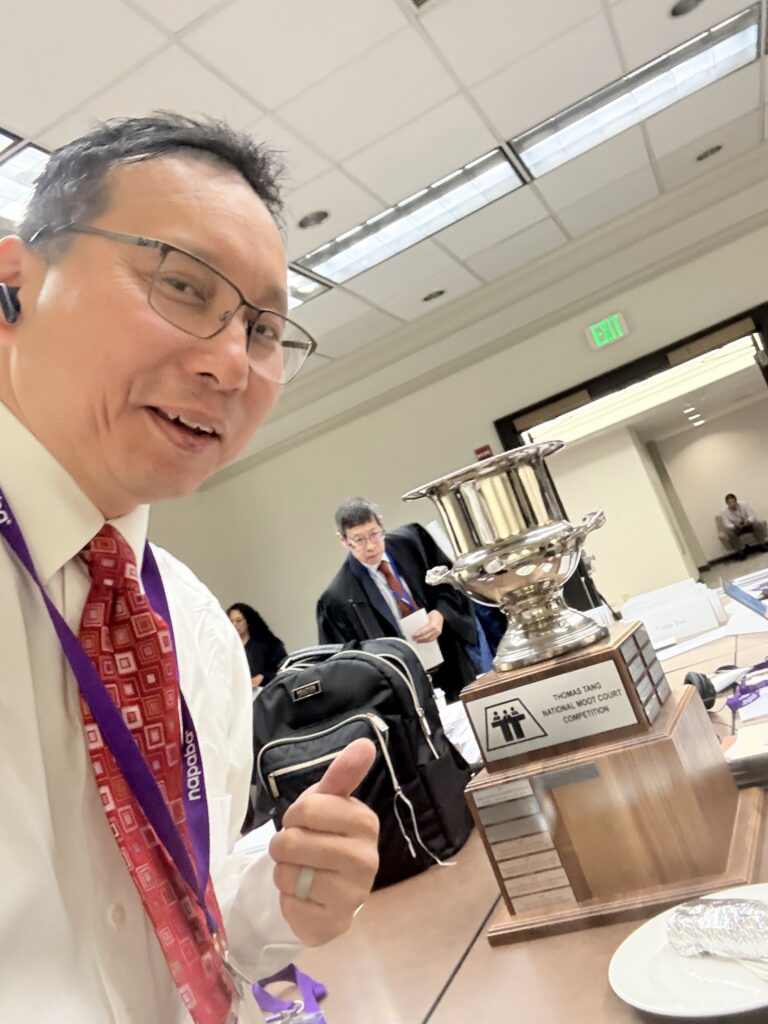
The national finals for the Thomas Tang Moot Court Competition took place during the NAPABA Convention. Law students from the New York area participated, alongside volunteer judges from AABANY. We congratulate  all participants and the winning team: Audrey La and Josh Shimabukuro from Loyola University Chicago School of Law, who had previously won the regional competition round in New York in October.

A Community and a Family

Despite flight cancellations and delays experienced by many AABANY members on their return home, the spirit of mutual support endured, with members reaching out, sharing resources, and ensuring everyone arrived home safely. This supportive behavior exemplified the core takeaway from the convention: AABANY is more than just a community—it is a family that comes together to uplift and assist one another. 

We look forward to the next NAPABA Convention in Los Angeles, scheduled for November 12-15, 2026 at the JW Marriott L.A. Live.

More photos, shared by various AABANY members, can be found at this album here.

Thank You to the Participants of the 2025 Thomas Tang Moot Court Competition

Over the course of two days – in-person on October 17, and over Zoom on October 18 – law students from across the country participated in the 2025 Thomas Tang Moot Court Competition (TTMC).  A total of 28 teams from 11 states competed in three regional competitions, showcasing exceptional advocacy, composure, and legal reasoning. To make these competitions possible, 78 members of the bench and bar marked a total of 133 score sheets across 12 rounds.


Background

The Thomas Tang Moot Court Competition was named in honor of Judge Thomas Tang of the U.S. Court of Appeals for the Ninth Circuit and Dr. Pearl Tang. The competition provides law students with a platform to hone their advocacy skills while engaging with the Asian Pacific American legal community. The competition was sponsored by the NAPABA Law Foundation and NAPABA Judicial Council, and remains one of NAPABA’s signature programs for fostering mentorship, excellence, and representation among the next generation of advocates.

AABANY’s Contributions

AABANY is proud to share that many of our members volunteered as judges and bailiffs for the Regional, held on October 17, 2025 at the St. John’s University campus in New York City. Our members generously devoted their time and mentorship to the aspiring attorneys, providing detailed feedback to the law students, asking provoking and critical questions about the case. 

The volunteer judges included federal and state judges, as well as seasoned litigators and practitioners. They offered meaningful advice in vital areas such as argument construction, speaking, composure, and presentation. Many students shared that the feedback and support they received from practitioners were among the most meaningful parts of their competition experience.

AABANY also co-sponsored the luncheon with the law firm of Groombridge, Wu, Baughman & Stone LLP, where participants enjoyed a spread of delicious sandwiches, beverages, and snacks. 

During the lunch, Jennifer Wu (AABANY Board Director), Judge Pamela Chen (AABANY Member), and Judge Jennifer Choe Groves shared their experience and advice with the students. Jennifer Wu recalled her own time as a competitor in the Thomas Tang Moot Court Competition, where several judges had told her, “You should be a litigator.” She humorously noted that one of the things she did particularly well was conceding at the right time, a small but important skill in advocacy. Reflecting on those memories, she spoke about the lasting mentorship she received during her time as a law student and her wish to pass that mentorship forward to the next generation.
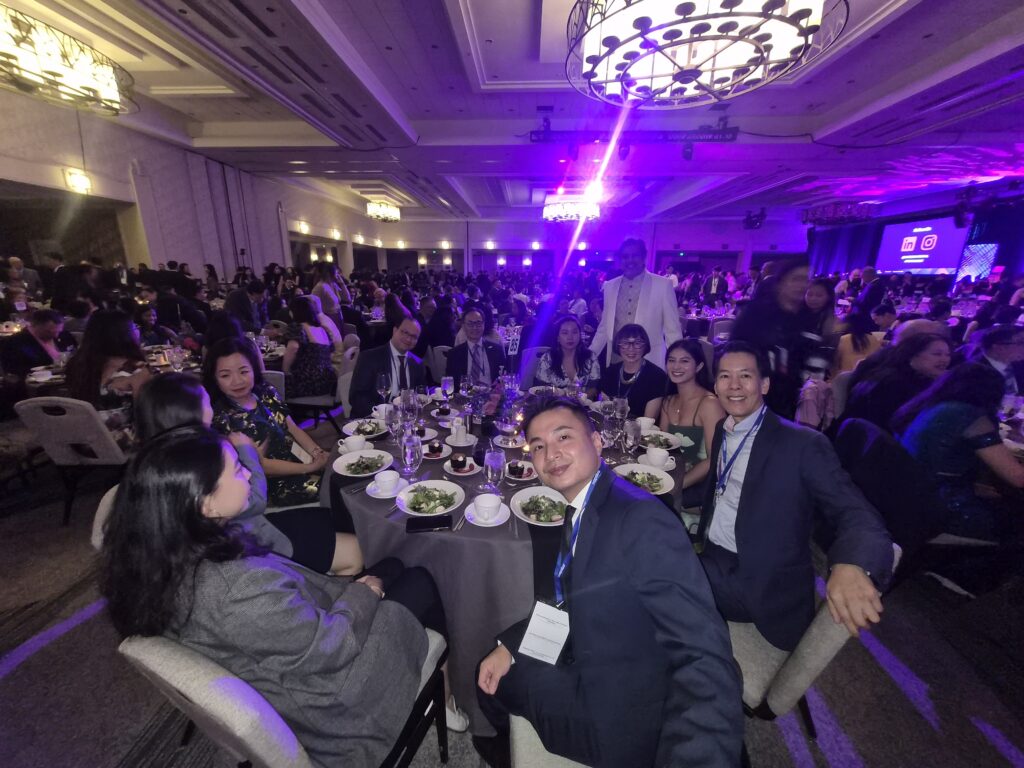
Judge Chen and Judge Choe Groves echoed those sentiments, encouraging students to approach advocacy with confidence, humility, and openness to learning. Their words underscored the importance of community and the enduring relationships that the Thomas Tang Moot Court Competition helps build among judges, practitioners, and students.
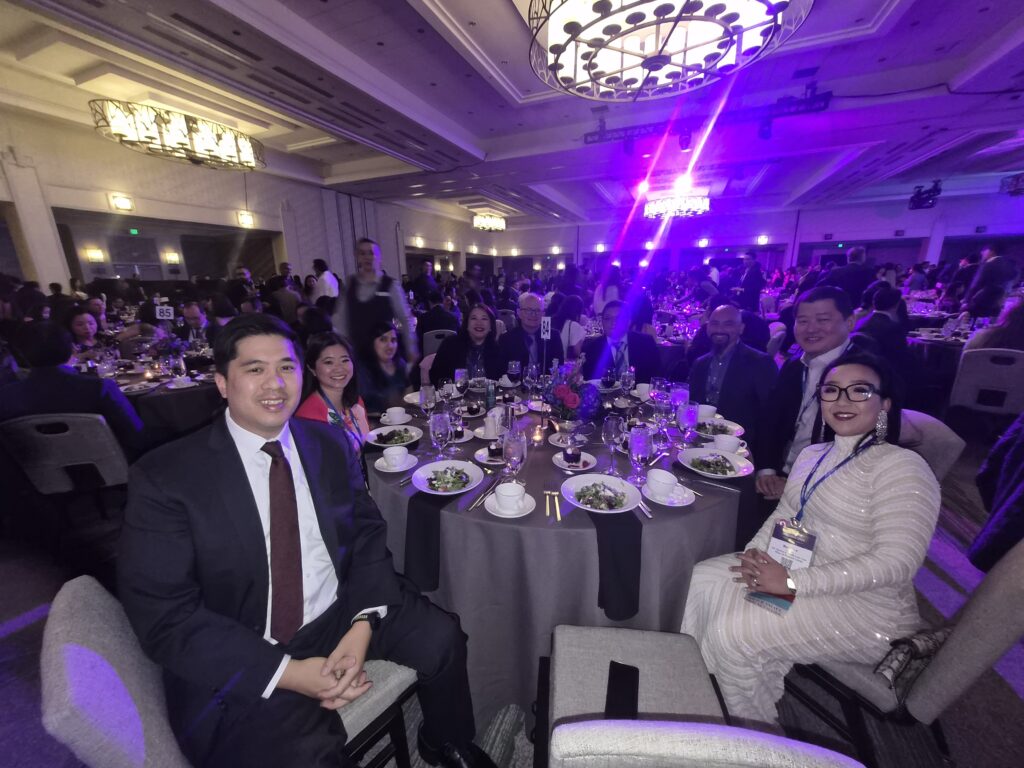
About This Year’s Competition

The participants of this year’s regional rounds showcased exceptional preparation and professionalism. The participants shared creative arguments, thoughtful responses to questioning by judges, and showcased quick critical reasoning, as well as composed presentation. The atmosphere reflected the shared commitment of both students and volunteers to learning, growth, and community-building.

This year’s moot court problem addressed an interesting issue at the intersection of many current issues surrounding technology, intellectual property, copyright, and art: Who owns the copyright of an artwork created with the assistance of artificial intelligence? The case challenged participants to wrestle with questions of authorship, originality, and the evolving role of human creativity in the age of AI.

The top 18 teams from the regional competitions have advanced to the National Competition, which took place during the NAPABA Convention on November 7–8, 2025. The team that won the national competition was Audrey La and Josh Shimabukuro from Loyola University Chicago School of Law. They were the same team that won the regional competition round in New York.

We extend our gratitude to all those who made this competition possible, from the volunteers, judges, attorneys, and law student, to the TTMC National Committee and local coordinators. Your generosity of time and spirit continues to uphold the legacy of Judge Thomas Tang and ensures that mentorship, excellence, and inclusion remain at the heart of this program.