In a democracy, criticism of court decisions is protected by the right to free expression. It can be vital for informing public debate.
However, in recent years, threats of violence, intimidation, and disinformation directed at federal judges, and defiance of court orders have gone far beyond healthy criticism and are fundamentally threatening judicial independence. The volume, intensity, and character of recent attacks on federal judges is profoundly eroding the rule of law in the United States.
Drawing on thirty-four interviews with an equal number of federal judges appointed by presidents of both major political parties and research of publicly available materials, this study assesses the four categories of threats identified in Chief Justice John Roberts’ Year End Report (2024) while situating them in historical perspective. It examines the impact of these threats on the federal bench and proposes recommendations for safeguarding the judicial independence that is a foundation of America’s constitutional order.
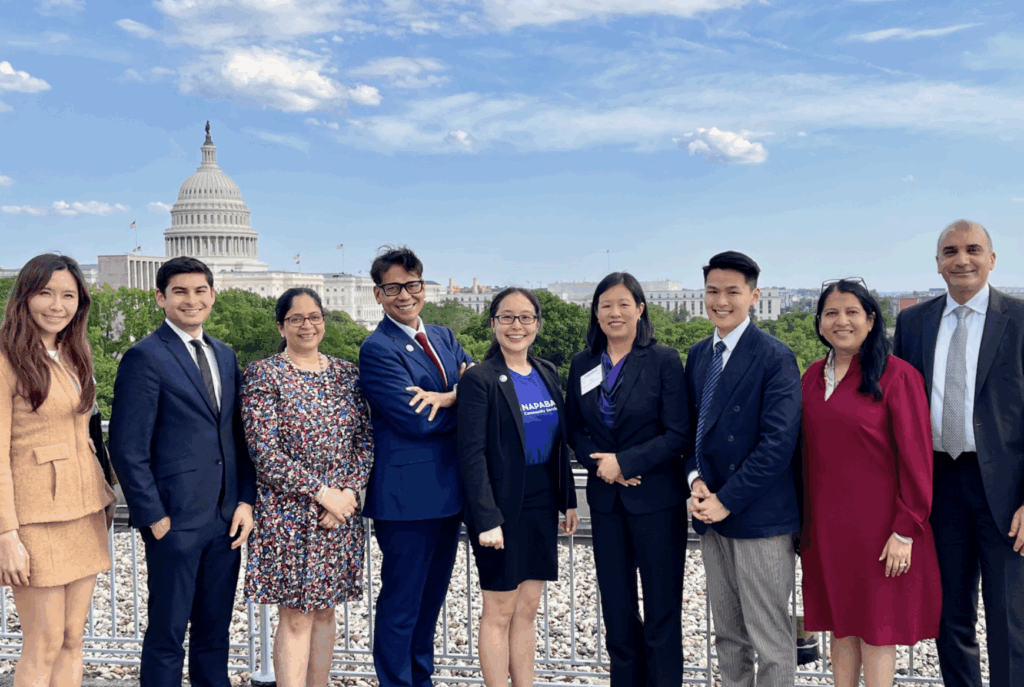
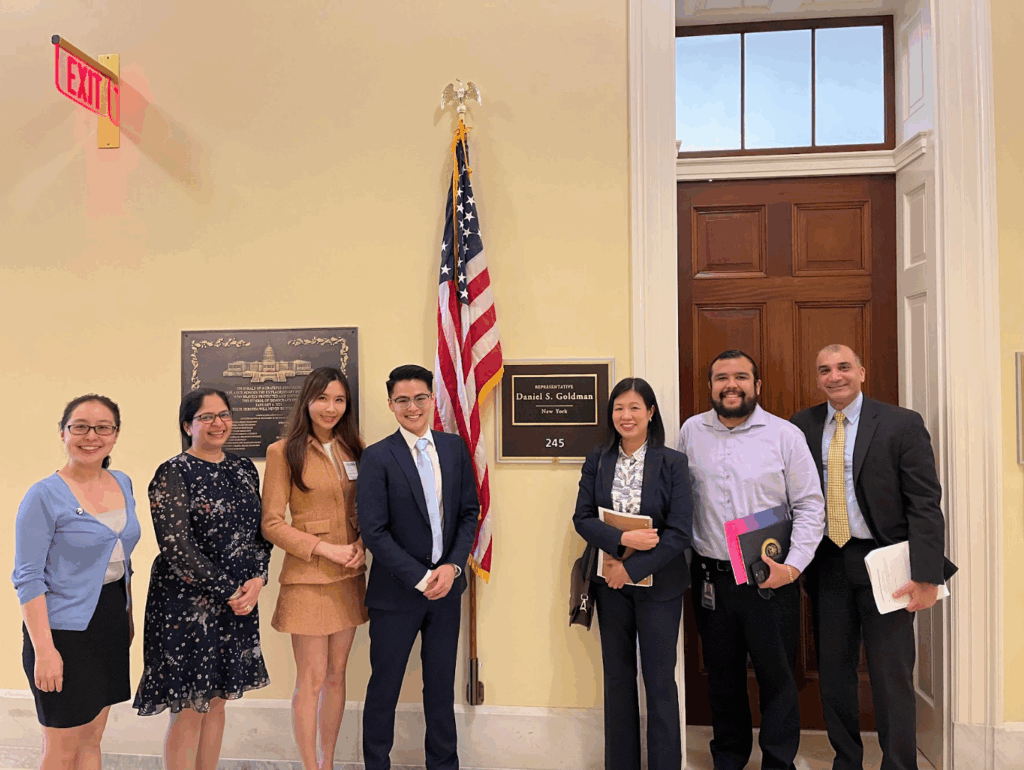
The National Asian Pacific American Bar Association (NAPABA) hosted its annual Lobby Day on May 19-20, 2026, bringing together many affiliate members, including those from the Asian American Bar Association of New York (AABANY) who traveled to Washington, D.C. to participate in this year’s NAPABA Lobby Day. AABANY members joined attorneys, judges, law students, and community leaders from across the country in advocating for policies that advance civil rights, protect due process, and strengthen the rule of law.
Representing AABANY were members of the our Issues Committee, including Co-Chairs Vishal Chander and Rachel Lee, along with other members of the New York delegation: Anushree Bagrodia, Charles Drucker, Linny Ng, Tiffany Ngeo, and Alex Pan. We also thank Glenn Magpantay, Northeast Alternate Regional Governor for NAPABA and AABANY Board Director, and Sapna Palla, NAPABA Board Member and former AABANY President, who joined the New York delegation.
Lobby Day began with a policy training session at Jones Day, where participants received briefings on NAPABA’s legislative priorities and advocacy strategies before meeting with congressional offices on Capitol Hill. The event also included the annual AANHPI Heritage Month Congressional Reception, which brought together NAPABA members, members of Congress, congressional staff, and community leaders from across the nation.
NAPABA’s 2026 Lobby Day focused on three core legislative priorities:
Advancing civil rights through language access protections
Promoting a fair immigration system through access to counsel
Defending the rule of law by supporting judicial security measures
Advancing Civil Rights Through Language Access
The New York delegation urged congressional offices to support passage of theLanguage Access for All Act of 2026 (H.R. 7223), a bill designed to ensure that individuals with limited English proficiency have meaningful access to federally funded services through translation and interpretation assistance. NAPABA emphasized that language access is particularly important for the AANHPI community. Nearly one-third of Asian Americans are considered limited English proficient, making language access a critical civil rights issue.
This legislation would codify protections that were previously provided through Executive Order 13166—“Improving Access to Services for Persons With Limited English Proficiency”—and establish comprehensive language access requirements for federal agencies.
Promoting a Fair Immigration System
The New York delegation also educated Congress on the proposed Access to Counsel Act (H.R. 944/S. 391), which seeks to ensure that individuals with lawful status who are detained for prolonged inspections at ports of entry have meaningful access to legal counsel and family members.
NAPABA highlighted the importance of due process protections, particularly as immigration enforcement actions continue to affect immigrant communities across the country. The delegation stressed that individuals navigating the immigration system should be able to understand the process and access legal representation when their rights are at stake.
The delegation also discussed AABANY’s ongoing efforts to support immigrant communities through legal clinics, educational programming, and pro bono initiatives. (For more information about that, read the blog post about AABANY’s participation in the 2026 AAPI Summit hosted by Senator Gillibrand at the end of April by clicking here.)
Defending the Rule of Law and Judicial Independence
The New York delegation also advocated for passage of the Countering Threats and Attacks on Our Judges Act (H.R. 4602/S. 2379), bipartisan legislation aimed at addressing the increasing threats and acts of violence directed toward members of the judiciary. The bill would establish a State Judicial Threat Intelligence and Resource Center and provide resources to improve judicial security nationwide.
As attorneys, AABANY members emphasized that an independent judiciary is essential to maintaining public confidence in the legal system and preserving the rule of law. NAPABA noted that threats against judges undermine judicial impartiality and threaten the integrity of the courts.
Meetings with Congressional Offices
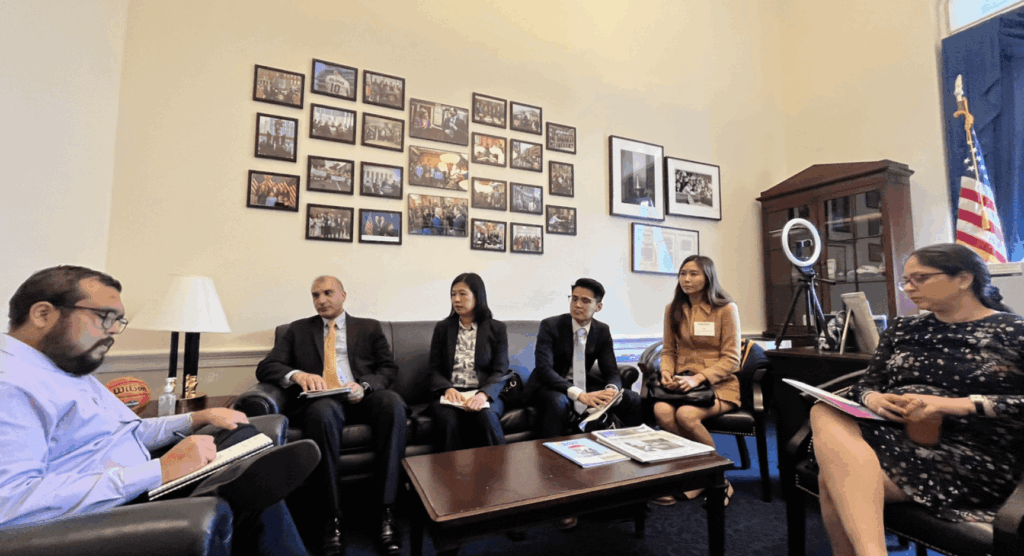
The New York delegation met with staff from several congressional offices, including New York Representatives Jerry Nadler (NY-12), Nydia Velázquez (NY-07), and Dan Goldman (NY-10). Discussions focused on NAPABA’s legislative priorities, including language access, immigration due process, and judicial security.
The delegation also highlighted the work of AABANY and NAPABA in supporting immigrant communities, educating lawful permanent residents about their rights, and providing pro bono legal services and training opportunities for attorneys. Follow-up conversations included discussions regarding immigration policy developments, legal aid initiatives, and opportunities for future collaboration between congressional offices and the AANHPI legal community.
Continuing the Work
Lobby Day provided an important opportunity for AABANY to bring the perspectives of New York’s AANHPI legal community directly to policymakers. Through these conversations, AABANY reinforced the role of attorneys not only as advocates in the courtroom but also as advocates for policies that promote justice, equity, and opportunity.
AABANY thanks NAPABA for organizing another successful Lobby Day and looks forward to continuing its partnership in advancing the interests of the AANHPI community and the legal profession nationwide.
For more information about NAPABA’s legislative priorities, click here.
To learn more about AABANY’s Issues Committee and how you can get involved, go here.
– Written by Vishal Chander, Board Member and Co-Chair of AABANY’s Issues Committee
The Asian American Bar Association of New York (AABANY) joins the New York County Lawyer’s Association in their support of New York’s judiciary, judicial independence, and against the improper personal attacks leveled by the New York Post and the Daily News against judges for their decisions in recent stop and frisk cases.
In recent weeks, judges who have ruled on stop and frisk cases have been derided, vilified, and subjected to improper personal accusations. In the face of the judiciary’s attempt to meet its constitutional responsibilities, the New York Post and Daily News have described the decisions as “judicially mandated lawlessness,” accused the judges of bias against the NYPD, called certain judges “insane,” and engaged in fear-mongering tactics such as asserting a descent into “anarchy.” In particular, Justices Peter Tom, Nelson Roman, and Karla Moskowitz, as a result of their Appellate Division decision in the Matter of Darryl C., have been the subject of repeated, unfair, and jarring personal attacks. One Daily News, July 4, 2012 editorial headline went as far as calling the decisions a “death sentence for N.Y.” Furthermore, a July 16, 2012 Daily News editorial suggests that a dissenting opinion, written by Justice Peter Tom, in a stop and frisk judicial decision, urged individuals to “punch a cop, win case.” This is simply a misrepresentation of the opinion cited by the editorial and omits many important facets to the logic and reasoning behind the dissenting opinion. While the issue is hotly contested and reasonable minds will differ with the judicial decisions rendered in the area, these inflammatory attacks are unfair, baseless, and threaten judicial independence.
An independent, well-functioning judicial system, accessible to all, is a bedrock principle of our democracy. Personal attacks against judges, distortions of the facts and context of judicial decisions, and sensationalistic journalism designed to inflame the public threaten judicial independence and the credibility of our democracy. Judges make difficult decisions everyday and while public criticism of the judiciary is an integral part of our democratic society, attacks of this nature threaten the integrity of the judicial system and our government as a whole.
The Asian American Bar Association of New York (“AABANY”) is a professional membership organization of attorneys concerned with issues affecting the Asian Pacific American community. Incorporated in 1989, AABANY seeks not only to encourage the professional growth of its members but also to advocate for the Asian Pacific American community as a whole. AABANY is the New York regional affiliate of the National Asian Pacific American Bar Association (NAPABA). To learn more about AABANY, visit www.aabany.org.