The Daniel K. Inouye Trailblazer Award is NAPABA’s highest honor, celebrating the outstanding achievements of lawyers whose leadership and dedication have left a profound mark on both the legal profession and the Asian American, Native Hawaiian, and Pacific Islander (AANHPI) community. This lifetime achievement award recognizes those whose vision, courage, and commitment have opened doors and paved the way for future generations of attorneys.
Trailblazers are leaders who have not only excelled in their practice but have also made enduring contributions to advancing equity, opportunity, and justice within the legal community and beyond.
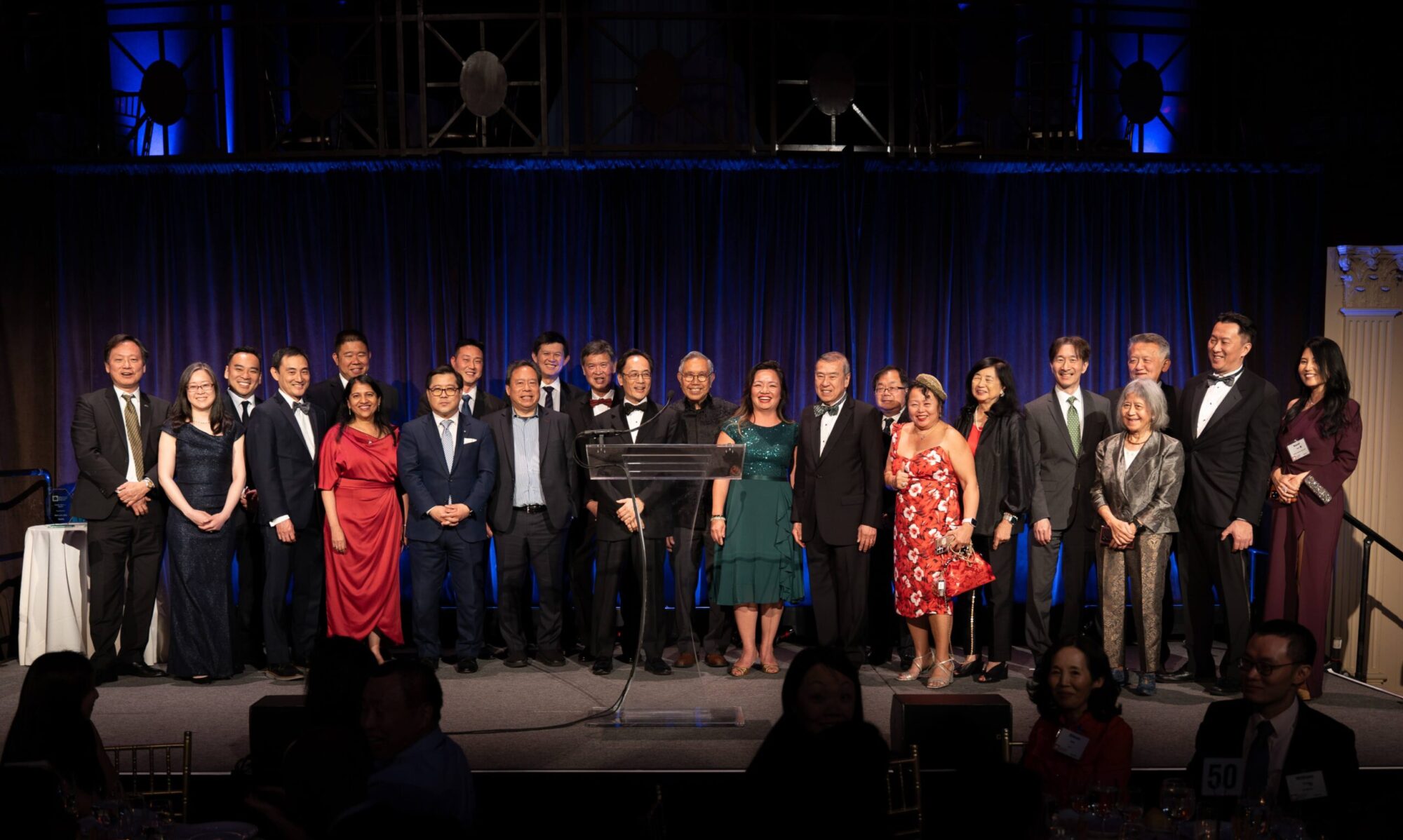
NAPABA is honored to celebrate the 2026 Trailblazer Award recipients and their extraordinary impact at this year’s NAPABA Convention in Los Angeles.
Alicia Garrido Limtiaco, Esq. Former Attorney General of Guam & U.S. Attorney for Guam and NMI, NAPABA At-Large Board Member, ABA Representative to UN ECOSOC
Alicia Limtiaco’s distinguished career in public service has been marked by historic firsts and an enduring commitment to justice, representation, and the communities she serves. She made history as the first woman elected Attorney General of Guam and later as the first woman appointed United States Attorney for the Districts of Guam and the Northern Mariana Islands. Throughout her career, Alicia has championed protections for vulnerable communities, including efforts addressing family violence, human trafficking, child exploitation, civil rights, and public safety. Her leadership has also brought the experiences and perspectives of Pacific and Indigenous communities to national and international forums. Within the AANHPI legal community, Alicia broke another barrier as the first Pacific Islander and first attorney from Guam to serve on NAPABA’s Board of Governors, helping ensure that Pacific Islander voices have a place in national legal leadership.
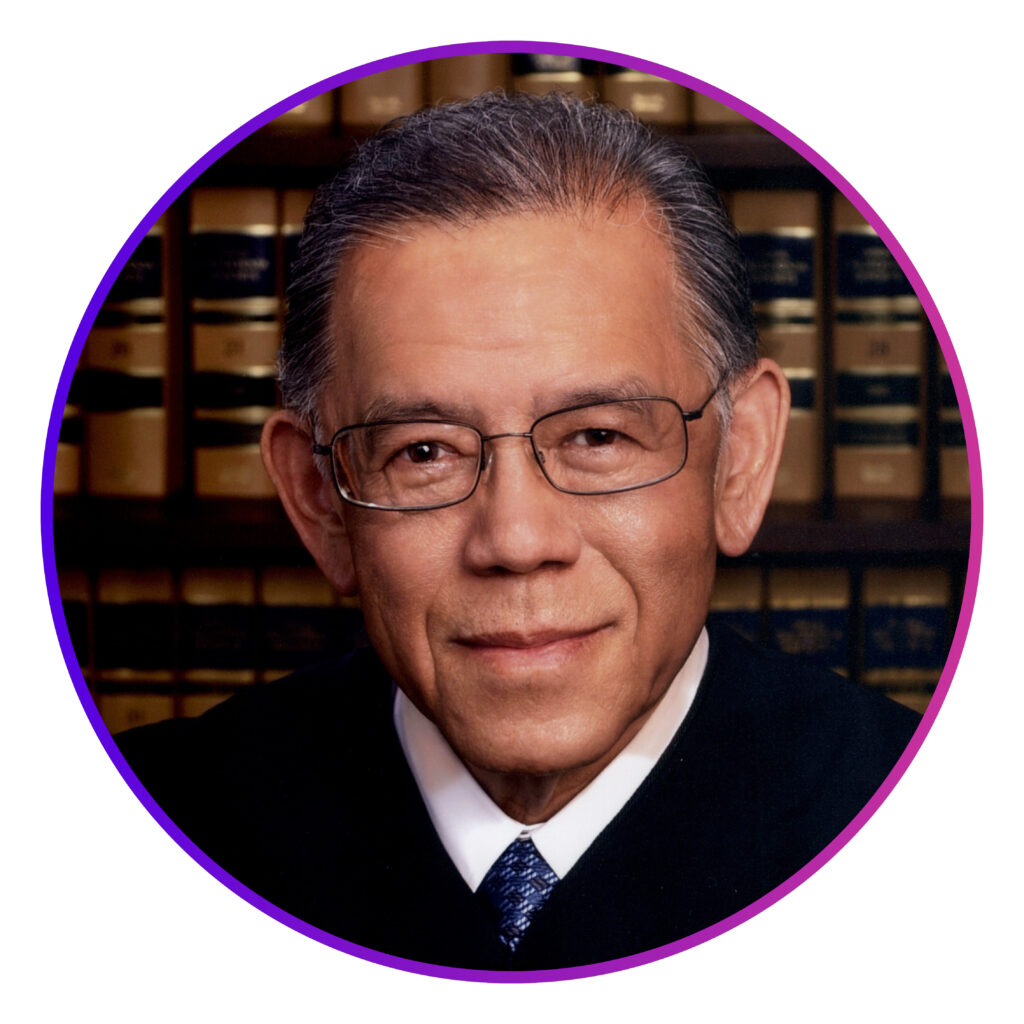
The Honorable Elwood Lui Administrative Presiding Justice, California Court of Appeal, Second Appellate District
Justice Elwood Lui’s more than five decades of service have left an enduring mark on California’s judiciary and AANHPI legal community, opening doors and building institutions for generations of attorneys and judges. In 1981, he became the first Chinese American appellate judge in California and later became the first Asian American to serve as Administrative Presiding Justice of any California Court of Appeal. His influence extends well beyond his own historic appointments. Justice Lui co-founded the Southern California Chinese Lawyers Association in 1975 and founded the California Asian Pacific American Judges Association in 1981, creating institutions that have supported and connected generations of AANHPI attorneys and judicial officers. Throughout his career on the bench, in private practice, in public service, and as an educator and mentor, Justice Lui has consistently opened doors that were previously closed to Asian American attorneys and judges and helped build the infrastructure for future generations to lead.
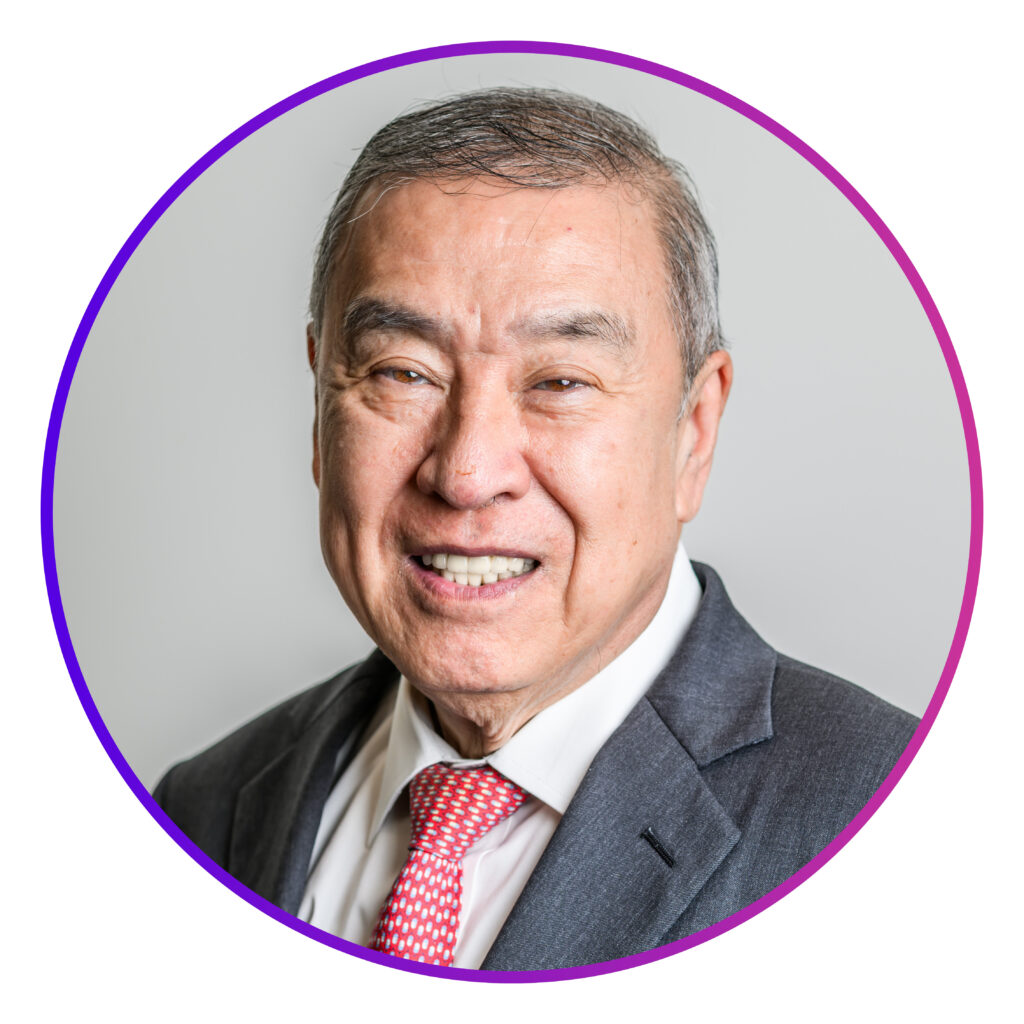
Hugh H. Mo Founder & Principal, The Law Firm of Hugh H. Mo, P.C. (“Mo Law”) Hugh H. Mo has spent nearly five decades shaping Asian American representation in law, government, and civic life through a career marked by historic firsts, institution-building, and service to his community. He broke significant barriers as the first Asian American Assistant District Attorney in the Manhattan District Attorney’s Office and later as the first Asian American Deputy Commissioner in Charge of Trials for the New York City Police Department, becoming, at the time, the highest-ranking Asian American official in New York City government. Just as significant has been his commitment to creating opportunities and institutions for those who followed. Hugh co-founded the Asian American Bar Association of New York, the Chinatown Health Clinic, now the Charles B. Wang Community Health Center, and the NYPD Asian American Police Executives Council. Throughout his career, he has paired professional achievement with sustained civic leadership, mentorship, and advocacy, leaving an enduring legacy within New York’s AANHPI legal community and beyond.
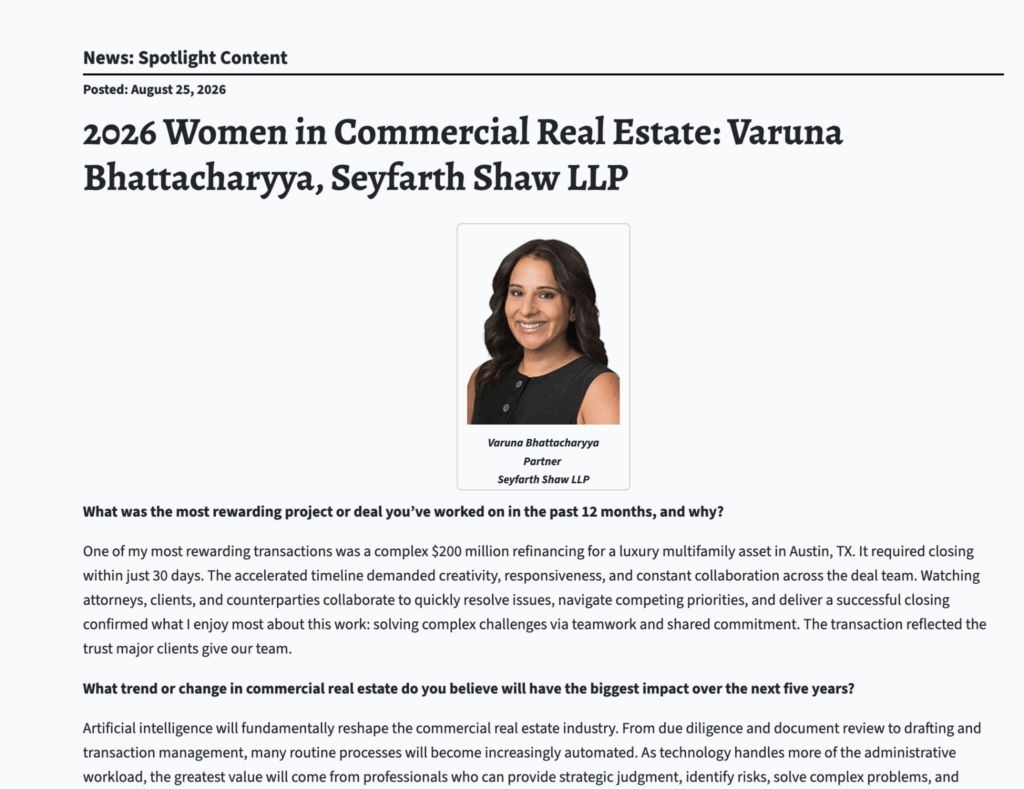
On August 25, AABANY’s very own President, Varuna Bhattacharyya was featured as one of the 2026 Women in Commercial Real Estate by theNew York Real Estate Journal (NYREJ).
NYREJ asked Varuna questions about her commercial real estate practice, such as her most rewarding project in the past year and what upcoming commercial real estate trends she sees on the horizon. When reflecting on her most important leadership lesson to date, Varuna emphasized authenticity, finding that “the most effective leadership comes from embracing your own values, strengths, and perspective.”
Please join AABANY in congratulating President Varuna Bhattacharyya on being spotlighted in NYREJ.
Washington, DC (August 7, 2026) — The National Asian Pacific American Bar Association (NAPABA) Law Foundation (NLF) announced today that Malakai Espinosa, Cynthia Phan and Yuwen Wang, second-year law students at UCLA School of Law, Boston University School of Law and the University of Chicago School of Law, respectively, have been awarded prestigious SAIL Scholarships for their outstanding professional promise and leadership potential.
“Cynthia, Malakai, and Yuwen embody academic excellence, leadership, and the bright future of the legal field,” said NLF President Bonnie Wolf. “NLF and SAIL are honored to support their journeys and to invest in leaders who will use their talents to serve others, expand opportunity, and create meaningful change in their communities.”
Malakai Espinosa is pursuing a joint J.D./M.P.H. at the UCLA School of Law and the UCLA Fielding School of Public Health. Among other honors and activities, he is a member of the David J. Epstein Program in Public Interest Law and Policy and received a Philippine American Bar Association Scholarship, a UCLA Law Faculty Scholarship and a Legal Education Access Pipeline Public Interest Summer Grant. He also serves as co-chair of the law school’s Asian/Pacific Islander Law Students Association, co-chair of the El Centro Education Rights Project and chief managing editor of the Pacific Basin Law Journal. Malakai earned his B.S. summa cum laude in Human Biology and Society from UCLA, where he was on the Dean’s Honor List for four years, president of Samahang Pilipino and played tuba for the UCLA marching band. He is a member of the board of the UCLA Pilipino Alumni Association, and this summer, Malakai was a judicial extern for a judge on the U.S. District Court for the Central District of California.
Cynthia Phan is a second-year law student at Boston University School of Law, where she is a Dean’s Scholarship recipient, a Legal Writing Fellow and co-president of the Public Interest Law Society. She received her B.A. summa cum laude in International Relations from Boston University, where she received a Thomas M. Menino Scholarship and engaged in academic research and volunteer work in Nairobi, Kenya; Boston, MA; Geneva, Switzerland; Tel-Aviv, Israel; and the West Bank. Between her undergraduate studies and law school, Cynthia worked for two years as a juvenile diversion coordinator with the Suffolk County District Attorney’s Office in Boston. She is the author of Stories from the Street: Nurturing Empathy among Boston Residents and spent this summer as a legal intern with the Asian American Legal Defense and Education Fund in New York City.
Yuwen Wang is a 2028 J.D. candidate at the University of Chicago Law School, where she is a member of the University of Chicago Law Review and the law school’s Public Interest Leadership Program; treasurer of First Generation Professionals; and programming director of the Asian Pacific American Law Students Association. She received her B.A. in Sociology and Public Health from Johns Hopkins University, where she was elected to Phi Beta Kappa and received general honors as well as departmental honors in Sociology. Between college and law school, Yuwen worked as a senior legal assistant at a national public interest law firm, Sanford Heisler Sharp McKnight, LLP. She was previously an undergraduate intern with the U.S. Department of Justice, Civil Rights Division, Disability Rights Section. This summer, she worked as a legal intern for the Hon. Jeannette Vargas of the U.S. District Court for the Southern District of New York and for the Bazelon Center for Mental Health Law.
“We are excited to welcome Malakai, Cynthia and Yuwen into the seventh cohort of SAIL Scholars,” said Ivan Fong, who with his wife Sharon endowed the NLF SAIL Scholarship program. “All three of them show great promise as leaders who give generously of their time and effort to the broader community. We could not be more delighted to help them as they complete their academic work and become part of the next generation of leaders in our profession.”
Two unique aspects of the SAIL Scholarship program are that, in addition to monetary support, SAIL Scholars will also receive mentoring and leadership development from each other and from a network of legal and community leaders. “A second feature of this scholarship program,” said Sharon Fong, “is that the recipients commit to ‘paying it forward’ — by supporting each other, future SAIL Scholars and the communities in which they will live and work.”
In addition to Sharon and Ivan Fong, the 2026 NLF SAIL Scholarship selection committee was comprised of Suzan Chau, Supervising Attorney for the Elder Justice & Civil Resource Center for the First Judicial District of Pennsylvania; the Honorable Theodore Chuang, U.S. District Judge for the District of Maryland; Esther Lim, Partner and Chief Community Officer at Finnegan; and Caroline Tsai, Executive Vice President, Chief Legal and Corporate Affairs Officer at FIS.
NLF is a 501(c)(3) non-profit that carries out its work primarily by awarding scholarships and fellowships that promote the interests of the Asian Pacific American community. Since its founding, the Foundation has awarded nearly $2 million in scholarships, fellowships and internships.
The Asian American Bar Association of New York (AABANY) is excited to share that in June 2026, James Chou, former AABANY President of AABANY (2009) and long-time AABANY member began his tenure as the new Managing Partner of Saul Ewing‘s New York City office.
James came to law by way of a detour: he started at NYU, intent on majoring in biochemistry and chasing his family’s expectations. His grandmother, one of the few women of her generation to earn a medical degree, had instilled in all her children and grandchildren, that it was her wish for them to follow in her and her late husband’s footsteps as medical doctors. James’ distaste for organic chemistry and frustration with the confining nature of the hard sciences convinced him otherwise. The breadth of a liberal arts education with its exposure to a wide array of fields and focus on critical thought, analysis, and communication provided a more attractive alternative. In his words, “the questions felt bigger, more interesting, and practically impactful.” He graduated magna cum laude from NYU and went on to Georgetown Law, where he served on the Journal of Legal Ethics and also tried his first case as a student advocate.
After a brief stint at Schulte Roth & Zabel, James spent seventeen years at Akin Gump, where he cut his teeth as a lawyer, handling all manner of complex commercial disputes. Those years were highly significant to his professional development, and he remains deeply grateful for his training and mentors there.
In 2015, he left Big Law and took a bet on himself to help build the New York office of a Long-Island-based firm, Moritt Hock & Hamroff, spending nine years there enhancing the firm’s Manhattan presence and brand in the New York market before making a returning to a broader platform at Saul Ewing in July 2024.
In May 2026, he was named the New York Office Managing Partner, effective June 1. In his new role, James is responsible for helping to develop and implement the office’s strategic vision to enhance its market position within the New York legal market and key practice areas and industries, build strategic client relationships, attract and develop top talent, and drive revenue growth and profitability. He takes on this role while maintaining a very active litigation practice as well as serving on the Board of the New York City Bar Association and as Chair of its Council on Judicial Administration.
When asked whether his Asian American identity presented a structural obstacle in his career, James replied that rather than encountering structural obstacles, he did think his cultural sensibilities—humility, deference, and polite restraint rather than aggressive self-promotion—prevented him from succeeding earlier in his career than he did. But James sees no value in dwelling on setbacks, and he views each challenge as an opportunity for growth and development. In this regard, he practices “the discipline of gratitude”—an intentional, regular practice of prioritizing thankfulness as a steady habit of mind and spirit, built on stoicism’s premise that we will all cease to exist, as well as a recognition that every experience in our life journey shapes who we are today.
Over the course of his long career, two cases stand out, both of which were pro bono. The first was in the mid-2000s, when James and his colleagues represented the New York County Democratic Committee in defending New York’s judicial convention—the system by which political parties nominate candidates for the New York State Supreme Court—against a constitutional challenge. In New York State Board of Elections v. López Torres, the Democratic Committee argued that the First Amendment protects a political party’s right to determine how it selects its own nominees, and in 2008, the U.S. Supreme Court agreed, with a 9–0 decision. The second was in in 2012, when James represented an Angolan asylum seeker who had been wrongly linked to a violent independence movement and a high-profile 2010 attack he had no part in. The man’s only tie to the group was a membership card he received after attending a single meeting of the group in which they were promoting basic social services. Working alongside the New York Legal Assistance Group, James secured the man’s asylum in February 2012 and eventually reunited him with his wife and young son.
James shared that Saul Ewing prides itself in being a “people-first firm,” which is not just a mantra, but a core value manifest across the Firm’s platform. Consistent with that ethos, his vision as New York managing partner is to invest in people and cultivate a collaborative environment where they can maximize their potential, which, in turn, is essential to excellent client service. His message for AABANY’s members is that your reputation will be built not by the cases you win, but by the trust you earn, the people you develop, and the institutions you leave stronger than when you found it, so make sure to invest in those things.
Please join AABANY in congratulating James on this milestone achievement in his career and wishing him further success as he takes on leadership of Saul Ewing’s New York City office.
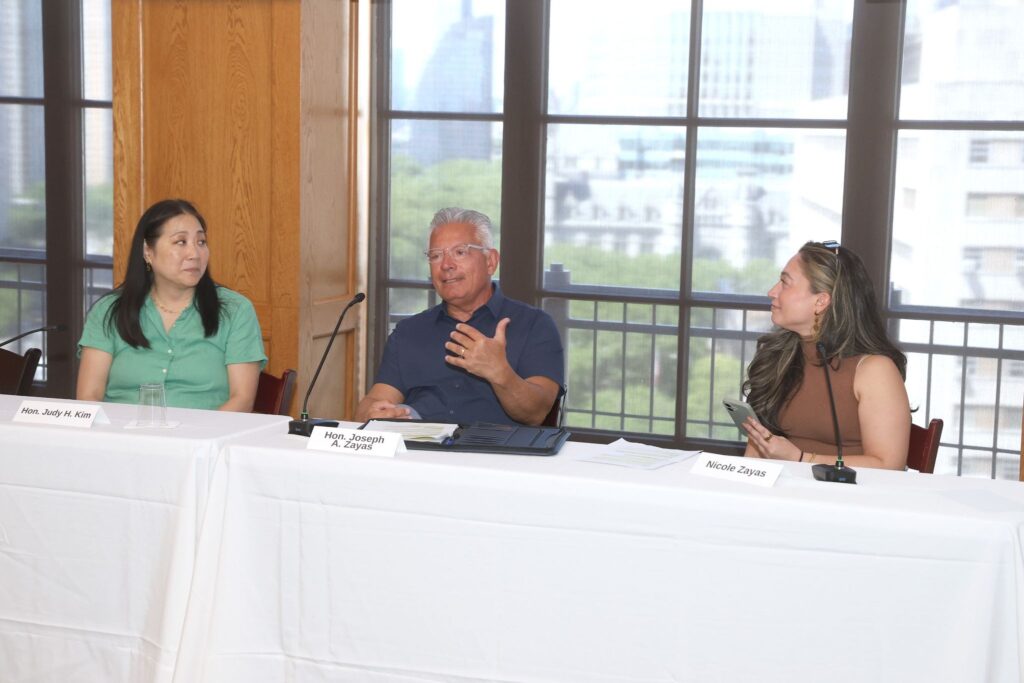
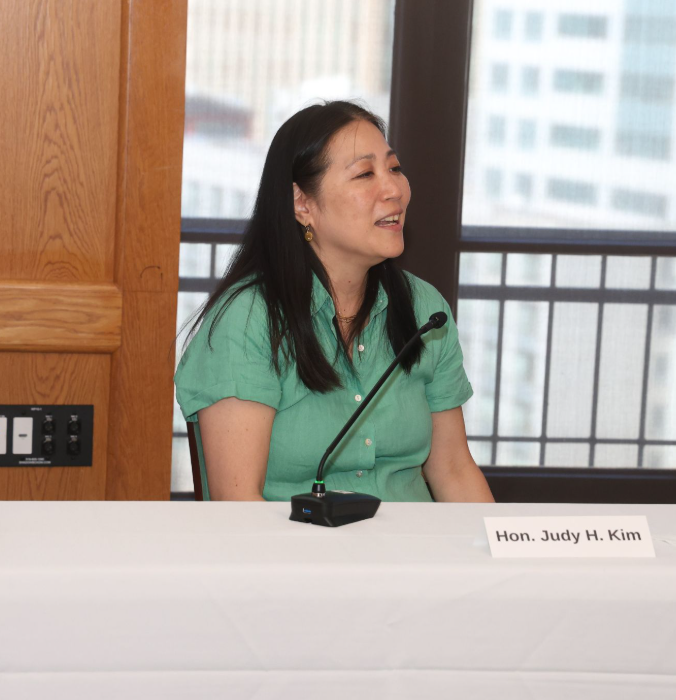
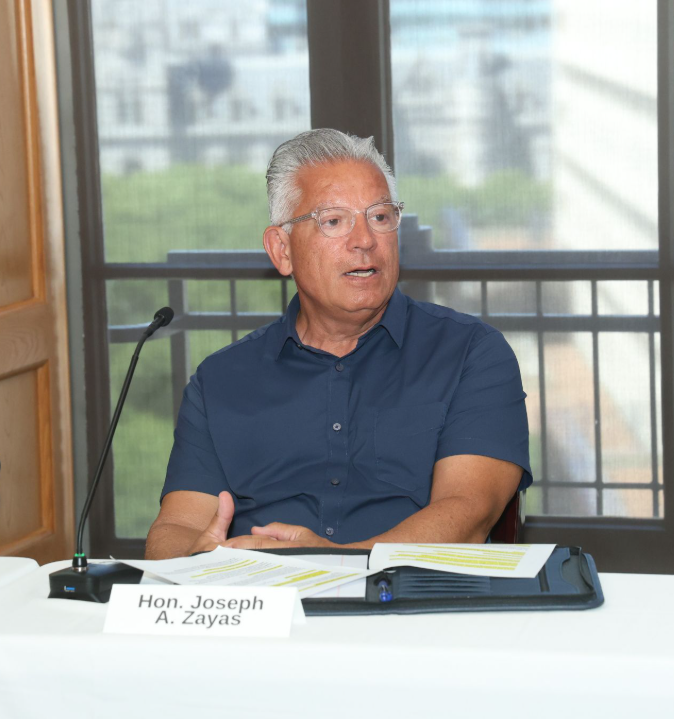
On June 13, 2026 at AABANY’s 2026 Wellness Day, attendees had the opportunity to hear a candid conversation between Hon. Joseph A. Zayas, Chief Administrative Judge of the New York State Unified Court System, and Hon. Judy H. Kim, Justice of the Supreme Court, New York County. Moderated by Nicole Zayas, LCSW, CEO of Arriving Full Circle Therapy and Coaching, the session, “Demystifying the Bench,” offered a rare glimpse behind the judicial robe and into the personal journeys that shaped two distinguished members of New York’s judiciary.
Rather than focusing solely on professional accomplishments, the discussion centered on the human experiences behind judicial leadership. Judge Kim shared the pride she felt and the great responsibility she took up as the first Korean American elected judge in New York State in 2016. She spoke movingly about her grandparents, who lived through the Japanese occupation of Korea and were unable to pursue legal and governmental careers despite their aspirations. Their experiences made her achievement particularly meaningful and reinforced her commitment to mentorship and community service.
Chief Administrative Judge Zayas shared an equally powerful story of perseverance. Growing up in public housing in Harlem, facing economic hardship, and navigating the challenges of a family affected by mental illness, he explained that a judicial career was never something he imagined for himself as a child. His path from struggling academically in high school to attending law school and ultimately becoming the state’s Chief Administrative Judge served as a reminder that greatness often emerges from those who refuse to be limited by their challenges.
One of the most compelling themes of the discussion was the importance of authenticity in leadership. Judge Zayas spoke openly about experiencing self-doubt and even “imposter syndrome” upon assuming one of the highest leadership positions in the New York court system. Rather than concealing those feelings, he emphasized the value of acknowledging them, stating that strength is not the absence of fear but the willingness to move forward despite it.
Judge Kim echoed that sentiment while discussing her own experiences with breast cancer and her work with Judges and Lawyers Breast Cancer Alert (JALBCA). She reflected on the cultural barriers that often discourage open conversations about health and vulnerability, particularly within many Asian communities. Her remarks highlighted the importance of wellness initiatives that encourage legal professionals to seek support and prioritize their physical and mental wellbeing.
The conversation also highlighted the critical role of mentorship. Both judges emphasized that professional advancement rarely occurs in isolation. Mentors, sponsors, colleagues, and community organizations all play a role in helping future leaders navigate the legal profession. Judge Zayas stressed the importance of building relationships and remaining humble throughout one’s career. He noted that these qualities are often as important as technical legal skills.
For young attorneys, law students, and aspiring judges in attendance, perhaps the most memorable takeaway came during the program’s closing moments. When asked what advice they would offer someone who doubts their ability to achieve something great, both judges encouraged attendees to trust themselves and continue moving forward. Judge Kim urged young professionals, particularly women and members of underrepresented communities, to have confidence in their qualifications and abilities. Judge Zayas reminded attendees that confidence is built through action, not perfection.
As attendees left the session, they carried with them not only a greater understanding of the judiciary but also an important lesson: the path to meaningful leadership is rarely straightforward, but it remains accessible to those willing to persevere, seek support, and believe in their own potential.
-Written by Devashani Sharma
About the Author: Devashani Sharma is a rising senior at Vanderbilt University majoring in Human and Organizational Development with a minor in Legal Studies. She interned with the Hon. Judy H. Kim through the 2026 Sonia & Celina Sotomayor Judicial Internship Program.
Justice Karen Lin, a longtime member of AABANY and former Co-Chair of the Pro Bono and Community Service Committee (PBCS), has been appointed to the Appellate Term for the Second Department of the New York State Supreme Court. This appointment marks a historic milestone as Justice Lin is the first Asian American woman to serve in this role. As a lifelong public servant and sitting Second Department Justice, she brings decades of experience and a deep commitment to justice to one of the most impactful appellate tribunals for everyday New Yorkers.
Breaking Barriers: The Significance of “the First” Justice Lin’s appointment to the Appellate Term for the Second Department carries historic significance. Yet, for Justice Lin, the meaning of this milestone is inseparable from the community that shaped her.
Born and raised in Queens by her immigrant parents, Justice Lin’s story is rooted in the borough she now serves. At a time when Asian Americans were significantly underrepresented in both civic and professional spaces within Queens County, her early experiences acutely instilled in her a heightened awareness of the importance of being seen and heard. As a child, she recalls helping interpret for her parents who spoke limited English. She also recalls attending school events where she was one of the few Asian American faces in the room. These moments made her realize the significance of representation, or the lack thereof. Coupled with her parents’ tireless work ethic and emphasis on community, these experiences profoundly shaped her sense of justice and responsibility to her community.
Despite Asian Americans comprising more than 27 percent of the population in Queens, they have historically remained underrepresented on the bench. While precise figures vary by dataset, estimates by the Brooklyn Daily Eagle suggest that fewer than 10 percent of judges in Queens County identify as Asian. This number is even lower statewide as according to the New York State Unified Court System’s 2024 Judicial Demographics Report, only about 5 percent of judges statewide identify as Asian. These figures highlight the persistent gap between the Asian American community and their representation within the judiciary.
For Justice Lin, the awareness of this disparity came into sharper focus back in 2022, when she grappled with these demographic realities during her campaign for Queens Civil Court. She recognized both the urgency and the responsibility to step forward.
Now, in 2026, as Justice Lin assumes her role on the Appellate Term, she reflects on both the progress made and the work that remains. While her appointment marks a historic milestone, Justice Lin is candid about what the broader implications of her distinction as “the first” means.
“We shouldn’t still be talking about ‘firsts’ in 2026,” she notes. “It matters to break that ceiling—but it matters even more that we are not the only ones.” Justice Lin maintains that her appointment is part of a larger trajectory which she hopes will continue to open doors for others who will follow and ultimately surpass her.
“I may be the first,” she reflects, “but I certainly do not want to be the last. And I won’t.”
Diversity and Perspective at the Appellate Term In her run for the Queens Civil Court in 2022, Justice Lin noted, “The air in the room changes depending on who is in it.” Now, as Justice Lin assumes her seat at the Appellate Term for the Second Department, she brings her philosophy into a new and vastly different judicial environment.
The nature of judging at the appellate level is necessarily collaborative. Rather than presiding over a single courtroom, justices at the Appellate Term engage in a rigorous discussion of the law. The presence or absence of diverse perspectives can play a significant role in the nature of judicial decision-making.
“The lens through which we interpret the law is shaped by our lived experiences,” Justice Lin explains. “It matters who is in that room.”
The Appellate Term occupies a uniquely consequential position within New York’s judicial system. For many New Yorkers navigating housing disputes, consumer debt matters, and low-level criminal cases arising from the Civil Court and Criminal Court, the Appellate Term often represents the primary avenue for reviewing decisions made in those courts. As such, this court plays a critical role in ensuring public confidence in the fairness and legitimacy of the judicial process and of everyday challenges faced by many families and individuals. Justice Lin approaches this responsibility with a deep awareness of the communities served by the court. As a lifelong Queens native and an experienced legal professional, Justice Lin brings a grounded perspective to the bench and seeks to ensure that the appellate review is conducted with both rigor and awareness.
A Jurist Grounded in Care From civil rights attorney to legislative counsel, from Housing Court Judge to Court Attorney-Referee in Surrogate’s Court, Justice Lin has been guided by a single constant: care.
Justice Lin’s decade as a court attorney referee in Surrogate’s Court, where she handled sensitive guardianship matters, reinforced the centrality of due process, particularly for vulnerable individuals. In those proceedings, she understood the risks of presuming incapacity based solely on diagnosis or circumstance. Instead, she stresses that every individual is entitled to a meaningful hearing where their voice is heard.
This philosophy carried directly into Justice Lin’s work on the trial bench, where she implemented practices designed to make the courtroom more accessible. For example, she required in-person appearances in certain matters involving self-represented litigants, recognizing that virtual proceedings—while efficient—can inadvertently exclude individuals who lack access to technology or familiarity with digital platforms. In-person appearances allowed her to better assess credibility, clarify the relief being sought, provide language support, offer flexible scheduling, promote accessibility for litigants with disabilities, and ensure that litigants could express themselves in their own words. Similarly, her practice of inviting court users to indicate their preferred pronouns reinforces the principle that every individual who enters the courtroom is entitled to be treated with respect.
To illustrate, Justice Lin described a family conflict case she dealt with where a father passed away, leaving his home to only two of his children and excluding the others. Justice Lin guided the family through structured discussion by helping each member articulate concerns and expectations by meeting with them individually. This ultimately fostered a mediated resolution that balanced the legal framework with the opportunity for members of the family to retain some control over their outcome. In the end, the siblings reached an agreement to divide the home equally among all of the children.
“The court cannot advocate,” she notes, “but it can ensure fairness, dignity, and that due process is fully respected.”
A Career Defined by Purpose Long before she entered the legal field, Justice Lin was already cultivating an ethos of advocacy at the University at Buffalo. As an undergraduate, she noticed that Asian American history and experiences were largely absent from the curriculum. Determined to address this gap, she petitioned the history department to introduce a course on Asian American history which had never previously been offered. Simultaneously, she co-founded the University’s Asian American student organization, the Asian American Students Association (AASA) and served as its first president where she organized cultural programming and panel discussions to highlight the contributions of Asian Americans on campus. These initiatives included guest lectures, heritage month celebrations, and workshops that engaged the broader student body in conversations about diversity and inclusion. Reflecting on these formative years of her life, Justice Lin noted, “I wanted students like me to see themselves in the stories being told and to have a community where our voices mattered.”
A couple years later, Justice Lin championed these same values through her leadership with AABANY’s Pro Bono and Community Service Committee (PBCS), where she served as Co-Chair. During the COVID-19 pandemic, when the need for legal services increased significantly, she played an instrumental role in promoting access to legal services by expanding Pro Bono Clinics to underserved communities in Queens. Building on this work, Justice Lin highlights that meaningful legal assistance requires the ability to communicate effectively, especially with individuals who struggle to find services in a language they understand. She speaks of her time with PBCS, describing it as the “best committee ever” and her service as both a “great joy and privilege.” Additionally, she praises AABANY’s Pro Bono Clinics as an invaluable resource for individuals with limited English proficiency.
Ultimately, in each stage of her professional journey, Justice Lin has consistently asked herself: “Where can I be helpful?”
Lifting the Next Generation As a mentor and active participant in programs such as the The Sonia & Celina Sotomayor Judicial Internship Program, Justice Lin is deeply committed to cultivating the leaders of tomorrow. She suggests that a successful legal career rests on a foundation of competence and character. She encourages students and young professionals to strive for mastery in their chosen field. “Be as good at it as you can be,” she advises, because when opportunities arise, “you better be ready to hit the ground running.” Competence, she notes, is central to reputation as it ensures that professionals are prepared to perform effectively in any high-stakes environment.
Justice Lin also stresses that technical skill alone is not enough. Equally important is how one treats others. “Your competence shapes your reputation,” she explains, “but so does how you treat people.” She believes in a universal standard of decency and she encourages individuals from all paths of life to treat everyone—from the janitor to the judge—the way they would want themselves or a loved one treated. She reminds us that “people may forget what you did but they will remember how you made them feel.”
Throughout her career, Justice Lin has also rejected narrow stereotypes of what a lawyer must be. Justice Lin has challenged the notion that success requires aggression. Many assumed she was “too nice” to be an effective lawyer or justice, but she believes there are many ways to practice law successfully without abandoning one’s nature. She encourages young professionals, especially those from underrepresented backgrounds, to embrace their individuality. “What makes us different is really what makes us strong,” she says. Avoiding the temptation to contort oneself to fit an expected mold, she emphasizes that professional growth is most meaningful when it is shared: “It is purposeless to rise alone; we rise together.”
Through her guidance and example, Justice Lin seeks to create spaces where future generations can thrive with confidence and authenticity. Now at the Appellate Term, her role amplifies this impact as she continues to shape the culture of the judiciary itself. Please join AABANY in congratulating Justice Karen Lin on this historic milestone. We look forward to seeing more noteworthy contributions from her public service.
Applications for 2026–2027 are open, and NAPABA is ready to endorse you.
The American Bar Association has officially published its 2026–2027 Presidential Appointments, and this is your moment to step into national leadership. These appointments are high-impact, highly competitive, and theapplication period moves quickly.
NAPABA is calling on qualified members to apply now for these coveted positions and to seek NAPABA’s endorsement. Click to view 2026-2027 vacancies.
Why This Matters
Advancing AANHPI leadership at the national level is core to NAPABA’s mission.
For nearly ten years, NAPABA has proudly endorsed members to serve on ABA Standing and Special Committees, Commissions, Task Forces, Working Groups, and other key bodies. This ensures that our community has a seat at the table where policy, practice, and priorities are shaped.
If you have:
A proven record of leadership
Deep subject-matter expertise
A commitment to contributing meaningfully to the ABA’s mission
…this is an opportunity to amplify your impact and NAPABA’s voice on a national stage.
How to Secure a NAPABA Endorsement
Members seeking NAPABA’s endorsement will be reviewed by the NAPABA Presidential Appointment Selection Committee. To be considered, you must submit a complete endorsement request by the deadline below.
Deadlines to Note:
January 27, 2026 (8:00 PM ET) – Deadline to submit a NAPABA endorsement request
February 10, 2026 – Deadline to self-nominate directly through the ABA website
Two premier ABA leadership development opportunities are now open for registration and applications! NAPABA members are encouraged to take advantage of these programs, consistently recognized for cultivating dynamic and effective bar leaders. Early-bird registration is available for both initiatives.
Bar Leadership Institute (BLI)
Chicago, IL | March 11–13, 2026
Designed for incoming bar leaders and presidents-elect, BLI offers training on governance, strategic planning, and bar leadership fundamentals.
A joint initiative of NAPABA and national affinity bar partners, CBLA is an immersive leadership academy for attorneys dedicated to bar service and community impact.
These programs provide unmatched professional development, peer networking, and pathways to strengthen leadership within the legal profession. NAPABA encourages interested members to review eligibility details and submit applications early.
Two Opportunities to Support Your Journey to a Legal Career
2026 SAIL Scholarship Deadline to Apply: June 30, 2026
The NAPABA Law Foundation is now accepting applications for the distinguished SAIL Scholarship Program—a rare, career-shaping opportunity created to uplift and empower the next generation of leaders in the legal profession.
The SAIL Scholarship offers far more than financial support. Selected scholars receive: – $7,500 in funding (distributed evenly across their 2L and 3L years) – One-on-one mentorship from seasoned legal professionals – Exclusive access to executive-level networking and leadership opportunities
Who Should Apply?
Current 1L students (rising 2Ls in Fall 2026) who demonstrate:
Strong academic achievement (undergraduate and 1L performance)
Leadership potential and a commitment to “paying it forward”
Volunteer or public service experience
Knowledge of or dedication to advancing AAPI communities
This program provides sustained support throughout law school — financially, professionally, and personally — helping recipients build a foundation for a career rooted in leadership, service, and impact.
If you know an exceptional first-year law student, please encourage them to apply.
Students: Be sure to review the SAIL Scholarship FAQ to confirm eligibility and expectations before submitting your materials.
Let the SAIL Scholarship help launch your path toward meaningful change in the legal field. To apply, click this link.
2026 NAPABA Judicial Council Summer Internships Deadline to Apply: January 15, 2026
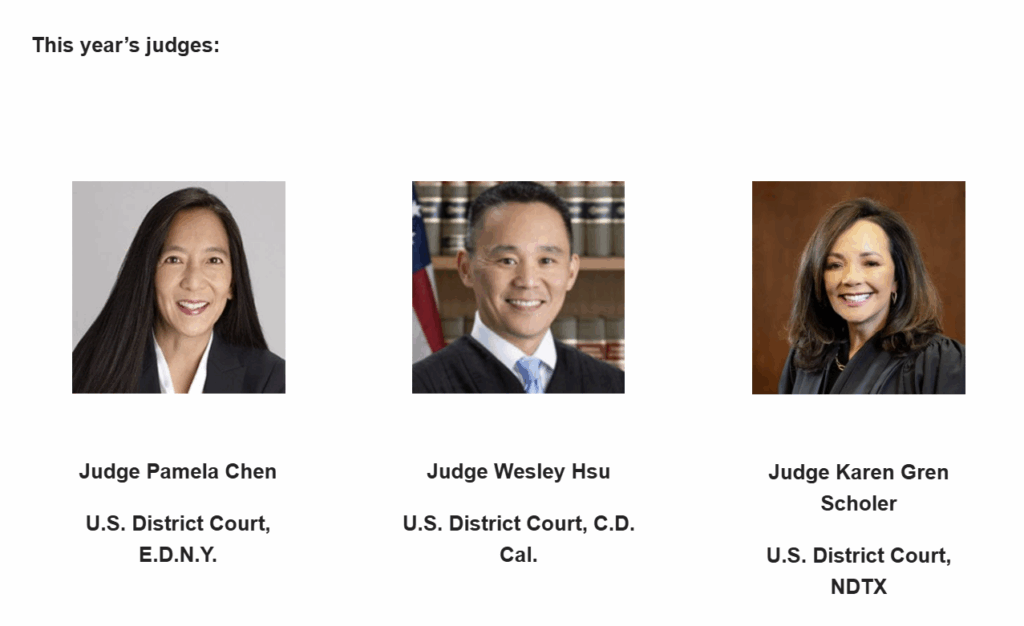
We are pleased to announce that the NAPABA Judicial Council is offering three prestigious summer internship opportunities with distinguished federal judges for Summer 2026. Each selected intern will also receive a $1,500 scholarship stipend to support their experience.
These internships provide invaluable exposure to federal judicial work, insights into the court system, and the opportunity to learn directly from leaders in the judiciary. Each full-time internship will last approximately 4-10 weeks, with dates and times to be arranged between each intern and judge.
NAPABA is proud to announce the 2025-26 Board of Governors, who will be sworn in during the 2025 NAPABA Convention in Denver.
Our NAPABA community thrives because of dedicated members who step into leadership roles across the organization. From the national Board of Governors to our affiliate leaders, substantive committees, affinity networks, and professional development programs, NAPABA’s impact is fueled by the vision, energy, and service of our volunteers.
We are grateful for all of our leaders and their commitment to advancing NAPABA’s mission and strengthening the AANHPI legal community.
If you are interested in serving and shaping the future of NAPABA, please contact Priya Purandare to learn more.
2025-26 NAPABA Board of Governors
Executive Committee
President – Joseph Yao, Retired
President-Elect – Jason DeJonker, Seyfarth Shaw LLP
Treasurer – Arlene Yang, Center for Employment Opportunities
Secretary – Annette Kwok, Owens Corning
Immediate Past President – Thy Bui, Maynard Nexsen
Executive Director – Priya Purandare, Ex Officio, NAPABA
Regional Governors
Northeast – Alan Y. Wong, KabaFusion
Northwest – Eric de los Santos, Emergent Biosolutions, Inc.
Eastern California/Nevada – Glicel Sumagaysay, Law Office of Glicel Sumagaysay
Central California – Jason Liang, Liang Ly LLP
Northeast – Kathleen Chen, Johnson & Johnson
Northern California – Lisa Mak, Flynn Group
Southeast – Onchantho Am, University of Central Florida
Central – Phil Bautista, Taft Stettinius & Hollister
Southwest – Phil Kim, Sheppard Mullin Richter & Hampton
Southern California – Tony Wang, O’Melveny & Myers LLP