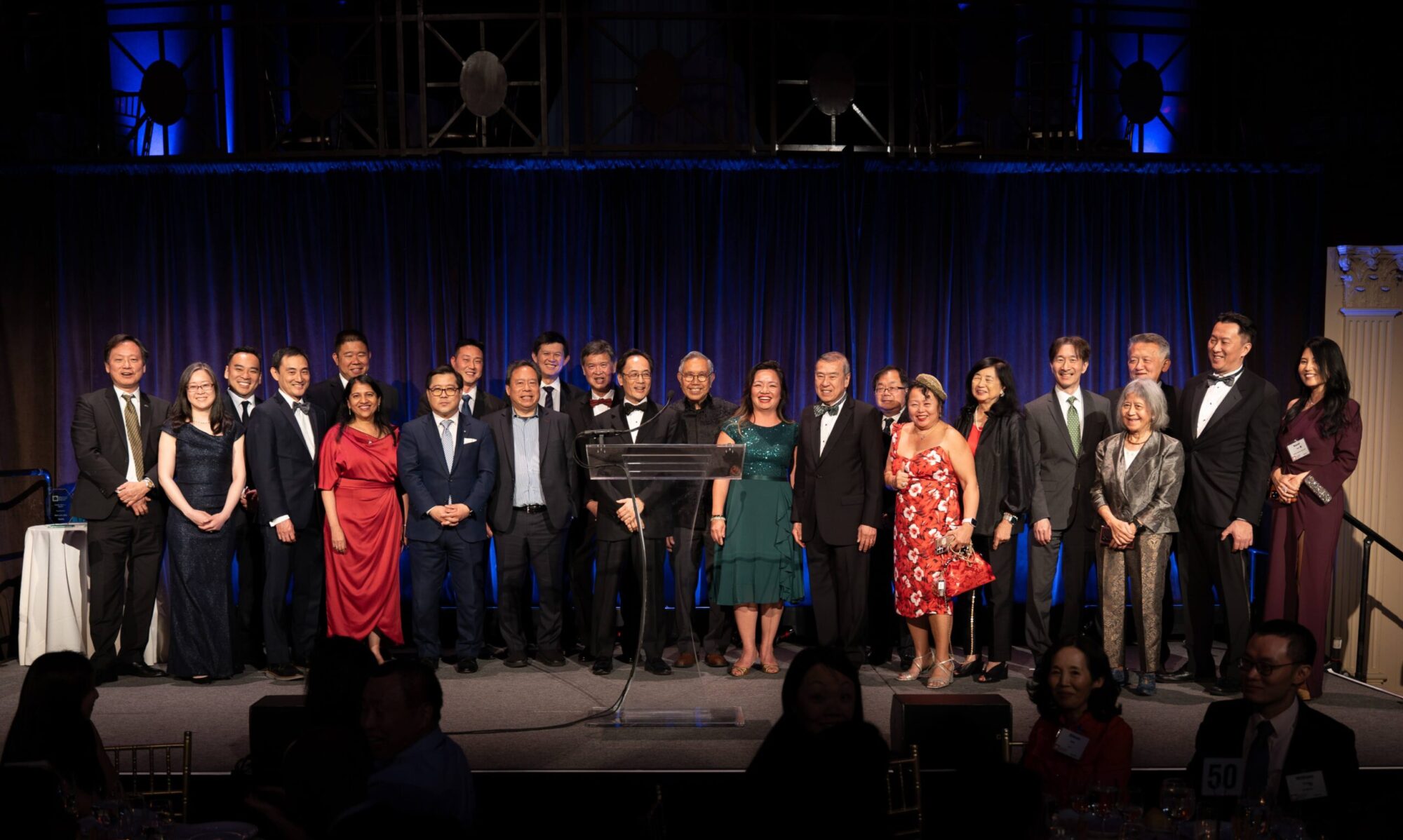
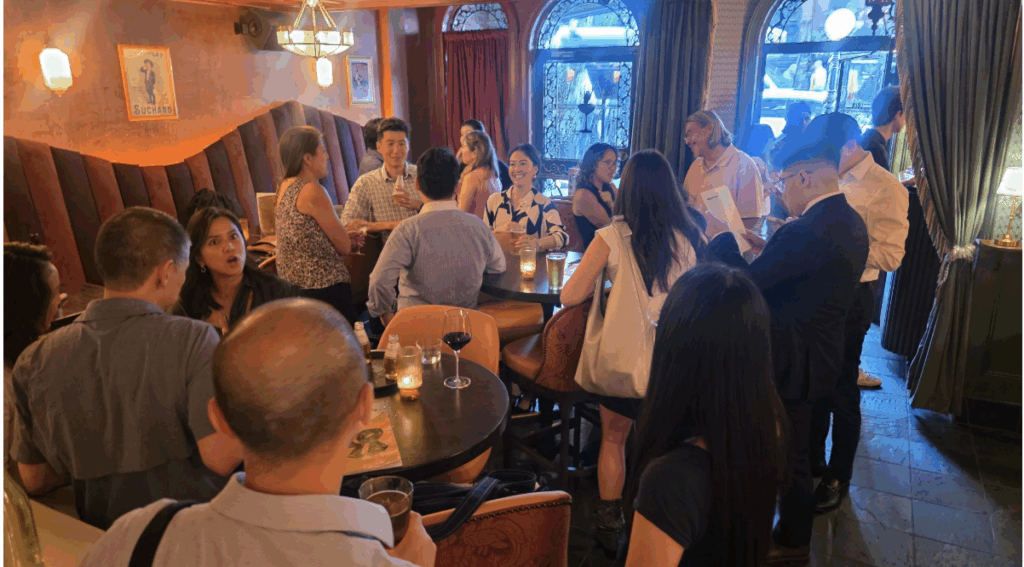
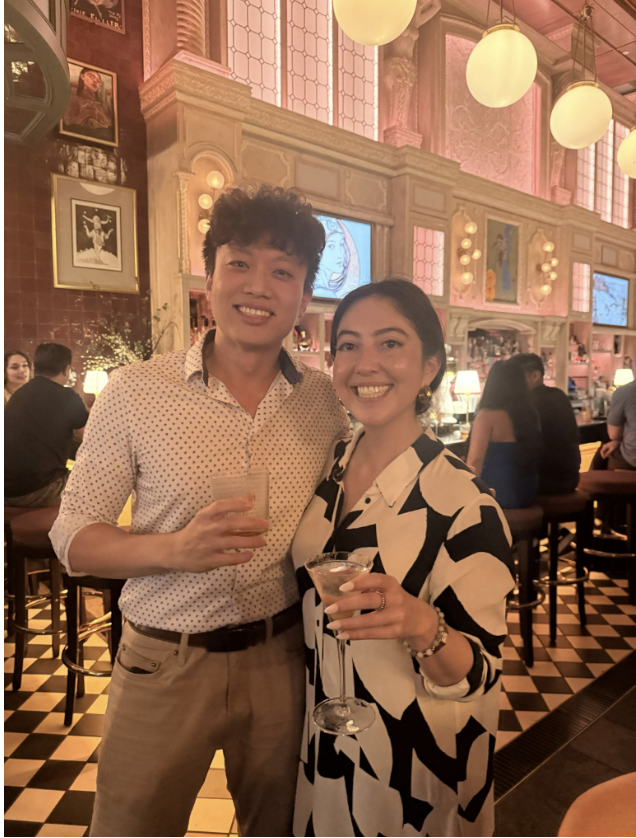
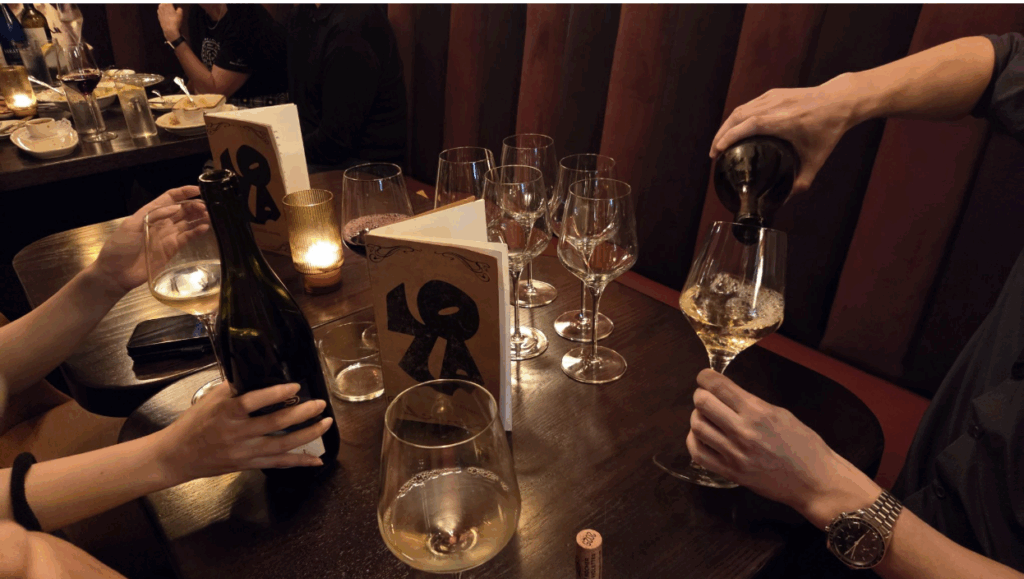
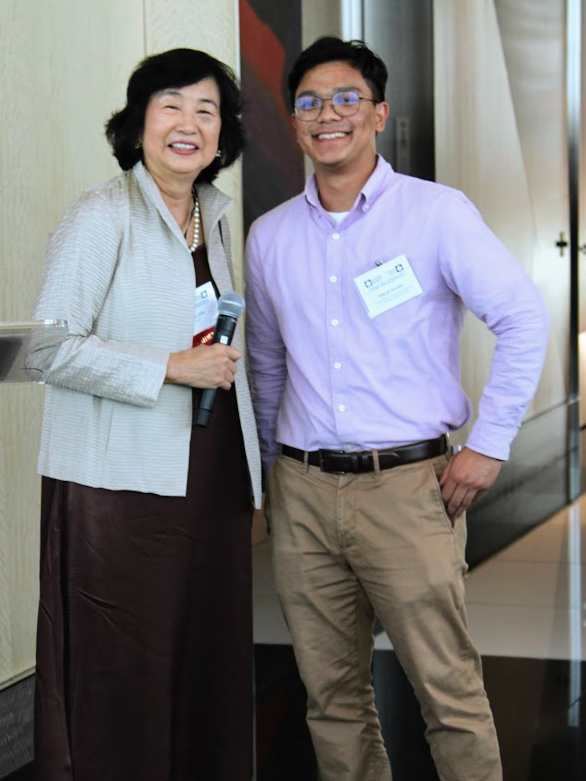
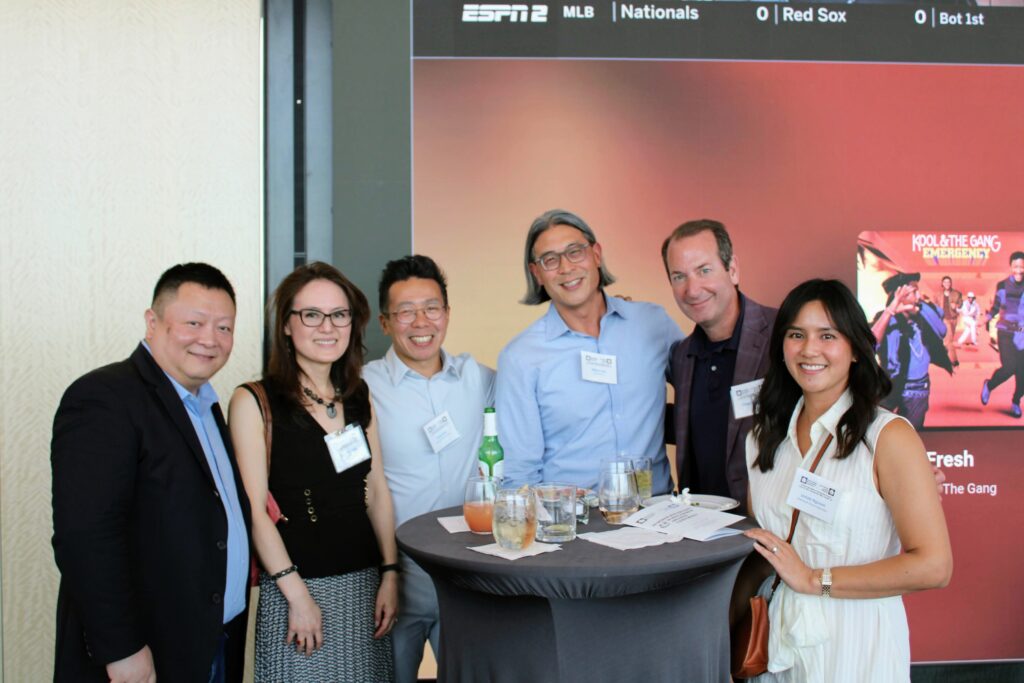
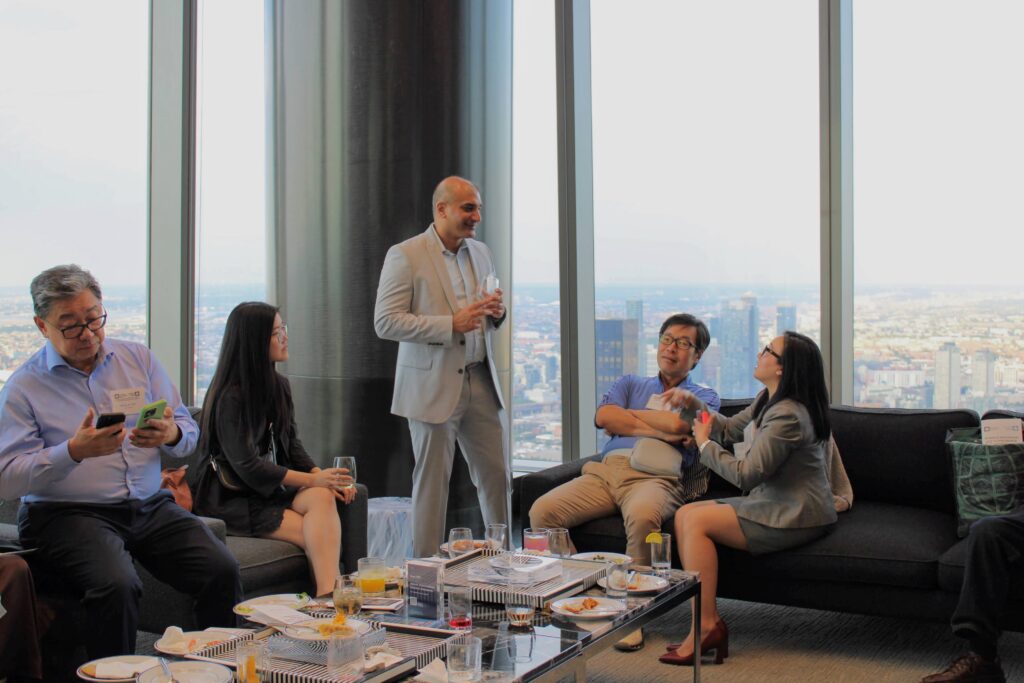
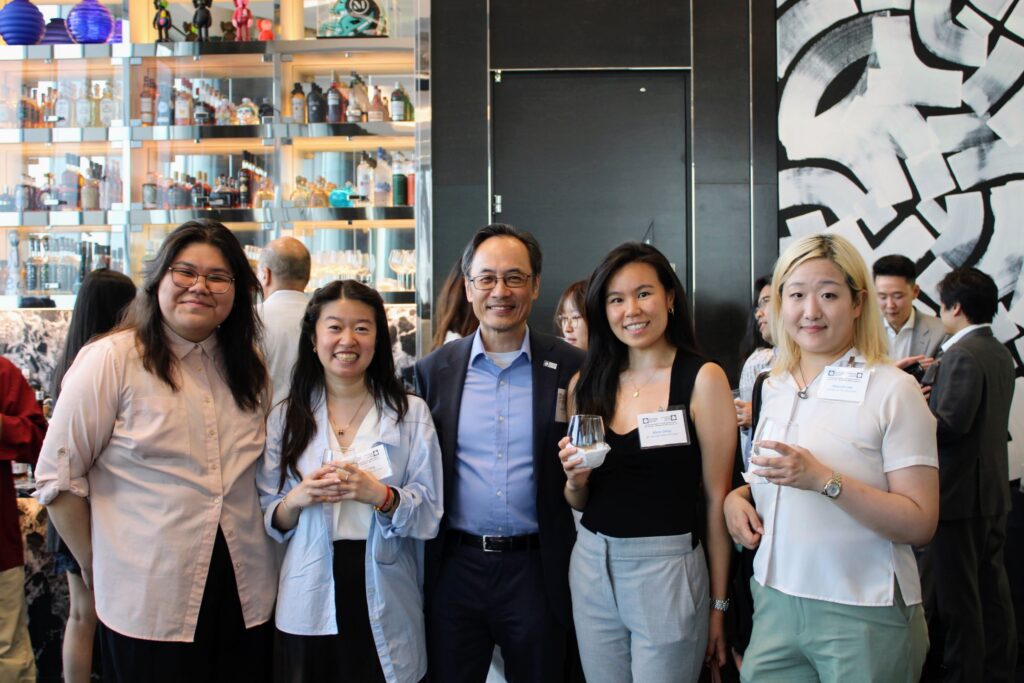
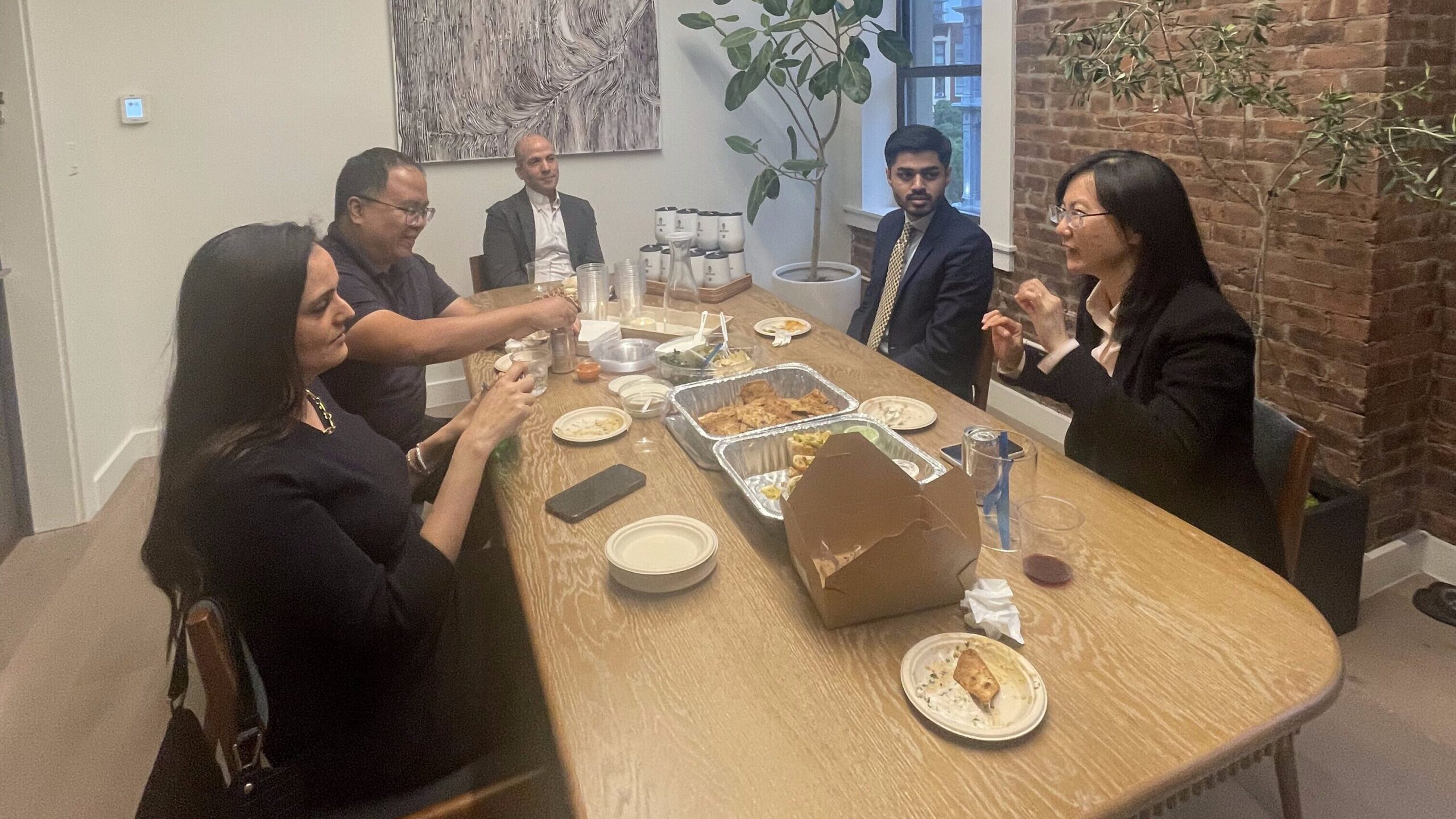
On August 18, 2026, the AABANY Commercial Bankruptcy & Restructuring Committee and the AABANY In-House Counsel Committee co-hosted a joint happy hour at Bar Lola in Midtown Manhattan. The event brought together attorneys from a variety of practice areas and professional backgrounds for an evening of networking, relationship-building, and conversation.
Events like this joint happy hour demonstrate the value of bringing together attorneys from different practice areas to connect, share experiences, and expand their professional networks. Thank you to everyone who attended and helped make the event a success. We look forward to hosting more joint programs and networking opportunities in the future.
The Commercial Bankruptcy & Restructuring Committee and the In-House Counsel Committee are committed to providing members with opportunities to engage with one another through networking and community-building events throughout the year. Those interested in learning more about either Committee are encouraged to attend future programs and visit the AABANY website for additional information.
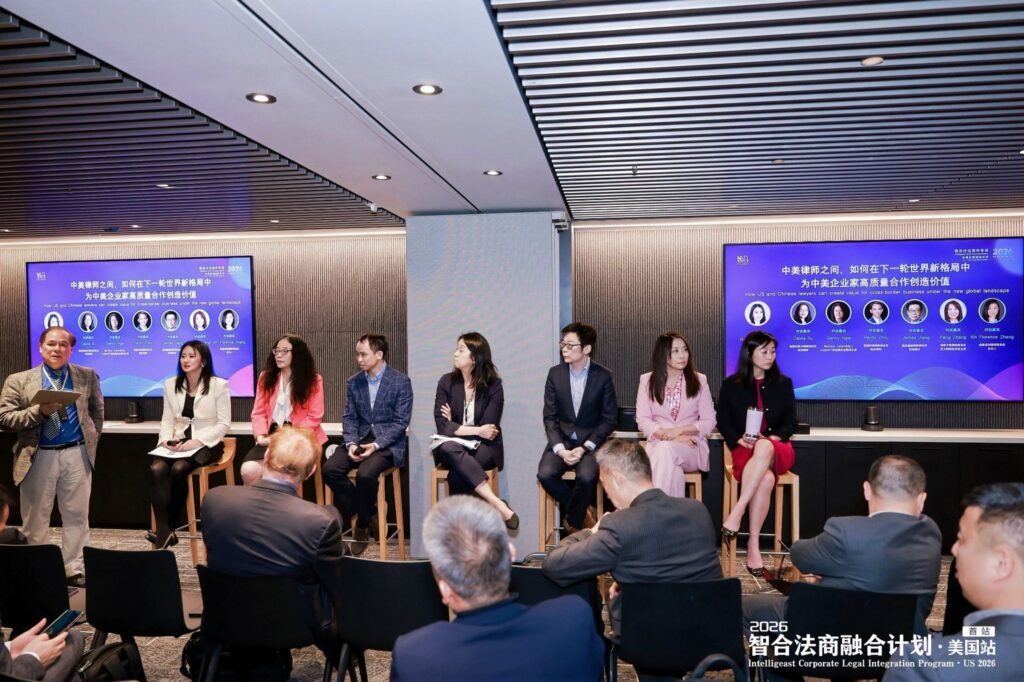
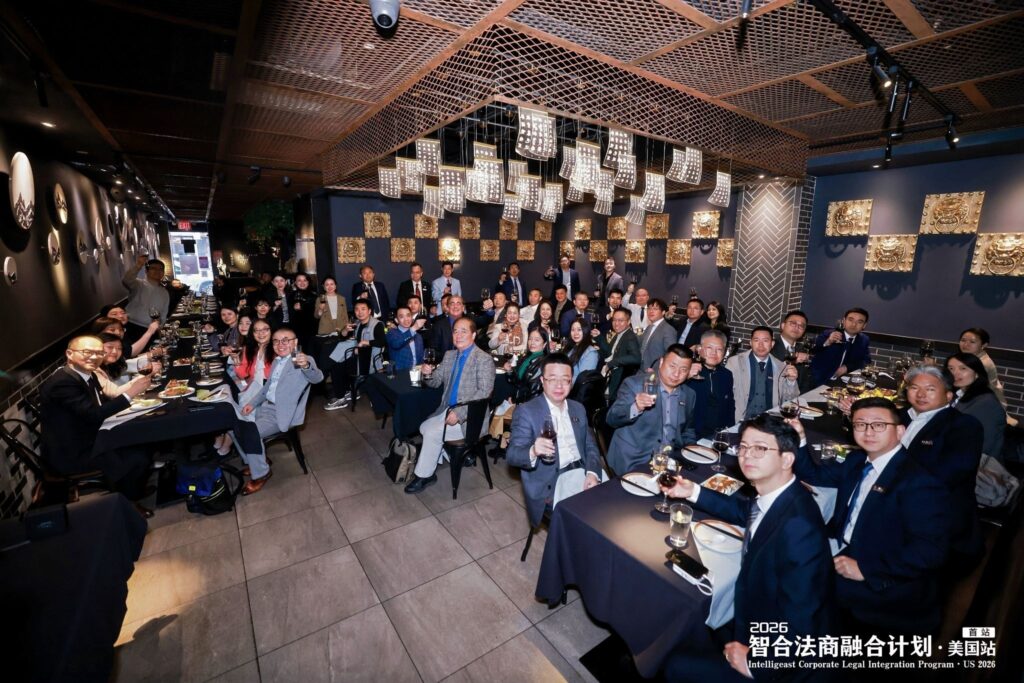
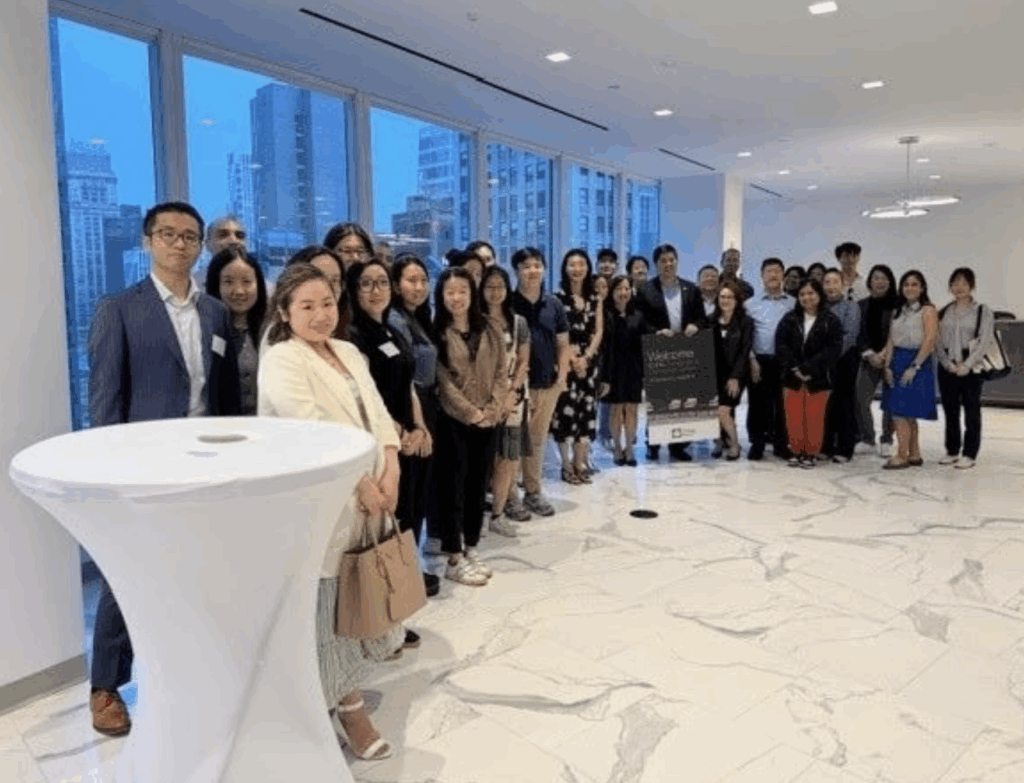
On April 29, 2026, AABANY’s Asia Practice Committee successfully hosted the U.S.–China Legal Elite Dialogue Forum & Dinner in New York City, bringing together approximately 75 attorneys, legal professionals, and business leaders for an afternoon of insightful discussion and cross-border engagement.
Held at Club 135 by Industrious, the forum convened leading practitioners across the U.S. and China to examine the evolving legal and business landscape shaping cross-border transactions and disputes. The program featured keynote presentations and a dynamic panel discussion focused on the theme: “How U.S. and Chinese lawyers can create value for cross-border business under the new global landscape.”
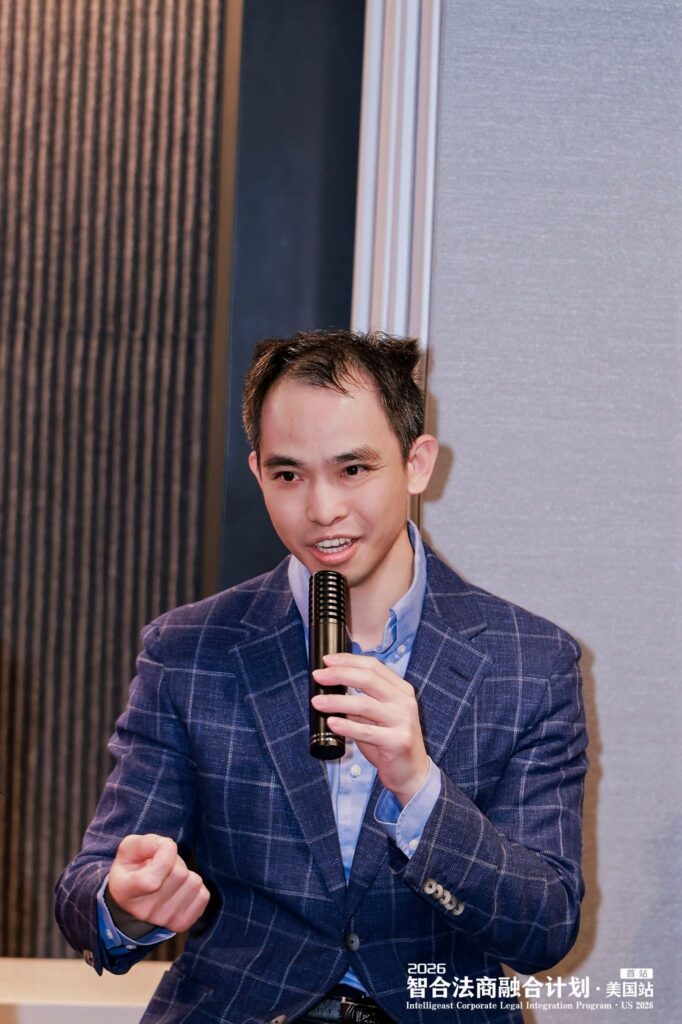
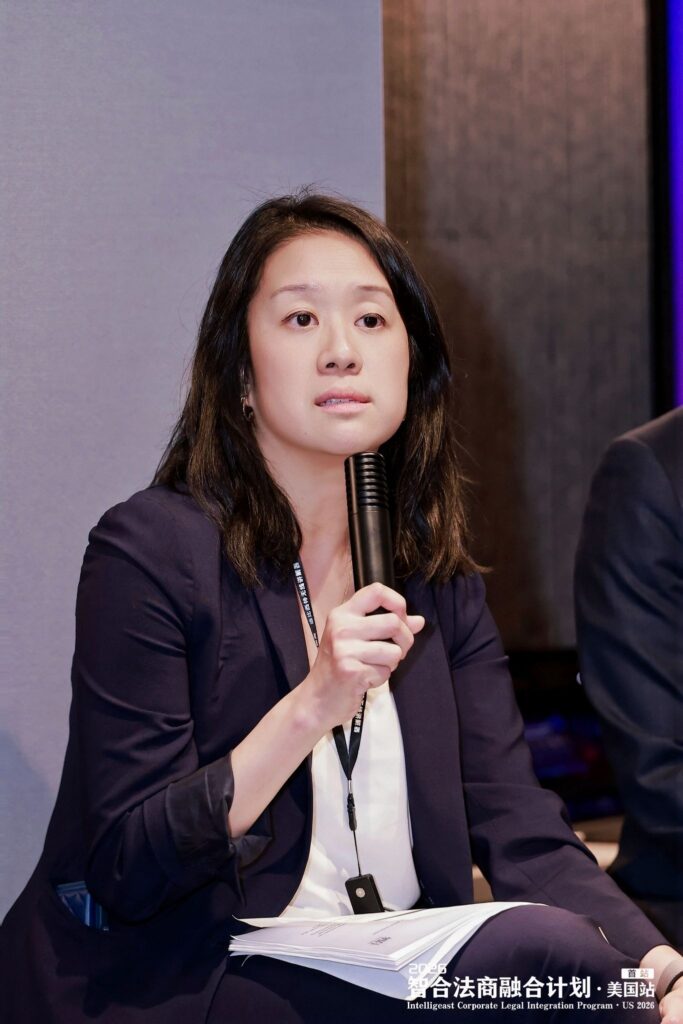
The panel brought together an accomplished group of practitioners, including Hardy Zhou, Tax Attorney at Cooley LLP and Co-Chair of AABANY’s Asia Practice Committee, and Genny Ngai, Partner at Morrison Cohen LLP and Co-Chair of AABANY’s Litigation Committee. Moderated by Haiyan Tang, Managing Partner at Quinn Emanuel Shanghai, the discussion explored the increasing complexity of cross-border legal work, including heightened regulatory requirements, shifting investment trends, and the need for closer collaboration between U.S. and Chinese counsel.
Panelists shared practical perspectives on how lawyers can deliver value in this environment—ranging from structuring transactions and managing risk to navigating disputes and aligning multi-jurisdictional strategies.
The forum also featured keynote remarks from Yang Chen, the Executive Director of AABANY and Chris M. Kwok, Mediator at JAMS and Co-Chair of AABANY’s Alternative Dispute Resolution Committee, and other distinguished speakers across corporate, litigation, and dispute resolution practices, providing attendees with a well-rounded view of current developments in U.S.–China legal relations.
Following the formal program, participants continued their conversations during a networking reception and dinner, fostering meaningful connections and further strengthening the AABANY community.
AABANY extends its sincere thanks to all speakers, organizers, and attendees for contributing to the success of this event. The Asia Practice Committee looks forward to continuing to facilitate dialogue and collaboration among legal professionals engaged in cross-border practice.
-Written by Hardy Zhou, Co-Chair, AABANY’s Asia Practice Committee
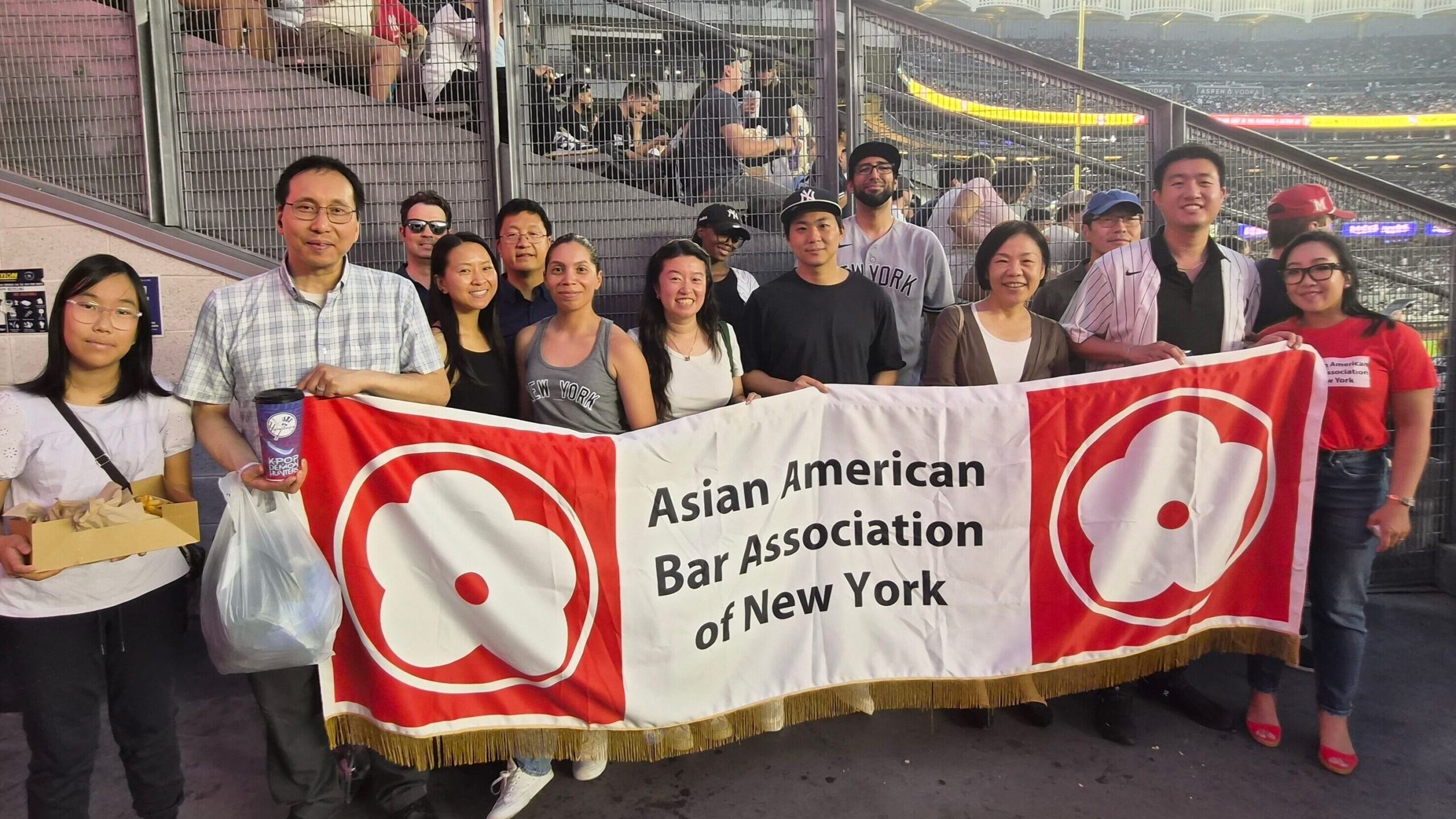
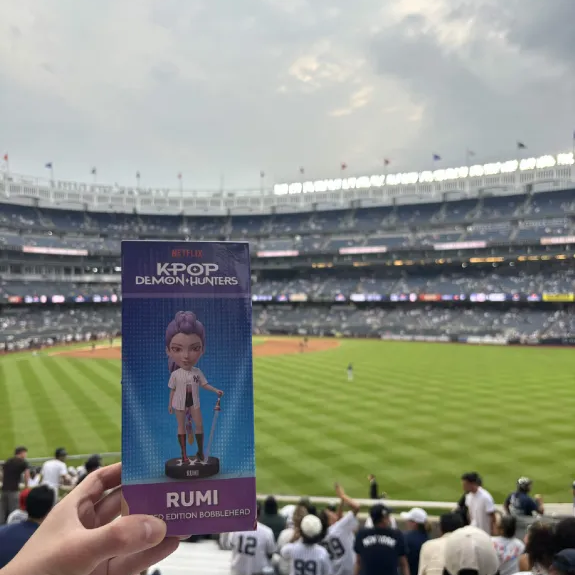
On Tuesday, August 11, AABANY members and their guests met at Yankee Stadium to watch the New York Yankees take on the Seattle Mariners. The evening doubled as KPop Demon Hunters Theme Night, and the ballpark was buzzing with fans decked out for the occasion. The first 18,000 fans to arrive got to take home a free Rumi bobblehead.
The game had a quiet and defensive start, with neither team scoring during the first five innings. In the 6th inning, the Mariners broke the deadlock with a solo home run to go up 1-0. But the Yankees exploded in the 7th, taking advantage of clutch hits to score four unanswered runs. New York’s pitchers shut the door from there for a 4-1 win, handing Seattle its fifth straight loss.
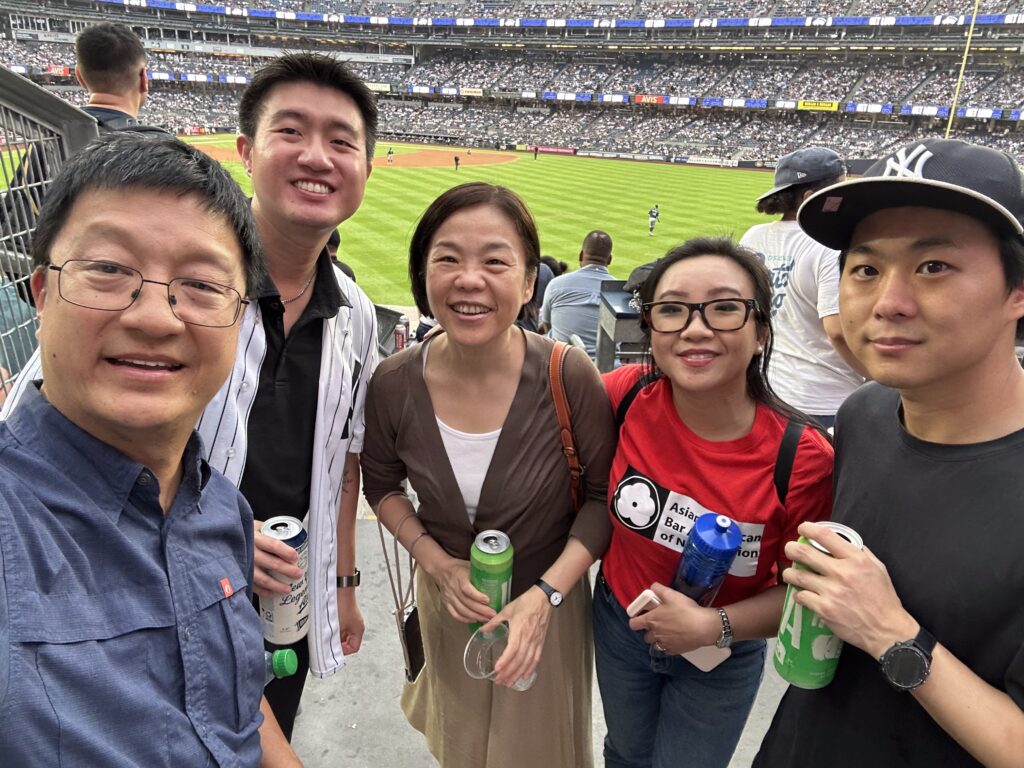
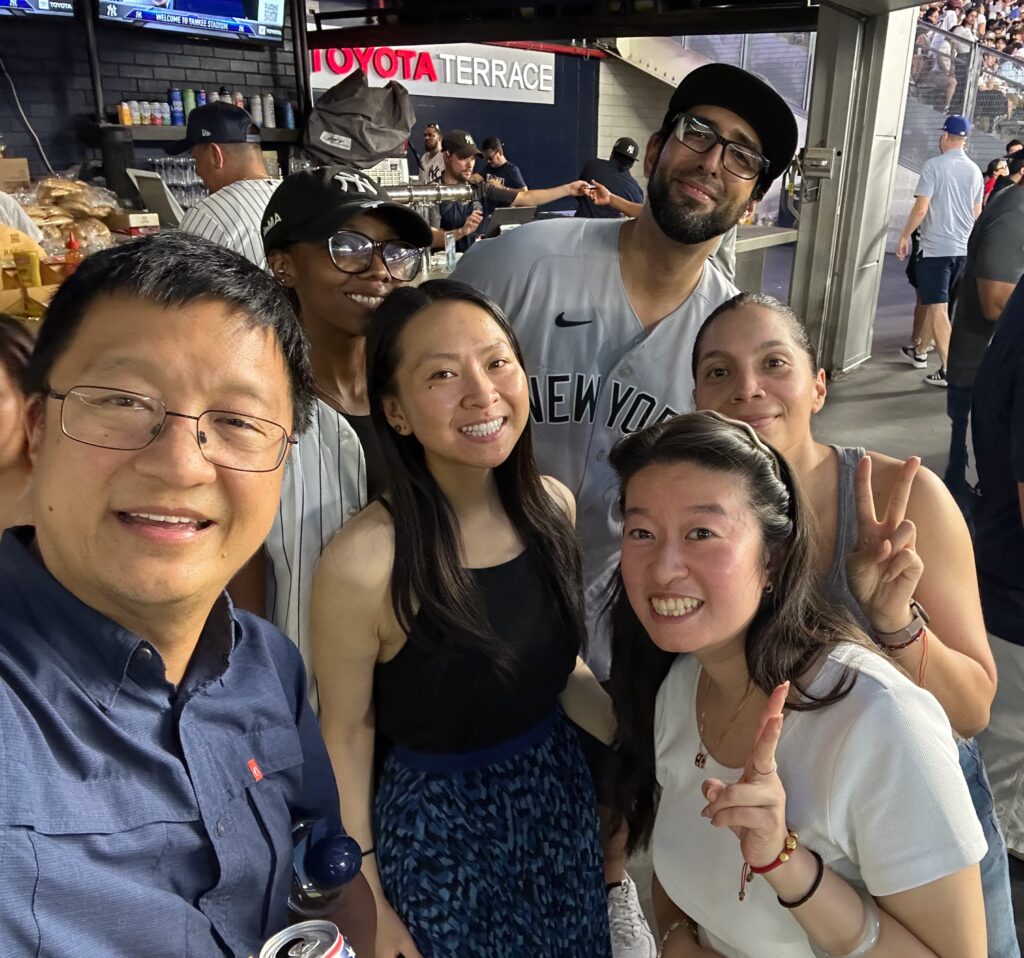
Beyond the game, the night offered exactly what these outings are meant to provide: an easy, low-pressure setting for AABANY members to connect outside the usual office setting. Standing together in the open area by the Toyota Terrace, members swapped stories between innings, cheered the late-game rally, and soaked in a fun summer night at the stadium. Thanks to everyone who came out and made the evening memorable and enjoyable, and a special thanks to the Membership Committee for organizing another great outing!
–Written by Victor Way, AABANY Intern, Summer 2026
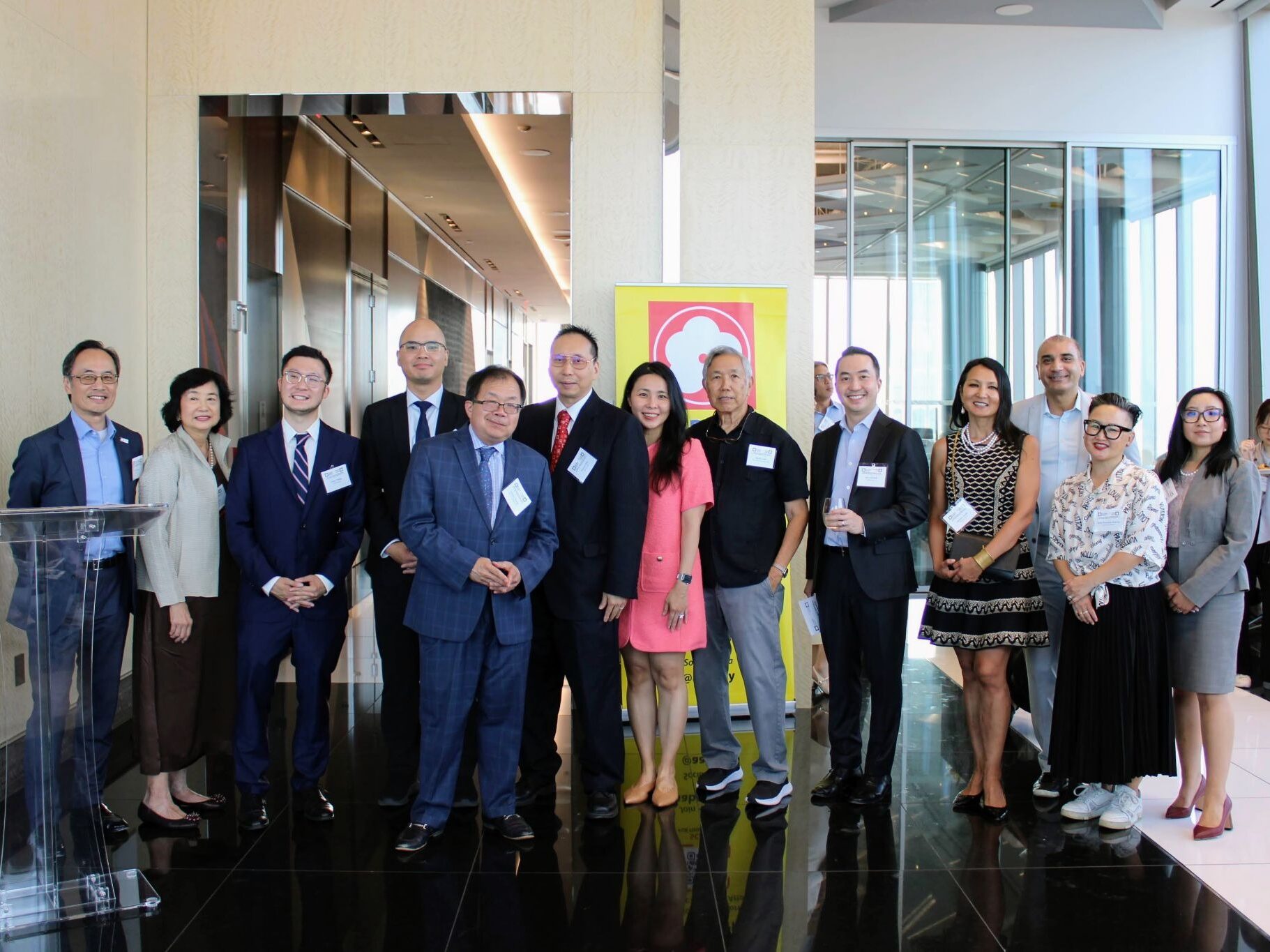
On Tuesday, June 30, 2026, the Asian American Bar Association of New York (AABANY) and the Asian American Law Fund of New York (AALFNY) held the Annual Summer Reception. The event celebrated the recipients of the 2026 AALFNY Public Interest Scholarship. Each year, AALFNY grants Public Interest Scholarships to law students who have demonstrated a strong commitment to the Asian American community. Since 1997, AALFNY has awarded over 60 scholarships, supporting law students and encouraging them to apply their legal education to benefit the Asian American community and to foster commitment by law students to public service. The Reception took place at McDermott Will & Schulte in their Midtown Manhattan office.
Upon arrival, attendees enjoyed a variety of hor d’oeuvres and drinks, mingling until the Reception officially started. The program began with Sylvia Chin, AALFNY President and Partner Of Counsel at White & Case LLP, delivering welcome remarks to all attendees and formally introducing AALFNY directors to the attendees. Additionally, Sylvia read NAPABA’s statement issued earlier that day about the Supreme Court decision on birthright citizenship. Sylvia then asked AABANY Executive Director Yang Chen to introduce the AABANY Board members in attendance.
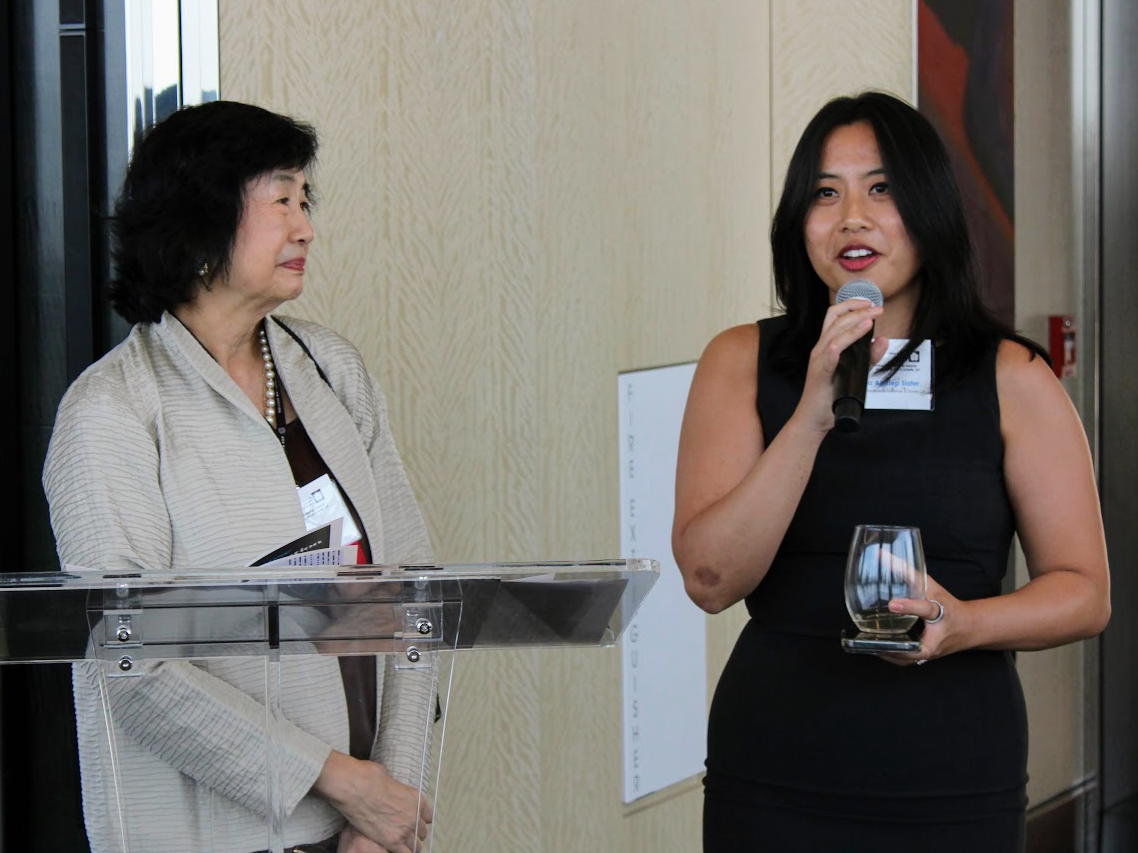
The program concluded with remarks from Jenna Agatep Slater, a current Labor & Employment Associate at Wilson Elser and Immediate Past President of the Filipino American Lawyers Association of New York (FALA New York), who was a past recipient of the Public Interest Scholarship. Jenna shared her personal journey to becoming a lawyer, as well as the impact of the scholarship on her life.
Later, after the Reception was over, each recipient was interviewed to discuss their personal backgrounds, their discovery of the scholarship opportunity, and their current activities. They were also asked to provide reflections on the award, share their future professional goals and offer words of advice for aspiring law students.
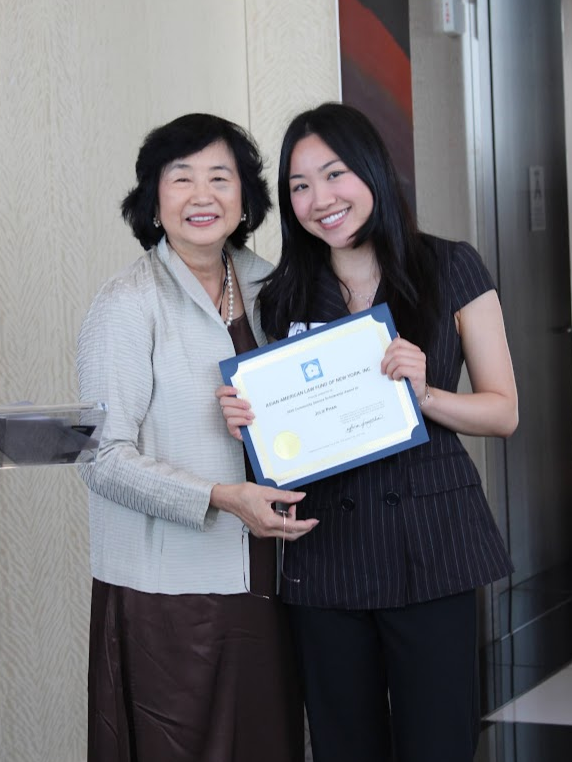
Julie Phan:
Growing up in a refugee community, Julie saw how daunting it was to navigate a complex legal system without support. Witnessing her family and friends struggling to bridge that gap deeply inspired Julie’s journey in pursuing immigration law and public service. Today, that goal is not only powered by an incredible village of family, friends, and mentors back home, but also the clients she meets through the programs she has been involved in while attending law school.
With this scholarship, Julie plans to serve the immigrant community and practice cultural humility within those spaces. She currently volunteers at a variety of legal clinics, focusing on forming true connections with clients in a direct services capacity. In the future, she hopes to apply to a legal fellowship to work with an organization dedicated to advancing immigrant rights.
“I want to thank AALFNY for this incredible opportunity,” Julie stated. “Scholarships like these help alleviate financial barriers that many law students encounter when deciding to pursue a career in public interest law and encourage us to pursue our passions. I also want to thank my amazing mentors and friends from Asian Americans Advancing Justice SoCal for sending me this scholarship opportunity. I am so grateful for their friendship and support.”
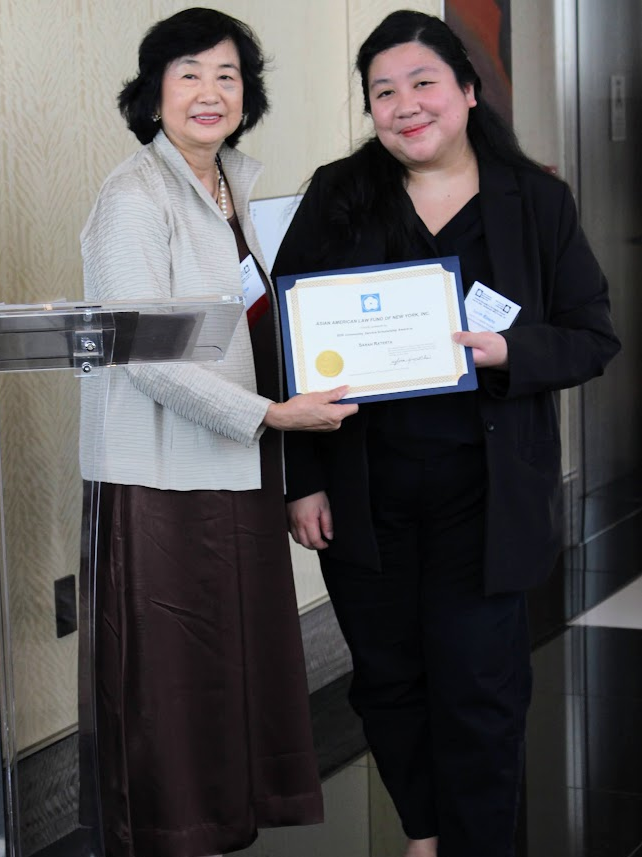
Sarah Raterta:
Sarah Raterta was introduced to an internship at the Migrant Center of the Church of St. Francis of Assisi in Manhattan by Father Julian Jagudilla, a Filipino friar, in 2017. This internship allowed her to work directly with clients and see firsthand the true impact of her efforts, securing green cards, legal status, and citizenship, thus inspiring her to pursue a legal career in immigration advocacy.
With this scholarship, Sarah wants to give back to her community by making immigration processes more accessible. Currently interning with the National Immigration Project (NIP), she focuses on high-impact legal work, including recent projects in which she researches attorneys’ fees through the Equal Access to Justice Act, tracks pending habeas petitions in circuit courts, and more. In the future, Sarah wants to help indigent immigrants and the broader community, working with nonprofit organizations or pro bono immigration services.
Sarah stated, “I hope to become the kind of advocate who helps people feel like they never have to walk alone.”
Mikail Husain:
Mikail Husain works as a researcher in the labor movement, hearing workers’ stories about enduring difficult—and often dangerous—working conditions. This deeply angered him but also sparked a strong desire to acquire better tools to advocate for workers’ rights. Additionally, working alongside brilliant, dedicated attorneys further fueled this ambition, showing him firsthand that a career in law is a powerful way to fight for what he believes in.
With this scholarship, Mikail hopes to give back to his community by ensuring workers’ rights are both known and respected. Currently interning with the New York State Office of the Attorney General’s Labor Bureau, he assists with the Bureau’s legal battles to obtain justice for workers.
“I would recommend that aspiring lawyers not be afraid of reaching out to lawyers, law students or any other potential mentors with questions or for advice about pursuing a legal career,” Mikail suggested. “Speaking to my law school’s career planning advisor is how I found out about this in the first place!”
Thank you to everyone who attended the Summer Reception at McDermott Will & Schulte to celebrate the 2026 recipients of AALFNY Public Interest Scholarship. To see the full photo album, featuring photos taken by AABANY Legal Intern Clive Chong, click here.
Thank you to McDermott Will & Schulte for generously providing the space for this event.
On Thursday, July 16, 2026, the AABANY Solo & Small Firm Practice Committee hosted another popular virtual networking event for solo and small firm practitioners to connect. The meeting, intentionally informal and freeform, gave attendees an opportunity to discuss any topics at hand. After brief introductions and a couple of minutes for colleagues to catch up with one another, the topic of office practicalities was brought up.
Yen-Yi Anderson, Principal at Anderson and Associates Law, PC and Co-Chair of the Solo & Small Firm Practice Committee, asked attendees about what printers, time management systems, and invoice systems they used in the office. Many of the attorneys in the call described their printers to be fault-prone, often requiring costly repairs. Recognizing that most clients prefer an electronic copy of documents, most attendees recommended a leased Brother printer for any hard copy needs.
From there, the conversation moved on to invoicing systems. Programs like Bill4Time, MyCase, Clio, and PracticePanther were described as relatively reliable systems, but attendees described each program having its own issues. However, this judgement could only be made after fully investing into one system, making inefficient invoicing systems a large inconvenience for small firms. Additionally, small or solo firms often lack the staff to delegate invoicing tasks to associates or paralegals, leaving less time to manage these systems effectively.
This topic then transitioned into billing. Methods such as Zelle, Stripe, or direct wiring were most commonly used. Given that various fields of law have different retainers and billing rates, there was no consensus on which billing method was the most efficient. Attendees also described using various bank accounts to receive and access funds. Although there were quite a few differences in the actual billing process, most attendees agreed that tracking billable hours manually was far better than any automatic tracking software. Despite rapid developments in technology, “old-fashioned” methods were often the most reliable.
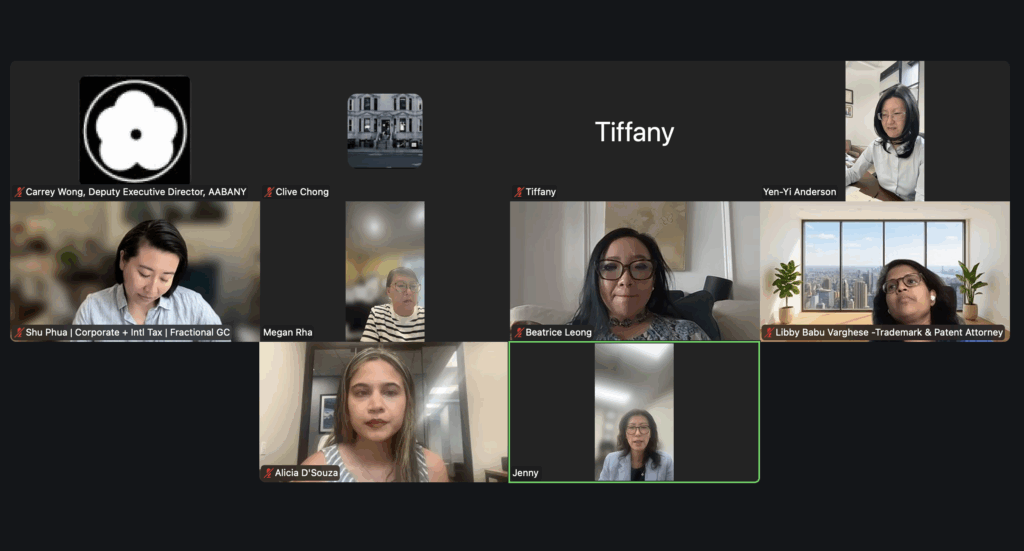
The virtual networking hour concluded with many more topics being suggested for discussion at the next event. The vibrant community among the members of the Solo and Small Firm Practice Committee was evident, with each member helping to uplift the other through practical tips about how to run a law firm. To learn more about the Committee and get involved, visit the Solo & Small Firm Practice Committee page.
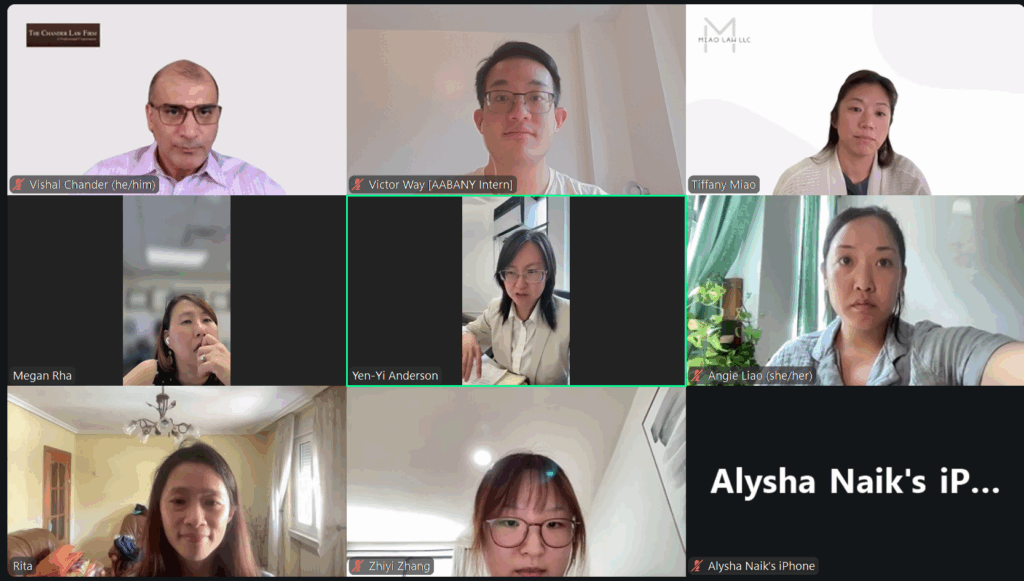
On Wednesday, June 10, 2026, the AABANY Solo & Small Firm Practice Committee hosted a virtual networking event. The event offered busy practitioners an accessible way to socialize and connect with fellow members directly from their home workspaces, offices, and for one of the attendees, even from abroad. The informal virtual setting encouraged the attendees to discuss whatever topic they liked, and soon the conversation flowed to one of the most pressing topics in the legal industry today: the rise of artificial intelligence.
Members shared how AI is reshaping the landscape of solo and small firm practice from multiple angles. A growing challenge has been managing client expectations. Clients increasingly arrive having already consulted a chatbot, presenting AI-generated summaries of their legal situation. Members noted that these outputs are often riddled with hallucinations: citations to laws that do not exist, statutes that are not applicable, or legal frameworks that have no bearing on the client’s actual circumstances.
The problem is not always as simple as the AI being flatly wrong. In some cases, AI tools do surface something relevant, but bury it beneath so much extraneous information that clients themselves struggle to identify what actually matters. This creates an additional layer of work for attorneys, who must not only address the legal issue at hand but also untangle the misinformation and misplaced confidence that clients bring with them into consultations.
The conversation also touched on what AI means for the next generation of legal professionals trying to break into the industry. As AI tools take on more of the research and drafting tasks that once served as entry points for new associates, new recruits face a shifting landscape where the traditional pathways into legal practice look increasingly uncertain.
The Solo & Small Firm Practice Committee looks forward to continuing these conversations at the next virtual networking session on Wednesday, July 16, 2026. Registration details can be found here. To learn more about the Committee and get involved, visit the Solo & Small Firm Practice Committee page.
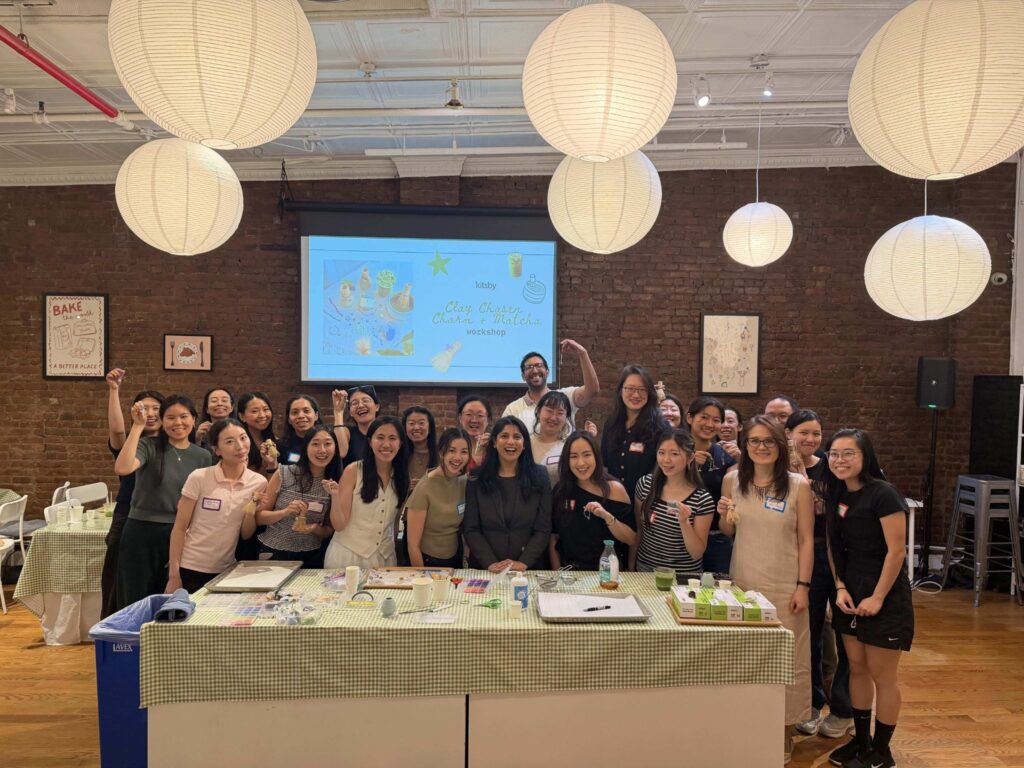
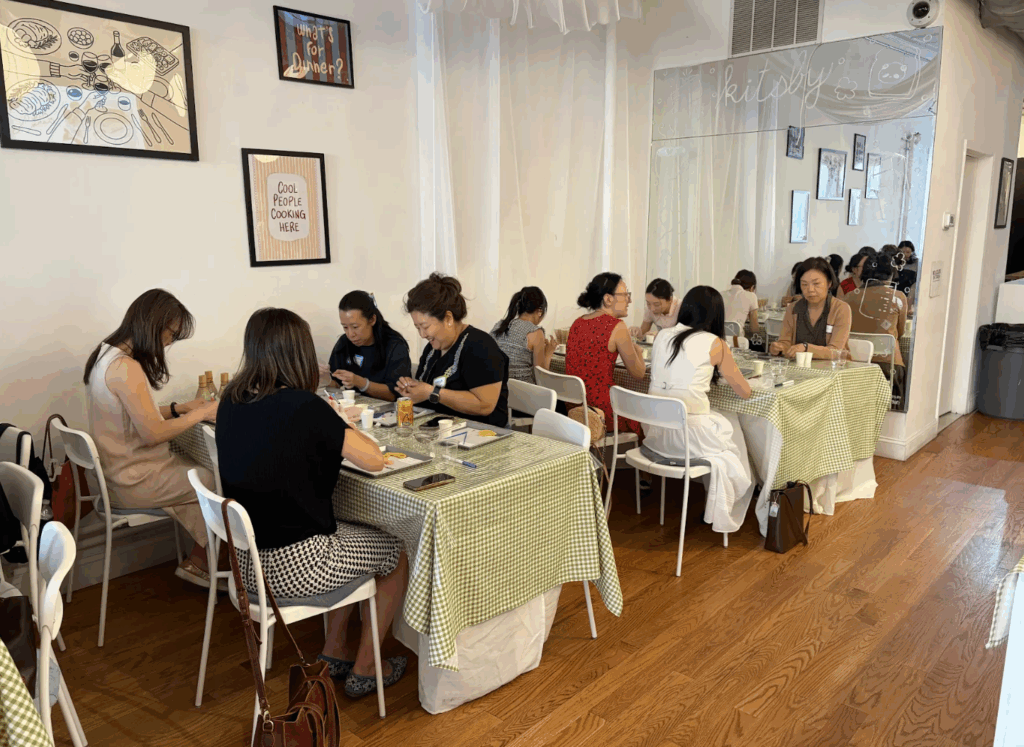
On June 18, the Asian American Bar Association of New York’s (AABANY) Women’s Committee held a fun evening of charm-molding, matcha-making, and community-mingling at their “Mold, Matcha, and Mingle” event. The event drew a large crowd, as the spots had been completely taken in advance of the event. The group gathered at Kitsby Studio in SoHo to connect with one another and learn about the history and traditions of matcha. This event was generously sponsored by Ashurst Perkins Coie.
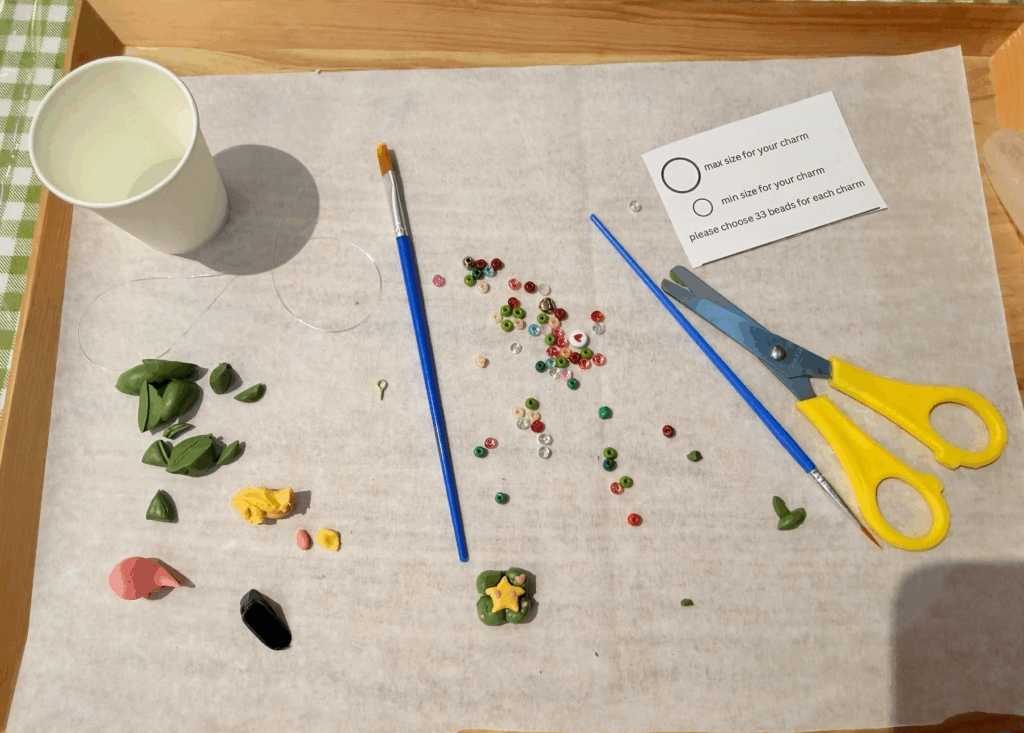
At the start of the session, participants learned about chasen charms—beaded charms that adorn the handle of a matcha whisk—and picked their own beads from a wide variety of colors and patterns. The relaxed and creative environment made it easy to connect with one another, and attendees introduced themselves as they talked about their own careers and about the event.
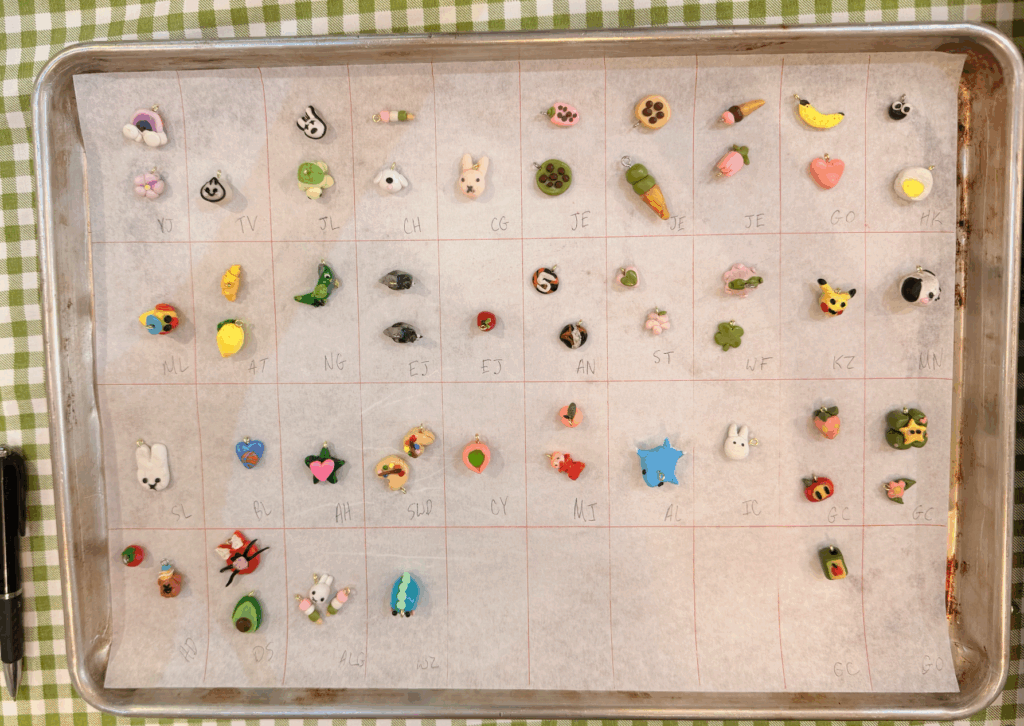
With the help of the instructors at Kitsby Studio, attendees chose from a wide range of clay colors and began sculpting little pendants, to be strung onto the chasen charms. Attendees exchanged charm ideas, helped each other find reference photos, and oohed and aahed at each other’s creations. The microscopic scale of the charms sent the room into cheerful exasperation as people bonded over trying to add detail to their work. From New York City pigeons to the Dutch cartoon rabbit Miffy, to characters from Studio Ghibli films, to food items, the creativity of AABANY members shined at this event.
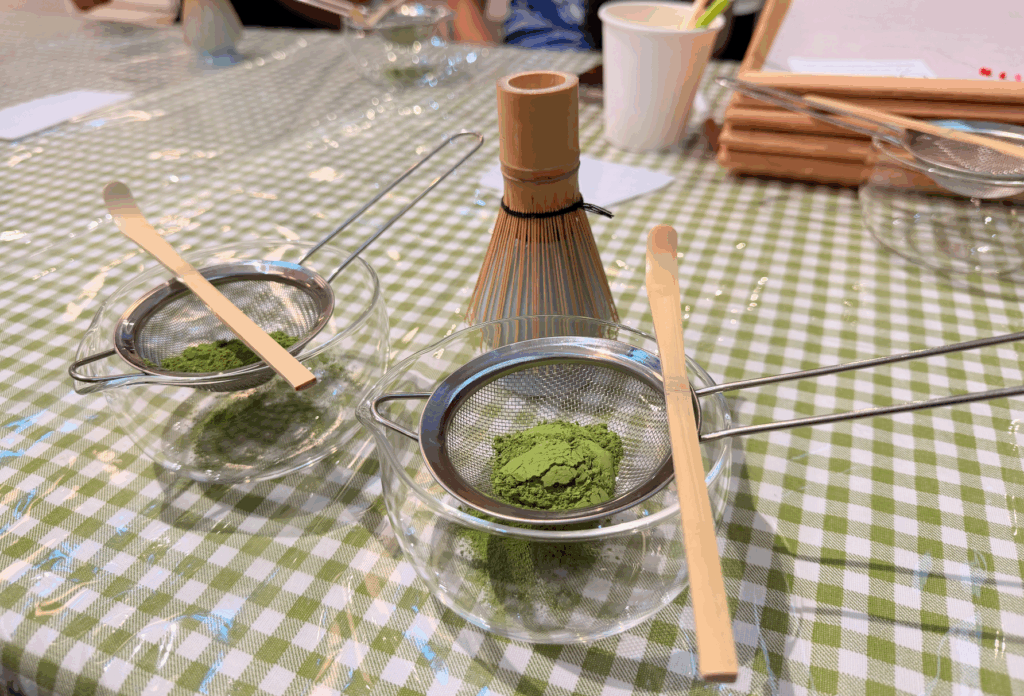
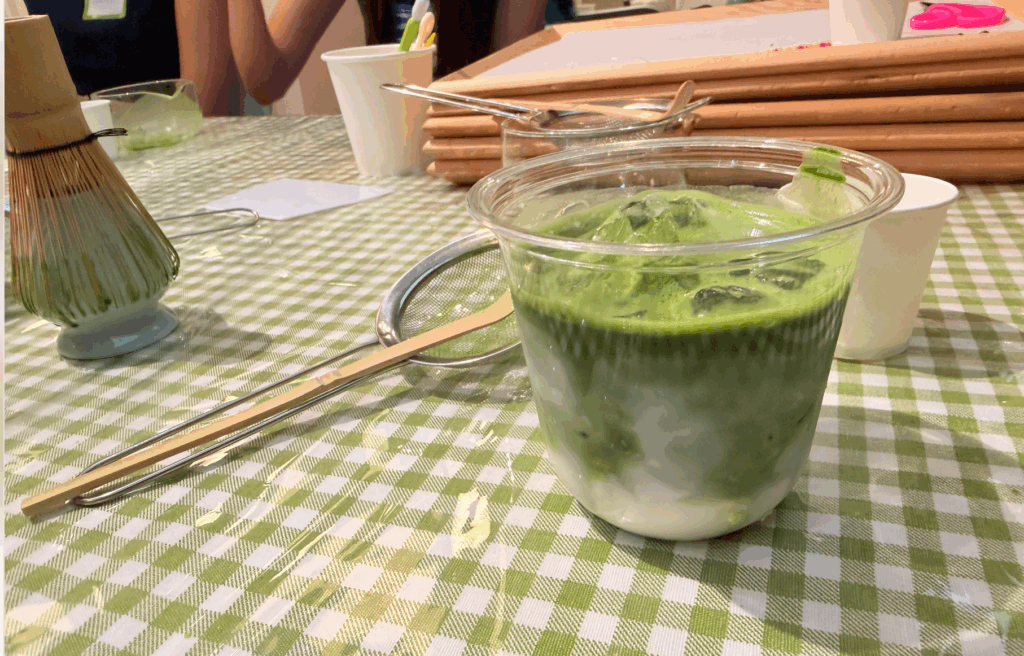
While waiting for the charms to bake, attendees learned about the history of matcha from the instructors. Each attendee tried their hand at making a matcha latte, while continuing to connect with one another. Attendees even received their own matcha whisk to take home!
The event closed on a high note as attendees strung their charms and beads onto string to complete their chasen charms. After glazing the charms, each attendee had a beautiful keepsake to take home, and in the process they made many new connections.
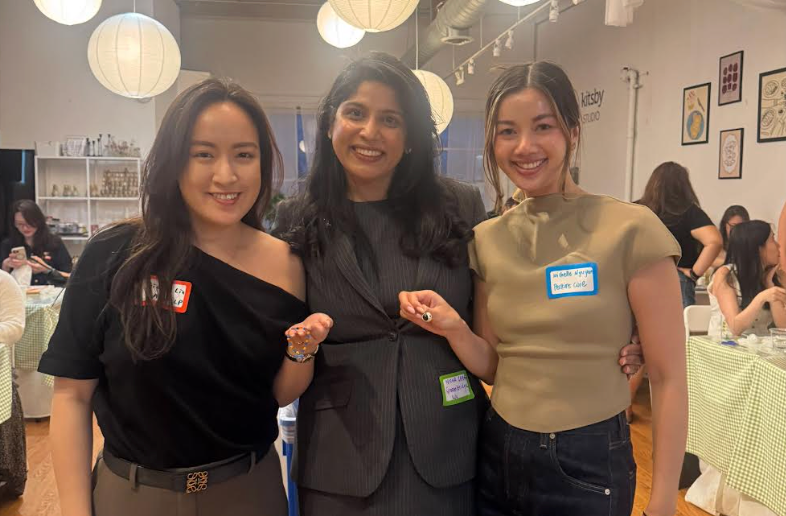
Thank you to Bianca Lin (Allegaert Berger & Vogel LLP) and Michelle Nguyen (Ashurst Perkins Coie), Co-Chairs of the Women’s Committee, and Nisha Gera (Groombridge, Wu, Baughman & Stone LLP), Vice Chair of the Women’s Committee, for organizing a wonderful event! They appear in the photo above, with Bianca on the left, Michelle on the right, and Nisha in the middle. Thank you to all of our attendees, and we hope you make good use of your matcha whisk.
Learn more about the Women’s Committee here, and reach out to Bianca, Michelle, and Nisha from that page to get more involved or to subscribe to their listserv, if you are not already on it.
On June 10, the Asian American Bar Association of New York (AABANY) hosted an installment of its Dumplings & Discussion event series featuring Sandra Leung, independent Board Member of Bausch Health Companies, retired General Counsel for biopharmaceutical company Bristol Myers Squibb, and past President of the National Asian Pacific American Bar Association (NAPABA). Over delicious dumplings and other dim sum dishes, Sandra shared her extensive career experiences with a captivated audience.
In addition to her 18 years as General Counsel at Bristol Myers Squibb—the first Asian American and the first woman to serve as their General Counsel—Sandra is also the 2025 recipient of NAPABA’s highest honor, the Daniel K. Inouye Trailblazer Award. In her illustrious career, Sandra was also the first Asian American woman to serve as an Assistant District Attorney in the Manhattan District Attorney’s office. Her board service includes serving on the boards of the Minority Corporate Counsel Association (MCCA) and the Asian American Legal Defense and Education Fund (AALDEF). Furthermore, she was a founding member of the Leadership Council on Legal Diversity (LCLD).
Sandra shared her journey in conversation with moderator and event organizer Jeffrey Mok, Principal at Fish & Richardson, AABANY Board Director, and Co-Chair of AABANY’s Intellectual Property Committee. The audience learned about Sandra’s favorite type of dumpling (homemade veggie dumplings) before launching into Sandra’s career path.
Sandra offered advice for the many young lawyers present, focusing on the path to in-house work and the importance of loving the work you do. The room was spellbound by her compelling storytelling and wealth of experiences and advice, ranging from tales of microaggression to humorous stories to accounts of stressful experiences.
While winding down the discussion and taking questions, Sandra offered cogent advice to the audience to put yourself out there: “If you’re not at the table, you’re on the menu.”
Sandra’s work ethic, charisma, and initiative left a strong impression on attendees, who continued mingling at the networking reception after the discussion.
AABANY is grateful to Sandra Leung for her warmth and openness and to Fish & Richardson P.C. for graciously hosting the event. Thank you to all our attendees for joining and being part of a memorable evening!
See here to read about past Dumplings & Discussion chats.
The next NAPABA Meet & Greet is coming to Chicago, IL! Join NAPABA for an evening of meaningful networking, connection, and engagement with the NAPABA community.
These convenings turn individual efforts into collective impact, helping shape the future of the legal profession. Whether you want to collaborate, share experiences, or simply reconnect with peers, this event is an opportunity to deepen your ties within the NAPABA community.
Please note: Capacity is limited, and registration is required. Walk-up guests will not be permitted, so be sure to secure your spot as soon as possible.
See you in Chicago!
Not yet a member? Join or renew your NAPABA membership today to access exclusive benefits (like discounted Meet & Greet rates) designed to empower your legal career!
Members and guests gathered for an evening of networking, conversation, and collaboration. In an intimate setting, attendees had the opportunity to connect with fellow solo and small firm practitioners, share professional experiences, exchange recommendations for favorite restaurants and local spots, and discuss ideas for future Committee programming and events. The casual gathering fostered meaningful conversations and helped strengthen relationships within the AABANY community.
Attendees enjoyed wine, soda, and light bites while learning more about the Committee’s plans for the year ahead.
AABANY extends its sincere thanks to Blue Panda Office Spaces for sponsoring and hosting the event. Located in Williamsburg, Blue Panda offers thoughtfully designed private offices, flexible workspace options, and meeting rooms, providing a welcoming environment for attorneys and other professionals serving Brooklyn and Manhattan.
We thank everyone who attended and look forward to seeing you at future SSFP Committee events throughout the year.
– Written by Tiffany Miao, Co-Chair of AABANY’s Solo & Small Firms Practice Committee