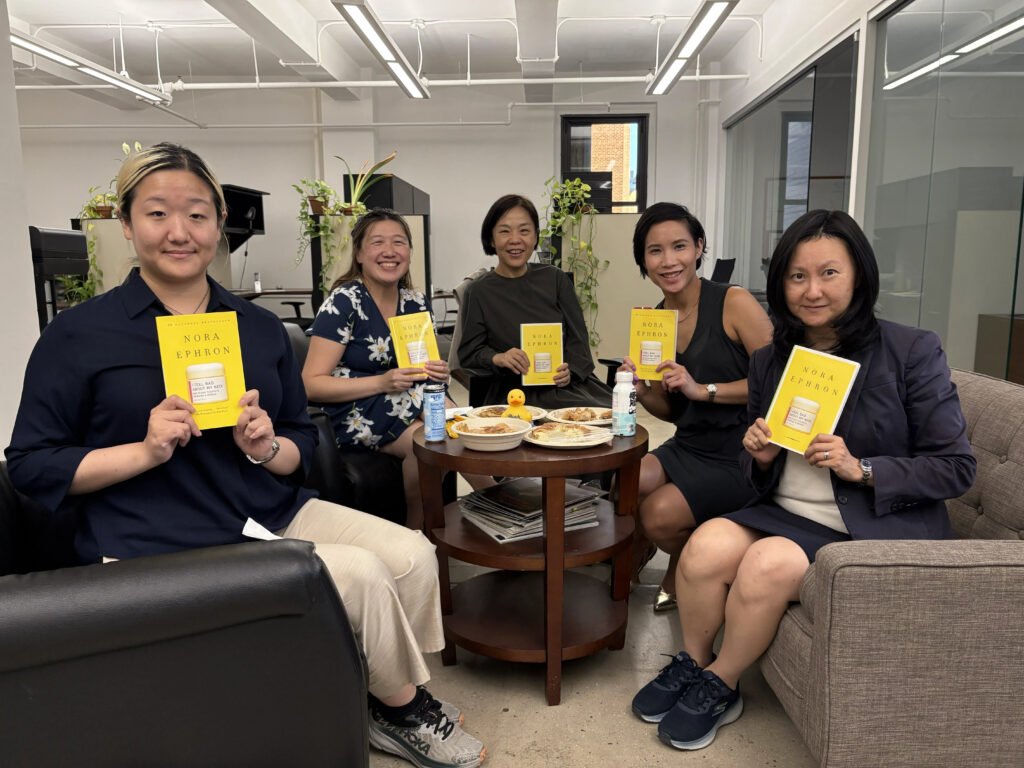
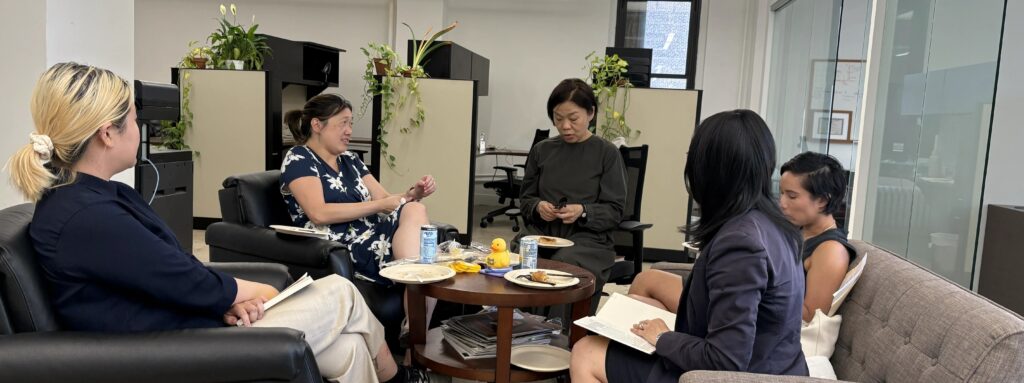
On August 4, 2026, a group of dedicated AABANY Book Club members gathered to share their insightful thoughts on this month’s book club selection. This month, the group decided to read Nora Ephron’s I Feel Bad About My Neck: And Other Thoughts on Being a Woman. This monthly book club meeting was hosted by AABANY Book Club organizers Yen-Yi Anderson and Yan Sin, and was held at the offices of Anderson and Associates Law, P.C.
The members discussed a plethora of topics relating to this book and its author: from how “New York” this book is, aging, career reflections, maintaining success while thriving through changes brought on by womanhood, to the Chinese dishes mentioned in the book. The members could relate to Ephron’s reflections on being a passionate city dweller and mother. They also shared their thoughts about the author’s many other notable and engaging works such as the movies Julie and Julia, Sleepless in Seattle, When Harry Met Sally, and You’ve Got Mail. As the attendees conversed and deliberated on their reviews, they enjoyed cabbage strudel, a dish mentioned in Ephron’s book.
I Feel Bad About My Neck: And Other Thoughts on Being a Woman brings candor, humor, and comfort to the dialogue of aging, reflection, and maintenance as a woman. Through this book, Ephron strips the shame from the inevitable process of aging. She encourages women to find beauty in more than their skin and physical appearance and to take pride in their growth as people. Ephron’s witty advice, thoughtful reflections, and fresh perspectives on getting older brings attention to the fact that women are so much more than their physical appearance. She urges the readers to instead focus on the daily joys and bittersweet moments life has to offer—to be present in life.
This book evoked a mix of serious, humorous, and insightful conversations from our Book Club members. This gathering reminded us that reading is a way to reflect, grow, and build a stronger community within AABANY. Whether you’re here for the books or for the engaging conversation, we would love to have you join us for our next Book Club meeting!
–Written by Constance Tu, Intern at Anderson & Associates
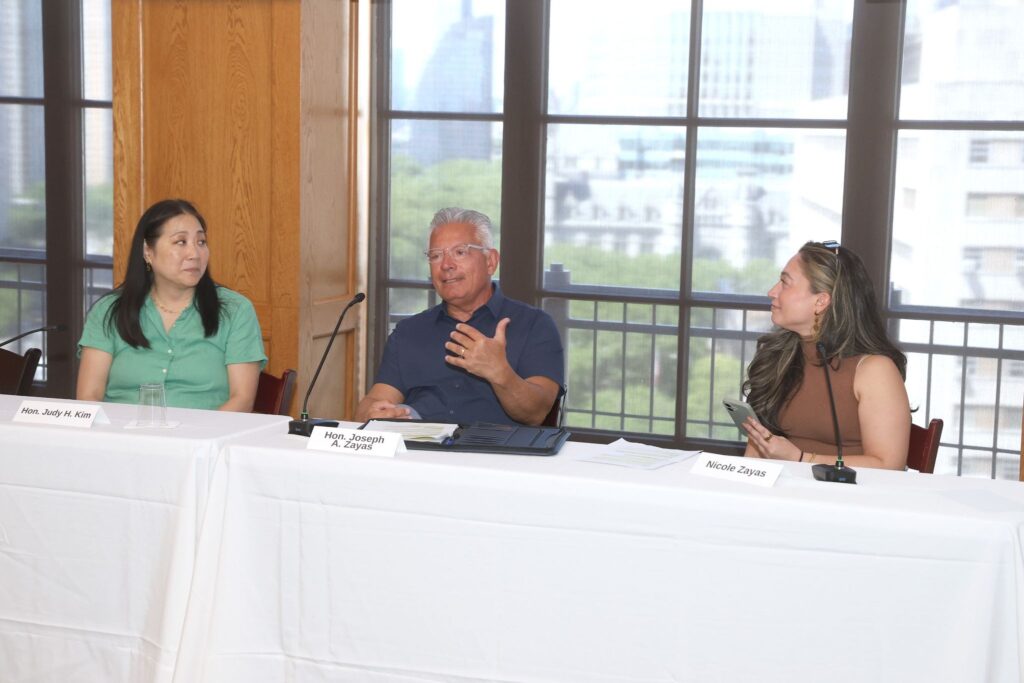
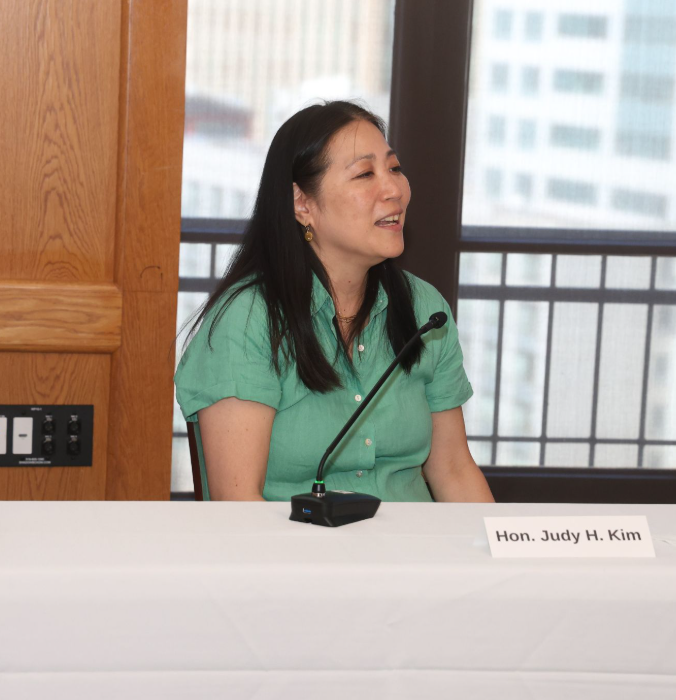
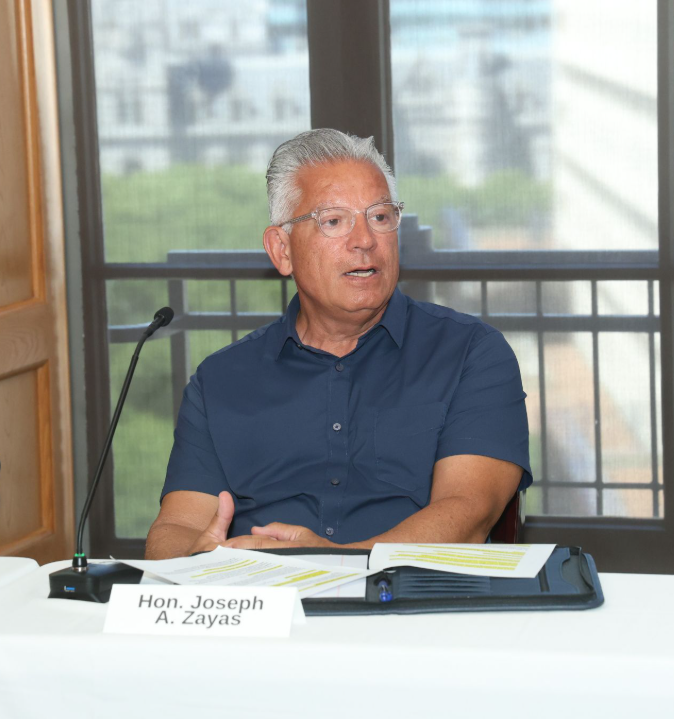
On June 13, 2026 at AABANY’s 2026 Wellness Day, attendees had the opportunity to hear a candid conversation between Hon. Joseph A. Zayas, Chief Administrative Judge of the New York State Unified Court System, and Hon. Judy H. Kim, Justice of the Supreme Court, New York County. Moderated by Nicole Zayas, LCSW, CEO of Arriving Full Circle Therapy and Coaching, the session, “Demystifying the Bench,” offered a rare glimpse behind the judicial robe and into the personal journeys that shaped two distinguished members of New York’s judiciary.
Rather than focusing solely on professional accomplishments, the discussion centered on the human experiences behind judicial leadership. Judge Kim shared the pride she felt and the great responsibility she took up as the first Korean American elected judge in New York State in 2016. She spoke movingly about her grandparents, who lived through the Japanese occupation of Korea and were unable to pursue legal and governmental careers despite their aspirations. Their experiences made her achievement particularly meaningful and reinforced her commitment to mentorship and community service.
Chief Administrative Judge Zayas shared an equally powerful story of perseverance. Growing up in public housing in Harlem, facing economic hardship, and navigating the challenges of a family affected by mental illness, he explained that a judicial career was never something he imagined for himself as a child. His path from struggling academically in high school to attending law school and ultimately becoming the state’s Chief Administrative Judge served as a reminder that greatness often emerges from those who refuse to be limited by their challenges.
One of the most compelling themes of the discussion was the importance of authenticity in leadership. Judge Zayas spoke openly about experiencing self-doubt and even “imposter syndrome” upon assuming one of the highest leadership positions in the New York court system. Rather than concealing those feelings, he emphasized the value of acknowledging them, stating that strength is not the absence of fear but the willingness to move forward despite it.
Judge Kim echoed that sentiment while discussing her own experiences with breast cancer and her work with Judges and Lawyers Breast Cancer Alert (JALBCA). She reflected on the cultural barriers that often discourage open conversations about health and vulnerability, particularly within many Asian communities. Her remarks highlighted the importance of wellness initiatives that encourage legal professionals to seek support and prioritize their physical and mental wellbeing.
The conversation also highlighted the critical role of mentorship. Both judges emphasized that professional advancement rarely occurs in isolation. Mentors, sponsors, colleagues, and community organizations all play a role in helping future leaders navigate the legal profession. Judge Zayas stressed the importance of building relationships and remaining humble throughout one’s career. He noted that these qualities are often as important as technical legal skills.
For young attorneys, law students, and aspiring judges in attendance, perhaps the most memorable takeaway came during the program’s closing moments. When asked what advice they would offer someone who doubts their ability to achieve something great, both judges encouraged attendees to trust themselves and continue moving forward. Judge Kim urged young professionals, particularly women and members of underrepresented communities, to have confidence in their qualifications and abilities. Judge Zayas reminded attendees that confidence is built through action, not perfection.
As attendees left the session, they carried with them not only a greater understanding of the judiciary but also an important lesson: the path to meaningful leadership is rarely straightforward, but it remains accessible to those willing to persevere, seek support, and believe in their own potential.
-Written by Devashani Sharma
About the Author: Devashani Sharma is a rising senior at Vanderbilt University majoring in Human and Organizational Development with a minor in Legal Studies. She interned with the Hon. Judy H. Kim through the 2026 Sonia & Celina Sotomayor Judicial Internship Program.
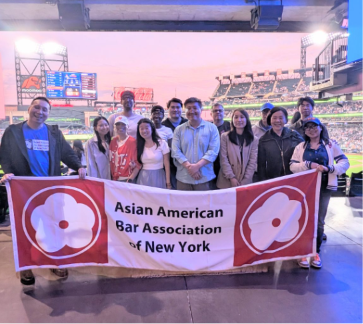
On Tuesday evening, June 23, 2026, 21 AABANY members and guests gathered at Citi Field for our Membership Committee outing to watch the New York Mets. This time, they hosted the Chicago Cubs. It was a fantastic night of baseball, community, and great seats down on the Field Level!
Beyond the action on the field, our group took full advantage of the stadium’s “Five Dollar Tuesdays,” enjoying an endless rotation of $5 hot dogs, beers, sodas, pretzels, and popcorn. The members who arrived early received a free Mets necklace, which was that evening’s giveaway.
The highlight of the evening was seeing a special welcome message to AABANY flash across the giant Citi Field scoreboard for the entire stadium to see! The beautiful summer weather and high-energy atmosphere in the stands made it a truly memorable night out for everyone in attendance.
Thank you to everyone who came out to cheer, eat, and catch up with fellow members. Although the New York Mets lost 9-6 to the Chicago Cubs, it was an exciting game to watch, with Francisco Alvarez driving the first three runs in for the Mets, through a two-run single and a solo homer.
Missed the Mets Game? Don’t worry—we are heading to the Bronx next. Join AABANY for our upcoming outing to see the Yankees on August 11, 2026, as they take on the Seattle Mariners! You can register now by clicking here to submit your registration and payment, locking in your spot before seats fill up. You won’t want to miss it!
On May 4, City & State published their 2026 Asian Trailblazers List. As stated in the article:
City & State’s annual Asian Trailblazers highlights many of the high-ranking Asian Americans who are on the rise in New York. The list, researched and written in partnership with journalist Natasha Ishak, features trusted advisers to politicians such as Gov. Kathy Hochul, Assembly Speaker Carl Heastie and U.S. Sen. Chuck Schumer. It includes behind-the-scenes political consultants and policy strategists shaping the direction of New York. And it spotlights advocates and activists who are improving daily life in Asian American communities – and for all New Yorkers.
City & State New York
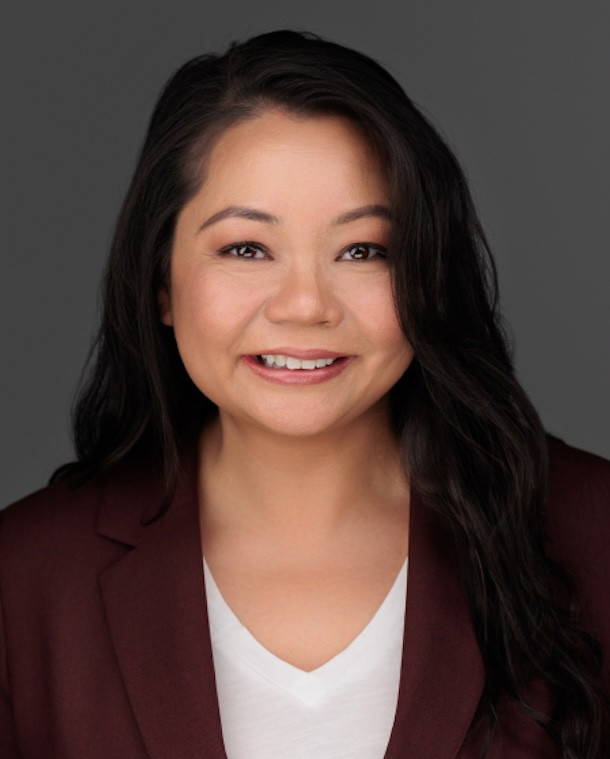
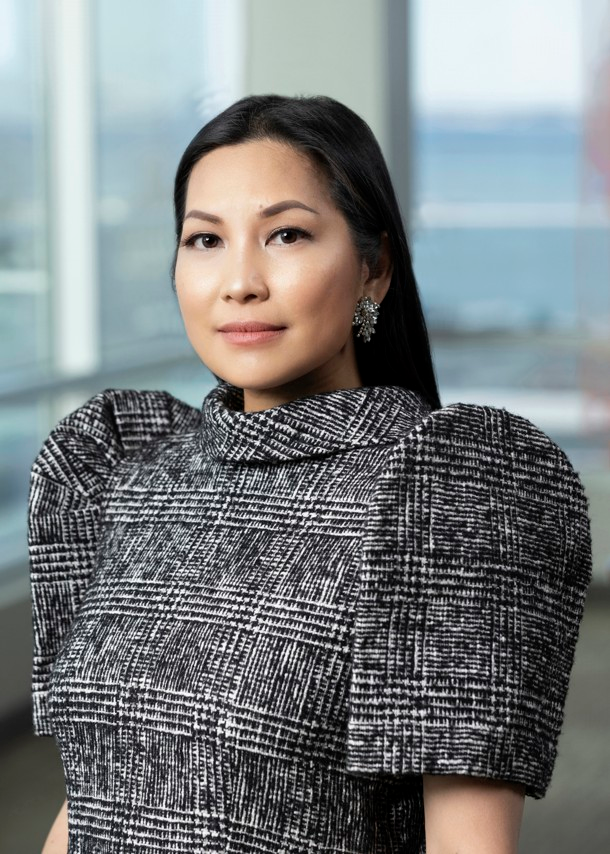
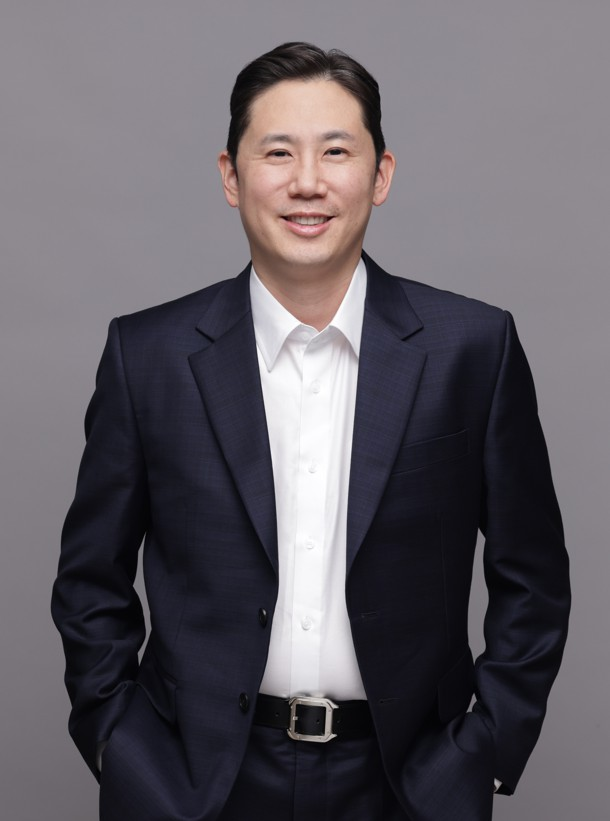
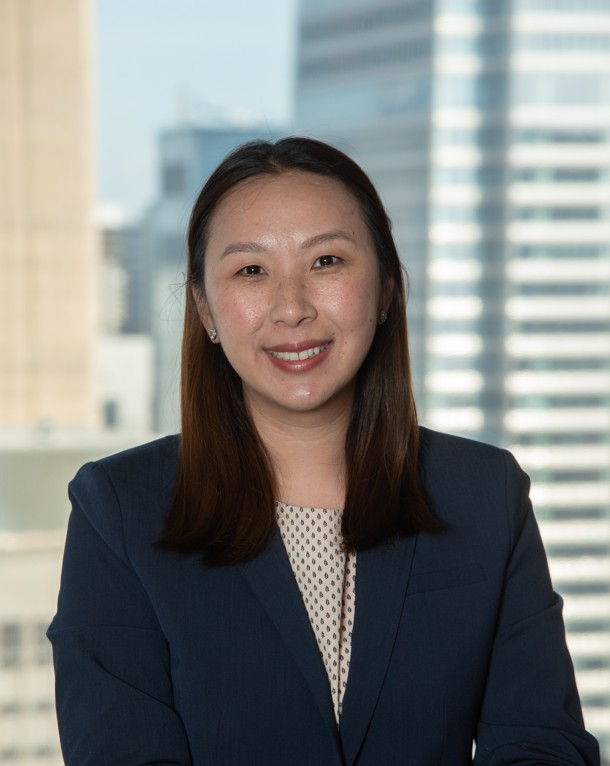
AABANY is proud to congratulate five of its members who were named to this year’s list.
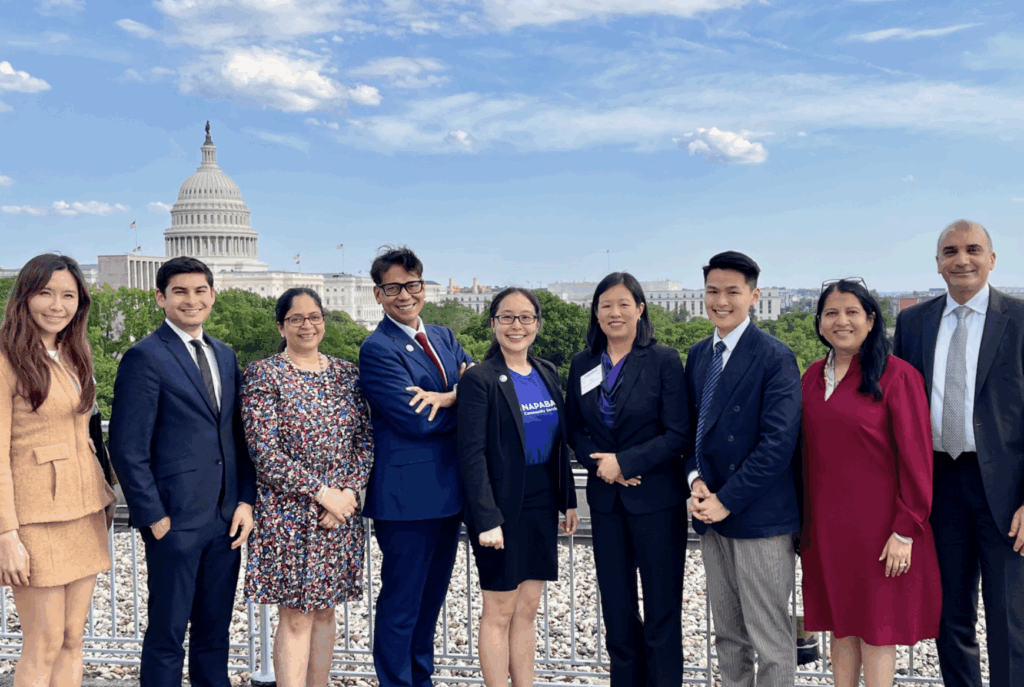
The National Asian Pacific American Bar Association (NAPABA) hosted its annual Lobby Day on May 19-20, 2026, bringing together many affiliate members, including those from the Asian American Bar Association of New York (AABANY) who traveled to Washington, D.C. to participate in this year’s NAPABA Lobby Day. AABANY members joined attorneys, judges, law students, and community leaders from across the country in advocating for policies that advance civil rights, protect due process, and strengthen the rule of law.
Representing AABANY were members of the our Issues Committee, including Co-Chairs Vishal Chander and Rachel Lee, along with other members of the New York delegation: Anushree Bagrodia, Charles Drucker, Linny Ng, Tiffany Ngeo, and Alex Pan. We also thank Glenn Magpantay, Northeast Alternate Regional Governor for NAPABA and AABANY Board Director, and Sapna Palla, NAPABA Board Member and former AABANY President, who joined the New York delegation.
Lobby Day began with a policy training session at Jones Day, where participants received briefings on NAPABA’s legislative priorities and advocacy strategies before meeting with congressional offices on Capitol Hill. The event also included the annual AANHPI Heritage Month Congressional Reception, which brought together NAPABA members, members of Congress, congressional staff, and community leaders from across the nation.
NAPABA’s 2026 Lobby Day focused on three core legislative priorities:
Advancing civil rights through language access protections
Promoting a fair immigration system through access to counsel
Defending the rule of law by supporting judicial security measures
Advancing Civil Rights Through Language Access
The New York delegation urged congressional offices to support passage of theLanguage Access for All Act of 2026 (H.R. 7223), a bill designed to ensure that individuals with limited English proficiency have meaningful access to federally funded services through translation and interpretation assistance. NAPABA emphasized that language access is particularly important for the AANHPI community. Nearly one-third of Asian Americans are considered limited English proficient, making language access a critical civil rights issue.
This legislation would codify protections that were previously provided through Executive Order 13166—“Improving Access to Services for Persons With Limited English Proficiency”—and establish comprehensive language access requirements for federal agencies.
Promoting a Fair Immigration System
The New York delegation also educated Congress on the proposed Access to Counsel Act (H.R. 944/S. 391), which seeks to ensure that individuals with lawful status who are detained for prolonged inspections at ports of entry have meaningful access to legal counsel and family members.
NAPABA highlighted the importance of due process protections, particularly as immigration enforcement actions continue to affect immigrant communities across the country. The delegation stressed that individuals navigating the immigration system should be able to understand the process and access legal representation when their rights are at stake.
The delegation also discussed AABANY’s ongoing efforts to support immigrant communities through legal clinics, educational programming, and pro bono initiatives. (For more information about that, read the blog post about AABANY’s participation in the 2026 AAPI Summit hosted by Senator Gillibrand at the end of April by clicking here.)
Defending the Rule of Law and Judicial Independence
The New York delegation also advocated for passage of the Countering Threats and Attacks on Our Judges Act (H.R. 4602/S. 2379), bipartisan legislation aimed at addressing the increasing threats and acts of violence directed toward members of the judiciary. The bill would establish a State Judicial Threat Intelligence and Resource Center and provide resources to improve judicial security nationwide.
As attorneys, AABANY members emphasized that an independent judiciary is essential to maintaining public confidence in the legal system and preserving the rule of law. NAPABA noted that threats against judges undermine judicial impartiality and threaten the integrity of the courts.
Meetings with Congressional Offices
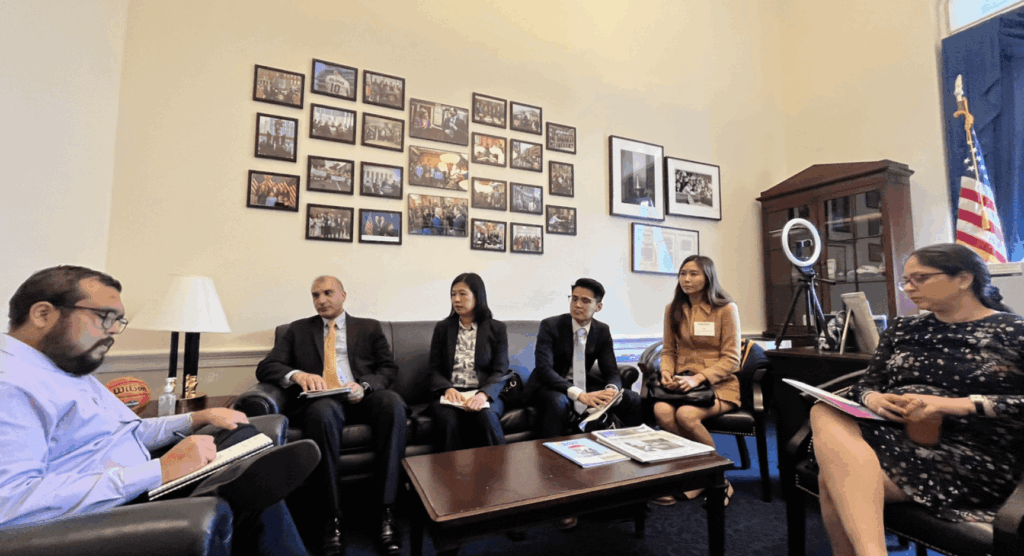
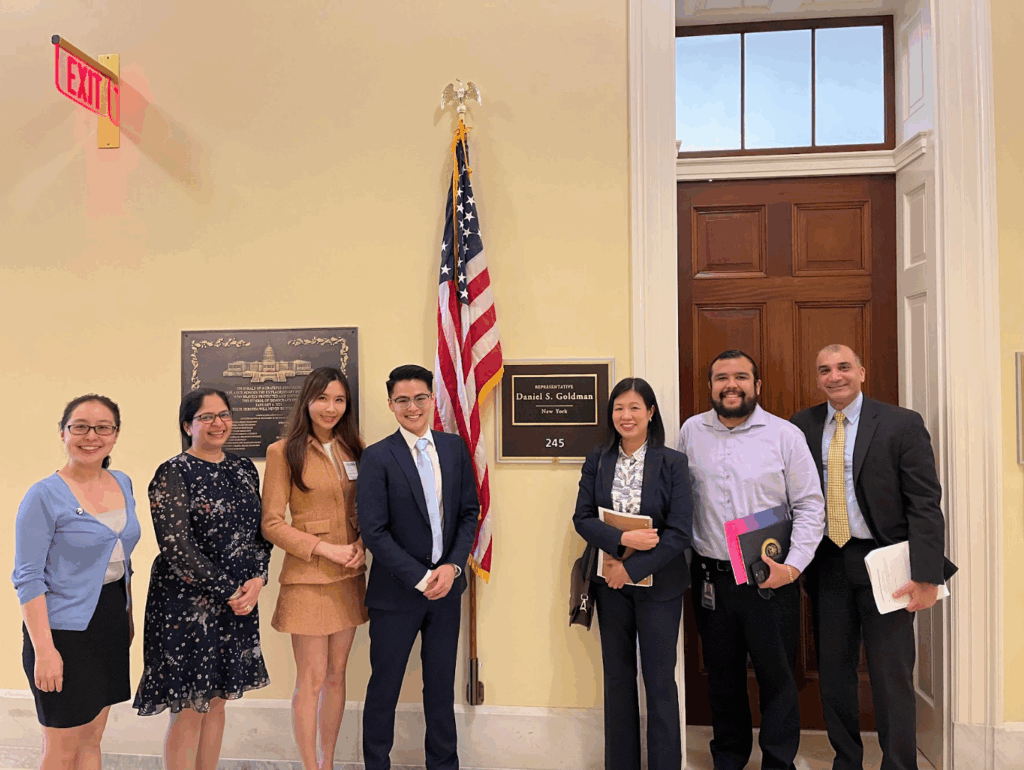
The New York delegation met with staff from several congressional offices, including New York Representatives Jerry Nadler (NY-12), Nydia Velázquez (NY-07), and Dan Goldman (NY-10). Discussions focused on NAPABA’s legislative priorities, including language access, immigration due process, and judicial security.
The delegation also highlighted the work of AABANY and NAPABA in supporting immigrant communities, educating lawful permanent residents about their rights, and providing pro bono legal services and training opportunities for attorneys. Follow-up conversations included discussions regarding immigration policy developments, legal aid initiatives, and opportunities for future collaboration between congressional offices and the AANHPI legal community.
Continuing the Work
Lobby Day provided an important opportunity for AABANY to bring the perspectives of New York’s AANHPI legal community directly to policymakers. Through these conversations, AABANY reinforced the role of attorneys not only as advocates in the courtroom but also as advocates for policies that promote justice, equity, and opportunity.
AABANY thanks NAPABA for organizing another successful Lobby Day and looks forward to continuing its partnership in advancing the interests of the AANHPI community and the legal profession nationwide.
For more information about NAPABA’s legislative priorities, click here.
To learn more about AABANY’s Issues Committee and how you can get involved, go here.
– Written by Vishal Chander, Board Member and Co-Chair of AABANY’s Issues Committee
In celebration of AAPI Heritage Month this year, AABANY is presenting or co-sponsoring several events this month. We hope to see you all there! Follow the links for more details, and please note the registration deadlines. This blog post will be updated throughout the month, as new events get added on, so check back for any updates.
May 2, 2026
AABANY Co-Sponsors: Korean Hat Day at Yankee Stadium
1:35pm – Yankees Stadium, 1 E. 161 E. 161st Street
This event has already occurred.
May 3, 2026
AABANY Sunday Run Day
11:00 am – Start at Bedford Ave (L); End at Canal St. & Chrystie St. This event is preparation for the May 23 AAPI 5k run.
This event has already occurred.
May 5-7, 2026
Asian Comedy Fest 2026: AABANY Discount Available
7pm and 9pm – Sugar Mouse NYC, 47 3rd Avenue, Lower Level, New York, NY 10003
This event has already occurred.
May 6, 2026
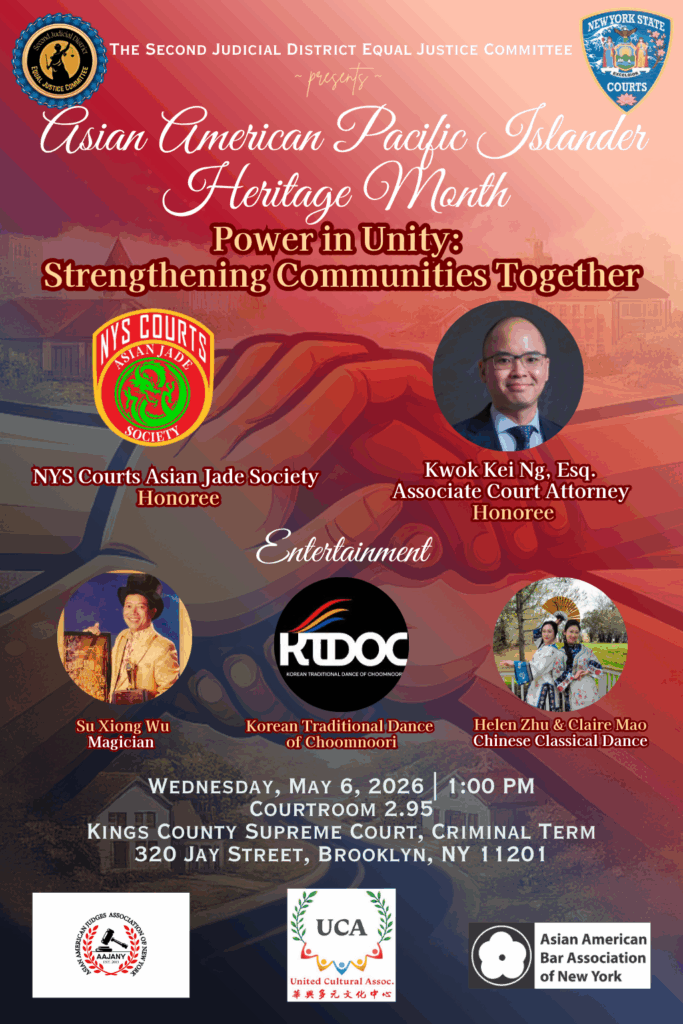
AABANY Co-Sponsors: Power in Unity: Strengthening Communities Together
1:00 pm – Kings County Supreme Court, Criminal Term, Courtroom 2.95, 320 Jay Street, Brooklyn, New York 11201
This event has already occurred.
May 6, 2026
AABANY Co-Sponsors: Beginner’s Mahjong
6:00pm – Sparrow’s Nest Studio, 35 W. 35th Street, 12th Floor, New York, NY 10018
This event has already occurred.
May 6, 2026
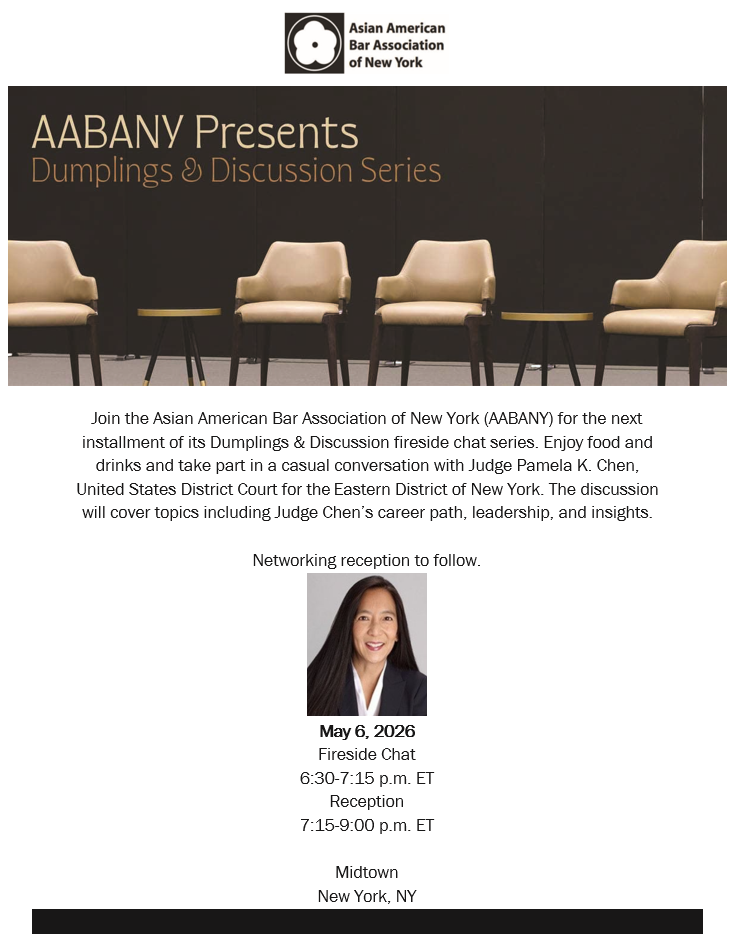
AABANY Presents: Dumplings & Discussion Series Featuring Judge Pamela K. Chen
6:00pm -Midtown location – to be emailed to registrants.
This event has already occurred.
May 9, 2026
AABANY Bi-Monthly Brooklyn Pro Bono Legal Clinic
12:30 pm – 2:30 pm – CPC Brooklyn Community Services, 4101 8th Ave, Brooklyn, New York 11232
This event has already occurred.
May 10, 2026
AABANY Sunday Run Day
11:00 am – Start at Bedford Ave (L); End at Canal St. & Chrystie St. This event is preparation for the May 23 AAPI 5k run.
This event has already occurred.
May 12, 2026
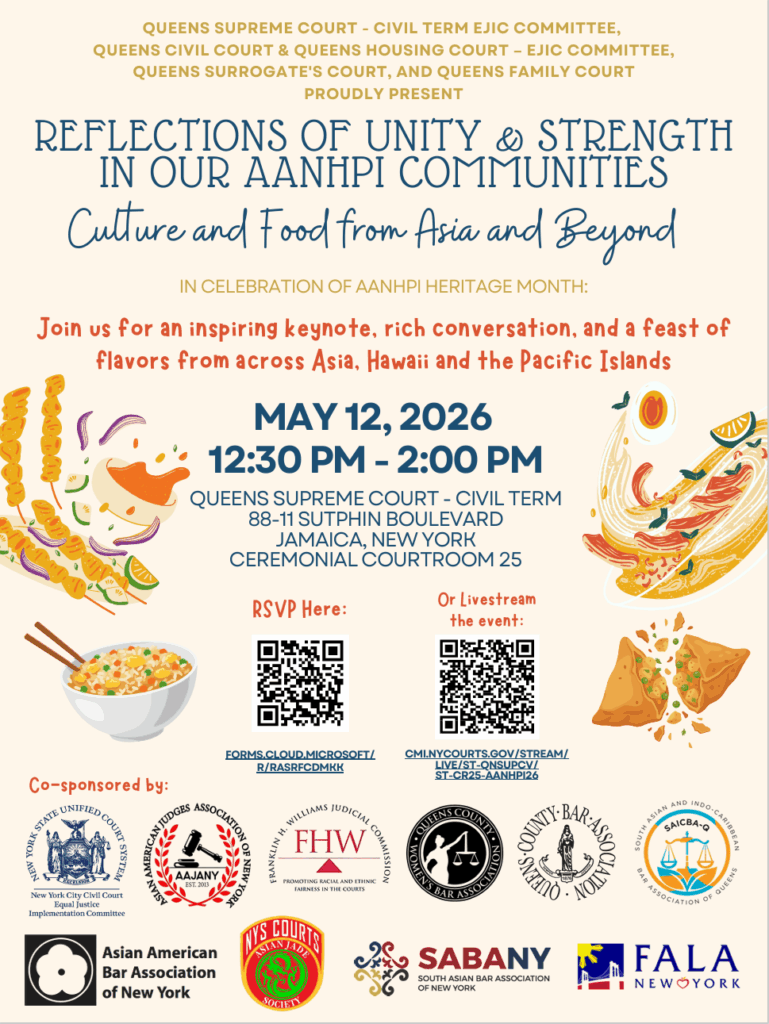
AABANY Co-Sponsors: Reflections of Unity and Strength in our AANHPI Communities
12:30pm – Queens Supreme Court – Civil Term, 88-11 Sutphin Boulevard, Ceremonial Courtroom 25, Jamaica, New York 11435
This event has already occurred.
May 16, 2026
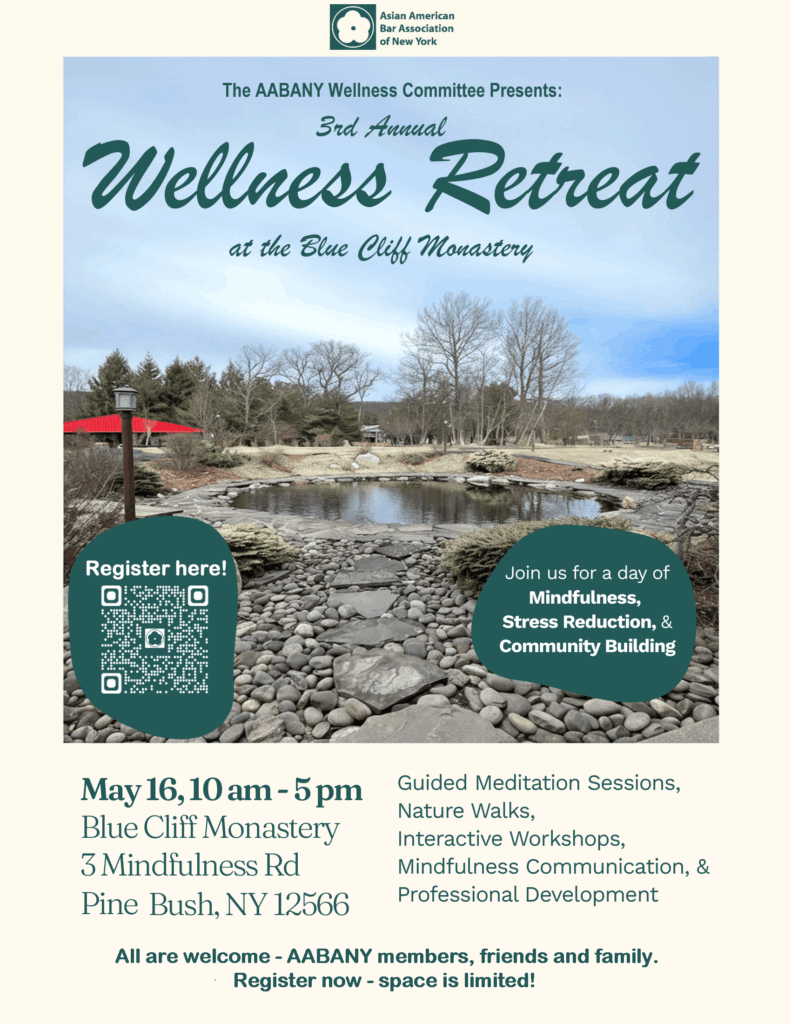
AABANY Presents: 3rd Annual Wellness Retreat
10:00 am – 5:00 pm – Blue Cliff Monastery, 3 Mindfulness Rd, Pine Bush, New York 12566
This event has already occurred.
May 16, 2026
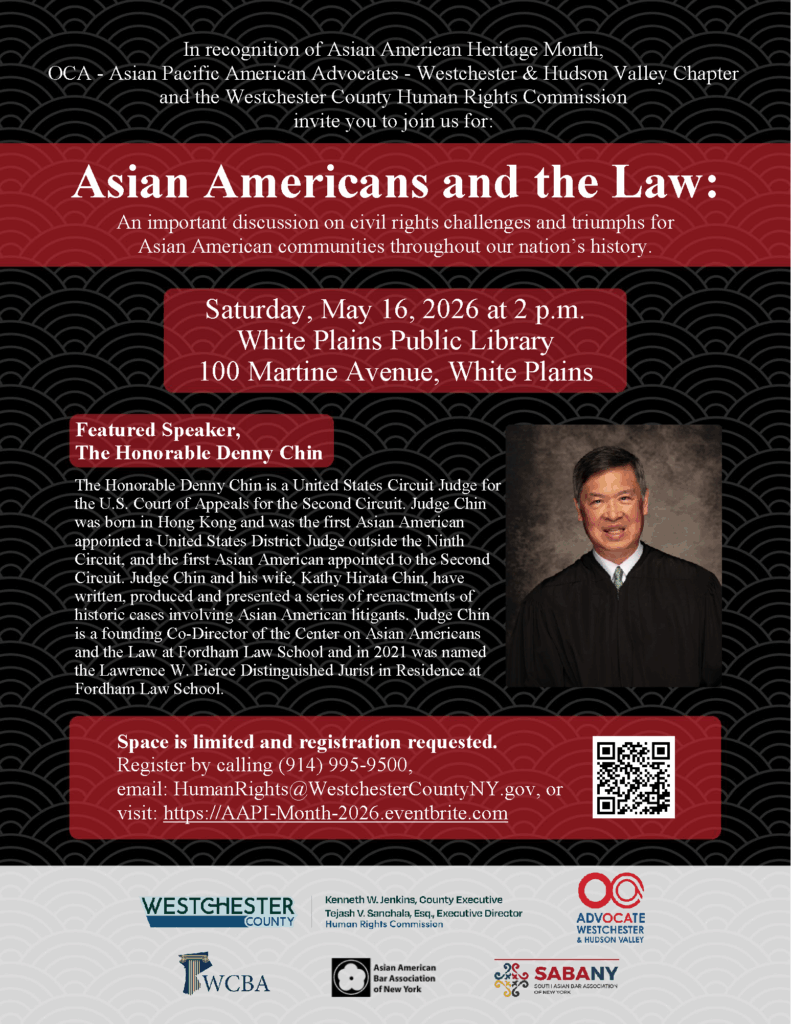
AABANY Co-Sponsors: Asian Americans and the Law, Featuring Hon. Denny Chin
2pm – White Plains Public Library, 100 Martine Avenue, White Plains, New York 10601
On March 23, 2026, City & State New York published its 2026 “Above & Beyond: Women” list, celebrating incredible visionaries, policymakers, and leaders who are dedicated to propelling New York forward by tackling new challenges and enhancing services across the state. Genny Ngai, Co-Chair of the AABANY Litigation Committee and Partner at Morrison Cohen, has been recognized on this distinguished list.
Genny is the advocate people and companies seek out “in their worst moments,” according to City & State. Before joining Morrison Cohen’s white collar defense practice, Genny was a prosecutor in the Eastern District of New York. Her move to private practice was driven by a desire to get ahead of crises before they happen: “I wanted to focus more on how to advise clients proactively to avoid getting into trouble …. There’s ways to help them proactively mitigate risk. I’m all for that.”
Please join AABANY in congratulating Genny on this well-deserved honor. AABANY congratulates all the honorees recognized by City & State. To read the full article, click here.
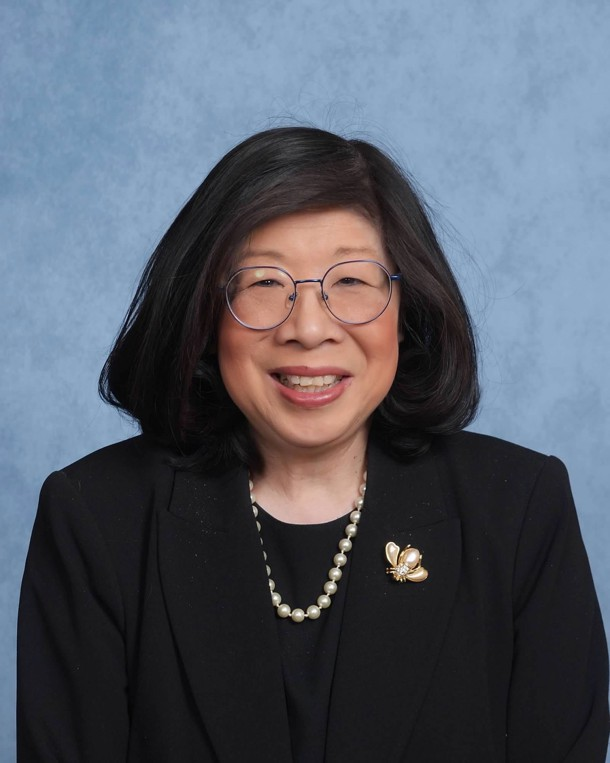
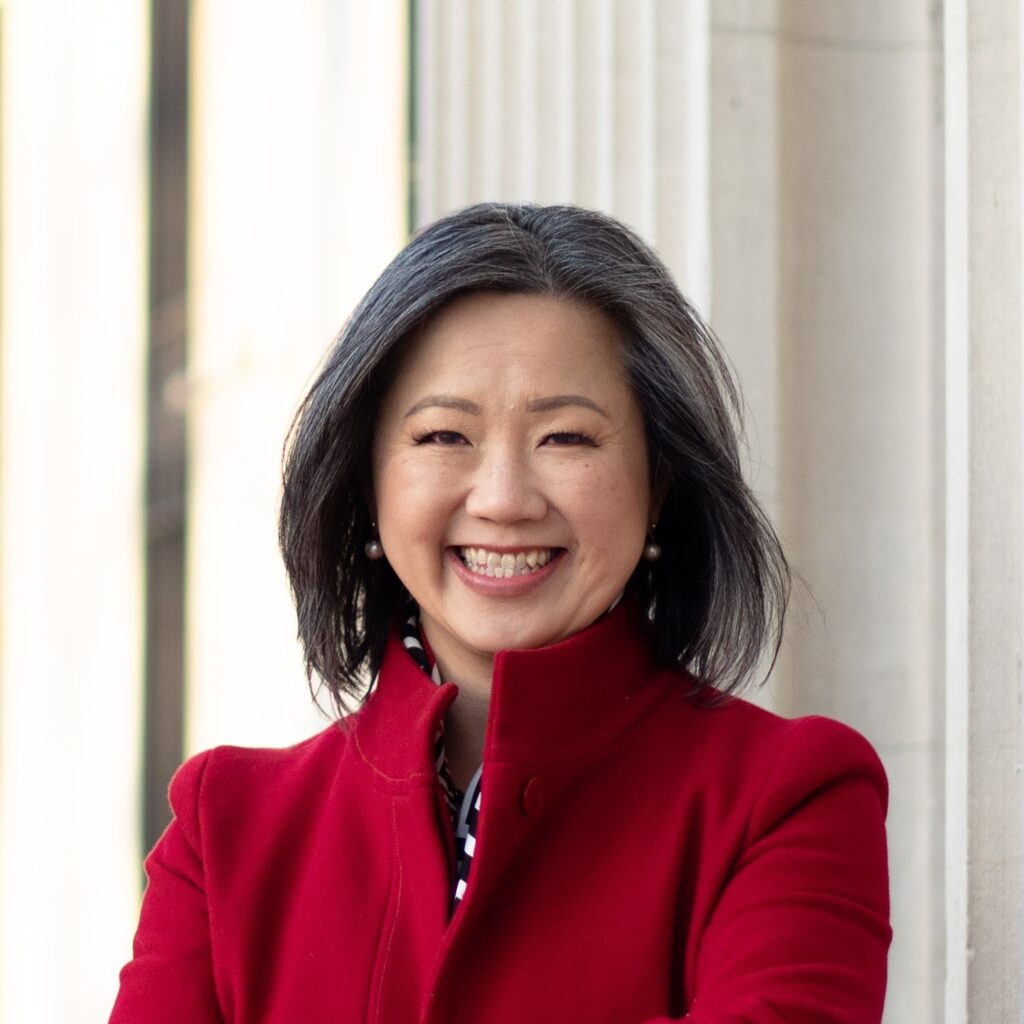
Justice Karen Lin, a longtime member of AABANY and former Co-Chair of the Pro Bono and Community Service Committee (PBCS), has been appointed to the Appellate Term for the Second Department of the New York State Supreme Court. This appointment marks a historic milestone as Justice Lin is the first Asian American woman to serve in this role. As a lifelong public servant and sitting Second Department Justice, she brings decades of experience and a deep commitment to justice to one of the most impactful appellate tribunals for everyday New Yorkers.
Breaking Barriers: The Significance of “the First” Justice Lin’s appointment to the Appellate Term for the Second Department carries historic significance. Yet, for Justice Lin, the meaning of this milestone is inseparable from the community that shaped her.
Born and raised in Queens by her immigrant parents, Justice Lin’s story is rooted in the borough she now serves. At a time when Asian Americans were significantly underrepresented in both civic and professional spaces within Queens County, her early experiences acutely instilled in her a heightened awareness of the importance of being seen and heard. As a child, she recalls helping interpret for her parents who spoke limited English. She also recalls attending school events where she was one of the few Asian American faces in the room. These moments made her realize the significance of representation, or the lack thereof. Coupled with her parents’ tireless work ethic and emphasis on community, these experiences profoundly shaped her sense of justice and responsibility to her community.
Despite Asian Americans comprising more than 27 percent of the population in Queens, they have historically remained underrepresented on the bench. While precise figures vary by dataset, estimates by the Brooklyn Daily Eagle suggest that fewer than 10 percent of judges in Queens County identify as Asian. This number is even lower statewide as according to the New York State Unified Court System’s 2024 Judicial Demographics Report, only about 5 percent of judges statewide identify as Asian. These figures highlight the persistent gap between the Asian American community and their representation within the judiciary.
For Justice Lin, the awareness of this disparity came into sharper focus back in 2022, when she grappled with these demographic realities during her campaign for Queens Civil Court. She recognized both the urgency and the responsibility to step forward.
Now, in 2026, as Justice Lin assumes her role on the Appellate Term, she reflects on both the progress made and the work that remains. While her appointment marks a historic milestone, Justice Lin is candid about what the broader implications of her distinction as “the first” means.
“We shouldn’t still be talking about ‘firsts’ in 2026,” she notes. “It matters to break that ceiling—but it matters even more that we are not the only ones.” Justice Lin maintains that her appointment is part of a larger trajectory which she hopes will continue to open doors for others who will follow and ultimately surpass her.
“I may be the first,” she reflects, “but I certainly do not want to be the last. And I won’t.”
Diversity and Perspective at the Appellate Term In her run for the Queens Civil Court in 2022, Justice Lin noted, “The air in the room changes depending on who is in it.” Now, as Justice Lin assumes her seat at the Appellate Term for the Second Department, she brings her philosophy into a new and vastly different judicial environment.
The nature of judging at the appellate level is necessarily collaborative. Rather than presiding over a single courtroom, justices at the Appellate Term engage in a rigorous discussion of the law. The presence or absence of diverse perspectives can play a significant role in the nature of judicial decision-making.
“The lens through which we interpret the law is shaped by our lived experiences,” Justice Lin explains. “It matters who is in that room.”
The Appellate Term occupies a uniquely consequential position within New York’s judicial system. For many New Yorkers navigating housing disputes, consumer debt matters, and low-level criminal cases arising from the Civil Court and Criminal Court, the Appellate Term often represents the primary avenue for reviewing decisions made in those courts. As such, this court plays a critical role in ensuring public confidence in the fairness and legitimacy of the judicial process and of everyday challenges faced by many families and individuals. Justice Lin approaches this responsibility with a deep awareness of the communities served by the court. As a lifelong Queens native and an experienced legal professional, Justice Lin brings a grounded perspective to the bench and seeks to ensure that the appellate review is conducted with both rigor and awareness.
A Jurist Grounded in Care From civil rights attorney to legislative counsel, from Housing Court Judge to Court Attorney-Referee in Surrogate’s Court, Justice Lin has been guided by a single constant: care.
Justice Lin’s decade as a court attorney referee in Surrogate’s Court, where she handled sensitive guardianship matters, reinforced the centrality of due process, particularly for vulnerable individuals. In those proceedings, she understood the risks of presuming incapacity based solely on diagnosis or circumstance. Instead, she stresses that every individual is entitled to a meaningful hearing where their voice is heard.
This philosophy carried directly into Justice Lin’s work on the trial bench, where she implemented practices designed to make the courtroom more accessible. For example, she required in-person appearances in certain matters involving self-represented litigants, recognizing that virtual proceedings—while efficient—can inadvertently exclude individuals who lack access to technology or familiarity with digital platforms. In-person appearances allowed her to better assess credibility, clarify the relief being sought, provide language support, offer flexible scheduling, promote accessibility for litigants with disabilities, and ensure that litigants could express themselves in their own words. Similarly, her practice of inviting court users to indicate their preferred pronouns reinforces the principle that every individual who enters the courtroom is entitled to be treated with respect.
To illustrate, Justice Lin described a family conflict case she dealt with where a father passed away, leaving his home to only two of his children and excluding the others. Justice Lin guided the family through structured discussion by helping each member articulate concerns and expectations by meeting with them individually. This ultimately fostered a mediated resolution that balanced the legal framework with the opportunity for members of the family to retain some control over their outcome. In the end, the siblings reached an agreement to divide the home equally among all of the children.
“The court cannot advocate,” she notes, “but it can ensure fairness, dignity, and that due process is fully respected.”
A Career Defined by Purpose Long before she entered the legal field, Justice Lin was already cultivating an ethos of advocacy at the University at Buffalo. As an undergraduate, she noticed that Asian American history and experiences were largely absent from the curriculum. Determined to address this gap, she petitioned the history department to introduce a course on Asian American history which had never previously been offered. Simultaneously, she co-founded the University’s Asian American student organization, the Asian American Students Association (AASA) and served as its first president where she organized cultural programming and panel discussions to highlight the contributions of Asian Americans on campus. These initiatives included guest lectures, heritage month celebrations, and workshops that engaged the broader student body in conversations about diversity and inclusion. Reflecting on these formative years of her life, Justice Lin noted, “I wanted students like me to see themselves in the stories being told and to have a community where our voices mattered.”
A couple years later, Justice Lin championed these same values through her leadership with AABANY’s Pro Bono and Community Service Committee (PBCS), where she served as Co-Chair. During the COVID-19 pandemic, when the need for legal services increased significantly, she played an instrumental role in promoting access to legal services by expanding Pro Bono Clinics to underserved communities in Queens. Building on this work, Justice Lin highlights that meaningful legal assistance requires the ability to communicate effectively, especially with individuals who struggle to find services in a language they understand. She speaks of her time with PBCS, describing it as the “best committee ever” and her service as both a “great joy and privilege.” Additionally, she praises AABANY’s Pro Bono Clinics as an invaluable resource for individuals with limited English proficiency.
Ultimately, in each stage of her professional journey, Justice Lin has consistently asked herself: “Where can I be helpful?”
Lifting the Next Generation As a mentor and active participant in programs such as the The Sonia & Celina Sotomayor Judicial Internship Program, Justice Lin is deeply committed to cultivating the leaders of tomorrow. She suggests that a successful legal career rests on a foundation of competence and character. She encourages students and young professionals to strive for mastery in their chosen field. “Be as good at it as you can be,” she advises, because when opportunities arise, “you better be ready to hit the ground running.” Competence, she notes, is central to reputation as it ensures that professionals are prepared to perform effectively in any high-stakes environment.
Justice Lin also stresses that technical skill alone is not enough. Equally important is how one treats others. “Your competence shapes your reputation,” she explains, “but so does how you treat people.” She believes in a universal standard of decency and she encourages individuals from all paths of life to treat everyone—from the janitor to the judge—the way they would want themselves or a loved one treated. She reminds us that “people may forget what you did but they will remember how you made them feel.”
Throughout her career, Justice Lin has also rejected narrow stereotypes of what a lawyer must be. Justice Lin has challenged the notion that success requires aggression. Many assumed she was “too nice” to be an effective lawyer or justice, but she believes there are many ways to practice law successfully without abandoning one’s nature. She encourages young professionals, especially those from underrepresented backgrounds, to embrace their individuality. “What makes us different is really what makes us strong,” she says. Avoiding the temptation to contort oneself to fit an expected mold, she emphasizes that professional growth is most meaningful when it is shared: “It is purposeless to rise alone; we rise together.”
Through her guidance and example, Justice Lin seeks to create spaces where future generations can thrive with confidence and authenticity. Now at the Appellate Term, her role amplifies this impact as she continues to shape the culture of the judiciary itself. Please join AABANY in congratulating Justice Karen Lin on this historic milestone. We look forward to seeing more noteworthy contributions from her public service.
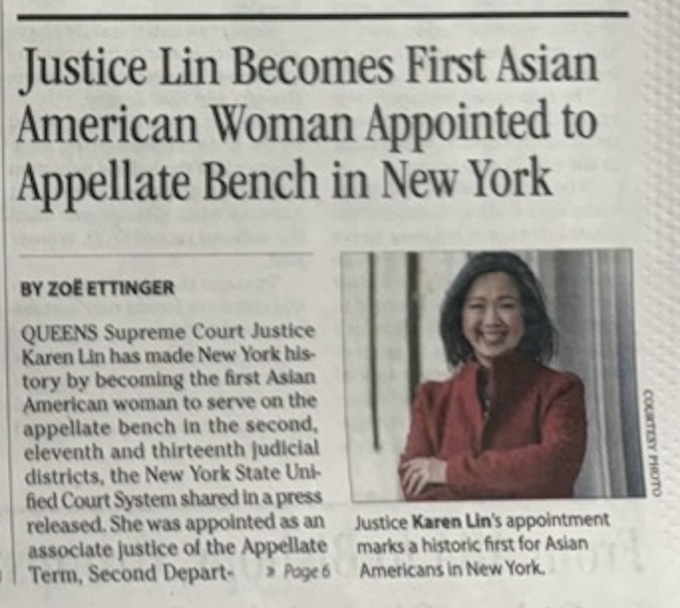
On March 3, 2026, in a front-page article, the New York Law Journal reported on the historic appointment of the Honorable Karen Lin as an Associate Justice of the Appellate Term of the Supreme Court, Second Department. Justice Lin is the first Asian American woman to serve on this appellate bench in the Second, Eleventh, and Thirteenth Judicial Districts, marking an important milestone for New York’s judiciary.
Her appointment represents an important milestone for Asian American representation in New York’s judiciary, where AAPI judges remain underrepresented relative to the communities they serve.
“Justice Lin is a trailblazer and an inspiring role model for Asian Americans,” said Benjamin Hsing, President of the Asian American Bar Association of New York. “It is critical that Asian Americans are properly represented in the New York State judiciary to strengthen public confidence in our courts and to help ensure justice and fairness for Asian American communities across the city and state.”
Justice Lin’s appointment marks an important moment for representation in New York’s courts and reflects her longstanding commitment to public service. Click to view the full article here (subscription required).
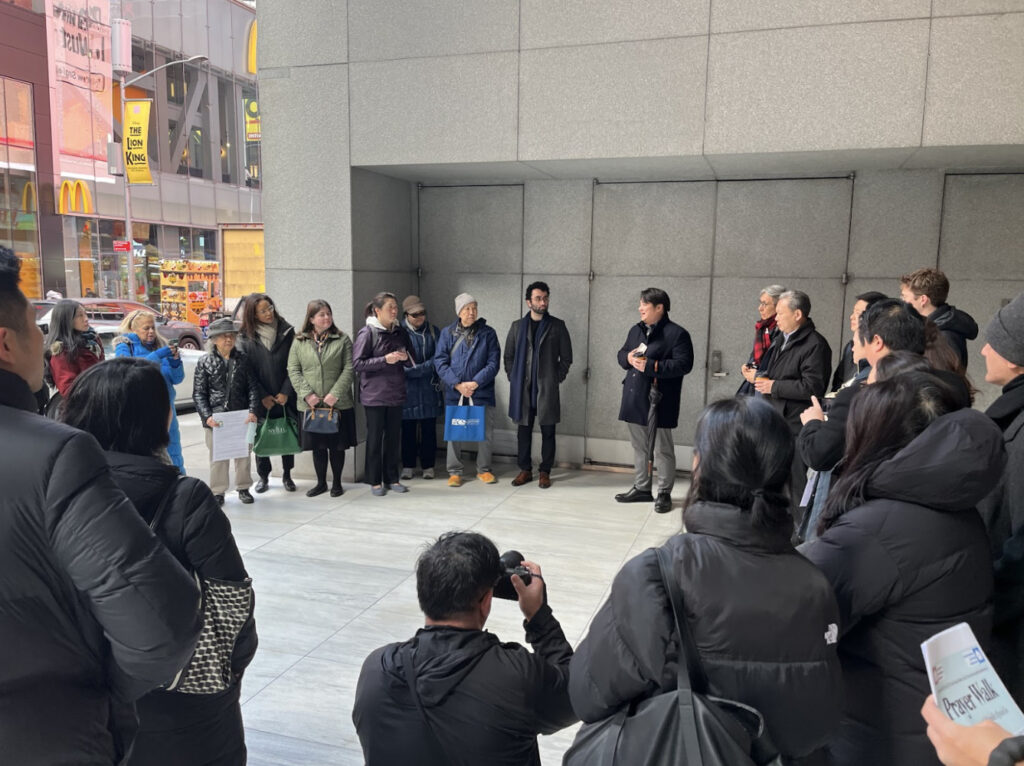
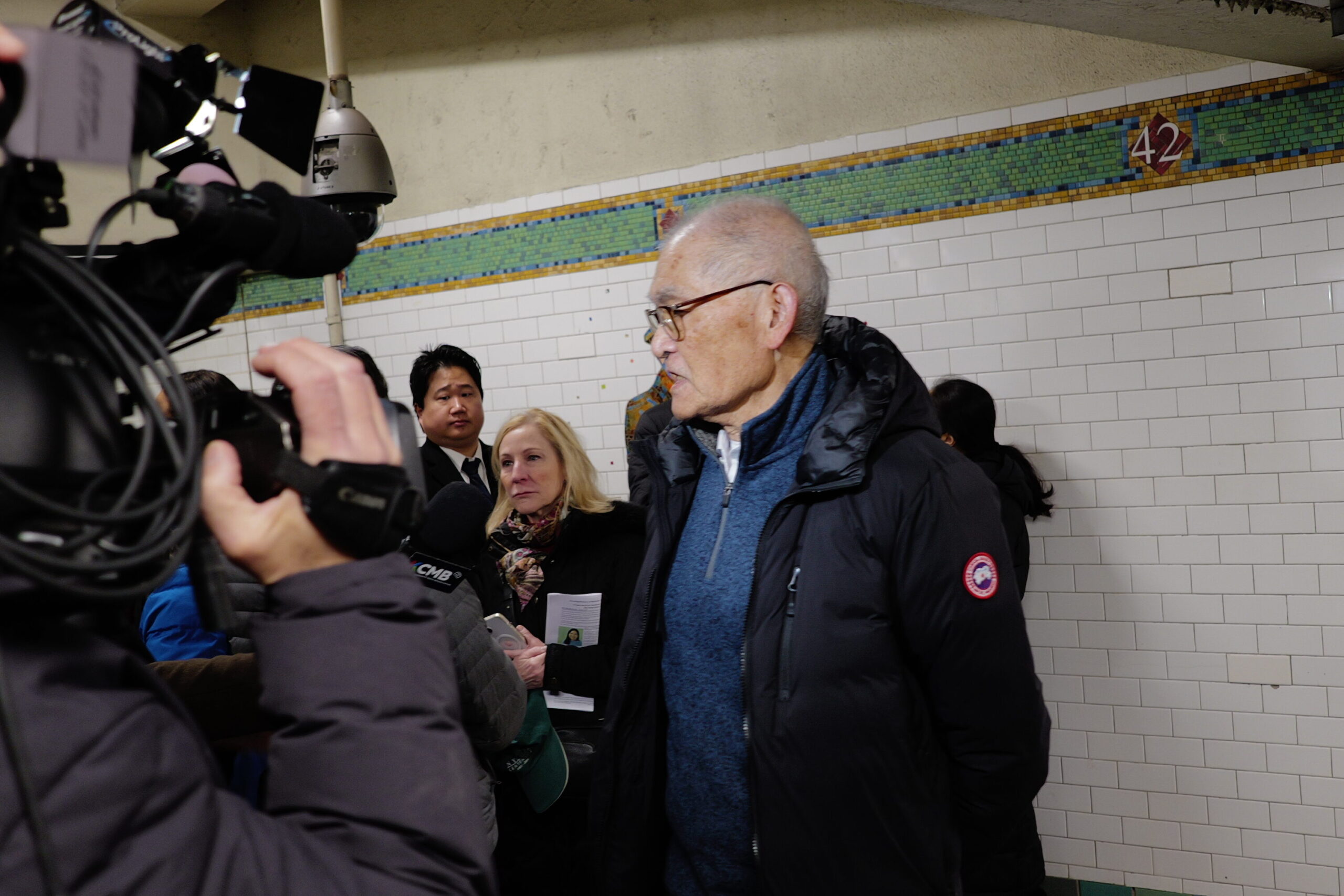
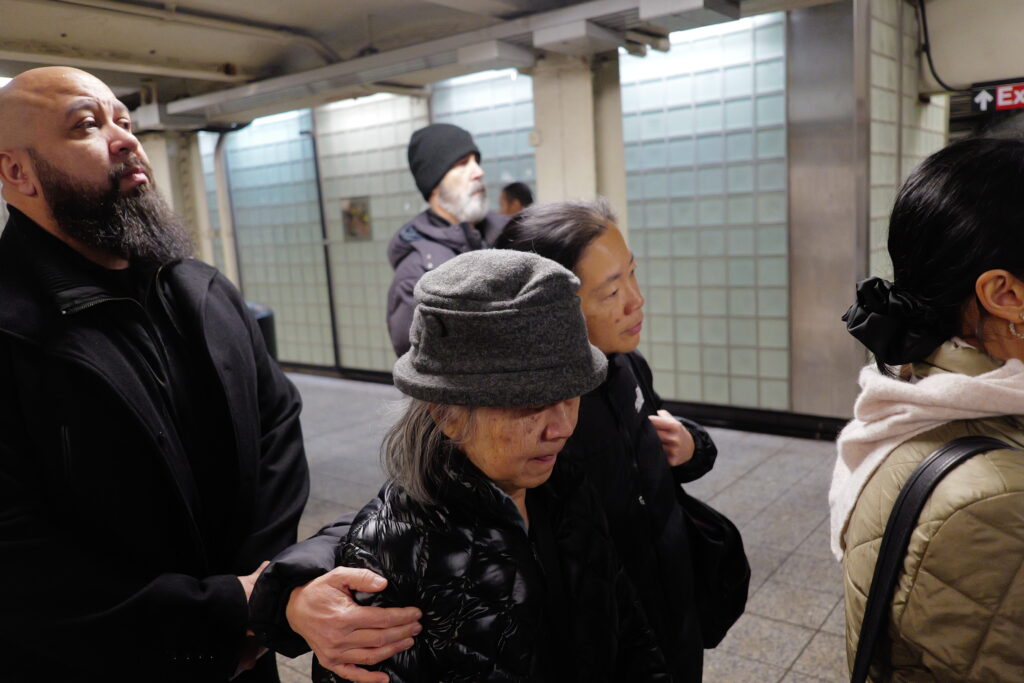
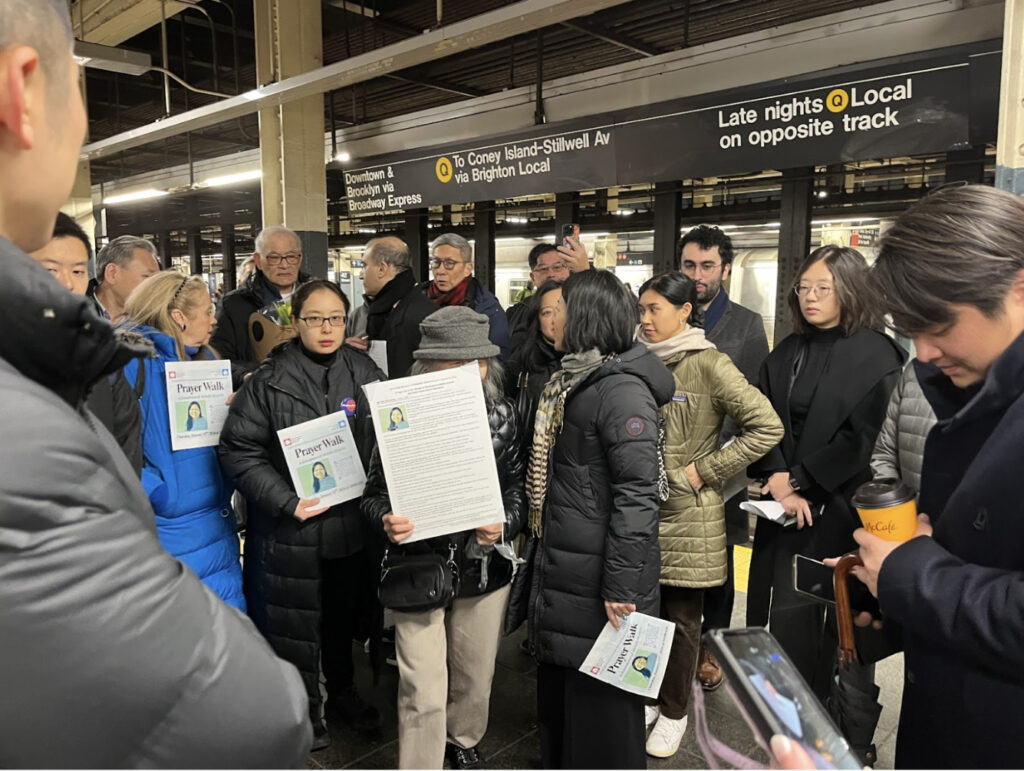
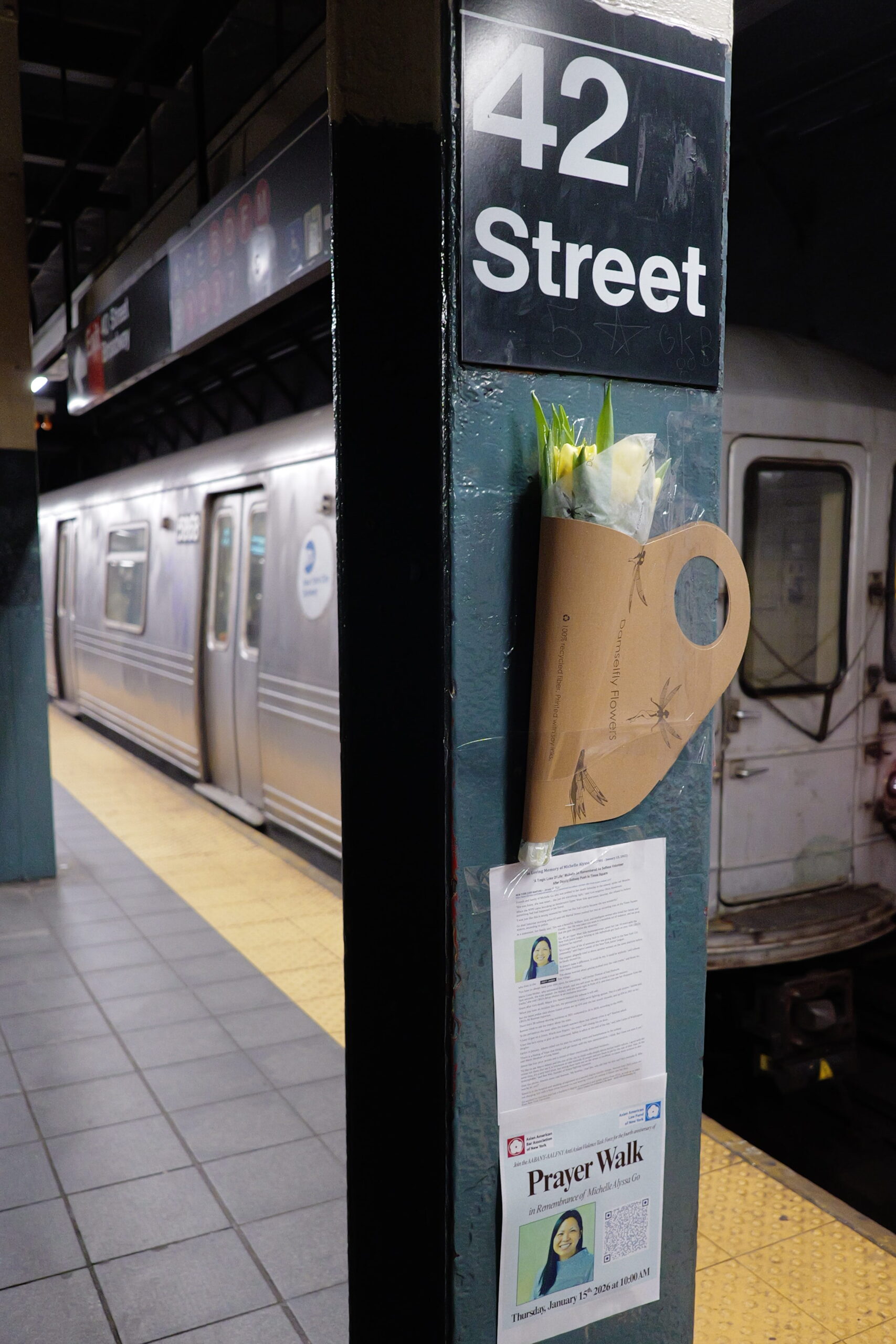
On the morning of Thursday, January 15, 2026, nearly 50 people braved the bone-chilling winds in Times Square to participate in a Prayer Walk commemorating the anniversary of Michelle Alyssa Go’s passing.
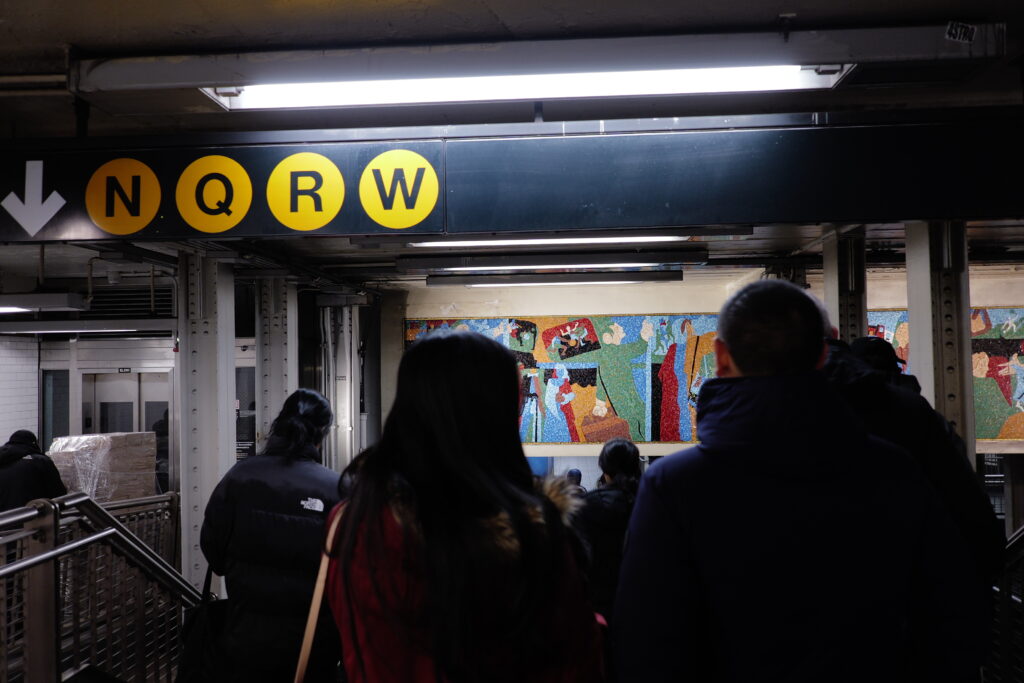
Four years ago, on an early Saturday morning, Michelle was standing near the edge of the downtown R subway platform at Times Square when Martial Simon charged at her and pushed her in front of an oncoming train, leading to her death.
Photo by Wellington Chen
Simon, then a 61-year-old homeless man with a history of schizophrenia and prior arrests, was later charged with second-degree murder in connection with Michelle’s death. This act of violence is a tragic example of the surge in anti-Asian hate incidents occurring in America during the COVID-19 pandemic. As noted by the Pew Research Center in 2023, anti-Asian sentiment rose following inflammatory political rhetoric, disinformation, and online extremism, specifically public officials’ use of terms like “Chinese Virus.” Though Asian Americans Advancing Justice (AAAJ) reported a slight decline in 2025 from 2023, anti-Asian hate crimes were still nearly triple pre-pandemic levels. California, New Jersey, New York, Washington, and Massachusetts reported the highest frequency.
Photo by Wellington Chen
During the Prayer Walk, Reverend Cristobal Tong led the group to four specific stops, following the routine route Michelle took that day. Justin Go, Michelle’s father, shared highlights of her tragically short life with the mourners. Born in Berkeley and raised in Fremont, California, Michelle earned a degree in economics from UCLA in 2002, an MBA from NYU in 2010, and later worked at Deloitte in mergers and acquisitions. Michelle was an avid traveler who had explored the Caribbean as a child and frequently traveled to visit friends. Justin highlighted Michelle’s selfless nature, noting that she spent her free time volunteering to help homeless people and assist low-income New Yorkers through the New York Junior League. Despite his grief, Justin emphasized the importance of celebrating Michelle’s life and encouraged loved ones to let their suffering be temporary, as Michelle would have wanted them to continue finding joy in life.
Photo by Wellington Chen
The Prayer Walk drew participation from a broad range of community figures and prominent Asian American New Yorkers. Notable attendees included attorney and activist Rockwell ‘Rocky’ Chin and retired U.S. Magistrate Judge Marilyn Go, both of whom are Co-Founders of AABANY. Additionally, Rachel Lee, President of Stand with Asian Americans and Co-Chair of AABANY’s Issues Committee, played a key role in organizing the walk.
I asked Elaine Chiu, a professor at St. John’s University School of Law, who attended the Prayer Walk, about the justice that may or may not be served for the Go family. Professor Chiu, who had previously chaired the Anti-Asian Violence Task Force, discussed the systemic failures surrounding this legal case. She emphasized that lawyers need to recognize that the justice system was not designed to effectively prosecute or assess individuals with severe and fluctuating mental instability. Furthermore, she lamented that the system is currently unequipped to provide defendant Martial Simon with adequate mental health care or to offer the Go family the justice they deserve.
Simon was initially deemed mentally unfit for trial and held at Kirby Forensic Psychiatric Center. After treatment, he passed a mental health evaluation in April 2024 but stopped taking his medication upon being transferred to Rikers Island. His disruptive behavior during a court appearance on April 30 resulted in his return to Kirby.
In response to systemic mental health issues, Governor Kathy Hochul signed legislation on May 9, 2025, allocating over $196 million to improve statewide mental health care, including $160 million for 100 new forensic inpatient psychiatric beds in New York City, and strengthening involuntary commitment laws and Kendra’s Law, which allows judges to mandate Assisted Outpatient Treatment (AOT) for individuals with severe mental illness who cannot safely live in the community without supervision. This law ultimately aims to prevent dangerous relapses while protecting both the public and the patient.
Photo by Wellington Chen
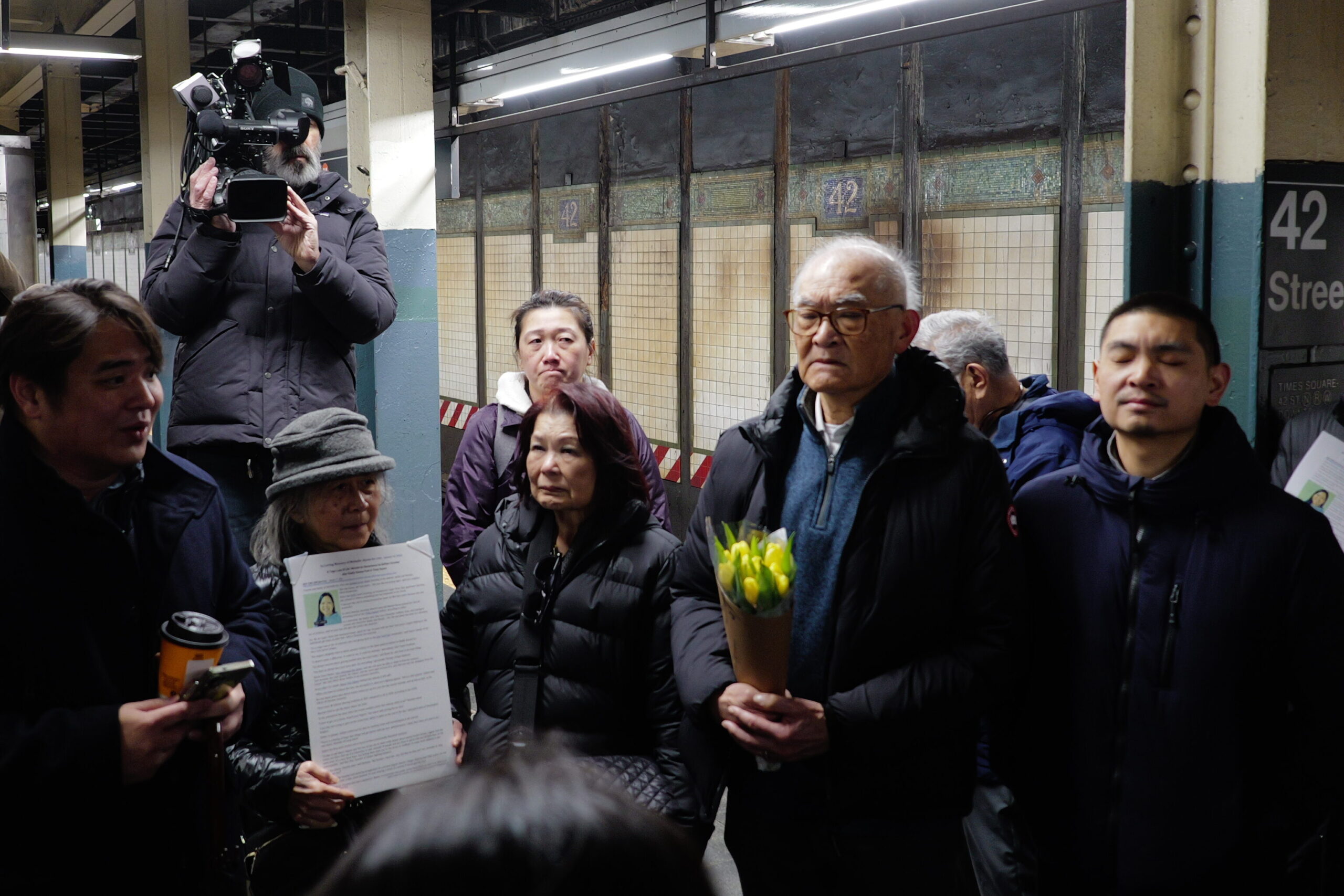
The Prayer Walk concluded at the R Times Square subway station, where the group stood on the platform to pray near the site where Michelle was murdered four years ago. Michelle was only 40 at the time of her death, and attendees who knew her remembered her as a bright and kind individual. Her death continues to fuel concerns regarding anti-Asian violence and the “revolving door” of psychiatric institutionalization. While the prosecution remains determined to bring Martial Simon to trial, the community continues to pray that lasting justice will finally be achieved.
Photo by Wellington Chen
The Prayer Walk was organized by AABANY’s Anti-Asian Violence Task Force (AAVTF), established in response to the surge in anti-Asian hate during COVID-19. The Task Force, at its formation five years ago, included leadership from AABANY’s Issues, Pro Bono and Community Service, Prosecutors, Student Outreach, Legal Referral and Information Service, and Academic Committees. Partnering with AABANY’s affiliate, the Asian American Law Fund of New York (AALFNY), the AAVTF launched the Turning the Tide (T3) Project, a comprehensive initiative focused on education, communication, advocacy, and research. After releasing two reports, the AAVTF produced a documentary, “Voices Against Anti-Asian Hate,” which humanized victims’ and survivors’ experiences and was nominated for best short documentary at the New York Independent Art Film Fest. Throughout 2025, the film was screened nineteen times for various groups. A notable screening at the Asia Society featured a moving panel with Justin Go, Michelle Go’s father, and Sungkon Lee, Christina Yuna Lee’s father.
To view more photos from the Prayer Walk, click this link to the photo album. To learn more about AAVTF, please email [email protected].