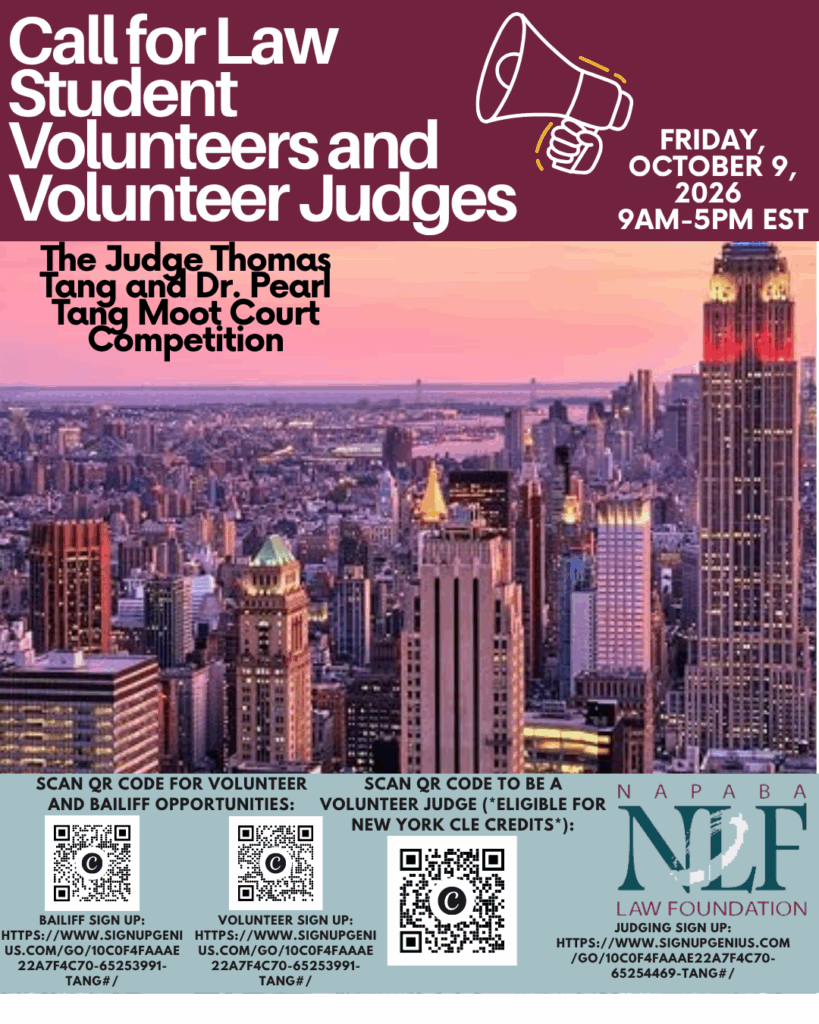
The NAPABA Law Foundation (NLF) is calling for volunteers for its annual Judge Thomas Tang and Dr. Pearl Tang Moot Court (TTMC) Competition. This competition was founded in 1993 and is named in honor of the late Honorable Thomas Tang, who served on the U.S. Court of Appeals for the Ninth Circuit for more than eighteen years. In honor of Judge Tang and his wife Dr. Pearl Tang, this appellate advocacy competition aims to help law students develop advocacy skills and to foster legal talent of the future.
The in-person regional round will take place at the U.S. Court of International Trade in New York City on October 9, 2026. The online regional round will take place on October 17, 2026. Top teams from both regional rounds will advance to the National Competition, held at the NAPABA Convention in Los Angeles, CA, on November 13-14, 2026.
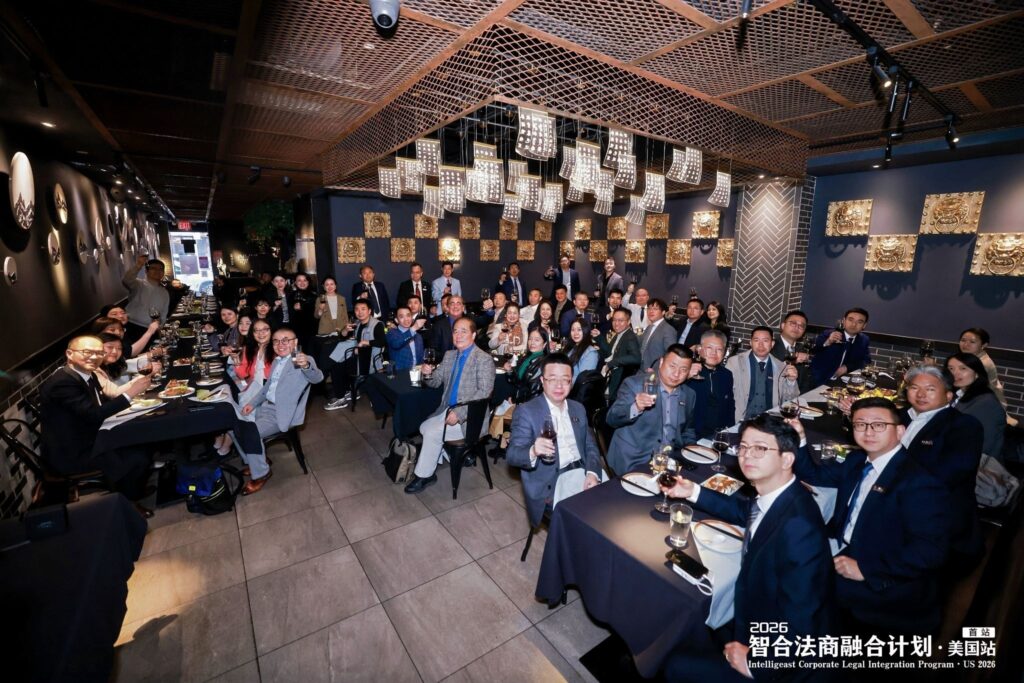
On April 29, 2026, AABANY’s Asia Practice Committee successfully hosted the U.S.–China Legal Elite Dialogue Forum & Dinner in New York City, bringing together approximately 75 attorneys, legal professionals, and business leaders for an afternoon of insightful discussion and cross-border engagement.
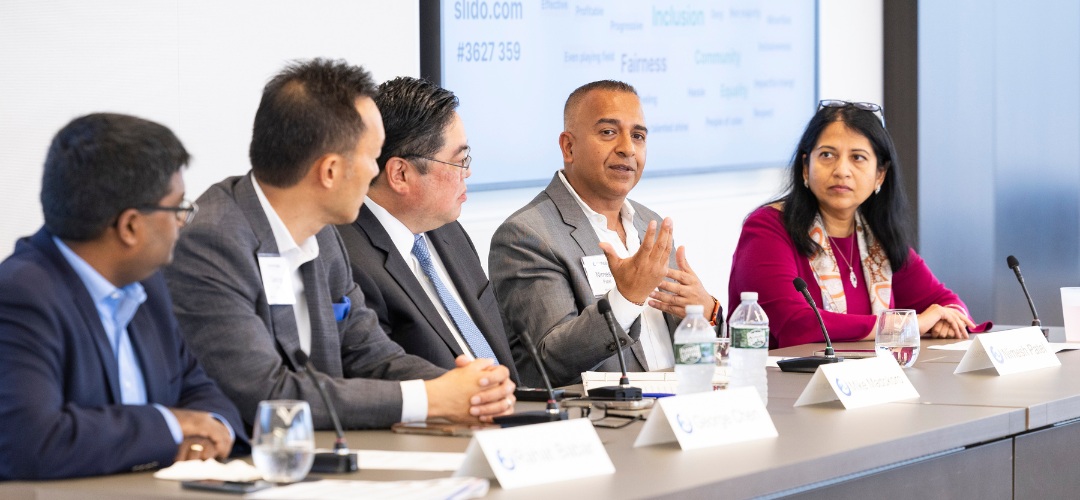
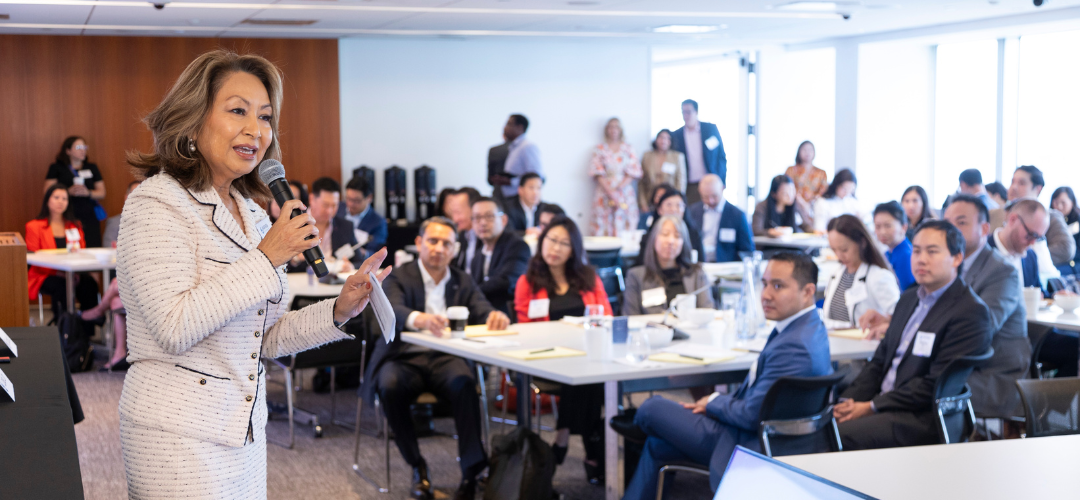
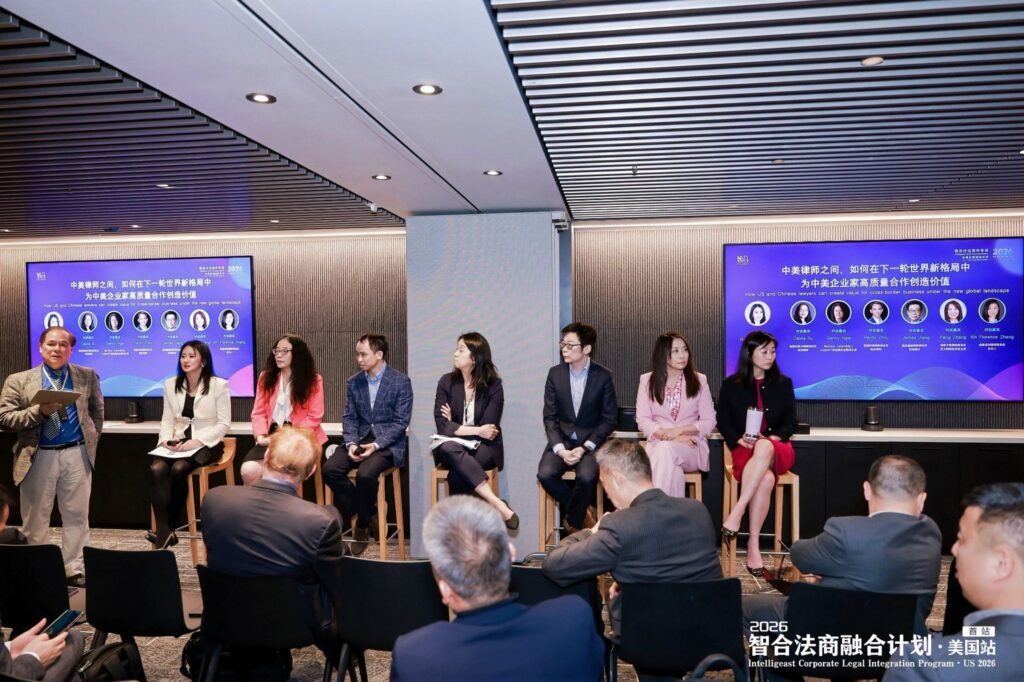
Held at Club 135 by Industrious, the forum convened leading practitioners across the U.S. and China to examine the evolving legal and business landscape shaping cross-border transactions and disputes. The program featured keynote presentations and a dynamic panel discussion focused on the theme: “How U.S. and Chinese lawyers can create value for cross-border business under the new global landscape.”
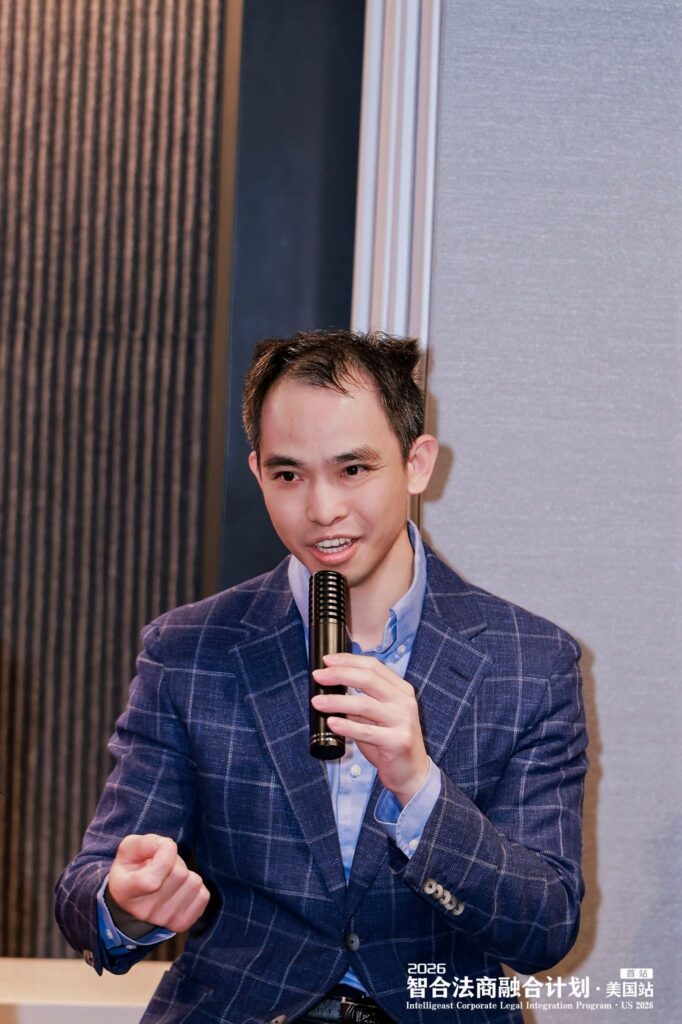
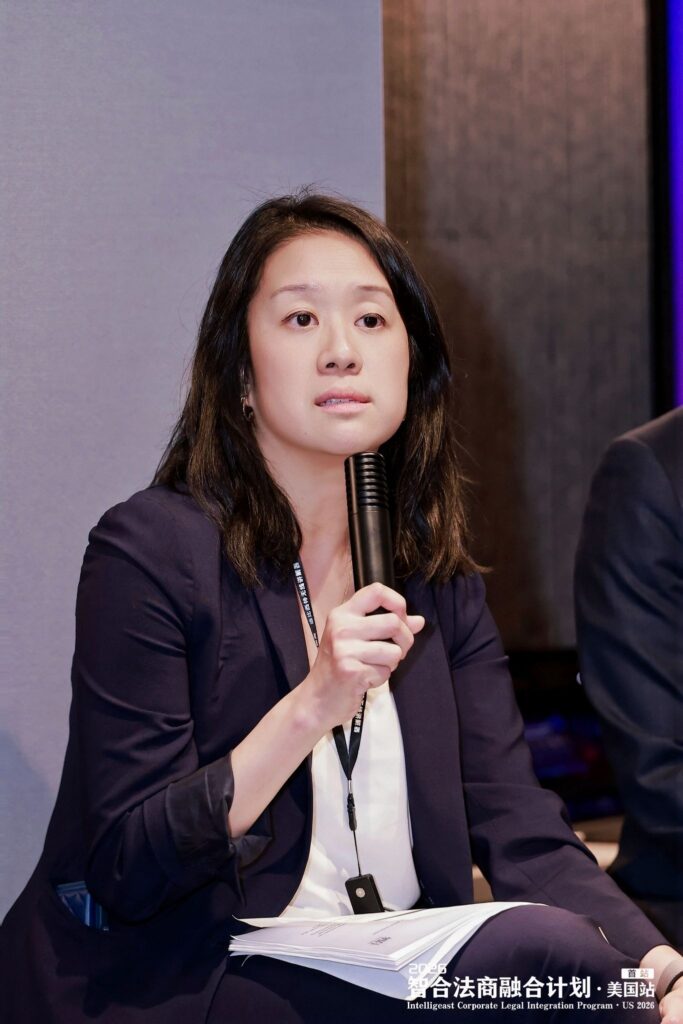
The panel brought together an accomplished group of practitioners, including Hardy Zhou, Tax Attorney at Cooley LLP and Co-Chair of AABANY’s Asia Practice Committee, and Genny Ngai, Partner at Morrison Cohen LLP and Co-Chair of AABANY’s Litigation Committee. Moderated by Haiyan Tang, Managing Partner at Quinn Emanuel Shanghai, the discussion explored the increasing complexity of cross-border legal work, including heightened regulatory requirements, shifting investment trends, and the need for closer collaboration between U.S. and Chinese counsel.
Panelists shared practical perspectives on how lawyers can deliver value in this environment—ranging from structuring transactions and managing risk to navigating disputes and aligning multi-jurisdictional strategies.
The forum also featured keynote remarks from Yang Chen, the Executive Director of AABANY and Chris M. Kwok, Mediator at JAMS and Co-Chair of AABANY’s Alternative Dispute Resolution Committee, and other distinguished speakers across corporate, litigation, and dispute resolution practices, providing attendees with a well-rounded view of current developments in U.S.–China legal relations.
Following the formal program, participants continued their conversations during a networking reception and dinner, fostering meaningful connections and further strengthening the AABANY community.
AABANY extends its sincere thanks to all speakers, organizers, and attendees for contributing to the success of this event. The Asia Practice Committee looks forward to continuing to facilitate dialogue and collaboration among legal professionals engaged in cross-border practice.
-Written by Hardy Zhou, Co-Chair, AABANY’s Asia Practice Committee
TTMC is an appellate advocacy competition sponsored annually by the NAPABA Law Foundation. Its purpose is to help law students develop advocacy skills and to foster legal talents of the future.
Look out for these dates, and consider signing up to judge as many rounds as you can this year. Sign-up links will be released soon.
Friday, October 9, 2026 – Regional Competition IN PERSON in NEW YORK CITY – At the U.S. Court of International Trade (all day competitions) – Students from across the country will compete in person in NYC
Saturday, October 17, 2026 – Regional Competition via ZOOM – Students from across the country will compete online
Friday, November 13, 2026 – National Competitions in person in Los Angeles – Winners of regional competitions will compete all day in LA at the NAPABA Convention
Saturday, November 14, 2026 – National Semi-Finals and Finals in person in Los Angeles, – Followed by an Awards Reception on Saturday evening November 14, 2026
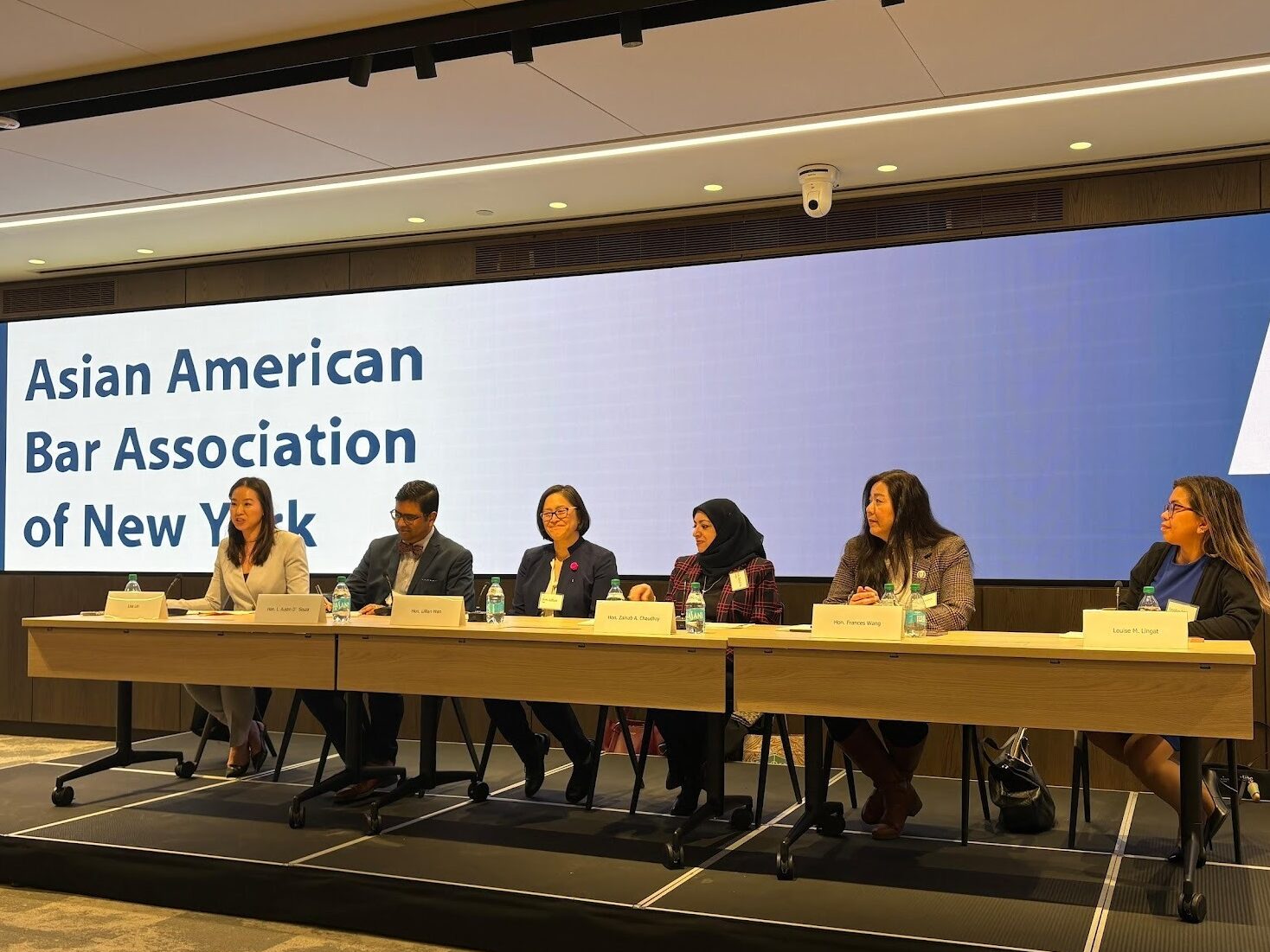
On Thursday, April 2, 2026, AABANY’s Student Outreach Committee and Judiciary Committee co-hosted a panel titled: Careers in the State Judiciary at King & Spalding. At the panel discussion, attendees heard from the following experienced and accomplished panelists within the state judiciary:
● Honorable Lillian Wan – Associate Justice, New York State Appellate Division, Second Department ● Honorable Frances Wang – Justice, New York State Supreme Court, Queens County, Criminal Term ● Honorable Zainab A. Chaudhry – Judge, New York State Court of Claims ● Honorable L. Austin D’Souza – Supervising Judge, New York City Civil Court, New York County ● Louise M. Lingat – Court Attorney to the Hon. Adetokunbo O. Fasanya, Judge of the Family Court, Queens County
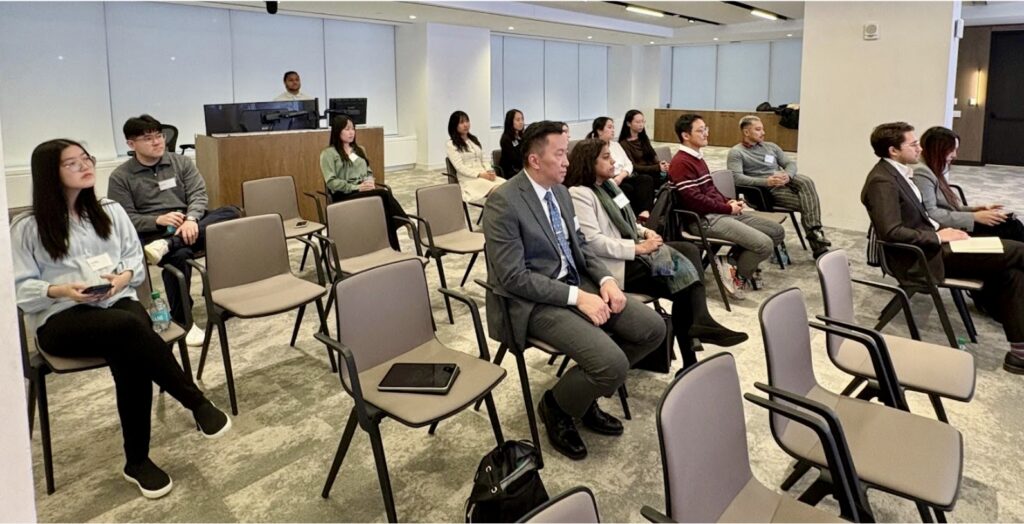
The discussion was moderated by Lisa Lin, Principal Law Clerk to Acting Justice Joanne Watters (Queens Supreme Court, Civil Term). Approximately 20 attendees gathered in King & Spalding’s conference space to engage with the panel.
The discussion opened with each panelist sharing their journey to the judiciary. Several panelists reflected on how the mentorship of judges they once served under as law clerks helped guide them toward this path. Panelists also spoke candidly about the limited Asian American representation in the judiciary earlier in their careers, noting that becoming a judge had not initially felt attainable without the support and encouragement of their mentors.
As trailblazers, these panelists help pave the way for future Asian Americans to pursue careers in the state judiciary. Their presence in the judiciary reflects the diversity of the communities they serve and helps expand what future generations of Asian American attorneys see as possible. Panelists shared that even the simple act of appearing before a judge who shares one’s background can be meaningful for community members.
The discussion also included practical guidance for aspiring attorneys. Panelists stressed to the audience the importance of building strong professional relationships, maintaining a solid reputation, and mastering court rules and procedures. They also emphasized attention to detail, particularly careful proofreading, and cautioned against taking shortcuts in legal practice.
The program concluded with an engaging Q&A session, during which attendees asked thoughtful questions about pathways into the judiciary and opportunities for involvement in the legal community. Following the panel, attendees and speakers continued conversations over refreshments.
Over the course of two days – in-person on October 17, and over Zoom on October 18 – law students from across the country participated in the 2025 Thomas Tang Moot Court Competition (TTMC). A total of 28 teams from 11 states competed in three regional competitions, showcasing exceptional advocacy, composure, and legal reasoning. To make these competitions possible, 78 members of the bench and bar marked a total of 133 score sheets across 12 rounds.
Background
The Thomas Tang Moot Court Competition was named in honor of Judge Thomas Tang of the U.S. Court of Appeals for the Ninth Circuit and Dr. Pearl Tang. The competition provides law students with a platform to hone their advocacy skills while engaging with the Asian Pacific American legal community. The competition was sponsored by the NAPABA Law Foundation and NAPABA Judicial Council, and remains one of NAPABA’s signature programs for fostering mentorship, excellence, and representation among the next generation of advocates.
AABANY’s Contributions
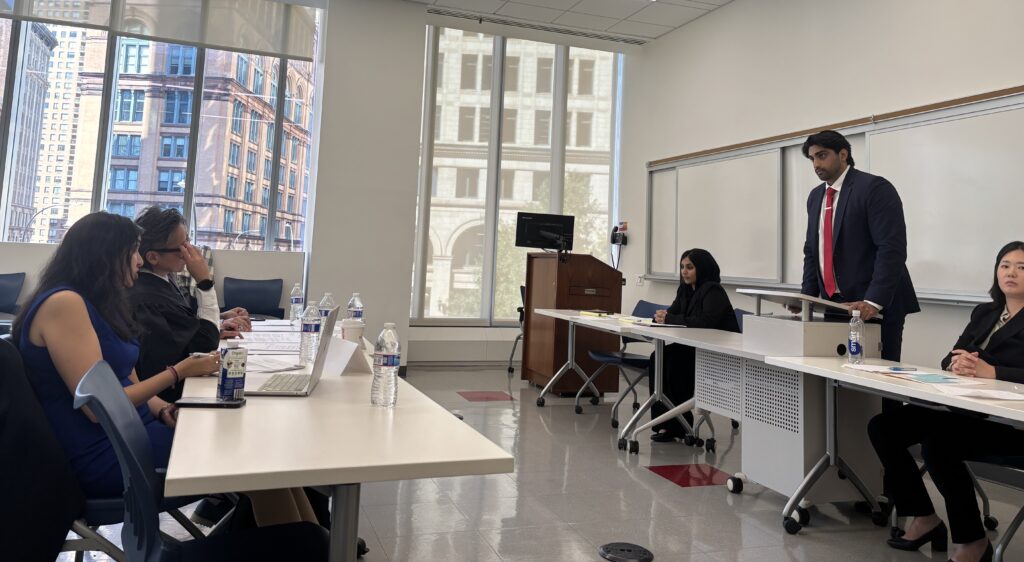
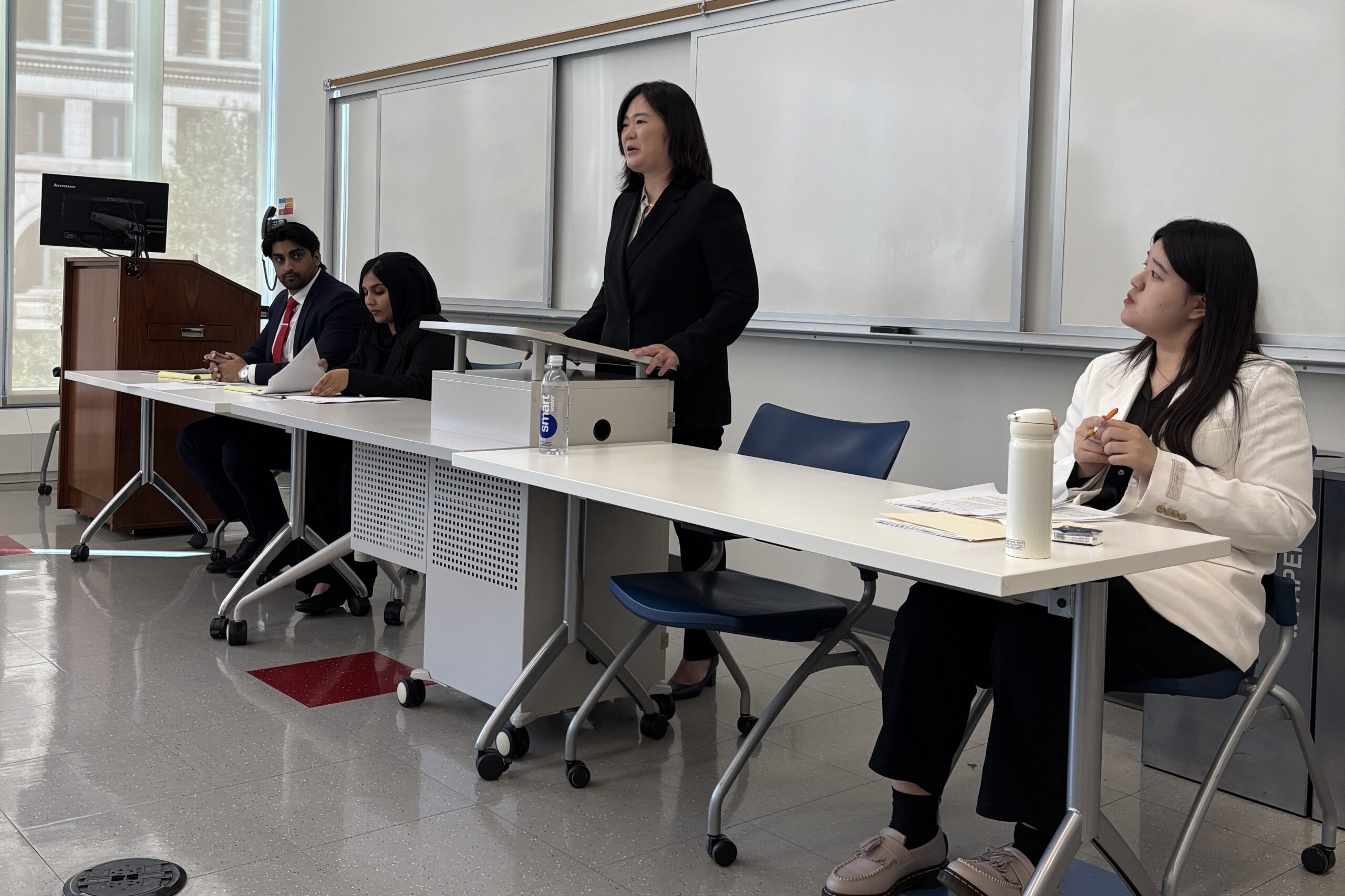
AABANY is proud to share that many of our members volunteered as judges and bailiffs for the Regional, held on October 17, 2025 at the St. John’s University campus in New York City. Our members generously devoted their time and mentorship to the aspiring attorneys, providing detailed feedback to the law students, asking provoking and critical questions about the case.
The volunteer judges included federal and state judges, as well as seasoned litigators and practitioners. They offered meaningful advice in vital areas such as argument construction, speaking, composure, and presentation. Many students shared that the feedback and support they received from practitioners were among the most meaningful parts of their competition experience.
AABANY also co-sponsored the luncheon with the law firm of Groombridge, Wu, Baughman & Stone LLP, where participants enjoyed a spread of delicious sandwiches, beverages, and snacks.
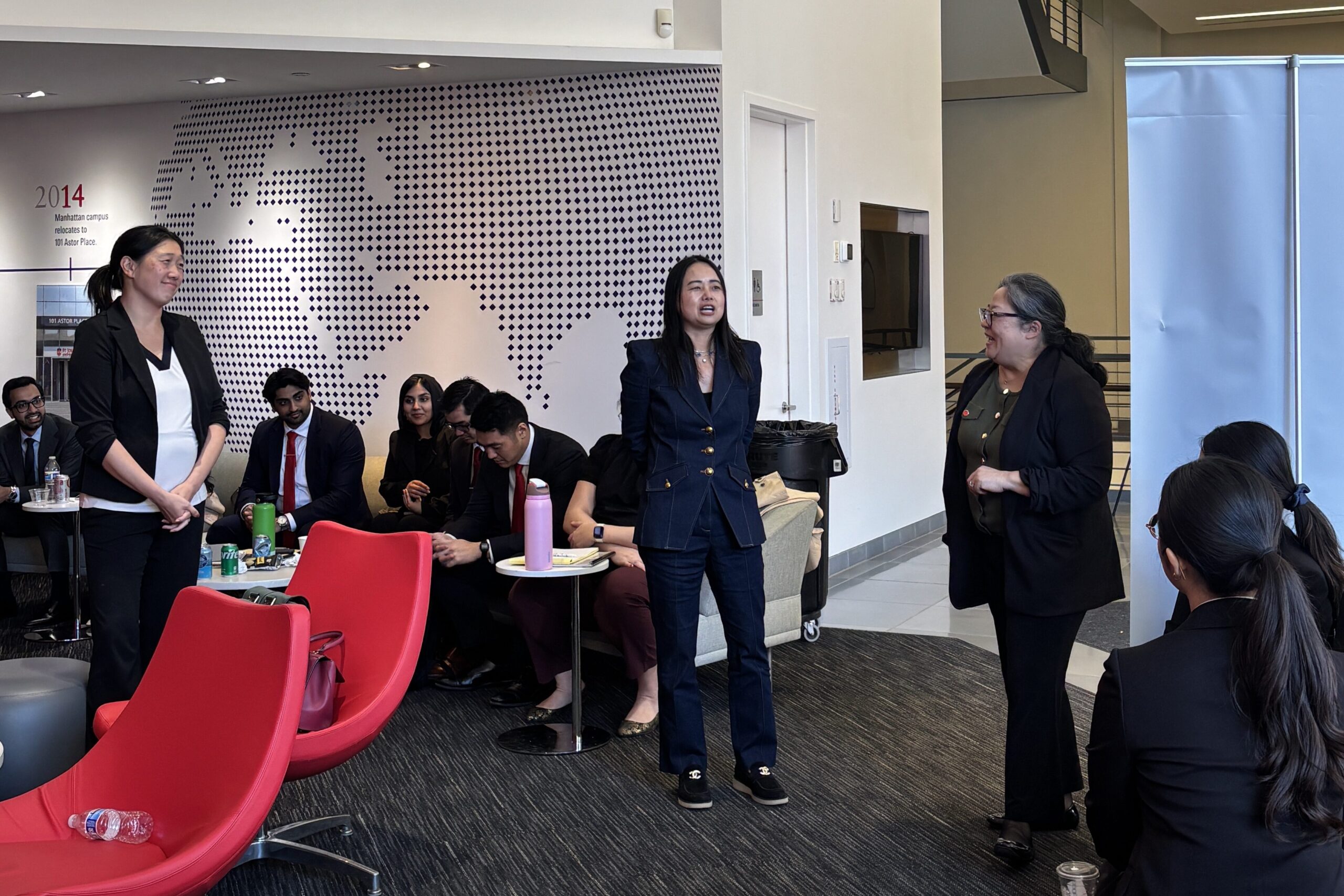
During the lunch, Jennifer Wu (AABANY Board Director), Judge Pamela Chen (AABANY Member), and Judge Jennifer Choe Groves shared their experience and advice with the students. Jennifer Wu recalled her own time as a competitor in the Thomas Tang Moot Court Competition, where several judges had told her, “You should be a litigator.” She humorously noted that one of the things she did particularly well was conceding at the right time, a small but important skill in advocacy. Reflecting on those memories, she spoke about the lasting mentorship she received during her time as a law student and her wish to pass that mentorship forward to the next generation.
Judge Chen and Judge Choe Groves echoed those sentiments, encouraging students to approach advocacy with confidence, humility, and openness to learning. Their words underscored the importance of community and the enduring relationships that the Thomas Tang Moot Court Competition helps build among judges, practitioners, and students.
About This Year’s Competition
The participants of this year’s regional rounds showcased exceptional preparation and professionalism. The participants shared creative arguments, thoughtful responses to questioning by judges, and showcased quick critical reasoning, as well as composed presentation. The atmosphere reflected the shared commitment of both students and volunteers to learning, growth, and community-building.
This year’s moot court problem addressed an interesting issue at the intersection of many current issues surrounding technology, intellectual property, copyright, and art: Who owns the copyright of an artwork created with the assistance of artificial intelligence? The case challenged participants to wrestle with questions of authorship, originality, and the evolving role of human creativity in the age of AI.
The top 18 teams from the regional competitions have advanced to the National Competition, which took place during the NAPABA Convention on November 7–8, 2025. The team that won the national competition was Audrey La and Josh Shimabukuro from Loyola University Chicago School of Law. They were the same team that won the regional competition round in New York.
We extend our gratitude to all those who made this competition possible, from the volunteers, judges, attorneys, and law student, to the TTMC National Committee and local coordinators. Your generosity of time and spirit continues to uphold the legacy of Judge Thomas Tang and ensures that mentorship, excellence, and inclusion remain at the heart of this program.
In-House Counsel (IHC) + Partners Summits August 28-29 | New York
We are excited to announce that applications are now open for the NAPABA In-House Counsel (IHC) Summit and Partners Summit, taking place August 28-29, 2025, in New York City! These premier gatherings bring together top legal professionals for two days of high-impact networking, strategic career development, and actionable insights from industry leaders.
Which Summit Is Right for You?
In-House Counsel (IHC) Summit
Partners Summit
Designed for senior in-house attorneys looking to accelerate their leadership trajectory, this program features guidance and insights from General Counsels, C-Suite Executives, and search firm leaders on how to navigate leadership transitions and position yourself for top legal roles at Fortune 1000 companies.
A dynamic program for law firm partners to strengthen leadership skills, develop business strategies, and connect with the next generation of NAPABA legal leaders. Hosted alongside the IHC Summit, this event also provides a unique opportunity to build relationships with senior in-house attorneys from Fortune 1000 companies.
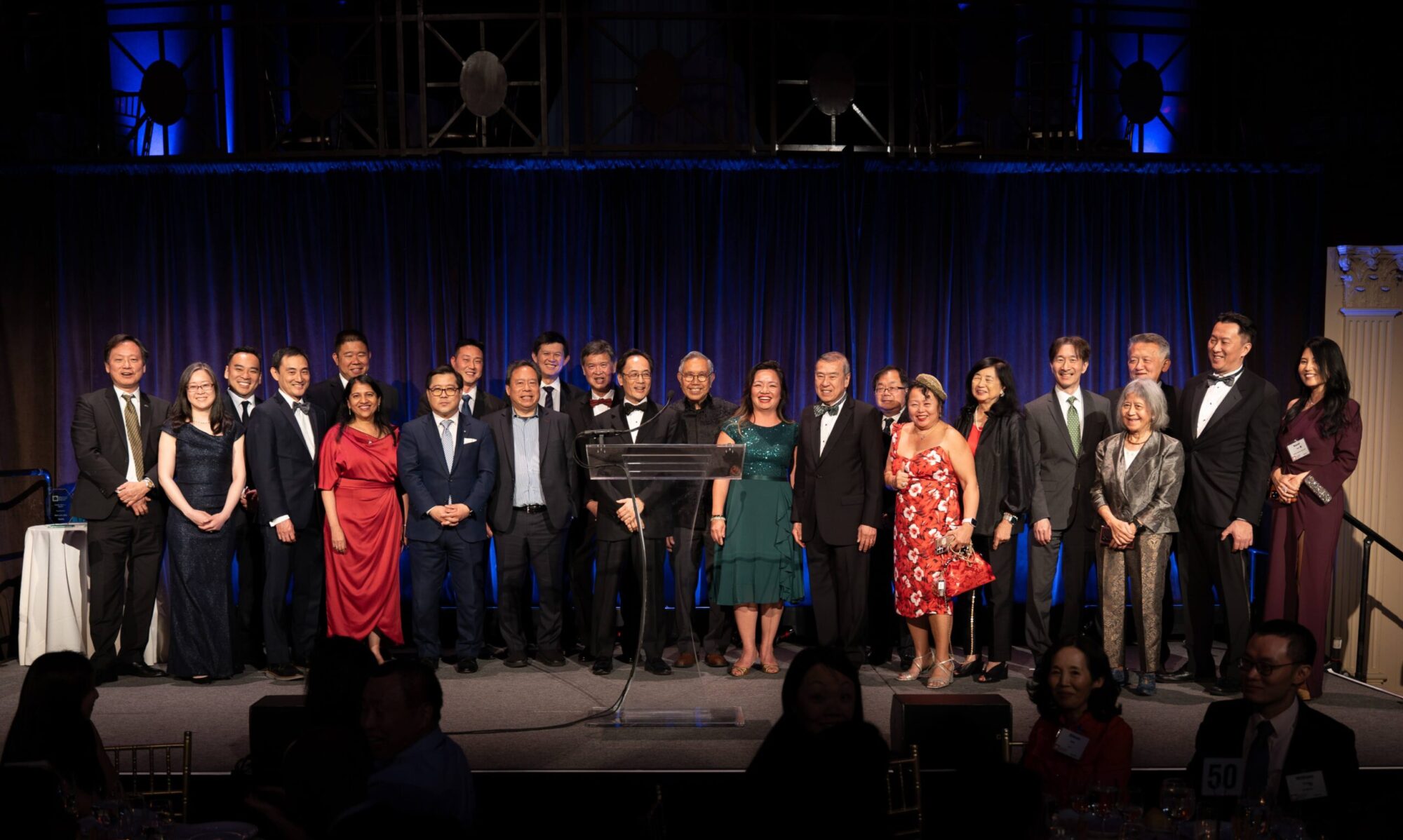
Engage with Fortune 1000 legal decision-makers Gain actionable strategies to elevate and advance your career Expand your network and forge meaningful connections with top in-house attorneys and law firm partners
In-House Counsel (IHC) + Partners Summits August 28-29 | New York
The IHC Summit and Partners Summit return to New York City on August 28-29, 2025. Held concurrently, these premier gatherings bring together top NAPABA members for two days of high-impact networking and career-building opportunities.
In-House Counsel (IHC) Summit
Partners Summit
A career development program helping senior in-house attorneys accelerate their competitive advantage. Participants will gain insights from General Counsels, C-Suite Executives, and search firm leaders on navigating leadership transitions and positioning themselves for top legal roles.
An interactive program for law firm partners to strengthen leadership skills, collaborate on career strategies, and build connections with the next generation of law firm leaders. The Summit is hosted in parallel with the IHC Summit, providing unique networking opportunities with senior in-house attorneys from Fortune 1000 companies.
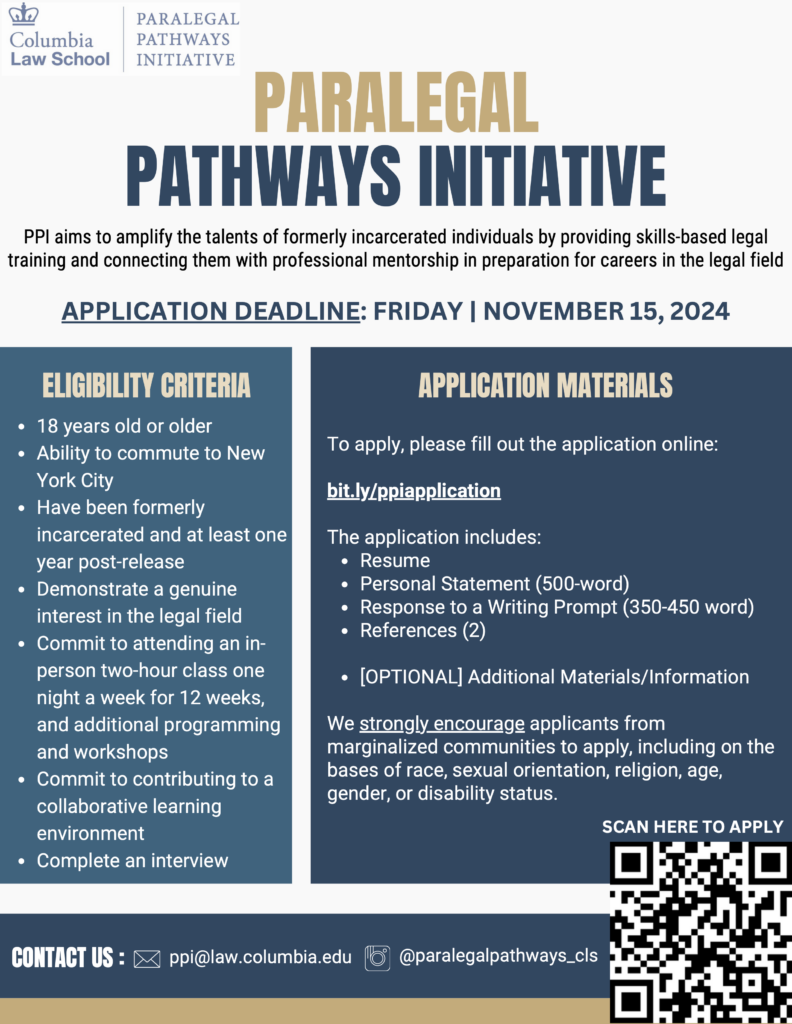
The Paralegal Pathways Initiative (PPI) at Columbia Law School is a 12-week training program designed to support formerly incarcerated individuals as they transition into meaningful careers within the legal field. Through skills-based legal training and professional mentorship, PPI empowers participants to develop valuable career and interview skills. Applications are now open for the upcoming Spring 2025 class, and PPI wants to extend this opportunity to as many potential applicants as possible.
Application Requirements: Interested individuals should submit an application online through this link. The application package includes:
Resume
Personal statement (500 words)
Response to a writing prompt (350-450 words)
Two references
[Optional] Additional materials/information
PPI encourages applications from individuals from marginalized communities, including those based on race, sexual orientation, religion, age, gender, or disability.
Eligibility Criteria:
18 years old or older
Ability to commute to New York City
Have been formerly incarcerated and at least one year post-release
Demonstrate a genuine interest in the legal field
Commit to attending an in-person two-hour class one night a week for 12 weeks, and additional programming and workshops
Commit to contributing to a collaborative learning environment
Complete an interview
Application Deadline: Friday, November 15, 2024
Contact Information: For more information, contact the PPI team at [email protected] or follow @paralegalpathways_cls on Instagram. Please share this information with anyone who may be interested in applying.
On July 22, the IP Committee met for a tasty Thai dinner at Charoen Krung in Manhattan. Attendees enjoyed a wide variety of classic Thai dishes. The dinner welcomed many new faces into the community, from law students to interns, to experienced private practice and in-house attorneys. Attendees shared about how they were spending their summers, as well as about projects they were tackling at work. The dinner ended with delicious Thai desserts including mango sticky rice.
Thank you to everyone who joined! The IP Committee always welcomes new members to its events!
To learn more about the IP Committee and how you can get involved, go here.
The American Arbitration Association® (AAA®) is now accepting applications to the 2024 Diverse Student ADR Summit in New York City on November 9-10, 2024. This program provides an in-depth look at careers in arbitration and mediation.
Presenters will include experienced ADR professionals, litigators, and in-house counsel from various backgrounds who will outline a successful career path as an arbitrator or mediator and discuss how to avoid potential pitfalls along the way. Attendees will learn the importance of focusing on a specific industry, networking, connecting with mentors, gaining relevant experience, and building a good reputation in the field.
The program is open to 2nd and 3rd-year law students who identify as members of groups historically underrepresented in the ADR field. Accepted students will receive a scholarship of up to $2,000 to cover round-trip travel to and hotel expenses in New York.
TO APPLY, click here to submit the following items:
Resume
Statement of Interest
One faculty or professional recommendation
An essay on the future of ADR (350-500 words)
Application Deadline: September 25, 2024
Location American Arbitration Association 150 East 42nd Street, 17th Floor New York, NY 10017
To learn more about the program, please click here. Should any questions arise, feel free to contact the organizer at [email protected].


 Engage with Fortune 1000 legal decision-makers