
New York Courts Seek Public Comment on Six Proposed Rule Changes

The Administrative Board of the Courts is soliciting public comment on six proposed amendments to New York court rules. The six proposed rule changes are outlined below and open for public comment:

Request for Public Comment on a proposal to add a new 22 NYCRR § 202.16-d relating to the filing of papers in matrimonial actions [Comments due May 8].

A new rule (22 NYCRR § 202.16-d) would require the Supreme Court to promptly deliver all papers in matrimonial actions including judgments of divorce, ancillary orders, and post-disposition documents directly to the county clerk instead of entrusting original papers to attorneys or litigants to file. The proposal addresses a documented problem in some courts outside New York City where unfiled or late-filed papers have made it difficult for parties to enforce divorce judgments on matters like child support, custody, and equitable distribution. To read more click here.

Request for Public Comment on a proposal to amend 22 NYCRR §§ 206.3 and 206.26 to authorize the Presiding Judge of the Court of Claims to refer matters to a judicial hearing officer in certain circumstances [Comments due May 8].

The proposal would amend 22 NYCRR §§ 206.3 and 206.26 to authorize the Presiding Judge of the Court of Claims to refer matters to a judicial hearing officer (JHO) upon the consent of the parties, on a judge’s recommendation, or on the Presiding Judge’s own initiative. The change is driven by the surge of cases filed under the Adult Survivors Act which includes approximately 1,700 civil claims against state agencies, more than 1,500 of them against the Department of Corrections and Community Supervision. Many of these cases are now approaching trial readiness, and retired Court of Claims judges serving as JHOs would help manage the resulting backlog. To read more click here.

Request for Public Comment on a proposal to add two new rules to authorize e-filing in the City Courts outside New York City and the District Courts [Comments due May 8].

Two new rules (22 NYCRR §§ 210.4-a and 212.4-a) would extend mandatory e-filing via NYSCEF to the City Courts outside New York City and the District Courts. This follows last year’s expansion of mandatory e-filing to the Supreme Court (Civil Term), NYC Civil Court, and the Court of Claims. The proposed rules mirror the framework adopted for NYC Civil Court and preserve exemptions for self-represented litigants and attorneys without e-filing capability. Immediate plans call for rolling out NYSCEF to the 11 City Courts in the 9th Judicial District. To read more click here.

Request for Public Comment on a proposal to ensure that summary housing proceedings involving the Red Hook Houses will continue to be adjudicated at the Red Hook Community Justice Center [Comments due May 8].

Amendments to 22 NYCRR §§ 208.42 and 208.43 would remove the requirement that NYCHA be a party to a proceeding in order for housing cases involving the Red Hook Houses to be heard at the Red Hook Community Justice Center. The change is prompted by the Red Hook West Houses’ ongoing conversion under the federal RAD/PACT program, which will transfer day-to-day management to a private LLC. Without the amendment, those cases would shift to Brooklyn Housing Court — a result that local judges and advocates say would deprive residents of the community court’s integrated social services, which have eliminated evictions among participating residents since 2022. To read more click here.

Request for Public Comment on a proposal to amend 22 NYCRR Part 137 relating to the Attorney-Client Fee Dispute Resolution Program, to increase certain threshold monetary amounts [Comments due May 15].

Proposed amendments to 22 NYCRR Part 137 would raise two monetary thresholds in New York’s Fee Dispute Resolution Program: the maximum amount in dispute (absent party consent) would increase from $50,000 to $75,000, and the threshold triggering a three-arbitrator panel would rise from $10,000 to $20,000. The $50,000 cap has been in place since 2002; adjusted for inflation it would be roughly $91,500 today. Program caseloads have dropped 38% over the past decade even as average disputed amounts have grown, a trend the Board of Governors attributes in part to the eroding value of the cap. To read more click here.

Request for Public Comment on a proposal to amend Commercial Division Rule 14 regarding good faith consultations on discovery disputes [Comments due May 22].

The Commercial Division Advisory Council proposes revising Rule 14 of the Commercial Division Rules (22 NYCRR § 202.70) to strengthen and modernize its good-faith consultation requirements for discovery disputes. Key changes would require counsel to make a “thorough, good-faith” effort to resolve or narrow disputes before contacting the court; submit a formal certification (rather than a mere representation) detailing the date, manner, participants, results, and whether cost-shifting or proportionality alternatives were discussed; and allow courts to deny discovery motions filed without satisfying the rule. The revisions align Rule 14 with Uniform Civil Rule 202.20-f and draw on the recently adopted Texas Business Court rules. To read more click here.


How to comment: Written comments may be submitted by email to [email protected] or by mail to David Nocenti, Esq., Counsel, Office of Court Administration, 25 Beaver Street, 10th Floor, New York, NY 10004. Comments are public records subject to disclosure under the Freedom of Information Law.

All six proposals, along with supporting memoranda and proposed rule text, are available on the UCS public comment page. Submission of a proposal for comment does not constitute an endorsement by the Unified Court System or the Office of Court Administration.

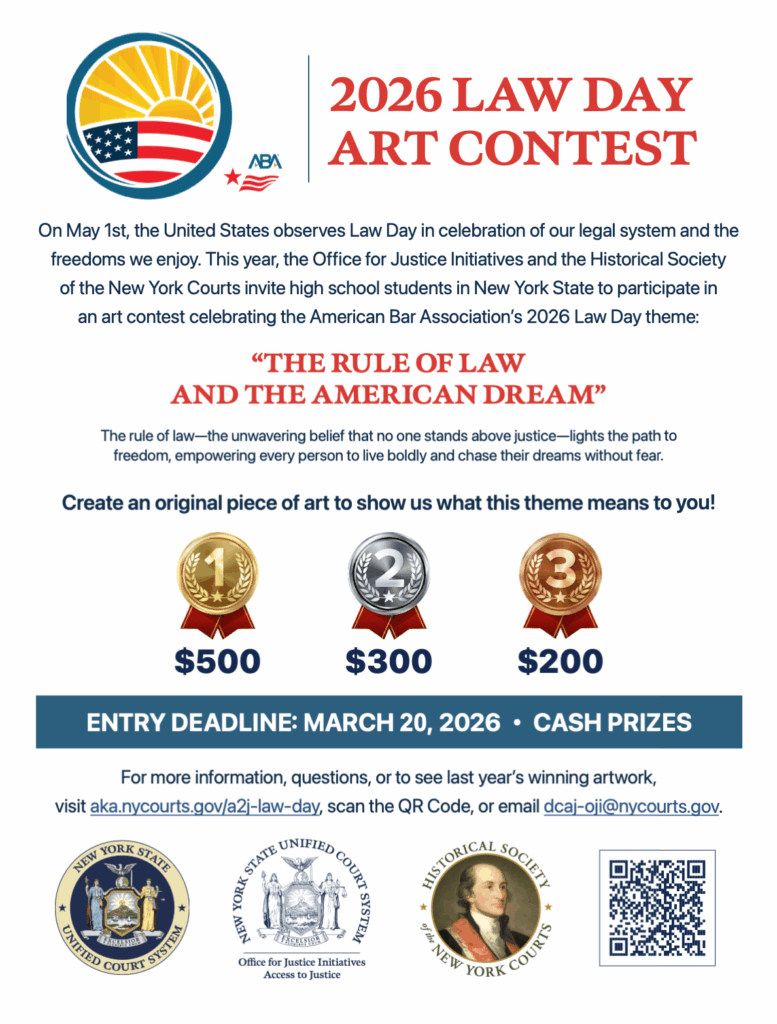
Enter the 2026 Law Day Art Contest: “The Rule of Law and the American Dream”

High school students across New York State are invited to participate in the 2026 Law Day Art Contest, organized by the Office for Justice Initiatives and the Historical Society of the New York Courts. This annual contest celebrates Law Day on May 1, a national observance recognizing the importance of the rule of law and the freedoms it protects.

This year’s theme, “The Rule of Law and the American Dream,” encourages students to reflect on how the legal system supports freedom, fairness, and opportunity. Participants are asked to create an original piece of artwork that expresses what this theme means to them.

The contest highlights the principle that no one stands above the law, and that the rule of law helps empower individuals to pursue their dreams without fear. Through art, students have the opportunity to explore and share their perspectives on justice, equality, and the ideals that shape American society.

Winning entries will receive cash prizes:

  • First Place: $500
  • Second Place: $300
  • Third Place: $200

The submission deadline is March 20, 2026.

Follow this link for additional information, questions, or to view last year’s winning artwork or email [email protected].

Students interested in art, law, or civic engagement are encouraged to participate and share their creative vision of how the rule of law supports the American Dream.

Request for Public Comment from NY Courts on Proposed Rule Changes Regarding Professional Conduct

The Administrative Board of the Courts is soliciting public comments on the following two proposed amendments to court rules:

  • Attorney advertising:  Proposal to amend Rule 1.0 and Rules 7.1 to 7.4 of the Rules of Professional Conduct relating to attorney advertising and solicitation
  • Attorney risk assessments:  Proposal to amend Rule 1.16 of the Rules of Professional Conduct to impose a duty of inquiry and risk assessment on lawyers when accepting, declining or terminating an engagement, in order to avoid involvement in illegal conduct by clients

Copies of both requests are available on the UCS website here.

Any comments on these proposed rule changes should be sent by email to [email protected] by February 20, 2026

Please feel free to reach out to David Nocenti at [email protected] if you have any questions. 

Request for Public Comment from NY Courts on Proposed Rule Changes Regarding AI and Equal Rights Amendment

The Administrative Board of the Courts is soliciting public comments on the following proposed amendments to court rules:
 

  • Artificial Intelligence:  Proposal to add a new Part 161 to the Rules of the Chief Administrator of the Courts regarding the use of generative artificial intelligence in preparing court documents
  • Equal Rights Amendment:  Proposal to amend Section 100.3(B) of the Code of Judicial Conduct, Rule 8.4(g) of the Rules of Professional Conduct, and Section 1210.1(10) of the Statement of Clients Rights, to conform those provisions to the language contained in the Equal Rights Amendment

Copies of both requests are also available on the UCS website at https://ww2.nycourts.gov/rules/comments/index.shtml.

Any comments on these proposed rule changes should be sent by email to [email protected] by December 29, 2025. 


Please feel free to reach out to David Nocenti at [email protected] if you have any questions. 

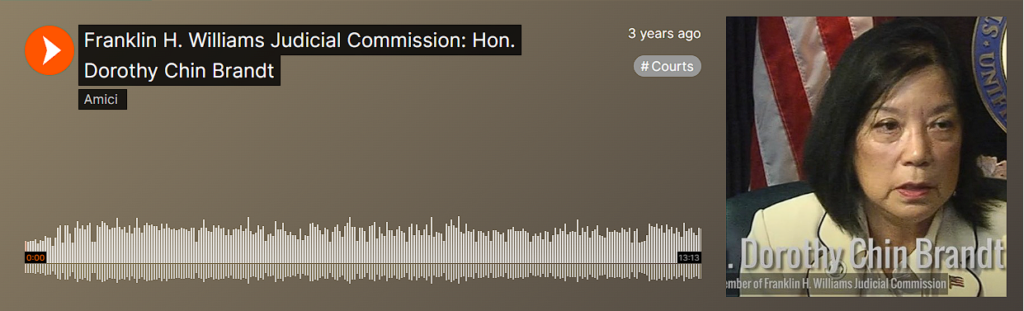
Hon. Dorothy Chin Brandt Looking Back at the Founding and Legacy of the Franklin H. Williams Judicial Commission

Three years ago, the Franklin H. Williams Judicial Commission (originally known as the New York State Judicial Commission on Minorities) released a series of interviews with the Commission’s founding mothers and fathers on the New York Courts Amici podcast site. The series, assembled and organized by John M. Caher, Senior Advisor for Strategic and Technical Communications, concluded with an interview of the Hon. Dorothy Chin Brandt. Justice Brandt passed away on January 27, 2025, and we take this opportunity to look back at her interview and appreciate her legacy of promoting diversity in the judiciary. 

Hon. Dorothy Chin Brandt was the first female Asian American Judge to be elected in the state of New York when she was elected to the New York City Civil Court in 1987. Shortly after being elected, she became a founding member of the Franklin H. Williams Judicial Commission. Brandt said that “the [New York] courts were perceived as unfriendly or not friendly to minorities,” which paved the way for establishing the Commission, with a mission to “find out what was the perception and how it could be remedied.” Brandt was ecstatic to be part of a commission that would help eradicate racism in the courts. Her personal experiences of discrimination throughout her career would provide valuable context and information for this endeavor.

The Commission collected anecdotes from around New York state to figure out the perception of the courts rather than investigating the courts themselves, because, according to Brandt, “perception is different from reality, but in a lot of ways it’s stronger than reality because that’s what people think and feel is going on, and maybe it’s harder to counteract.”

To combat this perception, the Commission immediately put mandatory diversity and sensitivity training in place for the whole court system. They also looked towards legal education and tried to get more minorities interested in and learning about law because there was such little diversity in the courts at the time. She noted happily that now there are many more minority lawyers, talking specifically about Asian Americans by saying, “We have a lot more Asian-American lawyers. We didn’t have an Asian-American bar at that time in 1988…but now we have a full-fledged bar association, Asian American Bar [of New York], and very full force, very active.”

Lastly, Brandt attributed much of the major progress in the United States regarding equality in the courts to the work the Commission has done in  New York on the perception of racism in the courts. Through the Commission’s work, they “got people’s attention and presented examples of what was not right, and everybody recognized this is not right.” She further noted that many other states followed New York and set up minority commissions of their own. Brandt ultimately emphasized the importance of the work of the Commission, remarking how if it was not for them, people might still be treated just based on their race, religion, ethnicity, etc. when they enter into the court system. 

To listen to the full podcast, please click here.

AABANY Hosts Annual Judges’ Reception in Celebration of Asian American Pacific Islander Heritage Month 

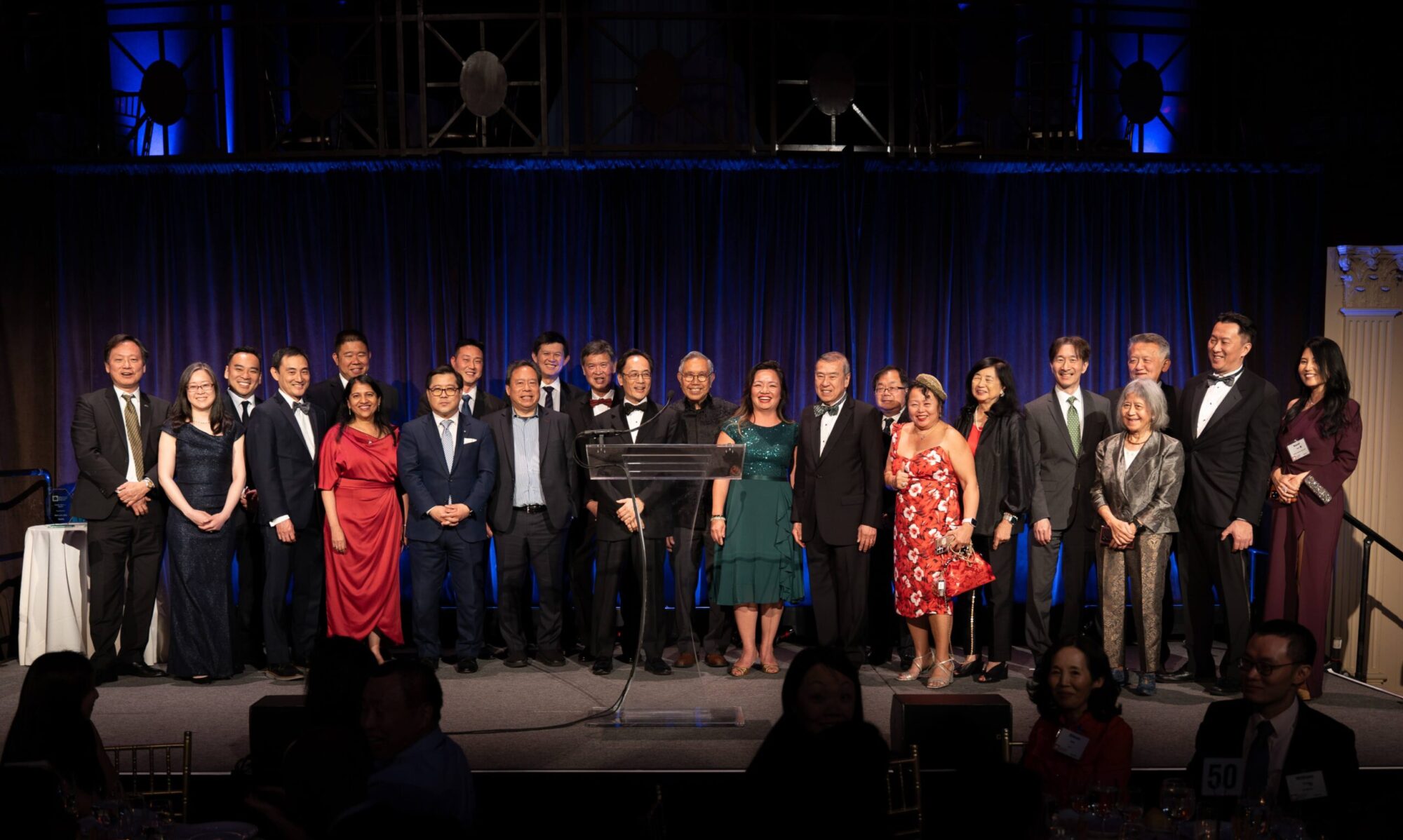
On Monday, May 24, 2022, AABANY’s Judiciary Committee hosted its annual Judges’ Reception to honor newly inducted and elevated and retiring judges in celebration of Asian American Pacific Islander Heritage Month. We are pleased that this year’s event could be held in person, as last year’s event was via Zoom. The event was held at the Surrogate’s Courthouse, 31 Chambers Street, in downtown Manhattan. 

The honorees recognized at the event were individuals who represent the significant strides that Asian Americans and Pacific Islanders have achieved, in the ongoing effort to increase diversity in our leading institutions. The following judges were honored: 

  • Hon. Giyang An
  • Hon. Margaret Chan
  • Hon. Christopher Chin
  • Hon. Phyllis Chu
  • Hon. Vanessa Fang
  • Hon. Karen Gopee
  • Hon. Simiyon Haniff
  • Hon. Judy Kim
  • Hon. Biju Koshy
  • Hon. Andrea Ogle
  • Hon. Vidya Pappachan
  • Hon. Kim Parker
  • Hon. Raja Rajeswari
  • Hon. Omer Shahid
  • Hon. Soma Syed
  • Hon. Lillian Wan
  • Hon. Frances Wang

We are proud to celebrate these AAPI trailblazers in the judiciary. AAPIs remain significantly under-represented in New York courts. According to Secretary Johnson’s Report on New York Courts, 14% of New York City’s population is Asian but only 6% of judges are Asian. In light of current events and the rise in anti-Asian violence, AAPI representation on the bench is more important than ever. AABANY thanks the honorees for their pioneering example.

Thanks to everyone who joined us for this event and the Judiciary Committee for organizing. To learn more about AABANY’s Judiciary Committee and its work, click here.

NY Judicial Institute on Professionalism in the Law and the NY Commission to Reimagine the Future of New York’s Courts 2021 Convocation: Watchdogs or Lapdogs? The Ethical Challenges Facing Government Lawyers

In our highly charged political climate today, government lawyers face unprecedented ethical challenges; they must often make decisions that clash between ethical rules and what their superiors demand. There is a growing consensus that rules are frequently unclear, but there is no agreement in how to revise them. 

On October 14th, 2021, 11:00 a.m-4:00 p.m ET, the New York State Judicial Institute on Professionalism in the Law and the Commission to Reimagine the Future of New York’s Courts will be holding a virtual Convocation that will bring together outstanding professionals who have had decades of experience in government to address these critical issues and provide much needed reforms. 

The Convocation will kick off with Paul D. Clement and Neal Katyal, both leading members of the Supreme Court bar who have led the U.S. Solicitor General’s office. They will speak on the ethical challenges facing today’s government lawyers and whether the government lawyer can (or should) represent both the client and the public’s interest. Three additional panels will follow and will touch on a variety of topics. 

The first panel titled, “How are Government Lawyers Different from Their Private Sector Counterparts in Their Ethical Responsibilities? Let Us Count the Ways” will examine conflicts government lawyers may face when advising decision makers in the executive branch and/or the agencies they serve. The second panel titled, “The Right Recipe for Independent Candid Advice: What Should Get Thrown In? What Should Get Left Out?” will discuss what it means for lawyers to exercise independent professional judgment and render candid advice. The final panel titled “ Recalcitrant Clients: What to do When the ‘Client’ Rejects Your Advice (or Worse)” will dive deep into questions such as, “With whom does the government lawyer have an attorney-client privilege?” and “Whose confidential information should be protected?”

Please note that this event is free of charge. To register for the event please click here

To learn more about the Convocation, please click here. 

For more information regarding the Convocation Agenda, please click here. 

Please direct any questions to [email protected]

In The News: President Terry Shen and Past President Linda Lin’s Op-Ed on the Lack of Asian-American Representation in New York’s Courts Published in City & State

On May 20, 2021, City & State published an Op-Ed written by President Terry Shen and Past President Linda Lin of the Asian American Bar Association of New York.

In the Op-Ed, President Shen and Past President Lin describe how a wave of Anti-Asian violence swept across New York City in the wake of the COVID-19 pandemic and how the city government’s lackluster response to these incidents has not been enough to protect the AAPI community. According to the article, stronger Asian-American representation in New York’s courts can help to solve these issues. The article also highlights Kathy Hirata Chin, the only Asian-American candidate for the New York Court of Appeals, arguing that her appointment would be a landmark step towards greater racial diversity, justice, and equity. As stated by President Shen and Past President Lin: “Our government must be diverse to fulfill Lincoln’s vision of a nation ‘of the people, by the people, and for the people.’ The need in our city and state is urgent and necessary.”

To read the full article, click here.

Over 100 Jurists of Color in New York, Including 6 AABANY Members from Queens, Sign Letter Affirming Equal Justice in Court

On July 8, 2020, over 100 jurists of color across New York, including 13 Queens judges of color, have added their names to a statewide letter affirming their commitment to equal justice and treatment under the law. Of the 13 Queens judges, six are members of the Asian American Bar Association of New York (AABANY): Hon. Karen Gopee, Hon. Wyatt Gibbons, Hon. Phillip Hom, Hon. Dean Kusakabe, Hon. John Lansden, and Hon. Toko Serita.

Led by Syracuse City Court Judge Derrek Thomas, the group formed to address the community in light of George Floyd’s murder and the nationwide protests that followed.

The letter stated: “We reaffirm our commitment to make a positive difference within our respective courts each day and to ensure that those appearing before us are treated equally, with the respect and dignity that both the law and humanity require.”

To read more about the letter, see this Queens Eagle article.

Co-Chair Karen Lin Published in Historical Society of the New York Courts blog for APA Heritage Month

Pro Bono and Community Service Committee co-chair Karen Lin writes about why we celebrate Asian Pacific Islander American Heritage Month for the Historical Society of the New York Courts blog.

The Historical Society of the New York Courts was founded in 2002 by then New York State Chief Judge Judith S. Kaye. Its mission is to preserve, protect and promote the legal history of New York, including the proud heritage of its courts and the development of the Rule of Law.

A first generation immigrant herself, Lin attempts to define what it means to be “Asian American,” noting that the term often groups a diverse collection of people into a single phrase. In actuality, she explains, there are a plethora of cultures, languages, religions, histories, and patterns of immigration within the umbrella term; perhaps what most strongly links Asian Americans to one another are the hardships they face.

“Asian Americans are often grouped together as an undifferentiated mass and many share the experience of being treated as perpetual foreigners who do not fully belong in America,” Lin writes. From the Bubonic Plague of the 1900s – when San Francisco’s Chinatown was quarantined – to the present day, when COVID-19 has propelled a new wave of anti-Asian xenophobia and racism, Asian Americans have historically faced people challenging their place in this country, Lin says.

The designation of May as Asian Pacific Islander American Heritage Month, then, is an homage to Asian Americans who often feel invisible. Lin explains that May was chosen to celebrate Asian American history to mark the anniversary of Japanese immigrants arriving in the US, and to acknowledge the contributions of Chinese workers in building the transcontinental railroad.

Lin embeds a powerful lesson in her article: Asian Americans will no longer accept being silenced, blamed, or overlooked. This month is only the first step on the journey ahead.

Thanks to Karen Lin for sharing these important thoughts on APA Heritage Month. To read the full blog post, click here.