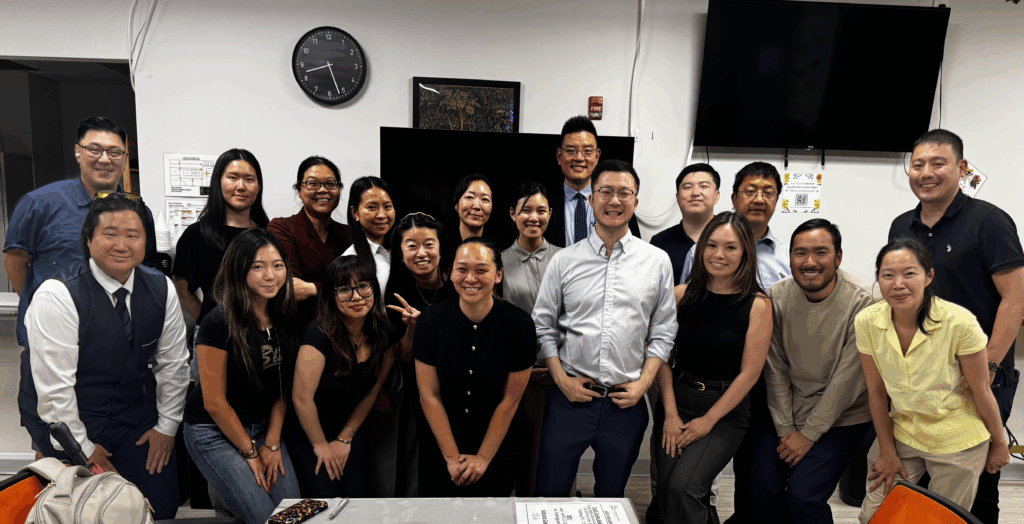
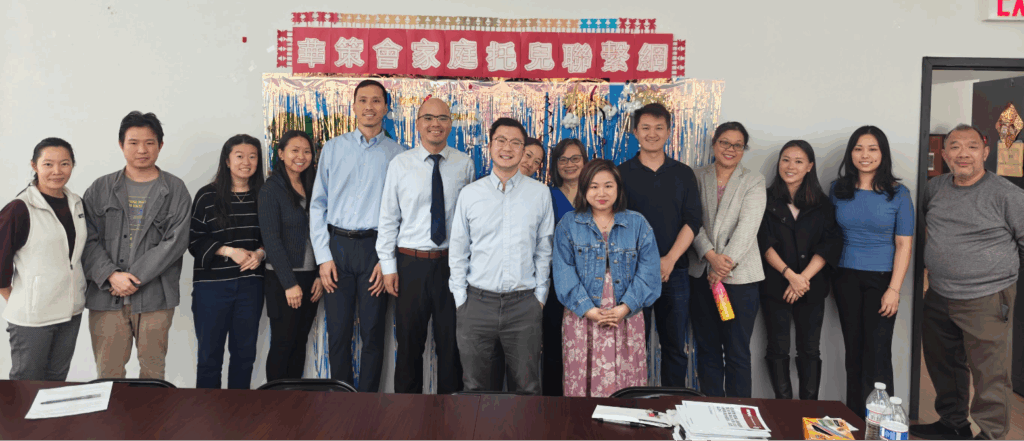
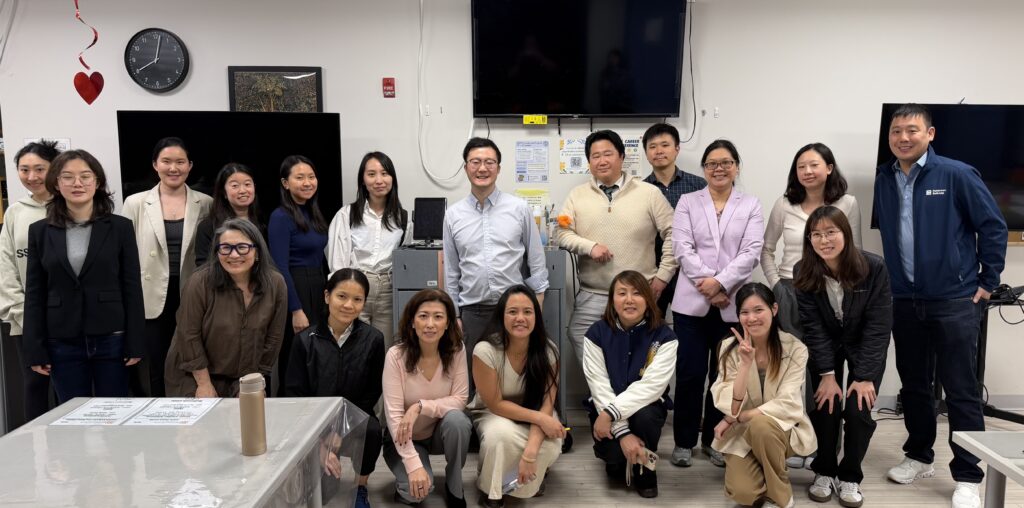
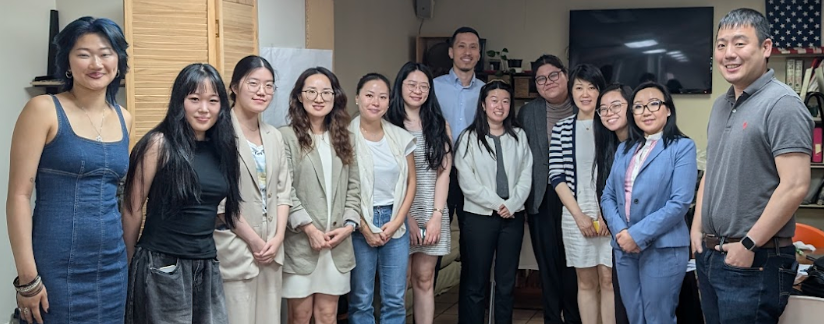
PBCS volunteers, comprising volunteer attorneys and law students, met with 19 clients and provided guidance on a range of legal issues, including housing, family and matrimonial law, immigration, real property, trusts and estates, torts and other civil litigation.
Here are some of the clients’ feedback:
“May Wong is very professional and answered all my questions. She also gave me helpful advice and referrals. Thank you!”
“Thank you, Shirley, for listening to our concerns. She is very knowledgeable about different routes going forward.“
“Very grateful this service is available for the Asian community as it always seem there is always a lack of community service for us.”
We thank the following volunteers for attending the Queens Pro Bono Clinic and for their dedicated services:
Attorneys:
Wendy Cheng
Marcus Cheung
Kevin Hsi
Richard In
Shirley Luong
Sinbay Tan
Johnny Thach
Anthony Wong
May Wong
Gary Yeung
Evelyn Yu
Interpreters/shadowers:
Nathan Cao
Michelle Chen
Kaitlyn Cheng
Helen Ding
Nandar Win Kerr
Momo Sano
Jingjing Wang
Suzie (Sue) Yu
Wendy Zeng
We invite you to continue supporting our community by joining us at our upcoming Pro Bono Clinics:
– August 19th [Manhattan link here] from 6:30-8:30pm, AAFE Community Center, 111 Norfolk Street, NY, NY 10002
– September 12 [Brooklyn link here], from 12:30 – 3:30pm, CPC Brooklyn Community Services, 4101 8th Avenue, Brooklyn, NY 11232
– October 7 [Queens link here], from 6:30 – 8:30pm, AAFE One Flushing Community Center, 133-29 41st Ave, 2nd Floor, Flushing, NY 11355
To learn more about the Pro Bono & Community Service Committee, visit probono.aabany.org.
We look forward to your participation in our future clinics!
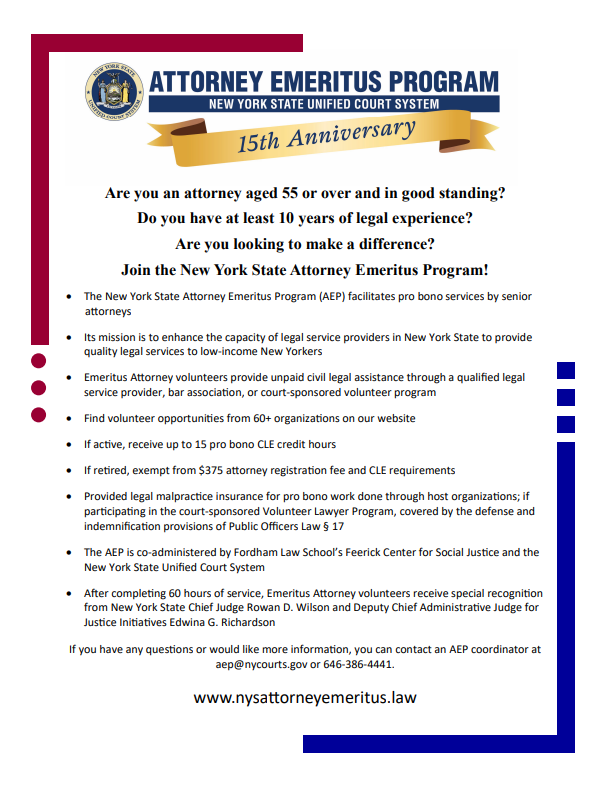
The New York State Attorney Emeritus Program (AEP) is an initiative by the New York State Unified Court System, enthusiastically supported by Chief Judge Rowan D. Wilson, that is aimed at promoting pro bono civil legal service by senior attorneys.
Despite New York’s significant commitment of resources to support civil legal services, a gap persists between the need for and availability of civil legal services across the state. AEP volunteer attorneys play a crucial role in providing access to justice for New Yorkers with low and moderate incomes who cannot afford counsel.
Any attorney aged 55 or older, whether retired or active, with at least 10 years of experience, who is in good standing can make a significant difference by enrolling as an Attorney Emeritus and signing up on the AEP website. Volunteers must commit to 60 hours of pro bono service over two years.
Emeritus volunteers who register as active can earn up to 15 CLE credits and receive special recognition from Chief Judge Wilson and Deputy Chief Administrative Judge for Justice Initiatives Edwina G. Richardson.
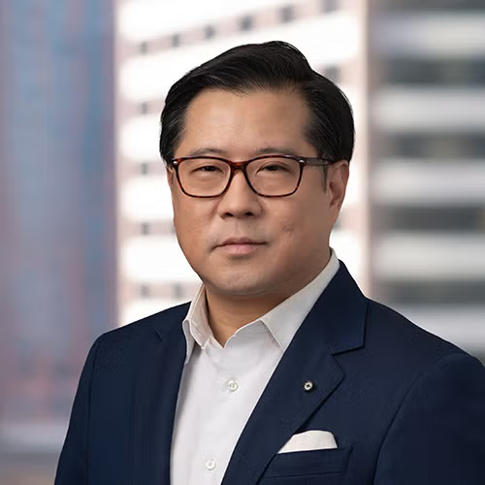
The Asian American Bar Association of New York (AABANY) is excited to share that in June 2026, James Chou, former AABANY President of AABANY (2009) and long-time AABANY member began his tenure as the new Managing Partner of Saul Ewing‘s New York City office.
James came to law by way of a detour: he started at NYU, intent on majoring in biochemistry and chasing his family’s expectations. His grandmother, one of the few women of her generation to earn a medical degree, had instilled in all her children and grandchildren, that it was her wish for them to follow in her and her late husband’s footsteps as medical doctors. James’ distaste for organic chemistry and frustration with the confining nature of the hard sciences convinced him otherwise. The breadth of a liberal arts education with its exposure to a wide array of fields and focus on critical thought, analysis, and communication provided a more attractive alternative. In his words, “the questions felt bigger, more interesting, and practically impactful.” He graduated magna cum laude from NYU and went on to Georgetown Law, where he served on the Journal of Legal Ethics and also tried his first case as a student advocate.
After a brief stint at Schulte Roth & Zabel, James spent seventeen years at Akin Gump, where he cut his teeth as a lawyer, handling all manner of complex commercial disputes. Those years were highly significant to his professional development, and he remains deeply grateful for his training and mentors there.
In 2015, he left Big Law and took a bet on himself to help build the New York office of a Long-Island-based firm, Moritt Hock & Hamroff, spending nine years there enhancing the firm’s Manhattan presence and brand in the New York market before making a returning to a broader platform at Saul Ewing in July 2024.
In May 2026, he was named the New York Office Managing Partner, effective June 1. In his new role, James is responsible for helping to develop and implement the office’s strategic vision to enhance its market position within the New York legal market and key practice areas and industries, build strategic client relationships, attract and develop top talent, and drive revenue growth and profitability. He takes on this role while maintaining a very active litigation practice as well as serving on the Board of the New York City Bar Association and as Chair of its Council on Judicial Administration.
When asked whether his Asian American identity presented a structural obstacle in his career, James replied that rather than encountering structural obstacles, he did think his cultural sensibilities—humility, deference, and polite restraint rather than aggressive self-promotion—prevented him from succeeding earlier in his career than he did. But James sees no value in dwelling on setbacks, and he views each challenge as an opportunity for growth and development. In this regard, he practices “the discipline of gratitude”—an intentional, regular practice of prioritizing thankfulness as a steady habit of mind and spirit, built on stoicism’s premise that we will all cease to exist, as well as a recognition that every experience in our life journey shapes who we are today.
Over the course of his long career, two cases stand out, both of which were pro bono. The first was in the mid-2000s, when James and his colleagues represented the New York County Democratic Committee in defending New York’s judicial convention—the system by which political parties nominate candidates for the New York State Supreme Court—against a constitutional challenge. In New York State Board of Elections v. López Torres, the Democratic Committee argued that the First Amendment protects a political party’s right to determine how it selects its own nominees, and in 2008, the U.S. Supreme Court agreed, with a 9–0 decision. The second was in in 2012, when James represented an Angolan asylum seeker who had been wrongly linked to a violent independence movement and a high-profile 2010 attack he had no part in. The man’s only tie to the group was a membership card he received after attending a single meeting of the group in which they were promoting basic social services. Working alongside the New York Legal Assistance Group, James secured the man’s asylum in February 2012 and eventually reunited him with his wife and young son.
James shared that Saul Ewing prides itself in being a “people-first firm,” which is not just a mantra, but a core value manifest across the Firm’s platform. Consistent with that ethos, his vision as New York managing partner is to invest in people and cultivate a collaborative environment where they can maximize their potential, which, in turn, is essential to excellent client service. His message for AABANY’s members is that your reputation will be built not by the cases you win, but by the trust you earn, the people you develop, and the institutions you leave stronger than when you found it, so make sure to invest in those things.
Please join AABANY in congratulating James on this milestone achievement in his career and wishing him further success as he takes on leadership of Saul Ewing’s New York City office.
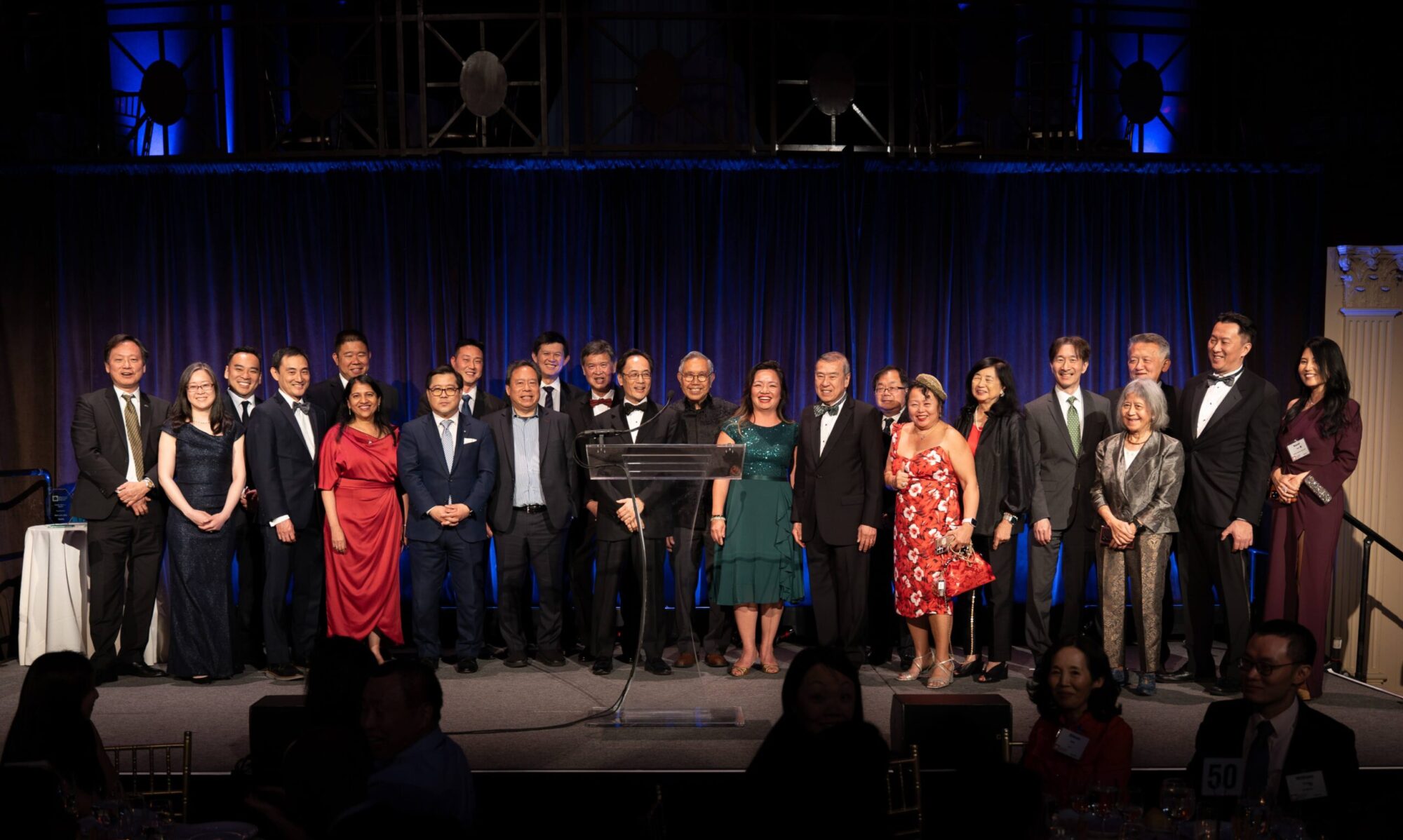
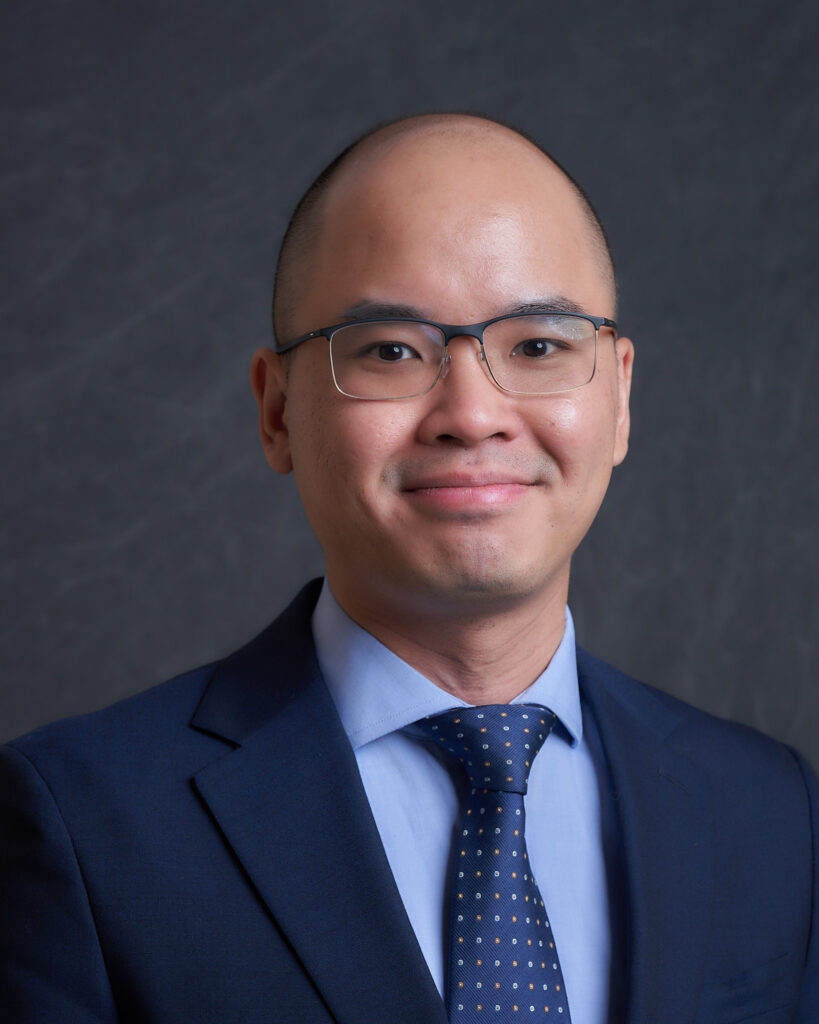
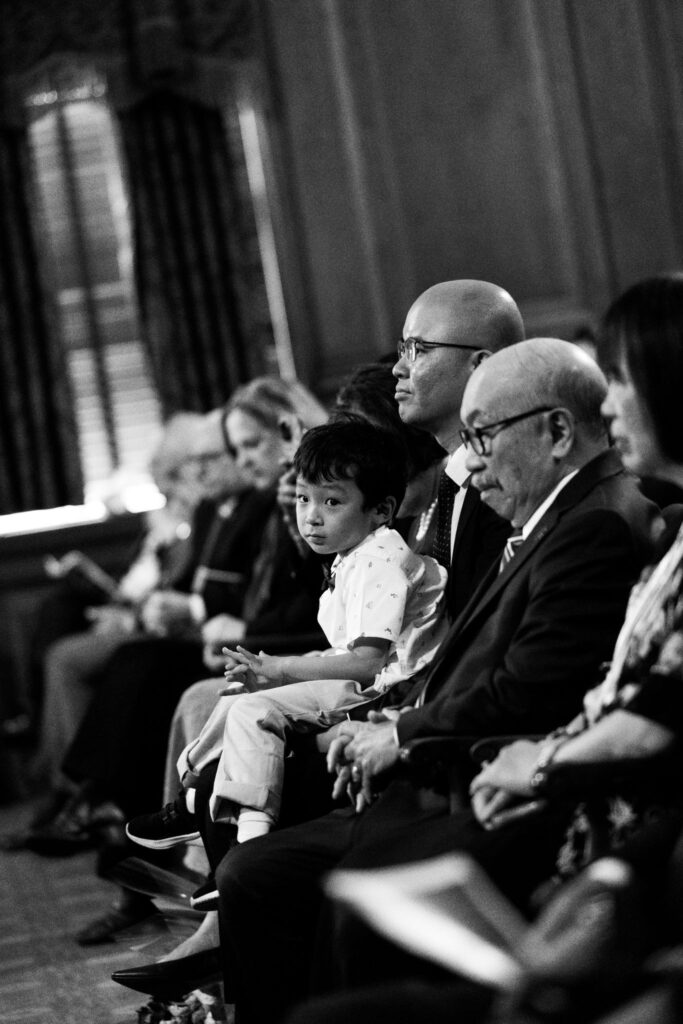
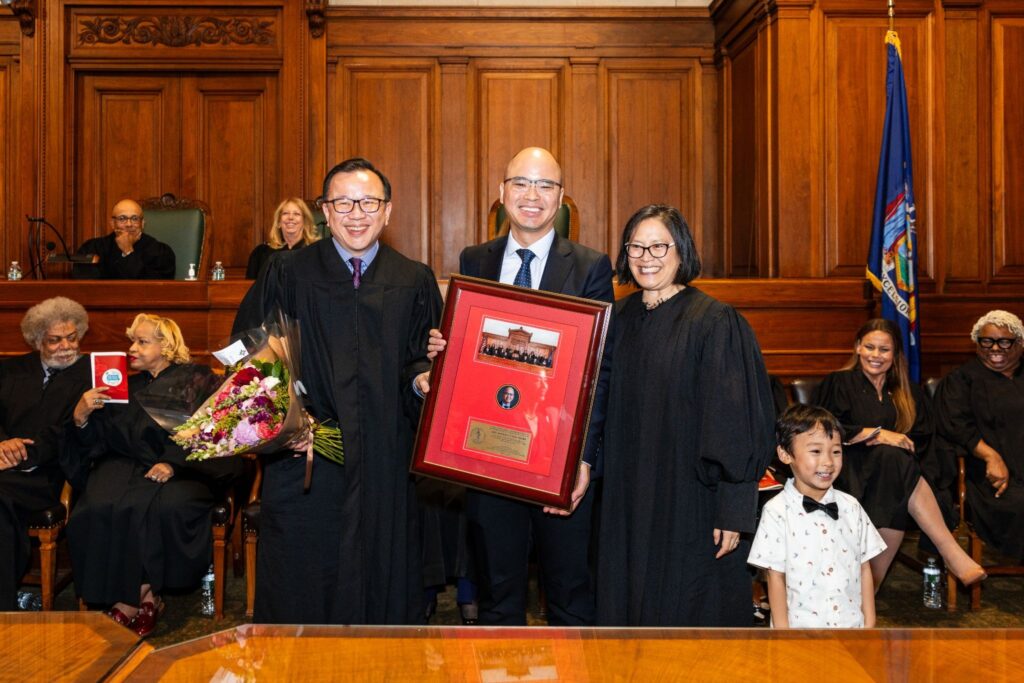
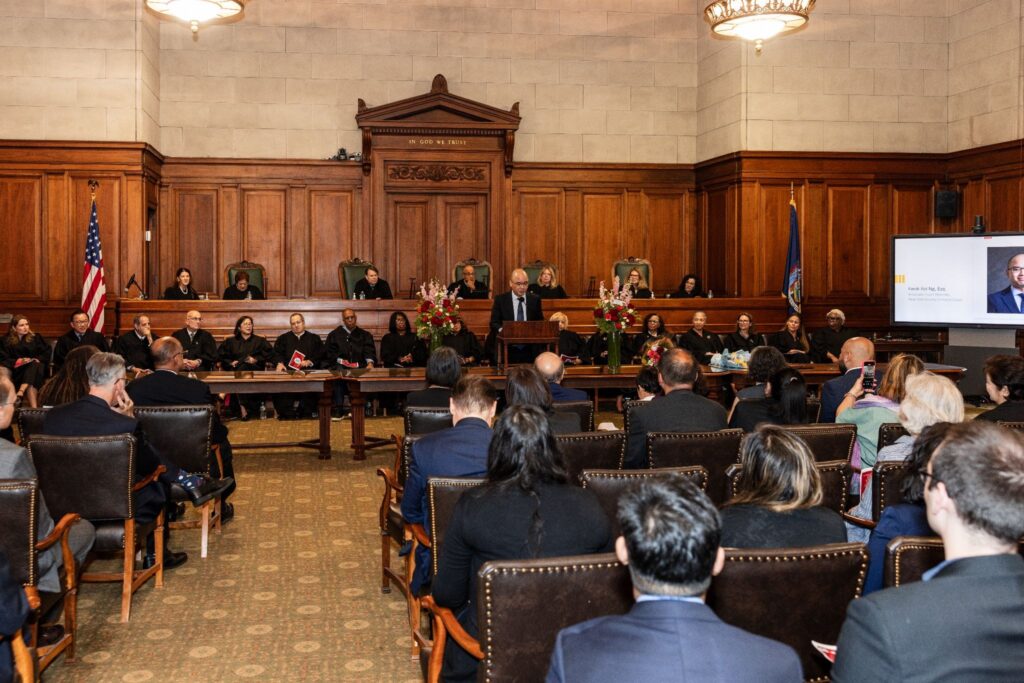
During Asian American, Native Hawaiian, and Pacific Islander (AANHPI) Heritage Month this May, Kwok Kei Ng, Co-Chair of AABANY’s Pro Bono and Community Service Committee, was honored with two awards for his contributions to the AANHPI community. Kwok received the Hon. Randall T. Eng Award at the Fourth Annual Hon. Randall T. Eng Award Program as well as the Power in Unity: Strengthening Communities Together Award at the Second Judicial District Equal Justice Committee’s celebration of AAPI Heritage Month: “Power in Unity: Strengthening Communities Together.”
Emblematic of these two awards, Kwok has built his career and service around strengthening the AANHPI identity and community. After growing up in Hong Kong, Kwok moved to America for schooling. He first joined AABANY almost 10 years ago in 2017 as a law student. Now, Kwok is an accomplished Associate Court Attorney at the New York County Criminal Courts. He continues to be a leader in the AABANY community, overseeing the Brooklyn branch of AABANY’s Pro Bono Clinic, an award-winning legal clinic that has served predominantly monolingual Asian communities in New York for over a decade.
Access to justice, particularly through language, has always been a pressing concern for Kwok. He initially entered the court system as a Brooklyn Family Court Interpreter for Cantonese and Mandarin Chinese speakers, and so his AANHPI identity has long-shaped his career. The experience of interpreting, Kwok says, “is the foundation of everything for me …. Standing in the courtroom, translating for parents who couldn’t understand what was being said about their children, I felt the full weight of what was at stake—especially now that I’m a parent myself.”
Kwok further noted, “My AAPI identity essentially defined my role because I was the one bridging the gap between the court users who had a language barrier and everyone else in the room.”
Meaningful representation has to occur at multiple levels, according to Kwok. “We talk about the underrepresentation of AAPI judges and the idea that the court should reflect the community it serves,” he stated, “but that should extend to court officers, court clerks, and court attorneys too.” Reflecting on his own identity, he added, “For a time, I was the only AAPI court attorney in Brooklyn. I’m glad it’s not the case now.”
Not straying far from these roots, Kwok has sought to expand access to legal services, as well as representation within legal careers, throughout his professional life. His passion for language access in the courts, stemming from his experiences as a court interpreter, led to his appointment to the Advisory Committee on Language Access for the New York State Unified Court System by Chief Administrative Judge Hon. Lawrence Marks.
Kwok considers AABANY his “home bar association,” but he is also a member of the Brooklyn Bar Association, where he serves as the Vice-Chair of the Diversity Committee. He is also a Board Member of the Asian American Law Fund of New York (AALFNY). Additionally, Kwok serves as Deputy Vice President of the High School Division of the Sonia and Celina Sotomayor Judicial Internship Program (SCSJIP). The program, which he himself participated in as a law student, places students in judicial internships. Kwok found SCSJIP through his involvement in AABANY, while still in law school. At a time when the legal field “felt especially opaque” and a path felt difficult to find “for someone like me,” it’s another experience that has shaped him: “That internship set the path and defined my career.”
My work with the Sotomayor program is simply my way of giving back,” Kwok declared. “When I help place a high school student in a judicial internship, I know it can genuinely change a trajectory, because it changed mine.”
Through AABANY’s Pro Bono Clinics, Kwok has helped strengthen New York City’s communities, making sure that people with limited English proficiency and without financial access to a lawyer can meet with a volunteer attorney or law student. He reminisces on how AABANY—and his involvement with AABANY—has grown over the past decade: “From the beginning, I was most active with the Pro Bono and Community Service Committee, volunteering at the clinic to help with interpretation. At the time [almost 10 years ago], there was only one clinic, at AAFE on 111 Division Street,” Kwok recalled. “Over the years, we’ve moved, grown, and expanded to locations in Manhattan, Brooklyn, and Queens—Confucius Plaza, CCBA, CCCNY, Homecrest, CPC, UCA Brooklyn, and AAFE Queens—collaborating with community-based organizations, hosting know-your-rights workshops, and serving thousands of New Yorkers.”
His work is never done, however: “Looking ahead, I hope we keep serving AAPI community members who face language barriers and can’t afford legal help—and that we also expand to other communities facing the same challenges.” Kwok added that he’s currently working on expanding outreach in Brooklyn to other groups, such as Latino communities.
Summing up his many contributions to the legal community and AANHPI community, Kwok offered a guiding principle he follows: “I genuinely believe that the most meaningful change happens when people get to know each other, learn from each other, and work together across cultural boundaries. We need to know each other better, but it’s just as important to make ourselves known to each other.”
As parting words, Kwok also offered some advice to law students or young lawyers: “Go out and meet people – but don’t do it just to network. Find the space where people are doing the work, and then stay in it. Don’t just try to be seen, try to be useful.”
Kwok drew from his own experience, where his primary goal was not to build up the connections themselves, but rather improve the community as a whole through working together. “The relationships that have meant the most to me didn’t come from working a room at a cocktail reception,” Kwok recalled. “They came from working alongside people on something that mattered. When you show up consistently, carry your share, and are genuinely trying to serve, people notice. More importantly, you become someone who is actually useful to your community.”
“Don’t let the parts of your identity that feel complicated become things you hide,” Kwok added. “For example, the fact that I came here as an immigrant with no roadmap, or that I started out as a court interpreter—that didn’t make me less qualified than anyone else in the room. In my case, it made me more capable of understanding the people who walk into the courtrooms every day.”
AABANY congratulates Kwok and is privileged to have a compassionate and driven community-builder like him in the AABANY community. For more information on AABANY’s Pro Bono Clinics and how to get involved, click here. The next few upcoming clinics are:
August 5th [Queens link here], from 6:30 – 8:30pm, AAFE One Flushing Community Center, 133-29 41st Ave, 2nd Floor, Flushing, NY 11355
August 19th [Manhattan link here] from 6:30-8:30pm, AAFE Community Center, 111 Norfolk Street, NY, NY 10002
September 12th [Brooklyn link here– from 12:30 – 2:30pm, CPC Brooklyn Community Services, 4101 8th Avenue, Brooklyn, NY 11232
Thank you to Vincent Carvalho for the above photos from the Fourth Annual Hon. Randall T. Eng Award Program.
On June 16th, 2026, the Immigration Law Committee of the Asian American Bar Association of New York (AABANY) held its first meeting of the year on Zoom. Nicole Fink, Chair of the Immigration Law Committee, used this occasion as an opportunity to reconnect with fellow immigration attorneys and to gauge interest in potential events later this year.
At the start of the meeting, Yang Chen, the Executive Director of AABANY, sought applications for AABANY’s Legal Referral and Information Services (LRIS) program. Currently, the LRIS program is looking for experienced lawyers to join its panel due to high demand for qualified immigration lawyers.
Next, the meeting focused on plans for the Immigration Law Committee’s growth and potential topics of interest for the near future. Nicole Fink made a request for more participation in AABANY’s Pro Bono Clinics, especially from immigration lawyers. The Pro Bono Clinics take place in community settings, to create a more welcoming environment for those seeking legal advice. Lawyers serving in the Clinic provide limited scope representation and would only give brief advice and refer clients to legal resources, and are thus not committed to representing any client after the consultation at the Clinic ends. As an incentive, Fink offered to buy a free meal for any lawyers on the call who volunteered at the Clinic.
The meeting also covered continued legal education (CLE) programs. After AABANY’s well received training on habeas corpus on June 4th, meeting attendees expressed interest in more CLE opportunities on immigration-related issues and other topics, such as AI usage in the legal field. The discussion also focused on overlapping areas such as matrimonial law and legal issues affecting juveniles. The group talked about the need to connect lawyers with different areas of expertise, and who may be able, for example, to aid conditional residence cases or special immigrant juvenile status cases.
The meeting concluded with a reminder about the 2026 Fall Conference on Saturday, September 26th, in which the Immigration Law Committee is presenting a panel on AI and data analytics in the immigration field, “Beyond Forms & Filings: How Tomorrow’s Immigration Attorneys Build Power Through Tech, Data, and Storytelling.” The meeting attendees also brainstormed on possible wellness opportunities for immigration lawyers, to combat the tough legal environment they operate in by offering more relaxing options to connect and refresh. Committee members were encouraged to reach out in the weeks ahead with additional ideas or interest in getting involved with Pro Bono Clinics, wellness opportunities, or networking across practice areas.
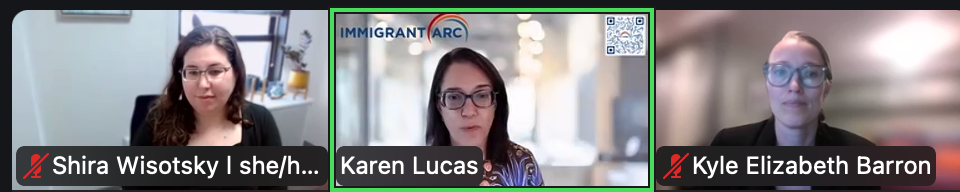
The presentation discussed the importance of habeas corpus as the federal government expands immigration detention. The program provided an overview of the statutory framework governing civil immigration detention and discussed the constitutional limits on civil detention, underscoring that immigration detention remains subject to procedural and substantive due process.
The program also reviewed common habeas claims in both pre-order and post-order detention contexts. These included statutory misclassification, unlawful revocation of release, due process challenges to prolonged mandatory detention, claims arising from statutory protections such as the Violence Against Women Act (VAWA), and post-order detention challenges where removal is not reasonably foreseeable. Attendees received practical guidance on drafting a habeas petition.
Attendees had opportunities to participate in case studies throughout the program and ask questions, showing their passion, curiosity, and dedication.
The program concluded with an invitation for attorneys and volunteers to provide pro bono habeas representation by volunteering for I-ARC and the NYU Law Immigrant Rights Clinic’s NY Habeas Project and LSNJ’s Detention and Deportation Defense Initiative. AABANY thanks the speakers and organizers for providing this important training.
To learn more about the Issues Committee, go here. To learn more about the Immigration Law Committee, go here.
– Written by Vishal Chander, Board Member and Co-Chair of AABANY’s Issues Committee
These clinics not only answer legal questions but also focus on training law students and young attorneys to identify legal issues and explain legal concepts in everyday language. We value your willingness to listen to our clients’ stories and provide them with a safe space to be heard.
We would like to extend our gratitude to the following volunteers who dedicated their time and expertise to make this Clinic a success:
Alexandra Ly
Haotian Chen
Andrew Sun
Helen Ding
Angie Liao
Karen Yau
Anna Bao
Keli Huang
Arthur Lin
May Wong
Elaine Ouyang
Nandar Kerr
Gary Yeung
Wendy Zeng
If you are interested in continuing to support our community, we invite you to join us at our upcoming Pro Bono Clinics:
May 20th in Manhattan from 6:30-8:30pm at AAFE 111 Norfolk St.
June 3rd in Queens from 6:30 – 8:30pm at AAFE One Flushing Community Center.
July 11th in Brooklyn, from 12:30pm-2:30pm at CPC Brooklyn Community Services, 4101 8th Ave.
To learn more about the Pro Bono & Community Service Committee, please visit probono.aabany.org.
At the Clinic, our volunteers met with 14 clients and provided guidance on a range of legal issues, including housing, immigration, and civil litigation. Your collective efforts ensured that each client received personalized support and answers to their pressing legal questions.
We are deeply grateful for everyone’s presence and contributions, and look forward to continuing this important work together!
Special thanks to Megan Rha and D. Jenny Kim, partners from the Rha Kim Grossman & McIlwain, LLP, who came to support our Clinic and to provide valuable time and advice to the community. Also, special shoutout to Betty (Xinyue) Zhu who lives in New Jersey and came all the way out to Queens to help us out!
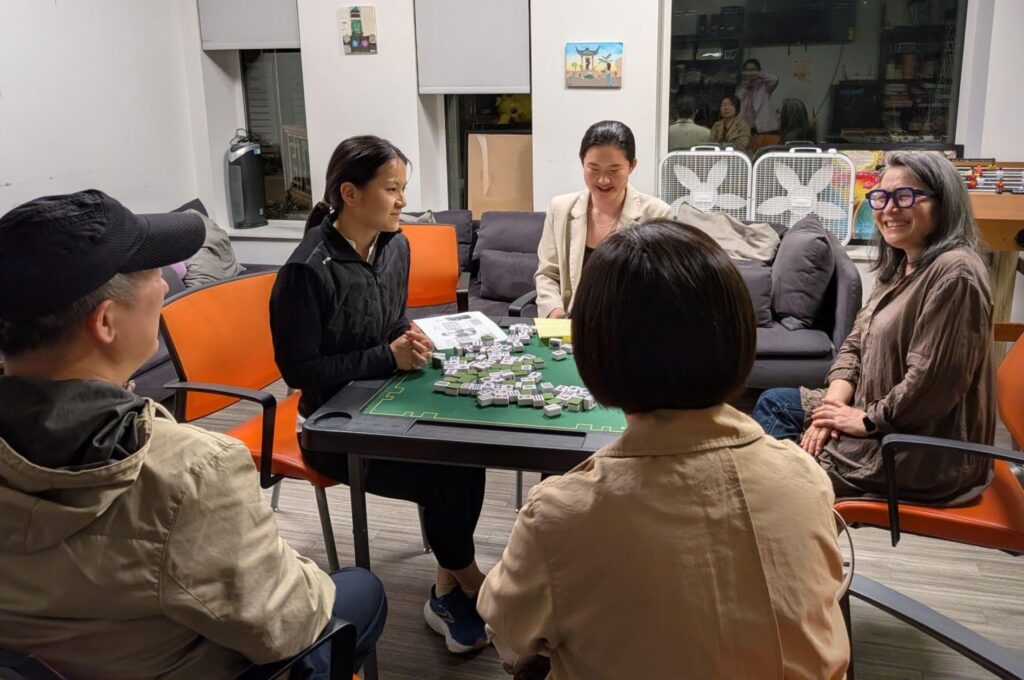
At this Clinic, we had so many intakes that we ran out of spaces and had to use the community playroom’s space. We are grateful for AAFE allowing us to expand to this area to do our work. At this playspace, some of our volunteers enjoyed a game of mahjong in between meetings with clients. While we would love to play more mahjong, we love helping out the community even more!
Volunteer attorneys:
Hung Yi Chien
Ting-Yu Chien
Helen Ding
Richard In
D. Jenny Kim
Emeline Kong
Grace Ouyang
Megan Rha
Sinbay Tan
Wendell Y. Tong
Anthony Wong
May Wong
Interpreters/shadowers:
Yining Pan
Ellie Wang
Jingjing Wang
Wendy Zeng
Betty (Xinyue) Zhu
We invite you to continue supporting our community by joining us at our upcoming Pro Bono Clinics:
– May 20 [Manhattan link here] from 6:30-8:30pm, AAFE Community Center, 111 Norfolk Street, NY, NY 10002
– June 3rd [Queens link here], from 6:30 – 8:30pm, AAFE One Flushing Community Center, 133-29 41st Ave, 2nd Floor, Flushing, NY 11355
– July 11th [Brooklyn link here], from 12:30 – 3:30pm, CPC Brooklyn Community Services, 4101 8th Avenue, Brooklyn, NY 11232
Thanks again to all our volunteers for attending the Pro Bono Clinic.
We look forward to your participation in our future clinics! To learn more about the Pro Bono & Community Service Committee, visit probono.aabany.org.
At the Clinic, our volunteers met with 12 clients, providing guidance on various legal issues, including housing, immigration, public benefits, and civil litigation. Their collective efforts ensured that each client received personalized support and essential legal assistance.
In addition to providing vital legal guidance to community members, our Pro Bono Clinics serve as a training ground for law students and young attorneys to practice communicating complex legal concepts in layman’s terms. We appreciate our volunteers for taking the time to listen to clients’ stories and giving them a space to be heard. The dedication of our volunteers continues to bridge the justice gap in our community.
Volunteer attorneys:
Beatrice Leong
Francis Chin
Jieman Tan
Helen Ding
Meng Ru
Anna Chuen
Carmen Huang
Anthony Wong
Xiaodan Song
Arthur Lin
Cecilia Yang
Alexandra Ly
Interpreters/Shadowers:
Rachel Kim
Eva Lee
Elaine Pan
Shang Zhai
We invite you to continue supporting our community by joining us at our upcoming Pro Bono Clinics next month:
May 9th [Brooklyn link here], from 12:30 – 2:30pm, CPC Brooklyn Community Services, 4101 8th Avenue, Brooklyn, NY 11232
May 20th [Manhattan link here], from 6:30 – 8:30pm, AAFE Community Center, 111 Norfolk Street, NY, NY 10002
Thank you for making a significant difference in our community. We are deeply grateful for everyone’s contributions and look forward to continuing this important work together! We hope to see you at our May clinics!
—Written by Eva Lee and Rachel Kim, AABANY Interns
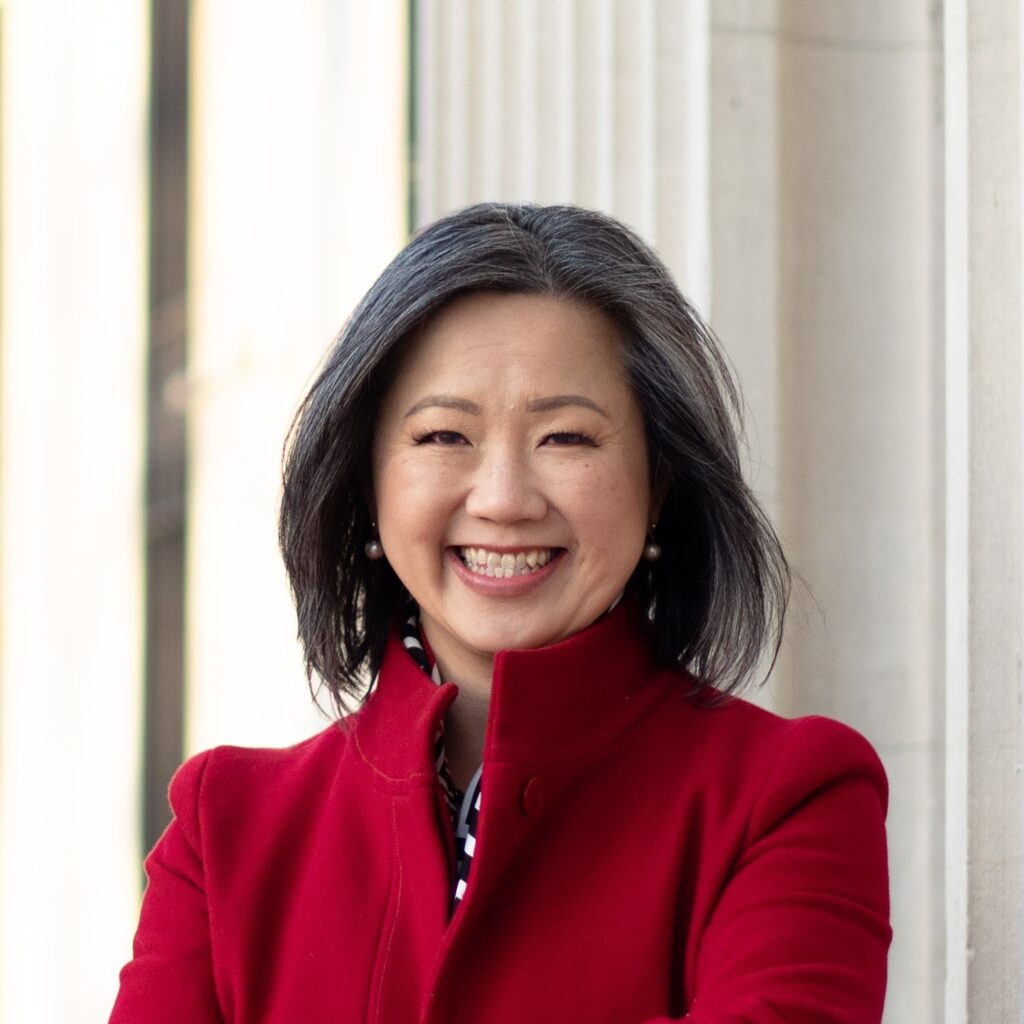
Justice Karen Lin, a longtime member of AABANY and former Co-Chair of the Pro Bono and Community Service Committee (PBCS), has been appointed to the Appellate Term for the Second Department of the New York State Supreme Court. This appointment marks a historic milestone as Justice Lin is the first Asian American woman to serve in this role. As a lifelong public servant and sitting Second Department Justice, she brings decades of experience and a deep commitment to justice to one of the most impactful appellate tribunals for everyday New Yorkers.
Breaking Barriers: The Significance of “the First” Justice Lin’s appointment to the Appellate Term for the Second Department carries historic significance. Yet, for Justice Lin, the meaning of this milestone is inseparable from the community that shaped her.
Born and raised in Queens by her immigrant parents, Justice Lin’s story is rooted in the borough she now serves. At a time when Asian Americans were significantly underrepresented in both civic and professional spaces within Queens County, her early experiences acutely instilled in her a heightened awareness of the importance of being seen and heard. As a child, she recalls helping interpret for her parents who spoke limited English. She also recalls attending school events where she was one of the few Asian American faces in the room. These moments made her realize the significance of representation, or the lack thereof. Coupled with her parents’ tireless work ethic and emphasis on community, these experiences profoundly shaped her sense of justice and responsibility to her community.
Despite Asian Americans comprising more than 27 percent of the population in Queens, they have historically remained underrepresented on the bench. While precise figures vary by dataset, estimates by the Brooklyn Daily Eagle suggest that fewer than 10 percent of judges in Queens County identify as Asian. This number is even lower statewide as according to the New York State Unified Court System’s 2024 Judicial Demographics Report, only about 5 percent of judges statewide identify as Asian. These figures highlight the persistent gap between the Asian American community and their representation within the judiciary.
For Justice Lin, the awareness of this disparity came into sharper focus back in 2022, when she grappled with these demographic realities during her campaign for Queens Civil Court. She recognized both the urgency and the responsibility to step forward.
Now, in 2026, as Justice Lin assumes her role on the Appellate Term, she reflects on both the progress made and the work that remains. While her appointment marks a historic milestone, Justice Lin is candid about what the broader implications of her distinction as “the first” means.
“We shouldn’t still be talking about ‘firsts’ in 2026,” she notes. “It matters to break that ceiling—but it matters even more that we are not the only ones.” Justice Lin maintains that her appointment is part of a larger trajectory which she hopes will continue to open doors for others who will follow and ultimately surpass her.
“I may be the first,” she reflects, “but I certainly do not want to be the last. And I won’t.”
Diversity and Perspective at the Appellate Term In her run for the Queens Civil Court in 2022, Justice Lin noted, “The air in the room changes depending on who is in it.” Now, as Justice Lin assumes her seat at the Appellate Term for the Second Department, she brings her philosophy into a new and vastly different judicial environment.
The nature of judging at the appellate level is necessarily collaborative. Rather than presiding over a single courtroom, justices at the Appellate Term engage in a rigorous discussion of the law. The presence or absence of diverse perspectives can play a significant role in the nature of judicial decision-making.
“The lens through which we interpret the law is shaped by our lived experiences,” Justice Lin explains. “It matters who is in that room.”
The Appellate Term occupies a uniquely consequential position within New York’s judicial system. For many New Yorkers navigating housing disputes, consumer debt matters, and low-level criminal cases arising from the Civil Court and Criminal Court, the Appellate Term often represents the primary avenue for reviewing decisions made in those courts. As such, this court plays a critical role in ensuring public confidence in the fairness and legitimacy of the judicial process and of everyday challenges faced by many families and individuals. Justice Lin approaches this responsibility with a deep awareness of the communities served by the court. As a lifelong Queens native and an experienced legal professional, Justice Lin brings a grounded perspective to the bench and seeks to ensure that the appellate review is conducted with both rigor and awareness.
A Jurist Grounded in Care From civil rights attorney to legislative counsel, from Housing Court Judge to Court Attorney-Referee in Surrogate’s Court, Justice Lin has been guided by a single constant: care.
Justice Lin’s decade as a court attorney referee in Surrogate’s Court, where she handled sensitive guardianship matters, reinforced the centrality of due process, particularly for vulnerable individuals. In those proceedings, she understood the risks of presuming incapacity based solely on diagnosis or circumstance. Instead, she stresses that every individual is entitled to a meaningful hearing where their voice is heard.
This philosophy carried directly into Justice Lin’s work on the trial bench, where she implemented practices designed to make the courtroom more accessible. For example, she required in-person appearances in certain matters involving self-represented litigants, recognizing that virtual proceedings—while efficient—can inadvertently exclude individuals who lack access to technology or familiarity with digital platforms. In-person appearances allowed her to better assess credibility, clarify the relief being sought, provide language support, offer flexible scheduling, promote accessibility for litigants with disabilities, and ensure that litigants could express themselves in their own words. Similarly, her practice of inviting court users to indicate their preferred pronouns reinforces the principle that every individual who enters the courtroom is entitled to be treated with respect.
To illustrate, Justice Lin described a family conflict case she dealt with where a father passed away, leaving his home to only two of his children and excluding the others. Justice Lin guided the family through structured discussion by helping each member articulate concerns and expectations by meeting with them individually. This ultimately fostered a mediated resolution that balanced the legal framework with the opportunity for members of the family to retain some control over their outcome. In the end, the siblings reached an agreement to divide the home equally among all of the children.
“The court cannot advocate,” she notes, “but it can ensure fairness, dignity, and that due process is fully respected.”
A Career Defined by Purpose Long before she entered the legal field, Justice Lin was already cultivating an ethos of advocacy at the University at Buffalo. As an undergraduate, she noticed that Asian American history and experiences were largely absent from the curriculum. Determined to address this gap, she petitioned the history department to introduce a course on Asian American history which had never previously been offered. Simultaneously, she co-founded the University’s Asian American student organization, the Asian American Students Association (AASA) and served as its first president where she organized cultural programming and panel discussions to highlight the contributions of Asian Americans on campus. These initiatives included guest lectures, heritage month celebrations, and workshops that engaged the broader student body in conversations about diversity and inclusion. Reflecting on these formative years of her life, Justice Lin noted, “I wanted students like me to see themselves in the stories being told and to have a community where our voices mattered.”
A couple years later, Justice Lin championed these same values through her leadership with AABANY’s Pro Bono and Community Service Committee (PBCS), where she served as Co-Chair. During the COVID-19 pandemic, when the need for legal services increased significantly, she played an instrumental role in promoting access to legal services by expanding Pro Bono Clinics to underserved communities in Queens. Building on this work, Justice Lin highlights that meaningful legal assistance requires the ability to communicate effectively, especially with individuals who struggle to find services in a language they understand. She speaks of her time with PBCS, describing it as the “best committee ever” and her service as both a “great joy and privilege.” Additionally, she praises AABANY’s Pro Bono Clinics as an invaluable resource for individuals with limited English proficiency.
Ultimately, in each stage of her professional journey, Justice Lin has consistently asked herself: “Where can I be helpful?”
Lifting the Next Generation As a mentor and active participant in programs such as the The Sonia & Celina Sotomayor Judicial Internship Program, Justice Lin is deeply committed to cultivating the leaders of tomorrow. She suggests that a successful legal career rests on a foundation of competence and character. She encourages students and young professionals to strive for mastery in their chosen field. “Be as good at it as you can be,” she advises, because when opportunities arise, “you better be ready to hit the ground running.” Competence, she notes, is central to reputation as it ensures that professionals are prepared to perform effectively in any high-stakes environment.
Justice Lin also stresses that technical skill alone is not enough. Equally important is how one treats others. “Your competence shapes your reputation,” she explains, “but so does how you treat people.” She believes in a universal standard of decency and she encourages individuals from all paths of life to treat everyone—from the janitor to the judge—the way they would want themselves or a loved one treated. She reminds us that “people may forget what you did but they will remember how you made them feel.”
Throughout her career, Justice Lin has also rejected narrow stereotypes of what a lawyer must be. Justice Lin has challenged the notion that success requires aggression. Many assumed she was “too nice” to be an effective lawyer or justice, but she believes there are many ways to practice law successfully without abandoning one’s nature. She encourages young professionals, especially those from underrepresented backgrounds, to embrace their individuality. “What makes us different is really what makes us strong,” she says. Avoiding the temptation to contort oneself to fit an expected mold, she emphasizes that professional growth is most meaningful when it is shared: “It is purposeless to rise alone; we rise together.”
Through her guidance and example, Justice Lin seeks to create spaces where future generations can thrive with confidence and authenticity. Now at the Appellate Term, her role amplifies this impact as she continues to shape the culture of the judiciary itself. Please join AABANY in congratulating Justice Karen Lin on this historic milestone. We look forward to seeing more noteworthy contributions from her public service.