AABANY Presents CLE Program on Major Changes to Public Charge Rules

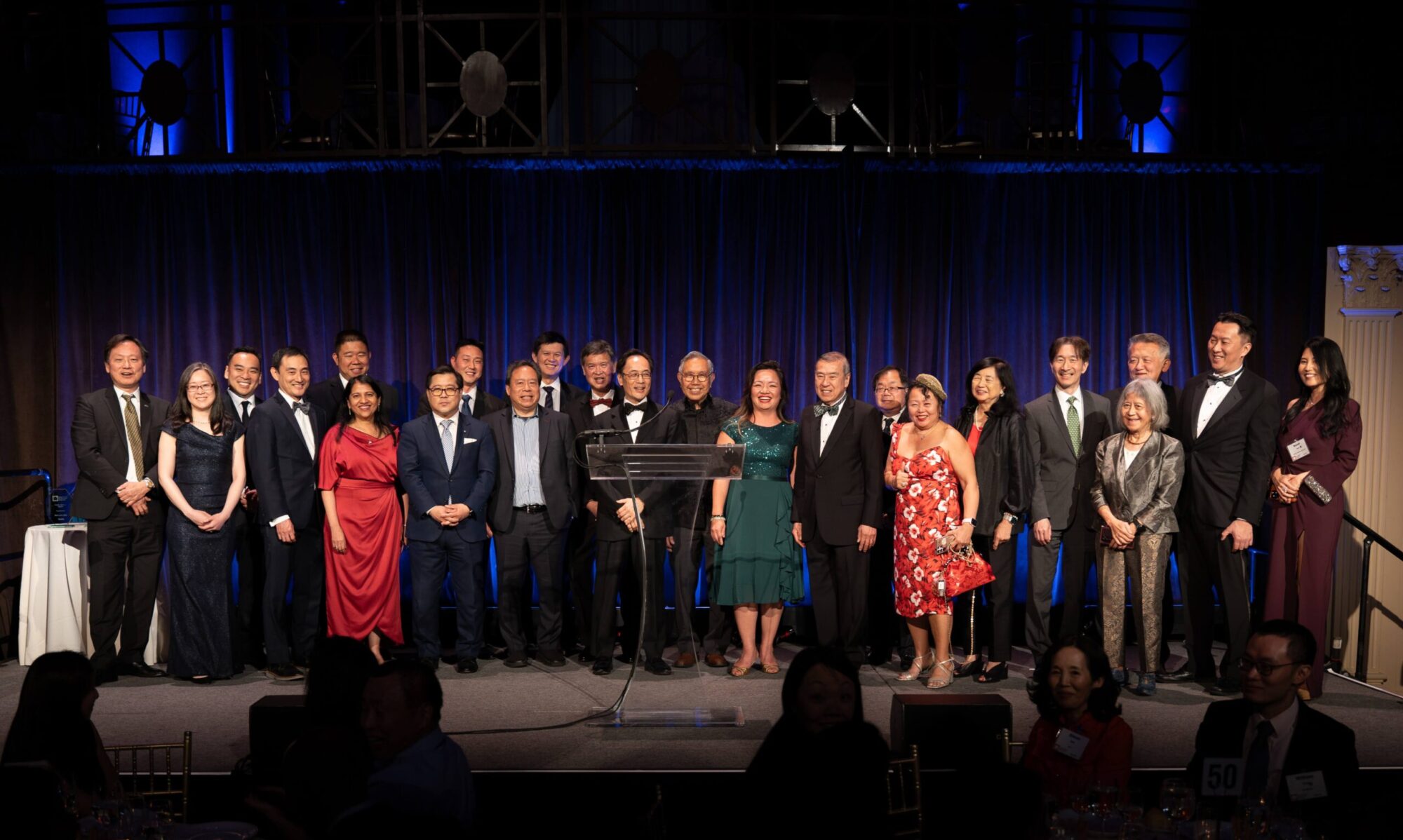
On September 17, 2026, the Asian American Bar Association of New York (“AABANY”) presented “Public Charge – What We Need to Know About Upcoming Changes,” a hybrid CLE program, at the Chinese-American Planning Council (“CPC”) Manhattan Community Center. The program addressed significant changes to the public charge ground of inadmissibility scheduled to take effect on September 18, 2026.

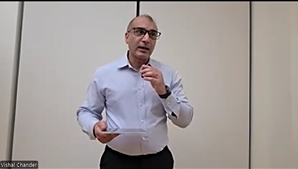
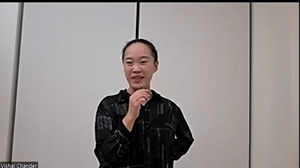
Rachel S. Lee, AABANY Board Director and Issues Committee Co-Chair and President & General Counsel of Stand with Asian Americans, moderated the program. Vishal Chander, AABANY Board Director and Issues Committee Co-Chair and Managing Attorney of The Chander Law Firm, P.C., served as the presenter. The program provided one hour of New York CLE credit in the Areas of Professional Practice category, with 24 people attending both online and in person. (Only those who attended in person received the CLE credit.)

A central focus of the presentation was the 2026 Final Rule and revised USCIS guidance, which removed much of the 2022 regulatory framework and shifted operational standards to the USCIS Policy Manual. Vishal explained that public charge determinations remain individualized, totality-of-the-circumstances inquiries, with officers considering factors such as finances, employment, education, health, household composition, and benefit use. He also discussed the broader treatment of means-tested public benefits, the continuing but non-dispositive role of Form I-864, the renewed use of public charge bonds, and the differing roles of USCIS, the Department of State, and CBP. The presentation concluded with an overview of pending litigation challenging the new framework and the legal questions surrounding DHS’s authority and use of subregulatory guidance.

Jack Hsia, Senior Attorney at CPC and a Vice Chair of the AABANY Issues Committee, joined  after Vishal’s presentation to share information about CPC’s programs and resources for the community. Jack thanked the speakers and attendees for being part of an informative discussion. AABANY thanks CPC for co-hosting the program and everyone who attended in person and online. To learn more about the Issues Committee and how you can get involved, go here.

Written by Rachel Lee, AABANY Board Director and Issues Committee Co-Chair
AALFNY and AABANY Connect with Brooklyn Community Members at RaisingHealth’s 11th Annual Health Empowerment Celebration

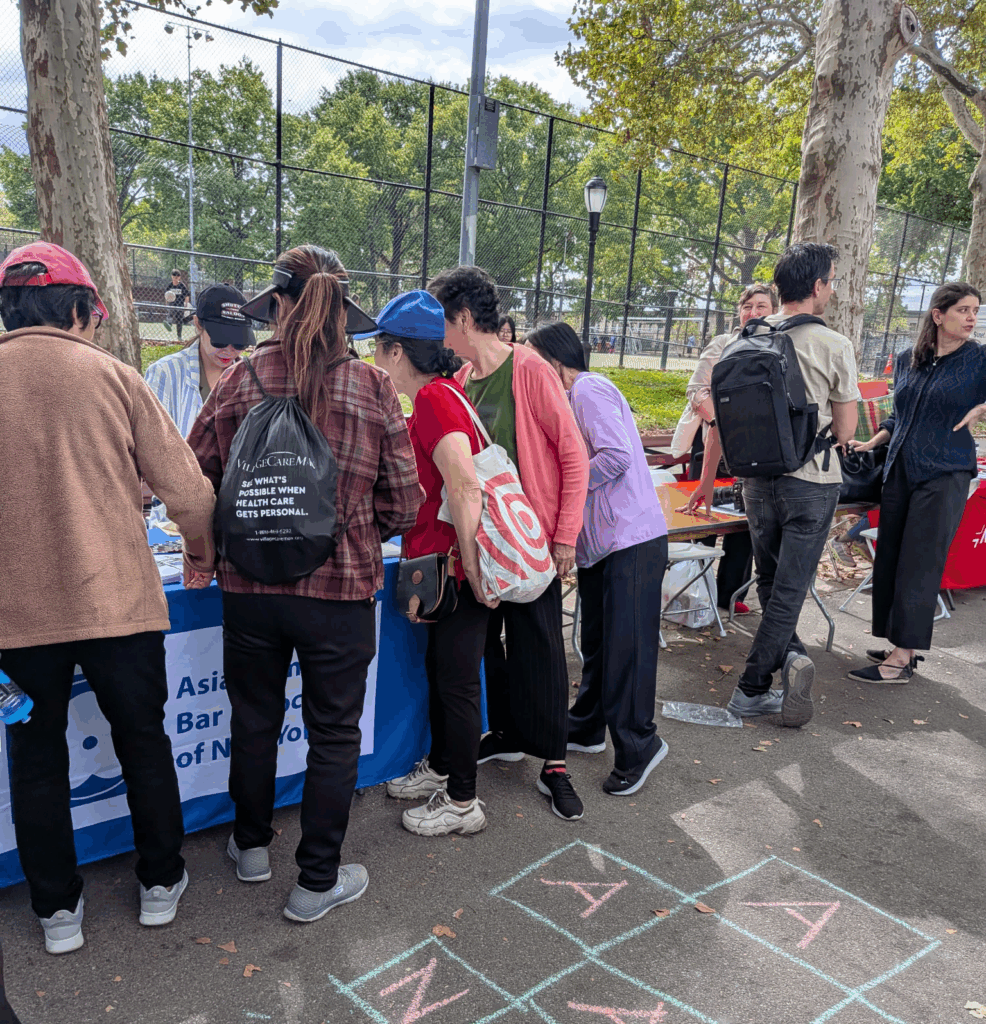
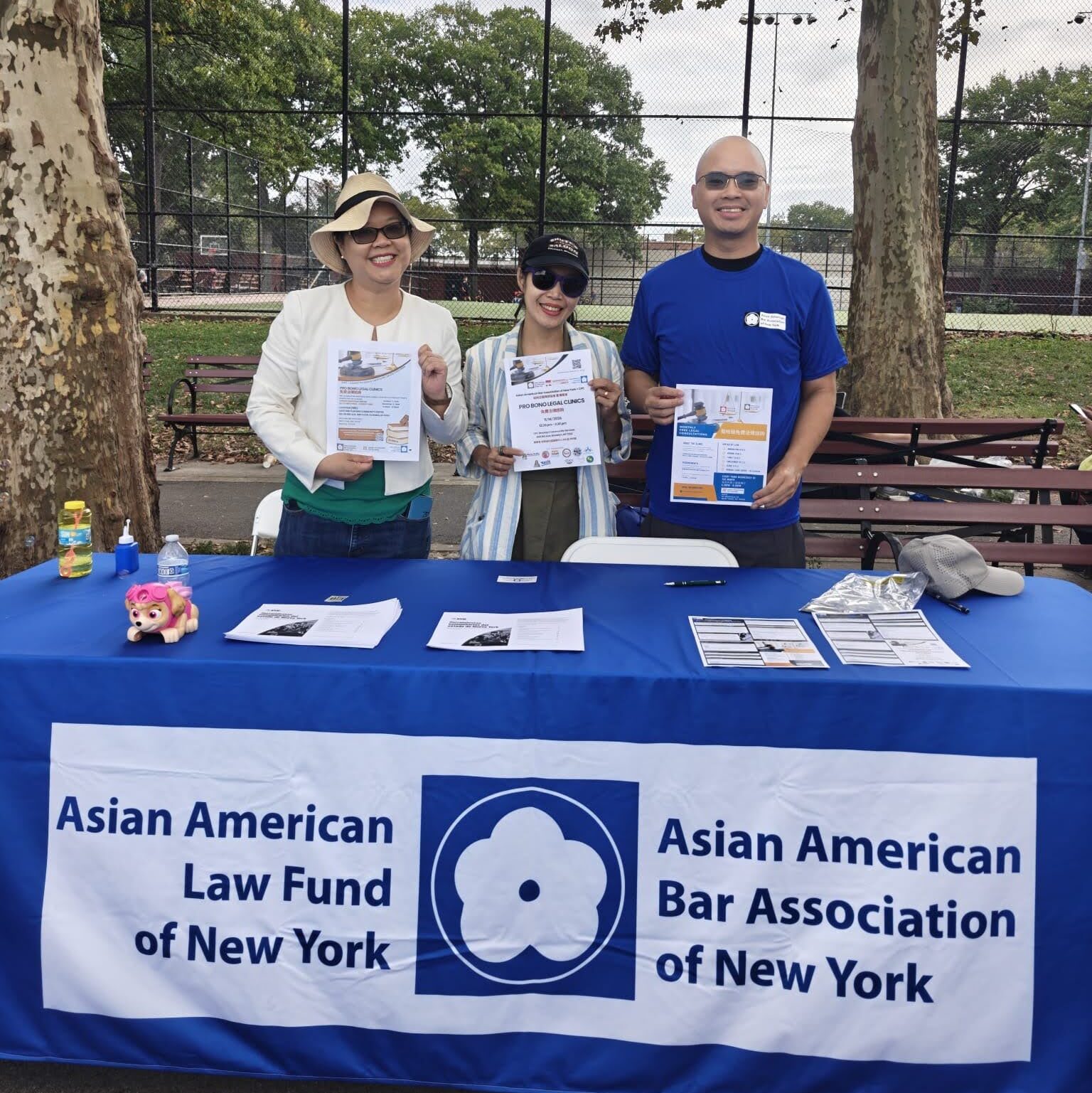
On September 19, 2026, the Asian American Law Fund (AALFNY) and AABANY’s Pro Bono & Community Service (PBCS) Committee co-hosted a community outreach table at RaisingHealth’s 11th Annual Health Empowerment Celebration Event in Sunset Park, Brooklyn. The event brought together community organizations and offered free health exams, hot meals, groceries, and other resources for local residents. RaisingHealth, formerly known as the Academy of Medical & Public Health Services, is a nonprofit health service organization founded in 2010 that supports underserved communities through culturally competent health, education, and community-building programs.

Community Outreach and Legal Resources

At the health fair, AABANY volunteers, including Kwok Ng, Co-Chair of the AABANY’s PBCS Committee, and May Wong, past Co-Chair of the PBCS Committee, along with Nandar Win Kerr, AALFNY’s Pro Bono and Grant Consultant, set up a table to pass out important resources, including:  

Public Charge Guidance

Throughout the fair, volunteers shared legal resources, flyers and Pro Bono Clinic promotional materials with more than 200 attendees. Volunteers also distributed Public Charge Guidance Info Sheets about the current changes to the public charge rule that took effect on September 18, 2026. A shout-out to the Asian American Federation (AAF), Chinese-American Planning Council (CPC) and Issues Committee (Co-Chairs Vishal Chander and Rachel Lee) for providing training, toolkits and resources that helped volunteers share accurate information with the community members in their native languages. 

The Public Charge materials were provided by the New York Immigration Coalition and Asian American Federation. The materials are available in 13 Asian languages: Arabic, Bangla, Burmese, Khmer, Chinese (Traditional and Simplified), Hindi, Japanese, Karen, Korean, Nepali, Urdu, and Vietnamese. 

Community members seeking assistance can contact the Mayor’s Office of Immigrant Affairs’ hotline at (800) 354-0365 or by calling 311 or the New York State Office of New Americans Hotline at (800) 566-7636. For more information, please visit Public Charge Guidance Info Sheets.

Upcoming Pro Bono Clinics 

October 7th – Queens: Interested volunteers should register here. 6:30 – 8:30pm, AAFE One Flushing Community Center, 133-29 41st Ave, 2nd Floor, Flushing, NY 11355

October 21st – Manhattan: Interested volunteers should register here. 6:30-8:30pm, AAFE Community Center, 111 Norfolk Street, NY, NY 10002 

November 14th – Brooklyn: Interested volunteers should register here. 12:30 – 3:30pm, CPC Brooklyn Community Services, 4101 8th Avenue, 3rd Floor, Brooklyn, NY 11232

Public Charge Rule Phone Bank on February 11 and 12

In light of the public charge rule that will go into effect on February 24, 2020, Catholic Charities Community Services will be hosting a phone bank in partnership with MOIA, ONA, Univision, Legal Aid, NYLAG and Hispanic Federation for a two-day phone bank on February 11 and 12, from 5pm – 8pm. 


The purpose of the phone bank is to answer questions, dispel fears for those who will not be affected, and urge those who will be impacted to seek legal advice and assistance with their applications. If anyone has questions about the public charge rule, please call the phone bank at the NYS New Americans Hotline at 1-800-566-7636. There will be language assistance available. 

NAPABA Submits Comment Opposing Proposed Public Charge Rule Targeting Immigrants

On Dec. 10, 2018, NAPABA submitted a public comment to the Department of Homeland Security to oppose the Notice of Proposed Rule Making (NPRM) “Inadmissibility on Public Charge Grounds,” which expands the definition of “public charge” and targets legal immigration. The NPRM prevents the reunification of families, creates unnecessary burdens for entry, and adversely impacts the health and safety of immigrant communities. NAPABA thanks its affiliates and members who submitted comments to the Department of Homeland Security opposing the proposed regulations. 

AABANY submitted its comments opposing the proposed public charge rule. To read it go to https://blog.aabany.org/2018/12/26/aabany-comments-on-public-charge-rule/?preview_id=6369&preview_nonce=262c63a5d0&preview=true

AABANY Comments on Public Charge Rule

On December 7, 2018, AABANY submitted comments to the US Citizenship and Immigration Services in opposition to the rulemaking on Proposed Inadmissibility on Public Charge Grounds. AABANY wrote:

The Asian American Bar Association of New York believes that this rule change will cause irreparable harm to our community. Many of AABANY’s members are immigrants, or children of immigrants, and are personally impacted by this rule. The Proposed Rule changes the rules of the system in midstream and are directly intended to prevent immigrants from becoming American citizens.

To read the full text of the comments, click here.

AABANY thanks the Community Response Task Force of the Issues Committee for leading this effort on behalf of AABANY.

NAPABA Opposes Plan to Redefine “Public Charge” and Limit Legal Immigration

The National Asian Pacific American Bar Association (NAPABA) opposes the proposed changes to “public charge” published Wednesday by the Department of Homeland Security (DHS). We urge our members and affiliated bar associations to join NAPABA in submitting public comments opposing the proposed policy.

Public charge policy has roots in long-time efforts to limit the admission of ‘undesirable immigrants,’ such as Chinese in the 19th century. The proposed rule would re-define a public charge as an immigrant who would be likely to receive government benefits from an expanded list of programs, including nutrition and housing assistance programs for children. The proposed rule will make it easier to designate an applicant as a public charge, and deny their admission to the United States or reject their permanent resident application. DHS also proposes stricter guidance for weighing certain factors when reviewing visa applications, such as age, income, health, English proficiency, and employability. NAPABA is greatly concerned with how these changes will negatively impact Asian and Pacific Islander immigrants, working families, and children’s health.

The proposal has already had a chilling effect on Asian Pacific American communities. Due to reports of these proposed changes, some immigrant families—including those with eligible U.S. citizen members—have unenrolled from important public services for which they qualify. If implemented, the new public charge rules would undermine the safety, health, and security of immigrant families by denying them the support historically provided to new Americans. Asian Pacific American communities will be particularly hard hit, as over 31% of new green card recipients are from Asian and Pacific Island nations and as there is significant variation in average income amongst Asian ethnic groups.

Take charge by submitting a comment on the proposed rule before the DHS proceeds with its final rulemaking by the deadline, December 10, 2018. NAPABA will be submitting comments as an organization, but individuals are encouraged to submit unique comments here. To see available resources, please click here. For more information, contact Oriene Shin, NAPABA Policy Counsel, at 202-775-9555 or [email protected].