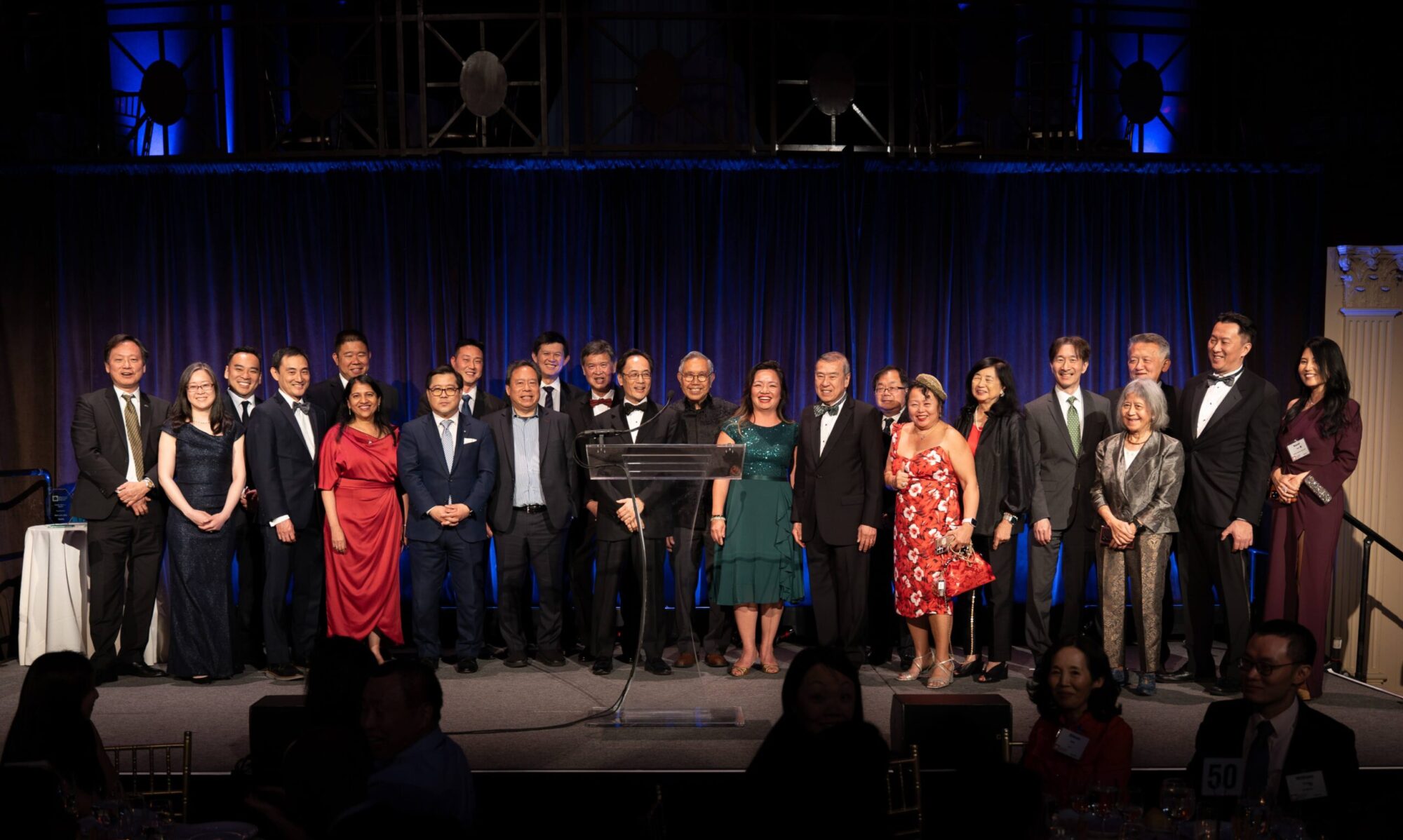

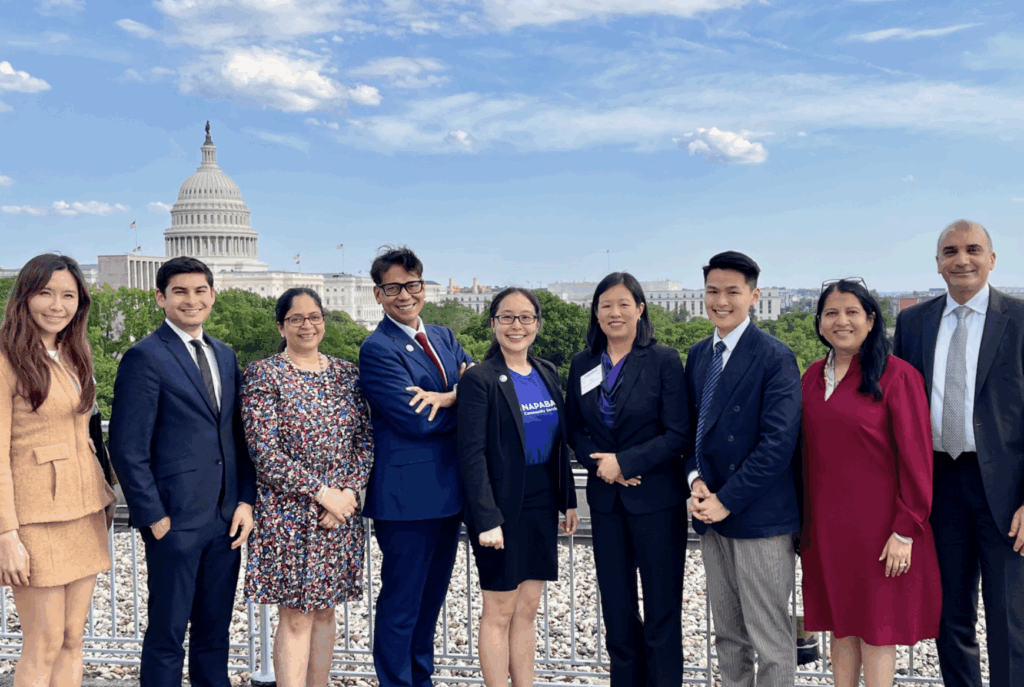
The National Asian Pacific American Bar Association (NAPABA) hosted its annual Lobby Day on May 19-20, 2026, bringing together many affiliate members, including those from the Asian American Bar Association of New York (AABANY) who traveled to Washington, D.C. to participate in this year’s NAPABA Lobby Day. AABANY members joined attorneys, judges, law students, and community leaders from across the country in advocating for policies that advance civil rights, protect due process, and strengthen the rule of law.
Representing AABANY were members of the our Issues Committee, including Co-Chairs Vishal Chander and Rachel Lee, along with other members of the New York delegation: Anushree Bagrodia, Charles Drucker, Linny Ng, Tiffany Ngeo, and Alex Pan. We also thank Glenn Magpantay, Northeast Alternate Regional Governor for NAPABA and AABANY Board Director, and Sapna Palla, NAPABA Board Member and former AABANY President, who joined the New York delegation.
Lobby Day began with a policy training session at Jones Day, where participants received briefings on NAPABA’s legislative priorities and advocacy strategies before meeting with congressional offices on Capitol Hill. The event also included the annual AANHPI Heritage Month Congressional Reception, which brought together NAPABA members, members of Congress, congressional staff, and community leaders from across the nation.
NAPABA’s 2026 Lobby Day focused on three core legislative priorities:
- Advancing civil rights through language access protections
- Promoting a fair immigration system through access to counsel
- Defending the rule of law by supporting judicial security measures
Advancing Civil Rights Through Language Access
The New York delegation urged congressional offices to support passage of the Language Access for All Act of 2026 (H.R. 7223), a bill designed to ensure that individuals with limited English proficiency have meaningful access to federally funded services through translation and interpretation assistance. NAPABA emphasized that language access is particularly important for the AANHPI community. Nearly one-third of Asian Americans are considered limited English proficient, making language access a critical civil rights issue.
This legislation would codify protections that were previously provided through Executive Order 13166—“Improving Access to Services for Persons With Limited English Proficiency”—and establish comprehensive language access requirements for federal agencies.
Promoting a Fair Immigration System
The New York delegation also educated Congress on the proposed Access to Counsel Act (H.R. 944/S. 391), which seeks to ensure that individuals with lawful status who are detained for prolonged inspections at ports of entry have meaningful access to legal counsel and family members.
NAPABA highlighted the importance of due process protections, particularly as immigration enforcement actions continue to affect immigrant communities across the country. The delegation stressed that individuals navigating the immigration system should be able to understand the process and access legal representation when their rights are at stake.
The delegation also discussed AABANY’s ongoing efforts to support immigrant communities through legal clinics, educational programming, and pro bono initiatives. (For more information about that, read the blog post about AABANY’s participation in the 2026 AAPI Summit hosted by Senator Gillibrand at the end of April by clicking here.)
Defending the Rule of Law and Judicial Independence
The New York delegation also advocated for passage of the Countering Threats and Attacks on Our Judges Act (H.R. 4602/S. 2379), bipartisan legislation aimed at addressing the increasing threats and acts of violence directed toward members of the judiciary. The bill would establish a State Judicial Threat Intelligence and Resource Center and provide resources to improve judicial security nationwide.
As attorneys, AABANY members emphasized that an independent judiciary is essential to maintaining public confidence in the legal system and preserving the rule of law. NAPABA noted that threats against judges undermine judicial impartiality and threaten the integrity of the courts.
Meetings with Congressional Offices
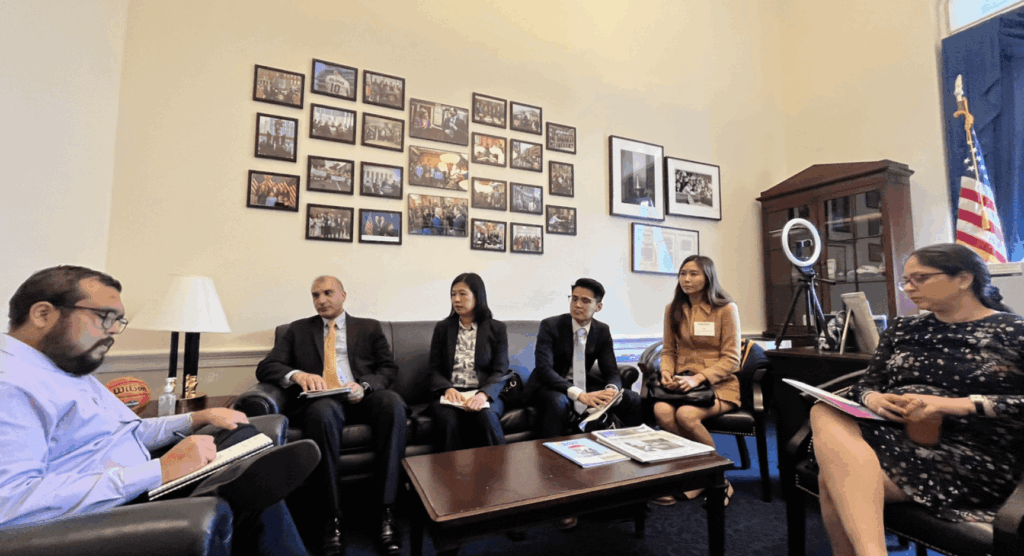
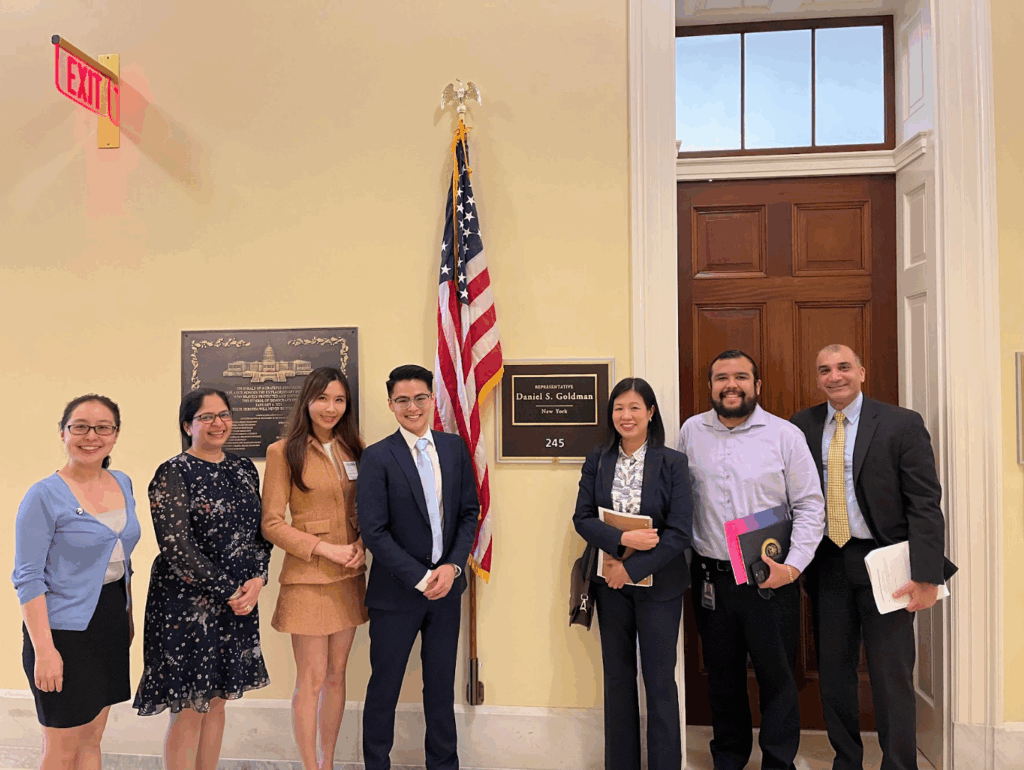
The New York delegation met with staff from several congressional offices, including New York Representatives Jerry Nadler (NY-12), Nydia Velázquez (NY-07), and Dan Goldman (NY-10). Discussions focused on NAPABA’s legislative priorities, including language access, immigration due process, and judicial security.
The delegation also highlighted the work of AABANY and NAPABA in supporting immigrant communities, educating lawful permanent residents about their rights, and providing pro bono legal services and training opportunities for attorneys. Follow-up conversations included discussions regarding immigration policy developments, legal aid initiatives, and opportunities for future collaboration between congressional offices and the AANHPI legal community.
Continuing the Work
Lobby Day provided an important opportunity for AABANY to bring the perspectives of New York’s AANHPI legal community directly to policymakers. Through these conversations, AABANY reinforced the role of attorneys not only as advocates in the courtroom but also as advocates for policies that promote justice, equity, and opportunity.
AABANY thanks NAPABA for organizing another successful Lobby Day and looks forward to continuing its partnership in advancing the interests of the AANHPI community and the legal profession nationwide.
For more information about NAPABA’s legislative priorities, click here.
To learn more about AABANY’s Issues Committee and how you can get involved, go here.
– Written by Vishal Chander, Board Member and Co-Chair of AABANY’s Issues Committee