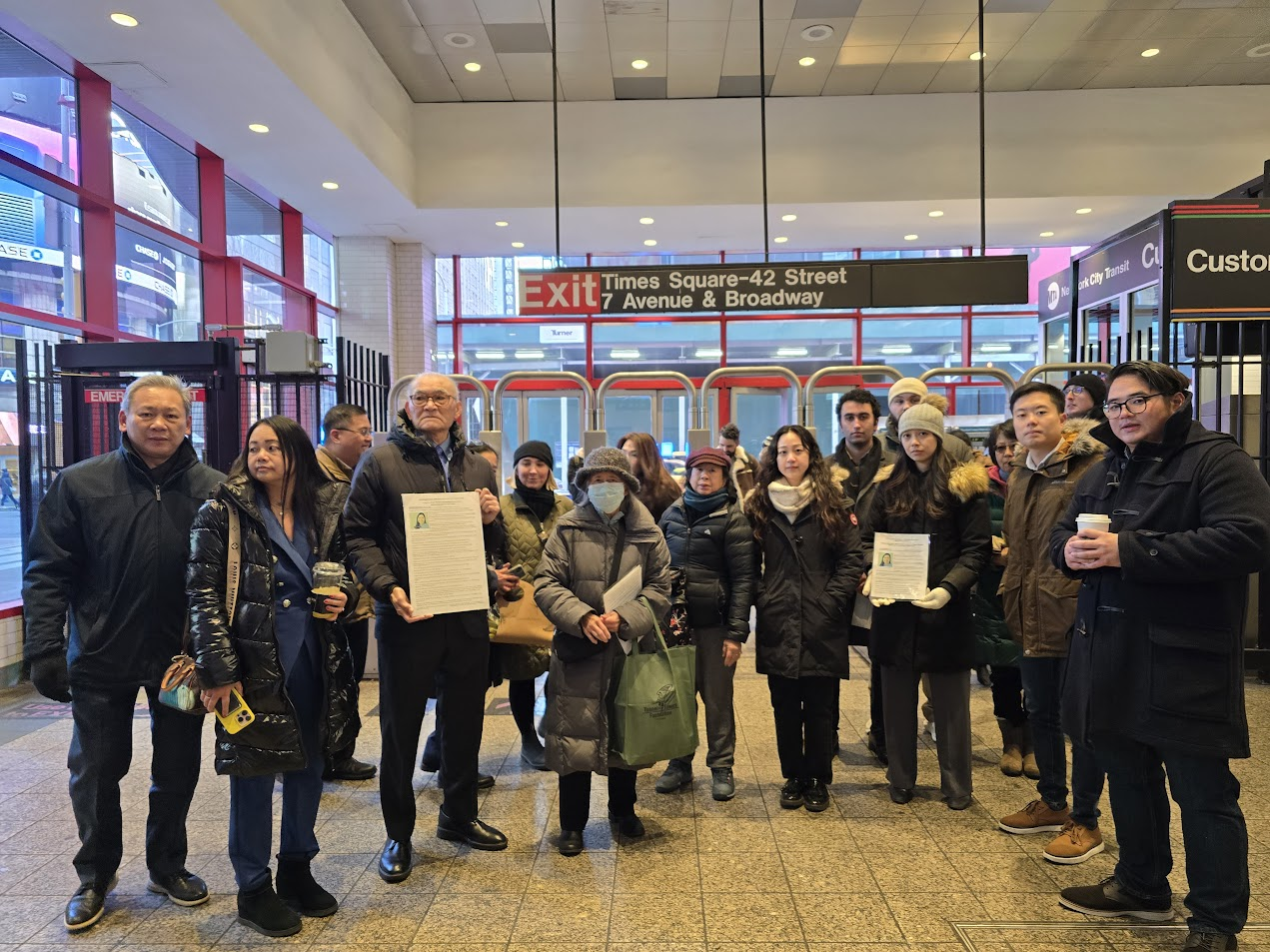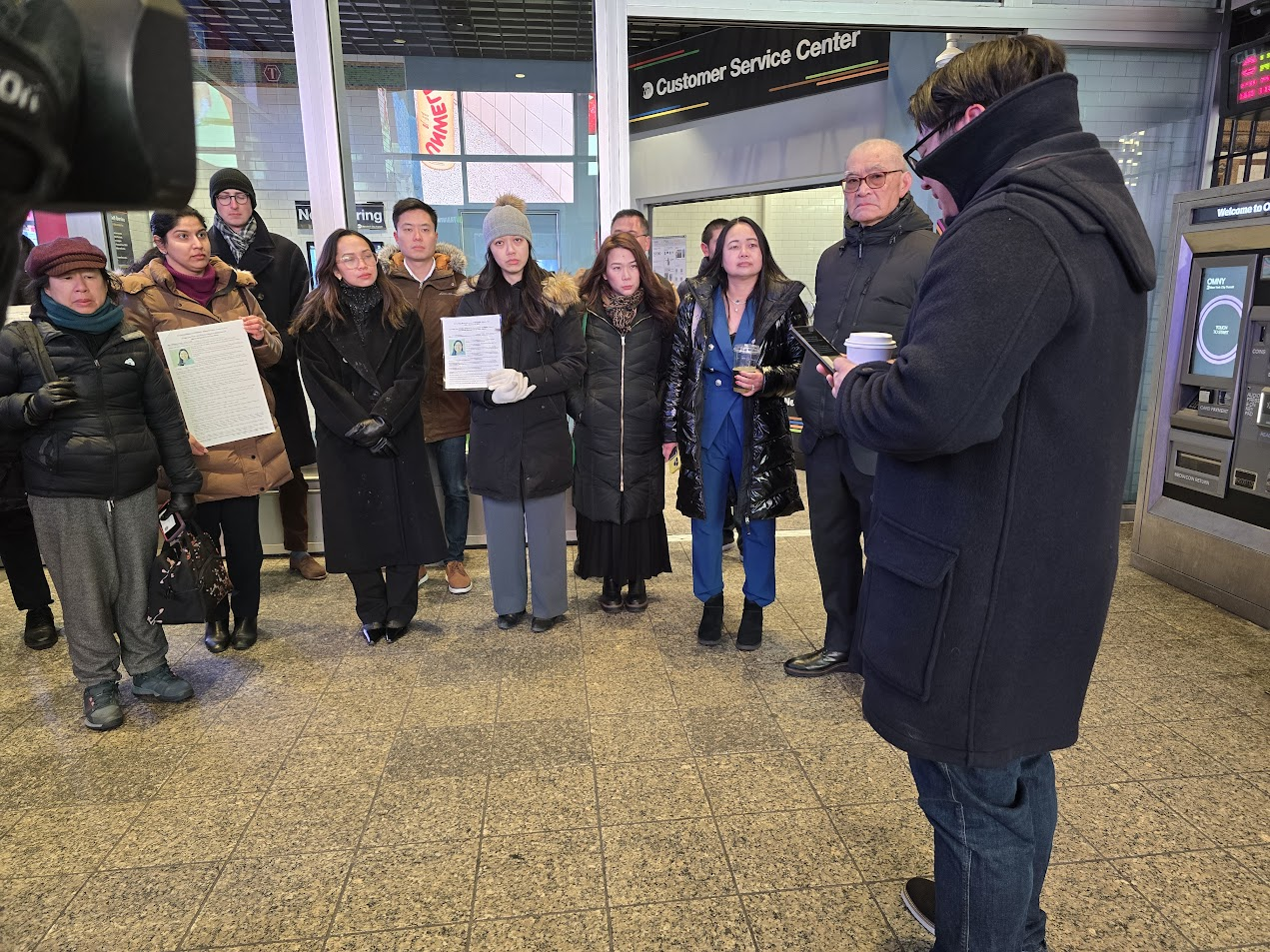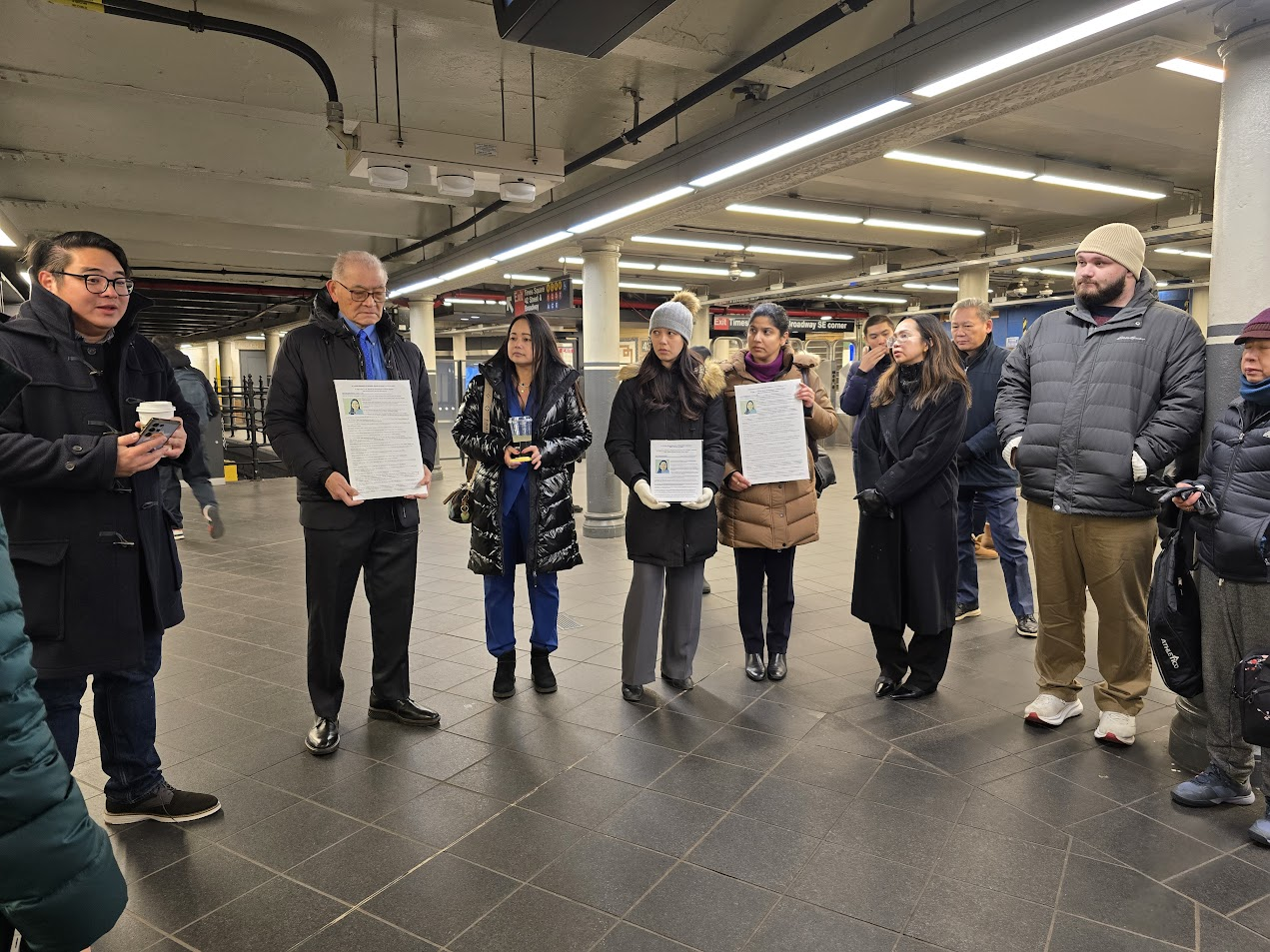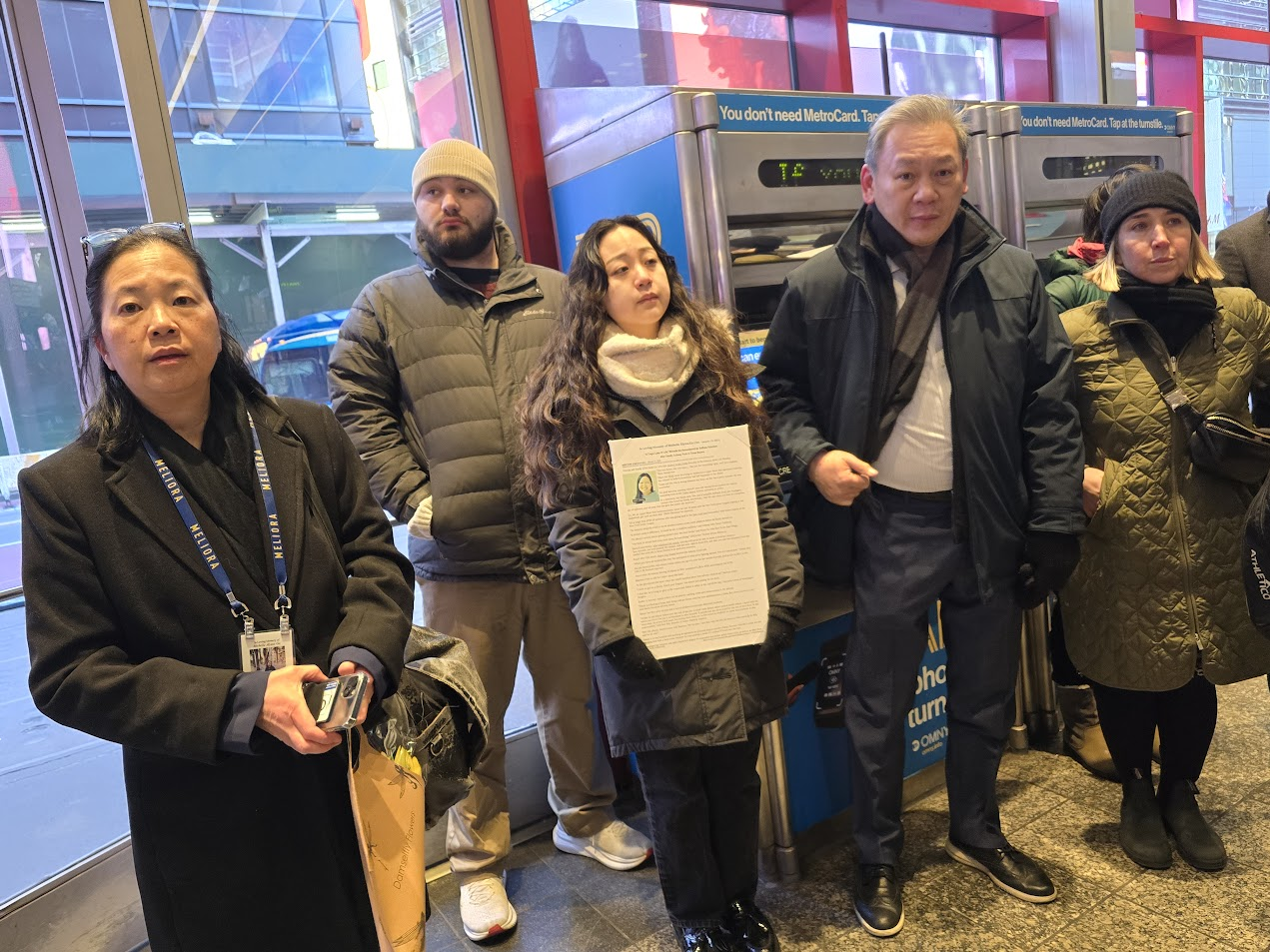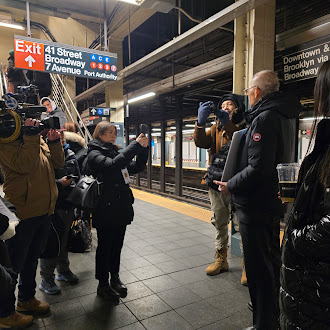

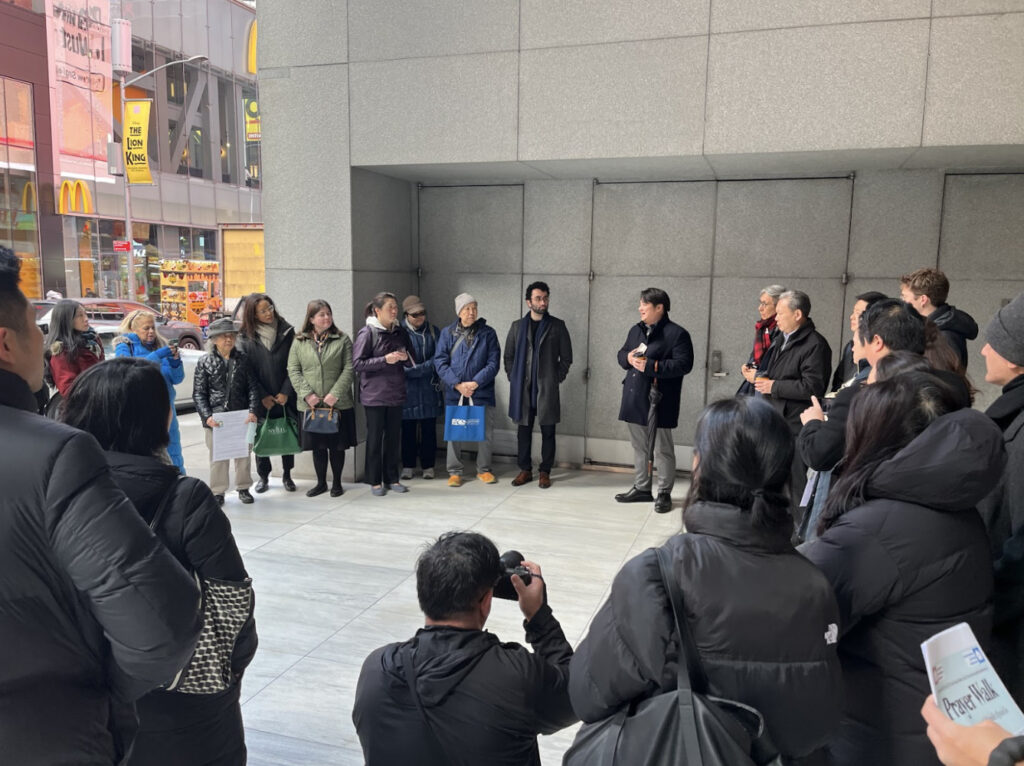
On the morning of Thursday, January 15, 2026, nearly 50 people braved the bone-chilling winds in Times Square to participate in a Prayer Walk commemorating the anniversary of Michelle Alyssa Go’s passing.
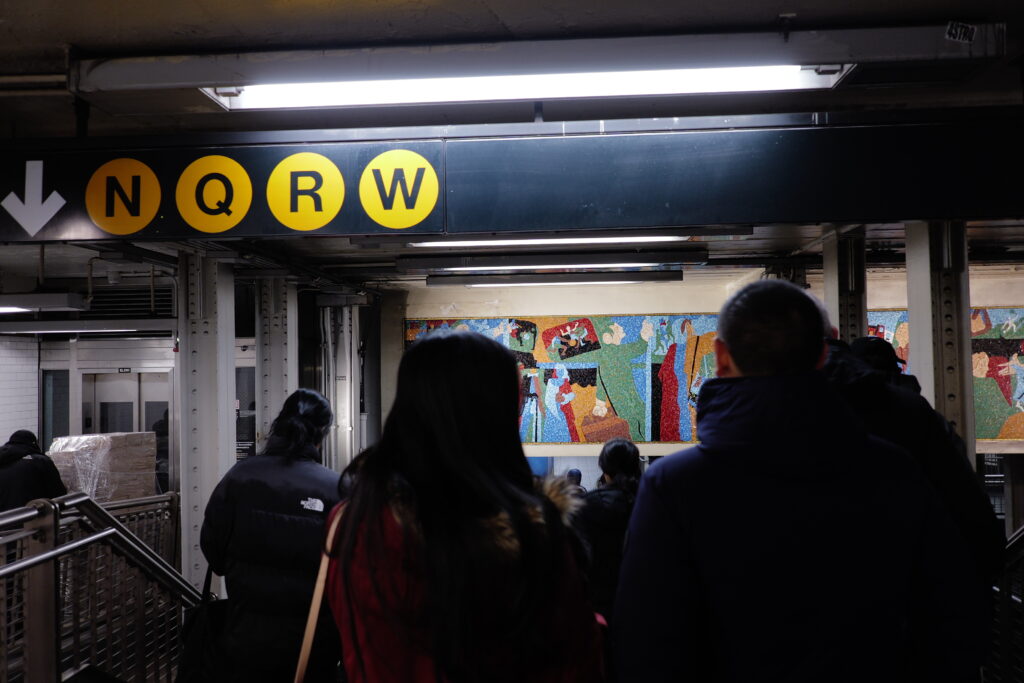
Four years ago, on an early Saturday morning, Michelle was standing near the edge of the downtown R subway platform at Times Square when Martial Simon charged at her and pushed her in front of an oncoming train, leading to her death.
Simon, then a 61-year-old homeless man with a history of schizophrenia and prior arrests, was later charged with second-degree murder in connection with Michelle’s death. This act of violence is a tragic example of the surge in anti-Asian hate incidents occurring in America during the COVID-19 pandemic. As noted by the Pew Research Center in 2023, anti-Asian sentiment rose following inflammatory political rhetoric, disinformation, and online extremism, specifically public officials’ use of terms like “Chinese Virus.” Though Asian Americans Advancing Justice (AAAJ) reported a slight decline in 2025 from 2023, anti-Asian hate crimes were still nearly triple pre-pandemic levels. California, New Jersey, New York, Washington, and Massachusetts reported the highest frequency.
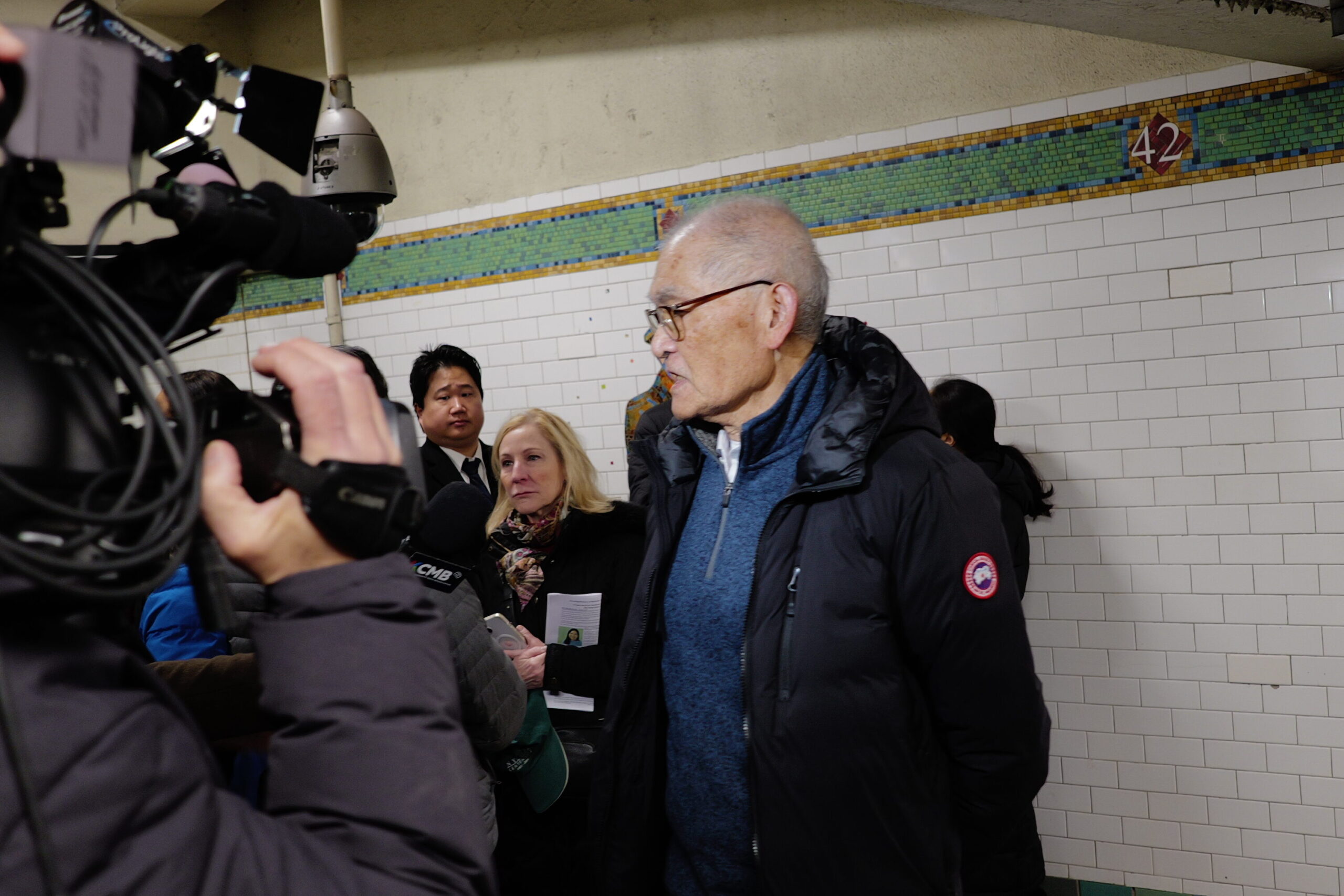
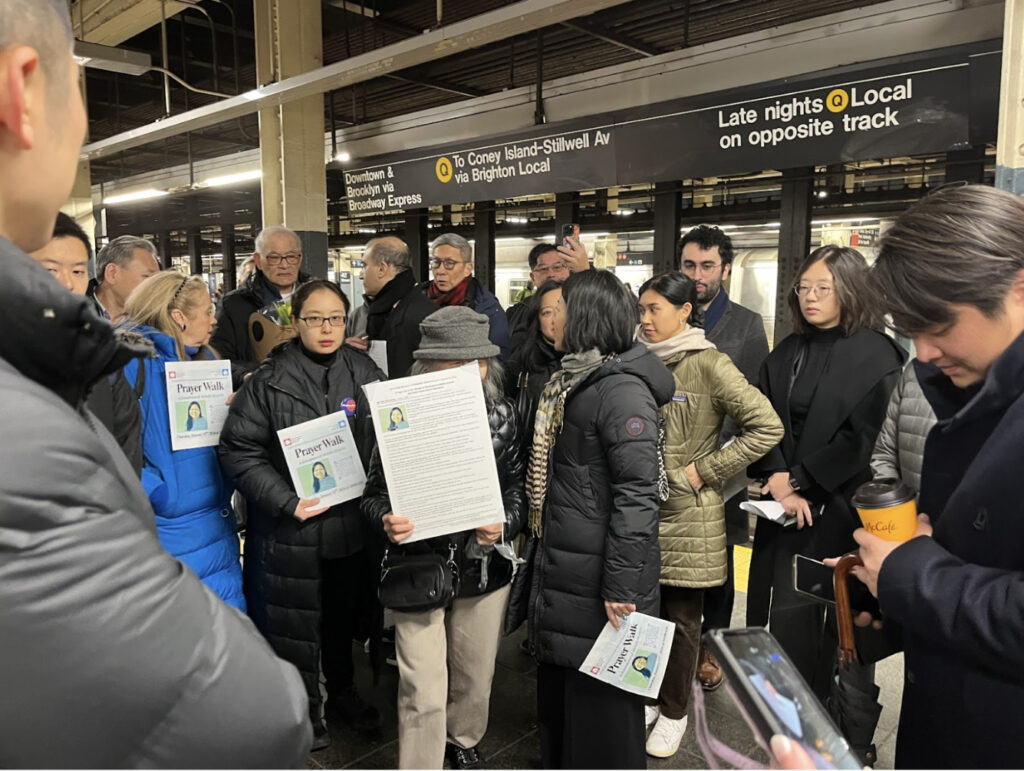
During the Prayer Walk, Reverend Cristobal Tong led the group to four specific stops, following the routine route Michelle took that day. Justin Go, Michelle’s father, shared highlights of her tragically short life with the mourners. Born in Berkeley and raised in Fremont, California, Michelle earned a degree in economics from UCLA in 2002, an MBA from NYU in 2010, and later worked at Deloitte in mergers and acquisitions. Michelle was an avid traveler who had explored the Caribbean as a child and frequently traveled to visit friends. Justin highlighted Michelle’s selfless nature, noting that she spent her free time volunteering to help homeless people and assist low-income New Yorkers through the New York Junior League. Despite his grief, Justin emphasized the importance of celebrating Michelle’s life and encouraged loved ones to let their suffering be temporary, as Michelle would have wanted them to continue finding joy in life.
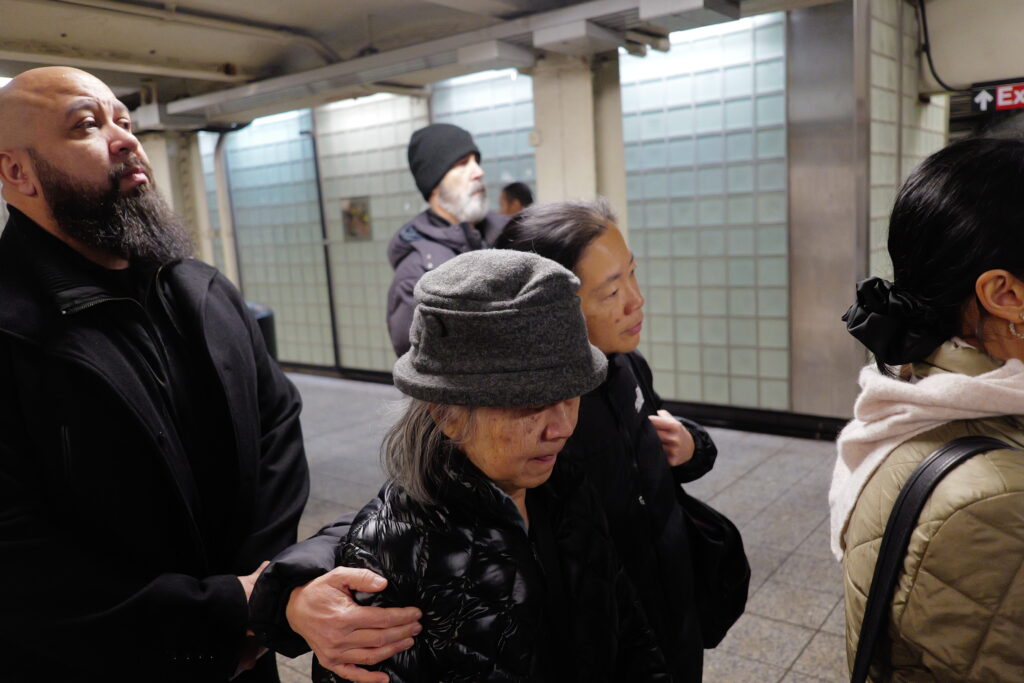
The Prayer Walk drew participation from a broad range of community figures and prominent Asian American New Yorkers. Notable attendees included attorney and activist Rockwell ‘Rocky’ Chin and retired U.S. Magistrate Judge Marilyn Go, both of whom are Co-Founders of AABANY. Additionally, Rachel Lee, President of Stand with Asian Americans and Co-Chair of AABANY’s Issues Committee, played a key role in organizing the walk.
I asked Elaine Chiu, a professor at St. John’s University School of Law, who attended the Prayer Walk, about the justice that may or may not be served for the Go family. Professor Chiu, who had previously chaired the Anti-Asian Violence Task Force, discussed the systemic failures surrounding this legal case. She emphasized that lawyers need to recognize that the justice system was not designed to effectively prosecute or assess individuals with severe and fluctuating mental instability. Furthermore, she lamented that the system is currently unequipped to provide defendant Martial Simon with adequate mental health care or to offer the Go family the justice they deserve.
Simon was initially deemed mentally unfit for trial and held at Kirby Forensic Psychiatric Center. After treatment, he passed a mental health evaluation in April 2024 but stopped taking his medication upon being transferred to Rikers Island. His disruptive behavior during a court appearance on April 30 resulted in his return to Kirby.
In response to systemic mental health issues, Governor Kathy Hochul signed legislation on May 9, 2025, allocating over $196 million to improve statewide mental health care, including $160 million for 100 new forensic inpatient psychiatric beds in New York City, and strengthening involuntary commitment laws and Kendra’s Law, which allows judges to mandate Assisted Outpatient Treatment (AOT) for individuals with severe mental illness who cannot safely live in the community without supervision. This law ultimately aims to prevent dangerous relapses while protecting both the public and the patient.
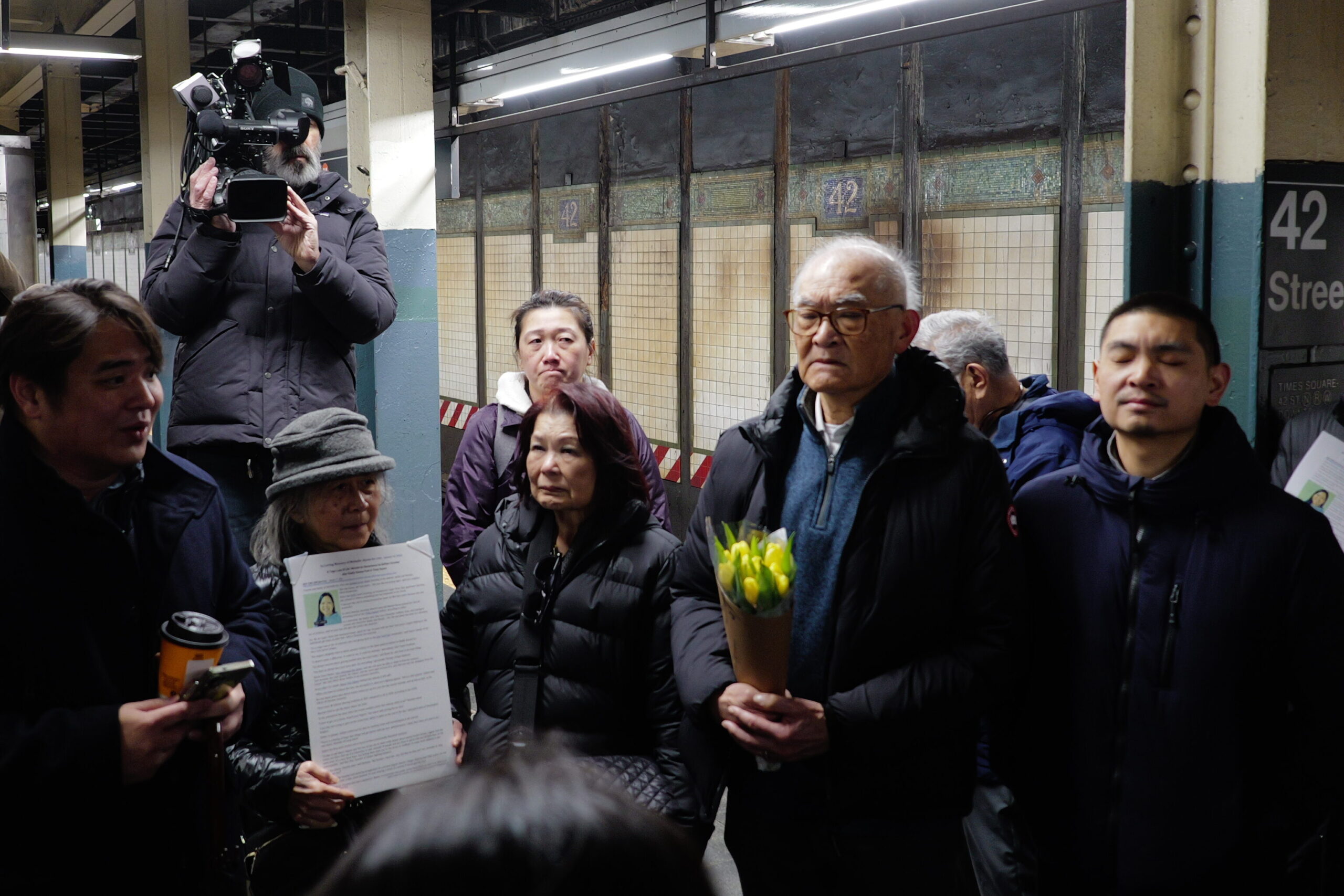
The Prayer Walk concluded at the R Times Square subway station, where the group stood on the platform to pray near the site where Michelle was murdered four years ago. Michelle was only 40 at the time of her death, and attendees who knew her remembered her as a bright and kind individual. Her death continues to fuel concerns regarding anti-Asian violence and the “revolving door” of psychiatric institutionalization. While the prosecution remains determined to bring Martial Simon to trial, the community continues to pray that lasting justice will finally be achieved.
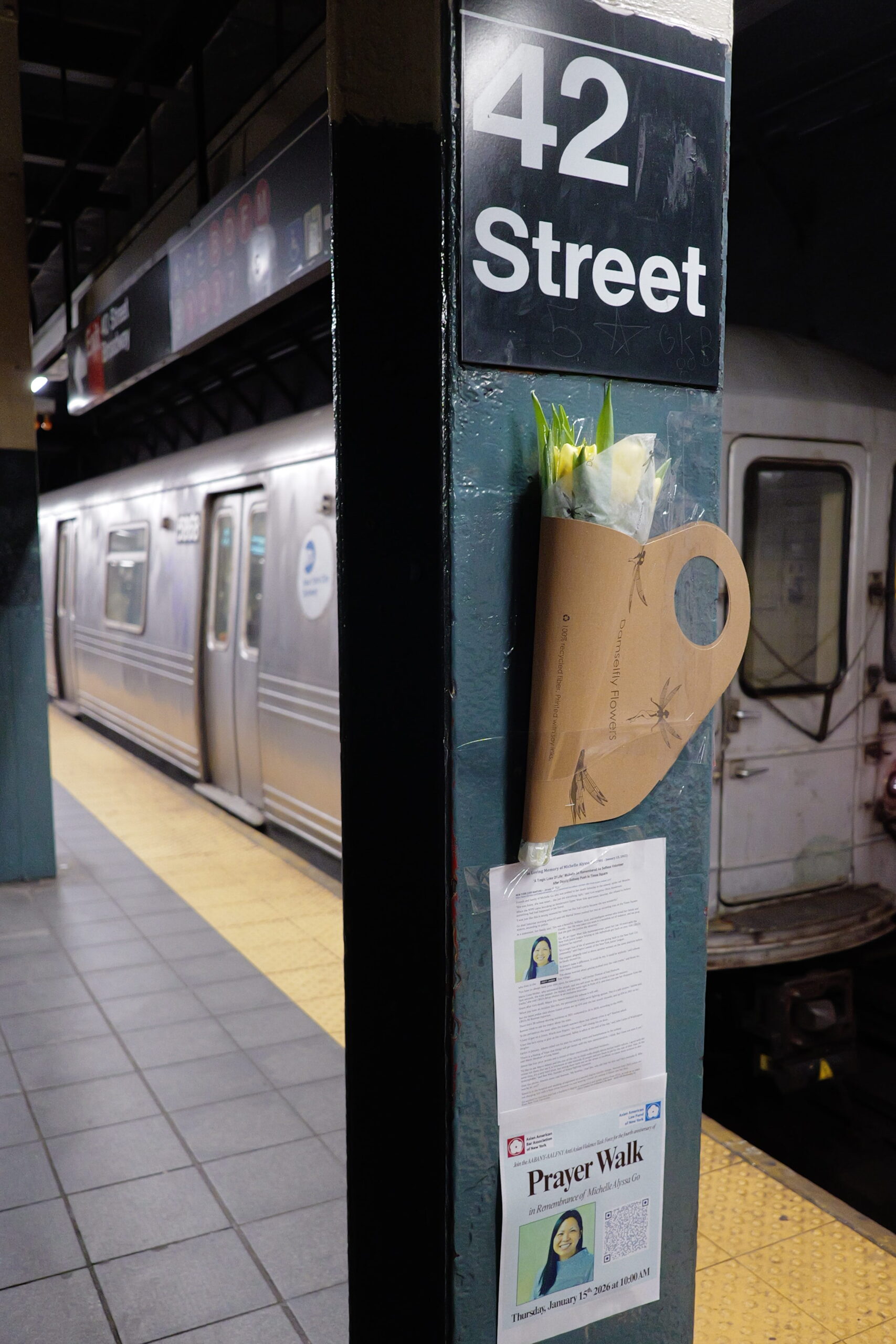
The Prayer Walk was organized by AABANY’s Anti-Asian Violence Task Force (AAVTF), established in response to the surge in anti-Asian hate during COVID-19. The Task Force, at its formation five years ago, included leadership from AABANY’s Issues, Pro Bono and Community Service, Prosecutors, Student Outreach, Legal Referral and Information Service, and Academic Committees. Partnering with AABANY’s affiliate, the Asian American Law Fund of New York (AALFNY), the AAVTF launched the Turning the Tide (T3) Project, a comprehensive initiative focused on education, communication, advocacy, and research. After releasing two reports, the AAVTF produced a documentary, “Voices Against Anti-Asian Hate,” which humanized victims’ and survivors’ experiences and was nominated for best short documentary at the New York Independent Art Film Fest. Throughout 2025, the film was screened nineteen times for various groups. A notable screening at the Asia Society featured a moving panel with Justin Go, Michelle Go’s father, and Sungkon Lee, Christina Yuna Lee’s father.
To view more photos from the Prayer Walk, click this link to the photo album. To learn more about AAVTF, please email [email protected].