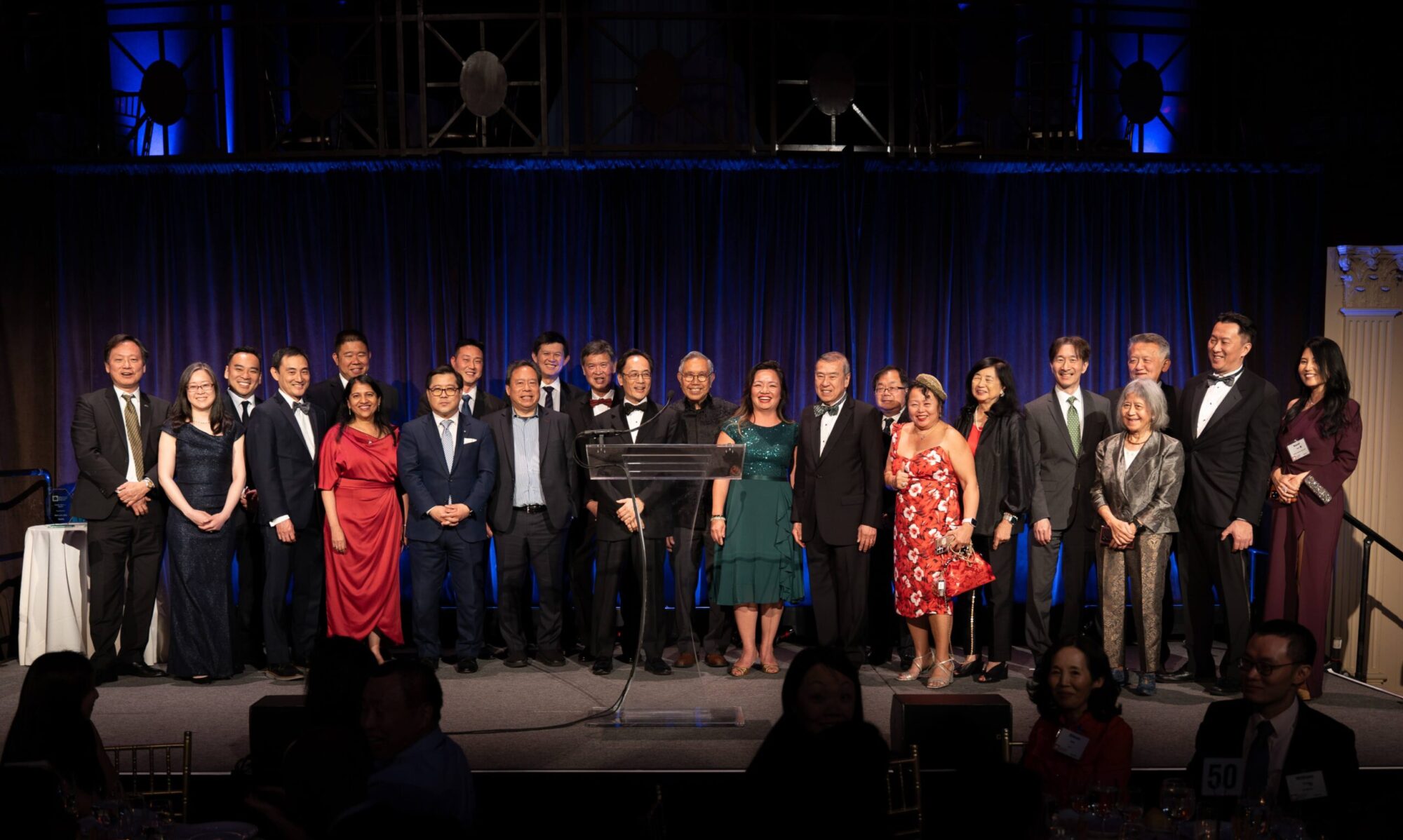

AABANY Presents “Born American: United States v. Wong Kim Ark” at Cadwalader, Wickersham & Taft LLP

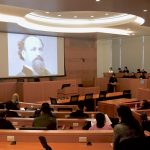
As Asian American, Native Hawaiian, and Pacific Islander Heritage (AANHPI) Month wound down, attendees gathered on May 27, 2026 in downtown Manhattan to watch the latest historical trial reenactment produced by the Asian American Bar Association of New York (AABANY) entitled Born American: United States v. Wong Kim Ark.

United States v. Wong Kim Ark, which established birthright citizenship as a Constitutional right in 1898, is AABANY’s 17th trial reenactment. This project brings to life notable cases involving Asian Americans, Native Hawaiians and Pacific Islanders, to spotlight significant ways that AANHPI individuals contributed to the legal, social, and political history of the United States. Reenactments are first performed at the National Asian Pacific American Bar Association (NAPABA) Convention in November, then again in May during AANHPI Heritage Month in New York. 

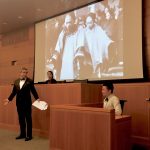
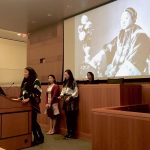
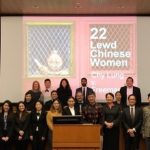
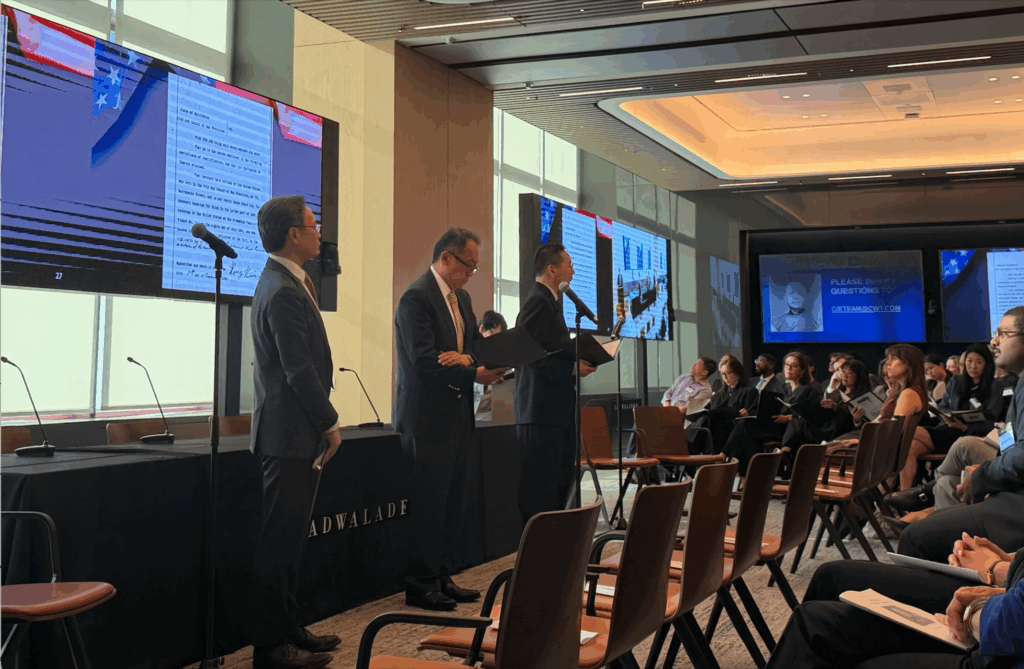
AABANY’s latest trial reenactment made its New York debut at Cadwalader, Wickersham & Taft LLP. Attendees settled in to watch a cast of 37 characters played by some 17 lawyers, including many AABANY members.

The reenactment had two narrators, who are also the writers, producers, and leaders of the AABANY Trial Reenactment team: Hon. Denny Chin, Senior United States Circuit Judge for the U.S. Court of Appeals for the Second Circuit, and Kathy Hirata Chin, a retired Partner of Crowell & Moring LLP and previously a retired Cadwalader Partner.

Other cast members included:

Anna Mercado Clark, Phillips Lytle LLP, Partner and Chief Information Security Officer (past NAPABA President, former AABANY Board Officer)

Vincent T. Chang, Law Clerk for Hon. James d’Auguste, Supreme Court, New York County, Commercial Division (former AABANY President)

Andrew T. Hahn, Hawkins, Delafield & Wood LLP, General Counsel (former AABANY, KALAGNY, and NAPABA President)

Yasuhiro Saito, Saito Law Group PLLC, Managing Partner

Francis H. Chin, Opensity Solutions, Senior Systems Engineer (AABANY Membership Director)

Yang Chen, Asian American Bar Association of New York, Executive Director (former AABANY President)

Pamela K. Chen, United States District Judge, Eastern District of New York

Concepcion A. Montoya, Hinshaw & Culbertson, Partner

Lauren U.Y. Lee, Korean American Family Service Center, Board of Directors; Cadwalader, Wickersham & Taft LLP, former Special Counsel

Kiyo A. Matsumoto, Senior United States District Judge, Eastern District of New York

Rose Cuison Villazor, Rutgers Law School, Professor of Law and Chancellor’s Social Justice Scholar

Jacob Chen, DGW Kramer LLP, Litigation Partner

Jane Kim, Wigdor LLP, Partner; former clerk for Hon. Denny Chin

Janicelynn Asamoto Park, Proskauer Rose LLP, Partner; former clerk for Hon. Denny Chin

Jessica C. Wong, Cadwalader, Wickersham & Taft LLP, Special Counsel
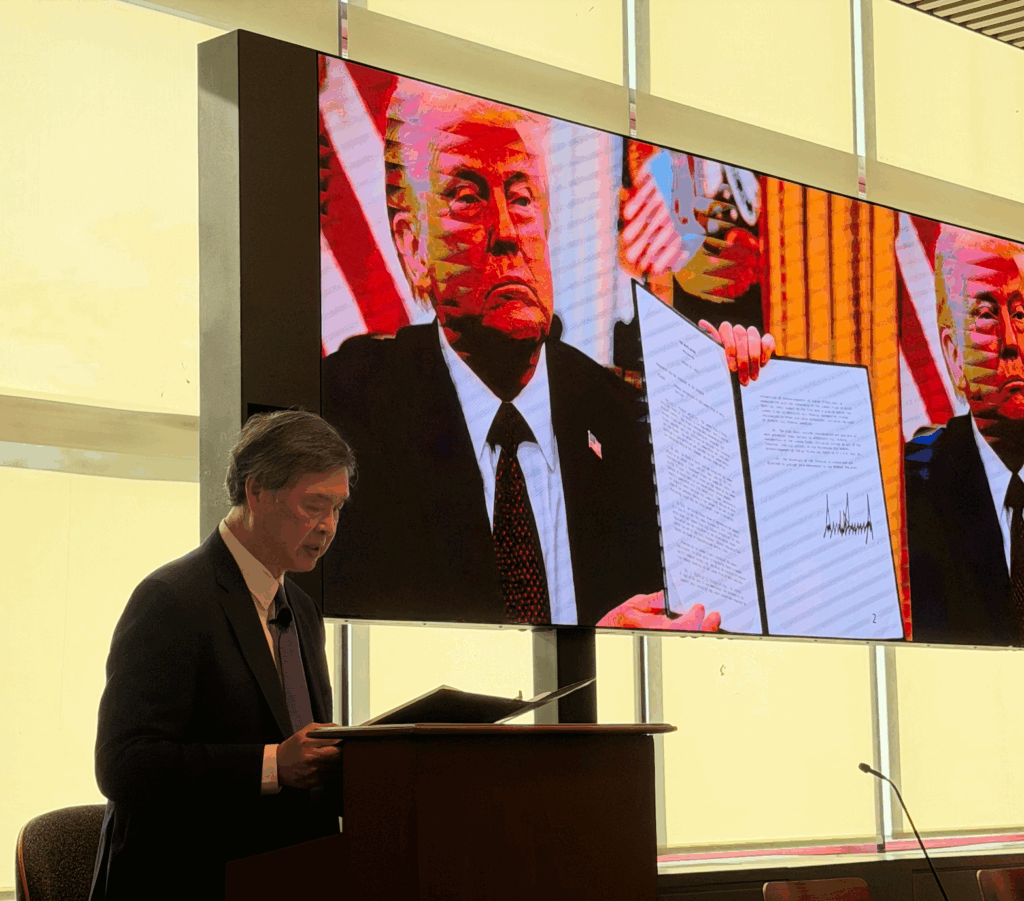
This reenactment was bookended by the case’s connection to current events. The narrators described President Donald Trump’s January 2025 Executive Order 14160, “Protecting the Meaning and Value of American Citizenship,” which sought to remove birthright citizenship from US-born children of parents who are undocumented or in the country temporarily. 

This case follows the story and life of Wong Kim Ark, who was born in San Francisco to Chinese immigrant parents in 1870, one of only 518 ethnic Chinese born in the United States that year. Wong took multiple trips back to China, before returning to America in 1894, at which point he was denied entry on the grounds of not being a citizen. 

That denial was appealed all the way to the United States Supreme Court. The question before the Court was whether Wong should follow the citizenship of his parents or of where he was born. The reenactment reconstructed the Supreme Court argument, for which no transcript exists, using the briefs, the resulting court opinions, news reports, and other historical documents. Arguments revolved around whether children born in the U.S. are “subject to the jurisdiction thereof,” under its plain meaning as stated in the Fourteenth Amendment. The original intent of Congress with regard to children born to foreign-born parents, as well as the implications of barring Wong Kim Ark’s birthright citizenship upon existing immigrant communities—European immigrants—and children of other nationalities, were also explored in the reenactment.

United States v. Wong Kim Ark affirmed Wong’s citizenship in a 6-2 decision in 1898, setting a legal precedent for more than a century. The majority ruling held that the 14th Amendment’s “ancient and fundamental rule of citizenship by birth within the territory” and its “peremptory and explicit language” all made Wong an American citizen.

However, Wong’s immigration troubles did not stop there, for either himself or his children. He lived in a time when anti-Chinese sentiment was rampant. Even within the decision itself, Justice John Marshall Harlan, for the dissent, wrote that “There is a race so different from ours that we do not permit those belonging to it to become citizens of the United States.” This captures the discrimination that society had at the time towards Chinese immigrants in America.

The reenactment further explored Wong’s life, as well as his family’s, after the
Supreme Court’s ruling. Wong was later arrested in 1901 upon crossing the US-Mexico border, though the case was eventually dismissed—because of United States v. Wong Kim Ark. His four sons, born in China, faced intense scrutiny when they sought to come to the United States seeking citizenship as sons of a U.S. citizen. They faced heightened suspicion and interrogation that stretched over weeks or months of detention and aimed to determine their familial relationship to Wong, a form of scrutiny common to Chinese immigrants in the early 20th century. 

The end of the reenactment returned to Trump’s executive order. The many lawsuits and preliminary injunctions that responded to Trump’s January order make frequent reference to United States v. Wong Kim Ark as well-settled precedent for birthright citizenship. The reenactment shares the responses to Trump’s Executive Order, including one from Judge Deborah Boardman in Maryland, who said that the executive order “conflicts with the plain language of the 14th Amendment [and] contradicts 125-year old binding Supreme Court precedent.”

In this context, it becomes vitally important to revisit Wong Kim Ark’s life and times. Amid the prevalence of anti-immigrant rhetoric during the 1890s, United States v. Wong Kim Ark set precedent for generations of immigrants, including Asian Americans, and was reaffirmed throughout a series of 20th century Supreme Court cases, including INS v. Errico, 385 U.S. 214 (1966) and Plyler v. Doe, 457 U.S. 202 (1982).

A discussion panel and Q&A session followed the reenactment, where questions of relevance to current times were at the forefront. Attendees questioned and discussed how America would change if birthright citizenship gets overturned. Mere months ago, the Supreme Court heard oral arguments for Barbara v. Donald J. Trump, the class action against President Trump’s executive order banning birthright citizenship. It was especially enlightening to hear Judge Chin talk about how putting together this reenactment made him understand his own family’s immigration history better and shined a light on often unspoken parts of the Chinese immigrant experience.

The reenactment highlighted the reaction from Wong Kim Ark’s great-grandson Norman Wong. Norman said in an interview for a documentary, “We thought [birthright citizenship] was a dead issue. These were rights we did not have to fight for anymore. It wasn’t something that anybody would have to worry about. … Now I’m glad [my great-grandfather] stood up.” 
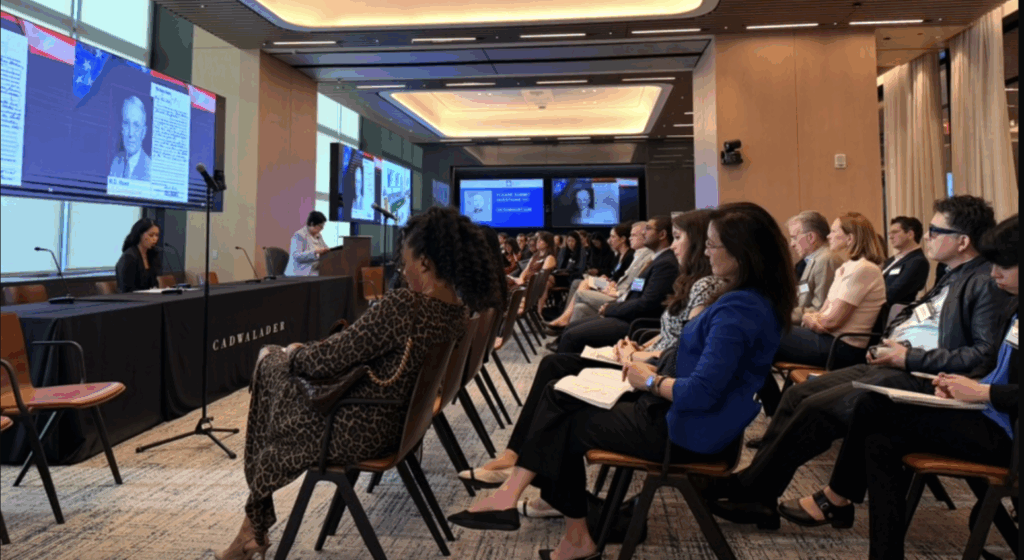
Following the reenactment, guests and participants enjoyed a networking and dinner reception, which included hors d’oeuvres, a dinner buffet, and a delicious handroll bar. Attendees mingled as they ate, reflecting on the reenactment and congratulating the actors for a job well done.

AABANY’s reenactment of United States v. Wong Kim Ark will be made available on AABANY’s trial reenactment website, where the script and materials can be shared upon request. AABANY’s past trial reenactment scripts are also available upon request. In fact, our most popular reenactment, “The Murder of Vincent Chin,” has been performed over 30 times globally. 

We are grateful to all of the participants in the reenactment for dedicating their time to this project. To learn more about the other trial reenactments AABANY has organized, please visit our reenactments website.
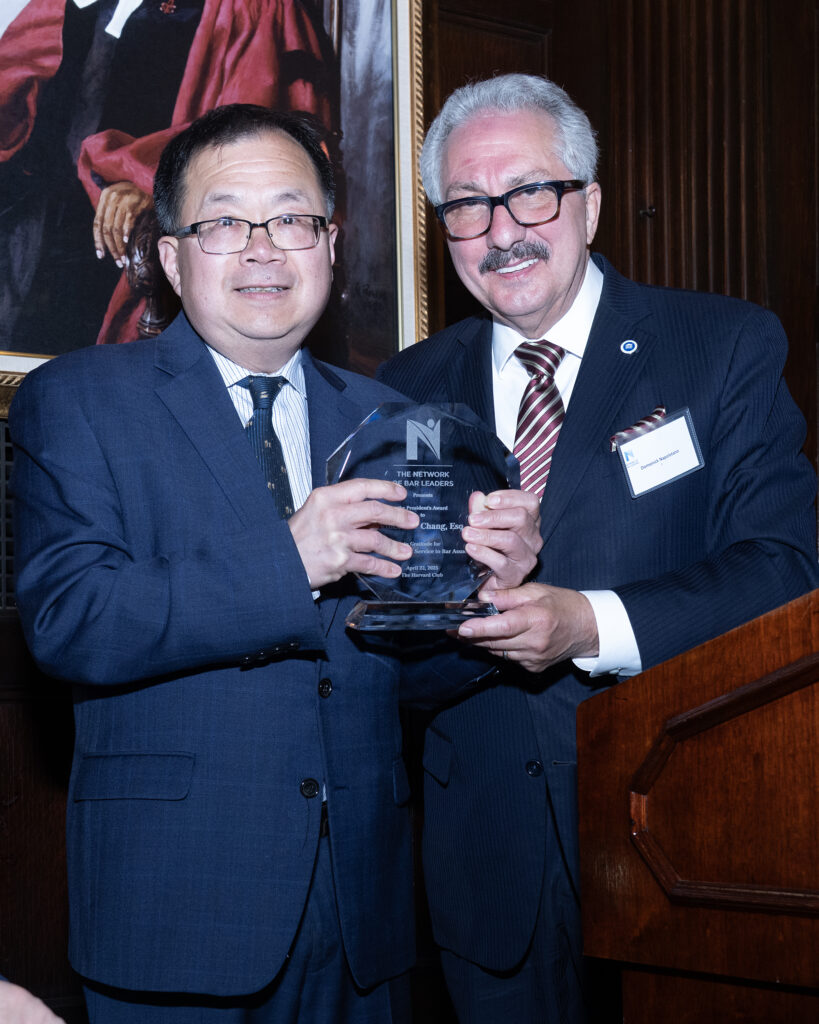
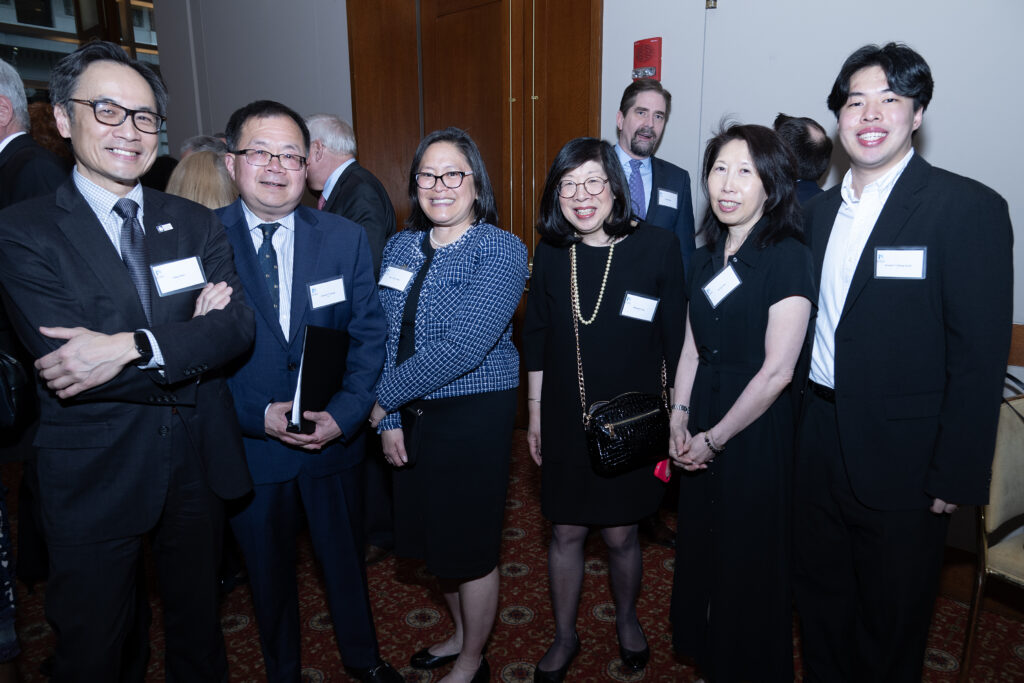
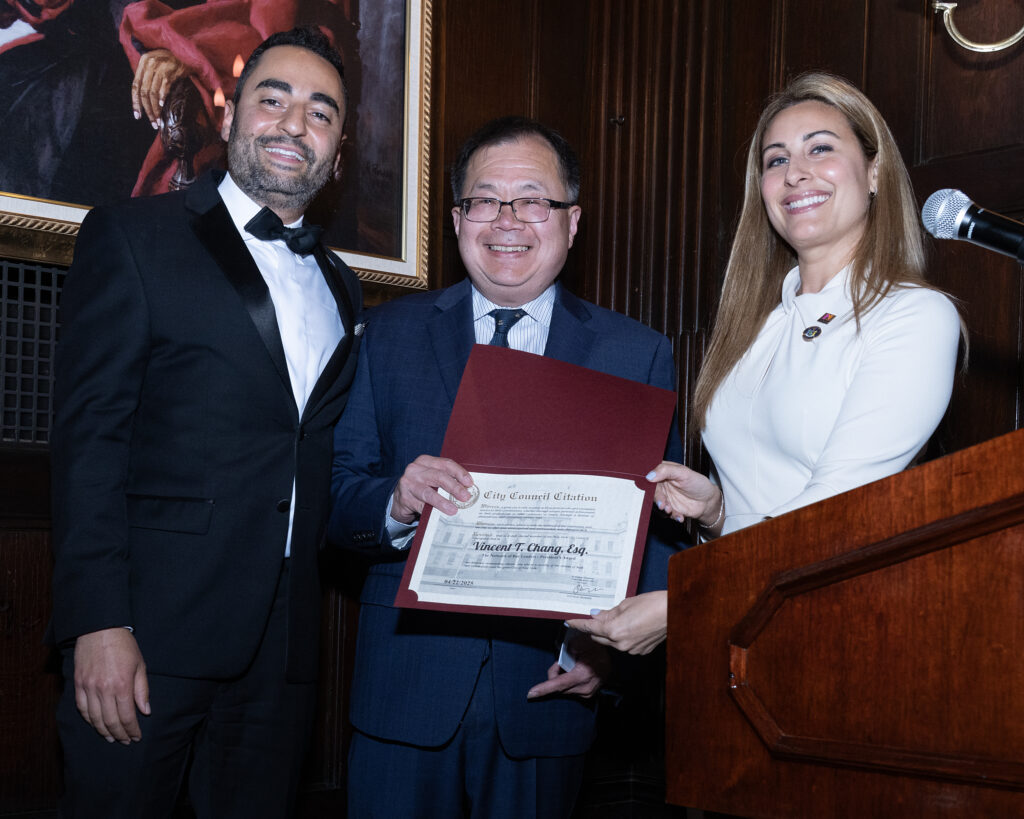
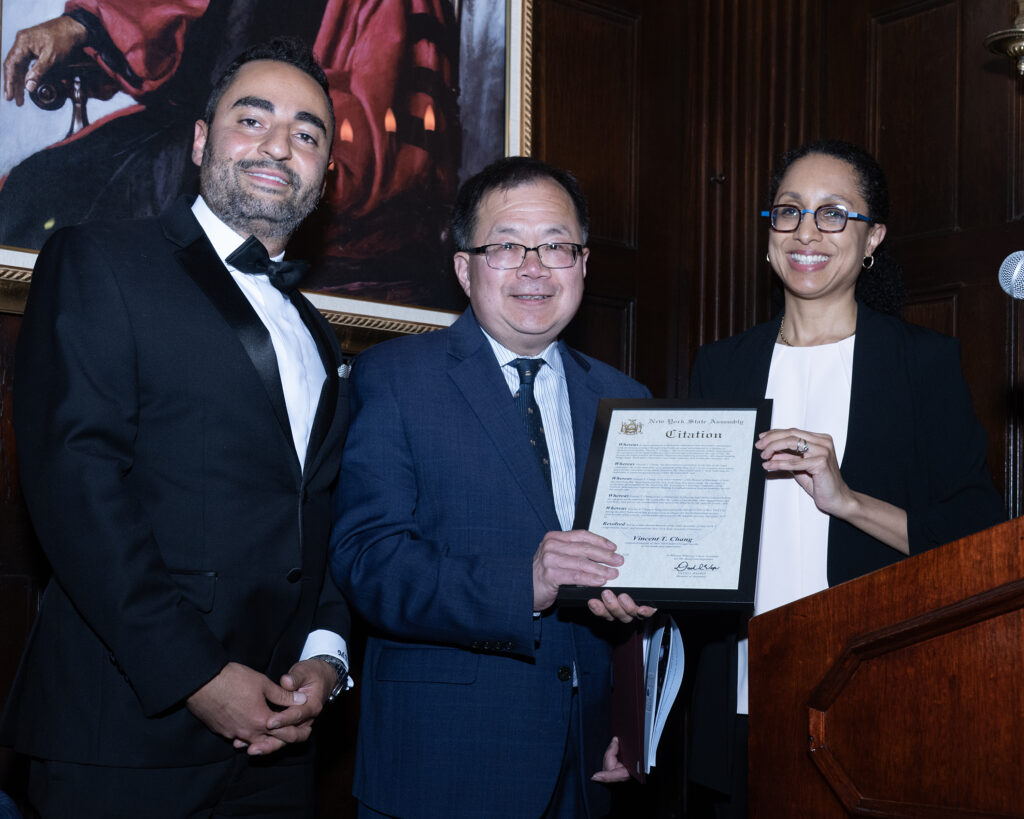
Congratulations, Vincent Chang, 2025 Recipient of The Network of Bar Leaders’ President’s Award

On April 22, 2025, at The Harvard Club in New York City, the Network of Bar Leaders, a coalition representing over 50 bar associations in the greater New York Metropolitan area, honored Vincent Chang, Esq., Counsel at Davis Polk & Wardwell LLP, with the President’s Award. The distinction is reserved for those who have advanced the legal profession through the values of leadership, collaboration, and community within and across bar associations.

With a legal career focused on complex commercial litigation, including securities, investment banking, hedge funds, bankruptcy, insurance, real estate, antitrust, and bondholder disputes, Vince brings a deep sense of responsibility to the profession. His resume includes serving as Immediate Past President of the New York County Lawyers Association (NYCLA), past President of the Asian American Bar Association of New York (AABANY), and a member of the Executive Council of the Network of Bar Leaders. He currently holds positions within the American Bar Association and the New York State Bar Association, including serving as a Special Advisor to the ABA’s Standing Committee on the Federal Judiciary. Vince is one of those rare leaders who has left a lasting mark on the legal community not only through his work in the courtroom but also through the time, energy, and care he has poured into the bar associations that shape the future of law.

Vince’s journey in bar association leadership began with AABANY, a formative role that contributed to his collaborative approach to leadership. “My goal was to bring people together,” he recalled. His efforts not only unified the group but also doubled AABANY’s membership during his term. His ability to lead with transparency and unity laid the groundwork for a generation of new leaders, including James Chou and Yang Chen, both past presidents of AABANY. Yang now serves as its Executive Director. Vince credits AABANY as the launchpad for much of his bar association work. “It was the leadership opportunity that started everything. Without AABANY, I wouldn’t have joined other bar associations, wouldn’t have become part of the American Bar Association, wouldn’t have been president of the Network.” His leadership at AABANY set a standard that continues to influence the future of the legal community.

From there, his bar service expanded across the legal landscape. At NYCLA, he guided the association through the difficulties of COVID-19, restructured its physical offices to ensure financial stability, and upheld its legacy as a pioneer in legal diversity. “It was the first bar association to admit people of color, women, and non-Protestants,” he shared. “Serving as President was a high point in my career.” His leadership not only preserved NYCLA’s legacy but positioned it to thrive in a new era of law and inclusion.

What motivates someone to give so much time and energy to bar associations while maintaining a demanding legal career? For Vince, the answer is simple: the people. “There’s a lot of fellowship in bar associations,” he explained. “You learn from great people. You get to do fulfilling work. And you really don’t need a huge time commitment to get started. If you put more into it, you get more out of it. But even a small investment of time can open doors—meet judges, build networks, find mentors.” His message to younger attorneys is clear: “Carve out the time, no matter how difficult it seems. Bar associations are a fulfilling activity, and one that young lawyers ought to get involved in immediately if they can.” By prioritizing bar association involvement, young attorneys can unlock opportunities that extend from just their legal practice.

Across every organization he’s served, Vince has consistently advocated for the judiciary, particularly in securing fair pay and resources. “There was a time when judges went more than a dozen years without a raise. That’s unacceptable.” Through reports, testimonies, and public education, Chang helped lead the fight for change. “Supporting the judiciary is some of the most rewarding work I’ve done,” he said. His dedication to judicial advocacy has helped redefine how legal professionals understand the vital role of court support.

Beyond his work in bar associations, Vince’s legal career includes moments that many attorneys only dream of. One of the most memorable was a case that took him all the way to the United States Supreme Court. “It was a landmark case for Morgan Stanley, involving separation of powers. I’ll never forget seeing the justices in person,” he shared. The case was decided 4–4, which meant the previous court’s decision stayed in place. While Vince’s team did not win at the time, their argument was proven right when a later case confirmed the same legal principle. It was an experience that left a lasting impression both professionally and personally.

For the next generation of lawyers, Vince advises: “Putting your head down and working at your desk 12 hours a day won’t be enough. You have to meet people. You have to network. You have to learn from the broader profession.” He’s honest about what he would’ve done differently. “I didn’t really get involved in bar associations until I was 40. If you start in your 20s, you’ll get so much more out of it.” His advice serves as a reminder that success is built on connections, experience, and a willingness to step out of one’s comfort zone.

However, Vince also sees real challenges ahead. As social media and changing lifestyles pull younger professionals away from traditional membership organizations, bar associations must adapt. “Many groups are struggling with membership. AABANY has done well because it has a young demographic to draw from and knows how to reach them. But we can’t take that for granted.” He points to studies like The Portrait Project to show how diversity efforts must continue beyond entry-level roles. “There’s a glass ceiling. Asian American attorneys are getting into the profession, but they’re not advancing at the highest levels—whether that’s partner, elected DA, or leadership in government. We need to figure out why.” The future of bar associations depends on their ability to evolve and break down barriers for underrepresented groups within the profession.

Vince’s contributions to the legal community go beyond his accolades and titles. They are a reflection to a life dedicated to service, leadership, and progress. Through his commitment to bar associations and mentorship of young attorneys, he has made a strong impact for generations to come. Vince’s legacy is not just in the offices he’s held or the cases he’s won, but in the lives he’s touched and the doors he’s opened for others. His leadership continues to shape the future of our legal system: one that is more inclusive, more equitable, and more united than ever before.

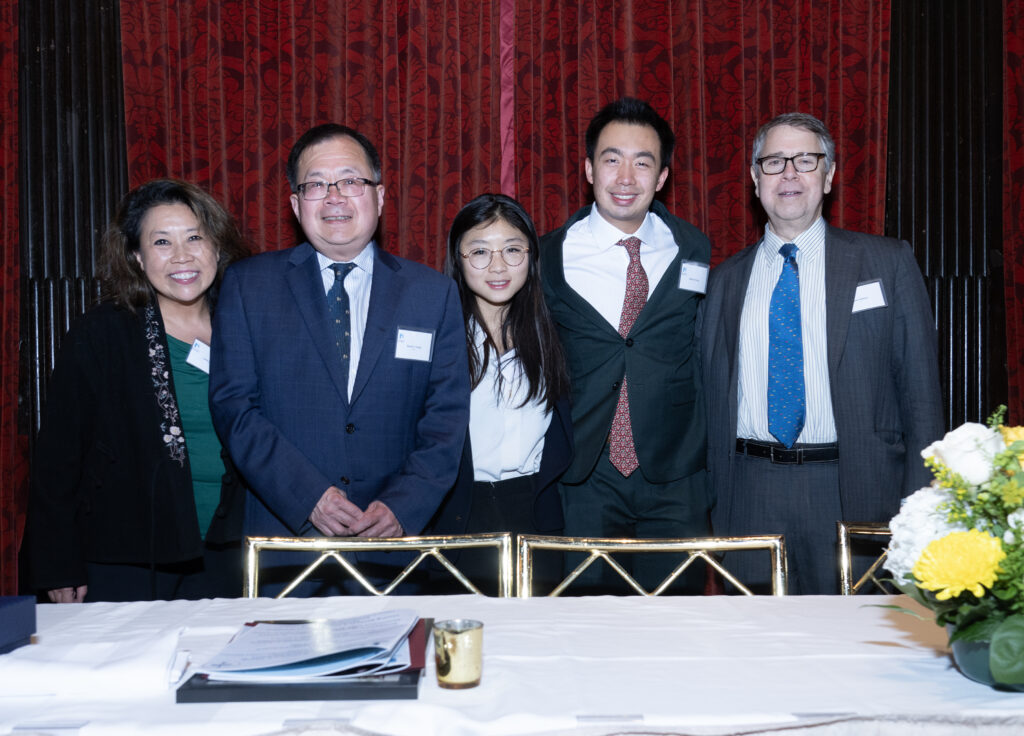
Vince reflected on the celebration with heartfelt gratitude: “I am deeply grateful to my friends from the Asian American Bar Association of New York for sponsoring and attending this event. Including myself, there were five AABANY Presidents present. AABANY has always been close to my heart, and I am thrilled to see its continued growth and success under the leadership of Yang Chen and Ben Hsing.”

Congratulations, Vince Chang, 2025 Recipient of The Network of Bar Leaders’ President’s Award!

In the News: Karen King Writes on her 9-0 Victory at the United States Supreme Court in Golan v. Saada

On October 7, 2022, Law360 published a piece written by AABANY Member Karen King titled “Key to a 9-0 Court Win: Look for a Common Ground.” Karen argued before the Supreme Court in March 2022 in Golan v. Saada, in which the Court decided in favor of Karen’s client in an unanimous 9-0 decision. Karen is a Partner at Morvillo Abramowitz Grand Iason & Anello, Co-Chair of AABANY’s Pro Bono and Community Service Committee, and an active member of AABANY’s Anti-Asian Violence Task Force. 

Karen has had an impressive and storied career, with accomplishments reaching back to before her time as a litigator. She was president of the debate team in high school and at Yale University, where she majored in philosophy and political science. After Yale, Karen received her J.D. from Harvard Law School and started her career at Cravath. Two decades later, Karen continues to appear in federal and state courts on behalf of corporate clients while also taking on pro bono clients, being named a “Notable Woman in Law” by Crain’s New York Business and receiving both the Federal Bar Council’s Thurgood Marshall Award for Exceptional Pro Bono Service and the National Asian Pacific Bar Association’s Pro Bono award. Her pro bono clients include victims of discrimination, survivors of domestic violence, students with learning disabilities, victims of gun violence, and prisoners in civil rights issues. 

In the article, Karen writes about the strategies and steps her team undertook to prepare for arguing Golan v. Saada before the Court. 

The case concerned an Italian citizen who filed a petition with the U.S. District Court for the Eastern District of New York to return his child to Italy through the Hague Convention on the Civil Aspects of International Child Abduction. Narkis Golan, the child’s mother, petitioned the court to prevent the child’s return to Italy, as the father’s history of abuse would put the child at a risk of psychological harm. The Court of Appeals for the Second Circuit and the District Court for the Eastern District of New York agreed that the child could be required to return to Italy by finding “ameliorative measures” to prevent such harm to the child. When Karen brought the case to the Supreme Court for Golan, the issue was whether, under the Hague Convention, courts must consider all possible “ameliorative measures” which would lead to the return of a child to their country of habitual residence. The Court ruled in favor of Karen’s client, finding that courts are not obligated to find options that will enable the child’s safe return before denying return based on a risk of harm. Karen describes in her article how she and her team navigated the diverse judicial philosophies of the Court’s justices to achieve a 9-0 victory. 

Karen and her team took a keen interest in the judicial philosophies and oral argument preferences of justices on the Court to draw broad support from the bench. For example, Karen argued that the Second Circuit’s requirement to consider “ameliorative measures” which would favor return was an outcome not grounded in the text of the Hague Convention—an approach smartly tailored for textualist justices. Karen also writes that this case demonstrated how oral arguments offer not just opportunities for petitioners and respondents to emphasize certain legal points, but also chances to shape the justices’ thinking on the case. 

In addition to demonstrating shrewd foresight through a textualist argument, Karen also underscored the importance of children’s interests in the Hague Convention text. These approaches to Karen’s oral argument performance were reflected in the Court’s opinion, where Justice Sotomayor remanded the case back to the U.S. District Court for the Eastern District of New York. The justice drew upon the textualist ideas and child interest issues which Karen had brought forth during oral argument. 


Karen’s article also reflected on the challenges she faced in preparing for oral argument at the Court for this case, as COVID-19 restrictions and partisan tensions reached new heights during preparations. 

Lastly, Karen’s presence alongside two other Asian American litigators at oral argument before the Court places this case in Asian American legal history. The strategies Karen outlined for stellar advocacy go far beyond Golan v. Saada. As an Asian American community leader, Karen advocates for greater diversity in courtrooms and law firms, guides young litigators, and gives back to communities through pro bono work. AABANY is proud to see the inspiring work Karen King has done inside and outside of her role as a litigator, and we are excited to see how else she will continue to be a leading example for the Asian American community. 

The full article can be found at:

https://www.maglaw.com/media/publications/articles/2022-10-07-morvillo-abramowitz-partner-karen-king-mentioned-in-law360-article

AABANY Joins NAPABA’s Amicus Brief in the Supreme Court Opposing the Addition of a Proposed Citizenship Question to the 2020 Census.

On April 1, 2019, the National Asian Pacific American Bar Association (NAPABA) and the Asian American Legal Defense and Education Fund (AALDEF), joined by Sixty-four (64) bar associations and AAPI-serving community organizations, submitted an amicus brief to the U.S. Supreme Court in Department of Commerce v. New York (18-966) opposing the addition of a proposed citizenship question to the 2020 Census.

In a press release, NAPABA stated:

On April 23, the Supreme Court will hear an appeal in Department of Commerce v. New York (18-966).  In January, the Southern District of New York found that the Administration’s decision to add the question was ‘arbitrary’ and ‘capricious,’ and that it violated the Administrative Procedure Act. In a related challenge, California v. Ross, the Northern District of California found the Administration violated the Administrative Procedure Act and the Enumeration Clause of the Constitution. A decision is pending in a third challenge, involving AAPI and Hispanic plaintiffs, in the District of Maryland.

The AAPI organizations urge the Court to uphold the district court’s ruling to enjoin the addition of the citizenship question: Amici agree with the district court ’s finding that the addition of a citizenship question will likely lead to an undercount of noncitizen households of at least 5.8 percent. . . . This chilling of participation in the 2020 Census will have a disproportionate effect on the AAPI community. . . . These heightened concerns for the AAPI community come at a crucial moment, because Asian Americans are the fastest-growing racial group in the country and stand to make substantial gains in political representation based on that population growth.

AABANY is pleased to announce that it is a co-signatory to NAPABA’s amicus brief in the Supreme Court opposing the addition of a proposed citizenship question to the 2020 census. The addition of the citizenship question will negatively impact the Asian American and Pacific Islander community. It will depress response rates from Asian Americans, the fastest growing racial group and the largest segment of new immigrants in the country, and impact our ability to protect our rights and ensure political representation.

To read the full press release and the amicus brief, click here.

Hon. Kiyo Matsumoto Participates in Honoring Justice Sonia Sotomayor at the New York City Bar

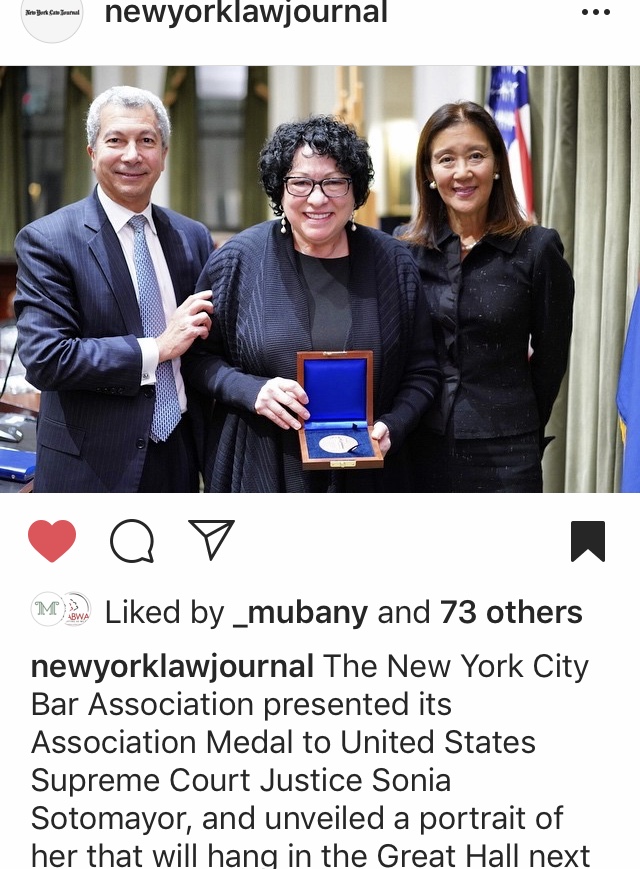
On March 7, 2019, Hon. Kiyo Matsumoto, District Judge of the United States District Court for the Eastern District of New York, participated in honoring Supreme Court Justice Sonia Sotomayor at the New York City Bar Association for her commitment to upholding the rule of law and for being a role model to young students all across America.

At the event, Justice Sotomayor was honored with the unveiling of her portrait that will hang in the New York City Bar’s Great Hall and presented with the New York City Bar Association Medal. The Association Medal is a very prestigious honor that has only been conferred upon a total of 25 people in the last 67 years prior to Justice Sotomayor.

The awardees are chosen by the New York City Bar’s Executive Committee acting upon the nomination of the New York City Bar’s Honors Committee. Judge Matsumoto, a long time member of AABANY, is the chair of the Honors Committee.

The event was covered by the New York Law Journal. To read the article, click here.

PRESS RELEASE | NAPABA Statement on the Nomination of Judge Brett Kavanaugh to the Supreme Court – National Asian Pacific American Bar Association

PRESS RELEASE | NAPABA Statement on the Nomination of Judge Brett Kavanaugh to the Supreme Court – National Asian Pacific American Bar Association

An Unsung Hero in the Story of Interracial Marriage – The New Yorker

An Unsung Hero in the Story of Interracial Marriage – The New Yorker

NAPABA Expresses Disappointment That an Asian Pacific American Was Not Nominated to the United States Supreme Court; Vows to Support the President’s Nominee

For Immediate Release
March 16, 2016

For More Information, Contact​​:
Brett Schuster, Communications Manager
202-775-9555; bschuster@napaba.org

WASHINGTON — Today,
President Barack Obama announced the nomination of Judge Merrick
Garland to serve on the United States Supreme Court. The National Asian
Pacific American Bar Association (NAPABA) congratulates Judge Garland on
his nomination.

“We
urge the Senate to hold a fair hearing and a timely vote on the
President’s nominee, Judge Garland. It is critical to the stability of
our judicial system that the Supreme Court’s vacant seat be filled
promptly,” said Jin Y. Hwang, president of NAPABA. “Although we are
disappointed that the President missed an opportunity to make history by
nominating the first Asian Pacific American to the Supreme Court, we
celebrate the fact that Judge Sri Srinivasan was interviewed and vetted
for a possible nomination, which represented the first time that an
Asian Pacific American has ever been interviewed and put on ‘the short
list’ for the Supreme Court.”

NAPABA
congratulates Judge Garland and urges the United States Senate to
fulfill its constitutional responsibility and proceed with a timely vote
to confirm him to the Supreme Court.

For more information, the media may contact Brett Schuster, NAPABA communications manager, at 202-775-9555 or bschuster@napaba.org.