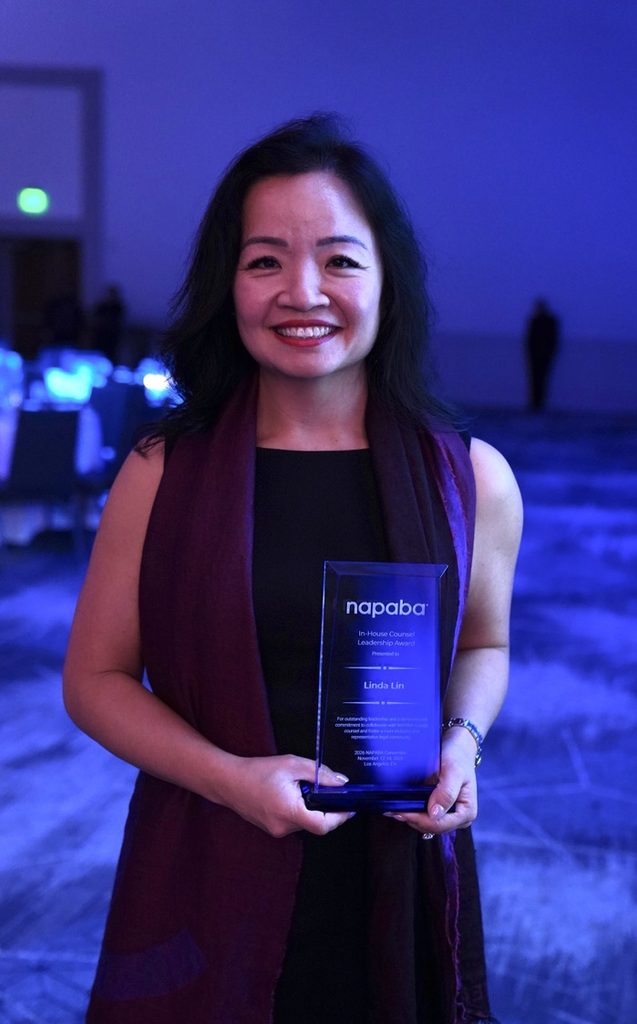

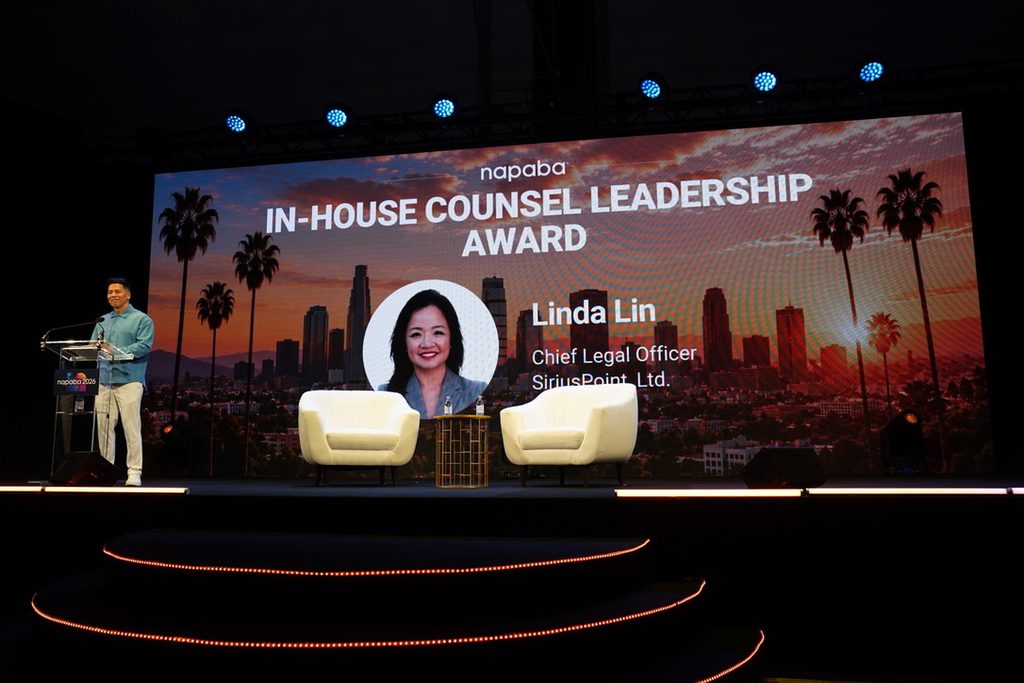
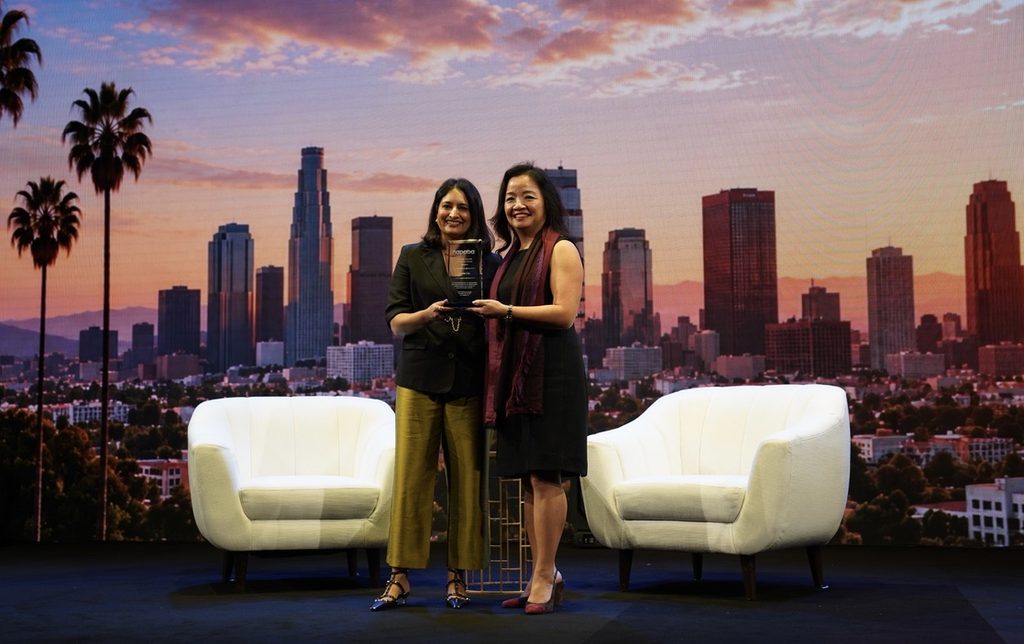
Linda Lin, Chief Legal Officer and Corporate Secretary at SiriusPoint Ltd, was recognized with NAPABA’s prestigious In-House Counsel Leadership Award for 2026.
Her initial reaction reflected a lifelong characteristic: grounded humility. Nominated by her colleague Susan Shin, the honor came as a surprise to her.
“It means a lot because I’m not someone who is always thinking about awards,” she admits. “I didn’t expect to get it—in fact, there are other people I think deserve it more. But to be recognized by your community is a tremendous honor.”
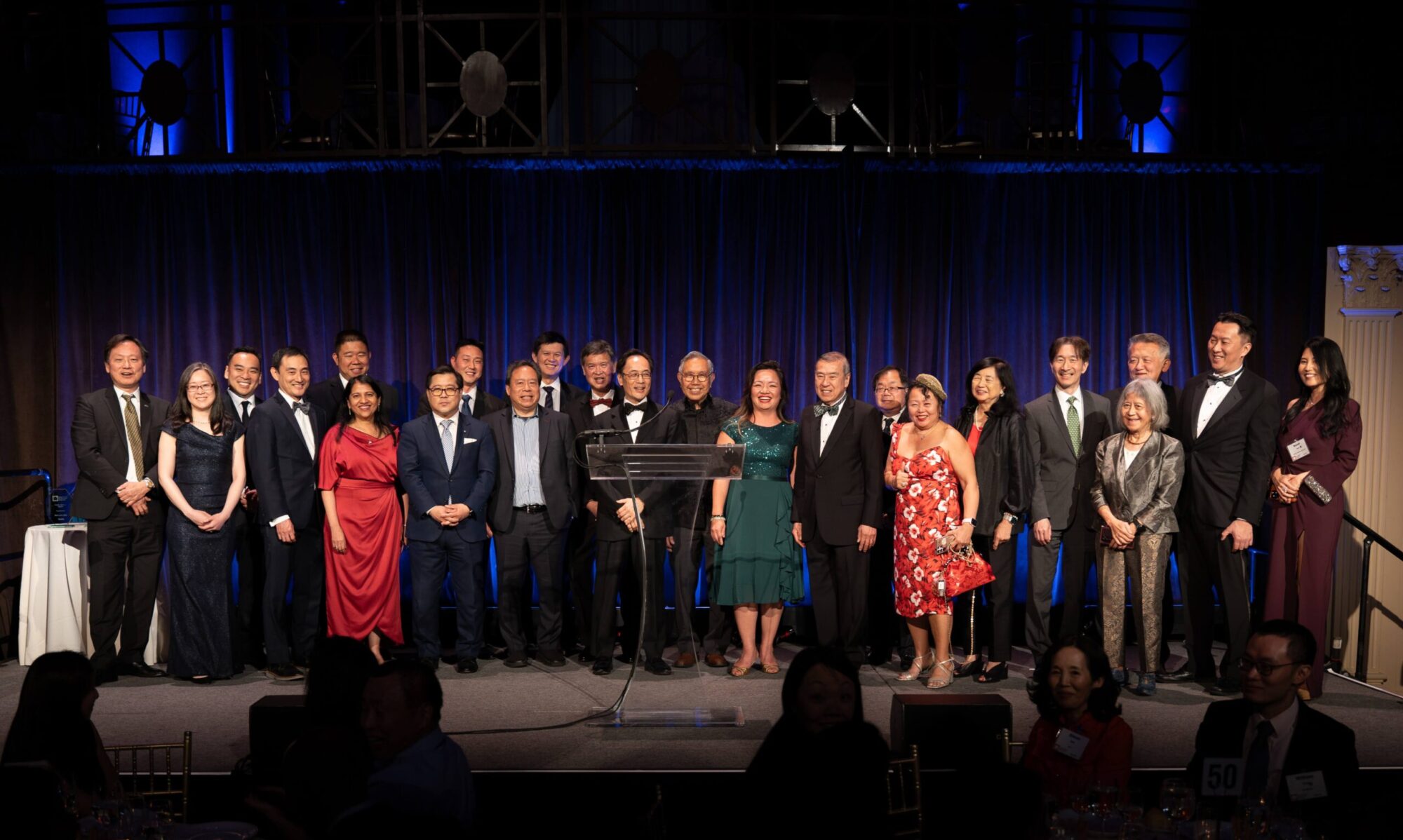
The connection to her community has been a defining thread throughout Linda’s career. Her involvement with the Asian American Bar Association of New York (AABANY) began when she was still a law student at Brooklyn Law School. Over the years, AABANY served as an anchor while she rose through the ranks, eventually serving as the organization’s President in 2011. From participating annually with the Honorable Denny Chin and Kathy Hirata Chin in historical trial reenactments to mentoring the next generation of Asian American lawyers, Linda’s journey has been inextricably linked to community elevation.
Embracing a Meandering Path
Looking at an executive bio that features senior roles at industry giants like Berkshire Hathaway, QBE, Coaction Global, and now SiriusPoint, it is easy to assume Linda followed a carefully scripted, linear climb to the C-suite. However, as Linda explained, success rarely follows a straight line.
“Success can be a meandering road—it can go sideways and zig-zag,” Linda observed. “You often have to take opportunities as they come, even if they don’t initially look like traditional upward moves.”
Linda’s career began on a classical legal track, clerking for the Honorable Dora L. Irizarry in the U.S. District Court for the Eastern District of New York (EDNY), followed by her time as a litigation associate at Willkie Farr & Gallagher. After working as a litigator, Linda made the bold choice to move into an insurance claims function. To some, the move may have looked like a lateral step or even a step down. She saw it differently. At its core, an insurance policy is a legal contract, and working in claims allowed her to understand the business from the product level up.
Moreover, while managing intense firm demands during the mortgage financial crisis, she suffered the devastating loss of her father. It was a profound, life-changing moment that forced her to step back and re-evaluate her personal priorities, family needs, and long-term goals. She realized that while she had applications pending for trial attorney roles at two U.S. Attorney’s Offices, her priorities were shifting toward building a more sustainable work-life balance, spending time with her mother, and eventually starting a family. Observing a scarcity of female partner role models balancing BigLaw practice with family life, she made the deliberate decision to transition in-house.
Linda drafted policy language, navigated regulatory frameworks alongside the General Counsel, and dove headfirst into complex emerging areas like transactional liability, a topic she had no prior experience with, but researched tirelessly so she could speak intelligently about it on industry panels.
That willingness to step into uncharted territory caught the attention of leaders around her. A General Counsel turned key mentor gave her advice that would reshape her career trajectory: “I’m offering you a job offer that would take you 10 years to get at where you are now. You can take the challenge or stay comfortable.” She took the challenge, immersing herself in M&A, corporate governance, board management, and leading business legal teams—a toolkit that paved the way to her first General Counsel role.
Linda’s career followed the path that was most well-suited to her needs and abilities. Choosing a legal career means making measured decisions, and understanding how career and personal facets of life will overlap. Reflecting on the advice often given to young lawyers about achieving work-life balance, she offered a candid perspective: “I don’t know that I’ve ever found a perfect balance, because it’s a constant balancing act. Something has got to give at all times, and you have to determine what and when that will be.”
Helping to Diversify the Bench
Her early clerkship in the EDNY, covering Brooklyn, Queens, and Long Island, left a lasting impression on how justice is delivered. Recognizing that the district court served one of the most culturally diverse populations in the country, she was struck by the lack of diversity on the bench: “I saw how impactful judges were in people’s lives,” she recalled. “They make decisions that directly affect your community, and it is so important to have a bench that represents the community it serves.”
Driven to address the pipeline, nearly two decades ago she co-founded the Joint Minority Bar Judicial Internship Program. The initiative later evolved into the Sonia & Celina Sotomayor Judicial Internship Program (SCSJIP), where she currently serves as Chair of the Board. Through hands-on involvement in judicial selection processes, candidate panels, and mentorship, she helped transform the EDNY into one of the most diverse federal judicial districts in the nation.
Leading a Global Team
SiriusPoint operates globally from Bermuda today, and Linda leads SiriusPoint’s cross-border legal and compliance teams. Managing global teams across multiple time zones in a post-pandemic, virtual environment brings unique operational hurdles. “There is a lack of human component in virtual work, and nothing can replace face-to-face connection,” she notes. Yet, seeing her team members grow, navigate regulatory landscapes, and succeed globally remains the single most rewarding aspect of her executive leadership.
Throughout her career, public service—from AABANY leadership to serving on the New York City Districting Commission—has served as a supportive testing ground. “My community lets me grow, experiment, and learn,” she remarked. “Without those opportunities, I wouldn’t be where I am today.”
When asked about the current state of diversity in the legal profession, Linda emphasized that true progress is about leveling the playing field, not lowering standards. When organizations claim they cannot find qualified diverse candidates, her response is direct: “Maybe you’re not looking hard enough.”
Words of Wisdom
Reflecting on her trajectory from Binghamton University and Brooklyn Law School to the executive C-suite, Linda’s core advice for rising attorneys—especially women—is grounded in authenticity and emotional intelligence:
- Owning your personal brand and taking measured risks is important. Career growth is never one-size-fits-all.
- High EQ, especially with women, can be a strategic asset in the C-suite. “I’m not always the smartest person in the room, but I am the one working the hardest, paying the closest attention, and keen on how things make people feel and look.”
- Stay curious and never let grades or setbacks dictate your potential: “If you want it, you will make it happen.”
Please join AABANY as we congratulate Linda Lin on being honored with NAPABA’s prestigious In-House Counsel Leadership Award. The award was presented at the NAPABA Awards Luncheon on Saturday, November 14, 2026 at the NAPABA Convention in Los Angeles.