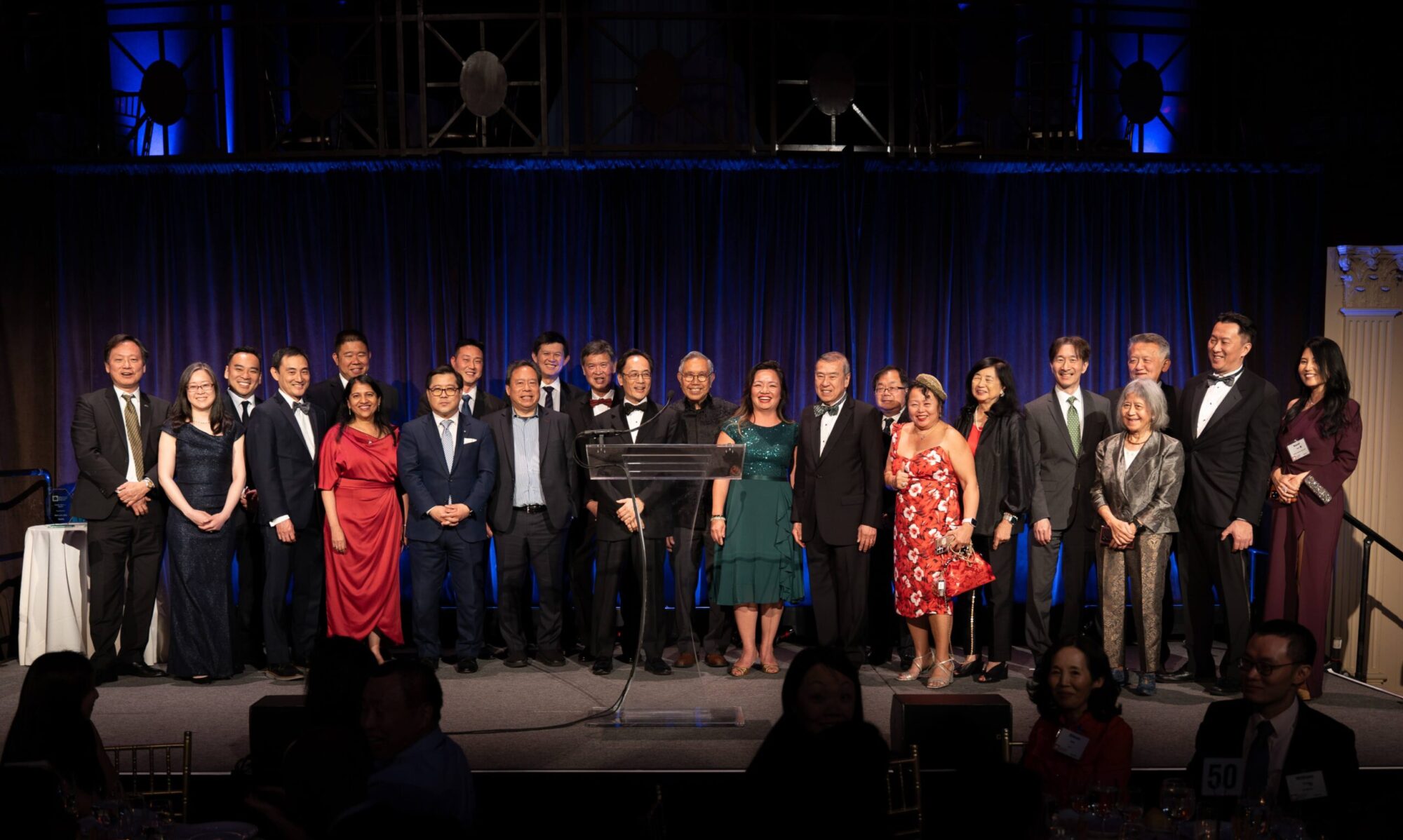
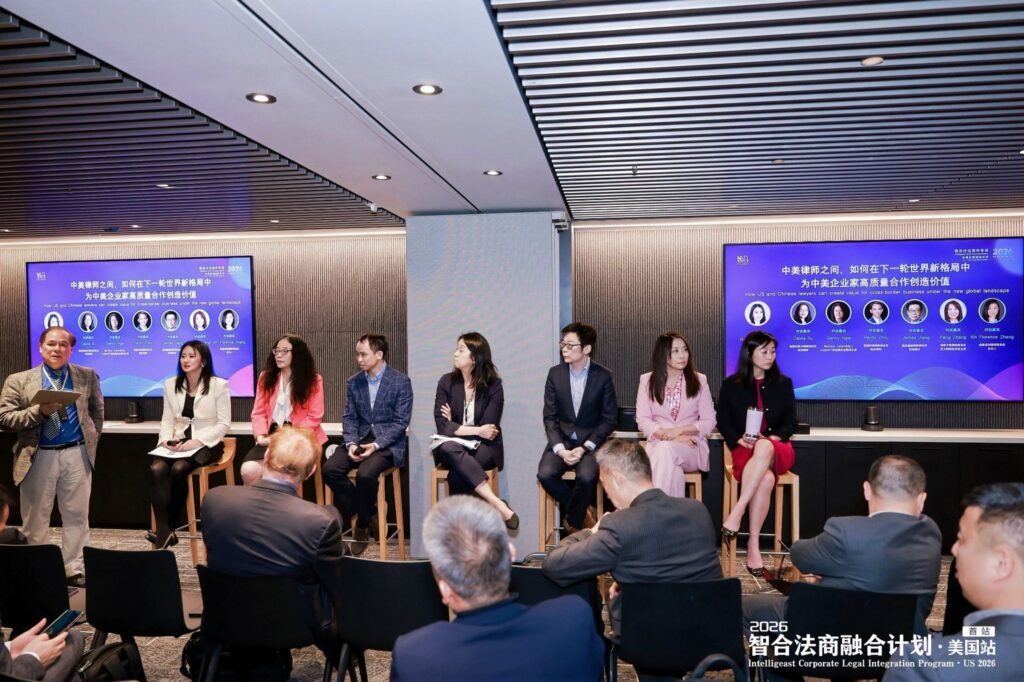
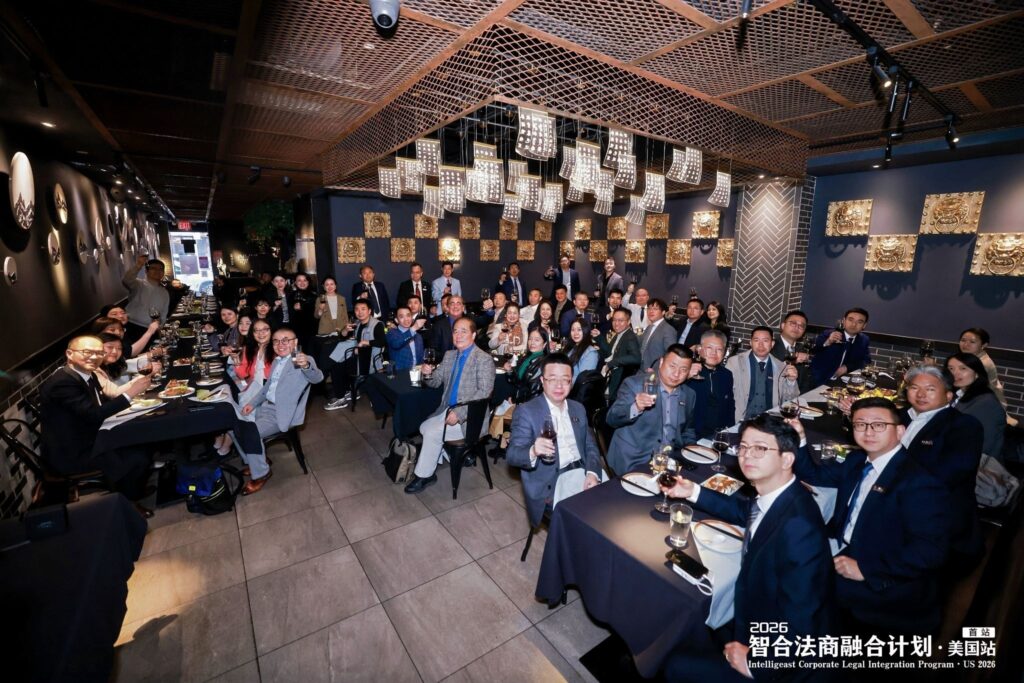
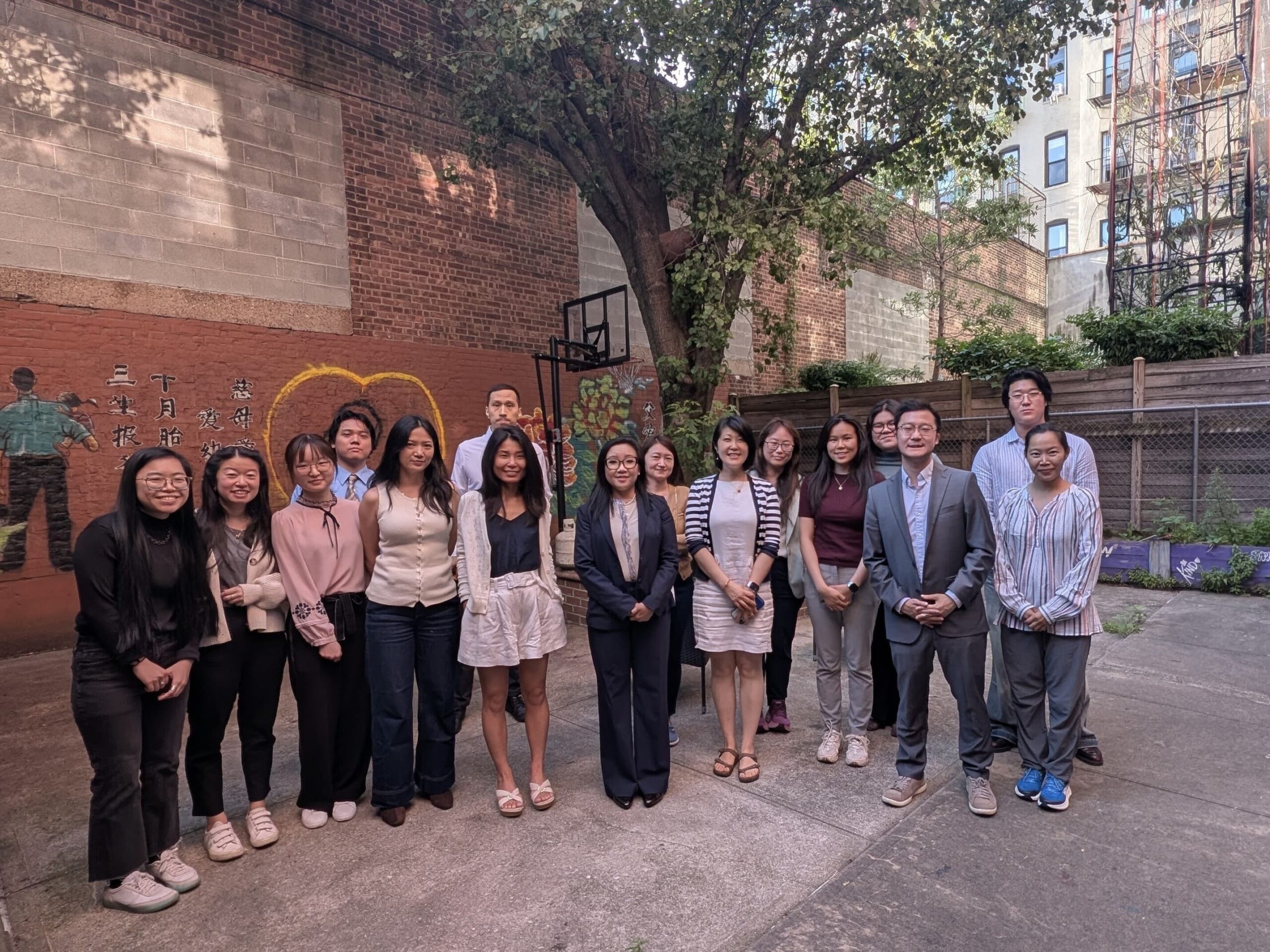
On April 29, 2026, AABANY’s Asia Practice Committee successfully hosted the U.S.–China Legal Elite Dialogue Forum & Dinner in New York City, bringing together approximately 75 attorneys, legal professionals, and business leaders for an afternoon of insightful discussion and cross-border engagement.
Held at Club 135 by Industrious, the forum convened leading practitioners across the U.S. and China to examine the evolving legal and business landscape shaping cross-border transactions and disputes. The program featured keynote presentations and a dynamic panel discussion focused on the theme: “How U.S. and Chinese lawyers can create value for cross-border business under the new global landscape.”
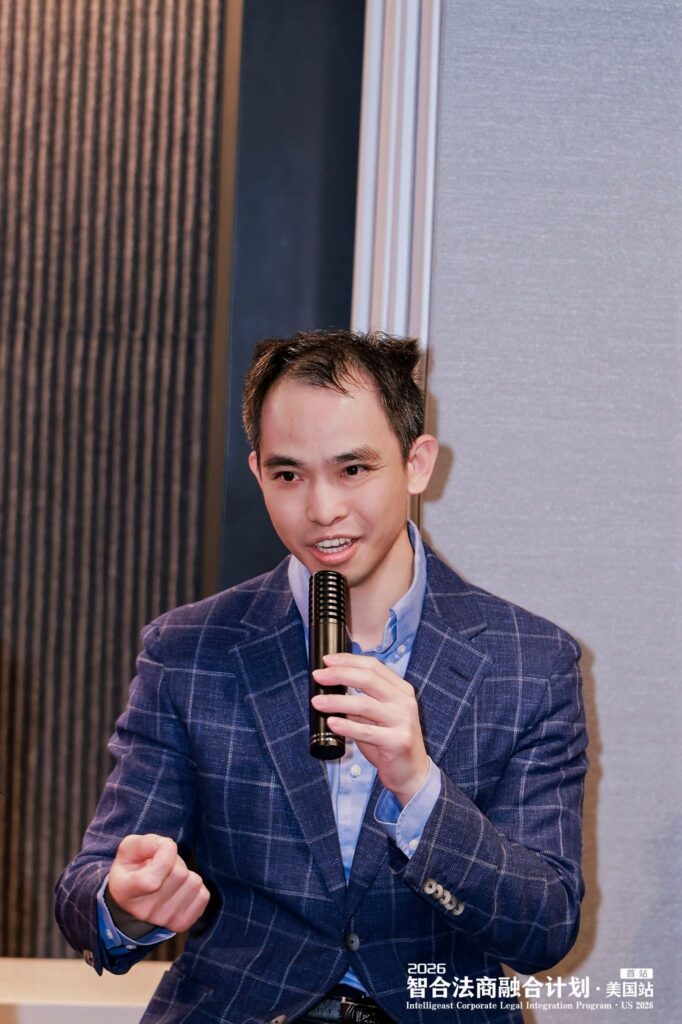
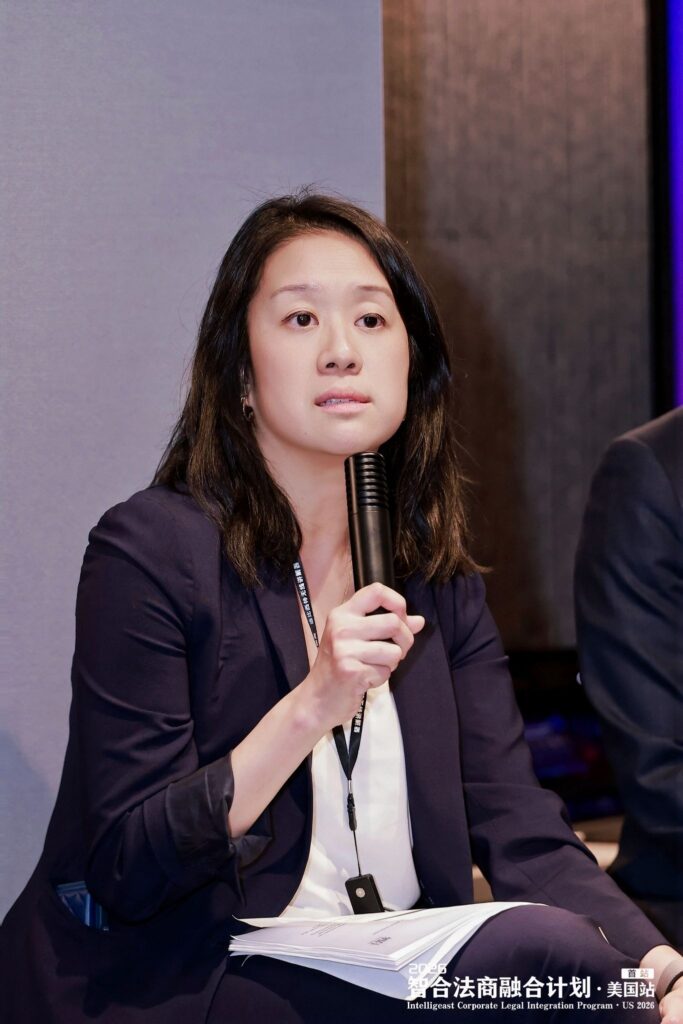
The panel brought together an accomplished group of practitioners, including Hardy Zhou, Tax Attorney at Cooley LLP and Co-Chair of AABANY’s Asia Practice Committee, and Genny Ngai, Partner at Morrison Cohen LLP and Co-Chair of AABANY’s Litigation Committee. Moderated by Haiyan Tang, Managing Partner at Quinn Emanuel Shanghai, the discussion explored the increasing complexity of cross-border legal work, including heightened regulatory requirements, shifting investment trends, and the need for closer collaboration between U.S. and Chinese counsel.
Panelists shared practical perspectives on how lawyers can deliver value in this environment—ranging from structuring transactions and managing risk to navigating disputes and aligning multi-jurisdictional strategies.
The forum also featured keynote remarks from Yang Chen, the Executive Director of AABANY and Chris M. Kwok, Mediator at JAMS and Co-Chair of AABANY’s Alternative Dispute Resolution Committee, and other distinguished speakers across corporate, litigation, and dispute resolution practices, providing attendees with a well-rounded view of current developments in U.S.–China legal relations.
Following the formal program, participants continued their conversations during a networking reception and dinner, fostering meaningful connections and further strengthening the AABANY community.
AABANY extends its sincere thanks to all speakers, organizers, and attendees for contributing to the success of this event. The Asia Practice Committee looks forward to continuing to facilitate dialogue and collaboration among legal professionals engaged in cross-border practice.
-Written by Hardy Zhou, Co-Chair, AABANY’s Asia Practice Committee
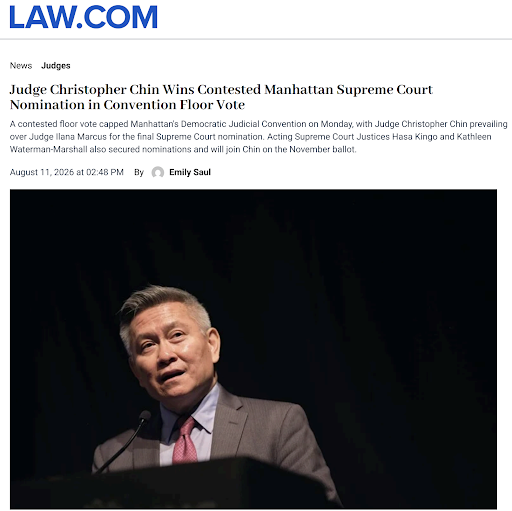
As reported in the New York Law Journal on August 11, at the Manhattan Democratic Judicial Convention on August 10, Justice Christopher Chin won the nomination for a vacant Supreme Court seat against Judge Ilana Marcus in a floor vote (90-65). Justice Chin will join Acting Supreme Court Justices Kathleen Waterman-Marshall and Hasa Kingo on the general election ballot to fill three Manhattan Supreme Court vacancies.
The vote was followed by personal moments throughout each of the Justice’s speeches at the convention: Acting Justice Nicholas Moyne declined his nomination and described his neurodivergence as his greatest strength in his declination speech; Acting Justice Kingo reflected on his path to the bench; and Justice Chin spoke on his childhood where his family faced racial discrimination under a dictatorship in Burma. “I’m happy to say that I don’t feel like a second-class citizen anymore,” Chin said during his acceptance speech.
AABANY congratulates Justice Chin, an AABANY member, on his nomination and commends fellow AABANY members Hon. L. Austin D’Souza, Hon. Ilana Marcus, Hon. Eric Schumacher, Hon. Richard Tsai, and Hon. John Zhou Wang for their participation in the nominating convention.
To read the full article, click here (subscription required).
Washington, DC (August 7, 2026) — The National Asian Pacific American Bar Association (NAPABA) Law Foundation (NLF) announced today that Malakai Espinosa, Cynthia Phan and Yuwen Wang, second-year law students at UCLA School of Law, Boston University School of Law and the University of Chicago School of Law, respectively, have been awarded prestigious SAIL Scholarships for their outstanding professional promise and leadership potential.
“Cynthia, Malakai, and Yuwen embody academic excellence, leadership, and the bright future of the legal field,” said NLF President Bonnie Wolf. “NLF and SAIL are honored to support their journeys and to invest in leaders who will use their talents to serve others, expand opportunity, and create meaningful change in their communities.”
Malakai Espinosa is pursuing a joint J.D./M.P.H. at the UCLA School of Law and the UCLA Fielding School of Public Health. Among other honors and activities, he is a member of the David J. Epstein Program in Public Interest Law and Policy and received a Philippine American Bar Association Scholarship, a UCLA Law Faculty Scholarship and a Legal Education Access Pipeline Public Interest Summer Grant. He also serves as co-chair of the law school’s Asian/Pacific Islander Law Students Association, co-chair of the El Centro Education Rights Project and chief managing editor of the Pacific Basin Law Journal. Malakai earned his B.S. summa cum laude in Human Biology and Society from UCLA, where he was on the Dean’s Honor List for four years, president of Samahang Pilipino and played tuba for the UCLA marching band. He is a member of the board of the UCLA Pilipino Alumni Association, and this summer, Malakai was a judicial extern for a judge on the U.S. District Court for the Central District of California.
Cynthia Phan is a second-year law student at Boston University School of Law, where she is a Dean’s Scholarship recipient, a Legal Writing Fellow and co-president of the Public Interest Law Society. She received her B.A. summa cum laude in International Relations from Boston University, where she received a Thomas M. Menino Scholarship and engaged in academic research and volunteer work in Nairobi, Kenya; Boston, MA; Geneva, Switzerland; Tel-Aviv, Israel; and the West Bank. Between her undergraduate studies and law school, Cynthia worked for two years as a juvenile diversion coordinator with the Suffolk County District Attorney’s Office in Boston. She is the author of Stories from the Street: Nurturing Empathy among Boston Residents and spent this summer as a legal intern with the Asian American Legal Defense and Education Fund in New York City.
Yuwen Wang is a 2028 J.D. candidate at the University of Chicago Law School, where she is a member of the University of Chicago Law Review and the law school’s Public Interest Leadership Program; treasurer of First Generation Professionals; and programming director of the Asian Pacific American Law Students Association. She received her B.A. in Sociology and Public Health from Johns Hopkins University, where she was elected to Phi Beta Kappa and received general honors as well as departmental honors in Sociology. Between college and law school, Yuwen worked as a senior legal assistant at a national public interest law firm, Sanford Heisler Sharp McKnight, LLP. She was previously an undergraduate intern with the U.S. Department of Justice, Civil Rights Division, Disability Rights Section. This summer, she worked as a legal intern for the Hon. Jeannette Vargas of the U.S. District Court for the Southern District of New York and for the Bazelon Center for Mental Health Law.
“We are excited to welcome Malakai, Cynthia and Yuwen into the seventh cohort of SAIL Scholars,” said Ivan Fong, who with his wife Sharon endowed the NLF SAIL Scholarship program. “All three of them show great promise as leaders who give generously of their time and effort to the broader community. We could not be more delighted to help them as they complete their academic work and become part of the next generation of leaders in our profession.”
Two unique aspects of the SAIL Scholarship program are that, in addition to monetary support, SAIL Scholars will also receive mentoring and leadership development from each other and from a network of legal and community leaders. “A second feature of this scholarship program,” said Sharon Fong, “is that the recipients commit to ‘paying it forward’ — by supporting each other, future SAIL Scholars and the communities in which they will live and work.”
In addition to Sharon and Ivan Fong, the 2026 NLF SAIL Scholarship selection committee was comprised of Suzan Chau, Supervising Attorney for the Elder Justice & Civil Resource Center for the First Judicial District of Pennsylvania; the Honorable Theodore Chuang, U.S. District Judge for the District of Maryland; Esther Lim, Partner and Chief Community Officer at Finnegan; and Caroline Tsai, Executive Vice President, Chief Legal and Corporate Affairs Officer at FIS.
NLF is a 501(c)(3) non-profit that carries out its work primarily by awarding scholarships and fellowships that promote the interests of the Asian Pacific American community. Since its founding, the Foundation has awarded nearly $2 million in scholarships, fellowships and internships.
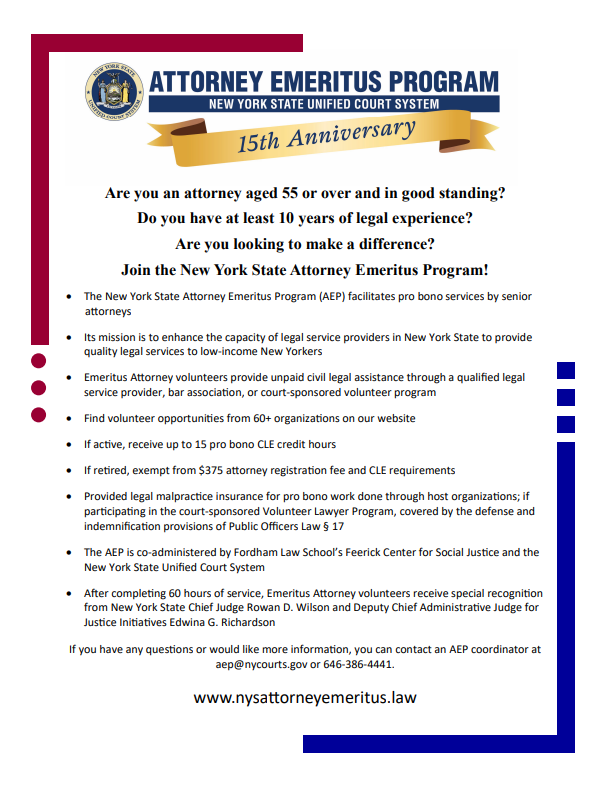
The New York State Attorney Emeritus Program (AEP) is an initiative by the New York State Unified Court System, enthusiastically supported by Chief Judge Rowan D. Wilson, that is aimed at promoting pro bono civil legal service by senior attorneys.
Despite New York’s significant commitment of resources to support civil legal services, a gap persists between the need for and availability of civil legal services across the state. AEP volunteer attorneys play a crucial role in providing access to justice for New Yorkers with low and moderate incomes who cannot afford counsel.
Any attorney aged 55 or older, whether retired or active, with at least 10 years of experience, who is in good standing can make a significant difference by enrolling as an Attorney Emeritus and signing up on the AEP website. Volunteers must commit to 60 hours of pro bono service over two years.
Emeritus volunteers who register as active can earn up to 15 CLE credits and receive special recognition from Chief Judge Wilson and Deputy Chief Administrative Judge for Justice Initiatives Edwina G. Richardson.
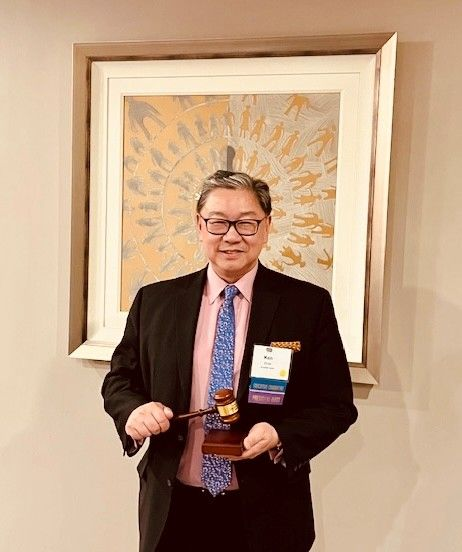
Kenneth Chin, Head of Banking and Finance, US, at Herbert Smith Freehills Kramer (HSFK) and a longtime active member of AABANY, has been elected President of the American College of Commercial Finance Lawyers (ACCFL). ACCFL is a distinguished organization dedicated to advancing the practice and ethical standards of commercial finance law. Prior to assuming the presidency, Ken served on the Executive Committee, as a Regent on the Board of Regents, and as Chair of the Nominating Committee. AABANY congratulates Ken on his election as President, effective April 2026.
Ken’s path to the presidency reflects years of thoughtful and sustained engagement with the organization. Service on the Board of Regents, a prerequisite for any officer position, along with his leadership of the Nominating Committee, gave Ken a deep familiarity with the ACCFL’s mission and membership. Though he was invited on multiple occasions to join the Executive Committee, Ken chose to accept only when he was confident he could devote the time and attention necessary to serve effectively in that capacity.
As President, one of Ken’s central priorities is strengthening the bonds among ACCFL’s Fellows. Fellowship is by invitation only, extended in recognition of demonstrated expertise in commercial finance law. In an era increasingly defined by digital communication, Ken holds firmly to the belief that in-person connection remains indispensable. To that end, the ACCFL convenes semi-annually alongside the American Bar Association’s Business Law Section and hosts Fellows briefing sessions at which members with specialized expertise share their knowledge with the broader Fellowship. Ken envisions these gatherings as a living resource network, enabling Fellows to draw on one another’s depth of knowledge beyond the boundaries of their own specific practice areas.
Ken speaks from personal experience about the tangible value of the ACCFL network. He recounted an instance in which a Fellow, technically out of the office, returned his call within ten minutes to offer guidance on an out-of-state legal matter, a response Ken attributes directly to the strength of their personal connection. “It is the ability to not only be an expert in the area of law, but also to draw on other experts who may have more in-depth knowledge about particular subjects that you do not have,” Ken explained. This philosophy runs throughout his professional approach: Ken consistently prioritizes cultivating genuine personal relationships over institutional ones, recognizing that a trusted colleague, wherever their career may take them, represents an invaluable and enduring resource.
That same emphasis on human expertise, Ken observes, is being tested by the rapid rise of artificial intelligence in the legal field. Ken acknowledges that AI has meaningfully accelerated legal practice, reducing the need for lawyers to conduct manual research or rely on colleagues for preliminary answers. At the same time, he underscores the importance of human oversight, noting that while AI is advancing at an unprecedented pace, it remains susceptible to error. Ken draws a historical parallel to the transformation of the legal workplace that accompanied the widespread adoption of word processing software: just as attorneys began drafting their own documents directly, reducing reliance on secretarial staff, the integration of AI is likely to reshape legal support roles in similarly significant ways. Rather than viewing this shift with apprehension, Ken urges the next generation of lawyers to develop fluency in AI tools while remaining clear-eyed about AI’s fundamental limitations and its inability to fully replicate the judgment and responsibility of an experienced attorney.
Expanding the ACCFL’s membership is another of Ken’s key priorities as President. He was moved by concerns raised by former ACCFL President Sylvia Chin (also a past AABANY President) during her 2017–2018 tenure regarding declining membership and participation. Ken has since worked to bring about a meaningful shift in how the organization identifies and admits new Fellows. Looking beyond the traditional concentration of Fellows in the financial centers of New York, Los Angeles, and Chicago, Ken has championed geographic diversification to ensure that the network reflects the full breadth of commercial finance practice across the country. Because clients frequently have legal needs spanning multiple jurisdictions, Fellows with local expertise are essential to making the ACCFL’s membership genuinely comprehensive. The results have already been significant: this past year, the ACCFL welcomed 18 new Fellows. This is the largest incoming class in the organization’s history, a milestone attributable in no small part to Ken’s commitment to expanding the ACCFL’s reach. Whether reflecting on the culture he has helped shape or looking ahead to the membership he aims to expand, Ken’s tenure as President embodies a steadfast conviction that the ACCFL’s greatest strength lies in its Fellows.
Please join AABANY in congratulating Kenneth Chin on his election as President of the American College of Commercial Finance Lawyers.
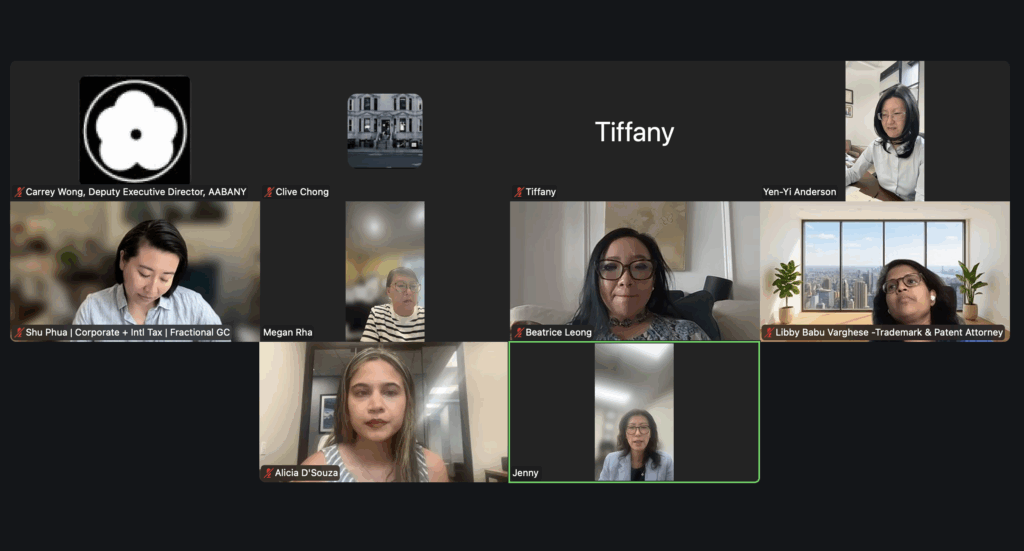
On Thursday, July 16, 2026, the AABANY Solo & Small Firm Practice Committee hosted another popular virtual networking event for solo and small firm practitioners to connect. The meeting, intentionally informal and freeform, gave attendees an opportunity to discuss any topics at hand. After brief introductions and a couple of minutes for colleagues to catch up with one another, the topic of office practicalities was brought up.
Yen-Yi Anderson, Principal at Anderson and Associates Law, PC and Co-Chair of the Solo & Small Firm Practice Committee, asked attendees about what printers, time management systems, and invoice systems they used in the office. Many of the attorneys in the call described their printers to be fault-prone, often requiring costly repairs. Recognizing that most clients prefer an electronic copy of documents, most attendees recommended a leased Brother printer for any hard copy needs.
From there, the conversation moved on to invoicing systems. Programs like Bill4Time, MyCase, Clio, and PracticePanther were described as relatively reliable systems, but attendees described each program having its own issues. However, this judgement could only be made after fully investing into one system, making inefficient invoicing systems a large inconvenience for small firms. Additionally, small or solo firms often lack the staff to delegate invoicing tasks to associates or paralegals, leaving less time to manage these systems effectively.
This topic then transitioned into billing. Methods such as Zelle, Stripe, or direct wiring were most commonly used. Given that various fields of law have different retainers and billing rates, there was no consensus on which billing method was the most efficient. Attendees also described using various bank accounts to receive and access funds. Although there were quite a few differences in the actual billing process, most attendees agreed that tracking billable hours manually was far better than any automatic tracking software. Despite rapid developments in technology, “old-fashioned” methods were often the most reliable.
The virtual networking hour concluded with many more topics being suggested for discussion at the next event. The vibrant community among the members of the Solo and Small Firm Practice Committee was evident, with each member helping to uplift the other through practical tips about how to run a law firm. To learn more about the Committee and get involved, visit the Solo & Small Firm Practice Committee page.
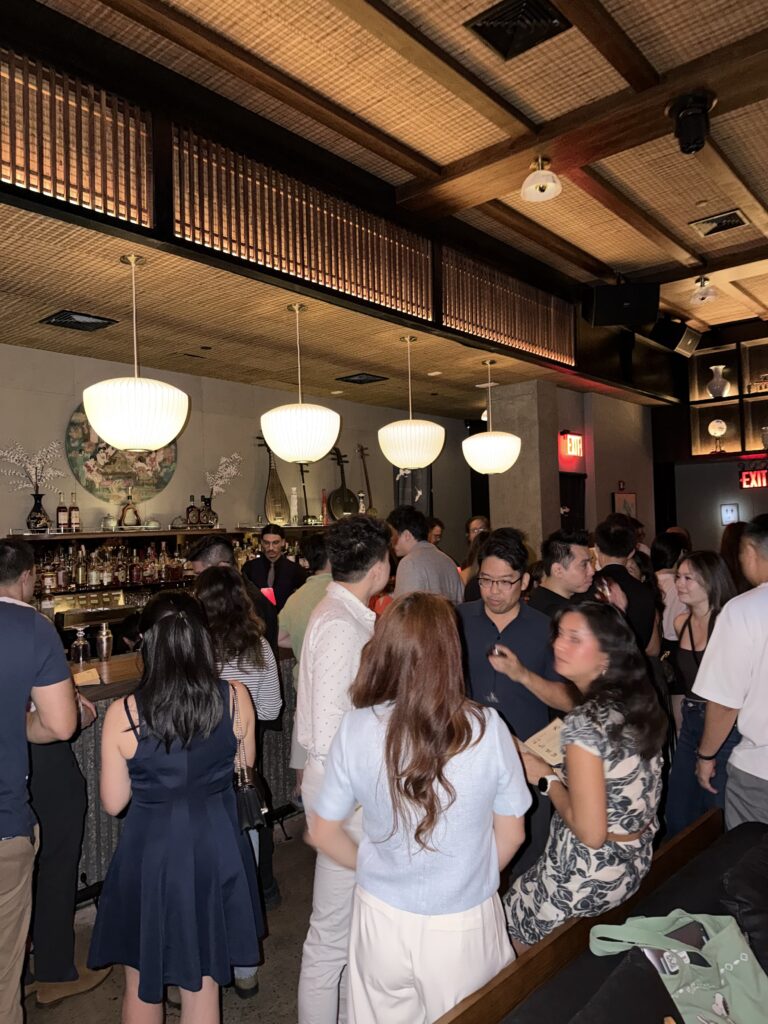
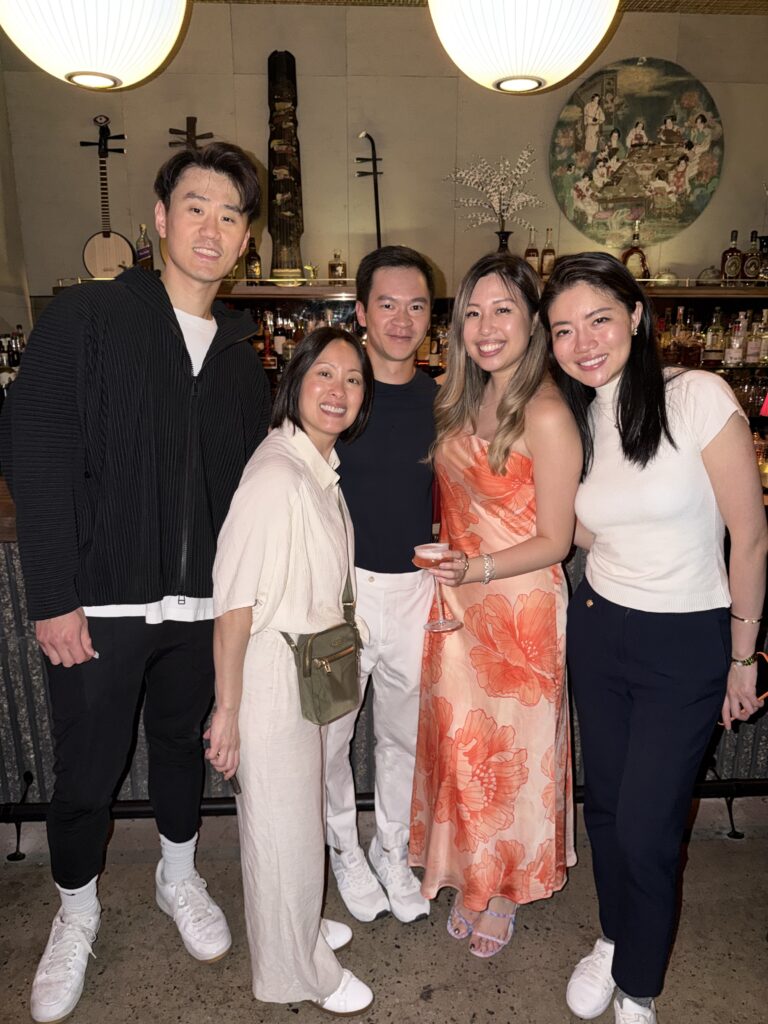
On July 9, 2026, AABANY’s Corporate Law and In-House Counsel Committees hosted a vibrant Summer Karaoke Social at Rewind Karaoke Lounge in Long Island City, Queens. The event brought together corporate attorneys and in-house lawyers for an evening of conversation, connection and community. Attendees reconnected with familiar faces, cultivated new relationships and engaged with one another in a lively environment that blended professional networking with a relaxed social setting.
The event reflected the Corporate Law and In-House Counsel Committees’ shared commitment to creating welcoming spaces where legal professionals can connect across practices, industries and career stages. Attendees first enjoyed mingling in the lounge space and connected with each other over fun cocktails and delicious food. Later into the evening, some continued to carry on conversations in the lounge while others sang songs in the private karaoke room.
The Corporate Law Committee is spearheaded by Co-Chairs Keli Huang, Partner at Kirkland & Ellis LLP and Ashley Wong, Associate Corporate Counsel at Amazon, along with Vice-Chairs Kyle Zhu, Senior Associate at Orrick, Herrington & Sutcliffe LLP and Judy Lin, Associate at Kirkland & Ellis LLP. The In-House Counsel Committee is spearheaded by Co-Chairs David Sohn, Vice President and Assistant General Counsel at JPMorgan Chase & Co., Peter Wei, Head of Legal at Mercuryo, Jack Chen, Deputy General Counsel at Public.com and Michelle Lee, General Counsel at MediaCo Holding Inc.. Their dedication and leadership continue to strengthen the AABANY community.
The Corporate Law and In-House Counsel Committees extend their gratitude to their generous co-sponsors, McGill and Partners and PNC Bank, for helping make the Summer Karaoke Social possible.
– Written by Judy Lin, Vice Chair of AABANY’s Corporate Law Committee
On June 16th, 2026, the Immigration Law Committee of the Asian American Bar Association of New York (AABANY) held its first meeting of the year on Zoom. Nicole Fink, Chair of the Immigration Law Committee, used this occasion as an opportunity to reconnect with fellow immigration attorneys and to gauge interest in potential events later this year.
At the start of the meeting, Yang Chen, the Executive Director of AABANY, sought applications for AABANY’s Legal Referral and Information Services (LRIS) program. Currently, the LRIS program is looking for experienced lawyers to join its panel due to high demand for qualified immigration lawyers.
Next, the meeting focused on plans for the Immigration Law Committee’s growth and potential topics of interest for the near future. Nicole Fink made a request for more participation in AABANY’s Pro Bono Clinics, especially from immigration lawyers. The Pro Bono Clinics take place in community settings, to create a more welcoming environment for those seeking legal advice. Lawyers serving in the Clinic provide limited scope representation and would only give brief advice and refer clients to legal resources, and are thus not committed to representing any client after the consultation at the Clinic ends. As an incentive, Fink offered to buy a free meal for any lawyers on the call who volunteered at the Clinic.
The meeting also covered continued legal education (CLE) programs. After AABANY’s well received training on habeas corpus on June 4th, meeting attendees expressed interest in more CLE opportunities on immigration-related issues and other topics, such as AI usage in the legal field. The discussion also focused on overlapping areas such as matrimonial law and legal issues affecting juveniles. The group talked about the need to connect lawyers with different areas of expertise, and who may be able, for example, to aid conditional residence cases or special immigrant juvenile status cases.
The meeting concluded with a reminder about the 2026 Fall Conference on Saturday, September 26th, in which the Immigration Law Committee is presenting a panel on AI and data analytics in the immigration field, “Beyond Forms & Filings: How Tomorrow’s Immigration Attorneys Build Power Through Tech, Data, and Storytelling.” The meeting attendees also brainstormed on possible wellness opportunities for immigration lawyers, to combat the tough legal environment they operate in by offering more relaxing options to connect and refresh. Committee members were encouraged to reach out in the weeks ahead with additional ideas or interest in getting involved with Pro Bono Clinics, wellness opportunities, or networking across practice areas.
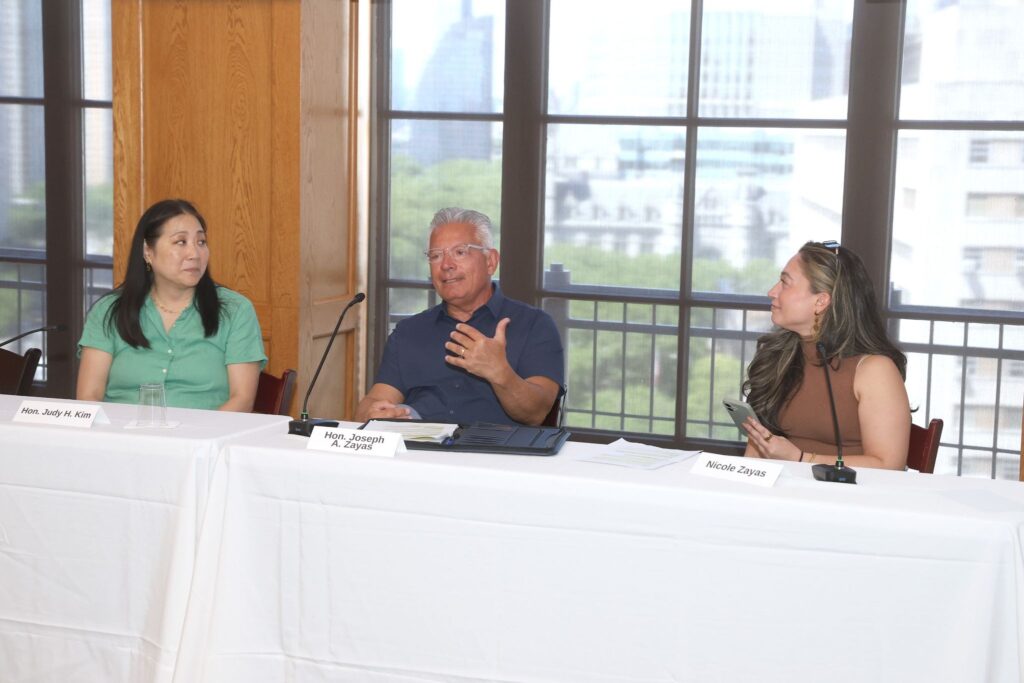
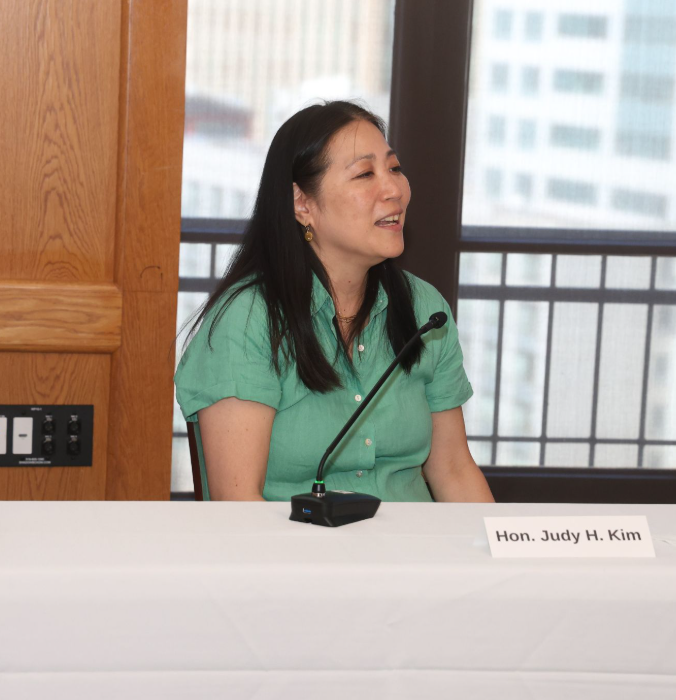
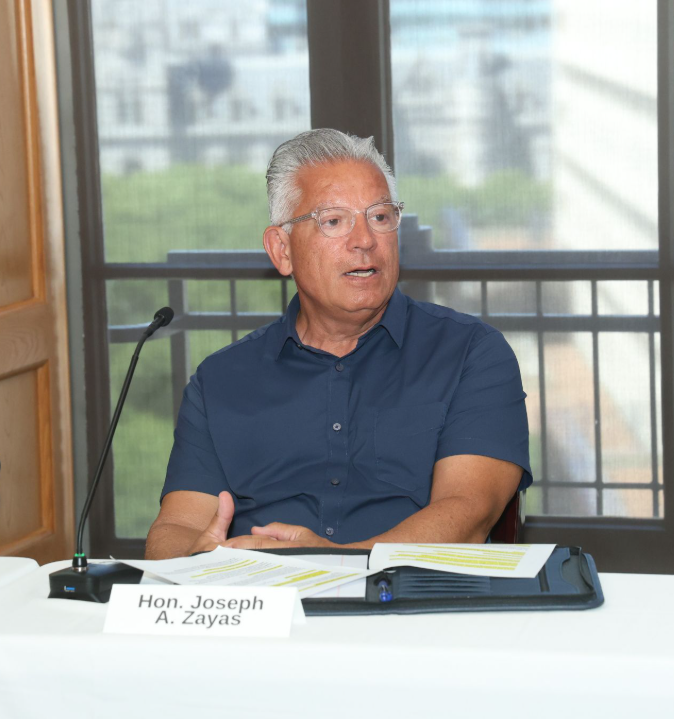
On June 13, 2026 at AABANY’s 2026 Wellness Day, attendees had the opportunity to hear a candid conversation between Hon. Joseph A. Zayas, Chief Administrative Judge of the New York State Unified Court System, and Hon. Judy H. Kim, Justice of the Supreme Court, New York County. Moderated by Nicole Zayas, LCSW, CEO of Arriving Full Circle Therapy and Coaching, the session, “Demystifying the Bench,” offered a rare glimpse behind the judicial robe and into the personal journeys that shaped two distinguished members of New York’s judiciary.
Rather than focusing solely on professional accomplishments, the discussion centered on the human experiences behind judicial leadership. Judge Kim shared the pride she felt and the great responsibility she took up as the first Korean American elected judge in New York State in 2016. She spoke movingly about her grandparents, who lived through the Japanese occupation of Korea and were unable to pursue legal and governmental careers despite their aspirations. Their experiences made her achievement particularly meaningful and reinforced her commitment to mentorship and community service.
Chief Administrative Judge Zayas shared an equally powerful story of perseverance. Growing up in public housing in Harlem, facing economic hardship, and navigating the challenges of a family affected by mental illness, he explained that a judicial career was never something he imagined for himself as a child. His path from struggling academically in high school to attending law school and ultimately becoming the state’s Chief Administrative Judge served as a reminder that greatness often emerges from those who refuse to be limited by their challenges.
One of the most compelling themes of the discussion was the importance of authenticity in leadership. Judge Zayas spoke openly about experiencing self-doubt and even “imposter syndrome” upon assuming one of the highest leadership positions in the New York court system. Rather than concealing those feelings, he emphasized the value of acknowledging them, stating that strength is not the absence of fear but the willingness to move forward despite it.
Judge Kim echoed that sentiment while discussing her own experiences with breast cancer and her work with Judges and Lawyers Breast Cancer Alert (JALBCA). She reflected on the cultural barriers that often discourage open conversations about health and vulnerability, particularly within many Asian communities. Her remarks highlighted the importance of wellness initiatives that encourage legal professionals to seek support and prioritize their physical and mental wellbeing.
The conversation also highlighted the critical role of mentorship. Both judges emphasized that professional advancement rarely occurs in isolation. Mentors, sponsors, colleagues, and community organizations all play a role in helping future leaders navigate the legal profession. Judge Zayas stressed the importance of building relationships and remaining humble throughout one’s career. He noted that these qualities are often as important as technical legal skills.
For young attorneys, law students, and aspiring judges in attendance, perhaps the most memorable takeaway came during the program’s closing moments. When asked what advice they would offer someone who doubts their ability to achieve something great, both judges encouraged attendees to trust themselves and continue moving forward. Judge Kim urged young professionals, particularly women and members of underrepresented communities, to have confidence in their qualifications and abilities. Judge Zayas reminded attendees that confidence is built through action, not perfection.
As attendees left the session, they carried with them not only a greater understanding of the judiciary but also an important lesson: the path to meaningful leadership is rarely straightforward, but it remains accessible to those willing to persevere, seek support, and believe in their own potential.
-Written by Devashani Sharma
About the Author: Devashani Sharma is a rising senior at Vanderbilt University majoring in Human and Organizational Development with a minor in Legal Studies. She interned with the Hon. Judy H. Kim through the 2026 Sonia & Celina Sotomayor Judicial Internship Program.
Our Pro Bono Clinic helped nine clients this month, with varying issues ranging from housing, divorce, immigration, and a noise complaint. Due to the number of volunteers who showed up, the June Manhattan Pro Bono Clinic offered consultations that extended beyond the standard 30 minute time frame for each client, ensuring that our volunteers could provide the best possible guidance for clients with thorny legal issues. For some cases, volunteers directed clients to AABANY’s legal referral and information service (LRIS), a resource that connects clients with qualified attorneys to represent them.
Thank you to all of our volunteers for attending the Pro Bono Clinic. We look forward to your participation in future clinics!
Volunteer Attorneys
Wendy Cheng
Keey Diep
Carmen Huang
Justin Lee
Beatrice Leong
Arthur Lin
Meng Ru
Gary Yeung
Anna Bao
Suzie Yu
Law Students and Other Volunteers
Wenwen Cao
Jason Chen
Clive Chong
Nandar Win Kerr
Wendy Zeng
Zhiyi Zhang
Livy Li
We invite you to continue supporting our community by joining us at our upcoming Pro Bono Clinics:
July 11 [Brooklyn link here], from 12:30-3:00pm, CPC Brooklyn Community Services, 4101 8th Ave, Brooklyn, NY 11232
July 15 (Manhattan link here], from 6:30-8:30pm, AAFE Community Center, 111 Norfolk Street, NY, NY 10002
August 5 (Queens link here], from 6:30-8:30pm, AAFE One Flushing Community Center, 133-29 41st Ave, 2nd Floor, Flushing, NY 11355
If you are interested in supporting the work of the Clinic, we encourage you to make a donation to AALFNY. AALFNY supports the Pro Bono & Community Service Committee (PBCS), provides scholarships and internship opportunities for law students, and works with the AABANY Anti-Asian Violence Task Force. Donations can be made here.
To learn more about the Pro Bono & Community Service Committee, visit probono.aabany.org.