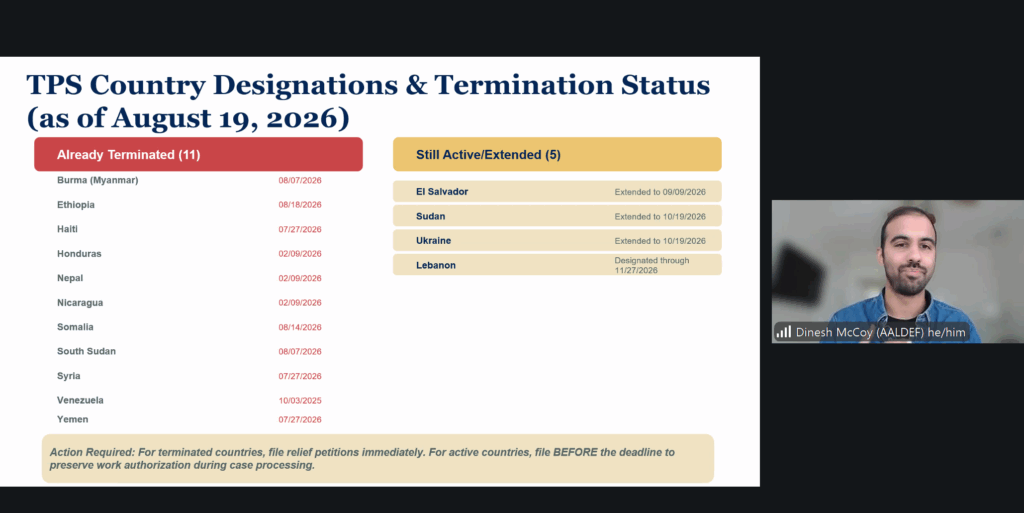
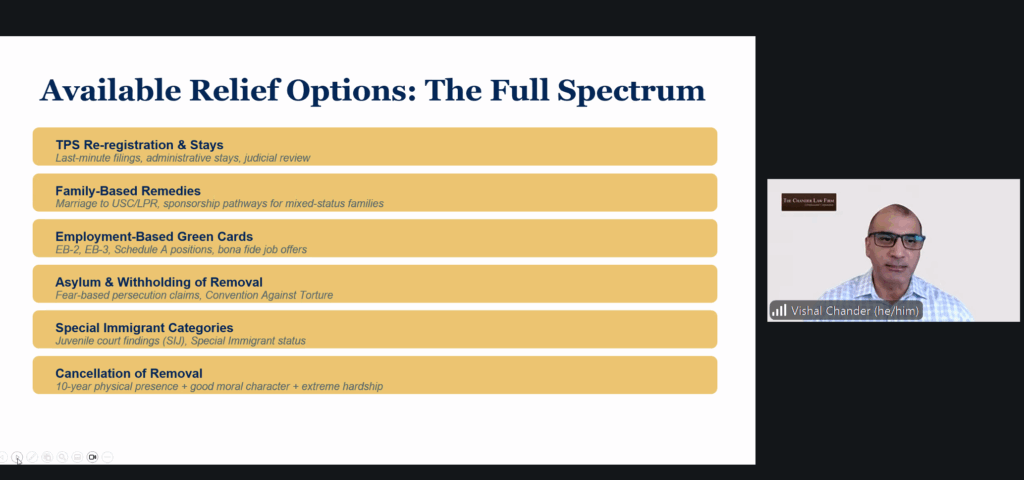
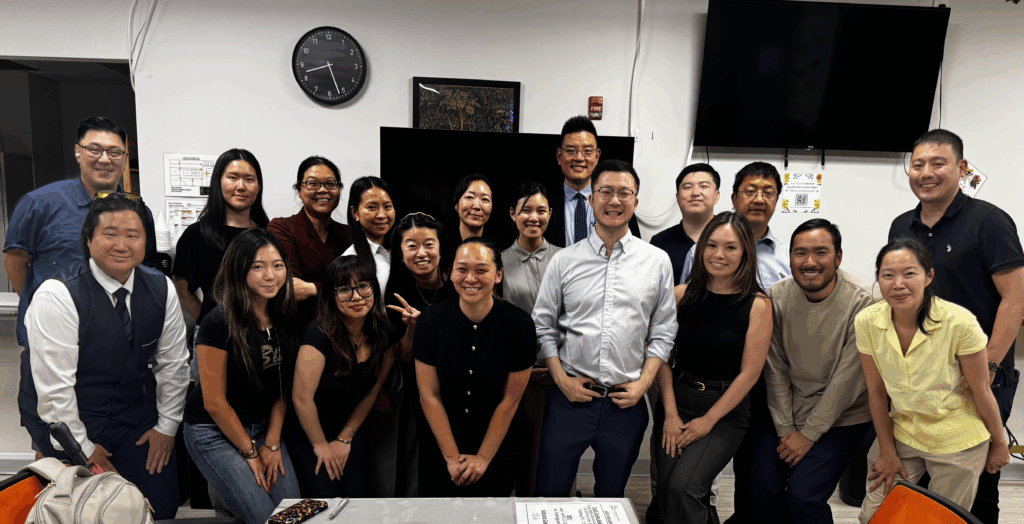
On August 27, 2026, almost 20 attendees joined AABANY and the Asian American Legal Defense and Education Fund (AALDEF) for a critical webinar on Temporary Protected Status (TPS) terminations. The panelists—Nicole Fink (Ogletree Deakins, AABANY Immigration Law Committee Chair ), Vishal Chander (The Chander Law Firm, AABANY Issues Committee Co-Chair, AABANY Board Director), and Dinesh McCoy (AALDEF)—walked participants through relief pathways for the 1.3 million people losing status: family-based sponsorship, employment-based green cards (EB-2, EB-3), asylum, withholding of removal, cancellation of removal, and special immigrant categories.
The comprehensive panel discussion went beyond individual legal remedies to examine broader systemic impacts. Presenters addressed the severe operational challenges facing employers who must navigate complex workforce transitions as valued employees risk losing their authorization. Furthermore, the speakers explored active federal litigation challenging the administration’s TPS termination decisions, highlighting ongoing legal battles aimed at protecting impacted populations.
Throughout the webinar, the experts underscored a critical tactical takeaway: affected individuals must proactively file for alternative relief options prior to their official status termination date. Doing so is essential to preserving uninterrupted work authorization while their legal petitions undergo administrative processing. With multiple country designations already terminated or approaching imminent expiration deadlines, the panel warned that time is of the essence and the window to take corrective legal action is rapidly closing.
To mitigate these urgent challenges, attendees were strongly encouraged to get involved directly in community defense efforts. AALDEF is actively recruiting legal volunteers and community advocates for its Rapid Response Task Force. This initiative is designed to provide robust, on-the-ground assistance to vulnerable populations through comprehensive screening clinics, direct legal case representation, individual consultations, and broad community outreach. In parallel, AABANY’s Immigration Law and Issues Committees are expanding their collaborative initiatives by coordinating substantive community education webinars, legal advice clinics, and specialized professional development programs scheduled for later this year.
Whether you are an experienced attorney, a paralegal, a law student, or a dedicated community advocate, your skills are urgently needed. Regardless of whether you can commit one hour a month or ten, there is a vital role for you to make a meaningful difference in the lives of impacted individuals. We invite you to reach out and volunteer your time today to support our ongoing advocacy efforts. Please consider becoming a member of AABANY to support our work in support of vulnerable communities.
–Written by Nicole Fink, Chair of AABANY’s Immigration Law Committee
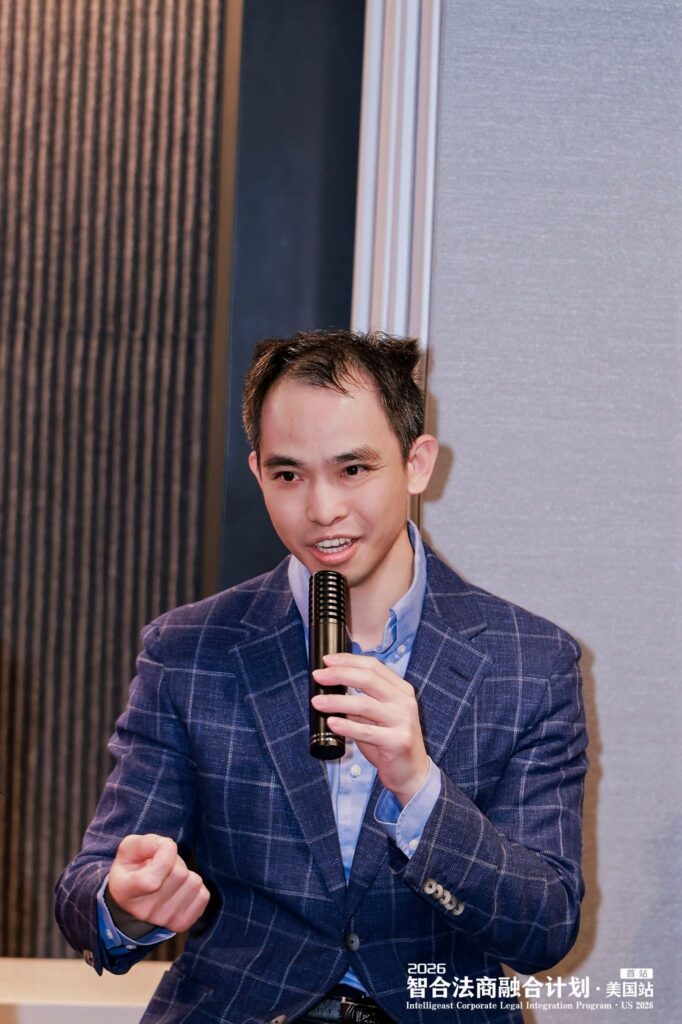
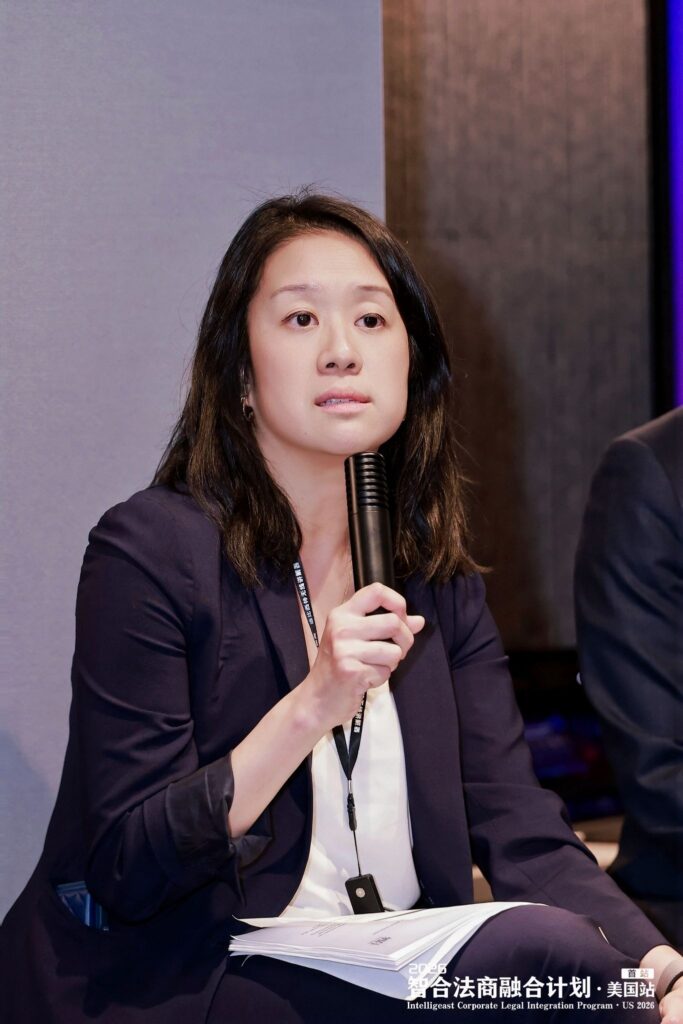
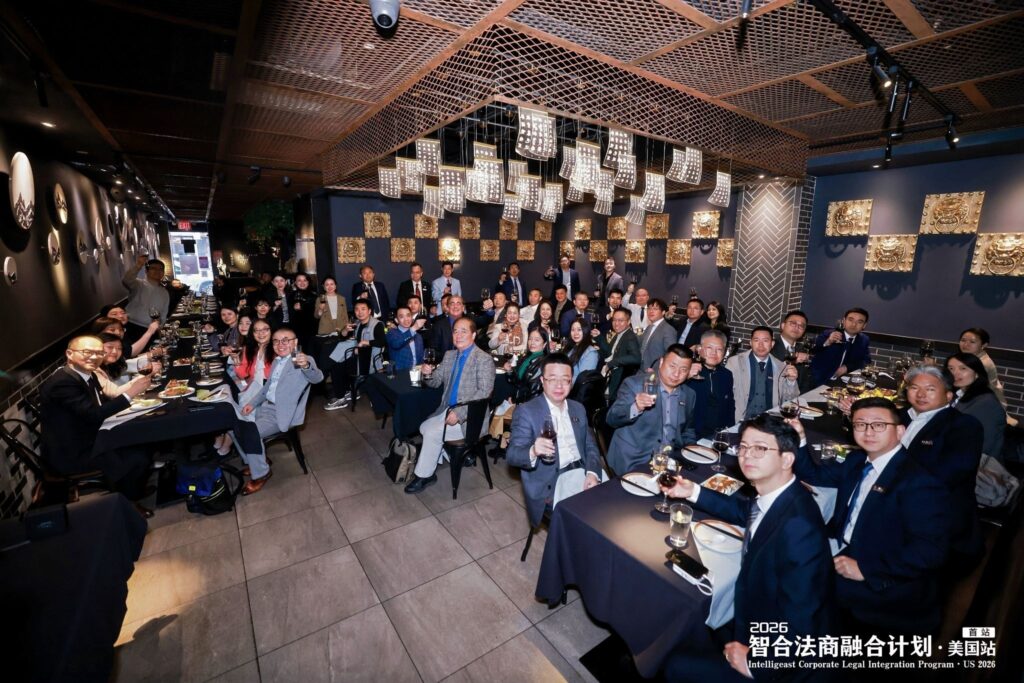
On April 29, 2026, AABANY’s Asia Practice Committee successfully hosted the U.S.–China Legal Elite Dialogue Forum & Dinner in New York City, bringing together approximately 75 attorneys, legal professionals, and business leaders for an afternoon of insightful discussion and cross-border engagement.
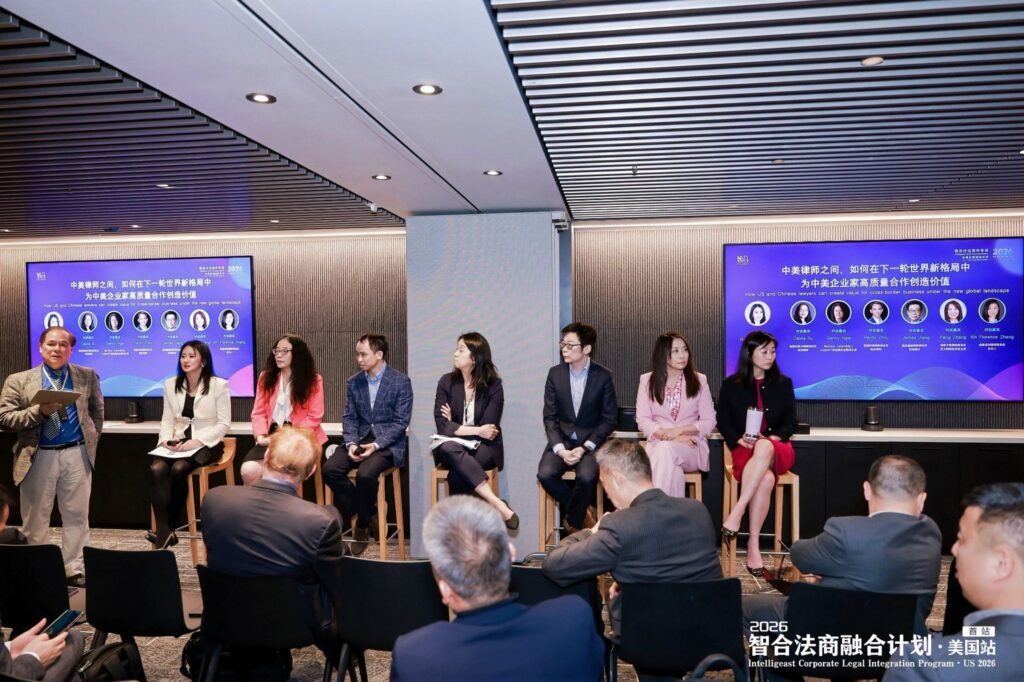
Held at Club 135 by Industrious, the forum convened leading practitioners across the U.S. and China to examine the evolving legal and business landscape shaping cross-border transactions and disputes. The program featured keynote presentations and a dynamic panel discussion focused on the theme: “How U.S. and Chinese lawyers can create value for cross-border business under the new global landscape.”
The panel brought together an accomplished group of practitioners, including Hardy Zhou, Tax Attorney at Cooley LLP and Co-Chair of AABANY’s Asia Practice Committee, and Genny Ngai, Partner at Morrison Cohen LLP and Co-Chair of AABANY’s Litigation Committee. Moderated by Haiyan Tang, Managing Partner at Quinn Emanuel Shanghai, the discussion explored the increasing complexity of cross-border legal work, including heightened regulatory requirements, shifting investment trends, and the need for closer collaboration between U.S. and Chinese counsel.
Panelists shared practical perspectives on how lawyers can deliver value in this environment—ranging from structuring transactions and managing risk to navigating disputes and aligning multi-jurisdictional strategies.
The forum also featured keynote remarks from Yang Chen, the Executive Director of AABANY and Chris M. Kwok, Mediator at JAMS and Co-Chair of AABANY’s Alternative Dispute Resolution Committee, and other distinguished speakers across corporate, litigation, and dispute resolution practices, providing attendees with a well-rounded view of current developments in U.S.–China legal relations.
Following the formal program, participants continued their conversations during a networking reception and dinner, fostering meaningful connections and further strengthening the AABANY community.
AABANY extends its sincere thanks to all speakers, organizers, and attendees for contributing to the success of this event. The Asia Practice Committee looks forward to continuing to facilitate dialogue and collaboration among legal professionals engaged in cross-border practice.
-Written by Hardy Zhou, Co-Chair, AABANY’s Asia Practice Committee
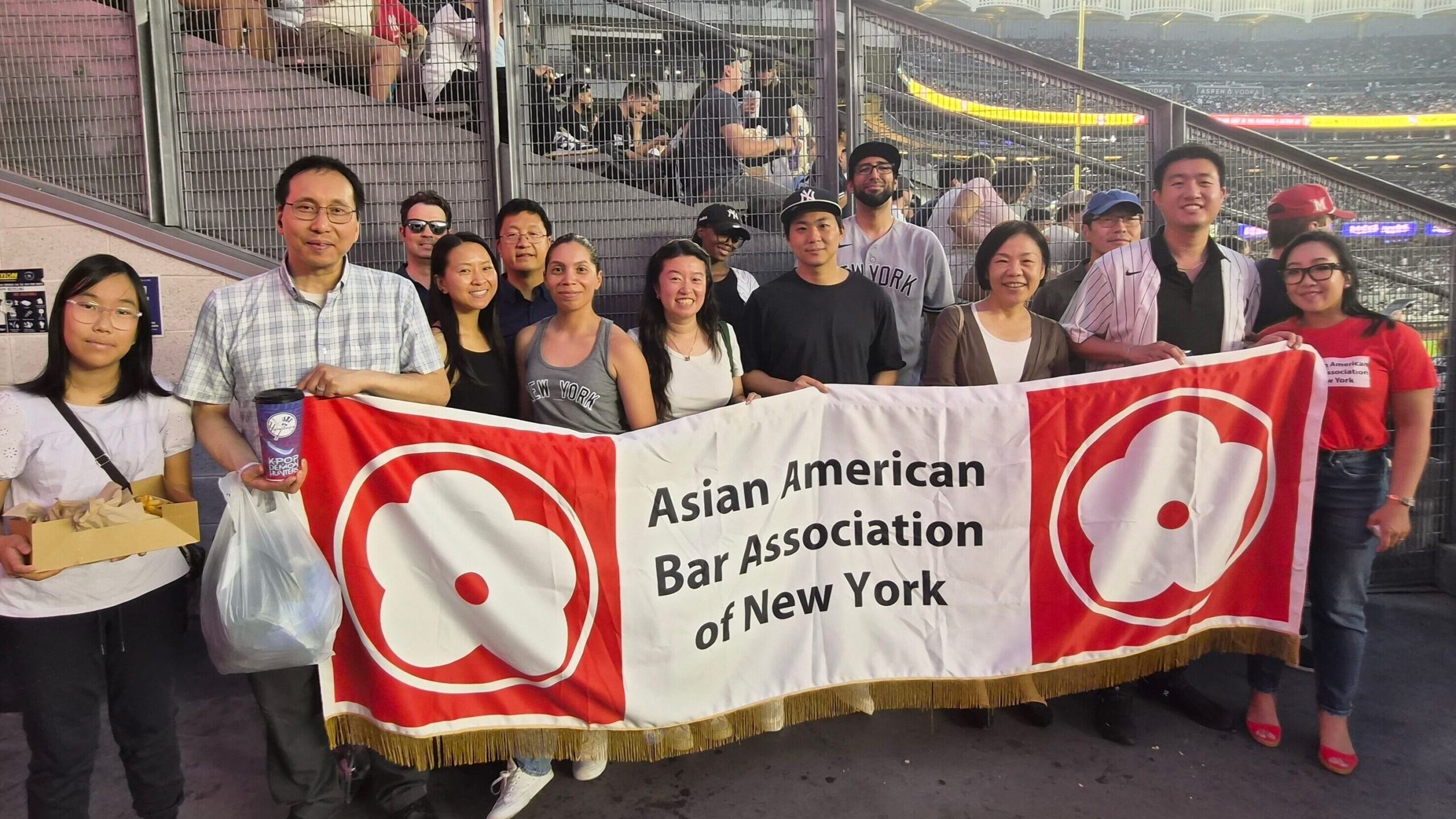
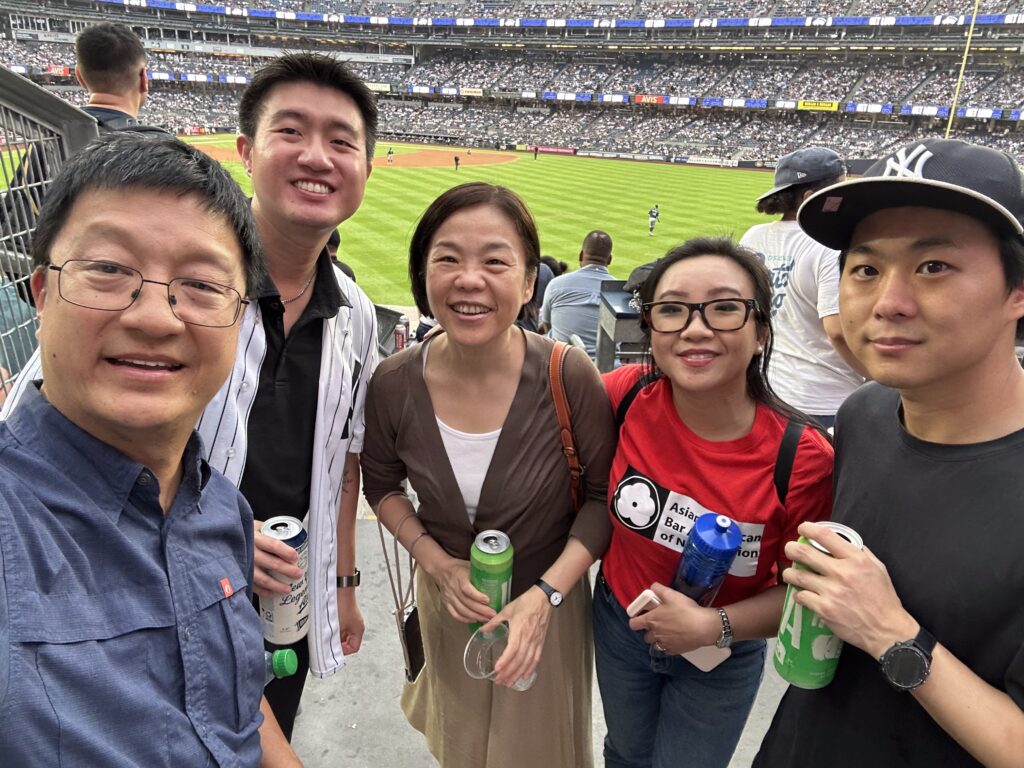
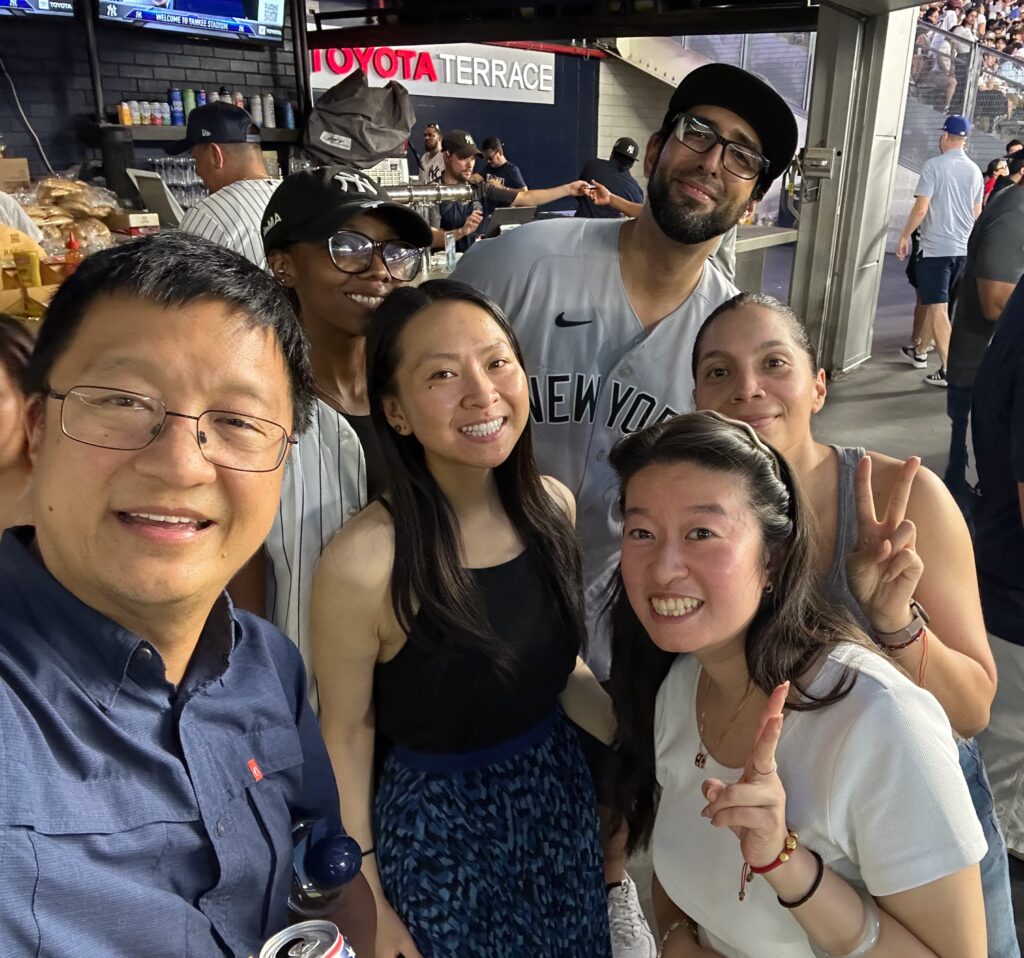
On Tuesday, August 11, AABANY members and their guests met at Yankee Stadium to watch the New York Yankees take on the Seattle Mariners. The evening doubled as KPop Demon Hunters Theme Night, and the ballpark was buzzing with fans decked out for the occasion. The first 18,000 fans to arrive got to take home a free Rumi bobblehead.
The game had a quiet and defensive start, with neither team scoring during the first five innings. In the 6th inning, the Mariners broke the deadlock with a solo home run to go up 1-0. But the Yankees exploded in the 7th, taking advantage of clutch hits to score four unanswered runs. New York’s pitchers shut the door from there for a 4-1 win, handing Seattle its fifth straight loss.
Beyond the game, the night offered exactly what these outings are meant to provide: an easy, low-pressure setting for AABANY members to connect outside the usual office setting. Standing together in the open area by the Toyota Terrace, members swapped stories between innings, cheered the late-game rally, and soaked in a fun summer night at the stadium. Thanks to everyone who came out and made the evening memorable and enjoyable, and a special thanks to the Membership Committee for organizing another great outing!
–Written by Victor Way, AABANY Intern, Summer 2026
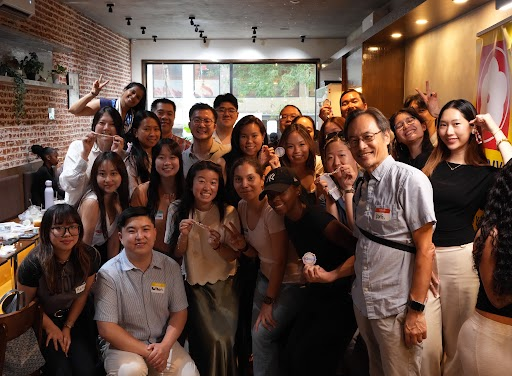
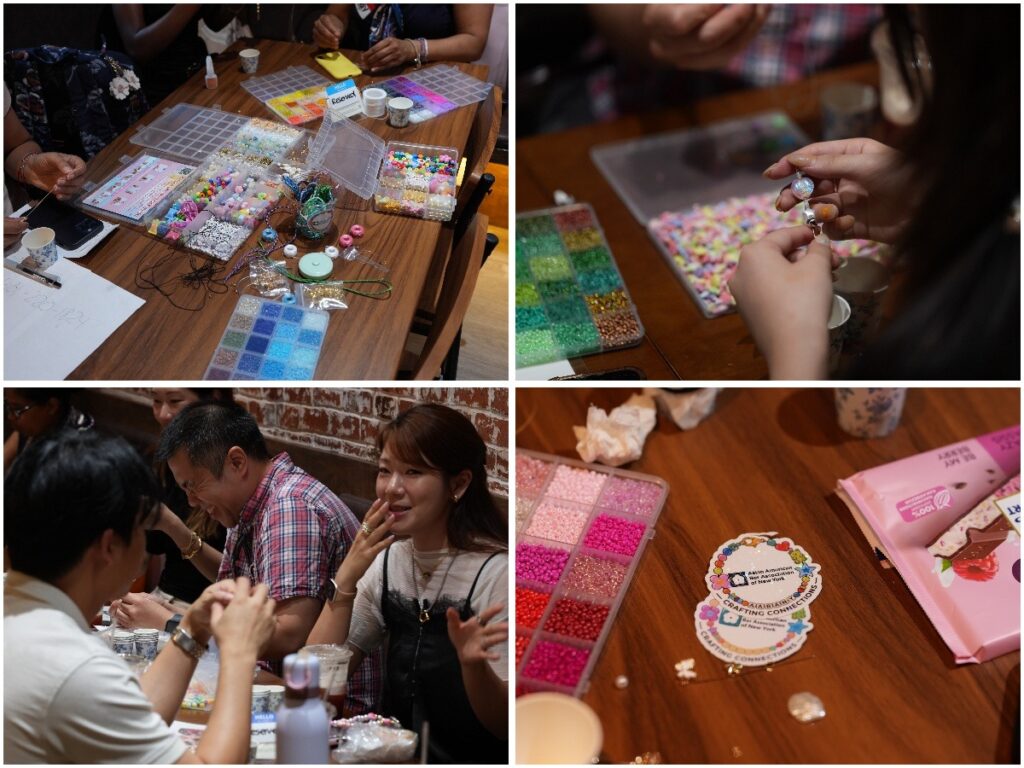
On July 31, 2026, AABANY’s Student Outreach Committee and Government Service & Public Interest Committee partnered to host Crafting Connections, a friendship bracelet-creating event. This event celebrated International Friendship Day and took place at On Lab in New York’s Lower East Side. While making bracelets, AABANY members conversed, connected, and crafted over a variety of food and drink. This event drew numerous attendees, with registration filling up very quickly after the event was announced.
The Crafting Connections event featured a beautiful selection of beads, string, and crafting templates spread across multiple tables in the cafe. Upon arrival, attendees were able to choose from a large selection of beads and charms, as well as their desired string type. They then chose their seat and began an evening of crafting, laughter, and connections. Law students had the opportunity to connect with a variety of legal professionals, including practicing attorneys and a law professor.
The environment fostered a relaxed atmosphere that encouraged a range of conversations between new people and long-time AABANY members alike. Topics of conversation included attendees sharing their own legal paths and laid-back discussions on upcoming vacations or bonding over connections made by pet owners. Attendees helped others choose charms and beads, and even made bracelets for each other, truly embracing the spirit of International Friendship Day.
The event concluded with new bracelets, full stomachs, and most importantly, new connections.
The photos from this event capture the joyful nature of the evening. To see the full photo album, click here.
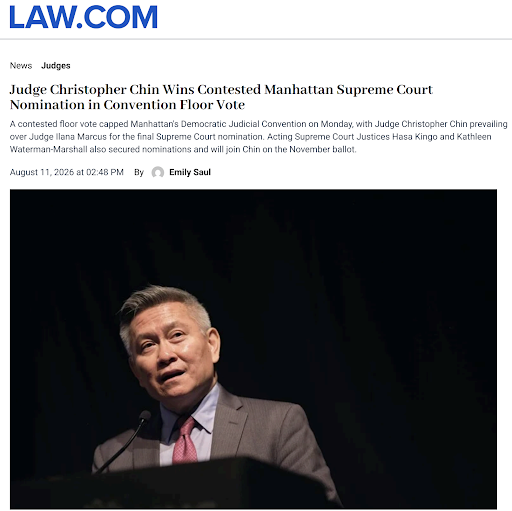
As reported in the New York Law Journal on August 11, at the Manhattan Democratic Judicial Convention on August 10, Justice Christopher Chin won the nomination for a vacant Supreme Court seat against Judge Ilana Marcus in a floor vote (90-65). Justice Chin will join Acting Supreme Court Justices Kathleen Waterman-Marshall and Hasa Kingo on the general election ballot to fill three Manhattan Supreme Court vacancies.
The vote was followed by personal moments throughout each of the Justice’s speeches at the convention: Acting Justice Nicholas Moyne declined his nomination and described his neurodivergence as his greatest strength in his declination speech; Acting Justice Kingo reflected on his path to the bench; and Justice Chin spoke on his childhood where his family faced racial discrimination under a dictatorship in Burma. “I’m happy to say that I don’t feel like a second-class citizen anymore,” Chin said during his acceptance speech.
AABANY congratulates Justice Chin, an AABANY member, on his nomination and commends fellow AABANY members Hon. L. Austin D’Souza, Hon. Ilana Marcus, Hon. Eric Schumacher, Hon. Richard Tsai, and Hon. John Zhou Wang for their participation in the nominating convention.
To read the full article, click here (subscription required).
From scholarships and fellowships to the annual Thomas Tang Moot Court Competition, the NAPABA Law Foundation offers many ways to advance your career and deepen your connection to the legal community.
Two important deadlines are coming up. Be sure to mark your calendars:
Judge Thomas Tang and Dr. Pearl Tang Moot Court (TTMC) Competition Registration Deadline: September 10, 2026
Sponsored annually by the NAPABA Law Foundation, the TTMC appellate advocacy competition helps law students develop advocacy skills and fosters future legal talent.
Fall Scholarships Application Deadline: September 23, 2026
Scholarships are awarded nationwide to law students who demonstrate a commitment to serving or contributing to the Asian Pacific American community as future leaders. Check out the opportunities available!
To the attorneys, judges, and legal professionals in our network: share this email with law students in your network. A single message from you could open the door to a defining moment in their career.
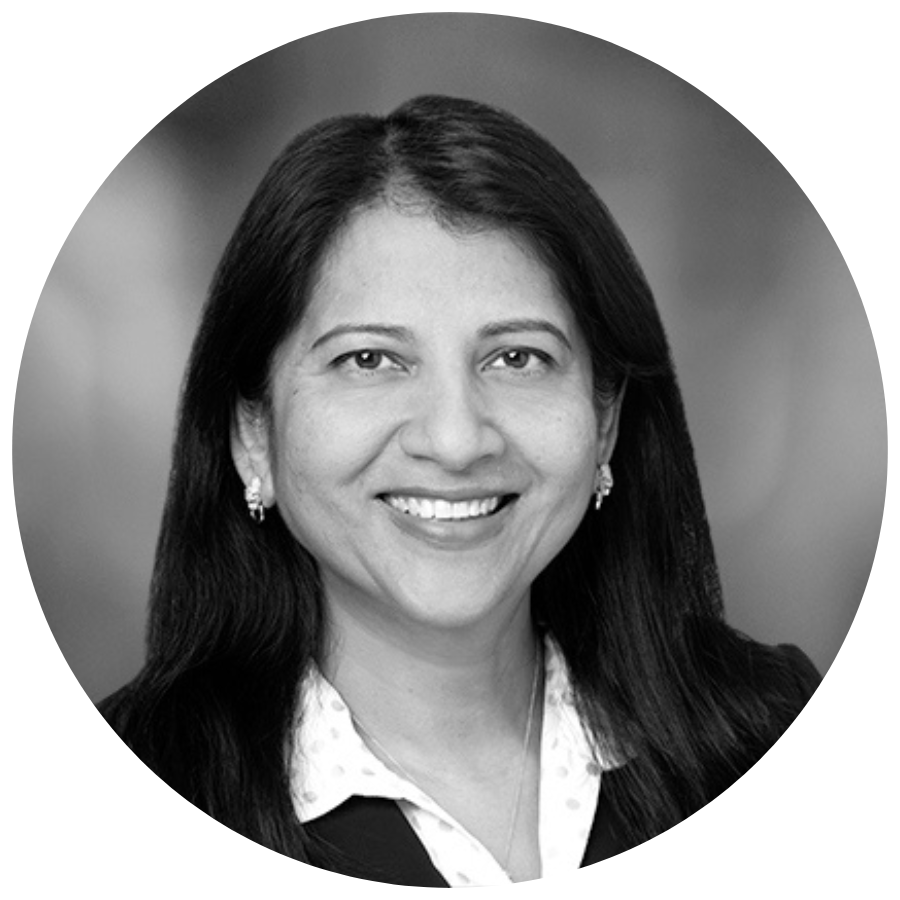
The Governance, Elections, and Nominations (GEN) Committee is pleased to present for your consideration the following Officer candidates for 2026-27. The GEN Committee has approved candidates who have demonstrated leadership capabilities, are passionate about NAPABA’s mission, and who have skill sets and perspectives that align with NAPABA’s strategies, goals, and needs—not just now, but into the future. In preparation for exercising your right to vote, the GEN Committee encourages you to take the time to consider each candidate’s vision for NAPABA and the diversity of the Board as a whole.
We thank each of the candidates for their willingness to serve the organization and the community.
2026-27 NAPABA Board of Governors | Officer Candidates
The GEN Committee believes that the active participation of member affiliates and individuals is essential to a vibrant and diverse organization. The GEN Committee encourages the engagement of NAPABA’s members in the nomination and election process. For these reasons, the GEN Committee desires to facilitate the ability of members to inform other members of candidate qualifications and support candidates through endorsements, advertisements, articles, etc. NAPABA supports the use of endorsements in the nomination and election process that determines NAPABA leadership for future years.
Click here to view the candidates’ statements and biographies, including information on how to submit an endorsement. Any NAPABA member in good standing may endorse. Any bar association that is a NAPABA affiliate in good standing may endorse any candidate with confirmation of such endorsement provided by the current president of the bar association. NAPABA will accept endorsements through August 31 at 8 pm ET.
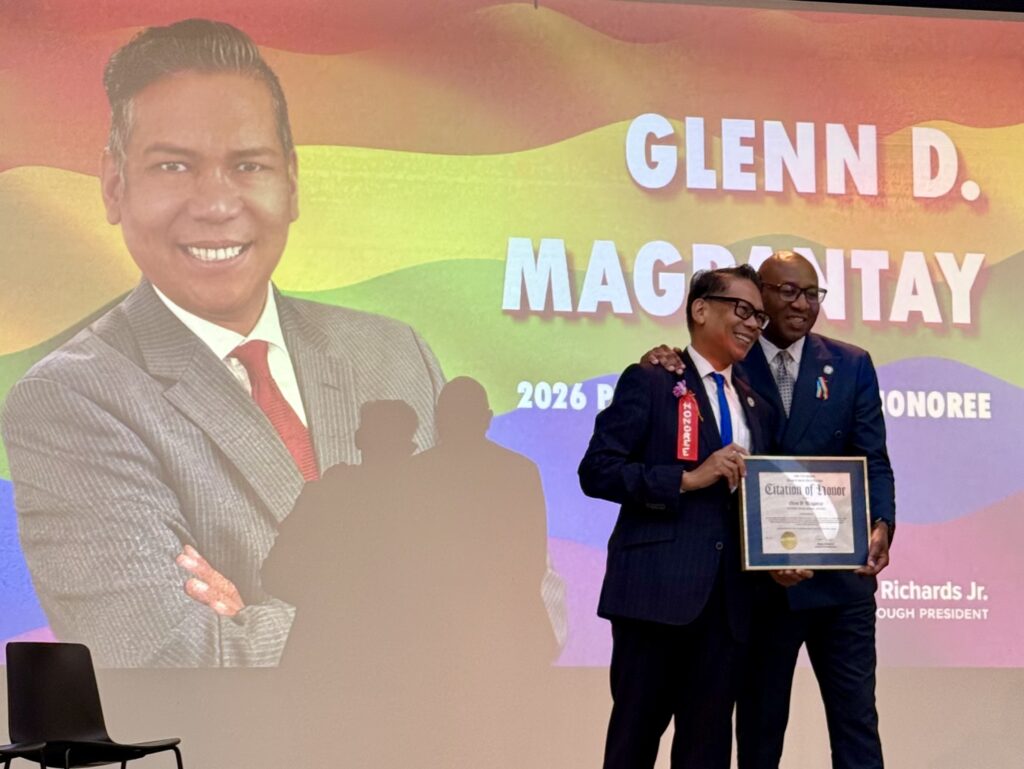
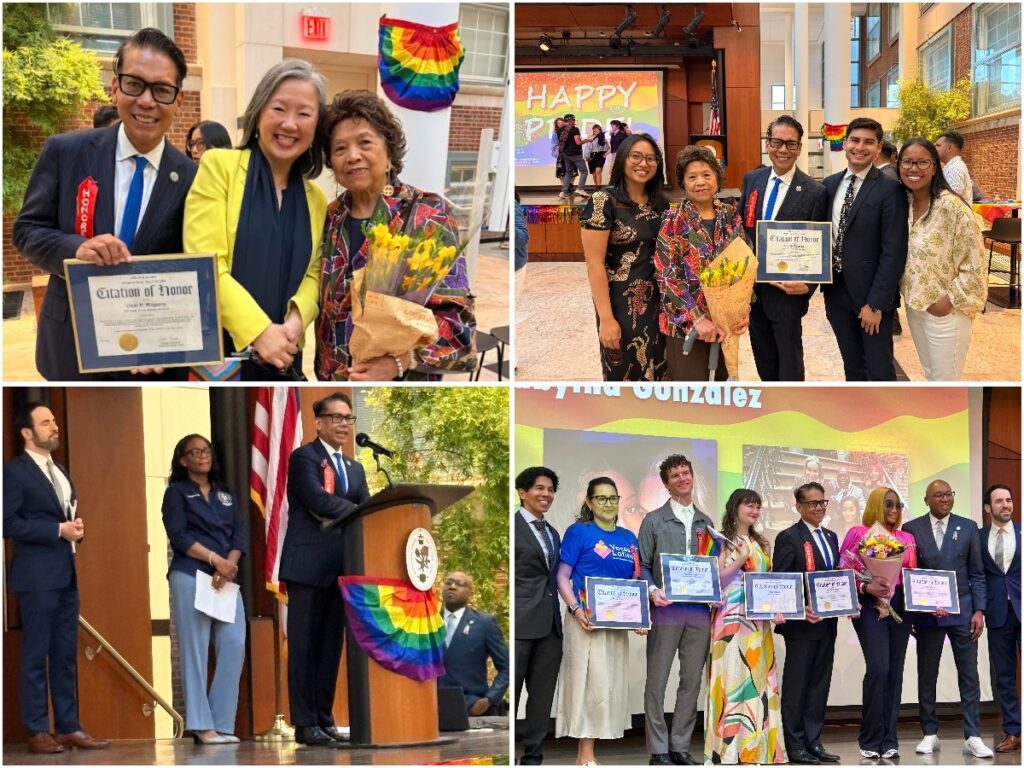
On June 24th, 2026, Glenn D. Magpantay, a Commissioner on the United States Commission on Civil Rights (USCCR), was honored at Queens Borough President Donovan Richards Jr. ‘s Annual Pride Month Celebration at Queens Borough Hall. Glenn is the first openly LGBTQ and Asian American commissioner in the USCCR since its founding in 1957. Glenn is a longtime member and leader at AABANY and a current Board Director. Recently, we took this opportunity to meet with Glenn to interview him about his lifelong work as a civil rights attorney and an LGBTQ rights activist.
In a distinguished and storied career, Glenn has been recognized with a variety of awards, including NAPABA’s Daniel K. Inouye Trailblazer Lifetime Achievement Award and the AALAM Community Service Award. However, Glenn reflects that his award from BP Richards feels different because of the incredible support he has received from others in the local community. Being a Queens native—a borough bursting with diversity—Glenn has experienced firsthand how important diversity within communities is. For Glenn, the community recognition is what makes this honor deeply personal and truly special.
In his acceptance remarks, Glenn reflected on the difficulties of coming out as a gay man during the peak of the HIV epidemic. He extended deep gratitude to his family and supporters in both the LGBTQ and legal communities, noting that their unwavering support was vital during this challenging period of his life and the successes he achieved throughout his career. He also highlighted his impactful advocacy on the USCCR, including his efforts to ensure that the Commission acknowledges violence against transgender women of color. Glenn called upon those in attendance to persistently speak out and advocate for justice. As his remarks drew to a close, he extended his sincere thanks to the community for offering their continuous support throughout his journey.
“I would have never achieved all of this, were it not for so many of you who are here in the audience today. You all have supported me and have given me poise. You have lifted me up, even though I know I’m a little heavy,” he quipped. Click here to listen to Glenn’s speech.
Glenn is a Co-Founder of the National Queer Asian Pacific Islander Alliance (NQAPIA), an organization that aims to create a world where queer and trans Asian American, Native Hawaiian, and Pacific Islander (AANHPI) people can flourish. Through this work, underrepresented communities continue to tackle ever-changing political and societal issues. Glenn claims that the changes the new administration implemented—the dismantling of Diversity, Equity, and Inclusion (DEI) programs, Temporary Protected Status (TPS), and cutbacks on transgender healthcare and services for the poor—have affected millions of minority populations across the U.S., including AANHPI and LGBTQ communities.
Glenn credits affirmative action for his success as an LGBTQ Asian American. Following the government rollback of the policies supporting underrepresented communities, many feel the current legal and political landscape is stacked against them. Faced with these issues, Glenn shares how individuals and organizations can navigate this shifting landscape:
Vote in every election
Protest injustice
Engage with your community
Cultivate allies from those not in your communities
Be more open-minded to diverse perspectives
To achieve meaningful progress, according to Glenn, it is essential to transform hearts and minds. For many AANHPI and LGBTQ individuals, this transformation begins at home and involves finding a healthy balance between traditional expectations of family duty and the fundamental right to live authentically. Glenn observes a distinct tension between traditional, collectivist, and conformist Asian values and the emphasis on individualism in America, leading to the conflict that arises between parents and their second-generation children.
Glenn maintains that such cultural tenacity served as a way of survival for previous generations. It remains equally essential for navigating today’s challenges. While this cultural friction often causes painful divides, bridging these two worlds requires a slow, empathetic dialogue. “Coming out in Asian cultures is a process, not an event,” Glenn stated. “Parents have struggled and sacrificed for us. We should honor and respect them with patience.”
As a parent himself, Glenn states that his choices are guided by a desire to provide the very best for his child—similar to his own parents and many other Asian parents in America. American interactions are often transactional, while Asian interactions are deliberate and transformative—something AANHPI and LGBTQ youth must be mindful of while balancing their identities. “Unfortunately, everything that is beautiful and fulfilling in this world is a struggle to get to,” Glenn declared.
Teaching has also played a significant part in Glenn’s life. His teaching journey began when his friend, the late Professor Gary Okihiro, professor of international and public affairs at Columbia University, suggested that he teach, recognizing the unique insights the Commissioner had to share with students. Glenn chose to begin teaching as a personal mission to give back to the community with the ultimate goal of showing that students from underserved communities can also become accomplished lawyers. Many of them—first–generation immigrants or poor—have never met a brown gay attorney before. They thought that all the successful lawyers were white, male, and Jewish.
He hopes that he can help his students find a potential greater than they have ever imagined for themselves. The mentor and mentee relationships that teaching has enabled him to form motivate him to continue. He imparts his personal knowledge while the students keep him updated on current social media lingo, allowing them to form meaningful and relevant connections. Although Glenn no longer teaches, he hopes to return to the classroom sometime in the future. He is beloved and admired by his students, as his “Rate My Professor” reviews show.
Ultimately, Glenn intends to continue leveraging his role in the USCCR and his position as an LGBTQ and Asian American civil rights pioneer to help underrepresented communities achieve their fullest potential.
Please join AABANY in congratulating Glenn on his most recent recognition from Queens BP Richards during the Annual Pride Month Celebration in June.
Washington, DC (August 7, 2026) — The National Asian Pacific American Bar Association (NAPABA) Law Foundation (NLF) announced today that Malakai Espinosa, Cynthia Phan and Yuwen Wang, second-year law students at UCLA School of Law, Boston University School of Law and the University of Chicago School of Law, respectively, have been awarded prestigious SAIL Scholarships for their outstanding professional promise and leadership potential.
“Cynthia, Malakai, and Yuwen embody academic excellence, leadership, and the bright future of the legal field,” said NLF President Bonnie Wolf. “NLF and SAIL are honored to support their journeys and to invest in leaders who will use their talents to serve others, expand opportunity, and create meaningful change in their communities.”
Malakai Espinosa is pursuing a joint J.D./M.P.H. at the UCLA School of Law and the UCLA Fielding School of Public Health. Among other honors and activities, he is a member of the David J. Epstein Program in Public Interest Law and Policy and received a Philippine American Bar Association Scholarship, a UCLA Law Faculty Scholarship and a Legal Education Access Pipeline Public Interest Summer Grant. He also serves as co-chair of the law school’s Asian/Pacific Islander Law Students Association, co-chair of the El Centro Education Rights Project and chief managing editor of the Pacific Basin Law Journal. Malakai earned his B.S. summa cum laude in Human Biology and Society from UCLA, where he was on the Dean’s Honor List for four years, president of Samahang Pilipino and played tuba for the UCLA marching band. He is a member of the board of the UCLA Pilipino Alumni Association, and this summer, Malakai was a judicial extern for a judge on the U.S. District Court for the Central District of California.
Cynthia Phan is a second-year law student at Boston University School of Law, where she is a Dean’s Scholarship recipient, a Legal Writing Fellow and co-president of the Public Interest Law Society. She received her B.A. summa cum laude in International Relations from Boston University, where she received a Thomas M. Menino Scholarship and engaged in academic research and volunteer work in Nairobi, Kenya; Boston, MA; Geneva, Switzerland; Tel-Aviv, Israel; and the West Bank. Between her undergraduate studies and law school, Cynthia worked for two years as a juvenile diversion coordinator with the Suffolk County District Attorney’s Office in Boston. She is the author of Stories from the Street: Nurturing Empathy among Boston Residents and spent this summer as a legal intern with the Asian American Legal Defense and Education Fund in New York City.
Yuwen Wang is a 2028 J.D. candidate at the University of Chicago Law School, where she is a member of the University of Chicago Law Review and the law school’s Public Interest Leadership Program; treasurer of First Generation Professionals; and programming director of the Asian Pacific American Law Students Association. She received her B.A. in Sociology and Public Health from Johns Hopkins University, where she was elected to Phi Beta Kappa and received general honors as well as departmental honors in Sociology. Between college and law school, Yuwen worked as a senior legal assistant at a national public interest law firm, Sanford Heisler Sharp McKnight, LLP. She was previously an undergraduate intern with the U.S. Department of Justice, Civil Rights Division, Disability Rights Section. This summer, she worked as a legal intern for the Hon. Jeannette Vargas of the U.S. District Court for the Southern District of New York and for the Bazelon Center for Mental Health Law.
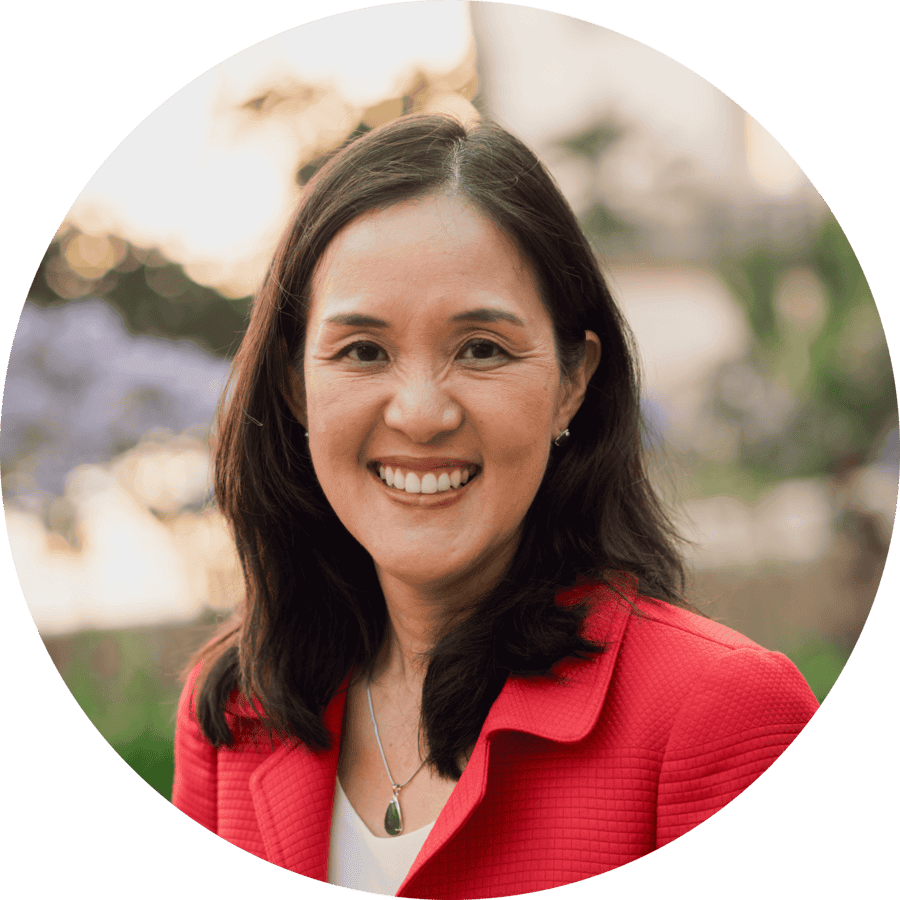
“We are excited to welcome Malakai, Cynthia and Yuwen into the seventh cohort of SAIL Scholars,” said Ivan Fong, who with his wife Sharon endowed the NLF SAIL Scholarship program. “All three of them show great promise as leaders who give generously of their time and effort to the broader community. We could not be more delighted to help them as they complete their academic work and become part of the next generation of leaders in our profession.”
Two unique aspects of the SAIL Scholarship program are that, in addition to monetary support, SAIL Scholars will also receive mentoring and leadership development from each other and from a network of legal and community leaders. “A second feature of this scholarship program,” said Sharon Fong, “is that the recipients commit to ‘paying it forward’ — by supporting each other, future SAIL Scholars and the communities in which they will live and work.”
In addition to Sharon and Ivan Fong, the 2026 NLF SAIL Scholarship selection committee was comprised of Suzan Chau, Supervising Attorney for the Elder Justice & Civil Resource Center for the First Judicial District of Pennsylvania; the Honorable Theodore Chuang, U.S. District Judge for the District of Maryland; Esther Lim, Partner and Chief Community Officer at Finnegan; and Caroline Tsai, Executive Vice President, Chief Legal and Corporate Affairs Officer at FIS.
NLF is a 501(c)(3) non-profit that carries out its work primarily by awarding scholarships and fellowships that promote the interests of the Asian Pacific American community. Since its founding, the Foundation has awarded nearly $2 million in scholarships, fellowships and internships.
PBCS volunteers, comprising volunteer attorneys and law students, met with 19 clients and provided guidance on a range of legal issues, including housing, family and matrimonial law, immigration, real property, trusts and estates, torts and other civil litigation.
Here are some of the clients’ feedback:
“May Wong is very professional and answered all my questions. She also gave me helpful advice and referrals. Thank you!”
“Thank you, Shirley, for listening to our concerns. She is very knowledgeable about different routes going forward.“
“Very grateful this service is available for the Asian community as it always seem there is always a lack of community service for us.”
We thank the following volunteers for attending the Queens Pro Bono Clinic and for their dedicated services:
Attorneys:
Wendy Cheng
Marcus Cheung
Kevin Hsi
Richard In
Shirley Luong
Sinbay Tan
Johnny Thach
Anthony Wong
May Wong
Gary Yeung
Evelyn Yu
Interpreters/shadowers:
Nathan Cao
Michelle Chen
Kaitlyn Cheng
Helen Ding
Nandar Win Kerr
Momo Sano
Jingjing Wang
Suzie (Sue) Yu
Wendy Zeng
We invite you to continue supporting our community by joining us at our upcoming Pro Bono Clinics:
– August 19th [Manhattan link here] from 6:30-8:30pm, AAFE Community Center, 111 Norfolk Street, NY, NY 10002
– September 12 [Brooklyn link here], from 12:30 – 3:30pm, CPC Brooklyn Community Services, 4101 8th Avenue, Brooklyn, NY 11232
– October 7 [Queens link here], from 6:30 – 8:30pm, AAFE One Flushing Community Center, 133-29 41st Ave, 2nd Floor, Flushing, NY 11355
To learn more about the Pro Bono & Community Service Committee, visit probono.aabany.org.
We look forward to your participation in our future clinics!