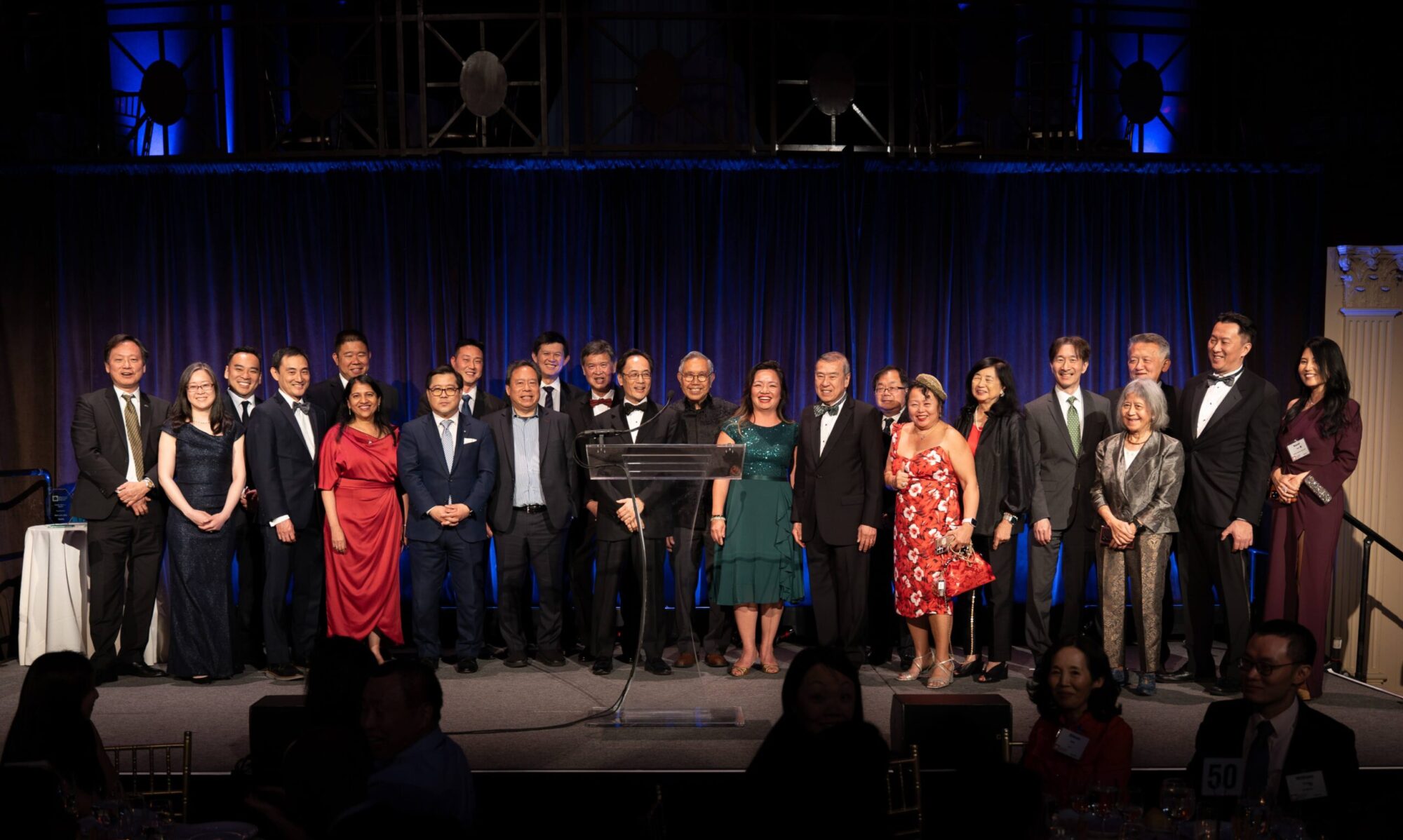

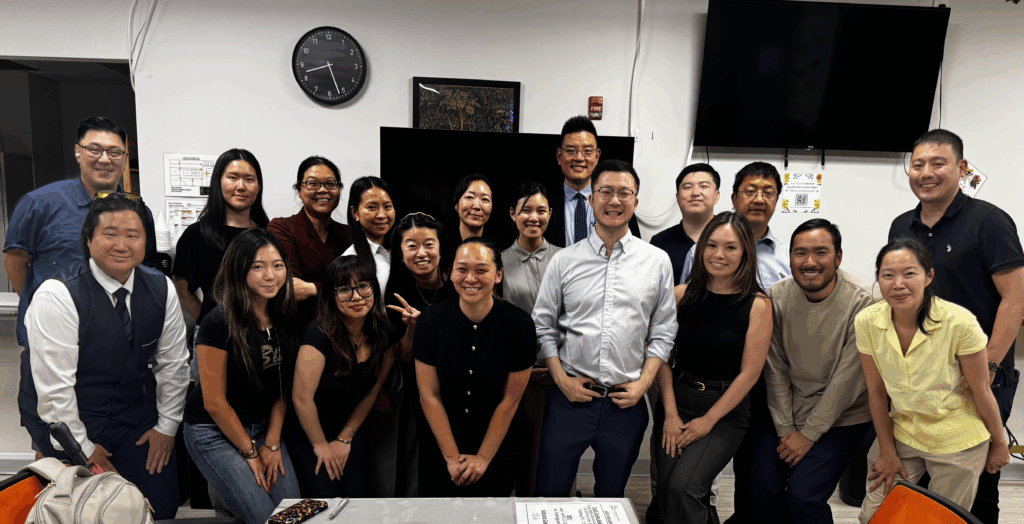
Thank You to the Volunteers at the August Queens Pro Bono Clinic

Many thanks to the Asian American Law Fund of New York (AALFNY), Asian Americans for Equality (AAFE), and AABANY’s Pro Bono & Community Service (PBCS) Committee, as well as our dedicated volunteers for joining our Queens Pro Bono Clinic on August 5, 2026.

PBCS volunteers, comprising volunteer attorneys and law students, met with 19 clients and provided guidance on a range of legal issues, including housing, family and matrimonial law, immigration, real property, trusts and estates, torts and other civil litigation.  

Here are some of the clients’ feedback:

May Wong is very professional and answered all my questions. She also gave me helpful advice and referrals. Thank you!

Thank you, Shirley, for listening to our concerns. She is very knowledgeable about different routes going forward.

Very grateful this service is available for the Asian community as it always seem there is always a lack of community service for us.”

We thank the following volunteers for attending the Queens Pro Bono Clinic and for their dedicated services:

Attorneys:  

Wendy Cheng 

Marcus Cheung 

Kevin Hsi 

Richard In 

Shirley Luong 

Sinbay Tan 

Johnny Thach 

Anthony Wong 

May Wong 

Gary Yeung 

Evelyn Yu

Interpreters/shadowers:

Nathan Cao

Michelle Chen

Kaitlyn Cheng

Helen Ding

Nandar Win Kerr

Momo Sano

Jingjing Wang

Suzie (Sue) Yu

Wendy Zeng

We invite you to continue supporting our community by joining us at our upcoming Pro Bono Clinics:

– August 19th [Manhattan link here] from 6:30-8:30pm, AAFE Community Center, 111 Norfolk Street, NY, NY 10002

– September 12 [Brooklyn link here], from 12:30 – 3:30pm, CPC Brooklyn Community Services, 4101 8th Avenue, Brooklyn, NY 11232

– October 7 [Queens link here], from 6:30 – 8:30pm, AAFE One Flushing Community Center, 133-29 41st Ave, 2nd Floor, Flushing, NY 11355

To learn more about the Pro Bono & Community Service Committee, visit probono.aabany.org.

We look forward to your participation in our future clinics!
NAPABA Statement in Response to Second Executive Order Restricting Birthright Citizenship

For Immediate Release:Contact:
August 7, 2026press@napaba.org

WASHINGTON – The National Asian Pacific American Bar Association (NAPABA) strongly opposes the Administration’s renewed effort to undermine the constitutional guarantee of birthright citizenship.  In an executive order issued yesterday, and just over a month after the U.S. Supreme Court struck down a previous executive order limiting birthright citizenship, the Administration purports to create additional categories of children born on American soil who would be denied birthright citizenship based solely on the status of their parents.

The law is clear. Under Trump v. Barbara, 609 U.S. ____ (2026), children born in the United States—even to parents unlawfully or temporarily present—are subject to the jurisdiction of the United States and are citizens at birth.  The Supreme Court recognized longstanding yet narrow exceptions to this rule, which include those born to foreign diplomats or invading armies. In reaffirming birthright citizenship, the Court upheld United States v. Wong Kim Ark, 169 U.S. 649 (1898), which rejected consideration of the status of the parents outside of the narrow exceptions.

Yesterday’s executive order attempts to unilaterally expand the categories of children ineligible for birthright citizenship.  It would, among other things, deny citizenship to children born to parents employed by a foreign government or designated as an “alien enemy,” a term that invokes the spectrum of historical injustices during World War II when the federal government removed and incarcerated approximately 120,000 individuals of Japanese ancestry.

Since last year, NAPABA and a large coalition of its affiliated bar associations from across the country defended birthright citizenship in the lower federal courts and the Supreme Court. In several amicus briefs, we highlighted how the past generations of Asian Americans faced discrimination, exclusion, and loyalty-based suspicion, yet their American-born children—including, as another amicus curiae argued, children of parents designated as “enemy aliens”—were nonetheless recognized as citizens at birth.

NAPABA will remain vigilant and stands ready to ensure that the Fourteenth Amendment’s promise of citizenship to all persons born in the United States, regardless of the stature or circumstances of their parents, is kept.