Press Release: NAPABA Applauds Restraining Order Against President’s Revised Muslim and Refugee Ban

For Immediate Release
March 15, 2017

For More Information, Contact: 
Brett Schuster, Communications Manager
[email protected], 202-775-9555

WASHINGTON — The National Asian Pacific American Bar Association (NAPABA) applauds the U.S. District Court for the District of Hawaii’s nationwide order to halt President Trump’s March 6, 2017, revised executive order barring individuals from six Muslim-majority countries and refugees from entering the United States, which would have gone into effect on March 16.

U.S. District Court Judge Derrick K. Watson granted the State of Hawaii’s motion for a temporary restraining order hours after the hearing, which was held earlier today. He concluded that Hawaii had met its burden of establishing a strong likelihood of success on the merits of its Establishment Clause claim, that irreparable injury would likely occur if the executive order was not halted, and that the “balance of the equities and public interest” warranted the relief.

On March 12, NAPABA filed an amicus brief in support of Hawaii, describing the history of the statutory exclusion of Asians and Pacific Islanders under early U.S. immigration law — including the first federal law to ban a group of people from entering the country on the basis of race — prior to the passage of the Immigration and Nationality Act of 1965, which outlawed nationality-based discrimination. NAPABA argued that President Trump’s revised order, with its anti-Muslim underpinnings, violates this unambiguous prohibition on discrimination established by Congress.

The court agreed with Hawaii’s assertion that religious animus motivated the revised order. Noting the Muslim-majority populations of the countries at issue, Judge Watson wrote, “It would therefore be no paradigmatic leap to conclude that targeting these countries likewise targets Islam.”

NAPABA will continue to work to ensure the executive order is permanently struck down by the courts.

Read Judge Watson’s order here (PDF).

Read NAPABA’s amicus brief here.

Read the statement of NAPABA and the South Asian Bar Association – North America, joined by 14 affiliates, against the revised executive order.

Read the March 6, 2017, statement of NAPABA and the South Asian Bar Association – North America, joined by 14 affiliates, against the revised executive order.

For more information, the media may contact Brett Schuster, NAPABA communications manager, at202-775-9555 or [email protected].

The National Asian Pacific American Bar Association (NAPABA) is the national association of Asian Pacific American attorneys, judges, law professors, and law students. NAPABA represents the interests of almost 50,000 attorneys and approximately 75 national, state, and local Asian Pacific American bar associations. Its members include solo practitioners, large firm lawyers, corporate counsel, legal services and non-profit attorneys, and lawyers serving at all levels of government.

NAPABA continues to be a leader in addressing civil rights issues confronting Asian Pacific American communities. Through its national network of committees and affiliates, NAPABA provides a strong voice for increased diversity of the federal and state judiciaries, advocates for equal opportunity in the workplace, works to eliminate hate crimes and anti-immigrant sentiment, and promotes the professional development of people of color in the legal profession.

To learn more about NAPABA, visit www.napaba.org, like us on Facebook, and follow us on Twitter (@NAPABA).
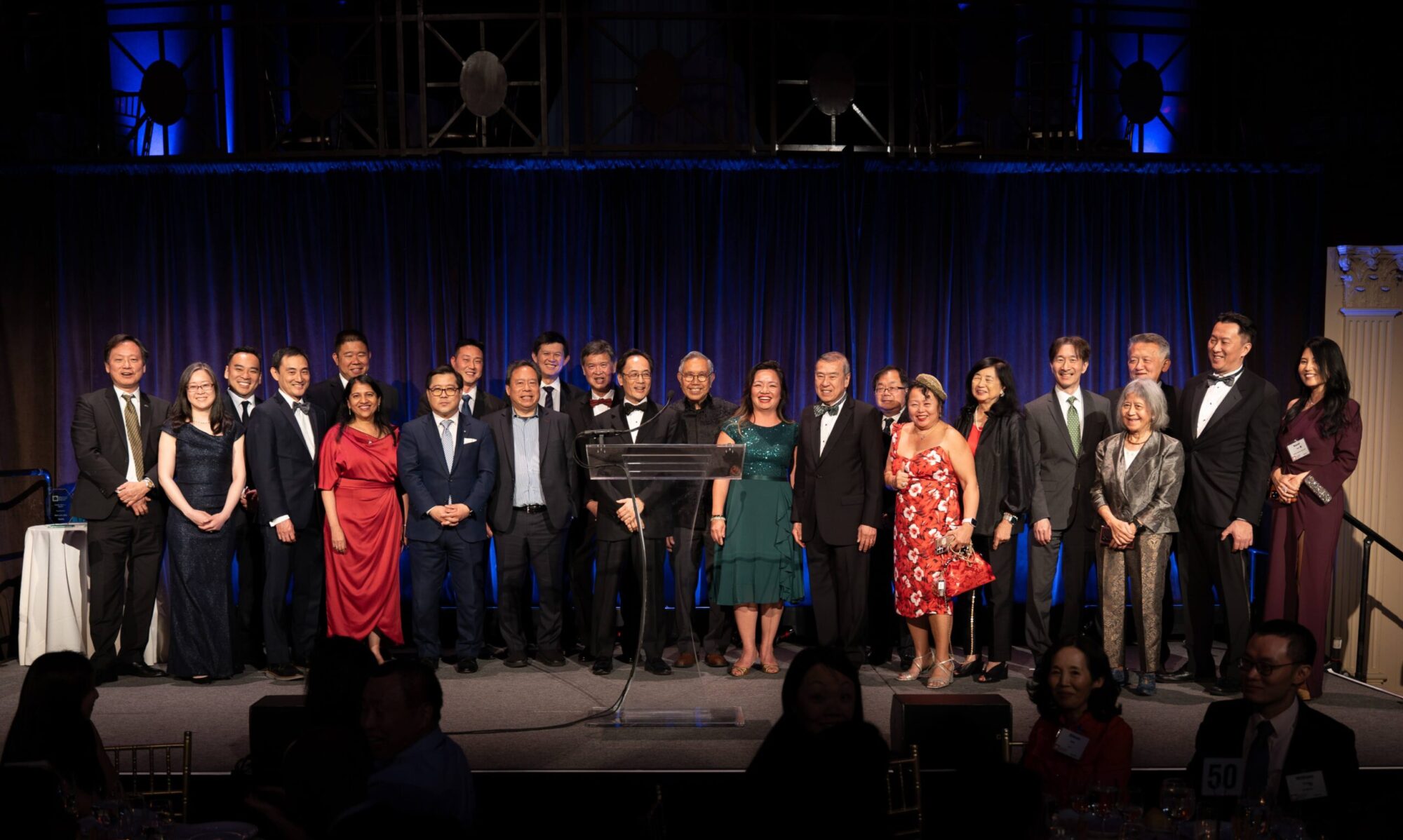

Preet Bharara starts from “first principles: Are we doing the right thing, and are we doing it for the right reasons?” – Joon Kim, Acting US Attorney, SDNY.

At the 2015 AABANY Annual Dinner, Charting New Frontiers, we presented the Public Service Leadership Award to Preet Bharara, for his extensive and well-known dedication and commitment to public service as US Attorney for the Southern District of New York, and in the many years before then. In accepting the award, Preet gave a moving and inspiring speech filled with good humor and the spirit of pride and professionalism in public interest and public service that has characterized his distinguished and storied career. Our usually raucous crowd listened in rapt silence for the entire length of his remarks and rose up in an enthusiastic standing ovation at their conclusion.

Preet, thank you for your leadership and your service, for Charting New Frontiers, for daring to Speak Up, Rise Up and Lift Up, and for serving as an exemplary role model as we seek to Take Charge, Lead Change in the coming weeks and months.

NAPABA Files Amicus Brief Supporting the First Legal Challenge to President’s Revised Muslim and Refugee Ban

For Immediate Release

March 13, 2017

For More Information, Contact: 

Brett Schuster, Communications Manager

[email protected], 202-775-9555

WASHINGTON — The National Asian Pacific American Bar Association (NAPABA) filed an amicus brief in State of Hawaii v. Trump to support Hawaii’s challenge to President Trump’s March 6, 2017, revised executive order barring individuals from six Muslim-majority countries and refugees from entering the United States.

Filing just before midnight on March 7, Hawaii became the first state to challenge the revised order and the U.S. District Court for the District of Hawaii agreed to hear the case on an expedited schedule. Judge Derrick K. Watson will hear oral argument on the State’s motion for a temporary restraining order on March 15, the day before the revised order is to take effect.

“I look no further than NAPABA’s mission to underscore the imperative for NAPABA to file its own amicus brief on this very issue. The new executive order is no less invidious than its predecessor,” said NAPABA President Cyndie M. Chang. “Asian Pacific American communities historically have been excluded and restricted in immigration and naturalization policies and have experienced the tragedy of forced incarceration during WWII. We understand first-hand the harms that this kind of discrimination will inflict upon Muslim and refugee communities. We will not forget this particular anti-immigrant history, and we are compelled to share our historically-based legal perspectives with the Court.”

NAPABA’s amicus brief describes decades of statutory exclusion of citizens of Asian and Pacific Island countries under early U.S. immigration law, including the Chinese Exclusion Act of 1882 — the first federal law to ban a group of people on the basis of their race. The Civil Rights Era marked a dramatic turning point that saw Congress dismantle nationality-based discrimination with the Immigration and Nationality Act of 1965. The brief explains that presidential discretion in the area of immigration and refugee admission, while broad, is limited by statute. NAPABA argues that President Trump’s revised order, motivated by anti-Muslim purpose, violates the unambiguous prohibition on discrimination established by Congress.

“I thank the many members of the NAPABA legal community who supported NAPABA’s drafting and filing of this expedited brief,” continued Chang. “Particular thanks goes to our pro bono counsel at McDermott Will & Emery LLP and pro bono local counsel at Alston Hunt Floyd & Ing for their leadership on this important brief.“

NAPABA recognizes lead counsel, James W. Kim, a NAPABA member and partner at McDermott Will & Emery LLP, in Washington, D.C., Mr. Kim’s team (Mark Calaguas, David Gacioch, Andrew Genz, Matthew Girgenti, Emre Ilter, Neha Khandhadia, Philip Levine, Riley Orloff, Sara Raaii, Joshua Rogaczewski, Amandeep Sidhu, and Michael Stanek), and NAPABA Amicus Committee chair, Professor Radha Pathak of Whittier Law School, for their leadership drafting the brief, which also involved the efforts of NAPABA staffers. NAPABA is represented by local counsel Pamela W. Bunn and John Rhee, with the support of William Kaneko, of Alston Hunt Floyd & Ing in Honolulu, Hawaii.

Read the amicus brief here.

Read the March 6, 2017, statement of NAPABA and the South Asian Bar Association – North America, joined by 14 affiliates, against the revised executive order.

For more information, the media may contact Brett Schuster, NAPABA communications manager, at202-775-9555 or [email protected].

The National Asian Pacific American Bar Association (NAPABA) is the national association of Asian Pacific American attorneys, judges, law professors, and law students. NAPABA represents the interests of almost 50,000 attorneys and approximately 75 national, state, and local Asian Pacific American bar associations. Its members include solo practitioners, large firm lawyers, corporate counsel, legal services and non-profit attorneys, and lawyers serving at all levels of government.

NAPABA continues to be a leader in addressing civil rights issues confronting Asian Pacific American communities. Through its national network of committees and affiliates, NAPABA provides a strong voice for increased diversity of the federal and state judiciaries, advocates for equal opportunity in the workplace, works to eliminate hate crimes and anti-immigrant sentiment, and promotes the professional development of people of color in the legal profession.

To learn more about NAPABA, visit www.napaba.org, like us on Facebook, and follow us on Twitter (@NAPABA).
Ronald H. Brown Law School Prep Program for College Students | St. John’s University

Ronald H. Brown Law School Prep Program for College Students | St. John’s University

EFiling – N.Y. State Courts

EFiling – N.Y. State Courts

ASIAN AMERICAN BAR ASSOCIATION OF NEW YORK APPLAUDS APPOINTMENTS OF THREE ASIAN AMERICAN JUDGES TO NEW YORK JUDICIARY

NEW YORK – March 8, 2017 – The Asian American Bar Association of New York (“AABANY”) applauds the appointment of three Asian American judges to the New York bench: Charles Y.J. Liu to the New York City Housing Court, Phyllis Chu to the New York City Criminal Court, and Frances Wang to the New York City Civil Court.

Judge Charles Y.J. Liu was appointed in February by Chief Administrative Judge Lawrence K. Marks and is currently sitting in Housing Court in Bronx County. Mayor de Blasio appointed Judge Chu and Judge Wang, and his office announced their appointments in January.

Judge Charles Y. J. Liu previously served as a court attorney in the New York City Housing Court starting in 1997. From 1997 to 2001, he served as a pro se Court Attorney in the New York City Civil Court’s Resource Center, where he assisted self-represented litigants with all aspects of their cases. From 2001 until his appointment to the bench, Liu served as an Associate Court Attorney, assisting Housing Court judges with all aspects of case resolution, including negotiating settlements, drafting decisions, providing procedural information to litigants, and advising judges on facts and issues on matters before the Court. Before that, from 1994 until 1996, Liu advocated on behalf of clients on housing issues within the Asian American community and on behalf of low income tenants.  Judge Liu received his undergraduate degree from the State University of New York at Albany and his law degree from the State University of New York at Buffalo. Judge Liu is an active member of AABANY.

Judge Phyllis Chu previously worked at the Kings County District Attorney’s Office starting in 1993. After completing the rotational system that included Criminal Court, the Complaint Room, Grand Jury and Investigations, Chu began trying felony trials in the Blue Zone in 1995. Chu investigated and tried all types of felonies ranging from assaults, burglaries, rapes, robberies and drug sales. In 1998, Chu moved on to the Crimes Against Children’s Bureau where she investigated and tried physical and sexual abuse cases concerning children under the age of 11. After being promoted to Supervising Senior Assistant District Attorney in 1999, Chu began trying felony cases in the Red Zone, which included assaults, robberies, burglaries and homicides. In addition, Chu supervised younger assistants on investigation and trial strategies. In 2003, Chu was promoted to the Homicide Bureau, where she prosecuted homicide cases throughout the borough of Brooklyn. Judge Chu received her undergraduate degree from Cornell University and her law degree from Northeastern University School of Law. Judge Chu is an active member of AABANY.

Judge Frances Wang spent eight years as a prosecutor in the Bronx County District Attorney’s Office in the Criminal Court and Appeals Bureau. She subsequently served as a Principal Court Attorney in Supreme Court, Criminal Term in Bronx County. Wang received her undergraduate degree from St. John’s University and her law degree from Hofstra University School of Law. As a law student, she interned for the Hon. Marilyn D. Go, United States Magistrate Judge for the Eastern District of New York, who received the Impact Leadership Award at the AABANY Annual Dinner on February 22. Judge Wang was appointed to Civil Court and has been assigned to Criminal Court.

“Following on the heels of the historic election of Judge Judy Kim and the re-election of Justice Doris Ling-Cohan at the end of 2016, AABANY commends the appointments of our newest Asian American jurists in New York State court,” says Susan Shin, President of AABANY. “We are hopeful that these additions to the bench will continue to increase diversity on the bench. AABANY maintains that diversity and inclusion are vital to strengthened confidence in the justice system, and we applaud these appointments as steps in the right direction. We congratulate Judge Liu, Judge Chu and Judge Wang on their achievement and thank them for their enduring commitment and dedication to public service. We wish them all the best for a long and productive tenure on the bench.”

For more information, please contact Yang Chen, AABANY Executive Director, at (212) 332-2478, or direct any inquiries to [email protected].

The Asian American Bar Association of New York is a professional membership organization of attorneys concerned with issues affecting the Asian Pacific American community. Incorporated in 1989, AABANY seeks not only to encourage the professional growth of its members but also to advocate for the Asian Pacific American community as a whole. AABANY is the New York regional affiliate of the National Asian Pacific American Bar Association (NAPABA).

###

Additional information about AABANY is available at www.aabany.org

Follow our blog at www.blog.aabany.org

Follow us on Twitter at www.twitter.com/aabany

Find us on Facebook at www.facebook.com/aabany

Find us on LinkedIn at www.linkedin.com/in/aabany

華人博物館播「對聯」 籲華裔入籍發聲 | 世界新聞網

華人博物館播「對聯」 籲華裔入籍發聲 | 世界新聞網

STATEMENT FROM THE MINKWON CENTER REGARDING THE NEWLY SIGNED TRAVEL BAN EXECUTIVE ORDER

Flushing, New York – On March 6, 2017, the President signed an executive order that bans immigration from six Muslim-majority countries and suspends the United States’ refugee program. This order revises and replaces an order signed on January 27 that suffered numerous defeats at the courts, culminating in a total injunction against the order from the 9th Circuit.

The President is turning his inflammatory rhetoric and hate into federal policy, and this intensely divisive climate has already had devastating consequences. This weekend, a Sikh man was shot in Washington. The week before, Srinivas Kuchibhotla was shot and killed in Kansas. Both shootings are believed to be racially motivated.

The new executive order runs counter to the MinKwon Center’s mission and values, and James Hong, Interim Executive Director, released the following statement:

“These executive orders can be revised a thousand more times, but the intent has always been clear. The travel ban has never been about public safety. Rather, the Trump administration is using xenophobia and Islamophobia to divide the nation, discriminate against immigrants based on religion, and ignore a growing humanitarian refugee crisis. Since its founding in 1984, the Minkwon Center for Community Action has worked to improve the lives of our immigrant communities, and as such, we continue to strongly oppose the Trump administration’s draconian policies designed to shut the doors on immigrants. We are proud to stand with our South Asian and Muslim allies against these hateful measures.”

For more information, contact:
James Hong

718.460.5600
[email protected]