

Dorsey Future Leaders Program | News & Resources | Dorsey
Dorsey & Whitney LLP is proud to announce its Future Leaders Program. A handful of talented, diverse young people will have the opportunity to work alongside attorneys, managers and staff in our New York office as interns. The week-long program will offer our Future Leaders internship in the Legal group or the Management/Administration group.
Those interested should have a high level of maturity and demonstrate an interest in leadership in your community. Applicants will be asked to indicate their preference in either the Legal group or the Management/Administration group, provide two references and a short essay. Applicants should be high school seniors in the upcoming 2016-2017 school year or currently enrolled in a college degree program. In exceptional cases, we will consider law students.
The week-long program will occur on August 21 – August 25, 2017. In addition to receiving mentoring and attending social events, participants will receive a stipend and commuting expenses.
Applications, including reference letters and essays should be sent no later than April 28, 2017 to: futureleaders@dorsey.com.
For more information, please visit the link in the title.
Many thanks to Litigation Committee Co-Chair Dai Wai Chin Feman for sharing this opportunity with us.
NAPABA Opposes Proposed Elimination of Funding to the Legal Services Corporation
For Immediate Release
March 16, 2017
For More Information, Contact:
Brett Schuster, Communications Manager
bschuster@napaba.org, 202-775-9555
WASHINGTON — The National Asian Pacific American Bar Association (NAPABA) strongly opposes the elimination of federal funding for the Legal Services Corporation (LSC) as detailed in President Trump’s proposed Fiscal Year 2018 budget. The LSC was formed with the critical mission of ensuring that all citizens have equal access to civil legal services and the justice system — regardless of their ability to pay for counsel.
“We call on Congress to reject this proposal and increase funding for the Legal Services Corporation,” said NAPABA President Cyndie M. Chang. “As Congress has recognized in a bipartisan manner, the LSC plays a critical role in ensuring access to justice for individuals of all backgrounds, regards of their ability to pay. Asian Pacific American attorneys work for legal aid programs funded by the LSC and engage in pro bono community assistance programs that have their roots in the LSC. Most significantly, the elimination of funding means that the most vulnerable in our country would not receive critical legal assistance.”
Each year, LSC assists 1.9 million families across the country in every state in our nation. Clients of legal services organizations represent all ethnicities and ages, including those who are limited English proficient, immigrants, the working poor, veterans, people facing foreclosure or evictions, families with children, farmers, people with disabilities, domestic violence victims, natural disaster victims, and the elderly. Without the strong support of civil legal aid, these individuals would be faced with the prospect of appearing in court alone and representing themselves, without the assistance of counsel.
NAPABA stands with other bar associations (including the American Bar Association), over 150 major law firms, and countless advocates who have spoken out on the importance of adequately funding the LSC. NAPABA strongly supports the LSC and efforts to provide legal assistance to vulnerable populations.
For more information, the media may contact Brett Schuster, NAPABA communications manager, at 202-775-9555 or bschuster@napaba.org.
The National Asian Pacific American Bar Association (NAPABA) is the national association of Asian Pacific American attorneys, judges, law professors, and law students. NAPABA represents the interests of almost 50,000 attorneys and approximately 75 national, state, and local Asian Pacific American bar associations. Its members include solo practitioners, large firm lawyers, corporate counsel, legal services and non-profit attorneys, and lawyers serving at all levels of government.
NAPABA continues to be a leader in addressing civil rights issues confronting Asian Pacific American communities. Through its national network of committees and affiliates, NAPABA provides a strong voice for increased diversity of the federal and state judiciaries, advocates for equal opportunity in the workplace, works to eliminate hate crimes and anti-immigrant sentiment, and promotes the professional development of people of color in the legal profession.
To learn more about NAPABA, visit www.napaba.org, like us on Facebook, and follow us on Twitter (@NAPABA).
Press Release: NAPABA Applauds Restraining Order Against President’s Revised Muslim and Refugee Ban
For Immediate Release
March 15, 2017
For More Information, Contact:
Brett Schuster, Communications Manager
bschuster@napaba.org, 202-775-9555
WASHINGTON — The National Asian Pacific American Bar Association (NAPABA) applauds the U.S. District Court for the District of Hawaii’s nationwide order to halt President Trump’s March 6, 2017, revised executive order barring individuals from six Muslim-majority countries and refugees from entering the United States, which would have gone into effect on March 16.
U.S. District Court Judge Derrick K. Watson granted the State of Hawaii’s motion for a temporary restraining order hours after the hearing, which was held earlier today. He concluded that Hawaii had met its burden of establishing a strong likelihood of success on the merits of its Establishment Clause claim, that irreparable injury would likely occur if the executive order was not halted, and that the “balance of the equities and public interest” warranted the relief.
On March 12, NAPABA filed an amicus brief in support of Hawaii, describing the history of the statutory exclusion of Asians and Pacific Islanders under early U.S. immigration law — including the first federal law to ban a group of people from entering the country on the basis of race — prior to the passage of the Immigration and Nationality Act of 1965, which outlawed nationality-based discrimination. NAPABA argued that President Trump’s revised order, with its anti-Muslim underpinnings, violates this unambiguous prohibition on discrimination established by Congress.
The court agreed with Hawaii’s assertion that religious animus motivated the revised order. Noting the Muslim-majority populations of the countries at issue, Judge Watson wrote, “It would therefore be no paradigmatic leap to conclude that targeting these countries likewise targets Islam.”
NAPABA will continue to work to ensure the executive order is permanently struck down by the courts.
Read Judge Watson’s order here (PDF).
Read NAPABA’s amicus brief here.
Read the statement of NAPABA and the South Asian Bar Association – North America, joined by 14 affiliates, against the revised executive order.
Read the March 6, 2017, statement of NAPABA and the South Asian Bar Association – North America, joined by 14 affiliates, against the revised executive order.
For more information, the media may contact Brett Schuster, NAPABA communications manager, at202-775-9555 or bschuster@napaba.org.
The National Asian Pacific American Bar Association (NAPABA) is the national association of Asian Pacific American attorneys, judges, law professors, and law students. NAPABA represents the interests of almost 50,000 attorneys and approximately 75 national, state, and local Asian Pacific American bar associations. Its members include solo practitioners, large firm lawyers, corporate counsel, legal services and non-profit attorneys, and lawyers serving at all levels of government.
NAPABA continues to be a leader in addressing civil rights issues confronting Asian Pacific American communities. Through its national network of committees and affiliates, NAPABA provides a strong voice for increased diversity of the federal and state judiciaries, advocates for equal opportunity in the workplace, works to eliminate hate crimes and anti-immigrant sentiment, and promotes the professional development of people of color in the legal profession.
To learn more about NAPABA, visit www.napaba.org, like us on Facebook, and follow us on Twitter (@NAPABA).
Preet Bharara starts from “first principles: Are we doing the right thing, and are we doing it for the right reasons?” – Joon Kim, Acting US Attorney, SDNY.
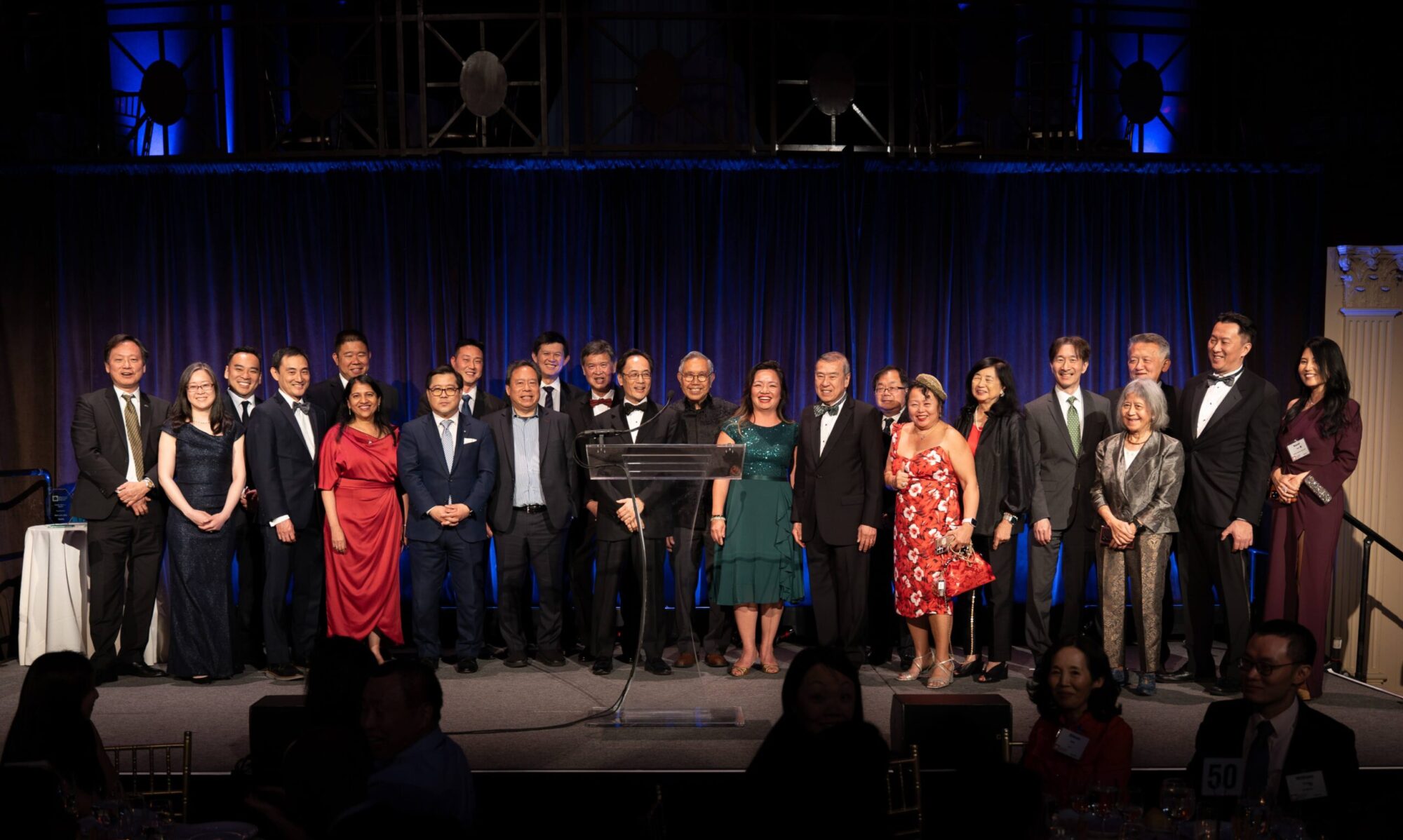
At the 2015 AABANY Annual Dinner, Charting New Frontiers, we presented the Public Service Leadership Award to Preet Bharara, for his extensive and well-known dedication and commitment to public service as US Attorney for the Southern District of New York, and in the many years before then. In accepting the award, Preet gave a moving and inspiring speech filled with good humor and the spirit of pride and professionalism in public interest and public service that has characterized his distinguished and storied career. Our usually raucous crowd listened in rapt silence for the entire length of his remarks and rose up in an enthusiastic standing ovation at their conclusion.
Preet, thank you for your leadership and your service, for Charting New Frontiers, for daring to Speak Up, Rise Up and Lift Up, and for serving as an exemplary role model as we seek to Take Charge, Lead Change in the coming weeks and months.
NAPABA Files Amicus Brief Supporting the First Legal Challenge to President’s Revised Muslim and Refugee Ban
For Immediate Release
March 13, 2017
For More Information, Contact:
Brett Schuster, Communications Manager
bschuster@napaba.org, 202-775-9555
WASHINGTON — The National Asian Pacific American Bar Association (NAPABA) filed an amicus brief in State of Hawaii v. Trump to support Hawaii’s challenge to President Trump’s March 6, 2017, revised executive order barring individuals from six Muslim-majority countries and refugees from entering the United States.
Filing just before midnight on March 7, Hawaii became the first state to challenge the revised order and the U.S. District Court for the District of Hawaii agreed to hear the case on an expedited schedule. Judge Derrick K. Watson will hear oral argument on the State’s motion for a temporary restraining order on March 15, the day before the revised order is to take effect.
“I look no further than NAPABA’s mission to underscore the imperative for NAPABA to file its own amicus brief on this very issue. The new executive order is no less invidious than its predecessor,” said NAPABA President Cyndie M. Chang. “Asian Pacific American communities historically have been excluded and restricted in immigration and naturalization policies and have experienced the tragedy of forced incarceration during WWII. We understand first-hand the harms that this kind of discrimination will inflict upon Muslim and refugee communities. We will not forget this particular anti-immigrant history, and we are compelled to share our historically-based legal perspectives with the Court.”
NAPABA’s amicus brief describes decades of statutory exclusion of citizens of Asian and Pacific Island countries under early U.S. immigration law, including the Chinese Exclusion Act of 1882 — the first federal law to ban a group of people on the basis of their race. The Civil Rights Era marked a dramatic turning point that saw Congress dismantle nationality-based discrimination with the Immigration and Nationality Act of 1965. The brief explains that presidential discretion in the area of immigration and refugee admission, while broad, is limited by statute. NAPABA argues that President Trump’s revised order, motivated by anti-Muslim purpose, violates the unambiguous prohibition on discrimination established by Congress.
“I thank the many members of the NAPABA legal community who supported NAPABA’s drafting and filing of this expedited brief,” continued Chang. “Particular thanks goes to our pro bono counsel at McDermott Will & Emery LLP and pro bono local counsel at Alston Hunt Floyd & Ing for their leadership on this important brief.“
NAPABA recognizes lead counsel, James W. Kim, a NAPABA member and partner at McDermott Will & Emery LLP, in Washington, D.C., Mr. Kim’s team (Mark Calaguas, David Gacioch, Andrew Genz, Matthew Girgenti, Emre Ilter, Neha Khandhadia, Philip Levine, Riley Orloff, Sara Raaii, Joshua Rogaczewski, Amandeep Sidhu, and Michael Stanek), and NAPABA Amicus Committee chair, Professor Radha Pathak of Whittier Law School, for their leadership drafting the brief, which also involved the efforts of NAPABA staffers. NAPABA is represented by local counsel Pamela W. Bunn and John Rhee, with the support of William Kaneko, of Alston Hunt Floyd & Ing in Honolulu, Hawaii.
Read the amicus brief here.
Read the March 6, 2017, statement of NAPABA and the South Asian Bar Association – North America, joined by 14 affiliates, against the revised executive order.
For more information, the media may contact Brett Schuster, NAPABA communications manager, at202-775-9555 or bschuster@napaba.org.
The National Asian Pacific American Bar Association (NAPABA) is the national association of Asian Pacific American attorneys, judges, law professors, and law students. NAPABA represents the interests of almost 50,000 attorneys and approximately 75 national, state, and local Asian Pacific American bar associations. Its members include solo practitioners, large firm lawyers, corporate counsel, legal services and non-profit attorneys, and lawyers serving at all levels of government.
NAPABA continues to be a leader in addressing civil rights issues confronting Asian Pacific American communities. Through its national network of committees and affiliates, NAPABA provides a strong voice for increased diversity of the federal and state judiciaries, advocates for equal opportunity in the workplace, works to eliminate hate crimes and anti-immigrant sentiment, and promotes the professional development of people of color in the legal profession.
To learn more about NAPABA, visit www.napaba.org, like us on Facebook, and follow us on Twitter (@NAPABA).
Ronald H. Brown Law School Prep Program for College Students | St. John’s University
The deadline for Prep Program Foundations has been extended to March 31, 2017. Foundations applications are considered on a rolling basis so submit your application as soon as possible.
Ronald H. Brown Law School Prep Program for College Students furthers the Ron Brown Center’s mission of engaging in legal studies, research, and outreach on issues affecting the lives of disadvantaged and underrepresented people; increasing racial and socioeconomic diversity in the legal profession; and educating law students to be leaders on issues of racial, economic, and social justice. To help raise the number of diverse, disadvantaged students in law schools, the Ron Brown Prep Program identifies these students in their college years and offers them early exposure to the study and practice of law.
The Ron Brown Prep Program prepares students for the challenges of law school and for the law school application process. Participants gain an edge in courses taught by Law School faculty; through internships with judges and lawyers; in a customized LSAT prep course; and with advising on all aspects of the admission process.
Click on the link in the title for more information.
EFiling – N.Y. State Courts
In accordance with Section 212 of the Judiciary Law, the Chief Administrative Judge of the State of New York will submit to the Legislature, the Governor, and the Chief Judge in April 2017 a report evaluating the state’s experience with electronic filing for the commencement of actions and proceedings and the service and filing of papers therein and containing such recommendations for further legislation as are deemed appropriate. The report will also contain an evaluation of the impact of e-filing on litigants (including the unrepresented), practitioners, and the courts. The Unified Court System welcomes the submission of comments about the implementation and impact of the electronic filing program from persons who are interested in or who have been or may be affected by the program, including unrepresented litigants, sole practitioners, 18 B attorneys, other attorneys, representatives of victims’ rights organizations and child protective agencies, criminal and Family Court practitioners, and others in the civil and criminal justice and Family Court communities. Comments received will be posted on the website of the Court System and included in the report. The report will also address such comments.
Comments should be submitted to Jeffrey Carucci, Statewide Coordinator for Electronic Filing, on or before March 23, 2017. Comments should be sent by e-mail or regular mail to one of the following addresses:
Jeffrey Carucci
Statewide Coordinator for Electronic Filing
NYS Unified Court System
New York County Courthouse
60 Centre Street, Room 119 M
New York, New York 10007
efilingcomments@nycourts.gov
For further details, click on the link in the title