Hon. Lillian Wan Receives Special Recognition from Governor Kathy Hochul

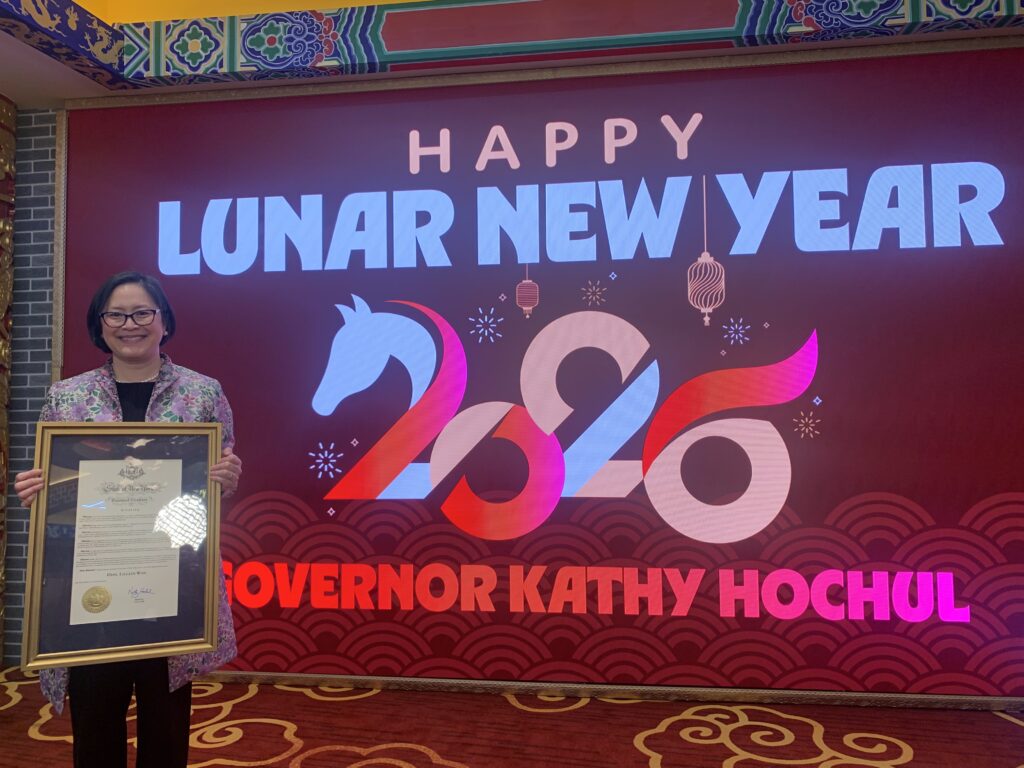
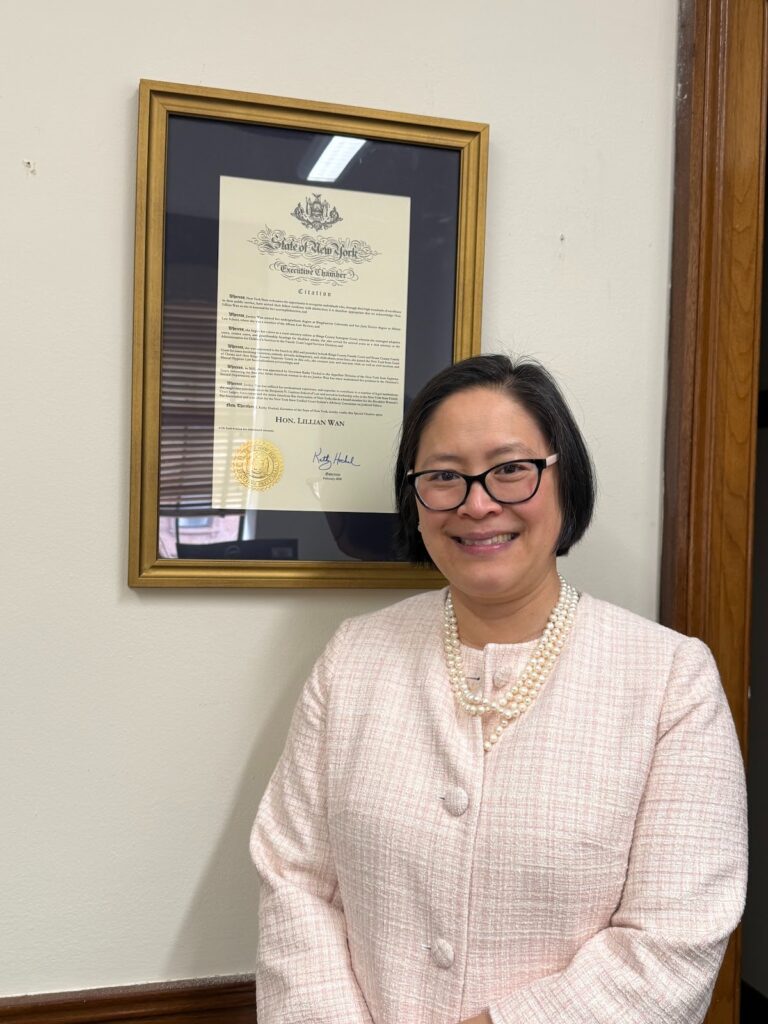
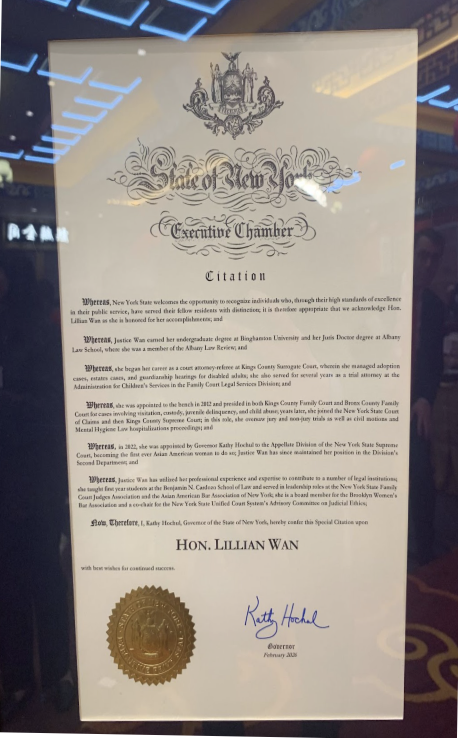
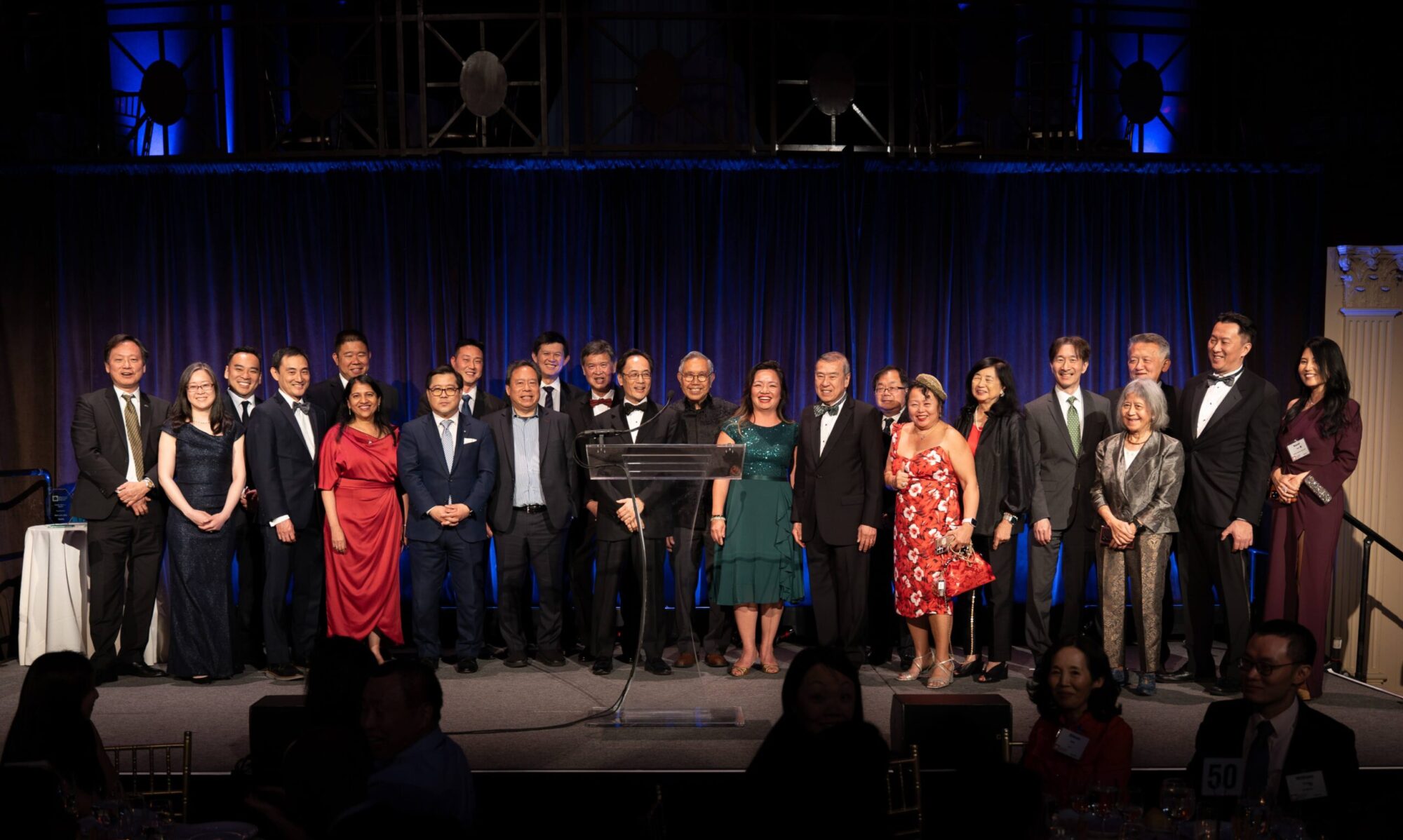
On February 18, 2026, at the Governor’s Lunar New Year celebration in Manhattan Chinatown, Justice Lillian Wan received a Special Citation from Governor Kathy Hochul. This recognition commemorates Justice Wan’s work in serving fellow New Yorkers with distinction and upholding the highest standards of excellence in public service. Justice Wan expressed deep gratitude for receiving the Special Citation from Governor Hochul, made all the more meaningful by being honored alongside Asian American Federation (AAF) CEO Catherine Chen and Coalition for Asian American Children and Families (CACF) Co-Executive Director Vanessa Leung, two leaders whose contributions to the Asian-American community have been noteworthy and impactful.

In 2022, Governor Hochul appointed Justice Wan to the Appellate Division, Second Department, making her the first Asian American woman to sit in the Appellate Division in New York State. Despite achieving this milestone in the New York State courts, Justice Wan’s path to the bench was not one she originally envisioned for herself. As a practicing attorney, she never appeared before a judge who looked like her, so she never considered it a possibility. That changed when she began working closely with Surrogate Judge Margarita López Torres, the first Latina Surrogate Judge in New York State. Judge López Torres became her mentor and encouraged her to apply for a mayoral appointment to the family court bench, where her experience was strongest, and that the City of New York would benefit from having her as a judge. “She saw something in me that I didn’t see in myself,” Justice Wan reflected. 

Since being appointed to the bench in 2012, Justice Wan has witnessed a remarkable shift in representation. When she started, Asian American judges across New York State made up under 2% of the judiciary. Today, that number has grown to about 5% of the approximately 1,300 sitting New York state judges.

Governor Hochul, who awarded Justice Wan the special recognition, has played a meaningful role in that progress. Since taking office in August 2021, the Governor has appointed nine Asian American judges, six of whom have been appointed to the New York State Court of Claims, a higher number than any Governor in the State’s history. She has also appointed three Asian American judges to the Appellate Division, the mid-level appellate court in New York State. Justice Wan was appointed to the Appellate Division, Second Department in May 2022. Justice Philip Hom was appointed in 2024. Most recently, Justice Margaret Chan was appointed to the Appellate Division, First Department. Justice Wan, Justice Hom, and Justice Chan are all members of the Asian American Bar Association of New York. 

Justice Wan’s own path was shaped not only by Judge López Torres but also by the Honorable Randall T. Eng, former Presiding Justice of the Appellate Division, Second Department, and now practicing attorney who holds a truly historic distinction: he was the first Asian American judge in the entire state of New York, appointed to the Criminal Court by Mayor Ed Koch in 1983. Justice Eng mentored Justice Wan early in her career and instilled in her a philosophy she carries to this day: visibility matters. Your job is essential, but you need to do more. Asian American attorneys and judges must be active in bar associations, judicial organizations, their law schools, their universities, and their communities. They should embrace leadership roles and ensure people know who they are.

Justice Wan has made it her personal mission to be for others what Judge López Torres and Justice Eng were for her. She remains accessible, attends various events to stay visible, and holds leadership positions in organizations that uplift the Asian-American legal community. As a mentor, Justice Wan sees talented attorneys routinely talking themselves out of applying for judicial positions, convinced that others are more qualified, that they haven’t been around long enough, or that it simply isn’t their turn. Her advice to students and legal professionals who want to follow her footsteps is direct: apply anyway. Often, the only difference between the person who gets the position and the person who doesn’t is that the latter didn’t second-guess themselves. 

Besides individual efforts, Justice Wan points to the power of community organizations in building a stronger pipeline. The Asian American Bar Association of New York runs a robust Judiciary Committee that vets judicial candidates, provides letters of endorsement, conducts mock interviews, and hosts educational programs about the path to becoming a judge. The Asian American Judges Association of New York, of which Justice Wan is a past president and current board member, works to support judges and grow their numbers. The organization is open to everyone, not just Asian American judges, and its mission is rooted in the belief that a bench that reflects the full population it serves is stronger and more just.

The Special Citation from Governor Hochul captures both the breadth of Justice Wan’s career and the philosophy that has defined it, recognizing her historic appointment to the Appellate Division, Second Department, alongside her leadership in the organizations that uplift Asian American attorneys, women in law, and the broader legal community. It is a recognition that spans decades of work, from her earliest years on the bench to the mentorship and visibility efforts she continues today. Justice Wan has spent her career being the judge she did not see when she was a young attorney, and in doing so, has made sure that fewer people will have to wonder whether someone like them belongs on the bench.

Please join AABANY in congratulating Justice Wan on receiving this recognition from Governor Hochul.

AABANY LGBT Committee Co-Hosts Asian American/South Asian Lawyers Networking Reception 2023

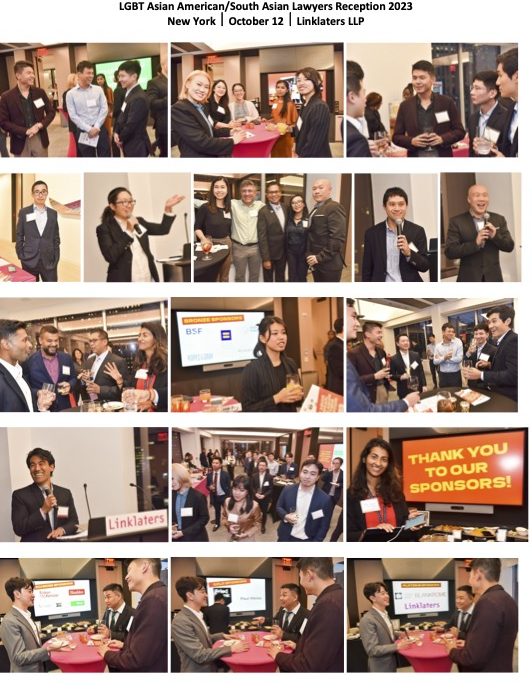
Nearly 50 members of the bar “came out” to celebrate the diversity within the LGBT, Asian American, and South Asian communities with the LGBT Committee of the Asian American Bar Association of New York (AABANY) and host Linklaters LLP.  A companion reception is planned for Washington DC hosted by Blank Rome LLP on Nov. 16. RSVP here

LGBT Asian American and South Asian attorneys in corporate, commercial, government, and public interest practice gathered to build peer-support and expand their network.  David Lat, Founder, Original Jurisdiction and Above the Law, shared welcoming remarks. Thank you for joining us again.  

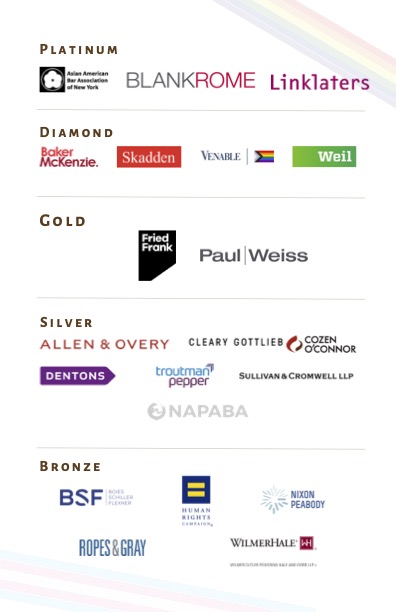
Law firm sponsorships will help “Build Back the LGBTQ+ API community Better!”  in collaboration with the Asian American Federation.  Two years of lockdowns, a year of anti-Asian violence, and a record number of state anti-LGBT bills, have stunted the LGBTQ Asian community’s growth. Sponsors will support a series of training workshops for the LGBTQ Asian American community.   Thank you for all your support!

AABANY Intern Han Wen Zhang Livestreams Justice for Asian Women Rally from Times Square

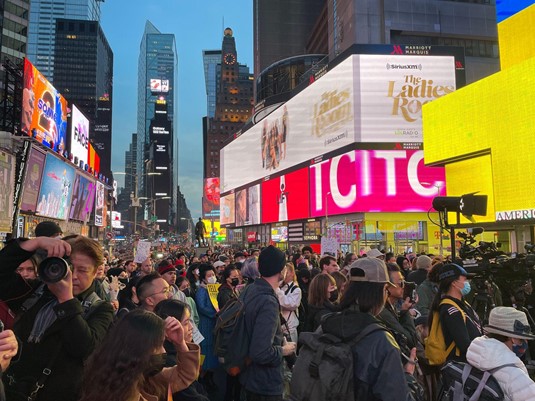
On March 16, Stand with Asian Americans held a rally to mark the one-year anniversary of the Atlanta shootings. From 6:30pm to 8:00pm, more than 1,000 attendees gathered in Times Square to remember the victims and call for change. The event was part of a nationwide series of rallies held in Atlanta, Chicago, Dallas, Denver, Detroit, Houston, Sacramento, San Francisco, Twin Cities, and Washington, D.C.

AABANY intern Han Wen Zhang participated as the New York City livestreamer. The livestreams from each city were woven into a national 12-hour webcast titled Break the Silence: Justice for Asian Women.  The program featured speeches from community leaders, government officials, and training videos on personal safety and bystander intervention.

The New York City rally included a lineup of speakers and performers, including Executive Director of the Asian American Federation Jo-Ann Yoo, journalist and New York Times bestselling author Min Jin Lee, Governor Kathy Hochul, Chinese American rapper Bohan Phoenix and actor and musician Perry Yung.

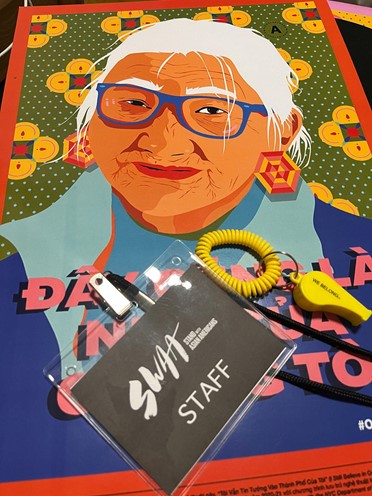
Attendees and passersby were given colorful posters based on Amanda Phingbodhipakkiya’s public art series “We Are More.” Event organizers also passed out yellow whistles, with “We Belong” inscribed on one side. To learn more about this event, please visit https://www.asianjusticemovement.org/awr.

Congresswoman Grace Meng Secures Millions to Help Implement Her Hate Crimes Act Recently Signed into Law by President Biden

WASHINGTON, D.C. – U.S. Rep. Grace Meng (D-Queens) announced today that she secured $30 million in a key spending bill to expand provisions in her COVID-19 Hate Crimes Act, which President Biden signed into law on May 20th to help combat the ongoing hate and violence against Asian Americans and other impacted communities.

Meng attached the funding to the Commerce, Justice, Science Appropriations bill. The measure now heads to the House floor where it is expected to pass later this month. The money would be provided directly to community-based organizations to implement the COVID-19 Hate Crimes Act’s goal of community engagement, empowerment, and education. One of the major provisions in the new hate crimes law directs federal agencies to work with community-based organizations to raise awareness of hate crimes during the COVID-19 crisis.

“Community-based organizations are the heartbeat of our communities,” said Congresswoman Meng. “Since the beginning of the pandemic, they have been on the front lines standing against the rise in bigotry and attacks. They’ve worked tirelessly to help victims and stop this spike in discrimination and intolerance; and they have done all this under-resourced. As my COVID-19 Hate Crimes Act addresses the problem, we must be certain that community groups have the resources they need to carry out parts of the new law. I am so proud of the new $30 million grant program that would advance community-based approaches to addressing hate crimes. This vital funding would reinforce and expand the critical ground work that these community groups have been doing; it would help them scale up and expand out. I look forward to this funding being approved by the full House and passed by the Senate  – so that our neighbors can live free from hate and violence.”

Community-based organizations and civil rights groups can use the funds for:

  • Implementing and facilitating educational classes and community services for defendants convicted of hate crimes (directly related to the community harmed by the offensive).
  • Culturally competent and linguistically appropriate public education campaigns on the collection of data and public reporting of hate crimes.
  • Safety ambassadors to escort vulnerable community members in public places.
  • In-language support for victims and/or surviving families of hate crimes including mental health support.
  • Providing bystander, de-escalation trainings in multiple languages.
  • Other community-based strategies deemed appropriate for communities of color and other vulnerable and historically disadvantaged communities.

The Commerce, Justice, Science spending bill funds the U.S. Department of Justice, Department of Commerce, and science-related initiatives. Meng is a senior member of the House Appropriations Subcommittee on Commerce, Justice, Science and Related Agencies which determines the funding levels for the measure. The $30 million is allocated under a new grant program called “Community-Based Approaches to Advancing Justice.”

Other provisions of Meng’s COVID-19 Hate Crimes Act include, among other things, creating a position at the Department of Justice to facilitate expedited review of COVID-19 hate crimes, encouraging more reporting of incidents in multiple languages, and expanding public education campaigns aimed at raising awareness of hate crimes and reaching victims.

Meng reintroduced the COVID-19 Hate Crimes Act in March with Senator Mazie Hirono (D-HI). It was passed in Congress with overwhelming and bipartisan support; 364 to 62 in the House and of 94 to 1 in the Senate.

“The Community-based Approaches to Advancing Justice grant, championed by Congresswoman Grace Meng, recognizes that our communities are in crisis,” said Jo-Ann Yoo, Executive Director of the Asian American Federation. “Victims and their families continue to struggle to overcome the terrible physical, mental, and economic toll of hate violence: our seniors are terrified to step outside their doors, and parents are afraid to send their children to school even after months of isolation at home. While the nation’s attention may have shifted from the wave of violence that continues to batter our communities, we are still being called on every day to do the urgent work needed to protect them from further attacks. The Congresswoman clearly understands. This grant is an ambitious and necessary step to enhance and expand community engagement, empowerment, and education against hate. The Asian American Federation is hugely inspired by Congresswoman Grace Meng’s efforts. We thank her for her commitment to support and protect the millions of hard-working Asian Americans that continue to help our nation confront a global pandemic despite the bias they face.”

“Since the beginning of the pandemic, Rep. Meng’s leadership  has been tireless and inspiring,” said Gregg Orton, National Director of the National Council of Asian Pacific Americans (NCAPA). “Her relentless pursuit of justice and greater opportunities for the Asian American community has resulted in meaningful progress in the fight against anti-Asian hate; and we are deeply appreciative of her willingness to work with us towards these solutions. The inclusion of a new grant program at DOJ that will support the work of community-based organizations responding to hate crimes comes at a critical time. So many of our community organizations, who were already under-resourced, have been pushed even further beyond their limits to respond to hate. This provision must be preserved by the Senate.”

“ADL applauds Congresswoman Meng and the Appropriations Committee in their continued efforts to fight against hate,” said Jonathan Greenblatt, CEO of the Anti-Defamation League (ADL). “We welcome the creation of the Community-Based Approaches to Advancing Justice grant program and similar initiatives. Congress and the Administration must continue to prioritize – and fully fund – community-driven, whole-of-society approaches to address all forms of hate.”

“Congresswoman Meng is to be congratulated for her commitment to non-carceral approaches to conflict resolution,” said Laura M. Esquivel, Vice President for Federal Policy and Advocacy at Hispanic Federation. “We urge support for the ‘Community-Based Approaches to Advancing Justice’ grant program which will directly fund trusted community-based groups to build stronger, safer communities through community empowerment and education.”

“It is a long time coming for dollars to assist in the work we struggle to accomplish,” said Ken Cohen, Regional Director of the NAACP New York State Conference Metropolitan Council. “The NAACP embraces the concept and hopes the funding will find its way to the Branches of New York City, New York State and the many other organizations that do this work with little or no funding.”

“The fight for justice must be community-led and organized. By securing a $30 million grant program for community-based organizations, Representative Grace Meng is taking the appropriate steps necessary to ensure that every city in America is safer tomorrow than it was yesterday,” said Alphonso David, President of the Human Rights Campaign. “Vulnerable communities across the country, including trans and non-binary people of color, will be better equipped to prevent and respond to hate crimes because of funding for community-based strategies. The Human Rights Campaign is proud to support this provision in the Commerce, Justice, and Science FY2022 appropriations bill and urges Congress to swiftly enact it into law.”

“SALDEF applauds U.S. Representative Grace Meng’s successful effort in securing $30 million in funding to expand provisions in the COVID 19 Hate Crimes Act, which will support community- based organizations’ engagement, empowerment and education initiatives in regard to hate crimes,” said Kiran Kaur Gill, Executive Director of the Sikh American Legal Defense and Education Fund (SALDEF). “This will directly help communities impacted by hate crimes and provide critical resources to support these efforts. As a community that has been disproportionately targeted by hate crimes, Sikh Americans understand the importance of addressing these issues head on and the consequences if they are gone unchecked. These resources are critical to curbing the discrimination and violence and, by allocating them to community-based organizations, they will go where they are most needed – on the front lines. We sincerely appreciate Representative Meng’s action on this issue. “

“AABANY is immensely appreciative of Congresswoman Meng’s leadership in combating anti-Asian hate,” said Terrence Shen, President of the Asian American Bar Association of New York (AABANY). “Providing these resources to AAPI community groups is critical because they have generally been underfunded, but nonetheless deeply connected to the AAPI community. These organizations have been doing critical work since early in the COVID-19 pandemic. The increased funding will meaningfully amplify their efforts.” 

“This grant program demonstrates a commitment for community-based responses to anti-Asian hate and racism, and builds upon the historic COVID-19 Hate Crimes Act passed in May,” said John C. Yang, President and Executive Director of Asian Americans Advancing Justice | AAJC. “We are pleased that Congress will be funding community organizations that have the cultural competency to reach, serve, and support our diverse Asian American communities through mental health services, public education campaigns, training on how to respond to anti-Asian hate and harassment, and more. We thank Rep. Grace Meng for her strong and steadfast advocacy to ensure that Congress follows through on its promises to meet the needs of our communities. We also extend our appreciation to the organizations that have long been working, and have stepped up during the COVID-19 pandemic, to protect and support those who are the most vulnerable.”

AABANY Report Cited on Brian Lehrer Show (WNYC FM)

The March 1st broadcast of the Brian Lehrer Show featured Arun Venugopal, a senior reporter for WNYC’s Race & Justice Unit. Together, Brian and Arun discussed the alarming rise in anti-Asian violence since the outset of the COVID-19 pandemic.

Brian opened the show by citing statistics from AABANY and Paul, Weiss’ co-authored report: A Rising Tide of Hate and Violence against Asian Americans in New York During COVID-19: Impact, Causes, Solutions. According to the report, there have been more than 2,500 anti-Asian hate incidents nationwide between March and September of 2020. Drawing on another finding of the AABANY report, Arun noted that targeted attacks are particularly commonplace in New York, where Asians are more at risk of physical assault, verbal harassment, and being coughed and spat on. Arun proceeded to draw awareness to a number of local hate incidents, the most recent among them being the stabbing of an Asian American man in Chinatown last Thursday. Citing the opinion of Chris Kwok, AABANY board director and co-executive editor of AABANY’s report, Arun noted that such attacks may be motivated by the stereotype that Asians are “soft targets” who will not fight back. Expanding on this notion, Arun stated that Asians must be seen as part of broader communities that will fight back.

In the remainder of the show, listeners from the Asian American community called in to voice their own experiences as victims of the “soft target” stereotype and express a similar desire for intersectional coalitions. While debates continue over how such coalitions may best be built, Arun pointed out that we all have a role to play in the here and now. By reporting bias incidents to groups like Stop AAPI Hate and the Asian American Federation, whose work is also discussed in the AABANY report, we can ensure that the issue of anti-Asian violence remains at the top of the nation’s political agenda. 

To listen to this episode of the Brian Lehrer Show in its entirety, click here.

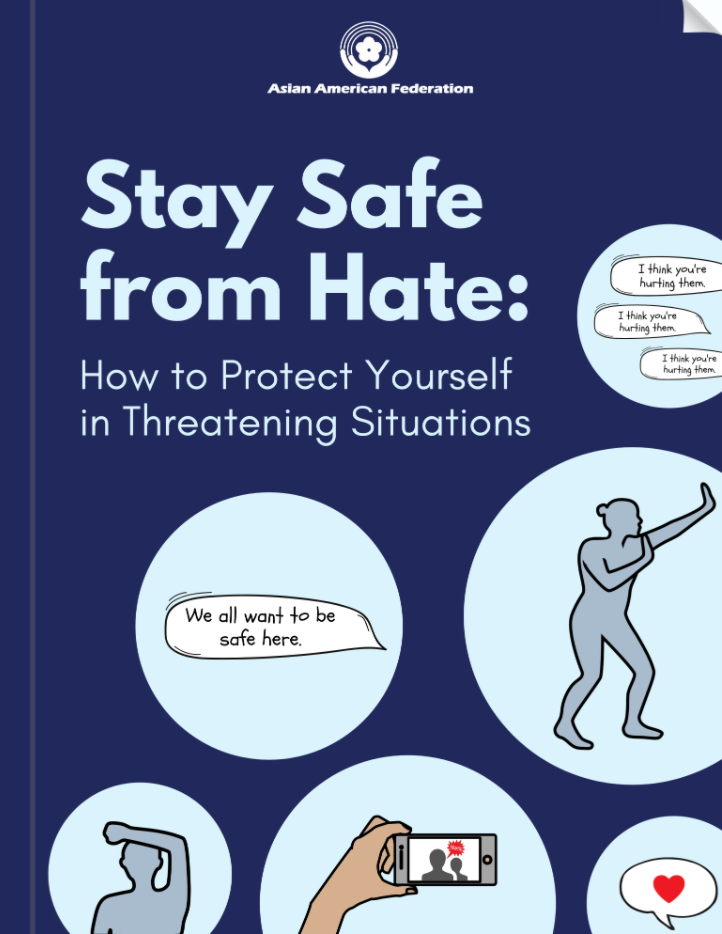
Asian American Federation Offers Free “Stay Safe From Hate” Booklet

The Asian American Federation has created a “Stay Safe From Hate” booklet that contains proven and effective methods recommended by experts at the Center for Anti-Violence Education for you and your loved ones to stay safe in hateful and threatening situations.

The FREE Stay Safe from Hate booklet:

  • Helps you to communicate calmly and de-escalate tense situations
  • Teaches you easy techniques to defend yourself physically, and
  • Shows you how to protect others using bystander intervention methods.

Click here to download the booklet.

Asian American Federation of New York’s “The Impact of Covid-19 on Asian American Employment in New York City”

The COVID-19 pandemic has resulted in a record rate of job loss for Asian New Yorkers, with unemployment benefit applications increasing by more than 6000% from February to June of 2020.

At 1.3 million people, Asian Americans are over 16% of the population in New York City and are growing faster than all other demographics in the City.

In February 2020, Asian Americans in New York City had a jobless rate of 3.4% — however, Asian American unemployment soared to 25.6% by May 2020, the largest increase among all major racial groups. 

AAF’s latest report:

  • Brings you the key demographic data for decision-makers on how different ethnicities within the Asian American community such as Bengali, Chinese, Korean, and so on, were impacted by job losses
  • Identifies the specific industries that Asian American New Yorkers depend on for work
  • Reveals the industries that lost the greatest amount of jobs due to the pandemic
  • Shares recommendations for private and public leaders to help Asian Americans during the COVID-19 recovery

Get your FREE copy of The Impact of Covid-19 on Asian American Employment in New York City sent to your inbox by completing the form at https://aafcovid19resourcecenter.org/unemployment-report/?mc_cid=6ffdf5cf0b&mc_eid=ddd4d683c8.

Asian American Federation Hosts Two-Part Series on Staying Safe During COVID-19 And Beyond

The Asian American Federation (AAF) will be hosting two safety trainings on how individuals can protect themselves and their communities during COVID-19.

On Friday, May 29, 2020, from 3 PM to 5 PM, AAF will be presenting on Using Nonviolent Communication During COVID-19.

On Thursday, June 4, 2020, from 3 PM to 5 PM, AAF will be exploring Using Conflict De-Escalation Strategies In Our Homes.

Register for these events at https://www.eventbrite.com/e/staying-safer-a-two-part-series-tickets-104770272706.

Asian American Federation Hosts Community Upstander Training To Stop Anti-Asian Harassment

On Wednesday, May 27, 2020, from 1 PM to 3 PM, the Asian American Federation will be hosting an Upstander Training workshop to address the ways that xenophobia and scapegoating since the COVID-19 outbreak continue to rise, most consistently against Asian communities.

Through a presentation and interactive break-out groups, participants will explore opportunities and strategies to be “upstanders” during the current moment and help disrupt this wave of anti-Asian bias through safety interventions, de-escalation tactics, and calling-in strategies.

Register for this event at https://www.eventbrite.com/e/community-upstander-training-tickets-105204906708.

In The News: Chris Kwok’s Op-Ed on Weaponized Coronavirus Language Against Asian-Americans Published in the New York Daily News

On March 26, 2020, the New York Daily News published an op-ed co-authored by Chris Kwok. The piece is entitled “Weaponized coronavirus language is endangering Asian-American lives.” (Chris, who sits on the AABANY Board and chairs the Issues Committee, co-wrote the op-ed in his capacity as a Board member of the Asian American Federation).

The article discusses how anti-Asian rhetoric and labeling the coronavirus as “the Chinese virus” is endangering the lives of Asian Americans across the United States. It also provides historical examples of what happens when you link a disease to a particular group of people. It can easily lead to stigma and violence against that group. For example, in the 14th century, Jews were accused of spreading the Bubonic Plague in Europe and massacred. Similarly, in the 1980s to 1990s gay people were blamed for spreading AIDS and suffered violence as a result.

Furthermore, the article notes that this is not the first time Asian Americans have faced something like this in the United States. In the 1850s to 1890s, the Chinese were accused of being carriers of venereal disease and leprosy. As a result of the openly anti-Chinese rhetoric during that period, Chinese people were “…rounded up into thousands of railroad cars, steamers, or logging rafts, marched out of town, or killed.”

Now, history seems to be repeating itself as the spread of the coronavirus pandemic is falsely being attributed to Asian Americans. In recent weeks we have seen a spike in xenophobic incidents targeting Asian Americans throughout the nation. Such incidents include “…Asian Americans being beaten, slashed, kicked, spat at, sprayed with things, yelled at or ostracized in public.” To make matters worse, President Trump’s deliberate campaign to label the coronavirus as “the Chinese virus” has put Asian Americans at an even higher risk.

To read the full article, click here.