
Kenneth Chin Named President of the American College of Commercial Finance Lawyers

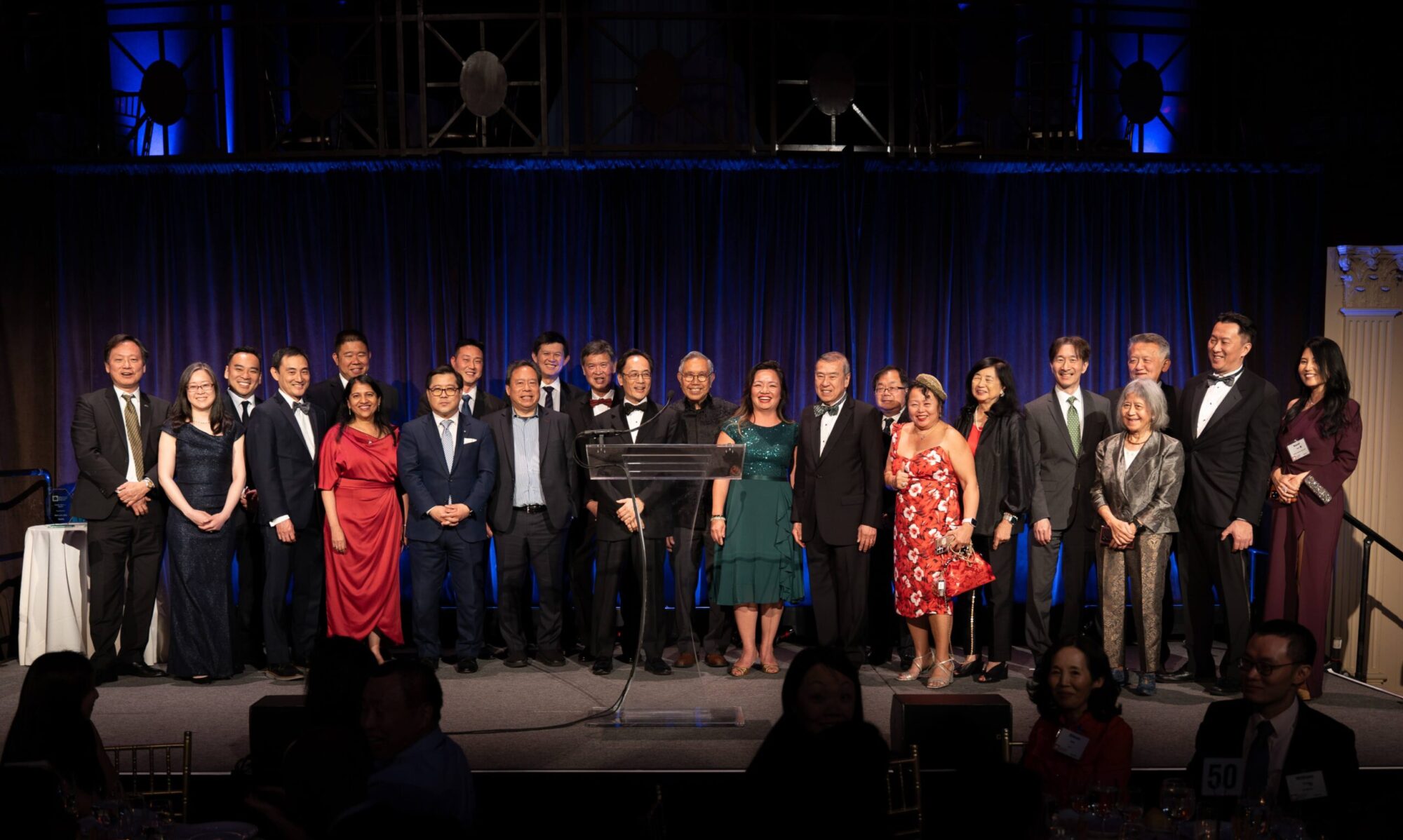
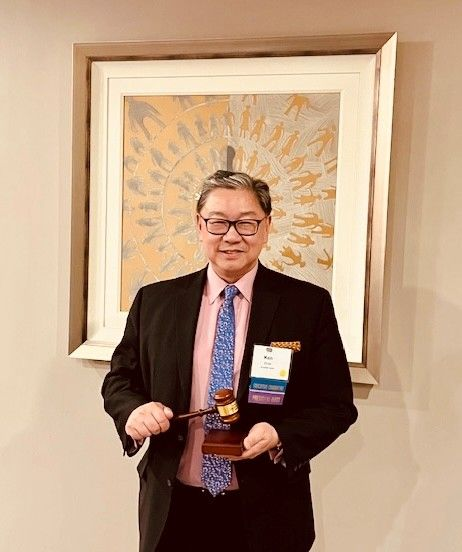
Kenneth Chin, Head of Banking and Finance, US, at Herbert Smith Freehills Kramer (HSFK) and a longtime active member of AABANY, has been elected President of the American College of Commercial Finance Lawyers (ACCFL). ACCFL is a distinguished organization dedicated to advancing the practice and ethical standards of commercial finance law. Prior to assuming the presidency, Ken served on the Executive Committee, as a Regent on the Board of Regents, and as Chair of the Nominating Committee. AABANY congratulates Ken on his election as President, effective April 2026.

Ken’s path to the presidency reflects years of thoughtful and sustained engagement with the organization. Service on the Board of Regents, a prerequisite for any officer position, along with his leadership of the Nominating Committee, gave Ken a deep familiarity with the ACCFL’s mission and membership. Though he was invited on multiple occasions to join the Executive Committee, Ken chose to accept only when he was confident he could devote the time and attention necessary to serve effectively in that capacity.

As President, one of Ken’s central priorities is strengthening the bonds among ACCFL’s Fellows. Fellowship is by invitation only, extended in recognition of demonstrated expertise in commercial finance law. In an era increasingly defined by digital communication, Ken holds firmly to the belief that in-person connection remains indispensable. To that end, the ACCFL convenes semi-annually alongside the American Bar Association’s Business Law Section and hosts Fellows briefing sessions at which members with specialized expertise share their knowledge with the broader Fellowship. Ken envisions these gatherings as a living resource network, enabling Fellows to draw on one another’s depth of knowledge beyond the boundaries of their own specific practice areas.

Ken speaks from personal experience about the tangible value of the ACCFL network. He recounted an instance in which a Fellow, technically out of the office, returned his call within ten minutes to offer guidance on an out-of-state legal matter, a response Ken attributes directly to the strength of their personal connection. “It is the ability to not only be an expert in the area of law, but also to draw on other experts who may have more in-depth knowledge about particular subjects that you do not have,” Ken explained. This philosophy runs throughout his professional approach: Ken consistently prioritizes cultivating genuine personal relationships over institutional ones, recognizing that a trusted colleague, wherever their career may take them, represents an invaluable and enduring resource.

That same emphasis on human expertise, Ken observes, is being tested by the rapid rise of artificial intelligence in the legal field. Ken acknowledges that AI has meaningfully accelerated legal practice, reducing the need for lawyers to conduct manual research or rely on colleagues for preliminary answers. At the same time, he underscores the importance of human oversight, noting that while AI is advancing at an unprecedented pace, it remains susceptible to error. Ken draws a historical parallel to the transformation of the legal workplace that accompanied the widespread adoption of word processing software: just as attorneys began drafting their own documents directly, reducing reliance on secretarial staff, the integration of AI is likely to reshape legal support roles in similarly significant ways. Rather than viewing this shift with apprehension, Ken urges the next generation of lawyers to develop fluency in AI tools while remaining clear-eyed about AI’s fundamental limitations and its inability to fully replicate the judgment and responsibility of an experienced attorney.

Expanding the ACCFL’s membership is another of Ken’s key priorities as President. He was moved by concerns raised by former ACCFL President Sylvia Chin (also a past AABANY President) during her 2017–2018 tenure regarding declining membership and participation. Ken has since worked to bring about a meaningful shift in how the organization identifies and admits new Fellows. Looking beyond the traditional concentration of Fellows in the financial centers of New York, Los Angeles, and Chicago, Ken has championed geographic diversification to ensure that the network reflects the full breadth of commercial finance practice across the country. Because clients frequently have legal needs spanning multiple jurisdictions, Fellows with local expertise are essential to making the ACCFL’s membership genuinely comprehensive. The results have already been significant: this past year, the ACCFL welcomed 18 new Fellows. This is the largest incoming class in the organization’s history, a milestone attributable in no small part to Ken’s commitment to expanding the ACCFL’s reach. Whether reflecting on the culture he has helped shape or looking ahead to the membership he aims to expand, Ken’s tenure as President embodies a steadfast conviction that the ACCFL’s greatest strength lies in its Fellows.

Please join AABANY in congratulating Kenneth Chin on his election as President of the American College of Commercial Finance Lawyers.
AABANY Real Estate Committee Presents “Cannabis Law and Real Estate” CLE on August 3

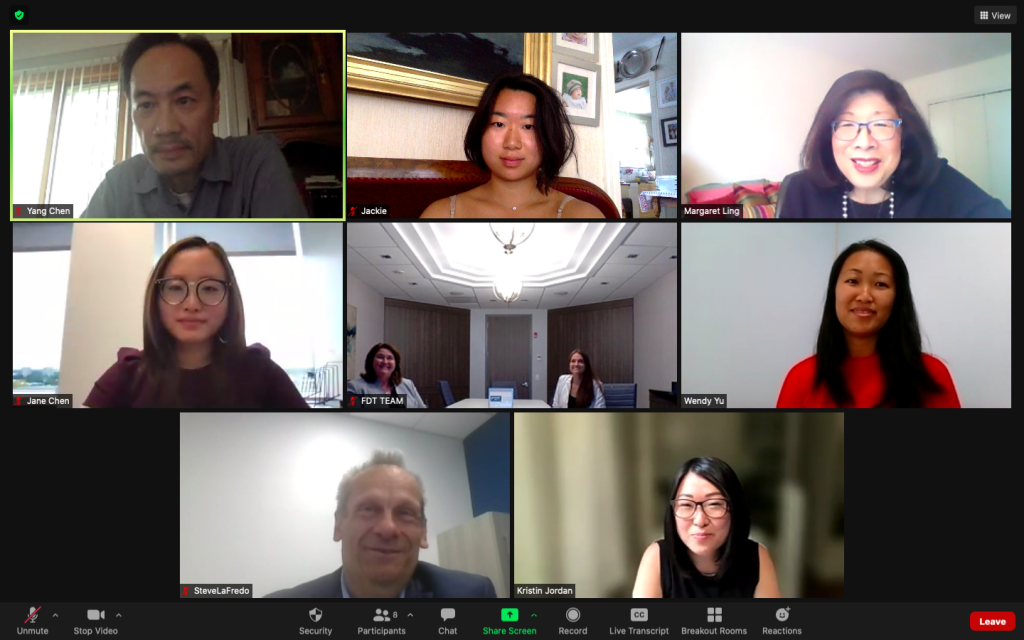
On August 3, the AABANY Real Estate Committee presented a “Cannabis Law and Real Estate” CLE, which explored the current state of real estate in New York State, within the context of recent cannabis legalization and a growing cannabis industry. Real Estate Committee Co-Chair Margaret Ling moderated the webinar, welcoming four speakers to introduce and explain current cannabis law and real estate practices, before opening the floor for a Q&A session.

Kristin Jordan spoke first, giving a broad overview of New York State’s adult use cannabis bill, the Marijuana Regulation and Taxation Act (“MRTA”), which was passed on March 31, 2021. Kristin is the Executive Director of Asian Cannabis Roundtable, a NYC-based professional networking community for those engaged in the cannabis industry, and Founder of Mannada. She explained how the bill positioned the state’s new cannabis regulatory body under the State Liquor Authority, because developing an entirely new agency would take too long. The new body comprises three agencies, the Office of Cannabis Management, the Cannabis Control Board, and the Cannabis Advisory Board. She also enumerated the different kinds of cannabis licenses available under the MRTA:

  1. Cultivator,
  2. Processor,
  3. Cooperative (non-profit),
  4. Distributor,
  5. Retail,
  6. Microbusiness,
  7. Delivery,
  8. Nursery, and
  9. On-site consumption.

In terms of New York real estate, Kristin noted that cannabis legalization and its budding industry would exact the most tangible effect on leases for retail stores, warehouses, and distribution facilities, because they provide the brick and mortar for cannabis businesses. Finally, she emphasized that since cannabis legalization is so recent, cannabis law and best practices promise a steep learning curve, with so much uncharted territory.

Steve LaFredo, Chief Banking Officer at Piermont Bank, discussed cannabis and real estate specifically as it relates to banking. He emphasized that “banks are safety, soundness, and risk organizations first”; in other words, banking is a slow industry, and it would take time for banks to adapt to the growing cannabis industry. He underscored the difficulty of navigating often differing state and federal law when dealing with cannabis businesses, though he noted that New York State has been relatively progressive, as the first state to create cannabis banking guidelines under the Department of Taxation and Finance. These guidelines aim to preserve the safety, soundness, and security of businesses involved with cannabis. Steve explained that in states that have legalized cannabis, the banking industry tiers cannabis businesses into 3 categories: Tier A, those with direct contact (e.g. growing, producing, selling); Tier B, those that derive more than 25% of their business from the cannabis space; and Tier C, those that derive 25% or less of their business from the cannabis space. Banks are most likely to be receptive to working with Tier C cannabis businesses.

Since they lie precariously between state and federal regulators, most banks have a zero tolerance policy for cannabis. Disclosure and transparency are critical for finding a financial institution with which cannabis businesses can safely operate; smaller, private banks and credit unions will be most likely to open their doors to cannabis businesses. Unfortunately, cannabis businesses are still largely relegated to cash transactions, and since mechanisms for depositing and delivering cash are scarce and expensive, banks are hesitant to get involved. After the federal decision to stand down in states that have legalized cannabis, however, banks have slowly begun entering the cannabis space. Steve expressed optimism about the future of cannabis banking.

Kathleen Deegan Dickson and Danielle Tricolla of Forchelli Deegan Terrana spoke last, focusing on the role of the law firm in the cannabis space. Kathleen is a Partner and Co-Chair of the Cannabis Group at Forchelli Deegan Terrana, and Danielle is an Associate and Co-Chair of the Cannabis Group at Forchelli Deegan Terrana. They underscored the importance of “knowing what you don’t know,” since cannabis legalization not only means new legislation but also changes to existing legislation. Specifically, cannabis legalization involves changes to Public Health Law, Penal Law, Criminal Procedure Law, Civil Practice Law and Rules, Labor Law, Vehicle and Traffic Law, and General Business Law. Like Steve, they touched on the interplay between state legalization and federal prohibition of cannabis. Devoting special attention to law firm clients interested in cannabis, they explained that “cannabis law” is a multidisciplinary practice area, since it affects real estate transactions, leasing, land use, zoning, banking, labor, and employment, among other areas.

The intersection of cannabis law and real estate presents a new and exciting business area, and AABANY thanks the Real Estate Committee Co-Chairs Margaret Ling, Wendy Yu, and Jane Chen for putting together such an informative and current event. To learn more about the Real Estate Committee, visit https://www.aabany.org/page/120.