
AABANY Member Profile: James Chou Appointed Managing Partner of Saul Ewing’s New York City Office

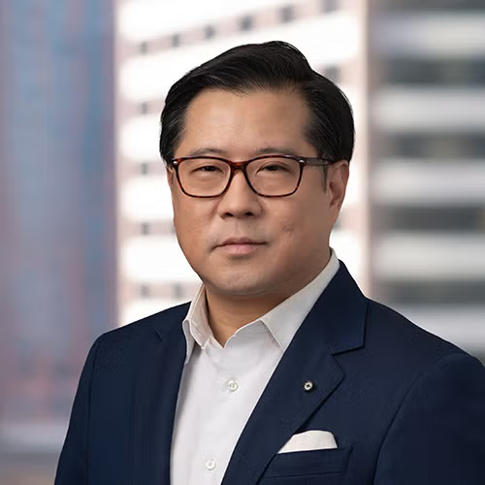
The Asian American Bar Association of New York (AABANY) is excited to share that in June 2026, James Chou, former AABANY President of AABANY (2009) and long-time AABANY member began his tenure as the new Managing Partner of Saul Ewing‘s New York City office.

James came to law by way of a detour: he started at NYU, intent on majoring in biochemistry and chasing his family’s expectations. His grandmother, one of the few women of her generation to earn a medical degree, had instilled in all her children and grandchildren, that it was her wish for them to follow in her and her late husband’s footsteps as medical doctors. James’ distaste for organic chemistry and frustration with the confining nature of the hard sciences convinced him otherwise. The breadth of a liberal arts education with its exposure to a wide array of fields and focus on critical thought, analysis, and communication provided a more attractive alternative. In his words, “the questions felt bigger, more interesting, and practically impactful.” He graduated magna cum laude from NYU and went on to Georgetown Law, where he served on the Journal of Legal Ethics and also tried his first case as a student advocate.

After a brief stint at Schulte Roth & Zabel, James spent seventeen years at Akin Gump, where he cut his teeth as a lawyer, handling all manner of complex commercial disputes. Those years were highly significant to his professional development, and he remains deeply grateful for his training and mentors there.

In 2015, he left Big Law and took a bet on himself to help build the New York office of a Long-Island-based firm, Moritt Hock & Hamroff, spending nine years there enhancing the firm’s Manhattan presence and brand in the New York market before making a returning to a broader platform at Saul Ewing in July 2024.

In May 2026, he was named the New York Office Managing Partner, effective June 1. In his new role, James is responsible for helping to develop and implement the office’s strategic vision to enhance its market position within the New York legal market and key practice areas and industries, build strategic client relationships, attract and develop top talent, and drive revenue growth and profitability. He takes on this role while maintaining a very active litigation practice as well as serving on the Board of the New York City Bar Association and as Chair of its Council on Judicial Administration.

When asked whether his Asian American identity presented a structural obstacle in his career, James replied that rather than encountering structural obstacles, he did think his cultural sensibilities—humility, deference, and polite restraint rather than aggressive self-promotion—prevented him from succeeding earlier in his career than he did. But James sees no value in dwelling on setbacks, and he views each challenge as an opportunity for growth and development. In this regard, he practices “the discipline of gratitude”—an intentional, regular practice of prioritizing thankfulness as a steady habit of mind and spirit, built on stoicism’s premise that we will all cease to exist, as well as a recognition that every experience in our life journey shapes who we are today.

Over the course of his long career, two cases stand out, both of which were pro bono. The first was in the mid-2000s, when James and his colleagues represented the New York County Democratic Committee in defending New York’s judicial convention—the system by which political parties nominate candidates for the New York State Supreme Court—against a constitutional challenge. In New York State Board of Elections v. López Torres, the Democratic Committee  argued that the First Amendment protects a political party’s right to determine how it selects its own nominees, and in 2008, the U.S. Supreme Court agreed, with a  9–0 decision. The second was in in 2012, when James represented an Angolan asylum seeker who had been wrongly linked to a violent independence movement and a high-profile 2010 attack he had no part in. The man’s only tie to the group was a membership card he received after attending a single meeting of the group in which they were promoting basic social services. Working alongside the New York Legal Assistance Group, James secured the man’s asylum in February 2012 and eventually reunited him with his wife and young son.

James shared that Saul Ewing prides itself in being a “people-first firm,” which is not just a mantra, but a core value manifest across the Firm’s platform. Consistent with that ethos, his vision as New York managing partner is to invest in people and cultivate a collaborative environment where they can maximize their potential, which, in turn, is essential to excellent client service. His message for AABANY’s members is that your reputation will be built not by the cases you win, but by the trust you earn, the people you develop, and the institutions you leave stronger than when you found it, so make sure to invest in those things.

Please join AABANY in congratulating James on this milestone achievement in his career and wishing him further success as he takes on leadership of Saul Ewing’s New York City office.
Beyond Big Law: AABANY Panel Explores Diverse Legal Career Paths at Fordham Law

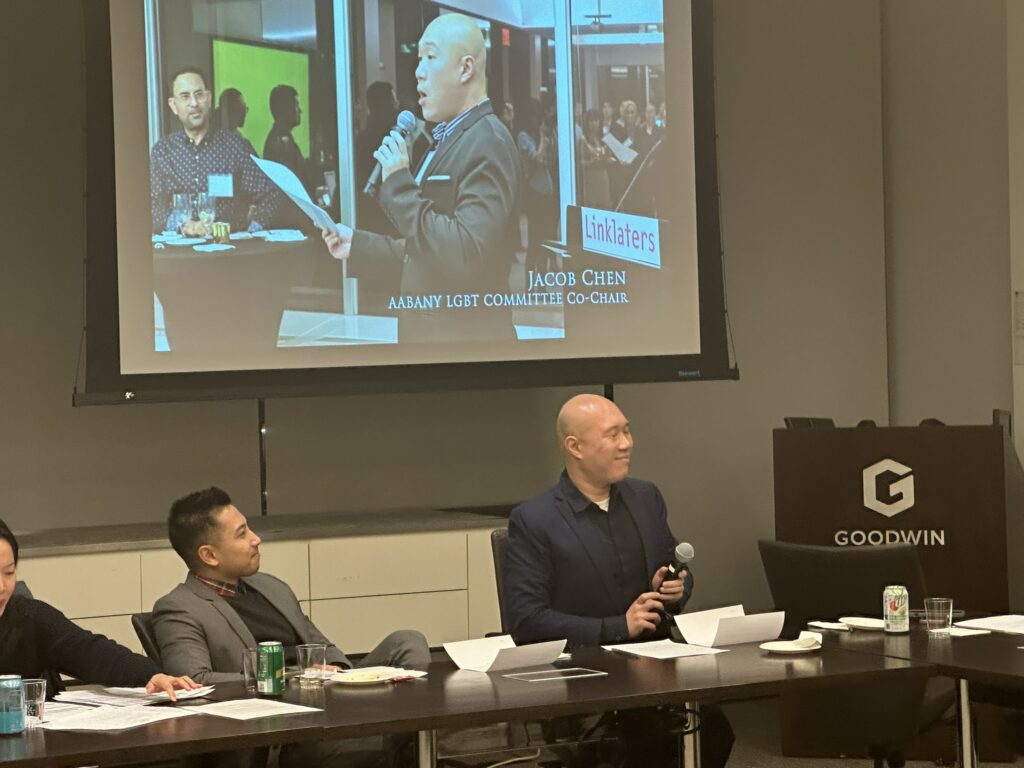
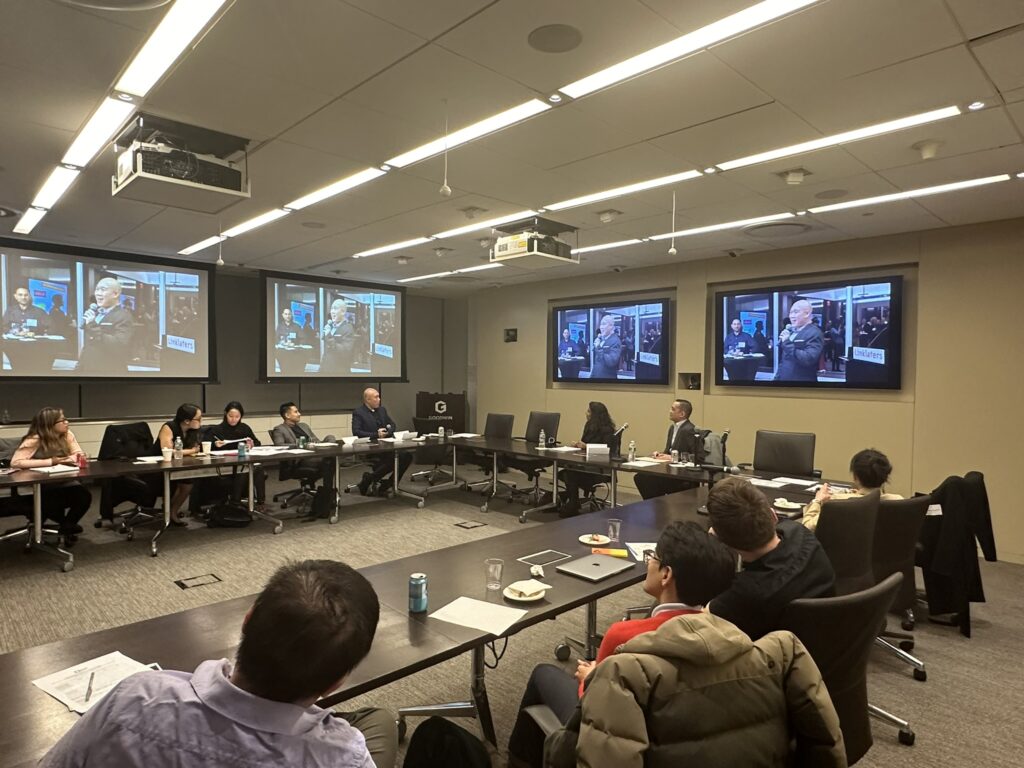
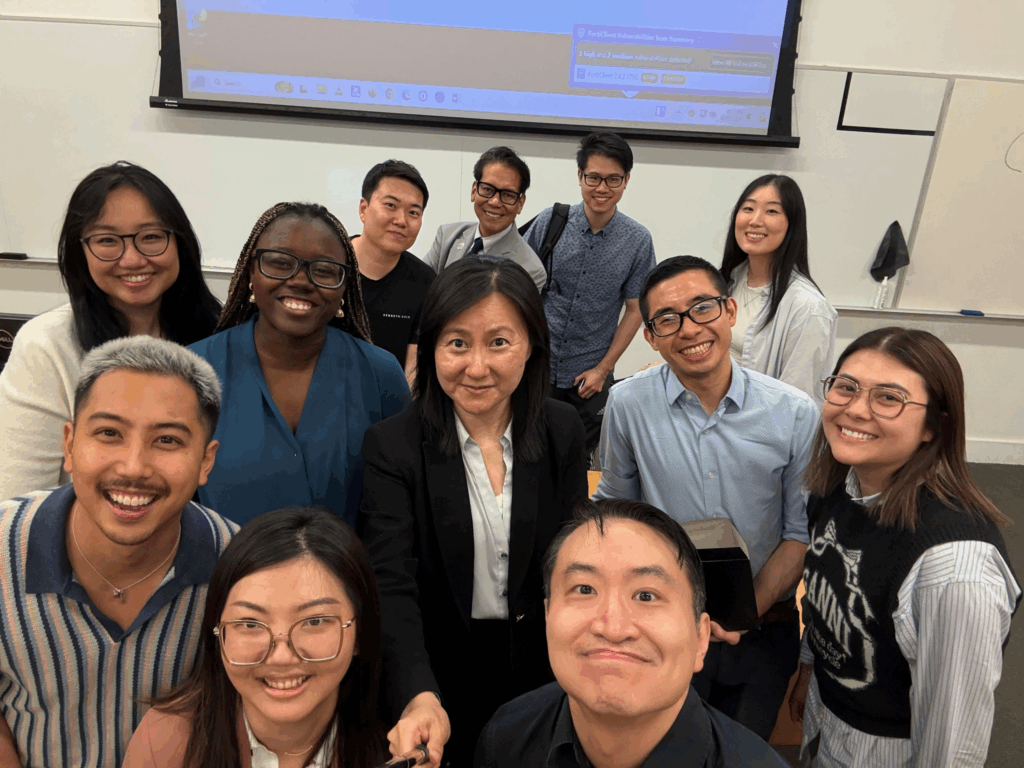
On April 15, 2026, the Asian American Bar Association of New York (AABANY)’s LGBTQ Committee, in collaboration with the Solo and Small Firm Practice Committee, hosted a dynamic and insightful panel at Fordham Law School titled “Table Talk: Careers Beyond Big Law.” Generously co-sponsored by Fordham APALSA and Fordham OUTLaws, with support from AABANY’s Student Outreach Committee, the event brought together an accomplished group of legal professionals and an engaged audience of students and early-career professionals eager to explore alternative pathways within the legal profession.

Mina Yi, a Fordham Law student representing Fordham APALSA, served as moderator and kicked off the discussion by asking the panelists to introduce themselves, their practice areas, and their current roles. Then, she asked them to share their advice on how students can pursue non-traditional or non-Big Law career paths.

The panel featured a diverse lineup of speakers, including Gregory Hom (Nixon Peabody), Kayla Lucia (Mintz), Yen-Yi Anderson (Anderson & Associates), Thomas Wu (New York State Housing Finance Agency), Daobo Wang (New York State Unified Court System), and Glenn Magpantay (U.S. Commission on Civil Rights). Almost all the speakers were AABANY leaders: Gregory is the current Co-Chair of the LGBTQ Committee. Kayla was Co Chair during the last fiscal year, and Daobo is Co-Chair this fiscal year. Yen-Yi is Co-Chair of the Solo and Small Firm Practice Committee. Glenn is a Director on AABANY’s Board.

The speakers’ careers spanned public finance, employment litigation, immigration, small law firm practice, government service, judicial clerkships, and civil rights policy. Their varied trajectories illustrated a central theme of the evening: legal careers are rarely linear. The panelists conveyed that professional fulfillment often emerges from adaptability in one’s circumstances, persistence, and meaningful relationships.

From the outset, panelists demystified the notion of a singular “Big Law path.” Gregory Hom offered a nuanced perspective on large-firm practice, noting that not all firms operate under the same high-turnover model often associated with the industry. He mentioned that instead, firms like Nixon Peabody prioritize sustained interest in specialized practice areas, such as his own work in public finance, and rely heavily on faculty recommendations and personal connections in hiring. In his daily practice, he acts as a “watchdog” for state agencies and investment banks, meticulously reviewing documents to ensure securities law disclosures are consistent and avoid SEC investigations. Gregory shared that he secured his role after heavily leaning on a professor for guidance, and he recommended that students not shy away from doing the same.

Kayla Lucia echoed this sentiment, reflecting on her own nontraditional journey, starting in Legal Aid, then moving to “Midlaw,” and eventually to a major firm specializing in employment law. She noted that she transitioned into private practice to find a more sustainable professional life and to avoid the burnout she felt in the public interest sector. Kayla encouraged students to think critically about the kind of professional and personal life they hope to build, and to consider factors like team size and environmental competitiveness, rather than defaulting to prestige-driven choices. Her current work involves bridging the gap between poorly written statutes and the concise answers employers need, while also assessing the factual viability of litigation claims.

Yen-Yi Anderson provided a compelling account of forging an independent path to starting her own small firm practice. She recounted that her career did not follow a direct route after law school, spending years in nonprofit and media work before returning to the legal field and building her own practice through relationships she had developed with foreign entrepreneurs. In a small-firm setting, she emphasized that attorneys must “wear many hats,” balancing legal work with responsibilities such as managing hiring, payroll, office management, and client development. At the same time, she noted that her practice areas in immigration and commercial litigation require constant attention to evolving laws and policies, which makes adaptability essential. Despite the challenges, Yen-Yi relished the autonomy that comes with running her own firm. She is able to choose her clients, shape her workload, and maintain flexibility in her schedule to allow her to prioritize family alongside her career. 

The discussion was further enriched by perspectives from the public sector, illustrating how legal work can directly shape public policy and address community needs. Thomas Wu detailed his role at the New York State Housing Finance Agency, where legal practice operates at the intersection of law and urban development. In this capacity, attorneys work alongside policymakers and financial institutions to structure deals that support affordable housing initiatives across the state. He described the work as both technical and mission-driven as it requires attorneys to translate legal frameworks into practical tools that enable large-scale development projects. Thomas also emphasized the importance of fellowship programs, such as the Excelsior Fellows Program, as accessible and structured entry points into government service for recent graduates seeking substantive experience and long-term pathways into public sector careers.

Similarly, Glenn Magpantay offered a broader, long-term perspective shaped by decades of experience across civil rights enforcement, nonprofit leadership, AABANY, and his current role as a Commissioner on the United States Commission on Civil Rights. Glenn encouraged students to view their careers as evolving journeys that may have uncertainty and deviation from previous expectations. Glenn advised, “Don’t worry too much about getting it right the first time—your career will evolve, and you’ll get where you want to go,” reinforcing the idea that resilience and adaptability with the legal community are often more determinative of long-term success.

The discussion also highlighted the critical role of networking and mentorship. Speakers consistently emphasized that relationships, such as those cultivated through bar associations like AABANY and broader community engagement, are often instrumental in securing opportunities. Glenn noted that in a competitive field where many candidates appear equally qualified on paper, it is frequently personal connections and trusted recommendations that set applicants apart.

During the Q&A portion, one student asked how the law is actually applied in day-to-day practice as opposed to the case-based learning emphasized in law school. Speakers responded by illustrating their actual responsibilities in vivid detail. Whether it was Gregory ensuring regulatory compliance in complex financial disclosures, Kayla interpreting ambiguous statutes to advise clients, or Daobo drafting judicial opinions grounded in meticulous legal research, each speaker illustrated how legal reasoning operates in real-world contexts. These insights helped bridge the gap between classroom learning and professional application where students were able to gather a clearer understanding of what legal work truly entails.

The evening concluded with an interactive session in which attendees also introduced themselves and shared their aspirations, followed by informal networking over pizza. Thank you to AABANY’s LGBTQ Committee and Solo and Small Firm Practice Committee for organizing and hosting this thoughtful and engaging program, as well as to Fordham APALSA and Fordham OUTLaws for their generous co-sponsorships and collaboration. Special appreciation also goes to the Student Outreach Committee for their continued support in creating meaningful opportunities for students to engage with practitioners across diverse areas of the legal profession.

AABANY LGBTQ Committee Hosts the Program: “Protecting DEI at Big Law since SCOTUS: A Queer Asian Perspective”

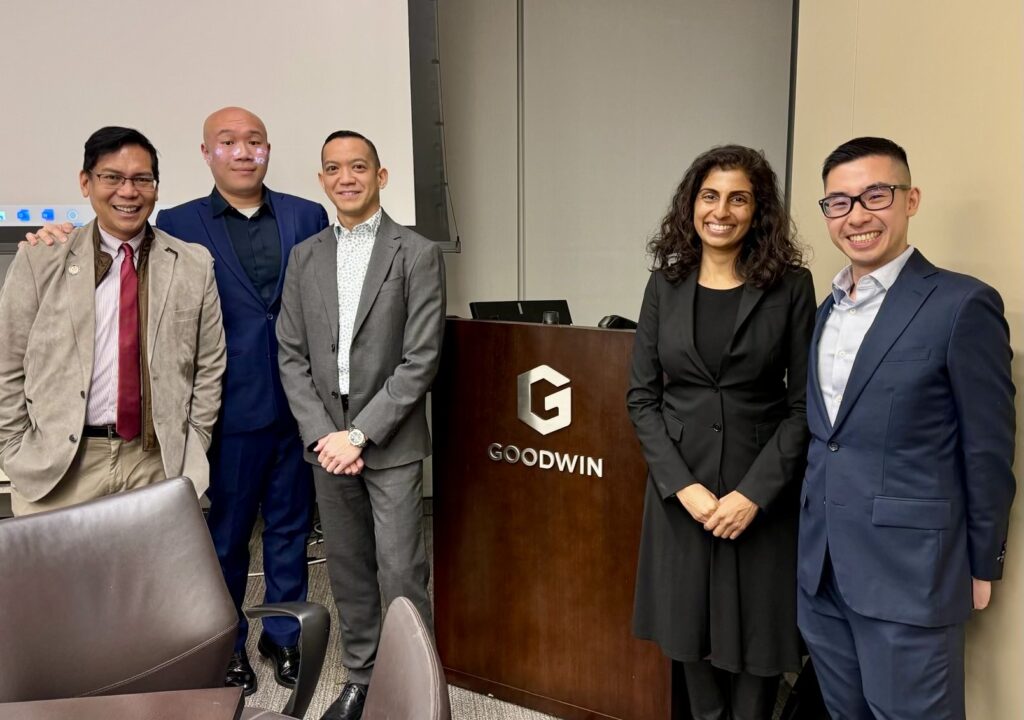
On March 25, 2024, the AABANY LGBT Committee organized a program with the generous support and sponsorship of Goodwin Procter LLP titled: Protecting DEI at Big Law since SCOTUS: A Queer Asian Perspective. The program featured two prominent speakers: Kavita Ramakrishnan, Senior Director at Diversity Lab and Dennis Quinio, Chief Diversity, Equity & Inclusion Officer of the Americas at Allen & Overy. The program consisted of robust conversations about the meaning of diversity, and the personal experiences of attorneys who struggle with the complications of identity.

AABANY thanks the LGBT Committee for presenting this topical program and the speakers for sharing their insights. Thanks to Goodwin for hosting the event. To learn more about the LGBT Committee go here.