Legal Services NYC COVID-19 Resources for Clients

Legal Services NYC has compiled an extensive COVID-19 Resources Guide for its clients. The resource guide includes, but is not limited to, updates on the local, state, and federal court systems; public benefits and unemployment insurance resources; and information on how to continue to access our services. It is continuously being updated and is available in English, Spanish, and Chinese.

Legal Services NYC Resources: https://www.legalservicesnyc.org/what-we-do/covid-resources

Legal Services NYC’s Access Line is OPEN and the organization continues to serve clients and communities during the COVID-19 pandemic. Although Legal Services NYC’s physical offices are closed as of March 17, 2020, the organization’s dedicated staff are working remotely on behalf of new and existing clients.

Current clients should contact their advocate’s office or extension for more information about their cases.

If you are seeking legal assistance on a new matter, you can call the Legal Services NYC legal assistance hotline at 917-661-4500, Monday through Friday from 10 a.m. to 4 p.m. Staff can take calls in any language.

AABANY Membership Committee Hosts Weekly Mixer on Zoom

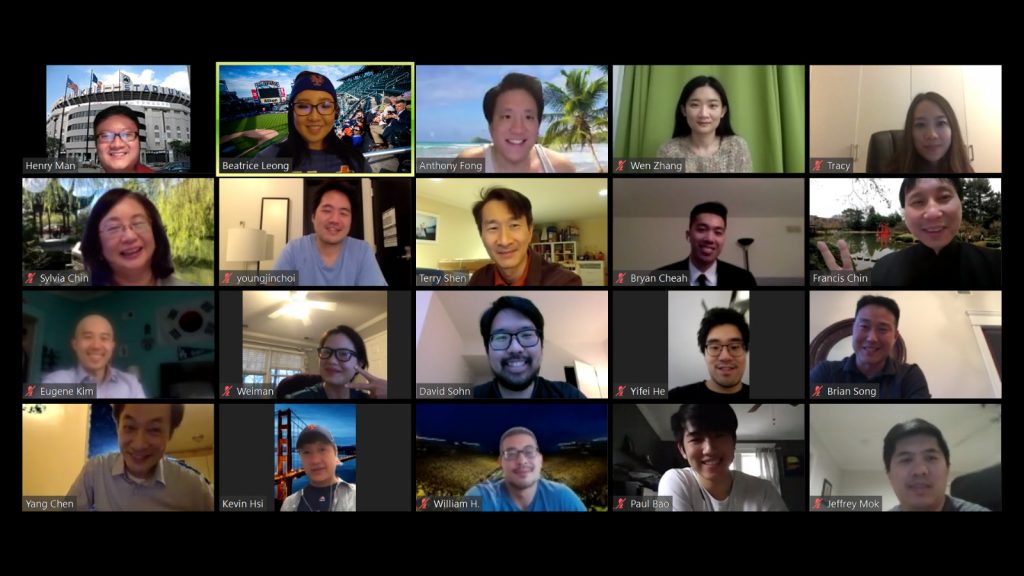
On April 24, 2020, the Membership Committee hosted the first of its weekly Zoom Membership Mixers, with 22 members in attendance. The question posed to the participants was: “What is the most positive thing to happen to you as a result of COVID-19?” Members reported having more time to garden, spending time watching their children grow, watching TV shows (“Better Call Saul”) and exercising. 

The Membership Committee previously hosted Monthly Mixers at bars, ballparks, stadiums, operas, etc, but due to COVID-19, we are moving online to offer members a weekly outlet to share their feelings, see old friends, and make new connections. Mixers start at 6:30pm on Friday and the main event ends at 7:30pm but feel free to stay on after 7:30pm for smaller breakout groups. (This week a few members talked till 10pm!) 

The Membership Committee will be giving away door prizes at some of the upcoming mixers. Congratulations to Jeffrey Mok for winning the cash prize at the first mixer!

Register for this week’s mixer at https://www.aabany.org/events/event_details.asp?legacy=1&id=1366633. Please register by April 30; we will send you the Zoom call-in details on Friday morning.

Thanks to everyone who attended, and thanks to the Membership Committee for organizing these weekly mixers.

Mayor Bill de Blasio Releases 4/19/2020 Weekly COVID-19 Resource

Please note the following summary and resource of COVID-19 updates as of April 19, 2020, released by the Office of Mayor Bill de Blasio.

  1. Anti COVID-19 Stigma
  2. Education
  3. Food Resource
  4. Small Business
  5. Health + COVID-19 Testing
  6. Benefits
  7. Jobs
  8. DACA
  9. How to help NYC
  10. Others

Read more about the resources in English and Chinese here. Please contact Xiaomin Zhao at (646) 306-9287 or via email at xzhao@cityhall.nyc.gov if you have questions.

NYC Mayor’s Office: Fact Sheet on Hate and Bias Incidents Related to COVID-19

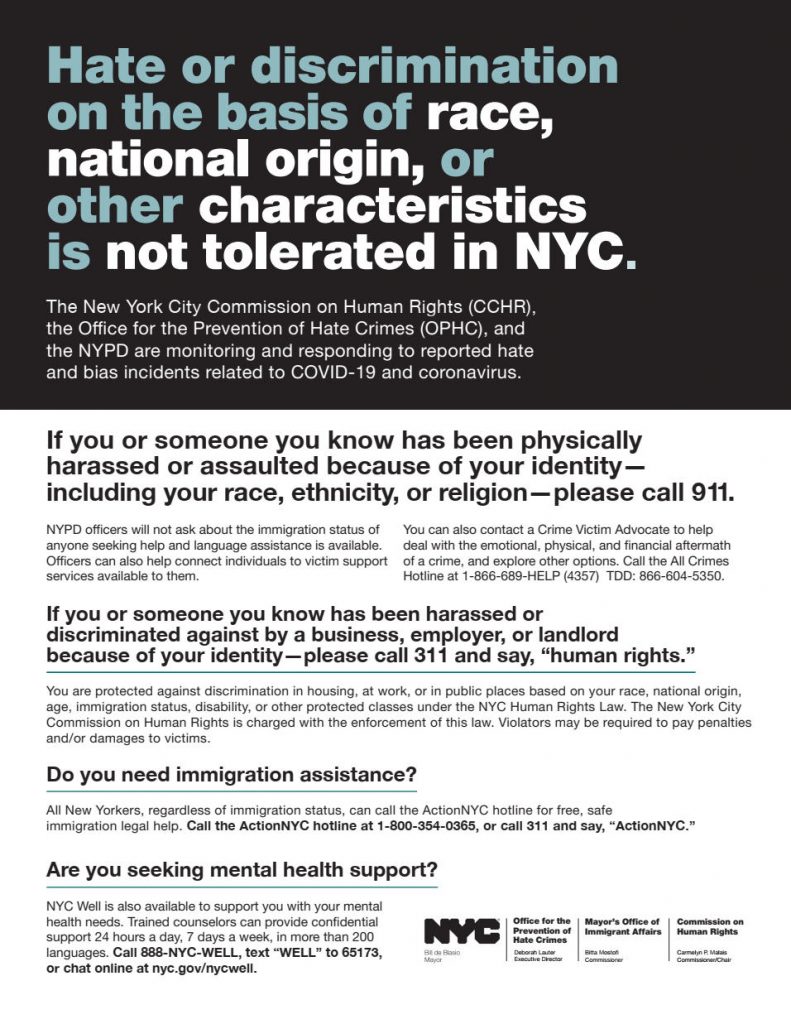
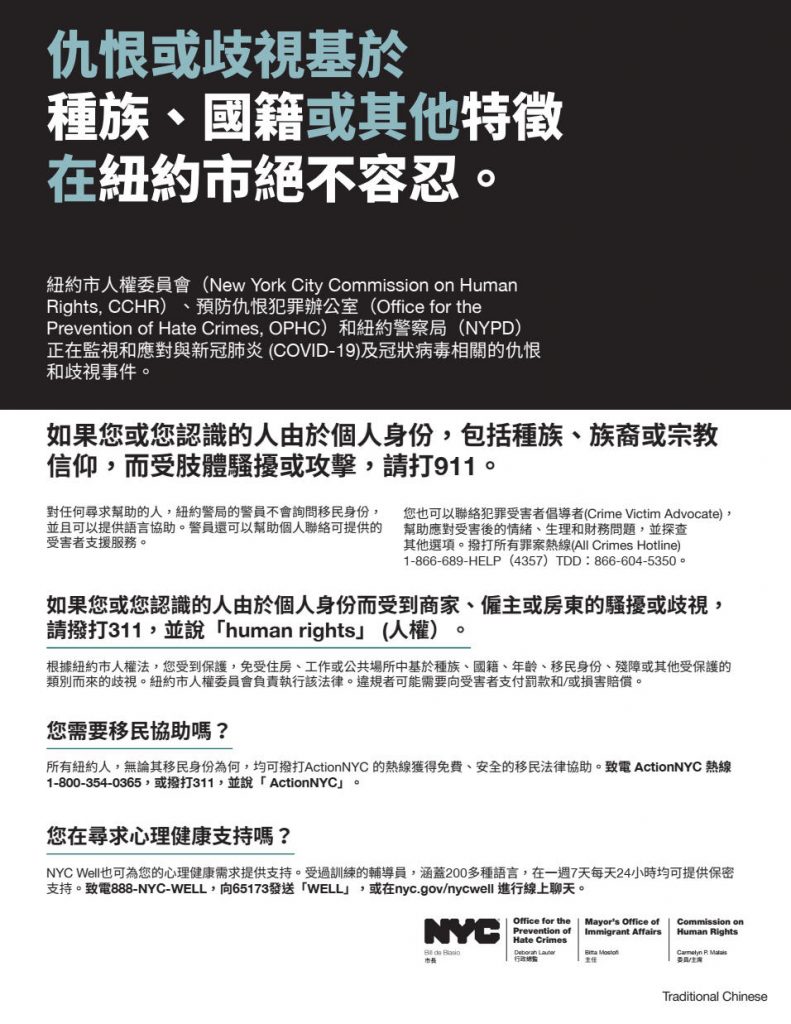
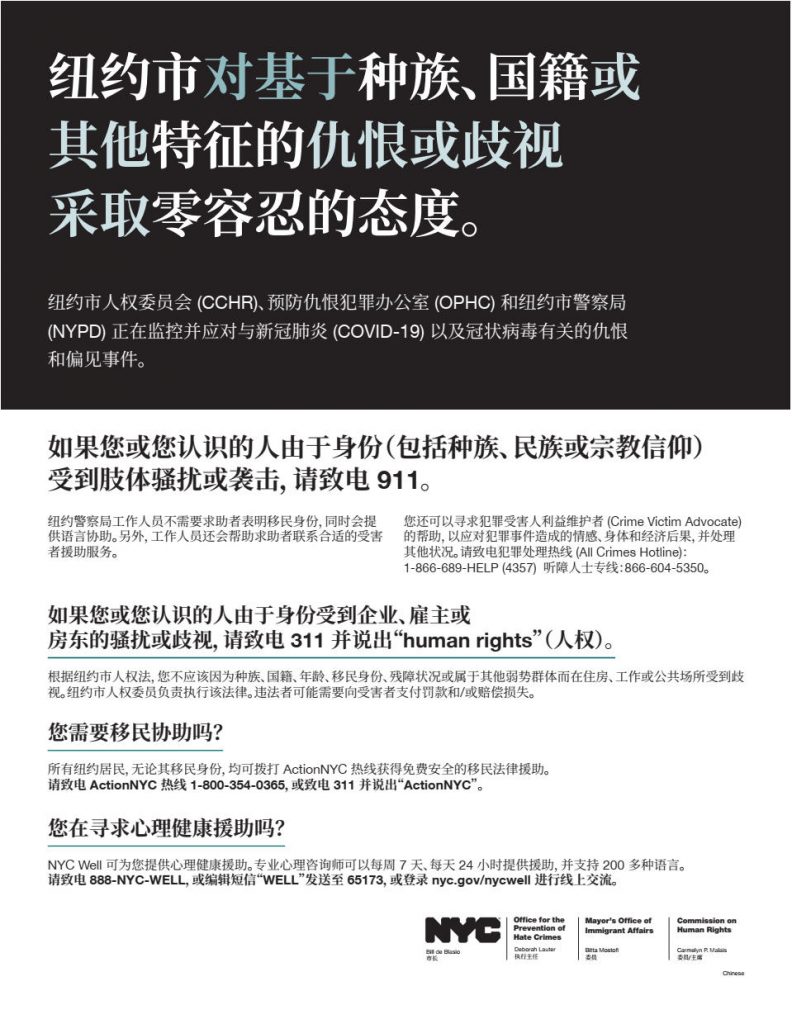
Since the rise of COVID-19, Asian Americans have become increasingly vulnerable to acts of assault, harassment, and discrimination. In response, the New York City Commission on Human Rights, the Office for the Prevention of Hate Crimes, and the NYPD have become more aware and responsive to hate and bias reports related to coronavirus. Mayor Bill de Blasio’s Office has made an info sheet detailing some resources available to Asian Americans and others who may be victims of such cases.

Download the fact sheets in the following languages:

English
简体中文 (Chinese -Simplified)
繁體中文 (Chinese – Traditional)
Link to other languages available

CPC CARES Act Info Sheet

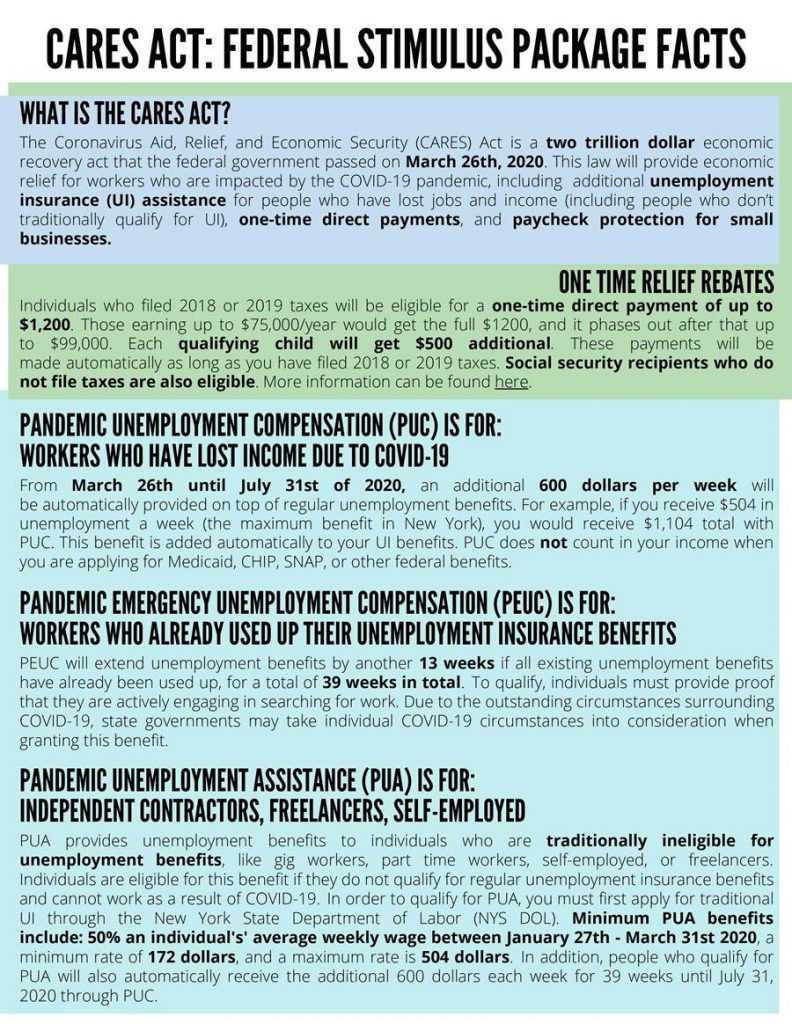
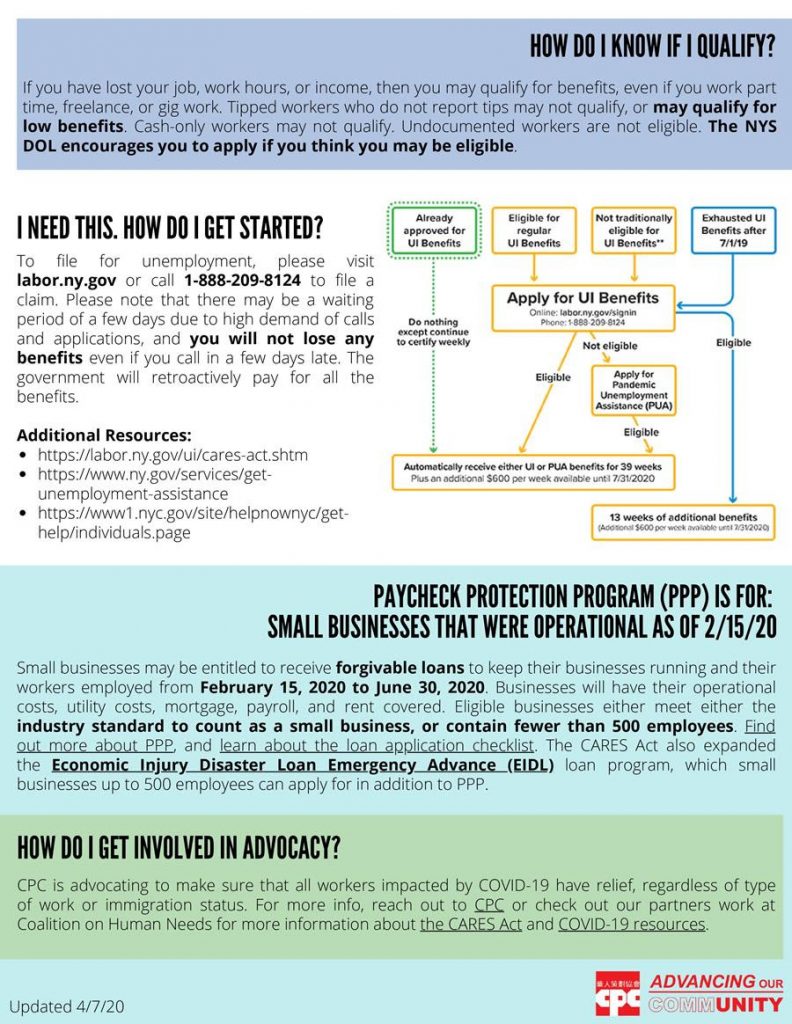
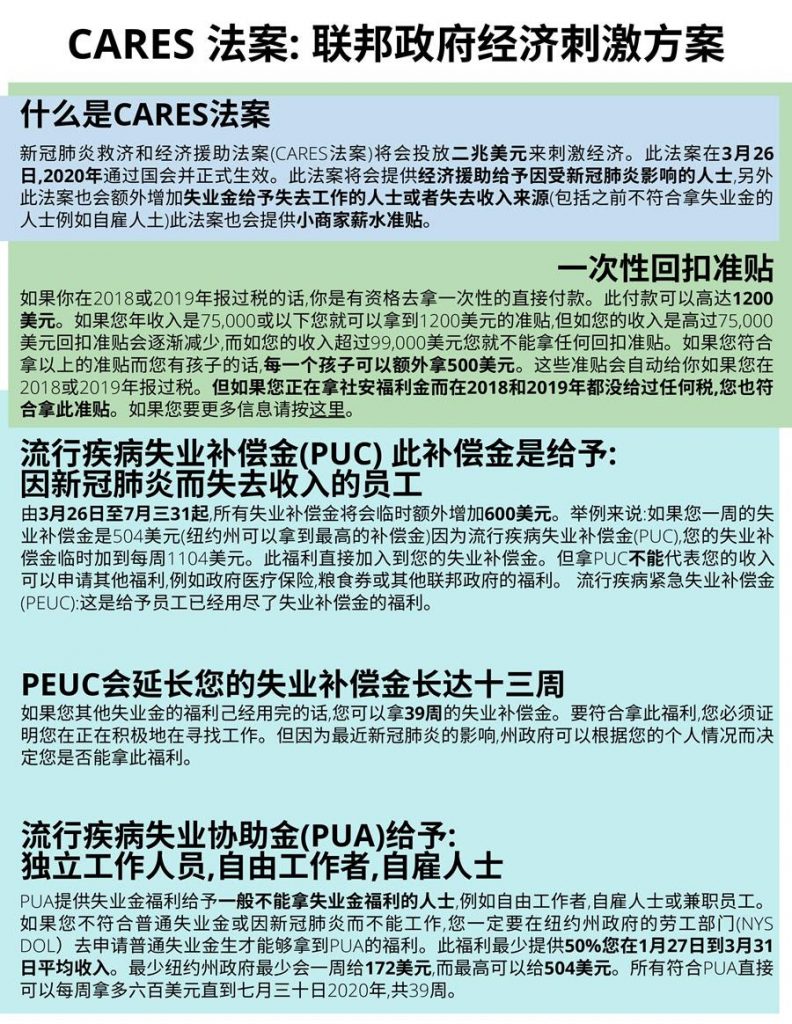
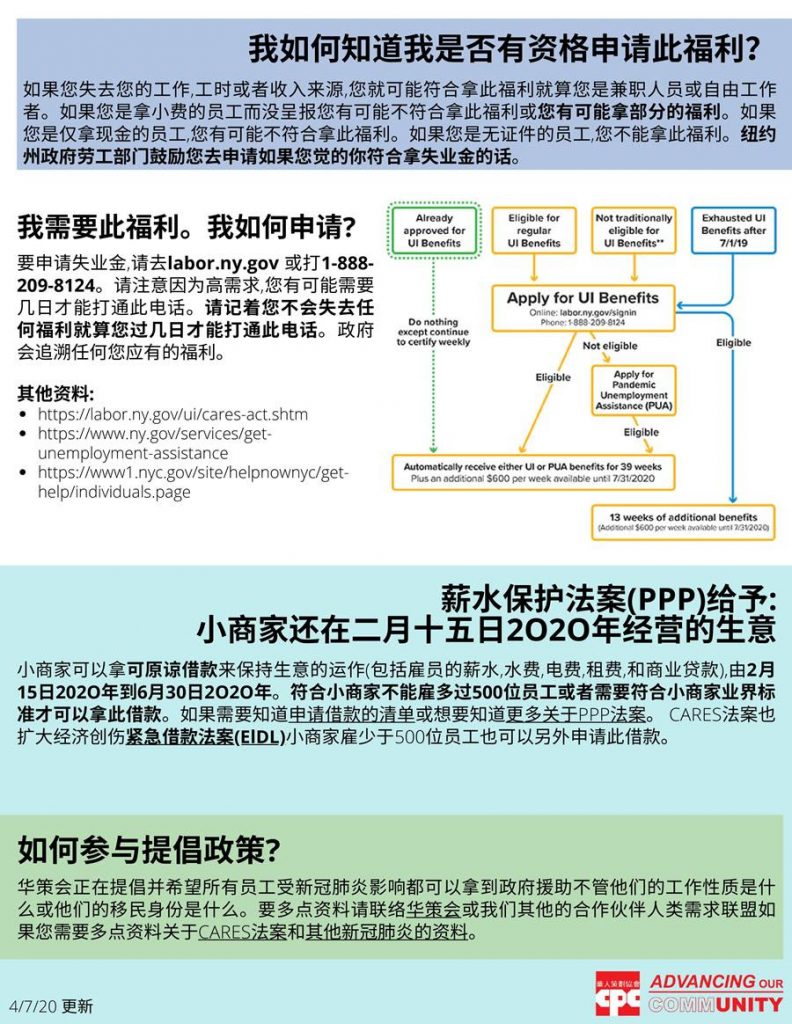
On March 26th, 2020, the Federal Administration passed the Coronavirus Aid, Relief, and Economic Security (CARES) Act with the interests of minority groups, immigrants, and low-income community members in mind. The Chinese-American Planning Council (CPC) policy team has created an easily accessible info sheet on the CARES Act in English and Chinese (simplified and traditional). Thanks again to CPC for providing these information sheets and advancing the interests of not only Asian-Americans but all who are most vulnerable to COVID-19.

Download the fact sheets in the following languages:

English- CARES Act Federal Stimulus Package FAQ

Traditional Chinese- CARES 法案: 聯邦政府經濟刺激⽅案

Simplified Chinese- CARES 法案: 联邦政府经济刺激⽅案

NAPABA Webinar on Combating a History of Anti-Asian Discrimination: How to Protect the Asian American Community

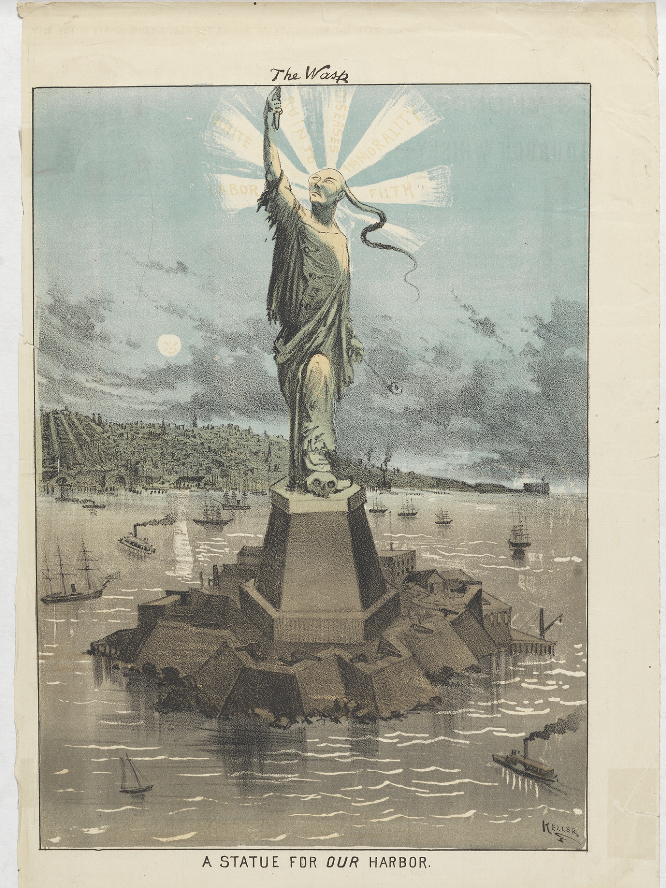
A racist cartoon originally depicted in the publication, the San Francisco Wasp, in 1881. The cartoon was a parody of the Statue of Liberty and represented a growing fear of Asian immigrants within the United States

On Friday, April 3rd, the National Asian Pacific American Bar Association (NAPABA) hosted a webinar titled “Pandemic and Acts of Hate Against Asian Americans: From Past to Present.” The webinar traced the historical roots of Asian American discrimination related to disease and public health issues and presented solutions for the present in the face of the COVID-19 pandemic. 

The webinar featured a panel which included Professor Jack Chin of UC Davis Law School, Matt Stevens of The New York Times’s Political News division, Harpreet Singh Mokha of the Department of Justice’s Community Relations Service, and Rahat N. Babar, Special Counsel, Office of the Governor of New Jersey. Chris M. Kwok, the NAPABA Dispute Resolution Committee Co-Chair and our very own AABANY Issues Committee Chair, helmed the panel as moderator. 

Professor Chin began by outlining the extensive history of anti-Asian discrimination within the United States. He focused on how discriminatory legislation at the state level in California and at the national level through the Chinese Exclusion Act of 1882 frequently correlated Asian American immigrants with disease. In particular, Professor Chin noted how San Francisco became a focal point of race-based efforts to control the bubonic plague in the early 1900s. Multiple political attempts were made to isolate and discriminate against Asians in the city which were repeatedly rebuffed by legal challenges such as Wong Wai v. Williamson and Jew Ho v. Williamson. Professor Chin underscored the ugly but recurring theme pushed in American politics about the “foreignness of germs.”

Following the professor’s historical account, Matt Stevens, an Asian American political reporter for The New York Times, noted the efforts that legislators are making to combat these acts of discrimination. Moreover, he noted the pervasive feeling of fear that permeates the Asian American community.

Harpreet Singh Mokha, National Program Manager for Muslim, Arab, Sikh, South Asian, and Hindu (MASSAH) issues at the Community Relations Service of the DOJ, explained the role and function of CRS during this pandemic. Established under Title X of the Civil Rights Act of 1964, CRS, frequently called “America’s Peacemakers,” works directly with communities facing conflict on racial, ethnic, gender, sexual orientation, religious, and disability issues. It has four primary functions: facilitating dialogue, mediating conflict, training community members, and providing consultation for methods of community assistance. Mr. Mokha noted that members of communities all across the country should be encouraged to make use of CRS’s resources and report hate crimes at their first occurrence. 

To wrap up the panel, Rahat Babar, Special Counsel for Litigation with the Office of the New Jersey Governor, echoed Mr. Mokha’s point to report hate crimes without hesitation. He noted a 2020 in-state report which found a 65% increase in bias incidents between 2018 and 2019 with 46% of those engaging in such bias incidents being minors. Thanks to this report, Governor Phil Murphy was able to set up a task force to explore why minors were engaging in such behavior. Mr. Babar notes that without a robust data set of incident or hate crime reports, lawmakers and community leaders will not be able to identify root problems or pose solutions. 

Overall, the panel outlined past and present cases of racial discrimination targeted towards the AAPI community. All panelists acknowledged the importance of speaking out during this time of uncertainty for the sake of protecting fellow community members both now and in the future. 

This event  reached the largest audience for a NAPABA webinar to date, with 160 registrants. The program stressed placing the events of today within historical understanding of America, engagement with our government institutions charged with enforcing our laws, and collaboration across civil society organizations. We at AABANY thank and acknowledge Chris Kwok for proposing this program to NAPABA and serving as moderator.

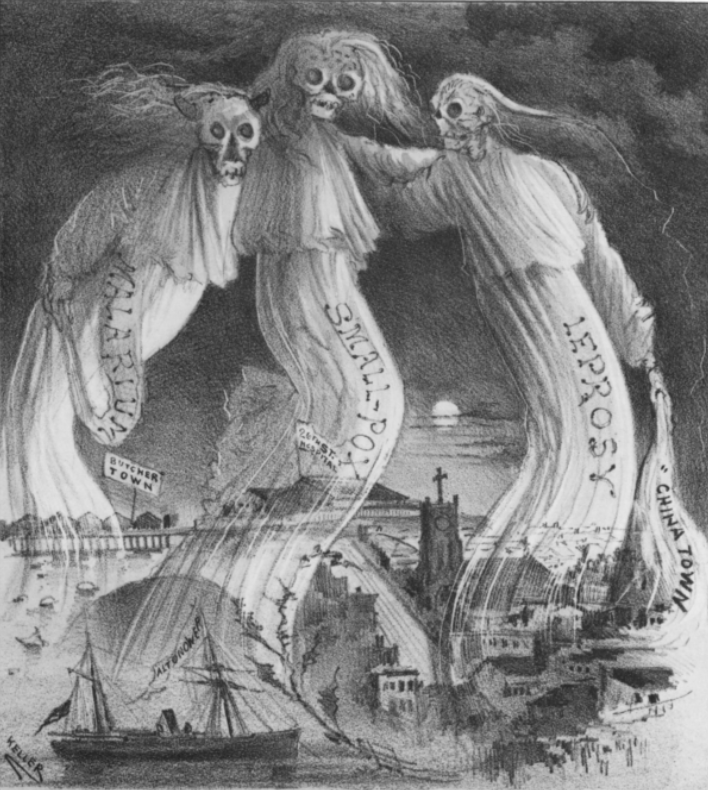
A racist cartoon published in San Francisco-based publication, The Wasp. The cartoon promoted then-common racist myths that Chinatown was riddled with disease.
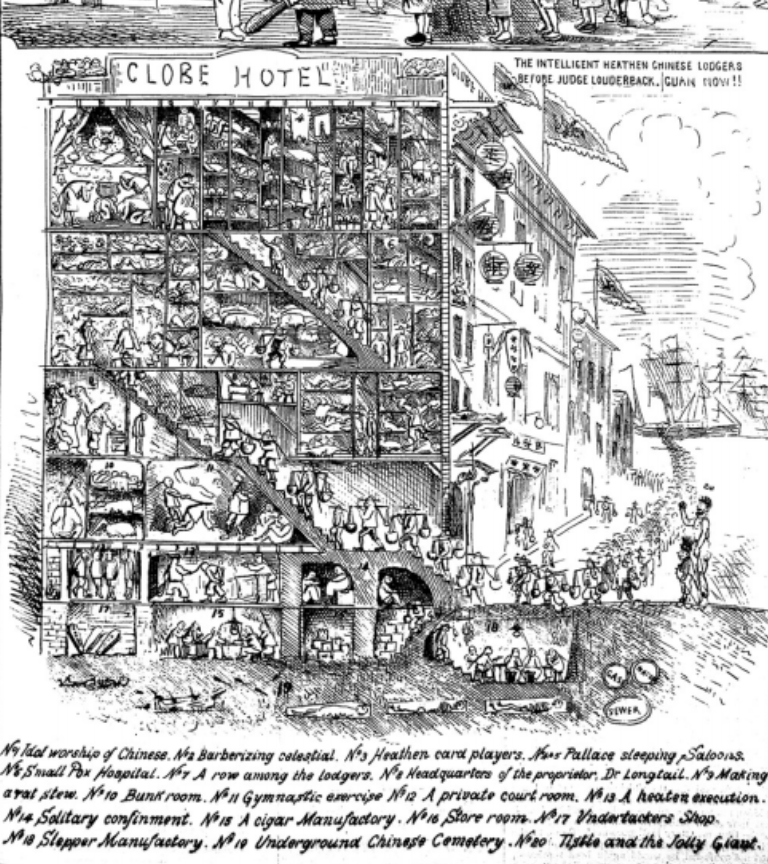
A racist cartoon published in the illustrated San Francisco weekly “Thistleton’s Illustrated Jolly Giant” depicting San Francisco’s The Globe Hotel. The cartoon insinuates that the Globe Hotel secretly contained a “small pox hospital” and an “underground Chinese cemetery,” perpetuating racist stereotypes of the time.

NY Daily News Publishes Op-Ed on Startling Rise in Anti-Asian Bias Incidents and Hate Crime Reports

On April 8, 2020, the New York Daily News published an op-ed entitled “Bias, group hate and the coronavirus pandemic,” authored by Deborah Lauter, Executive Director of the New York City Office for the Prevention of Hate Crimes, Carmelyn P. Malalis, Chair and Commissioner of the New York City Commission on Human Rights, and Bitta Mostofi, Commissioner of the Mayor’s Office of Immigrant Affairs.

The op-ed highlights the startling increase of bias incidents and hate crimes related to COVID-19 being reported by Asians and Asian Americans across the country in recent weeks. It notes that during times of crisis, societies are susceptible to fear. In the current COVID-19 pandemic situation, that fear has manifested itself in the form of mistrust, hatred, and division on a national level. The authors point to several examples of similar societal reactions in history during times of national and international crises. They encouraged readers to learn from history’s mistakes and stressed the need to support the Chinese and other Asian communities that are being scapegoated and increasingly living in fear of being targeted in the current environment.

To read the full op-ed, click on the following link: https://www.nydailynews.com/opinion/ny-bias-group-hate-coronavirus-20200409-hocvcsn7orarvhruqoxxkay2my-story.html

NCAPA Community Briefing on COVID-19

On Tuesday, March 31, 2020, the National Council of Asian Pacific Americans (NCAPA), a coalition of 34 national Asian Pacific American organizations, held a community briefing call over Zoom on the topic of increased anti-Asian rhetoric in the wake of the COVID-19 outbreak. Community leaders on the call were joined by legislators serving on the Congressional Asian Pacific American Caucus (CAPAC) including Representative Judy Chu (CA-27), Representative Mark Takano (CA-41), Representative Ted Lieu (CA-33), and Senator Kamala Harris of California. 

Mr. Gregg Orton, the National Director of NCAPA, began by addressing efforts undertaken by NCAPA to address the increasing prevalence of anti-Asian rhetoric. Mr. Orton addressed NCAPA’s creation of a COVID-19 Task Force which aims to aggregate community resources online for the Asian American community in addition to building an emergency response network. NCAPA is also currently developing an online health form with crowdsourced in-language community health resources. 

Legislators serving on CAPAC spoke at-length about the alarming rise of xenophobic attacks and racist sentiment directed against members of the Asian American community. All four legislators condemned the rhetoric of top administration officials such as President Donald Trump and Secretary Mike Pompeo in labeling COVID-19 as the “Chinese Virus” or the “Wuhan Virus” as the use of these terms only exacerbate concerns of discrimination. In fact, Representative Chu, the Chair of CAPAC, addressed recent high profile incidents of physical attacks directed against Asians and estimated roughly 1,000 reports of hate crimes in the last five weeks alone. 

Moreover, all four legislators pointed to the efforts that were being undertaken in Congress to stand in solidarity with the Asian American community such as Representative Grace Meng’s (NY-6) recent resolution “Condemning all forms of Anti-Asian sentiment as related to COVID-19” which has already garnered 130 co-sponsors. Senator Harris underscored the importance of cancelling ICE raids and following in Los Angeles and New York’s footsteps in setting up hotlines for reporting on hate crimes directed against Asian Americans. Representative Lieu addressed the problem of phone scams taking advantage of the elderly during this time and pointed to the FCC’s online guidelines for preventing these scams. 

Additionally, Representatives Chu and Takano spoke extensively about the recent stimulus package that was passed and certain benefits that Asian business owners could make use of. In particular, they highlighted Small Business Administration (SBA) loans for companies with less than 500 employees in addition to direct cash assistance provisions sent to qualifying families. However, Representative Lieu noted that the recently passed stimulus package will likely not be enough and that a second bill is in the works. In that bill, Representative Chu hopes to focus on translating federal COVID-19 resources into AAPI languages and assisting both undocumented and legal immigrants who were not eligible for certain benefits in the initial stimulus package. 

Finally, community leaders in the NCAPA network also addressed efforts that they have undertaken in light of COVID-19. Ms. Naomi Tacuyan Underwood, Executive Director of the Asian American Journalists Association (AAJA), elaborated on how AAJA has issued guidelines to major newsrooms across the country on responsible reporting regarding the spread of COVID-19. Additionally, Ms. Chiling Tong, President of the Asian/Pacific Islander American Chamber of Commerce and Entrepreneurship addressed the financial risks faced by its 2 million members. She encouraged Asian American members and businesses to apply for the FCA economic injury fund online. 

Overall, multiple steps are being taken at the legislative, business, and grassroots level in order to combat xenophobia and support the Asian American community in this time of need. In order to see a full recording of the call, please click here. For additional ways you can help and get involved, please look below.


The National Council of Asian Pacific Americans (NCAPA), founded in 1996, is a coalition of 34 national Asian Pacific American organizations around the country. Based in Washington D.C., NCAPA serves to represent the interests of the greater Asian American (AA) and Native Hawaiian Pacific Islander (NHPI) communities and to provide a national voice for AA and NHPI issues. You can get in-touch with NCAPA by clicking here here.

For additional resources, please refer to NCAPA’s COVID-19 Response Toolkit, which includes sample social media graphics and posts, press coverage, and resources within and outside of our coalition. The resources include in-language resources for wellness and health, and various hate crime reporting tools. You can make a direct impact in your own respective circles and communities by regularly distributing and sharing NCAPA’s Toolkit.

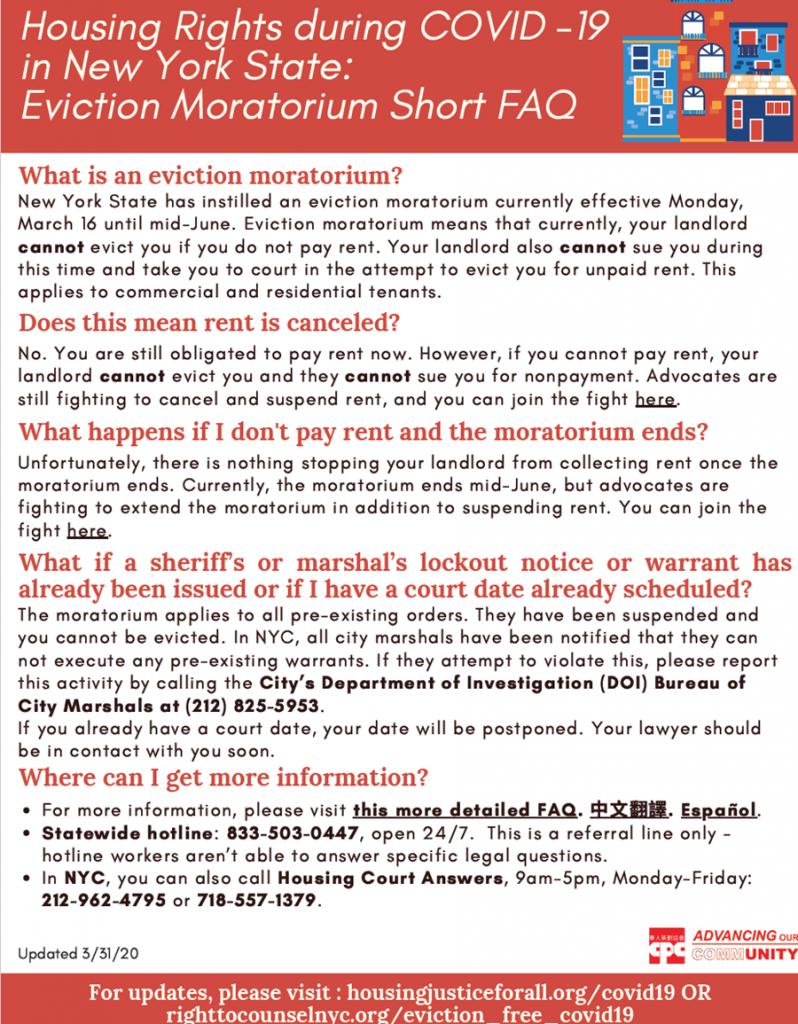
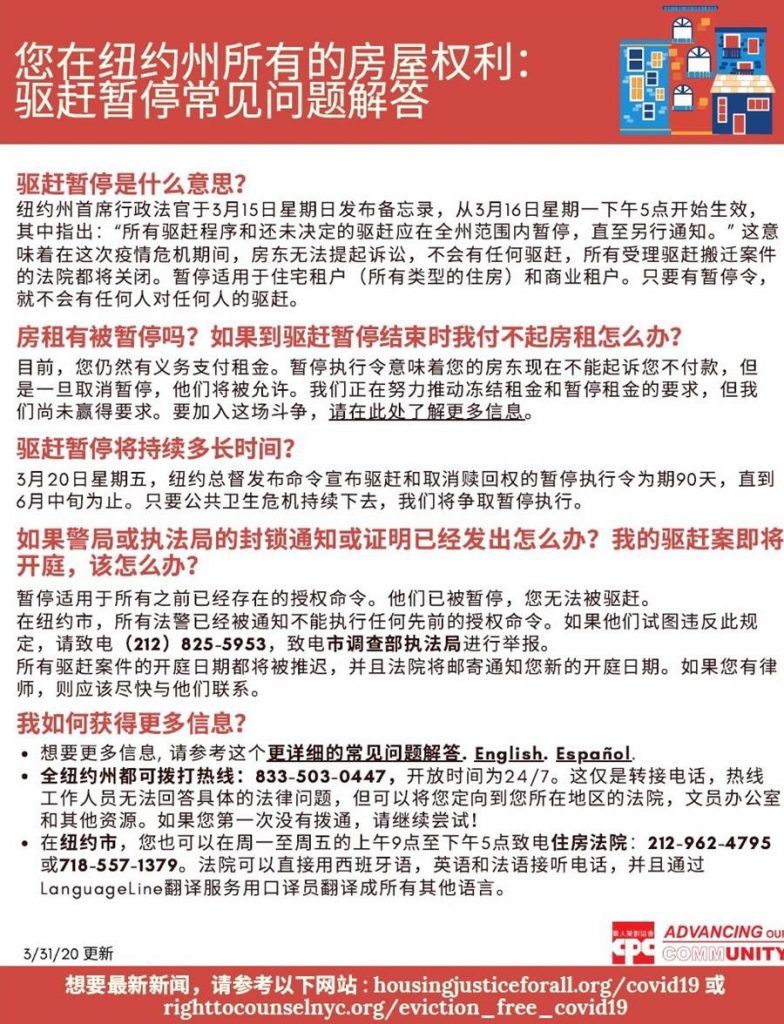
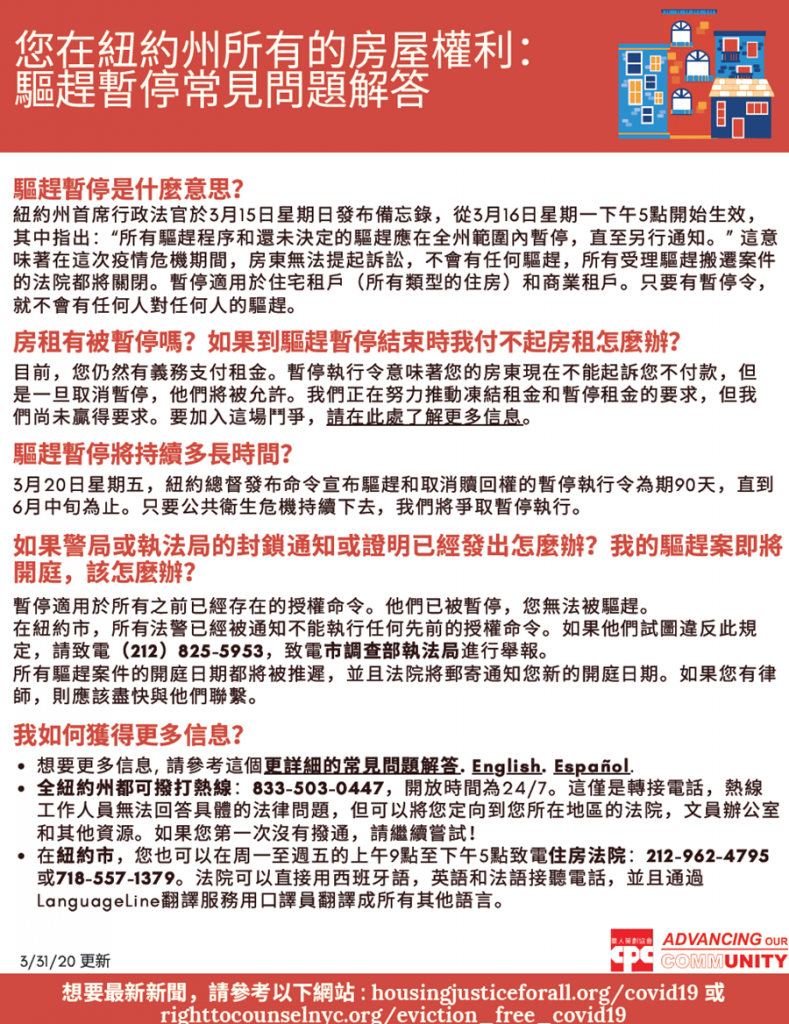
CPC: Housing Know Your Rights

Due to the ongoing pandemic, community members have been struggling with answers to rent, housing and bill payments during this period of unstable income and job security.

New York State has implemented an eviction moratorium for 90 days, which applies to residential and commercial tenants. The Chinese-American Planning Council (CPC) calls upon the New York State legislature to cancel rent for New Yorkers who have been impacted by COVID-19. To support this bill, you can visit the website here at Housing Justice For All.

Info sheets on housing rights are included below in English and Chinese (simplified and traditional).

From KALAGNY: New York Court Restrictions and Protocols, COVID-19 Update

Thanks to KALAGNY for sharing these important court updates for New York courts.

New York State Unified Court System

March 20, 2020 Executive Order No. 202.8 from Governor Cuomo (Link)

“[A]ny specific time limit for the commencement, filing, or service of any legal action, notice, motion, or other process or proceeding, as prescribed by the procedural laws of the state, including but not limited to the criminal procedure law, the family court act, the civil practice law and rules, the court of claims act, the surrogate’s court procedure act, and the uniform court acts, or by any other statute, local law, ordinance, order, rule, or regulation, or part thereof, is hereby tolled from the date of this executive order until April 19, 2020”

Executive Order 202.8 directs a 100% in-person workforce reduction as of March 22, 2020 at 8:00 p.m. for “non-essential” services. Law firms have not been identified on the Executive Order or the Governor’s guidances as “essential.” Please see the NYSBA’s summary of the Executive Order here.

March 22, 2020 Administrative Order from Chief Administrative Judge Marks.

“[E]ffective immediately and until further order, no papers shall be accepted for filing by a county clerk or a court in any matter of a type not included on the list of essential matters attached as Exh. A. This directive applies to both paper and electronic filings.”

March 19, 2020 Memo from NY State Court Regarding Essential Services (Link)

For information, please see: https://www.nycourts.gov/

United States District Court, Southern District of New York

March 11, 2020 Memo Re: COVID-19 Protocols (Link)

For more information, please see: https://nysd.uscourts.gov/covid-19-coronavirus

United States District Court, Eastern District of New York

March 18, 2020 Administrative Order 2020-06 from Chief Judge Mauskopf (Link)

March 18, 2020 Administrative Order 2020-11 from Chief Judge Mauskopf (Link)

For more information, please see: https://www.nyed.uscourts.go

United States District Court, Northern District of New York

March 13, 2020 General Order #58 in Response to Coronavirus COVID-19 Public Emergency (Link) For more information, please see: https://www.nynd.uscourts.gov/public-emergency

United States Court of Appeals for the Second Circuit

Effective March 23, 2020, oral arguments will be held by teleconference. For more information, please see: http://www.ca2.uscourts.gov/