
NAPABA, SABA Chicago, CABA, and FALA Chicago Statement in Response to Alleged Plot to Attack Hindu Temple in Aurora, Illinois

For Immediate Release:Contact:
October 21, 2026:[email protected]

WASHINGTON—The National Asian Pacific American Bar Association (NAPABA), South Asian Bar Association of Chicago (SABA Chicago), Chinese American Bar Association of Greater Chicago (CABA), and Filipino American Lawyers Association of Chicago (FALA Chicago) condemn the alleged plot to carry out a mass shooting at the largest Hindu temple in Aurora, Illinois. Last week, law enforcement authorities arrested and charged a suspect who allegedly planned an attack targeting worshippers at the temple. According to law enforcement officials, the suspect allegedly possessed white supremacist materials and expressed hate towards individuals of South Asian and Indian descent along with Jewish and Black individuals.

We are deeply disturbed by this alleged act of hate and stand in solidarity with the Hindu, Indian American, and broader South Asian communities. We are grateful to the individuals who alerted law enforcement and to the authorities whose actions helped avert a potential tragedy.

Who we are, and how and where we choose to worship, are part of the tapestry of American life. A refuge for peace and prayer must never be transformed into a place of violence by perpetrators of hate.  Hate—whether in the form of anti-South Asian hate or any other form of bigotry—has no place in our society.  We remain committed to eradicating hate in all its forms, including by urging governments at every level to fully support and strengthen hate prevention efforts.
Preventing Immigration Fraud in the Filipino Community

Older Filipino Americans are particularly vulnerable as targets of certain fraud. According to AARP’s “Facing Fraud or Saving Face? A Survey of Asian Americans and Pacific Islanders 50 Years and Older on Fraud and Scams” (www.aarp.org/AAPIfraudsurvey), many con artists use immigration scams to falsely promise cheap, quick, or easy paths to work permits and green cards.

Scammers pretend to provide quality legal advice, help with paperwork, or other tasks involved in the immigration process. The scammer usually asks for an upfront fee, takes the money, and disappears immediately. Or worse, they provide ineffective or even harmful representation by filing the wrong paperwork, using fraudulent measures, or misrepresenting facts. The American Bar Association believes immigration fraud is underreported because many victims are often ashamed to report it to authorities or are afraid it will affect their immigration status.

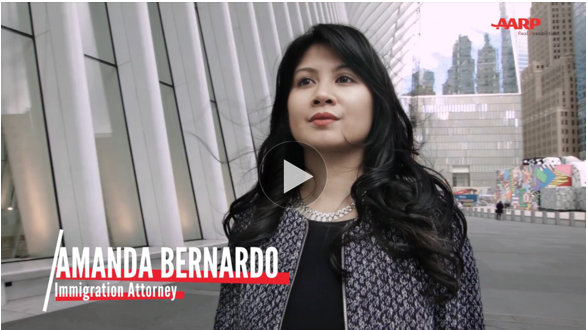
Amanda Bernardo, Co-Chair of AABANY’s Immigration Committee, provides tips and advice on how to avoid being a victim of immigration fraud. She is working with AARP to help the Filipino community and notes “The immigration process can be confusing and intimidating, especially for Filipinos and Asian immigrants who face language barriers.”

Daphne Kwok, AARP Vice President of Multicultural Leadership, Asian American and Pacific Islander Audience Strategy says “Con artists often target immigrant communities because they are particularly vulnerable, but knowing how they work can help you spot and avoid scams.”

To learn more about Amanda Bernardo and to watch her video, click here.