
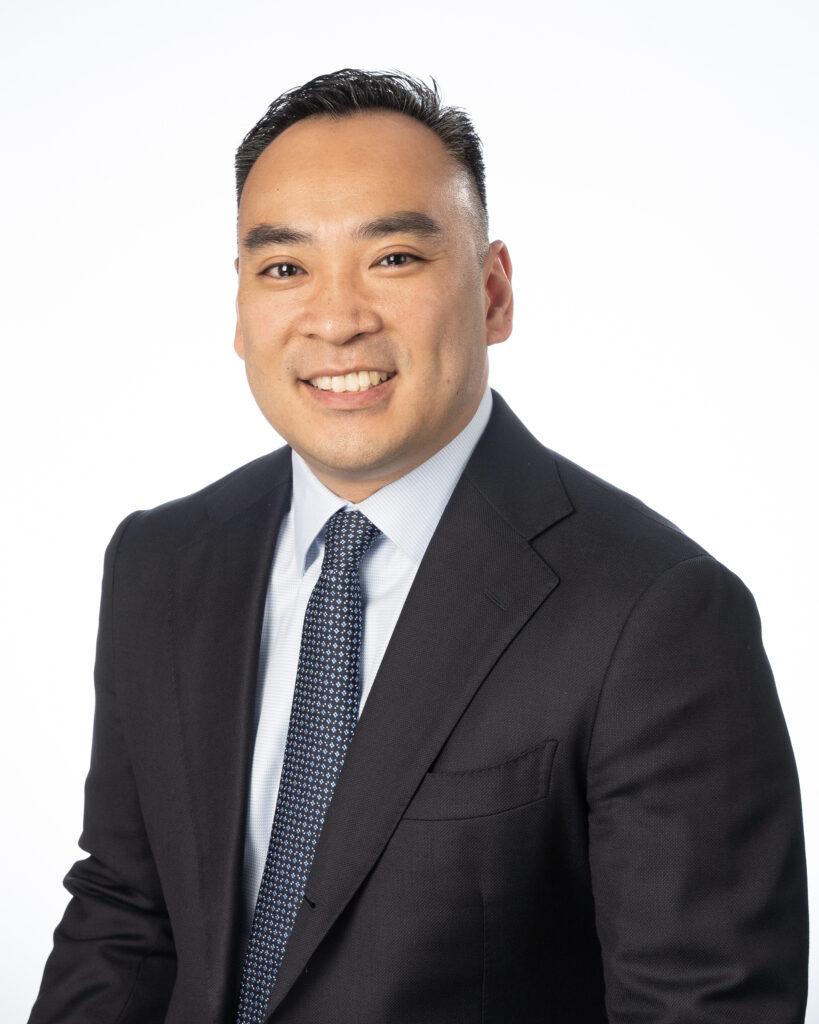
The Asian American Bar Association of New York (AABANY) congratulates William H. Ng, former AABANY President (2022) and longtime AABANY member, on assuming his new role as the Office Managing Shareholder of Littler’s Long Island office, effective July 1, 2026.
William is a proud, born-and-raised New Yorker. He began his educational journey at Saint Francis Preparatory School in Queens, before graduating from Binghamton University with a Bachelor of Arts in Political Science and Sociology. He then returned to Queens to attend St. John’s University School of Law, where he earned his JD and launched his legal career.
After graduating from law school in 2007, he joined the New York City Law Department, the agency responsible for most of the city’s legal affairs. There, he spent five-and-a-half years developing his courtroom skills as a young lawyer. He primarily worked on tort and labor and employment cases. These formative years were critical to his early professional development, providing him with early opportunities to take depositions, argue motions, and gain substantial hands-on litigation experience. After he transitioned from handling torts to the labor and employment law division, William also developed in-depth experience practicing in federal court. Reflecting on that time, he noted, “As junior lawyers at the Law Department, we were entrusted with significant responsibility early in our careers, gaining hands-on invaluable experience, which made a huge difference in our development and long-term success.”
In 2013, William transitioned from the public sector to private practice, joining Littler’s Long Island office. He was able to leverage and build on the litigation and labor and employment experience he developed in government, as many of the core legal skills were directly transferable. The most significant shift was in his client base, moving from representing public-sector employers, to advising and defending private-sector employers on a wide range of workplace issues and disputes.
Now, as Office Managing Shareholder of Littler’s Long Island office, William focuses on four priorities: developing talent, delivering exceptional client service, driving strategic growth, and serving as a trusted leader who aligns the office’s local needs with the firm’s broader business objectives. While supporting clients with national and global operations, he remains deeply committed to the New York business community. A lifelong New Yorker, William believes Littler’s unique strength lies in its ability to combine deep local engagement and relationships with the capabilities, resources and reach of a global labor and employment law firm. He also values the firm’s strong collaborative and inclusive culture, exemplified by its nine affinity and employee resource groups, which provide support, development and networking opportunities, and give members a space to have candid conversations.
AABANY has played a pivotal and enduring role throughout William’s career. Having welcomed AABANY members to the firm and worked closely with clients affiliated with the organization, he credits AABANY with helping him become the lawyer that he is today. “I don’t think I’d be where I am today without AABANY,” he said. William first became involved with AABANY during his second year of law school, and deepened his engagement after graduation. Over the years, he co-chaired several committees, including Student Outreach, Young Lawyers, Government Service and Public Interest, before joining the Board of Directors. Through these leadership roles, he built lasting professional relationships and became deeply connected to the New York legal community. Reflecting on his decades-long involvement with the organization, William describes his relationship as coming “full circle.” “Not a week goes by that I’m not speaking with someone connected to AABANY,” he stated. Today, he continues to support the organization’s mission of fostering professional development, mentorship, and community among Asian American legal professionals.
When asked whether his Asian American identity presented obstacles in his career, William acknowledged that the “model minority” stereotype continues to persist and can create challenges within the legal profession. He noted the disconnect between the growing number of Asian American attorneys entering the profession and the relatively small percentage who ultimately advance to partnership and leadership roles. Reflecting on his own journey, William credits much of his success to the experiences and influences that helped him develop confidence and resiliency early in life. Growing up in New York City taught him how to advocate for himself in competitive environments, while his parents instilled a strong sense of self-confidence and determination. He also points to his years as a city attorney, where he litigated cases from day one against seasoned adversaries, with accelerating his professional growth. “Those experiences taught me resilience, how to advocate effectively, and how to remain confident even during difficult or uncomfortable situations,” he said.
Recognizing the structural challenges many young attorneys face entering the legal profession, William offered several pieces of advice for AABANY members and aspiring law school graduates. He emphasized that adaptability is one of the most valuable qualities employers seek, both within the legal profession and across industries. As client expectations, business models, and the use of artificial intelligence continue to evolve, attorneys who are flexible and willing to embrace change will be better positioned for long-term success.
William also underscored the importance of strong interpersonal skills, sound judgment, and emotional intelligence. While technology can assist with legal research and routine tasks, clients continue to value lawyers who can exercise practical judgement, communicate effectively, and demonstrate empathy. Ultimately, he noted that the lawyers who create the most value are often those who not only can identify risks but who can also help clients solve them. In today’s complex and rapidly changing environment, the ability to provide thoughtful, solution-oriented advice remains a critical differentiator.
William also emphasized the importance of self-confidence and authenticity. For him, authenticity means investing in relationships, supporting others, and remaining true to one’s values. He continues to cherish the friendships and professional connections he formed through AABANY early in his career, many of which remain an important part of his life today.
One of the accomplishments he is most proud of is encouraging his network of talented friends and colleagues to join Littler, a reflection of the overwhelming positive experiences he has had at the firm and his desire to help others succeed. Throughout his career, William has found that genuine relationships are built on mutual support, trust, and a willingness to invest in others. As he explained, “People who genuinely care about other people’s success are the ones who create the most meaningful relationships and lasting networks.”
Please join AABANY in congratulating William on this well-deserved career milestone and in wishing him continued success as he leads Littler’s Long Island office.