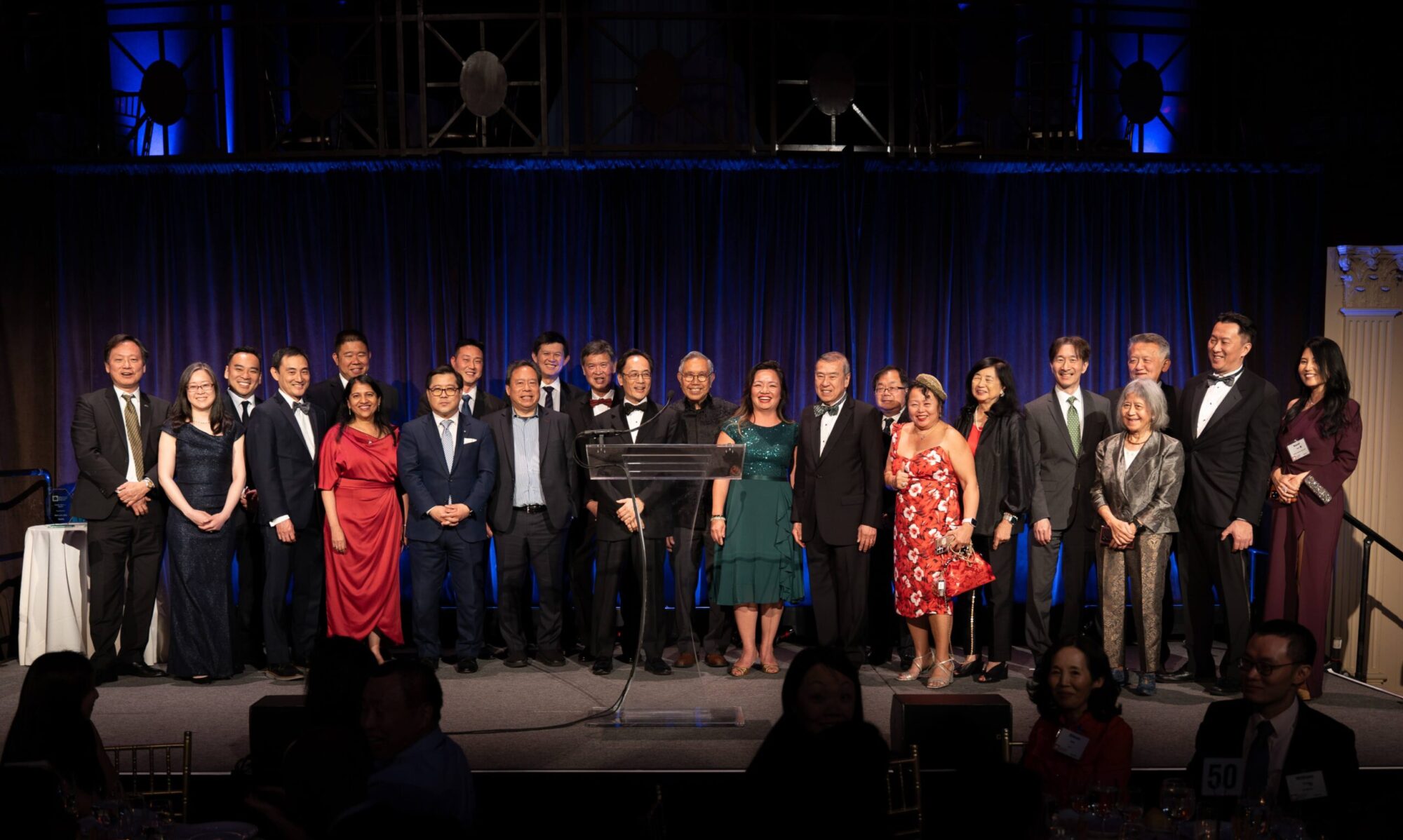
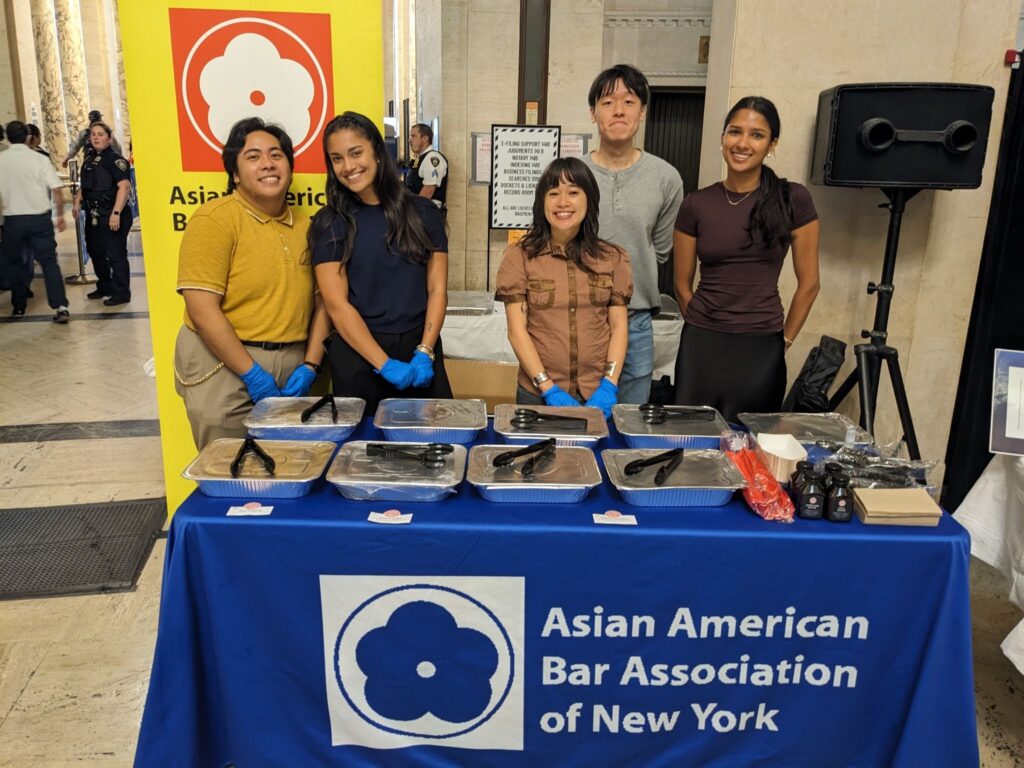
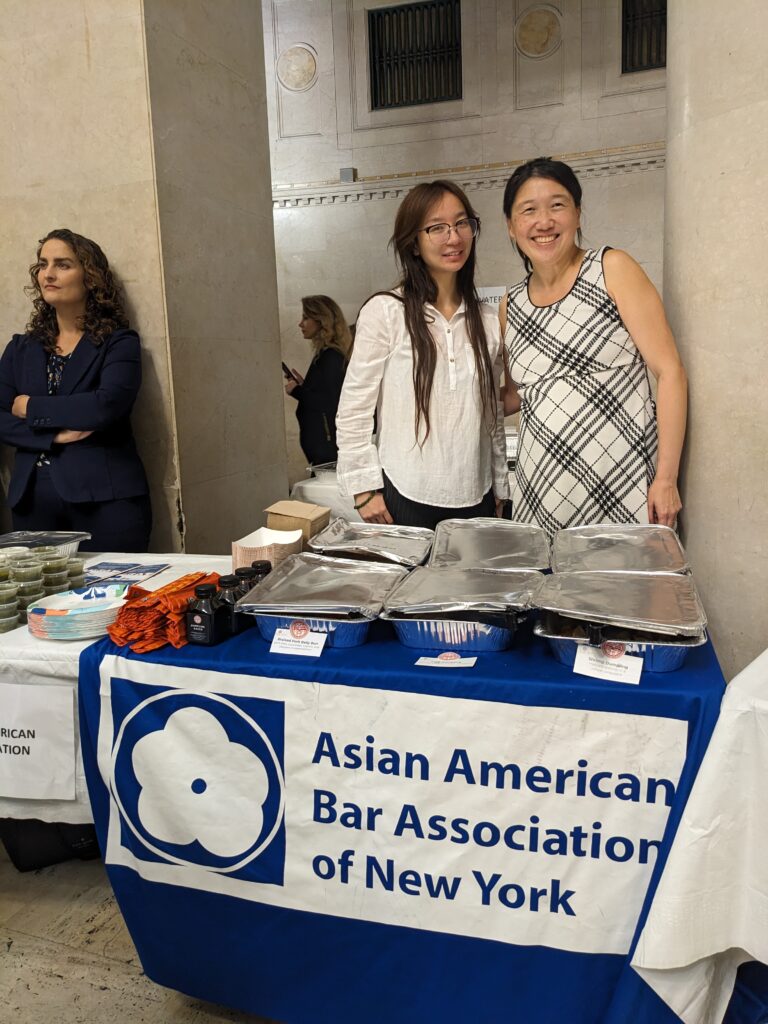
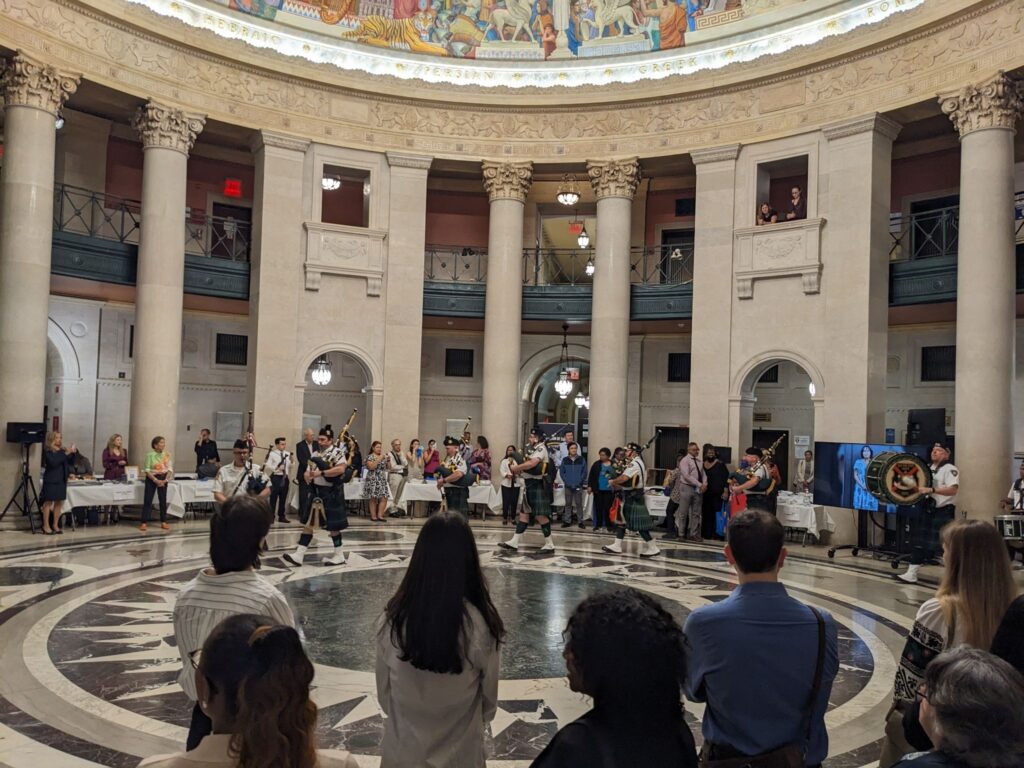
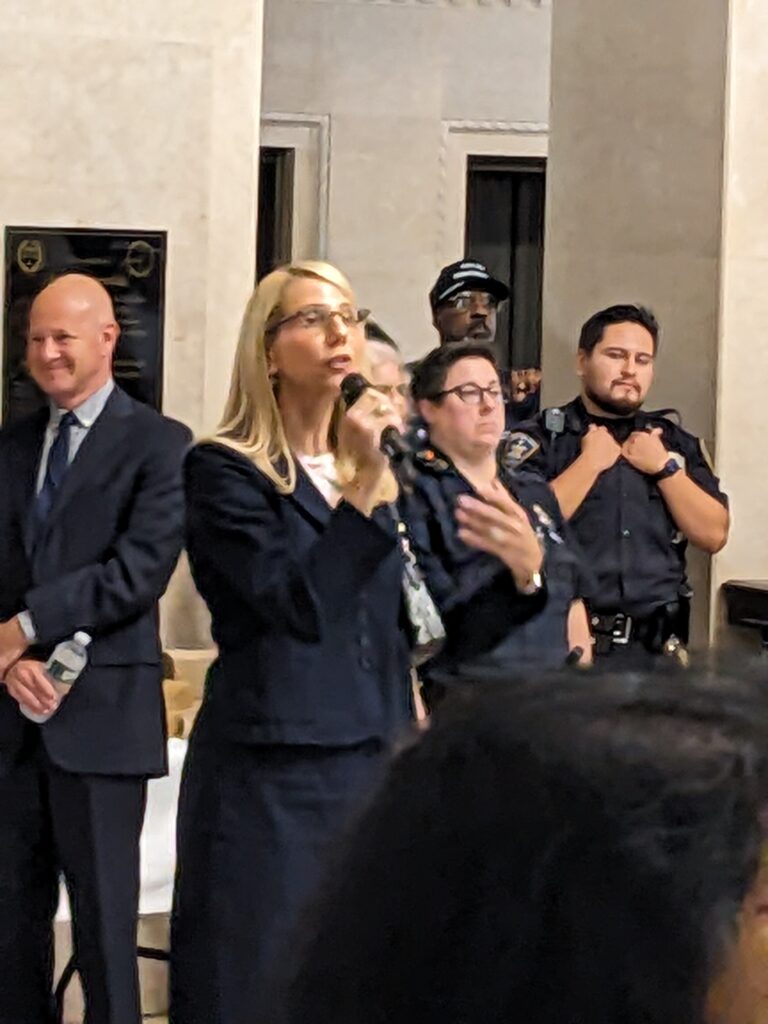
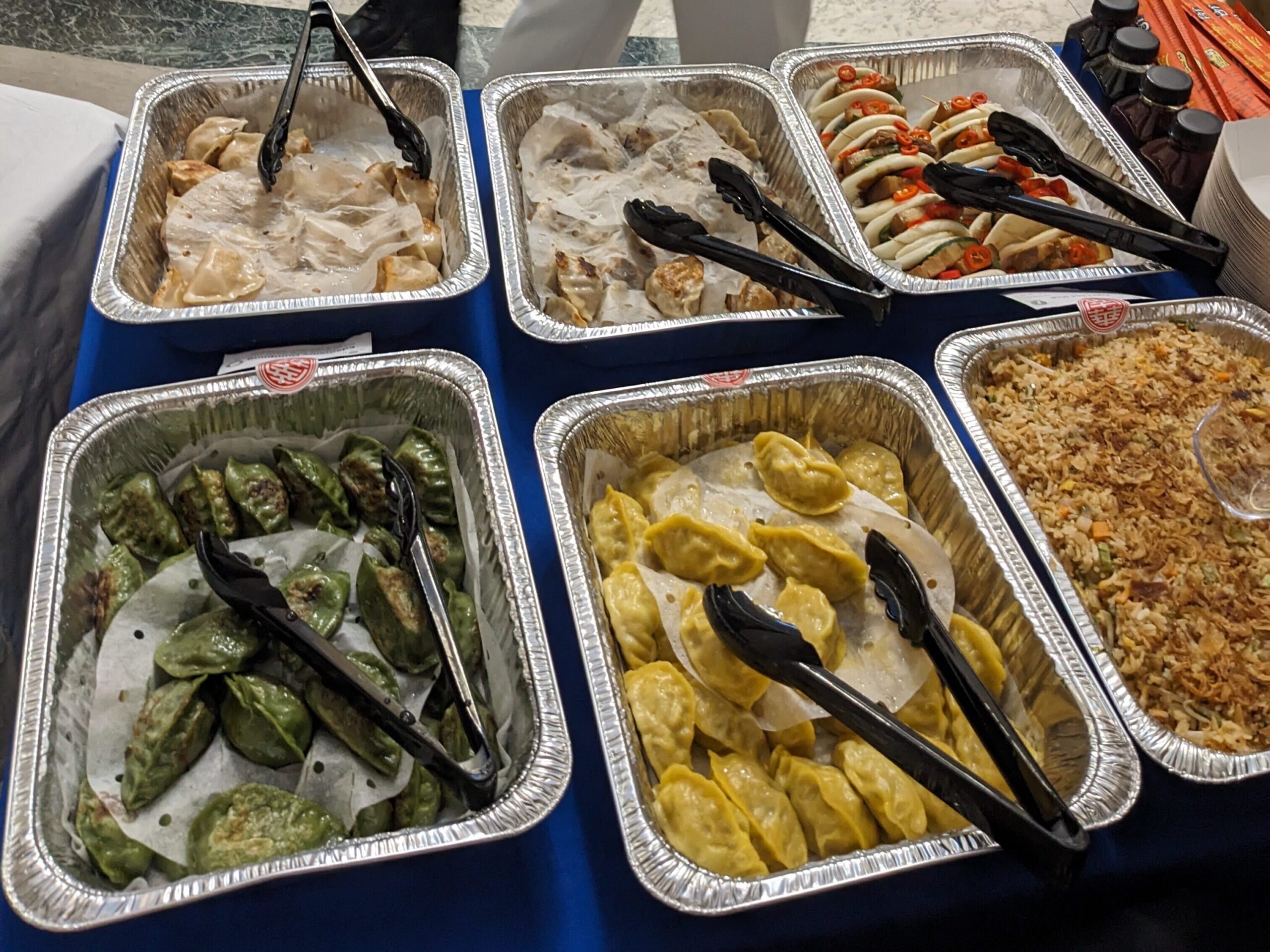
On Friday, September 18, 2026, the New York State Supreme Court welcomed the legal community for the 19th Annual Caren Aronowitz Unity in Diversity event. Bar associations, court committees, and professional organizations from across the city participated in this lovely event. Among the co-sponsors was the Asian American Bar Association of New York, represented by Carrey Wong (Deputy Executive Director), Apollo Baltazar (Administrative Assistant), and legal interns Ria Punukollu, Ellyse Ramos, Divya Mukhara, and Pan Pan.
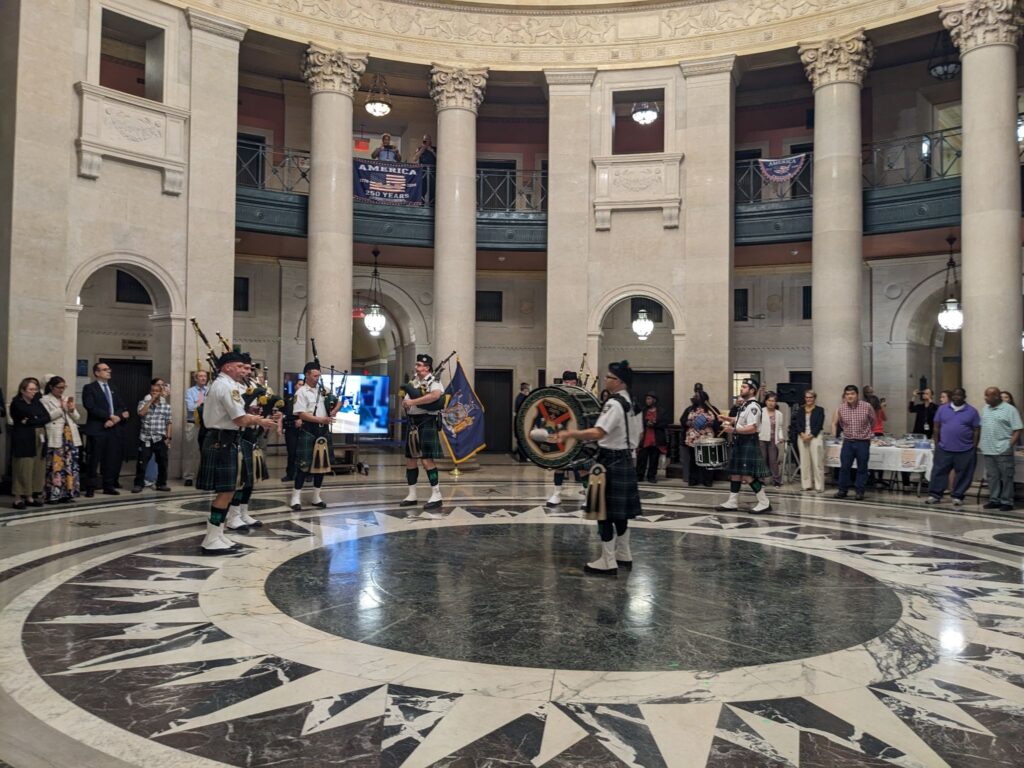
The program began with the New York State Courts Pipes and Drums, in full Scottish attire, as they marched a circle around the inside of the courthouse, around the gathering at the Rotunda. The sound of the bagpipes and drums filled the Rotunda’s high ceilings and drew people out of hallways and toward this gathering. It was an exciting way to begin, ceremonial yet warm, and it made clear that this was a celebration and not just another day at the courthouse.
Following the music, Hon. Deborah A. Kaplan (Justice of the New York County Supreme Court) gave opening remarks, reflecting on and honoring the legacy of the late Caren Aronowitz. Caren Aronowitz was a longtime court employee who dedicated herself to bringing cultural programming and awareness into the courthouse. Almost two decades later, this event is still built around her legacy and lasting impact on the court community. Hon. Adam Silvera (Deputy Chief Administrative Judge of the New York City Courts) spoke next, highlighting the importance of the event and how diversity fosters unity, reminding all of us that the legal community becomes stronger through it.
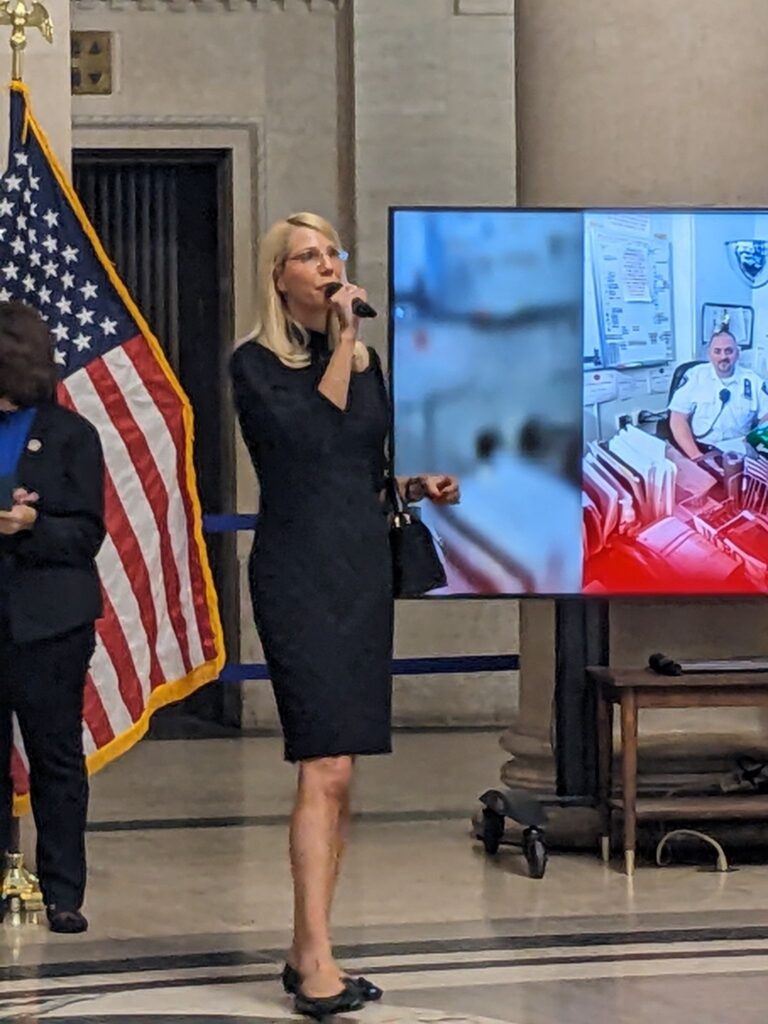
Hon. Suzanne J. Adams (Administrative Judge of the New York County Supreme Court Civil Term) then presented her welcoming remarks. She emphasized the court’s commitment to diversity and inclusion and the role that each attendee plays in making the legal community welcoming to all those they serve.
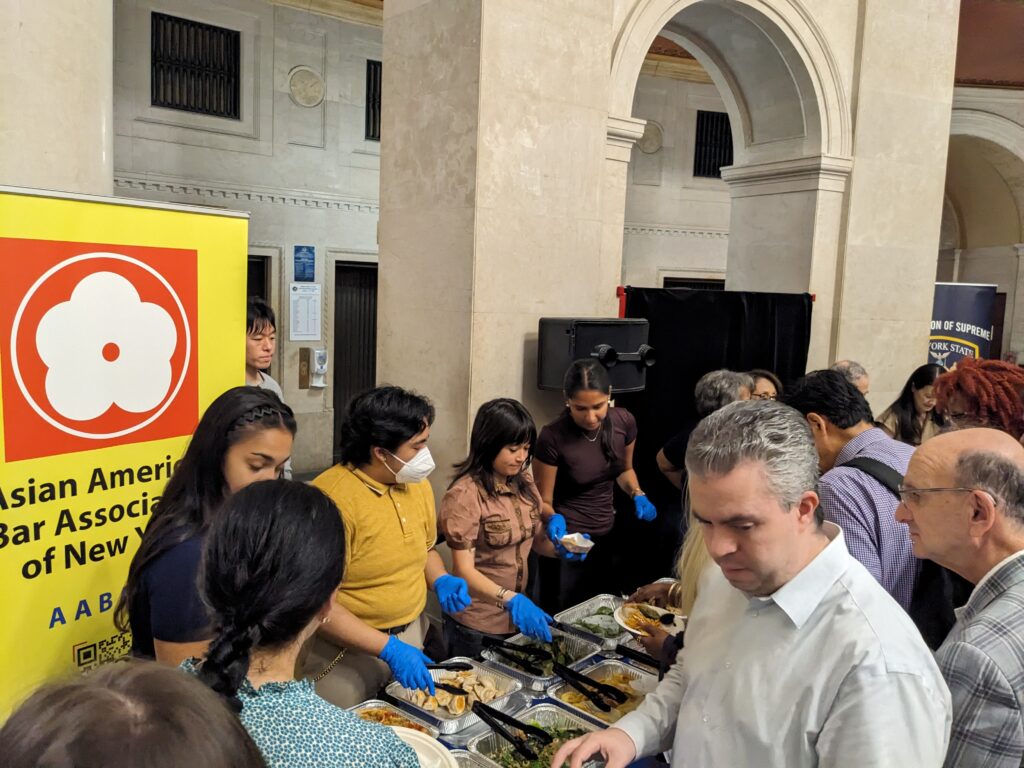
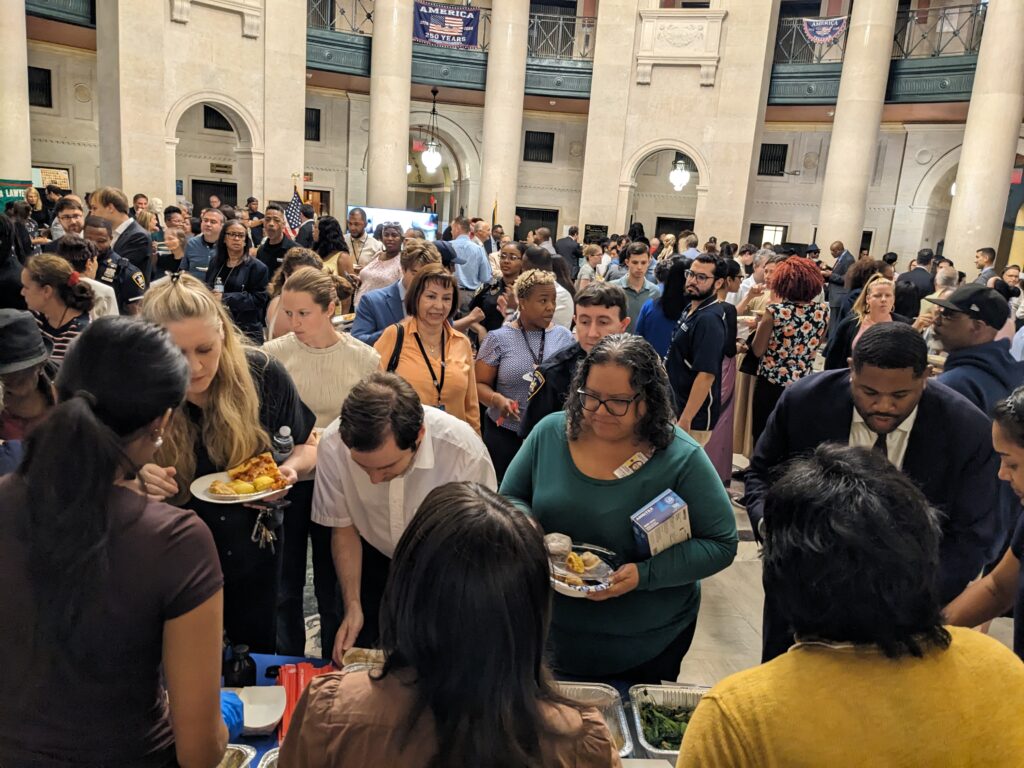
After the speakers, the Rotunda became a shared space for food and conversation. Each co-sponsoring association and committee set up a table, and attendees walked around the Rotunda sampling dishes from different associations and cultures. Food offers a comforting way to start a conversation, and colleagues who might otherwise only cross paths in professional settings were trading recommendations and asking where each dish came from.
AABANY’s table drew the longest line in the room and it stayed that way for the entirety of the event. A whole meal’s worth of food was shared: platters of fried rice enough for lunch, dinner, or both; pork and duck buns, dumplings of every kind, and plenty of noodles to go around. Attendees waited patiently and came back for seconds. For AABANY’s interns and staff, serving that line was a highlight and it was a proud way to share a piece of culture and tradition with the broader community.
We thank the Gender Fairness Committee, Supreme Court, Civil Branch, New York County and their collaboration with the Equal Justice Diversity, Equity, and Inclusion Committee, Cultural Diversity Sub Committee, Board of Justices of the 1st Judicial District, and the New York County Clerk’s Office for presenting and organizing this event, as well as their continued commitment to inclusion. We also thank every co-sponsoring association and committee for their generosity in tabling, and we honor the memory of Caren Aronowitz, whose vision brings the court and the rest of the legal community together.
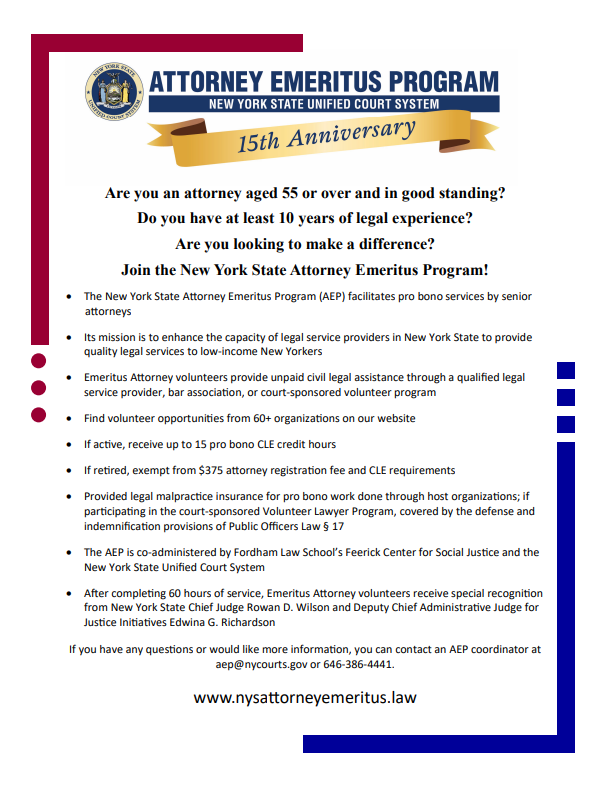
The New York State Attorney Emeritus Program (AEP) is an initiative by the New York State Unified Court System, enthusiastically supported by Chief Judge Rowan D. Wilson, that is aimed at promoting pro bono civil legal service by senior attorneys.
Despite New York’s significant commitment of resources to support civil legal services, a gap persists between the need for and availability of civil legal services across the state. AEP volunteer attorneys play a crucial role in providing access to justice for New Yorkers with low and moderate incomes who cannot afford counsel.
Any attorney aged 55 or older, whether retired or active, with at least 10 years of experience, who is in good standing can make a significant difference by enrolling as an Attorney Emeritus and signing up on the AEP website. Volunteers must commit to 60 hours of pro bono service over two years.
Emeritus volunteers who register as active can earn up to 15 CLE credits and receive special recognition from Chief Judge Wilson and Deputy Chief Administrative Judge for Justice Initiatives Edwina G. Richardson.
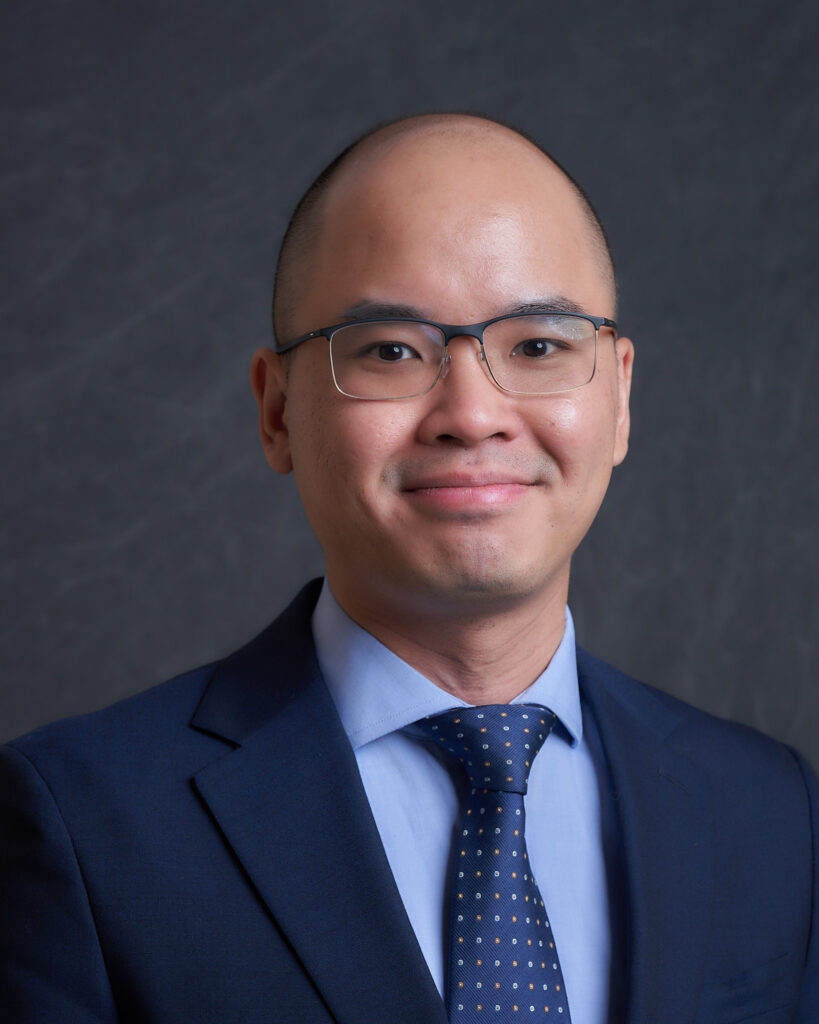
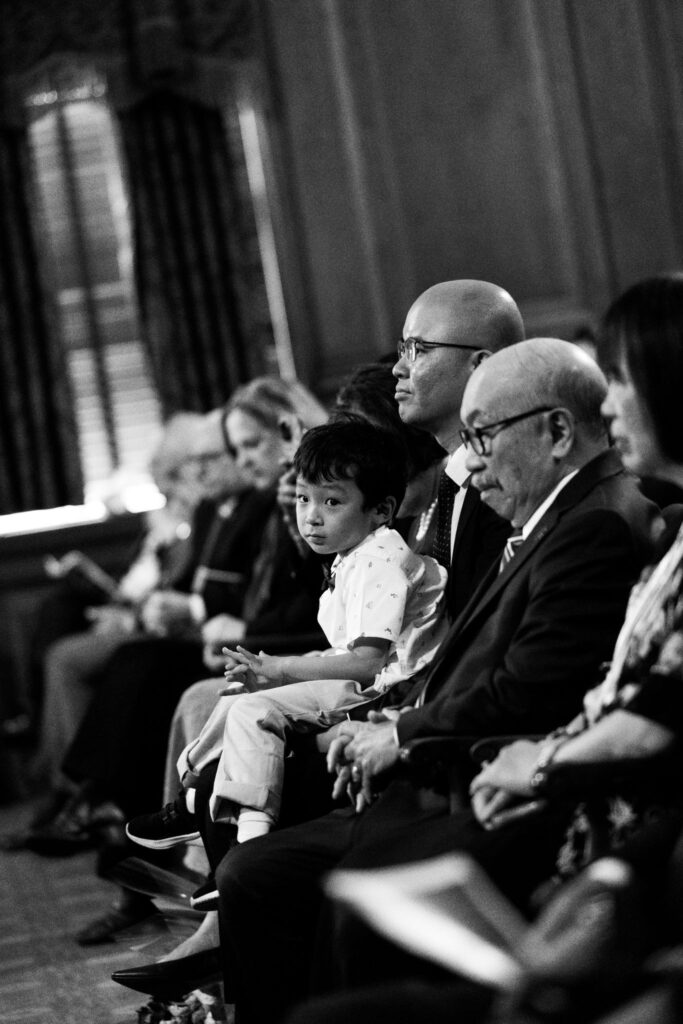
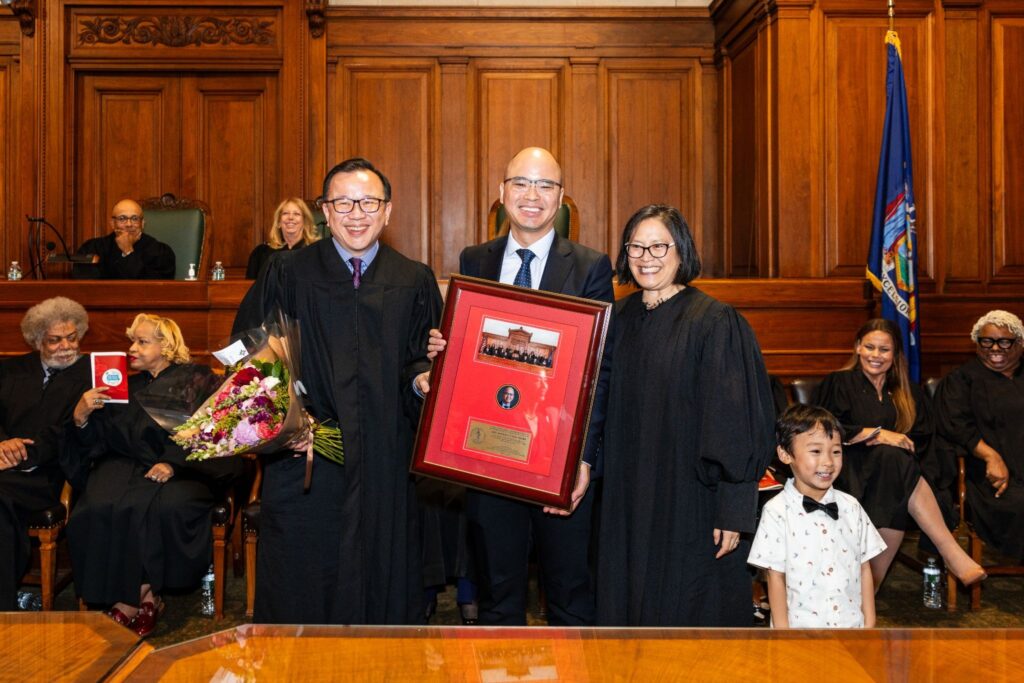
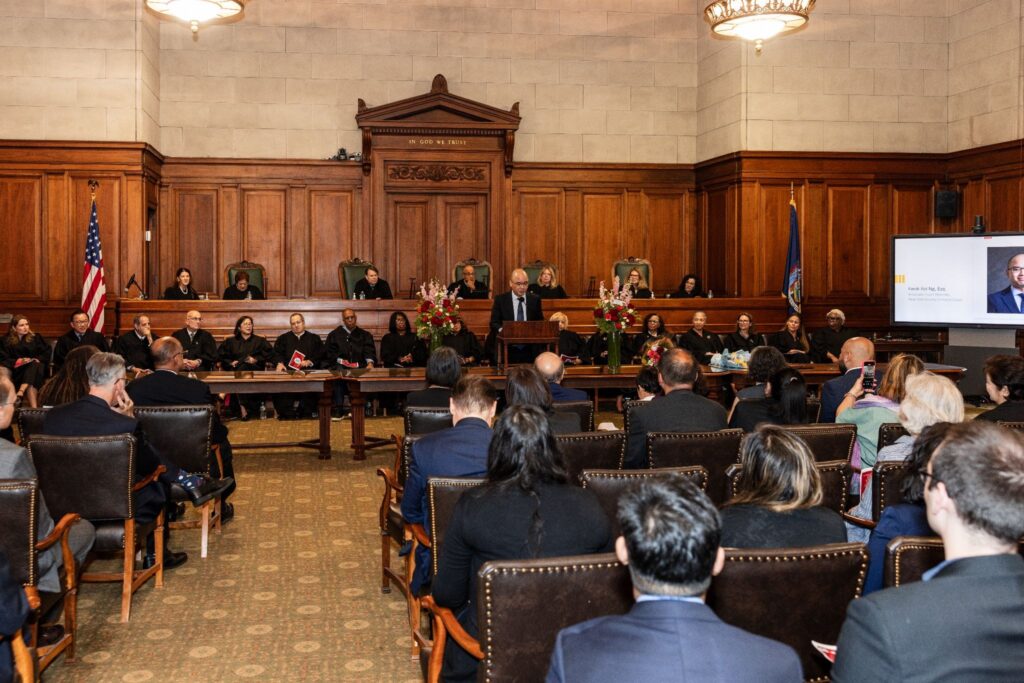
During Asian American, Native Hawaiian, and Pacific Islander (AANHPI) Heritage Month this May, Kwok Kei Ng, Co-Chair of AABANY’s Pro Bono and Community Service Committee, was honored with two awards for his contributions to the AANHPI community. Kwok received the Hon. Randall T. Eng Award at the Fourth Annual Hon. Randall T. Eng Award Program as well as the Power in Unity: Strengthening Communities Together Award at the Second Judicial District Equal Justice Committee’s celebration of AAPI Heritage Month: “Power in Unity: Strengthening Communities Together.”
Emblematic of these two awards, Kwok has built his career and service around strengthening the AANHPI identity and community. After growing up in Hong Kong, Kwok moved to America for schooling. He first joined AABANY almost 10 years ago in 2017 as a law student. Now, Kwok is an accomplished Associate Court Attorney at the New York County Criminal Courts. He continues to be a leader in the AABANY community, overseeing the Brooklyn branch of AABANY’s Pro Bono Clinic, an award-winning legal clinic that has served predominantly monolingual Asian communities in New York for over a decade.
Access to justice, particularly through language, has always been a pressing concern for Kwok. He initially entered the court system as a Brooklyn Family Court Interpreter for Cantonese and Mandarin Chinese speakers, and so his AANHPI identity has long-shaped his career. The experience of interpreting, Kwok says, “is the foundation of everything for me …. Standing in the courtroom, translating for parents who couldn’t understand what was being said about their children, I felt the full weight of what was at stake—especially now that I’m a parent myself.”
Kwok further noted, “My AAPI identity essentially defined my role because I was the one bridging the gap between the court users who had a language barrier and everyone else in the room.”
Meaningful representation has to occur at multiple levels, according to Kwok. “We talk about the underrepresentation of AAPI judges and the idea that the court should reflect the community it serves,” he stated, “but that should extend to court officers, court clerks, and court attorneys too.” Reflecting on his own identity, he added, “For a time, I was the only AAPI court attorney in Brooklyn. I’m glad it’s not the case now.”
Not straying far from these roots, Kwok has sought to expand access to legal services, as well as representation within legal careers, throughout his professional life. His passion for language access in the courts, stemming from his experiences as a court interpreter, led to his appointment to the Advisory Committee on Language Access for the New York State Unified Court System by Chief Administrative Judge Hon. Lawrence Marks.
Kwok considers AABANY his “home bar association,” but he is also a member of the Brooklyn Bar Association, where he serves as the Vice-Chair of the Diversity Committee. He is also a Board Member of the Asian American Law Fund of New York (AALFNY). Additionally, Kwok serves as Deputy Vice President of the High School Division of the Sonia and Celina Sotomayor Judicial Internship Program (SCSJIP). The program, which he himself participated in as a law student, places students in judicial internships. Kwok found SCSJIP through his involvement in AABANY, while still in law school. At a time when the legal field “felt especially opaque” and a path felt difficult to find “for someone like me,” it’s another experience that has shaped him: “That internship set the path and defined my career.”
My work with the Sotomayor program is simply my way of giving back,” Kwok declared. “When I help place a high school student in a judicial internship, I know it can genuinely change a trajectory, because it changed mine.”
Through AABANY’s Pro Bono Clinics, Kwok has helped strengthen New York City’s communities, making sure that people with limited English proficiency and without financial access to a lawyer can meet with a volunteer attorney or law student. He reminisces on how AABANY—and his involvement with AABANY—has grown over the past decade: “From the beginning, I was most active with the Pro Bono and Community Service Committee, volunteering at the clinic to help with interpretation. At the time [almost 10 years ago], there was only one clinic, at AAFE on 111 Division Street,” Kwok recalled. “Over the years, we’ve moved, grown, and expanded to locations in Manhattan, Brooklyn, and Queens—Confucius Plaza, CCBA, CCCNY, Homecrest, CPC, UCA Brooklyn, and AAFE Queens—collaborating with community-based organizations, hosting know-your-rights workshops, and serving thousands of New Yorkers.”
His work is never done, however: “Looking ahead, I hope we keep serving AAPI community members who face language barriers and can’t afford legal help—and that we also expand to other communities facing the same challenges.” Kwok added that he’s currently working on expanding outreach in Brooklyn to other groups, such as Latino communities.
Summing up his many contributions to the legal community and AANHPI community, Kwok offered a guiding principle he follows: “I genuinely believe that the most meaningful change happens when people get to know each other, learn from each other, and work together across cultural boundaries. We need to know each other better, but it’s just as important to make ourselves known to each other.”
As parting words, Kwok also offered some advice to law students or young lawyers: “Go out and meet people – but don’t do it just to network. Find the space where people are doing the work, and then stay in it. Don’t just try to be seen, try to be useful.”
Kwok drew from his own experience, where his primary goal was not to build up the connections themselves, but rather improve the community as a whole through working together. “The relationships that have meant the most to me didn’t come from working a room at a cocktail reception,” Kwok recalled. “They came from working alongside people on something that mattered. When you show up consistently, carry your share, and are genuinely trying to serve, people notice. More importantly, you become someone who is actually useful to your community.”
“Don’t let the parts of your identity that feel complicated become things you hide,” Kwok added. “For example, the fact that I came here as an immigrant with no roadmap, or that I started out as a court interpreter—that didn’t make me less qualified than anyone else in the room. In my case, it made me more capable of understanding the people who walk into the courtrooms every day.”
AABANY congratulates Kwok and is privileged to have a compassionate and driven community-builder like him in the AABANY community. For more information on AABANY’s Pro Bono Clinics and how to get involved, click here. The next few upcoming clinics are:
August 5th [Queens link here], from 6:30 – 8:30pm, AAFE One Flushing Community Center, 133-29 41st Ave, 2nd Floor, Flushing, NY 11355
August 19th [Manhattan link here] from 6:30-8:30pm, AAFE Community Center, 111 Norfolk Street, NY, NY 10002
September 12th [Brooklyn link here– from 12:30 – 2:30pm, CPC Brooklyn Community Services, 4101 8th Avenue, Brooklyn, NY 11232
Thank you to Vincent Carvalho for the above photos from the Fourth Annual Hon. Randall T. Eng Award Program.
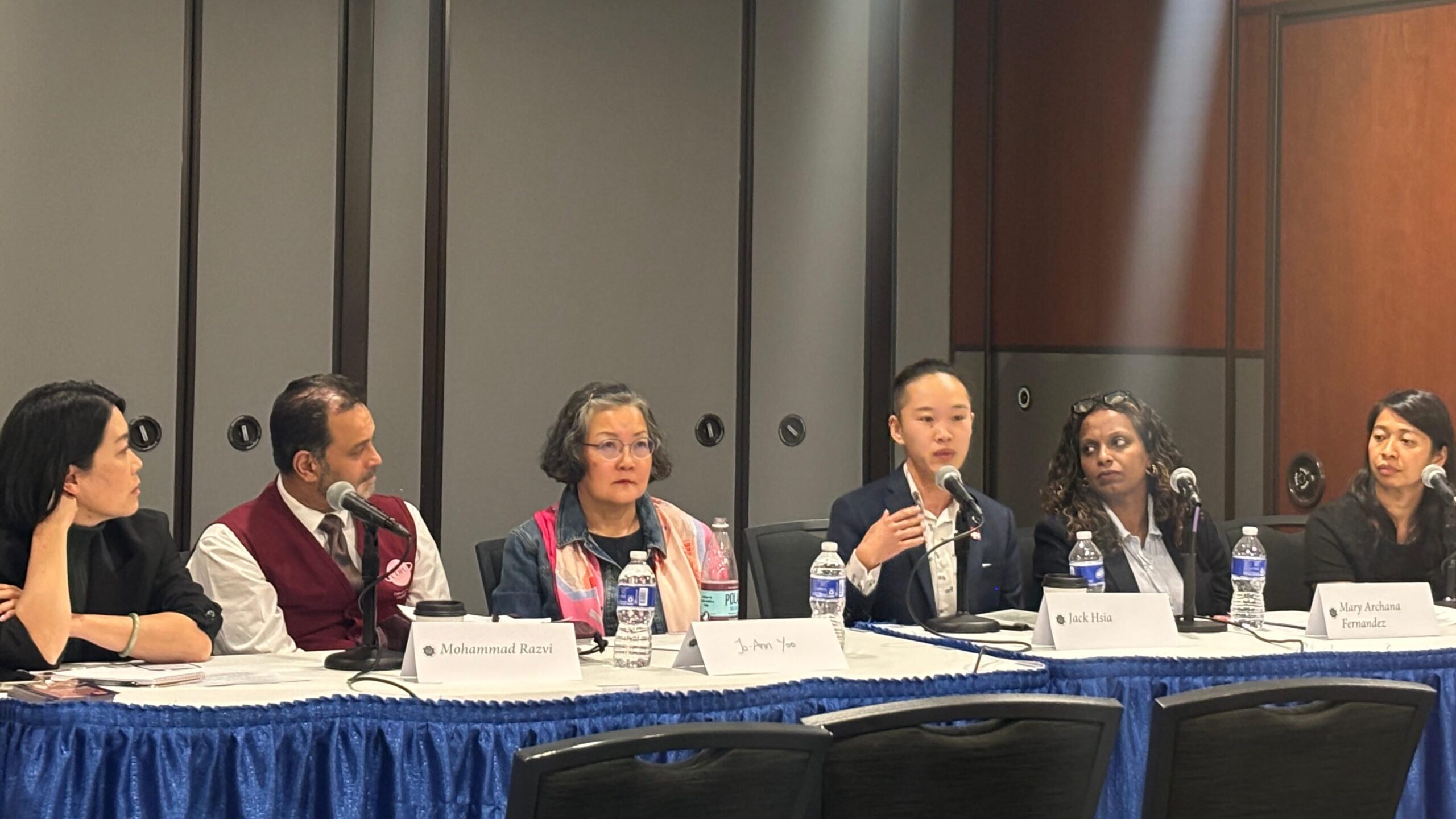
On May 7-8, Jack Hsia, Vice Chair of AABANY’s Issues Committee, attended the New York State Asian American Pacific Islander (AAPI) Conference, including the New York State AAPI Commission’s Community Dialogue and the NYS Legislature’s AAPI Summit in Albany. Over two days, the two events brought together advocates, community leaders, policymakers, and nonprofit organizations to discuss issues impacting New York’s AAPI communities.
On the afternoon of May 7, at the New York State AAPI Commission’s Community Dialogue, speakers and attendees explored challenges and opportunities facing AAPI communities across the state. The discussions emphasized the importance of language access, sustained investment in community organizations, youth engagement, and coalition building. These panels underscored the importance of ensuring that diverse AAPI voices are represented in policymaking and community leadership.
Drawing from their work at CPC, Jack discussed the increasing number of community members relying on AI for immigration information and document translation. While AI can improve access to information, they emphasized that inaccurate legal guidance and unreliable translations can have serious consequences. Jack highlighted the continued need for trusted legal professionals, culturally competent services, and community-based organizations to provide accurate guidance. The discussion also addressed digital privacy, language access, and practical strategies for protecting sensitive information in an increasingly data-driven environment, and how the immigration landscape has rapidly changed over the past few years.
The conference reinforced the importance of collaboration among legal advocates, community organizations, and government partners to address the evolving challenges facing AAPI communities. Jack was honored to represent both AABANY and CPC and appreciated the opportunity to contribute to these important conversations while learning from likeminded advocates committed to advancing equity, inclusion, and justice across New York.
To learn more about AABANY’s Issues Committee, click here.
Written by Jack Hsia, Vice Chair of AABANY’s Issues Committee, Senior Attorney for Community Legal Services at the Chinese-American Planning Council (CPC).
The Administrative Board of the Courts of the New York State Unified Court System seeks comment from persons who are able to evaluate the performance of the following Justices of the Supreme Court who are seeking certification to continue judicial service pursuant to N.Y. Const. Art. VI, §25(b) and Judiciary Law §115:
FIRST JUDICIAL DEPARTMENT Hon. Tandra Dawson SECOND JUDICIAL DEPARTMENT Hon. Joseph Risi FOURTH JUDICIAL DEPARTMENT Hon. Louis Gigliotti Hon. Debra Givens
In order to assist in its evaluation, the Board seeks comment on the following qualities and abilities of these judges:
Legal ability, including knowledge of the law, legal experience, legal scholarship, and writing.
Competence to perform the duties of the office, including organizational, management, and human relations skills; physical and mental health; and work ethic.
Judicial demeanor, integrity and character, and commitment to equal justice under law.
How to Comment: Any person wishing to offer comments relating to the performance of any of these candidates for certification or recertification may address written comments to David Nocenti, Counsel, by email to [email protected], with “2027 Certification – Public Comment” in the subject line. Comments may also be sent by postal mail to Counsel’s Office, 25 Beaver St., 10th Fl., New York, N.Y. 10004.
ALL COMMENTS RECEIVED WILL BE PROVIDED TO THE ADMINISTRATIVE BOARD AND OTHERWISE HELD IN STRICT CONFIDENCE. IN ORDER TO BE CONSIDERED, COMMENTS MUST BE RECEIVED NO LATER THAN JULY 17, 2026.
The New York State Council on Divorce Mediation (NYSCDM) is offering a sale with a $150 discount through June 21, 2026 on their NYSCDM 60-Hour Divorce Mediation Training.
The training program includes the following:
Live Classes for the Summer Cohort Starting on July 13, 2026
Part-146 Approved for 40 Hours
40 CLEs Provided to Attorneys
Free One-Year Membership in NYSCDM
Free One-Year Participation in a Special Peer Group for NYSCDM Program Graduates
Free Participation in the Pathway Partners Program
To learn more, click this link. The program consists of:
Part 1 (20+ hours) go-at-your-own-pace, online training on essential legal, mental health, and financial subjects featuring various experts.
Part 2 (40 Hours) Live Divorce Mediation Skills Training online with Expert Trainer and Experienced Coaches.
The trainer for the Summer Cohort is Lara Traum, Esq.:
An experienced family and divorce mediator, author, trainer and Past President of NYSCDM.
A partner at Roytberg Traum Law and Mediation, P.C. and works with NY, interstate, and international families.
Frequent mediation and ADR trainer mediation for professional organizations, bar associations, and educational institutions.
Co-author of the ABA book: Effectively Representing Clients in Family Mediation (coauthored with Forrest S. Mosten and Hon. Elizabeth Potter Scully) and her second book, coauthored with Forrest S. Mosten, is Family Lawyer as Peacemaker.
NYSCDM’s Summer 2026 Live Mediation Skills Training (Part 2), via Zoom, will be:
After completion of the program, you will receive:
Free One-Year Membership in NYSCDM — You will have full access to numerous member-only benefits including: a 24/7 online directory promoting your services, repository of templates, agreements and forms, a members-only Google Group, educational peer groups throughout New York, free and low-cost educational trainings, and more!
Free participation in a Special Peer Group for program graduates, led by expert mediators.
Free participation in the Pathway Partners Program, which connects trainees with experienced mediators/guides.
Support from the NYSCDM Mediation Family, via other peer groups, educational programming, networking and more!
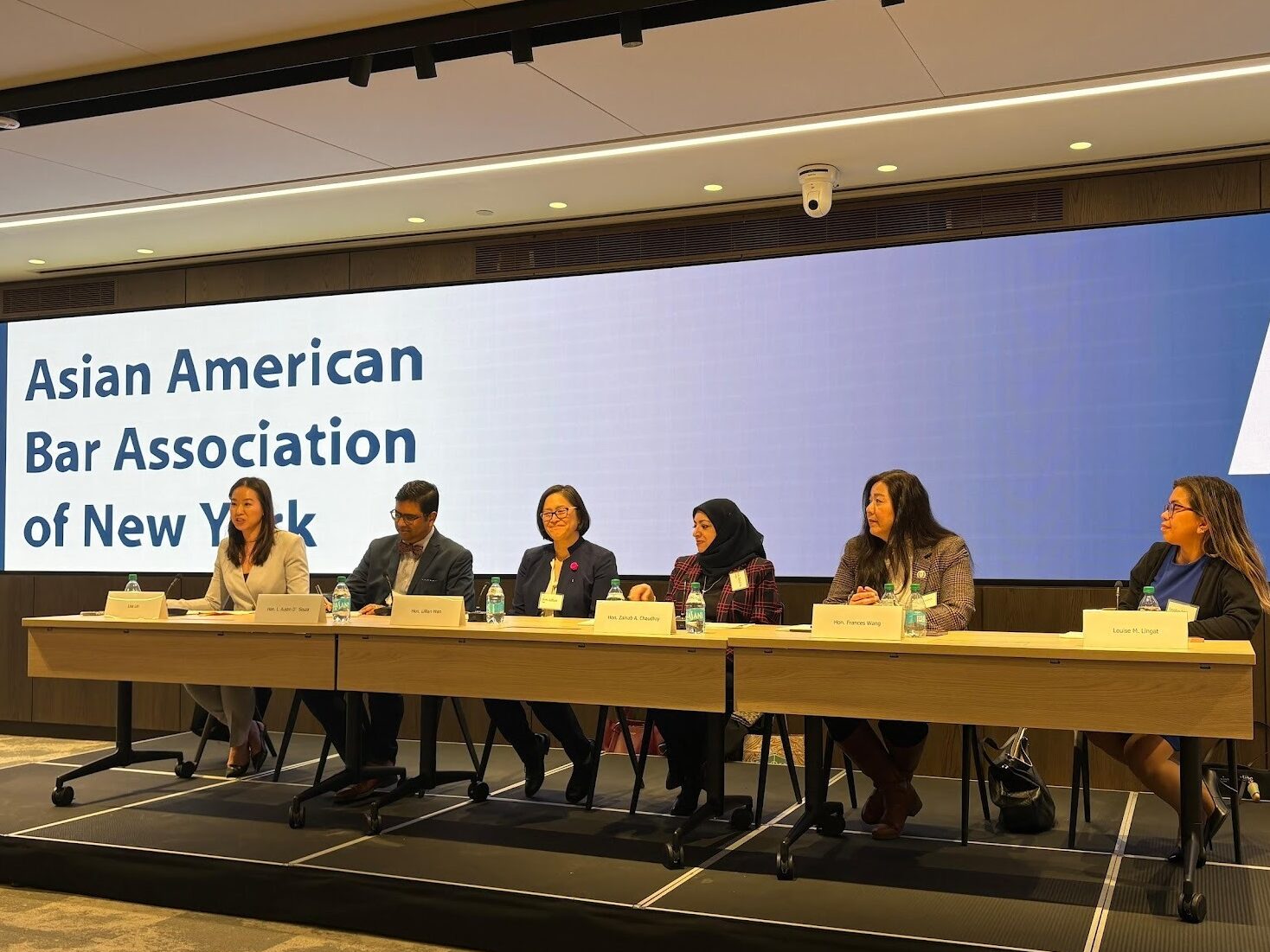
On Thursday, April 2, 2026, AABANY’s Student Outreach Committee and Judiciary Committee co-hosted a panel titled: Careers in the State Judiciary at King & Spalding. At the panel discussion, attendees heard from the following experienced and accomplished panelists within the state judiciary:
● Honorable Lillian Wan – Associate Justice, New York State Appellate Division, Second Department ● Honorable Frances Wang – Justice, New York State Supreme Court, Queens County, Criminal Term ● Honorable Zainab A. Chaudhry – Judge, New York State Court of Claims ● Honorable L. Austin D’Souza – Supervising Judge, New York City Civil Court, New York County ● Louise M. Lingat – Court Attorney to the Hon. Adetokunbo O. Fasanya, Judge of the Family Court, Queens County
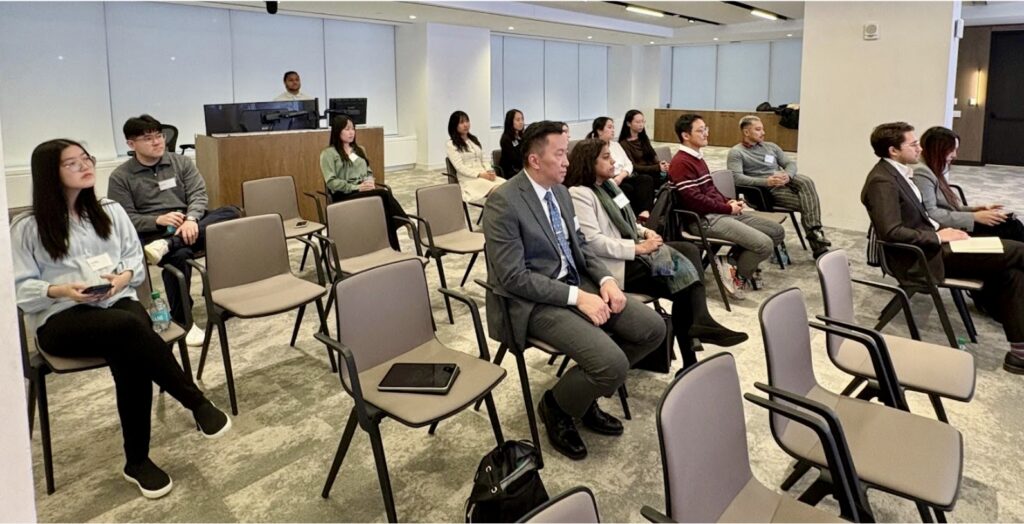
The discussion was moderated by Lisa Lin, Principal Law Clerk to Acting Justice Joanne Watters (Queens Supreme Court, Civil Term). Approximately 20 attendees gathered in King & Spalding’s conference space to engage with the panel.
The discussion opened with each panelist sharing their journey to the judiciary. Several panelists reflected on how the mentorship of judges they once served under as law clerks helped guide them toward this path. Panelists also spoke candidly about the limited Asian American representation in the judiciary earlier in their careers, noting that becoming a judge had not initially felt attainable without the support and encouragement of their mentors.
As trailblazers, these panelists help pave the way for future Asian Americans to pursue careers in the state judiciary. Their presence in the judiciary reflects the diversity of the communities they serve and helps expand what future generations of Asian American attorneys see as possible. Panelists shared that even the simple act of appearing before a judge who shares one’s background can be meaningful for community members.
The discussion also included practical guidance for aspiring attorneys. Panelists stressed to the audience the importance of building strong professional relationships, maintaining a solid reputation, and mastering court rules and procedures. They also emphasized attention to detail, particularly careful proofreading, and cautioned against taking shortcuts in legal practice.
The program concluded with an engaging Q&A session, during which attendees asked thoughtful questions about pathways into the judiciary and opportunities for involvement in the legal community. Following the panel, attendees and speakers continued conversations over refreshments.
Legal internships in the New York State Courts are programs for law students to gain experience in public service. Interns research and analyze legal issues and are responsible for drafting orders, proofreading opinions, verifying citations, preparing jury charges, and verdict forms. The internship program provides hands-on experience, professional development, and opportunities to work on projects that promote access to justice. Legal Interns, appointed in the Civil Term by Justices of the Supreme Court, are assigned to Judges designated as Acting Supreme Court Justices. This internship position is assigned to Hon. Mary Lynn Nicolas-Brewster, Supreme Court Justice in Bronx County Supreme Court – Civil Term.
This is an unpaid, in-person, eight-week legal internship program for law students interested in becoming a judge or public interest attorney. Interns are expected to participate for 12 hours weekly. Legal interns will receive rare opportunities to develop legal research, oral advocacy, and writing skills. Additional features of the program include weekly lunch-and-learn sessions with attorneys and judges across practice areas, individualized mentorship, and practical advice for law school success. The Internship program is designed to be a pipeline program for law students interested in careers in the courts and public service.
The in-person legal internship will be hosted from February 16, 2026, through April 10, 2026 (internship location – Bronx Supreme Court – Civil Term, 851 Grand Concourse, Bronx, New York). The application deadline is January 9, 2026.
The subject line should be “Legal Internship – Spring 2026″
You must include the following documents as one attachment:
A cover letter addressed to Hon. Mary Lynn Nicolas-Brewster, Acting Supreme Court Justice, Bronx Supreme Court, Civil Term.
Please highlight previous public service work or work involving equal justice issues.
Your resume.
A writing sample – please respond to the essay prompt below:
ESSAY PROMPT: In this personal injury action involving a motor vehicle accident, Plaintiff has failed to provide responses to discovery demands and Defendant ABC Holding has moved for an order dismissing the action in accordance with the Court’s prior April 10, 2025 order. That self-executing order granted dismissal of Plaintiff’s complaint unless within sixty (60) days of the order, Plaintiff provided responses to Defendant ABC Holding’s discovery demands. The Court directed dismissal of Plaintiff’s complaint, pursuant to CPLR 3126, if there was a failure to comply with its Order. Plaintiff failed to provide the discovery contemplated by the April 10, 2025 order and Defendant ABC Holding has now moved to dismiss the complaint based on Plaintiff’s failure to comply with this Court’s self executing order of dismissal issued on April 10, 2025. Please draft the analysis and conclusion/determination section of the proposed decision and order (please limit to 500 words or less). Please limit your research to First Department case law.
On Friday, September 19th, 2025, the New York State Supreme Court hosted the 18th Annual Caren Aronowitz Unity in Diversity Event, co-sponsored by more than 25 bar associations, court committees, and professional organizations. Among the co-sponsors was the Asian American Bar Association of New York, represented by Yang Chen (Executive Director), Carrey Wong (Deputy Executive Director), and Jessie Zhou (Legal Intern).
The event opened with a majestic performance by the New York State Courts Pipes and Drums, dressed in full Scottish attire. Their music, solemn yet celebratory, created an atmosphere of reverence and set the stage for a program honoring both tradition and community.
Hon. Suzanne J. Adams (Administrative Judge of the New York County Supreme Court Civil Term) offered welcome remarks, affirming the court’s commitment to diversity and inclusion. Then, she introduced Ukrainian singer Valeriia Kuzmuk, who moved the audience with her renditions of traditional and contemporary Ukrainian songs.
The program then continued with a dedication by Hon. Deborah A. Kaplan (Justice of the New York County Supreme Court), who reflected on the legacy of the late Caren Aronowitz. Known for her tireless dedication to cultural programming at the courthouse, Aronowitz was remembered as a beloved colleague whose vision continues to inspire annual celebrations of unity. Special recognition was given to Simone Abrams and Yesenia Herrera (members of the New York County Clerk’s Office) for their efforts in planning the program.
The event concluded with closing remarks by Hon. Adam Silvera (Deputy Chief Administrative Judge of the New York City Courts). Justice Silvera highlighted the importance of building unity through diversity, reminding all attendees that the legal profession is strengthened when it embraces every community it serves.
Following the program, attendees were invited to enjoy a reception featuring a wide variety of dishes contributed by all co-sponsoring associations and committees. From savory entreés to sweet desserts, the tables offered a vibrant display of cuisines that showcased the rich cultural traditions across many diverse communities. AABANY’s spread was a true highlight—an array of of pork, shrimp, chicken, and edamame dumplings; pillowy pork and duck buns; egg fried rice; savory noodles; and Chinese greens. The aromas filled the room, drawing attendees to the tables again and again.
As the event drew to a close, the Unity in Diversity program once again achieved its purpose — to celebrate the richness of difference, to honor those who paved the way, and to strengthen the bonds of communities.
We thank the Gender Fairness Committee, Supreme Court, Civil Term, New York County, the New York County Supreme Court, Civil Term Equal Justice in the Courts Committee and the Cultural Diversity Sub Committee, and the New York County Clerk’s Office for their organization and continued commitment to inclusion and diversity. We thank all co-sponsoring associations, committees, and societies for their dedication and generosity in tabling, and we honor the memory of Caren Aronowitz, whose vision continues to unite the court and community year after year.
Each year on May 1st, the United States observes Law Day in celebration of our legal system and the freedoms we enjoy. This year, the Office for Justice Initiatives and the Historical Society of New York Courts invite high school students in New York State to participate in an art contest inspired by this year’s American Bar Association’s Law Day theme The Constitution’s Promise: Out of Many, One.
All submissions must be received by February 25, 2025. The winner will be announced on May 1, 2025. For more information, including rules and how to enter, please click here.