
AABANY’s Anti-Asian Violence Task Force Leads Fourth Anniversary Prayer Walk for Michelle Go

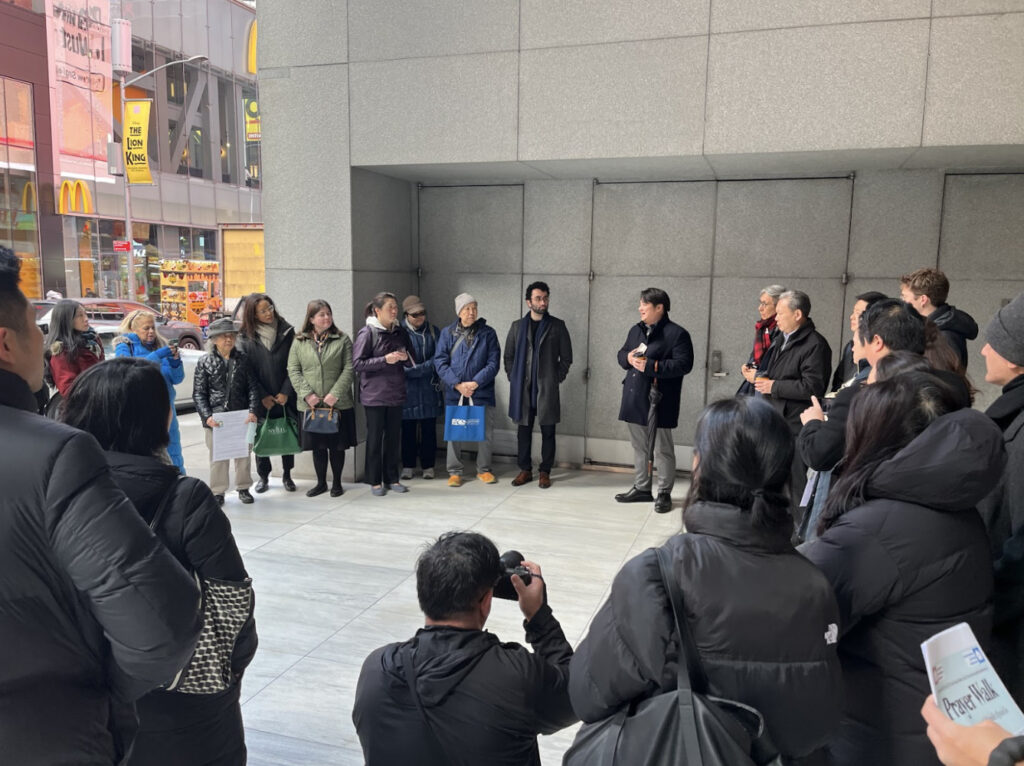
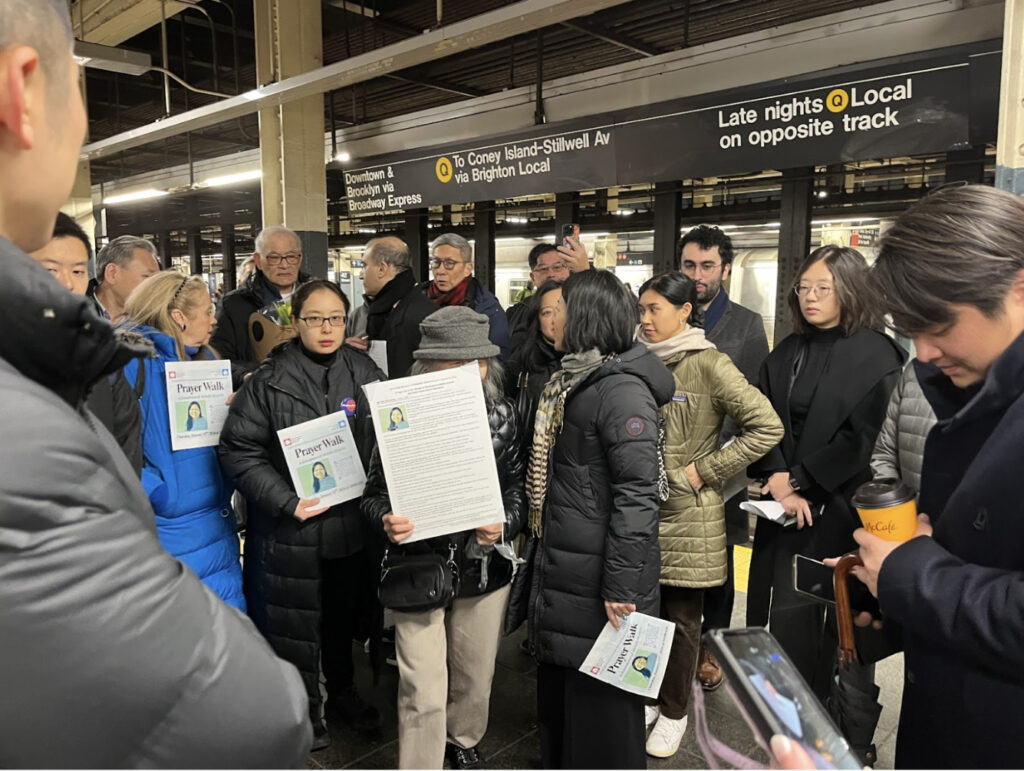
On the morning of Thursday, January 15, 2026, nearly 50 people braved the bone-chilling winds in Times Square to participate in a Prayer Walk commemorating the anniversary of Michelle Alyssa Go’s passing.

Four years ago, on an early Saturday morning, Michelle was standing near the edge of the downtown R subway platform at Times Square when Martial Simon charged at her and pushed her in front of an oncoming train, leading to her death.
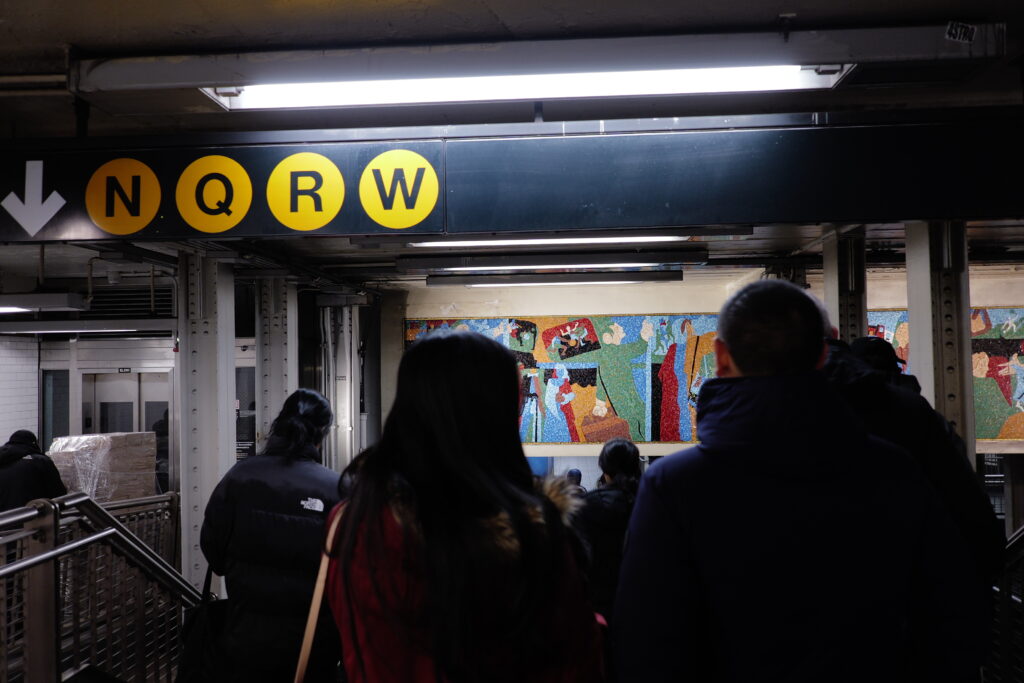
Photo by Wellington Chen

Simon, then a 61-year-old homeless man with a history of schizophrenia and prior arrests, was later charged with second-degree murder in connection with Michelle’s death. This act of violence is a tragic example of the surge in anti-Asian hate incidents occurring in America during the COVID-19 pandemic. As noted by the Pew Research Center in 2023, anti-Asian sentiment rose following inflammatory political rhetoric, disinformation, and online extremism, specifically public officials’ use of terms like “Chinese Virus.” Though Asian Americans Advancing Justice (AAAJ) reported a slight decline in 2025 from 2023, anti-Asian hate crimes were still nearly triple pre-pandemic levels. California, New Jersey, New York, Washington, and Massachusetts reported the highest frequency.
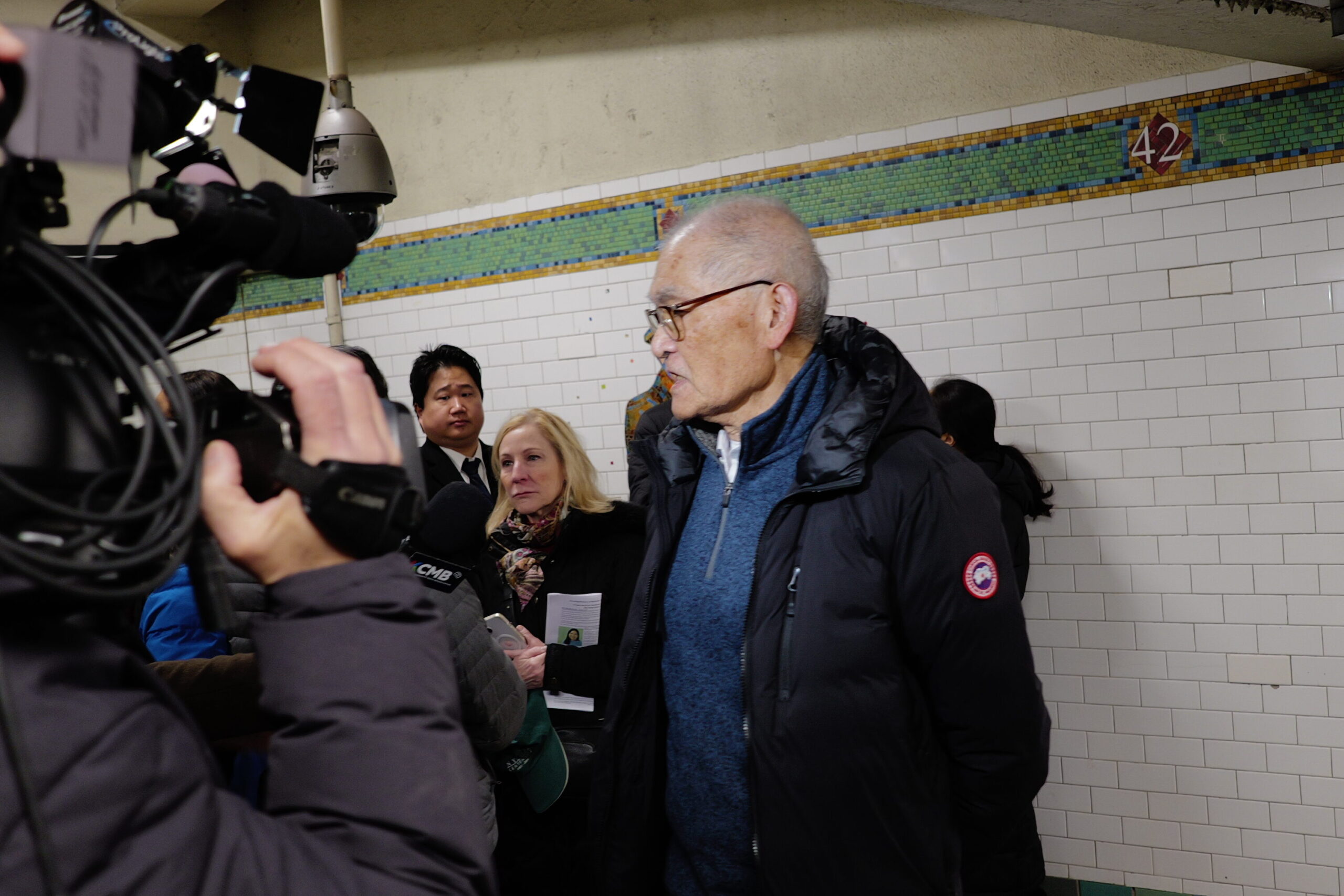
Photo by Wellington Chen

During the Prayer Walk, Reverend Cristobal Tong led the group to four specific stops, following the routine route Michelle took that day. Justin Go, Michelle’s father, shared highlights of her tragically short life with the mourners. Born in Berkeley and raised in Fremont, California, Michelle earned a degree in economics from UCLA in 2002, an MBA from NYU in 2010, and later worked at Deloitte in mergers and acquisitions. Michelle was an avid traveler who had explored the Caribbean as a child and frequently traveled to visit friends. Justin highlighted Michelle’s selfless nature, noting that she spent her free time volunteering to help homeless people and assist low-income New Yorkers through the New York Junior League. Despite his grief, Justin emphasized the importance of celebrating Michelle’s life and encouraged loved ones to let their suffering be temporary, as Michelle would have wanted them to continue finding joy in life.
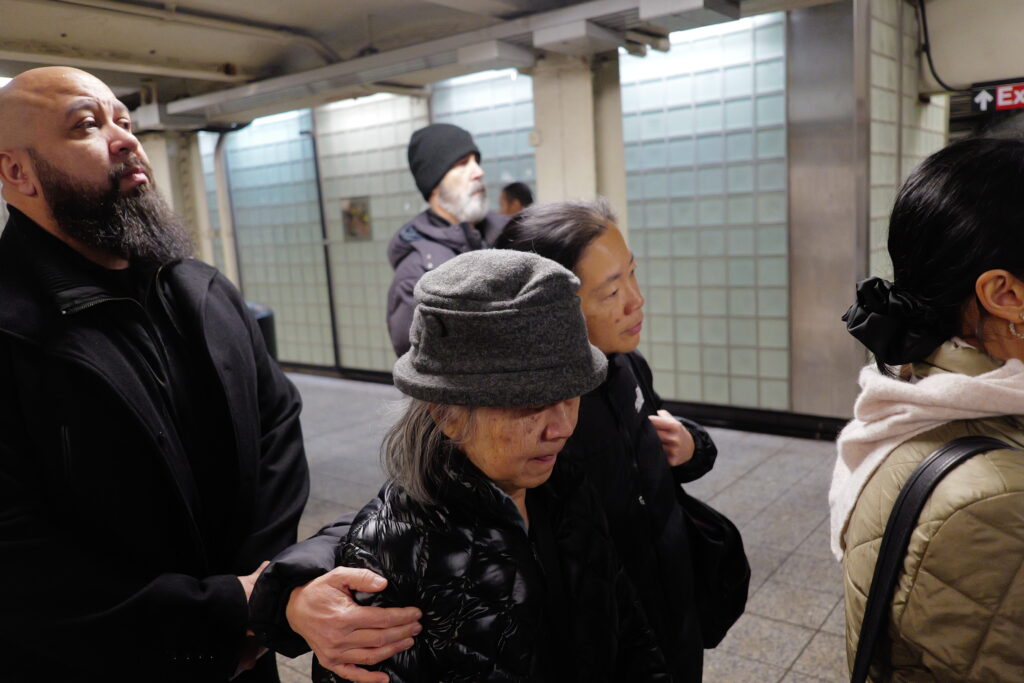
Photo by Wellington Chen

The Prayer Walk drew participation from a broad range of community figures and prominent Asian American New Yorkers. Notable attendees included attorney and activist Rockwell ‘Rocky’ Chin and retired U.S. Magistrate Judge Marilyn Go, both of whom are Co-Founders of AABANY. Additionally, Rachel Lee, President of Stand with Asian Americans and Co-Chair of AABANY’s Issues Committee, played a key role in organizing the walk.
I asked Elaine Chiu, a professor at St. John’s University School of Law, who attended the Prayer Walk, about the justice that may or may not be served for the Go family. Professor Chiu, who had previously chaired the Anti-Asian Violence Task Force, discussed the systemic failures surrounding this legal case. She emphasized that lawyers need to recognize that the justice system was not designed to effectively prosecute or assess individuals with severe and fluctuating mental instability. Furthermore, she lamented that the system is currently unequipped to provide defendant Martial Simon with adequate mental health care or to offer the Go family the justice they deserve.

Simon was initially deemed mentally unfit for trial and held at Kirby Forensic Psychiatric Center. After treatment, he passed a mental health evaluation in April 2024 but stopped taking his medication upon being transferred to Rikers Island. His disruptive behavior during a court appearance on April 30 resulted in his return to Kirby.

In response to systemic mental health issues, Governor Kathy Hochul signed legislation on May 9, 2025, allocating over $196 million to improve statewide mental health care, including $160 million for 100 new forensic inpatient psychiatric beds in New York City, and strengthening involuntary commitment laws and Kendra’s Law, which allows judges to mandate Assisted Outpatient Treatment (AOT) for individuals with severe mental illness who cannot safely live in the community without supervision. This law ultimately aims to prevent dangerous relapses while protecting both the public and the patient.
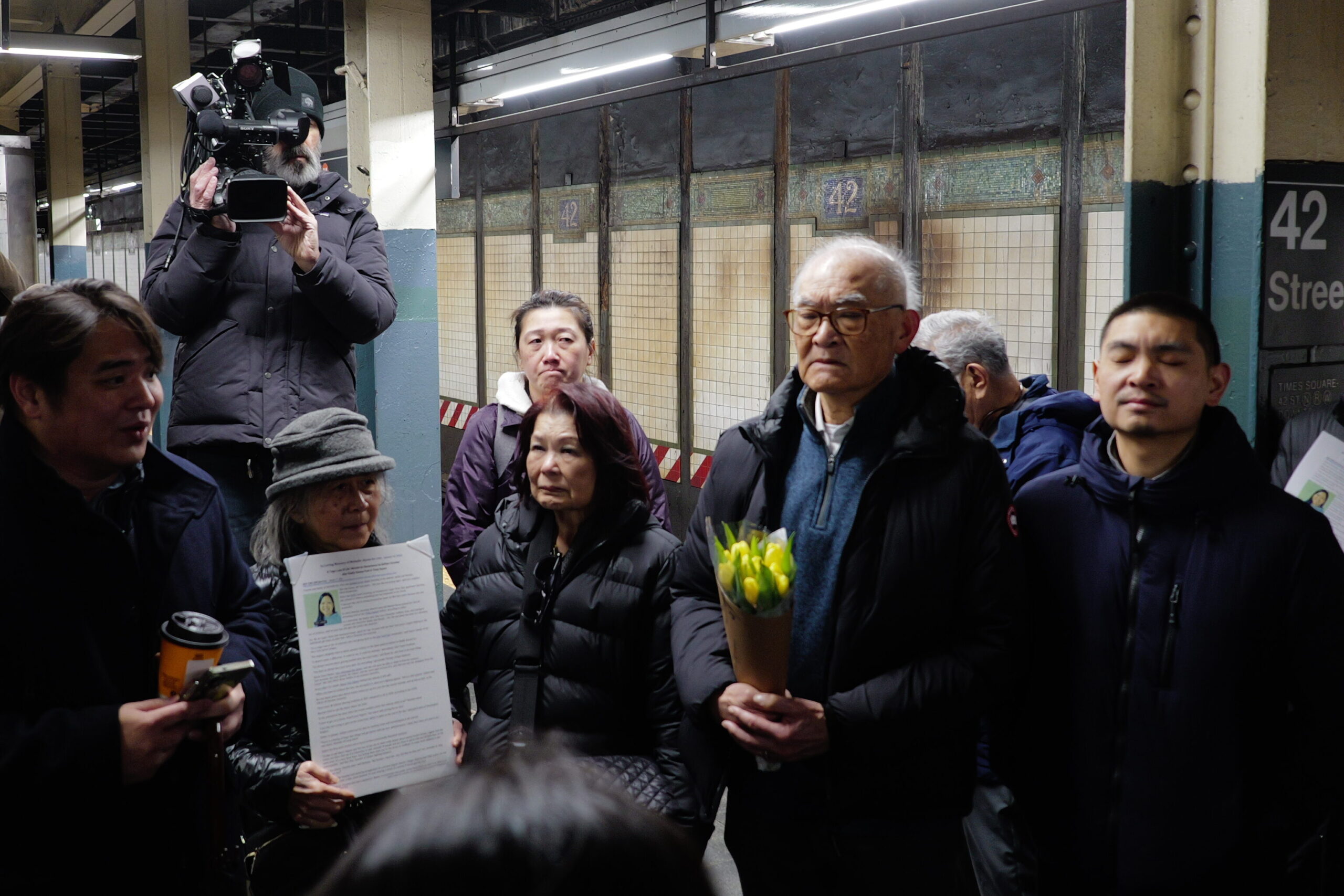
Photo by Wellington Chen

The Prayer Walk concluded at the R Times Square subway station, where the group stood on the platform to pray near the site where Michelle was murdered four years ago. Michelle was only 40 at the time of her death, and attendees who knew her remembered her as a bright and kind individual. Her death continues to fuel concerns regarding anti-Asian violence and the “revolving door” of psychiatric institutionalization. While the prosecution remains determined to bring Martial Simon to trial, the community continues to pray that lasting justice will finally be achieved.
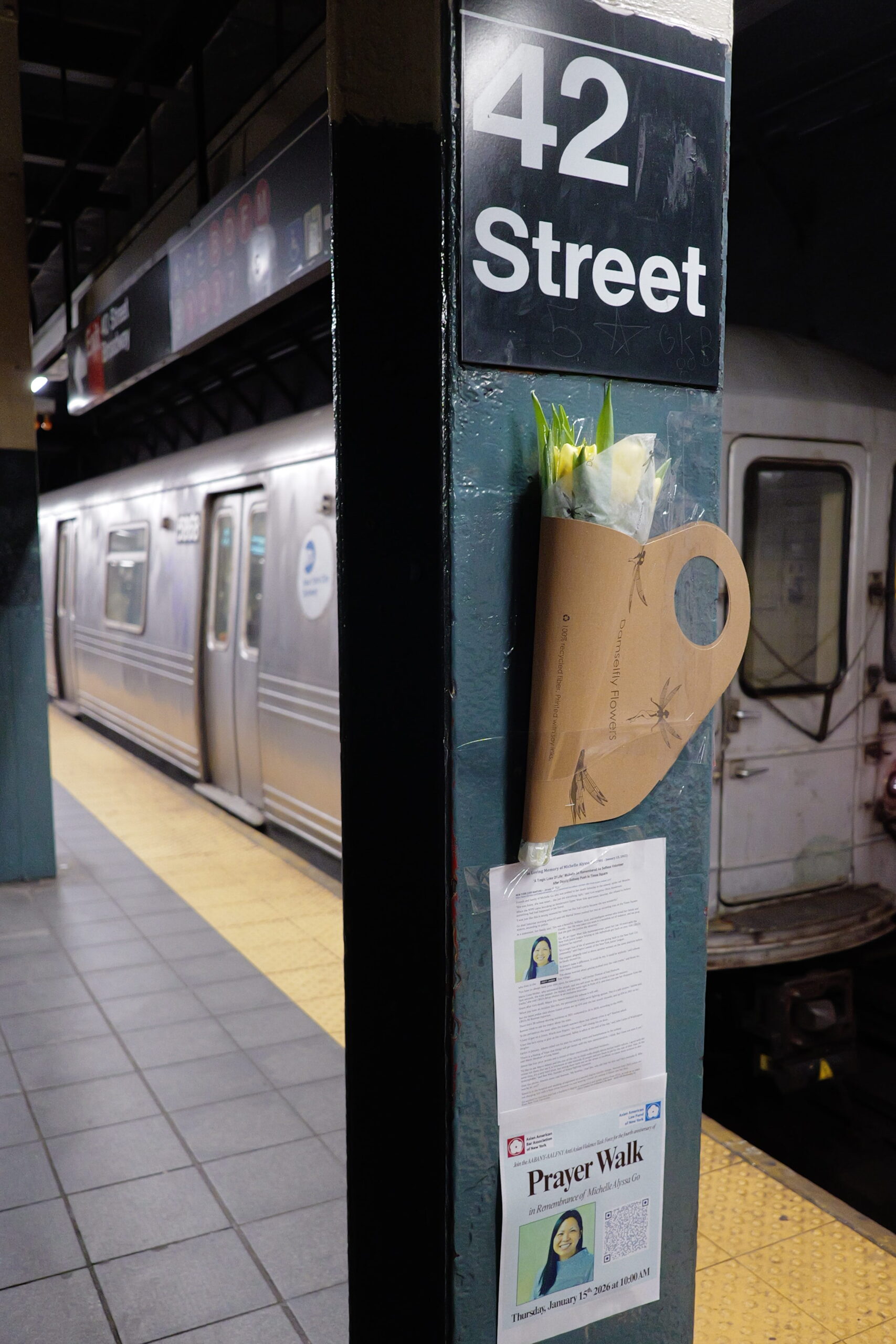
Photo by Wellington Chen

The Prayer Walk was organized by AABANY’s Anti-Asian Violence Task Force (AAVTF), established in response to the surge in anti-Asian hate during COVID-19. The Task Force, at its formation five years ago, included leadership from AABANY’s Issues, Pro Bono and Community Service, Prosecutors, Student Outreach, Legal Referral and Information Service, and Academic Committees. Partnering with AABANY’s affiliate, the Asian American Law Fund of New York (AALFNY), the AAVTF launched the Turning the Tide (T3) Project, a comprehensive initiative focused on education, communication, advocacy, and research. After releasing two reports, the AAVTF produced a documentary, “Voices Against Anti-Asian Hate,” which humanized victims’ and survivors’ experiences and was nominated for best short documentary at the New York Independent Art Film Fest. Throughout 2025, the film was screened nineteen times for various groups. A notable screening at the Asia Society featured a moving panel with Justin Go, Michelle Go’s father, and Sungkon Lee, Christina Yuna Lee’s father.

To view more photos from the Prayer Walk, click this link to the photo album. To learn more about AAVTF, please email [email protected].

NAPABA | Taking Action in 2025

Dear NAPABA Community,

Before the start of this new year, I wrote to you and shared not only my gratitude for an incredible 2024, but also our commitment to advance NAPABA’s mission heading into 2025. Though we are merely two months into the new year, we have already witnessed several developments that impact NAPABA’s work and the broader Asian American, Native Hawaiian, and Pacific Islander (AANHPI) community.

On his first day in office on January 20, 2025, President Donald J. Trump issued executive orders that jeopardized the constitutional guarantee of citizenship for all persons born in the United States, the right to seek asylum, the refugee resettlement system, and the LGBTQ+ community, among others. NAPABA swiftly condemned these actions, which ran counter to our values. Since then, the federal government has enacted a slew of policies, which have already drawn significant concern for the rule of law, in addition to attacks on lawful diversity, equity, and inclusion initiatives both within the federal government and the private sector.  

When it comes to our values, our words of disagreement are not enough. NAPABA is charged to promote justice and equity for the AANHPI community. My team is closely monitoring developments from the federal government, and we are working with stakeholders, coalition partners, policymakers, and others to respond appropriately.

NAPABA is prepared to act. I have outlined below, in broad strokes, our intended course of action and how you can get involved. In the coming weeks and months, and with your partnership, we plan to meaningfully support our community and actively counter policies that detrimentally affect the AANHPI community.

I. Direct Support for NAPABA Affiliates and National Associates

NAPABA stands ready to deliver financial support to our affiliates and national associates for their work in the community. As leaders in their respective regions, affiliates and national associates can act as trusted messengers delivering pivotal information and services to their members and broader AANHPI communities. We will prioritize projects that speak to the challenges today: for example, educational seminars on the state of immigration, pro bono initiatives to support heightened immigration needs of the Asian American population, funding language translations for educational materials and resources, and local and state advocacy efforts that align with NAPABA values and positions. To apply for funding, please visit our website.

Building on the work of the NAPABA Diversity, Equity, and Inclusion Task Force, we plan to create toolkits for our affiliates and national associates. They will include resources to advance the work of diversity, equity, and inclusion, and immigration resources such as hosting naturalization clinics and the creation of attorney directories that address priority areas like immigration law.

II. NAPABA Engagement with Policymakers

The NAPABA Policy Team leads our engagement with stakeholders and policymakers at the federal and state levels. We advance our policy priorities, whether it be in our opposition to anti-Asian hate and discriminatory alien land law policies to our support for voting rights. Now, as our engagement will necessarily go deeper, we are investing in an expansion of our Policy Team.  

Plus, the planning is well underway for our upcoming Lobby Day, which is scheduled for May 20-21, 2025, in Washington, DC. As the largest AANHPI advocacy effort on Capitol Hill, NAPABA Lobby Day will bring our members from across the Nation to the halls of Congress to demonstrate not only the strength of our community, but also to advance the critical issues facing the AANHPI community. Our members will meet with Congressional offices on both sides of the aisle to highlight the causes important to us and our communities. Your voice is pivotal. For more information on Lobby Day and to register, please visit our website.

III. Narrative Change and Education
In the coming weeks and months, NAPABA will highlight how recent actions from the federal government not only impact our communities, but also the critical role that the AANHPI communities played in the development of the rights that we cherish today. Whether it be on birthright citizenship, the right to asylum and the refugee resettlement program, or the barriers that our community faces in the legal profession, NAPABA will uplift those stories and our history, which are intertwined with the fabric of American life today. Please be on the lookout through our social media channelsour website, and email for additional educational resources and programming. These efforts will be on top of the multitude of informative programs during the Nation’s largest convening of legal professionals: the NAPABA Convention in Denver, Colorado, on November 6-8, 2025.

NAPABA has an exceptionally talented and enthusiastic full-time staff, but we cannot carry out our work without you. The strength of NAPABA is comprised of passionate and energetic volunteers like you. As I mentioned above, here are some ways where you can get involved:

  1. Submit a CLE Program Proposal for the 2025 NAPABA Convention. Submission. deadline is March 14, 2025.
  2. Register and participate in NAPABA Lobby Day on May 20-21, 2025.
  3. Join a NAPABA Committee and Network to engage with professionals in your practice area or who share your affinity.
  4. Register and attend the 2025 NAPABA Convention. Registration opens in June 2025.

Lastly, we want to hear from you with any suggestions. Please don’t hesitate to email us at [email protected] with your thoughts.

Regardless of the challenges, NAPABA remains focused on the work ahead, and I hope that you will join us in the journey.

Very truly yours,


Priya Purandare
Executive Director

New York State Bar Association Task Force Releases Report on Racism, Social Equity, and the Law

In 2021 the New York State Bar Association (NYSBA) formed the Task Force on Racism, Social Equity, and the Law to examine how structural racism permeates and influences facets of daily life leading to injustice and inequality among New Yorkers. The Task Force included six subcommittees, Criminal Justice, Economic Opportunity, Education, Environmental Justice, Health, and Housing, and examined the key issues that cause structural racism to be entrenched and persistent. These subcommittees provided recommendations and action steps for NYSBA to take to address structural racism and effectuate meaningful societal transformation.

AABANY Member Nelson Mar served on the Task Force as co-chair of the Education Sub-Committee. Over a period of a year and a half, he helped identify and draft the issues and recommendations for the Education section of the Task Force report. We also thank and recognize past AABANY member Lillian Moy on her leadership as Co-Chair of this important NYSBA Task Force.

To read the full report, click here.

Thanks to NYSBA for issuing this report, and thanks to Nelson for his leadership on the educational issues addressed in it.

AABANY Anti-Asian Violence Task Force Attends the Sentencing of Tammel Esco

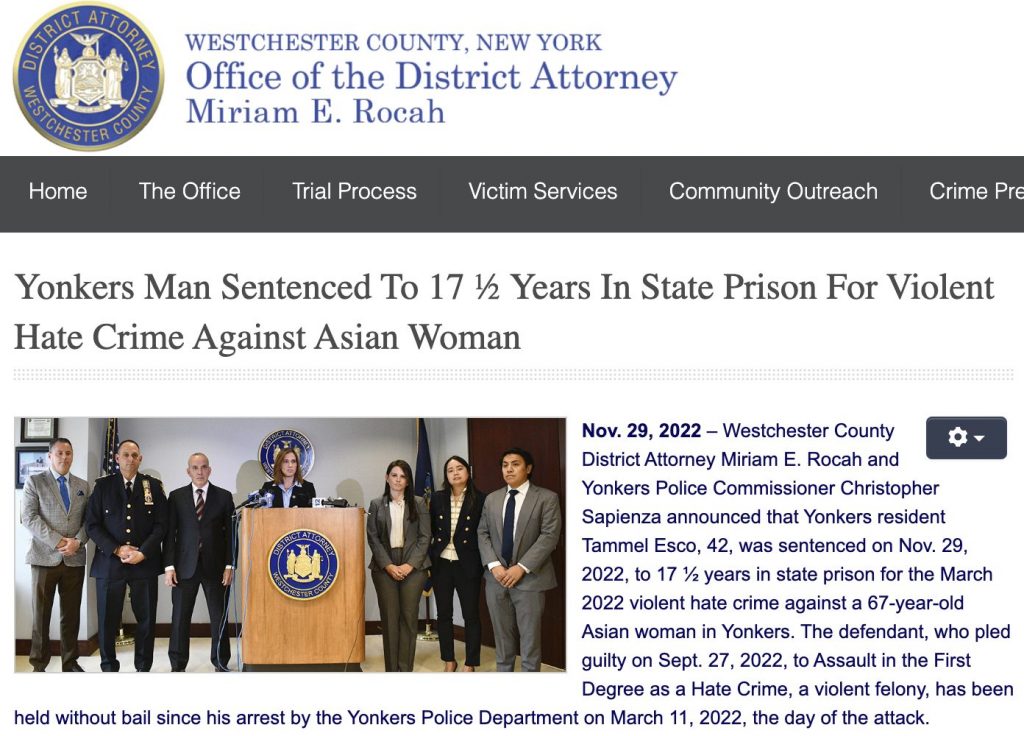
On November 29th, AABANY’s Anti-Asian Violence Task Force (AAVTF) led by Chair Elaine Chiu and member Jim Lin, attended the sentencing of Tammel Esco in support of the survivor of a horrific act of hate that took place in Yonkers on March 11, 2022. AAVTF member Jennifer Wu represented the survivor pro bono as the case against Esco proceeded through the courts and accompanied the survivor, together with co-counsel Johan Tatoy (also an AABANY member) at the sentencing.

Tammel Esco was arrested after he brutally beat a 67-year-old Filipino-American woman at the entrance of her Yonkers apartment. Esco pleaded guilty to the charge of first-degree assault as a hate crime and was sentenced to 17-1/2 years in prison followed by five years of supervised release. Judge Minihan presided at the sentencing and recounted Esco’s sad history. She offered him the chance to apologize or explain himself, but he declined. In her victim impact statement, the survivor stated, “A complete stranger heartlessly spit, beat, and kicked me over 100 times just because of my heritage. I lost months of my life. I will forever be on edge.” Currently, she remains in stable condition, yet had to move out of her longtime home due to the traumatic event.

After the sentencing, AABANY members had the chance to meet the District Attorney of Westchester County, Mimi Rocah, at her press conference, where Jennifer Wu commented on the survivor’s behalf, stating, “Leaving the home that you’ve had for 24 years and where you raised your daughters, is incredibly painful.” During the meeting, AAVTF members offered proposals on statutory reform and how to prevent such gruesome cases from occurring in the Asian American community in the future. Elaine Chiu commented further on AAVTF’s attendance at the sentencing and the press conference, stating, “It was a very valuable day with efforts that contribute to the multi-faceted work of our Task Force.”

Watch this News 12 report about the sentencing, in which Johan Tatoy, as the survivor’s attorney, spoke at the press conference and AAVTF Task Force Chair Elaine Chiu was interviewed.

To learn more about the AAVTF and support its efforts, please click here.

Join the AAVTF at the next court watching on January 10, for the sentencing for Elisaul Perez, who pled guility to manslaughter in the death of GuiYing Ma. More details here:
https://www.aabany.org/events/event_details.asp?legacy=1&id=1701949

Office of the Bronx District Attorney Holds Rally Against Hate on May 21

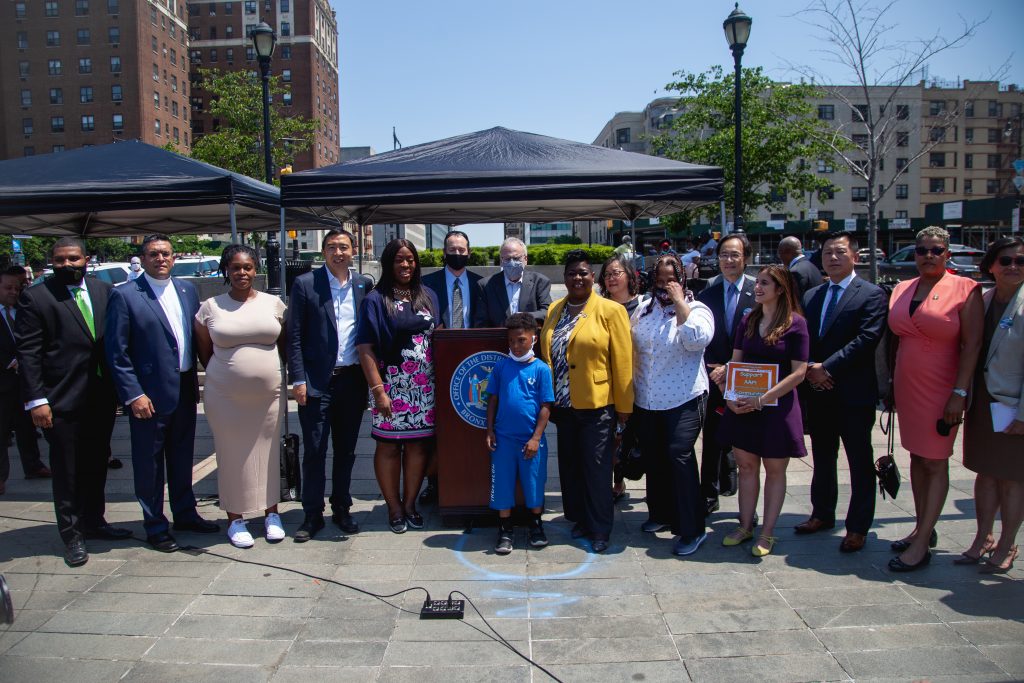
In light of recent hate crimes against AAPI and Jewish communities, the Bronx District Attorney’s Office held an Anti-Hate rally and a resource fair on May 21st, 2021 at Lou Gehrig Plaza from 12:00 pm to 2:00 pm, near the Bronx DA’s Office, a few blocks away from Yankee Stadium. The Bronx District Attorney, Darcell Clark, led the cry against all forms of hate, saying, “It’s not who we are as New Yorkers and we will not stand for it… hate against one of us is hate against all of us.” 

Many religious and elected leaders joined DA Clark in denouncing hate. Bronx Assembly Member Jeffrey Dinowitz said, “It’s not just Jewish residents, it’s not just Asian residents. The hate, the discrimination against other communities as well has been going on for far too long.” Other speakers, such as Mayoral Candidate Andrew Yang, NYPD Inspector Tommy M. Ng (and head of the NYPD Asian Hate Crimes Task Force), New York City Council Member Vanessa Gibson, and the Regional Director of the ADL Scott Richman all denounced hate while touching on the importance of solidarity, camaraderie, and acceptance of everyone regardless of their background. 

The Asian American Bar Association of New York’s Executive Director, Yang Chen, spoke on the recent hate crimes against the AAPI community. Chen invited attendees to visit the AABANY table to pick up copies of our anti-Asian violence report or a Know Your Rights brochure for AAPIs who encounter an anti-Asian hate or violence incident. Chen added that AABANY was also giving out buttons with the words “One Humanity Against the Virus.” He explained  that “we’re not talking just about COVID-19, we’re talking about the virus of racism that infects our world today.” The buttons proved to be a popular item.

In addition to AABANY, the Bronx District Attorney’s Office, the New York City Commissions on Human Rights and other groups handed out various resources to educate the general public on ways to combat hate at tables set out in the plaza. 

AABANY thanks DA Clark and her staff, especially Deputy Chief of Staff, Beverly Ma, and Miriam Bell-Blair, Director, Immigrant Affairs Unit, for organizing this rally during AAPI Heritage Month. We look forward to continuing to work with the Bronx DA’s Office to combat hate against all communities in New York City. To see more photos from the event, view them here.

T3 Project: Stand Together with AABANY and AALFNY in Turning the Tide Against Anti-Asian Hate and Violence

AABANY, in partnership with the Asian American Law Fund of New York (AALFNY), is pleased to announce the Turning the Tide (T3) Project. Following the February 10, 2021 publication of AABANY and Paul, Weiss’ report A Rising Tide of Hate and Violence against Asian Americans in New York During COVID-19: Impact, Causes, Solutions, AABANY established an Anti-Asian Violence Task Force to advance the proposals outlined in the report and consider other solutions to address the surge of anti-Asian hate and violence in the community. The Task Force advances the T3 project, which aims to incorporate a three-pronged approach encompassing education and communication, advocacy, and research, to address anti-Asian hate and violence. 

Please stand together with AABANY and AALFNY in turning the tide against anti-Asian hate and violence. We are now accepting donations to support the T3 Project. Donations can be made to AALFNY and will be tax deductible to the extent permitted by applicable law.

For more details about the T3 Project, please click here

Young Lawyers Committee Hosts “Attorney Well-Being During COVID-19” Event

On April 15, AABANY’s Young Lawyers Committee (YLC) hosted a fireside chat titled “Attorney Well-Being During COVID-19.” In the face of isolating social distancing protocols and prolonged remote working arrangements, Committee Co-Chair Janet Jun organized and moderated the event in hopes of spurring more dialogue on the subject of wellness in the legal profession. Janet was joined by former AABANY President Glenn Lau-Kee and YLC Co-Chair Jane Jeong, who also hosts and produces The Whole Lawyer Podcast. At the intersection of law and wellness, Glenn serves as a member of the New York State Bar Association’s Task Force on Attorney Well-Being, and Jane is a member of the National Asian Pacific American Bar Association’s Wellness Committee. Together, the speakers led a candid discussion about the current state of mental health awareness, challenges in the legal profession, and tips for achieving attorney wellness during COVID-19 and beyond.

Janet kickstarted the discussion by asking about the promises and pitfalls of current efforts to improve wellness in the legal profession. Glenn spoke optimistically about NYSBA’s Task Force on Attorney Well-Being, which consists of nine working groups, each dedicated to a specific wellness issue. As the head of the working group on bar associations, Glenn described the end goal of the Task Force as a wholesale culture change in the legal profession. Glenn observed that attorneys tend to experience higher levels of stress than other professionals, with young lawyers bearing the brunt of this pressure. While larger law firms have established more initiatives to promote lawyer well-being, small firms and solo practitioners are disadvantaged by limited resources. In this context, Glenn identified bar associations as a possible avenue for equalizing wellness resources. 

Diverging from Glenn’s opinion, Jane insisted that personal connections — not institutional initiatives — are the proper foundation for a more comprehensive culture of wellness. Invoking the fireside chat as an example, Jane stated that change starts at the individual level, with the creation of safe spaces for authentic conversations about personal mental health struggles.

Janet continued the discussion by asking about the source of rampant anxiety, depression, and other mental health issues in the legal profession. Glenn broke the problem down into three factors: (1) a lack of boundaries for down time, (2) client expectations and demands, and (3) financial pressures. Jane connected the first and third factors, explaining that the billable hour gives lawyers a systematic incentive to work ceaselessly. Deeming many lawyers to be perfectionists who are conditioned to tie their self-worth to external accomplishments, Jane also said that self-selection bias contributes to a workaholic legal culture.

AABANY Board Member Andy Yoo joined the discussion by asking about ways in which clients can help drive change. Glenn and Jane both responded by stating that leadership buy-in is an essential catalyst for change. As Jane explained, how CEOs and CLOs treat their employees trickles down to how employees treat external counsel.

Cynthia Lam, AABANY’s Co-Vice President of Programs and Operations, then asked the speakers to share their personal strategies for maintaining well-being. Glenn emphasized the community aspect of any individual effort to promote self-care. He urged lawyers to look beyond their own team members, who are all fixated on the same work, and reach out to family members, friends, and colleagues outside of their firms. Moving forward, Glenn hopes that bar associations will also play a greater role in providing lawyers with a sense of community. 

In enhancing her own mental health, Jane underscored the importance of setting and communicating boundaries with colleagues. She encouraged attendees not to cancel social plans for work except in the rare case of an emergency. Drawing on experience from her early career, Jane explained that by always saying yes to external requests, she had taught others that it was okay to overwork her. The lesson Jane derived from this experience was to treat yourself the way you want others to treat you. 

Ultimately, Glenn and Jane urged attendees to carve out time for themselves to participate in communities and activities that are wholly unrelated to the law. While Jane personally benefits from working out, writing fiction, and doing yoga, she encouraged lawyers to access their own creative and reflective sides in whatever way works for them. Janet concluded the fireside chat by appealing to the desire of all attendees to be good lawyers. Only by striking a proper work-life balance can attorneys be fully enthusiastic about their careers and clients. To this extent, valuing well-being in one’s own life can help us all become more present in the lives of those around us.

AABANY thanks Janet, Glenn, and Jane for sharing their insights and leading this dialogue on the ever-relevant topic of attorney well-being. To learn more about the Young Lawyers Committee and its work, click here.

Chris Kwok Testifies Before the New York City Council Committee on Public Safety on March 22

On March 22, Chris Kwok testified on behalf of AABANY before the New York City Council Committee on Public Safety in support of two changes to the funding of Hate Crime Units of New York District Attorneys’ Offices. These recommendations call for Hate Crime Units to be staffed with full-time prosecutors and legal support personnel, and for periodic audits by the committee to ensure their use of dedicated funds for hate crime prosecution. Chris shared that AABANY first voiced these recommendations in its report on anti-Asian violence. The report specifically identified the “Jade Squad”—a police division formed to combat Chinese gang violence in the 1970s— and concomitant Asian Gang Units that were formed at the District Attorney’s Office. In line with these successful historical efforts, AABANY now advocates for the creation of dedicated and fully funded hate crime divisions in law enforcement and prosecutors’ offices.

The AABANY report recounts numerous instances of assault and harassment against Asian Americans in New York over the course of the COVID-19 pandemic, and Chris highlighted the persistence of such racially fueled attacks to this day. Chris also noted that media outlets, community leaders, and politicians have since backed AABANY’s proposals to fully fund and formally staff anti-hate-crime initiatives. Among these supporters, Chris identified the inspector of the NYPD Task Force and New York mayoral candidate Andrew Yang. In the face of unrelenting anti-Asian violence throughout the state, Chris explained that the NYPD Hate Crimes Task Force and District Attorneys’ Office Hate Crime Units require dedicated funding and full-time personnel to improve their reporting structures. Only with such resources can anti-hate-crime initiatives produce reports that adequately detail the efforts of law enforcement to stem anti-Asian violence. The statement concluded with Chris’s message that fully funded and full-time Hate Crime Units are critical to encouraging the continued reporting of anti-Asian hate crimes and to fostering greater trust within the Asian American community. To read Chris’s written statement, submitted with his testimony, click here.

Chris Kwok Testifies Before the City Council Committee on Public Safety

On March 16, Chris Kwok testified on behalf of AABANY before the City Council Committee on Public Safety in support of two changes to the NYPD Asian Hate Crimes Task Force: to fully fund the Task Force and to replace its volunteer staff with paid personnel. An AABANY Board Director and Chair of the Issues Committee, Chris shared that AABANY was the first to publicly voice these recommendations in its report on anti-Asian violence. The report recounts numerous instances of assault and harassment against Asian Americans in New York over the course of the COVID-19 pandemic, and Chris highlighted the persistence of such racially fueled attacks to this day. Chris also noted that media outlets, community leaders, and politicians have since backed AABANY’s proposals to fully fund and formally staff the Task Force. Among these supporters, Chris identified the inspector of the Task Force itself, New York mayoral candidate Andrew Yang, and all of the District 1 City Council candidates. District 1 covers Manhattan’s Chinatown among other neighborhoods and sites. In the face of unrelenting anti-Asian violence throughout the state, the statement concluded with Chris’s call for a fully funded and full-time task force to foster trust within the Asian American community and to encourage the continued reporting of anti-Asian hate crimes. To read Chris’s written statement, submitted with his testimony, click here. AABANY gratefully acknowledges Student Leader Taiyee Chien for his assistance in drafting the statement.

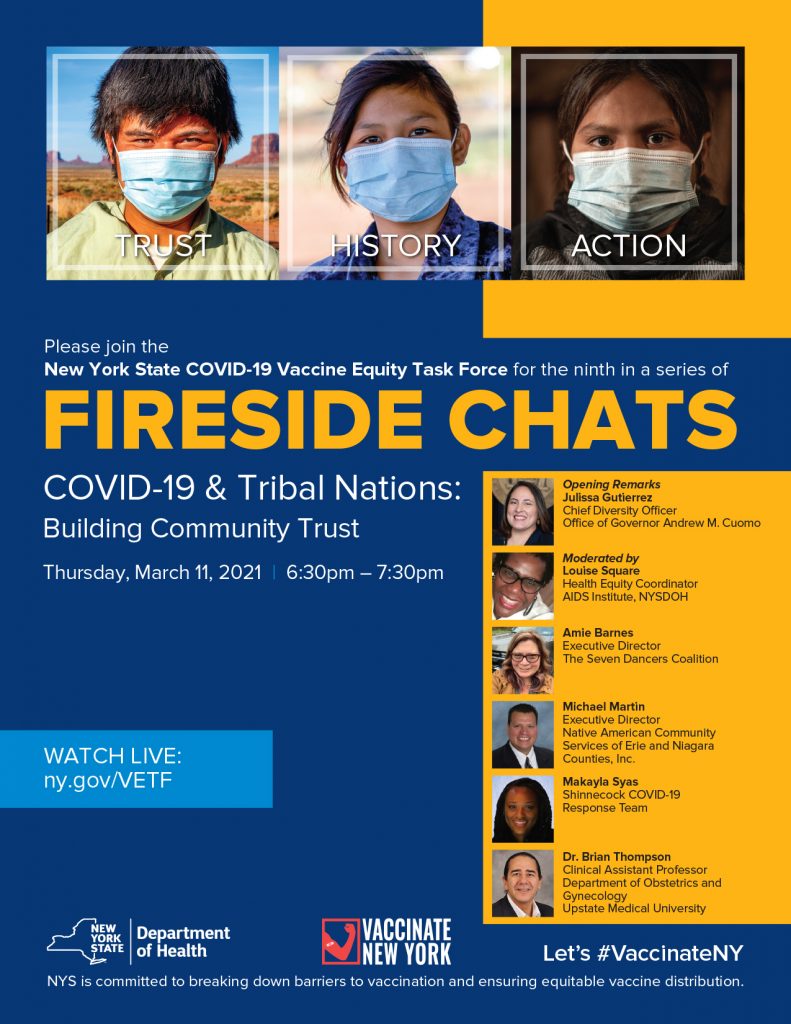
Fireside Chat – Thursday, March 11 at 6:30 PM

From the Office of Governor Andrew M. Cuomo:

We are proud to present the next Fireside Chat as part of a series of discussions produced in partnership with the New York State COVID-19 Vaccine Equity Taskforce.

We would appreciate your help in spreading the word – please invite your networks to attend the event through email, or by posting the event information on social media outlets like Twitter, Facebook, Instagram and LinkedIn. Participants can view the program at ny.gov/VETF.

We encourage you to submit questions for the speakers in advance by emailing [email protected], and we will also be taking questions from attendees. We will do our best to pose as many questions to our panelists as possible. You may also choose to register for this event (not required), as a means of adding the event to your calendar and for reminders, at the link here: https://covid-19-vaccine-tribal-nations-building-trust.eventbrite.com

Thank you all and let’s #VaccinateNY!

Please refer any questions to Emily Stetson, Special Assistant for Intergovernmental Affairs, by email at [email protected] or by phone at (518) 956-2617.