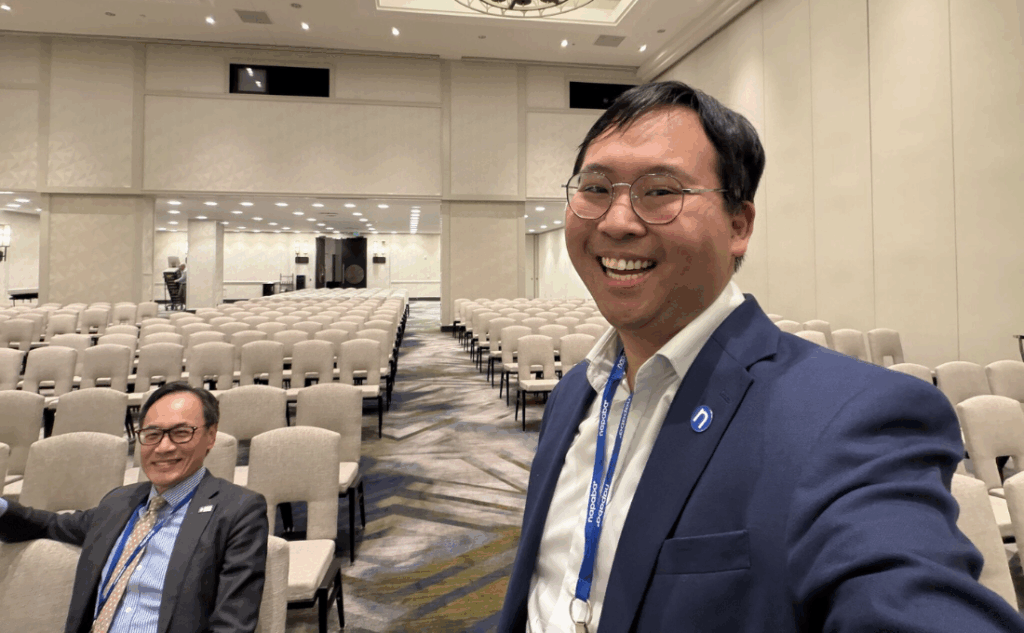
AABANY Student Outreach Committee Chair Albert Tong, who is also the Co-Director for the Northeast Region of the National Asian Pacific American Law Student Association (NAPALSA), was featured in a December 9, 2025, Brooklyn Law School News article. The article, titled “Albert Tong ’27 Finds Networking, Community as Regional Co-Director of NAPALSA,” discusses his attendance at the National Asian Pacific American Bar Association (NAPABA) Convention in November and his role with NAPALSA.
The piece highlights Albert’s positive experiences with NAPABA, the AABANY Trial Reenactments, and his own involvement in NAPABA’s Bankruptcy and Restructuring Committee.
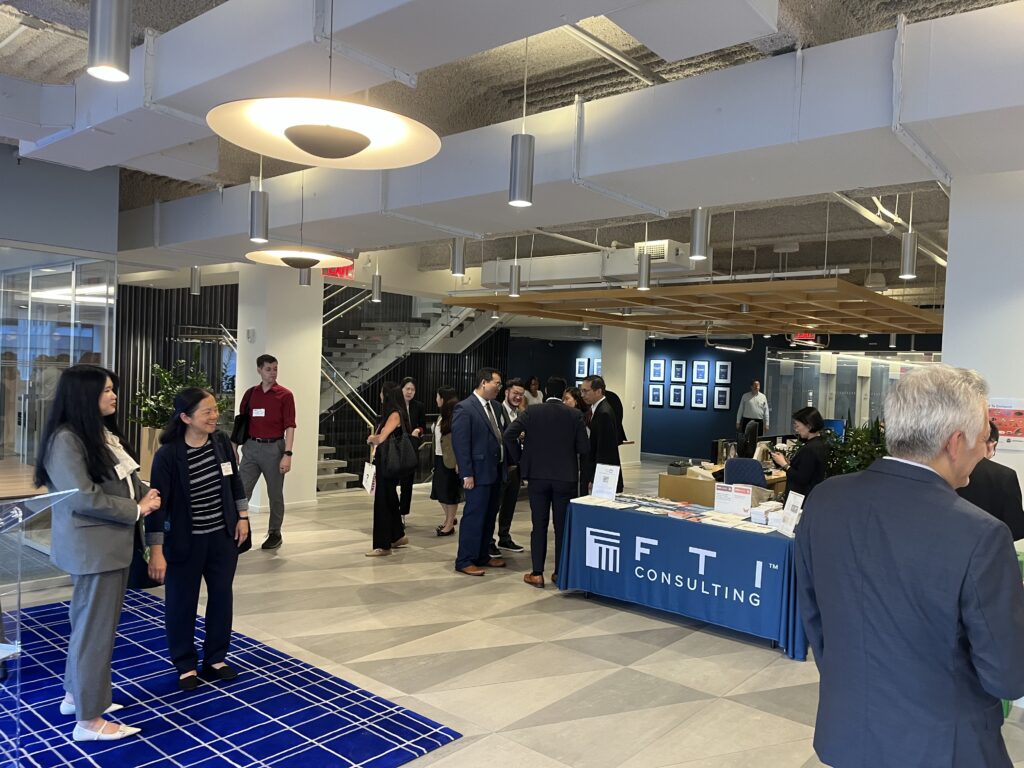
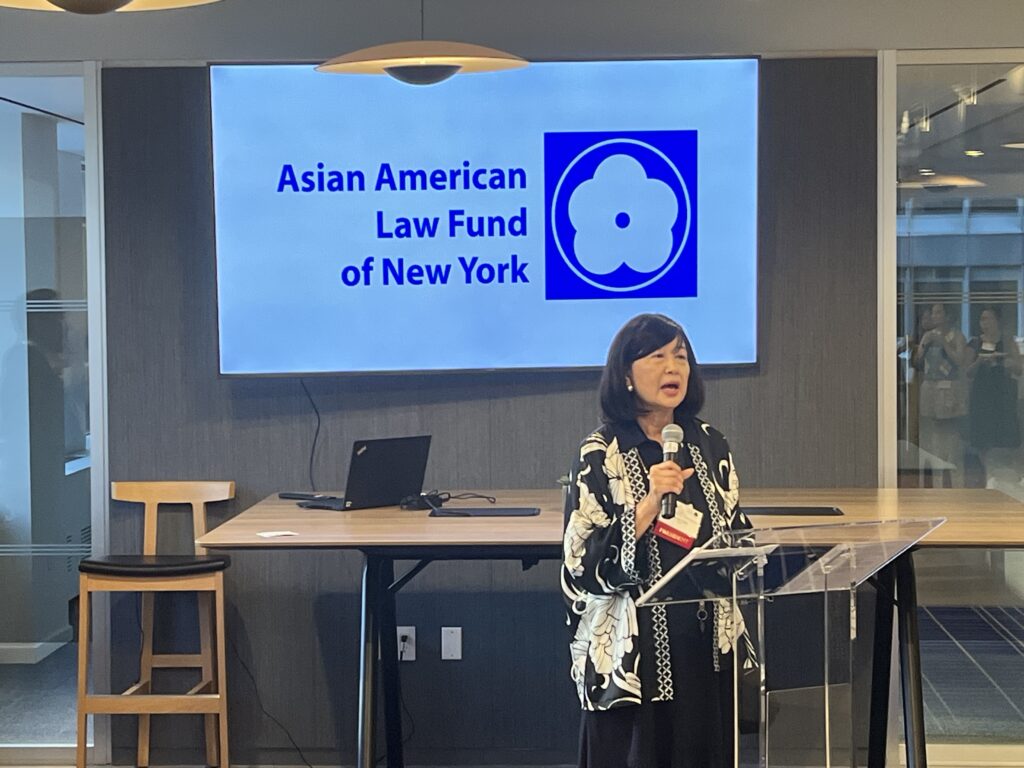
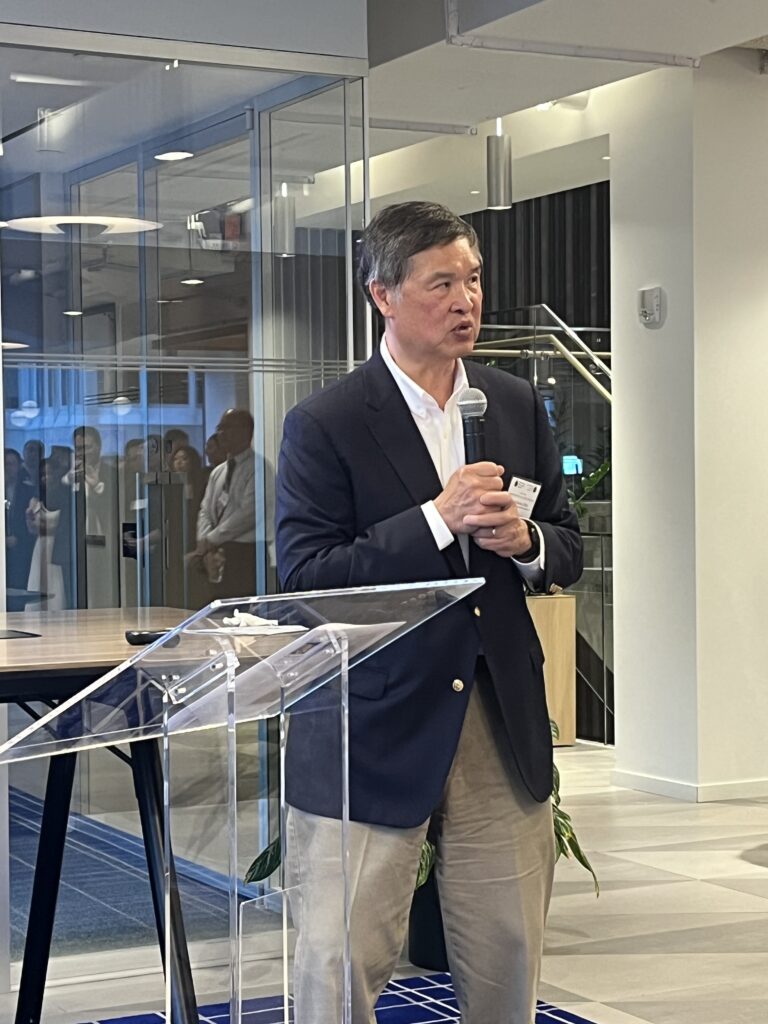
On Thursday, July 17, 2025, the Asian American Law Fund of New York (AALFNY) and the Asian American Bar Association of New York (AABANY) hosted their Summer Reception at FTI Consulting in mid-town Manhattan. The reception also recognized the 2025 AALFNY Public Interest Scholarship recipients. The event featured Judge Denny Chin, Co-Director of the Center on Asian Americans and the Law at Fordham Law School, as the event’s distinguished guest speaker.
Sylvia Chin, President of AALFNY and Chair of the Anti-Asian Violence Task Force delivered opening remarks and invited AALFNY’s directors onstage, where they introduced themselves.
Benjamin Hsing, AABANY President, introduced AABANY, recognized Fordham Law’s Center on Asian Americans and the Law, and urged professionals and students to join AABANY to strengthen the AAPI legal community. Ben also highlighted AALFNY’s public interest scholarships, emphasizing their role in fostering the next generation of legal professionals.
Next, AABANY’s Pro Bono and Community Service Committee Co-Chairs Beatrice Leong and Gary Yeung presented on AABANY’s Pro Bono Clinics. Gary explained that they take place in Manhattan, Brooklyn, and Queens. The Clinics provide culturally and linguistically competent attorneys and interpreters for individualized legal assistance, offering free consultations to the community. AABANY is celebrating the 10 year anniversary of its Pro Bono Clinics and is expecting to host a fundraiser soon. Beatrice thanked all the volunteers who contributed to making the Pro Bono Clinics successful. Gary encouraged people to volunteer at clinics, especially in Queens, where there is a greater need for volunteers to assist the large AAPI and immigrant population in that part of Queens.
Lori Giargias, St. John’s University School of Law, Class of 2027, interning with the Jewish Association Serving the Aging Legal Services for the Elderly in Queens, aims to assist individuals at risk of losing their homes.
Jiaqi Huang, from the University of Florida Levin College of Law, Class of 2025, is interning with the Legal Aid Society’s Immigration Law Unit to support efforts serving the Asian American community.
Issalina Sagad, CUNY School of Law, Class of 2027, interning with Catholic Charities Community Services, will learn how legal aid can be made more accessible.
Eqra Muhammad, St. John’s University School of Law, Class of 2025, is interning with the Urban Justice Center’s Domestic Violence Project’s Immigration Team, working to support survivors of domestic violence.
AALFNY annually grants Public Interest Scholarships to law students who have demonstrated a strong dedication to serving the community. Since 1997, AALFNY has awarded over 60 scholarships, supporting deserving law students financially while motivating them to apply their legal education to benefit the Asian American community in New York. The scholarship aims to encourage law students to have a lasting commitment to public service in New York.
Rocky Chin, NYC Human Rights Commissioner and AALFNY Board Member, discussed the history of the Center on Asian Americans and Law and thanked its founders: Judge Denny Chin and Professor Thomas H. Lee. Thomas H. Lee, Co-Director of the Center on Asian American and the Law, proceeded to talk about the inspiration behind AABANY’s reenactments, whose scripts can be requested from the AABANY Trial Reenactments website. The trial reenactments cover landmark cases involving Asian Americans and have been performed all over the country by other bar associations, law schools, and community groups.
Judge Denny Chin notably said, “In doing reenactments, I fell in love with Asian American history.” He presented slides depicting the Center’s events and activities, including past Fall Symposiums, screenings, teaching workshops, and reenactments. Currently, teaching materials from the Center are being used at 14 law schools: Albany, Columbia, Cornell, CUNY, Fordham, Harvard, Rutgers-Newark, SMU, Stanford, St. John’s, Touro, UC San Francisco, University of Virginia, and Yale.
Judge Chin opened the floor for questions after the presentation, during which he discussed the concept of doing trial reenactments of AAPI cases was inspired by historical trial reenactments that had previously been done at the Federal Bar Council. Judge Chin also emphasized how AABANY’s Reenactments about trials involving Asian Americans are becoming increasingly relevant to modern day issues.
Next, Sylvia recognized the dignitaries present and thanked everyone for their attendance. Rocky encouraged people to take the informative materials available detailing the Center on Asian Americans and Law and the Anti-Asian Violence Task Force. He also urged people to continue to work together and to partner with more Asian American community organizations.
Guests had the opportunity to mingle during the reception afterward, where attendees, from law students to seasoned attorneys, built new connections. Thank you to FTI Consulting for generously providing the space for this event.
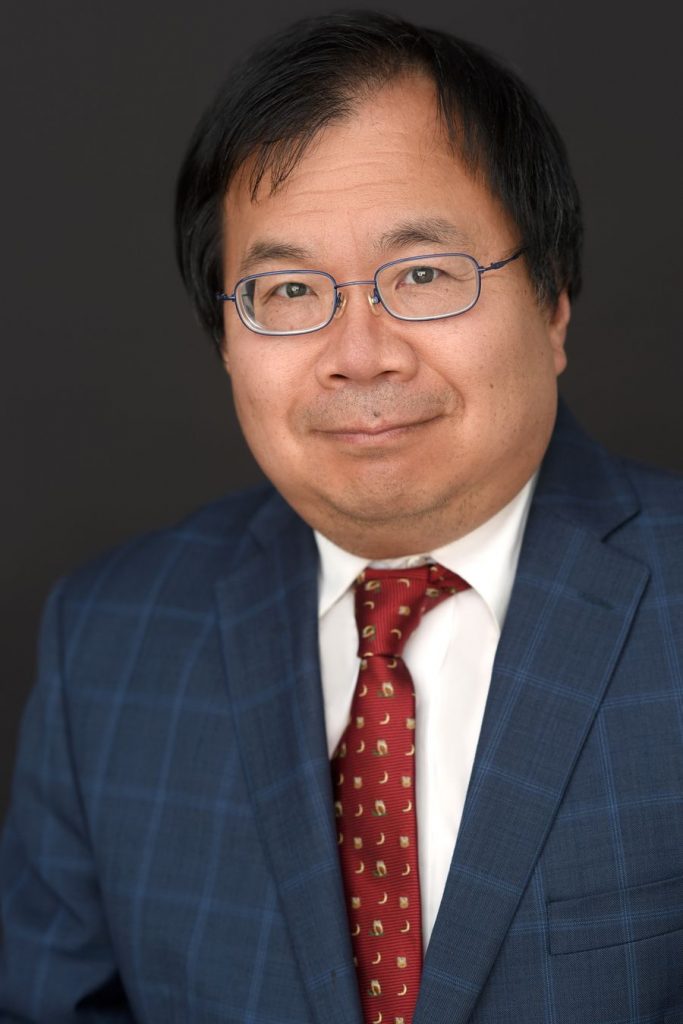
Vincent T. Chang, active member of AABANY since 2000 and former AABANY President in 2007, was inducted as the first Asian American and Pacific Islander (AAPI) President of the New York County Lawyers’ Association (NYCLA) on May 28, 2021. In his new role, Vince is prepared to lead NYCLA in supporting diverse communities, reaching out to more young attorneys and law students, and closing the justice gap to serve those in the community who are most in need.
Since high school, Vince gravitated towards pursuing a career in the legal profession. Involved in both his high school and college debate teams, Vince found overlapping aspects between debate and law. In presenting an argument, he noticed both involve research, assembly of evidence, and oral presentation. After graduating cum laude from Harvard Law School, he clerked for the Honorable Robert Krupansky of the U.S. Court of Appeals for the Sixth Circuit before joining Davis Polk & Wardwell LLP in 1989. Being familiar with litigation from his experience in debate and serving as a judicial clerk in a Federal appellate court, Vince chose to practice in litigation. Currently, Vince is a Litigation Partner at Wollmuth Maher & Deutsch LLP in New York specializing in complex commercial litigation matters in the financial industry, including investment banking, hedge funds, and mortgage backed securities.
Outside of his work at the law firm, Vince is an active member of numerous bar associations and organizations, and has served and continues to serve in various leadership positions. To name a few, Vince previously served on the New York State Bar Association Committee of Bar Leaders, on the Board of Directors at Legal Services NYC, and is currently the Vice President of the Asian American Law Fund of New York. Although he might be affectionately called a “Bar Junkie,” Vince did not participate in bar association work until later on in his career.
The first bar association Vince joined was AABANY, and he appreciated both the social and intellectual aspects of the association. He enjoyed the opportunity to learn about different areas of law while also being able to network and meet prominent lawyers. One of his fondest memories of serving as President of AABANY in 2007 was hosting the Annual Dinner because it was a rare event for 500 to 600 AAPI lawyers, including General Counsels and Judges, to all gather in the same room in New York City. This was especially significant because at the time there were at most 400 members in AABANY compared to the 1,500 members AABANY has now.
At AABANY, Vince also played a prominent role in organizing the AABANY Trial Reenactments. With a goal to educate lawyers and the public about the notable trials and cases in U.S. history involving AAPIs, Vince assisted Judge Denny Chin and Kathy Hirata Chin to develop scripts for the productions. Since 2007, Vince has starred as a cast member in numerous reenactments at the annual NAPABA conventions and at other events. He most recently played Fred Korematsu in the “Fred Korematsu and His Fight For Justice” reenactment in November 2019 at the NAPABA convention.
Today, Vince is the first AAPI President of NYCLA, which was the first bar association to admit women and lawyers of color into its membership. He views his role as both an honor and a serious responsibility—an honor because past presidents include esteemed individuals and a responsibility because of his duty to represent AAPIs and serve as a role model. At a time when diversity, equity, and inclusion are at the forefront of many bar associations’ and law firms’ missions, NYCLA plans to be more interactive with young lawyers, especially diverse attorneys, by reaching out to law schools, affinity bar groups, and law firms. Vince also plans for NYCLA to remain relevant on public policy issues and respond to them in a timely manner. He hopes that “taking positions that affect diverse communities will make them notice and realize NYCLA is on their side.”
A common theme of Vince’s work is the pursuit of justice to not only improve the legal profession, but to also improve the quality of legal representation for individuals in the community. He has served on the American Bar Association’s Standing Committee on the Federal Judiciary to review federal judicial nominees; sat on a NYCLA panel at a public hearing to address the impact of budget cuts on the Judiciary; served on the Disciplinary Committee for the First Department to prosecute disciplinary complaints against lawyers in Manhattan; and worked on other initiatives to minimize the justice gap. Vince plans to continue working on this at NYCLA as “access to justice is a hallmark of what bar associations and NYCLA are aiming for.” One program NYCLA has planned is to support attorneys who represent indigent persons through the Assigned Counsel Plan (18b). Under the proposed program, by increasing the rate at which assigned counsel are paid, there will hopefully be an increase of lawyers interested in doing 18b work, which will further decrease the access-to-justice gap. NYCLA also hopes to revive their Special Masters Program to provide an opportunity for young attorneys to gain experience working with the court system, and to close the gap between court workload and staff gap. At NYCLA’s AAPI Heritage Month Celebration on June 2nd, Vince vowed to continue to uphold NYCLA’s focus on sustaining the rule of law including the importance of practicing diversity, equity and inclusion in furtherance of fairness and justice for all.
Please join AABANY in congratulating Vince on becoming the first AAPI President of NYCLA and for doing all the work he does to support communities. We wish Vince great success in his vital new role as NYCLA President! To learn more about NYCLA, visit its website at https://www.nycla.org/. AABANY members who join NYCLA for the first time are eligible to receive 50% off their annual dues the first year and 25% off the second year. For more details, click here.
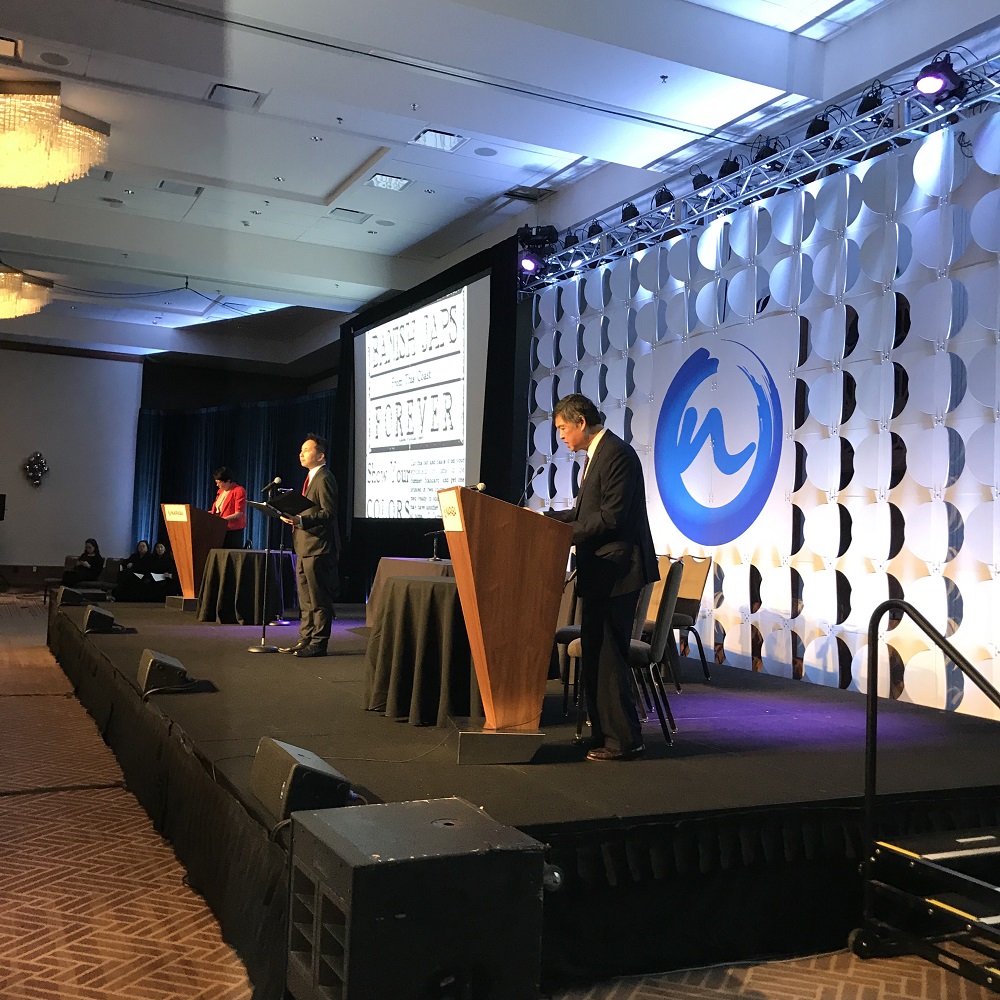
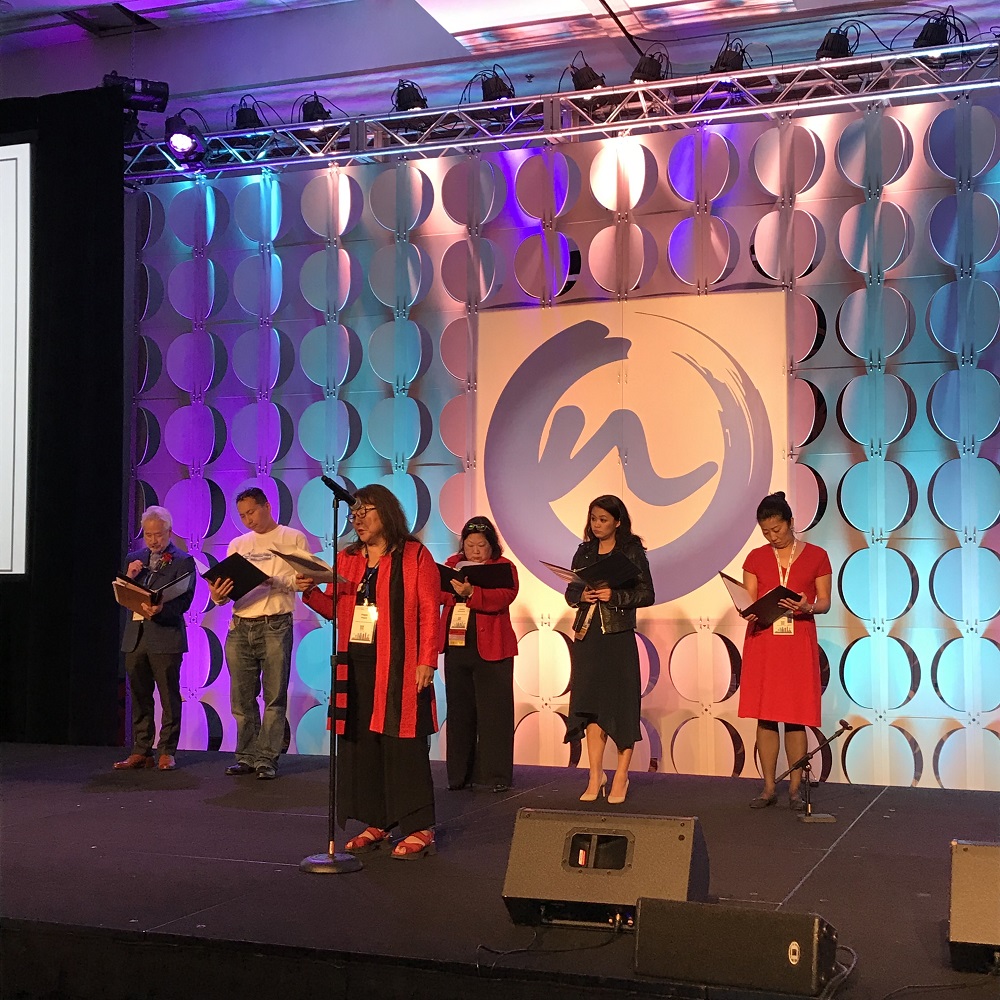
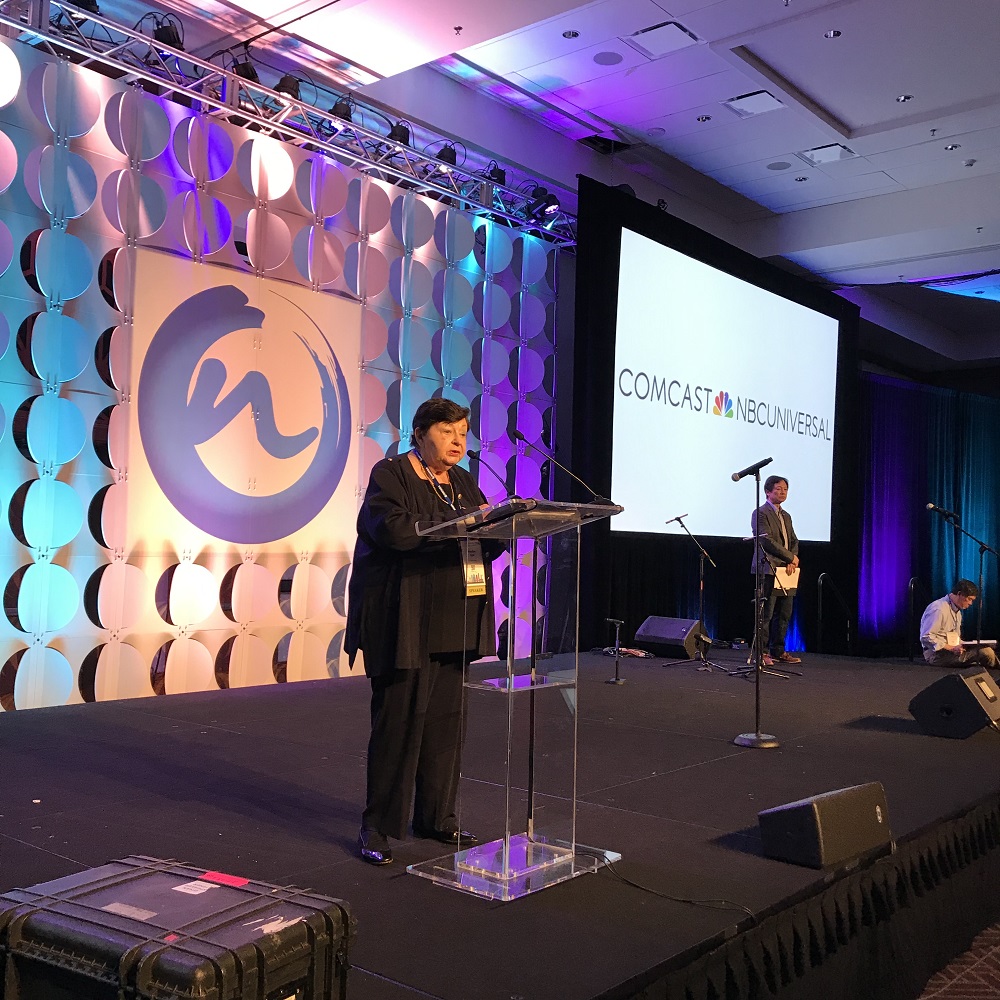
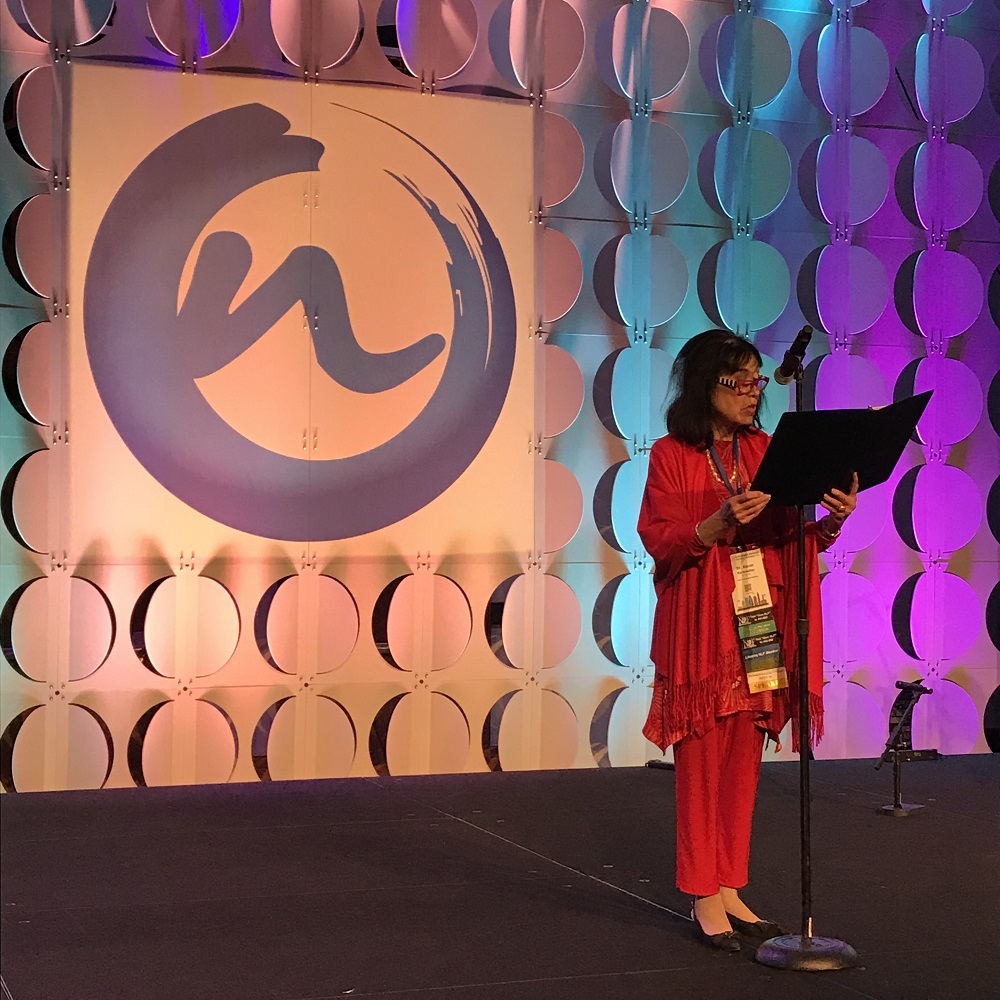
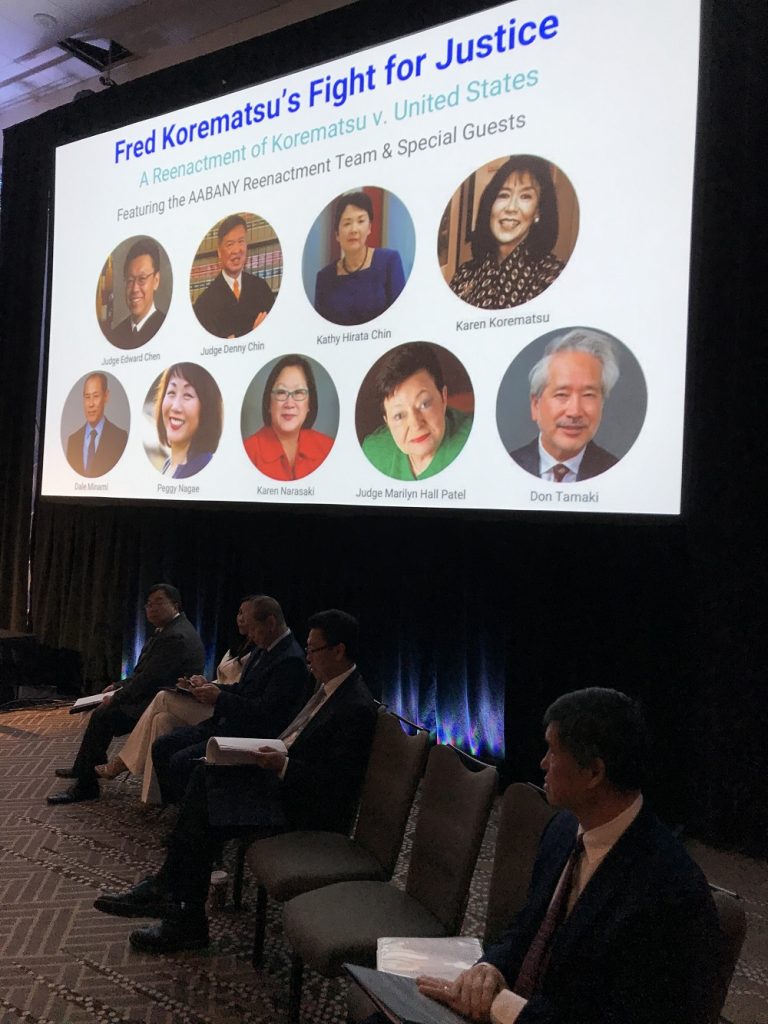
On Friday, Nov. 8, during the Plenary Lunch Session at the NAPABA Convention in Austin, Texas, AABANY’s Trial Reenactment Team performed “Fred Korematsu and His Fight for Justice,” reenacting Korematsu v. United States. AABANY had performed an earlier version of this reenactment at the NAPABA Convention in Washington, DC, in 2017, to mark the 75th anniversary of Executive Order 9066 which sent some 120,000 Japanese American citizens to internment camps without any due process. This year, to mark Fred Korematsu’s 100th birthday, AABANY’s Trial Reenactment Team performed an updated script which took into account the developments that occurred since 2017. The Korematsu case was nominally overruled in a footnote by Chief Justice Roberts in Trump v. Hawaii (2018), which upheld the Muslim Travel Ban in part. This reenactment included modifications that featured text from the majority and dissenting opinions in that case, and concluded with words from an Op-Ed written by Fred’s daughter Karen, lamenting that the United States Supreme Court had replaced one bad precedent with another.
This updated Korematsu reenactment was made special by the participation of new cast members, including Dale Minami, Don Tamaki, Peggy Nagae, and Hon. Edward Chen, members of the legal team that brought the coram nobis proceeding which overturned the wrongful conviction of Fred Korematsu. Dale, Don, Peggy, and Judge Chen played themselves. Also playing herself was Judge Marilyn Hall Patel, the United States District Court Judge who presided over the case. Karen Korematsu played herself and closed the show with moving and inspiring words from her June 28, 2018 New York Times Op-Ed article.
The 2019 Korematsu reenactment played to an audience of 900 at the NAPABA Convention Friday Plenary Lunch session, and it is easily the largest single audience for any AABANY Trial Reenactment. Judge Chin moderated a panel discussion about this case and its continuing relevance immediately after the lunch session, featuring a panel that included Don Tamaki, Dale Minami, Karen Narasaki, Hon. Marilyn Hall Patel, Hon. Edward Chen and Karen Korematsu.
Thanks to everyone who took part in performing in this historic reenactment, especially those who were part of Fred Korematsu’s Fight for Justice. We are grateful for the leadership of Kathy Hirata Chin and Hon. Denny Chin for leading AABANY’s Trial Reenactment Team. To learn more about AABANY’s Trial Reenactments, visit the reenactments website at reenactments.aabany.org.
In a June 5 article in the Atlantic by Garrett Epps, who teaches constitutional law and creative writing for law students at the University of Baltimore, the author commented on the controversy surrounding Donald Trump’s criticism of Judge Curiel because of his race by citing the 1998 case of Macdraw Inc. v. CIT Equipment Financing. That case is notable for the fact that the Hon. Denny Chin, then the only Article III United States District Judge east of the Mississippi, presided over it.
In response to an unfavorable decision against the plaintiff, plaintiff’s counsel filed a brief in which they questioned Judge Chin’s impartiality on account of his race. Responding to this point, Judge Chin wrote: “This sentiment is absurd and demeans me individually and the Court as a whole.” He then sanctioned plaintiff’s attorneys by requiring them to withdraw from the case and banning them from appearing before him in any future matter. He also directed the court clerk to report this sanction to every court in which plaintiff’s attorneys held bar membership.
On appeal to the Second Circuit, Judge Chin’s ruling was upheld in strong terms. Chief Judge Ralph Winter wrote: “Courts have repeatedly held that matters such as race or ethnicity are improper bases for challenging a judge’s impartiality.”
The article goes on to cite the case of the Vietnamese Fishermen against the Ku Klux Klan, without realizing that this latest AABANY Trial Reenactment was led by Judge Chin. In that case, the Ku Klux Klan sought to disqualify Judge Gabrielle Kirk McDonald, the first African American appointed to the Federal bench in Texas, on the grounds that she would not be impartial in a case in which the Ku Klux Klan was the defendant. Judge McDonald denied the motion from the bench, stating: “You are not entitled to a judge of your choice. You are entitled to a judge who will give you a fair trial. I am deeply committed to equal justice under the law and you will get it. You are entitled to nothing more and nothing less.”
In the three decades since the Vietnamese Fishermen case, we are still confronting race-based attacks against judges, which is indeed a sad state of affairs. We thank Judge Chin for standing up against this type of racism back in 1998 and for his continuing to teach all of us that these kinds of attacks against judges and the judiciary are improper, inappropriate and intolerable.
To read the full article, click the link in the title.
To learn more about the Vietnamese Fishermen trial reenactment, click here. For more information about the AABANY Trial Reenactments click here.
NEW YORK – January 6, 2016 – The Asian American Bar Association of New York (“AABANY”) is excited to announce that it has launched an online educational resource for its historical trial reenactments. Since 2007, under the leadership and directions of Hon. Denny Chin of the United States Court of Appeals for the Second Circuit, and Kathy Hirata Chin, Partner at Cadwalader, Wickersham & Taft LLP, AABANY has produced and performed a series of trial reenactments based on notable trials and cases involving Asian Americans. Performed by a core team of AABANY members at the annual conventions of the National Asian Pacific American Bar Association (“NAPABA”), each dramatic program utilizes the format of a reenactment of an historic trial or appeal. We invite you to visit reenactments.aabany.org to relive and to learn about important aspects of American history that have too often been overlooked, ignored, or forgotten. Read the full press release here.