
NAPABA Webinar on Combating a History of Anti-Asian Discrimination: How to Protect the Asian American Community

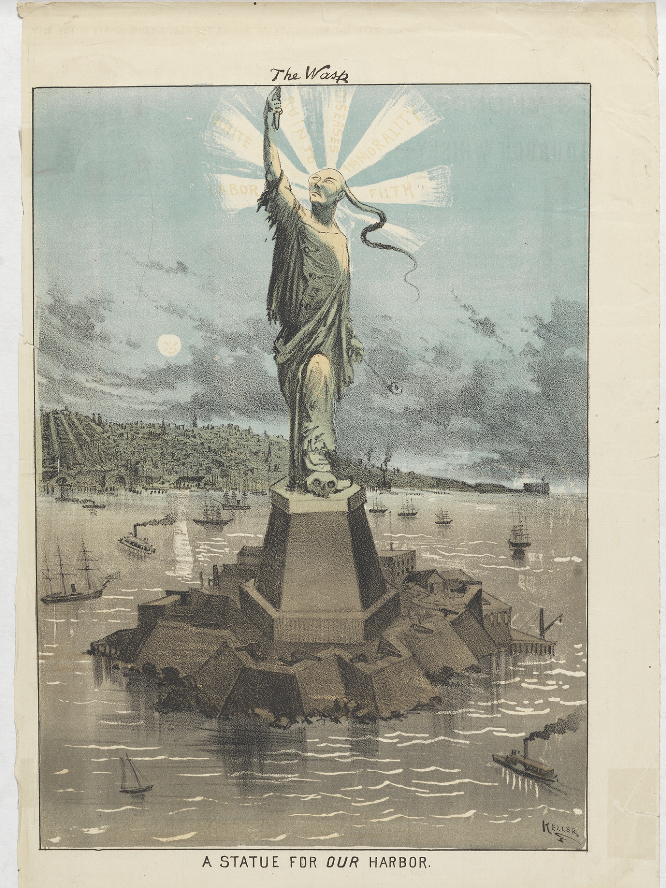
A racist cartoon originally depicted in the publication, the San Francisco Wasp, in 1881. The cartoon was a parody of the Statue of Liberty and represented a growing fear of Asian immigrants within the United States

On Friday, April 3rd, the National Asian Pacific American Bar Association (NAPABA) hosted a webinar titled “Pandemic and Acts of Hate Against Asian Americans: From Past to Present.” The webinar traced the historical roots of Asian American discrimination related to disease and public health issues and presented solutions for the present in the face of the COVID-19 pandemic. 

The webinar featured a panel which included Professor Jack Chin of UC Davis Law School, Matt Stevens of The New York Times’s Political News division, Harpreet Singh Mokha of the Department of Justice’s Community Relations Service, and Rahat N. Babar, Special Counsel, Office of the Governor of New Jersey. Chris M. Kwok, the NAPABA Dispute Resolution Committee Co-Chair and our very own AABANY Issues Committee Chair, helmed the panel as moderator. 

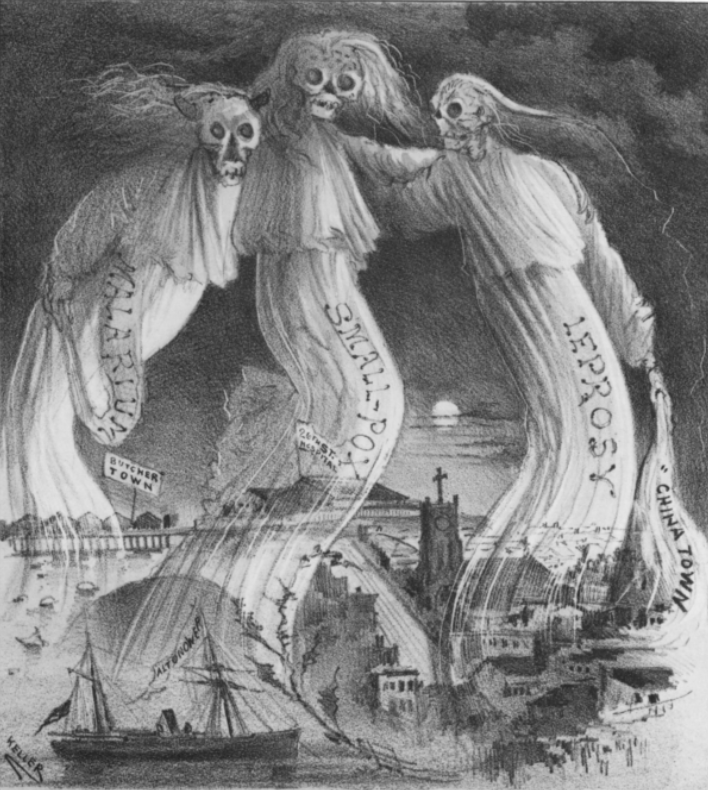
Professor Chin began by outlining the extensive history of anti-Asian discrimination within the United States. He focused on how discriminatory legislation at the state level in California and at the national level through the Chinese Exclusion Act of 1882 frequently correlated Asian American immigrants with disease. In particular, Professor Chin noted how San Francisco became a focal point of race-based efforts to control the bubonic plague in the early 1900s. Multiple political attempts were made to isolate and discriminate against Asians in the city which were repeatedly rebuffed by legal challenges such as Wong Wai v. Williamson and Jew Ho v. Williamson. Professor Chin underscored the ugly but recurring theme pushed in American politics about the “foreignness of germs.”

Following the professor’s historical account, Matt Stevens, an Asian American political reporter for The New York Times, noted the efforts that legislators are making to combat these acts of discrimination. Moreover, he noted the pervasive feeling of fear that permeates the Asian American community.

Harpreet Singh Mokha, National Program Manager for Muslim, Arab, Sikh, South Asian, and Hindu (MASSAH) issues at the Community Relations Service of the DOJ, explained the role and function of CRS during this pandemic. Established under Title X of the Civil Rights Act of 1964, CRS, frequently called “America’s Peacemakers,” works directly with communities facing conflict on racial, ethnic, gender, sexual orientation, religious, and disability issues. It has four primary functions: facilitating dialogue, mediating conflict, training community members, and providing consultation for methods of community assistance. Mr. Mokha noted that members of communities all across the country should be encouraged to make use of CRS’s resources and report hate crimes at their first occurrence. 

To wrap up the panel, Rahat Babar, Special Counsel for Litigation with the Office of the New Jersey Governor, echoed Mr. Mokha’s point to report hate crimes without hesitation. He noted a 2020 in-state report which found a 65% increase in bias incidents between 2018 and 2019 with 46% of those engaging in such bias incidents being minors. Thanks to this report, Governor Phil Murphy was able to set up a task force to explore why minors were engaging in such behavior. Mr. Babar notes that without a robust data set of incident or hate crime reports, lawmakers and community leaders will not be able to identify root problems or pose solutions. 

Overall, the panel outlined past and present cases of racial discrimination targeted towards the AAPI community. All panelists acknowledged the importance of speaking out during this time of uncertainty for the sake of protecting fellow community members both now and in the future. 

This event  reached the largest audience for a NAPABA webinar to date, with 160 registrants. The program stressed placing the events of today within historical understanding of America, engagement with our government institutions charged with enforcing our laws, and collaboration across civil society organizations. We at AABANY thank and acknowledge Chris Kwok for proposing this program to NAPABA and serving as moderator.

A racist cartoon published in San Francisco-based publication, The Wasp. The cartoon promoted then-common racist myths that Chinatown was riddled with disease.
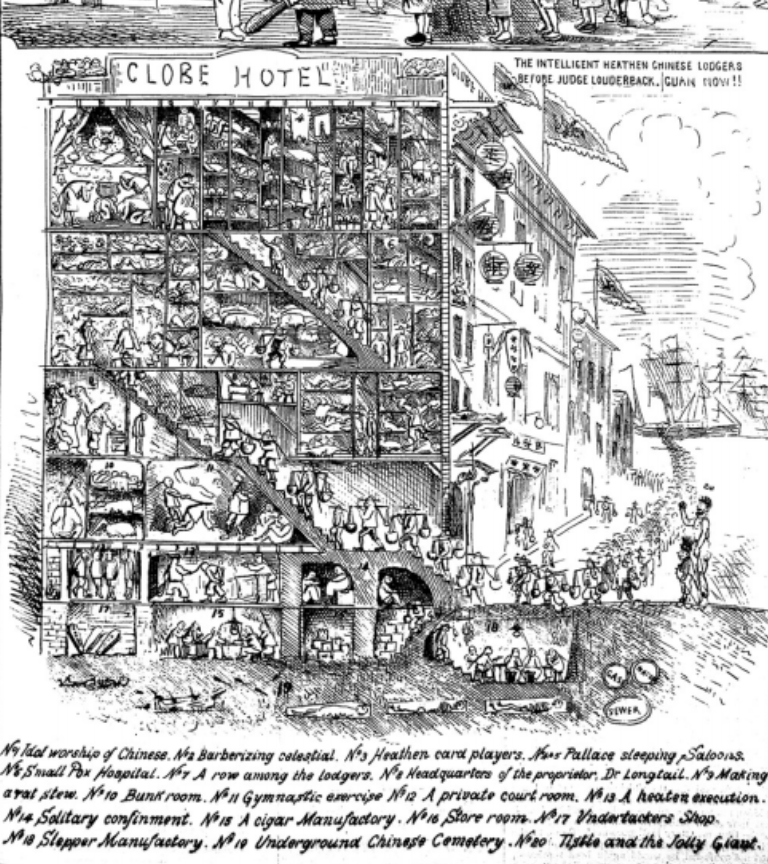
A racist cartoon published in the illustrated San Francisco weekly “Thistleton’s Illustrated Jolly Giant” depicting San Francisco’s The Globe Hotel. The cartoon insinuates that the Globe Hotel secretly contained a “small pox hospital” and an “underground Chinese cemetery,” perpetuating racist stereotypes of the time.

In the Wake of Zero Tolerance–Best Practices for Representing Separated Parents and Children Webinar

In the Wake of Zero Tolerance–Best Practices for Representing Separated Parents and Children Webinar

SOLO & SMALL FIRM COMMITTEE WEBINAR | THINGS THAT GO BUMP ON THE INTERNET

Social media plays a significant role in today’s society and has changed how we market law practices and access information. Effective and ethical lawyering means navigating the dangers that lurk for lawyers on social media, and also the multitude of electronic tools that may seem appealing and helpful in our zeal to obtain the best results for our clients. A misstep comes with a disciplinary price tag. Attendees will learn do’s and don’ts, helpful tips and guidance regarding the ethics of self-promotion on the internet, LinkedIn endorsements, investigating and manipulating online data and evidence, astroturfing, Web bugs, and Internet scams involving settlement funds.

Date and Time
Thursday, March 30, 2017, at 4 p.m. EDT

Click here to register.

Moderator | Judy M. Lam (Litigation Partner, Kumagai Law Group, Jeanne P. Gray Diversity Scholarship recipient and Diversity Committee, ABA Center for Professional Responsibility)

Speakers | Wendy Wen Yun Chang (Partner, Hinshaw & Culbertson; member, ABA Standing Committee on Ethics and Professional Responsibility) and Ellyn Rosen (Deputy Director of ABA Center for Professional Responsibility)

This webinar is the result of collaborative efforts of the ABA Center for Professional Responsibility and NAPABA. Applicable ethics rules will be discussed and cited by rule number during the presentation. Code words will be used to monitor attendance during the live webinar. NAPABA headquarters will provide attendance certificates to members for attending the webinar. It is up to individual members to determine whether the webinar qualifies for credit (and what kind) in their state.

Webinar: 2016 Spring Asian American Voter Survey

Inclusion vs. Exclusion: 2016 Spring Asian American Voter Survey

Release Date: May 17, 2016

Contact:
Michelle Boykins, [email protected], (202) 296-2300
Alton Wang, [email protected], (202) 223-9170

WASHINGTON, DC – National and state-based leaders in the Asian American civil rights community will release new polling data on Asian American voter attitudes during a press call on Monday, May 23, 2016 at 1:00 p.m. EST. Please register.

Speakers will discuss the results of the 2016 Spring Asian American Voter Survey, which polled 1,200 Asian American registered voters. Speakers will also discuss registration drives and get-out-the-vote organizing efforts of Asian American community groups on the ground in key states.  

WHO:

  • Mee Moua, President and Executive Director of Asian Americans Advancing Justice | AAJC 
  • Christine Chen, Executive Director of Asian and Pacific Islander American Vote
  • Karthick Ramakrishnan, Director of AAPIData and Professor of Public Policy

WHAT: Release of the 2016 Spring Asian American Voter Survey

WHEN: Monday, May 23, 2016 at 1:00 P.M. EST

REGISTER:

Please register: bit.ly/aapi-survey. After registering, you will receive a confirmation email containing information about joining the webinar.

From the Mayor’s Office of Immigrant Affairs: Host a Community Conversation on Immigration

Receive $200 for hosting a conversation

Community-based groups and organizations are eligible to receive a $200 stipend from the Council for hosting a Community Conversation by registering to be a featured site. Featured sites must register their event in advance and complete a final evaluation, including attendance information. Facilitators at featured sites are required to attend a free 60-minute facilitator-training webinar.  Training webinars will be offered at the following throughout the summer and fall; see the Council’s webinars page to learn more and sign up.  

For more information about hosting a Community Conversation, contact Senior Program Officer Erika Halstead ([email protected] / 212.233.1131).

New Community Conversations Toolkits on Immigration

From New Netherland to New York, immigrants from every part of the world have made their home in our state. Community Conversations invites New Yorkers to explore our shared history as immigrants and the descendants of immigrants, and to discuss the ways that immigration continues to shape the experience of being American today. Each conversation uses a short text as a starting point for discussions about cultural understanding and our roles as active citizens in a diverse and democratic society.  

There are community conversation toolkits for children, young adults, and adults. All of the toolkits contain everything you need to host these “do-it-yourself” discussions, including: texts suitable for each audience; a set of sample questions; guidelines for starting and sustaining good conversations; tips for hosting a conversation; and a sample participant evaluation. Anyone can register and download the toolkits for free from our website.

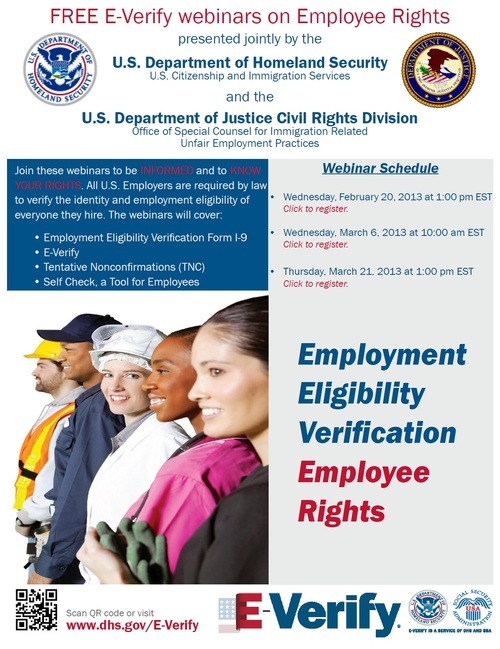
From USCIS: Employment Verification (E-Verify) Webinar, March 2013

All U.S. employers are required to verify the identity and employment eligibility of everyone they hire. Please join the U.S. Department of Homeland Security, U.S. Citizenship and Immigration Services and the U.S. Department of Justice, Civil Rights Division, Office of Special Counsel for Immigration Related Unfair Employment Practices, for a webinar that can help you to be INFORMED and to KNOW YOUR RIGHTS regarding employment and hiring practices.

Click on the image below for a copy of the flyer.

image

Webinar: The Challenge of International Judgment Enforcement

Webinar: The Challenge of International Judgment Enforcement

USCIS Free Webinar: USCIS: Employment Verification (E-Verify)

Do you have questions about Form I9, Self Check or your Employee Rights? Are you an existing E-Verify user who needs questions answered?

Let USCIS help you.

The U.S. Department of Homeland Security is here to teach you and answer all your questions about Employment Verification (E-Verify) with free, live and interactive webinars.

Check out the FREE E-Verify Webinar Schedule, for EMPLOYERS AND EMPLOYEES.
Be in the Know – Take a Free Webinar today.

Background:
Federal law requires every employer and agricultural recruiter/referrer-for-a-fee hiring an individual for employment in the US to verify his or her identity and employment authorization through completion of Form I-9, Employment Eligibility Verification.
US Citizenship and Immigration Services (USCIS) has a website dedicated to this process including:

–          Employee Rights
–          Preventing Discrimination
–          Filing a Discrimination Claim

Do you know that you can use Employment Verification (E-Verify) Self Check now? Self Check is a service of E-Verify. It is a free, Internet-based application that can be used by anyone in the U.S. over the age of 16 to confirm his or her employment eligibility. The service is available nationwide. After you enter a small amount of information, the Self Check service will check that information against various government databases to determine your work eligibility in the United States.

Do you know there is an Employee Rights ToolkitAlso in Spanish.