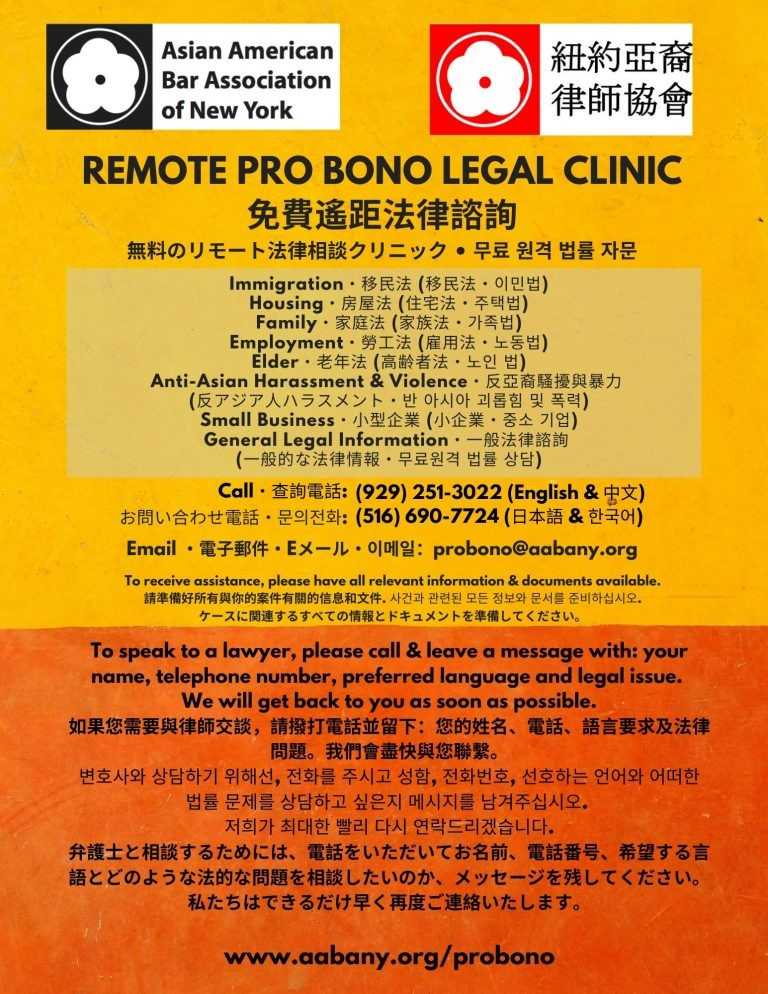

On April 27, 2020, the Asian American Bar Association of New York (AABANY) along with the National Asian Pacific American Bar Association (NAPABA) and many other bar associations signed onto a statement of support for Congressional resolutions opposing anti-Asian sentiment related to the COVID-19 pandemic. The Asian American and Pacific Islander community has been the target of increasing acts of bias, racism, and xenophobia in connection with the coronavirus. AABANY firmly stands against racism and discrimination and is proud to support efforts to address the experiences our community may face with these issues.
Legal Services NYC has compiled an extensive COVID-19 Resources Guide for its clients. The resource guide includes, but is not limited to, updates on the local, state, and federal court systems; public benefits and unemployment insurance resources; and information on how to continue to access our services. It is continuously being updated and is available in English, Spanish, and Chinese.
Legal Services NYC’s Access Line is OPEN and the organization continues to serve clients and communities during the COVID-19 pandemic. Although Legal Services NYC’s physical offices are closed as of March 17, 2020, the organization’s dedicated staff are working remotely on behalf of new and existing clients.
Current clients should contact their advocate’s office or extension for more information about their cases.
If you are seeking legal assistance on a new matter, you can call the Legal Services NYC legal assistance hotline at 917-661-4500, Monday through Friday from 10 a.m. to 4 p.m. Staff can take calls in any language.
From Douglas C. Palmer, Clerk of Court, United State District Court, Eastern District of New York:
The application period for any one of four vacancies being filled at this time has been extended to May 29th, 2020. I have attached a link to the public announcement seeking applicants for currently vacant positions and upcoming vacancies. This is perhaps a unique time in the history of the federal court in this, the Eastern District of New York; I do not have any record of this number of opportunities being available at the same time since the US Magistrate Judge positions were created.
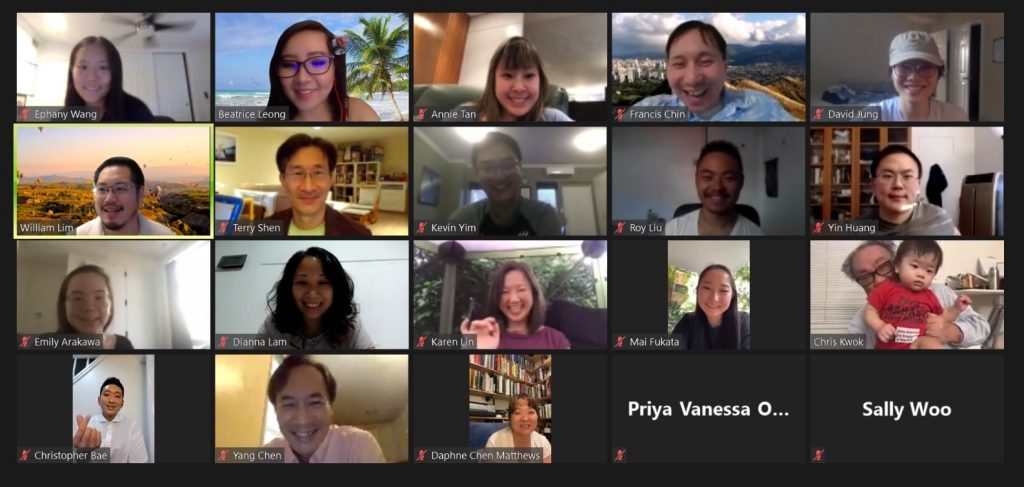
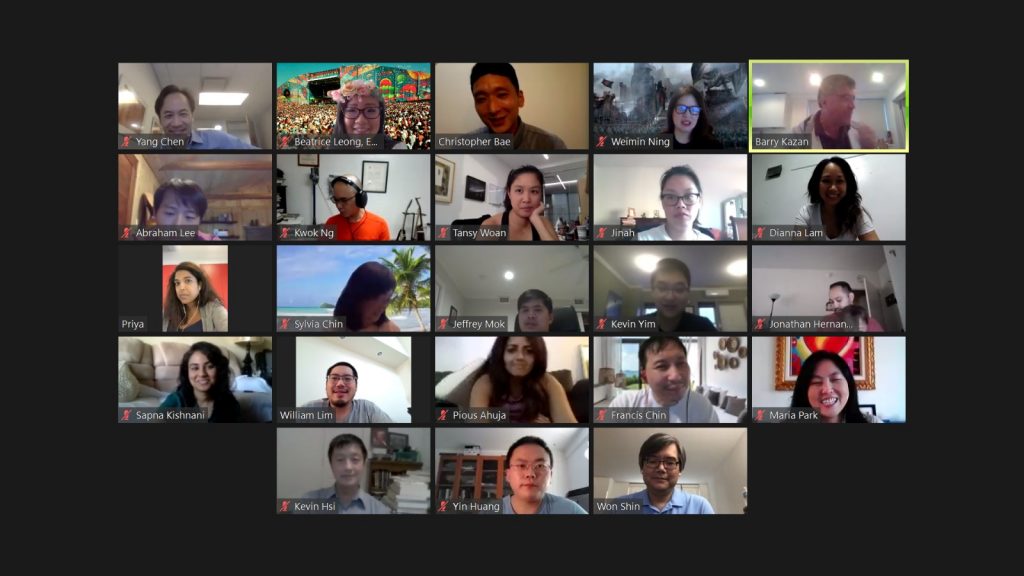
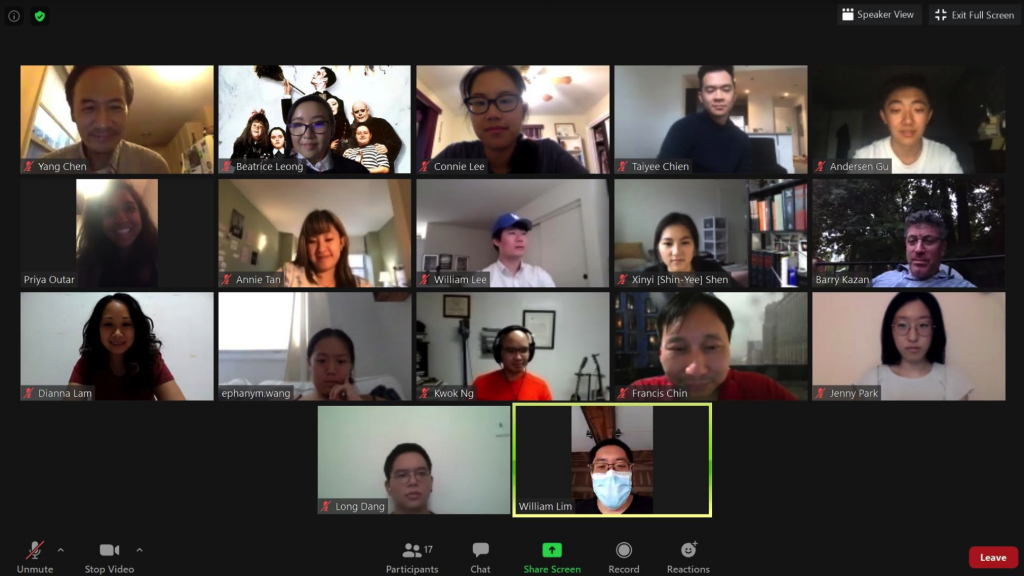
On April 24, 2020, the Membership Committee hosted the first of its weekly Zoom Membership Mixers, with 22 members in attendance. The question posed to the participants was: “What is the most positive thing to happen to you as a result of COVID-19?” Members reported having more time to garden, spending time watching their children grow, watching TV shows (“Better Call Saul”) and exercising.
The Membership Committee previously hosted Monthly Mixers at bars, ballparks, stadiums, operas, etc, but due to COVID-19, we are moving online to offer members a weekly outlet to share their feelings, see old friends, and make new connections. Mixers start at 6:30pm on Friday and the main event ends at 7:30pm but feel free to stay on after 7:30pm for smaller breakout groups. (This week a few members talked till 10pm!)
The Membership Committee will be giving away door prizes at some of the upcoming mixers. Congratulations to Jeffrey Mok for winning the cash prize at the first mixer!
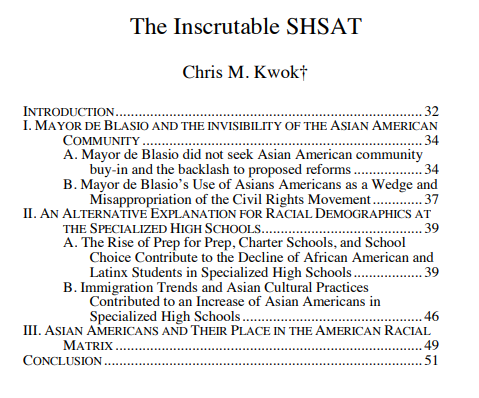
The Asian American Law Journal (AALJ) is taking article submissions for this upcoming publication cycle.
The Asian American Law Journal (AALJ) is one of only two law journals focused on Asian American communities. Known as the Asian Law Journal until 2007, AALJ first published in October 1993 in a joint publication with the California Law Review. AALJ provides a scholarly forum for the exploration of unique legal concerns of Asian Americans, including but not limited to the East Asian, South Asian, Southeast Asian, and Asian Pacific American communities. AALJ publishes annually, and each volume typically contains articles, book reviews, essays, and other contributions from scholars, practitioners, and students. AALJ welcome commentary, analysis, and research on the experiences and concerns of Asian Americans, including the intersections of gender, class, sexual orientation, religion and race.
AALJ invites you to submit an article, essay, book review, transcript of a previous lecture, or other contribution on civil rights, immigrant rights, or any other area of your interest relating to Asian Americans and the law. Authors may submit a piece by emailing AALJ directly at aalj@berkeley.edu, or by submitting to AALJ through Scholastica or ExpressO.
AALJ makes offers for publication on a rolling basis as submissions are received, but the deadline for submissions is August 15, 2020. If you have any additional questions, please feel free to reach out to Yongbin Chang, a Submissions Editor for the Asian American Law Journal at Berkeley Law, at aalj@berkeley.edu.
Please note the following summary and resource of COVID-19 updates as of April 19, 2020, released by the Office of Mayor Bill de Blasio.
Anti COVID-19 Stigma
Education
Food Resource
Small Business
Health + COVID-19 Testing
Benefits
Jobs
DACA
How to help NYC
Others
Read more about the resources in English and Chinese here. Please contact Xiaomin Zhao at (646) 306-9287 or via email at xzhao@cityhall.nyc.gov if you have questions.
Since the rise of COVID-19, Asian Americans have become increasingly vulnerable to acts of assault, harassment, and discrimination. In response, the New York City Commission on Human Rights, the Office for the Prevention of Hate Crimes, and the NYPD have become more aware and responsive to hate and bias reports related to coronavirus. Mayor Bill de Blasio’s Office has made an info sheet detailing some resources available to Asian Americans and others who may be victims of such cases.
Download the fact sheets in the following languages:
A week ago, there was a statewide rollout of virtual court operations via Skype and teleconferencing for essential and emergency proceedings amid the COVID-19 pandemic. On April 13, 2020, Chief Judge Janet DiFiore and Chief Administrative Judge Lawrence K. Marks announced that this temporary “virtual court” model is being expanded beyond the limited category of essential and emergency matters.
Over the past two weeks, the New York State Courts’ trial court efforts have centered on arraignments, bail applications, orders of protection and other essential and emergency criminal, family and civil matters. Following a successful transition to a virtual court system for the handling of essential and emergency matters statewide, the court system is extending its focus to include pending tort, asbestos, commercial, matrimonial, trusts and estates, felony, family and other cases, which make up the vast bulk of trial court caseloads. The existing ban on the filing of new “non-essential” matters will remain in effect.
On March 26th, 2020, the Federal Administration passed the Coronavirus Aid, Relief, and Economic Security (CARES) Act with the interests of minority groups, immigrants, and low-income community members in mind. The Chinese-American Planning Council (CPC) policy team has created an easily accessible info sheet on the CARES Act in English and Chinese (simplified and traditional). Thanks again to CPC for providing these information sheets and advancing the interests of not only Asian-Americans but all who are most vulnerable to COVID-19.
Download the fact sheets in the following languages:
NAPABA continues to monitor the current situation regarding coronavirus and recognizes the disruption it has had—and may continue to have—on members’ daily lives.
With that in mind, NAPABA has extending its deadline for the 2020 NAPABA Convention Call for Programs to April 20 at 5 p.m. ET to provide more time for submitting proposals.
NAPABA also understands that the current situation may impact submitters’ ability to secure speakers for program ideas as people’s schedules change. NAPABA wants to reassure everyone that the CLE Committee will take the current events into consideration upon reviewing the submissions and will not count the lack of “confirmed” speakers against any submission.
NAPABA still encourages submitters to include those who have expressed interest in speaking on a program as “confirmed” speakers, and understands that their availability may change.