On July 20, 2022, AABANY’s Student Outreach Committee hosted a virtual panel discussion to provide advice on the On-Campus Interviewing (OCI) process and how to get a small and mid-sized firm job. The event, part of the Student Outreach Committee’s Pre-OCI Series, ran from 6:30 pm to 7:30 pm on Zoom. The panel was moderated by Student Outreach Committee Vice Chair Jay Hawlader (Summer Associate ‘22 – Barasch & McGarry) and featured the following panelists:
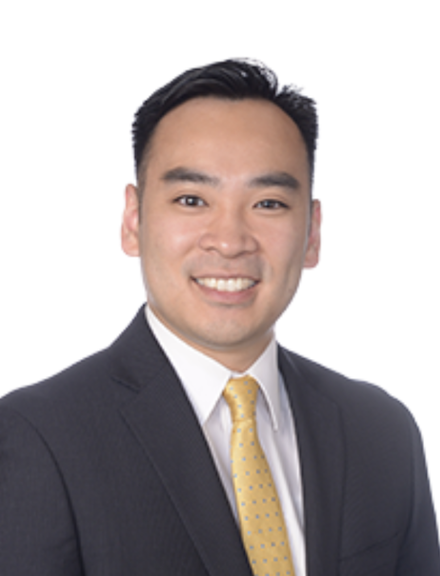
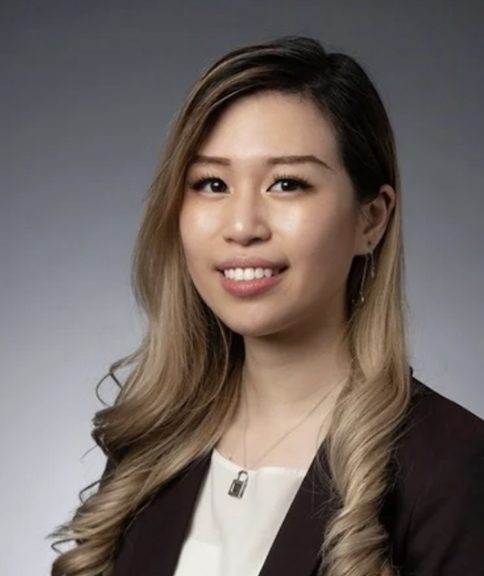
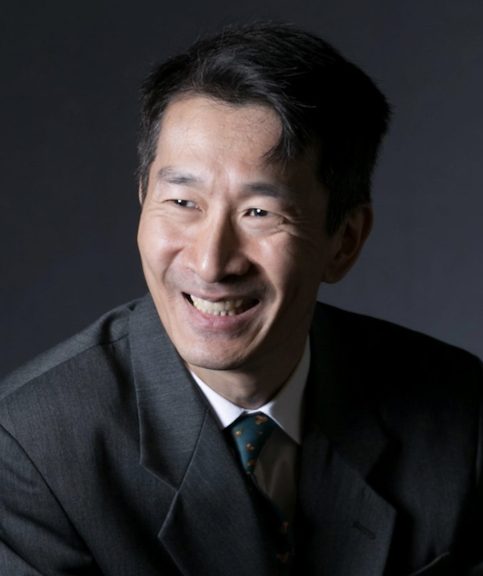
Carolynn Beck (Partner – Eisner, LLP)
Keli Liu (Senior Associate – Greenwald Doherty LLP)
Richard Sui (Associate – Gordon Rees Scully Mansukhani LLP)
James Lee (Associate – Littler Mendelson P.C.)
Panelists discussed the pros and cons of joining a small and mid-sized firm, interview tips, and advice for pivoting into big law. The main takeaways included the increased accountability and resilience built at small and mid-sized firms, networking with associates in addition to partners at law firms to better understand the firm culture, and being proactive in utilizing resources such as mock interviews and the career center. The discussion was followed by a Q&A session, where audience members asked questions about hours, which the panelists stated can vary depending on weekly workload, and recession considerations, to which the panelists mentioned that there exists a demand for a variety of legal services during a recession.
AABANY thanks the Student Outreach Committee for organizing the event and all panelists, moderators, and students who attended. To learn more about the Student Outreach Committee, please visit https://www.aabany.org/page/121.
AABANY President, William Ng, and AABANY Immediate Past President, Terry Shen, spoke with, Ashley Wong, an Associate at Sidley Austin LLP, for the New York City Bar Association podcast posted on May 26, 2022, to comment on AAPI (Asian American and Pacific Islander) Professional Career Trajectories.
Associate Ashley Wong began the conversation by examining the present landscape for AAPI advancement in their careers. She notes that while the US AAPI population is the “fastest-growing racial or ethnic group in the country,” growing by 88% in the past two decades, “many AAPI employees are still portrayed as ineffective or weak managers, resulting in AAPIs leaving companies at higher rates and not reaching senior positions.”
Commenting on his career path and success in reaching leadership positions, AABANY President Will Ng spoke to the support he had received from colleagues and members of the AAPI community as integral factors to his success. Similarly, Immediate Past President Terry Shen also detailed the effective alliances that had helped him progress dynamically from the field of STEM to Corporate Law and even to Investment Banking. Common to their responses, both AABANY leaders spoke to the importance of having strong role models that formed their support network and the foundation for their success.
In recognizing the work that AABANY does to ensure that future leaders in the field of law have access to more diverse role models, Will and Terry spoke about both the local and systemic changes that AABANY has put forth. From organizing pro bono clinics for LEP communities to facilitating legislative change toward the protection and promotion of AAPI communities, AABANY has advocated for meaningful participation and leadership of and for AAPI communities. Within AABANY, Terry spoke to AABANY’s Leadership Development Program, which seeks to “address the continued under-representation of [AAPI] attorneys in leadership positions in the legal field.”
To conclude the interview, Ashley asked both leaders to share any advice they had for aspiring lawyers and AAPI individuals interested in pursuing the legal profession. Will encapsulated his advice into three key points: “Think strategically, speak to others, and plan ahead.” Terry reiterated the importance of forming solid alliances with mentors and colleagues.
On March 31, AABANY’s Student Outreach Committee and the Network of Bar Leaders hosted a mentoring session for law students. The event was titled “Experiences and Tips to Sustain Your Legal Career” and featured five distinguished bar leaders:
Vincent Chang, President, New York County Lawyers Association and Past President, AABANY (2007)
Jean Dassie, Treasurer, Federal Bar Association SDNY Chapter
Austin D’Souza, President, South Asian Bar Association of New York
Karen Kim, President-Elect, Asian American Bar Association of New York
Meredith Miller, Past President, Network of Bar Leaders and LeGal
The moderators were Margaret Ling, Vice President of the Network of Bar Leaders, and William Lee, Vice Chair of AABANY’s Student Outreach Committee.
Reflecting on their career paths, the speakers agreed on the importance of setting professional goals with an open mind. Both Karen and Margaret encouraged students to explore broadly, get to know their classmates and warned about tunnel vision in law school. Meredith shared that membership in a bar association has been important to her career as it helped her form many meaningful connections. Vincent added that many bar associations host mentorship programs that are especially beneficial to students and young attorneys.
In the second part of the event, attendees had the opportunity to talk informally with the speakers. Attendees introduced themselves and received advice tailored to their areas of interest. The conversation ranged from law practice in real estate to how COVID is changing legal academia.
Thank you to the speakers, moderators and attendees for a festive and informative event. To learn more about the Student Outreach Committee, please visit https://www.aabany.org/page/121. To learn more about the Network of Bar Leaders, go to https://www.networkofbarleaders.org/.
AABANY, with the Syracuse University College of Law, hosted a discussion with Justice Doris Ling-Cohan (retired) on March 29. Justice Ling-Cohan is the first Asian woman judge to be elected to the New York Supreme Court and appointed to an appellate court in New York.
AABANY Executive Director Yang Chen introduced Justice Ling-Cohan to start off the program. Justice Ling-Cohan shared with students her groundbreaking path to judgeship. She discussed the many barriers she encountered during her election as a political newcomer and an Asian American woman. “Do not put barriers on yourself,” she advised her audience. “You don’t have to be the best to do [what you want].”
Civic engagement has been a constant theme through Justice Ling-Cohan’s accomplished career. She reminded students that they do not have to work in the public sector to be of service. “Anyone can have a foot in their community. There is so much you can do… compose op-eds, start petitions and campaigns.”
The evening continued with remarks on public service and diversity by Syracuse’s assistant dean for career development, Lily Yan Hughes. Syracuse Law School student leaders then led a Q&A session. The students were interested to know about the challenges of being a justice and navigating a bureaucracy with competing interests.
We thank Justice Ling-Cohan and Dean Hughes for their time and insights. This event was co-sponsored by Syracuse Law School APALSA, KLSA, SALSA, Office of Career Services, and the Asian Americans and the Law Seminar.
Hear what leading APA General Counsels of Fortune 1000 companies have to say about these questions, and more, on NAPABA Coffee House!
NAPABA Coffee House is a series of one-on-one interviews with APA General Counsels of Fortune 1000 companies hosted by Lawrence Tu, former Chief Legal Officer of CBS Corporation. Whether you are a young lawyer or a seasoned professional, NAPABA Coffee House is brimming with knowledge and experiences we can all learn from.
Watch Episodes 1-5 now:
Episode 1: Lola Lin, Chief Legal Officer of Howmet Aerospace. Lola Lin is the Chief Legal Officer of Howmet Aerospace, a leading global provider of advanced engineered solutions for the aerospace and transportation industries. Prior to her role at Howmet, Lola served as General Counsel at Airgas and held various in-house roles at Air Liquide and Dell.
Episode 2: John Chou, Retiring EVP and Chief Legal Officer at AmerisourceBergen. John Chou is the retiring Chief Legal Officer at AmerisourceBergen, a Top 10 company on the Fortune 500 list and one of the largest global pharmaceutical sourcing and distribution services companies. John joined AmerisourceBergen in 2002. Prior to that, John served as Member at a law firm in Philadelphia, Senior Corporate Counsel at Cigna Corporation, Chief European Counsel at ARCO Chemical Europe, as well as Chief Corporate Counsel and Assistant General Counsel at ARCO Chemical Company.
Episode 3: Marie Oh Huber, Chief Legal Officer at eBay Inc. Marie Oh Huber is SVP, Chief Legal Officer, General Counsel and Secretary at eBay Inc., a global commerce leader which connects millions of buyers and sellers in more than 190 markets around the world. Marie has been at eBay since 2015. Prior to joining eBay, Marie served as General Counsel at Agilent Technologies, Inc. and corporate counsel at the Hewlett-Packard Company (former name).
Episode 4: Alan Tse, Global Chief Legal Officer of Jones Lang LaSalle. Alan Tse is Global Chief Legal Officer and Corporate Secretary of Jones Lang LaSalle, Inc (JLL). JLL is a leading professional services firm that specializes in real estate and investment management. As December 31, 2020, JLL had an annual revenue of $16.6 billion, operations in over 80 countries and a global workforce of approximately 91,000. Prior to JLL, Alan was General Counsel at Petco, Churchill Downs, LG Electronics MobileComm U.S.A. and two startups.
Episode 5: Don Liu, Chief Legal and Risk Officer at Target. Don Liu is the Chief Legal and Risk Officer for Target Corporation, where he oversees all legal, risk and compliance, corporate governance and governmental affairs matters for the company. Prior to joining Target in 2016, Don was General Counsel at Xerox Corporation. He also held in-house legal leadership roles at Toll Brothers, IKON Office Solutions, and Aetna U.S. Healthcare.
NAPABA Coffee House is presented by the National Asian Pacific American Bar Association (NAPABA) in collaboration with the Harvard Law School Center on the Legal Profession. It is produced by Genevieve Antono (Harvard Law ’22) as her student fellowship project with the Center on the Legal Profession.
###
The National Asian Pacific American Bar Association (NAPABA), represents the interests of over 60,000 Asian Pacific American (APA) legal professionals and nearly 90 national, state, and local APA bar associations. NAPABA is a leader in addressing civil rights issues confronting APA communities. Through its national network, NAPABA provides a strong voice for increased diversity of the federal and state judiciaries, advocates for equal opportunity in the workplace, works to eliminate hate crimes and anti-immigrant sentiment, and promotes the professional development of people of all backgrounds in the legal profession.
Over 40 attendees gathered for a virtual breakfast hosted by AABANY’s Women’s Committee on March 10th. The featured speakers were Grace Fu, General Counsel of KAYAK/Open Table and incoming AABANY Board Director, and Kazuko Wachter, Chief Legal and Strategy Officer of Prism Financial Products and current AABANY Board Director. The conversation was moderated by Jennifer Wu, Partner at Paul, Weiss and AABANY Women’s Committee Co-Chair.
The discussion opened with the speakers’ transition to an in-house career path. Grace and Kazuko both had to quickly gain business knowledge in their new roles. Both affirmed the importance of asking questions from people with different types of expertise. Grace and Kazuko then shared their views on making connections in the workplace, taking risks and trying to achieve work-life balance.
One key theme from the conversation was authenticity at work. Coming from her own experience as a mother of three, Jennifer asked Grace and Kazuko how much of their personal lives they bring into their professional ones. Kazuko said she makes a point to be herself even if it does not align with conventional expectations. Grace highlighted that the pandemic has given many people, herself included, the opportunity to show more of themselves when taking calls at home or with family in the background.
Attendees were engaged throughout the hour-long conversation, most keeping their cameras turned on until the end. Those who pre-registered received a Grub Hub gift card to enjoy breakfast delivered to their homes. The Women’s Committee hopes to resume in-person breakfast meetings going forward, as has been done in the past, before the pandemic.
Thank you to everyone who attended and to the Women’s Committee for organizing this event. To learn more about the Women’s Committee, please visit https://www.aabany.org/page/122.
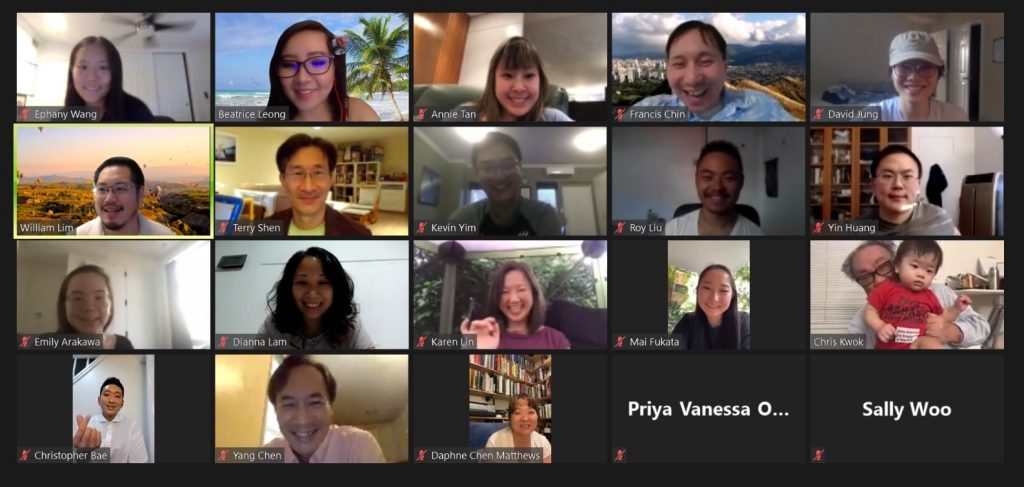
On August 21, the Membership Committee hosted its weekly mixer. At the mixer, AABANY spotlighted our legal interns, current and former, to recognize and thank them for all their hard work on behalf of AABANY. Joining us were current interns Annie Tan, Andersen Gu, and Ephany Wang. Also on the call were past interns David Jung, Emily Arakawa, and Mai Fukata. Each intern introduced themselves and shared what they were most concerned about as they head back to school or work during COVID-19. Those going back to school in the fall worried about the challenges of learning remotely or in hybrid settings. Those taking a gap semester or already working expressed concerns about employment opportunities and prospects when the economy is in shambles. Some also voiced concern about what the world would look like once we emerged from COVID-19.
After the interns spoke, we asked each of the attendees what advice they could offer to them. Our attendees covered the spectrum from current law students to attorneys practicing in various settings, both private and public at different stages of their careers, and the most common advice was to stay persistent and optimistic. Many remarked on the talented and intelligent interns AABANY has been fortunate to have and they were all encouraged to rise to the challenges they would face, and we were uniformly confident that they would do so. We reminded them that they are part of the AABANY family and they should all stay in touch with us and feel free to reach out if they need assistance or guidance in the future.
The Membership Committee previously hosted Monthly Mixers at bars, ballparks, stadiums, operas, etc, but due to COVID, we have moved online to offer members an weekly outlet to share their feelings, see old friends, and make new connections. Mixers start at 6:30pm on Friday and the main event ends at 7:30pm but many often stay on after 7:30pm for smaller breakout groups.
Membership Committee will continue to host weekly Zoom mixers until it is safe to gather together again in person.
We are giving away door prizes in some weeks. In order to win, you must be a member and must RSVP on the aabany.org calendar entry to get a raffle number. Non-members can join the Zoom mixer but won’t be eligible to win a prize.
Mixers are not recorded, and are LIVE, so don’t miss out.
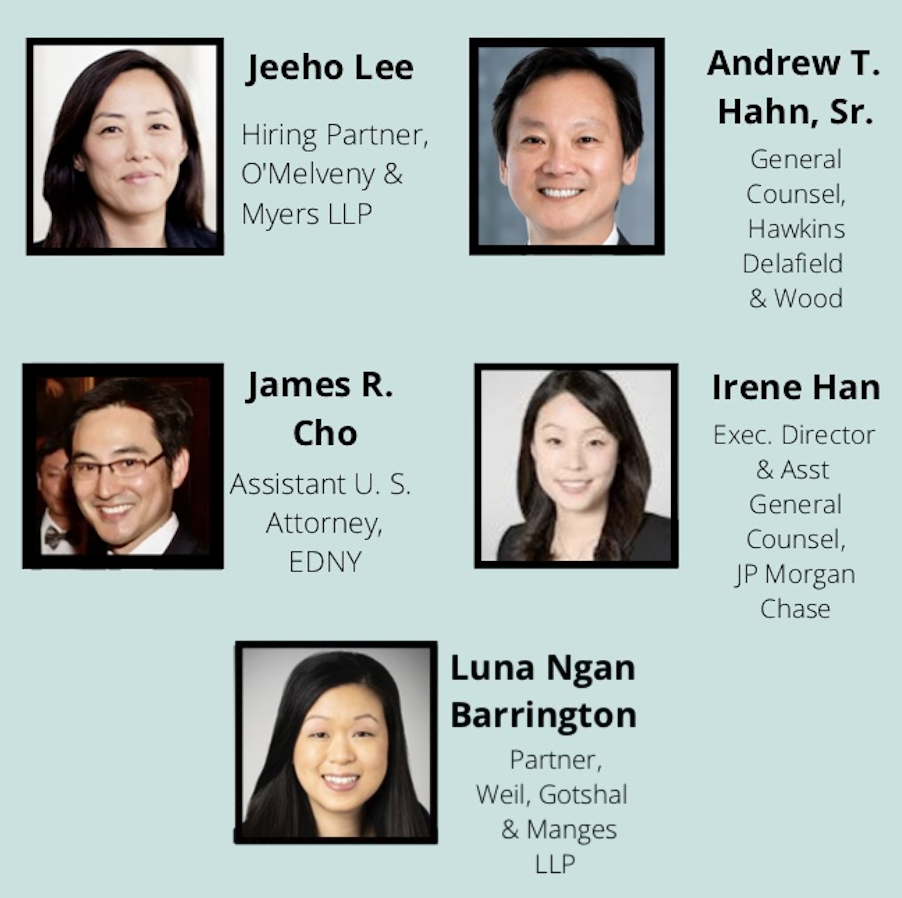
On June 15, 2020, the Student Outreach Committee of the Asian American Bar Association of New York (AABANY) hosted a webinar discussing how to succeed in virtual summer programs. Moderated by James Cho, an Assistant United States Attorney with the Eastern District of New York in Brooklyn and past president of AABANY, the panel featured: Luna Barrington, Partner at Weil, Gotshal & Manges LLP; Jeeho Lee, Hiring Partner at O’Melveny & Myers LLP; Andrew T. Hahn, Sr., General Counsel at Hawkins, Delafield & Wood; and Irene Han, Executive Director and Assistant General Counsel at JP Morgan Chase.
The panel first addressed what their current firms and organizations were offering for their summer programs, given the challenges of COVID-19. Jeeho Lee explained that the summer programs at O’Melveny & Myers LLP were shortened to six weeks and will be all virtual, but the firm guaranteed offers to all 2L summer associates, and that 1L summer associates were guaranteed positions for the summer of their second year. She emphasized that the staff wants to ensure that the summer program remains an opportunity for the firm to set up a platform for students to build a network with other lawyers. Luna Barrington’s firm, Weil, offered a 10-week program, which featured virtual social events, encouraged students to network, and extended offers to 1L and 2L summer associates. James Cho stated that all of his interns were assigned an Assistant U.S. Attorney to work with and that the program was completely virtual.
Andrew Hahn Sr., who also previously served as President of AABANY and NAPABA, encouraged summer associates and interns to have strong core competencies–reading, writing, and speaking skills–and to also practice their soft skills, especially in regards to social interactions and leadership. Luna Barrington encouraged individuals partaking in summer programs to make an extra effort to go out and meet people at the firm through virtual programs and to be proactive in seeking assignments as a way to distinguish themselves. Irene Han highlighted the importance of demonstrating a learning mindset, active engagement during virtual events (including turning on your video and microphone during meetings), and leadership. Jeeho Lee warned the audience to not take a guaranteed offer for granted, but to remain engaged and build a strong reputation. She also stressed that individuals should make relationships that expand their horizons. Finally, James Cho advised summer associates and interns to be heard, proactive, and present.
Irene Han gave the audience a few basic presentation tips, including dressing in business casual and meeting the cultural expectations of the firm. Jeeho Lee added that individuals should always try to dress professionally, even if others are dressed in casual attire.
When asked how to respond when an attorney is very busy and does not respond to emails and set hard deadlines, the panel suggested that the individual find another person that works with the assigned partner and ask through them. The panel also advised summer associates and interns not to ask to work in person unless the firm announces that it is opening up. They also encouraged individuals to schedule coffee chats with other members of the firm and attend company social events. The panel advised individuals to avoid excessively apologizing for mistakes or not knowing the answers to questions, but rather, to only apologize when it is appropriate and to be direct. Finally, the panelists explained that there may likely be many firms that do not give returning offers to many summer associates due to external factors, but that individuals should ask the HR manager or the director of the summer program for advice for the following summer.
We thank the panelists for their time and the Student Outreach Committee for organizing this informative discussion. For more information on the Student Outreach Committee, see https://www.aabany.org/page/121.
Committee of 100’s teleconference series: Strategic Lessons
from within China for Responding to COVID-19
About this Event
Committee of 100 (C100) is launching a teleconference
series, Strategic Lessons from within China for Responding to COVID-19. The
series will feature business executives and education leaders with experiences
on the ground in China responding to the coronavirus, offering timely and
actionable advice to American job creators and educators.
With each passing day, American job creators are concerned about how the outbreak will impact not only their bottom line, but the livelihoods of their employees. Meanwhile, schools and universities are closing to protect their students, faculty, and staff. Americans are feeling fearful and uncertain, and would benefit greatly from hearing from leaders within China who have struggled with and navigated similar complexities.
The series begins with discussions featuring C100 members David Ho moderated by Richard Lui, Wednesday, 3/25 at 2pm ET. Richard was was the MC for AABANY’s Annual Dinner for many years. The second session will feature Dr. Anning Chen, CEO of Ford China on March 30 at 9pm Eastern Time. The sessions will be moderated.
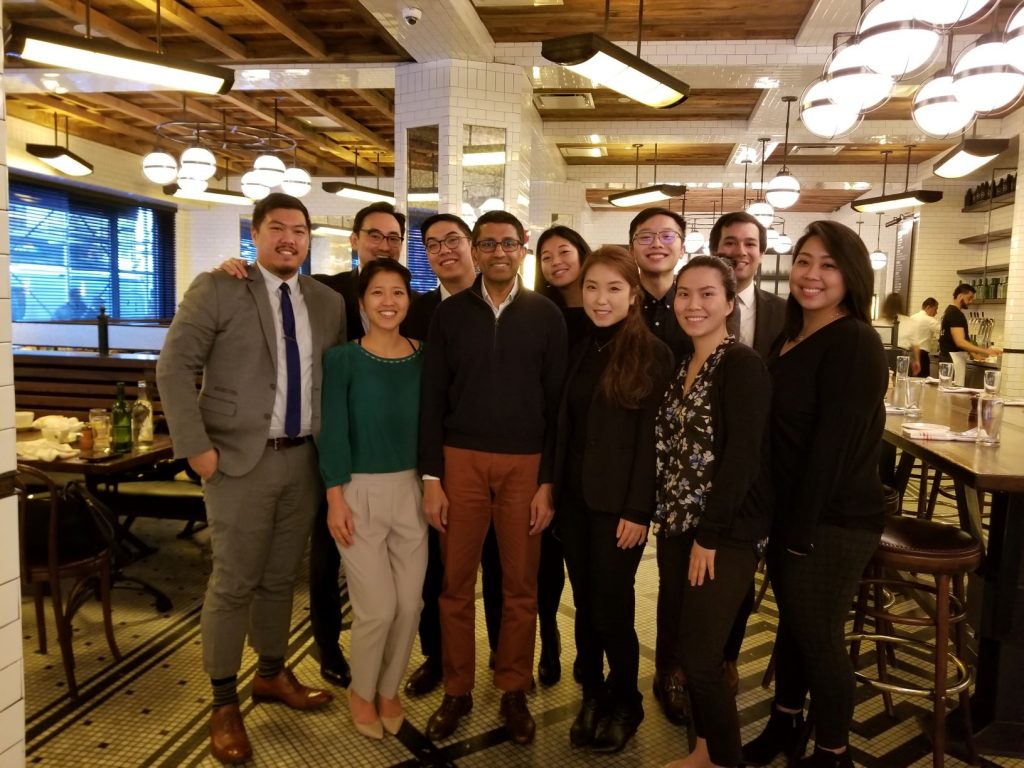
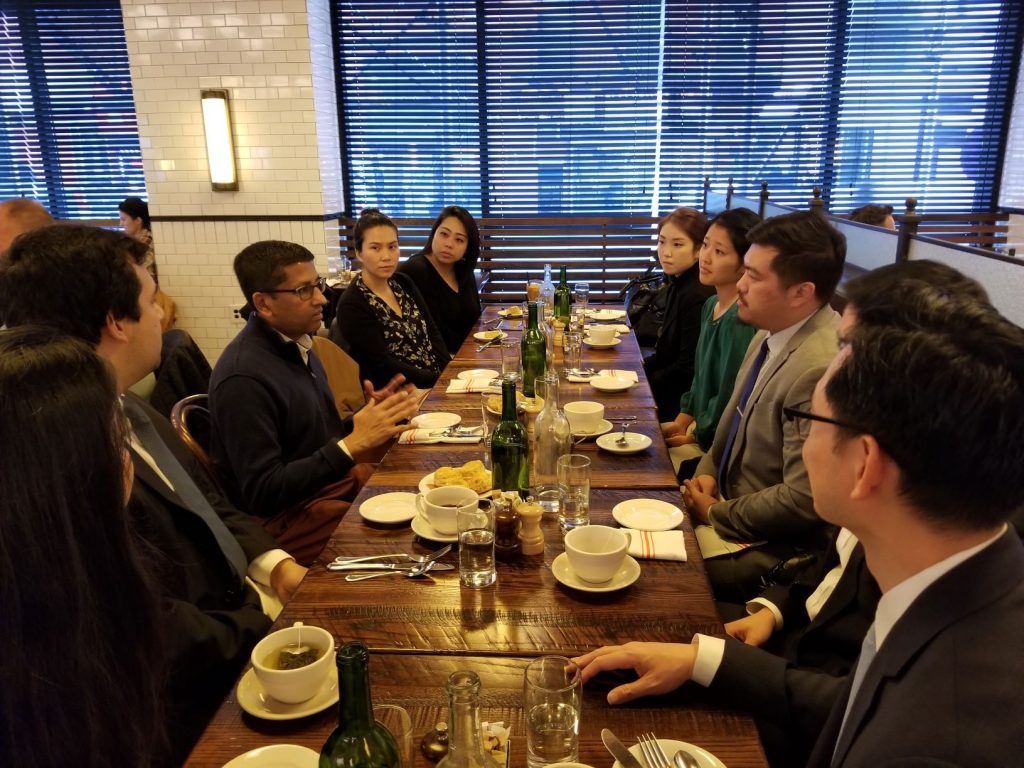
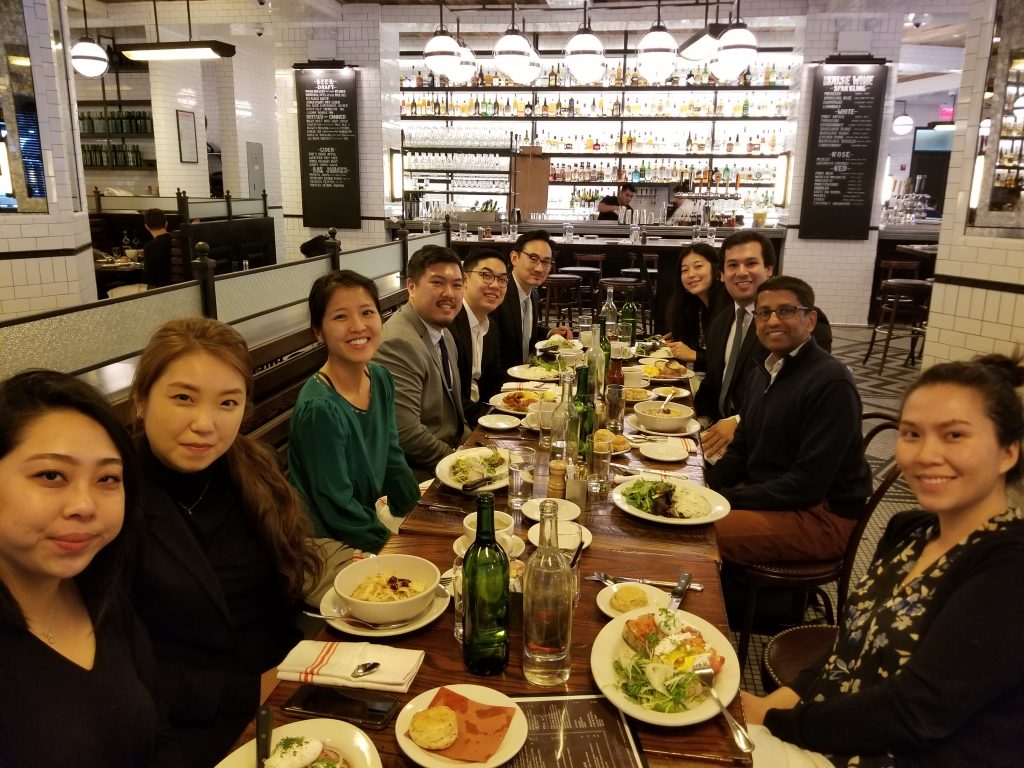
On Thursday, February 27, AABANY hosted a breakfast event for law students with Chief Judge Sri Srinivasan, U.S. Circuit Judge of the D.C. Court of Appeals, at The Smith in NoMad. Judge Srinivasan was in town for AABANY’s 2020 Annual Dinner where he was presented the Public Service Leadership Award, and the judge was gracious enough to take the time the next morning to advise students pursuing careers in law. Judge Srinivasan familiarized students with his many life experiences by speaking about his upbringing, education, and career. Everything from his judicial philosophy to his love of sports provided attendees with important nuggets of wisdom and essential insights.
Judge Srinivasan elaborated extensively on the three guiding principles that have shaped his life and his service: doing great work, being a good person, and assuming the best of those around you.
For his first tenet, Judge Srinivasan addressed the familial and social pressures that are widely prevalent in the Asian-American community, acknowledging the constant push to “climb the ladder” and focus heavily on quantifiable success. However, despite this pressure, he insists that the goal of students shouldn’t be to chase after the most lucrative opportunities to bolster a resume, but instead, students should strive to give their best and humble effort to everything that they do, no matter how small or invisible. Such persistence will pay off and be recognized in the long-run.
Regarding his second principle, the judge drew heavily from his own experiences with people in the legal field. He insisted that acting transparently in good-faith and modeling kind behavior will in turn make people feel heard which increases the likelihood of reaching mutually beneficial agreements. Judge Srinivasan remarked on how surprised he has been in the past by the benefits of simply listening to others. His way of approaching interacting with other people has influenced those around him, garnering the respect and trust of his peers.
Finally, Judge Srinivasan insists that, despite our initial inclination to expect the worst of others, there are pleasant surprises to expecting the best of others. Especially in such a partisan environment, he insists that it is important to treat traditional “adversaries” not as ill-intentioned individuals but as normal people with differences in how they approach universal problems. By viewing other people as different rather than evil, the judge believes that compromises can be reached more quickly and effectively.
After giving students background on his experiences and philosophy, Judge Srinivasan opened himself up for questions from the attendees. Many of the students focused particularly on how they can better represent their ethnic communities and perform optimally in the field.
Since some of the students present are leaders of affinity groups on their respective campuses, the judge applauded the efforts of the student leaders and addressed the importance of student advocacy groups. He referenced a common saying by his sister, “it’s hard to be what you can’t see,” to reveal how these minority cultural groups give face to their community and provide the next generation with role models to look up to. While he acknowledged this responsibility to represent is daunting and can feel lonely at times, Judge Srinivasan believes that student leaders should reframe their thinking to feel excited in the face of adversity.
Regarding how to achieve success in the field, the judge suggested looking for mentors who look out for your best interests, preparing for cases thoroughly, and embracing fluidity in argumentation. On a concluding note, Judge Srinivasan stressed the importance of establishing credibility in the forum by advocating zealously while still demonstrating objectivity.
AABANY thanks Judge Srinivasan for his valuable time and thoughtful advice! If you are curious about the judge’s work, please feel free to click the link below as the D.C. Court of Appeals is one of the only appeals courts that livestream oral arguments on its website. Details at https://www.cadc.uscourts.gov/internet/home.nsf/Content/Oral+Arguments
Thanks to AABANY Legal Intern David Jung for the write-up and photos.