
Kenneth Chin Named President of the American College of Commercial Finance Lawyers

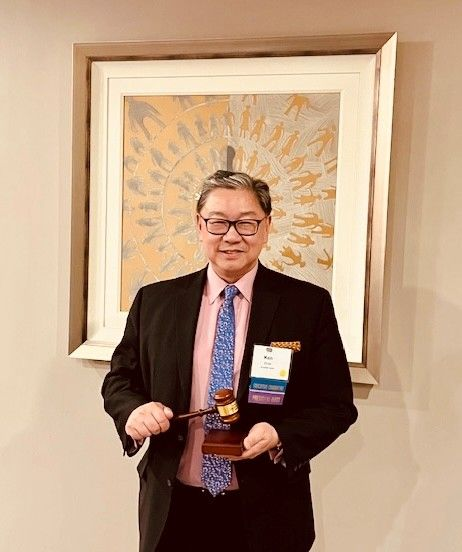
Kenneth Chin, Head of Banking and Finance, US, at Herbert Smith Freehills Kramer (HSFK) and a longtime active member of AABANY, has been elected President of the American College of Commercial Finance Lawyers (ACCFL). ACCFL is a distinguished organization dedicated to advancing the practice and ethical standards of commercial finance law. Prior to assuming the presidency, Ken served on the Executive Committee, as a Regent on the Board of Regents, and as Chair of the Nominating Committee. AABANY congratulates Ken on his election as President, effective April 2026.

Ken’s path to the presidency reflects years of thoughtful and sustained engagement with the organization. Service on the Board of Regents, a prerequisite for any officer position, along with his leadership of the Nominating Committee, gave Ken a deep familiarity with the ACCFL’s mission and membership. Though he was invited on multiple occasions to join the Executive Committee, Ken chose to accept only when he was confident he could devote the time and attention necessary to serve effectively in that capacity.

As President, one of Ken’s central priorities is strengthening the bonds among ACCFL’s Fellows. Fellowship is by invitation only, extended in recognition of demonstrated expertise in commercial finance law. In an era increasingly defined by digital communication, Ken holds firmly to the belief that in-person connection remains indispensable. To that end, the ACCFL convenes semi-annually alongside the American Bar Association’s Business Law Section and hosts Fellows briefing sessions at which members with specialized expertise share their knowledge with the broader Fellowship. Ken envisions these gatherings as a living resource network, enabling Fellows to draw on one another’s depth of knowledge beyond the boundaries of their own specific practice areas.

Ken speaks from personal experience about the tangible value of the ACCFL network. He recounted an instance in which a Fellow, technically out of the office, returned his call within ten minutes to offer guidance on an out-of-state legal matter, a response Ken attributes directly to the strength of their personal connection. “It is the ability to not only be an expert in the area of law, but also to draw on other experts who may have more in-depth knowledge about particular subjects that you do not have,” Ken explained. This philosophy runs throughout his professional approach: Ken consistently prioritizes cultivating genuine personal relationships over institutional ones, recognizing that a trusted colleague, wherever their career may take them, represents an invaluable and enduring resource.

That same emphasis on human expertise, Ken observes, is being tested by the rapid rise of artificial intelligence in the legal field. Ken acknowledges that AI has meaningfully accelerated legal practice, reducing the need for lawyers to conduct manual research or rely on colleagues for preliminary answers. At the same time, he underscores the importance of human oversight, noting that while AI is advancing at an unprecedented pace, it remains susceptible to error. Ken draws a historical parallel to the transformation of the legal workplace that accompanied the widespread adoption of word processing software: just as attorneys began drafting their own documents directly, reducing reliance on secretarial staff, the integration of AI is likely to reshape legal support roles in similarly significant ways. Rather than viewing this shift with apprehension, Ken urges the next generation of lawyers to develop fluency in AI tools while remaining clear-eyed about AI’s fundamental limitations and its inability to fully replicate the judgment and responsibility of an experienced attorney.

Expanding the ACCFL’s membership is another of Ken’s key priorities as President. He was moved by concerns raised by former ACCFL President Sylvia Chin (also a past AABANY President) during her 2017–2018 tenure regarding declining membership and participation. Ken has since worked to bring about a meaningful shift in how the organization identifies and admits new Fellows. Looking beyond the traditional concentration of Fellows in the financial centers of New York, Los Angeles, and Chicago, Ken has championed geographic diversification to ensure that the network reflects the full breadth of commercial finance practice across the country. Because clients frequently have legal needs spanning multiple jurisdictions, Fellows with local expertise are essential to making the ACCFL’s membership genuinely comprehensive. The results have already been significant: this past year, the ACCFL welcomed 18 new Fellows. This is the largest incoming class in the organization’s history, a milestone attributable in no small part to Ken’s commitment to expanding the ACCFL’s reach. Whether reflecting on the culture he has helped shape or looking ahead to the membership he aims to expand, Ken’s tenure as President embodies a steadfast conviction that the ACCFL’s greatest strength lies in its Fellows.

Please join AABANY in congratulating Kenneth Chin on his election as President of the American College of Commercial Finance Lawyers.
AABANY Represents and Advocates at the New York State AAPI Conference

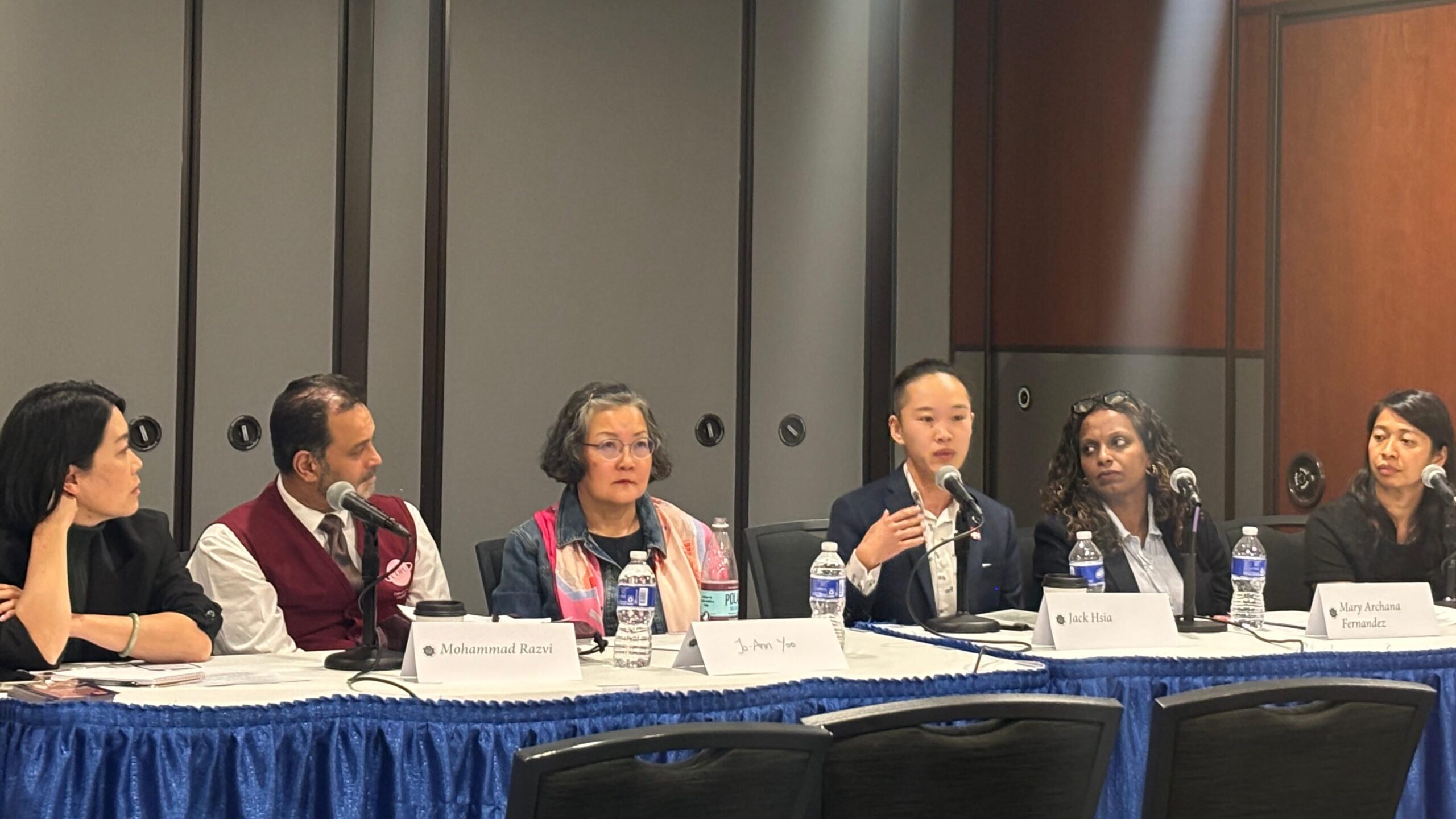
On May 7-8, Jack Hsia, Vice Chair of AABANY’s Issues Committee, attended the New York State Asian American Pacific Islander (AAPI) Conference, including the New York State AAPI Commission’s Community Dialogue and the NYS Legislature’s AAPI Summit in Albany. Over two days, the two events brought together advocates, community leaders, policymakers, and nonprofit organizations to discuss issues impacting New York’s AAPI communities.

On the afternoon of May 7, at the New York State AAPI Commission’s Community Dialogue, speakers and attendees explored challenges and opportunities facing AAPI communities across the state. The discussions emphasized the importance of language access, sustained investment in community organizations, youth engagement, and coalition building. These panels underscored the importance of ensuring that diverse AAPI voices are represented in policymaking and community leadership.

At the NYS AAPI Summit on May 8, Jack Hsia served as a panelist for “AI and Immigration Enforcement: Protecting AAPI Communities in a New Era of Surveillance.” They represented AABANY and the Chinese-American Planning Council’s (CPC) legal services team alongside leaders from the Asian American Federation (AAF), Council of Peoples Organization (COPO), Asian Americans for Equality (AAFE), South Asian Council for Social Services (SACSS), and Mekong NYC. The panel examined the growing role of artificial intelligence and data surveillance in immigration enforcement and their impact on immigrant communities, particularly mixed-status families.

Drawing from their work at CPC, Jack discussed the increasing number of community members relying on AI for immigration information and document translation. While AI can improve access to information, they emphasized that inaccurate legal guidance and unreliable translations can have serious consequences. Jack highlighted the continued need for trusted legal professionals, culturally competent services, and community-based organizations to provide accurate guidance. The discussion also addressed digital privacy, language access, and practical strategies for protecting sensitive information in an increasingly data-driven environment, and how the immigration landscape has rapidly changed over the past few years.

The conference reinforced the importance of collaboration among legal advocates, community organizations, and government partners to address the evolving challenges facing AAPI communities. Jack was honored to represent both AABANY and CPC and appreciated the opportunity to contribute to these important conversations while learning from likeminded advocates committed to advancing equity, inclusion, and justice across New York.

To learn more about AABANY’s Issues Committee, click here.


Written by Jack Hsia, Vice Chair of AABANY’s Issues Committee, Senior Attorney for Community Legal Services at the Chinese-American Planning Council (CPC).

AABANY Solo & Small Firm Practice Committee Reflects on a Changing Legal Landscape at June Virtual Networking Event

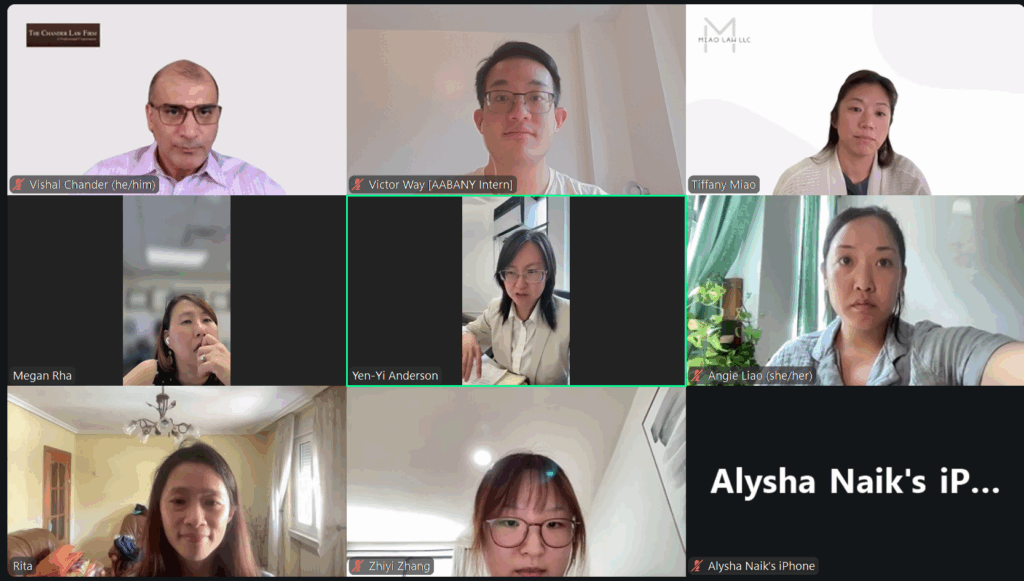
On Wednesday, June 10, 2026, the AABANY Solo & Small Firm Practice Committee hosted a virtual networking event. The event offered busy practitioners an accessible way to socialize and connect with fellow members directly from their home workspaces, offices, and for one of the attendees, even from abroad. The informal virtual setting encouraged the attendees to discuss whatever topic they liked, and soon the conversation flowed to one of the most pressing topics in the legal industry today: the rise of artificial intelligence.

Members shared how AI is reshaping the landscape of solo and small firm practice from multiple angles. A growing challenge has been managing client expectations. Clients increasingly arrive having already consulted a chatbot, presenting AI-generated summaries of their legal situation. Members noted that these outputs are often riddled with hallucinations: citations to laws that do not exist, statutes that are not applicable, or legal frameworks that have no bearing on the client’s actual circumstances.

The problem is not always as simple as the AI being flatly wrong. In some cases, AI tools do surface something relevant, but bury it beneath so much extraneous information that clients themselves struggle to identify what actually matters. This creates an additional layer of work for attorneys, who must not only address the legal issue at hand but also untangle the misinformation and misplaced confidence that clients bring with them into consultations.

The conversation also touched on what AI means for the next generation of legal professionals trying to break into the industry. As AI tools take on more of the research and drafting tasks that once served as entry points for new associates, new recruits face a shifting landscape where the traditional pathways into legal practice look increasingly uncertain.

The Solo & Small Firm Practice Committee looks forward to continuing these conversations at the next virtual networking session on Wednesday, July 16, 2026. Registration details can be found here. To learn more about the Committee and get involved, visit the Solo & Small Firm Practice Committee page.

AABANY Corporate Law Committee Hosts First Meet & Greet of FY27 to Connect with Committee Members

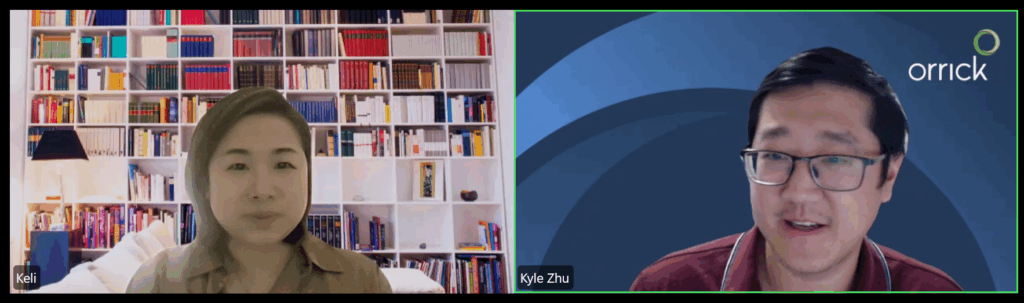
On May 19, the AABANY Corporate Law Committee kicked off the new fiscal year with a virtual Meet & Greet, bringing together members and prospective members to share ideas on programming for the year.  Attendees ranged from recent law school graduates just beginning their careers to seasoned attorneys returning to corporate practice. Corporate Law Committee leadership, which includes Co-Chairs Keli Huang (Partner at Kirkland & Ellis LLP) and Ashley Wong (Associate Corporate Counsel at Amazon), along with Vice Chairs Kyle Zhu (Associate at Orrick, Herrington & Sutcliffe LLP) and Judy Lin (Associate at Kirkland & Ellis LLP), introduced themselves and opened the floor to attendees. The conversation was centered on understanding the types of events that would be most beneficial to the members, and the leadership team came away with a clear direction: social events and CLE-eligible programming that support both professional development and genuine community-building.

The Committee leadership also shared about two upcoming AABANY marquee events. First, the AABANY Annual Dinner, taking place next Thursday May 28th, is expected to draw hundreds of attendees and offers one of the year’s premier networking opportunities across the broader AABANY community. Then September 26th, the Fall Conference, hosted at the Fordham Law School, promises another outstanding occasion to connect with colleagues, exchange ideas, and build the cross-practice relationships that make this community so valuable. Both events reflect the Committee’s commitment to creating spaces where members can forge lasting professional connections and strengthen the synergy within the AABANY network.

Beyond these signature events, the Corporate Law Committee is actively exploring programming ideas that speak directly to where the legal profession is heading. Keli shared that the Committee is already planning its popular summer social event, and this time it is in a karaoke location not yet open to the public that AABANY members will get to experience before its opening. Another exciting program under consideration is an event on artificial intelligence focusing on the responsible use of AI in legal practice, managing client expectations around emerging tools, and leveraging technology to make legal work more efficient. Given how rapidly AI is reshaping the industry, this is exactly the kind of timely, practical programming that members expressed enthusiasm for. Stay tuned and keep an eye on the AABANY Calendar for announcements. We hope to see you at upcoming events! To learn more about the Corporate Law Committee and how you can get involved, click here.

NAPABA Law Foundation | Your Fall Scholarship, Fellowship, and Moot Court Opportunities

We’re excited to share new opportunities for law students and future leaders this fall. From scholarships and fellowships to the annual Thomas Tang Moot Court Competition, there are many ways to advance your legal journey and deepen your connection to the AANHPI community. Explore the details below and be sure to mark your calendars for key deadlines.

Scholarships

This fall, you can apply for four scholarships through one application, ranging from $2,500–$7,500.

  • NLF Scholarship – $5,000; based on academic achievement, financial need, leadership, and service to the AANHPI community
  • NLF Presidential Scholarship – Two awards of $7,500; selected by the NAPABA President for outstanding leadership
  • The Low Family Scholarship – $2,500; for demonstrated leadership and/or community service
  • LimNexus Scholarship – $2,500 awarded to one student

Community Law Fellowship

The NAPABA Law Foundation Community Law Fellowship addresses the critical need for public interest attorneys serving AANHPI communities.

This two-year fellowship (September 2026–August 2028) offers:

  • $60,000 annual salary + $10,000 completion bonus
  • Employment, health, and fringe benefits through the Host Organization
  • Substantive legal experience at a nonprofit, national, or community-based organization

Want feedback on your project before the application is due? Submit a one-page Prospectus by Monday, December 1, by 5 pm ET, for feedback from the selection committee.

Judge Thomas Tang and Dr. Pearl Tang Moot Court (TTMC) Competition

Registration for the 2025 Judge Thomas Tang and Dr. Pearl Tang Moot Court Competition is now open! This annual competition fosters crucial advocacy skills among law students nationwide. This year’s topic is Artificial Intelligence.

Timeline:

  • Registration Closes: September 10, 2025
  • Brief Submission Deadline: October 3, 2025
  • Regional Rounds:
    • In-Person: October 17, U.S. Court of International Trade, NYC (12 teams max, first come)
    • Virtual: October 18 (assigned once in-person fills)
  • Nationals: November 7–8, 2025, at the NAPABA Convention in Denver, CO

NLF awards the top winners in brief writing and oral advocacy at the Regional Competitions. Up to $10,000 in scholarships are given to the top winners at the National Competition.

The registration fee is $500 per unsponsored team (self-funded by students) and $850 per sponsored team (funded by law school or affiliates). Local NAPABA Affiliates and National Associates are encouraged to sponsor teams.

AABANY Attends NYS Attorney General Symposium at Cornell Tech on the Next Decade of Generative AI

On April 12, as representatives of the Asian American Bar Association of New York, President-Elect Benjamin Hsing and Executive Director Yang Chen attended an AI Symposium at Cornell Tech on Roosevelt Island hosted by New York State Attorney General Letitia James. The symposium covered a range of timely topics, including opportunities presented by generative AI, the risks and concerns posed by this transformative technology, and how generative AI might be used to enhance the lives of people in New York State.

The symposium was convened to explore the role of law in dealing with the challenges posed by generative AI even as its potential continues to develop. Many of the panelists came from the academic sector, and a future symposium is planned to include voices and thoughts from the business sector.

We thank the Attorney General for inviting AABANY to participate in shaping this discussion.