
AABANY Co-Hosts the 3rd Annual Pre-Holiday Multi-Association Gathering Featuring Veterans Day Fireside Chat

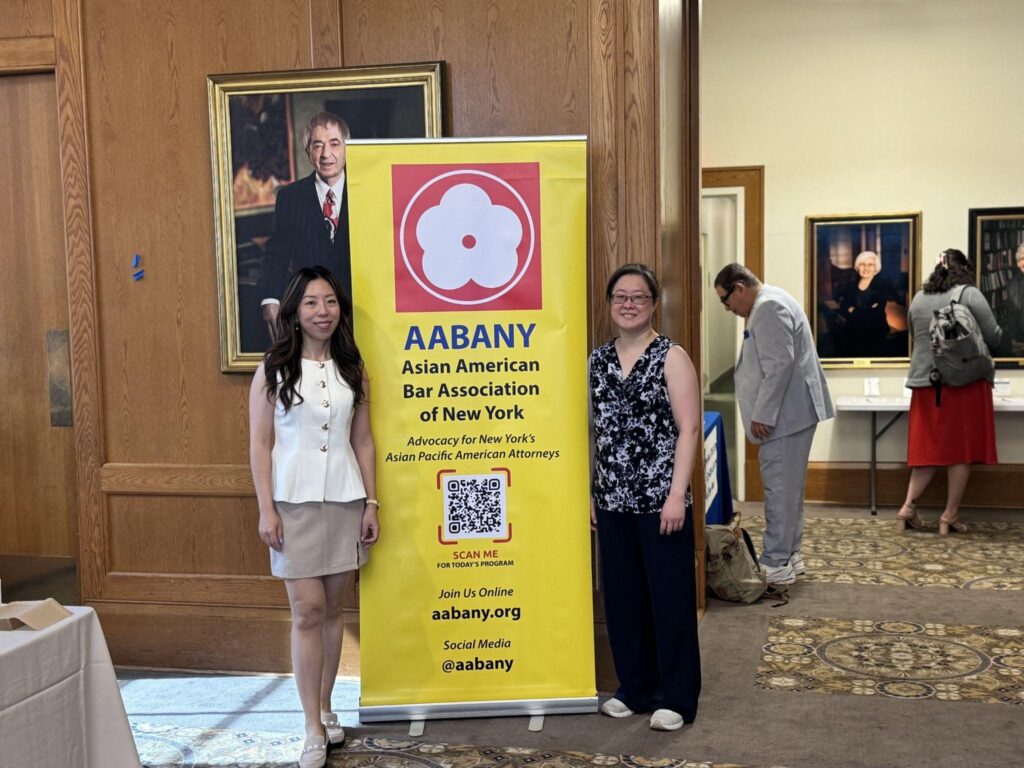
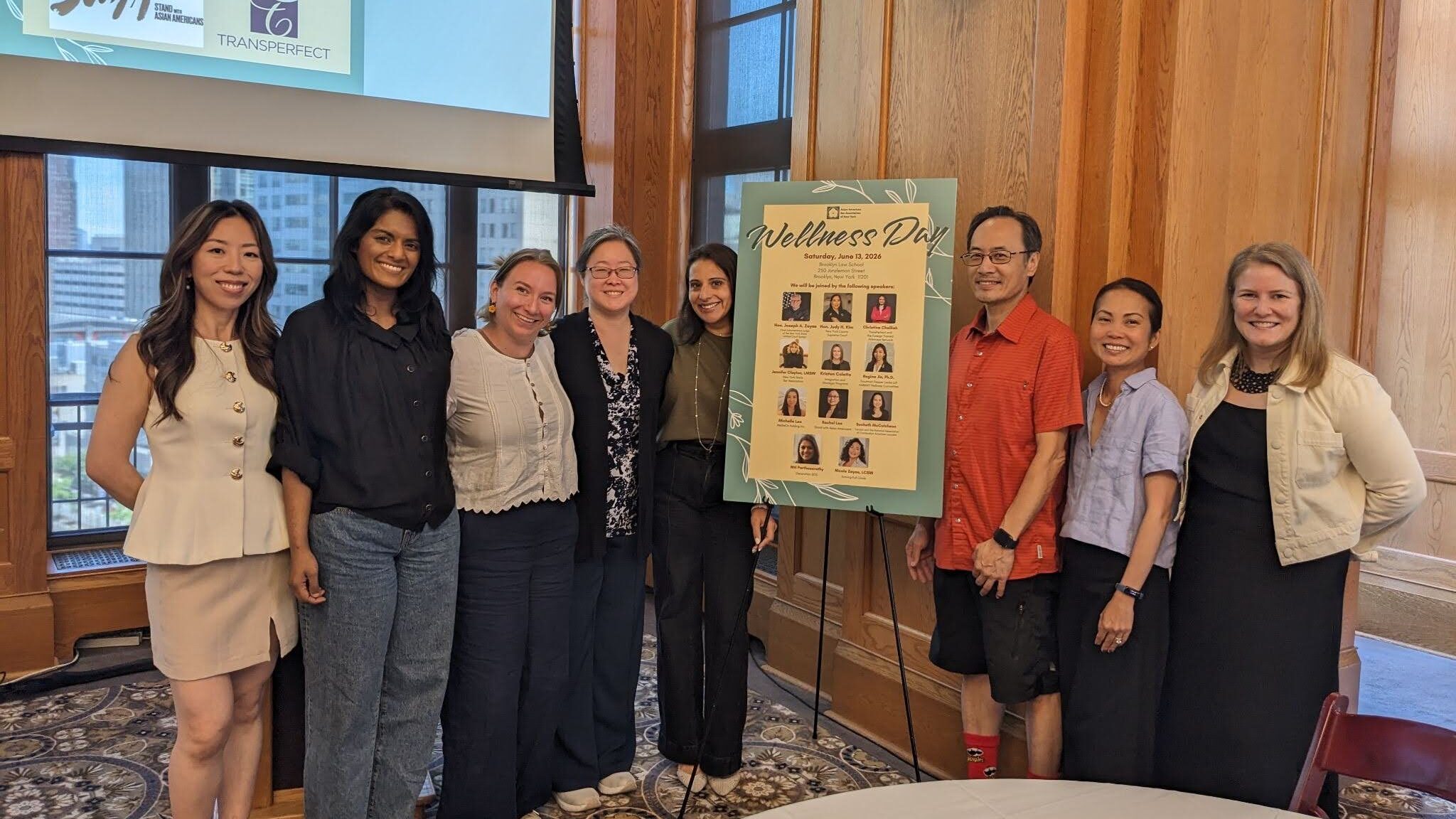
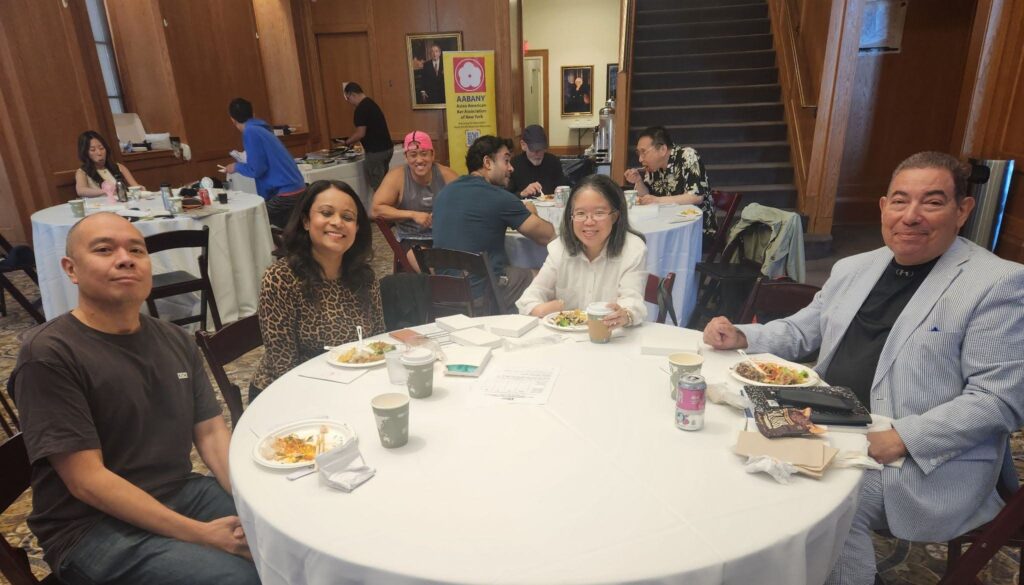
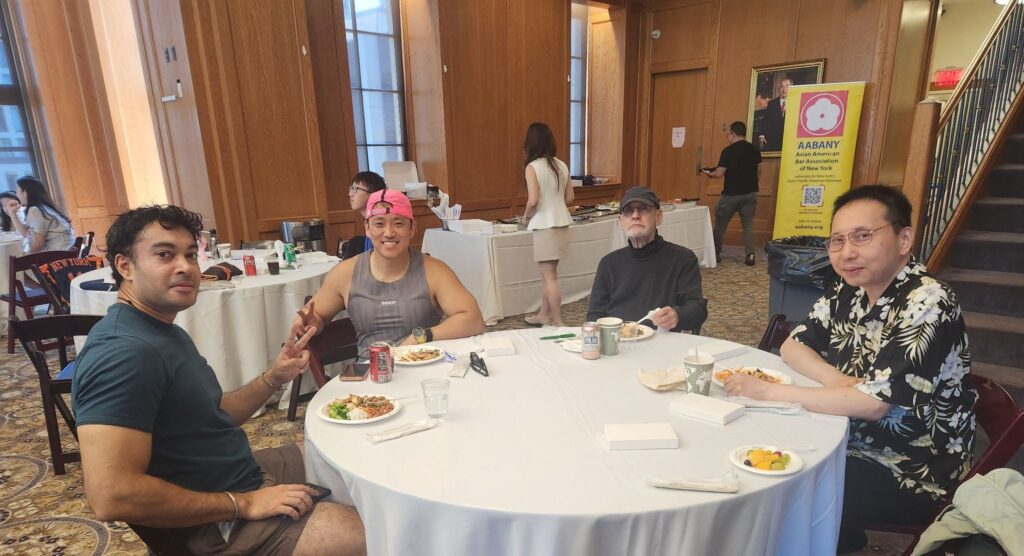
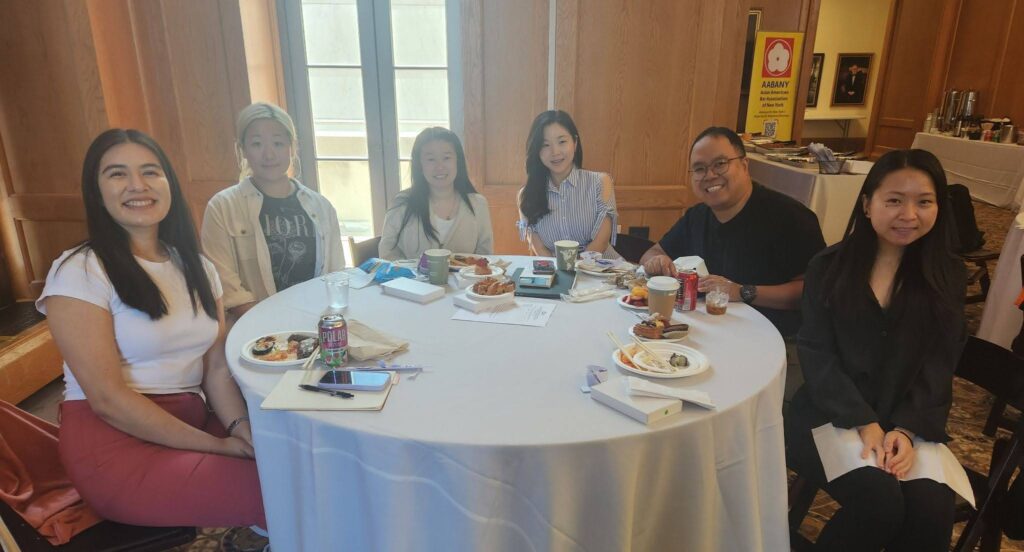
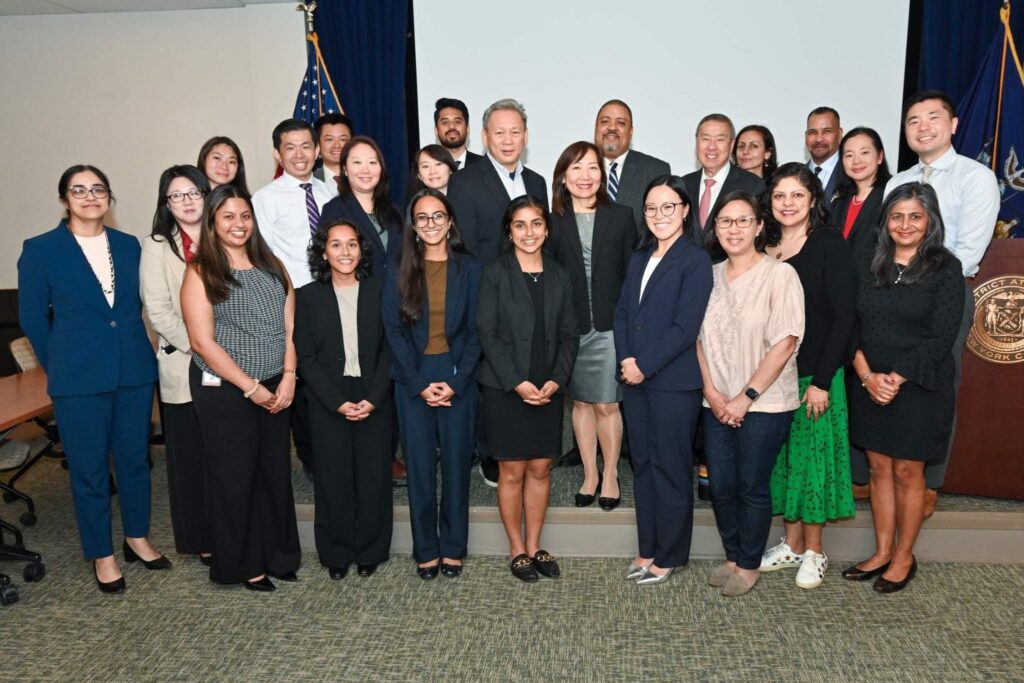
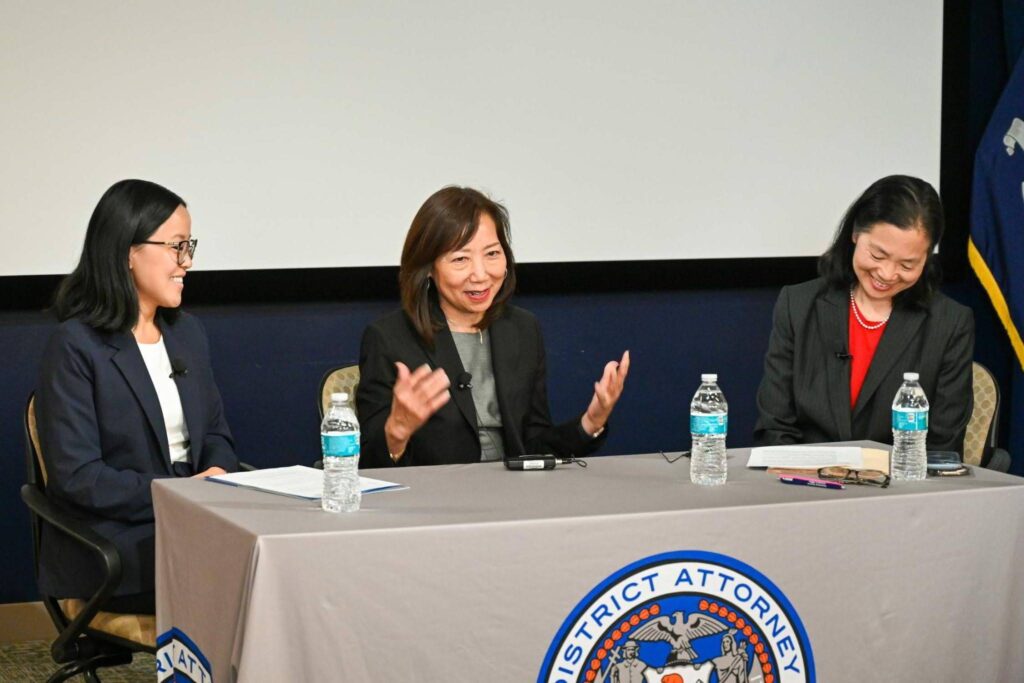
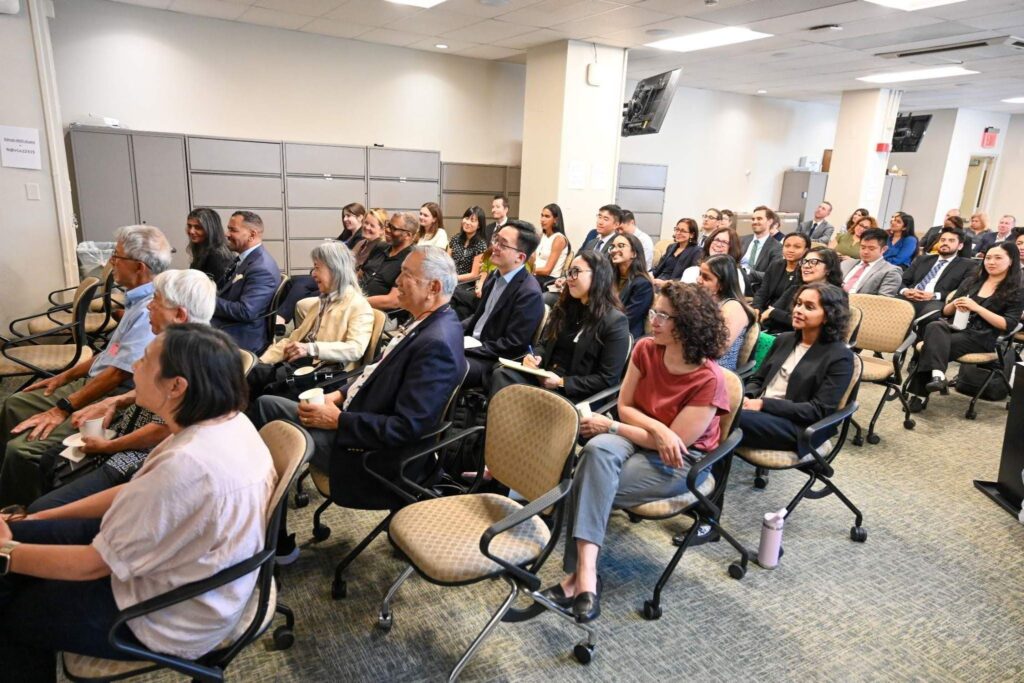
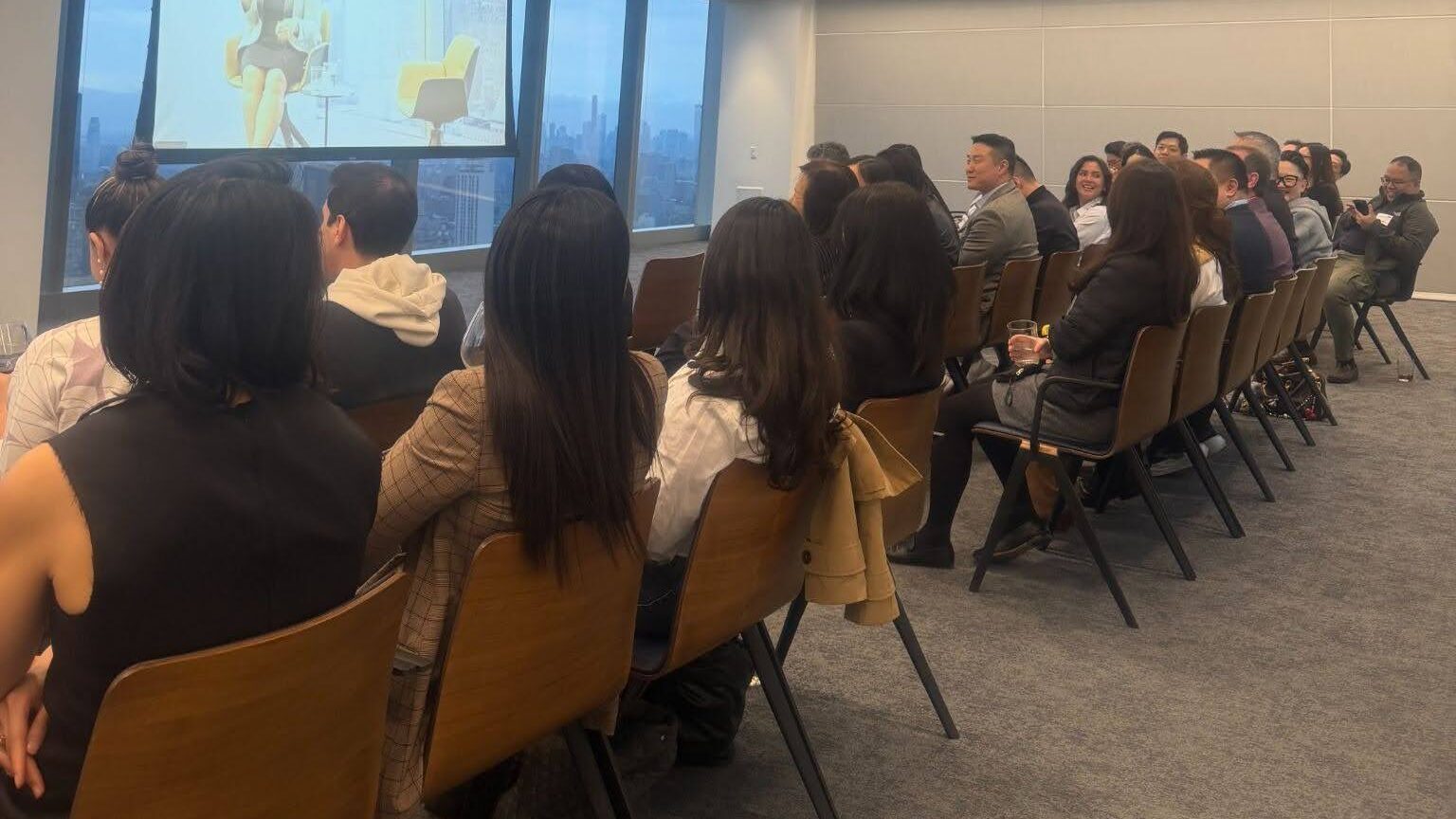
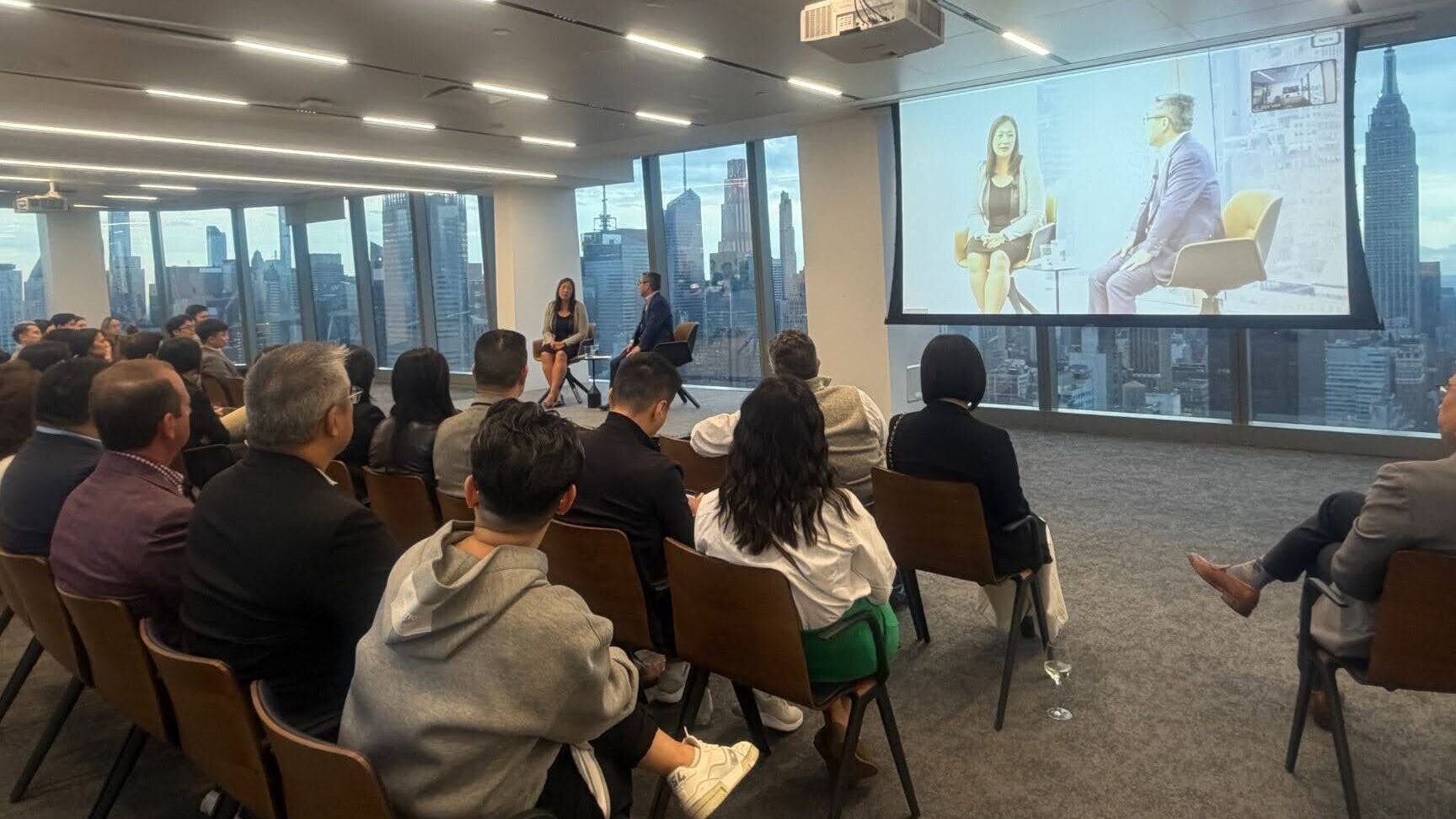
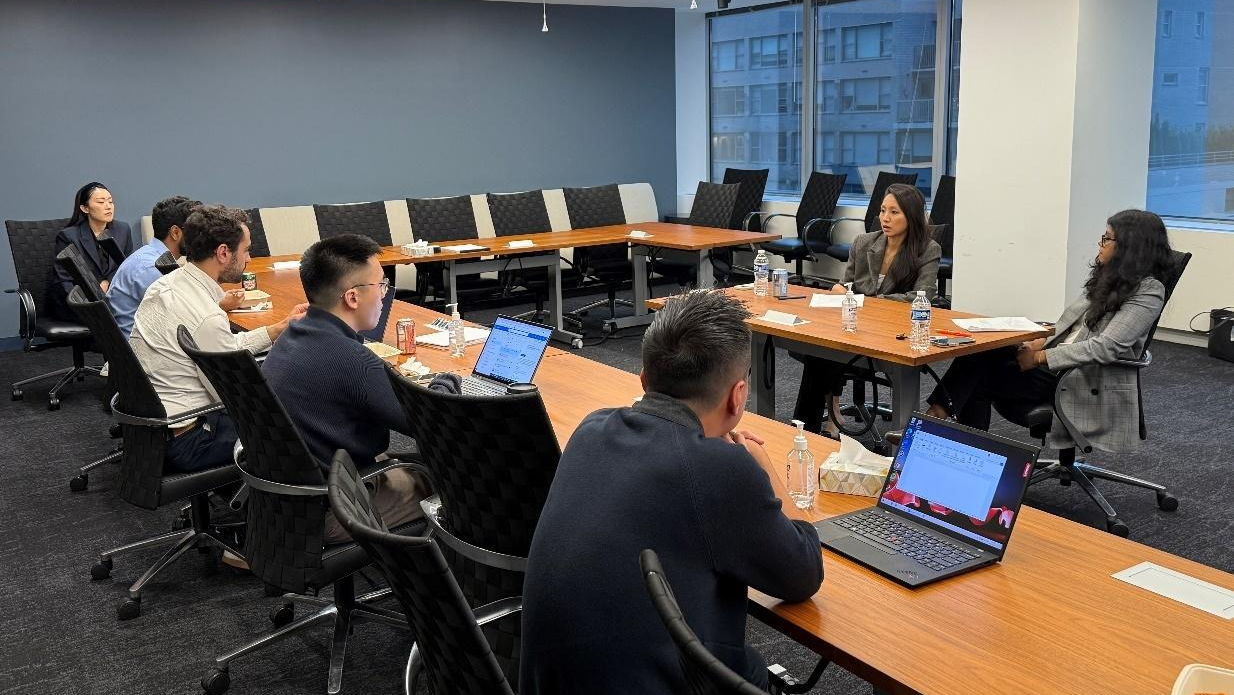
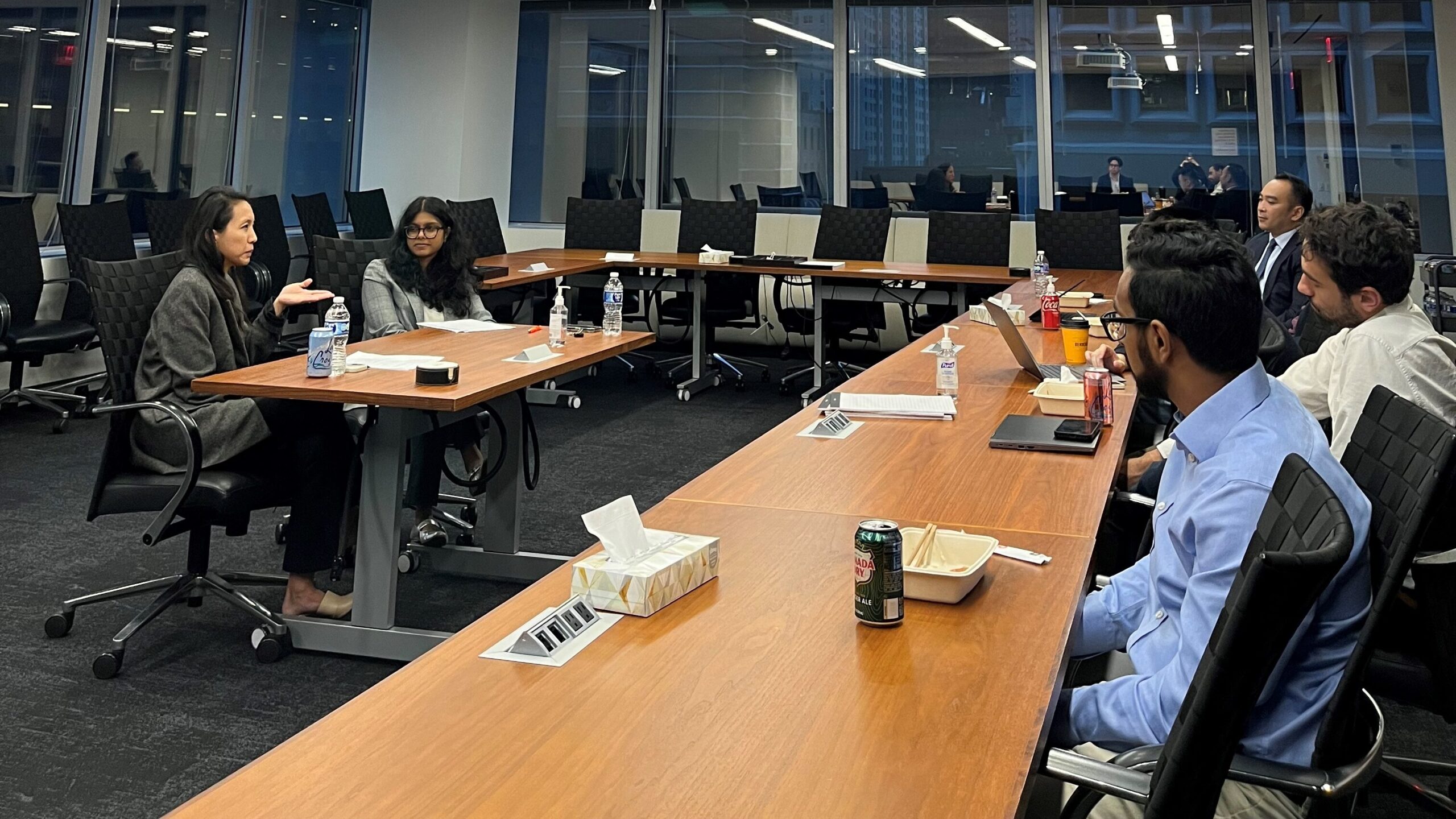
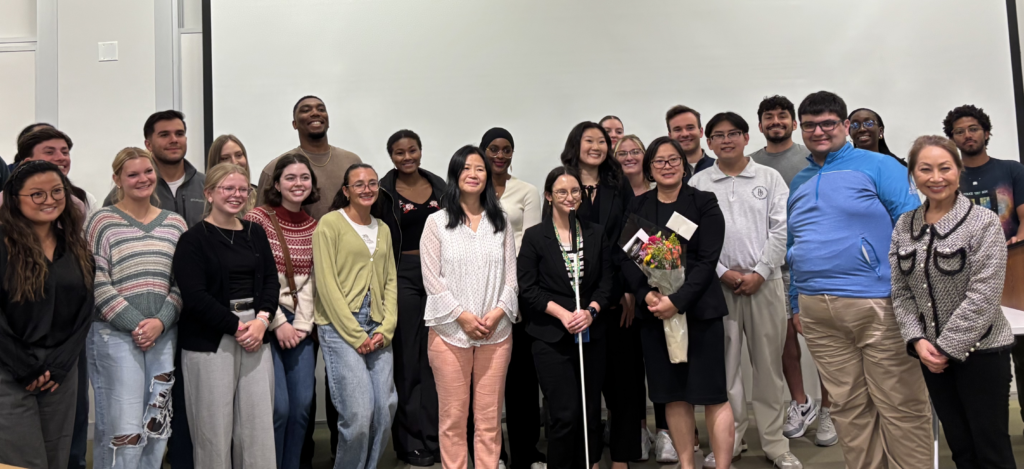
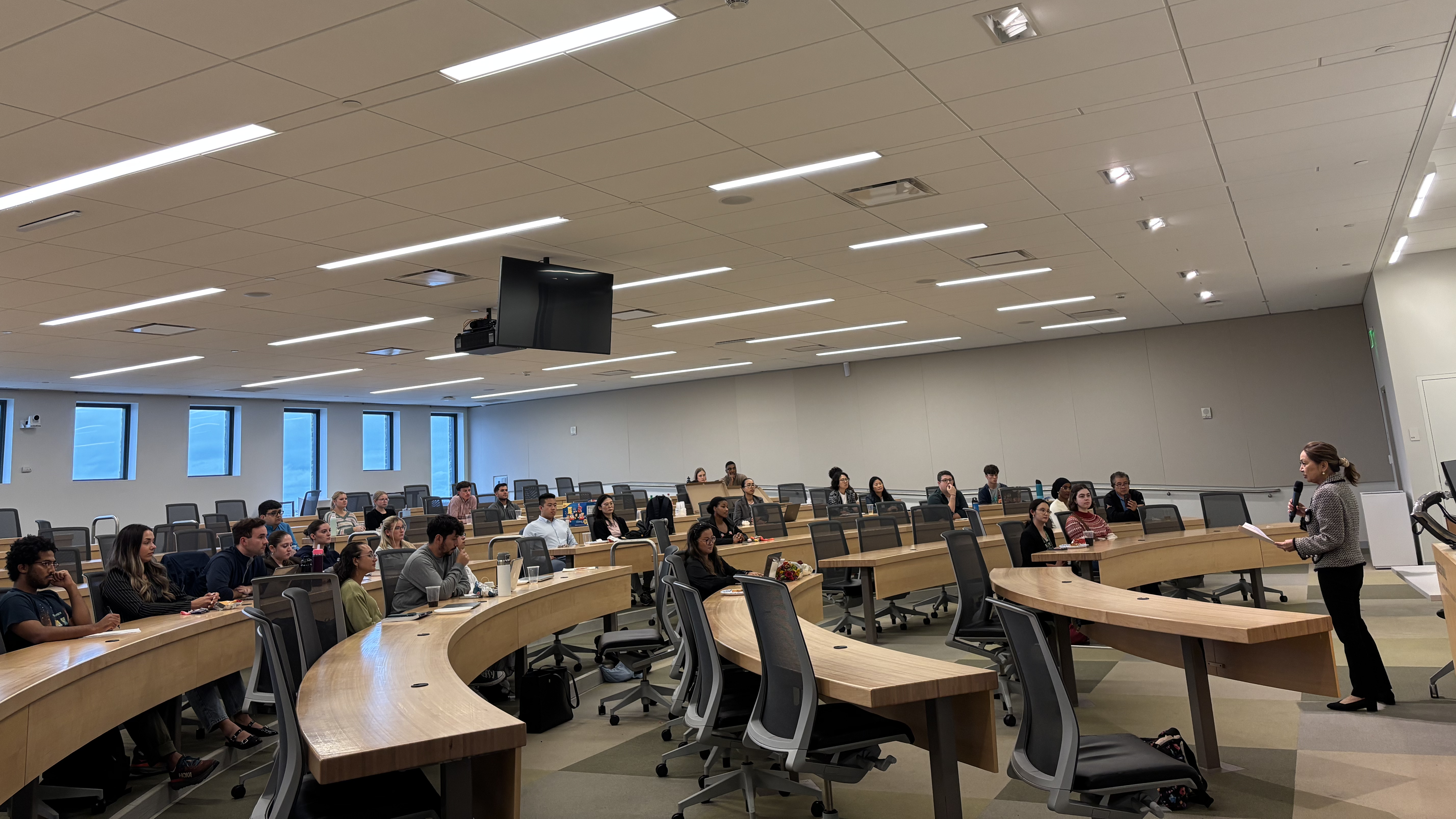
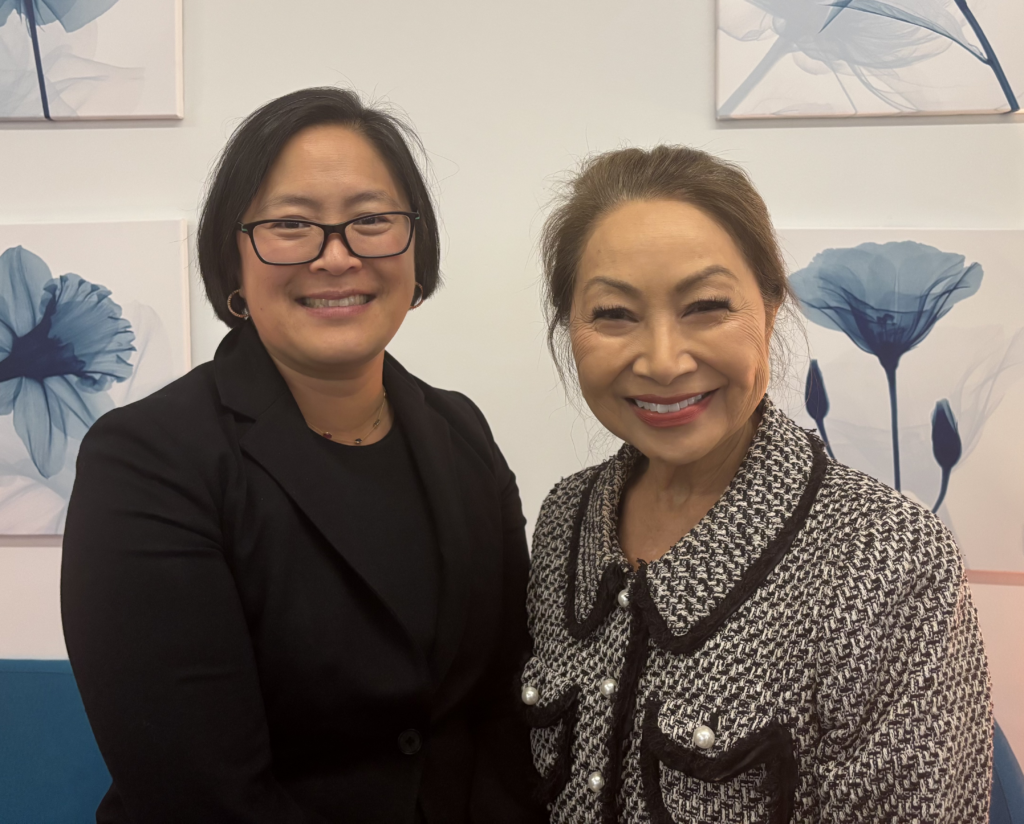
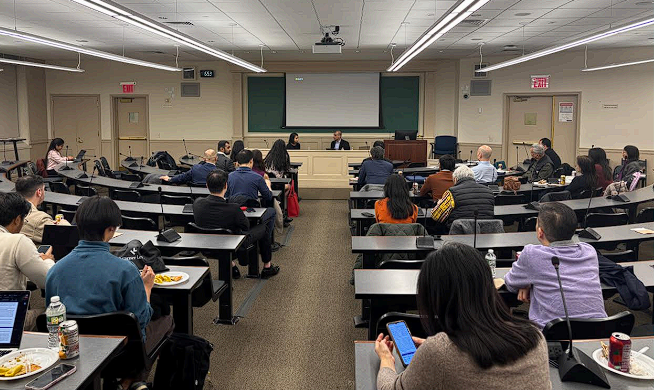
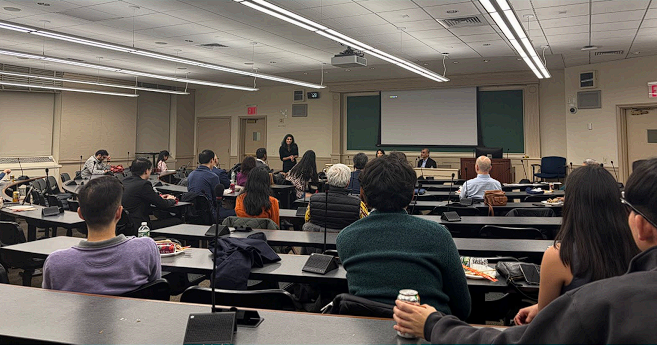
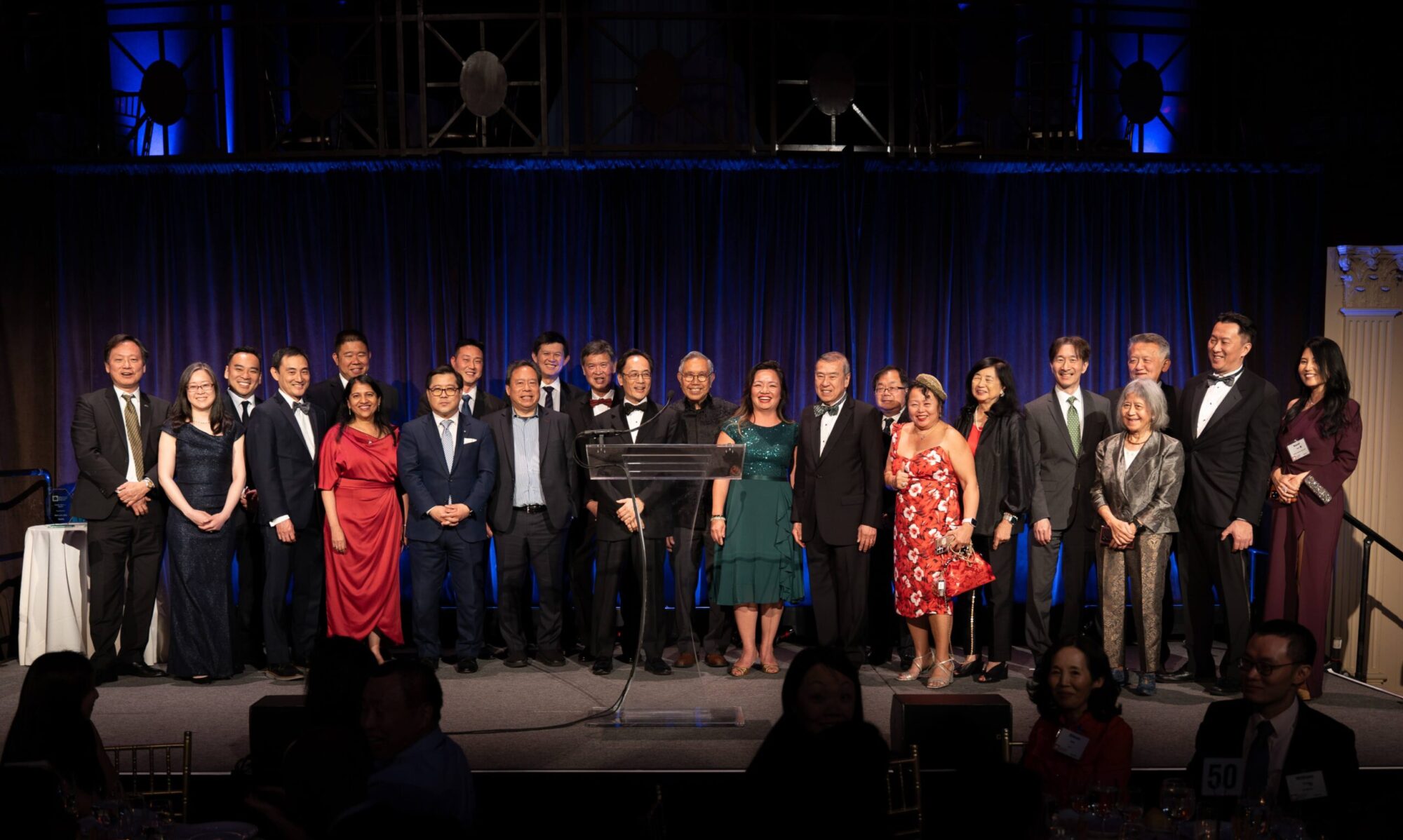
AABANY gathered 20 other associations for the 3rd Annual Pre-Holiday Multi-Association Gathering, on Tuesday, November 11, 2025, at 6:00 p.m., at the New York City Bar Association. The evening featured a potluck dinner, and a CLE Program on Wellness Resources, which included a Fireside Chat focused on veterans in the legal profession since this year’s event fell on Veterans Day.

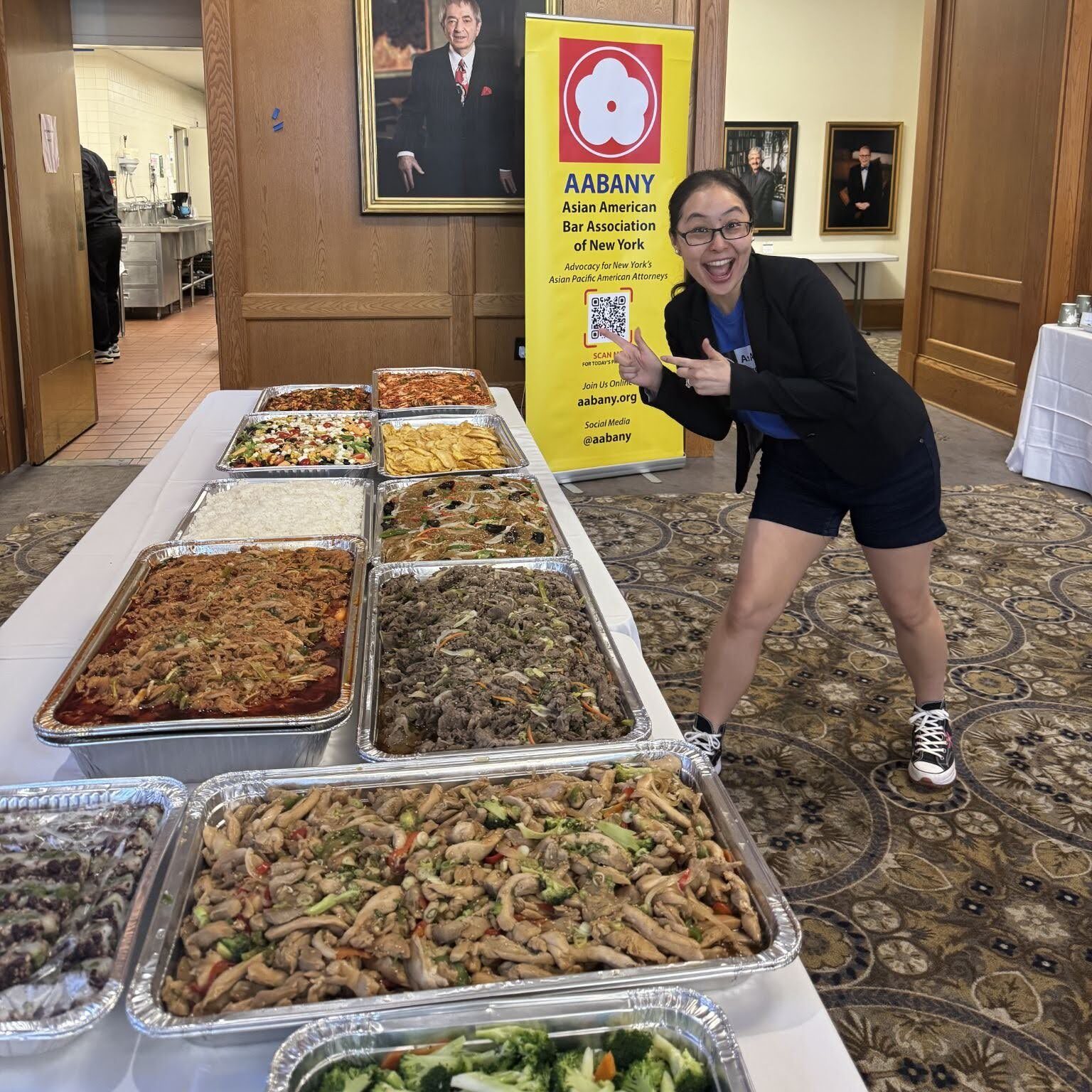
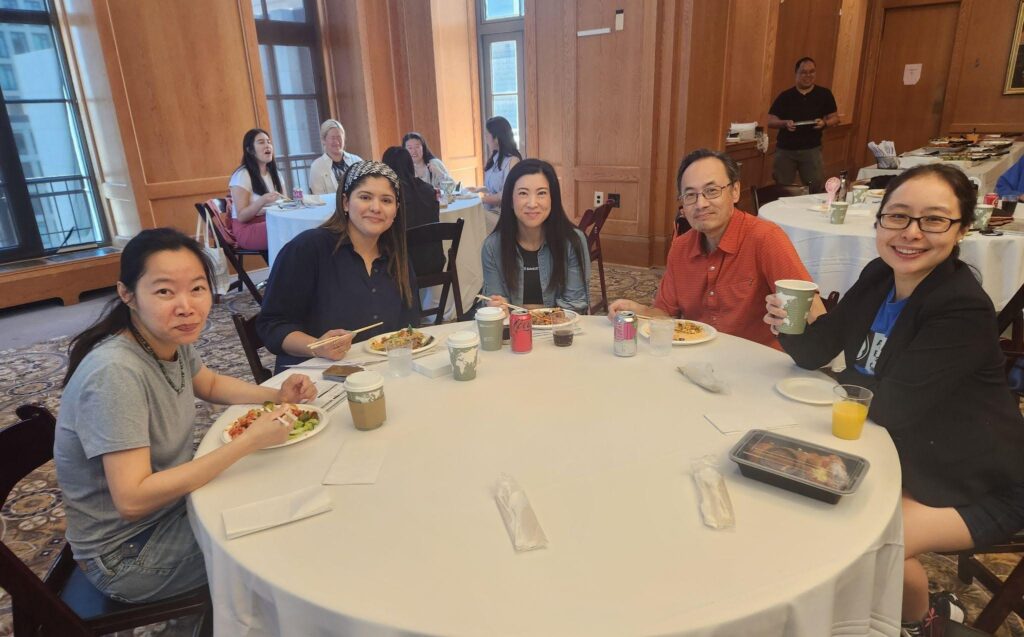
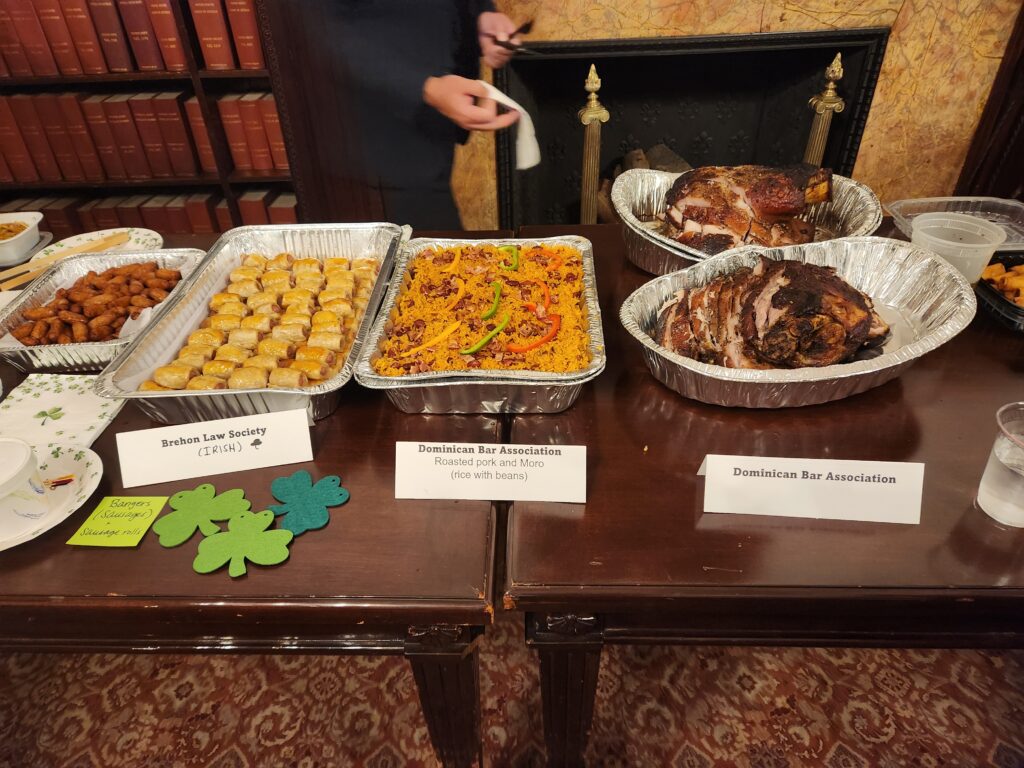
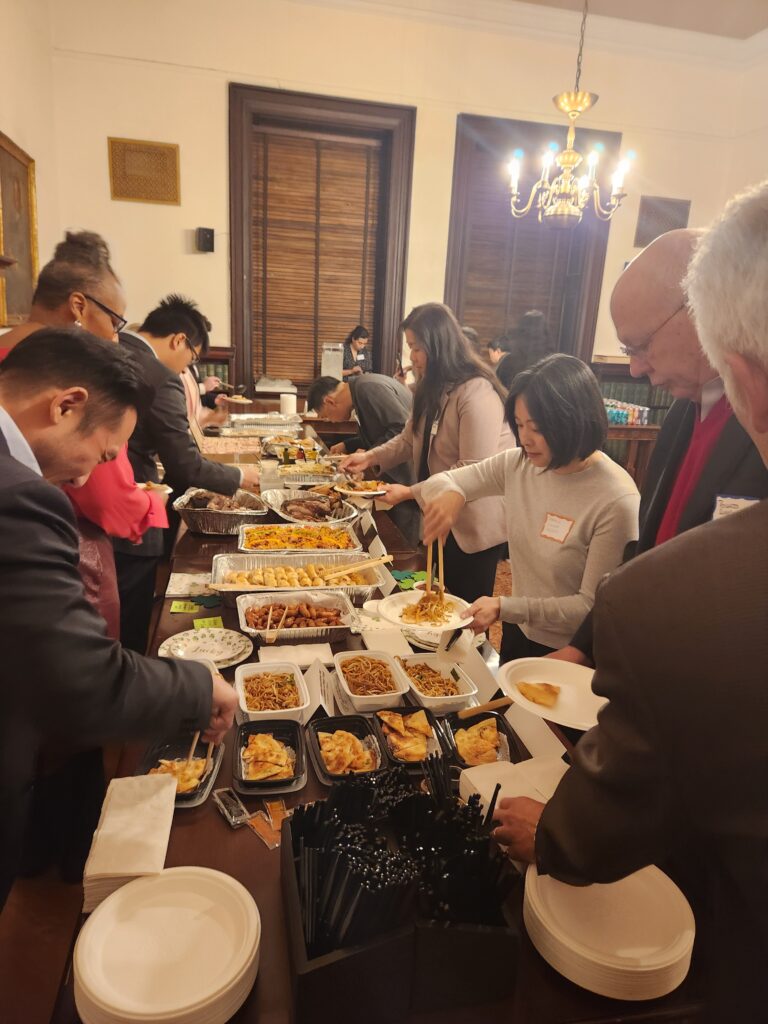
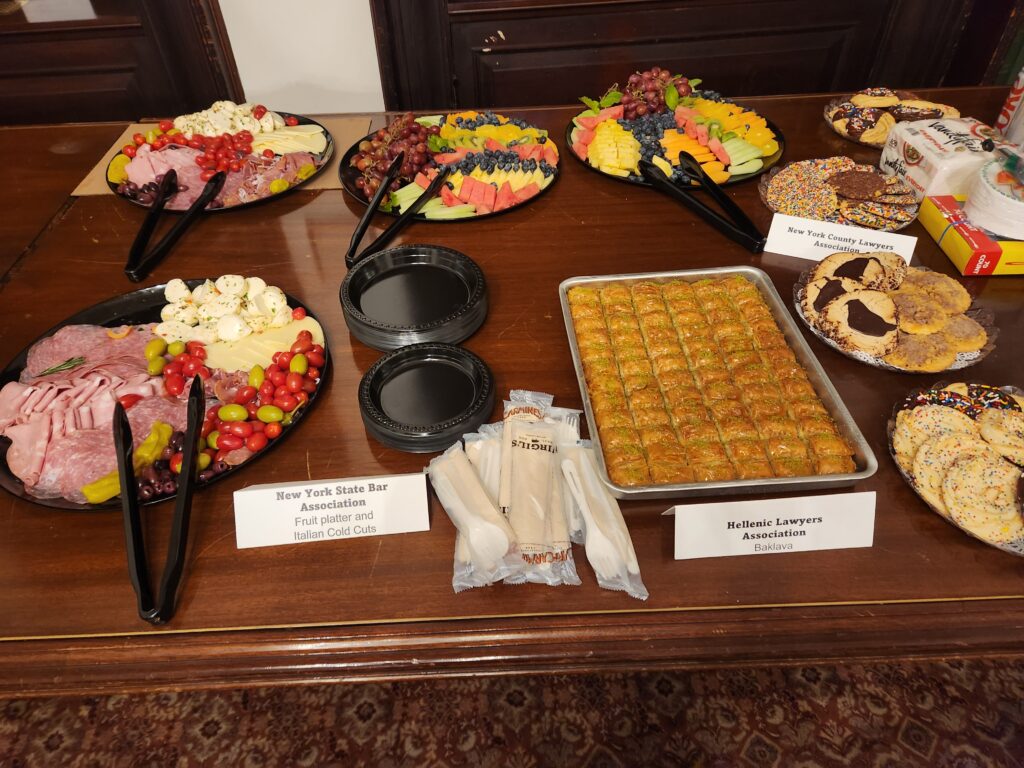
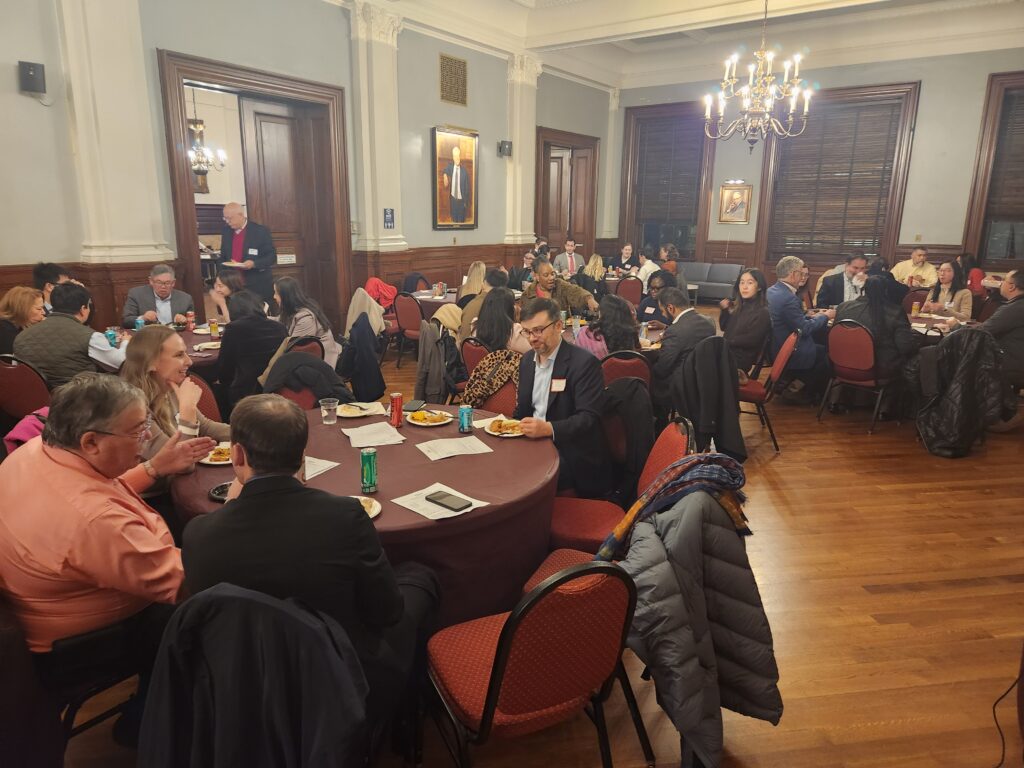
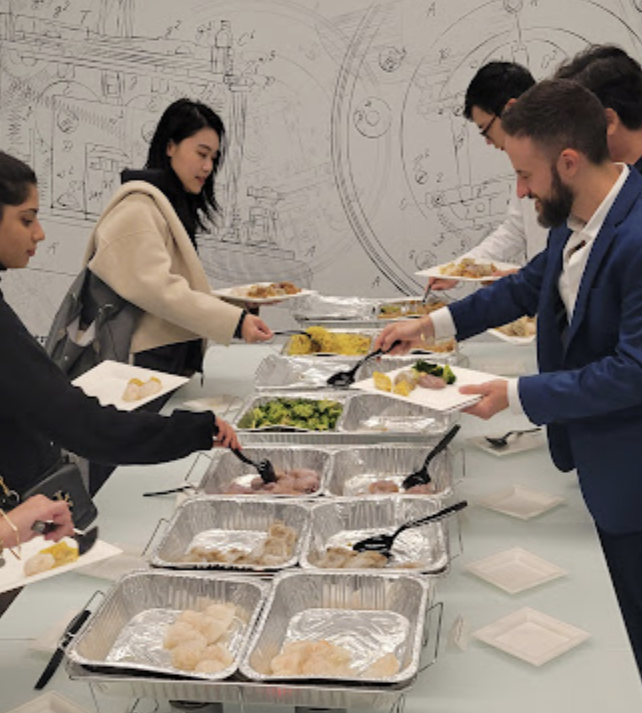
As the evening began, guests gathered around a vibrant potluck table featuring an array of dishes representing the diverse cultures of the co-sponsoring bar associations.

The spread included scallion pancakes, lo mein, samosas, roasted pork, dumplings, pigs-in-a-blanket, fried rice, Caribbean-spiced chicken, and homemade baked goods, among other offerings. 

Holidays can be emotionally and mentally challenging for many, especially those navigating identity transitions, loss, or professional pressures.  This year’s CLE focused on veteran experiences, resilience, mental health, and navigating civilian legal careers after military service.  Because this topic has often been neglected, it was especially meaningful to conduct this dialogue on Veterans Day.

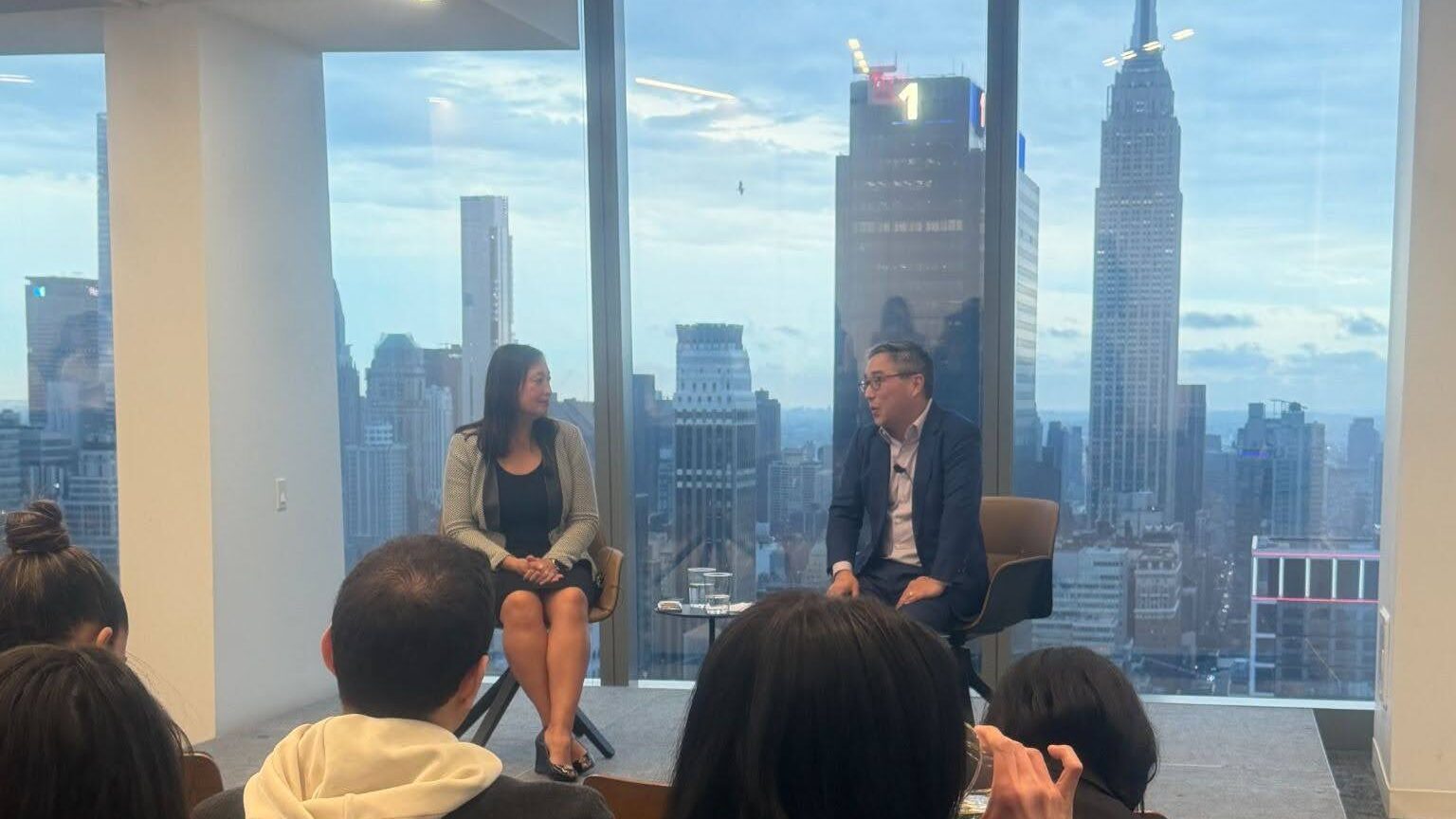
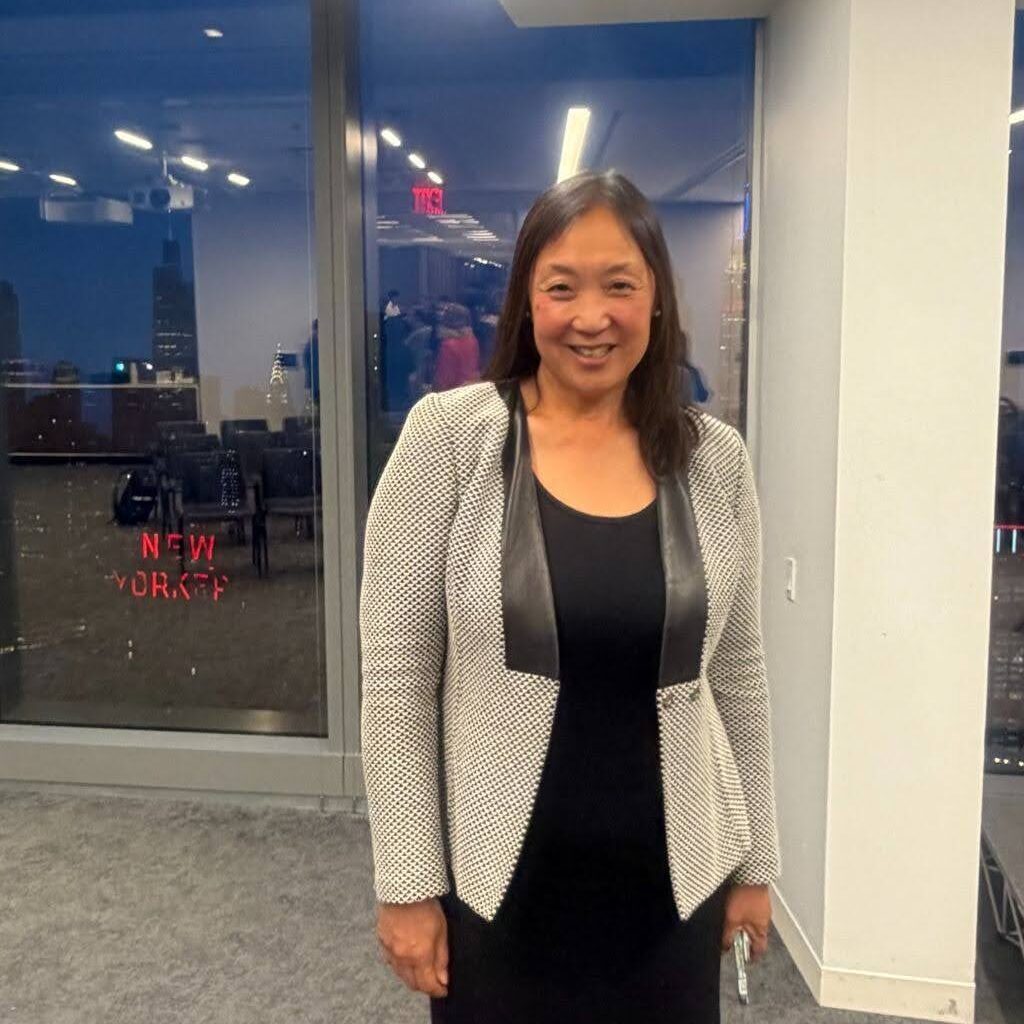
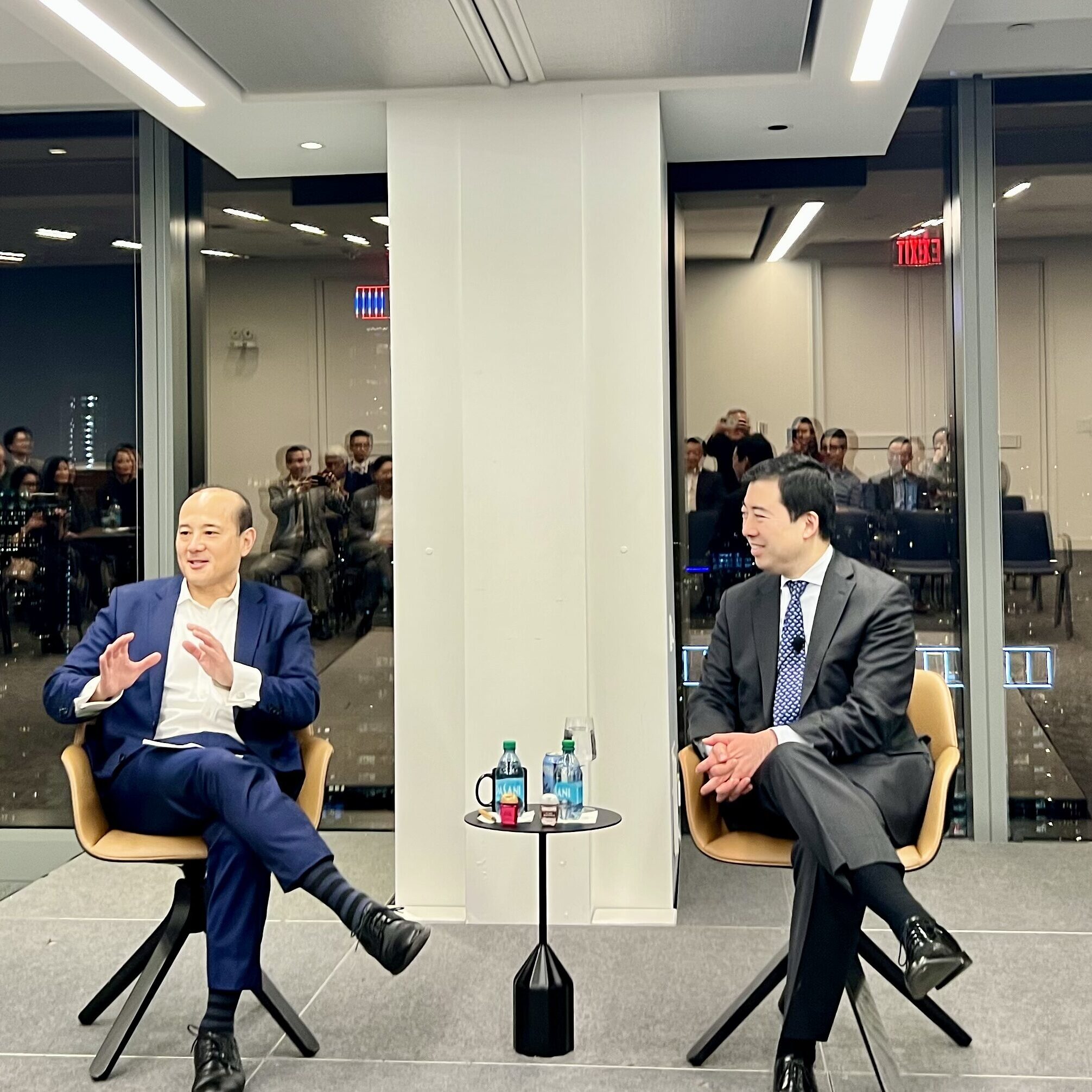
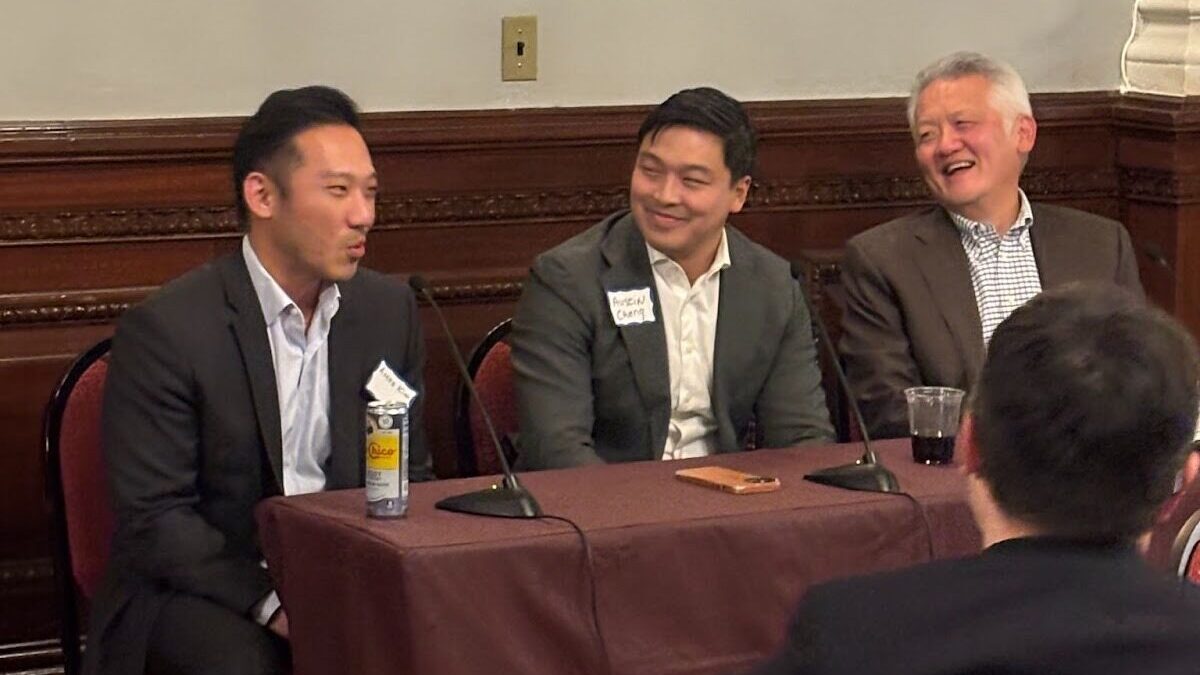
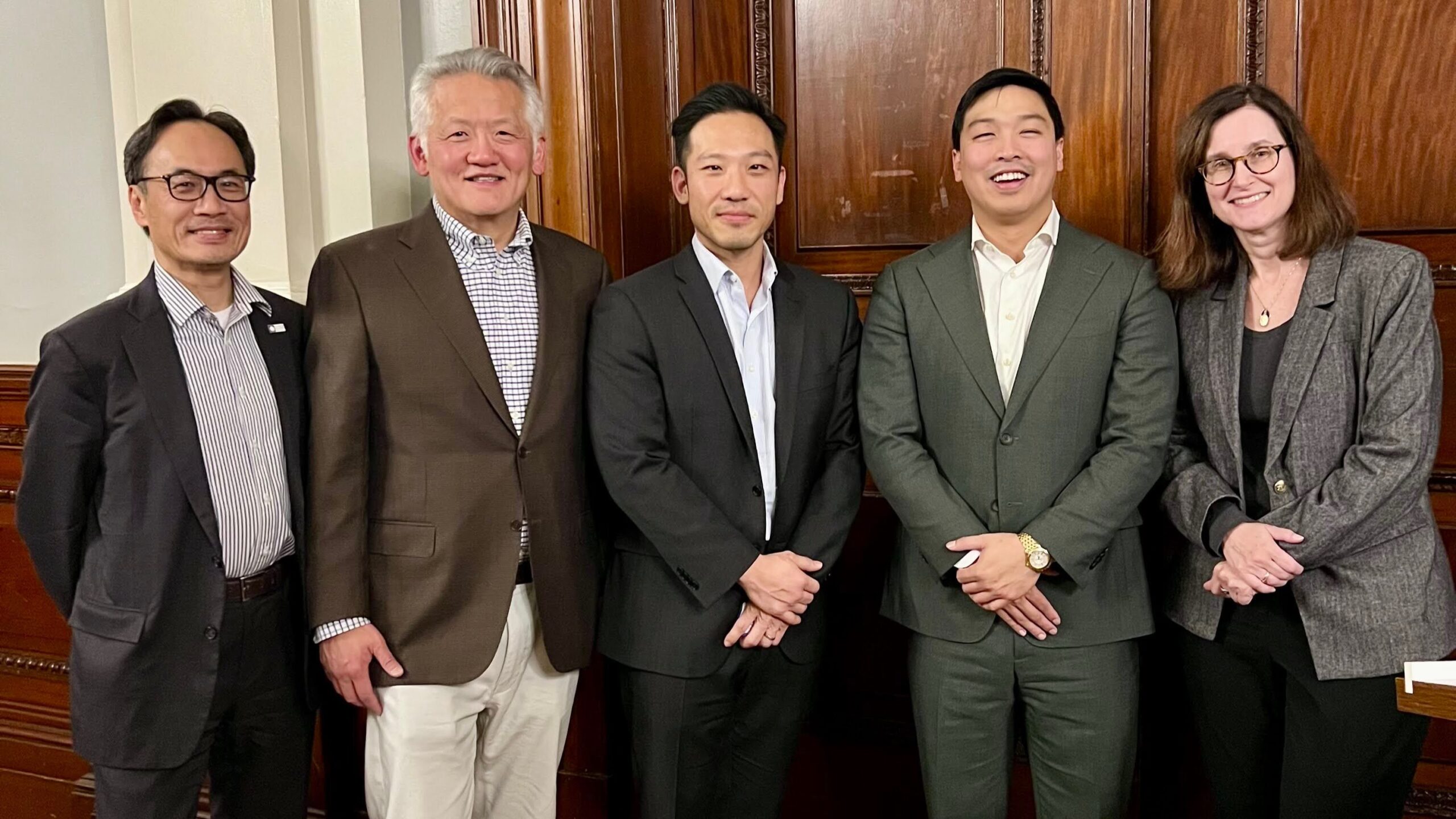
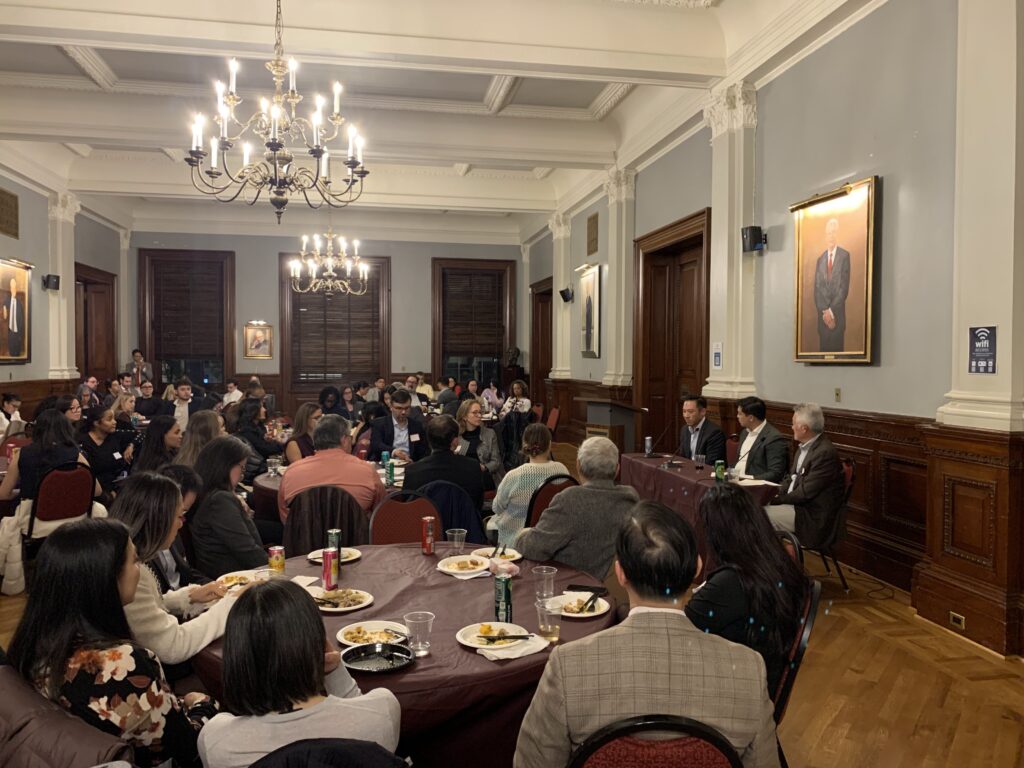
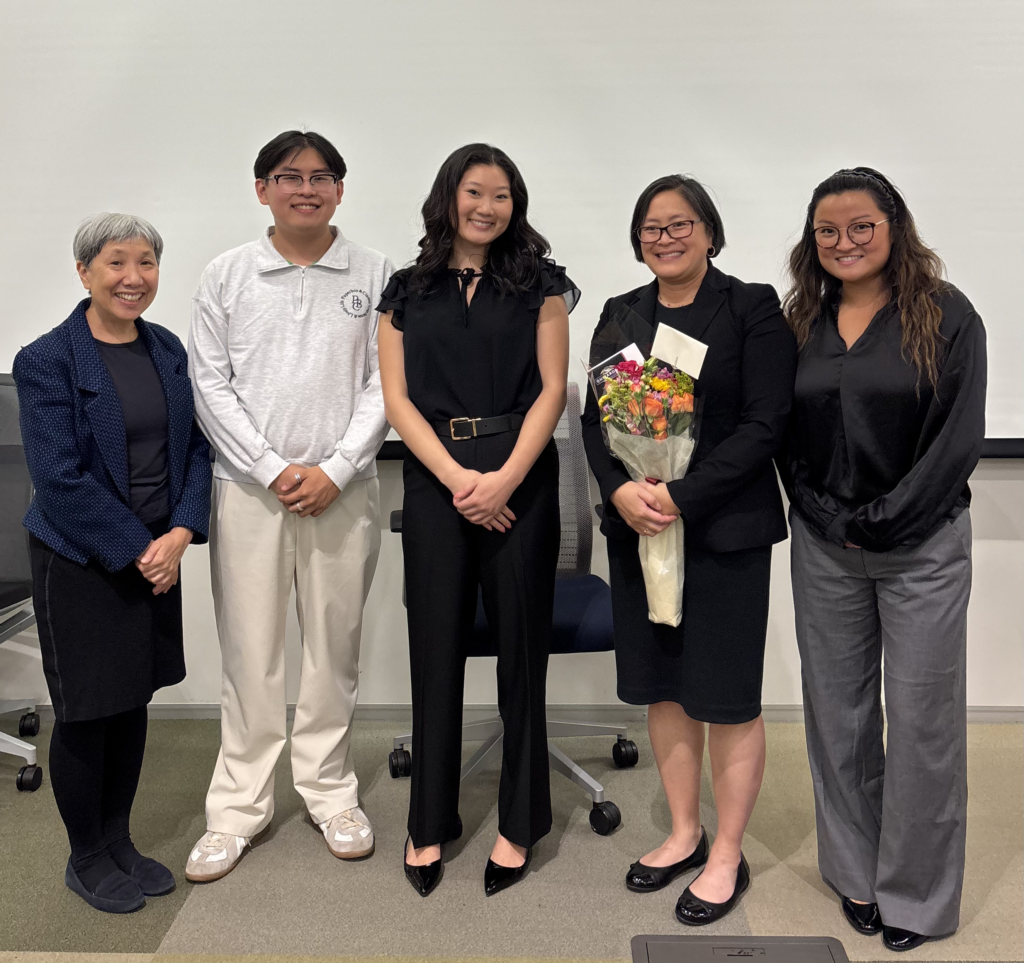
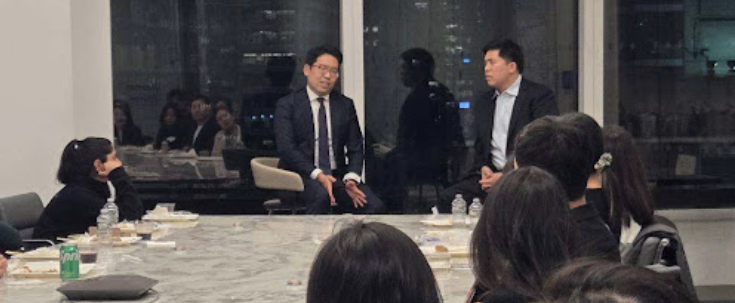
The Fireside Chat featured a conversation between Amos Kim, Co-Chair of AABANY’s Military & Veteran Affairs Committee, litigation associate at Baker Hostetler, and Austin Cheng, U.S. Army veteran, attorney, and CEO of Gramercy Surgery Center. It was moderated by Benjamin Hsing, President of AABANY and Senior Counsel at Bayes PLLC. Meredith S. Heller, Attorney from the Law Office of Meredith S. Heller PLLC, also spoke to share wellness resources from the New York City Bar Association.  
Austin described the often invisible challenges of transitioning from military life to a legal career. Reflecting on his return from service, he shared: “In the military, I knew exactly what I was responsible for. Every day had structure. There was clarity, purpose, and a team. When I returned to civilian life, I suddenly had too many choices — too much freedom. And that can be overwhelming.” Without that structure, veterans are suddenly faced with what many of us take for granted — choice. But for those used to clear orders, set routines, and defined missions, choice can feel less like freedom and more like instability.

Austin also shared that when he returned from service, the emotional weight of reintegration was immense. He reflected, “I just remember getting back on a Sunday. I was happy to get back home to my family after four years. I can see my mother, she was very different from when I saw her last.” Returning home is often imagined as a moment of relief, closure, or celebration. Yet for many veterans, the process can also be challenging and even painful. They need to rebuild identity, redefine purpose, and adjust to a life no longer shaped by military structure, urgency, or routine. Austin shared that he was suddenly faced with family responsibilities, including taking over his mother’s business, while grappling with these changes. It was during this time that he decided to pursue a J.D.

The difference in adjustment, Austin noted, is not merely about finding a new job and life, but about perspectives.  While civilians may show respect and appreciation for service, understanding the mindset of military service requires more. And this goes both ways – veterans also may need to understand the perspective of the civilians, understanding that they are limited in their perspectives. As Austin stated:  “I don’t think civilians ever played the role of a military person. I think what was more important at that time when I was transitioning out was me being able to understand the mindset of a civilian.” This highlights a key shift: successful reintegration does not mean expecting others to fully understand the military experience, it means understanding others’ perspectives. 

Furthermore, cultural change can be difficult to get used to.  Rather than operating within a single shared purpose, veterans entering the legal profession must now find purpose, build teams, and cultivate trust in a system where perspectives differ, and where collaboration is shaped not by command, but by conversation. Amos stated, “In the military we’re made to have like-minds, whereas here, in the team-building process, we have similar minds.” In the military, unity comes from sameness: same mission, same standards, same purpose. In the legal profession, unity must be built through difference: through debate, collaboration, and shared understanding.

However, they also benefited much from their time in service. Reflecting on how military training shaped his sense of purpose and discipline, Austin said: “I think being in the military gave me a certain level of resilience and perspective…. It’s war, so you have to kind of do certain things under very stressful conditions.” That sense of resilience, formed through years of training, responsibility, and operating under high-stress conditions, would anchor him in both law and leadership. 

Amos added similar reflections, noting that even after transitioning into the legal field, many habits shaped by military life remain deeply ingrained. Attention to detail, strategic thinking, and discipline continue to guide his work. He shared that he still wakes up at 4:00 a.m. every day because his body and mind remain conditioned to that rhythm. The expectations in the military: precision, accountability, and intention, become part of who you are.

Amos also described the intensity of expectation, precision, and discipline expected in the military: “Operating in the military is more along the lines of what you’re doing to the right every time. There’s no room for error, and there’s no room for any other ideas on how to do it better. It’s the best way to do it, and that’s all.”

Austin’s and Amos’s experiences as service members not only shaped how they approached their mission, but how they later perceived work, purpose, and responsibility in civilian life and the legal profession.

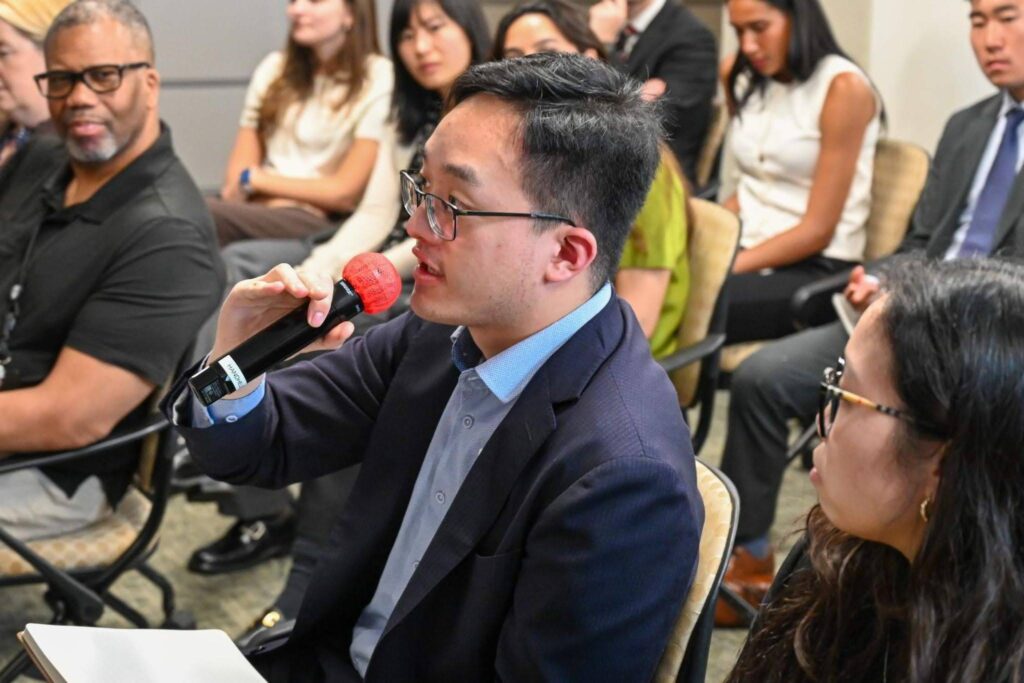
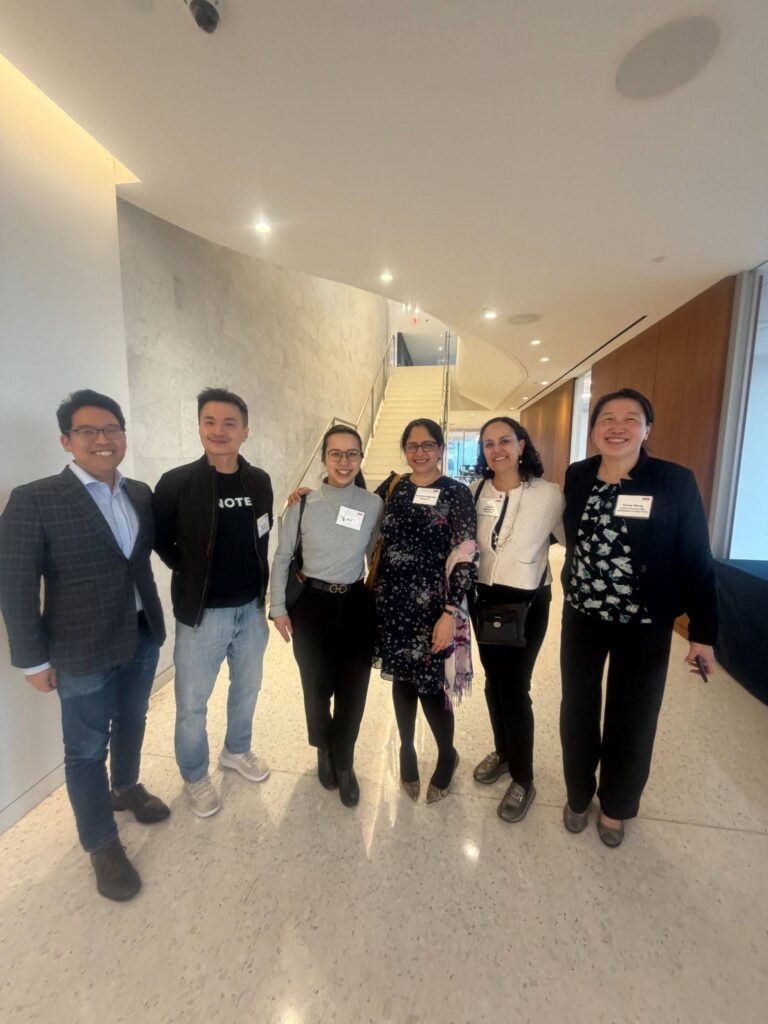
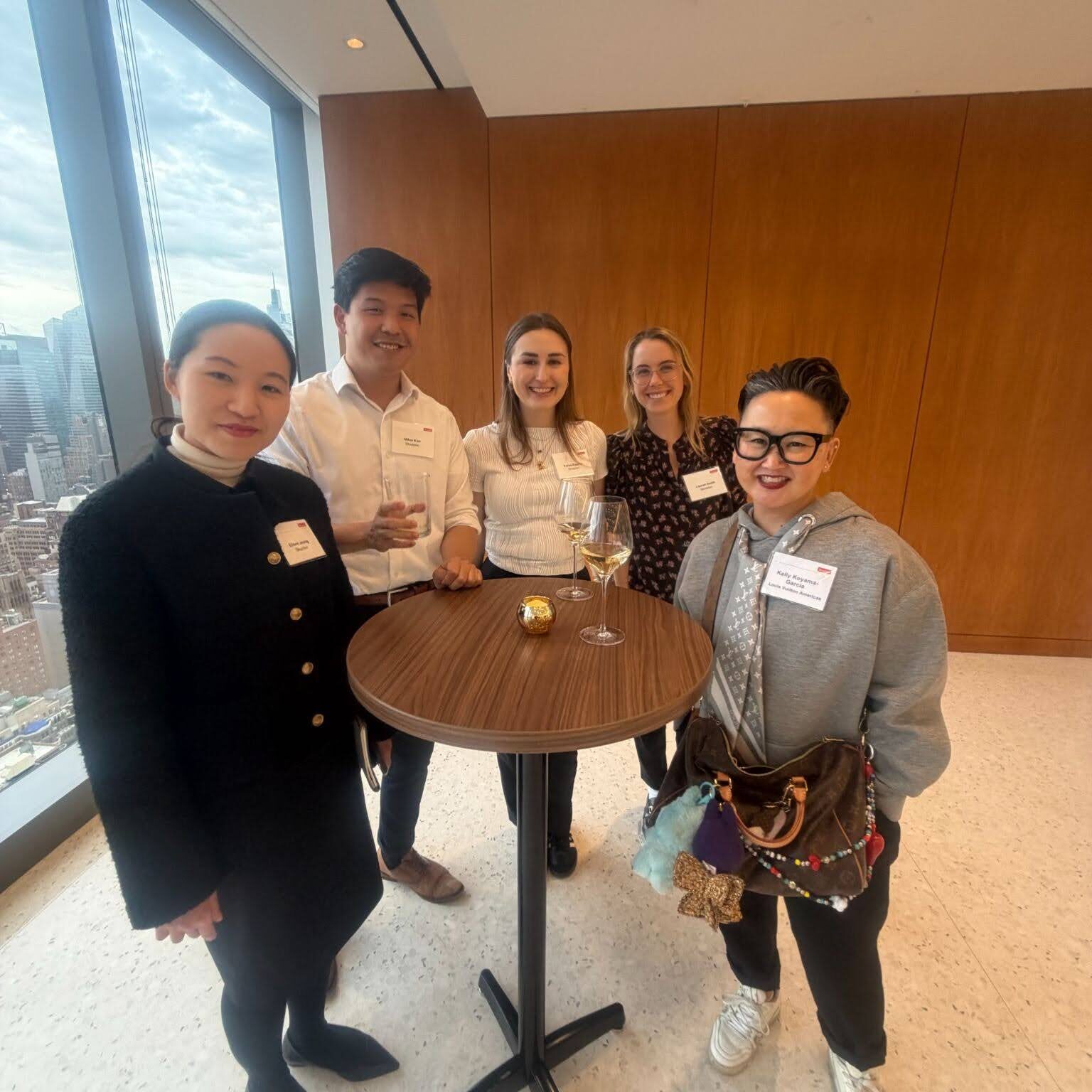
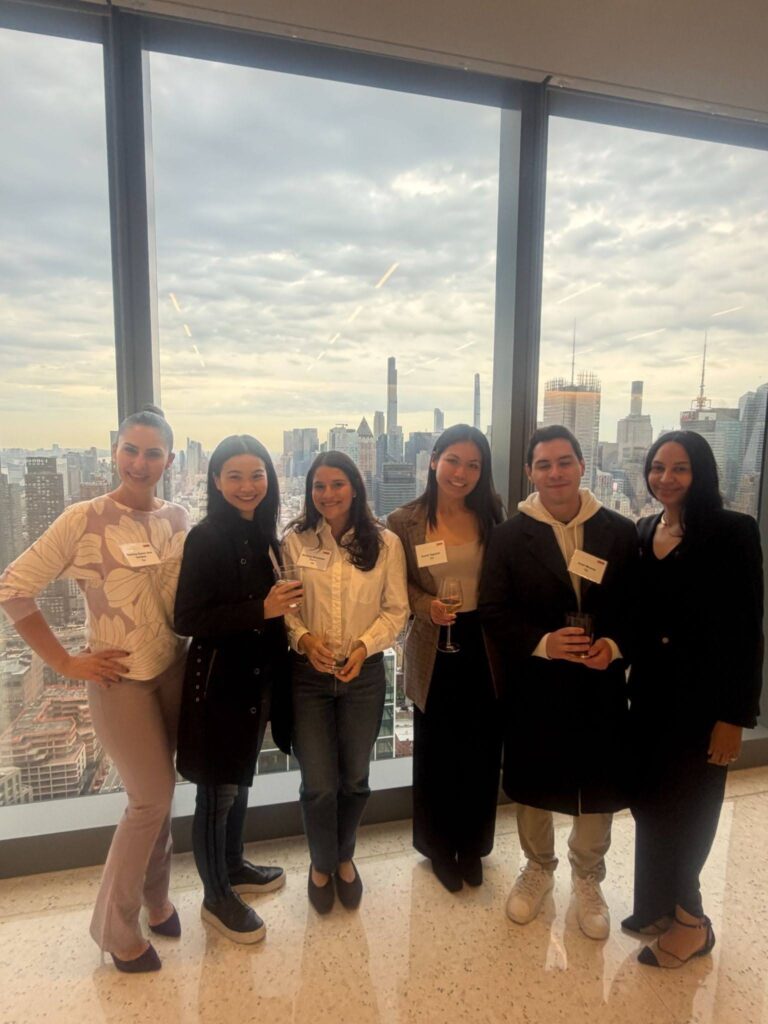
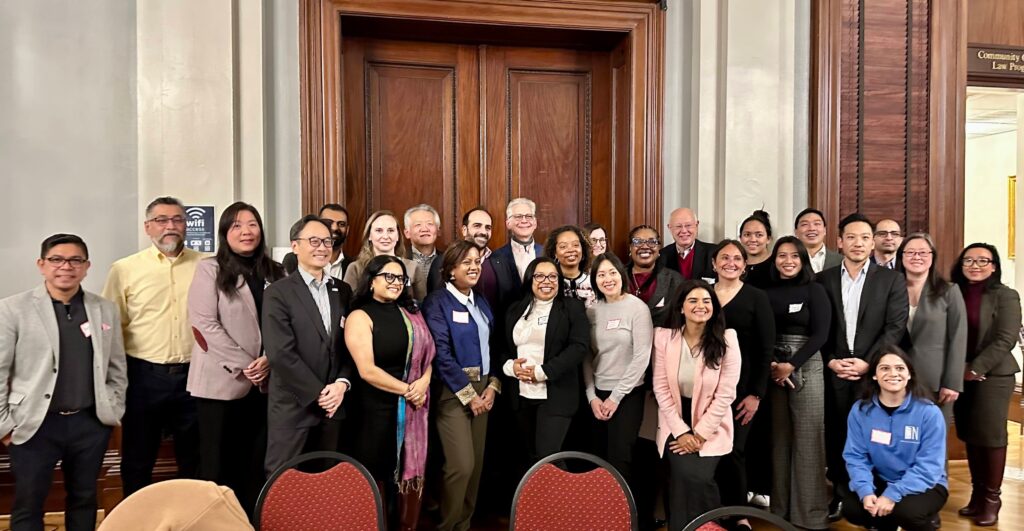
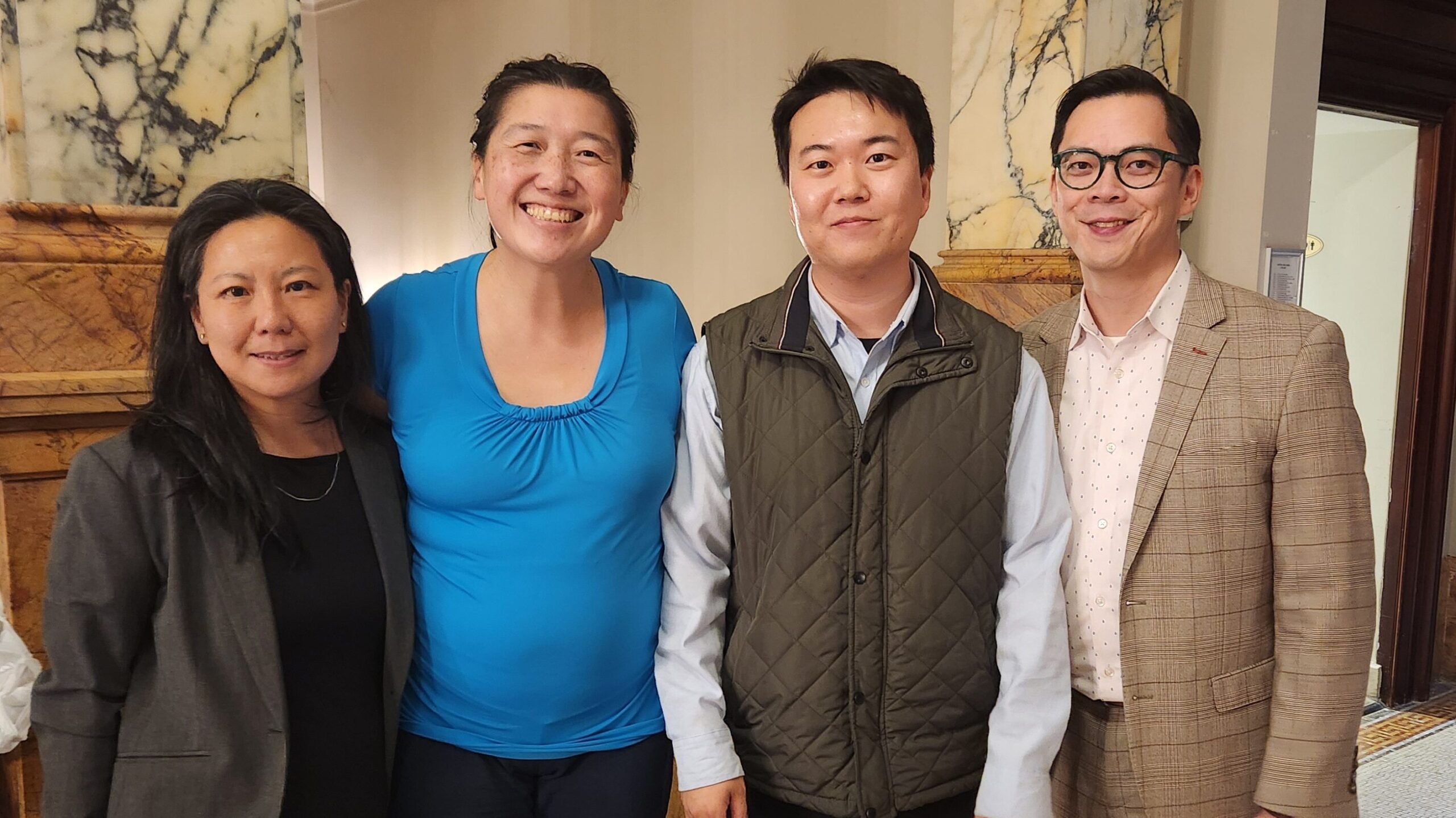
After dinner and the Fireside Chat, attorneys, law students, judges, and professionals connected and exchanged stories during the networking time.  The conversations were not just about their work, but about their families, cultural backgrounds, and personal journeys. Several attendees shared that it was refreshing to step away from case files and deadlines to connect as people, not just as professionals. The connections built between attendees of different backgrounds were personal, heartfelt, and deeply meaningful.

We thank all co-sponsoring associations for their continued support and generosity in sharing the diverse food for this event: 

Events like these demonstrate AABANY’s ongoing commitment to wellness, community, inclusion, and shared storytelling within the legal profession. On this Veterans Day, we were proud to honor not only those who served, but also those who continue to serve through law, leadership, and empathy.

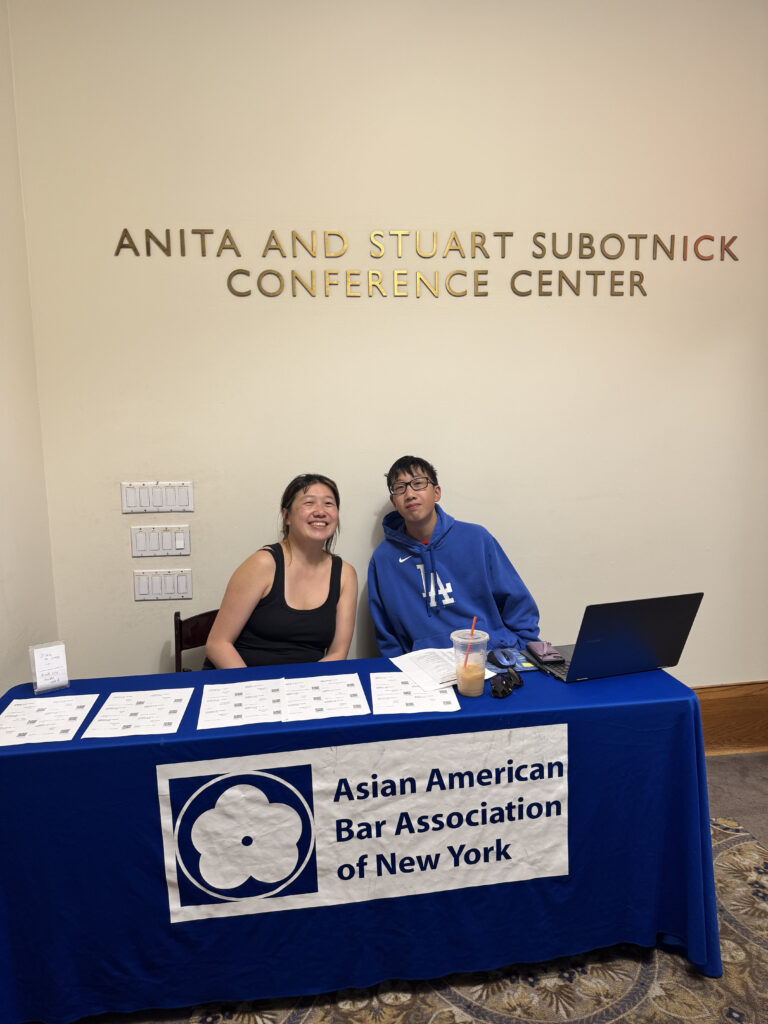
In addition to the associations and the speakers, we would like to thank Jonathan Nguyen, Gloria Tsui-Yip (AABANY Membership Committee Co-Chair) and Kwang Woo Andy Kim (law student from Rutgers Law School – Newark) for volunteering at this event.

Photos from the event can be found at this album here.

“Purpose doesn’t end when service does. It simply takes a new form.” -Jade Simmons, transformational speaker, author and former concert pianist, from her book Purpose the Remix

Labor & Employment Law & In-House Committees Host Fireside Chat With In-House Counsel Grace Fu

On September 17, 2025, AABANY’s Labor & Employment Law and In-House Counsel Committees hosted a fireside chat with Grace Fu, Chief Legal & Administrative Officer at Nanit. Grace shared her experience with AABANY members about working with unions in her prior role as Chief Legal and Administrative Officer and Executive Vice President at Barneys New York.

The event, hosted at Littler Mendelson P.C.’s midtown Manhattan office, aimed to explore the “labor” side of the practice of labor and employment law. Grace explained that her role at Barneys was the first time she had in-depth exposure to labor and employment law, and highlighted the learning curve that came with participating in collective bargaining and addressing the needs of a unionized workforce. She shared stories from her interactions with employees and union officials at Barneys, and expressed gratitude for the unique experience she gained in her dual role in both the Legal and Human Resources departments while at Barneys.

The fireside chat was followed by a Q&A session where Grace continued to provide insight and perspective on her role at Barneys, and shared how she has carried lessons from those experiences to her current role at Nanit. 

The Labor & Employment Law Committee plans on scheduling quarterly fireside chats with leaders in the field of labor and employment law. Please be on the lookout for future events, which will be posted on the AABANY calendar!

Syracuse Law APALSA Hosts Fireside Chat with Hon. Lillian Wan

On Aug. 20 Syracuse Law APALSA hosted a fireside chat with Justice Lillian Wan (NY Appellate Division, Second Department).  Assistant Dean Lily Yan Hughes, a 2025 NAPABA Daniel K. Inouye Trailblazer Recipient, introduced Justice Wan.  Then APALSA President Rebecca Lee moderated the chat. The in-person and on-line audience was enthralled by Justice Wan’s stories of how she learned to embrace her Asian American heritage, found her calling in law, and then after another judge mentored her, finally saw that she could become a judge.   

Justice Wan’s mission is now to demystify the pathway to the judiciary.  It was a fabulous evening bringing together the public and legal community.  Thank you to AABANY’s co-sponsorship, along with Syracuse Law Office of Career Services, Syracuse University (SU) AAPI Faculty & Staff Association, Maxwell Executive Education, Asian American Journalists Association (AAJA) SU Student Chapter,  SU Family Law Society, New Americans Forum, SU Asian/Asian American Studies Program, and Asian Pacific American Public Affairs (APAPA) Syracuse Chapter.

AABANY Hosts Dumplings & Discussion Fireside Chat with Sonia Low

On Wednesday, July 30, AABANY hosted one of its most highly attended Dumplings & Discussion events to date, featuring Sonia Low, Vice President, General Counsel, and Corporate Secretary of the Jacob K. Javits Convention Center. Held at the New York offices of Fish & Richardson in Times Square, the event drew 40 attendees—a diverse and engaged crowd of law students, practicing attorneys, and even family members of AABANY members.

The room was filled to capacity, with attendees lining up along the back wall to listen in on the candid discussion. In an insightful conversation moderated by Jeff Mok, Principal at Fish & Richardson and AABANY Board Director, Sonia shared her journey to Javits, reflecting on her early inspiration to pursue law and experiences in previous corporate roles. She also spoke about the evolving nature of the workplace, the importance of adaptability, and what it means to lead with authenticity and purpose.

Among the attendees was David Feeser, VP of Business Development at 1031 Specialists, who brought along his wife, Te-Hsing Niu, and their 12-year-old daughter. “I wanted my daughter to hear firsthand how people don’t always follow a straight path,” David shared. “Sonia’s story showed her that it’s okay to go through a variety of career changes before finding where you’re meant to be.” 

Following the discussion, attendees stayed for a relaxed networking reception. Over plates of shrimp har gow, black bean chicken, and other delicious bites, seasoned practitioners and young aspiring lawyers discussed a range of reflections on the fireside chat and their own experiences in the legal field.

AABANY extends its deepest thanks to Sonia Low for her candor and generosity, and to Fish & Richardson for graciously hosting the event. We’re grateful to everyone who joined us for such a vibrant and memorable evening.

Keep an eye out on the AABANY calendar for the next Dumplings & Discussion event!

AABANY Co-Sponsors Fireside Chat with Bethany Li, Executive Director of AALDEF

On Thursday, February 27th, AABANY with FALA New York, NACAL, SABANY, and NYU’s APALSA co-sponsored a Fireside Chat with Bethany Li, the new Executive Director of the Asian American Legal Defense and Education Fund (AALDEF). Moderated by Vishal Chander, Co-Chair of AABANY’s Issues Committee, the event gave insight into AALDEF’s history, Bethany’s journey into public interest law, and the pressing civil rights issues facing Asian American communities today.

Bethany Li first took the audience through the history of AALDEF, highlighting how AALDEF has been instrumental in landmark cases that have shaped Asian American advocacy. She emphasized that AALDEF’s history is deeply intertwined with the history of Asian Americans in the United States, stating, “Much of AALDEF’s history coincides with what we understand and study as Asian American history.” 

Bethany later shared personal stories of her childhood in Massachusetts, attributing much of her fine-tuned awareness of systemic injustices to her exposure to the immigrant struggle at an early age. This went on to influence her path to public interest law where, at Amherst, she became more involved in Asian American activism through internships at different journalistic and legal organizations, including one experience during college in which she interned at AALDEF. She later attended Georgetown Law, where she studied under Mari Matsuda, one of the nation’s leading critical race theorists, who cemented her commitment to social justice.

Reflecting on her return to AALDEF as Executive Director, she described it as a homecoming and stressed her commitment to expanding AALDEF’s litigation work, strengthening pro bono partnerships, and mentoring the next generation of civil rights attorneys.

The conversation turned to the role of law firms and private attorneys in supporting AALDEF’s mission. Bethany encouraged attorneys to take on pro bono cases, financially support AALDEF’s work through sponsorships, donations, and participation in events like AALDEF’s Annual Gala, and to advocate within their institutions for greater engagement in civil rights litigation and standing up against government policies that harm immigrant communities. She noted that law firms play a crucial role in civil rights litigation, so their support is greatly appreciated. However, she also acknowledged that pro bono support has become more challenging in the current political climate as firms have refused to attach their names to even non-controversial cases.

Bethany also shared valuable insights for law students interested in public interest law. She specifically stressed the importance of getting hands-on experience through internships, clinics, and pro bono opportunities and seeking mentorship from experienced public interest lawyers. Additionally, Niji Jain, the Legal Director of AALDEF, noted the importance of a strong cover letter while applying, saying that “as a lawyer, writing is your craft.” Bethany also mentioned one of AALDEF’s goals in the coming years: launching an Asian American Training Institute to train the next generation of civil rights litigators and community lawyers.

Vishal’s final question to Bethany was regarding whether she had a call to action for the audience. Bethany gave a powerful piece of advice, citing her former Professor Mari Matsuda, saying, “Do the work that gives you energy.”

The event concluded with Bethany taking a few questions from the audience, during which they engaged in discussions about AALDEF’s future priorities, the challenges of mobilizing Asian American communities, and ways to get involved.

AABANY extends its deepest gratitude to NYU Law School for hosting, FALA New York, SABANY, and NYU’s APALSA for co-sponsoring and making this possible, and especially Bethany Li for her time and insights. We also thank the AABANY Committees that worked so hard to put on this event, namely the IP Committee, Issues Committee, GSPI Committee, and Professional Development Committee. Thank you as well to everyone who attended this important discussion.

AABANY Dumplings & Discussion Series Features David S. Sohn

On October 15, AABANY held the 5th installment of its Dumpling & Discussion Series.  The series brings notable AAPI leaders in the legal industry, with a fireside chat in a casual, intimate setting.  

We were honored to have David S. Sohn as our featured guest.  David is Vice President and Assistant General Counsel at JPMorgan Chase & Co.  David is also a current co-chair of AABANY’s In-House Committee, and formerly an AABANY Director and Vice-President of Programs & Operations, among other leadership positions at AABANY. 

Jeffrey Mok, current co-Vice-President of Programs & Operations, hosted the discussion.  David shared candid thoughts about his career journey, including his path to law school and his transition between different industries.  David also shared his insights on leadership and offered tips for lawyers who are early in their careers.

Attendees enjoyed a wide selection of delicious dumplings and other Chinese food. 

A lively reception followed the discussion with David, and attendees made new connections with each other over food and drinks.

Check the AABANY calendar for future editions of the Dumplings & Discussion Series.

Young Lawyers Committee Hosts “Attorney Well-Being During COVID-19” Event

On April 15, AABANY’s Young Lawyers Committee (YLC) hosted a fireside chat titled “Attorney Well-Being During COVID-19.” In the face of isolating social distancing protocols and prolonged remote working arrangements, Committee Co-Chair Janet Jun organized and moderated the event in hopes of spurring more dialogue on the subject of wellness in the legal profession. Janet was joined by former AABANY President Glenn Lau-Kee and YLC Co-Chair Jane Jeong, who also hosts and produces The Whole Lawyer Podcast. At the intersection of law and wellness, Glenn serves as a member of the New York State Bar Association’s Task Force on Attorney Well-Being, and Jane is a member of the National Asian Pacific American Bar Association’s Wellness Committee. Together, the speakers led a candid discussion about the current state of mental health awareness, challenges in the legal profession, and tips for achieving attorney wellness during COVID-19 and beyond.

Janet kickstarted the discussion by asking about the promises and pitfalls of current efforts to improve wellness in the legal profession. Glenn spoke optimistically about NYSBA’s Task Force on Attorney Well-Being, which consists of nine working groups, each dedicated to a specific wellness issue. As the head of the working group on bar associations, Glenn described the end goal of the Task Force as a wholesale culture change in the legal profession. Glenn observed that attorneys tend to experience higher levels of stress than other professionals, with young lawyers bearing the brunt of this pressure. While larger law firms have established more initiatives to promote lawyer well-being, small firms and solo practitioners are disadvantaged by limited resources. In this context, Glenn identified bar associations as a possible avenue for equalizing wellness resources. 

Diverging from Glenn’s opinion, Jane insisted that personal connections — not institutional initiatives — are the proper foundation for a more comprehensive culture of wellness. Invoking the fireside chat as an example, Jane stated that change starts at the individual level, with the creation of safe spaces for authentic conversations about personal mental health struggles.

Janet continued the discussion by asking about the source of rampant anxiety, depression, and other mental health issues in the legal profession. Glenn broke the problem down into three factors: (1) a lack of boundaries for down time, (2) client expectations and demands, and (3) financial pressures. Jane connected the first and third factors, explaining that the billable hour gives lawyers a systematic incentive to work ceaselessly. Deeming many lawyers to be perfectionists who are conditioned to tie their self-worth to external accomplishments, Jane also said that self-selection bias contributes to a workaholic legal culture.

AABANY Board Member Andy Yoo joined the discussion by asking about ways in which clients can help drive change. Glenn and Jane both responded by stating that leadership buy-in is an essential catalyst for change. As Jane explained, how CEOs and CLOs treat their employees trickles down to how employees treat external counsel.

Cynthia Lam, AABANY’s Co-Vice President of Programs and Operations, then asked the speakers to share their personal strategies for maintaining well-being. Glenn emphasized the community aspect of any individual effort to promote self-care. He urged lawyers to look beyond their own team members, who are all fixated on the same work, and reach out to family members, friends, and colleagues outside of their firms. Moving forward, Glenn hopes that bar associations will also play a greater role in providing lawyers with a sense of community. 

In enhancing her own mental health, Jane underscored the importance of setting and communicating boundaries with colleagues. She encouraged attendees not to cancel social plans for work except in the rare case of an emergency. Drawing on experience from her early career, Jane explained that by always saying yes to external requests, she had taught others that it was okay to overwork her. The lesson Jane derived from this experience was to treat yourself the way you want others to treat you. 

Ultimately, Glenn and Jane urged attendees to carve out time for themselves to participate in communities and activities that are wholly unrelated to the law. While Jane personally benefits from working out, writing fiction, and doing yoga, she encouraged lawyers to access their own creative and reflective sides in whatever way works for them. Janet concluded the fireside chat by appealing to the desire of all attendees to be good lawyers. Only by striking a proper work-life balance can attorneys be fully enthusiastic about their careers and clients. To this extent, valuing well-being in one’s own life can help us all become more present in the lives of those around us.

AABANY thanks Janet, Glenn, and Jane for sharing their insights and leading this dialogue on the ever-relevant topic of attorney well-being. To learn more about the Young Lawyers Committee and its work, click here.

AABANY Co-Sponsors Virtual Fireside Chat with Prominent Asian American Judges on January 26, 2021

On January 26, 2021, AABANY co-sponsored a virtual fireside chat hosted by the New York City Bar entitled, “Our Story: Asian American Judges Share Their Path to the Bench, and Thoughts on Diversity and of the Future.” Prominent speakers included:

  • Hon. Shahabudeen Ally, Supervising Judge, New York County Civil Court;
  • Hon. Jeffrey K. Oing, New York State Supreme Court, Appellate Division, First Department and AABANY member;
  • Hon. Ushir Pandit-Durant, New York State Supreme Court, Queens County; and
  • Hon. Lillian Wan, New York State Supreme Court, Kings County and AABANY member.

Serving as moderator, Judge Ally led the discussion on each jurist’s path to the bench, challenges faced in their paths regarding issues of diversity and inclusion, and their thoughts on the inclusion of more Asian Americans in the future of the court system. 

For Justices Oing, Pandit-Durant, and Wan, they did not anticipate becoming jurists when they were in law school. Justice Pandit-Durant had previously served at the Queens Assistant District Attorneys Office for over 20 years, and Justice Wan had been a litigator at the Administration for Children’s Services for 9 years and later as a court attorney referee at Surrogates Court. They became interested in joining the bench after their experiences of appearing before judges everyday and learning more about the judicial appointment process. Speaking about the path to the bench, the speakers emphasized the importance of getting outside their own comfort zone and attending events to get their names out there. You want people to recognize you as someone who would be able to do the job, said Justice Pandit-Durant. “They’re not going to know you until they want to know you.”

Speaking on diversity in the court system, the speakers agreed that compared to the past, we are moving in the right direction. There are now many more women and diverse women on the bench. In the state of New York, there are currently 39 judges of Asian American descent. Justice Wan said, “There is more respect and acceptance of the outcome if we have a bench that looks like the community they serve. Diversity matters.”

In the final segment of the fireside chat, Judge Ally asked the speakers: “What can we do as a population to engage the next generation?” Justice Wan spoke about the importance of mentorships. Many people do not realize that practically anyone with the right qualifications can become a judge, and it is necessary for mentors to help demystify the process. Speakers also discussed how students can be inspired by looking at the diversity of the bench and the progress that has already been made. The jurists praised the 80+ audience members for joining their chat and asking great questions, and concluded with the hope that the number of judges of Asian American descent in New York will continue to increase.

AABANY’s Judiciary Committee has a mission to do just that: increase the number of judges of Asian American and Pacific Islander descent in New York. To learn more about the Judiciary Committee, read this blog post about the March 19 membership mixer featuring that Committee or visit this page on the AABANY website.

Fireside Chat – Thursday, March 18 at 6:30 pm

From the Office of Governor Andrew M. Cuomo:

We are proud to present the next Fireside Chat as part of a series of discussions produced in partnership with the New York State COVID-19 Vaccine Equity Taskforce.

We would appreciate your help in spreading the word – please invite your networks to attend the event through email, or by posting the event information on social media outlets like Twitter, Facebook, Instagram and LinkedIn. Participants can view the program at ny.gov/VETF.

We encourage you to submit questions for the speakers in advance by emailing COVID19VaccineEquity@health.ny.gov, and we will also be taking live questions from attendees. We will do our best to pose as many questions to our panelists as possible. You may also choose to register for this event (not required), as a means of adding the event to your calendar and for reminders, at the link here: https://covid-19-vaccines-lgbt-community-staying-informed.eventbrite.com

Thank you all and let’s #VaccinateNY!

Please refer any questions to Emily Stetson, Special Assistant for Intergovernmental Affairs, by email at Emily.Stetson@exec.ny.gov or by phone at (518) 956-2617.

爐邊談話-普通話節目- 3月4日星期四晚间6:30 / Fireside Chat – Mandarin Program – March 4 at 6:30 PM

大家好:

我们很荣幸推出下一期的炉边谈话,作为与纽约州 COVID-19 疫苗公平工作组 (New York State COVID-19 Vaccine Equity Taskforce) 合作开展的一系列讨论活动的一部分。这将是一次向全纽约州讲普通话的社区提供教育的难得机会,意义非凡,所以我们希望这次活动的参与者越多越好。

我们鼓励您提前向讲者提交问题,请将您的问题通过电子邮件发 至 COVID19VaccineEquity@health.ny.gov,我们也将接受出席者的提问。我们将竭力向小组成员提出尽可能多的问题。您还可以选择注册该活动(非强制),以将该活动添加到您的日程表并适时收到提醒,请点击以下链接完成这项操作:https://covid-19-vaccine-mobilizing-chinese-communities.eventbrite.com.

English Translation

We are proud to present the next Fireside Chat as part of a series of discussions produced in partnership with the New York State COVID-19 Vaccine Equity Taskforce. This will be a meaningful opportunity to provide education to Mandarin-speaking communities across New York State, and we want to encourage as much attendance as possible.

We encourage you to submit questions for the speakers in advance by emailing COVID19VaccineEquity@health.ny.govhttps://covid-19-vaccine-mobilizing-chinese-communities.eventbrite.com.