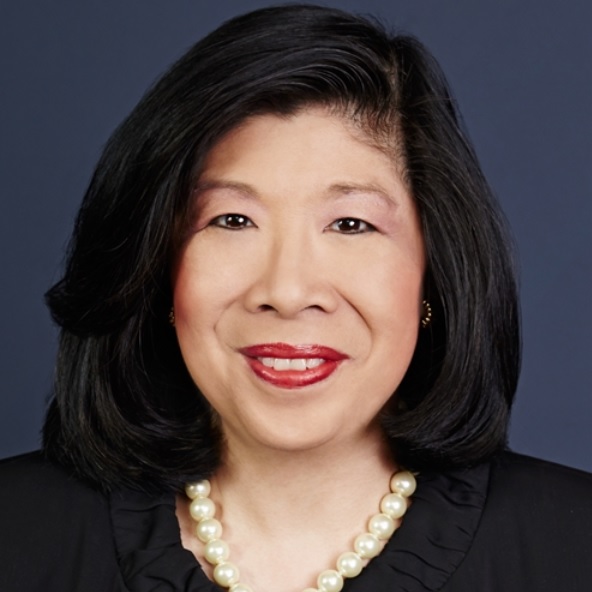

In honor of Asian American and Pacific Islander Heritage Month, the Asian Columbia Alumni Association (ACAA) is featuring prominent Asian alums and honoring their contributions to Asian and Pacific Islander communities in North America. In the May 2021 Newsletter, ACAA featured AABANY Board Member and Real Estate Committee Co-Chair Margaret Ling (Barnard College ’78) for her actions in speaking up against anti-Asian hate crimes and educating others to respect the AAPI community. In the feature, Margaret is quoted:
“Since 2020, Asian American Pacific Islanders (AAPI) have been intensely affected by the COVID 19 pandemic, the killing of George Floyd and the Black Lives Matter movement, and recently the Atlanta, Georgia killings. Throughout this time, the AAPI community has been faced with racism, xenophobia and anti-Asian hate crimes and violence. As an AAPI attorney and Fourth Generation American Born Chinese, I have been active in speaking up and speaking out with other Asian and ally organizations to educate others to respect the AAPI community and afford all of us equity, fairness and just treatment under the law. We are all Americans and are rooted in our immigrant and cultural heritages which make us stronger together.”
Please join AABANY in congratulating Margaret on her recognition by the Asian Columbia Alumni Association for her work in supporting the AAPI community!
To assist the Asian American and Pacific Islander (AAPI) community in New York City amid the surge of anti-Asian hate and violence, AABANY has created a Know Your Rights brochure to inform and educate AAPIs on their legal rights if they experience a bias incident or potential hate crime.
The brochure provides a background of the U.S. legal system, defining a hate crime according to the New York State hate crime statute and differentiates between a hate crime and a bias incident. It encourages individuals who have experienced an incident to focus on the facts and ask themselves: “Do I have evidence that an attack was motivated by a belief or perception about an individual’s race, color, national origin, ancestry, or gender?” The brochure also provides tips on what to do when individuals are experiencing a bias incident. This includes turning on sound or video recording; taking note of the attacker’s physical appearance and clothes; and collecting bystander witness contact information. The brochure then outlines the steps of what to do after experiencing a bias incident, such as pursuing action through the criminal justice system, a civil lawsuit, or non-legal option.
AABANY is available as a resource to the AAPI community. The bar association offers interpretation and translation services, provides information or referral services for individuals interested in pursuing a civil lawsuit, and can serve as a guide for individuals interested in exploring the criminal justice process and other forms of assistance.
To view the Know Your Rights Brochure, please see the links below:
Translations into other Asian languages are currently in process and will be uploaded soon. Please be on the lookout for that announcement.
If you have any questions about these Know Your Rights brochures, please feel free to contact AABANY at [email protected]
Please feel free to share this post and the links to the PDF brochures widely. Please also print out and distribute hard copies to anyone who you think might benefit from receiving this information.
On May 4, AABANY’s Pro Bono & Community Service Committee (PBCS) hosted a virtual law clinic and presentation on elder law as a part of the Virtual Community Presentation Series. The event was co-sponsored by AABANY, the Chinese Consolidated Benevolent Association (CCBA), and the Chinese Chamber of Commerce of New York.
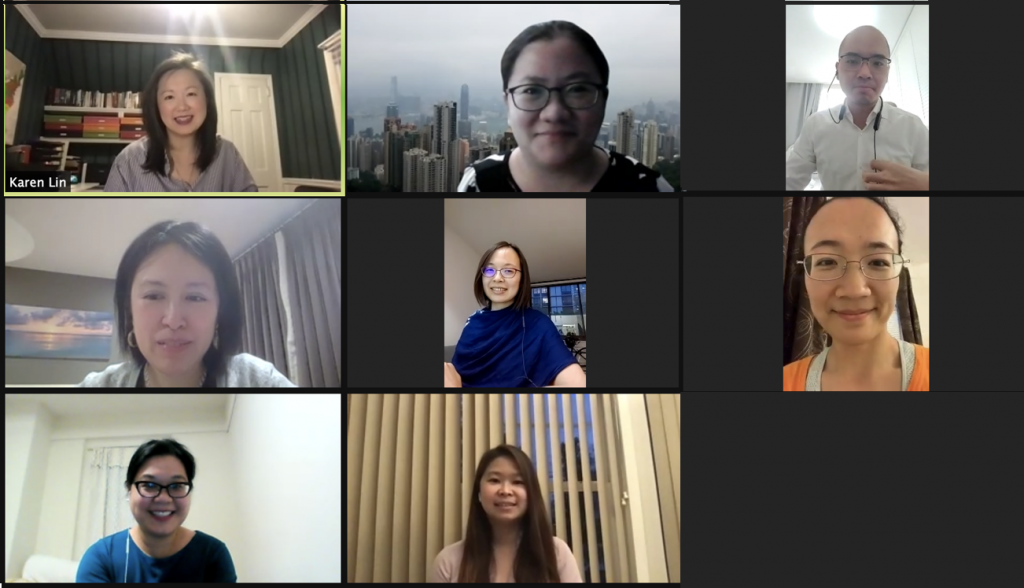
In light of the instability brought about by the pandemic, the new changes to the Medicaid laws, and the surge in anti-Asian violence, Committee Vice-Chair May Wong moderated the event to address the questions and concerns of the Chinese community, as well as to provide free legal consultations on these topics. May was joined by Karen Eng, specializing in estate planning, administration, elder law, Article 81 guardianship, and residential real estate at Thomas J. Manzi, P.C., and Pauline Yeung-Ha, Partner at Grimaldi & Yeung, LLP specializing in trusts, wills and estates, elder law, and special needs planning. Also present were Co-Chairs Judy Lee, Karen Lin, and Kwok Ng.
Karen Eng presented information on advance directives, wills, and trusts, while Pauline spoke on the new Medicaid changes and the effects the changes would have on individual healthcare. Both Karen Eng and Pauline emphasized the importance of advance preparation in matters of healthcare and estate planning. Kwok translated the speakers consecutively into Cantonese and Mandarin and also presented information on hate crimes and resources for reporting incidents. 31 individuals attended the event. At the presentation’s end, PBCS, along with Karen Eng and Pauline, opened the virtual free services clinic for two client consultations. The CCBA provided their physical headquarters for the two clients to meet remotely with the attorneys.
The PCBS Committee thanks Karen Eng and Pauline Yeung-Ha for offering their expertise in elder law to give back to the Chinese community. PBCS would also like to thank Annalee Patel, Bei Yang, Chao-Yung Chiu, Jian Cui, Julie Choe, Kelly Tang, and Xinyi Shen for their help and support in organizing the event. AABANY would also like to thank the Chinese Consolidated Benevolent Association and the New York Chinese Chamber of Commerce for co-sponsoring this event. To watch the presentation, click here. To learn more about the Pro Bono & Community Service Committee and its work, click here and click here.
WASHINGTON—This past Friday, the U.S. Department of Justice announced it would investigate the rise in hate-based violent extremism against Asian Americans that has occurred since the start of the COVID-19 pandemic. The National Asian Pacific American Bar Association (NAPABA) applauds this necessary undertaking and unequivocally condemns and rejects the violence that has been directed at the Asian American and Pacific Islander (AAPI) community and calls for appropriate law enforcement efforts to investigate and prosecute offenders.
Since the start of the pandemic, there have been over 3,000 recorded hate incidents against the Asian American community, along with concern that law enforcement has been slow or reticent to investigate the incidents.
“NAPABA is deeply troubled by the continued rise of hate crimes and violence against the Asian American community and the hesitant response by the government to counter this disturbing and unacceptable trend,” said A.B. Cruz III, president of NAPABA. “While we appreciate President Biden and the Department of Justice’s acknowledgement of this crisis, we need our government to do more to protect AAPIs. There needs to be proactive coordination between local, state and federal authorities, including prevention and prosecution against such crimes. NAPABA has, and will, continue to work diligently to provide support to assist victims and their families, and action and advocacy to prevent hate crimes and acts of violence against the AAPI community.”
An 84-year-old Thai American man in San Francisco was shoved to the ground during his morning walk and died two days later;
A 91-year-old Chinese American man In Oakland was attacked and pushed to the ground when several shops were vandalized in Chinatown;
A 64-year-old Vietnamese American woman in San Jose was robbed following a Lunar New Year’s celebration;
A 61-year-old Filipino American in New York had his face slashed with a box cutter on the subway; and
A 52-year-old Chinese American woman in Queens, New York was physically attacked and shoved to the ground while waiting in line at a bakery.
NAPABA’s hate crimes resources, including providing pro bono legal assistance, can be found here. NAPABA’s Stand Against Hate campaign, denouncing racism can be found here. NAPABA and its affiliates’ past statements on anti-Asian hate can be found here.
###
The National Asian Pacific American Bar Association (NAPABA) represents the interests of approximately 50,000 legal professionals and nearly 90 national, state, and local Asian Pacific American bar associations. NAPABA is a leader in addressing civil rights issues confronting Asian Pacific American communities. Through its national network, NAPABA provides a strong voice for increased diversity in government and the judiciary on the local, state, and federal levels, advocates for equal opportunity in the workplace, works to eliminate hate crimes and anti-immigrant sentiment, and promotes the professional development of people of color in the legal profession.
WASHINGTON – The National Asian Pacific American Bar Association (NAPABA) commends President Biden’s Presidential Memorandum denouncing discrimination and xenophobia against the Asian American and Pacific Islander (AAPI) community.
In the memorandum, President Biden directed the Attorney General, to investigate, document and address hate incidents and harassment against AAPIs. Additionally, the President directed the Department of Health and Human Services, in coordination with the COVID-19 Health Equity Task Force, to issue guidance, including language access, toward AAPIs in the nation’s COVID-19 response.
“Members of the Asian American and Pacific Islander community have been victims of increased acts of discrimination, hate and racist violence, and harassment during the COVID-19 pandemic, much of which has been underreported by the media,” said NAPABA president A.B. Cruz III. “We applaud President Biden’s efforts to unify the country by recognizing and addressing these despicable acts that have devastated our community and businesses. We strongly urge all leaders, organizations and individuals to join us and take a stand against hate.”
According to the Stop AAPI Hate project, there were over two thousand documented incidents of hate or violence targeting Asian Americans and Pacific Islanders over the summer of 2020 related to COVID-19.
Please see NAPABA’s Hate Crimes Center for more resources on how to respond to acts of hate. Organizations are invited to join NAPABA’s Stand Against Hate campaign. NAPABA addressed and condemned racist language in an organization statement last fall.
###
The National Asian Pacific American Bar Association (NAPABA) represents the interests of approximately 50,000 legal professionals and nearly 90 national, state, and local Asian Pacific American bar associations. NAPABA is a leader in addressing civil rights issues confronting Asian Pacific American communities. Through its national network, NAPABA provides a strong voice for increased diversity in government and the judiciary on the local, state, and federal levels, advocates for equal opportunity in the workplace, works to eliminate hate crimes and anti-immigrant sentiment, and promotes the professional development of people of color in the legal profession.
The Asian American Bar Association of New York (AABANY) was recently mentioned in a Law360 article on New York state bar associations’ reactions to the violence that occurred at the U.S. Capitol on Wednesday, January 6, 2021. The article states: “The Asian American Bar Association of New York, one of the state’s most vocal attorneys group, endorsed a statement published by its parent organization, the National Asian Pacific American Bar Association, decrying the storming of the Capitol as the act of militants.”
NY Lawyers Condemn Storming Of US Capitol By Mob By Marco Poggio
Law360 (January 7, 2021, 4:34 PM EST) — Prominent New York state bar associations have condemned the violence that unfolded in Washington, D.C., on Wednesday, in which a mob of President Donald Trump’s supporters broke into the U.S. Capitol as the Electoral College vote certification was in progress, resulting in the deaths of four people. Read more here (subscription is required).
WASHINGTON – The National Asian Pacific American Bar Association (NAPABA) strenuously condemns the violent actions and defiant breach of both security and safety at the U.S. Capitol by militants. Critical cornerstones of our Constitutional democracy are the peaceful transition of power within our government and the right of citizens to peacefully protest. Neither violence nor the threat of violence is at all acceptable and has no rightful place here. We call on the Administration, all elected officials, public servants, and all Americans to denounce the violence we witnessed today, support efforts needed to quiet the unrest, demand it cease immediately, and cause an immediate return to our foundational principles of a peaceful democracy and the rule of law.
###
The National Asian Pacific American Bar Association (NAPABA) represents the interests of approximately 50,000 legal professionals and nearly 90 national, state, and local Asian Pacific American bar associations. NAPABA is a leader in addressing civil rights issues confronting Asian Pacific American communities. Through its national network, NAPABA provides a strong voice for increased diversity of the federal and state judiciaries, advocates for equal opportunity in the workplace, works to eliminate hate crimes and anti-immigrant sentiment, and promotes the professional development of people of color in the legal profession.
On Saturday, May 16, the Asian American Bar Association of New York (“AABANY”) hosted its “Mandarin and Cantonese Community Webinar on Anti-Asian Violence,” part of a broader series aimed at addressing the rise in anti-Asian violence in light of COVID-19. The events focused on briefing individuals on how to defend themselves if an incident were to occur and also discussed relevant state laws that protect victims. The Mandarin webinar aired from 2:00-3:00 PM and the Cantonese webinar aired from 3:00-4:00 PM.
Guest speakers included moderator Kwok Kei Ng and representatives from the NYPD, Simpson Thacher & Bartlett LLP, and the New York City Commission on Human Rights (NYCCHR).
William Kwok, Asian Liaison of the Immigrant Outreach Unit of the NYPD Community Affairs Bureau, discussed the practical measures by which individuals can protect themselves from immediate physical harm. Individuals are encouraged to run into public spaces such as stores or public spaces that may have police officers on duty. If they are able, victims are encouraged to call 911 or get bystanders to contact the police. There are translators on stand-by at the NYPD if needed. Most importantly, undocumented persons should not be afraid of calling the NYPD as officers are forbidden to inquire about a victim’s immigration status.
Additionally, Officer Kwok and Mr. Ng discussed specific provisions of the Hate Crimes laws that apply. New York Penal Law § 240.30-3 describes the elements of Aggravated Harassment in the Second Degree, stating that the incident must reflect an intent to harass, annoy, threaten, or harm through physical force. New York Penal Law §485.05, the Hate Crime Law, enhances sentencing if the incident is proven to be bias-motivated. Victims and bystanders should be unafraid of reporting incidents to the authorities; any materials whether in the form of videos, audios, or testimonials can help secure a conviction. Officer Kwok and Mr. Ng presented in both the Mandarin and Cantonese webinars.
Lastly, Jiarui Li, an associate at Simpson Thacher and guest speaker for the Mandarin webinar, and Karen Yau, Co-Chair of the AABANY Pro Bono & Community Service Committee and guest speaker for the Cantonese webinar, discussed the various resources available to victims. Victims should contact the New York Office of Victim Services and the NYCCHR to see if they are eligible for compensation and legal assistance. Both New York City and New York State have dedicated Hate Crimes Task Forces that victims can contact. Victims residing in New Jersey or Connecticut can contact their own individual state Hate Crimes Task Forces.
The guest speakers reiterated the importance of reporting anti-Asian incidents to the police. Only by informing the relevant authorities can we adopt a preventative approach and stop bias incidents from occurring before individuals are harmed.
We thank the guest speakers for joining us and for their commitment to protecting the well-being of everyday New Yorkers. For more information on anti-Asian harassment and violence, email [email protected] or call our hotline at 516-690-7724.
On Sunday, May 17, 2020, the Pro Bono & Community Service Committee of the Asian American Bar Association of New York (AABANY) hosted the Korean version of its webinar series, “Anti-Asian Violence and Hate Arising from the COVID-19 Pandemic.” The presentation addressed the increase in violent incidents against Asians in the community and included a discussion of the rights that victims and bystanders have when a racially motivated confrontation occurs, as well as what actions rise to the level of a prosecutable offense.
The webinar featured moderator, Sean Dong Min Rhee, a Northeastern University law student, as well as two panelists: Kings County Assistant District Attorney Stephanie Pak and Naomi Jeehee Yang, an Associate at Paul Weiss.
During the presentation, Stephanie Pak explained what actions would constitute a hate crime (P.L. §240.30) and aggravated assault (P.L. §485.05) as set forth in New York Penal Law. She also gave examples of actions that would rise to a criminal level so that community members would be able to recognize incidents which they should report to law enforcement agencies or their local District Attorney’s office. Furthermore, Stephanie emphasized that when Korean victims are called Chinese during an assault, this does not invalidate the action from being prosecuted as a hate crime but rather makes the issue ripe for prosecution.
The other panelist, Naomi Jeehee Yang, shared information on who to contact during or after these incidents, as well as a few helpful tips that can help prosecutors and law enforcement. She stressed the importance of recording an incident because the evidence is often a key component in successfully prosecuting assailants. If this is not an option, it is important to call 911, as phone calls to police are recorded and can also be used as evidence during a criminal trial. Most importantly, Naomi spoke on the significance of reporting these anti-Asian episodes. If incidents are reported there will consequently be a more accurate number of cases in which Asians are being victimized in the community. This, in turn, increases the visibility of this issue and will spur action by government officials and policymakers – bringing about legislation or resources that can be helpful to the Asian community.
Thank you to our panelists, the excellent attorneys at Paul Weiss for their pro bono assistance, and our volunteers at the Pro Bono Committee for planning and organizing our Anti-Asian Violence and Hate Arising from the COVID-19 Pandemic webinars. We will have more community presentations on topics related to COVID-19 and its impact on the AAPI community this month. For more information on anti-Asian harassment and violence, email [email protected], call our hotline at 516-690-7724, and check out the resources that AABANY has compiled at https://www.aabany.org/page/covid19.
View the video of the webinar by clicking on the image above.
On Wednesday, May 13, 2020, the Asian American Bar Association’s (AABANY) Pro Bono & Community Service Committee hosted the webinar, “Anti-Asian Violence and Hate Arising from the COVID-19 Pandemic.” This event addressed the increase in violent incidents against the Asian American community, and the relevant State and Federal laws for victims and witnesses of these hate crimes who seek to report them.
The webinar featured panelists David Chiang, Supervising Assistant District Attorney, Queens District Attorney’s Office; Joe Gim, Deputy Chief, Nassau County District Attorney; and Julia Kerr, Associate at Simpson Thacher & Bartlett LLP. Eugene Kim, a volunteer at AABANY’s Pro Bono Clinic, moderated the panel.
David Chiang, Supervising Assistant District Attorney, Queens District Attorney’s Office, discussed New York Penal Law § 240 and § 485,both of which elevate sentencing for bias incidents to the criminal level. Section 240, covering Aggravated Harassment in the Second Degree, states that threats of physical violence based on the perception of race are considered as misdemeanors. Section 485, the Hate Crime Law, enhances sentencing for incidents proven to be motivated by bias.
Joe Gim, Deputy Bureau Chief, Nassau County District Attorney’s Office, advised victims and bystanders of anti-Asian hate crimes to record the crime by taking a video of the incident with their phones or calling 911. Doing so would not only preserve the evidence necessary to strengthen the case against the perpetrator but also publicize these hateful acts to highlight the prevalence of anti-Asian violence. Even if the victim is not willing to come forward, whether due to language barriers or distrust of law enforcement, bystanders can still report the crime. After preserving evidence and notifying the police, the police will file a Complaint Report, and the case will either result in an arrest or be handed off to prosecutors and end up in trial.
Julia Kerr, Associate at Simpson Thacher & Bartlett LLP, concluded the webinar by encouraging individuals to report incidents of anti-Asian violence to both government and non-governmental organizations to prevent future hate crimes. In addition to calling 911, victims and bystanders can also reach out to the New York State and New York City Hate Crime Task Forces, MTA Hotline, local District Attorney, and NY Attorney General’s Office. Other resources include AABANY, Asian Pacific Policy and Planning Council, Asian Americans Advancing Justice, National Asian Pacific American Bar Association, Communities Against Hate, Equality Watch, Southern Poverty Law Center, and Anti-Defamation League.
We thank the panelists for joining us for this CLE program and Eugene for serving as the moderator. Look forward to more community presentations on COVID-19 and its impact on the APA community this month. For more information on anti-Asian harassment and violence, email [email protected] or call our hotline at 516-690-7724.
View the video of the webinar by clicking on the image above.