
Thank You for Joining AABANY at Our 2026 Fall Conference: “Rising Up to Meet the Future: Cultivating Tomorrow’s Leaders Today”

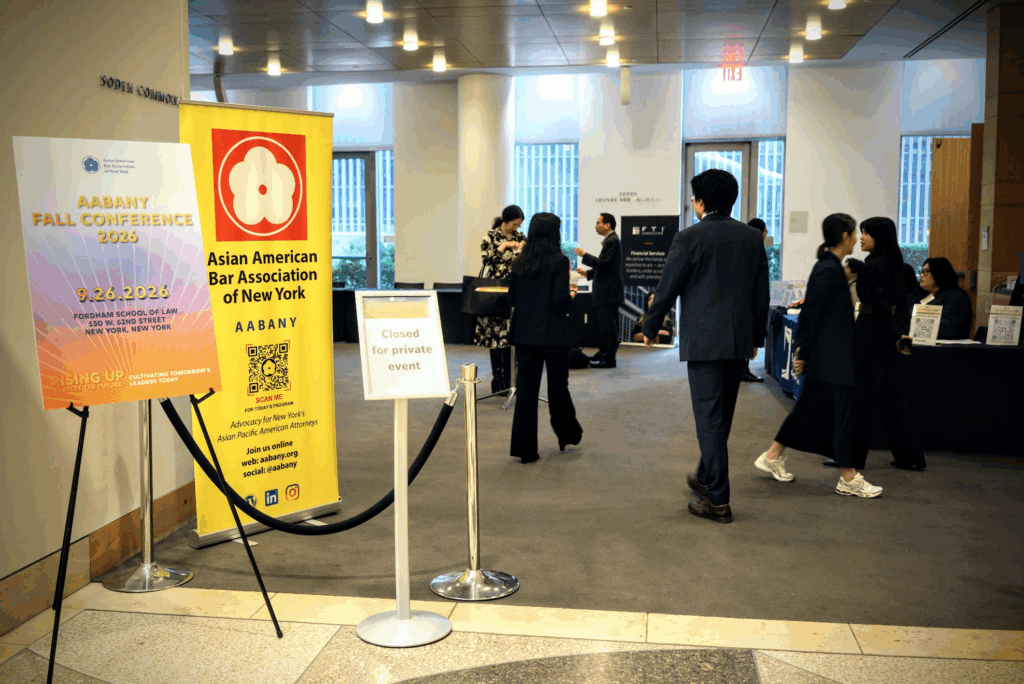
On Saturday, September 26, at Fordham Law School, AABANY hosted its 2026 Fall Conference, with the theme “Rising Up to Meet the Future: Cultivating Tomorrow’s Leaders Today.” Thanks to Fordham Law School for hosting this day-long event. The full-day event offered multi-track CLE programming throughout the morning and afternoon, a plenary lunch session, and different opportunities for professional development, networking, and community-building. In addition to CLE sessions, the Conference also featured the Trial Advocacy Program, Diversity Career Fair, Link-Up Reception, and meetings and gatherings throughout the day hosted by various AABANY Committees. 

The day began with an ample breakfast buffet that was most welcome on a wet and stormy morning. Despite the nor’easter brewing outside, the warmth of the food and energy in the room created a welcoming start to the day, bringing together friends and colleagues, old and new, into the AABANY community. 

Morning Sessions 

From 9:00 to 10:30 AM, participants could choose from the following four CLE panels: 

Rising Up to Serve: Leveraging Bar Associations for Community-Centered Lawyering – exploring how attorneys can use bar associations and community organizations to respond to the legal needs of AANHPI and immigrant communities, expand access to legal services, all the while engaging in community-centered advocacy. 
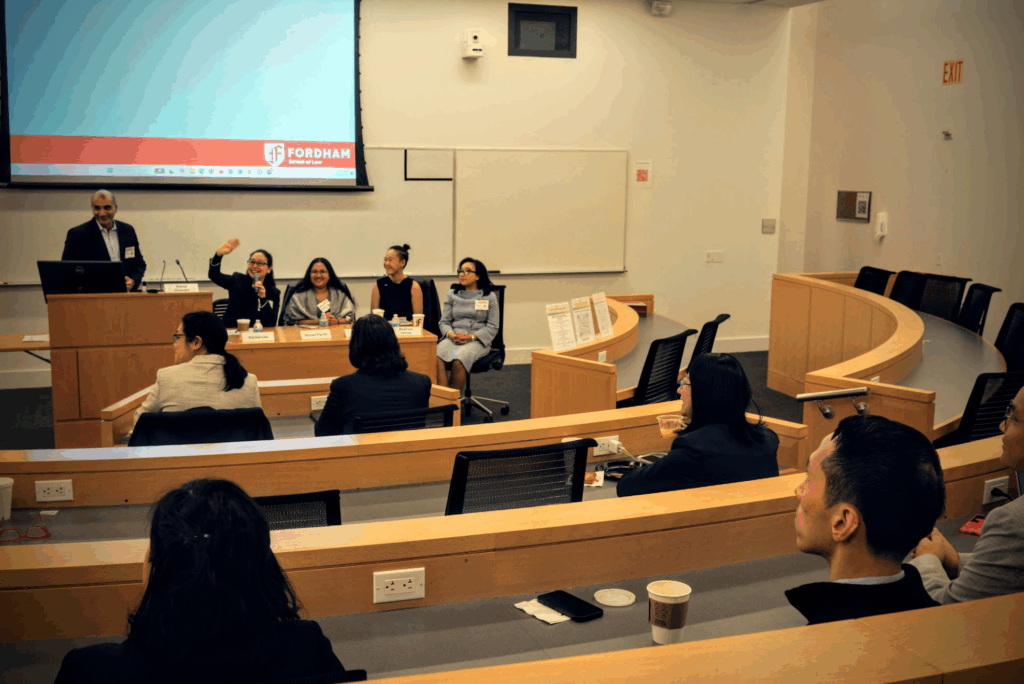
AI, Voice, Likeness and Persona: How Tomorrow’s Lawyers Will Define Ownership, Consent, and Control – examining the rapidly changing legal questions surrounding AI-generated replicas of voices, faces, likeness, and other personal attributes, covering issues of ownership, consent, control, monetization, and misuse. 

Bridging the Gap! Transitioning from MPRE to Real-World Ethics – focusing on moving beyond the principles tested on the MPRE to consider how ethical obligations arise in the everyday practice of law and how new attorneys can apply those principles in professional and practical settings. 

Conducting Effective Internal Investigations – examining the implications involved in managing internal investigations, from establishing protocols and determining scope to working with stakeholders and protecting privilege. 
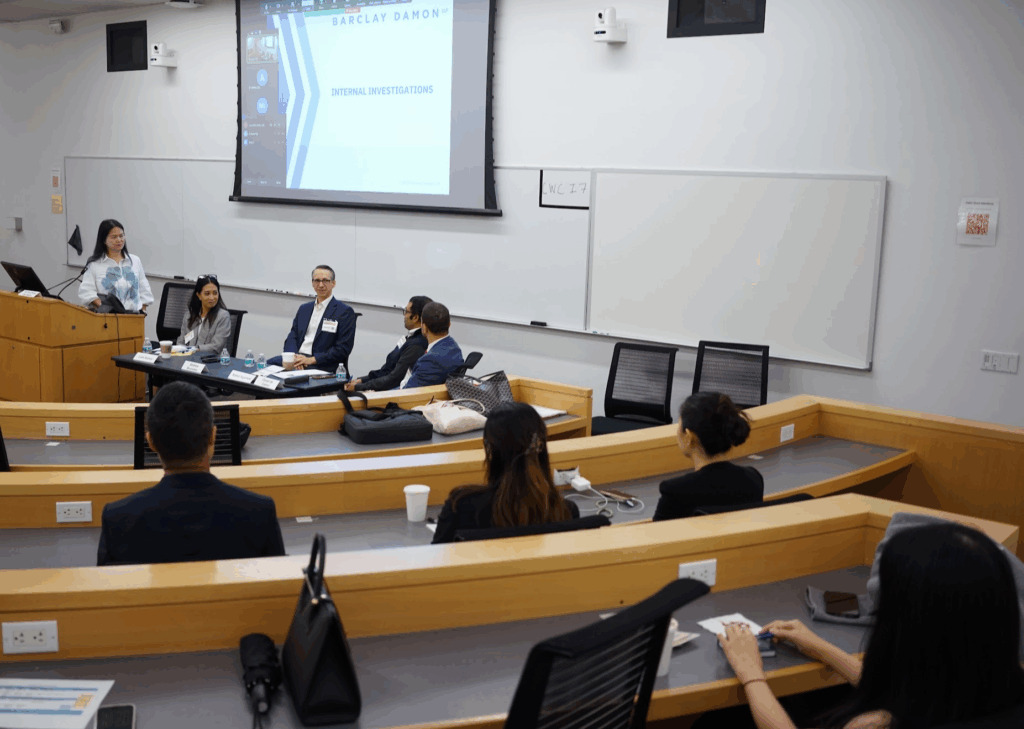
The next block, from 10:45 to 12:15 PM, offered: 

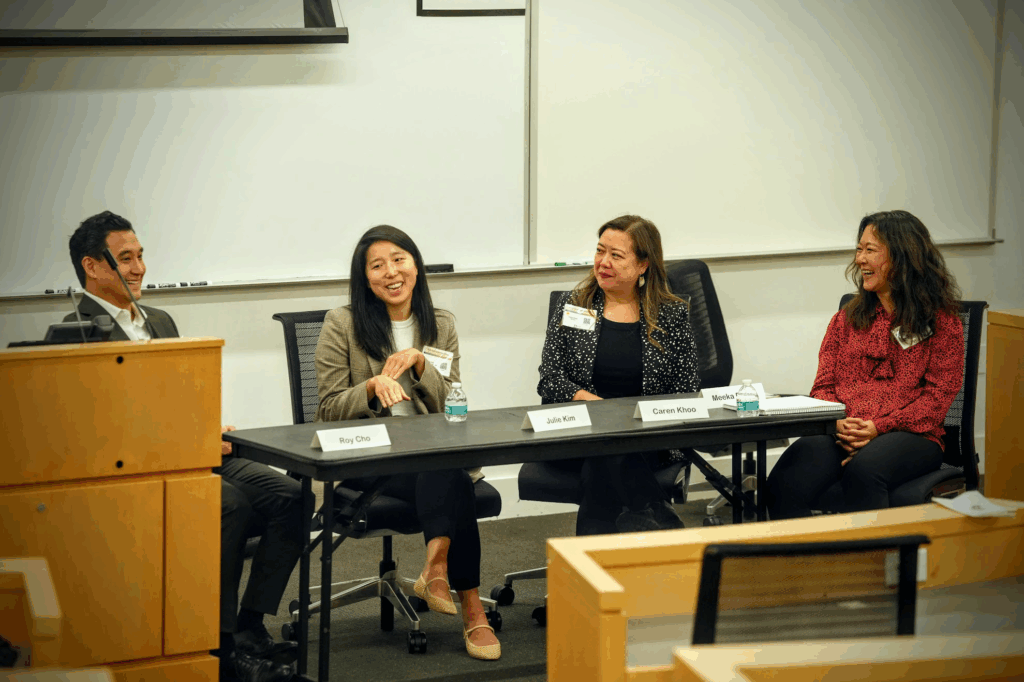
How to Lateral: Building a Transferable, and Marketable Skill Set – providing insight into the skills, qualifications, and experiences employers look for in candidates, and how to build transferable skills.

Beyond Forms & Filings: How Tomorrow’s Immigration Attorneys Build Power Through Tech, Data, and Storytelling – examining how immigration attorneys can combine technology, data, and storytelling to strengthen advocacy, address systemic disparities, and better serve AANHPI communities in a rapidly changing policy environment. 

The Modern Advocate: Mastering Courtroom Skills in a Changing Legal Landscape – preparing current and aspiring litigators for courtrooms shaped by AI, covering professionalism, oral advocacy, and working with pro se litigants from diverse communities while also discussing the ethical implications of using AI tools in preparing for court. 

At the Table: Turning Today’s Great Lawyers into Tomorrow’s Trusted Client Advisors – exploring the judgement, steadiness, and strategic communication skills that enable attorneys to grow from technically excellent lawyers into trusted client advisors. 
Plenary Lunch Session: Moving Forward After Trump v. Barbara – Constitutional Principles, Immigration Policy, and the American Process 

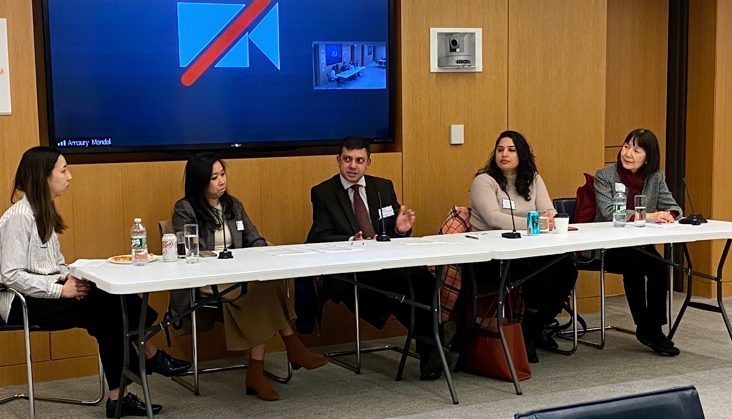
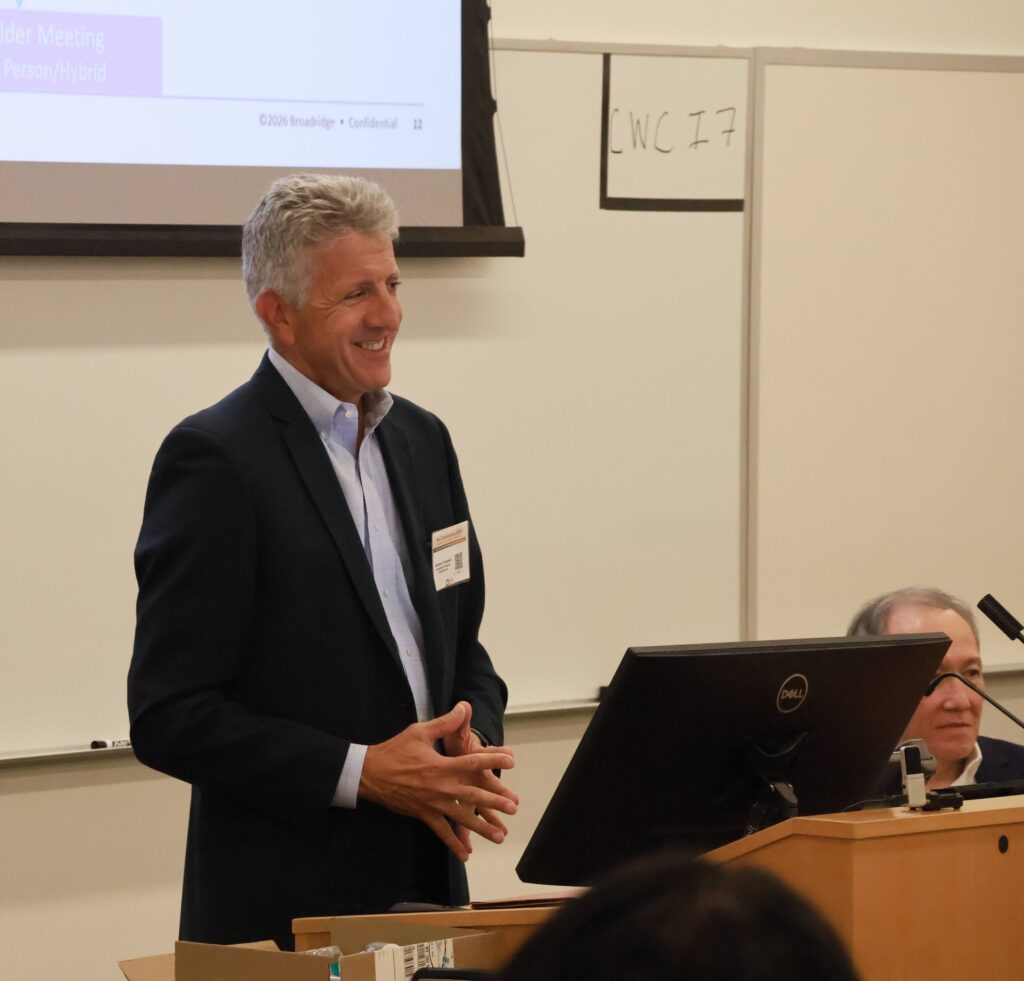
At 12:30 PM, AABANY President Varuna Bhattacharyya gave opening remarks to a filled room for the Plenary Lunch Session: Moving Forward After Trump v. Barbara – Constitutional Principles, Immigration Policy, and the American Process. The lunch session brought together professors, lawyers, and advocates to examine the recent Supreme Court’s decision in Trump v. Barbara and its implications for birthright citizenship, executive authority, and the Fourteenth Amendment. What stood out, however, was not simply the legal analysis of the decision but also the way the panel connected these constitutional questions surrounding birthright citizenship and the Fourteenth Amendment to the people and stories behind them. 

The panel featured Beth Lew-Williams, Professor of History and Director of the Program in Asian American Studies at Princeton University; Edgar Chen, Special Policy Advisor at the National Asian Pacific American Bar Association (NAPABA); Razeen Zaman, Immigrants’ Rights Director at the Asian American Legal Defense and Education Fund (AALDEF); and Gabriel “Jack” Chin, Professor at UC Davis School of Law. The discussion was moderated by Chris M. Kwok, Adjunct Professor at CUNY Hunter College, mediator and arbitrator at JAMS, and Co-Chair of AABANY’s Alternative Dispute Resolution Committee. 
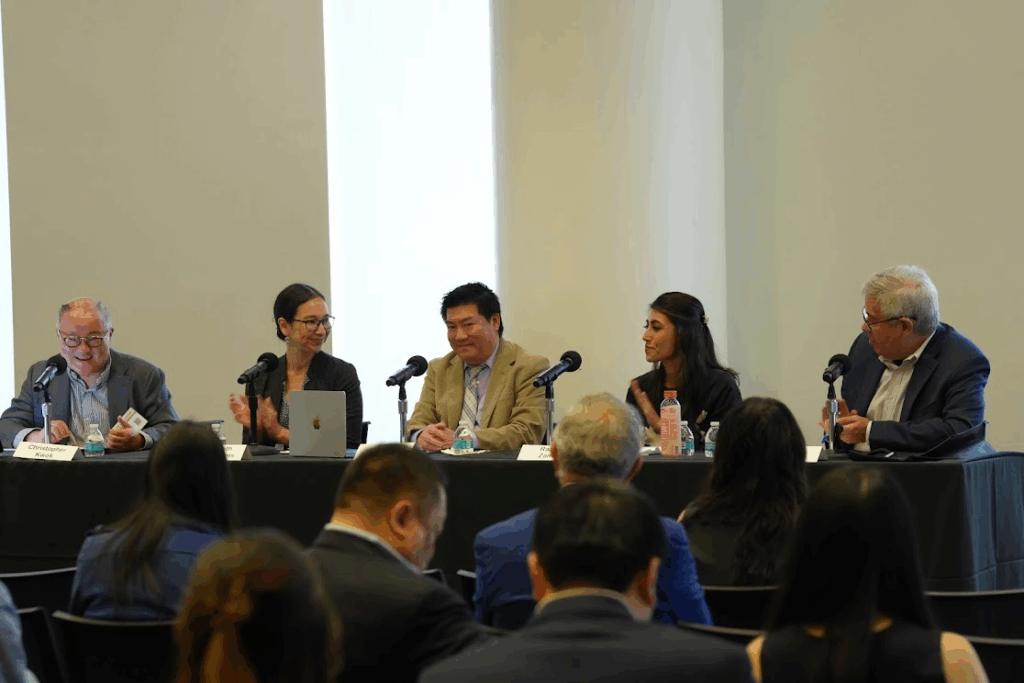
The plenary session deepened the appreciation and understanding for how intertwined constitutional law is to individuals’ everyday lives. Hearing Wong Kim Ark’s story alongside Trump v. Barbara made the Fourteenth Amendment feel less like an abstract piece of legal text and more like something tangible that shapes who is recognized as belonging to this country. That’s what made the lunch session so compelling: exploring how someone’s ordinary choices can become a part of a landmark legal history and examining how, over a century later, the country is still grappling with the questions surrounding the idea of belonging. 

AABANY’s Career Advancement Committee Presents: Diversity Career Fair
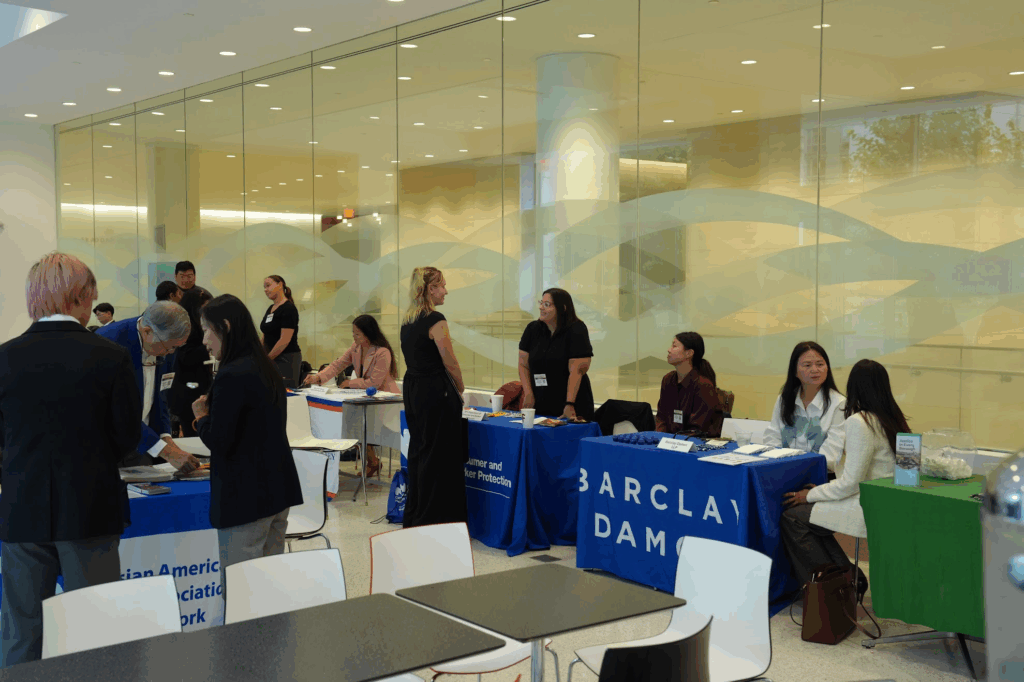
AABANY’s Career Advancement Committee hosted its annual Diversity Career Fair (DCF) at the 2026 Fall Conference, bringing together various public and private sector employers and interested applicants from 10:30 AM to 4:30 PM. Employers hosted informational tables, met with candidates, collected resumes, and conducted first-round on-site interviews. Throughout the day. The room was constantly filled with individuals looking to learn more about available opportunities and meet active members of AABANY in their professional settings. 

While some employers were unable to attend due to the weather, the DCF still offered a wide range of career opportunities. Law students and lawyers moved between tables, asked questions, exchanged resumes, and connected directly with employers. At public interest tables, attendees gathered to learn about internships, externships, and volunteer opportunities, including opportunities with The Legal Aid Society. Government and public-sector employers, including the New York City Law Department and District Attorney’s Offices, similarly offered attendees the chance to learn directly from practitioners and representatives about these respective career paths. 

In the private sector, employers such as Barclay Damon LLP provided opportunities for one-on-one conversations with one of the partners, allowing attendees to learn about what the firm was looking for while also establishing meaningful professional relationships. 

Attendees also had the opportunity to meet members of AABANY’s Career Advancement Committee, receive career advice, and learn about additional career opportunities. The Committee collected resumes and distributed them to all employers after the event.

AABANY’s Litigation Committee Presents: The Trial Advocacy Program (TAP) 

From 9:00 AM to 4:15 PM, AABANY’s Litigation Committee presented the 2026 Trial Advocacy Program (TAP) at the Fall Conference, giving junior lawyers an opportunity to strengthen their trial skills under the guidance of experienced judges and trial attorneys. The program focused on essentials of trial skills: opening statements, direct and cross-examinations, and closing statements. 

Although TAP is usually held in person, this year’s program was moved to virtual format at the last minute due to the weather. Even with such short notice, the program drew a strong group of participants and maintained the interactive nature of the program. Participants worked through a mock trial scenario and prepared portions of their openings, examinations, and summations with a partner. Through the combination of lectures, practical exercises, and small-group mock trial sessions, participants were able to recreate the experience of an in-person trial as closely as possible. Judges and trial attorneys provided feedback throughout the exercise, allowing participants to strengthen their courtroom skills, receive constructive criticism, and learn strategies they can carry into actual practice. Even in the virtual format, the program fostered productive small break-out group conversations and hands-on participation, showing us how meaningful trial advocacy training could take place both beyond the courtroom and in-person. 
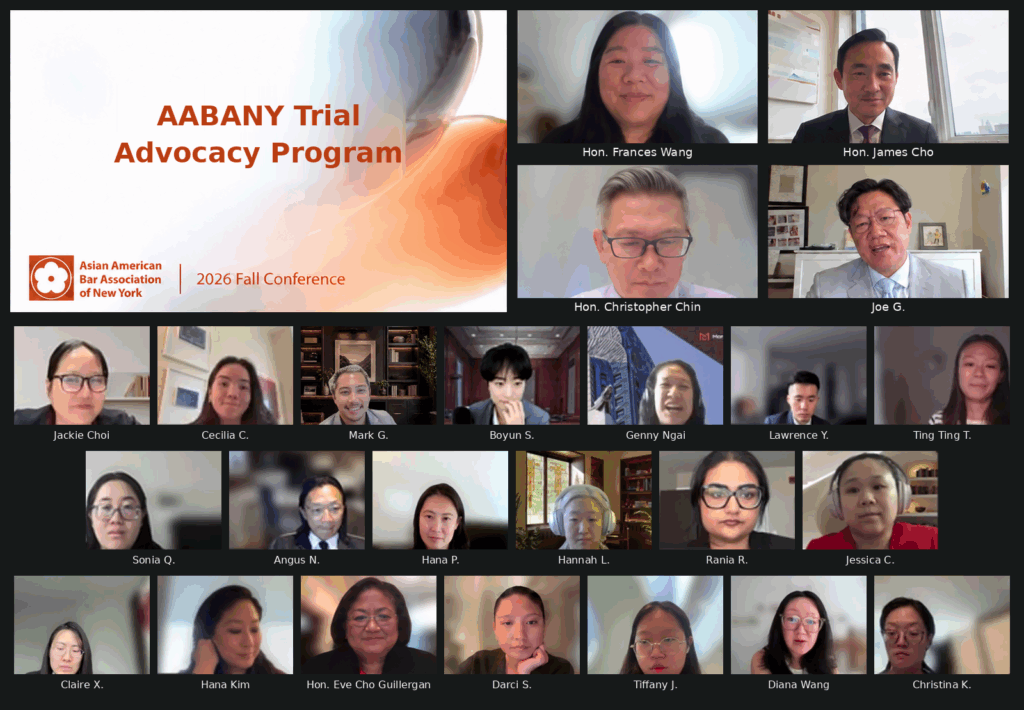
The quality of the faculty was truly impressive. Participants learned from bench and bar alike, including the Hon. James R. Cho of the U.S. District Court of the Eastern District of New York; Hon. Frances Wang of Queens Supreme Court; and the Hon. Christopher Chin of the New York Supreme Court. Prosecutorial experience was well represented by Joe Gim, Chief of Criminal Court at the Kings County District Attorney’s Office; Sara Khan, a Homicide ADA at the Manhattan District Attorney’s Office; and Hana C. Kim, Bureau Chief of the Financial Frauds Bureau at the Queens County District Attorney’s Office. Participants were also able to hear from leaders in the private sector and in-house counsel, including Genny Ngai, Partner at Morrison Cohen; Diana Wang, Counsel at Clark Smith Villazor LLP; Hugh Mo, Principal of The Law Firm of Hugh H. Mo, P.C.; and Jacqueline Choi, In-House Litigation Counsel at Red Apple Group, Inc. Together, they offered participants a well-rounded view of effective trial advocacy from every side of the courtroom, and their generosity in sharing both their time and their depth of experience made the program all the more valuable. AABANY thanks each of them for their commitment to imparting trial advocacy skills to the next generation of lawyers. 

Committee Meetings and Gatherings
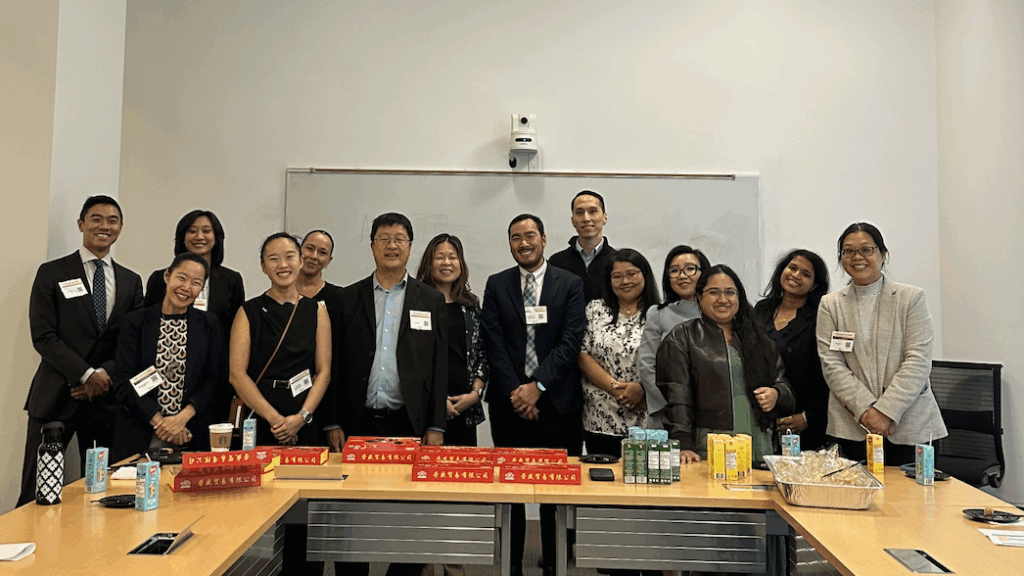
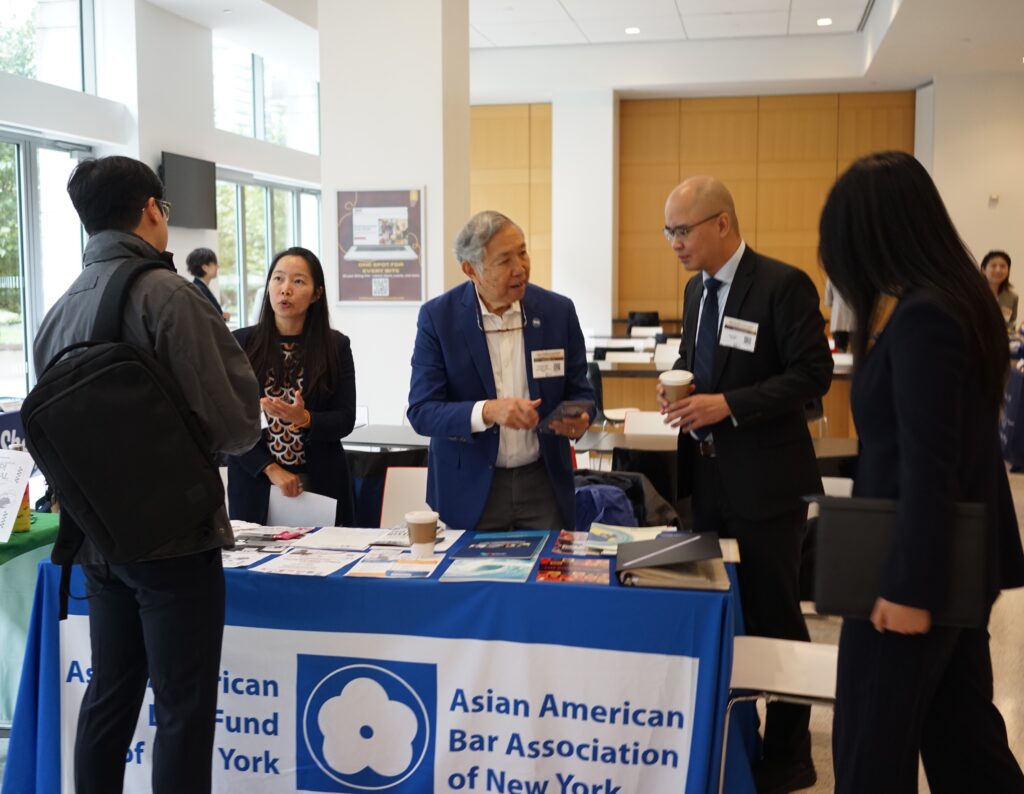
Beyond the main programming, the third floor had its own energy. AABANY opened up rooms for Committees that wanted a space to network and gather, and a few Committees took full advantage, reserving rooms at different points throughout the day. AABANY’s CIRC Program, which is part of the Membership Committee, got things started in the morning, inviting participants to stop by to chat about their program updates, share feedback, and grab some delicious Asian snacks along the way. They brought so many treats that they continued their gathering in the Soden Lounge on the second floor, where Asian sweets and savory favorites disappeared within minutes. The Government Service & Public Interest (GSPI) Committee’s mooncake social stood out, giving members a chance to meet the Co-Chairs, hear about upcoming events, and enjoy a delicious mooncake alongside refreshments in celebration of the Mid-Autumn Festival. The Solo & Small Firm Practice (SSFP) Committee followed in the same room with an assortment of Levain cookies, a relaxed change of pace after a full day of programming where folks got to meet newer members and have a chance to catch up with other colleagues and longtime members. The Pro Bono & Community Service Committee, together with AALFNY, set up a table at the Diversity Career Fair to promote the Pro Bono Clinics and recruit volunteers.
Afternoon Sessions: 

From 2:30 PM to 4:00 PM, attendees chose from the following programs: 

Rising to the Challenge: A Balancing Act of Caregiving Leaders of the Sandwich Generation – informing potential and future caregivers about basic estate planning tools, long-term care planning, and special needs planning, along with providing them with resources available to help them balance these responsibilities and prepare for any potential crisis. 

Clause and Effect: AI Contracting and Vendor Management – focusing on equipping lawyers to lead clients through AI governance by covering the privacy and cybersecurity risks of AI tools and examining the best practices for negotiating vendor agreements on data use, training, security, audit rights, and liability. 
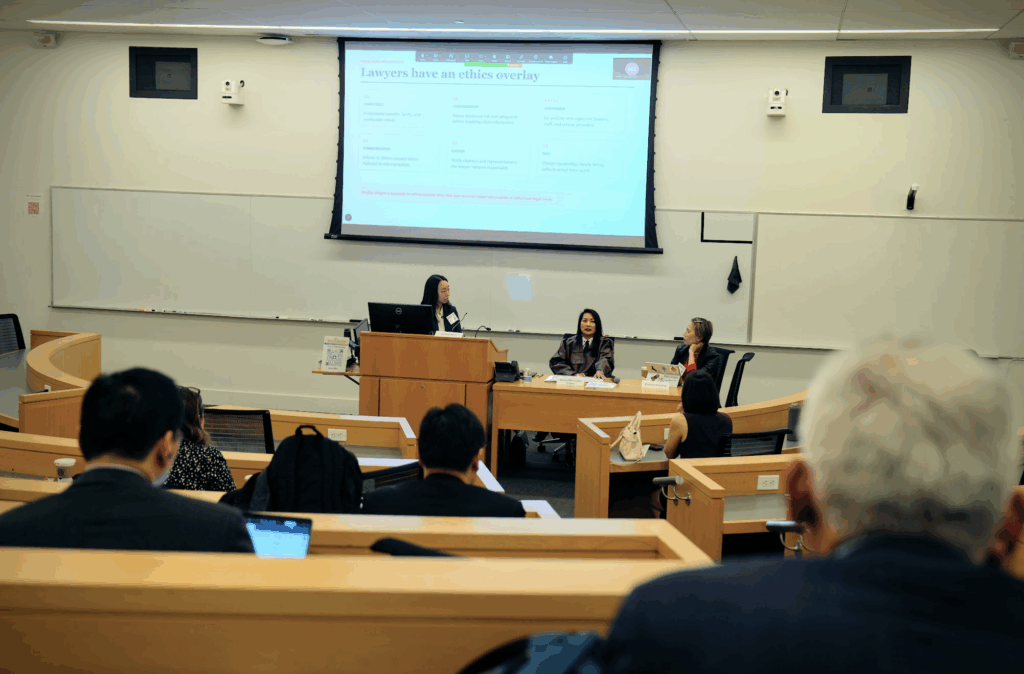
The Gentle and the Assertive: What New Motherhood Teaches About Advocacy – two mom litigators sharing how the dual roles of mother and advocate are strengthening their advocacy and leadership skills, offering AAPI attorneys a framework to leading authentically while making full use of  their lived experiences. 

The Mechanics of Public Company Stock Ownership and Voting – introducing proxy plumbing, the infrastructure and process behind shareholder voting, and how Broadridge keeps this process efficient, transparent, and compliant so that shareholders’ voices are heard in corporate governance. 
From 4:15 PM to 5:45 PM, attendees could choose from the following programs: 

Race and Space: How Laws Create and Impact Asian Spaces – exploring how, despite the promise of Reconstruction, many AANHPI New Yorkers still live and work in racially concentrated spaces, discussing how law and policy created them and what that means for the future of Asian communities. 
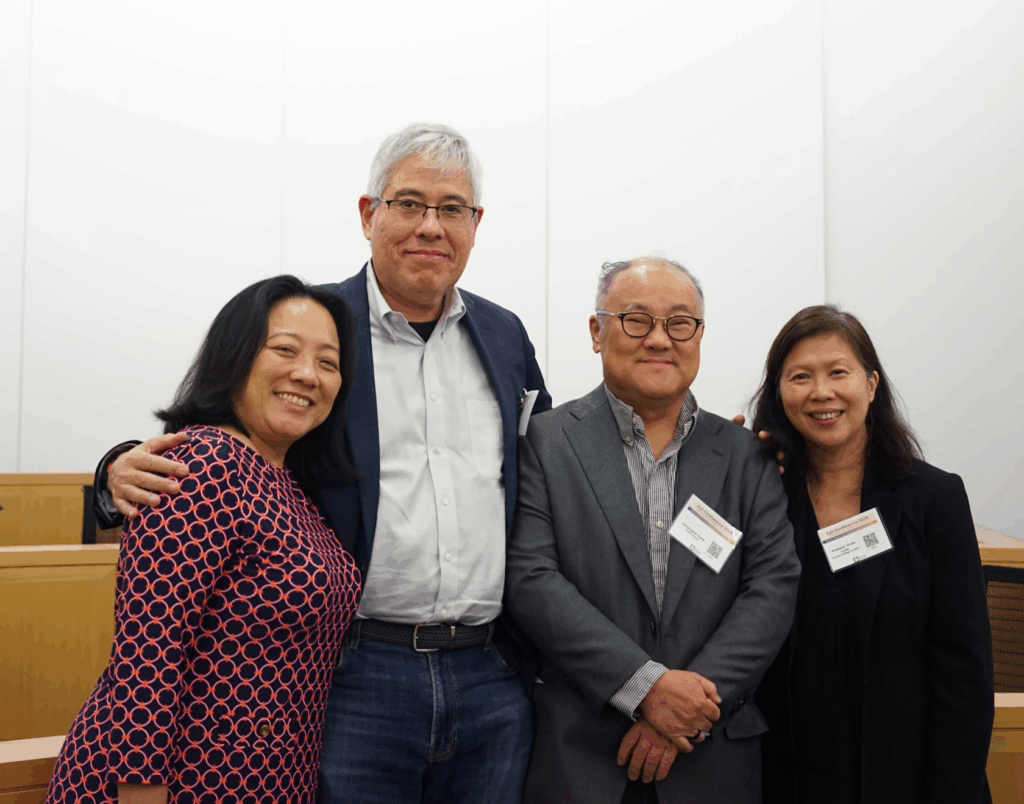
IP and AI Slop: Why is Pikachu Fighting Darth Vader on My Instagram Feed? – examining the rise of unauthorized generative AI videos, the legal issues and options for IP owners, and what it all means for the future of content. 

Building & Using the Diversity Pipeline in Arbitration & Mediation: Why it Matters and How to Participate – focusing on why diversity among arbitrators and mediators matters to the credibility of Alternative Dispute Resolution (ADR) and how lawyers, clients, and institutions can strengthen the pipeline of diverse neutrals, to include AANHPI attorneys interested in becoming neutrals. 

No One Teaches This: How Attorneys Actually Build Clients and Become Rainmakers – exploring how attorneys can build credibility and lasting professional relationships that can grow into client development and leadership opportunities. 

Link-Up Reception 
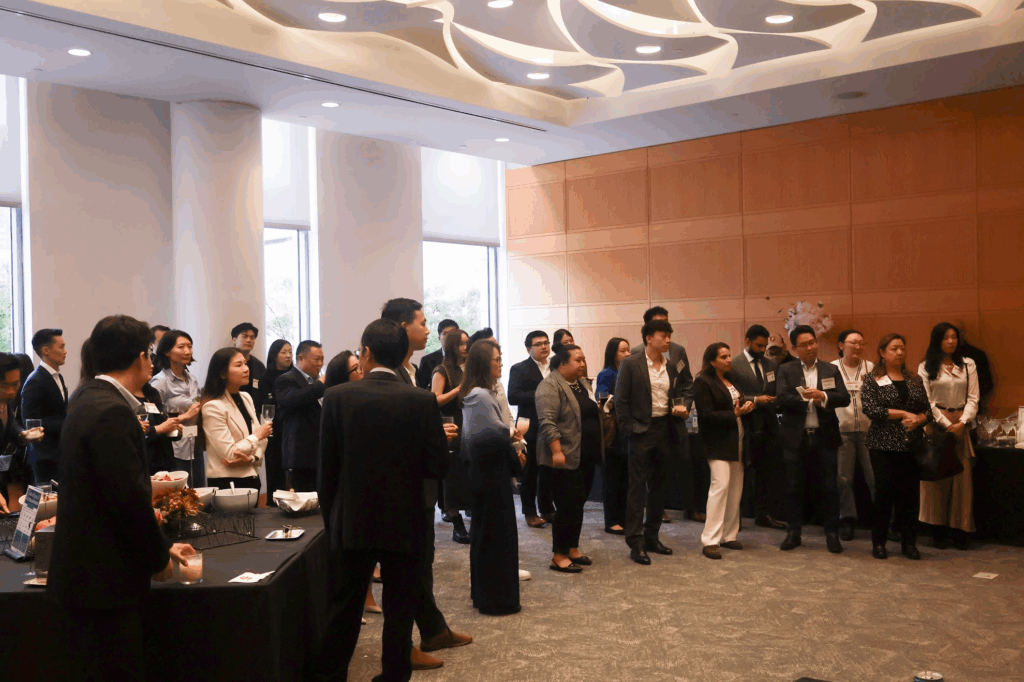
An exciting way to wind down the day was the Link-Up Reception, which provided an opportunity for law firm attorneys and senior in-house counsel to connect and explore potential external legal services. Now in its second year, the invitation-only event was open to select in-house counsel and Gold-level sponsors and above, creating a more intimate setting for sponsors to engage directly with in-house decision-makers and establish professional connections. 

With an almost one-to-one ratio of in-house counsel to law firm attendees, the reception felt intentionally intimate and direct. Rather than having brief introductions before moving onto the next conversation, attendees seemed to have the time and space to really listen to one another. Conversations about professional experiences and careers grew deeper as they continued to talk over hors d’oeuvres, creating opportunities for connections that felt more genuine and lasting. 

The sense of possibility in the room was palpable. People were exchanging ideas, learning about one another’s work, and finding ways to build relationships that could grow beyond this gathering. It was a great way to bring together the professional connections and collaboration that had been growing throughout the day, and it set an energetic tone for the rest of the evening. 

Cocktail Reception and Trailblazer Award Presentation

After the conclusion of the day’s programs, at 6:00 pm, all attendees were invited to the general Cocktail Reception, which provided a relaxed and celebratory setting to connect and unwind. The room was filled with food of every kind, from pigs in a blanket to crab cakes with a variety of  dipping sauces, plus a vegetable and fruit platter that stretched across the center of the room, as well as  both warm and cold options for any preference. Over appetizers and drinks, attorneys, law students, and other members of the AABANY community reconnected with colleagues and formed new professional relationships, with the buzz of conversation filling the air. The reception brought the conference to a close by creating an exciting space for networking and continued community-building. 

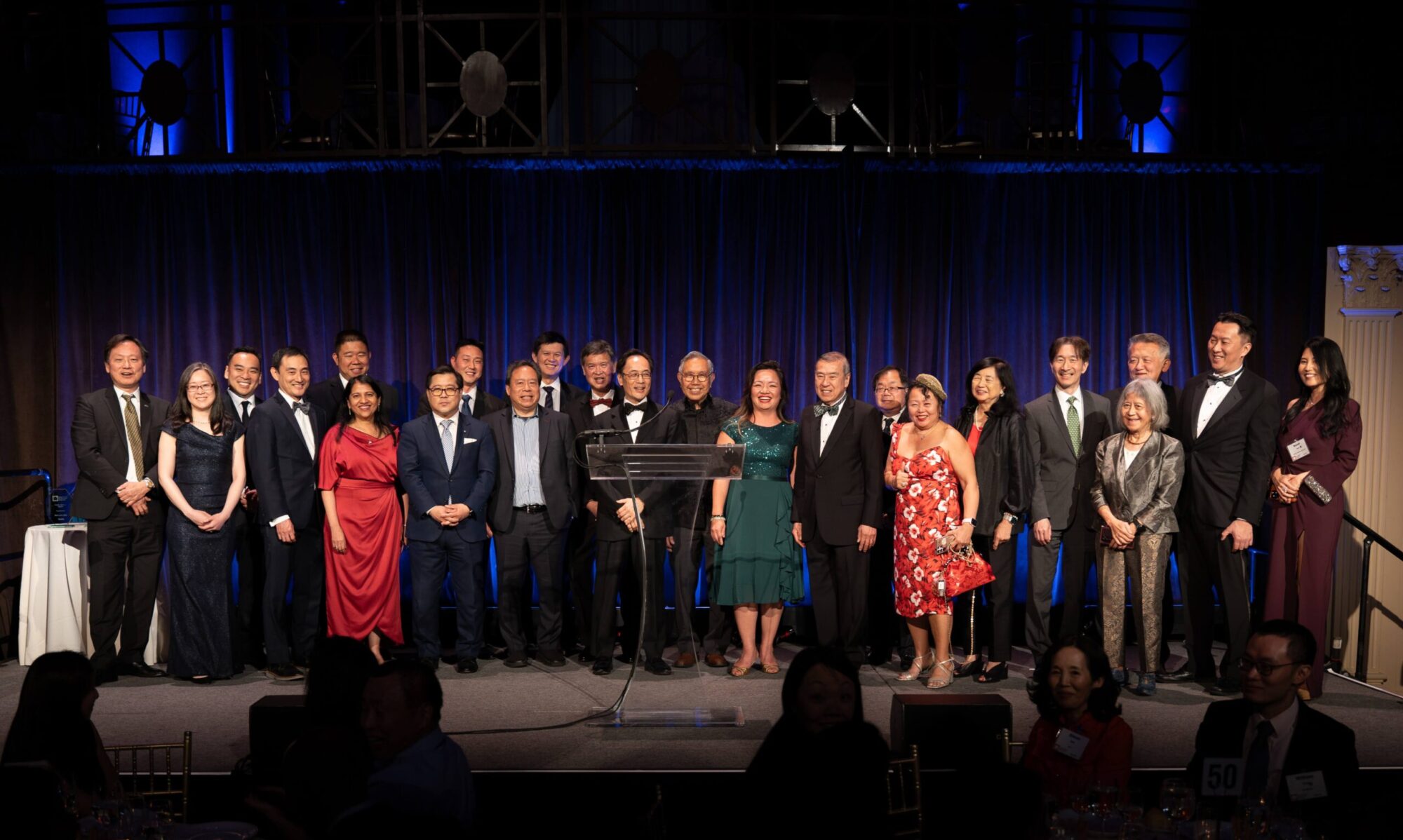
The highlight of the evening was AABANY’s Executive Director Yang Chen presenting the Norman Lau Kee Trailblazer Award to Vincent Chang, former President of AABANY. Named for a legal and community pillar of Chinatown, the award honors a leader and role model in the AANHPI legal community, and Vincent Chang’s career exemplifies the award. Not only has he served as former AABANY President, but he was also the first Asian American to have served as President of NYCLA. He has held important leadership positions with the American Bar Association and the New York State Bar Association, where he currently serves on the Executive Committee. 
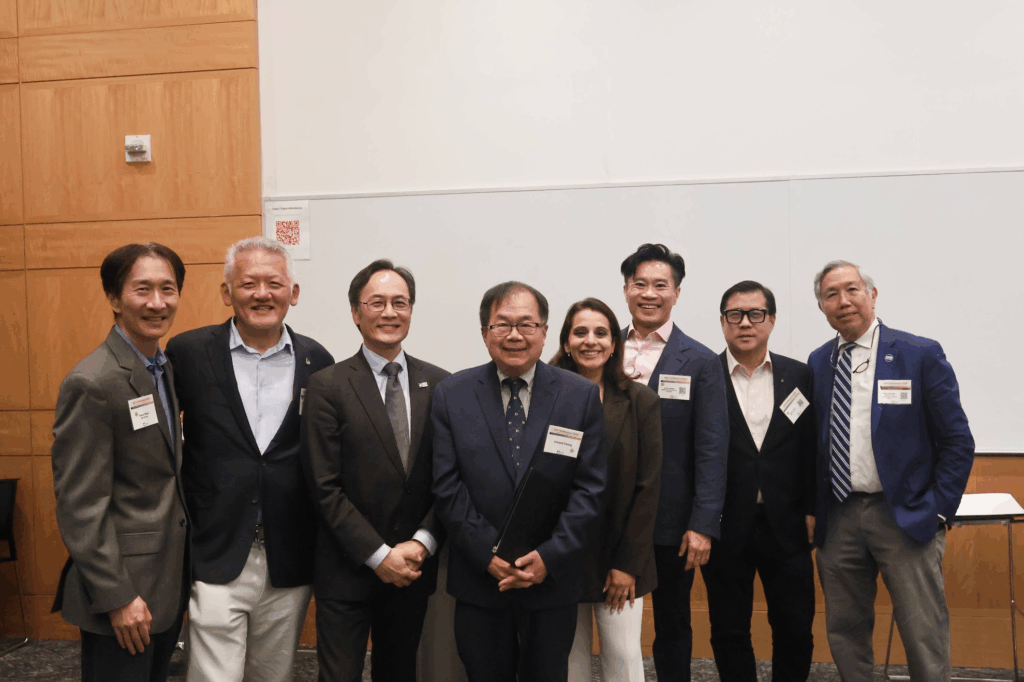
In his acceptance remarks, Vince reflected on his involvement in the AANHPI legal community and the relationships and experiences that have shaped his career both in the private and public sphere. Vince expressed his appreciation for the community that has supported him throughout his career and acknowledged the strides made by AABANY and its leaders over the years. It was especially meaningful to see Vince celebrated alongside so many AABANY members, from past, present, and future Presidents to longtime and newer members, making for an inspiring and fitting way to conclude the 2026 Fall Conference. 

Thank You!

We extend our deep thanks to all the volunteers from law schools and colleges for providing support with conference logistics, programming, and registration, and to all the moderators, panelists, Program Chairs, and attendees, whose participation and engagement made the Conference so successful and memorable. 

We are also grateful to our sponsors, whose support made the Fall Conference possible: 

For more photos of the event, please visit the links below: 

Thanks to our volunteer photographers Alvin, Haoyu, and Zhiqian.

Thank you for joining us at the 2026 AABANY Fall Conference! We hope you found the day inspiring, engaging, and meaningful, and that you left with new connections and a stronger sense of community. We are grateful to have shared this special event with you and look forward to strengthening our engagement at future events. 
AABANY Volunteer Appreciation Dinner Celebrates Commitment to Pro Bono Service

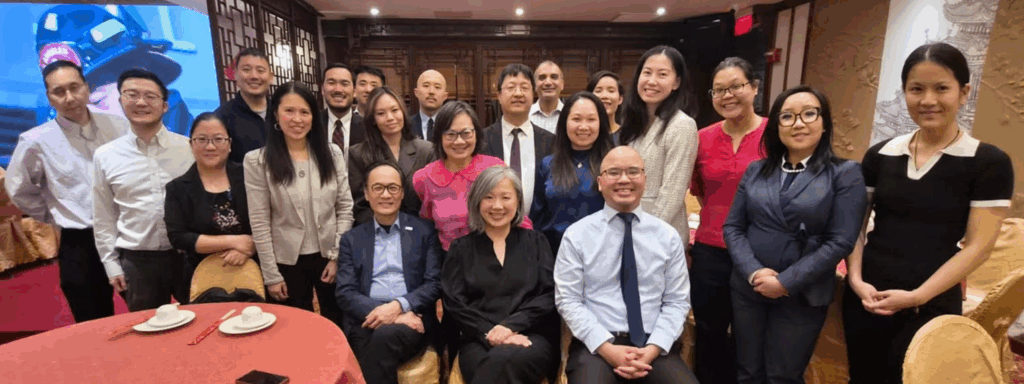
On March 26, 2026, the Pro Bono & Community Service Committee and the Government Service & Public Interest Committee continued their tradition of hosting a Volunteer Appreciation Dinner to recognize the volunteer attorneys, law students, AABANY staff, AALFNY board members, and community partners who make our Pro Bono Clinics possible. Together, we celebrated our shared mission of serving the public and promoting access to justice for those who cannot afford legal services.

The backbone of AABANY’s public service initiatives is its dedicated volunteers. We extend our deepest gratitude to the attorneys who generously devote their time and expertise to assisting members of the community. These Pro Bono Clinics also serve as valuable learning opportunities for law students, providing hands-on experience across various areas of law while allowing them to give back through direct service.

We also express our sincere appreciation to the Asian American Law Fund of New York (AALFNY) for its continued support, as well as to the AABANY staff, whose administrative efforts are essential to making this work possible.

Finally, we thank our long-standing community partners, including the Chinese-American Planning Council (CPC) and Asian Americans for Equality (AAFE), for consistently providing space, staff, and support for our clinics.

To learn more about the Pro Bono Clinics, go to probono.aabany.org.
To support the Pro Bono Clinics through your tax-deductible donations, please visit AALFNY’s donation page: https://www.asianamericanlawfund.org/donate/.

AABANY Committees and NYU APALSA Host Fireside Chat with Hasan Shafiqullah on Current Immigration Enforcement Trends and Ethics

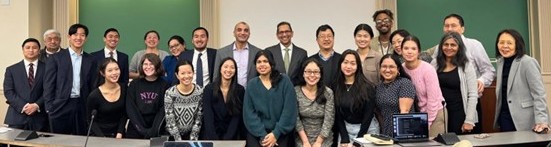
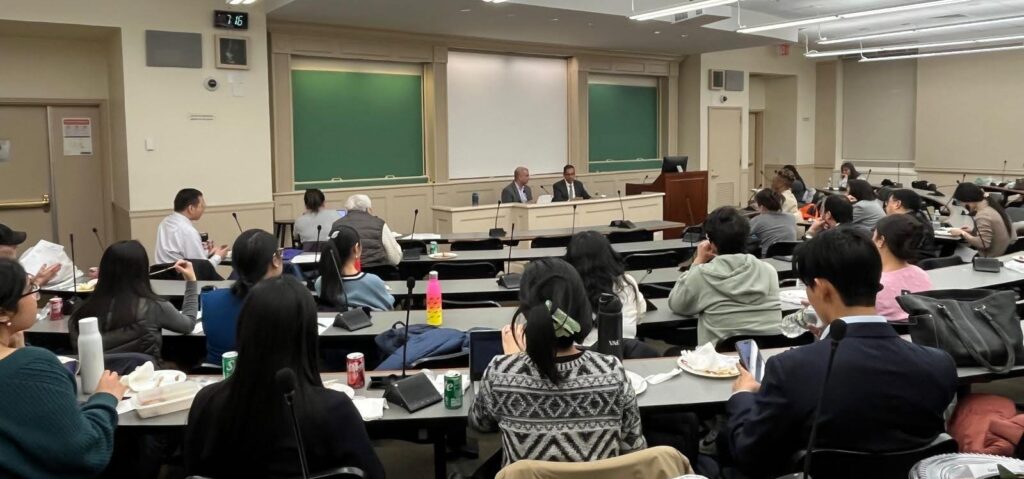
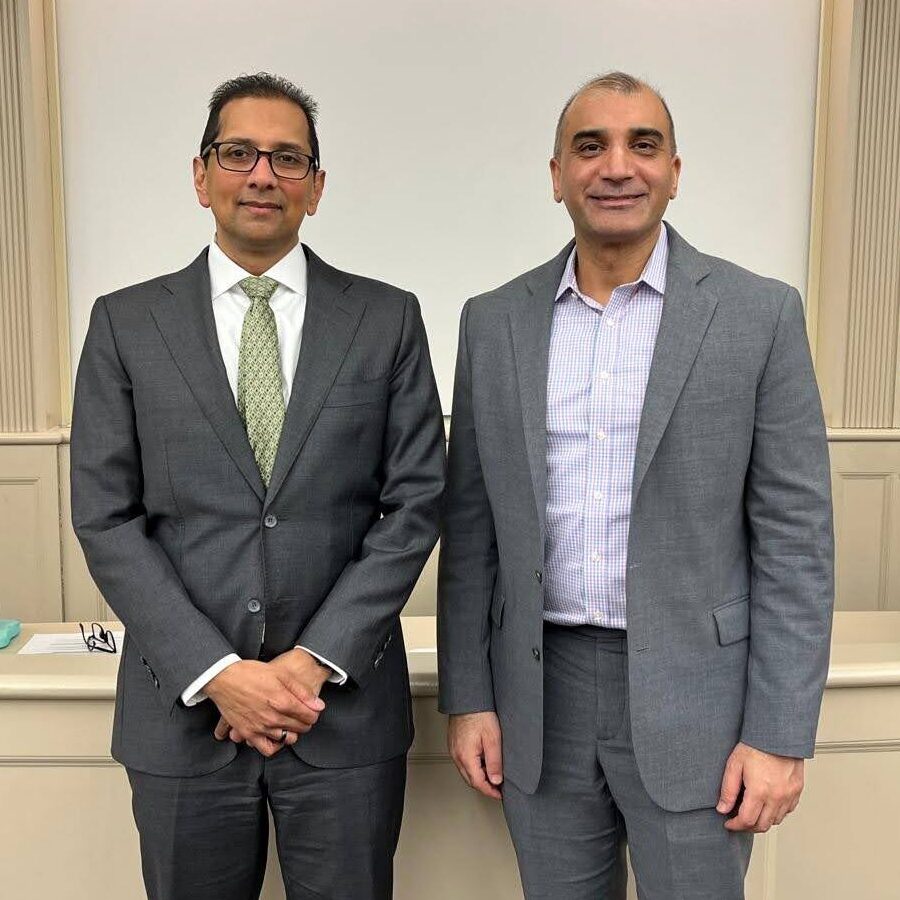
On March 3, the AABANY Issues Committee, Immigration Committee, Government Service and Public Interest Committee, Pro Bono and Community Service Committee, Intellectual Property Committee, Student Outreach Committee, and Young Lawyers Committee, in partnership with NYU Law’s Asian Pacific American Law Students Association (APALSA), hosted a fireside chat with Hasan Shafiqullah of the Legal Aid Society’s Immigration Law Unit at NYU School of Law. The event brought together attorneys, law students, and members of the legal community to discuss current immigration enforcement trends, detention practices, and the ethical challenges facing immigration practitioners.

The conversation highlighted the rapid pace of immigration policy changes during the Trump administration and their continuing impact on immigration practice. Shafiqullah noted that more than 1,000 immigration policy changes were implemented through executive action during Trump’s first term, and that similar patterns appear to be emerging again, alongside proposals such as the Laken Riley Act, which would significantly expand mandatory detention.

Despite these developments, Shafiqullah emphasized that federal courts remain an important avenue for relief. Through habeas corpus petitions, federal District Courts can review unlawful detention and order new bond hearings or release when appropriate. He noted that “District Court judges are understanding that due process won’t permit arbitrary action.”

The program concluded with a discussion about the emotional toll of immigration practice. Because many asylum clients have experienced severe trauma, attorneys often face vicarious trauma as well. The Legal Aid Society supports its staff by providing trainings on handling burnout, secondary trauma, and sustainable public interest practice.

AABANY thanks Hasan Shafiqullah and the Legal Aid Society for sharing their insights, and thanks APALSA and the co-sponsoring committees for organizing this timely and informative program.

AABANY Co-Sponsors “Asian Americans in Public Service”

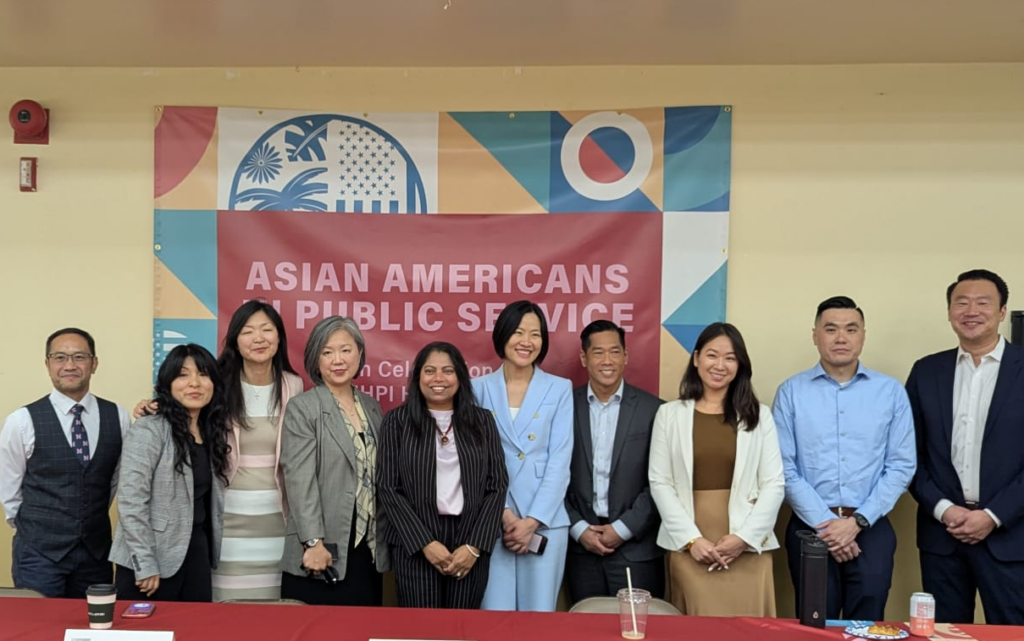
On May 18, 2025, AABANY members from the Government Service & Public Interest Committee (GSPI) and the Pro Bono & Community Service Committee (PBCS), along with other co-sponsors, attended “Asian Americans in Public Service” in the Clinton G. Martin Park Main Room in New Hyde Park, Nassau County. 

The event featured an engaging and thoughtful panel discussion by judges, a court officer, court attorneys, a court clerk, a town councilwoman, and other professionals, who shared their diverse paths and journeys to entering public service as Asian Americans.  Each of the panelists shared what led them to become an attorney in public service, often invoking their immigrant backgrounds and upbringings in their journeys. 

The panelists also imparted valuable advice about becoming a lawyer, attending law school, and entering public interest and government service work.  Among the advice given were to be comfortable with being uncomfortable, being open-minded and to take advantage of opportunities, and building and cultivating your network, using your voice and being engaged in your community. 

The event highlighted the profound impact of representation, as Asian Americans in public service roles are largely underrepresented. The event was well-attended and brought together community members, families, youth, and the volunteers who helped to organize the event.

Thanks to all the AABANY leaders who took part in the event, and thanks to all the co-sponsoring organizations as well as the attendees.

AABANY Membership Committee Hosts Meet the Board Series Event Featuring President Karen Kim and Board Director Won Shin

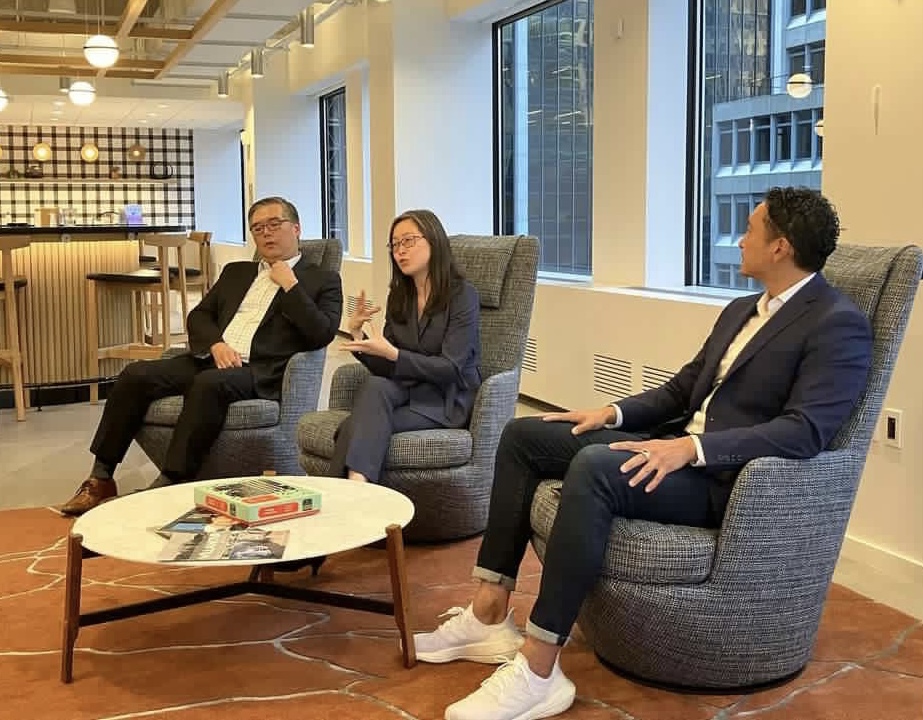
On Thursday, July 20th, 2023, the AABANY Membership Committee held the first event of the Meet the Board Series this year, at which attendees heard from AABANY President Karen Kim and AABANY Board Director Won Shin about their respective careers. The event was hosted by FTI Consulting in Midtown Manhattan, and co-sponsored by AABANY’s Women’s, Government Service & Public Interest, and Prosecutors’ Committees.

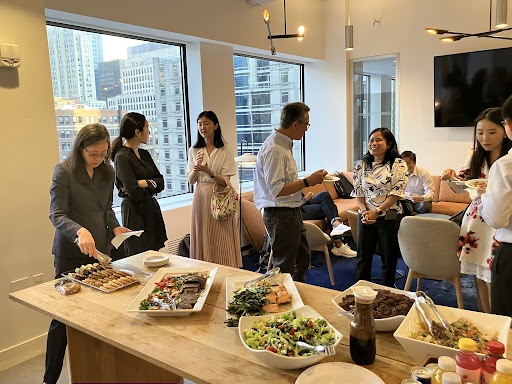
At the beginning of the night, attendees chatted and mingled over dinner before sitting down to participate in a Q&A session with Karen Kim and Won Shin moderated by Membership Director Christopher Bae. Christopher started by asking how the two became involved with AABANY, their most memorable cases, and how working with AABANY has changed their careers.

Won talked about his early career, starting with his work as a litigation associate at Wachtell, Lipton, Rosen & Katz for six years, his position as Assistant Solicitor General at the New York State Attorney General’s office and his stint in complex frauds and cybercrime in the United States Attorney’s Office. Finally, Won described his entrance into his office’s appeals unit, where he now serves as Chief of Appeals of the Criminal Division. 

Karen spoke about her work at a small firm doing mainly litigation, residential real estate, and construction law, before serving as Vice President of Operations and Strategic Development at Minority Corporate Counsel Association in D.C. and finally landing a position at QBE Insurance through former AABANY president Linda Lin. Karen believes her experience at the small firm she first worked at prepared her for her presidency at AABANY, because she worked on “a hodgepodge of everything” in both positions. 

Christopher turned to the guests for one last question before taking inquiries from the audience. “So how do mentees make themselves stand out so that you would want to mentor them? What can younger attorneys be doing to find more than a mentorship in name and instead build an actual relationship with you?”

Karen paused to think of an answer. “Well, I like chocolate.”

After around half an hour of audience questions, Christopher concluded with a round of rapid fire questions for Karen and Won. We learned that Won’s favorite legal show is “Jury Duty,” and Karen’s favorite judge, past or present, is Judge Judy (the TV judge, not Hon. Judy Kim). The evening wrapped up with more mingling and enjoying food and drinks in FTI’s stylish and modern space.

Thank you to Karen Kim and Won Shin for sharing your experience and wisdom with us, and Christopher Bae for moderating an insightful conversation. We look forward to hosting more Board Members in the Meet the Board Series. To learn more about the Membership Committee, go here.

AABANY’s Government Service & Public Interest Committee and the Student Outreach Committee Present a Meet-and-Greet with Government Service and Public Interest Attorneys

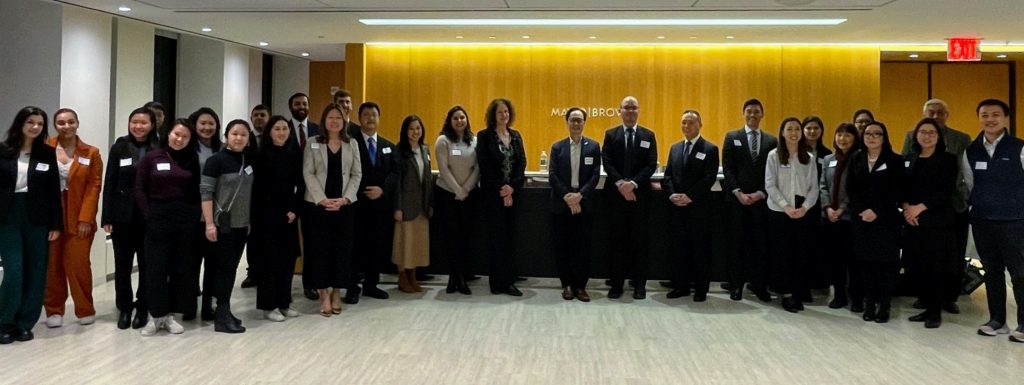
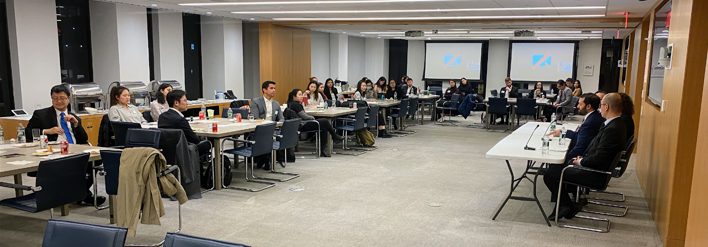
Again showing AABANY’s commitment to raising up the next generation of Asian American lawyers, the Government Service and Public Interest (GSPI) committee teamed up with the Student Outreach Committee (SOC) and Mayer Brown LLP to host the first ever “AABANY Students Meet Government and Public Interest Lawyers” event. The program was held on the evening of February 23 and was very successful, featuring a room packed with students and mentors, and two professional panels, followed by a networking reception.

The panels showcased how Asian Americans have succeeded as lawyers in government service and in the public interest. The panels featured:

  • Rahul Agarwal, Deputy Chief Counsel from the Office of Chief Counsel to the Mayor and City Hall; 
  • Sofia Khan, Director of the Family Law Unit from Legal Services NYC (LSNYC); 
  • Belinda Luu, Staff Attorney from Mobilization for Justice’s (MFJ) Special Litigation Project; 
  • Frank Ng, Deputy General Counsel from the New York City Office of Administrative Trials and Hearings (OATH); 
  • Kwok Ng, Associate Court Attorney from New York City Civil Court; 
  • Nakeeb Siddique, Director of Housing from the Legal Aid Society’s Brooklyn Neighborhood Office; 
  • Marti Weithman, Assistant Commissioner from the New York City Department of Housing Preservation and Development (DHPD); and 
  • Annie Wang, Director of Immigrant Justice Project from the Asian American Legal Defense and Education (AALDEF).  

The panels showed students what it is like to work in a variety of fields in government and public interest and what it takes for students to get a foot in the door.

The panel discussions were followed by a networking reception with more government service and public interest lawyers. In attendance were, Ernie Collete from MFJ, Kevin Hsi from DHPD (also GSPI Committee’s Co-Chair), Jonathan Rosen from New York City Housing Authority (NYCHA), May Wong (Pro Bono & Community Service Committee Co-Chair) from DC 37 Legal Services. Also, in attendance were AABANY’s Executive Director Yang Chen, Vice President of Programs and Operations Beatrice Leong, and Treasurer and Co-Chair of the GSPI Committee Evelyn Gong.

Thank you to AABANY student leaders Stephanie Sun (Fordham Law) and Alex Lao (Pace Law), SOC Vice Chair Justin Lee (NYU Law), SOC Co-Chair William Lee (Associate, Mayer Brown LLP) and GSPI Committee Co-Chair Rina Gurung (Associate Court Attorney, Housing Court) for leading the charge.

Special thank you to Mayer Brown LLP for sponsoring and hosting this event.

To learn more about the GSPI Committee, click here. To learn more about the SOC, click here.

AABANY Attends Asian Justice Rally in Manhattan on January 30

Photo by Han Wen Zhang.

On Sunday, January 30th, a group of AABANY members from the Pro Bono & Community Service (PBCS) and Government Service & Public Interest (GSPI) Committees joined a nationwide rally for Asian justice. The AABANY group, led by May Wong, vice-chair of PBCS, and Kevin Hsi, co-chair of GSPI, held vibrant posters to raise awareness on anti-Asian hate and violence. 

The Asian Justice Rally was held on the anniversary of the death of 84-year old Thai grandfather Vicha Ratanapakdee, commemorating him and the many victims of Asian hate. The rally drew attendees in San Francisco, New York City, Los Angeles, Philadelphia, Chicago, Atlanta, and worldwide on livestream. In Manhattan, speakers included Senator John Liu,  Senator Chuck Schumer, Executive Director of the Asian American Federation Jo-Ann Yoo, NYC Public Advocate Jumanne Williams, the daughter of victim Vilma Kari, the aunt of the late Christian Hall, and Assistant District Attorney and AABANY member Grace Vee. 

A group of AABANY members, including co-chair of GSPI Kevin Hsi (far left), holding colorful printouts brought by AABANY member and event speaker Grace Vee. Photo by Han Wen Zhang.

“Silence is violence, we are not a virus.”

“Get it right the first time, that was a hate crime.” 

The crowd chanted in Foley Square, surrounded by the New York Supreme Court, the Federal Courthouse and the Manhattan Municipal Building. Hundreds of attendees held signs demanding justice and awareness. Around 2:45 pm, a minute of silence was observed in remembrance of the victims of anti-Asian hate. The rally ended with a march through the streets of Lower Manhattan.

Thank you to everyone who attended this event to denounce the hatred and violence faced by the AAPI community. To learn more about the Pro Bono & Community Service Committee, please visit https://www.aabany.org/page/117. To learn more about the Government Service & Public Interest (GSPI) Committee, please visit https://www.aabany.org/page/113. To view more pictures of the event taken by AABANY leaders Kevin Hsi and May Wong, please visit https://photos.app.goo.gl/nnxQ33UugR21NrNh6. 

Photo by Han Wen Zhang.

Pro Bono & Community Service Committee and Government Service & Public Interest Committee Launch First Hybrid Pro Bono Clinic on Aug. 14

On August 14, AABANY’s Pro Bono & Community Service (PBCS) Committee and Government Service and Public Interest (GSPI) Committee hosted a hybrid legal clinic and provided a “Know Your Rights” presentation for residential and commercial tenants on the topic of rent arrears and evictions. The event was held at the Chinese Consolidated Benevolent Association (CCBA) in Manhattan’s Chinatown and was co-sponsored by AABANY, CCBA, Asian Americans for Equality (AAFE), and the Chinese Chamber of Commerce of New York (CCCNY).

During the presentation, which was shown on Zoom and screened in-person at CCBA, Rina Gurung, an associate court attorney at the New York State Unified Court System and co-chair of the GSPI Committee; Kensing Ng, a staff attorney at the Legal Aid Society in East Harlem; and Meghan Liu, a Cleary Gottlieb pro bono fellow at Legal Services NYC, discussed different types of cases that are brought in housing court, such as nonpayment, holdover, and housing part cases. They also explained which eviction moratoria are in effect due to the ongoing COVID-19 pandemic and emphasized that these laws can change at any time. This was especially relevant, given the imminent expiration of the COVID-19 Emergency Eviction and Foreclosure Prevention Act on August 31, 2021; the expiration of the CDC’s moratorium on October 3, 2021; and the U.S. Supreme Court’s August 12, 2021 opinion striking down part of the New York moratorium.

Gurung, Liu, and Ng also provided resources that tenants could contact to file hardship declarations and explained the basics of the Emergency Rental Assistance Program (ERAP), which provides rental arrears, temporary rental assistance, and utility arrears assistance to low- and moderate-income households at risk of experiencing homelessness or housing instability. They also explained that landlords seeking to sue their tenants should hire a lawyer and for those who received a marshal’s notice to go to court. In addition, the presenters explained differences in procedures for cases involving commercial tenants and provided resources for both landlords and tenants, phone numbers for free consultations for income-eligible individuals, and a guide to landlord disputes. Bei Yang, a contract attorney at On Call Counsel, interpreted the presentation live into Mandarin Chinese.

Eighteen clients attended the clinic for one-on-one legal consultations with AABANY volunteers, including 12 who had registered beforehand, one virtual caller, and five walk-ins. Topics ranged from housing and matrimonial law to immigration, fraud, medical malpractice, and personal injury. All available client consultation slots were successfully filled.

One client, an older man who only spoke Cantonese, came to the clinic because he had been scammed by a woman who claimed to be interested in pursuing a romantic relationship with him online. She then asked him to send her a significant sum of money, and he did so before realizing that she was a fraud. Such occurrences are not uncommon, especially among elders, and individuals who have been or who know victims of similar types of fraud should not feel ashamed to tell their stories or speak to an attorney. Sharing these stories promotes awareness of these types of scams and helps others avoid them.

While AABANY volunteers were conducting one-on-one consultations, several clients watched the presentation in the CCBA sitting area. One client asked for the PBCS email to see if she could get a recording of the presentation and re-watch it, as she missed a portion of the live presentation. She also was impressed by clips from the Anti-Asian Violence PSA that explained what hate crimes were and how they can be reported, and asked for the link to the YouTube video, even though she spoke no English. After the one-on-one consultations concluded, volunteers debriefed the clinic and got to know each other over a post-clinic meal at Canton Lounge.

The PBCS Committee thanks Rina Gurung, Kensing Ng, and Meghan Liu for lending their expertise in rent arrears, eviction moratoria, and landlord and tenant rights and Bei Yang for providing a live interpretation of the presentation. The Committee would also like to thank Beatrice Leong, Francis Chin, Guiying Ji, Jae Hyung Ryu, Judy (Ming Chu) Lee, Karen Kithan Yau, Kwok Ng, Samantha Sumilang, and Shengyang Wu for providing clients with legal information and resources during one-on-one consultations; Kloe Chiu and Esther Choi for providing language interpretation during one-on-one consultations; Luna Fu and Wai Yip from AAFE for language interpretation and other assistance; Zhixian (Jessie) Liu and Poonam Gupta for acting as standby consultants for immigration-related questions; and Asako Aiba, Karen Lin, Kevin Hsi, Kwok Ng, May Wong, Megan Gao, and Olympia Moy for coordinating and staffing the clinic.   AABANY would also like to thank CCBA, CCCNY, and AAFE for co-sponsoring this event. We are also grateful to the staff at Charles B. Wang for providing video resources on mental health and anti-Asian hate during the COVID-19 pandemic.

To learn more about the PBCS Committee and its work, click here and here. The PBCS Committee is tentatively planning to hold its next hybrid legal clinic on Saturday, September 18, 2021 between 12:30 PM – 3:30 PM. For up-to-date details about the clinic and registration information, please click here.

Fall Conference 2020: Anti-Asian Violence and Hate Arising from the COVID-19 Pandemic

On September 26, 2020, as part of the second day of the 2020 Fall Conference, AABANY hosted a program discussing Anti-Asian Violence and Hate Arising from the COVID-19 Pandemic, which focused on trends and newly compiled statistics related to this discrimination. The panel included:

  • Karen King, Counsel at Paul, Weiss, Rifkind, Wharton & Garrison LLP (Moderator)
  • Joe Gim, Deputy Chief of the County Court Trial Bureau in Nassau County
  • Russell Jeung, Professor of Asian American studies at San Francisco State University and Member of the Asian Pacific Policy and Planning Council
  • Stewart Loo, Deputy Inspector of the NYPD Asian Hate Crime Task Force
  • John C. Yang, President and Executive Director at Asian Americans Advancing Justice
  • Jo-Ann Yoo, Executive Director at the Asian American Federation

First, Professor Jeung introduced “Stop AAPI Hate,” an online reporting center organized by the Asian Pacific Policy and Planning Council. Since March 19, 2020, the reporting center has been tracking and responding to incidents of hate, violence, harassment, discrimination, shunning, and child bullying against Asian Americans and Pacific Islanders in California and where possible throughout the United States. In California, there have been over 300,000 reported incidents over the eight month period. There was a major uptick in March when President Trump started calling COVID-19 the “Chinese virus” and in late June when Trump started using the term “Kung Flu.” Although most of the reported incidents have been verbal, there have been an alarming number of incidents where Asian Pacific Americans (APA) were coughed or spat on.

Jo-Ann Yoo then discussed the situation in New York and emphasized that reporting is only as good as its outreach. Joe Gim specified that legally, a hate crime in New York must both involve a person selected to have a crime against them because of their identity and have that factor be a substantial part of the crime.

Next, Stewart Loo introduced the NYPD Asian Hate Crime Task Force, which gets involved with incidents of hate and discrimination when they become crimes. The task force assists victims who cannot speak English but want to report an incident. Due to cultural differences and the length and complexity of reporting a crime to the NYPD, the criminal process can be very daunting. Yoo added that many people are shy or afraid to report, regardless of a language barrier, especially to the media. John Yang then discussed the importance of media pieces in humanizing the statistics and building community strength.

Professor Jeung and John Yang also discussed how APA social status has historically been very conditional. As many APA individuals still toggle between being part of a Model Minority or a Yellow Peril, they are seen as perpetual foreigners, which adds to the rising anti-Asian hate.

The panel concluded with talking about the rise in APA youth supporting Black Lives Matter. In order to be heard on a nationwide scale, everyday citizens must fight for the respect that their communities do not already receive, whether by serving as a poll worker, speaking up in organizations, or simply voting. The panel ended with discussing how APA culture is stereotypically seen as quiet, but in order to see change now, people need to speak up and speak out.

Thank you to the panelists, Joe Gim, Russell Jeung, Stewart Loo, John C. Yang, and Jo-Ann Yoo, and moderator Karen King for leading such an inspiring and important discussion on anti-Asian violence and hate during the pandemic. And thank you to the AABANY Pro Bono and Community Service, and Government Service and Public Interest Committees for hosting the event.

Click here to access the Stop AAPI Hate website.
Click here to access AAF’s COVID-19 Safety Resources.

To view a recording of this program, please click on the video image at the top of this blog post.

AABANY Presents: Dress for Success

On Tuesday, November 19, 2019, AABANY’s Career Placement Committee presented its inaugural Dress for Success event. The event took place at J.Crew Fifth Avenue. Over 20 people attended the event. The event provided attendees with personal styling advice, an opportunity to shop, and wardrobe demonstrations that would allow each attendee to put their best foot forward in dressing. Special thanks to the Government Service & Public Interest Committee, Litigation Committee, Solo & Small Firm Practice Committee, Student Outreach Committee, and Women’s Committee for co-sponsoring the event. Special thanks to Flavor Fuzion Catering and Ashvini Persaud, Sr. Business Banker at Capital One, for her generous donation.