
AABANY Presents CLE Program on Major Changes to Public Charge Rules

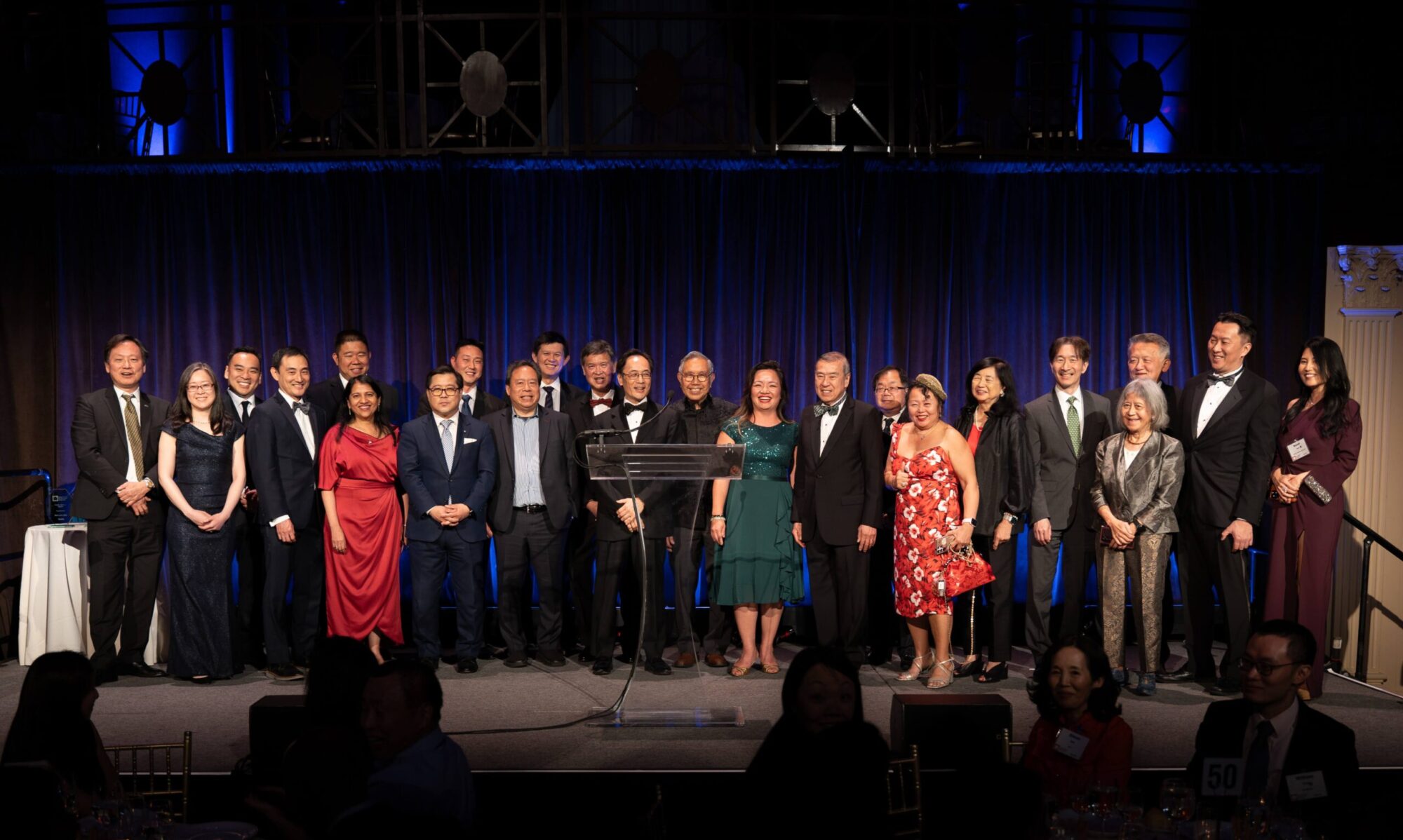
On September 17, 2026, the Asian American Bar Association of New York (“AABANY”) presented “Public Charge – What We Need to Know About Upcoming Changes,” a hybrid CLE program, at the Chinese-American Planning Council (“CPC”) Manhattan Community Center. The program addressed significant changes to the public charge ground of inadmissibility scheduled to take effect on September 18, 2026.

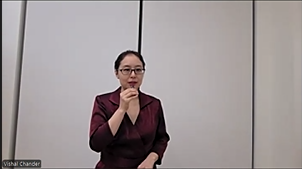
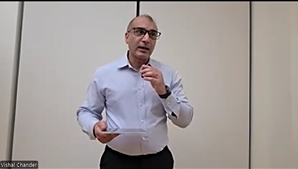
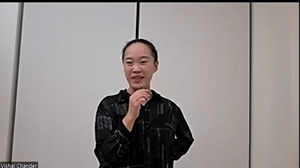
Rachel S. Lee, AABANY Board Director and Issues Committee Co-Chair and President & General Counsel of Stand with Asian Americans, moderated the program. Vishal Chander, AABANY Board Director and Issues Committee Co-Chair and Managing Attorney of The Chander Law Firm, P.C., served as the presenter. The program provided one hour of New York CLE credit in the Areas of Professional Practice category, with 24 people attending both online and in person. (Only those who attended in person received the CLE credit.)

A central focus of the presentation was the 2026 Final Rule and revised USCIS guidance, which removed much of the 2022 regulatory framework and shifted operational standards to the USCIS Policy Manual. Vishal explained that public charge determinations remain individualized, totality-of-the-circumstances inquiries, with officers considering factors such as finances, employment, education, health, household composition, and benefit use. He also discussed the broader treatment of means-tested public benefits, the continuing but non-dispositive role of Form I-864, the renewed use of public charge bonds, and the differing roles of USCIS, the Department of State, and CBP. The presentation concluded with an overview of pending litigation challenging the new framework and the legal questions surrounding DHS’s authority and use of subregulatory guidance.

Jack Hsia, Senior Attorney at CPC and a Vice Chair of the AABANY Issues Committee, joined  after Vishal’s presentation to share information about CPC’s programs and resources for the community. Jack thanked the speakers and attendees for being part of an informative discussion. AABANY thanks CPC for co-hosting the program and everyone who attended in person and online. To learn more about the Issues Committee and how you can get involved, go here.

Written by Rachel Lee, AABANY Board Director and Issues Committee Co-Chair

AABANY Comments on Public Charge Rule

On December 7, 2018, AABANY submitted comments to the US Citizenship and Immigration Services in opposition to the rulemaking on Proposed Inadmissibility on Public Charge Grounds. AABANY wrote:

The Asian American Bar Association of New York believes that this rule change will cause irreparable harm to our community. Many of AABANY’s members are immigrants, or children of immigrants, and are personally impacted by this rule. The Proposed Rule changes the rules of the system in midstream and are directly intended to prevent immigrants from becoming American citizens.

To read the full text of the comments, click here.

AABANY thanks the Community Response Task Force of the Issues Committee for leading this effort on behalf of AABANY.

National Cantonese Language Engagement

與您交流
U.S. Citizenship and Immigration Services (USCIS) invites you to participate in a national Cantonese language engagement. Agency representatives will be available to share updates and answer your questions about becoming a U.S. citizen.

Date: Wednesday, August 19 2015
Time: 3:30 p.m. to 5:00 p.m. EASTERN

Participation:
• Via teleconference at 1-800-369-1122; Passcode: 9104335
• Via live Web Stream at http://www.uscis.gov/Live/JiaoLiu 

(this link will be live on the day-of the engagement.)

Note:
Submit your questions in advance via Twitter to @USCIS or during the event via email to [email protected]

FOR MORE INFORMATION: Email us at [email protected] and write “Jiao Liu” in the subject line; or to learn more about USCIS resources, please visit us at http://www.uscis.gov/multilingual.

image
image

DHS Announces Temporary Protected Status Designation for Nepal

From U.S. Citizenship & Immigration Services:

Secretary of Homeland Security Jeh Johnson announced his decision to designate Nepal for Temporary Protected Status (TPS) for 18 months based on the conditions resulting from the devastating magnitude 7.8 earthquake that struck Nepal on April 25, 2015, and the subsequent aftershocks. As a result, eligible nationals of Nepal residing in the United States may apply for TPS with U.S. Citizenship and Immigration Services (USCIS). The Federal Register notice published today provides details and procedures for applying for TPS.

The TPS designation for Nepal is effective today, June 24, 2015, and will be in effect through December 24, 2016. The designation means that, during the designated period, eligible nationals of Nepal (and people without nationality who last habitually resided in Nepal) will not be removed from the United States and may receive an Employment Authorization Document (EAD). The 180-day TPS registration period begins June 24, 2015 and runs through December 21, 2015.

To be eligible for TPS, applicants must demonstrate that they satisfy all eligibility criteria, including that they have been both “continuously physically present” and “continuously residing” in the United States since June 24, 2015. Applicants also undergo thorough security checks. Individuals with certain criminal records or who pose a threat to national security are not eligible for TPS. The eligibility requirements are fully described in the Federal Register notices and on the TPS Web page atwww.uscis.gov/tps.

Applicants may request that USCIS waive any or all TPS-related fees based on inability to pay by filing Form I-912, Request for Fee Waiver, or by submitting a written request. Fee-waiver requests must be accompanied by supporting documentation. USCIS will reject any TPS application that does not include the required filing fee or a properly documented fee-waiver request. All USCIS forms are free. Applicants can download these forms from the USCIS website at www.uscis.gov/forms or request them by calling USCIS toll-free at 1-800-870-3676.

Applicants seeking information about the status of their individual cases can check My Case Status Online or call the USCIS National Customer Service Center at 1-800-375-5283 (TTY 1-800-767-1833) at no cost.

For more information about USCIS and its programs, please visit www.uscis.gov or follow us on Twitter (@uscis), YouTube (/uscis), Facebook (/uscis), and the USCIS blog The Beacon.

USCIS E-Verify Connection: New FORM I-9 Special Edition

E-Verify Connection
A publication of U.S. Citizenship and Immigration Services (USCIS)
March 2013 Issue XII

Note this issue now contains a correction! 

Welcome to E-Verify Connection, an e-newsletter from U.S. Citizenship and Immigration Services (USCIS) for U.S. employers and workers. Each issue will bring you updates about E-Verify’s advances and activities, as well as other useful information related to employment eligibility verification. 

If you wish to regularly receive this newsletter or other USCIS messages via our subscription management system, please visit Govdelivery.

A PDF version of E-Verify Connection is available online.